When Were Night Vision Goggles Invented? A Deep Dive Into Their Origin and Evolution
Night vision goggles were first invented in Germany in the late 1930s, with initial versions developed for military use just before World War II. These early devices, called 'active infrared night vision devices,' enabled soldiers to see in near-total darkness using infrared illumination and special optics, revolutionizing night operations.
Understanding exactly when night vision goggles were invented matters because it marks a pivotal moment in military history. The ability to see in the dark gave armies a tremendous strategic advantage and spurred a wave of technological advancement that still impacts security, law enforcement, and consumer electronics today.
This article traces the invention of night vision goggles, key milestones in their development, and their transformation from bulky military equipment to the compact, high-tech devices used in many fields today. We'll unpack the history of night vision technology, the science behind how these devices work, and the most significant breakthroughs in their evolution.
Origins: When Were Night Vision Goggles Invented?
The First Devices: Late 1930s Germany
Night vision goggles trace their roots to Germany in 1939, when engineers created the first practical military night vision system. These bulky, truck-mounted units relied on large infrared spotlights and special sensors to convert invisible light into images, offering a critical advantage in dark battlefield conditions.
The technology, codenamed 'Vampir,' was eventually scaled down for use with rifles by late WWII. This initial innovation laid the groundwork for decades of further development and marked the true birth of the night vision goggle.
- First used by German Army in World War II
- Required active infrared illuminators
- Initially very heavy and cumbersome
Spread and Early Adoption Worldwide
After their German debut, night vision devices began to appear in other countries. The United States and Soviet Union quickly recognized their strategic value, launching their own research programs during and after World War II.
By the Korean War, U.S. forces employed similar 'sniperscopes' that built on German ideas but aimed for lighter and more portable designs. These early systems remained limited by heavy batteries and visible IR light sources.
Technological Breakthroughs in Night Vision
Introduction of Tube-Based Amplification
A major advance came in the 1950s with the invention of the image intensifier tube. Unlike active infrared, these tubes amplified ambient light—such as moonlight—allowing users to see in near total darkness with less detectable equipment.
This leap made night vision goggles lighter, stealthier, and practical for field use. The switch to passive systems set the stage for the wide adoption of night vision by military forces worldwide.
- Reduced need for infrared illuminators
- Enabled true 'goggles' design
Generational Improvements: Gen 0 to Gen 3/4
Night vision technology is commonly divided into generations, each marking significant improvements. Generation 0 includes initial infrared devices, while Gen 1 brought the first image intensifiers in the 1960s.
Gen 2 and Gen 3 advances introduced greater sensitivity, longer life, and vastly improved clarity. Today, Gen 4 and digital night vision push these capabilities even further, not just for military use but for law enforcement and civilians.
- Gen 1: Vietnam War era, passive systems
- Gen 2/3: Enhanced performance, smaller size
- Gen 4: Digital imaging and improved optics
How Night Vision Goggles Work
Basic Principles: Light Amplification and Infrared Detection
Modern night vision goggles work by capturing minimal available light—usually near-infrared or visible light—and amplifying it thousands of times through an image intensifier tube. This process converts photons into electrons, multiplies them, and then projects them back as visible light on a phosphor screen.
Earlier devices used active infrared: emitting their own near-infrared beam, which was reflected off objects and collected by the goggles. While effective, these early systems could be detected by enemy forces equipped with similar technology.
Core Parts of Night Vision Devices
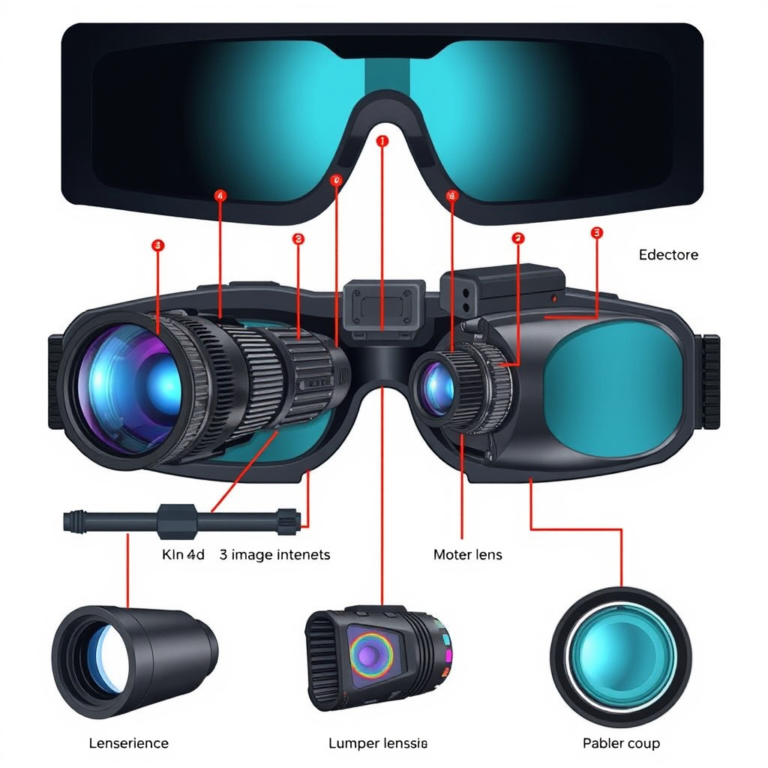
Key components of night vision goggles include lenses (objective and eyepiece), an image intensifier tube, power source, and often onboard infrared illuminators for pitch-black conditions.
The compact form factor of today's goggles is thanks to miniaturization of these parts—a major achievement compared to early, heavy models.
- Objective lens: Gathers light
- Image intensifier tube: Amplifies image
- Eyepiece: Displays the image
- Power supply: Usually batteries
The History of Night Vision Technology in Warfare
World War II, Korea, and the Vietnam War
Germany pioneered night vision goggles, but U.S. forces soon deployed them in both the Korean and Vietnam Wars. The secondary_keyword was crucial in jungle combat, allowing soldiers to see enemy movements undetected.
The secondary_keyword not only enhanced tactical capabilities but also affected battle outcomes and strategy. Only those with access to such technology held a significant advantage during night operations.
Post-Cold War and Special Operations
After the Cold War, night vision goggles became standard for special forces and many regular troops. Lightweight designs allowed mobility, integrating these tools into nearly every modern military operation.
Operations like Desert Storm and modern counterterrorism missions showcased the ongoing importance and improvements of night vision in real battlefield scenarios.
- Night vision became standard issue
- Used in covert operations and surveillance
Civilian Uses and Recent Trends
From Military to Civilian Life
Night vision goggles eventually transitioned into civilian use, serving hunters, security workers, search-and-rescue teams, and wildlife researchers. As costs declined and regulations adjusted, night vision devices became increasingly available to private citizens.
This shift prompted innovation in compactness, affordability, and ruggedness, making night vision accessible for a wide range of applications beyond the battlefield.
- Wildlife observation and research
- Boating and navigation
- Home and workplace security
Consumer Models Versus Professional Equipment
Consumer-grade night vision goggles leverage digital sensors and cheaper optics, trading some clarity and range for lower prices and ease of use. Professional models (often Gen 3 or newer) still command high prices but offer superior performance and durability.
For most hobbyists and light-duty users, lower-cost digital options often suffice, while law enforcement and serious professionals continue to rely on advanced analog technologies.
- Digital: Affordable, easy to use, good for beginners
- Analog (Gen 3+): High performance, more expensive
Legal and Ethical Considerations
Regulation and Export Laws
Sales and use of night vision goggles are frequently regulated, particularly higher-generation devices in the United States and Europe. International export laws restrict the sale of advanced units to prevent misuse and maintain security.
Civilian buyers should always check local laws—possession of certain devices may require permits or be outright prohibited in some countries.
For deeper background and detailed timelines, readers can explore this comprehensive resource on the history of night vision devices. history of night vision devices.
Privacy and Responsible Use
Legitimate uses of night vision goggles extend to public safety and recreation, but privacy concerns arise when these tools are misused for surveillance without consent.
Ethical considerations demand that users operate within legal limits and respect the privacy and safety of others at all times.
- Do not use for illegal surveillance
- Respect personal and wildlife privacy
Night Vision Technology Comparison Through the Ages
This table compares major types of night vision goggles and technologies from the original German devices to the latest digital models, highlighting their key attributes.
| Generation / Type | Years Deployed | Technology Used | Size/Weight | Main Users | Image Quality |
|---|---|---|---|---|---|
| German Infrared (Vampir) | Late 1930s-1945 | Active IR, cathode ray | Very heavy | German Army | Low, grainy |
| Gen 0/1 Image Intensifier | 1940s-1960s | Photocathode tubes | Heavy | US, USSR military | Fair, noisy |
| Gen 2 Intensifier | 1970s-1980s | Microchannel plates | Medium | Militaries, law enforcement | Good, clearer |
| Gen 3 Intensifier | 1990s-present | Gallium arsenide tube | Lightweight | Military, police | High, sharp |
| Digital NV | 2010s-present | CCD/CMOS sensors | Lightweight | Civilians, hobbyists | Moderate to high |
| Thermal NV | 2000s-present | Infrared thermography | Light | All users | Distinct, heat-based |
Frequently Asked Questions
Who invented night vision goggles?
The first night vision goggles were developed by German engineers in the late 1930s, specifically for military applications. However, many countries contributed to advances in the technology during and after World War II.
What was the first use of night vision goggles in combat?
Night vision goggles were initially deployed by the German Army during World War II for nighttime tank and infantry operations, offering soldiers an advantage in low-light conditions previously unavailable to them.
How have night vision goggles evolved since their invention?
Early goggles were bulky and required infrared spotlights. Over the decades, advancements like image intensifier tubes, sensitive materials, and compact electronics have made today's models smaller, lighter, and much more effective.
Can civilians legally own night vision goggles?
In most places, civilians can own certain generations of night vision goggles, particularly digital or Gen 1/2 devices. Advanced goggles (Gen 3 or higher) may be restricted or require special permits in some jurisdictions.
What are the main uses of night vision goggles today?
Night vision goggles are used by military, police, hunters, rescuers, and researchers for tasks like surveillance, navigation, wildlife observation, and personal security in low-light or no-light environments.
Key Takeaways
- Night vision goggles were invented in Germany in the late 1930s.
- Technology evolved from active infrared to advanced image intensification.
- Widespread impact extends from military to civilian and research uses.
- Legal and ethical considerations are important for modern use.
Conclusion
Understanding when night vision goggles were invented provides invaluable insight into how warfare, security, and even wildlife research have been shaped by this technology. Initially a German military advancement from the late 1930s, these devices have undergone decades of radical evolution. Today’s sophisticated, lightweight night vision goggles are a far cry from the heavy, early models, and the technology continues to advance with each new generation. Recognizing the breakthrough moments and shifts in night vision’s history empowers us to appreciate its current form and better anticipate future innovations.
For those considering night vision goggles, choosing the right generation and type depends largely on intended use. Professionals and law enforcement benefit most from Gen 3 or advanced analog models for their exceptional resolution and reliability. Hobbyists, wildlife watchers, and casual users may find modern digital devices meet their needs at a fraction of the price. Regardless of your choice, understanding the history of night vision technology enhances your appreciation of both the device and its capabilities.
Before buying or using night vision goggles, always review current regulations in your area and carefully assess your requirements. Ethical and legal responsibility is just as important as technical know-how. As you select your own device, remember the long journey night vision goggles have taken from experimental military innovation to accessible modern tools. Let this history guide you toward a choice that’s both lawful and aligned with your needs.

One Comment