What Is the Goal of a Crime Scene Investigation? Understanding the Process and Its Purpose
The main goal of a crime scene investigation is to identify, collect, preserve, and interpret physical evidence to help reconstruct the events of a crime and ultimately aid in delivering justice. Investigators meticulously analyze the scene to uncover clues that link suspects, victims, and objects, ensuring that no piece of potential evidence is overlooked during this crucial phase.
Crime scene investigations matter because errors or omissions in the process can compromise the integrity of evidence, hinder case resolution, or even lead to wrongful convictions. Each step taken impacts not just the immediate investigation, but the entire criminal justice process, often making the difference between conviction, acquittal, or a cold case.
In this article, we’ll break down each key objective of a crime scene investigation, discuss methodologies for gathering and maintaining evidence, explore the roles of various personnel at the scene, compare types of investigations, answer common questions, and summarize what readers need to keep in mind about this vital aspect of law enforcement.
Defining the Goal of a Crime Scene Investigation
Establishing the Facts of the Incident
The central focus in any crime scene investigation is to establish a clear and accurate account of what happened. Investigators reconstruct the sequence of events by closely examining physical evidence, witness testimonies, and environmental factors. This reconstruction supports law enforcement in understanding motive, method, and opportunity.
Analyzing blood spatter patterns, bullet trajectories, and item placement helps create a logical narrative of the crime. This process enables prosecutors and defense attorneys to present factual, coherent arguments using the results of the investigation as a foundation.
Forensic reconstruction of timelines
Linking People, Places, and Objects
Crime scene investigations strive to make connections between suspects, victims, and objects through the collection of fingerprints, DNA, fibers, and other trace evidence. This linkage is essential for corroborating or refuting witness statements and alibis.
Matching evidence from the scene with that found on suspects or at other locations can provide strong physical proof of involvement, supporting charges or exonerating the innocent.
- Matching DNA profiles
- Comparing shoe prints and tire tracks
- Analyzing fibers and hairs
Preservation and Documentation of Physical Evidence
The Purpose of Evidence Collection
A pivotal aspect of any investigation is the systematic collection of physical evidence. Each piece, whether it’s a bullet casing or a hair strand, is gathered according to strict protocols to avoid loss, contamination, or degradation.
Proper documentation, using photographs, sketches, and written logs, creates an unimpeachable record that supports evidence authenticity and admissibility in court. This ensures the 'chain of custody' is intact from the scene to the lab.
- Evidence logs and checklists
- Photography and videography
Maintaining the Integrity of Evidence
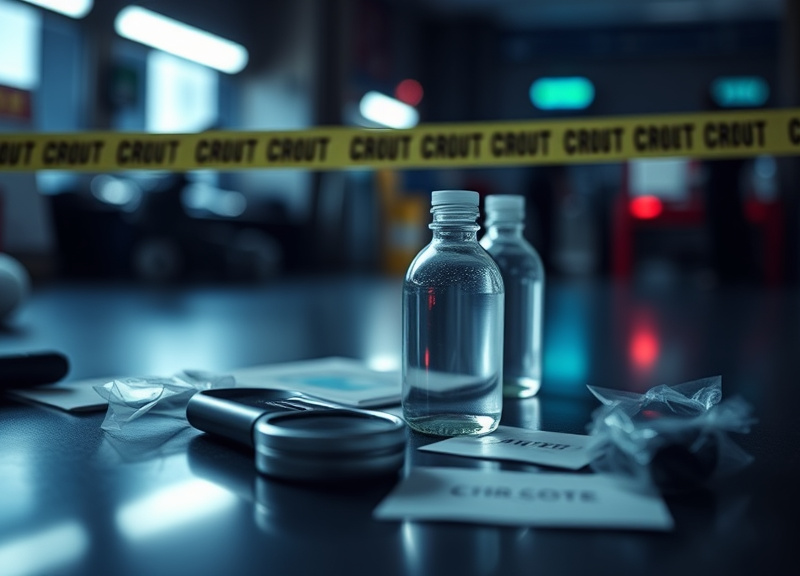
Evidence integrity is non-negotiable in legal proceedings. Investigators use gloves, sterile tools, and tamper-evident bags to protect samples from contamination or alteration.
Securing and tracking evidence stops spoliation and prevents defense challenges during trial. Digital methods now complement traditional paperwork, ensuring an auditable trail.
- Use of tamper-evident packaging
- Chain-of-custody forms
Systematic Processing of the Crime Scene
Securing and Assessing the Scene
Securing the scene is the first responsibility of responding officers, ensuring no unauthorized individual disturbs potential evidence. Initial walkthroughs allow for the assessment of immediate hazards and the prioritization of evidence collection.
Preserving initial conditions gives the best chance of recovering untainted evidence and allows accurate documentation crucial to the subsequent steps.
For more on this, see our related guide: What is the Definition of Investigation? A Clear Explanation for Students and Professionals.
Adapting Methods to Scene Types
The strategies for processing a crime scene may shift between indoor, outdoor, and vehicular environments. Investigators select methods matched to the specific terrain, lighting, and complexity of the location.
For example, outdoor crime scenes often require rapid collection due to weather concerns, while indoor scenes allow more controlled, methodical examination.
- Grid, zone, spiral, or strip search patterns
- Lighting adjustments and alternate light sources
Collaboration and Roles at the Crime Scene
Key Personnel and Their Functions
Crime scene integrity depends on collaboration among various professionals. Primary roles include scene security officers, crime scene investigators, forensic specialists, medical examiners, and detectives.
Each member brings unique expertise: forensic technicians handle evidence, detectives build the case narrative, and medical examiners analyze bodily evidence, all contributing to accurate case resolution.
- Scene security and access control
- Evidence recovery and analysis
- Forensic pathology
Inter-Agency Cooperation
Complex cases may involve multiple agencies, like local police, state forensic teams, or federal investigators. Collaborative protocols and clear communication prevent duplication or gaps in the investigation.
Shared databases and inter-agency liaisons streamline evidence sharing, promoting consistency and thoroughness for the best investigative results.
- Task force operations
- Information sharing protocols
Analysis and Interpretation of Evidence
Laboratory Analysis for Reliable Results
Collected evidence undergoes a variety of scientific tests, from DNA profiling to toxicology screenings and ballistic comparison. The precision and validity of laboratory procedures are vital for interpretability.
A thorough analysis can reveal hidden connections, validate alibis, and exclude doubtful leads, fortifying the investigative process.
- DNA sequencing
- Chemical analysis
- Ballistics testing
For more on this, see our related guide: What Is a Preliminary Investigation? A Comprehensive Guide to Early Case Assessment.
Interpreting Evidence in Context
Raw data alone rarely tells a complete story; context is crucial. Investigators compare lab results with initial findings, timelines, and witness accounts to draw meaningful conclusions.
Interpretation errors can mislead the case, so peer reviews and consultation with subject-matter experts are standard to confirm findings.
- Collaboration with forensic experts
- Peer-reviewed case analysis
Presenting Findings for Legal Proceedings
Reporting Findings Clearly and Effectively
Crime scene investigators prepare detailed reports and visual aids to ensure evidence is understandable for lawyers, judges, and jurors. Each finding must align with the facts discovered at the scene.
Effective communication translates complex science into plain language, making technical results accessible without compromising accuracy.
- Visual aids—charts and diagrams
- Fact-based testimony
- Clear, chronological reporting
For readers who want to explore the origins and methods of crime scene investigations in more detail, this comprehensive resource provides additional insights and historical background. Forensic science fundamentals and investigation process.
Ensuring Evidence Stands Up in Court
The ultimate test for any crime scene investigation is courtroom scrutiny. Procedures must comply with legal standards on admissibility—such as relevance, reliability, and the chain of custody.
Failure to uphold these standards can result in evidence exclusion, significantly weakening the prosecution’s case or thwarting the defense.
- Daubert/Frye hearing requirements
- Documentation demonstrating chain of custody
Crime Scene Investigation Types Comparison
Crime scenes can vary widely. Here’s a comparison of common crime scene investigation categories, each with unique goals and best practices.
| Category | Primary Focus | Typical Evidence Collected | Relevant Techniques |
|---|---|---|---|
| Homicide | Reconstruct cause and manner of death | DNA, fingerprints, blood spatter, firearms | Autopsy, ballistic analysis, scene sketching |
| Burglary | Identify entry methods and stolen items | Tool marks, footprints, fingerprints | Tool mark analysis, crime scene photography |
| Sexual Assault | Preserve biological evidence | Bodily fluids, fibers, hair | Forensic DNA swabbing, trace analysis |
| Traffic Accident | Establish cause and sequence of events | Skid marks, paint transfer, tire tracks | Accident reconstruction, vehicle examination |
| Arson | Determine ignition source and motive | Accelerant residues, debris, ignition devices | Chemical analysis, fire pattern examination |
Frequently Asked Questions
Why is the first responder’s role critical at a crime scene?
The first responder secures the crime scene, preventing evidence contamination and preserving the scene’s initial condition, which is vital for the accuracy and integrity of subsequent investigation and evidence collection.
What happens if evidence is mishandled during collection?
Mishandled evidence can be ruled inadmissible in court, weakening the case or even leading to dismissals. Maintaining proper chain of custody and handling procedures ensures the evidence retains its legal value.
Who decides what evidence is collected at a crime scene?
Crime scene investigators, in consultation with detectives and sometimes forensic experts, decide what to collect based on visible clues, case type, and the potential evidentiary value of objects present at the scene.
How do investigators ensure evidence is preserved for court?
Investigators use secure, labeled packaging and strict chain-of-custody protocols to prevent contamination, mix-ups, or tampering, supporting the evidence’s credibility during legal proceedings.
Do all crime scenes follow the same investigation process?
While core principles like securing, documenting, and collecting evidence are standard, the exact process varies depending on the scene type, the crime committed, and situational challenges investigators encounter.
Key Takeaways
- The goal of a crime scene investigation is accurate evidence collection and analysis.
- Preserving the purpose of evidence collection ensures admissibility in court.
- Collaboration and proper protocols prevent contamination and legal missteps.
- Every type of crime scene requires tailored investigative approaches.
Conclusion
A successful crime scene investigation hinges on a well-orchestrated, systematic approach—where every participant understands the goal of a crime scene investigation: to secure, collect, and analyze evidence in a way that accurately reconstructs the events of a crime. Investigators blend scientific rigor, methodical processing, and careful documentation to uphold the truth, protect victims’ rights, and deliver justice. The process is both an art and a science, demanding sharp judgment, comprehensive training, and a commitment to ethical standards at every step.
For example, in a homicide case, a methodical collection of blood spatter, ballistics, and DNA can help reconstruct the entire sequence of events, while a burglary investigation might lean heavily on tool mark analysis and fingerprint matching. The purpose of evidence collection remains consistent, but practical application shifts based on the context—whether the case involves arson, robbery, or sexual assault. Understanding these differences allows law enforcement and forensic teams to adapt protocols and maximize their chances of solving the case.
For anyone interested in the field of crime scene investigations—whether students, professionals, or the curious public—the most practical next step is to build a foundational understanding of forensic principles and best practices. Those already in law enforcement should pursue continuing education in evidence handling, while others might consider academic courses or resources that delve deeper into criminal investigation methods. This knowledge not only advances individual careers but also strengthens the broader justice system.

6 Comments