
What Does the Crossbow Stirrup Do? A Complete Guide with Safety Tips
The crossbow stirrup is the front loop or foot hold that lets you secure your foot to pull back the string safely and efficiently. It stabilizes the crossbow while you cock it, enabling better control and reducing injury risk during use. Knowing what does the crossbow stirrup do helps you handle your crossbow properly, whether you’re a beginner or an experienced hunter.
This explanation is tailored for archers and hunters who want a clear understanding of their equipment’s safety features and performance benefits. You’ll learn how to use the stirrup right, recognize different types, avoid common mistakes, and maintain it for a long service life.
Key Takeaways
- Use the stirrup to firmly brace your foot while cocking to prevent slipping and potential injury.
- A stirrup is essential for cocking by hand or with devices like a windlass or belt and claw system.
- Choose a stirrup 20% larger than the original to fit bigger footwear for improved comfort during hunting.
- Inspect the stirrup regularly for cracks or bending to ensure safe and efficient use in the field.
- Replace worn or damaged stirrups immediately to avoid accidents caused by failure during cocking.
- Stirrup design affects your stability and comfort, influencing overall hunting performance and shooting accuracy.
What Is the Crossbow Stirrup and Its Purpose?
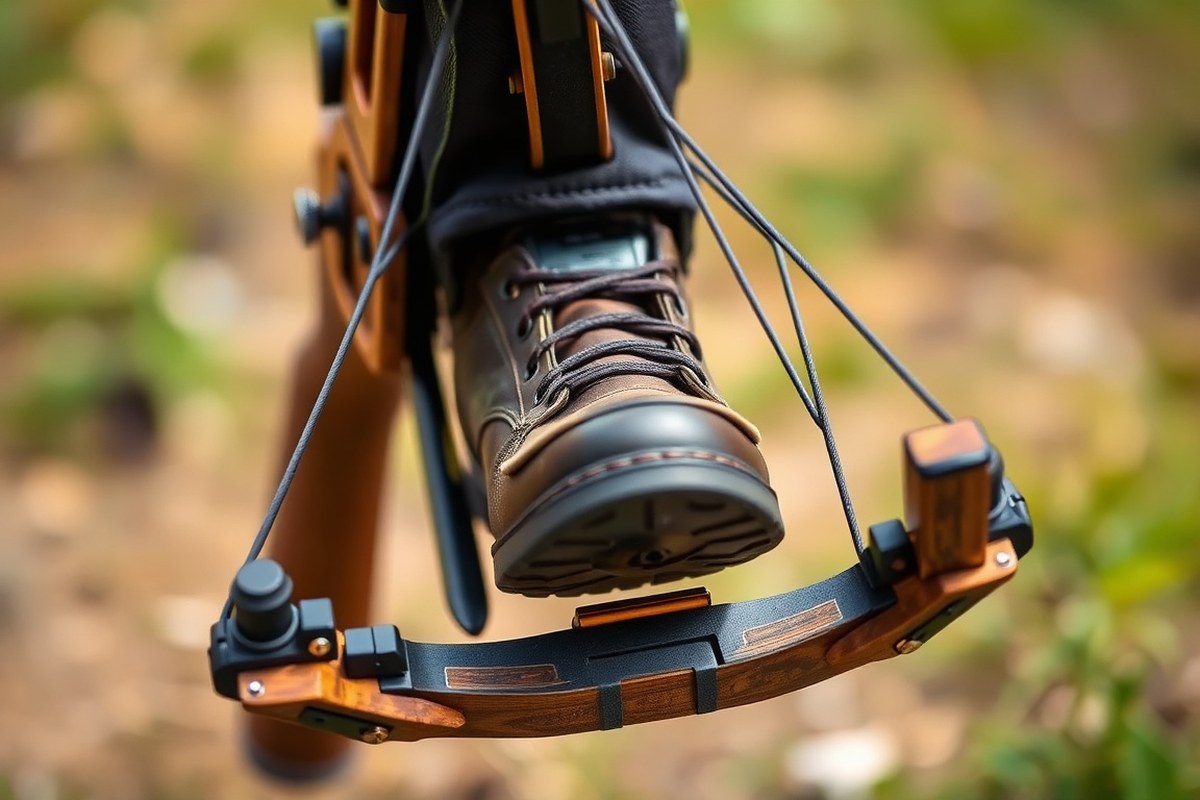
The crossbow stirrup is the metal loop or footrest located at the front end of the crossbow. Its primary function is to give you a solid anchor point to place your foot while cocking the weapon. This stability is important because the cocking process requires pulling the string back against significant tension, often hundreds of pounds of draw weight depending on the model. By stepping into the stirrup, you hold the crossbow firmly in place, allowing you to apply upward pulling force efficiently and safely.
Not every crossbow has a stirrup, but most traditional crossbows meant for hand cocking or use with cocking aids include one. Crossbows using mechanical cocking devices like a windlass or belt and claw still need a stirrup to secure the front of the weapon as you crank or pull the string back. The stirrup prevents the crossbow from sliding forward or tipping, which could cause injury or damage. For example, a crossbow with a 150-pound limb draw weight may require you to apply about 50 pounds of effort while cocking. Without a sturdy stirrup to brace against, controlling that force becomes difficult and unsafe.
To use the stirrup properly, place your foot securely inside the loop at the front of the crossbow resting it flat on the ground. Keep your foot centered and press down firmly. This anchors the crossbow on a stable surface so you can focus on pulling the string with your hands, either directly or using a cocking aid. The size of the stirrup matters; larger stirrups, like the Excalibur Bigfoot which is 20% bigger than standard models, accommodate heavier boots or cold-weather footwear, offering extra comfort and stability in challenging outdoor conditions.
Good results mean the crossbow does not move or shift while cocking, reducing strain and improving safety. If the stirrup is too small or weak, your foot may not stay in place, or the stirrup may bend under force. This impacts your ability to cock the bow smoothly and can be dangerous. Investing in a durable, properly sized stirrup usually costs between $20 and $60 for aftermarket upgrades, depending on materials and brand. Many crossbow users consider a reliable stirrup essential gear to maintain control throughout cocking and shooting.
How to Use the Stirrup Properly When Cocking

Using the stirrup correctly when cocking your crossbow is key to maintaining control and ensuring safety. The stirrup holds your foot firmly, stabilizing the crossbow so you can pull the string back evenly and securely. Proper foot placement and balance reduce the risk of accidents and help you cock the crossbow efficiently, even with heavy boots on.
Positioning Your Foot in the Stirrup
Place your foot fully inside the stirrup to create a steady base for cocking. The stirrup should comfortably accommodate your footwear, whether you’re wearing hunting boots or lighter shoes. Some models, like the Excalibur Bigfoot Stirrup, offer about 20% more space to fit larger boots, which is helpful in cold weather when you wear bulky gear.
Ensure your foot is centered within the stirrup to prevent the crossbow from shifting. Avoid putting your heel or the edge of your boot against the stirrup’s metal, as this can cause slipping or damage. Firm, balanced footing protects both you and your crossbow during the cocking process.
Balancing and Securing the Crossbow
The stirrup lets you hold the crossbow steady with your foot while your hands handle the string and cocking mechanism. Place the crossbow horizontally on the ground with the stirrup facing outward. Your foot in the stirrup anchors the front, so the crossbow does not tilt or move as you cock it.
Hold the main grip of your crossbow with one hand, keeping fingers clear of the trigger area to avoid accidental discharge. Keep your body weight balanced and stable, standing with feet shoulder-width apart. This stance gives you more control when pulling the string back straight, reducing fatigue and the chance of injury.
Engaging the String or Cocking Device Safely
Follow these steps for safe cocking using the stirrup and either the string or a cocking aid like a rope device:
- Place your foot inside the stirrup, ensuring it’s firmly seated and stable.
- Hold the crossbow’s main grip with one hand, keeping your finger off the trigger.
- Grab the string equally on both sides of the stock or use the rope cocking aid supplied with the crossbow, pulling straight upward to avoid twisting or snagging.
- If using a rope aid, make sure it’s not looped around your neck to prevent injury if the string releases unexpectedly.
- Pull the string or cocking device upward steadily until it seats securely into the latch.
- Confirm the string is locked and the crossbow is properly cocked before removing your foot from the stirrup.
- Load your bolt immediately after cocking to avoid dry firing.
Never cock your crossbow without an arrow loaded as this can damage the string and trigger mechanism, and never hang the rope aid loosely around your neck during cocking.
Types and Materials of Crossbow Stirrups Compared
Crossbow stirrups come in several types and materials suited for different shooting preferences and crossbow models. Fixed steel stirrups offer durability and stability, foldable aluminum stirrups provide portability and convenience, while rubberized coatings help reduce noise and improve grip. Each design caters to specific needs related to weight, handling, and environmental conditions.
Fixed Steel Stirrups
Fixed stirrups are commonly made from solid steel, providing a sturdy and heavy-duty platform for cocking. They resist bending or breaking under repeated stress and are ideal for shooters prioritizing stability and durability. The steel construction can add weight to the front of the crossbow, which may affect how steady you feel while aiming but improves overall robustness. Fixed stirrups are typically standard on many hunting crossbows and require no setup or adjustment.
These stirrups attach firmly to the crossbow’s frame. Making or replacing a fixed steel stirrup involves cutting steel to size and rivetting parts together through holes in the U-shaped bracket, ensuring a secure connection. The weight and rigidity help maintain safety during cocking by allowing you to firmly brace the crossbow foot-down on the ground.
Foldable Aluminum Stirrups
Foldable stirrups made from aluminum offer a lighter, more compact alternative for portability. When unfolded, they provide a similar brace for cocking; when folded, they reduce the overall length for easier transport or storage. Aluminum’s lightness contributes to a more balanced front end, making the crossbow easier to carry over longer periods, which can matter on hunts that require a lot of walking.
These stirrups typically include hinges and locking mechanisms, which add mechanical complexity and potential points for wear or failure. However, modern designs focus on durability, with materials and construction aimed at preventing rattles and maintaining alignment. Foldable stirrups suit shooters who regularly need to pack up and move with their crossbow, especially in tight or rough terrain.
Rubberized and Coated Stirrups
Some stirrups feature rubberized or textured coatings that add grip and reduce noise during cocking. The Excalibur Bigfoot stirrup, for example, uses an over-molded rubber finish designed to dampen sound and minimize metal-on-ground contact noise, which is important when hunting quietly. These coatings can also add traction for sure footing when you place your foot in the stirrup to cock the crossbow.
Using a rubberized stirrup increases control and may reduce slippage in wet or muddy conditions. While the additional material may slightly reduce the overall durability compared to bare metal, it compensates by increasing user safety and minimizing distractions from noise. Rubberized stirrups also tend not to damage softer ground surfaces, a consideration if you often crossbow hunt in sensitive environments. The following table summarizes key characteristics of these crossbow stirrup types:
| Type | Material | Weight Impact | Portability | Durability | Noise Reduction | Best Use |
|---|---|---|---|---|---|---|
| Fixed Steel | Steel | Heavier, adds stability | Low (fixed length) | High | Low (metal on metal) | Stable, durable hunting setups |
| Foldable Aluminum | Aluminum | Lighter, balanced | High (folds for transport) | Moderate (hinges can wear) | Moderate | Portable, multi-terrain hunting |
| Rubberized/Coated | Steel or Aluminum base with rubberized finish | Moderate (slight added weight) | Varies by base design | Moderate (coating can wear) | High (noise dampening) | Stealthy hunting, slippery conditions |
Choosing the right stirrup hinges on your hunting style, terrain, and how often you transport your crossbow. Fixed steel stirrups work well on heavier, stable models. Foldable aluminum suits mobile hunters needing compact gear. Rubberized finishes help those requiring low-noise operation and extra footing security.
Why the Stirrup Is Essential for Safety and Efficiency
The stirrup plays a key role in making cocking a crossbow both safer and more efficient. By placing your foot firmly inside the stirrup at the front of the crossbow, you stabilize the weapon against the ground. This prevents slipping or uneven tension during cocking, reducing the chance of injury or damaging the crossbow’s mechanism. Without a stirrup, it becomes much harder to hold the crossbow steady as you pull back the string, increasing physical effort and risk.
The stirrup also improves mechanical advantage during cocking. It allows you to apply downward force with your leg and maintain a strong grip with your hands, distributing effort more evenly. For example, cocking a typical hunting crossbow requires about 50 pounds of force at the handle. The stirrup’s stabilization lets your body weight assist this motion, so you don’t have to rely purely on arm strength. This reduces fatigue and lowers the risk of muscle strain or accidents from sudden release.
Safety precautions related to the stirrup begin with correct footing. Secure your foot inside the stirrup so the crossbow sits flush to the ground or a firm surface. Avoid cocking on unstable, slippery, or inclined surfaces, which can cause the crossbow to shift unexpectedly. As you pull the string back, keep your face and body clear of the string’s path to prevent injury if it slips. Maintain a controlled, even pull to cock the crossbow without jerking. Never attempt to cock the crossbow without using the stirrup, as this can cause uneven tension, lowering shooting accuracy and risking damage to the bow limbs or trigger mechanism.
In some cases, crossbows feature over-moulded rubberized stirrups that reduce noise when placed on hard ground, improving stealth during hunting without compromising stability. The cost of crossbow stirrups varies, but a basic quality stirrup typically adds minimal expense, often under $30 as part of the crossbow’s overall price. Replacement or upgrades might cost more but are a worthwhile investment for safety and comfort.
What good results look like is a smoothly cocked crossbow with even tension on the string and no slipping or wobbling during the process. The weapon will then be ready to safely load and shoot, improving your accuracy and reducing physical strain. Problems arise if the stirrup is missing, broken, or used improperly. The crossbow may shift during cocking, causing uneven draw force and potential mechanical wear. This can also lead to inaccurate shots and increase the chance of accidental trigger engagement if the crossbow falls over loaded.
Common Stirrup Mistakes and How to Avoid Them
Incorrect use of the crossbow stirrup commonly leads to safety risks and damage to your equipment. Placing your foot improperly on the stirrup or not securing it firmly can cause the crossbow to slip during cocking, increasing the chance of injury or dropping the crossbow. A loose grip on the string or uneven pressure on the stirrup can also affect the cocking force, reducing shot accuracy later.
Another frequent mistake is using excessive force when pulling the string while applying weak pressure through the stirrup. This imbalance may strain the limbs or other parts, leading to mechanical damage and increased vibration when firing. Vibration from worn or damaged parts often changes the arrow’s flight path, degrading your shooting precision. It is essential to maintain consistent tension on the stirrup while pulling the string straight back to minimize wear and ensure a clean shot. Here are common stirrup errors and how to avoid them:
- Placing the foot off-center in the stirrup, position your foot so the ball of the foot presses firmly, preventing slips
- Not locking the stirrup securely into obstacles or ground, always place the stirrup on stable surfaces like tree roots or sturdy rocks
- Using only toes or heels instead of the whole foot, distribute weight to avoid uneven pressure on the crossbow frame
- Pulling the string off-angle, pull straight back within the string groove for smoother cocking and less limb stress
- Rushing the cocking process, slow steady force protects your equipment and avoids safety hazards
- Ignoring noise changes in the trigger or limbs, check the stirrup alignment and wear if vibration or sound increases after use
- Failing to clean the stirrup after muddy or wet use, drying and wiping extend the stirrup’s lifespan
Always keep your foot firmly pressed and centered in the stirrup during cocking to maintain control and prevent slippage.
Misuse of the stirrup can cause the crossbow limbs to experience uneven forces, increasing the chance of cracks or breaks. Damage like this can cost $50 to $150 for repairs, depending on the crossbow model and parts affected. Ensuring proper stirrup use maintains the reliability of your crossbow, helping you avoid costly repairs and maintain tight shot groupings essential for hunting success.
How to Inspect, Maintain, and Replace a Stirrup
Keeping your crossbow stirrup in good condition is essential for safe and efficient cocking. Regular inspection, cleaning, and knowing when to replace it help avoid failures that could cause injury or impair your shooting accuracy. Follow this checklist and maintenance routine to ensure your stirrup stays secure and functional.
Visual and Physical Inspection Checklist
Look closely at your stirrup before each use to catch any wear or damage early. Even small cracks or bends can compromise stability during cocking. Also check the mounting points where the stirrup attaches to the crossbow; loose screws or worn bolts are common trouble spots.
- Examine the stirrup for cracks, dents, or bends in the metal or composite material.
- Check for rust or corrosion, especially if you hunt in wet or humid conditions.
- Test the firmness of screws, bolts, and attachment hardware to the crossbow frame.
- Feel for any sharp edges or splinters that could damage your foot or bowstring.
- Confirm the stirrup shape hasn’t warped, which can alter your footing and balance.
Signs like visible damage, loose hardware, or corrosion indicate it’s time for repair or replacement before your next hunt or practice.
Cleaning Techniques for Longevity
Keep the stirrup free from dirt, mud, and residue to maintain grip and prevent rust. Use mild soap and water to clean after exposure to mud or rain. Avoid harsh chemicals that could degrade the stirrup material or coating.
Dry completely with a cloth or let air dry to prevent moisture buildup, especially on metal parts. Lightly oil metal hardware to reduce rust risk but avoid getting oil on your foot contact area, which could cause slipping.
Regularly cleaning your stirrup helps it stay reliable, safe, and comfortable over time. Aim to clean it after every heavy use or at least once a month if you use the crossbow frequently.
Replacing the Stirrup Step-by-Step
If your stirrup shows damage that cannot be fixed or safety is compromised, replacing it is straightforward. Exact steps vary by crossbow model, but most follow a similar process. Basic tools like screwdrivers or Allen wrenches are typically required.
- Set the crossbow on a stable surface with the stirrup facing up.
- Remove any screws, bolts, or pins securing the stirrup to the crossbow frame.
- Carefully detach the stirrup from the mounting plate or rail.
- Compare the new stirrup to the old one to confirm the size and mounting points match.
- Position the new stirrup onto the mount, aligning holes exactly.
- Insert screws or bolts and tighten securely according to manufacturer torque specs, usually around 15 to 20 inch-pounds.
- Inspect the new stirrup for firm attachment and correct alignment.
- Test the design by applying pressure with your foot before cocking the crossbow.
Basic replacement stirrups cost between $20 and $50 depending on the material and brand, with upgrades costing more. Upgrading to a reinforced or ergonomic stirrup can improve comfort and durability if you experience frequent usage or tough conditions.
How Stirrup Design Affects Hunting Comfort and Performance
Stirrup design plays a significant role in your comfort and the effectiveness of your crossbow while hunting. The stirrup is the metal loop at the front of the crossbow where you place your foot to hold it steady as you cock the weapon. If the design is cramped or awkward, it can make cocking with bulky hunting boots uncomfortable or unstable, which may affect how securely you cock the crossbow and potentially your shot accuracy.
Crossbow stirrups come in various shapes and sizes, from narrow, circular loops to wider rectangular frames. A wider stirrup provides more room for larger or insulated footwear, which is common during colder hunting trips. This extra space helps you position your foot firmly without feeling cramped or risking slipping off. For example, a stirrup width of 3.5 to 4 inches typically accommodates most hunting boots, considering modern boots can range from 10 to 12 inches in length and 4 to 5 inches in width. Narrow stirrups below this range may require you to remove your boot or use a lighter shoe, which is less practical outdoors.
The material and texture of the stirrup also affect grip and comfort. Steel stirrups with a textured or rubber-coated surface improve foot grip, reducing the chance of your foot slipping during cocking. This stability not only protects you from potential injury but enables a smooth, consistent draw of the string, which correlates with better accuracy. Smooth, polished stirrups can feel slick, especially in wet or icy conditions, requiring you to adjust foot position or slow your movement and increasing frustration.
Adding aftermarket accessories like rubber stirrup covers or slip-on grips can improve comfort and traction without having to buy a new crossbow. These accessories usually cost between $10 and $25 and attach easily over existing metal loops. Keep in mind that very thick grip additions might slightly reduce the stirrup’s internal space and could defeat the benefit of a wide design for boot clearance. Try placing your typical hunting boot inside the stirrup with any accessory in place before relying on it in the field.
Comfortable stirrup design matters not only to cock your crossbow reliably but to maintain focus during hunting. Holding awkward positions or dealing with slips wastes energy and can distract you. A well-fitting stirrup reduces the energy needed to stabilize your crossbow while cocking, enabling consistent handling and improving follow-through on your shot. Accuracy depends in part on confidence in your equipment’s stability; a secure foot placement means you can smoothly pull the string without hesitation.
When to Consult a Professional About Stirrup Issues
Seek professional help if the crossbow stirrup shows any signs of cracking, bending, or loosening that simple tightening or cleaning can’t fix. Damage to the stirrup can lead to poor cocking alignment, which increases the risk of crossbow malfunction during use. This can affect not only performance but also your safety, as an unstable stirrup may cause the crossbow to slip or result in uneven string tension.
Regular inspection is key. When you notice visible wear like rust spots compromising the metal or persistent wobbling that can’t be corrected by adjusting fasteners, it’s time to consult an expert. Professionals can assess if the stirrup needs precise realignment, replacement, or if other crossbow components have suffered collateral damage. Costs for professional repairs typically range from $30 to $75 depending on the complexity and parts needed, but investing in proper maintenance extends your crossbow’s lifespan and preserves functionality.
Some stirrups are designed specifically for certain cocking methods or crossbow models. Using a stirrup incompatible with your chosen cocking device, whether a rope cocking aid or crank cocking system, may cause difficulties or damage. If you experience unusual resistance or hear grinding noises during cocking, a pro can verify compatibility and make adjustments.
Quick fixes like oiling the stirrup pivot or tightening bolts often suffice for minor issues, but structural damage or fit problems require professional tools and expertise. Thoroughly document what you observe, noting any changes in performance or handling, and provide that information when seeking help. The right intervention prevents small stirrup problems from escalating into costly failures that could jeopardize an entire hunting trip.
Never ignore persistent misalignment or damage to your stirrup; addressing these issues with a professional before use keeps you safe and your crossbow reliable in the field.
Step-by-Step Action Plan for Using and Maintaining Your Crossbow Stirrup
Follow this plan to master the crossbow stirrup’s role in your hunting setup and keep it in top shape for safety and performance.
- Before your first hunt: Inspect the stirrup for any cracks, rust, or loose parts; it should feel solid and secure when you press on it.
- Day 1: Learn the correct stance and how to place your foot in the stirrup while keeping balance; practice cocking slowly to confirm stability.
- Week 1: Experiment with different stirrup designs if you find discomfort; note any difference in foot grip or ease of cocking.
- After 2 weeks: Clean and lubricate the stirrup pivot points monthly or after hunting trips, ensuring smooth movement and no squeaking.
- Monthly check: Tighten all screws or bolts holding the stirrup to the crossbow until firm but not stripped; test for any looseness.
- Before each hunt: Double-check the stirrup’s condition and your cocking technique; avoid rushing to reduce risk of injury.
- Every season: Replace the stirrup if you spot significant wear, metal fatigue, or damage that compromises its function.
- As needed: Consult a professional gunsmith or crossbow technician if the stirrup’s fit changes or you experience persistent difficulty when cocking.
Frequently Asked Questions
What Does the Crossbow Stirrup Do?
The stirrup holds the crossbow steady by allowing you to step on it during cocking. This keeps the weapon secure and safe while you draw the string back.
What Is the Stirrup on a Crossbow For?
It lets you anchor the front of the crossbow with your foot, making cocking easier and more controlled. This is essential when using cocking devices like a windlass or rope.
How Long Can You Leave a 10 Point Crossbow Cocked?
You can leave it cocked for several weeks, but avoid extended storage cocked to prevent spring fatigue. Always set the safety on, especially if no anti-dry fire feature exists.
Is a Crossbow Legally Considered a Firearm?
Crossbows are generally not classified as firearms under US federal law but may be regulated differently by states. Check local laws before hunting or transporting your crossbow.
What Was the Stirrup Controversy?
The stirrup controversy concerned its impact on medieval warfare and technology, not related to modern crossbows. It debates if stirrups changed cavalry tactics or were overemphasized historically.
Can You Use the Stirrup with Bulky Winter Boots?
Some stirrups like the Excalibur Bigfoot are designed larger to fit bulky boots, improving stability in cold weather hunting conditions.
Key Points to Remember
The crossbow stirrup plays a key role in safely cocking and handling your crossbow, making it essential to use and maintain it correctly. Take a moment before your next outing to inspect and practice with your stirrup, focusing on solid footing and smooth operation. When in doubt about wear or fit, seeking professional advice ensures your equipment stays reliable and comfortable for every hunt.