Can a Felon Own a Crossbow in Iowa? A Complete Legal Guide with Key Steps
Can a felon own a crossbow in Iowa? Generally, Iowa law restricts felons from possessing offensive weapons, which may include certain crossbows, depending on their features. Felons looking to hunt with a crossbow must carefully follow state regulations and restoration processes to ensure compliance. This information targets felons or those with felony records in Iowa interested in legally owning or using a crossbow for hunting.
This article explains how Iowa and federal laws affect your right to own a crossbow, details the legal types allowed for hunting, and outlines key steps to restore your weapon rights. You will also find advice on hunting permits, common legal pitfalls, and how to avoid violations while pursuing your hunting interests responsibly.
Key Takeaways
- Iowa Code 724.26 prohibits felons from possessing firearms or offensive weapons, which may apply to some crossbows.
- Crossbows used for hunting must meet specific requirements like a minimum draw weight and safety features.
- Federal law does not explicitly ban felons from owning crossbows but restricts firearm possession, so crossbows may fall under state rules.
- Obtaining hunting licenses and permits is mandatory and may have age or residency restrictions for felons.
- Restoration of weapons rights in Iowa excludes certain felony convictions and requires compliance with parole board guidelines.
- Crossbows with more than one string or insufficient draw weight are illegal for hunting in Iowa.
Can a Felon Own a Crossbow in Iowa?

You can legally own a crossbow in Iowa as a felon because a crossbow is not classified as a firearm under either federal or state law. Federal law specifically excludes crossbows from the definition of firearms since they do not fire projectiles using explosive action. According to the U.S. Code, a firearm involves propelling a projectile by an explosive or combustion process, which a crossbow does not use. This distinction means that federal restrictions on felons owning firearms do not automatically apply to crossbows.
Under Iowa law, convicted felons are prohibited from possessing firearms or offensive weapons as defined by the Iowa Code Section 724.26. A firearm here includes guns that expel projectiles through explosives, not crossbows. Offensive weapons can include knives or other items, but crossbows are generally not listed under that category in Iowa statutes. Because a crossbow is classified similarly to a bow and arrow, it is treated as a non-firearm weapon suitable for hunting and sport, which felons are not explicitly banned from owning in Iowa.
This legal framework means a felon in Iowa may possess a crossbow without violating firearm possession laws, but there are important caveats. Even though a crossbow is not a firearm, your parole or probation conditions might restrict possessing any weapon, including bows or crossbows. Judges or supervising officers can impose broader “offensive weapon” prohibitions during supervised release. You should review your specific case conditions carefully and consult an attorney to confirm whether owning a crossbow is allowed.
The process to own a crossbow involves no special permits beyond the standard hunting licenses required for legal hunting seasons in Iowa. The crossbow does not fall under regulated firearms ownership, so no federal background checks or firearm transfers apply. Costs will depend on the crossbow model and hunting license fees, which range from about $20 to $35 in Iowa for residents, depending on the license type and duration.
Some felons assume that owning a crossbow is always legal once they confirm it is not a firearm federally, but Iowa law still forbids felons from possessing offensive weapons in some cases. The difference is that a crossbow does not trigger federal felony firearm possession penalties and often is legally permissible, but specific restrictions apply if the crossbow is considered an offensive weapon by parole officers or under local ordinance.
In summary, you cannot legally own a firearm as a felon in Iowa, but you can generally own a crossbow because it is not a firearm under federal or state definitions. Clarify any supervision conditions before acquiring a crossbow, and remember hunting requires proper licensing. Always check with your legal counsel and local law enforcement about how crossbow possession applies in your situation to avoid violating state or court-imposed restrictions.
How Iowa Law Restricts Crossbow Possession by Felons

Iowa Code places clear restrictions on felons regarding possession of weapons, including crossbows. Under Iowa law, crossbows are classified as weapons and fall under regulations that govern who can legally own or carry them. Specifically, Iowa Code Chapter 724 details restrictions on weapon possession by convicted felons, prohibiting them from owning or possessing weapons without explicit legal authorization. This covers crossbows because, although not firearms, they qualify as dangerous weapons under state law.
Violation of these restrictions carries serious penalties. A felon caught possessing a crossbow without permission faces possible criminal charges, which can include charges of unlawful possession of a weapon. These offenses may lead to fines, imprisonment, or both, depending on the nature of the felony and the circumstances of possession. The exact penalties vary with the severity of the prior conviction and whether possession occurred during a supervision period such as parole or probation.
Crossbow possession by felons may also breach terms of parole or probation, which often include conditions barring possession of any dangerous weapons. The Iowa Board of Parole, governed by Iowa Code Chapter 904A.5, enforces parole conditions that can prohibit weapon possession beyond what criminal statutes specify. This means even if state law on weapon possession is unclear about crossbows, parole conditions often explicitly ban them. Violating these conditions can lead to parole revocation, return to prison, or additional legal penalties.
Taking concrete steps before acquiring or using a crossbow is essential. Review all relevant Iowa statutes, particularly Chapter 724 on weapons and Chapter 904A on parole regulations. Also, carefully examine any parole, probation, or court order conditions you are subject to because these can impose stricter limits than state code alone. Approval may be required through a court order or a pardon from the governor, though these options are rare and difficult to obtain.
Felons must avoid possessing crossbows unless they have explicit legal clearance. Doing otherwise risks criminal prosecution and violating supervision terms, which carry significant consequences. Because legal definitions and parole conditions can differ by case, verifying your exact legal standing with a licensed attorney familiar with Iowa weapon laws and your personal legal status is advisable.
Always check the exact terms of your parole or probation before possessing a crossbow, as violating these can result in immediate legal action even if state law is unclear.
Federal Law Impact on Felons Owning Crossbows
Federal law does not block felons from owning or using crossbows. The main federal rule about felons and weapons is 18 U.S.C. § 922(g)(1), which bans anyone with a felony conviction from having firearms or ammo. Firearms are defined as guns that use explosives to shoot a projectile. Crossbows use mechanical force to shoot arrows or bolts, so they don’t count as firearms under federal law.
Understanding 18 U.S.C. § 922(g)(1) matters because it sets a clear limit on firearm possession by felons at the national level. The law makes it a federal crime to possess rifles, shotguns, handguns, or any device that uses gunpowder or similar explosive force to discharge a projectile. Crossbows, unlike firearms, rely on a string and limb system to shoot bolts and therefore are not classified as firearms under federal law. This legal distinction means that owning a crossbow is not restricted by federal felony firearm possession laws.
To illustrate the difference, a comparison between federal firearm regulations and crossbow ownership for felons can be framed as follows: federal law criminalizes possession of firearms by felons but contains no language regarding crossbows. In contrast, individual states set their own rules for crossbow possession, which may differ from firearm laws. For instance, while felons are barred federally from possessing firearms, most states, including Iowa, do not extend this prohibition to crossbows but may have other restrictions.
From a practical standpoint, if you are a felon interested in owning a crossbow in Iowa, federal law does not impose a ban. However, you must ensure state laws do not impose additional restrictions. Since federal law applies nationwide, any violation could result in federal charges, often carrying severe penalties. Iowa law enforcement usually defers to federal regulations regarding firearms, but crossbows are treated separately and not as firearms. That means you can purchase, possess, and use crossbows without violating federal law, provided you comply with state-specific crossbow regulations such as draw weight and safety requirements.
What could go wrong is confusing crossbow possession with firearm possession. For example, carrying or possessing a rifle or handgun as a felon is a federal offense punishable as a Class C felony, whereas owning a crossbow, not classified as a firearm, does not trigger this offense. Still, always verify local laws because some states have separate bans on weapons like tasers or stun guns, which are also not firearms federally but may be restricted locally.
Your ability to regain rights, like possessing firearms, usually depends on obtaining relief in the state or federal court where your felony conviction happened. This does not affect crossbow possession federally but may impact state law compliance. Consulting a qualified firearms possession defense attorney can help clarify your status regarding firearms, but crossbow ownership remains legally distinct under federal law.
Legal Crossbow Types and Requirements for Hunting in Iowa
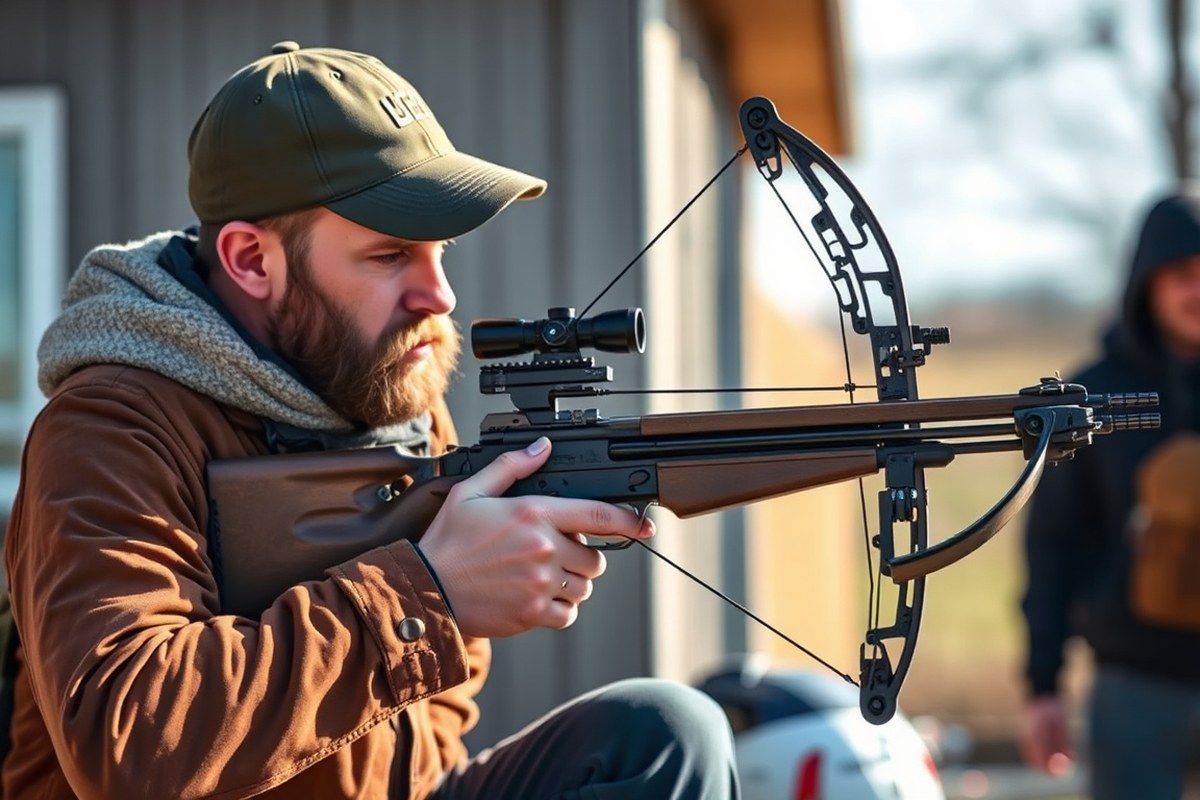
Iowa law requires crossbows used for hunting to meet specific technical standards on draw weight, bolt length, and safety features. The legal crossbow must have a functioning safety mechanism, sufficient draw weight to ensure ethical kills, and be mounted with a rigid stock designed for shooting from the shoulder. These rules vary slightly depending on the game being hunted.
Crossbow Draw Weight Requirements
A legal hunting crossbow in Iowa must have at least a 125-pound draw weight for big-game hunting such as deer. This draw weight requirement ensures the bolt has enough power to humanely take the animal down. For smaller game like turkey, the minimum draw weight requirement may be lower, but for most game hunting, 125 pounds is the standard. The crossbow must maintain this peak draw weight throughout the power stroke to comply with regulations.
Draw weight affects how much physical force is needed to cock the crossbow and how fast the bolt travels. Higher draw weight improves penetration and effective range but demands stronger arms or mechanical aids to cock. The crossbow must also be compound or recurve style mounted on a stock as required by Iowa hunting regulations.
Bolt and Broadhead Specifications
The bolts used in hunting crossbows must be at least 14 inches long to qualify as legal equipment. This length supports proper flight stability and sufficient penetration power with broadheads. Broadheads must be sharp and designed for a single projectile operation, meaning the crossbow fires one bolt at a time, complying with standard hunting rules.
Proper bolt length and blade design matter for ethical hunting to ensure a quick and humane kill. While Iowa does not specify maximum or minimum blade width or broadhead weight, the bolts must be suitable for the game targeted. For example, deer hunting usually requires heavier and sturdier bolts than those used for turkey.
Safety and Stock Requirements
A functional mechanical safety device is mandatory on all crossbows used for hunting. This safety prevents accidental discharge and is a legal requirement in Iowa. The trigger must have a positive safety mechanism that the hunter can easily engage and disengage.
The crossbow must have a rigid stock, generally at least 18 to 25 inches long, designed for shooting from the shoulder. The total length of the crossbow should be at least 24 to 25 inches from the butt of the stock to the front of the limbs. This design provides stability and accuracy during shooting and complies with legal standards. Failing to meet safety requirements, such as lacking a working mechanical safety or using an improperly designed stock, may result in violations that affect hunting privileges. Below is a table summarizing key legal crossbow specifications for various types of game hunting in Iowa:
| Game Type | Minimum Draw Weight (lb) | Minimum Bolt Length (inches) | Stock Length (inches) | Safety Requirement |
|---|---|---|---|---|
| Deer and Big Game | 125 | 14 | 24-25 | Positive mechanical safety |
| Turkey | 60-85 (varies, typically ≥75) | 14 | 24-25 | Working safety |
| Small Game (disability certificate) | 60 | 14 | 24-25 | Mechanical safety required |
This checklist helps ensure your crossbow meets Iowa’s hunting regulations. Carefully verify your crossbow against these specs, especially the draw weight and safety features, before going hunting. Using equipment that does not meet these requirements can lead to legal trouble and endanger your hunting privileges.
Hunting Licenses and Permits for Felons Using Crossbows
You can obtain a hunting license in Iowa as a felon, but you must meet all standard requirements and any specific restrictions that apply due to your felony status. There are no special licenses solely for felons, but your ability to use a crossbow legally for hunting depends on the licenses and permits you hold and whether crossbow use is allowed for your situation.
General Hunting License Eligibility
Every hunter in Iowa must have a current hunting license to hunt legally, including when using a crossbow during seasons that allow it. Having a felony on your record doesn’t automatically prevent you from getting a standard hunting license. Specific rules govern the use of weapons like crossbows that you must obey. Holding an archery license allows you to hunt with both a traditional bow and a crossbow during the designated archery seasons, so a separate crossbow license is not needed.
Before applying for any hunting license, you must meet Iowa’s residency and identification proof requirements. Licenses are available through the Iowa Department of Natural Resources (DNR) website or authorized vendors, such as sporting goods stores. Archery hunter education is required if you are a first-time buyer for archery deer hunting licenses.
Special Permits for Disability or Youth
Iowa offers specific permits that allow certain hunters to use crossbows outside the usual bow season. Residents age 65 or older qualify for a statewide antlerless-only crossbow deer license. Also, hunters with a qualifying permanent physical disability may apply for a DNR disability crossbow permit, which waives some restrictions on crossbow use.
Younger hunters under age 18 may apply for a Youth Hunting and Trapping License. Youth hunters participating in youth-only deer hunts must be supervised by a licensed adult at least 21 years old. These youth licenses allow hunting with crossbows during youth-specific seasons as authorized by Iowa laws.
Felony Status and License Restrictions
Felons do not receive special hunting licenses or permits based solely on their felony record, but felony convictions can impact eligibility in two main ways. First, restrictions on weapon possession under state or federal laws might limit what weapons, including crossbows, a felon may legally use. Second, the Iowa DNR may consider your criminal background if it affects your eligibility to hunt.
Despite these restrictions, the licensing process for felons follows the same steps as for other hunters. Failure to disclose felony status or illegally possessing a crossbow when prohibited can lead to criminal charges or loss of hunting privileges. Make sure to carefully review Iowa’s laws related to weapon possession for felons and consult legal advice if you have questions about your eligibility before applying for or using any licenses or permits. Follow these steps to apply for a hunting license in Iowa:
- Visit the Iowa DNR website or licensed retail vendor to create or access an account.
- Provide proof of residency, age, and identity as required.
- Complete required hunter education courses, including the bowhunter education course if applying for an archery or crossbow license.
- Select the appropriate hunting license based on your intended game and hunting season, such as an archery license if you plan to use a crossbow.
- Purchase any necessary permits, such as antlerless-only licenses or youth licenses, if applicable.
- Review any weapon use restrictions, especially if you have a felony conviction that may limit legal possession.
- Pay the license and permit fees (fees generally range from $15 to $30, varying by type and residency).
- Print or download your hunting license and keep it with you while hunting.
Check your felony status against Iowa’s weapon possession rules before buying a hunting license to avoid legal violations when hunting with a crossbow.
How to Restore Rights to Own Weapons in Iowa
You can restore your rights to own firearms, including crossbows, in Iowa through a formal process involving the Iowa Board of Parole and the Governor’s office. This process is known as the “Special Restoration of Citizenship” and generally applies to firearms rights, though crossbows typically do not require restoration of rights since they are not classified as firearms. Here’s how you can pursue the restoration of weapons possession rights.
Preliminary Determination and Application
Make sure you have fully completed your sentence, including any parole or probation periods, and maintained good conduct before applying for rights restoration. Begin the application by using the joint Application for Pardon and/or Restoration of Firearm Rights accessible on the Governor’s official site.
A preliminary determination may be requested by petitioning the Board of Parole, which can charge a $25 fee for this step. This helps establish if you qualify before submitting your full application. Once you decide to move forward, you submit your application to the Iowa Board of Parole for administrative review.
Board of Parole and Governor’s Role
The Iowa Board of Parole plays an advisory role by reviewing your application to assess whether you show evidence of being a law-abiding citizen. The full Board, which has five members appointed to staggered four-year terms, evaluates your background and conducts necessary investigations.
After review, the Board submits a non-binding recommendation to the Governor. The Governor holds the final authority and will approve or deny the restoration based on the Board’s recommendation and current policies. Governor Kim Reynolds’ policy generally allows for an automatic restoration of firearms rights five years after sentence completion under this “special restoration of citizenship” process.
Typical Timelines and Outcomes
The entire restoration process typically takes about two years from application submission to a final decision, according to the State of Iowa Board of Parole’s Executive Clemency Manual. You can apply at any time, but you must have completed all terms of your sentence and demonstrate good conduct.
Approval of your application restores your legal right to possess firearms in Iowa. Rejection means you can reapply later, but you need to address any reasons for denial, such as recent criminal conduct or failure to meet eligibility criteria. Since crossbows are not classified as firearms under Iowa law, restoring firearms rights is not necessary to legally own or hunt with a crossbow.
- Check eligibility: Ensure you have completed your entire sentence, including parole or probation.
- Request a preliminary determination: Optional but helps assess eligibility, including paying a $25 fee.
- Complete the joint Application for Pardon and/or Restoration of Firearm Rights, which you can download from the Governor’s website.
- Send the completed application by mail to the Iowa Board of Parole at 510 E 12th Street, Suite 3, Des Moines, IA 50319.
- Undergo review: The Board of Parole reviews your application and conducts background investigations.
- Board recommendation: The Board makes a recommendation to the Governor.
- Wait for Governor’s decision: The Governor decides on final approval, generally within two years.
- Receive notification: You will be informed about restoration status and any follow-up steps.
Comparison of Crossbows and Other Weapons Allowed for Felons
Felons in Iowa face different legal rules when it comes to owning or using various weapons, including crossbows, bows, air rifles, and knives. Crossbows are generally allowed for hunting if felons comply with Iowa’s specific regulations and hold any required permits. Bows like compound, recurve, and longbows have fewer restrictions and are often permitted without firearms-style limitations. Air rifles provide an alternative to firearms but usually have caliber restrictions to stay legal. Knives do not fall under federal firearms laws, but state laws and supervision agreements can narrow or forbid possession depending on the circumstances.
Understanding these differences matters for felons who want to engage in hunting or recreational target shooting legally. The table below clarifies the basic legal status of major weapon types for felons under Iowa law and common restrictions to watch for.
| Weapon Type | Legal Status for Felons in Iowa | Key Restrictions | Typical Use |
|---|---|---|---|
| Crossbows | Allowed with hunting permit and compliance with state rules | No possession of firearm ammunition; must meet arrow length and draw weight rules | Big game and authorized hunting seasons |
| Bows (Compound, Recurve, Longbow) | Generally allowed without firearm restrictions | Follow Iowa hunting equipment standards; supervision rules may apply | Hunting, target shooting |
| Air Rifles (.25 caliber or smaller) | Allowed for hunting; larger calibers may be restricted | Must not exceed calibre limits to be legal for hunting | Small game hunting, practice |
| Knives | Allowed unless supervision or parole conditions prohibit | Broad weapon possession bans may include knives; local ordinance variations | Hunting, tool use |
| Firearms (Rifles, Handguns, Shotguns) | Generally prohibited without rights restoration | Felons cannot possess firearms or ammunition unless rights restored | Hunting, defense |
Choosing safer weapon alternatives often requires reviewing supervision or parole conditions carefully. For example, if your supervision agreement bans all weapons, including crossbows and knives, using a compound bow might be a safer option but still requires confirmation. Air rifles under .25 caliber offer a chance to hunt small game without breaking firearm laws, yet calibers above that should be avoided. Crossbows provide a compromise with more power than traditional bows but come with more legal complexity and arrow restrictions.
When considering weapon possession, always start by checking your parole or supervision terms for any broad weapons bans. Then, follow Iowa hunting regulations to ensure your equipment meets minimum standards, such as arrow length and draw weight for crossbows. Hunting licenses and permits will typically specify which weapons are authorized. If you plan to hunt, verify that your chosen weapon and ammunition comply with both state law and your personal legal restrictions.
Common Legal Mistakes Felons Make About Crossbow Ownership
Many felons mistakenly believe that crossbows fall under the same strict federal firearm restrictions that apply to guns. This confusion can lead to unnecessary fear or unlawful possession. While crossbows are not classified as firearms under federal law, Iowa law still regulates their use, especially for hunting purposes. Assuming ownership automatically grants the right to hunt with a crossbow can result in legal trouble if state hunting rules aren’t followed precisely.
Another common error is failing to distinguish between owning a crossbow and using it legally for hunting. Iowa sets specific limits on hunting seasons, the types of harvesting equipment permitted during those times, and the allowable arrow characteristics. For example, during October and December muzzleloader seasons, hunters cannot carry or use crossbows; doing so is illegal, even on private land. Ignoring these seasons or equipment restrictions can lead to citations or loss of hunting privileges.
- Assuming a crossbow can be used anytime like a firearm without regard to hunting season rules.
- Using crossbow arrows that don’t meet length or foot-pound draw strength requirements.
- Hunting beyond the legal daily or season limit for deer with a crossbow.
- Carrying a crossbow during prohibited muzzleloader seasons.
- Believing private property permission overrides legal restrictions on weapon possession.
- Failing to apply for or maintain required hunting licenses or permits.
To avoid these mistakes, carefully review Iowa’s hunting regulations for crossbows before heading out. Verify the arrow specifications: crossbows must use arrows with a minimum length of 10 inches and a minimum kinetic energy of 42 foot-pounds at 10 feet to comply. Track the number of deer harvested and do not hunt further that day once you’ve reached your legal limit, whether by bow, crossbow, or firearm. These adherence steps prevent unintentional legal violations.
Always confirm current hunting season dates and allowed equipment annually through the Iowa Department of Natural Resources to stay compliant.
Clarifying these details ensures you don’t mistake legal ownership for unrestricted use. Hunting laws aim to regulate wildlife sustainability and safety, so understanding when and how you can hunt with a crossbow is as important as knowing your ownership rights. Double-check license requirements and respect all season restrictions, especially if you hold a felony record, to avoid jeopardizing your rights or facing penalties.
Practical Steps to Verify Legal Status and Avoid Violations
Verifying your legal status before possessing a crossbow in Iowa helps prevent criminal charges and ensures you follow all state and federal laws. Knowing exactly where you stand lets you avoid costly legal issues, which can affect your freedom and hunting privileges. Taking organized steps to confirm your rights gives you clarity and confidence.
Start with a straightforward checklist to review your history and contacts. Then use official resources to get written or direct answers that apply specifically to you. Always consider consulting a legal professional if your case involves complex felony records, recent convictions, or unclear restoration of rights, because they can provide personalized advice on what weapons you may legally possess and under what conditions.
- Check Your Criminal Record and Offense Details, Obtain a copy of your Iowa criminal record from the Iowa Department of Public Safety or county clerk’s office. Verify the exact felony convictions and dates, especially noting any violations under chapter 707 (homicide and related crimes), which exclude automatic rights restoration. This clarifies your baseline for eligibility.
- Review Iowa Weapons Laws Specific to Felons, Consult the Iowa Code and Administrative Rules related to weapons restrictions, paying attention to how crossbows are categorized. Iowa typically restricts firearm possession for felons, but crossbows may be treated differently. Know that possession legality depends on your current legal status and local regulations.
- Contact the Iowa Department of Natural Resources (DNR), Reach out to confirm if there are any hunting permits required for using crossbows as a felon and whether your status allows it. Use this script when calling: “Hello, I’m a felon seeking clarification on whether I may legally possess and use a crossbow for hunting in Iowa. Could you please provide current rules or direct me to the correct resource?” Phone: (515) 725-8200.
- Request a Written Opinion or Clarification, Send a written inquiry to the Iowa Attorney General’s office or local law enforcement with details of your felony and question about crossbow possession. Written records can support your compliance. Sample request: “I am writing to request confirmation on my legal status regarding the possession of crossbows as a convicted felon in Iowa. Attached are details of my case for your review.”
- Consult a Licensed Attorney Specializing in Weapons Law, Seek professional advice if your situation is complex, such as having multiple convictions or unclear rights restoration. Costs vary but expect to pay from $150 to $300 per consultation. An attorney provides guidance on how to apply for rights restoration if needed and how to avoid violations.
- Verify Restoration of Rights Status, If you’ve applied for restoration, confirm approval through the Iowa Board of Parole or court documents. Do not assume all rights return automatically unless specifically stated. Having this documentation protects you if questioned by law enforcement.
- Keep Documentation Accessible, Always carry copies of your restoration orders, hunting permits, and any legal opinions while possessing or hunting with a crossbow. Proper paperwork reduces disputes during license checks or stops by game wardens.
Following these steps takes time but provides proof and peace of mind. Clarifying your legal right to own or use a crossbow avoids inadvertent violations and supports respectful hunting practices under Iowa law.
Special Permits, Exceptions, and Hunting Conditions for Felons
Felons in Iowa generally face strict restrictions on owning or using weapons like crossbows, but certain permits can create exceptions, especially for disabled hunters. Disabled individuals qualifying under state guidelines may apply for a Disabled Archer Permit. This permit allows the use of a crossbow during archery season if accompanied by valid medical certification proving an upper-extremity disability that impedes traditional bow use. Obtaining this permit requires submitting medical documentation and applying through the Iowa Department of Natural Resources, typically incurring standard hunting license fees plus any permit charges. This exception recognizes the physical challenges that disabled hunters face while ensuring compliance with hunting regulations.
Youths and seniors also receive special hunting privileges, though these generally do not override legal restrictions tied to felony convictions. For felons, no broad exceptions exist that specifically restore weapon possession rights based on age or disability alone. However, under certain conditions, disabled hunters may bring an aide or assistant to help during a hunt. The hunter must notify the site superintendent beforehand and clarify whether the assistant will also hunt. This accommodation facilitates access but does not extend to felons barred from owning crossbows due to felony status.
All crossbow permits issued before July 1, 2026, expired as of June 30, 2026. Any new application for permits supporting disabled hunters must follow updated procedures set by the Iowa DNR. Hunters should ensure their permits and licenses align with current regulations to avoid legal infractions. Also, possession of hunting permits is nontransferable, and hunting with someone else’s permit is unlawful. Felons must verify that any special permits they seek do not conflict with state or federal prohibitions related to their convictions.
Certain felonies may impose more stringent weapon or hunting restrictions in Iowa beyond general prohibitions, but no automatic exemptions exist within the special permits framework. Felons interested in hunting with a crossbow must carefully review whether their specific offense qualifies for an exception or requires additional legal steps to restore weapon privileges. For disabled persons seeking crossbow access, the process involves obtaining medical certification, submitting a permit application, and complying with all hunting season regulations, including carrying the proper archery tags.
DNR rules also limit crossbow use to specific seasons and conditions. For example, during archery deer seasons, firearms are generally prohibited among bow and crossbow hunters unless a specific firearm-season or pistol-license exception applies, which rarely benefits those with felony records. Some wildlife management areas restrict crossbow use to permit holders with documented disabilities, further emphasizing the need to meet eligibility criteria strictly. Felons using a disabled hunter exception must maintain valid permits and adhere to all site and season requirements to avoid violations.
Step-by-Step Action Plan for Felons Considering Crossbow Use in Iowa
Follow these steps to check your ability to legally own or use a crossbow in Iowa and stay compliant with the law.
- Before you start: Review your felony record details to confirm the charges and sentencing. This helps determine your eligibility under state and federal laws.
- Week 1: Contact the Iowa Department of Natural Resources or visit their website to understand crossbow hunting rules and license requirements for your situation.
- Week 2: Consult a qualified attorney licensed in Iowa who specializes in firearm and hunting laws for felons. Verify if your rights to possess weapons, including crossbows, have been restored or permanently barred.
- Week 3: If eligible, apply for the appropriate hunting license or special permit. Track approval status to confirm your right to hunt legally with a crossbow.
- Week 4: Purchase a legal crossbow model that complies with Iowa regulations. Keep documentation proving legal ownership and licensing.
- Ongoing: Regularly verify any changes in Iowa and federal laws affecting felon ownership of crossbows. Adjust your permissions and permits accordingly.
- Before hunting season: Double-check onsite regulations and reporting requirements where you plan to hunt to avoid unintentional violations.
Frequently Asked Questions
Can You Own a Crossbow If You Have a Felony?
In Iowa, felons can own a crossbow since it’s not classified as a firearm under federal or state law. However, always check specific restrictions and hunting regulations that might apply.
Can a Felon Get a Bow and Arrow?
Yes, felons can legally own compound bows, recurve bows, and longbows in Iowa and all other states. These are not considered firearms and can be used for hunting if properly licensed.
Can I Have a Gun in My House If a Felon Lives with Me?
Federal law generally prohibits felons from possessing firearms, but having a gun in the home where a felon lives can be illegal without legal exceptions. It’s best to consult an attorney for your specific situation.
In What States Can Felons Bow Hunt?
Felons can hunt with bows in all 50 states because bows are not firearms under federal law. Specific hunting license requirements vary, so check state regulations carefully before hunting.
Can a Felon Own a Crossbow Pistol?
Crossbow pistols and any with prohibited electronic or tritium-powered devices are illegal for felons to own under Iowa law. Only standard crossbows meeting legal specs are allowed.
Does Iowa Allow Felons to Hunt with Air Guns?
Yes, air guns are legal for felons in Iowa because they are not firearms under federal law, provided hunting seasons and licensing rules are followed.
Key Points to Remember
Felons in Iowa face significant restrictions on owning or using a crossbow but may qualify to do so under specific conditions and after restoring rights. Taking concrete steps to verify your legal status and obtaining the proper licenses is essential. Start by consulting legal counsel and checking your eligibility to ensure you stay within the law while pursuing crossbow hunting activities.