Top 13 Best Portable Radios with Police Scanner You Need!
Many people relying on the best portable radios with police scanner know the frustration of poor reception and short battery life. Cheap models often miss critical transmissions or lose signal in key areas.
A radio that can’t capture frequencies clearly or runs out of power quickly becomes more of a burden than a tool in situations where staying informed matters.
A good portable radio with police scanner generally offers strong, clear reception across multiple frequency bands, including public safety and emergency channels. Battery life plays a big role, with many solid models lasting between 8 to 12 hours on a charge or replaceable batteries. Size and durability also matter since these devices are often used outdoors or in rough conditions; a compact, rugged design ensures it can handle the environment without damage or discomfort during extended use.
Need a Quick Check?
| Image | Product | Price |
|---|---|---|
Our Top Picks 1  | Uniden BC125AT Scanner | Check Price |
Our Top Picks 2  | Uniden SR30C Radio Scanner | Check Price |
Our Top Picks 3  | Uniden BC365CRS Alarm Scanner | Check Price |
Our Selected Top 13 Portable Radios with Police Scanner You Can Trust
This list features reliable portable radios equipped with police scanner capabilities, highlighting their performance, suitability for different users, and key advantages and drawbacks. Readers will gain clear insights to help choose the best option to meet their specific needs and preferences.
1. Uniden Bearcat BC125AT Handheld Scanner
Trying to catch local police and emergency signals without bulky equipment can be tricky. Perfect for hobbyists or those wanting to stay informed in certain areas, this compact handheld scanner handles analog frequencies with ease, making it easy to tune into nearby transmitters on the go.
Setting it up is straightforward, thanks to a clear digital display and 500 alpha-tagged channels that let you organize and identify stations quickly. The Close Call RF capture pops up transmissions from nearby sources instantly, so active signals grab your attention right away.
When someone’s transmitting, a Do Not Disturb mode stops interruptions from the Close Call checks, helping keep your listening focus uninterrupted.
Designed mainly for analog scanning, this unit covers a wide frequency range from low VHF to UHF, reaching up to 50 kilometers under the right conditions. The build is nicely compact but not water resistant, so it needs some care outdoors. Most praise goes to its quick signal capture feature, while some users wish it could handle newer digital systems as many agencies now use digital trunking.
Instant Close Call tuning stands out as a major advantage, making it easy to find nearby transmissions quickly. Most users find its inability to listen to digital systems a clear downside, especially with many emergency agencies moving to digital trunking.
Those focused on analog police, fire, or emergency frequencies in less urban areas will appreciate its features and range. People needing digital system support should consider a scanner designed for trunked digital formats instead.
Pros
- Instantly tunes to nearby signals with Close Call technology
- Compact and easy to carry design
- Long battery life around 10 hours
- 500 alpha-tagged channels for easy identification
Cons
- Not compatible with digital radio systems
- Not water resistant, care needed outdoors
| Specification | Details |
|---|---|
| Number of Channels | 500 |
| Frequency Range | 25-54 MHz, 108-174 MHz, 225-380 MHz, 400-512 MHz (UHF) |
| Battery Average Life | 10 hours |
| Voltage | 3 volts |
| Batteries Required | 2 AA batteries (included) |
2. Uniden Bearcat SR30C Handheld Radio Scanner
Access to over 32,000 preset frequencies makes this handheld scanner ideal for anyone wanting a wide range of scanning options in a portable design. It fits well for hobbyists or professionals who need quick access to police, fire, weather, and other bands. Its compact size and affordability stand out as the biggest advantages.
Setting up involves simple PC programming through a USB connection, which means you can customize channels without finger-fiddling on the device itself. Daily usage is straightforward thanks to ten preset service banks, including NOAA Weather and Ham Radio.
It runs on AA batteries or USB power, so swapping power sources feels flexible during long listening sessions.
Performance delivers clear reception on all major non-digital bands, maintaining reliable scanning across 500 channels. The build quality balances lightweight portability with sturdy construction. Many praise its extensive frequency range and ease of use, while some find the audio output to be limited to mono, which can feel less rich compared to stereo options.
The scanner earns praise for its extensive frequency presets, making it easy to find relevant channels quickly. Common complaints focus on mono audio output, which some users consider less enjoyable for longer listening sessions. The unit’s compact design and versatility in power options support ease of use day to day.
Anyone looking for a broad range of police, emergency, and specialty scans in a portable device will find this scanner practical. Those who want stereo sound or support for multiple frequency bands may want to investigate other options better suited to those needs.
Pros
- Wide preset frequency banks for easy listening
- PC programming simplifies channel setup
- Runs on both AA batteries and USB power
- Compact and lightweight for portability
Cons
- Audio output limited to mono sound only
- Only supports 1-band frequency range
| Specification | Details |
|---|---|
| Frequency Support | 32000 MHz |
| Channels | 500 |
| Power Source | USB, Battery-Powered (AA required) |
| Connectivity | USB |
| Additional Features | Close Call RF Capture, Turbo Search, PC Programming |
| Audio Output Mode | Mono |
3. Uniden BC365CRS Scanner and Alarm Clock
People who want a compact device combining a police scanner, alarm clock, and FM radio will appreciate this model. Designed for those interested in monitoring various emergency and communication channels without fuss, its biggest strength lies in offering 500 channels ready to use with convenient presets for popular frequencies.
Setting it up is straightforward, with push-button controls that help switch between scanner, radio, and alarm functions easily. Daily use benefits from preset memories allowing quick access to up to 30 FM stations. The tabletop design makes it stable and accessible, while power comes from either corded electric or 3 AA batteries, keeping it flexible for different settings.
The scanner performs well, capturing a wide range of bands including police, fire, weather, marine, and aircraft. Build quality is solid for a desktop device, though some find the 50 dB audible noise level a bit noticeable. The common praise focuses on its versatility, while a frequent complaint concerns its reliance on corded power or batteries rather than internal rechargeable options.
The main advantage lies in the variety of preset channels allowing you to tune into multiple communication bands right away. Some users find that relying on corded electric power or swapping AA batteries can be inconvenient for portability. The sound can sometimes be a bit loud in quiet environments.
Anyone wanting a straightforward, multi-function device for home or office scanning and radio listening will find this practical. Those seeking a fully portable unit with rechargeable batteries and quieter operation might want to explore other scanner options.
Pros
- Includes 500 channels with presets for ease
- Holds up to 30 FM radio station presets
- Runs on corded power or 3 AA batteries
- Compact tabletop design fits any desk
Cons
- Requires external power or battery replacement
- Audible noise level may be distracting
| Specification | Details |
|---|---|
| Power Source | Corded Electric |
| Number of Channels | 500 |
| Battery Description | Alkaline |
| Number of Batteries | 3 AA batteries required |
| Audible Noise | 50 db |
| Mounting Type | Tabletop Mount |
4. A330 Portable SSB Shortwave Radio Receiver

Covering a huge range of frequencies including police scanner bands and shortwave, the A330 Portable SSB Shortwave Radio Receiver suits anyone looking for wide access in one compact device. Its standout feature is the ability to handle SSB reception alongside FM, MW, VHF, and UHF, making it versatile for scanning and listening across multiple channels.
Setting it up means powering on and quickly navigating through 1,400 station memory slots via the clear blue-backlit LCD screen. Bluetooth 5.2 connectivity and app control add flexibility for remote use or music playback from a TF card.
Day-to-day listening benefits from quick band switching and BFO fine-tuning for clean sideband audio, making it easy to switch from police channels to shortwave broadcasts or air frequencies.
The radio performs strongly in picking up distant signals with clear demodulation on AM, LSB, and USB modes. Its build fits well in hand but lacks water resistance, requiring care outdoors.
Praise often goes to the detailed frequency coverage and memory capacity. The most common drawback is the need for a nonstandard battery, which might complicate replacements.
The ability to clearly tune AM, LSB, and USB signals across many bands receives high praise, allowing detailed shortwave and scanner listening. However, the nonstandard battery often appears as a drawback in reviews because replacements aren’t readily available, which may interrupt continuous use.
People who want an all-in-one radio combining broad frequency access with modern connectivity will find this receiver satisfying. Those needing rugged, waterproof gear or straightforward battery swaps might want to look elsewhere for a better match to their needs.
Pros
- Covers wide range including SSB, VHF, UHF, and police bands
- Large 1400-station memory for easy access
- Bluetooth 5.2 for wireless music playback
- Clear display with good outdoor visibility
Cons
- Uses nonstandard battery complicating replacements
- Not water resistant, needs cautious outdoor use
| Specification | Details |
|---|---|
| Frequency Coverage | FM (64-108MHz), MW (520-1710kHz), SW (2.3-30MHz), AIR (118-138MHz), CB (25-28MHz), VHF (20-250MHz), UHF (250-999MHz), WB (162.4-162.55MHz) |
| Number of Channels | 1400 |
| Bluetooth Version | 5.2 |
| Battery Type | 1 Nonstandard Battery (included) |
| Display | STN LCD blue-backlit screen |
5. Whistler WS1025 Analog Desktop Scanner
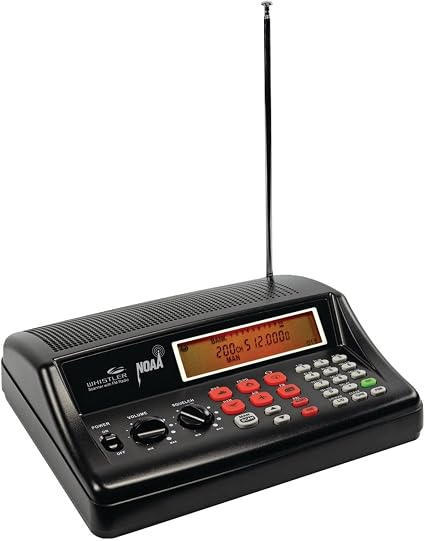
Whistler WS1025 Analog Desktop Scanner stands out for serious hobbyists looking to monitor multiple radio channels with precision. It fits best with experienced scanner users who want consistent scanning performance and control over priority channels without fuss.
Setup involves connecting via Bluetooth, which keeps things tidy without extra cables. Day-to-day scanning benefits from features like priority channel scanning every two seconds, and a two-second delay to catch responses clearly. The tune function comes in handy to discover new or unlisted frequencies starting from a selected point.
Performance on picking up analog channels delivers reliability; signals come through clearly with a 200 dpi resolution on its radio display. The build is solid enough for desktop use though it’s not lightweight or portable in the usual sense. It often wins praise for consistent scanning but some users find it technical and challenging upfront.
The scanner is praised for its steady and accurate scanning, especially managing priority channels well, which helps catch important transmissions. On the downside, setting it up and mastering all features can be difficult for those new to desktop scanners.
This product suits users comfortable with more advanced radio scanning who want detailed control over channels. People seeking a lightweight, simple, or truly portable device will want to explore alternatives better tailored to easy or mobile use.
Pros
- Priority channel scanning every two seconds
- Scan delay catches replies clearly
- Tune feature finds unlisted frequencies
- Bluetooth connection reduces cable clutter
Cons
- Requires experience to operate effectively
- Not designed for portable use
| Specification | Details |
|---|---|
| Scanner Type | Radio |
| Connection Type | Bluetooth |
| Resolution | 200 dpi |
| Standard Sheet Capacity | 300 |
| Optical Sensor Technology | CCD, CMOS |
| Light Source Type | LED |
6. Uniden SDS150 Digital Radio Scanner

Carrying a compact scanner that picks up a wide range of digital and analog signals feels practical and reliable with this model. Perfect for anyone needing a portable radio scanner that combines thorough coverage with user-friendly controls, it shines most in its improved signal reception and clear digital display.
Getting started involves straightforward steps thanks to the simplified interface and the new control layout. Day-to-day use benefits from built-in Bluetooth and a charge cradle, making it easy to keep powered and connected.
The included GPS receiver helps keep track of locations, while compatibility with a smartphone app adds a layer of customization and monitoring convenience.
Signal filtering really cuts down on interference, so it performs well across various radio types including trunking systems and multiple digital formats. Rugged yet lightweight, the scanner feels solid without dragging you down during extended use.
Users praise its sensitivity and battery life, but some mention that the nonstandard battery can be tricky to replace.
The scanner’s enhanced sensitivity and clear digital display make it exceptionally good at picking up a wide range of signals without interference. The most common downside is dealing with the nonstandard battery, which complicates swapping out and might require ordering replacements separately.
People who need reliable scanning in the field and value detailed digital modes will appreciate this model. Those wanting a simpler or fully standard battery system might find other options easier to manage for everyday use.
Pros
- Improved signal reception and filtering
- Integrated GPS receiver for location tracking
- Long-lasting battery with charge cradle
- Lightweight yet durable for daily use
Cons
- Requires nonstandard battery replacement
- Some complex radio modes can be challenging to configure
| Specification | Details |
|---|---|
| Connectivity Technology | Bluetooth |
| Power Source | Battery Powered |
| Radio Bands Supported | AM, NFM, FM, WFM, or FMB |
| Tuner Type | TrunkTracker X, APCO P25 Phase I & II, Motorola, EDACS, LTR DMR Tier III*, Hytera XPT*, Single-Channel DMR* NXDN 4800/9600*, EDACS ProVoice* |
| Display Type | digital |
7. Uniden SDS100 True I/Q Digital Handheld Scanner

A powerful digital handheld scanner aimed at serious enthusiasts and professionals who want quick access to US and Canadian radio systems. Its biggest strength lies in a True I/Q receiver that shines in weak-signal and simulcast radio environments, offering clear reception where many others struggle.
Getting started is practical with simple programming through zip code entry, which reduces the usual hassle. The HomePatrol database comes preloaded, and weekly updates keep it current.
A customizable color display helps you focus on the info you want, while the USB connection and MicroSD card slot make managing content straightforward. It feels sturdy enough for daily carry and operation.
Reception is excellent, especially when tuning into digital and trunked radios, showing clear audio in tough signal conditions. The unit’s build quality is solid, designed for frequent use without feeling flimsy.
Most praise centers on its performance in complex environments, though some users mention a learning curve with programming and navigating menus initially.
The scanner delivers crisp reception even in challenging radio environments, highly praised for its True I/Q digital performance. A common downside is the complexity experienced during the initial programming and menu operations, which can be confusing at first.
Those needing reliable access to a wide range of digital radio systems in the US and Canada will find it a solid choice. People looking for an immediate, plug-and-play experience might prefer a simpler model with fewer features.
Pros
- Excellent digital and weak-signal reception
- Customizable color display
- Includes updatable HomePatrol database
- Simple zip code programming
Cons
- Learning curve for programming and menu navigation
- Some find initial setup somewhat complex
| Specification | Details |
|---|---|
| Scanner Type | Digital Handheld Scanner |
| Connection Type | USB |
| Resolution | 24 Bits |
| Color Depth | 24 |
| Media Type | MicroSD Card |
8. Uniden BCD325P2 Handheld TrunkTracker V Scanner

Built with a sturdy black design, the Uniden BCD325P2 Handheld TrunkTracker V Scanner suits anyone looking to track police and emergency signals on the go. Its biggest strength is the Close Call RF Capture Technology, which automatically locks on to nearby transmissions, making it perfect for staying informed about local activity without manual tuning.
Setup involves programming channels easily using the Quick-Key System Access, letting you save and switch between your preferred frequencies quickly. Daily use revolves around scanning up to 25,000 channels with automatic nearby signal detection.
GPS compatibility adds location context to signals, making it simpler to understand where events are happening around you during routine monitoring.
The scanner handles wide frequency coverage well and reliably finds relevant transmissions with its Close Call feature. Construction feels solid and practical for handheld use. On the positive side, it’s praised for simple key access to common systems.
A frequent downside mentioned is the somewhat complex menu system for beginners getting started.
Easy access to preferred systems is a standout feature, while the complicated menus occasionally cause frustration for users trying to set up or adjust settings quickly. The Close Call RF technology reliably finds nearby signals without constant manual tuning.
Great fit for anyone focused on local police or emergency communications who wants automatic nearby signal detection. Those needing a simpler interface or more basic scanner might want to look elsewhere.
Pros
- Quick-Key System Access for favorite channels
- Captures nearest signals automatically
- Supports up to 25,000 channels
- GPS compatibility adds location data
Cons
- Menu navigation can be confusing
- Black color depth described vaguely
| Specification | Details |
|---|---|
| Scanner Type | Radio |
| Connection Type | gps |
| Wattage | 20 watts |
| Resolution | 2400 dpi |
| Media Type | USB |
9. Whistler TRX-1 Digital Police Scanner Radio

Compact and thoughtfully designed, the Whistler TRX-1 Digital Police Scanner Radio is great for those wanting detailed and flexible scan management. Its biggest strength lies in the ability to organize and scan multiple lists at once, making it perfect for serious scanner enthusiasts who track several sources simultaneously.
Setting up the scanner involves creating customized Scanlists, up to 200 in number, with the option to group the same objects into multiple lists. Daily use benefits from clearly audible alerts and a tri-color LED that can flash in different colors and patterns, making it easy to know when important traffic is happening, even from a distance or in noisy environments.
Performance feels reliable for receiving various police and emergency signals, with technology that supports detailed scanning through its USB connection. The build is straightforward, focusing on functionality rather than extra gadgets.
One common praise highlights the long 50-hour recording capacity on the included 2GB MicroSD card, while some express that the design could feel a bit bulky for carrying around constantly.
Strong praise centers on the recording feature, allowing long hours of audio capture that can be reviewed later on the device or transferred to a PC. A common complaint involves its size, which some find less convenient for portable use compared to smaller scanners.
This is a solid pick for those who prioritize deep customization and extensive recording capabilities in a scanner. Different users seeking more compact or touchscreen-operated radios might want to explore other options better suited to those preferences.
Pros
- Flexible Scanlist management with up to 200 lists
- Customizable tri-color LED alerts
- Record and playback up to 50 hours of radio traffic
- Includes 2GB MicroSD card for storage
Cons
- Design can be bulky for some users
- No detailed touchscreen interface
| Specification | Details |
|---|---|
| Scanner Type | other |
| Connection Type | USB |
| Resolution | 300 |
| Optical Sensor Technology | CIS |
| Media Type | USB |
10. Uniden BCD436HP HomePatrol Digital Handheld Scanner

Perfect for anyone wanting a powerful handheld scanner that’s easy to use, it stands out by requiring no complex setup. Just enter a zip code and it automatically picks up local police, fire, EMS, and other communications, making it ideal for beginners and casual listeners who want a reliable scanner without fuss.
Setting it up takes moments since no programming is needed. You simply turn it on, enter your zip code, and the built-in TrunkTracker V technology does the rest by scanning up to 85 channels per second.
The large, clear display helps you see frequencies and channels easily, while GPS connectivity gives added location accuracy for tracking. Battery life runs about 8 hours on three AAA batteries to keep you going during extended use.
It performs well by quickly capturing communications across a wide range from 25 to 1300 MHz, including public safety and weather alerts. The build is solid for handheld use, but note it isn’t water resistant, so keep it dry. Many praise its straightforward operation and speed, though some users wish it offered battery recharge options instead of relying on disposable batteries.
The scanner’s main praise is for its ease of use and quick setup, making radio tracking accessible without technical knowledge. The most frequent complaint centers on the reliance on disposable batteries and the lack of water resistance, which limits rough outdoor use.
People wanting a simple, ready-to-go handheld scanner for everyday local monitoring will appreciate how it works out of the box. Those needing waterproof design or rechargeable batteries should look for alternatives better suited to demanding environments.
Pros
- No programming required, just enter zip code
- Fast scanning of up to 85 channels per second
- Extra-large display for easy reading
- Built-in weather alert and GPS connectivity
Cons
- Not water resistant, so needs protection from moisture
- Uses disposable AAA batteries, no rechargeable option
| Specification | Details |
|---|---|
| Number of Channels | 85 |
| Scan Speed | 85 channels per second |
| Frequency Range | 25-512 MHz, 758-824 MHz, 849-869 MHz, 894-960 MHz, 1240-1300 MHz |
| Battery Average Life | 8 hours |
| Number of Batteries | 3 AAA batteries required |
| Connectivity Protocol | GPS |
11. Uniden Beartracker 885 Hybrid CB and TrunkTracking Scanner
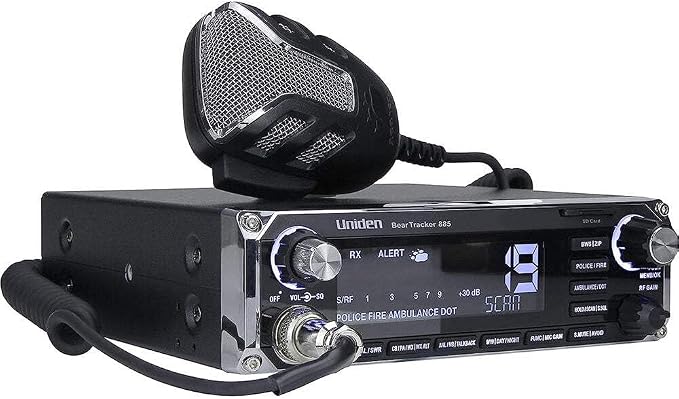
Staying informed about local emergencies and public safety activity while traveling can be challenging, but this device meets that need. Ideal for drivers and outdoor enthusiasts who want a reliable CB radio combined with police scanner features, its biggest strength is the BearTracker Warning System that keeps you alerted to nearby public safety transmissions.
Setup involves connecting the unit to a 12-volt power source and tuning the antenna with the built-in SWR meter for best reception. The included GPS automatically selects local channels from a nationwide database, making daily scanning straightforward.
You can switch between 40 CB channels, listen to NOAA weather alerts, and adjust RF and microphone gain for clear, customized audio.
Performance-wise, the scanner picks up police, fire, ambulance, and DOT traffic across the US and Canada reliably. The 7-color display makes channel info easy to read in varying light.
It’s solidly built for vehicle use but lacks water resistance, so keeping it dry is important. The most praised feature is its alert system that truly helps users stay updated, while the lack of water resistance is the most noted downside.
The alert system effectively notifies users of nearby emergency transmissions, making it a helpful tool for staying informed. A common drawback is the lack of water resistance, so it requires protection from moisture. Setup is user-friendly, but the limited talking range restricts practical communication to very close distances.
People who drive regularly or spend time in areas with public safety radio coverage will benefit from this hybrid radio and scanner. Those needing longer range communication or a weatherproof device might want to consider alternatives better suited for rugged outdoor use.
Pros
- Automatic local channel selection via GPS
- Includes NOAA Weather alerts
- Built-in BearTracker Warning System
- Adjustable RF and microphone gain controls
Cons
- Not water resistant
- Very short talking range of 1 meter
| Specification | Details |
|---|---|
| Number of Channels | 40 |
| Voltage | 12 volts |
| Talking Range Maximum | 1 meter |
| Tuner Type | UHF |
12. BJ8300 Handheld HF SSB CW Shortwave Radio

Having 960 channels and a built-in spectrum analyzer makes this device great for serious radio hobbyists and emergency responders. It suits those who want detailed frequency control along with ham radio capability and NOAA weather updates in a single handheld unit.
Setting it up is mostly about downloading the Walkie Talkie Tool app, which avoids messing around with cables. On the go, dual PTT buttons help with hands-free communication, and the 1.77-inch color display keeps everything readable. Long-range reach of up to 8 miles works well in open areas.
It runs on a single 9V battery, so swapping power sources is straightforward.
Listening to a broad range of bands, from HF to FM and airband, makes it versatile for many communication needs. It’s solid but not water resistant, so extra care is needed outdoors.
Users appreciate the straightforward app programming and frequency copying. Complaints center on the lack of water resistance, limiting its use in wet conditions.
Many find the app programming feature highly convenient, making on-site frequency management simple. The major downside is the radio’s lack of water resistance, which restricts outdoor use during bad weather. The spectrum analyzer is a notable bonus for scanning multiple channels in real time.
The handheld radio fits those needing detailed scanning and multi-band reception in mostly dry conditions. Anyone requiring something rugged and waterproof should look elsewhere. Its range and digital features appeal mainly to serious hobbyists or professionals working in controlled environments.
Pros
- App programming without computer cable
- Built-in spectrum analyzer for frequency monitoring
- Dual PTT buttons for easier communication
- Supports multiple bands including NOAA weather
Cons
- Not water resistant, poor for wet environments
- Uses a single 9V battery, limits operation time
| Specification | Details |
|---|---|
| Number of Channels | 960 |
| Frequency Range | 144-148Mhz / 420-450Mhz |
| Talking Range Maximum | 8 mile |
| Water Resistance Level | Not Water Resistant |
| Number of Batteries | 1 9V battery (included) |
13. Midland LXT600VP3 Walkie Talkies 2 Pack

People who need reliable walkie talkies for outdoor adventures or group coordination will appreciate these radios. Best suited for those operating in open spaces, their longest-range communication is the standout feature, keeping you connected across wider distances than most other models.
Setup is straightforward with included rechargeable battery packs, though you can swap in 4 AAA alkaline batteries for backup power. Switching channels is simple, aided by 121 privacy codes plus extra channels to reduce interference. The NOAA Weather Scan and Alert keep you posted on changing weather conditions, adding safety during extended outdoor use.
Performance lives up to the 30-mile maximum talking range in clear conditions, offering reliable clarity that holds up well. The radios feel solid and water resistant, tough enough for rough outdoor handling.
Praise centers on the extended privacy code options; a common complaint involves the battery life lasting about 6 hours, which may require carrying spares for longer trips.
The combination of multiple privacy codes and NOAA weather alerts makes these radios reliable for blocking out chatter and staying updated during weather changes. The battery life, though reasonable, does require carrying extra power sources for long outings or heavy use.
Outdoor enthusiasts and groups needing extended range communication will find these radios helpful. Those expecting all-day battery endurance without recharging might want to consider alternatives with longer battery life.
Pros
- Long 30-mile communication range
- Dual power with rechargeable and AAA options
- 121 privacy codes for clear conversations
- NOAA Weather Alert and Scan included
Cons
- Battery lasts about 6 hours only
- AAA batteries not included in package
| Specification | Details |
|---|---|
| Number of Channels | 36 |
| Talking Range Maximum | 30 mile |
| Battery Average Life | 6 hours |
| Frequency Range | 136 174 mhz |
| Voltage | 1.5 volts |
| Water Resistance Level | Water Resistant |
Comparison of Best Portable Radios with Police Scanner
| Product | Channels | Frequency Range | Battery Type | Water Resistance |
|---|---|---|---|---|
| Uniden BC125AT Scanner | 500 | 25-54,108-174,225-380,400-512 MHz | 2 AA batteries | Not Water Resistant |
| Uniden SR30C Radio Scanner | – | 32000 MHz | USB, Battery Powered | – |
| Uniden BC365CRS Alarm Scanner | – | – | 3 AA batteries | – |
| A330 Portable SSB Receiver | 1400 | – | 1 Nonstandard battery | Not Water Resistant |
| Whistler WS1025 Desktop Scanner | – | – | – | – |
| Uniden SDS150 Digital Scanner | – | – | Battery Powered | – |
| Uniden SDS100 I/Q Handheld | – | – | – | – |
| Uniden BCD325P2 TrunkTracker | – | – | – | – |
| Whistler TRX-1 Police Scanner | – | – | – | – |
| Uniden BCD436HP HomePatrol | 85 | 25-512,758-824,849-869,894-960,1240-1300 MHz | 3 AAA batteries | Not Water Resistant |
| Uniden Beartracker 885 Scanner | 40 | – | 12 volts | Not Water Resistant |
| BJ8300 HF SSB Radio | 960 | 144-148,420-450 MHz | 1 9V battery | Not Water Resistant |
| Midland LXT600VP3 Walkie Talkies | 36 | 136-174 MHz | 3 AAA batteries | Water Resistant |
- Channels500
- Frequency Range25-54,108-174,225-380,400-512 MHz
- Battery Type2 AA batteries
- Water ResistanceNot Water Resistant
- Channels–
- Frequency Range32000 MHz
- Battery TypeUSB, Battery Powered
- Water Resistance–
- Channels–
- Frequency Range–
- Battery Type3 AA batteries
- Water Resistance–
- Channels1400
- Frequency Range–
- Battery Type1 Nonstandard battery
- Water ResistanceNot Water Resistant
- Channels–
- Frequency Range–
- Battery Type–
- Water Resistance–
- Channels–
- Frequency Range–
- Battery TypeBattery Powered
- Water Resistance–
- Channels–
- Frequency Range–
- Battery Type–
- Water Resistance–
- Channels–
- Frequency Range–
- Battery Type–
- Water Resistance–
- Channels–
- Frequency Range–
- Battery Type–
- Water Resistance–
- Channels85
- Frequency Range25-512,758-824,849-869,894-960,1240-1300 MHz
- Battery Type3 AAA batteries
- Water ResistanceNot Water Resistant
- Channels40
- Frequency Range–
- Battery Type12 volts
- Water ResistanceNot Water Resistant
- Channels960
- Frequency Range144-148,420-450 MHz
- Battery Type1 9V battery
- Water ResistanceNot Water Resistant
- Channels36
- Frequency Range136-174 MHz
- Battery Type3 AAA batteries
- Water ResistanceWater Resistant
How to Choose the Best Portable Radio Model
Choosing a portable radio with a police scanner requires focusing on reception quality, ease of use, and battery life to ensure reliable access to important information. Selecting the right features prevents frustration and extra costs from frequent replacements or missed communications.
Frequency Coverage
Scanning multiple communication bands is essential for getting a complete picture of nearby police, emergency, and public safety activity. Radios that cover a wide frequency range allow listening to everything from analog police broadcasts to the newer digital transmissions used by fire departments and EMS.
Devices that can tune continuously or within small frequency steps prevent missed calls or chatter that jump between close channels. A good scanner usually supports both VHF and UHF bands, often covering frequencies from around 25 MHz up to 1.3 GHz. Support for digital decoding like P25 or DMR is key since many agencies have switched from analog.
Look for units that list explicit coverage of these bands and the ability to fine-tune with steps of 5 kHz or finer.
Portability and Size
Radios designed for outdoor use or emergencies need to be easy to carry for hours. That means a compact size typically under 6 inches tall and weighing less than a pound. The balance between portability and durability is crucial, as a bulky but delicate unit quickly becomes a burden.
A sturdy case made from impact-resistant plastic or rubberized coating helps protect from drops and scuffs. Buttons and knobs should be large enough to operate without fumbling, especially if hands are cold or gloved.
A textured grip or slightly curved shape improves handling. Devices with easily accessible controls for power, volume, and channel shifting save time during fast-moving situations.
Battery Life and Power Options
Extended battery life defines the usefulness of these radios, especially during long outings or power outages. Models that run at least 8 to 12 hours on a full charge provide reliable listening without constant recharging.
Rechargeable battery packs are convenient, but having the option to swap in standard AA or AAA batteries is a practical backup. This flexibility keeps you connected when recharging isn’t possible. Features like automatic power-saving modes or adjustable scan speed also help stretch battery life by reducing energy use during inactive periods.
User Interface and Ease of Use
Quickly adjusting settings under pressure becomes easier with an intuitive interface. Clear, backlit displays that show frequency or preset channel numbers reduce guesswork and errors.
Radios with programmable preset keys offer instant access to common police and emergency frequencies, cutting down on time scrolling through bands. Visual indicators, like signal strength bars or flashing transmission alerts, combined with audible tones or beeps make it obvious when there’s activity worth hearing.
Signal Reception and Audio Quality
Reception quality depends heavily on the antenna and the sensitivity of the receiver inside the unit. A strong, well-positioned antenna helps pick up weak or distant signals, which makes a big difference in urban or hilly terrain.
Good scanners include noise reduction options to filter out static or overlapping chatter. Clear audio allows distinguishing between voices on crowded channels.
Volume controls should adjust smoothly and the option for an external speaker or headphones increases flexibility for different listening environments.
Effective Ways to Use Portable Radios with Police Scanners During Emergencies
Portable radios with police scanners provide immediate access to local emergency channels, which is crucial during crises. They allow you to monitor police, fire, and EMS dispatches in real time, helping you stay informed about incidents that could affect your safety or travel plans.
To get the best use out of one, keep it powered and within easy reach when you expect to be away from other news sources. Many models let you customize channel scanning, so setting them to focus on the most relevant frequencies saves time. It’s practical to familiarize yourself with the local frequencies in advance, as this ensures faster updates during an emergency.
Some radios offer alert tones for specific calls, which helps you avoid constant monitoring while still catching important events. Carrying extra batteries or a portable charger also supports uninterrupted use.
Maintaining and Caring for Your Portable Radio to Ensure Longevity
Regular upkeep is essential for portable radios to remain reliable over time. Always clean the exterior and speaker area with a soft cloth to prevent dirt buildup, which can affect sound quality. Check the battery contacts and terminals frequently for corrosion, especially if you use rechargeable batteries.
Avoid exposing the radio to extreme temperatures or moisture, as these conditions can damage internal components. Storing the radio in a protective case reduces the chance of accidental drops or scratches.
Testing the device monthly ensures it functions correctly and the scanner tunes into the right frequencies. Replace batteries before they fully drain to prevent leakage. When the radio includes a rechargeable battery pack, following the manufacturer’s charging instructions can significantly extend battery life.
Comparing Portable Radios with Dedicated Police Scanner Devices: Pros and Cons
Portable radios with built-in police scanners combine two devices in one, offering convenience but sometimes at the expense of specialized features. Dedicated police scanners often provide more frequency options and better signal clarity, which matters for users needing detailed monitoring.
Radios with scanners are usually easier to carry and less expensive, making them good for casual listeners or travelers. However, they may have fewer programming options and shorter battery life due to dual functions. Dedicated scanners typically support a wide range of bands and can handle complex setups, suitable for hobbyists or professionals.
Choosing between the two depends on your priorities: portability and cost versus advanced scanning capabilities and audio performance.
People Also Asked
How Do I Connect a Police Scanner to a Portable Radio?
Portable radios with built-in police scanners do not require external connection; you just tune into scanner frequencies. When using a separate scanner, it often needs an audio input cable connected to the radio’s aux or headphone jack for transmission. Keeping cables secure avoids signal interruptions during movement.
What Is the Typical Battery Life of Portable Radios with Police Scanners?
Battery life usually ranges from 8 to 12 hours depending on the model and usage of the scanner function. Frequent scanning or using backlit screens tends to drain batteries faster. Carrying spare batteries or a portable charger helps when you plan extended use.
Are Portable Radios with Police Scanners Safe to Use Around Children?
Portable radios with police scanners emit low RF signals and are generally safe for children if handled properly. Prevent kids from disassembling the device or accessing scanning features they might misinterpret. Keeping the volume moderate protects hearing during prolonged listening.
How Do I Properly Maintain and Care for a Portable Radio Scanner?
To maintain a portable radio scanner, periodically clean the contacts and antenna base to prevent corrosion. Store it in a dry, dust-free place and avoid dropping it to preserve internal circuitry. Updating any firmware regularly improves performance when the device supports it.
What Common Issues Do Users Face with Portable Radios and Scanners?
Common problems include weak signal reception, battery drain, and difficulty programming frequencies. Interference from other electronics can also disrupt scanning. Using good quality antennas and following the manual’s programming steps reduces most issues in daily use.
Conclusion
Look for clear reception and the ability to pick up a wide range of police and emergency frequencies. Battery life is crucial since these radios are often used on the go.
Also consider the device’s size and weight to make sure it’s convenient to carry during your activities.
Choose a radio that fits your budget and how often you plan to use it. A bulkier model with longer battery life might be best for frequent use, while a smaller, simpler device could work for occasional listening. Check the comparison table and previous sections to find the option that matches your needs.