Top 13 Best Monocular Scope for Bird Watching Revealed!
Watching birds through a monocular that fogs up or delivers a shaky image makes the experience frustrating. The best monocular scope for bird watching provides clear, steady views even at a distance, which cheap or poorly made models often fail to do. A poorly chosen scope can easily miss fine feather details or produce distorted images, making it hard to enjoy or identify birds accurately.
Quality glass and waterproof, fog-resistant coatings are crucial in a good birding monocular. Magnification typically ranges from 6x to 10x, balancing detail and field of view without excessive shakiness. Eye relief around 15mm to 20mm helps those wearing glasses observe comfortably.
A lightweight, compact design that fits well in the hand or pocket makes it easier to carry during long walks.
Need a Quick Check?
| Image | Product | Price |
|---|---|---|
Our Top Picks 1 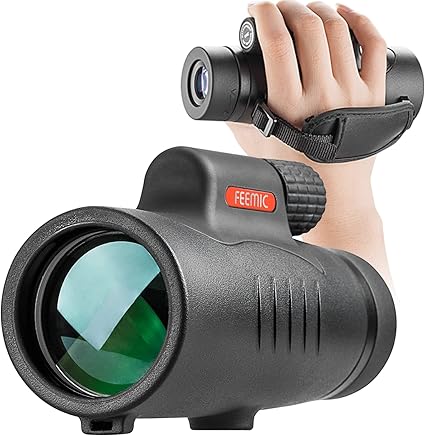 | Generic 8×42 Monocular | Check Price |
Our Top Picks 2  | Generic 12×60 Monocular | Check Price |
Our Top Picks 3  | Generic 80×100 Monocular | Check Price |
Our Selected Top 13 Monocular Scope for Bird Watching Picks for Every Need
This list features carefully chosen monocular scopes ideal for bird watching, covering a range of performance levels and designs. Each review explains how well the product works, who it is best suited for, and highlights its main advantages and disadvantages to help you make an informed choice.
1. Monocular Telescope 8×42
Monocular Telescope 8×42 delivers sharp, wide-angle views perfect for bird watching. It suits those wanting a solid, clear image on outdoor trips, particularly with its 8X magnification and wide 42mm lens diameter as its main highlight.
Setup is straightforward thanks to manual focus, allowing you to easily adjust sharpness while tracking birds. The built-in dust cover and waterproof, fogproof, and shockproof design mean you don’t have to worry about rough weather or dusty trails. Its rubber finish adds grip and durability for day-after-day outdoor use.
Optics produce bright, detailed images with a wide 360ft field of view at 1000 yards, making spotting birds easier than many other scopes. Solid construction resists shocks well. Most praise highlights its clarity and durability, while some say focusing can be a bit slow when trying to catch fast-moving subjects.
The clarity and wide field of view stand out as the strongest points for bird watchers. The main challenge lies in manually adjusting focus quickly when birds move suddenly, which some find a bit frustrating during active observation.
Anyone who enjoys spotting birds in diverse weather conditions will appreciate this scope’s durability and clear optics. Those needing quick autofocus should explore alternatives with that feature instead.
Pros
- Wide 360ft field of view for scanning areas
- Waterproof, fogproof, and dustproof for all weather
- Built-in dust cover keeps lens protected
- Rubber finish offers good shock resistance
Cons
- Manual focus can be slow on fast-moving birds
- Not suitable for users preferring automatic focus
| Specification | Details |
|---|---|
| Magnification | 8X |
| Objective Lens Diameter | 42mm |
| Field Of View | 360ft/1000 yards |
| Focus Type | manual focus |
| Coating | fully multi-coated |
| Waterproof | Yes, nitrogen-filled |
2. Monocular Telescope 12×60
Feeling like you’re right there with the birds is easy with a 12×60 monocular that offers a wide field of view. It’s great for anyone who enjoys watching birds or nature scenes from a distance and wants clear, vivid images without the bulk of binoculars.
Its main strength lies in delivering bright and sharp views even in less than perfect light.
Setting up is straightforward due to the manual focus and Altazimuth mount, making adjustments simple during use. The 12× magnification paired with a 60mm objective lens allows plenty of light, which helps when tracking quick movement or spotting details. Fully multi-coated lenses and a reflex finderscope improve clarity and aiming accuracy.
You can also attach a smartphone, which adds versatility for capturing what you see.
Performance is solid, providing clear, sharp images free of color distortion thanks to the large 21mm BAK-4 prism inside. The build feels durable and designed for outdoor use, though some may find the weight on the heavier side during long hikes. Brightness and clarity are consistent across different lighting conditions.
Common feedback mentions excellent image quality as a major plus while manual focus takes a bit of getting used to.
Bright and sharp views without color distortion impress consistently, while some find the manual focus takes time to perfect. The image clarity benefits from the large 21mm BAK-4 prism and fully multi-coated lenses, but adjusting focus quickly during moving scenes might challenge less experienced users.
Perfect for bird watchers who prioritize image quality and don’t mind a little extra weight. Those seeking a lighter or autofocus monocular should consider other options suited for fast action or long carrying.
Pros
- Bright, clear images with no color distortion
- Wide 6.5-degree field of view
- Compatible with smartphones for photo capture
- Durable and suitable for outdoor use
Cons
- Manual focus can be tricky at first
- Heavier compared to some lightweight monoculars
| Specification | Details |
|---|---|
| Magnification | 12× |
| Objective Lens Diameter | 60mm |
| Field Of View | 6.5 degrees |
| Focus Type | Manual Focus |
| Mount | Altazimuth Mount |
| Prism Type | 21mm BAK-4 |
3. Monocular Telescope 80×100
Great for bird watching enthusiasts who want strong magnification and crisp images, the Monocular Telescope 80×100 delivers an impressive 80X zoom and a large 100mm lens. It stands out by offering bright, wide-field views that bring distant wildlife into clear focus.
Setting up involves manual focusing, which takes a little getting used to but works well once you get the hang of it. The straight-through finderscope helps with quick target acquisition.
Holding it comfortably in one hand makes it suitable for long outdoor sessions, and the smartphone adapter adds convenience for capturing what you see without extra gear.
The optical system, featuring FMC multi-coated lenses and BAK4 prism, produces bright, high-contrast, and true-color images that make bird details easy to spot. The build is solid and designed for outdoor use, though some find manual focusing challenging when tracking fast-moving birds.
Brightness and clarity often get praised, while the weight and size may take some getting used to on extended hikes.
Many appreciate how bright and clear the images are thanks to the coated lenses and BAK4 prism, though some find focusing manually to follow quick birds difficult and slow at times. The size and weight suit users focused on image quality rather than compactness.
Those who prioritize detailed viewing and don’t mind a bit of bulk will enjoy this scope for bird watching. Beginners or hikers looking for lighter gear might prefer a simpler, lighter monocular with easier focus.
Pros
- High 80X zoom for detailed distant views
- Large 100mm lens for bright images
- Smartphone adapter for easy photo capture
- Comfortable one-handed ergonomic design
Cons
- Manual focus can be tricky on moving subjects
- Relatively bulky compared to smaller monoculars
| Specification | Details |
|---|---|
| Focus Type | Manual Focus |
| Finderscope | Straight-Through |
| Compatible Devices | Smartphone |
| Zoom Ratio | 80 |
| Objective Lens | 100mm |
4. Monocular Telescope 12×56

Built with a large 56mm objective lens and 25mm eyepiece, it offers clear and bright views ideal for bird watching. Suited for outdoor enthusiasts who want strong magnification without losing a wide field of view. Biggest strength lies in combining 12X power with a 6.5° wide angle for detailed distant observations.
Setup feels straightforward with manual focus and includes helpful extras like a phone adapter and a small adjustable tripod. Carrying it around is easy thanks to the travel bag and hand strap. Wide lens and multi-coated optics make spotting birds easier in varied light conditions, while the fixed mount keeps viewing steady during walks or hikes.
Performance delivers sharp images at long distances, clearly showing bird details up to about 1200 yards. The build is solid and practical, using fully multi-coated optics that brighten the view. Often praised for bright, large images; some find the manual focusing a bit slow when tracking fast-moving birds.
Bright and clear images stand out as the main advantage, especially with the large lens and wide field of view. However, manual focusing has its drawbacks in quickly capturing birds on the move, which some users find challenging. The included accessories help make longer observation sessions comfortable and versatile.
People who appreciate detailed, stable long-range viewing during hikes or stationary bird watching will enjoy this scope. Those needing quicker focus adjustments or more adjustable mounts for dynamic scenes may want to explore other options better suited for fast action.
Pros
- Bright images from large 56mm lens
- Wide 6.5° field of view
- Includes phone adapter and tripod
- Manual focus for precise adjustments
Cons
- Focus can be slow on moving subjects
- Fixed mount limits flexibility
| Specification | Details |
|---|---|
| Power | 12X magnification |
| Objective Lens Diameter | 56mm |
| Field of View | 391.7 yards (6.5° wide angle) |
| Focus Type | manual |
| Additional Features | Travel bag, hand strap, phone adapter, 6x adjustable tripod |
5. Monocular Telescope 12×50
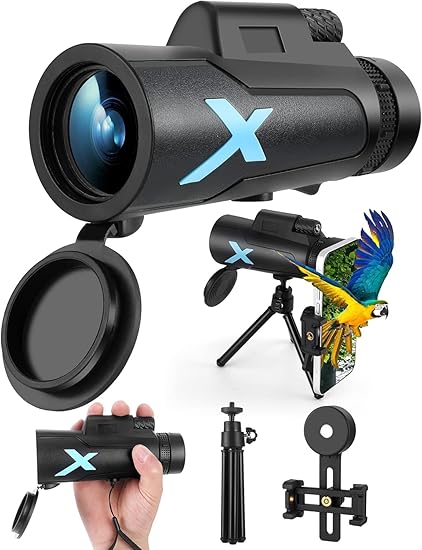
Offering a clear and bright view thanks to its 12x magnification and large 53mm objective lens, the Monocular Telescope 12×50 suits bird watchers looking for detailed images during outdoor activities. Its standout feature is the Fully Multi-Coating technology combined with a BAK4 prism lens, delivering high-contrast and color-accurate views.
Setting up involves only manual focusing, and the monocular fits comfortably in hand or on a tripod with its standard 1/4-inch thread. The adjustable eye relief and 20mm eyepiece lens reduce eye strain, making it easy to use for longer bird watching sessions without dizziness. It works well whether or not you wear glasses, and being battery-free adds convenience when out in the field.
Performance-wise, it produces bright and clear images that make spotting and identifying birds easier. The build feels solid, with quality coatings that improve light transmission.
Praised for its clear and comfortable viewing experience, some might find manual focusing a bit tricky to adjust quickly. Lens coatings reduce glare effectively, though handling requires care to keep the optics clean.
High image clarity and comfortable viewing stand out most in daily use, while the slow manual focus adjustment is the most common issue faced. It excels for extended bird watching due to eye relief and bright optics but requires attention when cleaning to avoid smudges.
Ideal for bird watchers who prefer detailed, bright images and are comfortable with manual focus. Those needing quick autofocus or very lightweight gear might look for alternatives.
Pros
- 12x magnification with wide 6.5° field of view
- Fully Multi-coated lens for clear, bright images
- Adjustable eye relief suitable for glasses
- Tripod compatibility for steady viewing
Cons
- Manual focus can be slow to adjust
- Needs careful handling to keep lenses clean
| Specification | Details |
|---|---|
| Magnification Zoom Ratio | 12x |
| Objective Lens Diameter | 53mm |
| Eyepiece Lens Description | Multi-coated Eyepiece Lens With Adjustable Eye Relief |
| Field Of View | 6.5 degrees |
| Focus Type | Manual Focus |
| Mount | Handheld, Tripod-adaptable Mount With Standard 1/4-inch Thread |
6. Nocs Provisions Zoom Tube 8×32 Monocular

Perfect for birdwatchers who prioritize lightweight gear, the Nocs Provisions Zoom Tube 8×32 Monocular offers impressive clarity while staying super compact. Its standout feature is the bright, sharp view provided by Swiss-designed Bak4p prism optics, making long walks or hikes with heavy equipment unnecessary.
Carrying it around is easy since it weighs just 9.5 oz. Setup requires just centering the focus using the central focusing system, which is quick and smooth.
The water-resistant and scratch-proof design means you don’t worry about rough outdoor conditions, while the fully multi-coated lenses deliver vivid images without the bulk typical of higher-powered optics.
Viewing with an 8x zoom brings clear and detailed images across a wide 384 ft field at 1000 yards, essential for spotting birds in their natural habitat. The build stands out for its durability and compactness, though some might find the zoom less powerful compared to larger scopes. The crisp optics earn praise for sharpness, while lack of higher magnification limits long-range spotting.
The monocular receives praise for its bright and sharp optics wrapped in a compact, durable body that handles outdoor use well. Common feedback points to the zoom being less powerful than some might expect for detailed long-range viewing.
Birdwatchers valuing portability and image clarity in moderate ranges will enjoy this model. Those needing stronger zoom or image stabilization are better off exploring other options with higher magnification and advanced features.
Pros
- Super lightweight and compact for easy carrying
- Bright, crisp image with Swiss-designed Bak4p prism
- Water-resistant and scratch-proof durable build
- Wide 384 feet field of view at 1000 yards
Cons
- Zoom power limited to 8x for distant birds
- No built-in image stabilization for shaky hands
| Specification | Details |
|---|---|
| Weight | 9.5 oz. |
| Zoom Ratio | 8 |
| Field Of View | 384 feet |
| Coating | Fully Multi-Coated |
| Focus Type | Center Focus |
| Prism Type | Swiss-designed Bak4p |
7. Vortex Solo 10×36 Monocular

Watching birds up close without disturbing them calls for a compact and reliable monocular. Ideal for casual bird watchers and hikers alike, this model stands out with its sharp 10x magnification and clear visuals, making it easier to spot delicate details from afar.
Its strength lies in combining powerful optics with everyday portability.
Setting it up is straightforward thanks to the manual focus, allowing you to quickly hone in on your target. The adjustable eyecup ensures comfort whether you wear glasses or not, which is handy during long observation sessions.
The multi-position utility clip makes attaching it to your gear or clothing quick, so you can grab it on the go without fumbling.
Optical performance is crisp with bright images, thanks to fully multi-coated lenses that boost light transmission and resolution. The rubber armor feels sturdy and offers a secure grip even when your hands are wet. Waterproof and fogproof build means it handles damp or chilly mornings well.
One common gripe is the zoom ratio, which some find limiting for extreme close-ups.
Many find the optics deliver bright, sharp images even in low light thanks to the multi-coated lenses, while some mention the manual focus requires a bit of getting used to during fast-paced watching. The waterproof and durable design stands up to rough weather without trouble.
People who want a lightweight, reliable monocular for regular bird outings will appreciate this model. Those who need higher zoom or faster focusing might want to look at other options. It suits casual to intermediate users well and handles varied environments with ease.
Pros
- Clear images with 10x magnification
- Comfortable viewing with adjustable eyecup
- Durable, rubber armored exterior
- Waterproof and fogproof design
Cons
- Zoom ratio of 10:1 may limit detail zoom
- Manual focus may take practice for fast adjustment
| Specification | Details |
|---|---|
| Eye Piece Lens Description | Monocentric |
| Mount | Equatorial Mount |
| Focus Type | Manual Focus |
| Power Source | Battery Powered |
| Field Of View | 6.2 |
8. Monocular Telescope 80×100

80x magnification is impressive for a monocular, especially suited for bird watchers wanting detailed views. It stands out with its advanced optical clarity, making distant birds appear sharp and bright even in varying light conditions.
Setting up the scope is straightforward with its manual focus feature. Its lightweight design and comfortable grip make carrying it around during hikes or walks convenient.
The straight-through finderscope helps quickly spot birds, and the smartphone compatibility with a holder lets you capture photos without extra equipment.
Optical lenses with multi-layer coatings reduce glare and boost image brightness, delivering clear visuals. Construction feels sturdy yet compact, making outdoor use manageable and durable.
Most praise revolves around its clear and bright images, while some mention the manual focus requires patience for sharpness.
Image clarity and brightness are a big plus, allowing detailed observation even in tricky lighting. The common drawback is that manual focus demands steady hands and time, which may slow down spotting quick-moving birds.
Bird watchers who don’t mind spending a moment adjusting focus will appreciate the optical quality and portability. Those seeking quicker focus adjustments might prefer models with autofocus options instead.
Pros
- Clear and bright images with multi-layer coatings
- Compact and lightweight for easy portability
- Comfortable grip for extended use
- Smartphone compatibility with included holder
Cons
- Manual focus can be slow to adjust
- Some users find focusing challenging at high magnifications
| Specification | Details |
|---|---|
| Eye Piece Lens Description | Brandon |
| Focus Type | Manual Focus |
| Finderscope | Straight-Through |
| Compatible Devices | Smartphone |
| Additional Features | Smartphone Holder |
9. Monocular Telescope 40×60

Bird watchers and outdoor enthusiasts looking for a powerful yet compact monocular will find this 40×60 model ideal. It delivers clear and bright images at a strong zoom, making wildlife and distant scenes easy to observe.
Setup is straightforward with a fixed mount and manual focus, offering precise control for quick adjustments. The included tripod and hand strap add stability and convenience during long viewing sessions. Using the smartphone adapter lets you capture nature moments directly through the lens.
Image quality stands out thanks to the BAK4 prism and fully multi-coated lens, producing sharp pictures without black bars. The waterproof and fog proof design keeps the monocular reliable in various weather conditions.
Most appreciate the clarity, while some mention manual focusing can take a little patience.
Sharpness and brightness impress in daylight, with clear images free from black bars. Manual focus demands more patience, which some find less convenient.
Anyone seeking high zoom for bird watching and outdoor use will appreciate it. Less ideal for users wanting quick autofocus or flexible mounting solutions.
Pros
- Sharp and bright image quality
- Waterproof and fog proof
- Includes tripod and smartphone adapter
- Suitable for adults and kids
Cons
- Manual focus requires careful adjustment
- Fixed mount limits mounting options
| Specification | Details |
|---|---|
| Zoom Ratio | 40x-60x |
| Field Of View | 2400 yard |
| Focus Type | manual |
| Compatible Devices | Smartphone |
| Mount | Fixed Mount |
10. Gosky 12×55 Monocular

Offering 12x magnification with a wide 352 ft view at 1,000 yards, the Gosky 12×55 Monocular suits bird watchers who want clear long-distance views without bulky equipment. Its standout feature is the large 55mm objective lens that brings brighter and more comfortable viewing even in lower light.
Setup requires manually focusing via a straightforward mechanism, which can be done one-handed for quick adjustments. The wide field of view helps spot birds more easily before zooming in with the 12x power.
Carrying it handheld feels natural, but it also comes with a tripod and phone adapter, making it versatile for both casual and more dedicated observation sessions. Waterproof and fogproof coatings keep views clear during outdoor use.
The optical quality delivers sharp details at long range thanks to twice multi-coated lenses and the 4.58mm exit pupil that directs light well to the eye. The body feels solid and comfortable to hold, built with outdoor durability in mind.
Most reviews praise its bright and wide visuals, but some users find the manual focus takes practice to get just right quickly enough when birds move.
Reviews consistently highlight bright, clear viewing even in less ideal lighting, and the wide field of view helping users find birds faster. Most mention the manual focus requires patience and precision to track moving subjects smoothly.
Bird watchers wanting a bright, durable monocular for daylight use with some patience for focus will find it useful. Those needing quick autofocus or extremely wide zoom fields for fast action might look for alternatives.
Pros
- Bright images thanks to large 55mm lens
- Wide 352 ft field of view aids quick locating
- Comes with tripod and phone adapter included
- Waterproof and fogproof body for outdoor use
Cons
- Manual focus can be slow to adjust
- Limited field of view at highest zoom for fast targets
| Specification | Details |
|---|---|
| Magnification | 12x |
| Objective Lens Diameter | 55MM |
| Field Of View | 2.1 degrees (352 ft/1,000 yds) |
| Focus Type | Manual Focus |
| Coating | Multi-Coated |
| Additional Features | Wide Field of View, IPX7 Waterproof & Fogproof, One-Hand Focus, Tripod and Phone Adapter |
11. Bushnell Legend 10×42 Monocular

Bushnell Legend 10×42 Monocular is built for bird watchers who want crisp, clear views without lugging around heavy gear. It’s best known for delivering sharp images with true-to-life colors, even when light is low, making it a reliable companion for spotting birds in various conditions.
Setting it up takes just a moment, thanks to the manual focus and tripod mount options. Its compact size fits easily in a pocket or backpack, so carrying it during hikes or casual outings is simple.
The rubber-armored exterior gives a solid grip, while the waterproof and fog-proof sealed optics make it dependable rain or shine.
Performance is strong thanks to the ED Prime glass and Ultra Wide Band Coating, providing detailed views across a 340-foot field. The roof prism design keeps the device compact, and fully multi-coated lenses improve brightness and clarity.
Most find it sturdy and easy to handle, though some note that relying on a single 12V battery may feel limiting in longer trips.
The device consistently provides sharp, bright images with accurate colors, praised for clarity even in dim conditions. Most comments highlight the sturdy build and clear optics, while the main drawback mentioned is the reliance on a single 12V battery that might run out faster than expected.
This monocular will suit bird watchers who value portability and dependable optics under varying weather. Those wanting auto-focus or longer battery life during extended outings might prefer other options better tailored to those needs.
Pros
- Sharp image quality in low light
- Compact and lightweight design
- Waterproof and fog proof optics
- Secure rubber-armored grip
Cons
- Depends on a single 12V battery
- Manual focus takes some getting used to
| Specification | Details |
|---|---|
| Magnification | 10x |
| Lens Diameter | 42 mm |
| Field of View | 340 feet |
| Focus Type | Manual Focus |
| Coating | Fully Multi-coated |
| Power Source | 1 12V battery required |
12. Gosky Titan 12×50 Monocular

Gosky Titan 12×50 Monocular feels solid and reliable when you’re out bird watching. It suits outdoor enthusiasts who want strong magnification without sacrificing brightness or color accuracy.
Its single biggest strength lies in the combination of 12x zoom and a 50mm lens that delivers bright, clear views over long distances.
Setting up takes just a moment since it comes with a tripod and one-hand focus makes switching targets easy. The waterproof and fogproof design means you don’t worry much about weather conditions. Using the smartphone adapter adds a great way to capture pictures or share what you’re seeing without extra gear hassles.
The optical performance nails sharp, vivid images thanks to the BAK-4 prism and fully multi-coated lenses, showing true colors well. The build feels solid, featuring an altazimuth mount that allows for smooth adjustments. Most praise points to image clarity and easy focus, while the main complaint mentions manual focusing can be a bit tricky for beginners at first.
The binocular delivers sharp, colorful views with excellent light transmission, making it great for detailed bird watching. Some users find the manual focusing system a challenge initially, needing a bit of practice to get sharp results.
Those who want strong zoom and durability for outdoor use will be happy with this monocular. People looking for simpler autofocusing might prefer a different model that handles focus electronically.
Pros
- Bright and clear images at 12x magnification
- Includes tripod for stable viewing
- Waterproof and fogproof design
- Compatible with smartphones for photo capture
Cons
- Manual focus requires patience to master
- Adapter power source not included
| Specification | Details |
|---|---|
| Eye Piece Lens Description | Prism |
| Mount | Altazimuth Mount |
| Focus Type | Manual Focus |
| Field Of View | 6.8 degrees |
| Zoom Ratio | 12 |
| Additional Features | Waterproof & Fogproof, BAK4 Prism, FMC Optics, Smartphone Compatible, One-Hand Focus, Tripod Included |
13. Celestron Nature 10×25 Monocular

Great for bird watchers who want a compact, lightweight scope with solid magnification. Best suited for outdoor adventures where portability and quick spotting matter most, its 10X magnification delivers clear, detailed views without bulk.
Easy to carry around on hikes or trips thanks to its small size and light weight. The manual focus is simple to adjust for sharp images, and the twist-up eyecup adds comfort whether you wear glasses or not. Its waterproof and fogproof design means it handles changing weather without trouble.
Delivers crisp, bright images with multi-coated optics and BaK-4 prism glass, making birds and wildlife stand out clearly. The rubber armor offers good protection against drops and bumps.
Most praise centers on image clarity, while some users mention the manual mounting requires patience to keep steady.
Many appreciate the sharp, true-color images thanks to multi-coated optics and BaK-4 prism glass, combined with a rugged, weather-resistant build. Some find manual mounting and focus tricky, especially when trying to maintain stability during quick spotting.
People seeking a lightweight, durable monocular for bird watching in varied conditions will enjoy this. Those needing quick, hands-free mounting or motorized focus may want to explore other options.
Pros
- Bright 25mm objective lens for clear images
- Compact and easy to carry
- Waterproof and fogproof design
- Rubber-armored for durability
Cons
- Manual mounting can be tricky for steady views
- Focus adjustment requires careful handling
| Specification | Details |
|---|---|
| Power Source | Manual |
| Focus Type | Manual Focus |
| Field Of View | 5.8 degrees |
| Mount | Manual mounting |
| Coating | Multi-Coated |
| Eye Piece Lens Description | Fiber Optic |
Best Monocular Scopes for Bird Watching Comparison
| Product | Magnification | Field Of View | Coating | Power Source |
|---|---|---|---|---|
| Generic 8×42 Monocular | 8x | 360 degrees | Fully Multi-Coated | Manual Power |
| Generic 12×60 Monocular | 12x | 6.5 degrees | Fully Multi-Coated | Battery Powered |
| Generic 80×100 Monocular | 80x | – | – | – |
| Generic 12×56 Monocular | 12x | 391.7 yard | Fully Multi-Coated | No |
| Generic 12×50 Monocular | 12x | – | Multi-coated | No Battery Required |
| Nocs Provisions 8×32 | 8x | 384 feet | Fully Multi-Coated | – |
| Vortex Solo 10×36 | 10x | – | Multiple Anti-Reflective | Battery Powered |
| Generic 80×100 Large Monocular | 80x | – | – | – |
| Generic 40×60 Monocular | 40x-60x | 2400 yard | – | No |
| Gosky 12×55 | 12x | 2.1 degrees | Multi-Coated | Handheld |
| Bushnell Legend 10×42 | 10x | – | Fully Multi-coated | Battery Powered |
| Gosky Titan 12×50 | 12x | 6.8 degrees | Fully Multi-Coated | Adapter |
| Celestron Nature 10×25 | 10x | 5.8 degrees | Multi-Coated | Manual |
- Magnification8x
- Field Of View360 degrees
- CoatingFully Multi-Coated
- Power SourceManual Power
- Magnification12x
- Field Of View6.5 degrees
- CoatingFully Multi-Coated
- Power SourceBattery Powered
- Magnification80x
- Field Of View–
- Coating–
- Power Source–
- Magnification12x
- Field Of View391.7 yard
- CoatingFully Multi-Coated
- Power SourceNo
- Magnification12x
- Field Of View–
- CoatingMulti-coated
- Power SourceNo Battery Required
- Magnification8x
- Field Of View384 feet
- CoatingFully Multi-Coated
- Power Source–
- Magnification10x
- Field Of View–
- CoatingMultiple Anti-Reflective
- Power SourceBattery Powered
- Magnification80x
- Field Of View–
- Coating–
- Power Source–
- Magnification40x-60x
- Field Of View2400 yard
- Coating–
- Power SourceNo
- Magnification12x
- Field Of View2.1 degrees
- CoatingMulti-Coated
- Power SourceHandheld
- Magnification10x
- Field Of View–
- CoatingFully Multi-coated
- Power SourceBattery Powered
- Magnification12x
- Field Of View6.8 degrees
- CoatingFully Multi-Coated
- Power SourceAdapter
- Magnification10x
- Field Of View5.8 degrees
- CoatingMulti-Coated
- Power SourceManual
How to Choose the Best Monocular Scope
Choosing a good monocular scope involves focusing on clarity, magnification, and durability, as these factors directly affect your viewing experience. Prioritizing the right features ensures clear, steady images and long-lasting use, helping you avoid costly replacements and frustration during bird watching outings.
Optical Quality and Coatings
Looking through a scope with poorly coated lenses quickly leads to glare and washed-out colors, especially when the sun hits at certain angles. Fully multicoated lenses reduce these reflections significantly, providing a clearer and more vibrant view of distant birds. The glass quality plays a big role too: low-quality glass can make images look soft or blurry, while good glass keeps details sharp, allowing you to spot fine feathers or subtle color variations.
Antireflective coatings contribute by improving contrast in different lighting conditions, such as dawn or overcast days. This helps maintain a crisp image whether you’re in bright sunlight or shadow. Opt for scopes labeled as having fully multicoated optics and premium glass types like BaK-4 prisms to get the clearest views.
These features make it easier to identify birds without straining your eyes.
Portability and Weight
On long birding walks, a heavy or bulky scope quickly becomes a burden, leading to arm fatigue and reduced steadiness. A compact and lightweight model, typically around 150–300 grams, fits better in a backpack or even a large pocket, making it more practical to carry all day without needing frequent breaks.
Ergonomic design is vital to prevent slipping and to hold the scope steady while focusing. Rubberized grips or textured surfaces help maintain control, especially during slow adjustments or if your hands get sweaty. Durability shouldn’t come at the cost of size; look for materials like aluminum alloy that keep the weight low but offer solid protection for daily outdoor use.
Durability and Weather Resistance
Monoculars used outdoors are exposed to rain, fog, dust, and occasional knocks. Reliable models offer waterproof and fogproof features that keep the lens clear and the interior dry in humid or rainy conditions. This ensures the view stays sharp rather than turning misty or blurry.
The housing material matters too. High-grade plastics can crack or wear down, while metal or reinforced composites withstand accidental drops better. Check that the scope has sealed joints or O-ring construction to keep dust and moisture out, preserving functionality even on dusty trails or damp mornings.
This protection means fewer worries about damaging gear in rough environments.
Eye Relief and Comfort
Bird watchers often wear glasses or sunglasses to protect their eyes but end up struggling with scopes offering inadequate eye relief. Look for at least 15mm of eye relief so the full field of view remains visible without pressing your glasses uncomfortably against the scope.
Adjustable eyecups or soft rubber guards provide comfort by blocking stray light and reducing eye fatigue during extended observation sessions. The focus mechanism should move smoothly and respond quickly to changes to lock onto birds at differing distances without jitter or resistance. This kind of ease makes it possible to quickly shift attention to a bird moving between branches or taking flight.
Optimizing Your Bird Watching Experience with Monocular Scopes
Bird watching demands clear and stable visuals, and a monocular scope can be a versatile tool for this purpose. Their compact size allows for easy one-handed use, which is helpful when quickly spotting birds through dense foliage. A typical bird watching scope offers magnification levels suitable for identifying details such as feather patterns and color variations.
When choosing a monocular scope, key features to consider include:
- Optical clarity: Look for fully multi-coated lenses to reduce glare and improve light transmission.
- Magnification: A 6x to 10x range is practical for balancing detail and field of view.
- Durability: Weather-resistant bodies protect against moisture and dust during outdoor excursions.
These factors collectively support a more immersive and informative bird watching experience. Using a monocular scope can simplify tracking moving birds without the bulk associated with binoculars.
Essential Maintenance and Care Tips for Longevity of Monocular Scopes
Regular upkeep helps keep a monocular scope performing well over time. Cleaning the lens gently with a microfiber cloth and lens cleaner prevents scratches and preserves image clarity. Avoid using household cleaning products or rough materials that could damage the lens coatings.
Storage also plays a critical role. Consider these tips:
- Store the monocular in a padded case to prevent accidental knocks.
- Keep it in a dry environment to avoid fungus growth inside the optics.
- Remove batteries if it includes electronic components and will be stored for a long time.
Periodic inspection of the focusing mechanism and seals ensures consistent performance, especially before extended trips. Taking these simple steps will extend the unit’s lifespan and maintain reliable viewing quality.
Comparing Monocular Scopes with Binoculars for Bird Watching Enthusiasts
Monocular scopes and binoculars each serve bird watchers but have distinct uses. Monoculars are typically smaller and lighter, making them easier to carry and quick to operate with one eye.
This can be advantageous when hiking or navigating tight spaces.
Binoculars provide depth perception because of their dual lenses, which can help in judging distances but at the cost of extra bulk.
- Monoculars often have higher magnification in a compact size.
- Binoculars generally offer a wider field of view, which assists in tracking fast-moving birds.
- Price points and durability vary widely in both categories, allowing options for different budgets and environments.
The choice between them depends on personal preference, specific bird watching needs, and the balance between portability and visual experience.
People Also Asked
How Do I Properly Clean and Care for My Monocular Scope?
Use a soft brush or air blower to remove dust before gently wiping the lenses with a microfiber cloth. Avoid using household cleaners; lens cleaning solutions made for optics work best. Store the monocular in its case to prevent scratches and moisture buildup.
What Size Monocular Scope Is Ideal for Bird Watching Trips?
A monocular scope with 8x or 10x magnification and a 25 to 42mm objective lens works well for bird watching due to a good balance between magnification and field of view. A lighter model is easier to hold steady over long periods.
Is It Safe to Use a Monocular Scope for Extended Periods?
Using a monocular scope for long stretches can strain your eye and cause fatigue. Taking regular breaks and adjusting focus as needed helps keep your vision comfortable. Keeping both eyes open also reduces eye strain.
How Do I Attach a Monocular Scope to Different Mounting Systems?
Most monocular scopes come with a standard tripod thread, allowing easy attachment to tripods or other mounts via a compatible adapter. Using a tripod helps stabilize your view, especially at higher magnifications or during long observation sessions.
What Are Common Issues with Monocular Scopes and How to Fix Them?
Common issues include blurry images due to misfocus, lens fogging from moisture, or loose parts causing instability. Cleaning lenses and tightening screws can solve most problems. Using silica gel packs in the case helps prevent fogging during humid conditions.
Conclusion
When choosing a monocular scope for bird watching, focus on clear image quality, comfortable magnification, and ease of use in outdoor conditions. Compact size and good light gathering ability can make a big difference during quick bird spotting sessions.
Durability is also important since the scope will be carried around in nature.
Consider how often you plan to use the scope and the typical environment, since this affects the size and budget you should aim for. Refer back to the comparison table and the detailed picks above to find a model that fits your specific needs without extra features that might go unused.