Top 12 Best Magnification for Bird Watching Binoculars Revealed
Bird watchers often face frustration when their binoculars fail to deliver clear images at the right distance. Choosing the best magnification for bird watching binoculars matters because too much zoom can make the image shaky and hard to follow, while too little misses essential details. The balance lies in a magnification that allows a steady, clear view of birds without weighing down your hands or making the field of vision too narrow.
The most common magnification range for bird watchers is between 7x and 10x. Binoculars with 8x magnification provide a wide field of view and easier handling, which helps in tracking moving birds. Objective lens size, often between 32mm and 42mm, affects brightness; larger lenses gather more light but add weight.
Durable construction and good lens coatings protect against scratches and glare, making day-long use more comfortable and productive.
Need a Quick Check?
| Image | Product | Price |
|---|---|---|
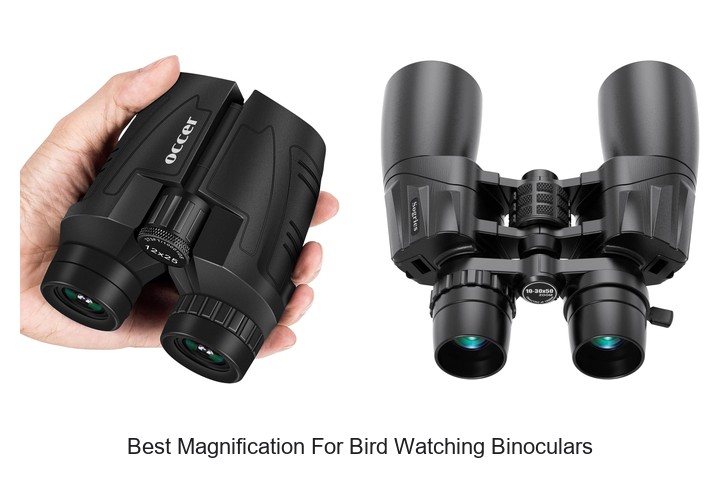
Our Top Picks 1  | Occer 12×25 Compact | Check Price |
Our Top Picks 2  | Zoom 10-30×50 Binoculars | Check Price |
Our Top Picks 3  | MLight 10-30×50 Zoom | Check Price |
Our Selected Top 12 Magnification for Bird Watching Binoculars Worth Considering
This list features a carefully chosen selection of binoculars with varying magnifications ideal for bird watching. Each review covers performance details, suitability for different users, and highlights both advantages and limitations to help you find the best option for your needs.
1. Occer 12×25 Compact Binoculars
12x magnification with a 25mm objective lens creates clear, detailed views for bird watchers who want to see farther without bulk. Great for those needing powerful optics in a compact size, the wide 7.5-degree field of view helps track birds easily. Its biggest strength lies in combining strong magnification with lightweight portability.
Setup involves adjusting the center focus wheel and modifying the rubber eyecups to fit whether you wear glasses or not. The long 20mm eye relief provides comfortable viewing with sunglasses or glasses. Carrying it around is simple due to its small size, making it handy on hikes or outdoor trips where quick spotting is key.
Visual clarity holds up well thanks to the fully multi-coated lenses and BAK-4 prisms, which contribute to sharp, bright images. The body feels sturdy yet lightweight and offers waterproof protection, so using it in the rain isn’t a problem. Many users appreciate the sharp image, although a few point out the small exit pupil makes low-light viewing a bit challenging.
Sharp and bright images are common praise, helped by the multi-coated lenses and BAK-4 prisms. The main drawback reported involves difficulties in low-light conditions due to the narrow exit pupil size.
Bird watchers who frequently use their binocs in daylight and appreciate compact, lightweight gear will be pleased. Those often watching in dim light or needing rapid focusing might prefer models with larger lenses or faster focus mechanisms.
Pros
- Powerful 12x magnification in a compact frame
- Fully multi-coated lenses improve clarity
- Adjustable eyecups fit eyeglass wearers
- Waterproof design for outdoor use
Cons
- Small 2.5mm exit pupil limits low-light use
- Manual focus can be slow for quick targets
| Specification | Details |
|---|---|
| Magnification Maximum | 12 |
| Objective Lens Diameter | 25 millimeters |
| Field of View | 7.5 degrees |
| Eye Relief | 20 millimeters |
| Prism Type | BAK-4 |
| Water Resistance Level | Waterproof |
2. Zoom 10-30×50 Binoculars
Bird watchers looking for a mix of strong zoom and big objective lenses will appreciate what these binoculars bring. They deliver powerful 10-30x magnification with a hefty 50mm eyepiece, making distant birds and wildlife clear from far away.
The zoom feature provides flexibility for both close and far viewing, ideal for those wanting detailed images.
Setting up is straightforward with a center focus and manual adjustment to get a sharp view. The waterproof design means no worries in light rain or damp conditions during early morning watching. Eye relief is decent at 22 millimeters, helping when wearing glasses.
Tripod compatibility adds stability when zooming high, and the anti-reflective coating keeps images bright in varying light.
Performance shows in crisp, bright images thanks to BAK-4 prisms and FMC coating. True-to-life color helps in natural settings.
The body feels solid and compact enough for field use, although some note the zoom can be a bit tricky to steady at the highest power. Most appreciate the sharp focus and versatility but expect some handling care at max magnification.
Users find the binoculars deliver impressively sharp and bright views, making distant subjects vivid. The biggest drawback is controlling image shake at the 30x zoom, which some find difficult without a tripod. Handling the manual focus also demands patience for perfect clarity.
Bird watchers wanting strong zoom options and vivid images will like the flexibility offered here. Those seeking ultra-stable handheld use at maximum magnification may want to consider other options or plan to use a tripod to avoid shakiness. It suits outdoor activities needing waterproof features and detailed viewing.
Pros
- Powerful zoom range from 10x to 30x magnification
- Bright images with FMC multi-coated lenses
- Waterproof for outdoor use in various weather
- Compatible with tripod for stable viewing
Cons
- Challenging to keep steady at highest zoom level
- Manual focus requires fine adjustments
| Specification | Details |
|---|---|
| Magnification Maximum | 30 x |
| Objective Lens Diameter | 50 millimeters |
| Eye Relief | 22 millimeters |
| Prism Type | Porro Prism |
| Coating | Anti-Reflective |
| Water Resistance Level | Waterproof |
3. MLight 10-30×50 Zoom Binoculars
High magnification and a wide 50mm objective lens define these binoculars, aimed at serious bird watchers who need detail from a distance. Adjustable from 10x to 30x, they excel at bringing faraway subjects into close view without losing clarity.
Setting up involves mounting them on a tripod for stability given their zoom range. The center focus and manual diopter adjustment allow fine-tuning on the fly while tracking birds in motion. The multicoated lenses help with light conditions in the early morning or late afternoon.
Though a bit bulkier than smaller models, they feel solid and dependable in outdoor conditions, thanks to waterproofing and sturdy construction.
Performance delivers sharp images even at the maximum 30x magnification, maintaining a wide 235 feet field of view at 1000 yards. The Porro prism design contributes to good depth perception and contrast. Most praise focuses on the clarity and zoom versatility, while some mention the need for tripod use due to weight and hand shake at high magnification.
The high-power zoom and clear optical design deliver impressive detail even at 30x magnification, praised for sharp images across a wide field. Using it handheld at maximum zoom often causes shaky views, pushing many to rely on a tripod for steady observation.
Bird watchers prioritizing powerful magnification and detailed viewing at distance will find this binocular a strong match. Those seeking lightweight or quick handheld use may prefer a simpler, lower-zoom model to avoid stability issues during active tracking.
Pros
- Wide 235 feet field of view at 1000 yards
- Zooms smoothly from 10x to 30x magnification
- Waterproof design suitable for outdoor use
- Tripod mountable for stable viewing
Cons
- Requires tripod for stable viewing at highest zoom
- Manual focus can be tricky with fast-moving birds
| Specification | Details |
|---|---|
| Magnification Maximum | 30 x |
| Objective Lens Diameter | 50 millimeters |
| Field of View | 235 feet |
| Focus Type | Center Focus |
| Water Resistance Level | Waterproof |
| Eye Relief | 12 millimeters |
4. High Powered 18×50 Binoculars

High Powered 18×50 Binoculars offer sharp 18x magnification and a wide field of view, making them well-suited for serious bird watchers and outdoor enthusiasts who need detailed images from a distance. Their biggest strength lies in balancing powerful magnification with a large 50mm lens for bright, clear visuals.
Setting up is straightforward with center focus, and the option to mount on a tripod helps stabilize the view at high zoom. The upgraded phone adapter lets you capture detailed photos without extra effort, ideal for documenting observations. They handle wet conditions confidently thanks to an IP67 waterproof rating, so rainy days or seaside trips don’t interrupt use.
Image clarity remains impressive despite the strong 18x zoom, revealing fine bird details from afar. Built with Porro prisms and fully multi-coated lenses, the binoculars deliver solid brightness and color.
Most people praise the photo adapter and waterproof feature, while some mention the weight can make handheld use tiring without support.
High praise focuses on the clear image quality combined with the waterproof design, allowing use in various outdoor environments. The common drawback is the binoculars’ weight, which makes handheld observing over long periods a bit tiring without a tripod.
Bird watchers and outdoor travelers who want strong magnification and weather resistance will find these binoculars suitable. Those seeking lighter, more compact options for casual day trips might prefer models with lower magnification and weight.
Pros
- Strong 18x magnification for detailed distant viewing
- Waterproof rating ensures reliability in wet conditions
- Includes upgraded phone adapter for easy photography
- Large 50mm objective lens increases brightness
Cons
- Heavier to hold without a tripod or support
- Limited field of view compared to lower magnifications
| Specification | Details |
|---|---|
| Magnification Maximum | 18x |
| Objective Lens Diameter | 50 millimeters |
| Water Resistance Level | Waterproof (IP67) |
| Focus Type | Center Focus |
| Mount Type | Tripod Mount |
| Prism Type | Porro Prism |
5. 20×50 Waterproof Binoculars

Using a pair of binoculars with 20x magnification really changes the way you watch birds or distant events. Great for those who want the details far away without lugging heavy gear. It offers clear, broad views out to 1000 yards, making it ideal for serious nature watchers and outdoor enthusiasts.
Getting set up involves adjusting the center focus manually, which takes just a moment. The binoculars are compact but solid, fitting well in hand and comfortable for long use. Waterproofing adds confidence for outdoor trips in all weather, and the tripod mount lets you stabilize the view, reducing shake on longer sessions.
Sharpness and zoom stand out thanks to the 20x magnification and wide 50mm lenses, revealing fine details clearly. Built to resist shocks and survive rough use, it feels durable.
Most users praise the powerful zoom, while some note the exit pupil size of 2.5mm can make viewing dimmer in low light conditions.
Magnification and clarity stand out as its strongest features, delivering crisp images from far distances. On the downside, the exit pupil size can reduce brightness when viewing in dim settings, impacting comfort during dawn or dusk bird watching.
Ideal for people wanting a strong zoom in a durable, portable binocular for daytime outdoor use. Those often in low light conditions might want to look for models with larger exit pupils or specialized optics for better brightness.
Pros
- High 20x magnification for detailed distant viewing
- Waterproof design for outdoor durability
- Tripod mount for stabilized observation
- Manual center focus allows precise adjustments
Cons
- 2.5mm exit pupil may limit low light performance
- Manual focus requires occasional readjustment
| Specification | Details |
|---|---|
| Magnification Maximum | 20 x |
| Objective Lens Diameter | 50 millimeters |
| Focus Type | Center Focus |
| Water Resistance Level | Waterproof |
| Eye Relief | 26 millimeters |
| Mount Type | Tripod Mount |
6. 20×70 High Powered Binoculars

Great for bird watchers wanting detailed views at a distance, these binoculars offer impressive 20x magnification and bright images. Suited for experienced users who don’t mind some manual focusing, their key strength lies in bringing faraway wildlife into sharp view with clear detail.
Setup involves adjusting the manual focus and diopter to match your eyesight. The 26mm eyepiece helps in seeing a larger image, which eases long observing sessions.
Despite the weight of about 2.8 lbs, handheld use is manageable for short periods. Expect some practice focusing on moving birds due to the manual focus feature.
Performance delivers crisp images with the 70mm lens gathering plenty of light, which really shows in early mornings or late evenings. The build feels solid, though not water resistant, so careful use around damp conditions is advised.
Praise centers on the sharp detail at high zoom, while critiques often mention the challenge of manual focus for fast-moving subjects.
Highly praised for offering crisp and bright images with strong 20x zoom, these binoculars allow detailed observation at a distance. The manual focus system, however, requires patience and practice, especially when tracking birds in motion. Weight and lack of water resistance are noted limitations for some outdoor environments.
Ideal for bird watchers comfortable with adjusting focus manually and wanting sharp views at long range. Those seeking lightweight or water-resistant options might want to consider alternatives better suited to active or wet conditions.
Pros
- High 20x magnification shows detailed distant views
- 70mm lens provides bright images in low light
- Large 26mm eyepiece expands viewing area
- Solid, durable build quality
Cons
- Manual focus can be tricky for fast-moving subjects
- Not water resistant, limits use in wet conditions
| Specification | Details |
|---|---|
| Magnification Maximum | 20 x |
| Objective Lens Diameter | 7 centimeters |
| Focus Type | Manual Focus |
| Weight | About 2.8 lbs |
| Exit-Pupil Diameter | 3.5 millimeters |
7. 10×25 Compact Binoculars

Compact and lightweight construction makes these binoculars perfect for bird watchers on the go. The 10x magnification offers a solid zoom without making images too shaky, suited mostly for everyday spotting around parks, trails, and backyard adventures. Their balance between power and portability stands out as the biggest advantage.
Setup is straightforward with a center focus system that quickly adjusts your view. The compact design fits comfortably in your hand, weighing only 0.6 pounds, making it easy to carry on hikes or travel. Slip-resistant surfaces add extra security, while waterproofing keeps the optics safe in wet conditions.
Eye relief and adjustable diopters help tailor the view to your eyesight for long periods.
Performance delivers sharp, bright images thanks to Bak-4 prisms and fully multi-coated lenses, which maintain detail even in lower light. The binoculars produce a steady view with 10x zoom without much blurring. Build quality feels solid and durable despite its light weight.
Reviews highlight the clear image and depth of field as top benefits, while some mention the field of view can feel a bit narrow for wide landscapes.
The binoculars provide bright, detailed views thanks to their quality prisms and coatings, which many find impressive. Common feedback points out the limited field of view as the main drawback, especially when scanning wider areas. Handling remains easy due to the compact, lightweight frame.
People who want a reliable, portable pair of binoculars for casual bird watching and travel will appreciate these. Those who need broader panoramic views or longer eye relief should look for larger lenses or different models tailored to those preferences.
Pros
- Lightweight at only 0.6 pounds
- Sharp images with Bak-4 prisms
- Compact enough for easy transport
- Waterproof design for all conditions
Cons
- Field of view narrower than wider lenses
- May feel tight for users needing extended eye relief
| Specification | Details |
|---|---|
| Magnification Maximum | 10 x |
| Objective Lens Diameter | 25 millimeters |
| Water Resistance Level | Waterproof |
| Prism Type | Porro Prism |
| Field of View | 362 feet |
| Eye Relief | 10 millimeters |
8. 18×56 UHD Binoculars
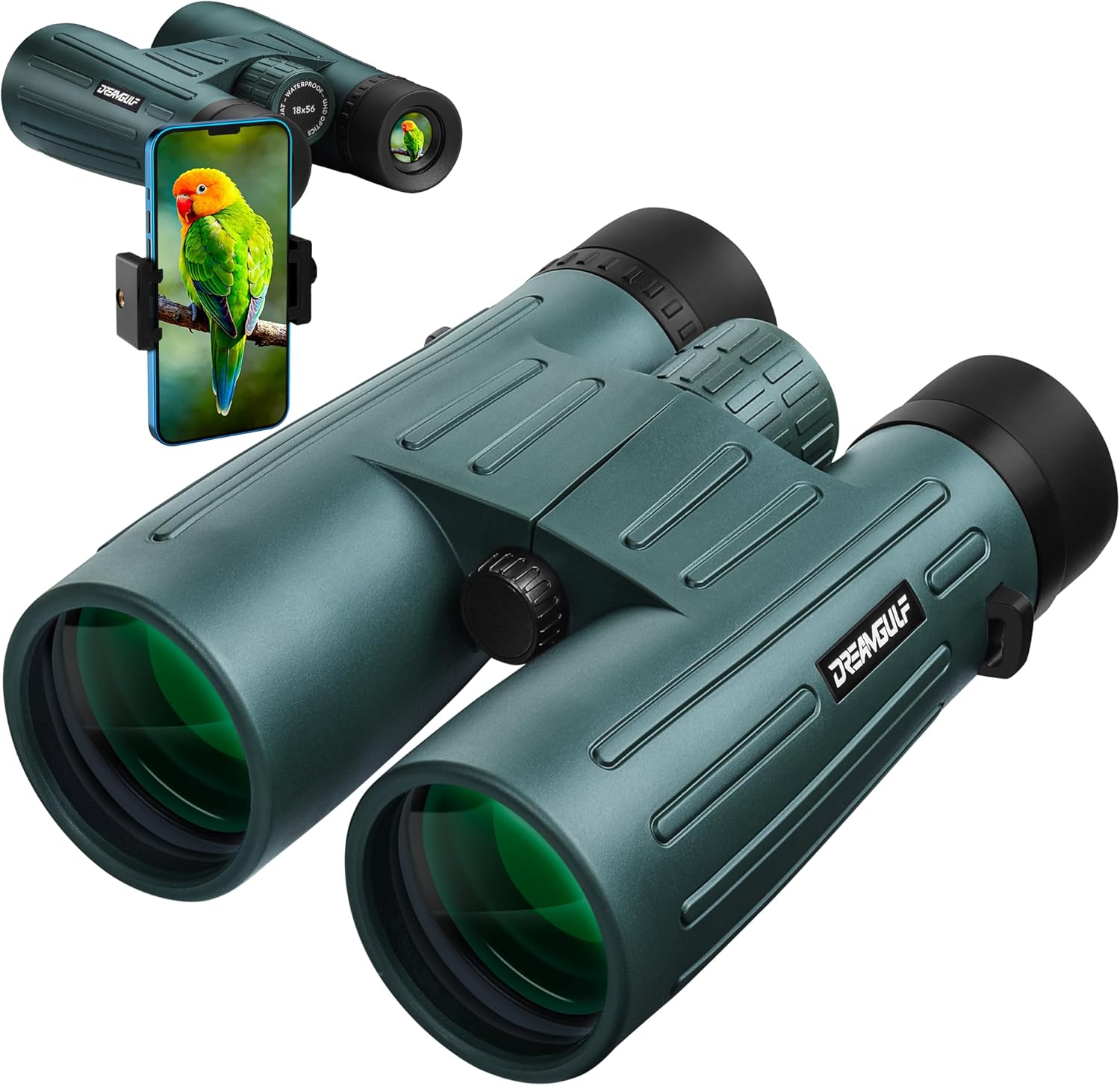
Powerful 18x magnification is what grabs attention first, perfect for anyone who wants to see birds or distant details clearly. It suits outdoor enthusiasts who need strong zoom without sacrificing clarity. Its standout feature is the sharp, ultra-high-definition images it produces at long range, making distant scenes much more vivid.
Setup involves pairing the binoculars with a tripod for the best stability, especially due to the high magnification. The lightweight design and comfortable eyecups make holding them by hand manageable during shorter periods. Extra-wide field of view and low light vision help when conditions aren’t perfect, and the waterproof, fogproof casing means daily use isn’t limited by weather.
Performance provides detailed images that surpass standard 12x or 15x magnification, making it perfect for spotting fine bird features or textures in the environment. The build is solid with a high-quality dielectric-coated roof prism, anti-slip grip, and trip adaptable for steady viewing.
Users often praise the clear long-distance images, while the shorter eye relief of 5 millimeters can be limiting for eyeglass wearers.
Sharp image quality and clear detail at long distances remain the strongest praise. The most common drawback is the short eye relief, which some users find uncomfortable, especially when wearing glasses.
Bird watchers and outdoor explorers who want serious magnification and clarity will appreciate this binocular. Those needing longer eye relief or handheld stability at 18x may want to consider alternatives with different specs.
Pros
- Powerful 18x magnification for detailed distant viewing
- Lightweight and portable for outdoor use
- Waterproof and fogproof for all weather conditions
- Tripod adaptable for steady hands-free observation
Cons
- Short 5 millimeters eye relief limits eyeglass compatibility
- High magnification requires tripod for steady viewing
| Specification | Details |
|---|---|
| Magnification Maximum | 18 x |
| Objective Lens Diameter | 5.6 centimeters |
| Eye Relief | 5 millimeters |
| Prism Type | High-quality dielectric-coated Roof Prism |
| Mount Type | Handheld, Tripod Adaptable |
| Waterproof & Fogproof | Yes |
9. 12×42 High Powered Binoculars

12×42 High Powered Binoculars suit anyone who wants detailed views at a good distance without lugging around heavy gear. Its standout feature is the generous 12x magnification paired with lightweight design, making it ideal for bird watchers who value clarity without compromising on comfort during long outings.
Getting started is straightforward with center focus that adjusts quickly to bring birds and other wildlife into sharp view. The binoculars stay comfortable during extended use thanks to their light weight of just 1.25 lbs and eyepieces with 18mm eye relief. Carrying them on hikes or trips feels easy, and the waterproof and shock-resistant build means you don’t need to worry about rough conditions or sudden weather changes.
Performance-wise, these binoculars offer sharp, bright images even in low light thanks to BAK4 prisms and fully multi-coated lenses. The field of view extends to 367/1000 yards, giving a wide perspective to track movement. Build quality earns praise for durability and solid feel, though some find the exit pupil size of 4mm a bit small for comfortable viewing during long sessions.
Tripod compatibility adds stability for focused watching sessions.
Many appreciate the sharp, vivid images and the lightweight feel that make long birding sessions comfortable. Some note that the 4mm exit pupil size can cause eye strain when used in dim lighting conditions. The waterproof, shock-resistant build keeps it reliable outdoors.
Bird watchers who want strong magnification and something easy to carry will find this binocular well suited. People needing longer eye relief or larger exit pupils for extended low-light viewing might consider other options.
Pros
- Lightweight at only 1.25 lbs for easy carrying
- Bright, clear images with BAK4 prisms
- Waterproof and shock resistant for rugged use
- Wide 367/1000yds field of view
Cons
- Exit pupil diameter of 4mm may strain eyes in low light
- Eye relief at 13.6mm could feel tight with glasses
| Specification | Details |
|---|---|
| Magnification Maximum | 12 x |
| Objective Lens Diameter | 42 millimeters |
| Eye Relief | 13.6 millimeters |
| Water Resistance Level | Waterproof |
| Prism Type | Roof Prism |
| Focus Type | Center Focus |
10. 20×50 Waterproof Binoculars

Long-distance bird watching can expose you to missed details when your binoculars don’t offer enough power. Suited for adults aiming to spot tiny features at great distances, these 20×50 binoculars deliver high magnification paired with wide lenses to bring faraway birds clearly into view.
Setting up the binoculars is straightforward with a center focus and a diopter adjustment range of +/- 4, allowing crisp focus tailored to your eyes. The large 26mm eyepiece matches facial ergonomics and helps reduce eye strain during extended use, making it comfortable to scan across landscapes or treetops for long sessions. Water resistance adds a layer of protection against mist or light rain, useful on outdoor birding trips.
Strong performance comes from fully multi-coated optics that boost light transmission and provide bright, clear images even at full 20x magnification. The build feels solid with a Porro prism system and a generous 50mm objective lens that makes distant details stand out. The clearest praise highlights sharpness without dizziness, while a common complaint notes the heavier weight can tire users holding them steady.
The binoculars deliver razor-sharp clarity at 20x magnification without causing dizziness, enhancing long watching sessions. However, their weight can make holding steady difficult over time, especially without a tripod or support.
Bird watchers who prioritize detailed long-distance views and can manage the weight will find these binoculars fitting their needs well. Those seeking lighter, fully waterproof models for more mobile or wet conditions should consider other options.
Pros
- 20x magnification for distant details
- 26mm large eyepiece reduces eye strain
- Fully multi-coated optics brighten images
- Water-resistant design for outdoor use
Cons
- Heavier weight reduces hand-held comfort
- Not fully waterproof for heavy rain
| Specification | Details |
|---|---|
| Magnification Maximum | 20 x |
| Objective Lens Diameter | 50 millimeters |
| Eye Relief | 15 millimeters |
| Field of View | 367 |
| Prism Type | Porro Prism |
| Water Resistance Level | Water Resistant |
11. Athlon Optics Midas UHD 8×42 Binoculars
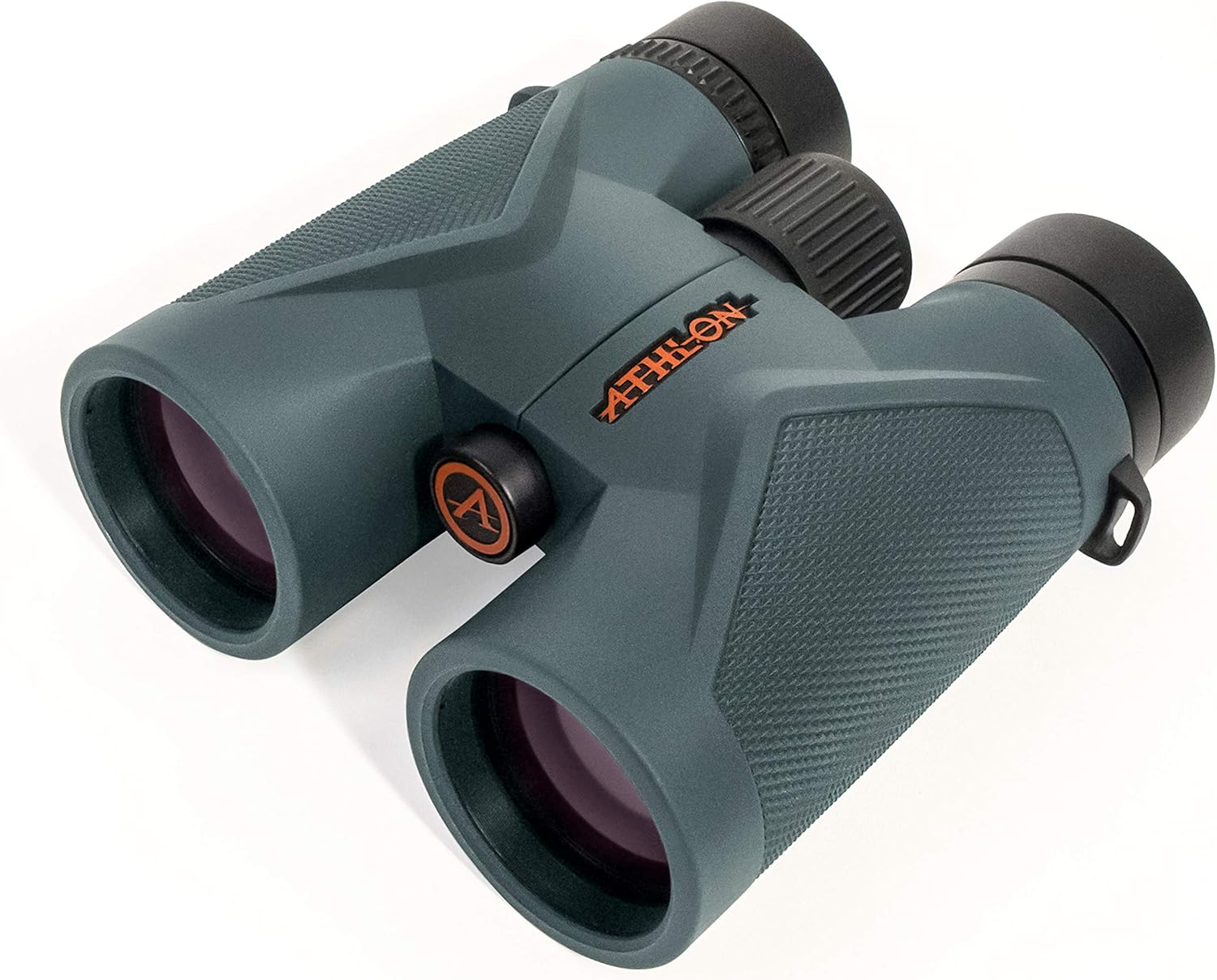
8x magnification combined with ED glass delivers crisp, clear views ideal for bird watching enthusiasts seeking sharp detail without eye strain. Lightweight design suits long outdoor sessions, while the waterproof build ensures durability in various conditions.
Setting the focus manually feels natural, especially with the close focus option for spotting nearby birds. The wide 8.1-degree field of view and 17.2 millimeters of eye relief keep your sight comfortable during extended use.
Argon purging helps prevent fogging and adds extra reliability outdoors.
Images appear bright and nearly free of chromatic aberrations thanks to the advanced multi-coated lenses and ESP Dielectric prism coatings. Construction feels solid but remains lightweight for carrying ease.
Biggest praise highlights excellent clarity, while some note the manual focus may take time to master.
Clarity and brightness stand out most, with the advanced coatings delivering crisp visuals and true colors. The manual focus, while precise, can feel slow during fast-moving bird watching moments. Durable and fog-resistant construction supports regular outdoor use.
Perfect for bird watchers prioritizing image quality and portability without needing quick autofocus. People who desire quicker focusing or steadier views might look for models with autofocus or enhanced tripod support.
Pros
- Bright and clear images with minimal color fringing
- Comfortable eye relief suitable for eyeglass wearers
- Lightweight and waterproof for outdoor use
- Wide field of view ideal for tracking birds
Cons
- Manual focus system requires adjustment patience
- Some users may prefer tripod mounting for steady viewing
| Specification | Details |
|---|---|
| Magnification Maximum | 8 x |
| Objective Lens Diameter | 42 |
| Eye Relief | 17.2 millimeters |
| Field of View | 8.1 degrees |
| Water Resistance Level | Waterproof |
| Exit-Pupil Diameter | 5.25 millimeters |
12. 15×52 HD Binoculars

Bird watchers who want sharp detail from long distances will find these binoculars well-suited. Designed with a powerful 15x magnification, they deliver a clear, close-up view that goes beyond typical 12x binoculars, capturing tiny details in nature with striking clarity.
Adjusting the center focus knob is simple, making it easy to zero in on birds without hassle. The lightweight and compact design makes carrying them around all day comfortable.
Large 22mm eyepieces offer a wider view for easier tracking, and waterproofing means they hold up well on damp mornings or unexpected weather changes.
These binoculars excel at providing razor-sharp images even when watching from far away, thanks to multiple anti-reflective coatings that brighten each view. The solid build includes shock resistance to better cope with outdoor use. Some users mention the 15x magnification can make steady holding a bit challenging without a tripod, but the image quality usually makes up for it.
Users appreciate the clear, razor-sharp images at long distances, making bird watching exceptionally detailed. A common downside is that the strong 15x zoom can make holding the binoculars steady tricky without additional support.
Anyone focused on spotting distant birds and fine details will be happy with these binoculars. For those needing easier handheld stability or better low-light viewing, other models with lower magnification or larger exit pupils may be preferable.
Pros
- High 15x magnification captures fine details
- Large 22mm eyepieces improve image clarity
- Waterproof and shock resistant design
- Lightweight and compact for all-day use
Cons
- High magnification can cause shaky views handheld
- Exit pupil diameter limits low-light performance
| Specification | Details |
|---|---|
| Magnification Maximum | 15 x |
| Objective Lens Diameter | 5.2 centimeters |
| Eye Relief | 18 millimeters |
| Prism Type | Roof Prism |
| Water Resistance Level | Waterproof |
Best Magnification for Bird Watching Binoculars Comparison
| Product | Magnification | Objective Lens Diameter | Eye Relief | Specific Uses |
|---|---|---|---|---|
| Occer 12×25 Compact | 12x | 25 mm | 20 mm | Bird Watching, Hiking, Travel |
| Zoom 10-30×50 Binoculars | 30x | 50 mm | 22 mm | Bird Watching, Sport, Travel |
| MLight 10-30×50 Zoom | 30x | 50 mm | 12 mm | Bird Watching, Hiking, Hunting |
| High Powered 18×50 | 18x | 50 mm | – | Sport Watching |
| 20×50 Waterproof Binoculars | 20x | 50 mm | 26 mm | Bird Watching, Camping, Concert |
| 20×70 High Powered | 20x | 70 mm | – | Bird Watching, Hiking, Sport |
| 10×25 Compact Binoculars | 10x | 25 mm | 10 mm | Bird Watching, Sport, Travel |
| 18×56 UHD Binoculars | 18x | 56 mm | – | – |
| 12×42 High Powered | 12x | 42 mm | – | Bird Watching, Hiking, Travel |
| 20×50 Waterproof Pro | 20x | 50 mm | 15 mm | – |
| Athlon Midas UHD 8×42 | 8x | 42 mm | 17.2 mm | Bird Watching, Hiking, Hunting |
| 15×52 HD Binoculars | 15x | 52 mm | 18 mm | Bird Watching, Hunting, Travel |
- Magnification12x
- Objective Lens Diameter25 mm
- Eye Relief20 mm
- Specific UsesBird Watching, Hiking, Travel
- Magnification30x
- Objective Lens Diameter50 mm
- Eye Relief22 mm
- Specific UsesBird Watching, Sport, Travel
- Magnification30x
- Objective Lens Diameter50 mm
- Eye Relief12 mm
- Specific UsesBird Watching, Hiking, Hunting
- Magnification18x
- Objective Lens Diameter50 mm
- Eye Relief–
- Specific UsesSport Watching
- Magnification20x
- Objective Lens Diameter50 mm
- Eye Relief26 mm
- Specific UsesBird Watching, Camping, Concert
- Magnification20x
- Objective Lens Diameter70 mm
- Eye Relief–
- Specific UsesBird Watching, Hiking, Sport
- Magnification10x
- Objective Lens Diameter25 mm
- Eye Relief10 mm
- Specific UsesBird Watching, Sport, Travel
- Magnification18x
- Objective Lens Diameter56 mm
- Eye Relief–
- Specific Uses–
- Magnification12x
- Objective Lens Diameter42 mm
- Eye Relief–
- Specific UsesBird Watching, Hiking, Travel
- Magnification20x
- Objective Lens Diameter50 mm
- Eye Relief15 mm
- Specific Uses–
- Magnification8x
- Objective Lens Diameter42 mm
- Eye Relief17.2 mm
- Specific UsesBird Watching, Hiking, Hunting
- Magnification15x
- Objective Lens Diameter52 mm
- Eye Relief18 mm
- Specific UsesBird Watching, Hunting, Travel
How to Choose the Right Magnification for Bird Watching
Choosing the right magnification for bird watching binoculars depends mainly on balancing stability, field of view, and image clarity. Selecting the appropriate level avoids shaky images and narrow views, ensuring comfortable use and preventing unnecessary expenses on unsuitable gear.
Magnification Power
Many bird watchers find their arms tiring after using binoculars with high magnification for too long. Higher zoom levels, such as 10x or above, intensify image shake, making steady viewing a challenge without a tripod. For typical backyard or forest bird distances, a magnification around 8x provides a solid balance.
It delivers enough detail without compromising stability or requiring extra support. Using too high a magnification shrinks the field of view, which means spotting birds becomes harder and tracking them more frustrating.
Brightness also drops as magnification rises because the exit pupil (the diameter of the light beam reaching your eye) gets smaller. Look for magnification with an exit pupil size around 4 to 5 mm, which fits daylight bird watching well.
This size keeps images bright and field wide enough to follow active birds easily.
Optical Quality
Lens coatings make a huge difference during long hours outdoors, especially in bright sunlight or near water. Coatings reduce glare and improve color accuracy, making feathers look true and sharp.
Binoculars with fully multi-coated lenses tend to offer more vivid images compared to those with minimal or no coatings. The prism type significantly affects sharpness and brightness. Roof prisms are compact and convenient but require precise alignment and quality coatings for clear images.
Porro prisms usually provide better depth and brightness but are bulkier. Resolution and contrast control how well you distinguish fine feather details and subtle color changes in different light conditions. Good optics show crisp edges and rich contrast without causing eye strain.
Ergonomics and Comfort
Extended bird watching sessions reveal whether binoculars are comfortable or a pain to hold. Weight plays a direct role; anything over 700 grams feels heavy after a while. Balanced shape and a body that fits naturally in your hands help reduce fatigue and avoid dropping.
Eyecups that twist or fold make a difference if you wear glasses. Proper eye relief ensures you see the full field of view without blacking out edges.
Textured grips add security when walking on wet or uneven terrain, preventing slips. Well-placed controls and a stable focus wheel let you adjust settings easily without interrupting observation.
Durability and Weather Resistance
Birding in damp or cold conditions often exposes the weaknesses in lower-quality binoculars. Waterproof seals and fogproof nitrogen or argon gas filling stop internal fogging and water damage during rain or humidity changes. Materials like rubber-armored metal casings resist bumps and drops better than plastic shells.
Good seal quality not only keeps out moisture but also dust and dirt, which degrade image clarity over time. Durable construction means you can carry the binoculars through thickets or stow them in a backpack without constant fear of damage or needing repairs.
Optimal Viewing Techniques for Different Bird Habitats
Adapt your binocular use to the bird habitat for clearer observation. In open fields or wetlands, a moderate magnification between 7x and 10x works well because it provides a balance between detail and a wide field of view. Dense forests or wooded areas demand a lower magnification, around 7x, to easily scan through branches and foliage without losing sight of fast-moving birds.
Water habitats like lakes or shorelines often require higher magnification, up to 10x or even 12x, to see distant birds clearly without disturbing them. However, using very high magnification can make it harder to hold the binoculars steady, so tripod adapters or image-stabilizing models can be useful for these settings.
- Use wider field of view for open, active bird habitats
- Choose lower magnification in cluttered environments
- Opt for steady support when going beyond 10x magnification
How to Properly Maintain and Care for Your Bird Watching Binoculars
Keep lenses clean but handle them carefully to avoid scratches. Use a soft microfiber cloth or a brush made for optics to gently remove dust and debris. Avoid wiping lenses when dry if dust or grit is present; instead, lightly blow away particles first.
Store binoculars in their protective case when not in use, and keep them away from extreme temperatures or moisture. When fogging occurs inside the lenses, check if your binoculars are waterproof or nitrogen-filled and follow the manufacturer’s guidelines for servicing.
- Clean lenses with gentle, approved materials only
- Store binoculars in a dry, padded case away from heat
- Inspect seals and seek professional help for internal fogging
Common Mistakes to Avoid When Using High Magnification Binoculars
A common mistake is using excessive magnification for bird watching, which can reduce image brightness and field of view. High magnification binoculars, such as 15x or more, often cause shaky images unless stabilized properly, leading to eye strain and frustration during long observations.
Another error is focusing adjustments that are too frequent or rushed. Smooth and gradual focusing helps maintain clarity and prevents missing subtle bird movements.
Skipping regular maintenance can also degrade image quality over time due to dirt buildup and mechanical wear.
- Avoid very high magnification without proper support
- Focus binoculars carefully and avoid constant refocusing
- Maintain and clean binoculars regularly to preserve optics
People Also Asked
What Magnification Is Ideal for Comfortable Bird Watching Sessions?
A magnification of 8x or 10x is usually best for bird watching. These levels provide a good balance between detail and a stable image without making the view too narrow or shaky. Higher magnifications can make it harder to track moving birds.
How Do I Properly Clean and Care for Bird Watching Binoculars?
Use a soft microfiber cloth and lens cleaning solution designed for optics to clean lenses. Avoid rough materials or household cleaners that can scratch coatings. Store binoculars in a case and keep them dry to prevent fungus growth or corrosion.
Can High Magnification Binoculars Cause Dizziness or Eye Strain?
High magnification can cause dizziness or eye strain because the image can be shaky and harder to focus on for long periods. Lower magnification reduces motion effects and offers a wider field of view, making bird watching more comfortable.
Are Larger Magnification Binoculars Compatible with Tripod Mounts?
Larger magnification binoculars often benefit from a tripod to stabilize the view, especially above 12x magnification. Tripods prevent hand shake but add weight and setup time, so they are practical for stationary bird watching rather than quick scans.
How Long Do Bird Watching Binoculars Typically Last with Regular Use?
Bird watching binoculars generally last many years with proper care. Maintaining cleanliness, storing them in a dry place, and avoiding drops or knocks will keep the optics and mechanics working well. Some models can stay functional for a decade or more.
Conclusion
Choosing the right magnification for bird watching binoculars depends largely on how clear and steady the image needs to be, alongside the weight and size you can comfortably carry. Higher magnification offers more detail but can be harder to stabilize and usually means heavier lenses.
Lower magnification models tend to provide a wider field of view and easier handling, which can be better for spotting moving birds or quick looks.
Consider where you’ll use the binoculars most often and how much you want to spend. A compact pair might work better for hiking, while a sturdier, heavier option could be worth it for regular use at a fixed spot. For easy comparison, check the table and product choices above to find a model that fits your needs and budget.