Top 12 Best Coaxial Cable Ham Radio You Can’t Miss!
Signal loss and interference are common frustrations that come from using a cheap or poorly matched coaxial cable in ham radio setups. A good best coaxial cable ham radio connection depends heavily on quality cabling, as a bad cable can mean dropped transmissions or unclear reception. Over time, it becomes clear that cable durability and consistent signal transmission significantly affect the experience, especially during longer or critical communications.
The most important factors to consider in coaxial cables for ham radios are the cable’s impedance, shielding, and power rating. Standard ham radio systems operate with 50-ohm cables to ensure optimal matching and minimal loss. Effective shielding, such as double or quad shielding, helps reduce electromagnetic interference, which is crucial in crowded radio environments.
Power handling capacity is also key, with many coax cables rated to handle between 500 to 1500 watts depending on the frequency and length; exceeding these limits can cause cable damage or safety risks.
Need a Quick Check?
| Image | Product | Price |
|---|---|---|
Our Top Picks 1  | RG8X Coax Cable 50ft | Check Price |
Our Top Picks 2  | KMR400 Coax Cable 50ft | Check Price |
Our Top Picks 3  | RG8X Coax Cable 50ft (Alt) | Check Price |
Our Selected Top 12 Coaxial Cable Ham Radio for Every Budget
This list features a variety of coaxial cables designed for ham radio use, catering to different budgets and needs. Each review highlights the cable’s performance, ideal users, strengths, and potential drawbacks to help you find the best fit for your radio setup.
1. RG8X Coaxial Cable PL259 Male to Male 50ft
Feels sturdy and reliable in daily radio setups, perfect for ham radio enthusiasts needing a durable, low-loss coaxial cable. It stands out with strong construction and consistent signal quality for frequencies up to 300 MHz, making it ideal for both indoor and outdoor use.
Setting it up is straightforward thanks to the flexible PVC jacket and molded connectors. The 50-foot length gives plenty of room for positioning antennas and equipment. The nickel-plated brass UHF PL259 connectors with gold-plated center pins ensure solid connections with minimal signal loss, while the double shielding keeps interference to a minimum during everyday operation.
Signal strength remains stable without noticeable leakage, thanks to the pure copper inner conductor and double shielding. The cable’s build quality feels tough enough to handle outdoor environments.
Most users commend its durability and effective shielding, though a few mention the cable could be thicker for heavy-duty use.
The cable’s standout feature is its reliable shielding and low signal loss during normal ham radio operation, resulting in clear reception and transmission. A common drawback noted is the modest cable thickness, which might not satisfy users needing extra ruggedness for extreme environments.
Those looking for a solid, reasonably priced coaxial cable with dependable signal performance will be pleased with this option. Users requiring coax with higher durability or wider frequency range may want to consider alternative cables better suited for challenging conditions or specialized applications.
Pros
- Low loss with pure copper conductor
- Double shielding prevents interference
- Flexible PVC jacket suitable for outdoor use
- Gold-plated pins improve signal quality
Cons
- Cable thickness may be insufficient for rugged conditions
- Limited frequency coverage up to 300 MHz
| Specification | Details |
|---|---|
| Connector Type | Uhf |
| Cable Type | Coaxial |
| Frequency | 0.3 GHz |
| Connector Gender | Male-to-Male |
| Gauge | 17 |
2. KMR400 Coaxial Cable PL259 Male to Male 50ft
Great for ham radio enthusiasts needing a reliable cable, this 50ft coaxial cable stands out for minimal signal loss at higher frequencies. It suits those who want a durable connection without worrying about signal degradation over a longer distance.
Setting up with the male-to-male PL259 connectors is straightforward and fits typical UHF scanner devices without issue. The cable’s waterproof design helps in outdoor setups, and the combination of copper clad aluminum and tinned copper braid materials keeps the connection stable day after day. It’s flexible enough to route around obstacles while maintaining signal integrity.
Signal loss stays under 2.8dB at 450MHz, which means the transmitted signal remains strong and clear. The cable’s construction is solid, with good oxidation resistance coming from its aluminum foil and braid layers. Praised for protecting signals effectively, some note its copper clad aluminum conductor isn’t as durable as pure copper.
The SWR rating of ≤1.25 confirms it performs well within expected standards.
Maintains low signal loss over 50 feet and holds a good SWR rating, indicating solid performance during radio transmissions. Some users find the cable less flexible and wish it had pure copper conductors for added durability.
Ideal for users needing a durable, waterproof cable that covers longer distances with minimal signal degradation. Those prioritizing ultra-flexibility or full copper conductors might want to look for alternatives.
Pros
- Minimal signal loss at 450MHz under 2.8dB
- Durable waterproof design for outdoor use
- Resistant to oxidation from tinned copper braid
- Standard PL259 Male-to-Male connectors
Cons
- Inner conductor is copper clad aluminum, not pure copper
- Heavier and less flexible than lighter coaxial options
| Specification | Details |
|---|---|
| Connector Type | UHF |
| Cable Type | Coaxial |
| Connector Gender | Male-to-Male |
| Frequency | 1000 MHz |
| Data Transfer Rate | 1.25 gigabits_per_second |
| Waterproof | Yes |
3. RG8X Coaxial Cable PL259 Male to Male 50ft
Copper core construction and dual shielding form the backbone of this RG8X coaxial cable, designed to keep signal loss and interference low. Ideal for ham radio operators and CB radio users who need a reliable connection with dependable performance over longer distances.
Setting it up usually means just connecting the pre-installed PL259 male connectors to radios and transceivers. The cable stays flexible enough to run through cramped or mobile setups without kinking or damage, thanks to its durable PVC jacket. Regular daily linking and unlinking don’t seem to wear it down, which comes in handy if you switch devices often.
Signal transmission is clear, showing the benefit of the solid copper core and dual shielding that reduce interference effectively. The strongest point is how reliably it maintains connection quality, but some mention its thickness makes routing in very tight spaces a bit harder than thinner cables.
Still, the build feels sturdy and well-made overall.
Signal quality remains steady thanks to copper core and dual shielding, but the cable’s thickness sometimes challenges installation in very confined areas. Most users value its sturdy construction and dependable connectors for everyday radio setups.
Radio enthusiasts needing long, low-loss runs will find it well suited. Those requiring ultra-thin cables or connections outside CB and ham radio gear might want to look elsewhere.
Pros
- Solid copper core for excellent conductivity
- Dual shielding reduces signal loss and interference
- Durable PVC jacket protects cable while staying flexible
- Pre-installed PL259 connectors ensure secure connections
Cons
- Thicker cable can be harder to route in tight spaces
- Not compatible with phones or devices outside ham/CB radios
| Specification | Details |
|---|---|
| Connector Type | Coaxial |
| Cable Type | RG8X |
| Compatible Devices | CB Radio, Ham HF SWR Meter |
| Connector Gender | Male-to-Male |
| Number of Pins | 2 |
4. Steren RG8X Coaxial Cable PL259 Male to Male 50ft

High-quality 50ft RG8X coaxial cable, designed specifically for HAM radio and CB setups, excels at delivering solid signal quality. Ideal for anyone wanting a reliable, male-to-male PL259 connection on their radio installations, it stands out for its durable build and strong power handling.
Setting up the cable is straightforward given the male-to-male PL259 connectors on both ends, which fit well with most radio equipment. Its 6 ft length allows flexible runs, and the 50 Ohm impedance suits HF antennas and base station radios perfectly. Handling day-to-day, the cable remains flexible enough to manage around tight spots without damaging the insulation or connectors.
The cable shines in maintaining a clear signal with minimal interference thanks to its RG8X construction. It is built tough to handle up to 300 watts at frequencies up to 750 MHz, which suits high-powered radio operations. While praised for its durability and signal performance, the most common gripe is occasional stiffness that makes tight bends a bit challenging.
Consistent signal performance and sturdy build get frequent praise from those using it in demanding ham radio setups. Stiffness in the cable causes slight frustration during installation in confined or complex antenna runs. The durability is well noted, but handling flexibility can lag slightly behind softer cables.
Radio operators needing a dependable, power-ready coax will appreciate this cable’s strength. Those needing ultra-flexible runs or working with very tight antenna spaces may want to consider thinner or softer coax alternatives better suited for bending.
Pros
- Strong signal quality with minimal loss
- Durable insulation and connectors
- Supports high power up to 300 watts
- Flexible enough for typical antenna setups
Cons
- Some stiffness makes tight bends tricky
- Connector ends may feel bulky in small spaces
| Specification | Details |
|---|---|
| Connector Type | Rg8x to Rg8x |
| Cable Type | Coaxial |
| Data Transfer Rate | 50 megabits_per_second |
| Frequency | 750 MHz |
| Wattage | 300 watts |
| Connector Gender | Male-to-Male |
5. RG58 Coaxial Cable PL259 Male to Male 49.2ft

Ideal for ham radio enthusiasts needing a reliable connection, this RG58 coaxial cable stands out by offering upgraded connectors that resist corrosion better than typical options. Its sturdy build and connector design make it a solid choice for anyone looking for reliable, long-term use in scanning or radio setups.
Setting it up involves handling male-to-male coaxial connectors that come with heat shrink tubes extended to 6 cm, providing a strong grip that keeps connections tight even when bending or pulling. The cable’s braided design adds flexibility without compromising durability, making daily adjustments or movements smooth without risking connector failure.
Signal pass-through is consistent, supporting up to 300 watts which aligns with most scanner and ham radio needs. The professional crimps on the connectors ensure a secure fit that rarely comes apart, though some might find the cable length fixed at just under 50 feet limiting for larger setups.
The upgraded connectors hold up well against corrosion thanks to thorough environmental testing.
Upgraded connectors have proven resistant to corrosion in testing, making them quite durable over time. The most common gripe relates to cable length, as the fixed 49.2 feet might not suit all setups requiring longer runs.
Those needing a dependable, weather-resistant cable under 50 feet will appreciate its build quality and secure connections. Users needing longer cable spans or different connector types might look for alternatives better fitting their specific needs.
Pros
- Corrosion-resistant connectors from salt spray test
- Professional crimping prevents connector loosening
- Extended heat shrink tubes for secure connections
- Flexible braided cable design
Cons
- Cable length fixed at 49.2 feet only
- Connector type may limit certain radio models
| Specification | Details |
|---|---|
| Connector Type | Coaxial |
| Cable Type | RG58 Coaxial Cable |
| Connector Gender | Male-to-Male, Female-to-Female |
| Wattage | 300 watts |
| Compatible Devices | Scanner |
6. RG8X Coaxial Cable PL259 Male to Male 50ft
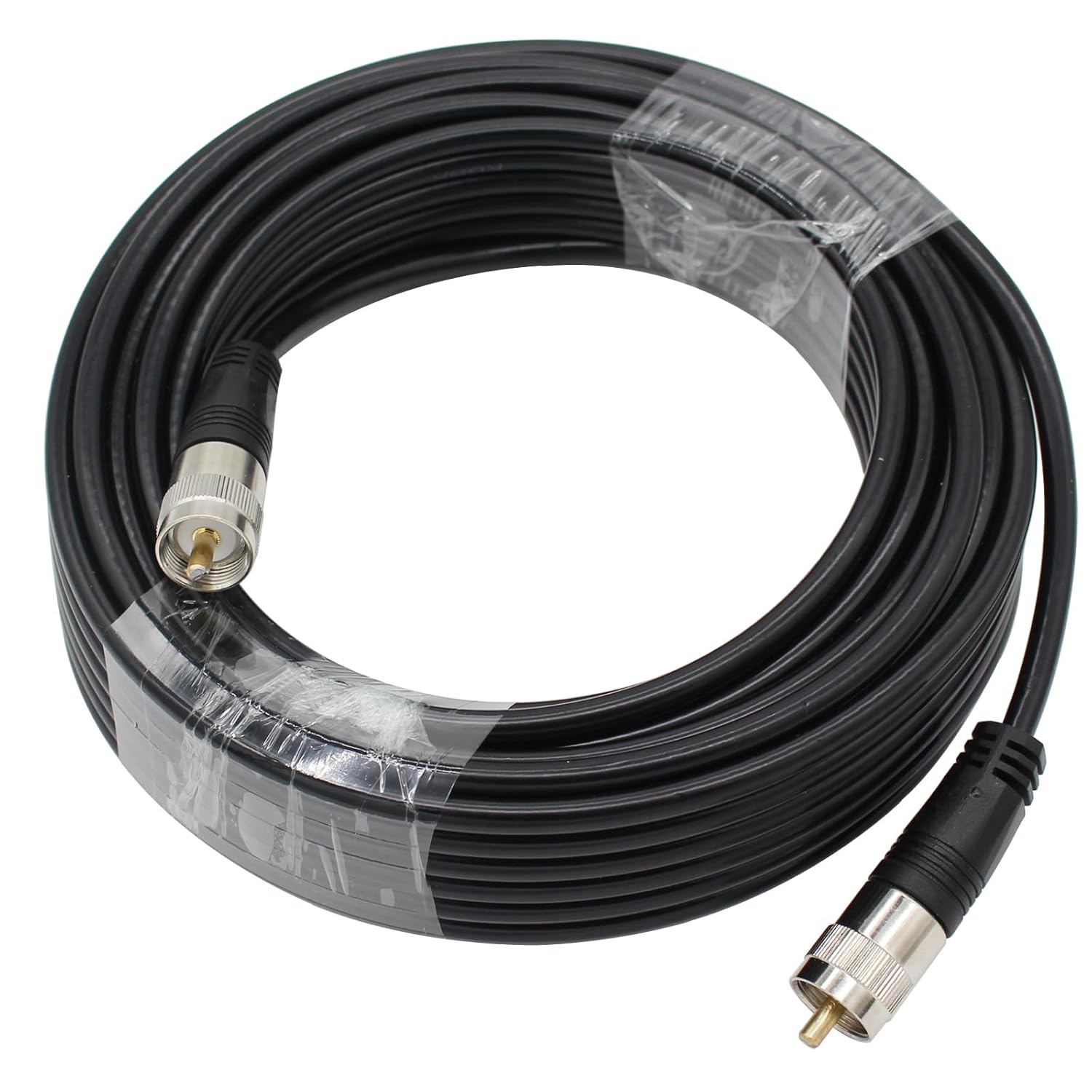
Running a reliable ham radio setup means having cables that won’t cut out or degrade your signal. For those needing a 50ft coaxial cable with strong reception and good durability, this RG8X offers solid shielding and a sturdy gauge that keeps connections clear and steady over distance.
Getting started is straightforward thanks to its male-to-male PL259 connectors, which fit snugly onto most ham radio transceivers and antennas. The flexible PVC jacket makes it simple to route indoors or outdoors without worrying about damage from weather.
It feels tough but bends well, so you won’t struggle with tight spaces or mounting.
Signal loss is minimal thanks to the 16AWG inner copper conductor and double shielding that cuts down on interference. The nickel-plated brass connectors with gold-plated center pins have a tight crimp, making physical and electrical connections reliable. Some mention the connectors feel a bit bulky, which might be awkward in very compact setups.
The cable’s shielding and conductor strength make it a reliable choice for maintaining clear signals, especially outdoors. However, the PL259 connectors are noticeably large, which some find difficult to manage in compact radio setups. The cable holds up well under physical stress and prevents signal loss effectively.
This cable suits ham radio operators and scanner users who value durability and signal integrity across moderate distances. Those needing ultra-light or very small connectors for space-limited environments should consider other options that prioritize low profile over rugged construction.
Pros
- Double shielding reduces signal leakage and interference
- Flexible PVC jacket suitable for indoor and outdoor use
- Strong 16AWG pure copper conductor outperforms smaller gauges
- Well-crimped, durable PL259 connectors with gold-plated pins
Cons
- Connectors are somewhat bulky in tight spaces
- May be heavier compared to thinner coax cables
| Specification | Details |
|---|---|
| Connector Type | PL259 |
| Cable Type | Coaxial |
| Compatible Devices | Monitor, Scanner |
| Gauge | 16 |
| Connector Gender | Male-to-Male |
7. KMR400 Coaxial Cable PL259 Male to Male 100ft
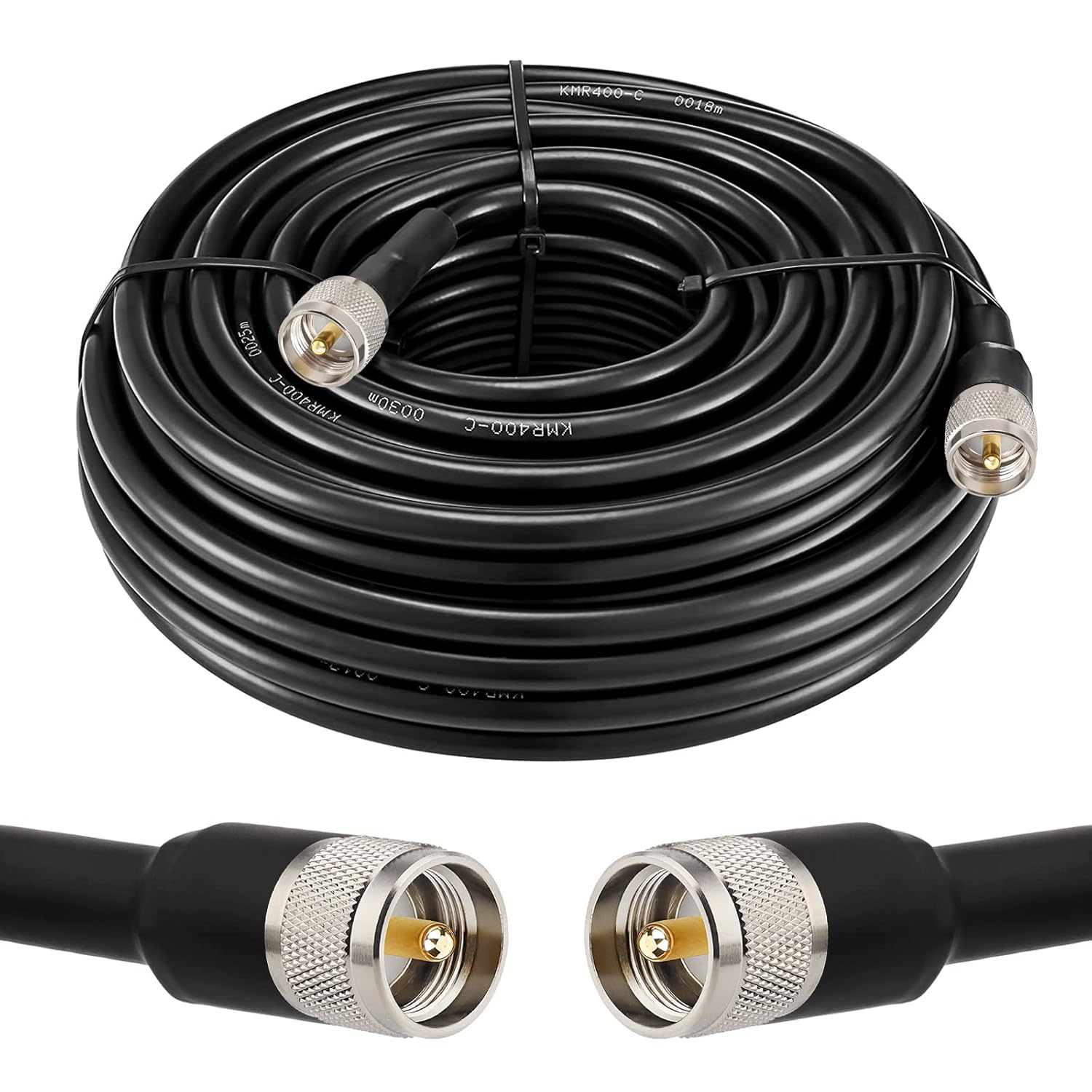
Ultra-low loss is the standout feature of this cable, thanks to its 0.41-inch copper clad aluminum conductor, which holds signals better than most RG58 or 240 type coax cables. Perfect for ham radio enthusiasts who need a reliable, long 100-foot coaxial cable that can handle outdoor conditions without much signal drop.
Installation is straightforward with male-to-male PL259 connectors that clamp securely instead of using crimping, making setup feel solid and lasting. The cable’s UV-proof RF-PVC jacket ensures it stays flexible and durable even after long outdoor exposure, which matters when you want a cable that won’t crack or degrade under sunlight or rough weather.
Signal quality stays strong over long runs, performing well up to 1000 MHz, which suits scanner and ham radio applications. Construction feels solid thanks to the nickel-plated connectors and the thicker cable gauge. The most common praise highlights its durability and consistent signal retention.
A typical complaint is its weight and stiffness, making handling a bit cumbersome for some users.
Durability under outdoor conditions and consistent signal retention receive the highest praises. Most users find the cable somewhat stiff and heavy, which can make routing or managing it a little challenging.
This cable suits ham radio users who prioritize long-lasting, reliable signal transmission outdoors. Those needing ultra-light or highly flexible cables might want to look elsewhere.
Pros
- Low signal loss over long distances
- Durable copper clad aluminum conductor
- UV-proof and weather-resistant jacket
- Secure nickel-plated PL259 clamp connectors
Cons
- Heavier and less flexible cable
- Connector type listed as “No” can be confusing
| Specification | Details |
|---|---|
| Connector Type | No |
| Cable Type | Coaxial |
| Connector Gender | Male-to-Male |
| Frequency | 1000 MHz |
| Gauge | 0.41 |
8. Bolton400 LMR400 Coaxial Cable PL259 Male to Male 75ft

Radio operators who need a reliable, weatherproof coaxial cable for longer cable runs will appreciate the Bolton400 LMR400 coaxial cable. It suits those requiring solid signal retention and easy setup thanks to pre-attached PL-259 male-to-male connectors.
Its single biggest strength is the low signal loss it maintains over distance.
Setup is straightforward since the connectors are already installed, saving time and avoiding soldering. The cable’s 50 Ohm design matches well with antennas, radios, and analyzers, keeping interference down. Day-to-day handling is simple, and the weatherproofing means it holds up well outdoors without special protection during normal use.
The cable performs well at maintaining signal strength even on longer runs, which is crucial for consistent communication. Build quality feels durable and the PL-259 connectors provide secure fits. The strongest praise focuses on minimal attenuation, while some mention that the cable can be a bit stiff and less flexible than thinner options.
Minimal signal attenuation stands out as the biggest strength, ensuring clear transmissions even at extended lengths. The most common complaint is the cable’s stiffness, which can make routing through tight spaces challenging.
Operators needing a tough, consistent signal cable for outdoor setups will find it very effective. Those looking for something easier to maneuver or lighter might want to explore cables with thinner jackets or more flexibility instead.
Pros
- Low signal loss over long cable runs
- Pre-terminated PL-259 connectors
- Weatherproof for outdoor use
- 50 Ohm impedance for wide device compatibility
Cons
- Quite stiff, less flexible than thinner cables
- Heavier and bulkier to handle and install
| Specification | Details |
|---|---|
| Connector Type | PL259 |
| Cable Type | PL259 |
| Frequency | 8000 MHz |
| Connector Gender | Male-to-Male |
| Compatible Devices | Antennas, SWR/Power meters, HF transceivers, VHF/UHF radios |
9. G-PLUG RG8X Coaxial Cable PL259 Male to Male 15ft

Designed for ham radio and CB setups needing dependable signal transmission, this coaxial cable stands out with its double shielding and pure copper core. Perfect for anyone who prioritizes clear communication and minimal interference over longer cable runs, it offers solid connection quality that makes it a reliable choice for your transceiver needs.
Connecting the PL259 male ends to SO-239 jacks is straightforward, fitting snugly on most ham radio base station antennas and CB radios. The RG8X cable is flexible enough for routine positioning and adjustments without feeling too stiff, and the double shielding helps keep outside static down during daily operation near other electronics.
Signal strength holds up well thanks to the low-loss RG8X design and copper core, supporting consistent communication even with some distance from the radio. The nickel-plated brass connectors with gold-plated pins provide good durability and prevent corrosion over time.
Most praise focuses on the clear signal transmission, though a few note these connectors can be a bit tricky tightening securely for beginners.
Clear signal transmission and interference reduction stand out as key strengths, supported by the double shielding and pure copper core. On the downside, some users find the nickel-plated connectors require effort to fasten properly, especially if inexperienced with coaxial connections.
Those with standard ham or CB radio equipment seeking stable, quality transmissions over moderate lengths will be happy with this cable. Anyone needing longer runs or easier connector handling might want to explore other options better suited to those requirements.
Pros
- Low-loss RG8X cable for better signal quality
- Double shielding reduces external interference
- Gold-plated pin resists corrosion
- Fits standard PL-259 and SO-239 ports
Cons
- Connectors can be hard to tighten securely
- 15ft length may be limiting for some setups
| Specification | Details |
|---|---|
| Connector Type | Coaxial Screw-on Connector |
| Compatible Devices | Base Station Antennas (UHF/SO-239), CB Radios, HAM Radios |
| Cable Type | RG8X |
| Connector Material | Nickel-plated Brass with Gold-plated Pin |
| Length | 15ft |
| Shielding | Double Shielded (Foil Layer + Braided Mesh) |
10. RG213 Coaxial Cable PL259 Male to Male 50ft

RG213 Coaxial Cable PL259 Male to Male 50ft stands out for its solid build and low signal loss, ideal for CB ham radio and HF amateur radio users. It suits anyone needing a dependable cable that preserves signal strength over longer runs, especially when good conductivity matters most.
Setting up the cable is straightforward thanks to its male-to-male PL259 connectors. Daily use reveals how the bare copper inner conductor and braid keep interference low and signals clear.
At 50 feet, it reaches antennas effectively without significant loss, making it practical for various radio setups including marine VHF and base stations.
The cable manages its main job of signal transmission confidently with less than 2.35dB loss at 400MHz and a low SWR of ≤ 1.20. Built with bare copper braid rather than tinned copper, it offers better conductivity compared to RG8 or KMR400 alternatives.
The solid copper construction receives frequent praise, though some find the cable thicker and less flexible than lighter options.
Strong points include excellent conductivity and minimal signal loss that keep transmissions clear over distance. Common downsides involve its bulkier build making routing or coiling less convenient.
Those needing a durable cable with good signal protection will find this cable fitting well, especially in fixed stations or marine radios. Users prioritizing lightweight or highly flexible cable for tight spaces should consider other models.
Pros
- Bare copper braid for better conductivity
- Low signal loss at high frequencies
- Standard 50ft length suitable for many setups
- Compatible with wide range of amateur radio gear
Cons
- Cable is relatively thick and less flexible
- May be heavier compared to thinner coax cables
| Specification | Details |
|---|---|
| Connector Type | Coaxial |
| Cable Type | Coaxial |
| Connector Gender | Male-to-Male |
| Frequency | 1000 MHz |
| Loss at 400 MHz | Less than 2.35 dB |
11. RG8 Coaxial Cable PL259 Male to Male 75ft
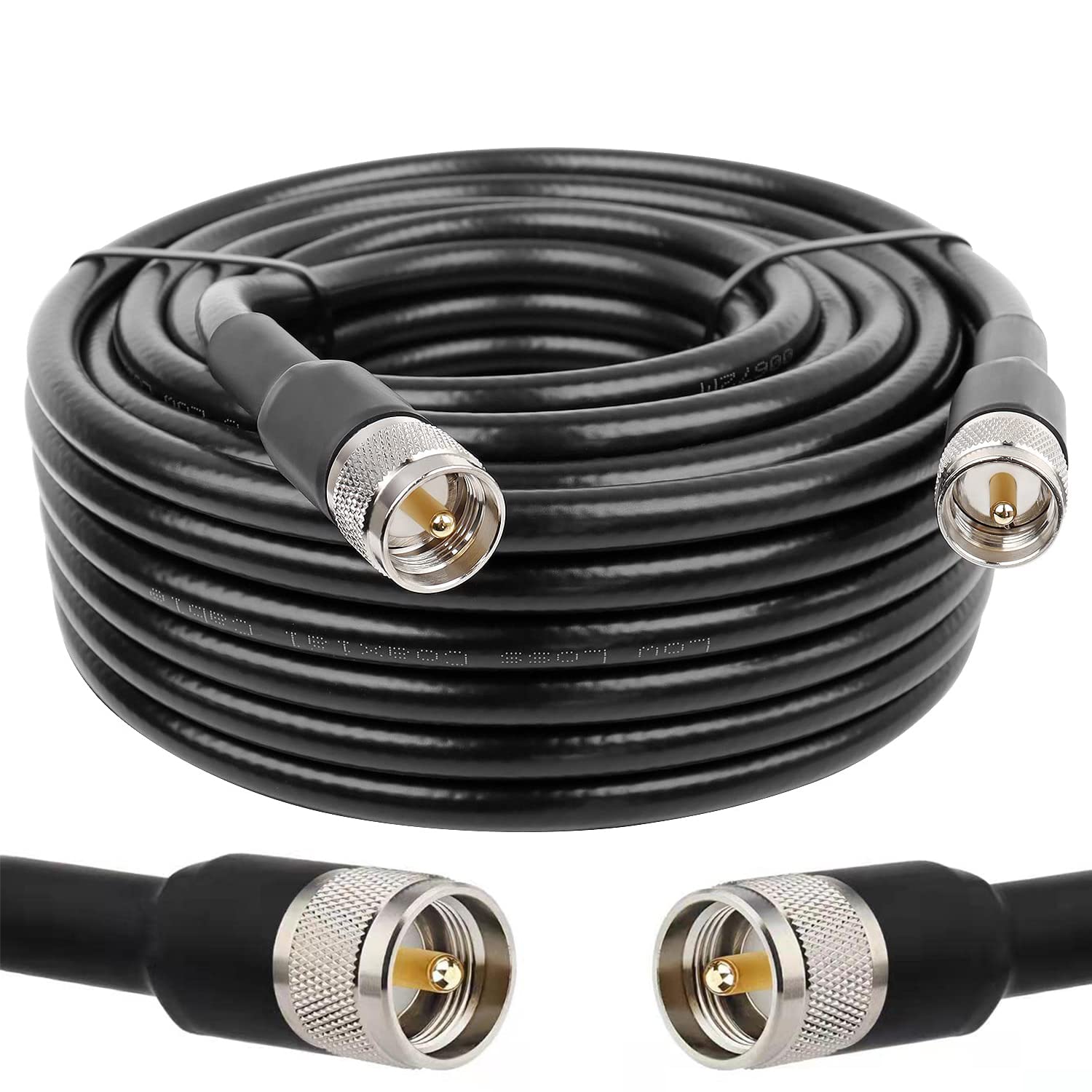
Running a ham radio setup with reliable coaxial cable really comes down to maintaining signal clarity over long distances. Ideal for anyone who needs sturdy connections without worrying about significant signal loss, this 75ft RG8 cable stands out for keeping interference minimal even at higher frequencies.
Installation is straightforward thanks to the PL259 male-to-male connectors that fit most standard ham and CB radios easily. Daily use shows how the cable’s waterproof design holds up well outdoors, protecting from weather damage.
Its flexibility also makes it manageable to route around corners without kinking or stressing the cable.
Signal transmission stays strong with less than 2.15dB loss at 450MHz and an SWR of 1.25 or below, which means the radio’s output remains efficient and clear. The copper-clad aluminum core combined with tinned copper braid shielding reduces oxidation and helps maintain long-term performance. The solid build receives praise, although some find the cable relatively stiff and less convenient for tight spaces.
The cable reliably minimizes signal loss with a solid build that resists oxidation, appreciated for maintaining clear transmissions over distance. Complaints typically mention the cable’s stiffness, which can make installation tricky in cramped areas or around tight bends.
Anyone needing a rugged, long cable for outdoor ham or marine setups will find it fits well. Those who prioritize extreme flexibility or very compact cable routing may want to consider other models better suited for tight spaces.
Pros
- Low signal loss at high frequencies
- Waterproof design for outdoor use
- Durable copper clad aluminum conductor
- Compatible with many ham and CB radios
Cons
- Stiff cable can be hard to maneuver
- Connector quality varies by batch
| Specification | Details |
|---|---|
| Connector Type | PL259 |
| Cable Type | Coaxial |
| Frequency | 1000 MHz |
| Data Transfer Rate | 450 MHz |
| Connector Gender | Male-to-Male |
| Length | 75ft |
12. Eightwood RG400 Coaxial Cable 50ft

Great for anyone needing reliable coaxial cable for ham radio setups, this 50ft RG400 cable stands out with its excellent shielding that blocks interference, keeping signals clean. It suits base stations and mobile systems well, offering durable materials to handle tough environments without signal loss.
Setting it up is straightforward, thanks to its compatibility with various 50-ohm connectors like SO239 and BNC. The double silver-plated copper braid shield helps prevent unwanted noise, while the PTFE insulator and FEP jacket deal with temperature extremes up to 220℃. This lets you carry and use it outdoors every day without worrying about damage or any drop in performance.
Performance-wise, the cable carries frequencies up to 12400MHz, making it fit for high-frequency radio work. The silver-plated copper conductors ensure good conductivity and reduce signal loss. Praise centers on its strong EMI/RFI protection, while a typical complaint is the male-to-male connector setup, which may need adapters for some uses.
The cable’s standout feature is its double silver-plated braid shield that effectively blocks interference, ensuring clear signals. Users note the male-to-male connectors as a minor inconvenience, sometimes needing additional adapters to fit certain setups.
Those running base stations or mobile ham radios will appreciate the durability and frequency range. Anyone needing a more flexible cable or different connector types might want to look for alternatives tailored to those specs.
Pros
- Excellent protection against EMI and RFI
- High temperature resistance up to 220℃
- Compatible with various 50-ohm connectors
- Durable FEP jacket for tough conditions
Cons
- Male-to-male connectors may require adapters
- Thicker than some cables, less flexible
| Specification | Details |
|---|---|
| Cable Type | Coaxial |
| Max Operating Frequency | 12400 MHz |
| Connector Type | RF Connector (Male-to-Male) |
| Maximum Voltage | 1900 volts of direct current |
| Material Inner Conductor | Silver plated copper |
| Outer Shield | Double silver plated copper braid |
Best Coaxial Cables for Ham Radio Comparison
| Product | Cable Type | Length | Connector Type | Special Features |
|---|---|---|---|---|
| RG8X Coax Cable 50ft | Coaxial | 50ft | Uhf Male-to-Male | Low Loss |
| KMR400 Coax Cable 50ft | Coaxial | 50ft | Uhf Male-to-Male | Waterproof |
| RG8X Coax Cable 50ft (Alt) | RG8X | 50ft | Male-to-Male | Low Loss |
| Steren RG8X Cable 50ft | Coaxial | 50ft | Male-to-Male | – |
| RG58 Coax Cable 49ft | RG58 Coaxial | 49ft | Male-to-Male/Female-Female | Braided |
| RG8X Coax Cable 50ft (2) | Coaxial | 50ft | Pl259 Male-to-Male | Braided |
| KMR400 Coax Cable 100ft | Coaxial | 100ft | Male-to-Male | Braided |
| Bolton LMR400 Cable 75ft | PL259 | 75ft | Pl259 | – |
| G-PLUG RG8X Cable 15ft | RG8X | 15ft | Pl259 Male | Gold-plated Pin |
| RG213 Coax Cable 50ft | Coaxial | 50ft | Male-to-Male | Braided |
| RG8 Coax Cable 75ft | Coaxial | 75ft | Pl259 | Waterproof |
| Eightwood RG400 Cable 50ft | Coaxial | 50ft | Male-to-Male | Braided, Heat Resistant |
- Cable TypeCoaxial
- Length50ft
- Connector TypeUhf Male-to-Male
- Special FeaturesLow Loss
- Cable TypeCoaxial
- Length50ft
- Connector TypeUhf Male-to-Male
- Special FeaturesWaterproof
- Cable TypeRG8X
- Length50ft
- Connector TypeMale-to-Male
- Special FeaturesLow Loss
- Cable TypeCoaxial
- Length50ft
- Connector TypeMale-to-Male
- Special Features–
- Cable TypeRG58 Coaxial
- Length49ft
- Connector TypeMale-to-Male/Female-Female
- Special FeaturesBraided
- Cable TypeCoaxial
- Length50ft
- Connector TypePl259 Male-to-Male
- Special FeaturesBraided
- Cable TypeCoaxial
- Length100ft
- Connector TypeMale-to-Male
- Special FeaturesBraided
- Cable TypePL259
- Length75ft
- Connector TypePl259
- Special Features–
- Cable TypeRG8X
- Length15ft
- Connector TypePl259 Male
- Special FeaturesGold-plated Pin
- Cable TypeCoaxial
- Length50ft
- Connector TypeMale-to-Male
- Special FeaturesBraided
- Cable TypeCoaxial
- Length75ft
- Connector TypePl259
- Special FeaturesWaterproof
- Cable TypeCoaxial
- Length50ft
- Connector TypeMale-to-Male
- Special FeaturesBraided, Heat Resistant
How to Choose the Best Coaxial Cable
Selecting the right coaxial cable for ham radio involves considering factors like signal loss, durability, and flexibility to ensure clear transmission and long-lasting performance. Choosing the correct type prevents interference and frequent replacements, ultimately saving time, money, and frustration.
Cable Impedance
A 50-ohm impedance is standard in many ham radio setups. Using a cable with mismatched impedance usually causes noticeable signal reflection and loss. Such mismatching can reduce transmission effectiveness, sometimes causing the radio to report a high SWR (Standing Wave Ratio), which risks damage to the equipment.
Choosing a cable with a 50-ohm impedance rating ensures that the signal flows efficiently between the radio and antenna. Many cables have this rating clearly indicated on their outer jacket or packaging. Overlooking this can lead to frustration from weak signals and inefficient operation.
Before buying, check the cable label or datasheet to confirm this specification matches your radio system.
Attenuation and Signal Loss
Attenuation ratings indicate how much signal strength the cable loses over a certain distance, usually measured in decibels per 100 feet. Longer cables commonly cause more signal drop, so this matters especially if the antenna is far from the radio.
Good quality cables use thicker conductors and better insulation to keep attenuation low. For example, RG-213 typically shows less signal loss compared to RG-58 over the same length.
Picking a cable with a low attenuation rating keeps signals stronger, resulting in clearer reception and transmission. Pragmatically, cable runs beyond 50 feet should have special attention to attenuation values to avoid weak signals.
Durability and Material Quality
The outer jacket and shielding materials determine how well the cable holds up outdoors or in tight spaces. Polyethylene jackets resist UV damage and water better than PVC, which wears faster in sunlight. Braided copper or aluminum shields protect against electromagnetic interference and help with toughness.
Installation practices often demand some bending. Highly flexible cables make maneuvering in cramped spots easier but sometimes at the cost of durability. Connector ends with corrosion-resistant plating, like nickel or silver, prevent signal issues from rust over time.
Paying attention to material types helps avoid cable failures and replacements after a season or two.
Connector Compatibility
Connector types vary between radios and antennas. PL-259 (UHF) connectors are common, but SMA or N-type connectors may be needed for certain transceivers or antennas. Using the wrong type means either no connection or loose contacts, which cause signal loss.
Connector quality matters as well. Cheap connectors often have poor plating or poorly soldered joints that increase resistance or pick up noise.
For setups exposed to weather, waterproof or weatherproof connectors with rubber seals and protective boots prevent moisture buildup and corrosion. Ensuring proper fit and solid build reduces transmission issues.
Power Handling Capacity
Cables need to handle the radio’s output power without overheating or degrading. Higher wattage transmissions require cables with thicker center conductors and better insulation to prevent damage.
Underpowered cables risk melting the jacket or causing shorts.
Power handling depends largely on cable gauge and construction. For example, a cable rated for 100 watts may fail if used at 500 watts for extended periods.
Evaluating the cable’s power rating against your transmitter’s maximum output ensures safe and reliable operation. Taking no chances here prevents costly failures and hazards.
Proper Installation Techniques for Optimal Ham Radio Performance
Proper installation of coaxial cables plays a crucial role in ham radio performance. The cable should be routed to avoid sharp bends, as tight bends increase signal loss and can damage the cable’s internal structure. Use cable ties or clamps to secure the cable, but avoid overtightening, which can compress and deform it.
Connectors must be carefully installed with attention to the shield and center conductor to ensure a solid connection without shorts. Make sure connectors are compatible with the cable’s impedance rating, usually 50 ohms for ham radio use.
Grounding the cable properly reduces noise and protects equipment from static or lightning strikes. Keep the cable away from sources of electrical interference such as power lines or fluorescent lights.
Length also affects signal strength; minimizing cable length between the radio and antenna helps preserve signal quality.
Maintaining and Troubleshooting Coaxial Cables to Prevent Signal Loss
Regular maintenance of coaxial cables helps prevent unexpected signal loss during operation. Inspect cables periodically for cracks, cuts, or wear in the jacket that could expose the inner conductor to moisture or dirt.
Moisture ingress often causes corrosion inside connectors, leading to poor connections and increased resistance. Use a multimeter to check cable continuity and verify there are no shorts between the shield and the center conductor. Clean connectors with isopropyl alcohol and use dielectric grease to protect against oxidation.
Suspecting signal loss, try swapping the cable with a known good one to see if the cable is causing the problem. Replacing old or damaged cables is often more cost-effective than troubleshooting persistent issues caused by degraded coaxial cable quality.
Comparing Coaxial Cable Alternatives for Specialized Ham Radio Setups
Different coaxial cables offer varying performance characteristics suited for particular ham radio needs. Standard RG-58 cable is flexible and easy to handle but has higher attenuation over longer runs. Low-loss cables like LMR-400 feature thicker shielding and better dielectric materials, reducing signal loss especially at higher frequencies or longer distances.
While cheaper coax can suffice for short, low-power setups, specialized installations benefit from cables with better shielding to reduce interference in busy RF environments. Some operators use hardline cables to handle higher power outputs with minimal loss, important for long antenna feeds.
Factors such as cable diameter, flexibility, and connector compatibility influence which alternative to choose. Balancing these factors according to operating frequency, power level, and installation constraints ensures an efficient setup tailored to specific ham radio requirements.
People Also Asked
How Do I Choose the Right Coaxial Cable Size for Ham Radio?
Select a cable with low loss at your operating frequency and the correct impedance, typically 50 ohms for ham radio. Thicker cables like RG-8 have lower loss but are less flexible, so balance performance with your installation needs.
What Is the Expected Lifespan of a Quality Coaxial Cable?
A good quality coaxial cable can last 10 years or more if handled and installed properly. Keep connectors tight and avoid bending the cable sharply to maintain signal integrity over time.
Can Coaxial Cables Handle Outdoor Weather Conditions Safely?
Many coaxial cables designed for ham use have UV-resistant jackets and water-blocking features to withstand outdoor conditions. Make sure to seal connectors with tape or boots to prevent moisture from entering and causing corrosion.
How Do I Properly Connect Coaxial Cable to My Ham Radio?
Strip the cable carefully to avoid nicking the center conductor, then use the right connector type, such as PL-259 or N-type, depending on your radio. Crimp or solder the connection firmly for reliable performance.
What Are Common Problems with Coaxial Cables in Ham Radio Setups?
Signal loss from poor connections, water ingress at connectors, and cable damage like kinks or abrasions are common issues. Inspect and maintain your feedline regularly to catch these problems before they affect operation.
Conclusion
Choosing the right coaxial cable for ham radio depends mostly on signal loss, durability, and connector quality. A low-loss cable helps maintain a strong signal, especially over longer runs. Durable materials protect against weather and wear, which is important for outdoor setups.
Connectors need to fit securely to avoid interference and signal drops.
Consider the length you need and how often you plan to move or adjust your equipment. Shorter cables reduce loss but might limit placement.
Check the comparison table above to find options that fit your space and budget. The picks there highlight cables suited for different needs and setups.