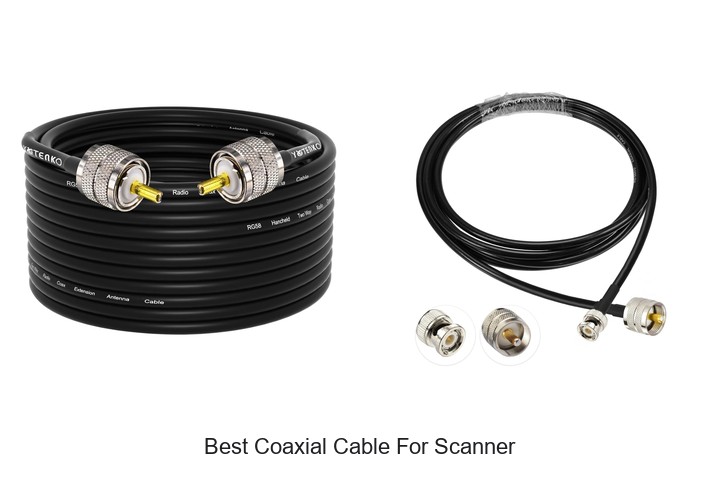
Top 12 Best Coaxial Cable for Scanner You Must Try Now
Most scanner users have dealt with fuzzy or inconsistent signal quality caused by a cheap or poorly matched coaxial cable. The best coaxial cable for scanner minimizes interference and signal loss, providing clearer reception and more reliable performance.
Using a substandard cable often results in frustrating dead spots or dropped signals, which can be especially problematic during critical monitoring sessions.
The key factors that separate a good coaxial cable from a poor one include the cable’s shielding, impedance, and connector quality. A well-shielded cable, often featuring dual or quad shielding, reduces electromagnetic interference effectively.
The impedance should typically be 50 ohms for scanners to ensure optimal signal transfer. Connectors must fit snugly and securely to prevent signal leakage and maintain consistent contact over time.
Need a Quick Check?
| Image | Product | Price |
|---|---|---|
Our Top Picks 1  | RG58 PL259 Male-Male | Check Price |
Our Top Picks 2  | Superbat PL259-BNC RG58 | Check Price |
Our Top Picks 3  | KMR400 PL259 Male-Male | Check Price |
Our Selected Top 12 Coaxial Cable for Scanner for Every Budget
This list features a variety of coaxial cables designed specifically for scanners, suited to different budgets and needs. Each review highlights the cable’s performance, compatibility, and durability, along with its advantages and potential drawbacks, helping readers choose the right option for their setup.
1. RG58 Coaxial Cable PL259 Male to Male
Designed for scanner connections, this RG58 Coaxial Cable stands out for its durable 6cm strain relief that protects the connectors from bending stress. Ideal for anyone who needs a reliable connection with improved longevity in demanding setups.
Setting it up is straightforward thanks to the male-to-male PL259 connectors, which fit standard scanner ports securely. Its flexibility helps when routing in tight spaces without worrying about damage due to frequent movement.
The cable’s braided design adds toughness, letting you easily adjust or reposition it every day without losing signal quality.
The cable performs well at blocking interference thanks to its pure bare copper braided shield, ensuring clear data transmission up to 300 MHz frequency. The biggest strength lies in its heavy-duty strain relief, reducing connector failure over time.
Occasionally, some might find the cable a bit stiff due to the reinforced tubing, but the trade-off in durability tends to be worth it.
The cable’s strongest feature is its upgraded strain relief that prevents connection failure from bending stress, making it highly durable. The most frequent drawback noted is its stiffness, which may take some getting used to during installation or frequent movements.
Those needing a durable, interference-resistant connection for scanners will appreciate this cable. Users seeking more flexible or lightweight alternatives might want to explore other options tailored to less demanding environments.
Pros
- 6cm extended heat shrink tubing for strain relief
- Pure bare copper braided shield, not CCA
- Good flexibility despite heavy-duty design
- Secure PL259 connectors fit scanner ports well
Cons
- Cable can feel stiff due to reinforced tubing
- Not compatible with phone models
| Specification | Details |
|---|---|
| Connector Type | Coaxial |
| Cable Type | Coaxial |
| Connector Gender | PL259 Male to Male |
| Frequency | 300 MHz |
| Wattage | 300 watts |
| Data Transfer Rate | 16 gigabits_per_second |
2. Superbat PL259 to BNC RG58 Coaxial Cable
Superbat PL259 to BNC RG58 Coaxial Cable excels at providing stable and strong connections for scanners and routers. Its low-loss RG58 cable and gold-plated connectors make it suitable for anyone needing reliable signal transmission over a 6ft length. The standout feature is how well it maintains signal integrity with its high-quality materials.
Setting up the cable is straightforward thanks to the male-to-male UHF and BNC connectors that fit snugly on compatible devices. The 6ft length offers flexibility without too much slack, while the braided design adds durability. Using it daily means fewer interruptions during scanning or data transfer, thanks to its 50 Ohm impedance and the solid build of the connectors.
Signal transmission is consistent, with the low signal attenuation of the RG58 cable handling frequencies up to 6 GHz smoothly. The gold-plated copper and nickel-plated brass connectors feel sturdy and resist corrosion, contributing to reliable long-term use. High praise goes to its performance in maintaining strong connections, while some mention the length could be longer for certain setups.
The cable receives strong praise for maintaining signal strength and reliability thanks to its gold-plated connectors and low-loss RG58 design. Common feedback notes the 6ft length might not accommodate all installation needs, requiring additional adapters or extensions.
Those needing a durable, stable connection within a short range will appreciate its solid build and performance. Users requiring longer cables or female connectors might prefer alternatives better suited to extended setups or different connector types.
Pros
- Low signal attenuation with RG58 cable
- Gold-plated connectors for strong conductivity
- Durable braided cable construction
- Compatible with scanners and routers
Cons
- Length limited to 6ft, may be short for some setups
- Only male-to-male connectors available
| Specification | Details |
|---|---|
| Connector Type | BNC, UHF |
| Cable Type | RG58 coaxial cable |
| Impedance | 50 Ohm |
| Cable Length | 6ft/2m |
| Frequency | 6 GHz |
| Data Transfer Rate | 6 gigabits_per_second |
3. KMR400 Coaxial Cable PL259 Male to Male
Using this coaxial cable feels dependable and straightforward, especially when you need a solid connection for your scanner. It suits those who want reliable signal transmission over a longer distance without worrying about loss.
Its biggest strength lies in maintaining low signal loss even at higher frequencies.
Setting up takes no time with the male-to-male UHF connectors that fit most scanner setups smoothly. Daily use benefits from the cable’s waterproof design and sturdy interior made with copper clad aluminium and aluminum foil shielding, which helps protect the signal.
You won’t need to worry much about oxidation or signal interference during regular operation.
Performance meets expectations with signal loss below 2.8dB at 450MHz and an SWR of 1.25, allowing clear scanner reception. Strong construction with tinned copper braiding improves durability and resistance to environmental wear.
The most frequent praise points to its low loss over 50 feet, while occasional mentions note it’s a bit stiffer compared to thinner cables.
This cable stands out for keeping signal loss low and signal strength stable over long distances. Users appreciate the solid build and waterproof feature, but some find it less flexible, making tight setups a bit challenging.
People needing a strong, reliable cable for scanning devices with UHF connectors will like it. Those seeking a more flexible, lightweight option or phone-compatible cable might look elsewhere.
Pros
- Low signal loss below 2.8dB at 450MHz frequency
- Waterproof design protects well in outdoor conditions
- Durable copper clad aluminium and tinned copper braid
- Easy connection with UHF male-to-male plugs
Cons
- Cable is stiffer and less flexible than thinner alternatives
- No compatibility with phone models
| Specification | Details |
|---|---|
| Connector Type | UHF |
| Cable Type | Coaxial |
| Connector Gender | Male-to-Male |
| Frequency | 1000 MHz |
| Data Transfer Rate | 1.25 gigabits_per_second |
| Compatible Devices | Scanner |
4. RG58 Coaxial Cable PL259 Male to Male
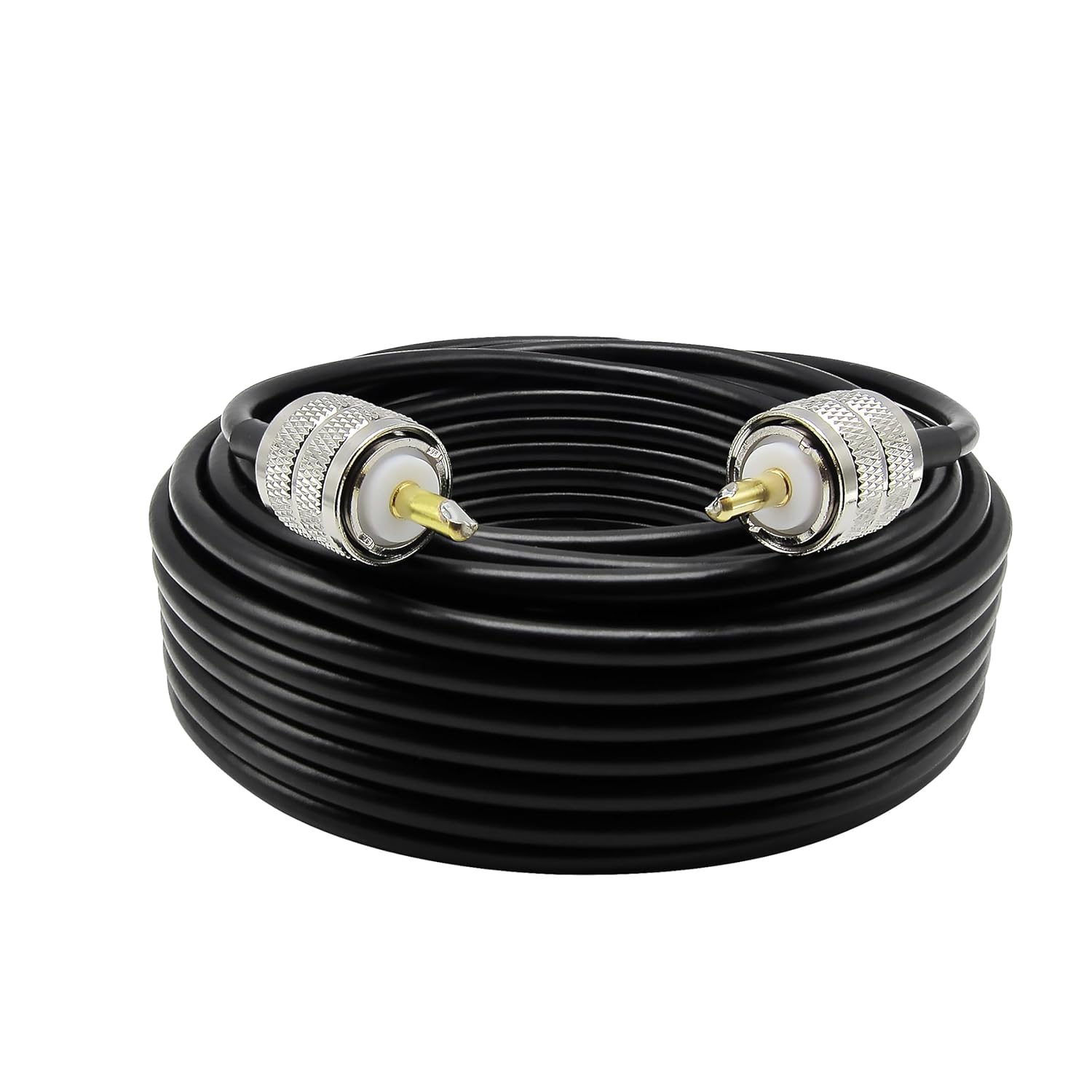
Great for connecting scanners or radios requiring a reliable coaxial link, this RG58 cable stands out for its strong signal transmission backed by a pure copper conductor. Best suited for anyone needing steady communication with minimal interference.
Setup is straightforward thanks to the male-to-male PL259 connectors, which fit snugly on compatible devices like CB radios or HAM radios. The double shielding with copper braid and aluminum foil keeps outside noise low, making it dependable for daily use.
Its PE insulation and PVC jacket protect the cable from weather and wear, ensuring it stays functional without much fuss.
Signal quality holds steady up to frequencies of 3 GHz, meaning clear communication without significant loss. Its solid copper core handles up to 1400 volts DC, so the cable maintains strong conductivity. While the build is durable with layered shielding and a sturdy PVC cover, some find the cable less flexible, which can be a minor inconvenience during tight installations.
The cable delivers solid, consistent signal quality thanks to its full copper conductor and double shielding. Users often mention the durable build but note the stiffness can make routing tougher in cramped spaces.
Great choice for anyone focused on reliable communication and durability in typical conditions. Those requiring more flexible cables or weatherproof connectors might want to explore other options.
Pros
- 100% pure copper conductor for clear signals
- Double shielding minimizes interference
- Durable PE insulation and PVC jacket
- Compatible with CB and HAM radios easily
Cons
- Cable can be somewhat stiff to maneuver
- No waterproof connectors included
| Specification | Details |
|---|---|
| Connector Type | Pl259 Plug |
| Cable Type | Coaxial |
| Frequency | 3 GHz |
| Maximum Voltage | 1400 volts_of_direct_current |
| Connector Gender | Male-to-Male |
5. RG8X Coaxial Cable PL259 Male to Male

Pure copper inner conductor and double shielding define this RG8X coaxial cable, designed for low loss and durability. It suits anyone needing a reliable 50 Ohm RF connection, like ham radio users or those with antenna analyzers. Its biggest strength lies in maintaining signal quality while resisting interference.
Setup involves connecting the fully molded nickel-plated brass UHF PL259 male connectors to your radio or scanner gear. The cable’s flexibility and waterproof PVC jacket make it easy to run indoors or outside without worry.
Everyday use means less signal interference and a stable connection up to 300 MHz, all thanks to the gold-plated center pins and solid construction.
Performing well under frequent use, it minimizes signal leakage due to its double shielding. The build quality stands out with resilience against outdoor elements and physical wear. Strong points include the low loss design and durable jacket, but some mention the cable’s thickness as a bit stiff for tight spaces.
The strongest praise for this cable is its ability to maintain low signal loss with excellent shielding, which keeps radios and scanners clear of interference. The downsides often noted include its relatively stiff cable, which can make routing it in confined setups a bit challenging.
Devices requiring connections up to 300 MHz and outdoor durability will find this cable very suitable. Users needing higher frequency support or very flexible cabling for small installations might look for alternatives.
Pros
- Pure copper conductor for low signal loss
- Double shielding reduces interference
- Waterproof PVC jacket for outdoor use
- Gold-plated center pins ensure good contact
Cons
- Cable can be stiff in tight spaces
- Limited to frequencies up to 300 MHz
| Specification | Details |
|---|---|
| Connector Type | Uhf |
| Cable Type | Coaxial |
| Compatible Devices | Radio |
| Connector Gender | Male-to-Male |
| Frequency | 0.3 GHz |
| Gauge | 17 |
6. Steren RG8X Coaxial Cable PL259 Male to Male

RG8X coaxial cable with PL259 male connectors suits anyone needing a reliable link for ham radios, CBs, or HF antennas. Its standout feature is the improved signal handling and durability for demanding radio environments.
Connecting radio equipment was straightforward due to the male-to-male PL259 ends that fit neatly without any adapters. The 6-foot length works well for close setups, and the cable feels sturdy enough to stay firm during routine adjustments. The RG8X thickness adds a confidence boost over thinner cables, making it less vulnerable to signal loss caused by everyday wear and minor twists.
Signal quality holds steady up to 750 MHz, and the cable can safely support 300 watts without overheating or degradation. The solid build and materials mean the cable resists breaks or internal damage during handling. Most praise centers on the clear improvement over RG58 cables, while the main downside is its slightly heavier feel compared to lighter coax options.
Clear signal transmission and sturdy build are the main advantages, while some find the cable heavier and the 6-foot length limiting for certain setups. It fares well in handling up to 300 watts without issues.
Those needing a reliable, higher-power coax cable in compact setups will appreciate this unit. Situations requiring longer runs or lighter cable may benefit from exploring other coaxial options.
Pros
- Supports high power loads up to 300 watts
- Durable RG8X cable for better signal retention
- Flexible 6-foot length for many setups
- Standard male-to-male PL259 connectors
Cons
- Heavier than thinner coax cables
- Only 6 feet long, might be short for some installations
| Specification | Details |
|---|---|
| Connector Type | RG8X to RG8X |
| Cable Type | Coaxial |
| Data Transfer Rate | 50 megabits_per_second |
| Frequency | 750 MHz |
| Wattage | 300 watts |
| Connector Gender | Male-to-Male |
7. RG316 BNC Male Antenna Cable

Picking a cable with solid copper conductor matters when signal clarity counts, and that’s where this RG316 BNC male antenna cable comes in. It suits anyone needing a reliable connection for scanners or shortwave radios, delivering low signal loss over 25 feet.
Setting it up is straightforward with two BNC male connectors that click into compatible devices easily. The cable’s flexibility and lightweight design make it simple to route indoors or outdoors without fuss.
It handles moisture and heat well, so daily use won’t be interrupted by environmental factors.
Signal transmission stays clean thanks to low voltage standing wave ratio and strong resistance to electromagnetic interference. The cable feels well-made with corrosion-resistant materials.
Some mention the length may be limiting for distant setups but praise its durability and soft build for frequent handling.
The RG316 BNC Male Antenna Cable offers consistent signal quality thanks to its solid copper inner conductor and low loss coaxial design. It maintains a stable connection over its 25-foot length, with good resistance to high temperatures, moisture, and corrosion. Some find the cable less flexible than expected, which can make routing it in tight spaces a bit challenging.
People working in ham radio, video transmission, or surveillance will appreciate the cable’s durability and performance. Those needing greater flexibility or longer runs may want to explore other coaxial cables better suited for tight bends or extended distances. For standard radio frequency applications, this cable strikes a balance between toughness and signal quality.
Pros
- Solid copper conductor reduces signal loss
- Moisture and corrosion resistant
- Lightweight and flexible for easy routing
- Good anti-electromagnetic interference
Cons
- Length may be too short for some setups
- Only compatible with devices using BNC male connectors
| Specification | Details |
|---|---|
| Connector Type | BNC Male to BNC Male |
| Cable Type | Low Loss RG316 Coaxial Cable |
| Length | 25ft |
| Impedance | 50 ohm |
| Connector Gender | Male-to-Male |
8. Superbat SMA Male to BNC Male RG58 Cable

Connecting a scanner or router often means dealing with tricky cable and connector compatibility. This coaxial cable kit suits anyone needing SMA to BNC connections, offering a long 3-meter length and multiple adapter options to cover various setups. Its biggest strength lies in flexibility, adapting to several SMA-BNC combinations with ease.
Setup is straightforward thanks to the included adapters, allowing quick switches between SMA male, SMA female, and BNC variations. Daily use involves just plugging the right connector type without fuss, and the 3-meter length provides enough reach for most typical home or office scanner setups. The RG58 cable type keeps the connection stable without bulk or stiffness getting in the way.
Signal transmission stays consistent, performing well with the 50 Ohm impedance that matches most scanners or routers. The build quality includes connectors rated for over 1000 connection cycles, which means they hold up well against frequent connections and disconnections. Strong points include durable materials and connector variety, while some note occasional tight fits on very specific devices.
The strongest praise highlights the multiple adapters that solve most SMA-BNC pairing issues conveniently, while the most common complaint points to tighter fits on some uncommon connector types, causing a little extra effort to connect.
Easy adaptability and cable length suit those working with varied radio frequency devices like scanners and routers. Users needing ultra-flexible cable or specific proprietary connectors might want to look elsewhere for a better fit.
Pros
- Versatile adapter set covers various cable needs
- Long 3m cable for flexible placement
- Durable connectors with 1000+ mating cycles
- Stable 50 Ohm impedance suits scanners and routers
Cons
- Some connectors fit tightly on certain devices
- RG58 cable is slightly less flexible in tight spaces
| Specification | Details |
|---|---|
| Connector Type | SMA Male to BNC Male |
| Cable Length | 3m |
| Cable Type | RG58a/u |
| Impedance | 50 Ohm |
| Adapter Options | Multiple SMA and BNC female/male adapters included |
9. Superbat BNC Male to Male RG58 Cable

Providing 25 feet of durable RG58 coaxial cable, it suits anyone needing a reliable BNC male-to-male connection for radio scanners or ham radios. Its single biggest strength is the waterproof and flexible PVC jacket, perfect for outdoor setups where weather resistance is key.
Plugging it in is straightforward thanks to matched BNC connectors, making setup quick and convenient. The cable is flexible enough to route around obstacles without strain. Its waterproof PVC jacket also means no worries about rain or damp environments affecting performance during daily use.
Signal quality stays consistent thanks to gold-plated needles and a Teflon insulator that prevent signal leakage. The nickel-plated copper shell ensures a solid, corrosion-resistant connection. Most praise focuses on reliable signal transmission, while some mention the connectors can feel a bit stiff at first.
Signal quality remains solid throughout, thanks to gold-plated pins and effective insulation. Common complaints center around the connectors feeling tight when first attaching, which can require extra patience during installation.
Those needing a weatherproof, mid-length coax cable will appreciate its durability and flexibility. People requiring longer cables or softer connectors might want to explore other options better suited for extended runs or delicate handling.
Pros
- Waterproof PVC jacket for outdoor use
- Gold-plated needle prevents signal loss
- Flexible RG58 cable for easy routing
- Nickel-plated copper connector shell
Cons
- Connectors can be stiff initially
- Limited to 25ft length only
| Specification | Details |
|---|---|
| Length | 25ft |
| Cable Type | Coaxial |
| Connector Type | BNC |
| Connector Gender | Male-to-Male |
| Impedance | 50 Ohm |
| Outer Jacket | PVC, Waterproof and Flexible |
10. Superbat BNC Male to Male RG316 Cable

People who need a reliable connection for scanners or handheld ham radios will find this cable perfect. Its biggest strength lies in maintaining signal quality over a decent 25ft length without much loss or interference, which is essential for clear communication and accurate readings.
Setting it up is straightforward because both ends have male BNC connectors, making it easy to link antennas or scanners without adapters. The cable’s flexibility and lightweight nature help when routing around tight spaces or carrying it outdoors. Using RG316 low-loss coaxial cable means signals stay strong, which is vital for wireless microphones and antenna scanners during daily use.
Performance is consistent with clear signals and minimal dropouts over the full 25ft run. The build quality feels solid with sturdy soldered connectors that hold well under regular handling. Positive notes from touches include a well-balanced weight and cable pliability.
The most common complaint is occasionally the thinner cable might feel less durable in rough environments.
Strong signal stability over 25 feet and solid soldered connectors stand out as the cable’s highlights. At the same time, the cable’s thin build is the main issue, particularly for use in tough outdoor conditions where more ruggedness might be preferred.
Those needing a lightweight, flexible cable for reliable RF or scanner connections will find this a good match. People requiring a more rugged cable for rough handling or environments should explore thicker or reinforced options instead.
Pros
- Low loss RG316 cable maintains signal quality
- Lightweight and flexible for easy routing
- Sturdy soldered BNC male connectors
- Suitable for multiple RF and scanning devices
Cons
- Thinner cable may feel less durable outdoors
- Limited to male-to-male connections only
| Specification | Details |
|---|---|
| Connector Type | RF Connector |
| Cable Type | RG316 |
| Impedance | 50 ohm |
| Length | 25ft |
| Connector Gender | Male-to-Male |
11. Eightwood BNC Male to Male RG400 Cable

Known for its low-loss RG400 coaxial build, this cable is perfect for anyone needing a reliable connection for scanner and radio equipment. Its standout feature is the silver-plated copper conductor combined with double shielding, which keeps signal quality sharp over longer distances.
Setting up with this cable is straightforward, thanks to its standard BNC male-to-male connectors that fit most scanners and radios. The braided, weatherproof jacket offers durability in daily use, whether indoors or outside.
Its PTFE dielectric material resists heat and retains performance, so it won’t easily degrade in tough environments.
Signal transmission stays very stable with minimal attenuation, making it ideal for VHF and UHF bands. The cable features silver plating for excellent conductivity, with a construction that resists both UV rays and heat.
A common note in reviews is that the cable could be a bit stiff, sometimes requiring extra care when routing or bending.
Signal clarity is highly praised due to the silver-plated center conductor and double shielding, which keep interference low. At the same time, the cable’s stiffness is often mentioned as a challenge when working in tight or flexible routing spaces. Handling it gently helps maintain durability and connection quality.
Those requiring consistent, clean signal transmission for scanners or radios will appreciate this cable’s build and shielding. Users needing longer or more flexible cables might look for alternatives with more length or softer insulation materials. Its durability suits outdoor and harsh environment use well.
Pros
- Low-loss RG400 cable for clear signal transmission
- Durable, heat- and UV-resistant PTFE insulation
- Double silver-plated shielding reduces interference
- Standard BNC connectors ensure good fit
Cons
- Cable stiffness can make bending tricky
- Limited length at 6.5ft may restrict some setups
| Specification | Details |
|---|---|
| Connector Type | BNC, RF Connector |
| Cable Type | Coaxial |
| Length | 6.5ft/200cm |
| Connector Gender | Male-to-Male |
| Compatible Devices | Camera, Microphone, Scanner |
12. MPD RG-59 Coaxial Cable PL259 UHF Connectors

MPD RG-59 Coaxial Cable PL259 UHF Connectors offers reliable radio signal transmission for scanners and similar devices. It suits anyone needing a military-grade, ultra low loss coax cable that ensures minimal signal drop, delivering consistent communication quality no matter the setup.
Setting up with the cable is straightforward thanks to its standard PL259 UHF connectors, which fit securely on most scanners. Daily use shows how the double shielding helps reduce interference, keeping signals clear.
The cable’s flexibility makes routing easy without stressing connectors, and the sturdy build means less worry about wear in frequent handling.
Signal retention is impressive thanks to the ultra low-loss RG-59 coaxial design meeting MIL-C-17 standards. The cable feels solid and well-made, assembled in the USA with US-made components. Praise frequently focuses on its durability and consistent performance, while some mention the heavier shielding makes it slightly less flexible than thinner cables.
The cable’s standout quality is its durability and signal quality through its double shielding, making it reliable for critical scanning needs. The most common downside mentioned involves its thickness, which can make bending or routing tight spaces a bit challenging.
People who prioritize signal stability and rugged construction will appreciate this cable. Those needing ultra-flexible or more compact wiring for confined setups might want to consider alternatives with less shielding thickness or other connector types.
Pros
- Military-grade double shielding prevents interference
- US-made cable and assembly assurance
- Strong signal retention with ultra low-loss design
- Secure PL259 UHF connector fit for scanners
Cons
- Thicker shielding reduces flexibility compared to lighter cables
- Limited to use with devices accepting PL259 connectors
| Specification | Details |
|---|---|
| Cable Type | RG-59 |
| Connector Type | Coaxial PL259 UHF |
| Compatibility | Scanner |
| Build Standard | Military grade milspec M17/29 |
| Warranty | 60 Day Return / 1 Year Replacement |
Best Coaxial Cables for Scanner Comparison Table
| Product | Compatible Devices | Connector Type | Frequency | Special Features |
|---|---|---|---|---|
| RG58 PL259 Male-Male | Scanner | Coaxial PL259 Male | 300 MHz | Braided |
| Superbat PL259-BNC RG58 | Router, Scanner | BNC, UHF Male | 6 GHz | Braided |
| KMR400 PL259 Male-Male | Scanner | Uhf Male-Male | 1000 MHz | Waterproof |
| RG58 PL259 Male-Male Cable | Amplifier, Radio | PL259 Plug Male | 3 GHz | Braided |
| RG8X PL259 Male-Male | Radio | Uhf Male-Male | 0.3 GHz | Low Loss |
| Steren RG8X PL259 Cable | Radio | RG8X Male-Male | 750 MHz | – |
| RG316 BNC Male Antenna | Scanner | BNC Male-Male | – | Portable |
| Superbat SMA-BNC RG58 | Router | SMA, BNC Female/Male | – | – |
| Superbat BNC Male RG58 | Scanner, Radio | BNC Male | – | Braided, Waterproof |
| Superbat BNC Male RG316 | Scanner | RF Connector Male | – | Flexible, Lightweight |
| Eightwood BNC Male RG400 | Camera, Scanner | BNC Male-Male | – | Braided, Weatherproof |
| MPD RG59 PL259 UHF | Scanner | Coaxial PL259 UHF | – | Warranty Available |
- Compatible DevicesScanner
- Connector TypeCoaxial PL259 Male
- Frequency300 MHz
- Special FeaturesBraided
- Compatible DevicesRouter, Scanner
- Connector TypeBNC, UHF Male
- Frequency6 GHz
- Special FeaturesBraided
- Compatible DevicesScanner
- Connector TypeUhf Male-Male
- Frequency1000 MHz
- Special FeaturesWaterproof
- Compatible DevicesAmplifier, Radio
- Connector TypePL259 Plug Male
- Frequency3 GHz
- Special FeaturesBraided
- Compatible DevicesRadio
- Connector TypeUhf Male-Male
- Frequency0.3 GHz
- Special FeaturesLow Loss
- Compatible DevicesRadio
- Connector TypeRG8X Male-Male
- Frequency750 MHz
- Special Features–
- Compatible DevicesScanner
- Connector TypeBNC Male-Male
- Frequency–
- Special FeaturesPortable
- Compatible DevicesRouter
- Connector TypeSMA, BNC Female/Male
- Frequency–
- Special Features–
- Compatible DevicesScanner, Radio
- Connector TypeBNC Male
- Frequency–
- Special FeaturesBraided, Waterproof
- Compatible DevicesScanner
- Connector TypeRF Connector Male
- Frequency–
- Special FeaturesFlexible, Lightweight
- Compatible DevicesCamera, Scanner
- Connector TypeBNC Male-Male
- Frequency–
- Special FeaturesBraided, Weatherproof
- Compatible DevicesScanner
- Connector TypeCoaxial PL259 UHF
- Frequency–
- Special FeaturesWarranty Available
How to Choose the Right Coaxial Cable
Selecting a coaxial cable with the right impedance, shielding, and length is essential for clear signal transmission and minimal interference. Prioritizing these factors ensures reliable scanner performance and prevents costly replacements or troubleshooting caused by poor connections.
Connector Compatibility
Trying to connect a scanner only to find the cable’s connectors don’t fit properly is frustrating. The connectors must match the scanner’s input and output ports exactly to avoid loose signals.
For the signals to travel cleanly, the connector types need to support the right signal standards like BNC or F-type depending on the device. Loose or incompatible connectors cause frequent signal drops and poor reception.
Secure, tightfitting connectors make a noticeable difference in signal stability. Look for well-made connectors that snap or screw on firmly without forcing. Checking compatibility beforehand saves time and prevents constant adjustments or re-connections during use.
Cable Shielding and Signal Quality
Weak shielding on a cable results in excess static and interference during scanning, especially near electronics or radio signals. Good shielding keeps unwanted noise out and preserves signal quality.
Most cables use layers of foil and braided metal shielding, but the density and coverage vary significantly.
Cables with thicker, multilayer shielding perform better over long runs by reducing signal degradation. Copper or tin-coated shields retain signal clarity, making scanning results crisp and reliable.
Prioritizing shielding quality means fewer dropouts and clearer images.
Durability and Build Quality
Frequent bending or pulling wears out cheaper cables quickly, exposing wires or breaking connectors. Pay attention to the outer jacket, materials like PVC or neoprene resist cracking and remain flexible.
Strong strain relief near connectors helps prevent damage from constant movement.
Cables often pass through basements or other harsh environments. A durable build resists moisture and abrasion, extending lifespan.
Over time, a well-built cable reduces downtime and replacement costs.
Cable Length and Flexibility
Cables that are too short pull tight and stress connectors, while overly long ones create clutter and signal loss risk. Picking the right length based on distance and setup convenience improves usability.
Flexibility matters too; stiffer cables are harder to route around corners or inside tight spaces.
Thicker cables typically resist damage better but can be less flexible. Balance thickness for durability with ease of installation, especially if the setup involves cramped or awkward areas.
Compatibility with Scanner and Devices
The cable must support the scanner’s frequency range and data speed requirements to work correctly. Mismatched cables may limit performance or prevent connection.
This includes compatibility with any other equipment involved, such as splitters or amplifiers.
Selecting cables that follow industry standards (like RG-6 or RG-58) ensures compatibility and consistent performance. Verifying these details in advance avoids headaches and guarantees a stable scanning setup.
Proper Installation Techniques for Optimal Scanner Performance
Proper installation of a coaxial cable can significantly affect scanner performance. Begin by ensuring the cable length is as short as practical to reduce signal loss and interference. Use compression connectors rather than screw-on types, as they provide a more secure and consistent connection.
Avoid sharp bends or kinks in the cable; a gentle curve prevents damage to the internal shielding and conductor. Grounding the cable properly helps minimize noise, particularly in environments with other electronic devices nearby.
Tighten all connections firmly but avoid overtightening, which can damage connectors. When routing the cable, keep it away from high-power electrical lines to reduce the risk of electromagnetic interference.
Using quality cable supports or clips prevents unnecessary strain on the connectors over time. Following these steps protects signal integrity and can improve the clarity and reliability of scanner transmissions.
Maintaining and Troubleshooting Your Coaxial Cable Connection
Maintaining a coaxial cable connection starts with regular inspection. Check connectors for corrosion or looseness, especially if the cable is exposed to humidity or outdoor conditions.
Replace damaged connectors immediately to prevent signal degradation. When you notice a drop in scanner signal quality, check cable continuity with a multimeter and inspect the cable for any visible damage along its length. Sometimes, signal issues arise from poor cable shielding; testing in a different location or isolating the cable from interference sources can identify this.
Clean connector contacts with isopropyl alcohol to remove dirt and oxidation. Experiencing noise or dropouts? Swap cables to determine whether the issue lies with the cable or the scanner.
Keeping spare cables and connectors on hand can speed up troubleshooting and repairs, reducing downtime.
Comparing Coaxial Cable Alternatives for Scanner Use
Coaxial cables remain a reliable choice for scanner connections, but alternatives like shielded twisted pair (STP) and fiber optic cables can sometimes be appropriate depending on needs. STP cables offer good resistance to electromagnetic interference but may not support the frequency range scanners require as well as coaxial types. Fiber optic cables provide immunity to electrical interference and longer transmission distances, but they come with higher costs and more complex termination processes.
For most scanner setups, RG6 or RG59 coaxial cables balance performance and cost effectively. RG6 typically supports higher frequencies and thicker shielding, making it better for longer runs or environments with heavy interference.
RG59 cables are thinner and more flexible but suited for shorter distances. Choosing the right cable depends on the scanner’s frequency, installation environment, and distance between the scanner and the signal source.
People Also Asked
How Do I Choose the Right Size Coaxial Cable for My Scanner?
Choose a coaxial cable with a 50-ohm impedance for most scanners, as it matches standard radio equipment. Thicker cables can reduce signal loss over long runs but are less flexible, so balance length with handling needs.
What Are Common Problems with Coaxial Cables Used in Scanners?
Common issues include signal interference and physical wear, like frayed shielding or bent connectors, which degrade reception quality. Check for cracks or corrosion on connectors, as even slight damage can cause dropouts.
How Long Does a Typical Coaxial Cable for Scanners Last?
A well-installed coaxial cable typically lasts 5 to 10 years, depending on exposure and handling. Cables kept indoors without extreme bending tend to maintain good performance longer than those exposed to sunlight or moisture.
Is It Safe to Use Damaged Coaxial Cables with My Scanner?
Using damaged coaxial cables is not safe for signal quality and can stress your scanner’s tuner, leading to poor reception or equipment damage. Replace cables that show visible wear or intermittent connection issues to avoid further problems.
How Do I Properly Connect and Use Coaxial Cable with a Scanner?
Connect the cable firmly by aligning connectors and tightening them by hand or with a wrench to avoid stripping threads. Avoid sharp bends to maintain signal strength and check connections periodically for corrosion or looseness.
Conclusion
Choosing the right coaxial cable for a scanner mostly comes down to signal quality, build durability, and length. A good cable should provide clear reception without much signal loss. The construction matters too, as a well-shielded and sturdy cable will last longer and resist interference better.
Length is important because it should be long enough for your setup but not so long that signal quality drops noticeably.
Consider the space where you will use the cable and how often, to decide what fits your budget and needs. A short, basic cable may work for occasional use, but longer runs or frequent scanning require a better shielded and thicker cable.
Take a look at the comparison table and the product details above to match the right cable to your setup. This will help you avoid spending on features you don’t need or missing out on important qualities.