Are Monstrum Scopes Any Good? A Complete Guide with Top Models Compared
Are Monstrum scopes any good? Yes, they offer functional optics with features often found in higher-end scopes, all at a budget-friendly price under $250. They won’t replace premium $1,000+ optics but provide solid value for shooters who want an affordable, reliable scope without breaking the bank.
This overview targets budget-conscious shooters, hunters, and tactical rifle owners looking for practical optics with decent build and performance. You’ll find clear insights on Monstrum’s types, optical quality, durability, and which models stand out for specific shooting needs.
Key Takeaways
- Monstrum scopes generally cost under $250, making them attractive for budget shooters seeking solid optics.
- Most models offer generous eye relief between 3 and 4.5 inches, allowing comfortable extended use.
- First Focal Plane (FFP) options like the G3-FFPS-6-24×50 deliver good value in sub-$300 categories.
- Monstrum provides a reasonable warranty comparable to other budget optic brands, suitable for most users.
- Optical clarity is decent for the price, though not on par with premium scopes costing $800 or more.
- Proper mounting is important to maintain zero retention and long-term stability with Monstrum scopes.
Are Monstrum Scopes Any Good for Budget Shooters?

Monstrum scopes offer solid performance and value for shooters who need affordable optics without sacrificing basic functionality. Their price point, generally under $250, makes them an attractive choice for budget shooters wanting features typically found only on more expensive scopes. For example, the Monstrum LPVO Tactical 1-4×20 and Spectre 1-6×24mm provide usable magnification and clarity for close- to mid-range hunting, target shooting, and some competitive shooting like 3-gun matches. They do not match the glass quality or ultra-precise adjustments of premium scopes priced above $800, but their performance fits well with practical needs at shorter distances.
When compared to higher-end optics, Monstrum scopes show good zero retention and durability for the price, handling recoil from calibers up to .308 without major issues if mounted properly. This reliability makes them suitable for hunting and tactical situations that do not demand life-or-death precision or extreme long-range accuracy. For beginner rifle owners or those on a tight budget, a Monstrum scope lets you practice and compete without overspending. For example, the Monstrum Tactical G3 6-24×50mm provides a first focal plane option with decent clarity and features, sold around $209, which is a fraction of what premium scopes cost.
Their value lies in balancing acceptable optical quality, rugged build, and functional features at a low cost. Small imperfections, like rough turret edges or slight MOA marking misalignments, occur but generally do not affect in-field performance significantly. You can expect clear images and reasonable brightness in most daylight conditions, though they underperform compared to brands like Vortex or Leupold. Using Monstrum scopes is especially advantageous if you often shoot at ranges under 300 yards, where extreme glass clarity and complex reticle systems are less critical.
Proper mounting and maintenance are key to achieving the best results. Use quality scope rings and ensure the optic is securely fastened to handle recoil and maintain zero. Regular cleaning of the lenses and checking turret adjustments help extend scope life and maintain reliable performance. For tactical use or hunting in harsh conditions, consider the level of sealing and weight tolerance Monstrum products provide; while generally durable, they are better suited for moderate use rather than heavy duty combat deployment.
Ultimately, Monstrum scopes present a smart choice for budget-conscious users who want functional, feature-rich optics for everyday shooting and hunting. They allow you to save money without giving up essential performance. For high-stakes applications or advanced long-range shooting, investing in premium scopes remains advisable, but for routine field and range use under typical conditions, Monstrum’s value proposition is hard to beat.
Types of Monstrum Scopes and Their Best Uses

Monstrum offers a variety of scopes ranging from red dots and prism sights to LPVOs and high-magnification long-range models. These optics cover a broad scope of shooting needs, such as hunting, tactical use, and target shooting. Choosing the right Monstrum scope depends mainly on your primary activity and the distances you expect to engage.
Low Power Variable Optics (LPVOs)
Monstrum’s LPVOs generally feature magnification ranges between 1-4x or 1-6x, striking a balance between close-range speed and mid-range precision. The 1x setting offers rapid target acquisition similar to a red dot, while the higher magnifications allow you to engage targets at longer distances, making these scopes versatile for various shooting scenarios.
These scopes are a good fit if you use AR-15 style rifles or require an optic that shifts quickly from close quarters to medium distances. Practical uses include 3-gun competitions, hunting within about 200 yards, and tactical applications where flexibility matters.
- Magnification options: 1-4x, 1-6x
- Typically feature generous eye relief (3-4.5 inches)
- Second focal plane reticles for stable size during zoom
- Well-suited for AR platforms and tactical rifles
- Affordable entry-level options for budget shooters
Always test the eye relief and reticle size at different magnifications to ensure comfort and quick target acquisition under varying conditions.
Models like the Monstrum Tactical 1-4x are praised for their low price and reasonable optical performance, making them practical choices for hunters or competition shooters looking for lightweight, fast-to-use LPVOs.
Prism and Red Dot Scopes
Monstrum’s prism scopes and red dot sights cater to shooters prioritizing rapid target acquisition at close to mid-range. The 1.5×20 Blackbird prismatic scope offers a fixed 1.5x magnification ideal for quick shots within short distances. Meanwhile, the Vader 1×20 red dot sight provides a 2 MOA dot with ten brightness levels, optimizing visibility in different lighting conditions.
These compact optics fit well on lightweight rifles or those used in dense environments, such as brush hunting or close-range tactical scenarios. Prism scopes also benefit shooters with astigmatism, thanks to the etched glass reticles.
- Fixed magnifications (typically 1x or 1.5x)
- Etched glass reticles for clarity and durability
- Multiple brightness settings on red dots
- Compact, lightweight design
- Ideal for sub-200-yard engagements
Ensure the mount keeps the sight stable; vibration or consistent recoil can misalign fixed magnification optics more easily than variable ones.
These scopes provide fast, reliable target acquisition without magnification distractions, especially valued in hunting or close-quarter plinking where speed outweighs long-range precision.
High-Magnification Long-Range Scopes
For shooters engaging targets beyond typical hunting or tactical distances, Monstrum offers models like the Tactical 6-24×50 G3 with first focal plane reticles. This scope supports precise range estimation and holdovers at higher magnifications, suited for long-range target shooting and sniper-type roles.
The large 50mm objective lens improve light gathering, critical for dawn, dusk, or low-light conditions common in long-range hunts. These scopes are designed with advanced shooters in mind who require incremental magnification adjustments and reticle scaling.
- Magnification ranges from 6x to 24x
- First focal plane reticles adjust with magnification
- 50mm objective for improved low-light performance
- Target shooting and precision hunting focus
- Requires stable mounting for best accuracy
Long-range scopes need solid mounting and frequent zero checks; otherwise, wind, recoil, or vibrations can alter point of impact quickly.
This scope type is less suitable for fast-paced or close-range shooting but excels where precision and detailed target identification are priorities.
Adjustable Objective and Fixed Power Scopes
Hunters often benefit from scopes with adjustable objectives or fixed power magnification, offering simplicity or versatile clarity over variable ranges. Monstrum’s lineup includes options tailored to sub-200-yard hunting scenarios, like the 1-4x scopes with adjustable objectives that reduce parallax and improve focus.
Fixed power scopes, such as certain prism models, offer reliable repeatability and often stay true to zero without complexity. They serve shooters who prefer straightforward optics without zoom distractions.
- Adjustable objective lens for parallax correction
- Fixed magnification for improve reliability
- Simple reticles favor quick shot placement
- Good for hunting small and big game at moderate distances
- Easier maintenance compared to variable power scopes
Double-check the parallax adjustment at your expected shooting distance to avoid aiming errors, especially on adjustable objective models.
Choosing between adjustable and fixed power comes down to your comfort with optical adjustments and the typical distance of your shooting engagements.
Optical Quality: Glass, Clarity, and Reticles
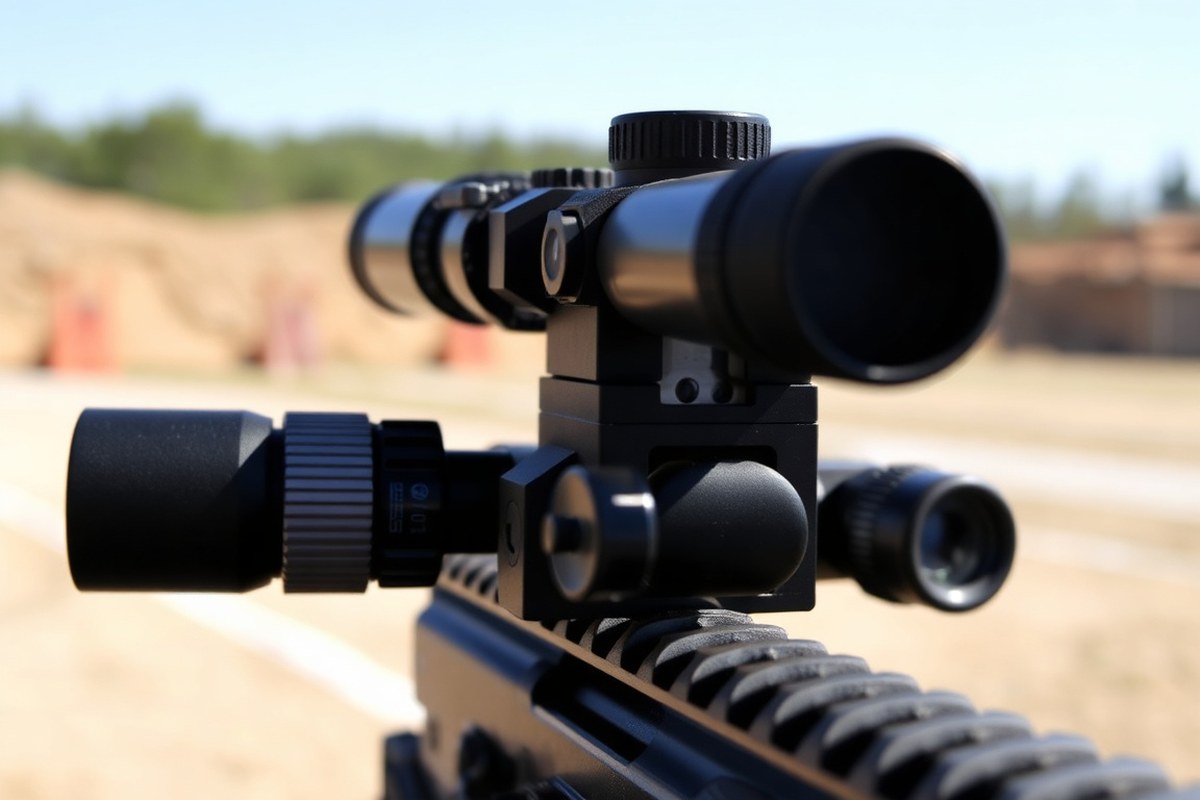
Monstrum scopes generally offer decent glass quality for their price range. The clarity is sufficient to see good detail on targets at typical shooting distances. Their designs incorporate glass prism optical systems, which pack solid optics into smaller packages. This helps maintain a clear image without the bulk of traditional lens-only scopes.
The scopes provide a variety of reticle options, including illuminated choices, which can be important for low-light shooting. Available reticles include second focal plane (SFP) models like the MX1 box reticle with MOA hash marks, BDC B2 reticle calibrated for 5.56 rounds, and a daylight-bright BDC C1 reticle. First focal plane (FFP) reticles are found in some higher magnification models such as the G3 6-24x50mm FFP scope. FFP reticles change size with zoom, maintaining accurate ranging and holdovers at any magnification, which benefits long-range shooters.
Eye relief varies between models, typically between 3.5 and 4.5 inches. This measurement refers to how far your eye can be from the scope while still seeing the full image. Scopes like the G3 offer up to 4.5 inches, providing comfortable shooting sessions without needing strict head positioning. Larger eye relief reduces the chance of scope bite and helps with rapid target acquisition.
Field of view (FOV) also differs with magnification and model. For example, a 1-4x scope has roughly 105.8 to 27.5 feet at 100 yards, while a 3-9x offers about 38.7 to 14.9 feet. Wider FOVs help track moving targets and engage close-range shots faster. Narrower FOVs at higher magnification assist precise target engagement.
| Model | Magnification | Eye Relief (inches) | Field of View (ft @ 100 yd) | Reticle Type | Illumination | Best Use |
|---|---|---|---|---|---|---|
| G3 1-4x | 1-4x | 4.0-4.5 | 105.8-27.5 | Second Focal Plane | Yes | Close to mid-range |
| G2 1-6×24 | 1-6x | 4.0-4.5 | ~103.2-16.1 | First Focal Plane | Yes | Versatile tactical, mid-range |
| G3 3-9×40 | 3-9x | 3.5-3.8 | 38.7-14.9 | Second Focal Plane | Varies | Mid-range hunting |
| G3 6-24×50 FFP | 6-24x | 3.5-3.8 | ~16.1-6.1 | First Focal Plane | Yes | Long-range precision |
Choosing between first or second focal plane reticles depends on your shooting needs. Use FFP scopes if you rely on accurate range holdovers at all zoom levels. SFP scopes work well for close to mid-range shooting where reticle size clarity at low magnification is useful, but you only need true holdover at one magnification setting, typically highest power.
Illuminated reticles help in dawn, dusk, or shaded conditions. Most Monstrum scopes provide multiple illumination brightness settings, allowing you to tailor the reticle glow, improving target visibility without washing out the image. This can give you an edge in varied lighting.
When selecting your scope, consider eye relief alongside your rifle setup. Longer eye relief offers more comfort and faster target acquisition but can reduce field of view slightly. Shorter eye relief might suit compact rifles or tighter shooting positions but requires precise mounting to avoid discomfort.
Match your reticle and focal plane choice to the types of shooting and ranges you expect. A typical mid-range hunter might favor a 1-6x with FFP reticle for versatility and sharp focus, while a budget-conscious tactical shooter might opt for an SFP 1-4x scope for quick target acquisition and simpler holdovers. Adjust these choices based on your lighting environment and comfort preferences.
Build Quality, Durability, and Warranty Coverage
Monstrum scopes are built from aircraft-grade 6061 aluminum, a material known for its light weight and strength. This single-piece milled aluminum construction provides a solid and durable frame for the scope. The tubes are nitrogen sealed, which makes them both waterproof and fog proof. These features protect the internal components from moisture and temperature changes, preventing fogging during rapid weather shifts or humid conditions.
Monstrum scopes undergo recoil stress testing to ensure they maintain zero even after exposure to heavy shock, such as the recoil from high-caliber rifles. Most models retain zero well after impacts, which shows they can withstand typical recoil forces without malfunctioning. The smooth elevation and windage adjustments use brass internals that add to the durability and reliability of the scope. However, the type-III hard anodized finish on some models may show wear, especially on the knurling, after regular use, indicating that the coating, while protective, is less durable than the scope body itself.
The company’s warranty policy is an important aspect of their durability promise. Monstrum offers a lifetime warranty on all new products, reflecting confidence in their build quality. To qualify, you must purchase the scope new and keep the proof of purchase, as the warranty is not transferable between owners. This warranty covers repair or replacement for defects under normal use but expect typical wear and tear or damage from abuse to be excluded.
- Scope body made from aircraft-grade 6061 aluminum
- Nitrogen-sealed tubes for water and fog resistance
- Brass internals for smooth, durable adjustments
- Tested to maintain zero after heavy recoil
- Type-III hard anodized finish with some wear potential
- Lifetime warranty on new purchases with proof of purchase
- Warranty not transferable and excludes misuse
The build quality and materials of Monstrum scopes make them a solid choice for budget-conscious shooters needing reliability in a variety of weather conditions. Their durability against recoil and weather, combined with a lifetime warranty, help balance affordability with functional resilience. Keep in mind, some cosmetic wear may appear with use, but functional damage is less common under normal shooting conditions.
Performance: Zero Retention and Range Testing Results
Monstrum scopes generally hold zero well under recoil for recreational shooting and typical outdoor use. Most users report that these optics maintain zero reliably after adjustments, even when subjected to standard hunting or plinking conditions. This reliability stems from their strong mounting hardware included in the package, such as cantilever mounts or rings and hard-anodized finishes that help protect against environmental stress.
Box tests performed at 100 yards using match-grade ammunition show that Monstrum scopes usually return accurately to zero after repeated elevation and windage adjustments. These tests involve moving the reticle in a rectangular pattern and verifying that each click corresponds to the expected minute of angle (MOA) shift. For example, after adjusting 10 MOA up and 10 MOA left, the scope should reticle back to the original zero within one or two clicks. While Monstrum scopes track well enough to be consistent, some variation in tracking accuracy appears, making sub-MOA precision challenging at distances beyond 500 yards.
A notable reticle alignment issue has been found in certain models, such as the Monstrum Tactical 6-24x50mm G3, where a 0.9-degree error between the reticle and scope body was measured. This misalignment can cause the point of aim to shift off target, especially at long ranges, 1000 yards or more. Shooters needing pinpoint precision should carefully consider this limitation, as it can introduce errors that are difficult to compensate for in the field. However, for non-precision applications, this alignment error remains consistent and can be accounted for in your ballistic calculations or “dope” to improve effectiveness.
Performance varies by scope type and intended range. For example, the 1-4x Monstrum scopes excel at close to moderate distances under 200 yards, despite reticle markings that allow holdovers out to 500 yards. This makes them suitable for hunting or tactical shooting in environments where shots rarely exceed that range. At longer distances, tracking inconsistencies limit the use of these scopes for precise shot placement beyond 500 yards. These factors restrict Monstrum scopes mostly to recreational shooting, general hunting, and plinking rather than competitive long-range shooting.
In cases where you want to maximize the scope’s performance, maintain a confirmed zero by beginning zeroing sessions at 100 yards using the box test method with consistent ammunition. After zeroing, make sure to fix the reticle’s cantilever mount tightness and double-check for any reticle slippage or twisting during recoil. A good rule of thumb is to verify zero after the first 20 rounds and adjust if needed before heading out to longer distances. These steps help manage the known tracking quirks and reticle misalignment issues effectively.
Repeatability is key: if you notice consistent reticle shift, note the correction needed in your dope chart since the tracking errors are often repeatable and predictable in Monstrum scopes.
Mounting Monstrum Scopes: Best Practices for Stability
Properly mounting and zeroing your Monstrum scope is key to getting accurate shots and long-lasting performance. Use the specified torque settings to avoid damage while securing the scope firmly. Align the reticle carefully to prevent aiming errors, and choose compatible mounts and rings for your rifle to ensure the best stability.
Recommended Torque Settings
Applying the right torque prevents damage to your Monstrum scope and mounts while maintaining a stable installation. Monstrum specifies 25 inch-pounds for base mounts and 18 inch-pounds for the rings. Over-tightening can stress the tube or mounts, while under-tightening may cause shifting during recoil.
Use a reliable torque wrench set in inch-pounds to achieve these values. Avoid using assumptions or guesswork when tightening screws.
- Secure the base mounts on the rifle first, tightening screws to 25 in-lbs progressively in a cross pattern.
- Place the scope in the rings and loosely install the ring caps.
- Tighten the ring screws evenly to 18 in-lbs, switching between screws to maintain balance.
- Double-check with the torque wrench and adjust if needed to exactly meet Monstrum’s specs.
Aligning the Reticle Correctly
Proper reticle alignment ensures your point of aim matches your point of impact. Monstrum scopes occasionally ship with slight cant, up to 0.9 degrees off. This small misalignment can cause aiming errors, especially at longer distances.
Use a leveling tool or reticle alignment tool during installation. Ensure the vertical crosshair remains perfectly vertical relative to the rifle and horizon.
- Mount the scope temporarily on the rifle with rings loose enough to allow adjustment.
- Use a bubble level on the rifle’s level surface and parallel to the reticle.
- Rotate the scope tube until the reticle lines up vertically with the level’s bubble.
- Once aligned, tighten the ring screws to the recommended torque, maintaining alignment.
- Visually inspect the reticle for any tilt and correct as needed.
Choosing Compatible Mounts
Monstrum scopes generally work well with both low-profile and absolute co-witness mounts. An affordable option around $49 includes both mounting styles, offering versatility for multiple rifle platforms. Quick-release rings are popular but single-piece mounts add extra stability for high-magnification scopes, such as a 6-36x model.
Select mounts and rings designed for the tube diameter of your Monstrum scope, usually 30 mm. For heavier calibers, opt for steel or high-quality aluminum mounts to withstand recoil without shifting. Check the base style of your rifle (removable rails, integrated Picatinny, or Weaver) and pick mounts that fit securely to maintain zero retention.
Top Monstrum Scope Models Compared in Detail
Monstrum offers a variety of scopes that cater to different shooting needs, from close-range tactical use to long-distance precision. This section compares key models based on magnification, lens size, reticle type, and price, helping you choose the right optic for your budget and shooting style.
| Model | Magnification | Objective Lens (mm) | Reticle | Price Range (USD) | Primary Use | Pros | Cons |
|---|---|---|---|---|---|---|---|
| Monstrum G3 1-6×24 LPVO | 1-6x | 24 | First Focal Plane (FFP) | $220, $300 | Tactical, mid-range shooting | Versatile magnification, good for 100, 600 yd | Requires careful care of illumination controls |
| Monstrum Tactical 1-4×20 | 1-4x | 20 | Second Focal Plane (SFP) | $100, $150 | Close-range tactical | Budget-friendly, compact | Lower max magnification limits beyond 300 yd |
| Monstrum Blackbird 1.5x Prism | 1.5x | 20 | Grid reticle, fixed | $120, $170 | Low-magnification/prism scope, red dot alternative | Sharp image, short length | Prone to scuffing; limited zoom |
| Monstrum G3 6-24×50 FFP | 6-24x | 50 | First Focal Plane (FFP) | $320, $450 | Mid-to-long-range precision | High magnification, suitable beyond 1000 yd | Heavier and less compact |
The following detailed breakdown focuses on how these models perform for tactical, hunting, and target shooting at various distances, emphasizing the value offered at each price point.
Monstrum G3 1-6×24 LPVO
This is the top choice for anyone needing a versatile scope that performs well from close quarters out to mid-range distances of about 600 yards. Its 1-6x magnification range covers familiar tactical scenarios and hunting shots, while the 24mm objective keeps the scope lightweight and easy to handle.
The First Focal Plane (FFP) reticle scales with magnification, meaning range estimations and holdovers are accurate at any zoom level. This makes zero retention more straightforward during dynamic situations. The illumination feature brightens the reticle for low-light conditions but requires care to avoid moisture or cleaner damage around the battery compartment.
Monstrum Tactical 1-4×20
Budget shooters focused on close to short-range shooting will appreciate the Tactical 1-4×20 optic. It pairs enough magnification for precision out to roughly 300 yards with an affordable price point. The smaller 20mm objective lens reduces bulk and aids faster target acquisition in rapid-fire or home defense contexts.
The SFP reticle is fixed, so you’ll want to zero at a specific magnification and stick with it for precise holdovers. This scope is ideal for both new shooters seeking budget options and experienced users wanting a lightweight backup optic.
Monstrum Blackbird 1.5x Prism Scope
The Blackbird offers an inexpensive option for shooters looking for a prism scope or a red dot style optic with slight magnification. Prism designs like this use reflective glass to produce a brighter, sharper image than refractive lenses found in traditional scopes. That helps in cluttered environments or low-light use.
Its fixed 1.5x magnification suits quick target acquisition distances under 100 yards. Users should expect some cosmetic wear, as the body tends to mar easily if not carefully handled. The Blackbird works well as a primary optic on a budget rifle or a secondary optic on competition guns.
Monstrum G3 6-24×50 FFP Long-Range
This scope targets mid- to long-range shooters who need solid magnification out to 1000 yards or beyond. Its 6-24x zoom and large 50mm objective lens deliver bright images and precision aiming over greater distances, making it suitable for tactical marksmen and serious hunters alike.
The FFP reticle remains accurate regardless of magnification adjustments, critical for precise target holds at varying ranges. One tradeoff is the larger size and weight, which could affect handling or mounting on lighter rifles. Awareness of cleaning and protecting the illuminated reticle controls is necessary to maintain functionality.
Common Issues with Monstrum Scopes and How to Fix Them
Users of Monstrum scopes often report a set of common issues that can affect shooting accuracy and scope functionality. Reticle alignment errors are noticeable in some models, causing the crosshairs not to sit squarely with the bore axis. This misalignment throws off zeroing and target acquisition, especially at longer ranges. To correct this, loosen the mounting rings, carefully rotate the scope until the reticle looks perfectly vertical and horizontal through a bore sight or a wall target at 25 yards. Tighten the rings evenly, rechecking alignment frequently. Small adjustments of 1 to 2 degrees can significantly improve accuracy.
Mounting quirks arise due to the quick-release scope rings included with Monstrum scopes. While they make installation faster, they can loosen under heavy recoil if not securely attached. Always ensure the ring screws are tightened to manufacturer torque specs, usually between 15 to 25 inch-pounds. Check for movement before each use by gently trying to twist the scope. Re-tighten if any play is detected. Adding a drop of medium-strength thread locker can prevent screws from backing off during extended shooting sessions.
Illumination mishandling is another frequent complaint. The battery compartment for the CR1632A battery, supplied with the scope, must be closed completely to prevent moisture ingress and accidental power loss. Light bleed around the eyebox is often caused by slightly misaligned or over-tightened ocular lenses or loose illumination controls. Avoid over-tightening the battery cap; snug it until it’s flush and hand-tight. Make sure the illumination switches smoothly through its brightness settings without flickering. Replace batteries annually or when brightness noticeably fades, especially in cold weather where CR1632A batteries can drain more quickly.
- Check reticle alignment visually after mounting, adjust carefully for level and center.
- Confirm quick-release rings are securely tightened to 15, 25 inch-pounds torque.
- Use medium-strength thread locker on screws to prevent loosening under recoil.
- Close battery compartment tightly, avoid overtightening, and replace CR1632A batteries yearly.
- Carry a lens cloth to clean lenses regularly and prevent scratches.
- Avoid rapid temperature changes to reduce internal fogging and extend scope life.
Proper maintenance extends the usable life of Monstrum scopes significantly. Clean lenses gently with the included cloth to avoid scratches, and store scopes in a dry environment. Preventing fog and moisture buildup is key; consider silica gel packs in your rifle case. Reticle illumination will function without battery power, but the reticle may become difficult to see under low light, so keep spare CR1632A batteries handy. Avoid applying excessive force to any adjustment knobs to prevent damage to internal components.
Never force the battery compartment closed; tight enough to seal is sufficient and prevents damage to threads or battery leakage.
Your Quick-Start Action Plan for Choosing and Using a Monstrum Scope
Follow these steps to find the right Monstrum scope for your needs and get reliable performance right away.
- Before you buy: Identify your shooting distance and environment to pick the right Monstrum model for your needs. Confirm it matches the scope’s intended use, like hunting or tactical shooting.
- Day 1: Inspect the scope on arrival for any obvious damage or defects. Check glass clarity and turret function. Return or exchange if you find significant issues.
- Day 2: Mount the scope using recommended rings and ensure the base is solid. Tighten properly and verify no wobble using the best practices for stability.
- Week 1: Zero your rifle at the desired range using the scope’s turrets. Shoot groups and confirm reticle adjustments hold consistently after repeated shots.
- Week 2: Test the scope under various light conditions to evaluate clarity and reticle visibility. Note any issues with glare or focus and adjust accordingly.
- After 1 month: Perform a durability check by exposing the scope to field conditions typical for your use. Look for any changes in zero or physical wear.
- Ongoing: Keep the scope clean and inspect optic seals to maintain performance. Use the manufacturer’s warranty if you encounter persistent functional problems.
Frequently Asked Questions
Who Makes Monstrum Scopes?
Monstrum scopes are manufactured by Longhorn Precision, a company known for budget-friendly optics that target shooters seeking affordable quality. They focus on producing scopes with useful features typical in higher-priced models but at lower costs.
Do Monstrum Scopes Hold Zero?
Most Monstrum scopes maintain their zero well after impacts, thanks to their recoil stress testing. Proper mounting and build quality help scopes like the Tactical 1-4x LPVO stand up to heavy calibers, such as .308.
Is Monstrum Made in China?
Yes, Monstrum scopes are primarily made in China. This manufacturing origin contributes to their affordable pricing but may affect some aspects of build consistency compared to premium brands.
Does Monstrum Have a Lifetime Warranty?
Monstrum offers a limited warranty rather than a lifetime warranty. This coverage protects against manufacturing defects but may not cover all damages from regular use or abuse.
Testing the Monstrum Archangel SE 1-6x — Best Cheap LPVO?
The Archangel SE 1-6x performs well for its low price, offering solid clarity and zero retention. It’s a strong option for budget shooters wanting a basic low power variable optic.
Can Monstrum Scopes Be Used for Hunting?
Yes, Monstrum scopes are suitable for hunting small to medium game with proper magnification and reticle choice. Their affordability makes them attractive for new hunters or those on a budget.
The Bottom Line
Monstrum scopes offer solid value for budget-conscious shooters when you select the right model and follow proper mounting and zeroing procedures. Their clarity and performance meet expectations for the price, especially for new or casual users. Starting with the quick-start plan helps you avoid common problems and get the most out of your optic. Consider ordering one that fits your shooting style and test it thoroughly before relying on it in critical situations.