Are Bone Saws Still Used Today? What Works Best for Modern Surgery
Bone saws are still widely used in modern surgery, especially for procedures that require precision cutting of bones. Advances like oscillating and reciprocating saws have improved speed, accuracy, and safety compared to older manual models. Surgeons, veterinary professionals, and forensic experts continue to rely on these tools where bone cutting is necessary.
This article addresses how bone saws function today, including types and best uses, safety precautions, and applications in different surgical fields. Whether you’re a medical student, surgical professional, or veterinary surgeon, you’ll find practical information about selecting and using bone saws in current medical practice.
Key Takeaways
- Oscillating bone saws offer 100% good quality cuts with low slippage, balancing speed and control effectively.
- Reciprocating saws are the fastest option for through-bone amputations, reducing operation time.
- Manual bone saws remain in use for specific cases but carry higher safety risks and slower cutting speeds.
- Modern powered bone saws reduce prosthesis loosening risk by about 27% compared to older methods.
- Sternal saws, a type of reciprocating cutter, are standard for median sternotomy in cardiac surgery.
- Bone saws are essential in veterinary surgery and forensic investigations, requiring tailored instrument choice.
Are Bone Saws Still Used in Modern Surgery?

Bone saws remain an essential tool in modern surgery despite advances in technology. Manual bone saws are still commonly used in various surgical settings, including orthopedic procedures like joint replacements, amputations, and reconstructive surgeries where shaping or correcting bone deformities is required. Their straightforward design makes them reliable, especially when precision and tactile control are necessary, allowing surgeons to carefully navigate delicate bone cutting without over-reliance on powered devices.
Manual bone saws prove practical in situations where power sources are unavailable or unreliable, such as remote locations, emergency field surgeries, or during power outages in hospitals. Their handheld nature enables quick setup and use without additional equipment, reducing preparation time. Because they do not rely on electricity, manual saws deliver consistent cutting ability in resource-limited environments, making them invaluable in military or disaster medicine scenarios.
In minimally invasive surgeries, the role of traditional bone saws shifts. Powered and specialized instruments like oscillating saws or micro saws are typically integrated through smaller incisions to reduce tissue trauma and improve recovery times. These electric or pneumatic tools offer precision and speed while fitting surgical protocols designed for less-invasive access. However, manual saws may still be used for selective bone cutting or shaping where direct control improve safety, such as in reconstructive procedures that require finely sculpted bone segments.
To use a manual bone saw effectively during surgery, the surgeon positions the saw blade perpendicular to the bone surface, applying steady, controlled strokes to avoid excessive heat generation and minimize bone damage. Proper technique involves securing the limb or bone to prevent movement, selecting the correct blade size for the bone thickness, and ensuring a sterile environment to reduce infection risks. Manual sawing typically takes longer than powered alternatives but allows the surgeon to feel bone density changes, aiding in precise cuts.
Costs for manual bone saws are substantially lower than for electric or pneumatic models, with prices generally ranging from $50 to a few hundred dollars depending on quality and design. They require minimal maintenance beyond sterilization and occasional blade replacement, making them cost-effective tools in both well-equipped and resource-constrained facilities. Nonetheless, improper use can lead to uneven cuts, thermal injury to bone tissue, or prolonged surgery times, underscoring the need for surgical expertise when choosing manual tools over powered options.
Types of Bone Saws and How They Work
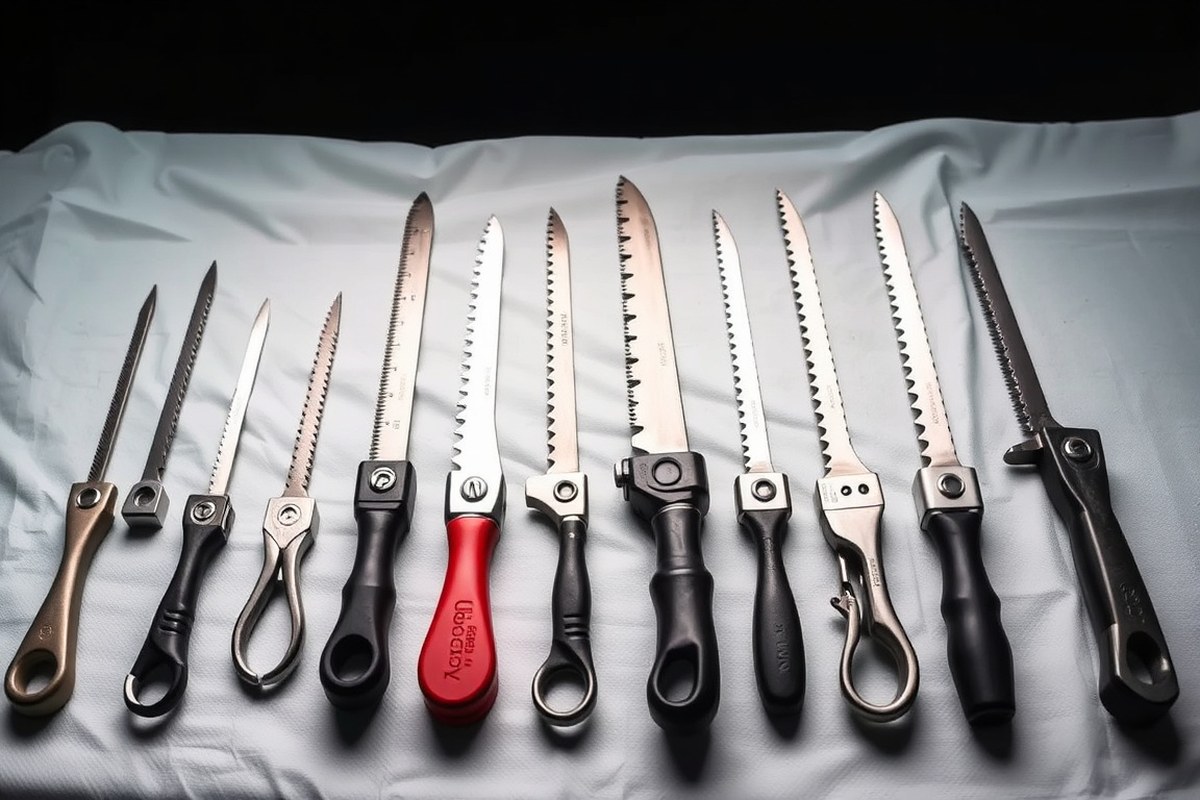
Bone saws come in manual and powered forms, including oscillating and reciprocating models, each functioning differently to suit specific surgical needs. Manual saws involve direct operator movement, while powered saws use electric or pneumatic motors for faster, more precise cuts. Specialized types like the Gigli saw use wire to cut bone and fit particular procedural requirements.
Manual Bone Saws and Their Uses
Manual bone saws typically have a serrated blade that the surgeon moves back and forth to cut through bone. These saws require physical effort and skill to maintain control and produce clean cuts. Despite being largely replaced by powered alternatives, manual saws remain valuable for their low cost, portability, and silent operation, especially in settings where no power source is available. Commonly, they are used in field surgeries or smaller procedures where high-speed cutting is not critical.
The cutting speed with manual saws is considerably slower, sometimes taking several times longer than powered options. Precision may suffer if the tool slips or if the operator tires, increasing the risk of uneven cuts or bone damage. Because they lack integrated safety features found in powered saws, manual saws require careful handling to avoid injury to surrounding tissues.
Powered Oscillating and Reciprocating Saws
Powered bone saws use an electric or pneumatic motor to move the blade in either an oscillating or reciprocating motion. Oscillating saws move the blade back and forth in a fixed arc of about 3 to 5 degrees, allowing precise cuts with minimal risk of damaging adjacent soft tissues. This type is commonly used in orthopedic surgeries for cutting through bone or removing implants due to its controlled action.
Reciprocating saws operate by pushing and pulling the blade in a straight, linear motion at high speeds. They are generally faster than oscillating saws, with through bone amputations often completed in around 2 seconds compared to 3 seconds for oscillating saws, according to human cadaver tests. Reciprocating saws are suited for rapid bone cutting where speed is necessary, such as during trauma surgery or sternal cuts in cardiac surgery.
Both types involve connecting the saw to a power supply or compressed air for pneumatic versions. Operators must keep steady control and advance the blade gently through bone to prevent overheating, which can damage bone tissue. Effective use requires training to match blade type, speed, and cutting pressure with the surgical situation.
Specialized Saws: Gigli and Pneumatic Types
The Gigli saw is a flexible cable composed of twisted wire strands with cutting teeth that surgeons maneuver manually around bones or difficult anatomical locations. Its design allows use in confined spaces where rigid saws cannot fit, such as during certain amputations and orthopedic procedures. Cutting with a Gigli saw involves a back-and-forth “sawing” motion with tension maintained on the cable to slice through bone gradually and precisely.
Pneumatic bone saws combine powered operation with compressed air drives, delivering high torque and consistent blade movement. These saws are often used when portability and power are needed in environments without reliable electricity. The mechanism mimics either oscillating or reciprocating action but relies on compressed air that surgeons regulate via foot pedals or hand controls for smoother operation. Pneumatic models also tend to produce less heat than electric versions, reducing thermal risk to bone.
Always match the bone saw type to the procedure and bone density: a reciprocating saw cuts quickly but may need more control, while a Gigli saw excels in tight spaces but requires careful tensioning.
Comparing Manual, Electric, and Pneumatic Bone Saws
Manual, electric, and pneumatic bone saws each offer distinct benefits and limitations in surgical settings. Manual bone saws require physical effort and skilled technique, making them slower and sometimes less precise than powered alternatives. They excel in controlled, delicate cuts, especially when precise removal without damage is important. These saws do not generate heat, reducing the risk of thermal injury during extended use, and are generally more affordable and require minimal maintenance.
Electric bone saws provide faster cutting speeds and higher precision due to motorized operation. They come in various sizes suitable for different procedures and enable consistent performance with less physical strain on the surgeon. However, electric saws generate heat while in use, introducing a risk of thermal damage to nearby tissues if not properly managed. Pneumatic saws function similarly but use compressed air as a power source, offering reliable performance and often favored in environments where electric units pose hazards or availability issues.
| Characteristic | Manual Bone Saw | Electric Bone Saw | Pneumatic Bone Saw |
|---|---|---|---|
| Power Source | Hand-operated | Electric motor | Compressed air |
| Cutting Speed | Slow (requires physical effort) | Fast (motorized) | Fast (motorized) |
| Precision | Dependent on skilled hands | High | High |
| Heat Generation | None | Yes (risk of thermal injury) | Yes (risk of thermal injury) |
| Physical Effort | High | Low | Low |
| Maintenance | Minimal | Moderate to high | Moderate |
| Cost | Lower | Higher | Moderate to high |
Choosing the right type depends on the surgical context. Manual saws suit smaller-scale cuts where tactile control is important, but their slower speed limits use in lengthy or complex operations. Electric saws outperform manual types for speed and consistent precision, making them preferred in joint replacements and large bone resections. Pneumatic saws offer a balance with good power and safety in settings where electrical hazards or equipment restrictions apply.
Common Surgical Procedures Using Bone Saws
Bone saws remain indispensable in several key surgical procedures across orthopedics, trauma, and neurosurgery. In orthopedic surgery, they are primarily used for joint replacement surgeries and fracture management. Surgeons use electric or pneumatic bone saws to make precise cuts in bone, which enables them to remove damaged bone and shape the remaining bone to fit prosthetic joints accurately. For example, during a total knee replacement, an oscillating bone saw cleanly cuts the distal femur and proximal tibia to prepare surfaces for the artificial components. The precision of powered saws helps reduce operation times and improve implant alignment, which contributes to better long-term outcomes.
Bone saws also play a important role in amputation surgeries and trauma cases. Amputations require cutting through bone quickly and cleanly to minimize trauma to surrounding tissues and facilitate effective closure of soft tissue. Surgeons often prefer electric saws with guarded blades in these cases to ensure safety and efficiency. Manual saws may still be used in some trauma or low-resource settings, but they demand greater surgeon control and can extend surgical time.
The role of bone saws in neurosurgery differs somewhat from orthopedics. Neurosurgeons use manual or powered cranial saws to perform craniotomies, which involve precise removal of sections of the skull to gain access to the brain. The saw must create smooth edges to allow safe removal and replacement of the bone flap. Manual saws may be used in less extensive cuts or when maneuverability is critical, whereas powered saws offer speed and consistent cuts for larger or more complex bone removal.
- Joint replacement surgeries (e.g., hip, knee) use oscillating or reciprocating powered bone saws to shape bone precisely
- Amputations and limb trauma use guarded electric saws for clean, safe bone cuts
- Orthopedic fracture repair often involves powered saws for bone trimming or osteotomy
- Craniotomies in neurosurgery require precise cuts with manual or powered cranial saws
- Manual saws find use in smaller or resource-limited surgical settings
The choice between manual and powered bone saws depends on the complexity of the procedure, required precision, and available resources. Powered saws generally improve speed and accuracy but require reliable power sources and maintenance. Manual saws provide tactile feedback and control during delicate cuts but can increase operation time and surgeon fatigue. Good results mean smooth bone surfaces, minimal heat generation to avoid bone necrosis, and cuts that align with surgical planning to support healing and function. Poor outcomes include jagged cuts causing bone damage, excessive bleeding, or difficulty fitting implants. Proper training and selecting the right saw type for each procedure are critical for minimizing such risks.
Safety Considerations and Common Mistakes with Bone Saws
Bone saws carry risks such as infection, accidental injury, and improper cuts that can affect patient recovery if not handled carefully. Following strict sterilization rules, avoiding common user mistakes, and applying patient safety protocols are essential for safe and effective use. Using the right bone saw and practicing good technique can reduce complications and improve surgical outcomes.
Proper Sterilization and Maintenance
Infection is a major concern when using bone saws because bone tissue is highly susceptible to contamination. Bone saws must be thoroughly cleaned and sterilized before each use to prevent surgical site infections. This includes disassembling the saw when possible, soaking in approved disinfectants, and sterilizing according to hospital protocols such as autoclaving. Failure to sterilize can lead to serious complications including osteomyelitis.
Regular maintenance ensures the saw functions correctly. Check for dull blades, loose components, or damaged handles. Powered saws need inspection of electrical safety and lubrication of moving parts. Routine checks reduce the risk of mechanical failure during delicate bone cuts, which could threaten patient safety and prolong surgery time.
Common Operational Errors and How to Fix
Typical mistakes include applying uneven pressure, cutting at incorrect angles, and rushing through bone cuts. Uneven force on manual saws can cause jagged edges or fractures, delaying healing. To avoid this, use smooth, controlled strokes and maintain proper ergonomic posture to reduce operator fatigue.
Poor angle choice often leads to inaccurate cuts that complicate reconstruction or prosthetic fitting. Visualize the cut trajectory beforehand and mark the bone surface when possible. Take time to align the blade perpendicular to the bone for clean cuts, especially in orthopedic procedures requiring precision within millimeters.
- Use consistent moderate pressure rather than excessive force
- Position yourself comfortably to maintain control throughout the cut
- Double-check bone markings before cutting
- Avoid distractions during saw operation
- Allow cooling periods for powered saws to prevent thermal damage
Always keep the blade sharp and replace it when dull to prevent uneven cuts and reduce strain on the surgeon.
Careful setup and steady technique lower the risk of damaging healthy bone or soft tissue, thus speeding patient recovery.
Patient Safety Protocols with Bone Cutting Tools
Before cutting bone, confirm patient identity, surgical site, and procedure details to prevent wrong-site surgery. Wearing proper personal protective equipment helps reduce contamination and exposure to bone dust, which can carry pathogens. Healthcare teams should use suction devices to clear debris and protect the surgical field.
Choosing the correct type of bone saw affects recovery. For example, powered oscillating saws produce cleaner cuts and less vibration than manual saws, leading to less bone trauma and quicker healing times. Consider the patient’s condition and the surgical goal to select the best tool.
Postoperative protocols include monitoring the surgical site for signs of infection or improper bone healing. Early intervention in case of complications improves outcomes. Communication between surgical staff and postoperative care providers is critical.
Historical Evolution and Technological Advances in Bone Saws
Bone saws have evolved from simple manual tools to complex electric and experimental devices designed for precision and safety in surgery. Innovations over the past century have made cutting bone faster and less traumatic, improving outcomes in both human and veterinary procedures. Ongoing research explores new technologies like sonic and laser tools that may further refine how surgeons approach bone cutting.
Early Manual and Mechanical Saws
Manual bone saws date back centuries and remained a staple in surgery until the 20th century. These saws rely entirely on the surgeon’s skill and tactile feedback, allowing fine control over the bone cutting process but requiring significant physical effort and time. In the 1940s, mechanical oscillating bone saws emerged as a major innovation. These early devices used a tiny blade moving rapidly back and forth, which reduced cutting force and improved speed without compromising control.
The Scottish surgeon John Aitken made an important contribution by developing a rotary mechanical saw. This design allowed continuous rotational movement, improving both speed and precision compared to the back-and-forth oscillation of previous models. These mechanical saws marked the beginning of powered bone cutting, paving the way for later electric devices. However, manual bone saws still offer the advantage of better tactile sensation, which some surgeons prefer in delicate procedures.
Introduction of Electric and Pneumatic Saws
Electric bone saws became widely adopted in the mid to late 20th century, offering consistent power and control for bone cutting. These tools generally operate between 10,000 to 20,000 oscillations or rotations per minute, providing smooth cuts with reduced surgeon fatigue. Pneumatic saws, powered by compressed air, provide similar performance with the added benefit of being lighter and emitting less heat during use.
The introduction of electric and pneumatic saws significantly shortened surgical times and improved precision, especially in orthopedic and neurosurgical procedures. These powered saws also reduce the risk of hand tremor affecting the cut, lowering the chance of damage to nearby tissue. Electric models typically cost several hundred to over a thousand dollars depending on brand and features, and require compatible power sources and maintenance to remain effective and safe.
Emerging Tech: Sonic and Laser Cutting Tools
New technologies aim to improve bone cutting by minimizing thermal and mechanical trauma. Sonic saws use ultrasonic vibrations, operating at frequencies above 20,000 Hz to cut through bone while sparing soft tissues. This technology offers greater precision and less heat generation, which can reduce post-operative pain and improve healing. Sonic devices are still in development and tend to be more expensive and complex than traditional saws.
Laser cutting tools represent another experimental approach. Laser energy can ablate or vaporize bone with high accuracy and minimal bleeding. Some surgeons are exploring pulsed lasers that target bone cells without damaging adjacent tissues. Laser systems require significant investment, specialized training, and safety precautions due to the risks of eye injury and burn.
Both sonic and laser cutting tools are not yet standard in everyday surgical practice but may become more common as their performance improves and prices decrease. For now, electric and pneumatic saws remain the workhorses of bone cutting in operating rooms.
Using Bone Saws in Veterinary Surgery and Forensics
Bone saws remain a important tool in veterinary surgery for procedures involving animal bone cutting, such as amputations, fracture repairs, and necropsies. Veterinary surgeons often prefer manual bone saws when precise control is necessary, particularly with smaller animals or delicate operations. These saws require skill and experience to minimize trauma to surrounding tissues and reduce recovery time. Electric and pneumatic bone saws are also used in larger animals, offering faster cuts and reducing surgeon fatigue, but they must be selected based on the animal’s size and procedure type to avoid excessive heat buildup or bone splintering.
In forensic medicine, bone saws are indispensable during autopsies for separating the skull, rib cage, or other bony structures to examine internal organs and injuries thoroughly. Forensic pathologists frequently use manual oscillating bone saws because they offer fine control and produce less vibration, preserving the integrity of the bone and surrounding tissue for accurate analysis. Oscillating saws cut back and forth in a small arc, which reduces the risk of damage to soft tissues underneath. The choice of bone saw depends on the bone’s thickness and the need for precision versus speed. For instance, a hand saw might be selected for forensic cases involving only minor bone cutting to prevent altering evidence.
Specialized bone cutting tools in these fields include oscillating saws, wire saws, and gigli saws. Wire saws, which use a thin, flexible wire to saw through bone, are useful in veterinary surgery involving complex or curved cuts. Gigli saws consist of a serrated wire loop hand-operated by the practitioner and are valued in both veterinary and forensic settings for minimal bone disruption. These saws are particularly suited for post-mortem examinations where careful reconstruction of bones may be needed for further study.
Decision-making on tool selection in veterinary and forensic uses hinges on factors such as bone thickness, animal size, the complexity of cut required, and the necessity to preserve bone structures intact. For example, small animals like cats or dogs generally require lightweight manual or electric saws, while horses or large livestock might need heavy-duty pneumatic saws to efficiently manage thicker bones. In forensic scenarios, using manual oscillating saws is common for controlled cuts, while electric saws might be employed when speed is prioritized in mass casualty situations.
Using manual bone saws often requires clinicians to maintain steady hands and ergonomic posture to reduce the risk of repetitive strain injuries, especially during lengthy procedures. Controlled technique and regular instrument maintenance, including blade sharpening and sterilization, are essential to ensure clean cuts and prevent contamination. Improper use or dull blades can cause jagged cuts, complicating healing in animals or interfering with forensic examinations.
How to Choose the Right Bone Saw for Surgical Needs
Selecting the right bone saw hinges on the surgery’s goals, the need for speed or precision, and the operating environment. Complex surgeries like hip replacements demand highly precise cuts to fit prosthetics snugly, calling for saws with refined control. Faster cuts may be suitable for emergency procedures where speed prevents further trauma, but they may sacrifice some accuracy. Environmental factors such as room size, power availability, and sterilization methods also guide the choice between manual, electric, or pneumatic saws. Here is a table outlining core selection criteria based on surgical needs:
| Factor | Importance | Considerations |
|---|---|---|
| Type of Surgery | High | Delicate joint replacement requires precision; trauma surgery prioritizes speed |
| Speed | Medium | Electric saws offer quicker cuts; manual saws provide slower but controlled cuts |
| Precision | High | Powered saws with fine blades afford greater accuracy and less bone trauma |
| Power Source | Medium | Electric or pneumatic saws require specific setups; manual saws are independent |
| Operating Room Environment | Medium | Space and sterility constraints may favor portable or battery-powered devices |
| Surgeon Experience | Variable | Familiarity with devices affects efficiency and outcome |
This checklist can help surgeons decide:
- Identify the procedure type and required cut precision.
- Assess whether rapid bone removal or gradual control is more critical.
- Check the availability of power sources in the operating room.
- Consider the surgeon’s familiarity and skill with different saw types.
- Evaluate the risks of heat generation or mechanical trauma with faster saws.
- Decide if alternative tools like specialized drills or ultrasonic devices may better suit the case.
Surgeons might opt against traditional bone saws in procedures needing minimal bone loss or extremely delicate cuts. Alternatives can reduce thermal damage and provide cleaner margins, though often at higher cost or longer operating times.
Prioritize a bone saw that matches both your surgical goals and the physical setup, you gain better control and reduce the risk of complications.
Step-by-Step Action Plan for Using Bone Saws Safely and Effectively
Follow these steps to select and use bone saws appropriately in surgical or veterinary settings while ensuring safety and precision.
- Before the procedure: Assess the surgical requirements and choose the type of bone saw best suited for the specific operation. Confirm the saw’s condition by checking blade sharpness and power source functionality to ensure it will perform effectively.
- Pre-operatively: Review safety protocols with your team, focusing on handling the bone saw to minimize risks. Ensure all personal protective equipment is worn, including gloves and eye protection, as verified by a quick team check.
- During use: Maintain steady control of the saw, applying consistent pressure without forcing it into bone. Monitor the patient’s condition and cut precision to confirm proper technique and saw performance.
- Immediately post-operation: Inspect the cut site for cleanliness and regularity. Clean and sterilize all saw components according to manufacturer guidelines to prevent infection and maintain instrument longevity.
- After surgery: Document the saw type used and any issues encountered, noting any delays or complications. Schedule routine maintenance of the saw based on operating room usage volume to keep the equipment in optimal condition.
Frequently Asked Questions
Are Manual Bone Saws Still Used in Modern Medicine?
Yes, manual bone saws are still used today, mainly in situations where precision and control are critical. They remain a cost-effective option, especially in settings with limited access to advanced equipment.
How Common Is It for Surgeons to Use Manual Bone Saws in Procedures?
Manual bone saws are less common than electric or pneumatic ones but are still used occasionally for their simplicity and reliability. They are favored in surgeries where electronic devices might be impractical.
Can Bone Saws Be Used Safely in Soft Tissue Surgery?
Bone saws can be used safely to access organs or tissues beneath the bone, though care is required to avoid damage. Proper training and technique reduce the risk of injury during these procedures.
What Surgical Fields Most Commonly Use Manual Bone Saws?
Orthopedic surgery and some veterinary procedures most often use manual bone saws. Their use depends on the surgeon’s preference and the specific requirements of the case.
Are Manual Bone Saws More Cost-Effective Than Electric Alternatives?
Manual bone saws cost less and don’t need electricity, which helps many clinics save money. They do need more physical work and take longer to use.
Do Manual Bone Saws Pose Safety Risks Compared to Electric Saws?
Manual bone saws carry safety risks such as slippage and fatigue-related errors but can be safe with proper technique. Electric saws reduce effort but introduce risks like overheating or electrical faults.
The Bottom Line
Bone saws remain essential tools in modern surgical and veterinary procedures where precise bone cutting is necessary. Choosing the right saw and following strict safety measures ensures effective outcomes and reduces risks. Begin by evaluating your specific surgical needs and ensuring your equipment meets safety and performance standards before use.