
Do Foxes Have Night Vision? Exploring Foxes’ Ability to See in the Dark
Yes, foxes do have night vision, enabling them to see and hunt effectively in low-light conditions. Their eyes contain a specialized layer called the tapetum lucidum, which reflects light and maximizes their ability to detect movement in the dark. This adaptation is crucial for their survival, as foxes are crepuscular and nocturnal hunters that rely on stealth and acute senses to track prey at dawn, dusk, and nighttime.
Understanding how foxes perceive their environment is not only fascinating but also vital for wildlife enthusiasts and those interested in animal behavior. Nighttime vision supports foxes’ hunting and navigation skills, directly influencing their diet, survival rates, and ecological role. Their visual adaptations help explain their widespread presence in a variety of environments, from rural woodlands to urban parks.
In this comprehensive guide, we’ll examine the science behind foxes’ night vision, compare their eyesight to other nocturnal animals, explore the anatomy of their eyes, and answer common questions. Whether you're a wildlife observer, pet fox owner, or simply curious, you'll learn exactly how well foxes see at night, and what makes their vision so unique.
The Science Behind Foxes’ Night Vision
Tapetum Lucidum: Foxes’ Nighttime Advantage
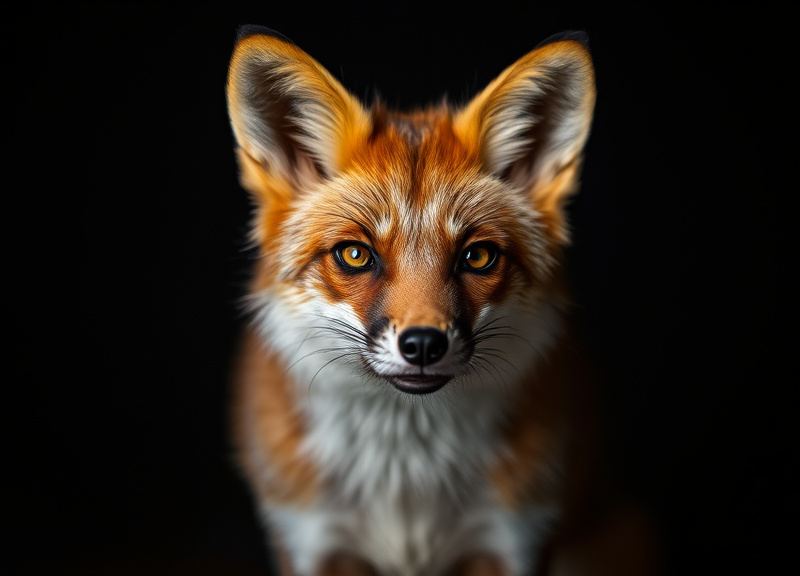
Foxes possess a tapetum lucidum, a reflective layer located behind the retina. This ingenious adaptation amplifies available light, enhancing their night vision and causing their eyes to glow when illuminated by headlights or flashlights. The tapetum lucidum is common among nocturnal and crepuscular animals.
Thanks to this layer, foxes can make the most out of faint starlight or moonlight, identifying subtle movements of prey in darkness. While their color vision is limited, the sharp contrast of shapes and motion gives them a significant edge after dusk.
- Boosts vision in low light
- Creates bright eye-shine at night
- Improves detection of prey motion
Rod and Cone Cell Distribution in Foxes’ Eyes
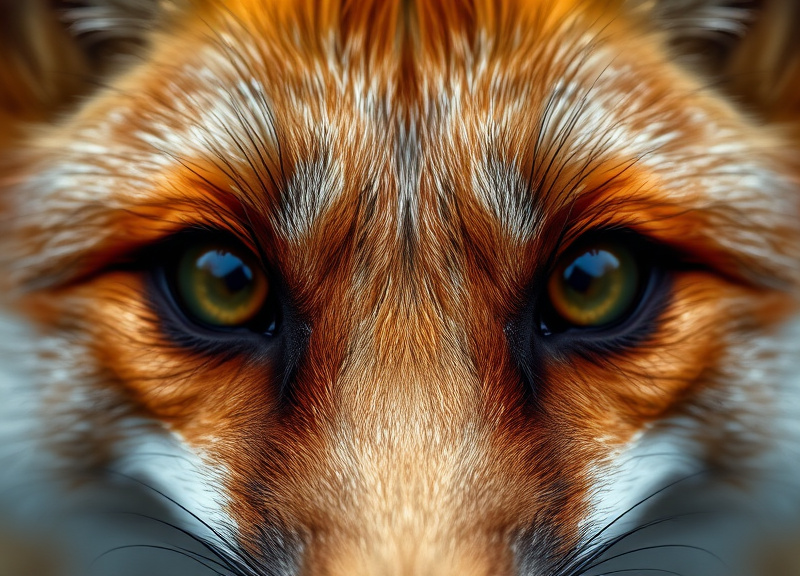
Foxes’ retinas contain a higher proportion of rod cells compared to cones. Rods are specialized for light sensitivity and allow for better vision in dim environments, while cones facilitate color detection but require stronger light.
As a result, foxes excel at discerning movement and navigating obstacles at night, though they may not see colors as vividly as humans. This trade-off is vital for their nocturnal hunting approach.
Hunting and Navigation: Putting Night Vision to Use
Foxes’ Nocturnal Prey Detection
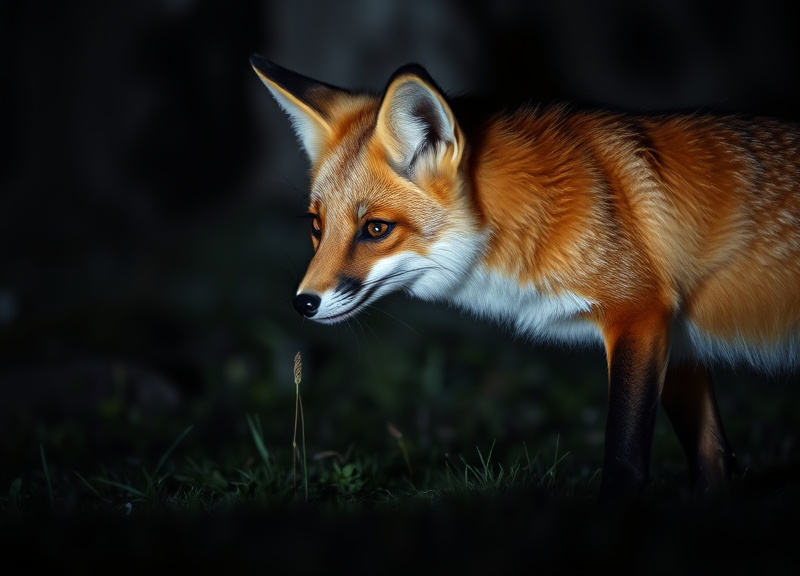
How well do foxes see at night? Exceptionally well—enough to spot small mammals, insects, and even movement beneath snow or fallen leaves using their fine-tuned senses. Their visual system, while not designed for complete darkness, allows effective hunting at dusk, dawn, and on moonlit nights.
Foxes combine their impressive night vision with acute hearing and smell. This multisensory approach lets them track quick, silent prey, making them skilled nocturnal predators despite limited color perception.
- Locating hidden rodents
- Spotting birds on the ground
- Catching insects in the dark
Navigation and Memory in Low Light
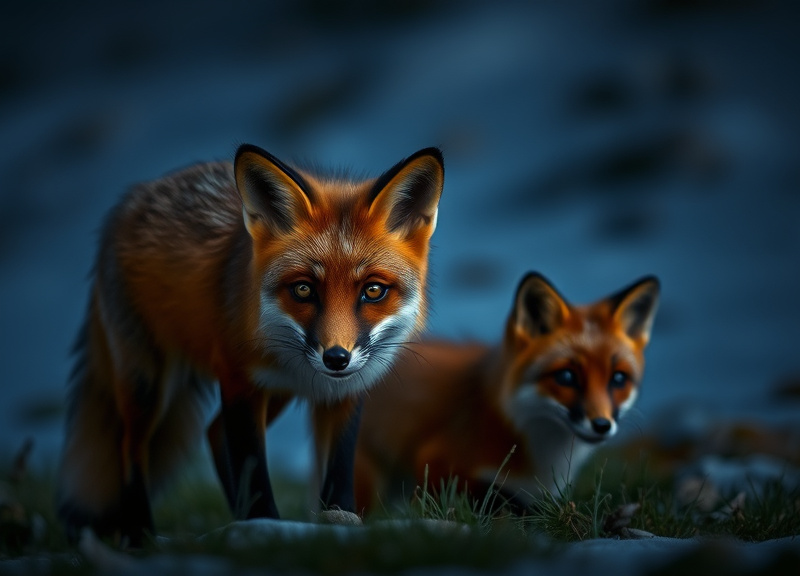
Foxes are adept at navigating complex terrains using night vision and strong spatial memory. Landscape features are more easily identified by shape and contrast, making pathfinding at night second nature to foxes.
They retrace familiar routes, avoid hazards, and locate dens or food caches, all while traveling in near darkness. This ability supports both survival and efficient territory management.
How Foxes’ Night Vision Compares to Other Animals
Foxes Versus Domestic Cats and Dogs
Foxes, cats, and dogs share several night vision adaptations, including the tapetum lucidum and a rod-dominant retina. Comparatively, domestic cats outperform foxes in absolute darkness due to a larger tapetum lucidum and wider pupils.
Dogs see better in low light than humans but typically not as well as foxes or cats. All three can spot movement easily but may struggle with color differentiation at night.
- Cats: superior night vision
- Dogs: moderate low-light abilities
- Foxes: excellent motion detection
Night Vision in Owls and Other Nocturnal Hunters
Owls possess extraordinary night vision because of massive eyes with densely packed rods, allowing them to hunt in almost complete darkness. Foxes, while adept, cannot match owl performance in pitch black conditions.
Among terrestrial mammals, foxes’ low-light vision ranks competitively, especially when paired with their hearing. Diurnal species, such as rabbits, generally lack these advanced adaptations.
Environmental Factors Affecting Foxes’ Night Vision
Influence of Moonlight and Urban Lighting
Natural illumination like moonlight or starlight greatly benefits foxes’ eyes. In urban areas, artificial lights make foraging easier but can also create glare or shadowy hazards. Foxes adapt to both environments but may alter their activity patterns based on available light.
Reduced artificial lighting often sees foxes becoming bolder, exploring territories that are safer from human interaction. Light pollution can, however, disrupt natural behaviors when it’s too intense or persistent.
- Moonlit hunting improves success
- Streetlights help urban foraging
Weather Conditions and Terrain Challenges
Rain, fog, or heavy snowfall scatter and absorb available light, somewhat limiting foxes’ night vision effectiveness. Complex terrains, like dense woodland, can hide prey or complicate movement in darkness.
Foxes rely more heavily on their sense of smell and hearing when visibility drops, compensating for brief decreases in vision. This flexibility ensures they continue thriving in varied habitats.
- Heavy rain reduces visibility
- Snow cover muffles both vision and hearing
Evolutionary Adaptations of Foxes’ Night Vision
Genetic and Morphological Changes
Through natural selection, foxes developed larger eyes relative to skull size and enhanced tapetum lucidum structures. These changes, encoded genetically, have persisted for thousands of years as foxes diversified globally.
Species living in especially dark environments (like the Arctic fox) display even further visual enhancements, including increased rod cell density and large corneas for maximum light entry.
- Bigger eyes for more light
- Enhanced tapetum lucidum
- Varied adaptations among species
Behavioral Evolution and Nighttime Strategies
Foxes’ night vision is complemented by behavioral tactics—using stealth, minimizing movement, and exploiting dim light for surprise attacks. Evolution favored individuals able to combine vision and behavior.
This approach led to diverse diets and wide global distribution, as foxes adapted to their environments both anatomically and behaviorally. These factors collectively shaped modern fox populations.
Signs of Night Vision in Foxes: What to Observe
Eye-Shine and Behavior After Dark
Glowing eyes caught in artificial light are a telltale sign of foxes’ night vision at work. Observe how foxes become more active and bold after sunset, often seen swiftly darting across open spaces or quietly foraging.
Wildlife cameras consistently capture foxes moving with apparent confidence, rarely stumbling, even in near-total darkness. Such behavior highlights their impressive low-light adaptations.
- Eye-shine from headlights or flashlights
- Increased activity at dusk and night
- Smooth movement through darkness
To explore technical explanations and adaptations in greater detail, see this comprehensive overview of vision in nocturnal animals. Vision in nocturnal animals.
Observing Foxes in Urban Settings
Urban foxes, just like their rural counterparts, showcase their night vision by traversing streets, avoiding cars, and raiding bins with minimal light. Their ability to interpret the urban landscape at night is notable.
If you spot a fox on a nighttime stroll or near suburban parks, you’re witnessing their night vision and sharp senses in action, often facilitated by artificial or ambient light sources.
Foxes’ Night Vision Versus Other Mammals: Comparison Table
Here’s a detailed comparison of foxes’ night vision adaptations with those of other common nocturnal and crepuscular mammals, highlighting key differences in their eyesight and sensory strategies.
| Animal | Tapetum Lucidum | Rod/ Cone Ratio | Night Activity | Prey Detection Ability |
|---|---|---|---|---|
| Fox | Yes | High rods, low cones | Nocturnal/Crepuscular | Excellent |
| Domestic Cat | Yes | Very high rods | Nocturnal/Crepuscular | Excellent |
| Dog | Yes | Moderate rods | Crepuscular | Good |
| Rabbit | No | Lower rods | Crepuscular/Diurnal | Fair |
| Owl (bird) | No (but huge eyes) | Extreme rods | Nocturnal | Exceptional |
| Raccoon | Yes | High rods | Nocturnal | Very good |
Frequently Asked Questions
Do all fox species have night vision?
Yes, all fox species have some degree of night vision, though it varies based on habitat. Arctic, red, and fennec foxes all possess adaptations like the tapetum lucidum, enabling them to see in low-light conditions.
How do foxes’ eyes compare to human eyes at night?
Foxes’ eyes are far better adapted to see in near darkness than human eyes. They have more rod cells and the tapetum lucidum, letting them perceive movement and shape when humans would see almost nothing.
Can foxes see in total darkness?
No, foxes cannot see in complete darkness. Their night vision works by maximizing low ambient light, but if there is no light at all, they rely on other senses like smell and hearing to find their way.
Why do foxes’ eyes glow at night?
Foxes’ eyes glow because of the tapetum lucidum, which reflects light back through the retina. This reflection causes the bright eye-shine often seen in photos or when illuminated by headlights or flashlights.
How well do foxes see at night compared to cats?
While foxes are impressive nocturnal hunters, domestic cats edge them out in terms of overall night vision. Cats have an even more pronounced tapetum lucidum and larger pupils, giving them excellent low-light sight.
Key Takeaways
- Foxes have true night vision thanks to the tapetum lucidum and rod-rich retinas.
- They excel in detecting movement at dusk, dawn, and nighttime, but cannot see in absolute darkness.
- Night vision varies by species and is adapted to each habitat.
- Foxes’ nocturnal eyesight rivals many nocturnal animals, making them skilled night hunters.
Conclusion
Assessing whether foxes have night vision reveals the complex interplay between anatomy, behavior, and environment. The combination of their tapetum lucidum, rod-rich retinas, and fine-tuned senses allows foxes to thrive in conditions that would limit or immobilize most animals. Whether silently stalking rodents in moonlit fields or navigating dense urban parks, their adaptations reflect millennia of evolution, solidifying foxes’ status as one of the animal kingdom’s most versatile nocturnal predators. Understanding these remarkable features offers deeper appreciation for how animals survive and succeed after dark.
For practical observation, note how well do foxes see at night in both wild and urban settings. Wildlife enthusiasts can spot them by their glowing eyes or agile movements at dusk, while pet fox keepers benefit from dim lighting in enclosures to mimic their natural environment. When compared with other mammals—be it the exceptional vision of cats or the daytime eyes of rabbits—foxes stand out as highly skilled crepuscular and nocturnal hunters perfectly suited for their ecological roles.
If you're studying animal behavior, considering conservation, or just hoping to catch a glimpse of a local fox, pay attention to dusk and nighttime hours in areas where foxes live. Use red-filtered lights that won’t disturb their vision, and remain quiet to witness authentic behaviors. Now that you understand the exact mechanisms and significance of foxes’ night vision, you’re better equipped to appreciate—and protect—these fascinating creatures.