Top 12 Best Winter Construction Boots That Crush Cold!
Stepping out onto a frozen construction site in boots that aren’t up to the task can turn a tough day into a miserable one. The best winter construction boots stay warm and dry in freezing temperatures, something cheaper boots often can’t manage.
Cold toes and wet socks are more than just unpleasant; they can slow you down and increase the chance of injury.
Good winter construction boots rely on insulation rated around 400 to 1000 grams to keep feet warm in extreme cold. The outsole needs to provide reliable traction on ice and snow, typically made from rubber compounds designed for winter grip. Fit is also crucial, too tight and circulation drops, too loose and there’s risk of blisters and less support, so finding the right size with ample room for thick socks makes all the difference on long workdays.
Need a Quick Check?
| Image | Product | Price |
|---|---|---|
Our Top Picks 1  | Mens Insulated Snow Boots | Check Price |
Our Top Picks 2  | ROCKY Blizzard Stalker Boots | Check Price |
Our Top Picks 3  | Timberland PRO Siberian Boots | Check Price |
Our Selected Top 12 Winter Construction Boots for Every Budget
This list features durable winter construction boots designed for various needs and budgets. Each review covers performance, suitability for different users, and highlights the boots’ main strengths and weaknesses to help you find the right fit for cold and tough working conditions.
1. Mens Insulated Winter Snow Boots
When winter brings cold, snow, and icy conditions, a reliable pair of snow boots makes all the difference, especially on a construction site. These Mens Insulated Winter Snow Boots suit anyone who needs solid protection against winter weather, with insulation that keeps feet warm throughout long, outdoor shifts. Their biggest strength lies in their dependable insulation combined with comfort.
Putting these boots on each morning feels straightforward thanks to the round toe and no-heel design. Wearing them throughout the day feels stable and supportive, ideal for tough terrain and slippery conditions.
They have a solid pattern and a traditional snow boot form that helps in keeping out snow and cold air, which is essential during extended winter workdays or festive outdoor occasions like Christmas or New Year.
Designed specifically as snow boots, they deliver consistent insulation to help maintain warmth even in very cold environments. The sturdy build focuses on winter protection rather than fashion, with a classic solid black finish that resists showing dirt easily.
The most notable praise is about how well they maintain warmth, while some point out the boots might feel a bit heavy for lighter wear or casual walking.
Warmth is the most appreciated feature, making these boots reliable for snowy and cold workdays. The common drawback is their relative heaviness, which some find tiring after extended use or during more active movement.
Those needing serious cold protection and steady footing on construction sites or in winter environments will find these boots suitable. People looking for lighter, more flexible footwear for all-day walking or casual use might want to consider other options.
Pros
- Keeps feet warm in harsh winter weather
- Simple round toe design fits most comfortably
- Solid black color hides dirt well
- Flat heel offers steady support on slippery surfaces
Cons
- Weight may be noticeable during long walks
- Lack of heel might reduce traction on some slopes
| Specification | Details |
|---|---|
| Color | Black |
| Toe Style | Round Toe |
| Boot Form Type | Snow Boot |
| Heel Type | No Heel |
| Seasons | Winter |
| Pattern | Solid |
2. ROCKY Blizzard Stalker Steel Toe Work Boot
Rocky Blizzard Stalker Steel Toe Work Boots come in brown with a round toe and roper heel, designed to keep feet safe and comfortable during tough winter workdays. Ideal for anyone needing solid protection mixed with all-season versatility, their steel toe is their standout feature for safety on any job site.
Putting them on is straightforward with the traditional work boot fit that feels secure without being too tight. Daily use feels comfortable thanks to the roper heel, which offers good stability and balance on uneven surfaces. The boots seem easy enough to clean after muddy winter days, maintaining their brown color and sturdy look through normal wear.
Performance is strong where it matters: protection and durability. The steel toe protects well while the overall build supports long hours on your feet. The main praise is the solid, reliable safety feature on harsh days.
The most common complaint relates to the all-season claim, with some finding them less breathable in warmer conditions.
Strength lies in the steel toe that protects well through physical work challenges. Most users mention the boots can be warm when worn during milder seasons, making them less comfortable for all-day use in spring or fall.
Those facing cold, rugged work environments will appreciate this boot’s safety and reliability. People looking for lighter, more breathable footwear for less intense conditions might want to consider alternatives.
Pros
- Strong steel toe for maximum foot protection
- Comfortable fit with stable roper heel
- Durable materials hold up in tough conditions
- Versatile for all seasons
Cons
- Not very breathable in warmer weather
- Can feel bulky for casual wear
| Specification | Details |
|---|---|
| Color | Brown |
| Toe Style | Round Toe |
| Boot Form Type | Work Boot |
| Heel Type | Roper Heel |
| Seasons | All |
3. Timberland PRO Siberian Composite Safety Toe Boot
People working in cold and rugged environments will find these boots very reliable. They suit anyone needing strong protection and warmth without compromising on comfort.
The biggest strength is the combination of insulation and waterproofing that keeps feet dry and warm throughout the workday.
Putting them on feels sturdy but not overly heavy, making daily wear manageable during long shifts. The composite safety toe means you don’t have to deal with the extra weight of steel toes.
Waterproof materials and insulation keep out snow and moisture, while the block heel adds stability on slippery surfaces. They feel snug but allow enough room for thicker winter socks.
Built tough to handle harsh conditions, these boots excel at protecting feet from impacts and punctures while resisting water seepage. Most praise highlights how warm and dry feet stay in freezing temperatures. A common complaint is that they can feel a bit stiff at first, requiring some breaking-in before full comfort.
The medium brown color hides dirt well but might show scratches over time.
The boots are praised for keeping feet warm and dry under tough winter conditions but often feel stiff until worn in for a while. Their waterproof and puncture-resistant build makes them reliable for construction sites and cold weather.
Anyone working outdoors in wet and cold environments will appreciate their protection and comfort. Those looking for softer, more flexible boots right away might want to consider other options.
Pros
- Warm insulation keeps feet comfortable in cold weather
- Waterproof design repels moisture effectively
- Composite toe provides safety without extra weight
- Puncture resistant sole suitable for rough terrain
Cons
- Initial stiffness requires break-in period
- Scratches can appear on medium brown leather
| Specification | Details |
|---|---|
| Color | Medium Brown V1 |
| Toe Style | Composite Toe |
| Boot Form Type | Work Boot |
| Heel Type | Block Heel |
| Seasons | All |
| Style Name | Siberian 8 Inch Composite Safety Toe Insulated Waterproof Puncture Resistant Csa |
4. Helly Hansen Bifrost BOA Work Boots

Helly Hansen Bifrost BOA Work Boots stand out for their waterproof design combined with a convenient BOA lacing system, making them perfect for anyone needing reliable warmth and protection in winter construction settings. Their biggest advantage is the ease of adjusting fit without fiddling with traditional laces.
Getting them ready involves just turning the BOA dial to tighten or loosen, which saves time when putting them on or taking them off. The boots feel sturdy yet comfortable, with a flat heel that supports all-day wear on various terrains. Their waterproof quality keeps feet dry, important during snow or wet conditions common on construction sites in winter.
They hold up well against cold and moisture thanks to solid construction focused on durability. The round toe offers enough space, and the waterproofing lives up to expectations. The most praised feature is the BOA system’s convenience, but some mention the boots can feel a bit heavy after long hours on foot.
The waterproof feature and BOA lacing are praised for efficiency and protection, while weight is the most common drawback during long shifts. The boots maintain warmth and keep feet dry without fuss.
Workers needing dependable waterproof boots with easy adjustment will appreciate these. Those prioritizing lightweight footwear might look for lighter alternatives.
Pros
- Quick, precise BOA closure system
- Effective waterproof protection
- Comfortable fit with roomy round toe
- Flat heel suited for all-day wear
Cons
- Relatively heavy for extended walking
- Limited color options
| Specification | Details |
|---|---|
| Color | 990 Black |
| Toe Style | Round Toe |
| Boot Form Type | Work Boot |
| Heel Type | Flat |
| Seasons | All |
| Style Name | Bifrost Waterproof Tall Boa Winter Safety Boots |
5. NORTIV 8 Mens Waterproof Winter Snow Boots

NORTIV 8 Mens Waterproof Winter Snow Boots focus on keeping feet dry and warm in harsh winter conditions. Ideal for anyone working outdoors or facing wet, cold environments, their standout feature is reliable waterproofing combined with solid insulation.
These boots slip on easily thanks to their high-top design, which helps secure the fit and protect against snow entering from above. The round toe offers comfort without feeling cramped, while the solid black color stays looking clean through typical winter muck. No heel means they feel stable on rough or icy terrain during extended wear.
Built as snow boots, they deliver on waterproof protection and warmth needed for winter jobs. Reviewers praise the boots for holding up well in wet weather without leaking.
Some mention they’re a bit bulky, which can make them less ideal for light indoor tasks or casual wear. The construction feels durable but leans toward a heavier build compared to regular boots.
Waterproofing and insulation receive high marks for keeping feet comfortable in snow and slush. Bulkiness is frequently mentioned, making the boots less agile during tasks requiring quick movement or indoor use.
Those needing a sturdy, warm, and wet-weather boot for winter construction or heavy outdoor work will find these suitable. People looking for lighter or more flexible footwear should consider other options.
Pros
- Waterproof to keep feet dry
- Warm insulation for cold conditions
- High-top design helps keep snow out
- Durable construction for tough environments
Cons
- Bulky compared to lighter boots
- Lacks a defined heel for traction
| Specification | Details |
|---|---|
| Color | Black |
| Toe Style | Round Toe |
| Boot Form Type | Snow Boot |
| Heel Type | No Heel |
| Seasons | Winter |
| Style Name | High-top |
6. Mens Waterproof Winter Snow Boots
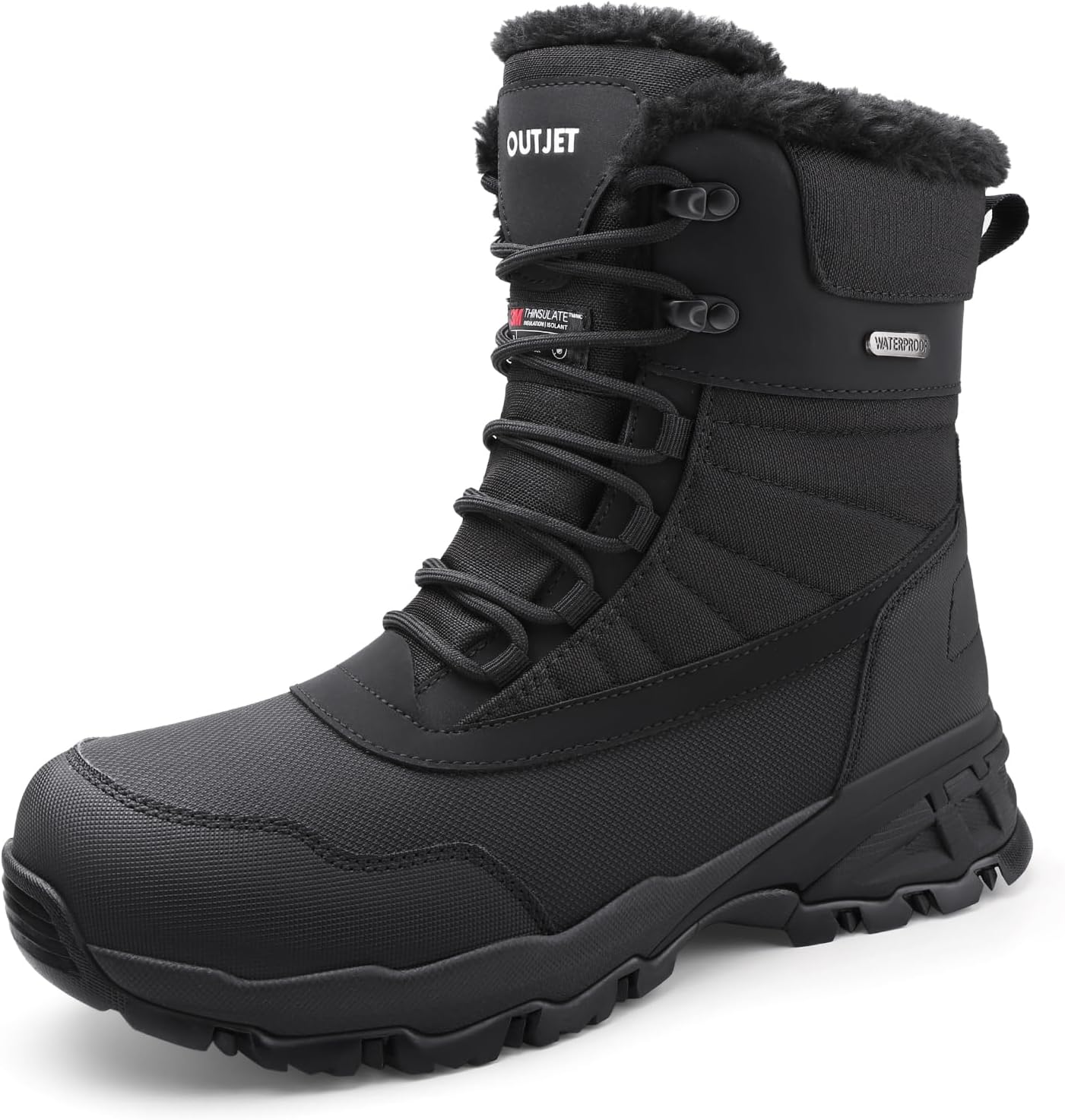
Sturdy and warm, these boots fit well for those working outdoors in cold, snowy conditions. Their waterproof quality is their standout feature, keeping feet dry even in wet winter weather. Ideal for anyone needing solid protection against snow and slush on construction sites or long winter days.
Putting them on is straightforward thanks to the round toe design, which provides enough room for movement without feeling bulky. Wearing them throughout the day is comfortable due to the absence of a heel, allowing easy walking on uneven surfaces. The solid black color makes pairing them with winter workwear simple, and they hold up well against typical winter grime.
Performance-wise, these boots do a reliable job of keeping feet dry and warm during snowy days. They are built as snow boots, focusing on winter conditions rather than general footwear.
The most praised aspect is their waterproof nature, appreciated in wet, cold environments. A common drawback noted is that the boots can feel bulky for extended wear on smoother surfaces.
The waterproof quality stands out as the key strength, effectively protecting feet from snow and moisture. On the other hand, the boots’ bulkiness can be uncomfortable when worn for long periods in non-snowy environments. They perform best when the conditions call for waterproof snow protection rather than all-day versatility.
Ideal for people spending extended time outside in cold, wet weather who need durable, protective footwear. Not suited for those looking for lighter boots or shoes for indoor or mild-weather activities. Best reserved for winter construction or outdoor work where snow and slush are common.
Pros
- Keeps feet dry with waterproof construction
- Comfortable round toe allows natural movement
- No-heel design for stable walking on snow
- Classic black color matches winter outfits
Cons
- Feels bulky on smooth or indoor surfaces
- Limited use outside winter conditions
| Specification | Details |
|---|---|
| Color | Black |
| Toe Style | Round Toe |
| Boot Form Type | Snow Boot |
| Heel Type | No Heel |
| Seasons | Winter |
| Pattern | Solid |
7. ALEADER Mens Winter Waterproof Insulated Snow Boots

Perfect for cold climates, these are winter boots that keep your feet warm and dry during long days outdoors. They fit well for anyone needing reliable waterproof protection and insulation without the extra bulk, focusing on comfort and durability for tough winter conditions.
Putting them on is straightforward with the round toe design and moderate height that suits snow conditions well. Their buckle style adds a bit of adjustability and style while making the boots easy to handle after a hard day’s work.
Day-to-day use involves trudging through snow and slush, where the waterproof feature really proves its worth.
Strong insulation keeps feet warm even in freezing weather, aligning with the core requirement of winter boots. The waterproof barrier prevents moisture seepage, essential for wet snow. Constructed as snow boots without heels, they offer steady footing on slick surfaces.
Common praise focuses on warmth and dryness, while some find the boots a bit stiff when new.
Warmth and waterproofing stand out as key strengths, keeping feet dry and comfortable in wet snow. The main drawback is the initial stiffness, which might require some wear time to feel fully broken in.
Anyone working or spending extended time outdoors in winter conditions will appreciate how these boots perform. Those seeking a softer, more flexible fit from the start might look at other options.
Pros
- Effective waterproof protection
- Good insulation for cold weather
- Adjustable buckle for secure fit
- Stable flat sole without heels
Cons
- Some stiffness when breaking in
- Limited color options
| Specification | Details |
|---|---|
| Color | Black/Buckle |
| Toe Style | Round Toe |
| Boot Form Type | Snow Boot |
| Heel Type | No Heel |
| Seasons | Winter |
| Pattern | Solid |
8. NORTIV 8 Mens Waterproof Hiking Snow Boots

Waterproof construction and a closed toe design make these boots a solid choice for anyone facing cold, wet winter conditions. They suit people who want reliable protection without the bulk of a heavy boot, featuring a low-top style for easier movement on the job or outdoors.
Their biggest advantage is how well they keep feet dry in snowy environments.
Breaking them in is straightforward since the low-top form feels less restrictive than taller boots. Putting them on daily is easy thanks to their solid, closed toe and waterproof material that handles moisture without letting it in. You’ll find the weight comfortable enough for extended wear during winter workloads or hikes through snow-covered sites.
These boots do their main job of keeping feet warm and dry very well. The waterproof material and solid construction stand out, while the absence of a heel suits flat traction on icy surfaces.
A common point of critique in reviews is that the fit can feel a bit tight initially but loosens with wear, and some mention that they could be warmer in extremely cold climates.
Strong feedback highlights how well these boots keep feet dry and comfortable during snowy, wet days. The main drawback is that the fit may seem tight before they break in, which is common but worth noting for anyone with wider feet.
People needing dependable waterproof boots that allow easy movement will appreciate these. Those working in extremely cold temperatures might want to consider boots with extra insulation for better warmth.
Pros
- Effective waterproof protection keeps feet dry
- Low-top design allows flexible movement
- Closed toe adds solid front foot safety
- Suitable for wet, snowy winter conditions
Cons
- Fit can feel tight at first
- Not the warmest option for extreme cold
| Specification | Details |
|---|---|
| Color | Grey |
| Toe Style | Closed Toe |
| Boot Form Type | Snow Boot |
| Heel Type | No Heel |
| Seasons | Winter |
| Style Name | Low-top |
9. Timberland PRO Boondock Composite Safety Toe Boot

Black color and a composite safety toe stand out immediately, making it a solid choice for anyone working in tough, wet environments. Suited for those needing a waterproof boot that combines safety with comfort, the biggest strength here is its reliable protection without weighing you down.
Day-to-day use is straightforward thanks to the waterproof construction and solid block heel, which keeps traction firm on slippery surfaces. The 6-inch height offers good ankle support without feeling restrictive.
The composite toe adds safety without the cold metal touch, making it more comfortable in colder seasons. It’s built for work in all seasons, so you won’t worry about switching boots as the weather shifts.
Performance-wise, it stands up well to demanding industrial and construction sites with solid waterproofing and a rugged build. The composite toe provides necessary safety without extra weight, making it easier on your feet. Most people praise how durable it feels after long hours, though some mention the break-in period can be a bit stiff at first before the boot softens.
Long hours show the durability and waterproofing of these boots clearly, with ongoing praise for protection and comfort once broken in. Stiffness during initial wear is the main complaint, indicating it takes some time to adjust to the fit.
Anyone working in wet, industrial environments looking for solid protection without heavy steel toes will appreciate these boots. Those needing immediate soft comfort on the first wear might want to consider other options that require less break-in time.
Pros
- Waterproof for all-season wear
- Composite toe lighter than steel
- Good ankle support with 6-inch height
- Block heel provides stable footing
Cons
- Requires break-in period for comfort
- May feel stiff at first
| Specification | Details |
|---|---|
| Color | Black-2024 New |
| Toe Style | Composite Toe |
| Boot Form Type | Work Boot |
| Heel Type | Block Heel |
| Seasons | All |
| Style Name | Boondock 6 Inch Composite Safety Toe Waterproof Industrial Work Boot |
10. NORTIV 8 Mens Waterproof Steel Toe Work Boots

NORTIV 8 Mens Waterproof Steel Toe Work Boots suit those needing solid protection on construction sites during winter. Their biggest strength lies in combining waterproofing with steel toe safety, making them reliable when working in wet, cold conditions without sacrificing foot protection.
Getting these boots on feels straightforward thanks to the regular fit, which accommodates most foot shapes comfortably. Daily wear is supported by the waterproof black-leather, keeping feet dry despite snow or slush.
Without a heel, they maintain a flat stance, helping during long shifts on uneven ground, and the industrial design prioritizes toughness over fashion.
Protection stands out as the main job, with the steel toe delivering dependable safety against impacts. The build centers on durability, with leather that handles rough environments well.
Positive comments highlight how sturdy the boots feel, while common critiques mention some stiffness during break-in, which might take a short time to soften up.
Many users appreciate how sturdy and protective the boots feel, especially with their waterproof leather and steel toe combination. However, stiffness is a frequent comment, with most needing some time to get comfortable with the fit during the first days of use.
Those working in wet, hazardous settings will find these boots suited to regular winter tasks. People looking for a softer break-in or more heel support might want to explore alternatives that focus more on immediate comfort or ergonomic features.
Pros
- Waterproof leather keeps feet dry in wet conditions
- Steel toe offers solid protection from impacts
- Flat heel provides stable footing on uneven surfaces
- Durable design suitable for tough work environments
Cons
- Boots feel stiff initially and require break-in time
- Lack of heel may reduce support in some work tasks
| Specification | Details |
|---|---|
| Color | Black-leather |
| Toe Style | Steel Toe |
| Boot Form Type | Work Boot |
| Heel Type | No Heel |
| Seasons | All |
| Style Name | Industrial Boots |
11. Mens Waterproof Insulated Winter Snow Boots

Working outside in freezing temperatures can be brutal without the right footwear. These Mens Waterproof Insulated Winter Snow Boots are built for tough winter conditions, especially suited for work environments where wet, cold feet are common.
Their biggest strength is staying dry and warm during long hours outdoors.
Putting them on is straightforward thanks to the closed toe design and no-heel form which provides solid stability on slippery surfaces. The boots fit snugly and keep water out, making them reliable for snow or slush. Their solid pattern and winter-specific style make them functional without distractions, so you can focus on the job instead of your footwear.
They do a solid job of waterproofing and insulation, essential for cold construction sites. The build doesn’t have a heel, which means good grip and less slipping risk, though some might find lack of a heel less supportive for uneven terrain. Reviews mention the boots hold up well in heavy snow but some users wish for more breathability during long shifts.
The boots keep feet dry and warm through wet, snowy days, but some users find they trap heat and moisture inside over long use. Stability is good thanks to the no-heel design, but that same feature can feel limiting on uneven ground.
People working in consistently snowy and wet winter conditions will appreciate the waterproof insulation and protection. Those needing more foot support or breathability should look for boots with a heel and better ventilation features.
Pros
- Waterproof and insulated for cold, wet conditions
- Stable no-heel design for steady footing
- Closed toe protects against snow and debris
- Simple black style suitable for work
Cons
- Lack of heel might reduce support on rough terrain
- Can feel less breathable during extended wear
| Specification | Details |
|---|---|
| Color | Black |
| Toe Style | Closed Toe |
| Boot Form Type | Snow Boot |
| Heel Type | No Heel |
| Seasons | Winter |
| Style Name | Winter |
12. Timberland White Ledge Mid Waterproof Hiking Boots

Waterproof design stands out in these hiking boots, making them perfect for anyone needing reliable protection during outdoor winter work. They are suited for a casual or hiking occasion with a solid brown color and closed toe for sturdy coverage.
Breaking them in requires little effort thanks to the mid-height support and no-heel build, which keeps feet comfortable during all-day wear. The hiking boot style supports various movements, helping you stay steady on wet or uneven terrain without feeling weighed down.
Built to resist water and made for all seasons, their durability helps keep feet dry and warm while working outside. Most people appreciate the solid waterproof feature, though some mention the fit can feel a bit snug at first. The solid pattern and closed toe protect well from splashes and debris.
Strong waterproofing keeps feet dry even in wet weather, though the snug fit is something you might notice during initial wear. The boots handle uneven terrain well but don’t offer extra cushioning in the heel area.
Anyone looking for dependable waterproof boots for winter construction will find these a solid choice. Those needing more heel comfort or wider fit options might want to explore other styles.
Pros
- Reliable waterproof protection for wet conditions
- Comfortable mid-height support with no heel
- Solid brown color resists visible dirt
- Closed toe shields from debris and cold
Cons
- Fit can feel snug at the start
- Lacks heel for added shock absorption
| Specification | Details |
|---|---|
| Color | Brown-2024 New |
| Toe Style | Closed Toe |
| Boot Form Type | Hiking Boot |
| Heel Type | No Heel |
| Seasons | All |
| Style Name | White Ledge Waterproof Hiking Boot |
Best Winter Construction Boots Comparison Table
| Product | Toe Style | Boot Form Type | Heel Type | Seasons |
|---|---|---|---|---|
| Mens Insulated Snow Boots | Round Toe | Snow Boot | No Heel | Winter |
| ROCKY Blizzard Stalker Boots | Round Toe | Work Boot | Roper Heel | All |
| Timberland PRO Siberian Boots | Composite Toe | Work Boot | Block Heel | All |
| Helly Hansen Bifrost BOA Boots | Round Toe | Work Boot | Flat | All |
| NORTIV 8 Waterproof Snow Boots | Round Toe | Snow Boot | No Heel | Winter |
| Mens Waterproof Snow Boots | Round Toe | Snow Boot | No Heel | Winter |
| ALEADER Insulated Snow Boots | Round Toe | Snow Boot | No Heel | Winter |
| NORTIV 8 Waterproof Hiking Boots | Closed Toe | Snow Boot | No Heel | Winter |
| Timberland PRO Boondock Boots | Composite Toe | Work Boot | Block Heel | All |
| NORTIV 8 Steel Toe Boots | Steel Toe | Work Boot | No Heel | All |
| Mens Insulated Winter Boots | Closed Toe | Snow Boot | No Heel | Winter |
| Timberland White Ledge Boots | Closed Toe | Hiking Boot | No Heel | All |
- Toe StyleRound Toe
- Boot Form TypeSnow Boot
- Heel TypeNo Heel
- SeasonsWinter
- Toe StyleRound Toe
- Boot Form TypeWork Boot
- Heel TypeRoper Heel
- SeasonsAll
- Toe StyleComposite Toe
- Boot Form TypeWork Boot
- Heel TypeBlock Heel
- SeasonsAll
- Toe StyleRound Toe
- Boot Form TypeWork Boot
- Heel TypeFlat
- SeasonsAll
- Toe StyleRound Toe
- Boot Form TypeSnow Boot
- Heel TypeNo Heel
- SeasonsWinter
- Toe StyleRound Toe
- Boot Form TypeSnow Boot
- Heel TypeNo Heel
- SeasonsWinter
- Toe StyleRound Toe
- Boot Form TypeSnow Boot
- Heel TypeNo Heel
- SeasonsWinter
- Toe StyleClosed Toe
- Boot Form TypeSnow Boot
- Heel TypeNo Heel
- SeasonsWinter
- Toe StyleComposite Toe
- Boot Form TypeWork Boot
- Heel TypeBlock Heel
- SeasonsAll
- Toe StyleSteel Toe
- Boot Form TypeWork Boot
- Heel TypeNo Heel
- SeasonsAll
- Toe StyleClosed Toe
- Boot Form TypeSnow Boot
- Heel TypeNo Heel
- SeasonsWinter
- Toe StyleClosed Toe
- Boot Form TypeHiking Boot
- Heel TypeNo Heel
- SeasonsAll
How to Choose the Right Winter Construction Boots
Look for boots with strong insulation, waterproof materials, and durable soles to keep feet warm, dry, and steady on slippery surfaces. Prioritizing comfort and fit helps prevent injuries and fatigue, which saves money on medical bills and increases productivity during cold, demanding workdays.
Insulation and Warmth
Cold feet quickly ruin a long day outside, especially when the temperature drops well below freezing. Boots with thin or low-quality insulation let cold air in and fail to trap body heat, leading to numb toes and discomfort. The type and thickness of insulation are crucial; materials like Thinsulate or wool linings around 200-400 grams are common for serious cold.
Good insulation keeps heat without making the boot feel bulky.
Breathability is just as important as warmth. Boots that don’t allow moisture to escape cause sweat to build up, eventually cooling and making the foot wet and cold. Look for boots with insulation paired with breathable linings or moisture-wicking membranes.
This balance stops moisture buildup while holding in heat, keeping feet dry and warm during long work shifts.
Waterproofing and Weather Resistance
Standing in snow or slush can be miserable if water seeps into the boots. Waterproofing quality varies, but boots with a reliable membrane like Gore-Tex or well-applied polyurethane coatings keep feet dry even after hours in wet conditions. Poorly sealed seams and tongue areas usually become weak points where water enters.
Seam sealing and gusseted tongues significantly reduce that risk. Boots built to handle winter also use materials that resist damage from ice and salt, which quickly wear down lesser construction. Durable leather or synthetic uppers maintain waterproofing longer, resisting cracking and softening under cold moisture exposure.
Comfort and Fit
Regular-sized boots might feel tight when adding thick wool or thermal socks essential for cold weather. Wearing boots that are a half or full size larger helps avoid cramped toes and allows room for sock layers without causing blisters.
Proper fit means no pinching spots or heel slippage, both common with poor sizing.
Daylong comfort depends on supportive insoles and ergonomic shaping. Boots with cushioned midsoles and padded collars reduce foot fatigue during long shifts on hard surfaces. Lighter boots make a difference, too; heavy, stiff boots tire the wearer more quickly.
On-site flexibility matters for crouching and walking uneven terrain.
Traction and Sole Durability
Icy or packed snow surfaces demand soles that won’t let workers slip. Deep, aggressive tread patterns with multidirectional lugs provide better grip and prevent sliding. Shallow or smooth soles wear quickly and offer no confidence on slick patches.
The outsole material must resist abrasion against rough ground and ice chunks. Hard rubber compounds last longer without cracking, yet some shock absorption in the heel and forefoot eases strain from walking on rocky or uneven terrain.
Stable midsoles help avoid ankle twists or fatigue over long shifts.
Safety Features
Protective toe caps are essential for construction environments with heavy materials or tools falling. Steel toes are classic and strong but can be cold or heavier, while composite toes weigh less and won’t conduct cold or electricity.
Electrical hazard protection and puncture-resistant soles provide added safety on job sites with cables, nails, or sharp debris. Visibility features like reflective strips increase safety during early morning or late evening work.
These built-in elements minimize risks without adding discomfort.
Tips for Maximizing Warmth and Comfort During Long Work Shifts
Choosing boots with proper insulation is critical for staying warm during extended shifts outside. Look for models with materials like Thinsulate or wool linings that trap heat without adding bulk. Layering socks helps too, but thick socks alone won’t keep feet warm if boots are poorly insulated.
Waterproof boots prevent moisture from seeping in, which cools feet rapidly and causes discomfort.
Proper fit impacts comfort and warmth. Boots that are too tight reduce circulation, making your feet colder. Adequate room allows for sock layering and better circulation.
Break boots in gradually before relying on them for a full shift to reduce pressure points and blisters.
Adjust laces to ensure snug support without cutting off blood flow. Adding insoles designed for insulation can improve warmth.
Lastly, letting boots dry completely after use prevents cold, damp feet the next day.
Essential Maintenance Practices to Extend the Life of Winter Construction Boots
Cleaning winter construction boots regularly keeps materials in good shape and prevents deterioration. Remove dirt and salt buildup after every use using a soft brush and mild soap. Avoid harsh chemicals as they can damage leather or synthetic coatings.
Conditioning leather boots helps maintain flexibility and prevents cracking over time. Apply a dedicated leather conditioner or oil during cold months, following product instructions carefully to avoid over-saturating.
Waterproofing treatments deserve attention too, especially after cleaning. Sprays or waxes replenish water resistance that wears off with use.
Check seals and seams periodically for damage and repair as needed to prevent water intrusion.
Storing boots in a cool, dry place with good air circulation keeps materials from degrading. Avoid placing them near direct heat sources, which can dry out leather and adhesives prematurely.
Comparing Winter Construction Boots with All-Season Alternatives for Different Work Environments
Winter construction boots usually have thicker insulation and weatherproofing compared to all-season options. Their priority is warmth and moisture protection in harsh conditions.
All-season boots often focus more on breathability and moderate weather versatility rather than extreme cold defense.
Weight is another factor. Winter boots tend to be heavier due to insulation layers and heavier soles, which some users may find tiring during long shifts.
All-season boots are lighter and more flexible but can let in cold when temperatures drop.
Tread patterns on winter boots are designed for slippery surfaces like ice and snow, offering better grip than many all-season designs. When your work involves varied environments or temperature swings, choosing boots with removable liners or adaptable features provides a balance of comfort and protection.
People Also Asked
How Do I Properly Size Winter Construction Boots for Wide Feet?
Choose boots that explicitly come in wide sizes, as regular widths often feel too tight in the toe box and midfoot area. Trying them on with thick or thermal socks helps ensure a comfortable fit that won’t pinch or restrict circulation during cold workdays.
What Are the Key Safety Features in Winter Construction Boots?
Most winter construction boots include insulated lining, waterproof materials, slip-resistant soles, and steel or composite toe caps. These features protect against cold, wet conditions and workplace hazards while providing grip on slippery surfaces.
How Long Do Winter Construction Boots Typically Last with Regular Use?
With regular use, winter construction boots generally last one to two years before outsole wear or insulation breakdown affects performance. Proper care such as cleaning and drying them overnight can help extend their usability.
Can Winter Construction Boots Be Used with Custom Orthotic Insoles?
Many winter construction boots can accommodate custom orthotic insoles but selecting a model with removable insoles is key. Checking the internal space beforehand prevents tight fits that might reduce circulation or cause discomfort.
What Are Common Problems to Watch for in Winter Construction Boots?
Look for problems like crushed insulation, sole separation, or water seepage after repeated exposure. Also, watch for stiffening of the outsole in cold that can reduce grip and flexibility, which affects safety and comfort.
Conclusion
Choosing the right winter construction boots comes down to warmth, waterproofing, and durability. Good insulation keeps your feet comfortable during cold days, while waterproof materials stop moisture from seeping in.
Strong construction and wear-resistant soles make sure the boots last through tough jobsite conditions.
Consider how often you will wear the boots and the typical weather at your work site before making a choice. Matching your budget with the features you need helps avoid spending on extras you won’t use.
Check the comparison table and detailed picks above to find boots that fit your specific needs and environment.