Top 10 Best Variable Zoom Binoculars You Can’t Miss!
Many who rely on binoculars know the frustration of adjusting the zoom only to find the image blurry or shaky. The best variable zoom binoculars should let you switch magnification smoothly without losing clarity or stability.
Poorly made models often have weak focusing mechanisms and inconsistent zoom quality that spoil the view just when you need it most. Those moments can be hikers trying to spot distant wildlife or bird watchers studying a rare species.
Good variable zoom binoculars stand out by how well they maintain image sharpness across different magnifications. Lenses with high-quality glass and a coating to reduce glare make a big difference.
A common practical range is 8x to 24x zoom, balancing detail and field of view without making the binoculars too heavy. Comfort matters too; adjustable eyecups and a weight under 30 ounces help keep the binoculars steady during extended use. Durable construction also matters to protect optics and ease cleaning in outdoor conditions.
Need a Quick Check?
| Image | Product | Price |
|---|---|---|
Our Top Picks 1  | Generic Zoom 10-30×50 | Check Price |
Our Top Picks 2  | Nikon Action Zoom 10-22 | Check Price |
Our Top Picks 3  | Nikon Sportstar Zoom 8-24 | Check Price |
Our Selected Top 10 Variable Zoom Binoculars You Can Trust
This list features versatile variable zoom binoculars designed for different needs and activities. Each review highlights performance aspects, suitable user types, and key strengths and weaknesses, helping you find the right option based on features and usability.
1. Generic 10-30×50 Zoom Binoculars
Great for anyone who needs powerful range and detailed views, the Generic 10-30×50 Zoom Binoculars offer a versatile zoom from 10x up to 30x magnification. Its strongest feature is the bright, sharp image quality, making it useful from bird watching to sporting events.
Setup is straightforward with a tripod mount included for stable viewing at higher magnifications. The center focus mechanism makes adjusting quick and precise, and the manual diopter adjustment lets you fine-tune clarity. Its waterproof design and portable size mean it holds up well outdoors and travels without fuss.
The binoculars deliver clear, high-contrast images thanks to the BAK-4 prisms and multi-coated lenses, providing sharp detail even at 30x zoom. Built around a Porro prism design, it feels solid and balanced, though some find the weight noticeable during extended use.
Most appreciate its light transmission and low light capability, while the zoom can be tricky to adjust smoothly at times.
The binoculars are praised for delivering bright, sharp images with true-to-life colors, especially striking at long distances. The most frequent issue mentioned is stiffness in the zoom mechanism, which takes some patience to operate smoothly.
People looking for strong magnification and image clarity across different outdoor activities will be satisfied with these. Others who prioritize lightweight gear or very quick zoom changes might want to consider alternatives.
Pros
- Wide zoom range up to 30x magnification
- Bright and clear images with BAK-4 prisms
- Waterproof design for outdoor use
- Tripod mount compatible for steady viewing
Cons
- Zoom adjustment can feel stiff
- Heavier than some portable models
| Specification | Details |
|---|---|
| Magnification Maximum | 30x |
| Objective Lens Diameter | 50 millimeters |
| Eye Relief | 22 millimeters |
| Field of View | 1000 |
| Water Resistance Level | Waterproof |
| Focus Type | Center Focus |
2. Nikon Action Zoom 10-22×50 Binoculars
Rubber armoring keeps these binoculars both sturdy and comfortable in hand, making them ideal for outdoor enthusiasts who need a variable zoom between 10x and 22x magnification. The standout feature is the ability to fine-tune magnification while maintaining a clear image, perfect for bird watchers and concert-goers wanting versatility in a portable setup.
Daily use starts with adjusting the turn-and-slide rubber eyecups that lock into place, helping you find the right eye position quickly. The long eye relief design accommodates eyeglass wearers, so you won’t have to press the lenses against your face.
A central focus knob makes switching clarity fast, while the compact size and tripod mount option help keep the device steady during extended viewing sessions.
Bright and clear images come from multilayer-coated lenses combined with a large 50mm objective lens. Handling feels secure thanks to the rubber armoring, which also absorbs minor shocks. The most praised feature is the zoom from 10x to 22x, delivering detailed views at distance.
A common complaint is the lack of water resistance, which limits use in damp conditions.
Reviews frequently highlight the smooth variable zoom that keeps images sharp from 10x through 22x magnification. However, many note the absence of water resistance, advising caution in wet weather or humid environments. This combination means the binoculars perform best in dry conditions where zoom flexibility and image clarity matter most.
Those who appreciate a strong zoom range with good grip and eye comfort will find these binoculars satisfying. People needing gear that can handle rain or heavy outdoor moisture may want to consider alternatives designed for weather resistance. The built-in tripod mount adds versatility for extended use where stability is key.
Pros
- Large 50mm lenses enhance brightness and clarity
- Turn-and-slide rubber eyecups for easy eye positioning
- Long eye relief works well with eyeglasses
- Rubber armoring offers shock resistance and a firm grip
Cons
- Not water resistant
- Heavier than some compact binoculars
| Specification | Details |
|---|---|
| Magnification Maximum | 22 x |
| Objective Lens Diameter | 50 millimeters |
| Focus Type | Center Focus |
| Eye Relief | 16.3 millimeters |
| Field of View | 68 feet |
3. Nikon Sportstar Zoom 8-24×25 Binoculars
Compact size and a smooth zoom lever stand out with Nikon Sportstar Zoom binoculars, perfect for those who want powerful magnification in a pocket-friendly design. It suits anyone looking for versatile detail from 8x to 24x, especially for birdwatching, sightseeing, or watching sports.
The center zoom lever makes changing magnification simple while on the move. Its lightweight, compact design fits easily in a backpack or even a large pocket.
Manual focus uses a center wheel, and with 13 millimeters of eye relief, it feels comfortable during extended use. Tripod mounting is possible, making it good for steady views at the highest zoom.
Brightness and clarity come from multilayer anti-reflective coatings and Porro prisms, delivering sharp images with a good sense of depth. The build is lightweight and portable but lacks water resistance, which limits outdoor use in wet conditions. The smooth zoom and sharp optics are often praised, while users mention the lack of waterproofing as a downside.
Brightness and sharpness receive strong praise thanks to anti-reflective coatings and Porro prisms, while the lack of water resistance is the most frequent limitation mentioned. Zooming and focusing are smooth, making it a reliable choice for clear daytime viewing but less suited for harsh weather conditions.
The Sportstar Zoom suits outdoor enthusiasts who prioritize portability and versatile magnification. People needing waterproof features or exceptional low-light viewing should consider other models designed for those demands.
Pros
- Smooth zoom lever for easy magnification adjustment
- Bright, sharp images with Porro prism system
- Compact and lightweight for easy carrying
- Tripod mount compatible for stable viewing
Cons
- Not water resistant, limiting use in wet weather
- Small exit pupil may reduce low-light performance
| Specification | Details |
|---|---|
| Magnification Maximum | 24 x |
| Objective Lens Diameter | 25 millimeters |
| Eye Relief | 13 millimeters |
| Focus Type | Center Focus |
| Water Resistance Level | Not Water Resistant |
| Field of View | 241 feet |
4. Celestron SkyMaster 15-35×70 Binoculars

Giant binoculars with a powerful 15 to 35x zoom and huge 70mm lenses make these ideal for spotting distant objects on land or stargazing. The standout feature is the massive zoom range paired with bright, sharp views, making them a solid pick for anyone needing detailed images at long distances.
Setting up involves attaching the binoculars to a tripod using the included ¼”-20 adapter, which fits most standard tripods. Because of their size and weight, they’re not handheld-friendly for long periods, so tripod use is essential.
Adjusting the zoom is simple, and the center focus lets you fine-tune the clarity depending on your target and lighting.
Brightness and clarity really shine thanks to BaK-4 prisms and multi-coated lenses, which help in low-light situations like dusk or night viewing. The binoculars are water resistant, adding some durability for outdoor use. Common praise centers on the sharp, bright images.
Complaints mostly relate to how heavy and bulky they are when not mounted, making portability difficult.
Sharp and bright images stand out as the main strength, especially under low-light conditions due to BaK-4 prisms and multi-coated lenses. The biggest drawback is the binoculars’ size and weight, which make handheld use impractical and demand a tripod for steady viewing sessions.
Anyone looking for detailed long-range views, especially for astronomy or land spotting, will appreciate the zoom and brightness. Those needing something lightweight and easy to carry during hikes should consider smaller, handheld models instead.
Pros
- Powerful zoom range from 15x to 35x magnification
- Bright views thanks to BaK-4 prisms and coatings
- Compatible with most photo tripods via adapter
- Water resistant construction for outdoor use
Cons
- Heavy and bulky, requiring a tripod for steady use
- Manual focus can be slow for fast-moving subjects
| Specification | Details |
|---|---|
| Objective Lens Diameter | 7 centimeters |
| Magnification Maximum | 35 |
| Mount Type | Tripod Mount |
| Eye Relief | 20.3 millimeters |
| Prism Type | Porro Prism |
| Water Resistance Level | Water Resistant |
5. Celestron UpClose G2 10-30×50 Binoculars

Watching wildlife or a distant game can be tricky without gear that adjusts clearly with changing distances. Zoom binoculars with flexibility in magnification solve this challenge well. These fit well for anyone needing a variable zoom between 10x and 30x paired with brighter viewing thanks to large objective lenses, making them great for outdoor adventures and casual observation alike.
Setting up is simple, especially with the manual focus dial that lets you quickly adjust your view. The rubber-coated body offers a secure grip even during extended use or when conditions turn wet.
Lightweight enough to hold comfortably by hand, but also ready for tripod mounting to steady those long-distance looks, it balances portability and stability for everyday convenience.
Images stay bright with multi-coated optics that also improve color and contrast, which helps during low light. The aluminum housing feels tough, holding up well against bumps and rainy weather.
A few users found focusing at the highest magnification a bit tricky. Still, it handles most multi-purpose uses solidly and delivers good clarity across its zoom range.
Bright and detailed images stand out thanks to 50mm objectives paired with multi-coated optics. The biggest frustration comes with the manual focus dial being somewhat difficult to handle at max zoom, which may slow quick adjustments during active use.
Perfect for those needing a strong zoom range combined with decent brightness in a water-resistant package. People looking for easier focusing or wider fields of view might want to explore alternative models better suited to those specific needs.
Pros
- Large 50mm lenses for brighter images
- Water-resistant, rubber-coated aluminum body
- Adjustable from 10x to 30x zoom
- Tripod mount for added stability
Cons
- Manual focus can be tough at higher zoom
- Limited apparent angle of view at 4.3 degrees
| Specification | Details |
|---|---|
| Objective Lens Diameter | 50 millimeters |
| Magnification Maximum | 30 x |
| Water Resistance Level | Water Resistant |
| Eye Relief | 15 millimeters |
| Field of View | 74.7 |
6. Pentax UP 8-16×21 Binoculars

Zooming from 8x to 16x magnification, these binoculars fit perfectly for hiking and outdoor activities where varied distances need sharp focus. The standout feature is the bright, clear view thanks to its fully multi-coated optics.
Setup is straightforward with manual center focus and ±3 diopter adjustment helping tailor the image to your eyesight. The portable size with a 21-millimeter objective lens feels light to carry.
Eye relief of 15 millimeters offers comfort during longer viewing sessions, and a tripod mount adds stability when needed.
Viewing through these binoculars is bright and sharp across the whole field, helped by aspherical lenses that keep edges clear. Build quality benefits from the uni-body design that locks lenses in place for long-term durability. Most praise notes the clarity and solid feel, while some find the narrow exit-pupil less ideal in low-light conditions.
Users frequently remark on the bright, sharp image quality that makes observing distant objects easy. However, the narrow exit-pupil size means performance can drop in dimmer environments, which some find limiting for dawn or dusk use.
Ideal for hikers and outdoor enthusiasts who want a lightweight, variable zoom option with good clarity. Not recommended for those needing faster focusing or better low-light vision during nighttime activities.
Pros
- Clear views with fully-multi-coated optics
- Durable uni-body design
- Sharp image edge to edge
- Comfortable eye relief of 15 mm
Cons
- Exit-pupil diameter of 1.31 mm limits low light use
- Manual focus can slow quick adjustments
| Specification | Details |
|---|---|
| Magnification Maximum | 16 |
| Objective Lens Diameter | 21 millimeters |
| Eye Relief | 15 |
| Water Resistance Level | Waterproof |
| Focus Type | Manual Focus |
| Field of View | 62.9 degrees |
7. Generic 10-30×50 Zoom Binoculars

Bird watchers, hunters, and sports fans who want flexibility in magnification will appreciate how these binoculars let you zoom from 10x to 30x. The standout feature is the wide zoom range, which helps you get a closer look at distant subjects without swapping tools.
Setting up these binoculars is straightforward since they use fixed focus and a zoom knob to change magnification smoothly between 10x and 30x. The large 16mm eyepieces provide good eye relief, making it comfortable to use for extended periods. Waterproof build adds confidence when using them outdoors, and you’ll want a stable surface handy at the higher zoom levels to keep images steady.
Expect bright, clear views thanks to BAK-4 porro prisms and fully multi-coated lenses that improve light transmission and color accuracy. The 50mm objective lens gathers plenty of light for details in low light conditions. While the build feels solid and ready for rugged use, some mention that hand shake is noticeable at the highest zoom magnification, requiring support for steady images.
These binoculars offer sharp images with good contrast and color thanks to quality prisms and coatings. The main drawback is that at 30x zoom, even slight hand shake becomes very apparent, making a tripod or stable surface necessary for sharp views.
Users looking for a versatile zoom capable of observing distant subjects will find these binoculars well suited. Those who need constant stability or prefer adjustable focus for varied distances may want to explore other options.
Pros
- Adjustable zoom magnification from 10x to 30x
- Large eyepieces with good eye relief
- Waterproof for outdoor use
- BAK-4 prisms for clear, bright images
Cons
- High zoom levels show hand movement noticeably
- Fixed focus limits close-up adjustments
| Specification | Details |
|---|---|
| Magnification Maximum | 10 x |
| Objective Lens Diameter | 50 millimeters |
| Eye Relief | 16 millimeters |
| Prism Type | Porro Prism |
| Zoom Ratio | 10:30 |
| Water Resistance Level | Waterproof |
8. Bushnell Legacy WP Binoculars
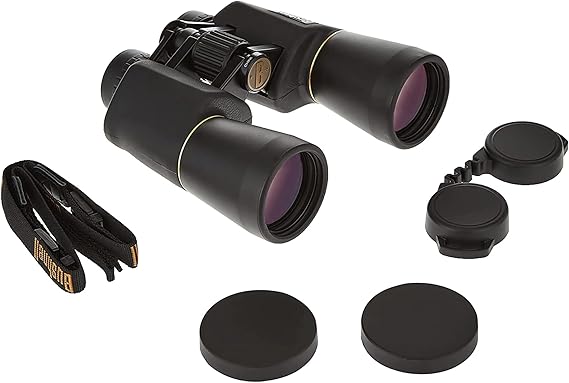
Designed for outdoor enthusiasts who need flexible magnification, Bushnell Legacy WP Binoculars offer a powerful 10-22x zoom. Its standout feature is the combination of a 50mm objective lens and BaK-4 prisms, delivering clear views in various light conditions.
Ideal for hiking and nature watching, these binoculars adapt easily to different spotting distances.
Setup involves simple manual focusing and an adjustable diopter, helping you fine-tune the view quickly. The 14-millimeter eye relief makes it comfortable for extended use.
Rubber armor protects against bumps, while O-ring seals and full waterproofing prepare it for wet, rough environments. Tripod mounting is possible, benefiting steady viewing sessions.
Image sharpness stays impressive across the zoom range, and light transmission is strong thanks to fully multi-coated lenses. The durable build stands up well outdoors.
Positive notes focus on the clear, bright visuals and rugged feel. Common complaints include some bulkiness and that the zoom can be a bit sensitive during adjustments.
Clear, bright images and rugged design receive frequent praise, while the binoculars’ size and zoom sensitivity often draw criticism. The manual focus and adjustable diopter support precise viewing despite these issues.
Great for hikers and outdoor observers seeking strong zoom and weather resistance. Less suited for those wanting a lightweight or very compact pair for long treks or quick handling.
Pros
- Powerful 10-22x adjustable zoom range
- Fully multi-coated lenses for bright images
- Durable rubber armor protects from impacts
- Waterproof with O-ring seals for outdoor use
Cons
- Relatively bulky and heavy to carry
- Zoom adjustments can be sensitive and tricky
| Specification | Details |
|---|---|
| Objective Lens Diameter | 50 |
| Magnification Maximum | 16 |
| Eye Relief | 14 millimeters |
| Prism Type | BAK-4 |
| Water Resistance Level | Waterproof |
| Zoom Ratio | 22 multiplier_x |
9. Bushnell Pacifica 10-30×50 Binoculars

Bushnell Pacifica 10-30×50 Binoculars stand out for their variable magnification, making them a great pick for bird watching, wildlife adventures, or any outdoor trip. Their ability to adjust from 10x to 30x gives you flexibility for spotting details both near and far without changing devices.
Setting up involves manual focus, which lets you precisely tune what you’re looking at, helping in tricky lighting or long distances. The fully coated lenses help keep images bright and colorful, and the waterproof build means they can handle sun, rain, or fog.
Using them day-to-day feels reliable, especially with the tripod mount option for added stability at higher magnifications.
The sharpness really holds up well at different zoom levels, showing fine details even far away. The rugged, waterproof body means they survive rough outdoor use without issues. The most frequent positive point is the clear and bright images under all conditions, while the main drawback noted is the narrow 2-meter field of view, which can feel limiting when tracking moving objects.
Bright and sharp images stand out in all weather thanks to fully coated lenses and waterproof construction, making them reliable in varying outdoor conditions. The most common issue comes from the narrow field of view, which can be tricky when tracking wildlife on the move.
Great for nature watchers and campers who want strong zoom and durability in one pair. Less suited for fast-moving target tracking or for those who prefer automatic focusing systems for convenience.
Pros
- Variable 10-30x magnification for flexible viewing
- Fully coated lenses for bright, sharp images
- Waterproof and rugged body resists harsh conditions
- Tripod mount compatible for steady long-distance viewing
Cons
- Field of view is limited to 2 meters
- Manual focus may take time to adjust precisely
| Specification | Details |
|---|---|
| Magnification Maximum | 30 |
| Objective Lens Diameter | 50 millimeters |
| Focus Type | manual focus |
| Water Resistance Level | Waterproof |
| Field of View | 2 meters |
10. Nikon Action Zoom 10-22×50 Binoculars

Zooming in from a wide view to detailed close-ups feels smooth and natural thanks to the adjustable 10x to 22x magnification. Ideal for someone who likes both wide open views and detailed spotting, it stands out with a flexible zoom range combined with a bright 50mm lens that keeps images sharp even as light dims.
Setting up involves adjusting the center focus and diopter to suit your eyes, which is straightforward thanks to a wide eye relief of 32.6 millimeters. The binoculars work well handheld for shorter looks, but there’s a tripod mount for steadier long-range viewing. The multi-coated lenses handle different light conditions day to day, while waterproof and fogproof features bring confidence outdoors regardless of weather.
Clarity remains sharp across the zoom range, with strong light transmission allowing good performance at dawn or dusk. The build feels solid and weather-resistant, helping it stand up to rough environments. Brightness rating at 27.56 means images are vivid, though some users mention that higher magnification demands a tripod to keep views steady, a trade-off for its power and versatility.
The strong zoom flexibility combined with bright optics makes distant details stand out well, especially in low light, though steady views at 22x usually mean using a tripod. This mix of power and weather resistance suits various activities but has a noticeable weight that can be tiring over extended handheld use.
Those who want versatile magnification and sharp images in outdoor conditions will appreciate these binoculars. People needing ultra-lightweight options or who plan mostly handheld viewing at maximum power might look elsewhere for easier handling.
Pros
- Wide 10x to 22x zoom range
- Bright 50mm lenses for low light
- Waterproof and fogproof construction
- Tripod mount for stability
Cons
- High magnification requires tripod use
- Weight may tire arms on long handheld sessions
| Specification | Details |
|---|---|
| Objective Lens Diameter | 50 millimeters |
| Magnification Maximum | 22x |
| Eye Relief | 32.6 millimeters |
| Relative Brightness | 27.56 |
| Focus Type | Center Focus |
| Water Resistance Level | Waterproof |
Comparison of Top Variable Zoom Binoculars
| Product | Max Magnification | Objective Lens Diameter | Eye Relief | Specific Uses |
|---|---|---|---|---|
| Generic Zoom 10-30×50 | 30x | 50 mm | 22 mm | Bird Watching, Sport, Travel |
| Nikon Action Zoom 10-22 | 22x | 50 mm | 16.3 mm | Bird Watching, Concert, Hiking |
| Nikon Sportstar Zoom 8-24 | 24x | 25 mm | 13 mm | Multi-Purpose |
| Celestron SkyMaster 15-35×70 | 35x | 70 mm | 20.3 mm | – |
| Celestron UpClose G2 10-30 | 30x | 50 mm | 15 mm | Multi-Purpose |
| Pentax UP 8-16×21 | 16x | 21 mm | 15 mm | Hiking & Outdoors |
| Generic Zoom 10-30×50 Alt | 10x | 50 mm | 16 mm | – |
| Bushnell Legacy WP | 16x | 50 mm | 14 mm | Hiking & Outdoors |
| Bushnell Pacifica 10-30×50 | 30x | 50 mm | 10 mm | Hiking, Travel |
| Nikon Action Zoom 10-22 Alt | 22x | 50 mm | 32.6 mm | Bird Watching |
- Max Magnification30x
- Objective Lens Diameter50 mm
- Eye Relief22 mm
- Specific UsesBird Watching, Sport, Travel
- Max Magnification22x
- Objective Lens Diameter50 mm
- Eye Relief16.3 mm
- Specific UsesBird Watching, Concert, Hiking
- Max Magnification24x
- Objective Lens Diameter25 mm
- Eye Relief13 mm
- Specific UsesMulti-Purpose
- Max Magnification35x
- Objective Lens Diameter70 mm
- Eye Relief20.3 mm
- Specific Uses–
- Max Magnification30x
- Objective Lens Diameter50 mm
- Eye Relief15 mm
- Specific UsesMulti-Purpose
- Max Magnification16x
- Objective Lens Diameter21 mm
- Eye Relief15 mm
- Specific UsesHiking & Outdoors
- Max Magnification10x
- Objective Lens Diameter50 mm
- Eye Relief16 mm
- Specific Uses–
- Max Magnification16x
- Objective Lens Diameter50 mm
- Eye Relief14 mm
- Specific UsesHiking & Outdoors
- Max Magnification30x
- Objective Lens Diameter50 mm
- Eye Relief10 mm
- Specific UsesHiking, Travel
- Max Magnification22x
- Objective Lens Diameter50 mm
- Eye Relief32.6 mm
- Specific UsesBird Watching
How to Choose the Right Variable Zoom Binoculars
Choosing the right variable zoom binoculars depends on factors like zoom range, optical clarity, and build quality, which affect performance and durability. Prioritizing these features ensures better viewing experiences and prevents costly replacements or frustration from poorly suited models.
Magnification Range and Zoom Quality
Trying to zoom on binoculars that don’t shift smoothly is frustrating, especially while tracking birds or wildlife. Some models have a jerky zoom mechanism that interrupts the view, making it hard to keep the subject in focus.
A steady zoom offers better control and lets you fine-tune magnification without losing sharpness. The quality of the zoom mechanism directly affects how the image looks across the range. Poor zoom can cause image distortion or color fringes, particularly at higher magnifications.
Look for binoculars with zoom ranges that offer incremental adjustments, such as 8-24x, where the transition between magnifications feels fluid. Good sets maintain clarity and sharpness consistently, without noticeable chromatic aberration when fully zoomed in.
Avoid products with blurry edges at max zoom; firm yet smooth zoom rings are better for steady adjustments on the fly.
Optical Clarity and Coatings
Bright, clear views are only possible with good lens coatings. Cheaper binoculars often have minimal or inconsistent coatings, leading to increased glare and washed-out colors when you’re out in bright sunlight or near reflective water.
Lens treatments that boost light transmission improve visibility in lower light and help preserve natural colors.
Binoculars with multi-coated, fully multi-coated, or phase-coated optics are preferred for reducing glare and enhancing contrast. These coatings also help prevent fogging and moisture buildup inside the lenses, especially if the binoculars are nitrogen- or argon-filled. This feature becomes crucial in cold or humid conditions where fog can block your view unexpectedly.
Ergonomics and Handling
Zoom and focus controls should be quick and easy to use without needing both hands. Many variable zoom binoculars have zoom rings near the eyepiece that can be adjusted with your thumb or finger, which helps keep the other hand free to steady the view.
A well-designed focus wheel within easy reach is essential for making sharp adjustments fast.
Weight balance plays a major role in comfort. Models that are too front- or back-heavy tire your arms during long observation sessions.
Ergonomic grips with textured rubber surfaces improve handling and reduce slipping, whether you’re outside in dry or damp conditions. A comfortable grip and intuitive control placement make a big difference in prolonged use.
Build Quality and Durability
Rough outdoor use reveals the strength of the binoculars’ construction. Sturdy materials like magnesium alloy or reinforced polycarbonate help resist dents and shocks, which is vital if you carry them on hikes or through dense brush. Some models use softer rubber coatings for shock absorption, but the frame needs a solid core.
Waterproof and dustproof ratings such as IPX7 or IP67 guarantee that the binoculars won’t fail in rain or dusty environments. This protects the optics and mechanics from damage. Check the hinge and zoom mechanisms for smoothness and hardness; cheaper models often wear out quickly, causing loosening or sticking after repeated use.
Field of View and Eye Relief
Field of view narrows as magnification increases, but it’s important that the visible area remains wide enough to track moving objects comfortably. Wide fields of view, like 350 feet at 1000 yards on the low end of the zoom, are better for scanning. A narrow field can make following fast subjects frustrating.
Eye relief also varies; those who wear glasses need at least 15mm of eye relief to see the whole picture without removing their eyewear. Good binoculars offer adjustable eyecups to accommodate this. The field should stay stable without shaking or shifting when zooming, so the image does not bounce or lose framing during adjustments.
Optimizing Your Viewing Experience with Variable Zoom Binoculars
Variable zoom binoculars allow you to adjust the magnification level to suit different viewing scenarios, providing flexibility others lack. This means you can switch from a wider field of view for scanning large areas to higher zoom levels for detailed observation without carrying multiple pairs. Adjusting the zoom can be as simple as turning a ring, letting you quickly respond to changing distances or subjects.
To get the most out of variable zoom binoculars:
- Start with a lower magnification to locate your target easily.
- Gradually increase the zoom for finer details once the subject is centered.
- Keep both eyes open while scanning for a natural depth perception and less eye strain.
- Stabilize your stance or use a support to reduce image shake at higher zoom levels.
These steps help maintain a clear, stable image and prolong comfortable viewing during extended use.
Essential Maintenance Tips for Prolonging Binocular Lifespan
Proper care is key to keeping binoculars working well for years. Dirt and moisture can degrade lenses and internal components quickly if not managed.
After using binoculars outdoors, wipe the lenses gently with a microfiber cloth to remove dust and smudges. Avoid using household cleaners or tissue paper since they can scratch the lens coatings.
Regular maintenance includes:
- Storing binoculars in a dry, padded case to prevent impact damage.
- Using silica gel packs in your storage case to control humidity.
- Checking for loose parts or damaged seals periodically.
- Cleaning the lenses only when necessary to reduce risk of scratches.
Keeping the optics clean and handling the device carefully leads to sharper views and avoids costly repairs over time.
Comparing Variable Zoom Binoculars to Fixed Zoom and Spotting Scopes
Variable zoom binoculars offer magnification flexibility, unlike fixed zoom models that stick to one power level. Fixed zoom binoculars are typically simpler in design, more compact, and sometimes provide a brighter image at that one magnification.
Variable zoom binoculars, on the other hand, let you adjust zoom on the fly, which is handy for activities where subjects vary in distance.
Spotting scopes often provide even higher magnification than binoculars but require a tripod due to image shakiness. They tend to be bulkier and focus mainly on distant details rather than quick scanning. Variable zoom binoculars strike a balance by combining moderate zoom range with portability.
Choosing among these depends on your specific needs. For versatile field use, variable zoom binoculars give practical adaptability.
For dedicated long-distance viewing, a spotting scope might be more suitable. Fixed zoom binoculars suit users who want simplicity and potentially better low-light performance at a single magnification.
People Also Asked
How Do I Properly Care for Variable Zoom Binoculars?
Clean the lenses gently with a microfiber cloth and store the binoculars in a protective case when not in use. Avoid touching the lenses with fingers or using household cleaners, which can damage the coatings. Wiping off dust and moisture regularly helps maintain clear viewing.
What Size Variable Zoom Binoculars Are Ideal for Bird Watching?
Binoculars with a 8x to 10x zoom and 32mm to 42mm objective lens are best suited for bird watching. This size provides a good balance between magnification and field of view without being too heavy to carry on long walks. Consider lightweight models for easier handling during extended use.
Are Variable Zoom Binoculars Safe for Children’s Use?
Variable zoom binoculars can be safe for children if they are durable and have a simple zoom mechanism. Look for models with rubber armor for grip and safety and avoid those with very high magnification, which can be hard for kids to focus. Teaching kids to adjust settings gently prevents damage.
How Long Do Variable Zoom Binoculars Typically Last with Regular Use?
Variable zoom binoculars often last several years with regular use if well maintained. Frequent exposure to moisture or rough handling can shorten their lifespan, so storing them dry and using lens caps helps. Some models may require occasional calibration or professional servicing.
What Common Problems Should I Expect with Variable Zoom Binoculars?
Common problems include blurry images due to misalignment, zoom mechanisms that become stiff or loose, and buildup of dirt inside the lenses. Lens fogging can also be an issue in humid conditions. Regular cleaning and proper storage reduce these problems and keep the binoculars working well.
Conclusion
Choosing a variable zoom binocular comes down to clear image quality, comfortable handling, and the zoom range that fits your typical viewing needs. Brightness and focus speed matter, especially if you use them in changing light conditions or want quick adjustments.
Durability counts if you’ll take them outdoors often.
Think about where you’ll use the binoculars most and how much you’re willing to spend. A more compact model may work better for travel, while larger ones suit stationary use.
Review the comparison table and detailed entries above to find the right balance for your activities and budget.