Top 10 Best Tripod Mounted Binoculars You Can’t Miss!
Struggling with shaky, blurry views is a familiar issue for anyone using binoculars without the right support. The best tripod mounted binoculars solve this by providing stability that handheld models just can’t match, especially during long observation sessions. Without solid mounting, even the slightest hand movements can ruin hours of watchful patience, making it hard to see distant details clearly.
A good tripod mounted binocular setup usually hinges on three factors: sturdy materials for both the binocular body and the tripod, appropriate magnification usually between 15x to 25x, and ease of adjustment for both angle and focus. Aluminum or magnesium tripods offer strength without too much weight.
The binoculars themselves should have large objective lenses, often 70mm or above, to gather enough light for clear daytime and low-light viewing. Quick-release plates and smooth pan-and-tilt controls also make a big difference in comfort and usability.
Need a Quick Check?
| Image | Product | Price |
|---|---|---|
Our Top Picks 1  | Binocular Tripod 72 Kit | Check Price |
Our Top Picks 2  | Celestron SkyMaster 15×70 | Check Price |
Our Top Picks 3  | Celestron SkyMaster 25×70 | Check Price |
Our Selected Top 10 Tripod Mounted Binoculars You Can Trust
This list features carefully chosen tripod mounted binoculars known for their stability and clarity. Each review explains how the binocular performs, highlights its advantages and drawbacks, and identifies the ideal user, helping you find the best fit for your viewing needs.
1. Binocular Tripod 72 with Binocular Adapter and QR Plates
Need a sturdy and adjustable tripod that works with a range of binocular sizes? Ideal for birdwatchers or stargazers who want stable viewing without constantly holding the binoculars, this setup excels at providing reliable height adjustments up to 69 inches. Its main strength lies in compatibility with many common binocular models, thanks to the included adapter and quick-release plates.
Setting up involves attaching your binoculars with a 1/4 threaded hole to the adapter and securing them in place with the quick-release plates. The aluminum tripod features flip-lock feet, making it easy to adjust height between 16.9 and 69 inches. Day-to-day use is straightforward as the tripod feels solid, and the ability to raise or lower it smoothly fits various viewing situations, from low resting points to eye level without strain.
Built from aluminum, the tripod feels durable yet not overly heavy. It holds binoculars steady, minimizing vibrations and allowing more comfortable and focused viewing sessions.
Most praise centers on its sturdy construction and height range. A commonly noted drawback involves some binoculars having different threaded hole depths, which may complicate fitting the adapter properly and lead to slight instability.
Reliability in height adjustment and sturdiness are standout features, making it solid for steady viewing. The main issue reported concerns compatibility with some binoculars due to varying threaded hole depths, occasionally affecting the stability of the mounted binoculars.
Anyone with binoculars matching the adapter specs will find this tripod convenient and reliable for stable use. Those with unusual or deep-threaded holes might want to consider alternatives better suited for unique fittings to avoid stability problems.
Pros
- Adjustable height up to 69 inches
- Compatible with many binocular sizes
- Sturdy aluminum build
- Flip-lock feet for secure setup
Cons
- Adapter may not fit all binocular hole depths
- Some instability reported on specific models
| Specification | Details |
|---|---|
| Brand | Lusweimi |
| Tripod Height | 16.9 inches to 69 inches |
| Material | Aluminum |
| Included Components | Remote |
| Warranty | 2 years |
2. Celestron SkyMaster 15×70 Astronomy Binoculars
Long-distance viewing can be tricky without the right gear, especially when aiming for clear details in low light. These binoculars suit anyone looking to observe the night sky or distant landscapes with powerful 15x magnification and large 70mm lenses, their biggest strength being the bright, sharp views even in dim conditions.
Setting up involves attaching the binoculars to a sturdy tripod using the built-in ¼”-20 adapter, which secures quickly. Day-to-day use centers on the manual center focus, allowing precise adjustments.
While they’re quite heavy, mounting on a tripod makes handling easier, and the water resistance means you won’t worry about light rain or dew during early morning or evening watching.
The clarity delivered through the BaK-4 prisms and multi-coated lenses really stands out for astronomy and low-light viewing. The binoculars feel solid and reliable, built to last. One common drawback is their size and weight, making handheld use impractical.
Users praise the bright images, while occasionally noting the bulk makes them less portable.
Bright, high-contrast images in low light are a highlight thanks to multi-coated BaK-4 prisms, but the binoculars’ weight requires consistent use with a tripod. This setup is ideal for stability but limits portability.
Stargazers and long-range viewers who don’t mind carrying extra gear will appreciate the optical clarity. Those needing a lighter, more portable binocular might want to look for smaller models better suited for handheld use.
Pros
- Bright, detailed views using BaK-4 prisms
- Secure tripod mounting with built-in adapter
- Water resistant for outdoor use
- Comfortable eye relief for long viewing sessions
Cons
- Heavy and bulky, not for handheld use
- Tripod not included, must be purchased separately
| Specification | Details |
|---|---|
| Magnification Maximum | 15 x |
| Objective Lens Diameter | 7 centimeters |
| Eye Relief | 18 millimeters |
| Focus Type | Center Focus |
| Water Resistance Level | Water Resistant |
| Prism Type | Porro Prism |
3. Celestron SkyMaster 25×70 Binoculars
Powerful 25x magnification with massive 70mm objective lenses make these binoculars ideal for long-distance viewing and astronomy. They suit anyone who wants detailed, bright images of distant landscapes or celestial objects, especially when paired with a tripod to handle their size and weight.
Attaching to a tripod is straightforward thanks to the built-in ¼”-20 adapter, making setup quick and secure. Manual center focus lets you sharpen details easily, and BaK-4 prisms keep views bright even in low light.
The binoculars feel solid but heavy, so mounting is necessary for comfortable, steady use over time.
These binoculars deliver sharp, bright views with multi-coated lenses and a wide apparent angle of 61 degrees, making them great for both terrestrial and night sky observation. The case is water resistant, helping protect optics without extra bulk. Most praise focuses on the sharp clarity, while the weight and need for a tripod are commonly noted drawbacks.
The sharp and bright views stand out as a strong point, making the binoculars great for dawn, dusk, or night use. Commonly reported challenges include the need for a tripod due to the binoculars’ weight and size, which limits handheld usability.
Anyone seeking detailed long-distance viewing and ready to use a tripod will appreciate the optics and build. Those looking for lightweight handheld binoculars should explore smaller, less powerful models instead.
Pros
- Very high magnification with bright images
- Works easily with most tripods
- Sharp focus across wide field of view
- Multi-coated lenses improve clarity
Cons
- Heavy, requires tripod for comfortable use
- Tripod not included in the package
| Specification | Details |
|---|---|
| Magnification Maximum | 25 x |
| Objective Lens Diameter | 7 centimeters |
| Prism Type | Porro Prism |
| Eye Relief | 13 millimeters |
| Focus Type | Manual Focus |
| Water Resistance Level | Water Resistant |
4. Celestron SkyMaster 25×100 Astro Binoculars with Tripod
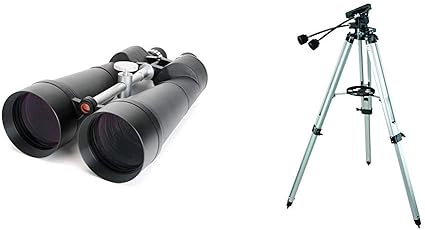
Ideal for stargazers and wildlife watchers who want powerful, stable views, these binoculars deliver sharp images with a strong 25x magnification. Its standout feature is a giant 100 mm objective lens that pulls in plenty of light even in dim conditions, making it excellent for night or long-distance observation.
Setting up takes a few minutes as you extend the tripod legs, which reach up to 45 inches. The heavy-duty mount head keeps the binoculars steady, and the slow-motion cables allow fine-tuned adjustments on both altitude and azimuth.
Focus is handled manually, with individual eyepiece adjustments to find the sharpest view for each eye, so it suits users who prefer precise control.
In daily use, the image brightness and clarity hold up well at 25x zoom. The Porro prism optics deliver ultra-sharp focus across the entire field of view, about 8 degrees wide.
Its aluminum tripod feels sturdy enough for the roughly 10-pound weight. Some find the setup a bit bulky, and a few mention the manual focus takes a moment to get perfect, but the anti-reflective coating helps reduce glare significantly.
Bright, sharp views in low light stand out as the main strength, but some users note the binoculars can be bulky and the manual focus needs careful adjustment. Its sturdy tripod support helps steady the image for detailed observations.
Those who want high magnification with precise focusing will appreciate the control and clarity. Users seeking something lightweight and quick to set up might prefer a different option.
Pros
- Large 100 mm objective lens for bright images
- Individual eyepiece focus for clear detail
- Sturdy extendable aluminum tripod with slow motion cables
- Water resistant for outdoor use
Cons
- Manual focus requires patience to perfect
- Setup can feel bulky and less portable
| Specification | Details |
|---|---|
| Objective Lens Diameter | 10 centimeters (100 mm) |
| Magnification Maximum | 25 x |
| Field of View | 8 degrees |
| Mount Type | Tripod Mount |
| Focus Type | Manual Focus |
| Weight Capacity | Approximately 10 lbs |
5. 15×56 Binoculars with Phone Adapter and Tripod

Offering 15x magnification and a large 56mm objective lens, these binoculars stand out for long-range clarity suited to bird watchers, stargazers, and hunters. Their tripod compatibility makes them ideal for anyone wanting steady, detailed views without hand fatigue.
Setup is straightforward thanks to a tripod mount and center focus system. Adjusting the focus is smooth, and the binoculars feel balanced on the tripod, making extended viewing easy.
The waterproof design means you don’t have to worry about outdoor elements, and the included phone adapter adds versatility for capturing distant scenes.
Performance is impressive, delivering bright and sharp images even at 15x power. The BAK4 prisms with dielectric coating contribute to good low-light vision, which is handy during dawn or dusk.
The build feels solid and durable, though some note it can be bulky to carry without a tripod. The eyecups provide decent eye relief, but extended use might require breaks.
The binoculars provide excellent image clarity even in low light thanks to their BAK4 prisms and large lens size. The bulk and weight make them less convenient for handheld use, which can be tiring without a tripod.
People focused on stable and detailed viewing, like bird watchers or stargazers, will be pleased with these binoculars. Casual users wanting something lightweight for short carry might want to explore smaller models instead.
Pros
- Clear, sharp view at long distances
- Works well in low light conditions
- Compatible with tripods for steady viewing
- Includes phone adapter for photos
Cons
- Bulkier than handheld binoculars
- Eye relief may cause discomfort over time
| Specification | Details |
|---|---|
| Magnification Maximum | 15 x |
| Objective Lens Diameter | 5.6 centimeters |
| Water Resistance Level | Waterproof |
| Focus Type | Center Focus |
| Mount Type | Tripod Mount |
| Eye Relief | 19 millimeters |
6. 20×80 Astronomy Binoculars

Bresser 20×80 Astronomy Binoculars bring serious power for deep-sky viewing and moon observation, ideal for those who want to see clear and bright celestial details. Its standout feature is the combination of 20x magnification with 80mm objective lenses, perfect for astronomy enthusiasts looking for vivid nighttime views.
Setting up these binoculars involves mounting them on a tripod using the built-in 1/4 thread, which removes hand fatigue during extended stargazing sessions. The manual center focus and diopter adjustment let you zero in on stars and planets easily. At just over 4.5 pounds, hand-holding gets tiring quickly, so the tripod makes a noticeable difference for comfortable long-term use.
The BAK-4 prisms provide impressive brightness and clarity even in low-light conditions, which is what matters most for astronomical observation. The water-resistant and scratch-resistant coatings add durability.
The main praise is how steady and clear the views remain on a tripod. The common complaint relates to its weight when used without a tripod, making it less practical for handheld use over time.
Bright and stable images stand out when mounted on a tripod, delivering exceptional detail of star clusters and the Moon. However, carrying the binoculars without a tripod can cause fatigue due to their 4.66-pound weight, which limits comfortable handheld use.
Those focused on dedicated stargazing sessions with tripod support will appreciate the clarity and brightness these binoculars offer. Casual users or people wanting quick handheld viewing might find them bulky and better off choosing a lighter model.
Pros
- Bright views with low light technology
- Comfortable eye relief of 17 mm
- Scratch-resistant and UV protective coatings
- Compatible with smartphones for capturing images
Cons
- Too heavy for long handheld use
- Manual focusing takes practice for sharp images
| Specification | Details |
|---|---|
| Magnification Maximum | 20x |
| Objective Lens Diameter | 8 centimeters |
| Weight | 4.66 lb (2113 g) |
| Eye Relief | 17 millimeters |
| Coating | Scratch-Resistant, UV-Protective |
| Mount Type | Tripod Mount |
7. Vortex Triumph HD 10×42 Binoculars

Feeling solid and easy to hold, the Vortex Triumph HD 10×42 suits bird watchers, hunters, and hikers who need clear, sharp views. Its standout feature is the bright, detailed images thanks to high-quality glass and coatings that cut down on color blur and deliver excellent color accuracy.
Setting up for a day out involves attaching it to a tripod for steady viewing, made easy by the tripod mount. The center focus knob adjusts smoothly and the diopter lets you fine-tune the focus. The binoculars feel comfortable in hand with rubber armor providing a secure grip and added shock protection, which helps during long use outdoors.
Performance in the field impresses with bright, sharp images that hold clarity to the edges. The fully multi-coated lenses and HD optical system keep colors vivid and reduce haze. A polycarbonate chassis with a rubber exterior makes the build sturdy and weatherproof.
Most praise highlights image quality and durability, while a common downside is the relatively narrow field of view at 0.67 degrees.
The binoculars offer outstanding image clarity and color accuracy even in less than ideal conditions, with durability that stands up to outdoor use. However, the field of view is limited, which can feel restrictive when scanning wide areas.
Those who value crisp detail and ruggedness for bird watching or hunting will find these binoculars well suited. Users needing wide panoramic views might prefer a model with a broader field of view instead.
Pros
- Excellent color fidelity and sharpness
- Waterproof and fog proof design
- Comfortable grip with rubber armor
- Tripod compatible for steady viewing
Cons
- Relatively narrow 0.67-degree field of view
- Manual focus requires careful adjustment
| Specification | Details |
|---|---|
| Magnification Maximum | 10 x |
| Objective Lens Diameter | 42 millimeters |
| Field of View | 0.67 degrees |
| Eye Relief | 17 millimeters |
| Water Resistance Level | Waterproof |
| Focus Type | Center Focus |
8. 69 Tripod with Binocular Adapter and QR Plates

Aluminum tripod with binocular adapter suits lightweight birdwatching and outdoor spotting scopes. Its adjustable height up to 69 inches offers solid stability, making it ideal for those seeking flexible viewing angles without carrying heavy gear.
Setup involves extending legs from 16.9 inches to a full 69 inches or 73 inches with a birding scope attached. The detachable head compacts back down for easy transportation.
The 10cm rotatable phone holder adds convenience for capturing images or videos alongside binocular use.
The tripod holds binoculars steadily with minimal shake, thanks to its strong rectangular metal tube legs. Durable sheaths on each leg improve grip comfort and increase toughness.
A common gripe mentioned is its weight might feel a little much for some, but overall the build quality is reliable and suited to outdoor conditions.
The tripod provides firm, stable support for mounted binoculars, favored for sturdy legs and adjustable height, but its weight has been noted as potentially cumbersome during long carries. The detachable head and added phone holder add practical versatility for field use.
Those needing a solid, adjustable tripod for casual birdwatching or photography will find this helpful. Users looking for ultra-lightweight gear or integrated binoculars might prefer other options more suited for easy portability and all-in-one solutions.
Pros
- Adjustable height up to 69 inches
- Strong metal construction with durable sheaths
- 10cm rotatable phone holder included
- Detachable head compresses for easy storage
Cons
- Weight can feel heavy for some users
- No included binoculars, tripod only
| Specification | Details |
|---|---|
| Tripod Height | 16.9 to 69 inches (up to 73 inches with birding scope) |
| Material | Aluminum |
| Included Components | Tripod |
| Manufacturer Part Number | ASR-D175B |
| Brand | Arsoer |
| Warranty | 1 year |
9. 68 Binocular Tripod with Adapter and Bubble Level

Aluminum construction and a reinforced rectangular tube design make this tripod sturdy yet light enough for outdoor use. It suits anyone wanting a durable stand for binoculars with flexible height adjustment up to 68 inches, making it great for sitting or standing observation.
Its key strength lies in reliable rigidity without weighing you down.
Setup involves simply extending legs with four flip-locks to quickly reach the desired height, ranging from 18 to 68 inches. Attaching binoculars is straightforward using the included adapter and 1/4 screw, fitting a wide range of models. The dual quick-release plates are handy for switching devices fast, while the compact fold and included carry case ease transport and storage.
Performance holds steady during extended use, supporting optics securely thanks to the aluminum frame. It handles rougher environments without issue, reflecting its durable build. Praise focuses on stable image viewing and quick device swaps.
A common complaint notes the tripod’s folded length might be cumbersome for very compact packing.
Stable viewing and quick device changes stand out as the best features. Many find the folded tripod length a bit larger than expected for easy carrying. Users appreciate the secure height locking combined with lightweight materials for outdoor conditions.
Anyone needing a sturdy, height-adjustable tripod for various binocular sizes will be satisfied. Those looking for a very compact or ultra-lightweight option might want to explore smaller tripods or gorilla pods instead.
Pros
- Durable aluminum build for long outdoor use
- Adjustable height from 18″ to 68″
- Dual quick-release plates for fast device swaps
- Includes binocular adapter and carry case
Cons
- Folds down to 18″ which may be bulky for travel
- Requires binoculars with 1/4″ threaded hole
| Specification | Details |
|---|---|
| Brand | ToolCreatrix |
| Model Number | GTP54 |
| Item Length | 68 inches |
| Load Capacity | 2kg |
| Included Components | Binocular Adapter, Carry Case, Phone Clamp, Quick Release Plate * 2, Tripod |
| Warranty | 2 Years |
10. Binocular Tripod 70 with Binocular Adapter

Stability stands out right away when setting up the Binocular Tripod 70 with Binocular Adapter. Ideal for hobbyists who want solid support for binoculars or spotting scopes, it handles heavy gear without wobbling and adapts well to different heights, making it versatile whether sitting or standing.
Getting it ready takes just a few minutes due to the included metal adapter that fits most binoculars and scopes. The load capacity of 22 lbs means you can use heavier optics without worrying about tipping.
Rubber feet grip uneven ground nicely, while the height adjusts easily from 20.4 to 70 for varied viewing angles, supporting both ground-level and elevated setups.
Performance is steady and reliable. The all-aluminum alloy legs and reinforced pan head keep equipment locked firmly in place, providing a solid viewing platform. Durability is a highlight thanks to strong, heavy-duty materials.
Some mention the tripod can be a bit bulky to carry around, but it makes up for that with excellent balance and load capacity.
Many appreciate how firmly it holds binoculars without wobbling thanks to solid metal construction and strong aluminum legs. The common downside is its bulk and weight, which makes it less convenient for travel or quick trips. Carrying the whole setup requires extra effort compared to simpler models.
This tripod suits anyone needing dependable stability for heavy spotting scopes or binoculars, especially in uneven outdoor settings. Users who prioritize portability or very lightweight gear may want to consider smaller, lighter alternatives better suited to frequent movement.
Pros
- Supports heavy optics up to 22 lbs
- Adjustable height from 20.4″ to 70″
- Non-slip rubber feet for uneven terrain
- Includes universal binocular adapter
Cons
- Can be bulky to transport
- Heavier than some lightweight tripods
| Specification | Details |
|---|---|
| Load Capacity | 22 lbs |
| Max Height | 70 inches |
| Min Height | 20.4 inches |
| Material | Aluminum Alloy |
| Included Components | Binocular Adapter, Carry Bag, Allen Wrench x 2, Instruction Manual, Short Central Axis |
Best Tripod Mounted Binoculars Comparison Table
| Product | Magnification | Objective Lens Diameter | Mount Type | Warranty |
|---|---|---|---|---|
| Binocular Tripod 72 Kit | – | – | Tripod Mount | 2 years |
| Celestron SkyMaster 15×70 | 15x | 7 cm | Tripod Mount | – |
| Celestron SkyMaster 25×70 | 25x | 7 cm | Tripod Mount | – |
| Celestron SkyMaster 25×100 Tripod | 25x | 10 cm | Tripod Mount | – |
| 15×56 Binoculars Set | 15x | 5.6 cm | Tripod Mount | – |
| 20×80 Astronomy Binoculars | 20x | 8 cm | Tripod Mount | – |
| Vortex Triumph HD 10×42 | 10x | 42 mm | Tripod Mount | – |
| Tripod 69 with Adapter | – | – | Tripod | 1 year |
| Tripod 68 with Bubble Level | – | – | Tripod | – |
| Binocular Tripod 70 Kit | – | – | Tripod | – |
- Magnification–
- Objective Lens Diameter–
- Mount TypeTripod Mount
- Warranty2 years
- Magnification15x
- Objective Lens Diameter7 cm
- Mount TypeTripod Mount
- Warranty–
- Magnification25x
- Objective Lens Diameter7 cm
- Mount TypeTripod Mount
- Warranty–
- Magnification25x
- Objective Lens Diameter10 cm
- Mount TypeTripod Mount
- Warranty–
- Magnification15x
- Objective Lens Diameter5.6 cm
- Mount TypeTripod Mount
- Warranty–
- Magnification20x
- Objective Lens Diameter8 cm
- Mount TypeTripod Mount
- Warranty–
- Magnification10x
- Objective Lens Diameter42 mm
- Mount TypeTripod Mount
- Warranty–
- Magnification–
- Objective Lens Diameter–
- Mount TypeTripod
- Warranty1 year
- Magnification–
- Objective Lens Diameter–
- Mount TypeTripod
- Warranty–
- Magnification–
- Objective Lens Diameter–
- Mount TypeTripod
- Warranty–
How to Choose the Right Tripod Mounted Binoculars
Key factors like magnification, lens quality, and tripod compatibility determine the performance and ease of use of tripod mounted binoculars. Choosing the right combination ensures clear, stable views and avoids frustration or extra costs from frequent replacements or upgrades.
Mount Compatibility and Stability
Attaching binoculars to a tripod can be a frustrating experience when the mounting system is not compatible or stable. Some mounts fit only specific tripod heads, making swapping between different tripods time-consuming or impossible without extra adapters.
A solid mount compatibility means quick attachment and detachment, saving time in the field.
Stability directly affects the clarity of the view. Shaky mounts cause vibrations that blur the image, especially at higher magnifications. Look for mounts with firm locking mechanisms and smooth-angle adjustments.
Features like pan and tilt controls with precise tension adjustments make holding a steady position easier during long observation sessions.
Build Quality and Materials
The housing material of binoculars on a tripod often faces harsh environments. Aluminum bodies tend to balance sturdiness and reasonable weight, while magnesium shells usually offer more durability but can be heavier and pricier.
Plastic composites sometimes reduce weight but may sacrifice toughness in rough conditions.
Weatherproofing matters a lot when exposed to rain or humidity. Fully sealed units filled with nitrogen or argon gases stop internal fogging. A waterproof rating, often denoted by IPX standards, ensures the binoculars handle wet conditions better without risking damage.
Portability requires finding a balance between enough durability and a weight light enough for carrying on hikes.
Ergonomics and Usability
Eyecups that twist or fold easily and smooth interpupillary distance adjustments improve comfort during extended use. Poorly designed eyecups cause eye strain, especially during long viewing.
Quick and smooth focusing rings or knobs are essential for making fast adjustments without losing track of the subject, particularly when mounted.
Control accessibility on a tripod setup varies; some designs place focusing and diopter controls in awkward spots, forcing the user to adjust the binoculars off the tripod. Good models position controls within easy reach, allowing for effective tuning without disrupting the setup.
Maintenance and Care
Maintaining clean lenses without damaging coatings is critical. Soft microfiber cloths work best, avoiding abrasive materials that can scratch delicate anti-reflective coatings. Lens cleaning solutions designed specifically for optics help remove stubborn dirt safely.
Protective accessories like lens caps and dust covers guard against scratches and moisture when not in use. Dust and moisture resistance rating influences how well the binoculars endure harsh outdoor conditions.
Silicone or rubber seals around joints usually keep these elements out, reducing the need for frequent internal cleaning or repairs.
Tips for Achieving Stable Viewing with Tripod Mounted Binoculars
Stability is key when using tripod mounted binoculars to avoid shaky images. Begin by setting the tripod on solid, level ground and tightening all leg locks to prevent any wobble.
Adjust the height so that you don’t have to bend or stretch; a comfortable eye level reduces fatigue over long viewing sessions.
Use slow, deliberate movements when panning or tilting the binoculars. Sudden jerks can cause the image to jump and strain your eyes. When your tripod includes a pan-tilt head, use it to make smooth adjustments instead of moving the binoculars directly.
Additional tips for stability:
- Use a spreader or center brace if your tripod includes one to improve rigidity.
- Consider a tripod with rubber feet or spike tips depending on the terrain to minimize slipping.
- Support your body against the tripod or ground when possible to reduce hand tremors.
Common Mistakes to Avoid When Using Tripod Mounted Binoculars
One common pitfall with tripod mounted binoculars is improper tripod setup. Overlooking loose leg locks can result in the tripod collapsing or wobbling during use.
Always double-check that each component is secure before focusing.
Some users get tunnel vision by setting their binoculars to a fixed height or angle without adjusting for different targets. Readjust the tripod often to maintain a comfortable posture rather than forcing yourself to adapt to an awkward position.
Avoid these mistakes to improve your experience:
- Don’t overlook the importance of leveling your tripod; uneven footing creates strain and blurry images.
- Avoid excessive zoom without stabilizing the binoculars further, as this magnifies shake.
- Failing to use a proper tripod head can make fine adjustments frustrating and imprecise.
Comparing Tripod Mounted Binoculars with Spotting Scopes for Outdoor Activities
Tripod mounted binoculars and spotting scopes both offer methods for stable, long-distance viewing but serve different needs. Binoculars provide binocular vision with depth perception, which is helpful for tracking moving subjects. Spotting scopes offer higher magnification but only single-eye viewing, which can feel tiring after extended use.
Binoculars mounted on tripods are generally lighter and more portable than spotting scopes. They allow broader situational awareness due to the wider field of view while still reducing hand shake through stabilization.
When comparing the two for outdoor activities:
- Choose tripod mounted binoculars for birdwatching or wildlife observation where movement and depth are important.
- Spotting scopes work best for target shooting or surveying distant scenery where detail and higher magnification are important.
- Consider weight, ease of setup, and how long you intend to observe when deciding between these options.
People Also Asked
How Do I Properly Clean and Care for Tripod Mounted Binoculars?
Use a soft microfiber cloth and lens cleaner designed for optics to clean the lenses gently. Avoid touching the lenses with your fingers and keep the binoculars covered when not in use to prevent dust buildup. Regularly check the tripod joints to ensure smooth movement and prevent wear.
What Size Tripod Works Best with My Binoculars?
Choose a tripod that can support the binoculars’ weight and offers an adjustable height for comfort during extended use. A sturdy tripod with a fluid head helps maintain stable viewing and smooth panning, which is important for clear images.
Are There Safety Tips for Using Tripod Mounted Binoculars Outdoors?
Make sure the tripod is set on a firm, level surface to avoid tipping over. Avoid overcrowded or hazardous areas where the tripod might get knocked. Carry cases protect the binoculars from sudden weather changes like rain or dust when you’re outdoors.
How Long Do Tripod Mounted Binoculars Typically Last with Regular Use?
Tripod-mounted binoculars often last years with gentle handling and regular maintenance. Storing them in a dry, cool place and keeping lenses clean prevents damage. Keeping the tripod joints lubricated also extends the tripod’s lifespan.
What Common Issues Should I Watch for When Using These Binoculars?
Watch for loose screws or wobbling that can affect stability and image clarity. Dirt or moisture inside the optics can degrade the view. Check that the tripod locks securely and that the binoculars mount tightly to avoid accidental drops.
Conclusion
Weight, stability, and optical quality are the key points to consider when choosing tripod mounted binoculars. Look for a setup that holds steady without being too heavy to handle. Clear, sharp images with good light transmission make a big difference during extended viewing sessions.
Also, check how easy it is to adjust the binoculars on the tripod.
Think about where you’ll use the binoculars most and how much you want to spend. A heavier, high-end model is great for a dedicated viewing spot, while a lighter, simpler one fits better if you move around often.
Revisit the comparison table and the detailed picks above to find the best fit for your needs and budget.