Top 12 Best Thermal Monocular for Long Range You Need Now
Trying to spot an animal or identify an object at night with a cheap or poorly chosen thermal monocular often leads to frustration. Blurry images, short detection distances, and weak battery life are common complaints that come with underperforming models. The best thermal monocular for long range solves these issues by delivering clear thermal images at distances beyond 1,000 yards, maintaining reliability during extended use.
Key features that set a long-range thermal monocular apart include sensor resolution, lens size, and refresh rate. Higher resolutions, such as 384×288 pixels or above, provide sharper details, while larger lenses, often 35mm or more, improve detection range and light gathering. A refresh rate of at least 30 Hz ensures smooth image rendering, essential for tracking moving targets.
Battery life and device weight also matter for practical use, especially when carried for hours outdoors.
Need a Quick Check?
| Image | Product | Price |
|---|---|---|
Our Top Picks 1 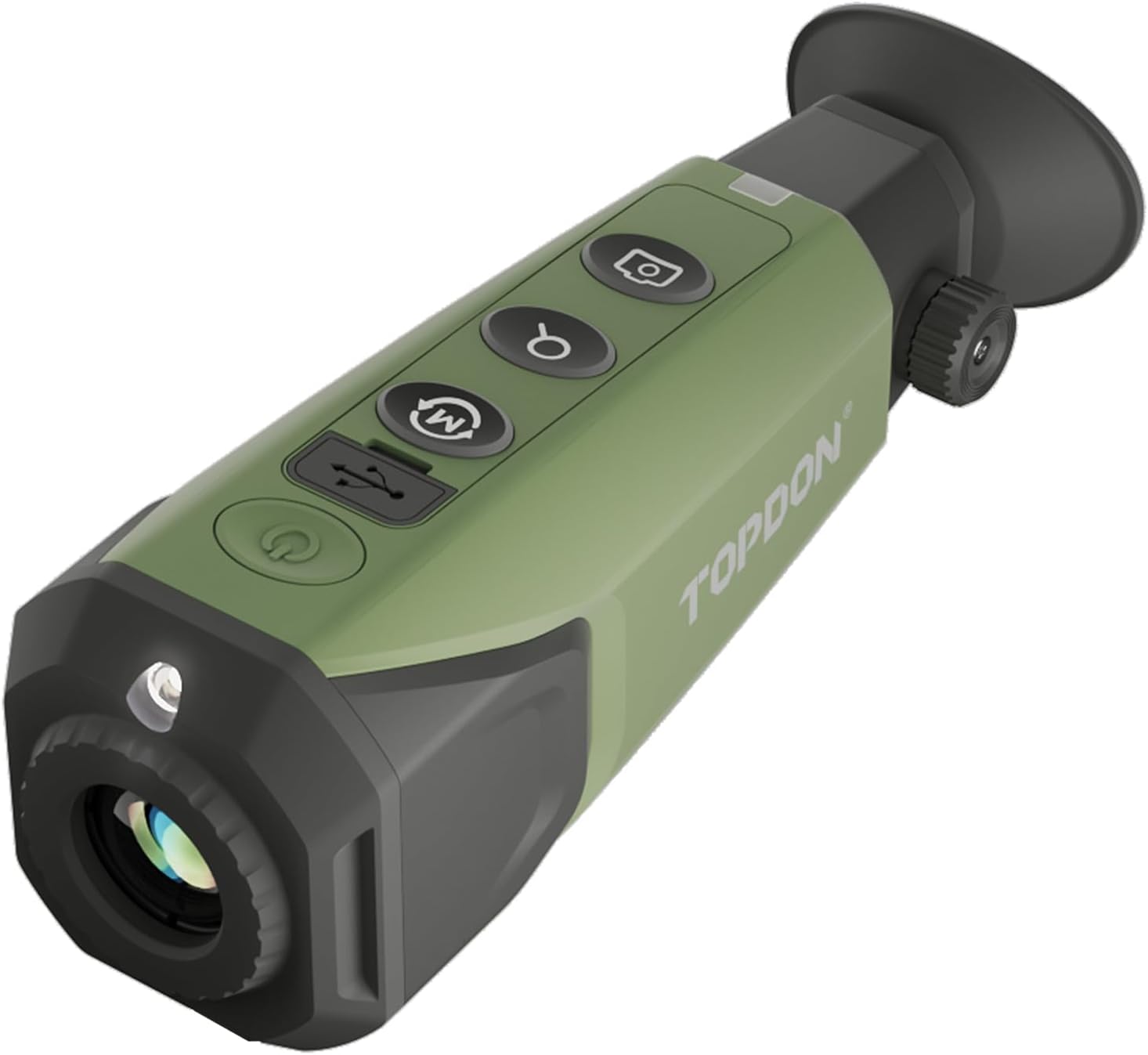 | TOPDON TS004 Monocular | Check Price |
Our Top Picks 2  | RIX Pocket K3 | Check Price |
Our Top Picks 3  | Vortex Veil 400 | Check Price |
Our Selected Top 12 Thermal Monocular for Long Range You Can Trust
This list features carefully chosen thermal monoculars designed for long-range use, highlighting their performance and key features. Readers will find insights into each product’s strengths, limitations, and ideal users to help make an informed decision.
1. TOPDON TS004 Thermal Imaging Monocular
Constructed with a compact design and powered by a single lithium-ion battery, the TOPDON TS004 is made for those who need clear thermal imaging at long distances. Its standout feature is unmatched image clarity provided by a high IR resolution of 256×192 pixels, ideal for spotting details in low-visibility environments.
Setup involves charging the built-in 5000mAh battery, which lasts up to 11 hours, so replacing batteries isn’t a daily task. Manual focus via the 13mm lens is straightforward, and the 8x zoom helps in fine-tuning distant objects. Connecting it wirelessly to your smartphone through the TopInfrared App allows easy real-time monitoring on a bigger screen, which feels handy once you use it a couple of times.
Performance meets expectations with crisp thermal images and a smooth 50Hz refresh rate that avoids stuttering while scanning long-range scenes. The build feels solid but lightweight enough for extended use. Its main praise focuses on the clear, detailed thermal display, while the most frequent critique points out the need for manual focusing which can be tricky in some situations.
Users appreciate the crisp and detailed thermal images delivered by the high 256×192 resolution, making target detection reliable even at long range. The manual focus is often mentioned as a challenge, especially when trying to quickly catch moving subjects or scan wide areas.
Those needing long battery life and clear image detail will find this monocular well suited for their needs. People who prefer rapid autofocus or a broader field of view might look for other models better equipped for those features.
Pros
- Vivid thermal images with high IR resolution
- Long-lasting 11-hour battery life
- Wireless phone connectivity for live monitoring
- Compact and lightweight design
Cons
- Manual focus can require patience
- Limited field of view at 13.5 degrees
| Specification | Details |
|---|---|
| IR Resolution | 256×192 |
| Battery Capacity | 5000mAh |
| Zoom Ratio | 8x |
| Field Of View | 13.5 degrees |
| Focal Length | 13 millimeters |
| Focus Type | manual |
2. RIX Pocket K3 Thermal Monocular
High-resolution thermal imaging stands out as the biggest strength of the RIX Pocket K3 Thermal Monocular, making it ideal for those needing clear long-range detection. Its compact size gives it real portability, suited for anyone prioritizing ease of carry without sacrificing detection capability.
Setup is straightforward thanks to its compact design and built-in tripod interface. The 2× base magnification and 17.5° horizontal field of view make spotting heat signatures simple. Wi-Fi connectivity adds flexibility, allowing you to share or record what you see.
It fits comfortably in hand or a pocket, making it easy to grab quickly during outdoor activities.
Performance in detecting heat signatures out to 853 yards under ideal conditions is impressive. The 384×288 thermal sensor with a 15mm objective lens provides crisp imaging in varied environments. The unit has a solid build for field use, but some users mention that true range can be limited by environmental factors.
It’s praised for clarity but criticized occasionally for the shorter zoom that may not suit every long-range need.
The pocket-sized design combined with detailed thermal images earns consistent praise, highlighting clarity during field use. Occasional mentions appear about how environmental factors like humidity and temperature affect maximum detection, so real-world range can differ from controlled tests.
People needing a lightweight monocular with solid mid-range detection will find this well-suited. Those requiring very high zoom or guaranteed extreme long-distance performance might look elsewhere for a device with stronger magnification options.
Pros
- Compact and easy to carry in hand or pocket
- Clear thermal images with 384×288 sensor
- Includes tripod interface for steady viewing
- Wi-Fi connectivity for sharing and recording
Cons
- Maximum detection range varies with environment
- Only 2× zoom may not suit extreme long-range needs
| Specification | Details |
|---|---|
| Field Of View | 17.5 degrees |
| Zoom Ratio | 2× |
| Thermal Sensor | 384×288 |
| Objective Lens | 15mm |
| Maximum Detection Range | Up to 853 yards |
| Mount | 1/4″-20 tripod interface |
3. Vortex Veil 400 Thermal Monocular
Sharp thermal imaging and a long detection range make the Vortex Veil 400 ideal for night hunting and spotting at distances up to 1100 yards. Its clear resolution and easy photo/video capture set it apart from more basic thermal monoculars.
Setup is straightforward, with manual focus helping you lock in detail on targets. The 25mm objective lens combined with 2.3× base magnification and up to 4× digital zoom offers a good balance between field of view and close-up identification. Changing color palettes is quick, letting you adapt to different environments fast.
Saving images and videos to the built-in 32 GB memory requires just a tap on the handy quick-press button.
Performance is solid in low-light and no-light conditions thanks to the 400×300 sensor resolution and 50 Hz refresh rate, delivering smooth and sharp images. The device feels well-built and durable enough for regular outdoor use. The strongest praise highlights the crisp image quality and reliable detection range.
The most common issue mentioned is the need for a nonstandard battery, which can be less convenient to replace on the go.
The sharp 400×300 sensor and smooth 50 Hz refresh rate provide crisp images useful for identifying targets far away, accompanied by convenient built-in memory for saving moments. Some users find the need for special batteries inconvenient during longer excursions.
Those focused on long-range detection and image clarity during night hunts will appreciate this device’s capabilities. People wanting a lightweight, battery-easy model might prefer other options.
Pros
- Clear thermal images at long distances
- 32 GB built-in memory for photos and videos
- Varied color palettes for different conditions
- Simple manual focus for precise viewing
Cons
- Uses a nonstandard battery type
- Digital zoom reduces image clarity at 4×
| Specification | Details |
|---|---|
| Resolution | 400×300 thermal sensor |
| Pixel Pitch | 12μm |
| Objective Lens | 25mm |
| Magnification | 2.3× base with up to 4× digital zoom |
| Detection Range | Up to 1100 yards |
| Refresh Rate | 50 Hz |
4. ATN BlazeHunter 335 Thermal Monocular

Spotting wildlife or scanning a large area at night becomes a lot easier with a thermal monocular designed for the long haul. The ATN BlazeHunter 335 fits well for anyone needing clear heat signatures at great distances, especially where lighting fails. Its standout feature is the high-precision thermal sensor that picks up tiny temperature differences for sharp images.
Setting up for use is simple thanks to the auto focus, and the rechargeable battery means you won’t run out quickly during night outings. You can connect it to your smartphone or laptop, which makes reviewing or sharing what you see straightforward.
The water-resistant build means a bit of rain or damp environments won’t stop your nighttime adventures.
Performance shines with its vanadium oxide detector and a 384×288 resolution sensor, delivering clear thermal images even at the maximum range of 1800 yards. The main praise focuses on the clarity and the zoom range of 4-32x, letting you zero in on heat sources well.
Some note the water resistance is good but not waterproof under heavy immersion, so care around deep water is needed.
The monocular delivers sharp thermal images with excellent zoom, which many users find ideal for long-range spotting. However, some caution the water resistance isn’t enough for heavy wet conditions, requiring extra care outdoors. Battery life and connectivity options make regular use practical and flexible.
Those needing clear thermal detection up to 1800 yards and frequent recording will appreciate what it offers. People planning heavy water exposure or needing a wider immediate field of view might look to alternatives better suited for those situations.
Pros
- Clear thermal images detecting small temperature differences
- Long range up to 1800 yards
- Auto focus makes viewing quick and easy
- Rechargeable battery with long life
Cons
- Water-resistant but not fully waterproof
- Field of view limited to 1000 yards despite max range
| Specification | Details |
|---|---|
| Power Source | rechargeable-battery |
| Field Of View | 1000 yard |
| Zoom Ratio | 4-32x |
| Focus Type | Auto Focus |
| Compatible Devices | Smartphone, Laptop |
5. AGM Global Vision Taipan V2 Thermal Monocular

Equipped with a high-sensitivity sub-35mK 12m thermal detector, the AGM Global Vision Taipan V2 Thermal Monocular is ideal for outdoor enthusiasts needing sharp thermal imaging during nighttime activities. It’s particularly suited for hunting and surveillance, where clear heat signature identification at long ranges is crucial.
Setting up takes just a moment since it offers auto focus and comes with two batteries included, so you can start scanning right away. The wide field of view and multiple zoom levels, ranging from 1.5x up to 12x, give flexible options for spotting targets both near and far. It connects easily to smartphones and tablets, allowing you to record and review real-time footage.
Performance is solid with precise thermal detection providing clear images even in complete darkness. The build feels durable, made for rough outdoor use, with a helpful power-saving tilt sensor to extend battery life. Most praise centers on the image clarity, while some mention the need to replace with nonstandard batteries as a drawback.
The sharpness of the thermal imaging is the most praised feature, providing clear distinctions of heat signatures even in total darkness. The main complaint is about the need for nonstandard batteries, which may require an extra step for sourcing replacements.
This monocular suits hunters or outdoor explorers who need reliable thermal detection with flexible zoom and recording options. Those wanting longer battery life or wider viewing angles might look for different models better matched to those needs.
Pros
- High-sensitivity thermal detector for sharp images
- Wide field of view with multiple zoom levels
- Auto focus for quick, clear vision
- Built-in recording with smartphone compatibility
Cons
- Requires nonstandard batteries to operate
- Relatively narrow 10-degree field of view
| Specification | Details |
|---|---|
| Eye Piece Lens Description | Standard/Wide-field |
| Focus Type | Auto Focus |
| Zoom Ratio | 1.5x-12x |
| Field Of View | 10 degrees |
| Number of Batteries | 2 Nonstandard Battery batteries required (included) |
| Additional Features | Advanced Thermal Imaging, Power-Saving Tilt Sensor, Built-In Recording, Smartphone Compatibility |
6. GOYOJO G210 Thermal Monocular

Ideal for outdoor enthusiasts who need reliable long-range thermal imaging, this monocular offers sharp thermal detection that works well in different lighting. Its standout feature is the advanced 256×192 thermal camera sensor combined with a 12μm infrared detector, making it easy to spot heat signatures quickly and accurately.
Setting it up is straightforward, and the fixed focus makes it simple to use without fuss. The 4X zoom lets you get closer to distant objects, while six color palettes help adjust the image to various environments.
A battery powers the device and it’s ready right out of the box, plus 16GB of internal storage means you can save images without needing extra memory cards.
It performs well for its size and price, capturing clear thermal images with decent brightness and contrast. The build feels solid with a multi-coated Plossl eyepiece lens, and having a tripod mount adds some stability when needed.
People appreciate how quickly it picks up heat but sometimes wish for a wider field of view or stronger zoom capabilities.
Users praise its fast and clear thermal detection thanks to the 256×192 sensor and 12μm detector. Most common complaint concerns the limited zoom and relatively narrow 17.5-degree field of view, which can restrict wide-area scanning.
Those needing quick, accurate heat spotting in a compact design will find this handy. People requiring longer range viewing or a wider perspective might want to look elsewhere for more specialized options.
Pros
- Sharp thermal detection with accurate heat sensing
- Six customizable color palettes for various conditions
- Includes 16GB storage for image capture
- Tripod mount option adds stability
Cons
- Zoom limited to 2X, not ideal for extreme distances
- Field of view narrower than some competitors
| Specification | Details |
|---|---|
| Thermal Camera Sensor | 256×192 |
| Infrared Detector | 12μm |
| Zoom Ratio | 2 |
| Field Of View | 17.5 degrees |
| Eye Piece Lens | Plossl |
| Power Source | 1 Lithium Polymer battery (included) |
7. RIX Pocket K2 Thermal Monocular
Designed for long-range thermal observation, the RIX Pocket K2 stands out with its sharp 256×192 resolution sensor and crisp 800×600 OLED display. It suits outdoor enthusiasts who need a lightweight, pocketable device without sacrificing image quality for nighttime or low-visibility spotting.
Setup is straightforward, powered by a single lithium-ion battery included in the package. Its fixed focus and straight-through finderscope make it simple to aim. The lightweight design, smaller than most smartphones, makes it easy to carry during hikes or hunts.
Tripod compatibility and smartphone connectivity add flexibility for steady shots and sharing images when needed.
It handles long-range thermal spotting well, showing fine temperature differences clearly thanks to its 12μm sensor and NETD under 25mK. The OLED screen delivers sharp contrast and color detail.
Its waterproof IP67 rating keeps it durable outdoors. Praise often highlights its surprisingly light weight and crisp visuals, while some mention the fixed focus limits adjustable sharpness at varying distances.
Users appreciate its exceptionally light weight and crisp visuals, making it easy to carry and view subtle thermal contrasts during extended use. The most common drawback involves the fixed focus, which doesn’t allow adjusting clarity for different distances.
Ideal for those seeking a compact, durable thermal monocular for casual long-range observing and outdoor activities. Not best for users who require flexible focus adjustments or a wider field of view.
Pros
- Very lightweight and pocketable design
- High-resolution OLED display for clear images
- IP67 waterproof for rugged outdoor use
- Tripod mount and smartphone compatibility
Cons
- Fixed focus limits sharpness adjustments
- Field of view relatively narrow at 19.4 degrees
| Specification | Details |
|---|---|
| Resolution | 256×192 |
| Display | 800×600 OLED |
| Sensor | 12μm with NETD <25mK |
| Field Of View | 19.4 degrees |
| Focus Type | Fixed Focus |
| Power Source | 1 Lithium Ion Battery (included) |
8. RIX Stride ST3 Lite Thermal Monocular

RIX Stride ST3 Lite Thermal Monocular suits anyone needing a helmet-mounted thermal device for long-range viewing. Its standout feature is a true 1× magnification that keeps surrounding visuals natural while using thermal imaging. Ideal for hunters, patrol duties, or night explorers who want hands-free thermal viewing without distortion.
Setup is straightforward with the option to handhold, mount on a helmet, or attach to a vehicle, adding to its versatility. Daily use benefits from the wide 17.5-degree field of view, making scanning landscapes easier. Powered by one included lithium-ion battery, it’s light enough not to tire you over extended periods and keeps you informed without interruption or complicated adjustments.
The ST3 Lite performs solidly in thermal detection and clarity, delivering stable images in various conditions. The build feels sturdy and functional, practical for active use in the field. Most users appreciate its steady true 1× magnification that delivers natural imaging, though some wish the battery life lasted longer for extended outings.
One of the most appreciated features is the true 1× magnification that allows users to perceive thermal images without losing natural situational awareness. Common feedback also notes the battery life as somewhat limited compared to similar gear, which can be an issue for longer patrols or hunts.
Those needing a lightweight, versatile monocular for hands-free, long-range observation will enjoy the device’s design and performance. Anyone requiring higher magnification or longer battery endurance might want to consider other models better suited for extended surveillance or distant target recognition.
Pros
- True 1× magnification for natural surroundings
- Multi-use: helmet, handheld, or vehicle mounted
- Wide 17.5-degree field of view
- Includes rechargeable lithium-ion battery
Cons
- Battery life could be longer for extended use
- Limited magnification range with only 1× base level
| Specification | Details |
|---|---|
| Mount | Handheld/Helmet Mount |
| Compatible Devices | Helmet Mount, Tripod, Vehicle Mount |
| Number of Batteries | 1 Lithium Ion battery (included) |
| Field Of View | 17.5 degrees |
| Additional Features | Helmet-Mounted Design, Wide Field of View, Adjustable Magnification |
9. ATN BlazeHunter 335 LRF Thermal Monocular

Using the BlazeHunter 335 LRF feels like having a reliable eye in total darkness or difficult conditions. Designed for those who need sharp thermal images with long-range tracking, it stands out with its clear 384×288 sensor and impressive 4-32x magnification range.
It suits hunters, security personnel, or anyone requiring precise thermal viewing up to 1800 yards.
Setup is straightforward thanks to its rechargeable lithium-ion battery and auto-focus feature, letting you quickly lock in on your target without fuss. The built-in Wi-Fi connects easily to smartphones, tablets, or laptops, letting you stream or record thermal videos on the go.
Its water-resistant design handles unexpected weather, making it practical for daily outdoor use without worry.
Performance excels with a vanadium oxide focal plane detector that catches even small temperature differences, so thermal images stay crisp and clear across large distances. The body feels sturdy and weatherproof, ready for tough environments.
A common complaint focuses on its weight, which some find heavier than expected for all-day carrying.
Sharp image quality and ease of connection via Wi-Fi stand out as major benefits of this monocular. Many users appreciate its high sensitivity and clear detail at long range. The heaviness and battery drain during streaming commonly appear as points of concern.
Those who need precise, long-range thermal imaging and don’t mind extra weight or managing battery life will find this very capable. Users wanting a lighter device with longer streaming duration might want to explore other options.
Pros
- Sharp thermal images with fine temperature detection
- Auto-focus for easy target acquisition
- Built-in Wi-Fi for live streaming and recording
- Water-resistant for outdoor durability
Cons
- Relatively heavy for extended handheld use
- Battery life may fluctuate under continuous Wi-Fi use
| Specification | Details |
|---|---|
| Focus Type | Auto Focus |
| Power Source | Rechargeable battery |
| Zoom Ratio | 4-32x |
| Field Of View | 1000 yard |
| Video Recording | Yes |
10. Pulsar Oryx LRF XG35 Thermal Monocular

Excellent clarity in various weather makes it ideal for long-range thermal viewing. Suited for anyone needing reliable imaging in challenging environments, it stands out with sharp visuals day and night.
Setting up is straightforward with the included battery powering it immediately. Portability is convenient for taking it into dense or rough terrain.
The 2.5-20x zoom works smoothly for close and distant objects, while the 12.5° field of view balances detail and situational awareness. Easy adjustments ensure comfortable viewing during extended use.
Imagery through fog, rain, and foliage remains impressively clear thanks to the 35mm lens and AMOLED 1024×768 display. The build feels solid and designed for active use, fitting well in the hand. Common praise highlights the sharp image quality, while some users note the 1-battery operation limits session length without spare power.
Its standout feature is exceptional image quality across varying weather and obstacles, setting it apart for long-range observation. The most frequent drawback is reliance on a single included battery, which can restrict how long it stays active without spares.
People needing reliable thermal vision in tough environments will appreciate its dependability and clarity. Those wanting longer uninterrupted sessions or wider views might look at alternatives with multi-battery setups or broader fields of view.
Pros
- Clear image through fog, rain, and dense foliage
- Wide zoom range from 2.5x up to 20x
- Portable and easy to carry
- AMOLED 1024×768 display for detailed visuals
Cons
- Only one battery included, limits operation time
- Field of view is somewhat narrow at 12.5 degrees
| Specification | Details |
|---|---|
| Eye Piece Lens Description | Digital/Electronic |
| Compatible Devices | Rifles |
| Number of Batteries | 1 Product Specific batteries required |
| Focal Length Description | 35mm |
| Field Of View | 12.5 degrees |
| Zoom Ratio | 2.5-20x |
11. AGM Global Vision ReachIR LRF 25-384 Thermal Monocular

Built with a waterproof IP67-rated body, the AGM Global Vision ReachIR LRF 25-384 Thermal Monocular fits outdoor enthusiasts and professionals needing long-range thermal detection. Its biggest strength lies in combining a 384×288, 12-micron sensor with a built-in 1,000-meter laser rangefinder for precise distance readings in various conditions.
Setting it up is straightforward thanks to its fixed-focus Brandon eyepiece and compatibility with smartphones, tablets, and cameras. Daily use involves selecting from multiple viewing modes like Black Hot, White Hot, Red Hot, and Fusion to adapt to different environments. The built-in 64GB memory and Wi-Fi hotspot connectivity make capturing and sharing images simple, while digital zoom and a 20X focal length help identify distant targets.
Performance impresses with clear, high-resolution OLED thermal imaging that delivers sharp detail at long range. Its durable, waterproof design holds up well even in tough weather and terrain.
The strongest praise points to accurate distance measurement with the laser rangefinder. Common feedback highlights a limited 2.86-degree field of view, which can feel narrow when scanning wide areas.
Clear imaging and precise distance measurement are consistently praised, making it reliable for tracking and tactical use. Some users note the limited field of view can restrict situational awareness, especially in wide-open areas.
Anyone needing detailed long-range thermal detection with rangefinder capability will appreciate this unit. Those requiring a wider viewing angle might look for alternatives better suited for broad surveillance or scanning tasks.
Pros
- Accurate 1,000-meter laser rangefinder
- Multiple thermal viewing modes
- Wi-Fi hotspot and 64GB memory included
- Durable IP67 waterproof construction
Cons
- Narrow 2.86-degree field of view
- Uses one nonstandard battery
| Specification | Details |
|---|---|
| Sensor Resolution | 384×288, 12-micron |
| Field Of View | 2.86 degrees |
| Zoom Ratio | 2.5-20 |
| Built-in Rangefinder | 1,000 meters |
| Waterproof Rating | IP67 |
| Memory | 64GB built-in |
12. Sig Sauer Echo MV50-DV Dual View Thermal Monocular

Sharp image quality stands out right away with an advanced thermal core that lets you spot targets clearly in complete darkness. Ideal for anyone needing reliable long-range thermal viewing, the Echo MV50-DV pairs dual-view modes to tackle different field of views, making it flexible for varied outdoor situations.
Getting started is straightforward, with manual focus adjusting quickly to sharpen your view. Switching between the standard 8.7-degree and wider 17.1-degree field of view feels natural, helping you stay aware of your surroundings without fuss. Battery powering means you can keep it going without complicated wiring, and compatibility with smartphones or cameras makes sharing or recording easy.
Performance delivers with clear thermal imaging that updates smoothly at 50Hz, perfect for tracking movement far away. The build feels sturdy and intentional, designed to handle outdoor use while maintaining a manageable size and weight.
Most users appreciate the balance between zoom capability and image clarity, although some mention the manual focus takes a bit of patience to dial in perfectly.
Image clarity and the dual-view function earn strong praise for identifying distant targets in total darkness. Manual focus is noted as the trickiest part, demanding steady handling to achieve the sharpest view.
Outdoor enthusiasts who need versatile long-range thermal vision will appreciate this monocular’s performance and features. Those prioritizing quick autofocusing or longer continuous use without swapping batteries might look at other options.
Pros
- Clear identification of targets in complete darkness
- Switches easily between standard and wide fields of view
- Compatible with smartphones and cameras for sharing footage
- Responsive 50Hz refresh rate for smooth tracking
Cons
- Manual focus requires patience to get sharp images
- Battery dependency means carrying extras for extended use
| Specification | Details |
|---|---|
| Field Of View | 17.1 degrees |
| Zoom Ratio | 1.5-24x |
| Power Source | Battery Powered |
| Focus Type | Manual Focus |
| Thermal Core Resolution | 640×512 VGA, 12um |
| Refresh Rate | 50Hz |
Comparison of Best Long Range Thermal Monoculars
| Product | Focus Type | Zoom Ratio | Field Of View | Compatible Devices |
|---|---|---|---|---|
| TOPDON TS004 Monocular | Manual Focus | – | – | Smartphone |
| RIX Pocket K3 | – | 2× | 17.5 degrees | Tripod, Hunting Equipment |
| Vortex Veil 400 | Manual Focus | Up to 4x Digital | – | Rifles |
| ATN BlazeHunter 335 | Auto Focus | 4-32x | 1000 yard | Smartphone, Laptop |
| AGM Taipan V2 | Auto Focus | 1.5x-12x | 10 degrees | Smartphone, Tablet |
| GOYOJO G210 | Fixed Focus | – | – | Smartphone |
| RIX Pocket K2 | Fixed Focus | – | 19.4 degrees | Smartphone |
| RIX Stride ST3 Lite | – | – | 17.5 degrees | Helmet Mount, Tripod, Vehicle Mount |
| ATN BlazeHunter 335 LRF | Auto Focus | 4-32x | 1000 yard | Smartphone, Tablet, Laptop |
| Pulsar Oryx LRF XG35 | – | 2.5-20x | 12.5 degrees | Rifles |
| AGM ReachIR LRF 25-384 | Fixed Focus | 2.5-20 | 2.86 degrees | Smartphone, Tablet, Camera |
| Sig Sauer Echo MV50-DV | Manual Focus | 1.5-24x | 17.1 degrees | Smartphone, Camera |
- Focus TypeManual Focus
- Zoom Ratio–
- Field Of View–
- Compatible DevicesSmartphone
- Focus Type–
- Zoom Ratio2×
- Field Of View17.5 degrees
- Compatible DevicesTripod, Hunting Equipment
- Focus TypeManual Focus
- Zoom RatioUp to 4x Digital
- Field Of View–
- Compatible DevicesRifles
- Focus TypeAuto Focus
- Zoom Ratio4-32x
- Field Of View1000 yard
- Compatible DevicesSmartphone, Laptop
- Focus TypeAuto Focus
- Zoom Ratio1.5x-12x
- Field Of View10 degrees
- Compatible DevicesSmartphone, Tablet
- Focus TypeFixed Focus
- Zoom Ratio–
- Field Of View–
- Compatible DevicesSmartphone
- Focus TypeFixed Focus
- Zoom Ratio–
- Field Of View19.4 degrees
- Compatible DevicesSmartphone
- Focus Type–
- Zoom Ratio–
- Field Of View17.5 degrees
- Compatible DevicesHelmet Mount, Tripod, Vehicle Mount
- Focus TypeAuto Focus
- Zoom Ratio4-32x
- Field Of View1000 yard
- Compatible DevicesSmartphone, Tablet, Laptop
- Focus Type–
- Zoom Ratio2.5-20x
- Field Of View12.5 degrees
- Compatible DevicesRifles
- Focus TypeFixed Focus
- Zoom Ratio2.5-20
- Field Of View2.86 degrees
- Compatible DevicesSmartphone, Tablet, Camera
- Focus TypeManual Focus
- Zoom Ratio1.5-24x
- Field Of View17.1 degrees
- Compatible DevicesSmartphone, Camera
How to Choose the Right Thermal Monocular
Choosing a thermal monocular with good resolution, reliable range, and clear image quality is essential for long-range use. Prioritizing these factors ensures accurate detection and reduces the need for replacements, ultimately saving money and avoiding frustration during important observations.
Detection Range and Resolution
Outdoor spotting or surveillance often requires identifying heat sources at significant distances. A model with a low detection range can leave you guessing about what’s ahead, especially under cooler conditions or against cluttered backgrounds. Devices that offer a detection range of at least 800 to 1000 meters stand out for long-range viewing.
The sensor resolution, typically expressed in pixels (like 320×240 or higher), directly influences image clarity at distance, higher resolution sensors reveal finer details of heat signatures. Lens quality and magnification are no less critical; glass lenses minimize distortion and maintain sharpness.
Magnifications of around 4x to 8x keep distant objects recognizable without excessive shakiness or image blur. Lower specs result in grainier images, making identification difficult or unreliable.
Image Quality and Display
The smoothness of the visual feed depends largely on sensor sensitivity and refresh rate. A refresh rate below 30 Hz can cause lag or choppy images, which hampers tracking moving targets.
For handheld devices, a 30 Hz or higher refresh rate is ideal. Built-in display quality varies widely. A screen size around 0.35 to 0.5 inches offers adequate viewing without bulk, and an OLED or AMOLED display improves contrast under varying light conditions.
Controls that allow switching between different palette options, like white-hot, black-hot, or rainbow, help pick out details depending on the environment. Brightness settings must be adjustable to avoid washout during daylight or glare issues at night.
Battery Life and Power Management
Battery life often sets the practical limit for long observation sessions. Devices running less than 4 hours per charge feel unreliable in real situations. Expect around 6 to 8 hours of use for a solid handheld model.
Rechargeable batteries sized like CR123 or proprietary lithium-ion packs are common; compatibility with standard AA batteries offers flexibility when charging isn’t possible. Look for power-saving modes that reduce screen brightness or enter standby automatically during inactivity to extend runtime.
A clear battery status indicator ensures you won’t be caught off-guard by sudden shutdowns, especially in cold weather where battery performance dips.
Durability and Weather Resistance
Frequent use outdoors exposes these optics to bumps and bad weather. Tough polycarbonate or aluminum housing provides decent impact resistance without excess weight.
Ratings like IP67 or IP68 guarantee water and dust protection; this means you can use the device in heavy rain or dusty conditions without worry. Fogproof or nitrogen-purged chambers keep the lens clear of internal condensation. Products rated for operational temperatures from around -20°C to +50°C cover typical outdoor extremes.
Without this ruggedness, a device might fail after a drop or become unusable during bad weather, which defeats the purpose of long-range observation.
Ergonomics and Ease of Use
Holding a monocular steady for extended periods is demanding. A unit weighing between 300 and 500 grams with balanced weight distribution feels comfortable and reduces arm fatigue.
Controls should be easy to reach without changing your grip; large, textured buttons prevent fumbling in gloves or darkness. Logical, straightforward menu navigation avoids confusion when adjustments are needed quickly. Some models allow mounting on tripods or helmets, which is useful for longer watches or hands-free use.
Compatibility with standard accessory mounts simplifies pairing with other gear like cameras or night vision devices. Without ergonomic consideration, using the device can become more frustrating than helpful.
Maximizing Detection Range: Tips for Effective Long-Range Thermal Monocular Use
Clear visibility at long distances depends heavily on optics quality and environmental conditions. Choosing a thermal monocular with a larger aperture helps gather more thermal radiation, making objects sharper and easier to detect.
Keeping the lens clean is vital for maintaining image clarity; even small smudges can blur details or reduce detection range.
Stable positioning also improves results, using a tripod or a steady surface prevents shaky images during observation. Take time to let the device acclimate to the outdoor temperature, as sudden temperature changes can impact sensor performance.
Understanding the thermal signatures of your target area, such as recognizing heat patterns from animals or vehicles, supports faster identification, especially in cluttered backgrounds.
- Prioritize models with higher resolution sensors for better detail at range
- Avoid direct sunlight on the lens to prevent sensor overload
- Use contrast adjustments on your monocular to highlight targets against varying backgrounds
Proper Maintenance and Care to Extend Your Thermal Monocular’s Lifespan
The longevity of a thermal monocular largely depends on regular maintenance and careful handling. Prevent moisture buildup by storing the unit in a dry, temperature-controlled environment.
After use, gently wipe the lens with a microfiber cloth to remove dust or debris without scratching the surface.
Avoid exposing the monocular to direct rain or snow since water can damage internal electronics if it seeps inside. When not in use for extended periods, removing batteries helps prevent corrosion and leakage.
Regularly check for firmware updates if your device supports them to keep performance steady and fix any software bugs.
- Use a protective case during transport to guard against impacts
- Do not attempt to open the device yourself, as this may void warranties or cause damage
- Keep battery contacts clean and dry for reliable power connection
Comparing Thermal Monoculars with Night Vision Devices for Long-Range Observation
Thermal monoculars and night vision devices serve different purposes despite overlapping applications. Thermal monoculars detect heat emissions, allowing users to identify targets regardless of light levels or camouflage. They are effective in complete darkness and through light fog, smoke, or foliage, but typically offer less fine image detail compared to night vision optics.
Night vision devices amplify existing ambient light, producing clearer image resolution under starlight or moonlight but struggle in total darkness or poor weather. Thermal devices provide straightforward heat outlines, useful for spotting warm bodies quickly over longer distances.
They often have a higher price point and demand more power.
- Choose thermal imaging for consistent detection in variable conditions
- Night vision works best in moonlit environments when detailed recognition is needed
- Both devices may be combined for comprehensive observation strategies
People Also Asked
How Do I Properly Care for a Thermal Monocular?
Keep the lens clean and avoid touching it with bare fingers to prevent smudges. Store the monocular in its padded case when not in use to protect it from dust and impact damage. Charging batteries fully before storage helps maintain battery health.
What Is the Ideal Size for a Long-Range Thermal Monocular?
A size that balances good grip and portability works best for long-range observation. Monoculars around 6 to 8 inches long offer enough lens diameter for clarity without being too bulky. This size fits comfortably in one hand for steady use.
Are Thermal Monoculars Safe to Use for Extended Periods?
Thermal monoculars do not emit harmful radiation, so they are safe for extended viewing periods. However, continuous use can cause the monocular to heat up, so taking short breaks helps avoid device overheating.
How Long Does a Thermal Monocular Typically Last with Regular Use?
With typical daily or weekly use and proper handling, a thermal monocular can last several years. Battery life depends on usage patterns; regularly charging and avoiding full discharges extends overall lifespan.
What Common Problems Should I Expect with Thermal Monoculars?
Common issues include blurry images due to lens fogging or dirt and occasional battery drain problems. Sometimes, software glitches may cause the screen to freeze, but restarting the device usually fixes this quickly.
Conclusion
Focus on sensor resolution and detection range to spot details clearly at a distance. Battery life is also crucial since longer use means more reliable performance out in the field. Weight and size matter too; a bulky device can be hard to steady for extended viewing.
Choose a model that fits the environment you plan to use it in and your budget, as features and durability vary widely. Frequent users may want to invest in higher-end options, while occasional use might call for simpler designs.
Review the comparison table and the picks above to find the best match for your needs.