Top 12 Best Stabilised Binoculars You Can’t Miss Now
Watching wildlife or scanning distant landscapes through binoculars often turns frustrating when the image shakes uncontrollably. The best stabilised binoculars reduce this issue by using internal mechanisms to counteract hand movements, providing a steadier view.
Without stabilization, even slight hand tremors blur details, which makes identification or observation difficult and tiring during long sessions.
A good stabilised binocular balances weight and size to avoid fatigue while offering effective shake reduction, usually around a 4x to 10x magnification range paired with a stable image. Optics coated for clarity and durability also matter, as do easy-to-clean lenses to keep the view sharp in the field. Battery life or power sources, along with comfortable eyecup fittings, contribute to usability during extended use outdoors.
Need a Quick Check?
| Image | Product | Price |
|---|---|---|
Our Top Picks 1  | Canon 12×36 IS | Check Price |
Our Top Picks 2  | SIG SAUER Zulu6 16×42 | Check Price |
Our Top Picks 3 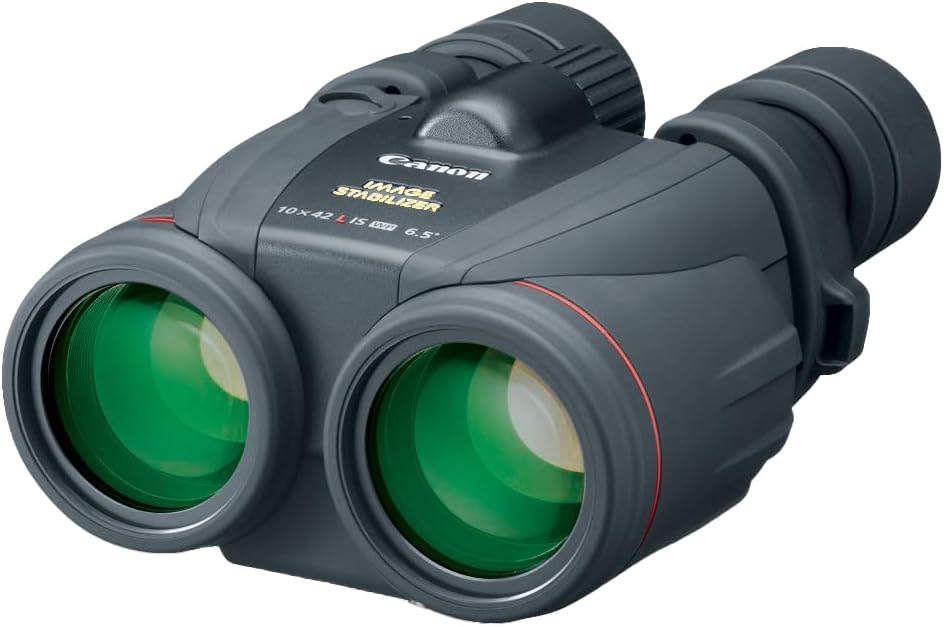 | Canon 10×42 L IS | Check Price |
Our Selected Top 12 Stabilised Binoculars Picks for Every Need
This list features twelve top-stabilised binoculars designed for various activities and preferences. Each review covers how well the binocular performs, who it is best suited for, and outlines its main strengths and weaknesses to help you make an informed choice.
1. Canon 12×36 Image Stabilization Binoculars
Great for birdwatching and hunting, these binoculars stand out for their superb image stabilization that cuts down shake from hand movements. They suit anyone needing steady, clear views at 12x magnification without lugging bulky gear.
Setup is straightforward with a center focus and diopter adjustment range of ±3 Diopters, letting you quickly sharpen images. The 14.5mm eye relief offers comfort during extended use, especially with glasses. Their compact size and water resistance means you can carry them on hikes or hunts without worry.
Image quality is sharp edge to edge thanks to doublet field-flattener lenses and Porro II prisms, resulting in bright, low-distortion views. The binoculars feel solid yet lightweight, yet some users note the power use still requires attention during long trips. Their 36mm objective lenses balance brightness and portability well.
Image stabilization impresses by delivering steady, clear views, greatly appreciated during handheld use. Some note the power efficiency could be better, as batteries drain faster with the stabilization feature active.
This fits well for outdoor enthusiasts who value portability and clarity during activities like birdwatching or hunting. Those often in low light or wanting longer battery life might consider alternatives.
Pros
- Superb image stabilization reduces hand shake
- Compact and lightweight for portability
- Long eye relief suitable for glasses
- Water resistant for outdoor use
Cons
- Battery consumption requires monitoring
- 36mm lenses limit brightness in dim conditions
| Specification | Details |
|---|---|
| Magnification Maximum | 12 |
| Objective Lens Diameter | 36 millimeters |
| Eye Relief | 14 millimeters |
| Prism Type | Porro Prism |
| Field of View | 55.3 degrees |
2. SIG SAUER Zulu6 16×42 Roof Prism Binocular
Watching distant wildlife or scanning rugged terrain often feels shaky through regular binoculars. Ideal for hunters, shooters, and sports fans, these SIG SAUER Zulu6 16×42 binoculars stand out by stabilizing images with built-in OIS technology, letting you track targets clearly without a tripod.
Getting started with these is straightforward. They are lightweight and portable, making them easy to carry during long outings. The automatic focus combined with manual adjustments means quick clarity no matter your distance.
OIS Scan Mode suits broad viewing, while Target Mode locks onto specific points, cutting down jitter and helping you hold steady on moving subjects.
On performance, the image stabilization works smoothly, dramatically reducing shakes and keeping views sharp. Build quality feels solid yet manageable, designed to endure outdoor conditions with waterproof features. Most praise centers on the clarity and stability while the main drawback is the eye relief of 16 millimeters, which may not be comfortable for every user.
Most users find the optical image stabilization impressive, providing clear and steady views even when hand-holding. Some note discomfort with the 16-millimeter eye relief during long use sessions. The build is ready for outdoors but the manual focus still requires user attention for perfect clarity.
Ideal for those needing solid magnification and image stability without extra equipment like a tripod. Less suited to users requiring longer eye relief or purely automatic focusing systems. Great for active hunting and sports but consider fit carefully for comfort.
Pros
- Effective Optical Image Stabilization technology
- Lightweight and portable design
- Waterproof for rugged environments
- OIS Target Mode improves stability by 50%
Cons
- Limited eye relief might cause discomfort
- Manual focus needs adjusting despite automatic features
| Specification | Details |
|---|---|
| Magnification Maximum | 16x |
| Objective Lens Diameter | 42 millimeters |
| Eye Relief | 16 millimeters |
| Water Resistance Level | Waterproof |
| Focus Type | Manual |
3. Canon 10×42 L IS Binoculars
Image stabilization stands out as the main feature here, making steady viewing possible even at 10x magnification. Perfect for bird watchers or anyone who spends time outdoors needing sharp details without hand shakiness.
It combines good size and power with durable weatherproof design for active use.
Setting up involves inserting two AA batteries that power the image stabilization, which noticeably reduces shaking. A large center focusing knob lets you quickly get clear images, and long eye relief makes it comfortable even with glasses. The neoprene strap and padded case make carrying and protection easy during daily outings.
Rainguards keep moisture off the eyepieces, which helps in damp conditions.
Images are crisp thanks to the ultralow-dispersion lead-free glass and full super spectra coatings. Waterproof and fog proof construction mean it holds up well outdoors. The solid Porro prism design offers good depth perception, though some note the binoculars can feel a bit heavy for all-day hand-holding.
It delivers stable, bright views but comes with a slight weight trade-off.
Image stabilization is praised for keeping the view steady even at high magnification, which is a big help when observing birds. Most complaints focus on the extra weight, making it less ideal for extended handheld sessions. The waterproof and fog proof build receives consistent approval for durability outdoors.
Bird watchers needing stable, clear views with good eye relief will appreciate this model. Those looking for lightweight or fully battery-free binoculars might prefer simpler options without stabilization technology.
Pros
- Effective image stabilization with AA battery power
- Large center focusing knob for easy adjustments
- Waterproof and fog proof for outdoor use
- Long eye relief suitable for glasses wearers
Cons
- Heavier than standard binoculars for handheld use
- Requires AA batteries for stabilization to work
| Specification | Details |
|---|---|
| Magnification Maximum | 10 x |
| Objective Lens Diameter | 42 millimeters |
| Eye Relief | 16 millimeters |
| Water Resistance Level | Waterproof |
| Focus Type | Center Focus |
| Prism Type | Porro Prism |
4. Canon 10×30 IS II Binoculars

Birdwatchers and sports enthusiasts looking for stable, clear views during extended use will appreciate these binoculars. The single biggest strength is the image stabilization system that actively reduces hand shake, making 10x magnification manageable without a tripod or extra support.
Setup is straightforward with a center focus and diopter adjustment allowing quick clarity tweaks. The included harness strap keeps the binoculars comfortably secure during long outings, while the waterproof design lets you use them in various weather conditions.
Day-to-day use benefits from multi-coated lenses delivering bright images and the travel bag providing neat storage. AA batteries and charger are convenient extras for continuous use.
Performance is steady even during panning or at high magnification thanks to a second generation optical IS system using gyro sensors and vari angle prisms. The build feels solid with a lightweight 30mm objective lens diameter that balances portability and image brightness.
Strongest praise highlights the smooth hand shake correction, and the main common complaint notes some bulk compared to non-stabilized binoculars.
Image stabilization works well to keep views steady even when moving or panning, highly praised for extended birding and sports observation. At the same time, some find the binoculars heavier and more cumbersome than standard models, making them less ideal for users seeking the lightest option.
People who prioritize stable, clear views at 10x magnification and don’t mind the additional weight will appreciate these binoculars. Those looking for a compact, ultra-light pair for casual use might want to look at lighter, non-stabilized options instead.
Pros
- Effective image stabilization at high magnification
- Waterproof design for outdoor reliability
- Comfortable harness mount included
- Multi-coated lenses for bright images
Cons
- Bulkier than typical binoculars without stabilization
- Exit pupil size limits low-light performance
| Specification | Details |
|---|---|
| Magnification Maximum | 10 x |
| Objective Lens Diameter | 30 mm |
| Eye Relief | 14.5 millimeters |
| Water Resistance Level | Waterproof |
| Focus Type | Center Focus |
| Field of View | 60 degrees |
5. SIG SAUER ZULU6 HDX PRO 42mm Binoculars

Optical Image Stabilization is the standout feature here, offering steady views that suit birdwatchers, hikers, and anyone who prefers a vibration-free experience at 14x zoom. These binoculars focus on delivering reliable stability and sharp images in various light conditions.
Setup is straightforward, with a clear multi-coated 42mm lens that handles different lighting well, including low light situations. Water resistance makes them durable in wet environments.
The 4th generation stabilization system automatically adjusts with OmniScan and OmniLock for consistent steadiness during extended use, reducing strain on the eyes and hands.
Colors remain vibrant thanks to the advanced HDX PRO optical system, which uses ED glass and special prisms to cut glare and improve clarity. The build feels solid yet manageable, balancing quality materials with ease of handling. The most common feedback notes excellent image stability, while some find the size a bit bulky for long hikes.
Image stability remains the strongest feature, providing a vibration-free view under various conditions thanks to innovative OmniScan and OmniLock technologies. A common downside is the size, which some find less convenient for all-day hikes or travel.
People who prioritize steady, detailed views without the usual hand-shake will appreciate these binoculars. Those seeking a lighter, more compact option with variable zoom might want to consider alternatives instead.
Pros
- Advanced 4th generation image stabilization
- Bright, clear images in low light
- Water resistant for outdoor use
- Multi-coated lenses reduce glare
Cons
- Can feel bulky for extended carrying
- Only one zoom ratio available
| Specification | Details |
|---|---|
| Objective Lens Diameter | 42 millimeters |
| Magnification Maximum | 14x |
| Coating | Multi-Coated |
| Water Resistance Level | Water Resistant |
| Low Light Technology | yes |
6. SIG SAUER ZULU6 HDX PRO 16×50 Binoculars
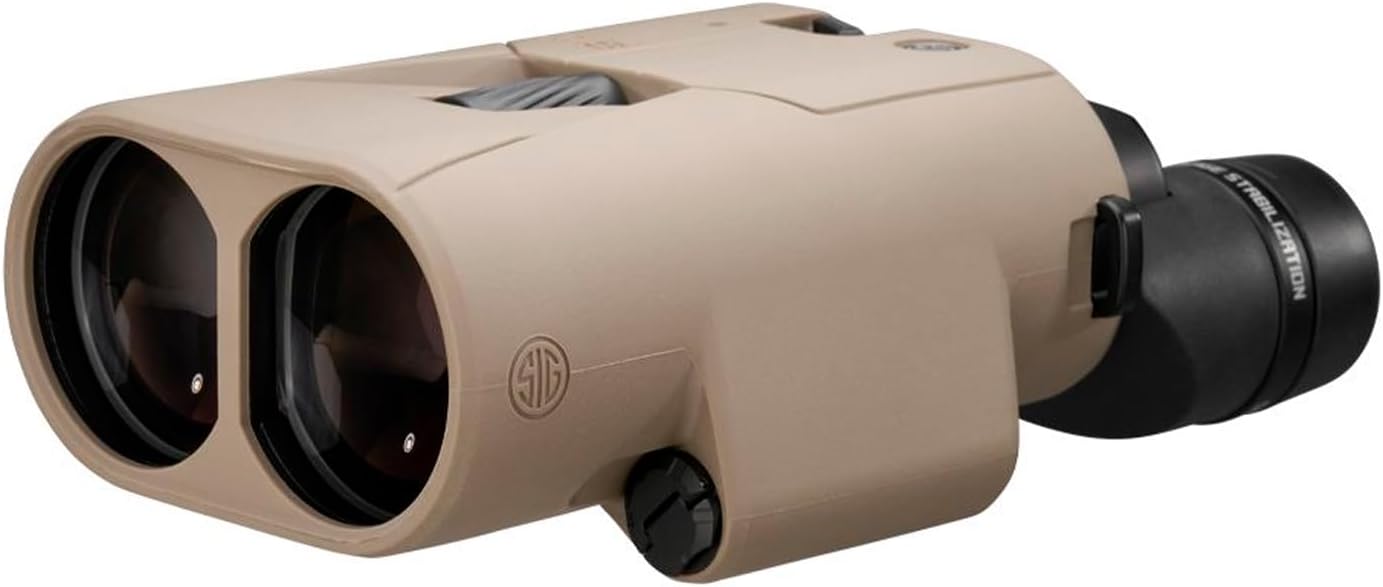
SIG SAUER ZULU6 HDX PRO 16×50 Binoculars deliver impressive image stabilization and high magnification, designed for hunters, shooters, and outdoor enthusiasts who demand clear, steady views at long distances. Its standout feature is the excellent optical clarity combined with powerful 16x magnification and a bright 50mm objective lens.
Setting up involves attaching the binoculars to a tripod for optimal stability due to their weight and high zoom level. The center focus and manual diopter adjustment allow quick fine-tuning to suit your eyesight.
Its waterproof design and durable coatings mean daily use in varied weather and conditions requires minimal worry about damage or fogging.
Performance delivers sharp, clear images thanks to the reengineered HDX PRO glass and lens coatings. Image stabilization reduces shake significantly, making it easier to track distant subjects. The build feels solid and reliable with a sturdy Schmidt-Pechan prism system.
A frequent note is the binoculars’ weight requiring support, but most find the optical quality well worth it.
High optical clarity combined with image stabilization wins praise for steady, detailed views at 16x magnification. Common drawbacks include the binoculars being heavy and requiring mounting to a tripod for extended use. Users appreciate the waterproof design and sharp focus capabilities for outdoor settings.
Anyone needing high-powered, stable viewing for hunting or spotting outdoors will find these binoculars suitable. Those seeking lightweight, handheld models with wider fields might prefer other options.
Pros
- Stable images with effective image stabilization
- Bright and clear visuals due to 50mm lenses
- Waterproof for use in various conditions
- Tripod mount compatibility for steady viewing
Cons
- Heavy and requires tripod for comfortable use
- Narrow field of view at 3.7 degrees
| Specification | Details |
|---|---|
| Magnification Maximum | 16 x |
| Objective Lens Diameter | 50 millimeters |
| Image Stabilization | Yes |
| Water Resistance Level | Waterproof |
| Focus Type | Center Focus |
| Field of View | 3.7 degrees |
7. SIG SAUER ZULU6 HDX Marine Binoculars

Optical image stabilization really changes the game when viewing from a moving boat or in choppy conditions. It suits anyone who spends time offshore and needs a clear, steady view without the usual shake and blur. The most impressive part is how well it handles motion, keeping things sharp when other binoculars would struggle.
Setup is straightforward with autofocus and a simple diopter adjustment that covers a good range. Daily use means less fiddling to keep images clear while out on open water thanks to the stabilization technology. The 42mm objective lenses balance size and light capture nicely, and the multi-coated HDX lenses reduce glare seriously well in bright, reflective conditions.
Performance stands out in how it reduces hand shake and vessel motion, delivering consistently stable images at 16x zoom, even in rough seas. Construction feels solid and ergonomic for comfortable holding during long sessions.
The strongest praise is for the optical image stabilization working effectively. A noted downside is the smaller exit pupil which may affect low-light viewing slightly.
Image stabilization actively reduces motion from hands and boat movement, providing clear, steady views that are highly praised. Common criticism centers on the smaller exit pupil which may limit brightness in very low light conditions.
Boaters and offshore viewers who need a reliable, steady binocular for daytime use will appreciate its strengths. Those often searching in dim or dusk settings might look for binoculars with larger exit pupils for better low-light performance.
Pros
- Effective optical image stabilization at 16x magnification
- HDX lens system minimizes glare on bright water
- Ergonomic design for long marine excursions
- Waterproof construction suitable for harsh environments
Cons
- Exit-pupil diameter relatively small at 2.63 millimeters
- Higher zoom can make steady framing tricky despite stabilization
| Specification | Details |
|---|---|
| Objective Lens Diameter | 42 millimeters |
| Magnification Maximum | 16 x |
| Focus Type | Autofocus |
| Water Resistance Level | Waterproof |
| Coating | Multi-Coated |
| Diopter Adjustment Range | +/-5 diopters |
8. Fujinon Techno-Stabi TS-X 14×40 Binoculars

A powerful stabilised binocular designed for those needing clear, stable views in challenging conditions. Ideal for birdwatchers or outdoor enthusiasts, it stands out with its advanced image stabilization that compensates for even the smallest vibrations.
Setting it up is straightforward, requiring little fuss thanks to the fixed focus and individual diopter adjustment. The gyro sensor quickly detects vibrations and corrects the image, helping maintain a steady view on the move. The 40mm objective lenses draw in good light, which supports use in low-light situations, and the waterproof design means it handles various weather without issue.
It delivers sharp, stable images at 14x magnification, making small details easy to spot. The build feels solid and durable, fitting comfortably in hand despite the tech inside. The most notable compliment centers on how steady the image remains, while the main complaint is the somewhat narrow 4-degree field of view, which can feel limiting when scanning wide areas.
The image stabilization technology provides noticeably steady views even on shaky hands or movement, which is frequently praised. However, the limited field of view often comes up as a downside, especially when scanning broad areas or fast-moving subjects. It excels in delivering a clear, vibration-free image but sacrifices viewing breadth.
Perfect for those focusing on steady, detailed observation in varied lighting and weather conditions. Those wanting to cover wider scenes or needing flexible focus might look elsewhere. It’s a solid choice when stability and clarity outweigh broad viewing angles or close-range focusing flexibility.
Pros
- Image stabilization corrects vibration ±6°
- Good light gathering with 40mm lenses
- Waterproof and fog proof for all conditions
- Easy to adjust diopter for sharp views
Cons
- Narrow 4-degree field of view
- Fix-focus may limit close targeting
| Specification | Details |
|---|---|
| Magnification Maximum | 14 |
| Objective Lens Diameter | 40 millimeters |
| Eye Relief | 13 millimeters |
| Field of View | 4 degrees |
| Water Resistance Level | Waterproof |
9. Canon 15×50 IS Binoculars

Canon’s 15×50 IS Binoculars come with Optical Image Stabilizer technology built right in, aimed at those needing steady views at high magnification. It suits bird watchers and anyone looking for a bright, clear image without shaking interfering. Its biggest strength is the image stabilization, which keeps things steady even without a tripod.
Setup involves attaching it to a tripod if preferred, but handheld use remains comfortable thanks to the 15mm long-eye relief and fold-down rubber eyecups. The large center focusing knob makes quick adjustments easy.
Day-to-day, the slip-resistant armor and weatherproof body handle outdoor use well, while the fully multi-coated lenses bring bright, sharp views into clear focus without much strain.
Performance at 15x magnification is strong, with outstanding clarity from the ultralow-dispersion glass and a wide field of view that shows lots of detail. The image stabilizer significantly cuts down on vibrations and handshakes, though it adds some weight and bulk, which a few noted as less convenient for long hikes. The build feels solid and durable, designed to withstand weather and rough handling.
The image stabilizer technology greatly reduces handshaking at the touch of a button, providing bright and detailed views even at 15x magnification. Several users pointed out the binoculars’ weight and bulk as a drawback during extended handheld use or long hikes.
Bird watchers and others prioritizing steady, high-magnification viewing will appreciate these binoculars. Those needing lightweight, highly portable optics might want to look for a smaller model without stabilization features.
Pros
- Effective optical image stabilization reduces shaking
- Wide, bright field of view for detailed observing
- Comfortable eye relief and fold-down rubber eyecups
- Weatherproof and slip-resistant armor for outdoor use
Cons
- Relatively heavy for handheld use
- Bulky size limits portability on long trips
| Specification | Details |
|---|---|
| Magnification Maximum | 15 x |
| Objective Lens Diameter | 50 millimeters |
| Eye Relief | 15 millimeters |
| Field of View | 236.2 feet |
| Focus Type | Center Focus |
| Water Resistance Level | Water Resistant |
10. Nikon Stabilized 12×25 Binoculars
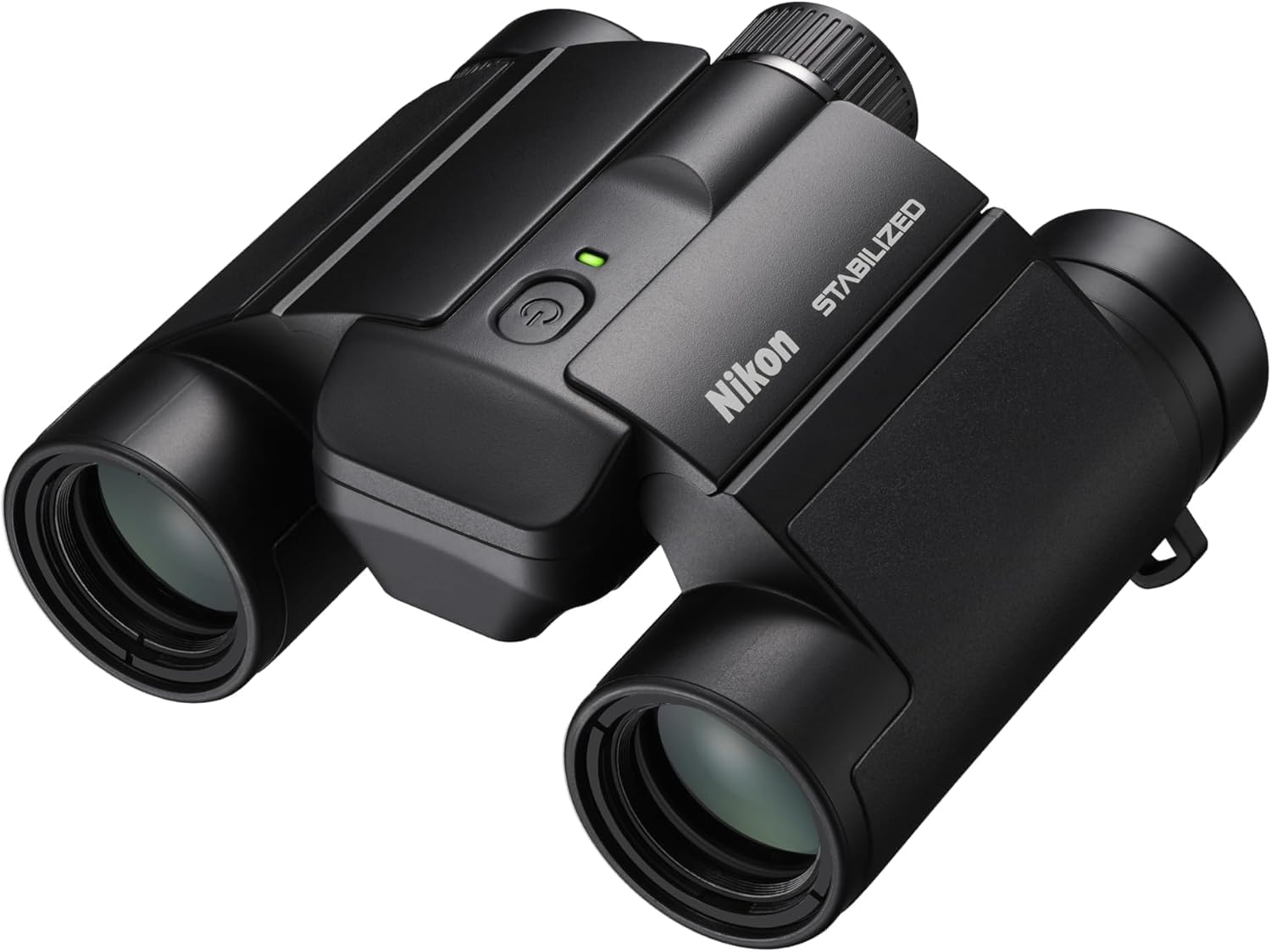
Image stabilization stands out as the biggest advantage for these binoculars, perfect for anyone tired of shaky views at concerts, sports, or birdwatching. Designed for handheld use, they offer steady, clear scenes that let you focus on details without fussing over a wobbling picture.
Setting them up is straightforward, with a center focus and a diopter adjustment range of +/-5 to fine-tune clarity. The 12x magnification hits a good balance of power without being too heavy or cumbersome. Thanks to the waterproof design and tripod mount compatibility, they handle outdoor use well and can be steady on a base if needed.
Optical clarity is sharp with multi-coated lenses and silver alloy prism coatings that bring out bright, true-to-life colors. The image stabilization technology works impressively well to reduce hand movement blur. The build feels solid, though some users mention the eye relief of 2.1 millimeters can feel a bit tight during long viewing sessions.
The image stabilization greatly improves handheld viewing, allowing steady, crisp images that keep distractions minimal. Some mention discomfort from the tight eye relief, which makes longer use less comfortable for certain users. The compact size helps portability but affects brightness in dim conditions.
People who prefer handheld, active use will appreciate the stable views and water resistance. Those needing extended eye relief or better low-light performance might look at larger binoculars with different optical designs for greater comfort and brightness.
Pros
- Effective image stabilization reduces hand shake
- Bright, sharp views from multi-coated lenses
- Waterproof for outdoor durability
- Compatible with tripod mounts for stable viewing
Cons
- Short 2.1 millimeter eye relief may feel uncomfortable
- Small objective lens limits low light performance
| Specification | Details |
|---|---|
| Magnification Maximum | 12 x |
| Objective Lens Diameter | 25 millimeters |
| Eye Relief | 2.1 millimeters |
| Water Resistance Level | Waterproof |
| Focus Type | Center Focus |
| Field of View | 236 feet |
11. Canon 15×50 IS Binoculars

Powerful 15x magnification paired with image stabilization makes these binoculars perfect for birdwatching, marine use, and astronomy. Their biggest strength lies in steady, clear views at long distances, ideal for those who need sharp images without fatigue from hand shake.
Setup includes inserting AA batteries and attaching the harness strap for comfortable all-day wear. The center focus knob allows quick adjustments, while manual diopter tuning fine-tunes clarity.
Water resistance means you can take them out in damp conditions without worry. The supplied travel bag and cleaning kit help keep the binoculars protected and clear on the go.
These binoculars deliver impressive image stabilization that reduces shake noticeably, making long viewing sessions easier. The build feels solid and weather-resistant, with multi-coated lenses that protect and brighten the view.
Strongest praise centers on the clear, stable image quality, though some note a bit of weight that might tire you over extended use.
Image stabilization is praised for delivering steady and sharp views over long distances, while the most common drawback is the binoculars’ weight and the manual focusing that requires some patience. The multi-coated lenses help in dimmer conditions, making details stand out.
Those who want clear, shake-free viewing at high magnifications will appreciate these binoculars, especially for birding or marine spotting. People looking for something lighter or simpler might prefer models without stabilization or lower magnification.
Pros
- Stable 15x zoom reduces hand shake strain
- Bright view with large 50mm objectives
- Water resistant for weather durability
- Included harness and cleaning kit
Cons
- Heavier than non-stabilized binoculars
- Takes time to get used to manual focus
| Specification | Details |
|---|---|
| Magnification Maximum | 15 x |
| Objective Lens Diameter | 50 mm |
| Field of View | 236 feet at 1000 yards |
| Image Stabilization | Yes |
| Water Resistance Level | Water Resistant |
| Focus Type | Center Focus |
12. Fujinon Techno-STABI TS-L2040 20×40 Binoculars

Spotting distant birds, following athletes on a field, or watching a boat from shore becomes easier with stabilized binoculars that handle shaky hands and long-distance viewing. Designed to work well in different outdoor settings, these bring steady views even at high magnifications, making handheld use reliable without needing a tripod.
Setting up involves just holding and manually focusing. Thanks to the built-in electronic image stabilization reducing up to ±3° of shake, you get clear, steady images at either 16x or 20x magnification. Multi-coated lenses help with visibility in low light, while the waterproof design keeps them safe in damp or marine environments.
Manual focus and diopter adjustments let you tailor the clarity for your eyesight.
Seeing subjects clearly from far away is the main strength, enabled by smooth stabilization technology. The binoculars feel solid and well-made, with a roof prism design and multi-coated optics that deliver sharp images. Some find the 2 mm exit-pupil diameter a bit small in dim conditions, requiring closer attention to hold steady, but most agree the stability beats standard binoculars by a wide margin.
The strongest point is the electronic stabilization that allows handheld viewing at high power with steady images. A frequent comment involves the smaller exit pupil which can make low-light viewing less comfortable and demands careful handling. The waterproof and solid construction support rugged outdoor use.
Ideal for those needing stable, zoomed views in varied outdoor settings such as bird watching, hiking, or marine activities. Users wanting easier low-light performance or faster focusing might look at other options with larger exit pupils or different focusing systems.
Pros
- Effective electronic image stabilization
- Waterproof build for outdoor use
- Manual focus for precise adjustments
- Multi-coated lenses improve low-light clarity
Cons
- Small 2 mm exit pupil limits low-light brightness
- Manual focus may require some practice
| Specification | Details |
|---|---|
| Magnification Maximum | 20 |
| Objective Lens Diameter | 40 millimeters |
| Image Stabilization | ±3° correction |
| Water Resistance Level | Waterproof |
| Field of View | 8.33 degrees |
| Focus Type | Manual Focus |
Comparison of Top Stabilised Binoculars Reviewed
| Product | Magnification | Objective Lens Diameter | Specific Uses | Mount Type |
|---|---|---|---|---|
| Canon 12×36 IS | 12x | 36 mm | Hunting | Tripod Mount |
| SIG SAUER Zulu6 16×42 | 1x | 42 mm | Hunting, Sports | Tripod Mount |
| Canon 10×42 L IS | 10x | 42 mm | Bird Watching | Tripod Mount |
| Canon 10×30 IS II | 10x | 30 mm | – | Harness Mount |
| SIG SAUER Zulu6 HDX Pro | 1x | 42 mm | – | – |
| SIG SAUER Zulu6 HDX Pro | 16x | 50 mm | Hunting, Outdoors | Tripod Mount |
| SIG SAUER Zulu6 HDX Marine | 16x | 42 mm | – | – |
| Fujinon Techno-Stabi 14×40 | 14x | 40 mm | – | Handheld |
| Canon 15×50 IS | 15x | 50 mm | Bird Watching | Tripod Mount |
| Nikon Stabilized 12×25 | 12x | 25 mm | Outdoor Activities | Tripod Mount |
| Canon 15×50 IS (Duplicate) | 15x | 50 mm | Bird Watching, Marine | Tripod Mount |
| Fujinon TS-L2040 20×40 | 20x | 40 mm | Bird Watching, Marine | Handheld |
- Magnification12x
- Objective Lens Diameter36 mm
- Specific UsesHunting
- Mount TypeTripod Mount
- Magnification1x
- Objective Lens Diameter42 mm
- Specific UsesHunting, Sports
- Mount TypeTripod Mount
- Magnification10x
- Objective Lens Diameter42 mm
- Specific UsesBird Watching
- Mount TypeTripod Mount
- Magnification10x
- Objective Lens Diameter30 mm
- Specific Uses–
- Mount TypeHarness Mount
- Magnification1x
- Objective Lens Diameter42 mm
- Specific Uses–
- Mount Type–
- Magnification16x
- Objective Lens Diameter50 mm
- Specific UsesHunting, Outdoors
- Mount TypeTripod Mount
- Magnification16x
- Objective Lens Diameter42 mm
- Specific Uses–
- Mount Type–
- Magnification14x
- Objective Lens Diameter40 mm
- Specific Uses–
- Mount TypeHandheld
- Magnification15x
- Objective Lens Diameter50 mm
- Specific UsesBird Watching
- Mount TypeTripod Mount
- Magnification12x
- Objective Lens Diameter25 mm
- Specific UsesOutdoor Activities
- Mount TypeTripod Mount
- Magnification15x
- Objective Lens Diameter50 mm
- Specific UsesBird Watching, Marine
- Mount TypeTripod Mount
- Magnification20x
- Objective Lens Diameter40 mm
- Specific UsesBird Watching, Marine
- Mount TypeHandheld
How to Choose the Right Stabilised Binoculars
Choosing the right stabilised binoculars involves focusing on image stability, weight, and battery life to ensure comfortable and clear viewing. Prioritizing these factors helps avoid frustration and costly replacements, providing a better long-term experience for your outdoor activities.
Image Stabilisation Quality
Using this type of optics without effective stabilisation technology often leads to a shaky view, especially when handheld at higher magnifications. Gyroscopic systems typically provide the most consistent reduction in vibrations, allowing the image to stay steady even during hand tremors or boat movements.
Sensor-based stabilisation also helps but tends to be less effective when motion is rapid or irregular.
Good stabilisation makes a noticeable difference in image clarity and reduces eye strain, which helps during long observation sessions. Most quality models offer a stabilisation rating capable of compensating for at least 3 degrees of shake. Expect smoother viewing with devices using multi-axis gyros rather than just single-axis sensors.
Ergonomics and Handling
Holding these devices for extended periods can get uncomfortable quickly if they are too heavy or bulky. Units weighing around 700 to 900 grams strike a good balance, fitting well in hands without causing fatigue. A textured rubber grip combined with well-placed buttons makes a big difference in everyday use, allowing for firm handling and quick adjustments.
Controls positioned near the thumb or index finger enable smooth one-handed operation, which is essential when you need your other hand free for other tasks. Avoid models with hard-to-reach buttons or overly small switches, as these slow down reaction times during active use.
Battery Life and Power Source
Most of these products run on AA or rechargeable lithium-ion batteries. AA batteries are widely available and easy to swap in the field, but lithium-ion packs generally offer longer runtime, typically between 8 to 12 hours on a full charge.
Planning for a full day out means checking the expected battery life carefully.
Replacing AA batteries is straightforward but can be cumbersome if the compartment is hard to access or requires tools. Rechargeable models often feature USB ports for charging, which adds convenience but needs charging opportunities. A clear battery indicator is helpful to avoid surprises during use.
Durability and Weather Resistance
These instruments often undergo rough handling outdoors, so a tough build is essential. Aluminum or magnesium alloy bodies offer good impact resistance without adding excessive weight. Rubber armoring helps absorb shocks and provides better grip in wet conditions.
Most units come with water resistance ratings (IPX4 or higher) and sealed lenses to prevent fogging and moisture ingress. Proper sealing also keeps dust out, maintaining clear optics and longevity even in dusty or damp environments, making them dependable throughout varied weather.
Maximizing Performance: Tips for Using Stabilised Binoculars Effectively
Stabilised binoculars provide clear, steady views by compensating for hand movements, but their full benefit comes with correct use. Holding the binoculars firmly with both hands close to your face reduces shake further. Avoid extended arms or loose grips that transmit more movement.
Using a neck strap or harness helps keep the device steady during spotting.
Activating the stabilisation feature before focusing is important. Some models take a moment to stabilise the image after powering on the system, so waiting a few seconds ensures sharper visuals.
Aim the binoculars at your subject calmly, avoiding quick shifts in position.
- Use the dioptre adjustment to tailor focus for your eyes individually.
- Practice smooth panning to track moving objects without causing jitters.
- Keep batteries charged; underpowered units can deliver poorer stabilisation.
These habits help maximize image stability and clarity during outdoor observation or other detailed viewing tasks.
Maintaining Your Stabilised Binoculars: Care and Cleaning Best Practices
Proper maintenance extends the life and performance of stabilised binoculars. Clean the lenses regularly using a quality lens cloth or microfiber towel to avoid scratches. Start by gently blowing off dust and debris; rubbing grit over the glass can damage coatings permanently.
Use a lens cleaning solution sparingly on stubborn smudges, applying it to the cloth rather than directly onto lenses. Store the binoculars in their protective case after use to keep out dust and moisture.
Keep the battery compartment dry and check for corrosion regularly if your unit uses replaceable cells.
- Avoid exposing electronics to extreme temperatures or humidity.
- Do not submerge the binoculars in water unless explicitly rated as waterproof.
- Inspect moving parts and buttons for dirt buildup that can impair operation.
Following these simple care steps ensures reliable performance and helps maintain clear, stable images over years of outdoor adventures.
Alternatives to Stabilised Binoculars: Exploring Optical Image Stabilisation Options
Optical image stabilisation is available in several device types besides stabilised binoculars. Some spotting scopes include built-in stabilisation to reduce hand shake during long-distance viewing.
These often provide larger objective lenses and higher magnifications suited for detailed nature observation.
Camera lenses with optical image stabilisation are another option, especially for wildlife photography that blends still imaging with binocular functionality. While these lenses stabilise image blur, they do not usually provide the same ergonomic viewing experience as handheld binoculars.
Monoculars with stabilisers offer a more compact form factor, preferred for quick observations when carrying minimal gear. Electronic viewfinders or binocular attachments for smartphones also utilise digital stabilisation technology to deliver steadier images.
- Consider your activity type when choosing between these tools.
- The level of stabilisation control varies by product and price.
- Trying different devices at a store can help identify what fits your habits best.
Understanding alternatives broadens options for steady viewing in the field beyond traditional binoculars.
People Also Asked
How Do I Properly Clean and Maintain Stabilised Binoculars?
Use a soft microfiber cloth and lens cleaning solution to clean the lenses gently. Avoid touching the lenses with dry or rough materials to prevent scratches. Keep the batteries charged and store the binoculars in their case when not in use to protect the stabilization mechanism.
What Size Stabilised Binoculars Are Suitable for Birdwatching Trips?
Binoculars with an aperture around 30-42mm work well for birdwatching. They provide a good balance between light gathering and portability. Check the weight; too heavy stabilised models may become tiring to hold during long trips.
Are Stabilised Binoculars Safe to Use During Extended Outdoor Activities?
Stabilised binoculars are generally safe for extended use outdoors, as they reduce hand shake and eye strain. It is important to keep them waterproof and dustproof for the environment. Carry spare batteries if the model requires power.
How Long Do Stabilised Binoculars Typically Last with Regular Use?
Regular use with proper care can keep stabilised binoculars functional for several years, typically five to ten years. Battery life and mechanical parts might require occasional servicing or replacement. Always follow the manufacturer’s maintenance tips to avoid damage.
What Common Issues Should I Watch for in Stabilised Binoculars?
Common issues include battery drain, loss of image stabilization, and sensor misalignment. Dust or moisture entering the device can also cause problems. Watch for uneven image clarity or strange noises, and address them by checking seals or professional repair.
Conclusion
Focus on image stability and battery life first, since these determine how well the binoculars perform over time. Also consider weight and ease of use, especially for long periods. Clear optics and good build quality matter, but they come after those basics.
Think about where you’ll use the binoculars most and how often, then pick one that fits your budget and meets those needs without extra features you won’t use. Review the comparison table and the detailed options above to find the right balance.