Top 12 Best Skeet Thrower That Will Boost Your Accuracy!
Cheap skeet throwers often fail at crucial moments, sending clays off in unpredictable directions or breaking down after minimal use. A dependable best skeet thrower makes shooting practice consistent and enjoyable, avoiding the frustration of misfires or flimsy construction. Getting the wrong model means extra time resetting clays or dealing with frequent repairs, which can cut practice sessions short.
A quality skeet thrower typically features sturdy materials like heavy-duty steel or reinforced plastic to withstand outdoor use and repeated impact. Size and weight matter too; around 20 to 30 pounds is common, providing enough mass for stability without being cumbersome to move.
Power comes from a strong spring or pneumatic system capable of launching clays up to 50 meters with consistent speed and angle. Safety features such as trigger locks and protective guards are crucial, as well as simple designs that make cleaning and maintenance straightforward after use.
Need a Quick Check?
| Image | Product | Price |
|---|---|---|
Our Top Picks 1  | VEVOR Clay Pigeon Thrower | Check Price |
Our Top Picks 2  | Caldwell Claymore Manual | Check Price |
Our Top Picks 3  | Champion Workhorse Electronic | Check Price |
Our Selected Top 12 Skeet Thrower Worth Buying
This list features carefully chosen skeet throwers designed for various skill levels and needs. Each review explains how the product performs, highlights its advantages and drawbacks, and suggests who might benefit most from using it.
1. VEVOR Clay Pigeon Thrower
Perfect for shooters who want consistent, hands-free clay launching, the VEVOR Clay Pigeon Thrower stands out for its foot pedal control that lets you trigger targets without using your hands. Ideal for classes or team practice, it accommodates 28 targets for continuous shooting sessions.
Setting it up involves connecting to a 12V deep cycle battery, which you need to buy separately. The 9.84 ft foot pedal cord allows you to activate launches every two seconds just by stepping on it, then stop instantly when you lift your foot.
You can adjust the launch angle to vary your shooting distance, making it adaptable to different practice scenarios.
It performs well when launching clay pigeons over long distances, with a sturdy build made from carbon steel and aluminum alloy that supports heavy use. The main praise highlights the efficient, hands-free operation and high capacity for targets. A common inconvenience is that the battery is not included, so you need to arrange that separately for it to work.
The thrower’s hands-free firing and large clay capacity let users practice continuously without interruption. Most often mentioned drawback is the necessity to get a 12V deep cycle battery separately to make it operate. Users appreciate the convenience but must plan for that extra purchase.
It suits shooters looking for steady, repeated launches during group training or lessons, where multiple rounds are needed without reloading. Those wanting something lightweight or not wanting to handle external batteries may want to explore other options.
Pros
- Hands-free operation with foot pedal control
- Holds up to 28 clay targets for longer sessions
- Adjustable launch angle for varied shooting distances
- Sturdy carbon steel and aluminum alloy construction
Cons
- Requires separate 12V deep cycle battery
- Weighs over 27 pounds, less portable
| Specification | Details |
|---|---|
| Item Dimensions LxWxH | 30.71 x 22.83 x 29.13 inches |
| Item Weight | 27.1 pounds |
| Material | Carbon Steel & Aluminum Alloy |
| Size (Capacity) | 28 Clays |
| Foot Pedal Cord Length | 9.84 feet |
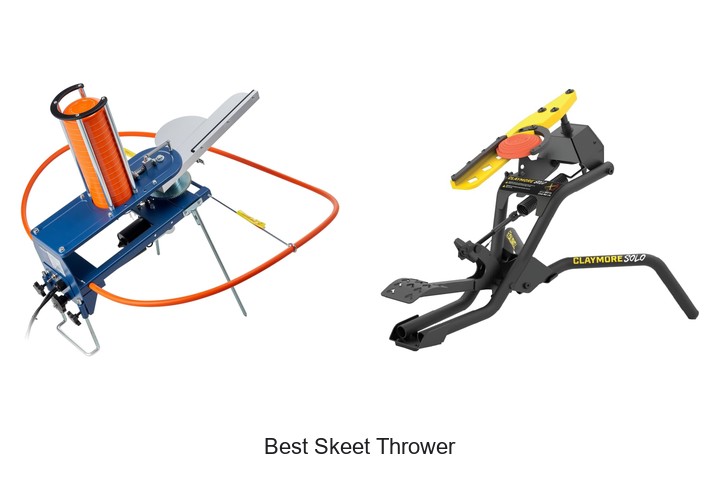
2. Caldwell Claymore Solo Manual Thrower
Caldwell Claymore Solo Manual Thrower offers reliable manual skeet launching powered by a foot pedal, making it ideal for shooters who want consistent control without relying on batteries. Its biggest strength lies in hands-free operation combined with adjustable angles and compatibility with various clay sizes.
Setup takes no time since the frame fully collapses for easy transport and storage, weighing just 15 pounds. Operating it daily involves stepping on the foot pedal to launch clays, while the auto-resetting arm returns after every throw so you can reload quickly without touching the throwing mechanism.
Adjustments to launch angle between 10 and 40 degrees allow for some customization of flight trajectory.
The thrower performs solidly for both single and double launches. Built from durable steel, it feels sturdy and reliable. Praise often highlights the convenience of the foot pedal and the auto-resetting feature, while some mention the device’s 23-pound weight as a consideration during long carry or setup.
Users appreciate the simple foot pedal that triggers throws without batteries and the safety of not needing to touch the arm when reloading. Some report the weight feels substantial during transport, making it less convenient for long treks or frequent moves.
Shooters seeking a steady, manual skeet thrower for local use or modest travel will find this model fitting. Those who prioritize lightweight gear or prefer battery-powered launches might want to explore alternatives.
Pros
- Foot pedal operation avoids battery dependency
- Auto-resetting arm for hands-free reloads
- Adjustable launch angle for varied targets
- Compact and collapsible for easy transport
Cons
- Weighs 23 pounds, which feels heavy to carry
- Manual pedaling may tire users over long sessions
| Specification | Details |
|---|---|
| Item Weight | 23 pounds |
| Launch Angle | Adjustable 10-40 degrees |
| Compatible Clay Sizes | Standard, midi, mini |
| Item Dimensions (LxWxH) | 29 x 25 x 22 inches |
| Package Weight | 10.46 kg |
| Frame | Fully collapsible |
3. Champion Workhorse Electronic Trap
Using this skeet thrower feels straightforward thanks to its compact and portable design. It works well for anyone wanting a reliable trap that handles targets up to 75 yards, making it great for both casual shooting and practice sessions.
One big strength is the quick 2.5 second reset that keeps the shooting flow smooth.
Setting it up each time is simple because of its manageable size and included cover and manual. The 53-clay magazine means fewer reloads during use.
The electronic trigger responds quickly, so it doesn’t hold you back whether you’re practicing alone or with friends. Moving it around or storing it doesn’t feel like a chore due to its compact shape.
The thrower consistently launches clay targets as far as expected, making shots challenging and satisfying. It feels solidly built without any unnecessary bulk.
Reviews often mention how reliable it is at ejecting clays but sometimes note occasional glitches with the electronic mechanism. Its design balances portability with durability in a way that appeals to many users.
Consistent target distance and a fast reset are highlights of this thrower, making shooting sessions fluid. Most take note of occasional electronic issues, requiring some troubleshooting during use. Its straightforward setup and portability contribute positively to everyday practice.
This model fits well for anyone needing a solid, portable trap for varied practice distances. Those looking for ultra-durable electronics or longer warranty coverage might prefer options with stronger support.
Pros
- Compact and easy to transport
- Quick 2.5 second reset time
- Large 53-clay magazine capacity
- Throws targets up to 75 yards
Cons
- Occasional electronic trigger glitches reported
- Limited warranty information from manufacturer
| Specification | Details |
|---|---|
| Sport Type | Clay Pigeon Shooting |
| Throws targets up to | 75 yards |
| Clay magazine capacity | 53 |
| Reset Time | 2.5 seconds |
| Included Components | Trap thrower, Cover and Manual |
4. Birchwood Casey Wingone Handheld Clay Thrower
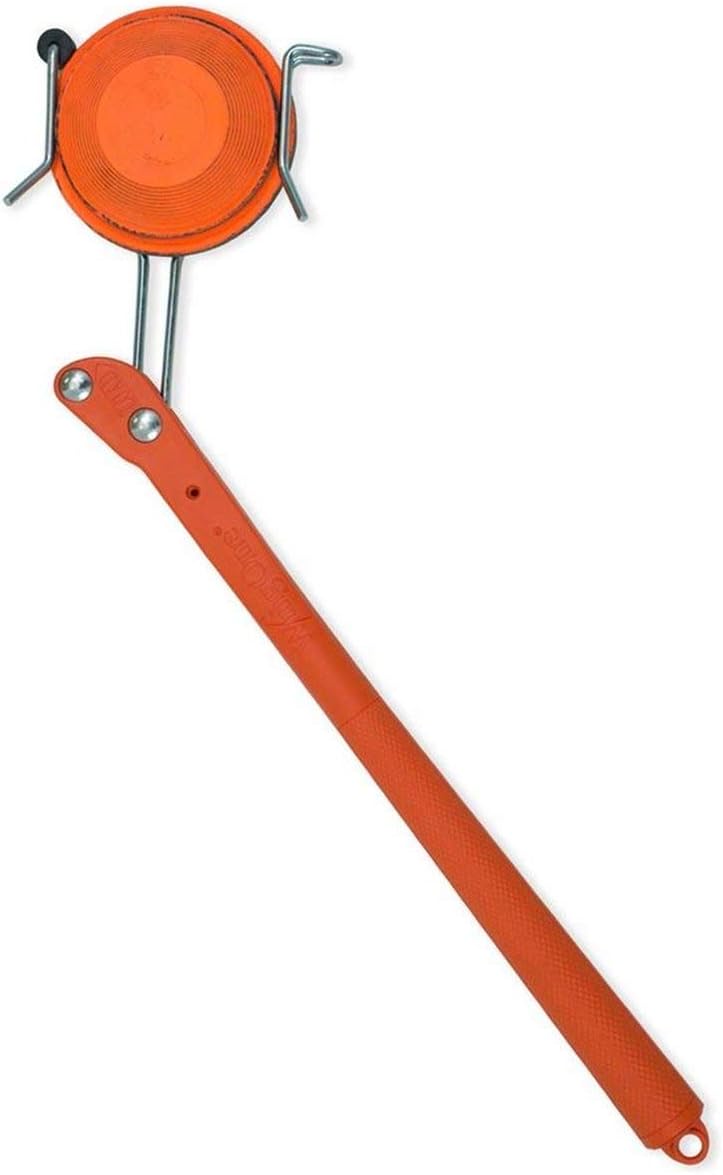
Ideal for anyone looking to practice clay pigeon shooting realistically, the Wingone handheld clay thrower stands out with its ability to mimic unpredictable flight paths. It suits shooters seeking variable target angles to build better shooting skills while keeping the setup simple and safe.
Using the thrower is straightforward thanks to its handheld design, which allows quick adjustments in how the clay targets are released. Loading clays is easy with the drop-in system that prevents breakage, meaning less wasted clays during sessions.
It’s light enough to carry around for extended shooting practice without causing fatigue.
The thrower consistently performs well in simulating different trajectories, speeds, and distances, helping to create a more dynamic target practice experience. Built tough, it has rugged construction meant to last a lifetime.
The main praise focuses on its durability, while the typical complaint involves its right-hand-only design limiting use for left-handed shooters.
The thrower is praised for its rugged design and ability to diversify target trajectories, making practice more realistic and effective. Complaints mainly highlight that it only caters to right-handed shooters, restricting who can use it comfortably. Everyday handling is simple, but the choice of direction limits versatility.
Shooters wanting to replicate live shooting conditions with variable targets will find this a good fit. Left-handed shooters or those needing other target types might want to look elsewhere for more suitable options.
Pros
- Easy drop-in loading prevents breakage
- Generates varied flight angles and distances
- Compact handheld design for simple adjustments
- Strong, rugged construction for durability
Cons
- Only available for right-handed use
- Limited to throwing standard clay targets
| Specification | Details |
|---|---|
| Sport Type | Clay Pigeon Shooting |
| Brand Name | Birchwood Casey |
| Number of Items | 1 |
| Included Components | Handheld Clay Target Thrower |
| Item Type Name | Birchwood Casey WingOne Handheld Clay Target Thrower – Right Hand |
5. ASR Outdoor Clay Target Disc Thrower

Plastic construction and a bright orange design make this skeet thrower easy to spot and use. Designed to fit standard 4.5 clay targets, it suits both left and right-handed shooters. Its biggest strength lies in its lightweight, portable feel that works well for outdoor and indoor target practice.
Setting it up takes no time, thanks to the simple manual design. The 19 handle length fits comfortably in the hand whether you are left or right-handed.
Compact and weighing only 5.28 ounces, it’s easy to carry around for backyard sessions or camping trips. The bright orange color helps quickly locate it and safely control the throw.
Performance hits the mark for launching clay targets across short or long distances. Made of durable plastic, it holds up well despite repeated use. Most appreciate its consistent and smooth throw, though some mention the plastic feels a bit light for rough handling.
It reliably throws clay discs with good visibility downrange.
Users find the manual clay thrower consistently produces good target flight with its handy 19″ handle and visible color. Complaints mostly focus on the lightweight plastic, which can feel less sturdy during heavy outdoor use.
Great choice for casual backyard or camping use, especially if portability and ease are priorities. Those seeking a more powerful option for frequent high-intensity practice might want to consider other choices.
Pros
- Lightweight and easy to carry
- Suitable for left and right-hand users
- Fits universal 4.5″ clay targets
- Bright orange for high visibility
Cons
- Plastic feels lightweight and less durable
- Limited to standard 4.5″ clay targets only
| Specification | Details |
|---|---|
| Item Weight | 5.28 ounces |
| Item Dimensions LxWxH | 19 x 4.5 x 1 inches |
| Material | Plastic |
| Handle Length | 19 inches |
| Clay Target Size | Standard 4.5 inches |
| Color | Bright Orange |
6. Champion WheelyBird Auto-Feed Trap

Easy transportation stands out right away with the Champion WheelyBird Auto-Feed Trap. It’s best suited for shooters looking for a portable skeet thrower that handles auto-feeding without complicated setups.
Its single biggest strength is how simple it makes clay launching during practice sessions.
Setting up takes just a few minutes, and its wheeled base makes moving it around the range easy. The auto-feed design handles loading, so you don’t need to manually reload each target.
Daily use involves just plugging it in and adjusting the angle, making consistent shooting drills quick and straightforward.
Performance is solid with reliable clay throws nearly every time, making it ideal for regular shooting practice. Construction feels sturdy enough for outdoor conditions.
Many users appreciate its dependable auto-feeding mechanism, while some mention that occasional mechanical jams can slow things down.
Reliable auto-feeding is praised as a major convenience for uninterrupted shooting. Meanwhile, occasional jams with the clays happen and need quick attention to resume use. The solid build holds up well, but the weight can be a drawback when carrying long distances.
People who want a simple, portable skeet thrower with steady target feeding will enjoy this setup. Those needing something ultra-light or completely jam-free might want to look at lighter, simpler manual models instead.
Pros
- Auto-feed keeps targets coming without interruption
- Wheeled base makes moving around easy
- Adjustable throwing angle for varied shot practice
- Consistent power usage at 15W
Cons
- Occasional clay jams require manual clearing
- Heavier than some portable models at 31 lbs
| Specification | Details |
|---|---|
| Power | 15W |
| Weight | 31 lbs |
| Feed Type | Auto-feed |
| Mobility | Wheeled base for easy transport |
| Throwing Angle Adjustment | Yes |
| Voltage | 120V/60Hz |
7. Shooting Made Easy Full-Cock Manual Thrower

Choosing the Shooting Made Easy Full-Cock Manual Thrower means you get a simple, sturdy device designed to improve your clay shooting skills without the fuss of batteries. It’s ideal for those who want a manual thrower with solid build quality and capable of launching singles or doubles for a consistent challenge.
Setting up mainly involves making sure the thrower is securely placed outdoors where you want to practice. It doesn’t require any power source, which makes it easy to move around.
The full-cock mechanism allows you to prepare each throw manually, helping focus on timing and accuracy rather than relying on electronic controls.
Its main job of throwing clay targets is handled reliably, offering decent distance and trajectory for shooting practice. The build mixes steel and lightweight aluminum, making it durable enough to handle different weather conditions.
Most praise focuses on its weather-resistant finish and sturdiness, while the common complaint is that being 100% plastic in parts can feel less durable compared to all-metal models.
The thrower is praised for its durable build and effectiveness at throwing targets in various weather conditions. The manual aspect means no batteries or electronics, appealing to those wanting straightforward operation, though repeated cocking can tire users faster than powered models.
Ideal for outdoor enthusiasts wanting a reliable manual thrower with weather resistance. Those looking for something fully metal or automated might prefer other options. This fits well for practice sessions emphasizing reaction and precision control rather than convenience.
Pros
- Full-cock mechanism for controlled throwing
- Weather-resistant finish for outdoor use
- Throws singles or doubles
- No battery required for operation
Cons
- Parts made 100% plastic can feel less sturdy
- Manual cocking requires physical effort each throw
| Specification | Details |
|---|---|
| Sport Type | Clay Pigeon Shooting |
| Brand Name | Shooting Made Easy |
| Number of Items | 1 |
| Unit Count | 1 Count |
| Included Components | SME FCT TRAP THROWER |
| Model Number | SME-FCT |
8. Caldwell Claymore Target Thrower

Loading and throwing multiple clay targets without electricity can be a real challenge at a casual range or outdoor shoot. Perfect for solo shooters, the Caldwell Claymore Target Thrower stands out with its manual operation and ability to toss clays over 55 yards, making practice convenient anywhere without plugs or batteries.
Setting up takes only a few minutes since it’s portable and folds down for easy transport. Once in position, you simply use one foot pedal to charge and another to release the clay. For those who want to keep shooting steady, connecting the pedals enables continuous step-and-throw action.
Holding up to 50 clays means fewer stops to reload during your session.
The thrower reliably hurls targets over 55 yards with consistent power, ideal for realistic skeet or trap practice. It’s solidly built at 35 pounds but remains manageable for carrying.
Most people appreciate how straightforward the manual foot pedal system is, although a few mention the thrower’s weight can make long carries tiring.
Users find the foot pedal setup intuitive and powerful, easily throwing clays beyond 55 yards without needing electricity. The most common drawback is its weight, which some find cumbersome when moving it around frequently.
Solo shooters wanting a durable, manual thrower at home or on the range will appreciate its reliability and portability. Those needing something lighter or electric-powered might consider other options better suited for frequent transport or less physical effort.
Pros
- Manual operation works anywhere outdoors
- Holds up to 50 clays for longer sessions
- Continuous throw mode through pedal connection
- Compact and folds for transport
Cons
- Weighs 35 pounds, can be heavy to carry
- Manual effort may tire users over time
| Specification | Details |
|---|---|
| Dimensions | 40″ L x 27″ W x 36″ D |
| Weight | 35 lbs |
| Clay Capacity | 50 clays |
| Throw Distance | Over 55 yards |
| Power Source | Manual (no electricity) |
9. Caldwell ClayCopter Handheld Electric Launcher
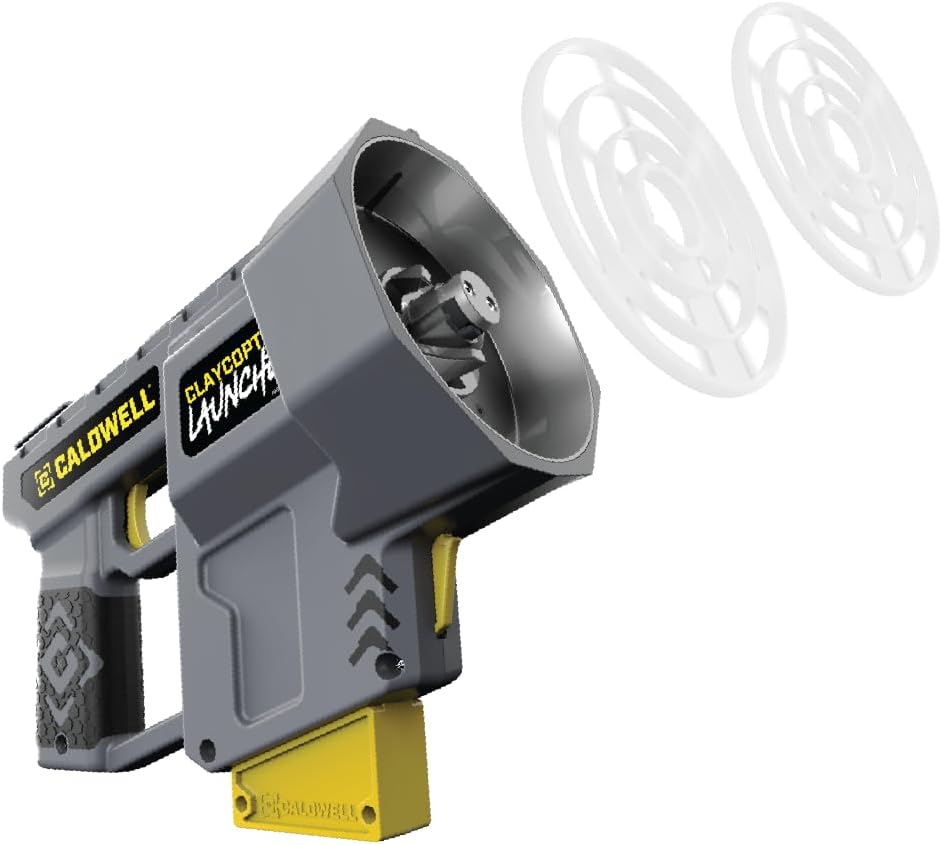
Weighing less than 3 pounds and powered by a rechargeable 12 Volt Lithium-Ion battery, the Caldwell ClayCopter Handheld Electric Launcher is perfect for shooters wanting a portable and powerful skeet thrower. Its biggest strength is delivering up to 300 launches on a single charge, making it ideal for extended practice sessions anywhere.
Setting up the launcher requires no cords or wires, so it’s ready out of the bag with just a point-and-shoot action. The compact size fits easily into most range bags, and handling it feels natural in the hand. Adjusting angles for single or double targets is quick, which keeps practice engaging and varied.
Launching targets up to 100 yards, it offers variable speed for different skill levels. The construction feels solid yet lightweight, making it easy to carry and maneuver. Review feedback highlights how reliable the battery life is, while some mention the handheld design demands steady control to avoid fatigue during long sessions.
The launcher is praised for its long-lasting battery and portability, offering up to 300 target launches without needing a recharge. Common complaints point to arm fatigue from holding it handheld during extended use, as well as the skill needed to maintain consistent launch angles.
This model will satisfy shooters looking for a compact, cordless option suitable for various locations. Those seeking a less physically demanding setup for heavy or prolonged use might consider a stationary thrower instead.
Pros
- Lightweight and easy to carry
- Up to 300 launches per battery charge
- No cords or extra setup required
- Variable speed for adjustable challenge
Cons
- Handheld design can tire the arm over time
- Requires steady control to maintain accurate launch angles
| Specification | Details |
|---|---|
| Sport Type | Clay Pigeon Shooting |
| Weight | Less than 3 pounds |
| Battery Type | Rechargeable 12 Volt Lithium-Ion |
| Maximum Launch Distance | Up to 100 yards |
| Product Type | Clay Thrower |
10. Do All Outdoors Flyway 30-30 Automatic Thrower

Anyone serious about improving their skeet shooting will appreciate the Do All Outdoors Flyway 30-30 Automatic Thrower. Its standout feature is the capacity to hold 30 clay pigeons and launch them continuously with a quick recycle time. Ideal for those who want to spend more time shooting and less time reloading.
Setting up involves placing the unit on the ground and adjusting the front legs to one of three throwing angles for varied flight paths. The 10 ft foot pedal cord keeps you mobile and ready, helping maintain a consistent rhythm during practice. Reloading is straightforward thanks to the large 30-clay capacity, reducing interruptions for longer sessions.
The thrower reliably launches clays over 55 yards, providing realistic flight paths thanks to adjustable angles. Its solid build and weight (28.5 pounds) keep it stable during use, though some find it a bit heavy to move frequently.
The main praise centers on its continuous firing capability, while the occasional complaint points to the manual angle adjustment, which some wish was automated.
Continuous clay feeding with a 2.5-second recycle time enables longer practice with less downtime. A common drawback is the manual process required to change the throwing angle, which some find inconvenient during sessions.
Shooters seeking consistent long-distance throws and realistic flight variation will benefit the most. Those needing a lightweight or automated angle changer might prefer a different model.
Pros
- Holds 30 clays for fewer reloads
- Throws targets over 55 yards
- Adjustable trip angles for varied practice
- Long foot pedal cord for convenient operation
Cons
- Manual angle adjustment could be more user-friendly
- Relatively heavy to move around
| Specification | Details |
|---|---|
| Clay Capacity | 30 |
| Throw Distance | 55+ yards |
| Recycle Time | 2.5 seconds |
| Activation | 10 ft foot pedal cord |
| Weight | 28.5 pounds |
| Dimensions | 34 x 32 x 32 inches |
11. Champion WheelyBird 3.0 Auto-Feed Trap

Designed for serious clay pigeon shooters, this trap stands out with its fast cycle time and large capacity. Ideal for those who want rapid, continuous shooting sessions without frequent reloads, it handles heavy practice with ease thanks to its ability to hold up to 60 targets and throw them quickly.
Set up involves wheeling it into position with the ultra-wide tires that handle rough ground smoothly. The built-in cart storage for the battery keeps everything compact, and the foot pedal release lets you launch targets rapidly.
Wrapping up is straightforward with the integrated cord wrap, making transport and storage less of a chore.
Throwing clay targets up to 70 yards, it challenges users seeking longer shots. The unit’s build supports fast shooting cycles under 1.5 seconds, so it keeps pace during training or friendly competitions.
The most appreciated feature is its long throw range, but some note the set weight can be a bit of a drawback during frequent moves.
The standout feature is its capacity to hold 60 targets and throw them rapidly, making it excellent for sustained shooting. Most users appreciate the distance the clays travel, although some find moving the unit regularly to be a challenge due to its weight.
Shooters who prioritize long-distance throws and quick cycles will find it well suited to their needs. Those needing something lighter or less involved with setup and transport may want to consider alternative models better designed for easy mobility.
Pros
- Holds a large number of targets
- Quick cycle time between throws
- Easy to move with wide tires
- Integrated cord wrap keeps cables tidy
Cons
- Heavier to transport frequently
- Foot pedal release may require practice
| Specification | Details |
|---|---|
| Sport Type | Clay Pigeon Shooting |
| Brand Name | Champion |
| Throw Cycle Time | Under 1.5 seconds |
| Clay Target Capacity | Up to 60 targets |
| Throw Range | Up to 70 yards |
12. Do All Outdoors Flyway 4×4 180X Automatic Thrower

Do All Outdoors Flyway 4×4 180X Automatic Thrower delivers powerful, continuous clay target launches with a large 180-pigeon capacity, ideal for serious trap shooters. Its standout strength is the motorized wobbler system, which adds unpredictable flight paths, making practice more challenging and realistic for hunting training.
Setting up is straightforward despite its size and weight, thanks to the included wireless remote with a 300-foot range and a 15-foot foot pedal cord, offering flexible control over the thrower. Reloading is infrequent, letting you focus more on shooting thanks to the large magazine.
The steel build feels solid and the automatic thrower recycles quickly every 2.5 seconds, keeping targets coming nonstop during practice sessions.
Performance meets expectations with clay pigeons flying over 55 yards consistently, suited for an extensive range of shooting needs. The steel construction ensures durability and stability but adds considerable weight at over 120 pounds, making it less portable. Most appreciate the device’s randomizing wobbler feature; a common downside is its heaviness and bulk, which can make transportation more difficult.
Thanks to the motorized wobbler system, the thrower realistically simulates hunting flights, making practice engaging. However, its weight and size often come up as practical drawbacks, especially for those needing frequent setup changes or transportation.
This thrower is best for serious trap shooters who want continuous target launch and realistic flight paths without frequent reloads. Better suited for stationary use at home ranges than for shooters who need a lighter, more portable option.
Pros
- Holds a large 180 clay pigeons
- Motorized wobbler for flight randomization
- Wireless remote with 300-foot range
- Quick 2.5-second recycle time
Cons
- Heavy at 121.5 pounds, hard to move
- Large size may limit transport options
| Specification | Details |
|---|---|
| Clay Pigeon Capacity | 180 |
| Throw Distance | 55+ yards |
| Recycle Time | 2.5 seconds |
| Remote Control Range | 300 feet |
| Weight | 121.5 pounds |
| Material | Steel |
Top Skeet Throwers Comparison Table
| Product | Weight | Dimensions (LxWxH) | Material | Warranty |
|---|---|---|---|---|
| VEVOR Clay Pigeon Thrower | 27.1 pounds | 30.71×22.83×29.13 in | Carbon Steel & Aluminum | – |
| Caldwell Claymore Manual | 23 pounds | 29x25x22 in | Steel | Limited Lifetime |
| Champion Workhorse Electronic | – | – | – | – |
| Birchwood Casey Wingone Thrower | – | – | – | – |
| ASR Clay Target Disc | 5.28 ounces | 19×4.5×1 in | Plastic | – |
| Champion WheelyBird Auto | – | – | – | – |
| Shooting Made Easy Manual | – | – | – | – |
| Caldwell Claymore Target | – | – | – | – |
| Caldwell ClayCopter Electric | – | – | – | – |
| Do All Flyway 30-30 | 28.5 pounds | 34x32x32 in | – | – |
| Champion WheelyBird 3.0 | – | – | – | – |
| Do All Flyway 4×4 180X | 121.5 pounds | 35x16x15 in | Steel | See Manufacturer |
- Weight27.1 pounds
- Dimensions (LxWxH)30.71×22.83×29.13 in
- MaterialCarbon Steel & Aluminum
- Warranty–
- Weight23 pounds
- Dimensions (LxWxH)29x25x22 in
- MaterialSteel
- WarrantyLimited Lifetime
- Weight–
- Dimensions (LxWxH)–
- Material–
- Warranty–
- Weight–
- Dimensions (LxWxH)–
- Material–
- Warranty–
- Weight5.28 ounces
- Dimensions (LxWxH)19×4.5×1 in
- MaterialPlastic
- Warranty–
- Weight–
- Dimensions (LxWxH)–
- Material–
- Warranty–
- Weight–
- Dimensions (LxWxH)–
- Material–
- Warranty–
- Weight–
- Dimensions (LxWxH)–
- Material–
- Warranty–
- Weight–
- Dimensions (LxWxH)–
- Material–
- Warranty–
- Weight28.5 pounds
- Dimensions (LxWxH)34x32x32 in
- Material–
- Warranty–
- Weight–
- Dimensions (LxWxH)–
- Material–
- Warranty–
- Weight121.5 pounds
- Dimensions (LxWxH)35x16x15 in
- MaterialSteel
- WarrantySee Manufacturer
How to Choose the Best Skeet Thrower
Choosing a good skeet thrower involves considering durability, ease of use, and adjustable settings to suit different shooting styles. Getting these factors right helps avoid frequent repairs and ensures consistent performance, saving both time and money in the long run.
Throwing Mechanism and Power
A lot depends on how the throwing mechanism is built, as it directly affects the shooting experience. Some skeet throwers use spring-loaded systems, while others rely on electric motors.
The spring type can be tricky because they sometimes lack smoothness in releasing the clay, leading to early or uneven launches. Electric models generally provide more consistent and controlled throws but may demand careful maintenance.
Adjustable power is essential to control how far the target goes. A good model will allow fine-tuning of power levels, giving you options for short or long shots. Pay attention to how smoothly the machine releases the clay; jerky or delayed launches throw off timing and training quality.
Most effective devices offer multiple power settings and reliable, steady trigger actions.
Durability and Build Quality
Materials directly impact how well a skeet thrower holds up during repeated outdoor use. Many models use aluminum or steel frames because they resist rust and provide sturdy construction.
Cheaper plastics might reduce weight but often don’t withstand rough weather, leading to cracks or warping over time.
Moving parts are particularly vulnerable to dust, moisture, and wear. Longevity improves when manufacturers include sealed or well-protected joints and use corrosion-resistant finishes.
Machines that feel solid and have tight joints usually last longer without frequent repairs, even after exposure to rain or dirt.
Portability and Setup
Carrying a heavy thrower around a field or to different locations quickly becomes frustrating with bulky, oversized units. A compact, lightweight design helps a lot, making transport and setup easier.
Some throwers fold or break down into smaller parts, which simplifies storage without taking up much space.
Simplicity in assembly matters for users who want to spend more time shooting than fiddling with equipment. Look for quick-release pins or screws that don’t require special tools.
A balanced weight that’s not too heavy but still stable helps in loading and retrieval, saving time before each session.
Safety Features
The risk of accidental launches is real, so secure locking mechanisms are crucial. Some machines have physical locks that block the trigger or prevent the arm from moving until you’re ready.
This protects against unexpected releases when setting up or handling the clay disks.
User protection during operation includes guards around moving arms to prevent pinching or injuries. Stability should not be ignored, as uneven ground can tip lightweight or poorly balanced units.
Wide, adjustable legs or weight distribution features help maintain a steady base, especially on rough terrain.
Power Source and Runtime
Power options vary a lot, with some skeet throwers running off batteries, a direct plug-in AC source, or manual effort. Battery-powered units offer mobility but depend on how long the battery lasts and how fast it recharges. Runtime can be a limiting factor if there’s no quick swap or recharge solution.
Manual models don’t rely on power but require physical input each throw, which can tire you out during longer practice. AC-powered machines provide constant power but lack portability, confining use to spots with outlets. Choosing a machine that balances your need for mobility and runtime will avoid interruptions during training.
Tips for Improving Accuracy with a Skeet Thrower
Consistent accuracy with a skeet thrower starts with proper setup. Position yourself so that you have a clear line of sight and a stable stance. Holding the skeet thrower steady reduces stray throws and helps maintain aim.
Adjust the angle carefully before each shot; minor changes dramatically affect the clay’s trajectory.
Try these tips:
- Practice releasing the clay at the same point in your throwing motion to create consistent flight paths.
- Use the same throwing arm and keep your wrist firm to prevent wobbling in the throw.
- Regularly check the tension or spring force if your thrower has adjustable settings, too loose or tight impacts accuracy.
- Focus on your posture. A balanced stance with feet shoulder-width apart improves control over each throw.
Training with gradual increases in speed and difficulty helps build precision over time.
Essential Maintenance Practices to Extend Your Skeet Thrower’s Lifespan
Routine maintenance is key to keep a skeet thrower working smoothly and prevent unexpected failures. Start by inspecting moving parts like the arm and pivot points for signs of wear or rust.
A simple cleaning after each use removes dirt and debris which can clog mechanisms. Wiping down surfaces and lightly oiling metal joints prevents corrosion.
Maintenance actions to remember:
- Check tension springs or cables for any fraying or loss of elasticity, replacing parts as necessary.
- Tighten all bolts and screws regularly to avoid loosening after repetitive use.
- Store the thrower in a dry place, preferably covered, to shield it from moisture and dust.
- Test the release mechanism before each session to confirm it operates smoothly without sticking.
Investing time in these practices extends the device’s lifespan and ensures reliable performance during shooting sessions.
Comparing Manual and Automatic Skeet Throwers: Pros and Cons
Manual skeet throwers give direct control over the throw, which some shooters prefer for timing and feel. They tend to be simpler devices with fewer parts, making them lighter and easier to carry.
However, manual throwers require more practice to achieve consistent throw distance and speed.
Automatic skeet throwers use a motor or spring mechanism to launch the clays, offering more uniform throws. They reduce physical effort, especially during long shooting sessions, and can maintain steady timing. On the downside, they usually cost more and need a power source or batteries.
Key points:
- Manual models excel in portability and simplicity, but can tire out the user quickly.
- Automatic devices offer consistent throws but come with higher maintenance demands.
- Choosing between them depends on how often you shoot, your budget, and convenience preferences.
Both types serve the purpose of skeet shooting well when matched to the user’s style and needs.
People Also Asked
How Do I Properly Care for My Skeet Thrower?
Clean your skeet thrower after each use to remove clay residue and dirt. Lubricate moving parts occasionally with a light oil to keep it operating smoothly. Store it in a dry place to prevent rust or damage from moisture.
What Size Skeet Thrower Is Suitable for Beginners?
A lightweight skeet thrower around 8 to 12 pounds works well for beginners. This size is easier to handle and reduces fatigue during extended shooting sessions. Look for simple manual models to learn basic mechanics before moving to heavier, automatic types.
Are Skeet Throwers Safe to Use in Residential Areas?
Skeet throwers can be used safely in residential areas if proper precautions are taken. Check local regulations and maintain a clear, open area free of people, pets, and breakables. Avoid throwing clays toward homes or streets to prevent accidents or damage.
How Long Does a Typical Skeet Thrower Last?
A well-maintained skeet thrower can last several years, often a decade or more. Regular cleaning and proper storage significantly extend its life. Pay attention to wear on parts like springs and arms, replacing them as needed to keep it working properly.
What Are Common Problems with Skeet Throwers and Fixes?
Common problems include throwing clays unevenly or the thrower jamming. Check if the arm spring or pivot points need adjustment or lubrication. Also, ensure clays are placed correctly and are the right size for the thrower to prevent malfunctions.
Conclusion
Durability, ease of use, and stability are the key factors to focus on when choosing a skeet thrower. The machine should handle repeated use without frequent breakdowns. Controls matter too, since you want to launch targets consistently with minimal adjustments.
Portability is less important unless you need to move the device often. Pay attention to the throwing distance and angle options as well, so you can practice a range of shots.
Match the skeet thrower to the space you have available and how often you plan to practice to avoid unnecessary expenses. Checking the comparison table and product details above can help narrow down the right model for your specific needs.
Take your time reviewing those points before making a purchase to ensure you get dependable performance.