Top 13 Best Radioddity Dual Band Antenna You Need Now
Poor signal and constant dropouts during communication sessions are common frustrations when using a cheap or incompatible dual band antenna. The best radioddity dual band antenna reduces these issues by providing a reliable connection on both VHF and UHF frequencies, typically covering 144-148 MHz and 420-450 MHz bands.
Without the right antenna, handheld radios and mobile setups struggle to maintain clear transmission and reception, especially in urban environments or complex terrain.
What makes a good dual band antenna stand out are build quality, correct length for resonance, and matching impedance. Reliable antennas use stainless steel or copper elements for durability and consistent performance. Proper length elements ensure the antenna resonates on both 2 meters and 70 centimeters bands, usually around 17-19 inches for VHF and 7-8 inches for UHF elements.
An impedance close to 50 ohms is essential for efficient power transfer and minimal signal loss, helping radios operate at their full potential.
Need a Quick Check?
| Image | Product | Price |
|---|---|---|
Our Top Picks 1  | Radioddity RD-331 Handheld | Check Price |
Our Top Picks 2  | Radioddity CBL-561 Telescopic | Check Price |
Our Top Picks 3  | Radioddity UV-711 Whip | Check Price |
Our Selected Top 13 Radioddity Dual Band Antenna for Different Needs
This list features a variety of dual band antennas designed for different uses and environments. Each review covers performance details, suitability for various users, and highlights the main advantages and disadvantages to help you make an informed choice.
1. Radioddity RD-331 Dual Band Handheld Antenna
Great value for anyone looking to upgrade their handheld radio’s antenna for better signal reliability. Suited especially for those using Radioddity two-way radios like the GD-77 or GD-77S. Its standout feature is the dual band support offering stable signals across VHF and UHF frequencies.
Setup involves simply replacing the old antenna with this one using the SMA-M connector, which fits perfectly on compatible handheld radios. Daily use shows the improved signal stability and better immunity to interference, making communication clearer.
The antenna is lightweight enough not to weigh down the radio, and switching between the 136-174MHz and 400-470MHz bands is smooth due to its dual-band design.
The antenna performs solidly on both VHF and UHF, handling most communication needs well thanks to its high gain design. Build quality feels reliable and it’s clearly made with durability in mind. Positive notes highlight consistent signal clarity, while some users mention it could be bulkier compared to basic antennas, which might affect portability.
Signal stability and anti-interference performance stand out as the antenna’s strongest points. Many appreciate clear communication across both bands, yet some mention its size as a drawback for easy carrying. Everyday use benefits from dependable reception but may feel less compact compared to stock antennas.
Ideal for users with Radioddity handheld radios needing better signal handling and durability. Those who prioritize a more minimal or lighter antenna might want to explore slimmer options designed for convenience over gain.
Pros
- Supports both VHF and UHF bands
- Improved anti-interference performance
- Fits SMA-M radios easily
- Durable and well-built construction
Cons
- Some find it bulkier than standard antennas
- Limited compatibility to SMA-M connector radios
| Specification | Details |
|---|---|
| Frequency Range | 136-174MHz / 400-470MHz (144/430MHz) |
| Brand | Radioddity |
| Model Number | 875368403 |
| Compatibility | Handheld radios with SMA-M antenna like GD-77S, GD-77 |
| Number of Items | 1 |
2. Radioddity CBL-561 Dual Band HF Telescopic Antenna
Made from sturdy materials, this telescopic antenna suits anyone using Radioddity mobile radios needing a reliable dual band option. Its biggest strength is the wide frequency support covering both 10-meter and 11-meter bands, helpful for various communication setups.
Setup involves adjusting the telescopic segments to match the desired frequency range, which is straightforward. Daily use means clear communication with minimal signal loss thanks to its low SWR of ≤1.3:1. The antenna connects easily with Radioddity radios like the QT80 or CB-900 PRO, handling power levels up to 1000W without trouble.
Performance meets expectations with stable signals on both key bands. The build feels solid and durable, designed for high power capacity.
The strongest praise highlights its consistent signal clarity. However, some mention that the antenna can feel a bit bulky when fully extended, which affects portability.
Clear and reliable communication is a consistent benefit due to the antenna’s low SWR and high power capacity. The main drawback shared is its size when fully extended, which can be inconvenient for those needing a more compact setup.
Ideal for anyone who frequently uses Radioddity mobile radios and needs solid performance on the 10 and 11-meter bands. Not the best choice for users seeking a lightweight or highly portable antenna solution.
Pros
- Wide frequency range for versatile use
- Low SWR ensures clear signal transmission
- Handles up to 1000W power safely
- Compatible with multiple Radioddity radios
Cons
- Can be bulky when fully extended
- Limited to Radioddity radio models only
| Specification | Details |
|---|---|
| Frequency Range | 25-30MHz |
| SWR | ≤1.3:1 |
| Power Capacity | Up to 1000W |
| Compatibility | Radioddity QT80, QT60, QT40, CB-900 PRO, CS-47, CB-500 |
| Warranty | 18 Months Warranty & Lifetime Support |
3. Radioddity UV-711 Dual Band Whip Antenna
Stainless steel construction stands out immediately with this Radioddity UV-711 antenna, designed for dual-band ham radio users who want durable and reliable performance. Its biggest strength is the strong corrosion resistance, which helps it last through daily outdoor use without losing signal quality.
Setting it up is straightforward thanks to the included L-wrench, allowing fast attachment and removal. The 31-inch length hits a good balance, making it easy to carry while still providing solid reception on both 144 MHz and 430 MHz frequencies. The PL-259 connector works with most dual-band mobile radios, ensuring compatibility without hassle.
Signal quality is consistent, with gains of 2.15dBi on 144 MHz and 5.5dBi on 430 MHz that support clear communication. The stainless steel build feels tough and well-made, resisting rust in outdoor conditions. Many appreciate the sturdy design, though a few note the antenna’s length could be shorter for tight spaces.
Stainless steel construction earns praise for durability and long life in outdoor conditions. The most common note is about the antenna’s 31-inch size, which some find too long for confined setups. Handling this length can be awkward in certain vehicle installations.
Someone who wants a reliable, corrosion-resistant antenna that works well on common dual bands will appreciate this product. Those needing a shorter or more compact antenna for limited space might want to explore smaller options.
Pros
- Highly corrosion-resistant stainless steel
- Good gain on both frequency bands
- Easy attachment with included L-wrench
- Compatible with most dual-band radios
Cons
- Length may be cumbersome in tight spaces
- Only suitable for 144/430 MHz frequencies
| Specification | Details |
|---|---|
| Frequency Range | 144/430 MHz |
| Gain | 2.15dBi (144 MHz), 5.5dBi (430 MHz) |
| Material | Stainless Steel |
| Length | 31 inches (775 mm) |
| Connector | PL-259 |
| Warranty | 18 months + lifetime support |
4. Radioddity RD-701 Dual Band Whip Antenna

Choosing a dual band antenna that fits a wide range of handheld two-way radios while offering solid gain makes this one stand out. Suited for anyone using radios with SMA-Female connectors like popular Baofeng and Wouxun models, it prioritizes consistent signal strength without overcomplicating setup.
Attaching the antenna is straightforward given the standard SMA-Female fit, and it feels light enough not to add bulk during daily carry. Its dual-band design covers both 144 and 430 MHz frequencies, meaning less swapping when changing channels.
Handling radios with up to 10 watts means it doesn’t strain on power, making daily communication reliable and simple.
Signal gain sits at 2.15 dBi, which performs well on both VHF and UHF bands for clear transmissions and reception. The whip is built solid but lightweight at just over 13 grams, so it balances durability with easy portability.
Most praise notes its dependable performance, while some mention a desire for a slightly longer antenna for extended reach.
Consistent gain and broad compatibility make the antenna reliable for most handheld radios, though some users find the whip a bit shorter than preferred. Its lightweight build helps daily carry but may not satisfy those seeking extended range without amplification.
People using popular SMA-Female radios looking for a dependable dual-band antenna will be happy with this. Those wanting longer antennas or different connector types should explore other options better tailored to those needs.
Pros
- Fits a wide range of handheld radios with SMA-Female
- Dual-band covers both 144 and 430 MHz
- Lightweight at just over 13 grams
- Supports up to 10 watts maximum power
Cons
- Antenna length might feel short for some users
- Not designed for radios requiring different connectors
| Specification | Details |
|---|---|
| Compatibility | SMA-Female radios, Baofeng, Wouxun, TYT, and similar |
| Frequency | 144/430 MHz |
| Gain | 2.15 dBi |
| Max Power | 10 Watts |
| Weight | 13.61 grams |
5. Bingfu Dual Band Mobile Ham Radio Antenna

Getting a reliable antenna for your mobile ham radio setup can be tricky, especially when switching between VHF and UHF bands. This dual band antenna is ideal for amateurs who want a simple, magnetic base antenna that covers both frequency ranges without constantly changing gear. Its main strength lies in the strong magnetic mount, making it easy to place on vehicles or boats.
Setting it up is straightforward thanks to the magnetic base, which holds firmly on metal surfaces like a car roof or a boat deck. The 5-meter RG58 cable offers plenty of length to run from the antenna to your radio inside the vehicle.
Daily use means you don’t need to fuss with removals or adjustments much, as the antenna length of 42 cm balances signal pickup for both VHF and UHF bands nicely.
Signal reception on 136-174MHz and 400-470MHz is solid, allowing clear communication without constant interference. Build quality feels sturdy with a soft whip antenna that flexes rather than breaks on bumps.
The strongest point is definitely the magnetic base, which stays put even at highway speeds. A common gripe is the size of the antenna, which might be a bit longer than some prefer in tight spaces.
The magnetic base on the Bingfu dual band antenna sticks well to metal surfaces, holding the antenna firmly even on rough roads. Cable length offers good flexibility for mounting in different vehicle spots. Some find the antenna a bit short for VHF signals, which could reduce range in certain areas. Connector fits most mobile radios easily, making setup straightforward.
People using Radios from brands like BTECH, ICOM, or Radioddity will find this antenna a practical add-on for daily mobile use. Those needing the best performance on VHF should consider a longer antenna or specialized model. For casual marine or ham radio use in urban or suburban settings, this antenna works well and offers good value.
Pros
- Strong magnetic base for secure mounting
- Works on both VHF and UHF bands
- Long 5m cable for flexible installation
- Compatible with many popular radio brands
Cons
- Whip antenna length may be too long for some spaces
- Magnetic base requires a metal mounting surface
| Specification | Details |
|---|---|
| Frequency Range | 136-174MHz (VHF) and 400-470MHz (UHF) |
| Antenna Length | 42cm / 16.53 inches |
| Antenna Cable | 5m / 16.4ft RG58/U Cable |
| Cable Connector | UHF PL259 Male Connector |
| Magnetic Base | Strong Magnetic Base Mounting |
6. Radioddity RA-UV712 Magnetic Mount Antenna Kit

With a strong 2.5dB gain and a 91mm magnetic base, this antenna kit suits anyone needing reliable dual band coverage for mobile radios. It stands out for being ready to use straight from the box, fitting car and metal surfaces without drilling, making it a go-to for UHF/VHF/GMRS setups.
Setting up takes just a moment thanks to the magnetic base, which sticks firmly to the car or metal surface without fuss. The 4.5m heavy-duty RG58 cable allows flexible placement inside the vehicle. Daily use is straightforward as the antenna is easy to remove and store, making it convenient for travel or temporary installs on scanners or repeaters.
Performance matches its specs well, delivering clear signals around 136-174 and 400-520MHz with consistent reception. The build feels solid with durable cable and a strong magnet, although some users mention the cable length can be a bit long to manage. The most frequent praise points to signal quality, while the occasional complaint centers on cable handling.
Users appreciate the signal clarity and ease of setup without drilling, but handling the long cable can feel awkward at times during daily use. The magnetic mount stays secure but the bulk might not suit all vehicle types.
This antenna is ideal for anyone needing dependable dual band mobile reception without permanent installation. Those seeking a smaller or more compact antenna might consider alternative options better suited to tight spaces.
Pros
- This product is ready to use straight out of the box
- Strong magnetic mount avoids drilling
- Long heavy-duty RG58 cable included
- Good gain of 2.5dB at dual bands
Cons
- Cable length can be cumbersome to manage
- Magnet size may be bulky for small vehicles
| Specification | Details |
|---|---|
| Coverage | 136-174/400-520MHz |
| Antenna Length | 50cm / 19.7’’ |
| Cable Length | 4.5m / 14.8ft |
| Connector | PL-259 |
| Mount Type | Strong Magnetic Base (91mm / 3.6’’) |
7. Bingfu Dual Band Mobile Ham Radio Antenna

People using amateur or mobile radios will appreciate this dual band antenna for its wide frequency range and strong magnetic base. Ideal for ham radio enthusiasts and anyone needing reliable VHF/UHF performance on the go, its biggest strength is an easy-to-mount design that sticks firmly to any vehicle metal surface.
Setup takes just moments thanks to the strong magnetic base mount and included SMA to UHF adapter, making it flexible for different radio models. The 10-foot RG58 cable gives enough length to position the antenna effectively on a car roof or trunk.
Daily use involves quick attachment and stable signal reception, with the 47cm height balancing size and portability well.
Performance delivers solid two-way radio communication across 136-174MHz and 400-520MHz bands. The build feels sturdy, weighing 280g, and the magnetic mount holds tight in various driving conditions. Most find it great for mobile use, though some mention the magnet can struggle on non-metal surfaces or in strong winds.
Many appreciate the magnetic base’s holding power, which keeps the antenna stable on metal surfaces during travel. Some find the magnet less reliable on textured or plastic areas, limiting mounting options. The 47cm length balances signal strength with portability, but can be a bit tall depending on vehicle preference.
Those who often mount antennas on metal vehicle roofs or trunks will find it very convenient and effective. Anyone needing a compact setup or mounting on non-metal parts might consider alternatives that offer different attachment methods or shorter designs.
Pros
- Strong magnetic base for easy mounting
- Wide frequency coverage for VHF and UHF
- Included connector adapter increases compatibility
- Lightweight and portable design
Cons
- Magnet less effective on non-metal surfaces
- Height may be too tall for some vehicle setups
| Specification | Details |
|---|---|
| Frequency Range | VHF 136-174MHz, UHF 400-520MHz |
| Antenna Height | 47cm |
| Antenna Cable | 3m / 10 feet RG58/U Cable |
| Cable Connector | UHF PL259 Male Connector |
| Weight | 280g / 8.48 ounces |
| Included Adapter | SMA Female to UHF SO239 Female Connector |
8. Radioddity HF-010 Portable HF Vertical Antenna

Covering 10 HF bands from 80m to 6m, this antenna suits ham radio enthusiasts needing portable, multiband operation with up to 100W CW and 150W PEP SSB power handling. Its standout feature is the durable 304 stainless steel construction designed for outdoor use, promising reliable performance in varied environments.
Setting it up involves using the included tripod and ground spike, letting you quickly deploy the antenna almost anywhere. The sliding coil makes tuning across 60m to 17m straightforward, while fixed coils handle 80m efficiently.
Practical for field use, the coil’s enclosed design keeps it clean and stable against dust and moisture, easing maintenance during daily operations.
It delivers low SWR levels around 1.5:1, maintaining solid resonance across bands, which means clear and consistent contacts. Built tough with stainless steel connectors and a rigid frame, it resists corrosion well. The best-known advantage is its all-terrain reliability; some users mention the sliding coil might require careful handling to avoid damage during transport.
The antenna’s toughest feature is its ability to keep stable resonance with low SWR across multiple HF bands, while its main drawback is the sliding coil’s vulnerability if not handled gently. Its stainless steel build also stands strong against rough outdoor conditions.
People who want a solid, portable antenna for multiband HF work in changing environments will find this antenna a good match. Those needing higher power limits or less fiddly tuning might want to look at other options.
Pros
- Wide 10-band coverage from 80m to 6m
- Durable 304 stainless steel connectors and frame
- Low SWR (typically ≤1.5:1) across bands
- Enclosed sliding coil to protect from dust and moisture
Cons
- Sliding coil requires careful handling during transport
- Power limited to 100W CW / 150W PEP SSB
| Specification | Details |
|---|---|
| Frequency Coverage | 3.5–50MHz (80M–6M) |
| Power Handling | 100W CW / 150W PEP SSB |
| Material | 304 Stainless Steel Construction |
| Model Number | HF-010 |
| Features | Fixed coils for 80m, sliding tuning coil for 60m–17m |
| Warranty | 18 Months Warranty & Lifetime Support |
9. HYS Dual-Band NMO Trunk Mount Antenna Kit

HYS Dual-Band NMO Trunk Mount Antenna Kit offers reliable dual-band VHF and UHF coverage for hams who need flexibility in urban and open-field environments. Its single biggest strength is a complete plug-and-play setup that gets you on-air quick without extra parts.
Setting up includes mounting the L-bracket and attaching the 20-inch pretuned NMO whip. The 13-foot RG58 cable with a pre-installed PL-259 lets you connect straight to compatible Motorola, Kenwood, or Midland radios.
Swapping between VHF and UHF bands is straightforward, making daily use simple for highway communication or trail adventures.
Performance focuses on a 3.0dBi gain on VHF and 5.0dBi gain on UHF with VSWR under 1.5, providing solid signal reach and penetration in built-up areas. The stainless steel whip and sturdy base feel durable. Common praise highlights easy installation and dependable reception, while a noted complaint is the antenna’s physical length, which may feel a bit long for some installations.
Many users appreciate the antenna’s easy installation with everything included, making it quick to start using. The longest recurring gripe is its 20-inch length, which can be cumbersome in some vehicle or jobsite setups. This length is the trade-off for solid dual-band performance.
Those needing straightforward dual-band use and compatibility with radios like Motorola or Midland will find this antenna fitting well. Anyone wanting a more compact antenna or higher power handling should look elsewhere.
Pros
- Complete plug-and-play kit included
- Dual-band for VHF and UHF coverage
- Durable stainless steel whip
- Compatible with popular radio brands
Cons
- Antenna length is somewhat long for tight spots
- Limited to 100W max power input
| Specification | Details |
|---|---|
| Frequency Range | VHF 136-174MHz, UHF 400-470MHz |
| Gain | 3.0dBi (VHF), 5.0dBi (UHF) |
| Power Input | 100W max |
| Cable Length | 13-foot RG58 coax |
| Connector | PL-259 pre-installed |
10. Magnetic Mobile 2m/70cm Radio Antenna

Feels solid and reliable on any metal surface, ideal for someone needing strong dual-band reception on the go. Best suited for those using BTECH, AnyTone, Icom, or Radioddity mobile transceivers who want lasting signal strength from a magnetic mount antenna.
Its high-gain design really stands out for extending communication range.
Setup involves simply attaching the antenna’s magnetic base to a car or metal surface, where it stays firmly in place even at higher speeds thanks to its strong 14KG suction strength. Its waterproof and corrosion-resistant qualities mean it holds up well over time, without needing much maintenance.
Each side of the antenna corresponds neatly to one of the two frequency bands, making everyday tuning straightforward.
Reception and transmission meet expectations for a dual-band mobile antenna and noticeably improve communication range. Built with weather-resistant materials, it handles outdoor conditions without issue.
Strong magnet base keeps it secure, but its unique design might look unusual to some. The most frequent praise is for signal strength; the main complaint concerns the antenna’s size and appearance.
High-gain antenna delivers excellent range and the magnetic base secures it firmly at speed. Some find the size and distinct look less attractive compared to slimmer antennas. Maintenance is minimal thanks to water and corrosion resistance.
This antenna suits anyone needing a reliable dual-band setup on vehicles, especially outdoors. People looking for a discreet or low-profile antenna may want to consider smaller or non-magnetic alternatives.
Pros
- Strong holding power on metallic surfaces
- Good dual-band performance for reception and transmission
- Waterproof and corrosion-resistant design
- Compatible with multiple popular transceivers
Cons
- Unique design may not appeal visually
- Relatively large magnetic base size
| Specification | Details |
|---|---|
| Brand | YNIBST |
| Model Number | MS10US |
| Magnetic Base Diameter | 9cm / 3.5″ |
| Suction Strength | 14KG / 30.8lb |
| Frequency Bands | 2m / 70cm (Dual Band) |
| Number of Items | 1 |
11. Radioddity HF-008 Portable VHF/HF Telescopic Antenna

Compact and easy to carry, the Radioddity HF-008 Portable VHF/HF Telescopic Antenna suits ham radio enthusiasts who want a versatile antenna for outdoor use. Its best feature is a short storage length that makes it highly portable without sacrificing band coverage.
Setting up involves attaching the detachable split design, which packs down to just 78 cm, making it convenient for POTA activities. Adjusting frequency is simple with the plug-and-play feature; you just swap the jumper cable and tweak the antenna length. These design choices make it easy to switch bands quickly and carry the product smoothly on trips.
Performance is solid with SWR values ranging from 1.0 to 1.5 on various bands, allowing clear transmission across 6 to 80 meters. The antenna feels well-made with reliable connectors but some note that fine-tuning can take a little patience. It handles multiple bands well though it’s not fully pre-tuned out of the box.
Clear communication across multiple bands and portability stand out as major strengths. Adjusting the antenna length and jumper cable is straightforward but some users experience a learning curve during fine-tuning. The compact size allows you to carry it everywhere but it is not fully plug-and-play perfect out of the box.
Anyone needing a flexible, portable antenna for field use will find this a good fit. Those wanting instant perfect tuning without adjustments might need to look at other options. It suits ham radio users prioritizing mobility and broad band access over instant setup.
Pros
- Compact design ideal for outdoor POTA use
- Wide multi-band coverage across eight bands
- Easy tuning by switching jumper cable and adjusting length
- Reliable PL-259/SL16-K connector included
Cons
- Requires manual tuning for optimal SWR
- Setup may take practice for perfect adjustment
| Specification | Details |
|---|---|
| Storage Length | 78 cm / 30.7 in |
| Frequency Coverage | 6-80 Meters across eight bands |
| SWR Range | 1.0-1.5 |
| Connector Type | PL-259/SL16-K |
| Warranty | 18 Months Warranty & Lifetime Support |
12. Diamond X300A Dual-Band Base Station Antenna
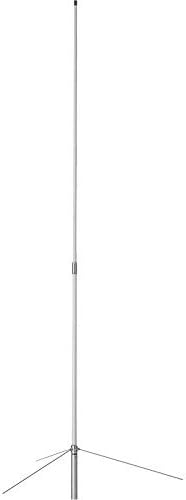
Fiberglass radome and corrosion-resistant hardware make this antenna tough for outdoor setups. Perfect for amateur radio operators needing solid dual-band performance on 2 meter and 70 centimeter bands.
Its main strength lies in providing strong transmit and receive signals without requiring complicated tuning.
Installing it on a tower or rooftop is straightforward thanks to durable construction. Daily operation benefits from the dual-band coverage across 144–148 MHz and 435–450 MHz, useful for repeater links and local nets.
No need to tweak settings often, so communications stay clear and consistent.
Signal gain reaches about 6.5 dBi on 2 meters and up to 9.0 dBi on 70 centimeters, giving noticeably better range and reception. The rugged design holds up well outdoors through various weather conditions.
Reviewers commonly praise its reliable performance but note it can be bulky for smaller installations.
Reliable signal gain and sturdy construction stand out as key advantages for this antenna. The common drawback is its size, which may not suit every installation space. It generally works well without frequent adjustments, making it a solid choice for use on 2 m and 70 cm amateur bands.
Those needing dependable outdoor base station antenna performance will appreciate this model. It favors setups that can accommodate its size and seek strong dual-band coverage. Operators requiring a compact or more flexible mounting solution might look for alternatives.
Pros
- Strong gain on both 2 m and 70 cm bands
- Durable fiberglass and corrosion-resistant parts
- Good for permanent outdoor installation
- Simple setup without complex tuning
Cons
- Relatively bulky for small towers
- Single unit pack limits extra mounting options
| Specification | Details |
|---|---|
| Model Number | X300A |
| Frequency Range | 144–148 MHz, 435–450 MHz |
| Gain | 6.5 dBi (2 m), 9.0 dBi (70 cm) |
| Material | Fiberglass radome, corrosion-resistant hardware |
| Number of Items | 1 |
| Warranty | 1 YEAR |
13. Tram Dual-Band Fiberglass Base Antenna

Tall and sturdy, the Tram Dual-Band Fiberglass Base Antenna suits anyone needing a powerful, reliable dual-band CB antenna. Its biggest strength lies in combining strong gain across both 144-148 MHz and 430-450 MHz bands with a fiberglass build designed to resist harsh weather conditions.
Installation is straightforward with its two-section fiberglass construction, which stays solid thanks to the special joint design. Daily use means a solid antenna that withstands wind up to 110 MPH without issue. The sealed radiator and coil keep the antenna stable and maintain low SWR regardless of rain or snow.
Static dissipation and lightning protection add to its dependability in various environments.
The antenna performs well on both VHF and UHF bands, offering 6 dBd gain on 144-148 MHz and 8 dBd gain on 430-450 MHz. It weighs just 2.2 pounds, yet its build feels tough with weatherproof fiberglass tubing.
Most praise is for its weather resistance, while some note its height at 8 ft. 4 in. can be a challenge for certain installations.
The antenna is widely appreciated for its durability and weatherproof design, which keeps the SWR low and signal quality steady in bad conditions. Common feedback highlights the antenna’s height as a tricky aspect for setups that require lower profiles or tight spaces.
Those needing a tough, high-gain dual-band antenna with solid weather resistance will be satisfied. Individuals facing tight mounting spots or looking for a shorter antenna might consider alternative models for easier installation.
Pros
- Strong dual-band gain for clear communication
- Heavy-duty fiberglass withstands harsh weather
- Sealed radiator and coil prevent moisture problems
- Static dissipation and lightning protection improve safety
Cons
- Height can be difficult to mount in some locations
- Only supports a single unit per pack, no extras
| Specification | Details |
|---|---|
| Power Rating | 200 watts |
| Frequency Range | 144 MHz to 148 MHz, 430 MHz to 450 MHz |
| Antenna Height | 8 ft. 4 in. |
| Gain | 6 dBd (VHF), 8 dBd (UHF) |
| Weight | 2.2 pounds |
| Maximum Wind Speed | 110 MPH |
Best Radioddity Dual Band Antennas Comparison Table
| Product | Coverage | Connector Type | Warranty | Weight |
|---|---|---|---|---|
| Radioddity RD-331 Handheld | – | – | – | – |
| Radioddity CBL-561 Telescopic | – | – | – | – |
| Radioddity UV-711 Whip | High Gain Stainless Steel | – | 18 months+ lifetime | – |
| Radioddity RD-701 Whip | – | – | – | 13.61 g |
| Bingfu Mobile Dual Band | 136-174/400-470 MHz | PL259 Male | – | – |
| Radioddity RA-UV712 Magnetic Kit | 136-174/400-520 MHz | – | – | – |
| Bingfu Dual Band Antenna | 136-174/400-520 MHz | PL259 Male | – | 8.48 oz |
| Radioddity HF-010 Portable Vertical | 80m-6m Multiband | – | – | – |
| HYS Dual-Band Trunk Mount | VHF 144 / UHF 430 MHz | UHF-male / PL259 | – | – |
| Magnetic Mobile 2m/70cm | Dual Band 2m/70cm | – | – | – |
| Radioddity HF-008 Telescopic | – | PL-259/SL16-K | 18 months+ lifetime | – |
| Diamond X300A Base Station | DualBand Base / Repeater | – | 1 year | – |
| Tram Fiberglass Base Antenna | – | – | 1 year | 2.2 lbs |
- Coverage–
- Connector Type–
- Warranty–
- Weight–
- Coverage–
- Connector Type–
- Warranty–
- Weight–
- CoverageHigh Gain Stainless Steel
- Connector Type–
- Warranty18 months+ lifetime
- Weight–
- Coverage–
- Connector Type–
- Warranty–
- Weight13.61 g
- Coverage136-174/400-470 MHz
- Connector TypePL259 Male
- Warranty–
- Weight–
- Coverage136-174/400-520 MHz
- Connector Type–
- Warranty–
- Weight–
- Coverage136-174/400-520 MHz
- Connector TypePL259 Male
- Warranty–
- Weight8.48 oz
- Coverage80m-6m Multiband
- Connector Type–
- Warranty–
- Weight–
- CoverageVHF 144 / UHF 430 MHz
- Connector TypeUHF-male / PL259
- Warranty–
- Weight–
- CoverageDual Band 2m/70cm
- Connector Type–
- Warranty–
- Weight–
- Coverage–
- Connector TypePL-259/SL16-K
- Warranty18 months+ lifetime
- Weight–
- CoverageDualBand Base / Repeater
- Connector Type–
- Warranty1 year
- Weight–
- Coverage–
- Connector Type–
- Warranty1 year
- Weight2.2 lbs
How to Choose the Right Dual Band Antenna
Choosing the right dual band antenna depends on factors like frequency compatibility, gain, and durability to ensure clear signals and reliable performance. Matching these features to your specific needs helps avoid interference and costly replacements, saving time and money in the long run.
Frequency Compatibility
Using an antenna that doesn’t cover both VHF and UHF bands can lead to weak or no signal on certain channels, limiting communication, especially in mixed environments. Radios often operate across a wide range, typically from around 136 to 174 MHz for VHF and 400 to 520 MHz for UHF. Antennas that clearly specify these frequency ranges ensure you’re not stuck with poor reception or transmission gaps.
Checking the exact frequency specs is crucial because a mismatch can cause frustrating dead zones or distorted signals.
Confirming that the antenna matches your radio model’s supported frequencies is also important. Overlapping bands or extra spectrum coverage don’t always help if the antenna doesn’t focus on your typical usage range. A good antenna in this category covers these standard bands without excessive trade-offs, making daily communication more reliable.
Gain and Performance
Signal strength depends heavily on the antenna’s gain, which is often measured in dBi or dBd. A higher gain antenna captures and transmits signals more effectively, but this can come with a narrower radiation pattern, concentrating coverage in certain directions. For handheld radios or base stations where omnidirectional coverage is preferred, about 2 to 5 dBi gain is practical.
Antennas focusing on a wider area prevent dead spots in everyday use.
Low signal loss is key for maintaining clarity, especially over longer distances. This means looking for well-made coaxial cables and antennas designed to minimize power drop. Radiation patterns also matter; omnidirectional antennas suit mobile use, while directional types work better for fixed locations.
Knowing your coverage needs helps in choosing an antenna that won’t disappoint in real-world conditions.
Build Quality and Materials
Outdoor antennas face constant exposure to rain, wind, and sun. Antennas made with stainless steel or weather-resistant coatings perform better over time, avoiding rust or corrosion that degrades signal quality.
Plastic or rubber parts should be UV-resistant to prevent cracking or brittleness. Ignoring build materials can result in frequent replacements and reliability issues.
Flexibility without compromising strength helps when antennas bend under pressure, such as in windy conditions or vehicle use. A rigid antenna might break, while one that flexes can absorb knocks. Checking for durable joints and solid base construction reduces the chance of failure.
A well-built antenna lasts longer and maintains better signal consistency, reducing maintenance.
Installation and Mounting Options
Installing an antenna can be a hassle if it doesn’t fit your setup or requires special tools. Antennas with standard mounts and connectors simplify attachment to radios, vehicles, or mast poles. Mounting options like magnetic bases, clamps, or threaded connectors make placement easier.
Size and weight affect where you can place the antenna. Bulky or heavy antennas may block windows or take up too much space, while compact, lightweight designs fit in tighter spots. For vehicle use, a low-profile antenna reduces wind drag and damage risk.
Ensuring mounting hardware is included or readily available saves frustration during setup.
Connector Type and Compatibility
Matching the antenna’s connector to the radio’s port ensures a secure fit and good signal transfer. Common types include SMA and BNC, often present on handheld radios. A connector that wiggles or isn’t sturdy causes signal interruptions and wear over time.
High-quality connectors are usually gold-plated or made from corrosion-resistant metals.
Adapters can bridge mismatched connectors, but they may add extra points of failure or signal loss. Checking availability and quality of adapters before purchase helps avoid surprises. A properly matched connector eliminates loose connections and improves consistency during regular use.
Optimizing Signal Performance with a Radioddity Dual Band Antenna
Using a Radioddity dual band antenna correctly can greatly improve signal reception for both 2-meter and 70-centimeter frequency bands. These antennas are designed to cover two ranges, reducing the need to switch or buy separate antennas.
Positioning the antenna vertically and away from large metal objects helps maintain a clear transmission path. Attaching the antenna to a higher location, like a rooftop or elevated pole, reduces interference from nearby structures and increases range. The antenna’s length and design support a balance between gain and portability, which is useful for mobile operations.
Some models include a flexible whip that can bend without breaking, which adds durability without sacrificing signal quality. Using the right connector type ensures a snug fit with the radio and reduces signal loss at the connection point, which is often overlooked but critical for maintaining strong communication.
Maintenance and Care Tips for Prolonged Antenna Longevity
Maintaining a Radioddity dual band antenna regularly helps keep it working well for a long time. Dirt and grime can accumulate around the base and connector, so wiping it down with a soft cloth and mild detergent helps avoid corrosion. Make sure the antenna mount and connectors stay firmly tightened; vibrations from vehicle movement can loosen them over time.
Checking for cracks or bends in the antenna whip periodically is important because these physical issues can degrade signal quality. Keep the plastic cover or protective cap on the antenna to prevent moisture from entering and damaging internal parts.
Applying a small amount of dielectric grease to the connectors can protect against rust and improve electrical contact. Proper storage during off-season months, in a dry place free from heavy pressure, preserves the antenna’s integrity.
Common Installation Mistakes and How to Avoid Them
Installing a Radioddity dual band antenna improperly can weaken signal quality despite the antenna’s design. One common mistake is mounting the antenna too close to metal surfaces or within a metal enclosure, which blocks radio waves and reduces range.
Failing to secure the antenna vertically can cause inconsistent transmission patterns because these antennas work best when aligned upright. Using the wrong type of coaxial cable or connector results in unnecessary signal loss; the cable length should be as short as possible, and connectors should be tight and matched to the antenna. Not grounding the antenna base increases risk of damage during electrical storms or static build-up.
Finally, over-tightening the antenna can damage threads or the mounting hardware, while too loose an installation risks it falling off or shifting during use. Taking time to ensure these steps are correctly followed helps avoid common performance issues.
People Also Asked
How Do I Properly Install a Dual Band Antenna for Radios?
Attach the antenna firmly to the radio’s connector, usually an SMA or similar screw-on type. Position it vertically to improve reception. Avoid placing the antenna near large metal objects which can block signals.
What Size Dual Band Antenna Works Best for My Handheld Radio?
A 6 to 8-inch antenna often balances portability and performance well for handheld radios. Short antennas make the device easier to carry, but a slightly longer one improves range.
Are Dual Band Antennas Safe to Use Indoors Near People?
Using a dual band antenna indoors near people is generally safe as they emit low power RF signals. Keep a short distance during transmission to minimize any weak exposure.
How Long Does a Typical Dual Band Antenna Last with Regular Use?
A dual band antenna typically lasts several years under normal use. Regularly check for loose connections and keep it from getting bent or crushed to extend its lifespan.
What Are Common Problems with Dual Band Antennas and Fixes?
Common issues include poor reception and loose connectors. Tighten all fittings and replace damaged antenna elements if reception degrades noticeably. Repositioning the antenna can also help solve signal problems.
Conclusion
Choosing the right dual band antenna comes down to three key factors: signal range, ease of setup, and build quality. The antenna should support the frequencies you need and fit well with your radio.
Also, check how durable it is since it might be exposed to weather or frequent handling.
Think about where you plan to use the antenna and how much space you have for installation. Budget also plays a role, so pick one that meets your needs without overspending. Refer back to the comparison table and detailed reviews above to find the option that fits your setup best.