Top 13 Best Radio Police Scanner Stations You Must Hear!
Cheap or poorly designed police scanner stations often struggle with weak signal reception, limited channel access, and unreliable audio quality, making it frustrating to monitor emergency frequencies effectively. People searching for the best radio police scanner stations understand how these issues can lead to missed critical information or a constant need to adjust settings during important events.
Strong antenna systems and a wide frequency range coverage are essential for good scanner stations, typically covering from 25 MHz to 1.3 GHz. The build quality matters too; a solid metal or reinforced plastic case helps with durability and reduces interference. Easy-to-use controls and a clear display can make scanning multiple channels less confusing, especially during fast-moving situations, while adequate power sources, often AC adapters or rechargeable batteries, ensure steady operation over long periods.
Need a Quick Check?
| Image | Product | Price |
|---|---|---|
Our Top Picks 1  | Uniden BC365CRS Scanner Clock | Check Price |
Our Top Picks 2  | Uniden SDS200 TrunkTracker X | Check Price |
Our Top Picks 3  | Uniden SDS150 GPS Scanner | Check Price |
Our Selected Top 13 Radio Police Scanner Stations for Different Needs
This list features a variety of radio police scanner stations designed to meet different user needs and preferences. Each review covers key performance aspects, suitability for various users, and highlights both strengths and potential drawbacks to help you make an informed choice.
1. Uniden BC365CRS Scanner and Alarm Clock
Keeping an ear on local police, fire, and emergency channels can feel complicated, but a device like this fits right on your bedside table and makes it simple. It suits anyone who wants easy access to a variety of analog scanner channels plus an FM radio and alarm clock combo, with the standout feature being its 500-channel capacity and presets for popular emergency and public service bands.
Setting it up is straightforward, thanks to the pre-sets covering police, fire, weather, marine, aircraft, and more. You simply plug it in with the corded electric power and use the push buttons to switch channels or save up to 30 FM radio stations. The alarm clock function adds a practical touch, making it a compact, multi-use device for daily monitoring or background listening.
Performance is solid for analog signals, capturing a wide range of non-digital police, fire, and emergency broadcasts clearly. The build is designed to sit comfortably on a tabletop with a simple and functional design. Most appreciate the variety of channels and ease of use, but the noise level at 50 db is noticeable, and some find the reliance on alkaline batteries a bit limiting for backup power.
The scanner features an extensive 500-channel range with helpful pre-sets for frequently listened-to emergency bands, making it easy to tune in right away. Many users note the noise from the unit can be distracting, especially in quiet environments. Having an alarm clock and FM radio integrated adds real convenience, too.
This device fits well for someone wanting a straightforward, multi-function tabletop scanner without digital complexity. Those needing quieter operation or digital channel options might want to look for other models, as this one focuses on analog signals with some audible fan noise and battery backup requirements.
Pros
- 500 channels with presets for easy scanning
- Built-in FM radio with 30 memory presets
- Includes alarm clock feature
- Simple push button controls
Cons
- Audible noise level around 50 db can be loud
- Relies on 3 AA alkaline batteries for backup
| Specification | Details |
|---|---|
| Channels | 500 |
| Power Source | Corded Electric |
| Battery Description | Alkaline |
| Number of Batteries | 3 AA batteries required |
| Audible Noise | 50 db |
| Control Method | Push Button |
2. Uniden SDS200 TrunkTracker X Digital Scanner
Offering a 3.5 fully customizable color display, the SDS200 TrunkTracker X suits anyone wanting clear, detailed info on police and emergency channels with ease. Its standout feature combines true I/Q digital scanning tech and an extensive, regularly updated database, making it reliable even on tricky digital simulcast systems.
Setting up involves connecting via USB and using the intuitive HomePatrol database that covers all US and Canadian radio systems. Daily use is smooth thanks to easy customization of the display colors and fields, letting you focus on exactly the information you want. Updating the database happens weekly, so staying current takes minimal effort.
It handles digital and analog transmissions with impressive clarity and speed, designed to pick up on the more complex systems without missing a beat. The build is solid, with a bright LED display that’s easy to read.
Most praise highlights its dependable performance with challenging digital signals, while some note the standard sheet capacity being a bit low.
Performance receives strong praise for picking up digital simulcast transmissions effectively even in tough areas. A common drawback relates to the device’s somewhat limited sheet capacity and reliance on USB connections, which might inconvenience those wanting more flexible use or extended storage capabilities.
Those focused on monitoring digital police scanners in the US and Canada will find this very suitable. People needing portable options or more storage might look for alternatives with different connection types or larger capacities.
Pros
- Customizable 3.5″ color display for clear info
- Includes up-to-date US and Canada radio databases
- Handles digital simulcast systems well
- Weekly database updates via Sentinel software
Cons
- Limited standard sheet capacity of 10
- USB connection may limit portability options
| Specification | Details |
|---|---|
| Scanner Type | Radio Scanner |
| Connection Type | USB |
| Resolution | scanner |
| Standard Sheet Capacity | 10 |
| Light Source Type | LED |
| Media Type | USB |
3. Uniden SDS150 Digital Radio Scanner with GPS
People who need detailed and reliable coverage of police and emergency radio stations will find this scanner ideal. It suits those who spend time outside or on the move and want a portable unit with great reception. Its biggest strength is its enhanced sensitivity that picks up signals clearly, even in tricky areas.
Setting up takes just a few minutes with a user-friendly interface and a clear digital display. Daily use benefits from the lightweight design and long battery life, making it easy to carry around for extended periods.
Bluetooth connectivity connects to your smartphone, while the built-in GPS helps locate your position for better scanning accuracy. Weather alert adds a useful safety feature in outdoor environments.
Signal reception is strong thanks to advanced filtering and TrunkTracker X support, covering many common radio systems like APCO P25 Phase I & II and Motorola. The build strikes a good balance between lightness and ruggedness, suitable for professional daily use without feeling bulky.
Some users find the menu navigation less intuitive at first, but the controls become straightforward quickly.
The scanner excels in picking up a wide range of digital and analog systems with minimal interference, making it dependable for serious scanning. The most common challenge is mastering the control layout, which takes some time but is manageable. Battery replacement requires attention due to the nonstandard type.
Those regularly outside or needing GPS functionality will appreciate this model’s portability and features. It works best for users comfortable with a brief learning curve on the interface. Anyone wanting a simpler, plug-and-play scanner might prefer a more basic option without complex menu navigation.
Pros
- Enhanced signal reception reduces interference
- Lightweight yet rugged construction
- Bluetooth and smartphone compatibility
- Built-in GPS for location tracking
Cons
- Menu navigation can feel confusing at first
- Uses a nonstandard battery needing careful replacement
| Specification | Details |
|---|---|
| Connectivity Technology | Bluetooth |
| Frequency | 1300 MHz |
| Tuner Type | TrunkTracker X, APCO P25 Phase I & II, Motorola, EDACS, LTR DMR Tier III*, Hytera XPT*, Single-Channel DMR* NXDN 4800/9600*, EDACS ProVoice* |
| Power Source | Battery Powered |
| Additional Features | Weather Alert |
| Water Resistance Level | Water Resistant |
4. Whistler WS1025 Analog Desktop Scanner
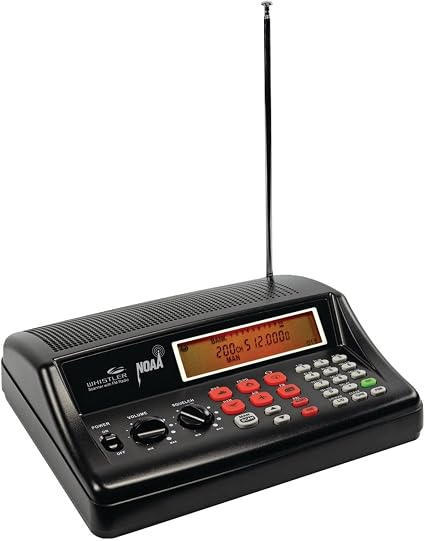
Designed for experienced desktop scanner users, this model stands out for its precise priority channel scanning and flexible scan delay options. It excels in letting you monitor important frequencies regularly without missing replies, making it ideal for those who want a detailed, hands-on listening experience.
Daily setup involves tuning to find new frequencies starting from a specified point. The priority channel feature checks a chosen frequency every two seconds while scanning others, so you won’t miss critical updates.
A two-second scan delay gives you a chance to catch responses before moving on. Bluetooth connectivity adds some convenience, though the focus remains heavily on manual configuration and watching your preferred channels closely.
Performance-wise, it picks up analog signals clearly and reliably. The build is sturdy, with standard desktop dimensions and straightforward controls.
Many praise how well it handles priority scanning and delay settings, while some mention it requires a bit of learning to get the most out of its features due to its focus on the experienced user.
Many appreciate how the priority channel and scan delay features let them catch important communications without missing replies. The most frequent drawback is that the scanner can be complicated to set up and operate without prior experience.
Those comfortable managing detailed settings and seeking specific analog frequencies will find this scanner fitting well. People new to desktop scanners might want to consider simpler alternatives with easier controls.
Pros
- Priority channel checks frequency every 2 seconds
- Scan delay to catch responses before moving on
- Tune function finds unlisted frequencies
- Bluetooth connection adds convenience
Cons
- Designed mainly for experienced users
- Complex setup for beginners
| Specification | Details |
|---|---|
| Scanner Type | Radio |
| Connection Type | Bluetooth |
| Priority Channel | Checks one channel every two seconds |
| Scan Delay | Two seconds |
| Tune | Starts from specified frequency |
5. Uniden Bearcat BC125AT Analog Handheld Scanner
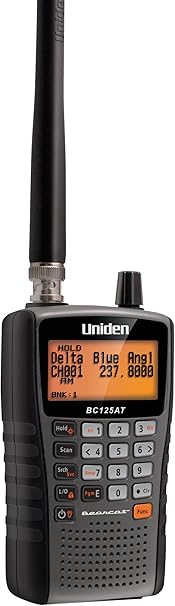
Uniden Bearcat BC125AT Analog Handheld Scanner works well for anyone wanting to listen to analog police, fire, and emergency channels. Its biggest strength lies in covering a wide range of frequencies while staying compact and user-friendly. Great for casual monitoring without the need for digital system compatibility.
Setting it up is straightforward with 500 alpha-tagged channels ready to go. The Close Call RF capture feature makes it easy to pick up nearby transmissions automatically.
Daily use involves tuning through analog signals efficiently, while the Do Not Disturb mode prevents interference during active communications. It runs on 2 AA batteries that last about 10 hours, which suits most day-long listening sessions.
Performance reliably picks up analog signals across multiple bands and handles UHF tuning well within its ranges. The scanner feels solid but isn’t water-resistant, so it needs care outdoors. A common highlight is quick signal lock-on, while some find the lack of digital scanning limiting, especially in cities with newer digital systems.
The display is clear and helpful for identifying channels.
The scanner is praised for quickly locking onto analog signals nearby, making monitoring simple and effective. Its most common limitation is the inability to handle digital trunking or newer digital systems, which means some channels in larger cities won’t be accessible.
People interested in straightforward analog scanning and who value portability will appreciate it. Anyone needing to follow digital police radio systems should look for a digital-compatible scanner instead to avoid missing critical communications.
Pros
- Wide frequency coverage in an analog scanner
- Close Call RF capture detects nearby signals
- Compact handheld design fits comfortably
- Includes 500 alpha-tagged channels
Cons
- Cannot scan digital radio systems
- Not water-resistant for outdoor use
| Specification | Details |
|---|---|
| Number of Channels | 500 |
| Frequency Range | 25-54 MHz, 108-174 MHz, 225-380 MHz, 400-512 MHz (UHF) |
| Battery Type | 2 AA batteries (included) |
| Battery Life | 10 hours |
| Tuner Type | UHF |
6. Uniden Bearcat SR30C Analog Handheld Scanner

Compact and straightforward, it fits comfortably in hand and works well for anyone wanting to stay tuned to a broad range of emergency and hobby bands. Its biggest strength lies in the 32,000 available frequencies, which are neatly sorted into preset banks, making it easy to find what matters to you fast.
Setting up is simple with preset channels categorized by interest, like Police, Fire, and Weather. The ability to program through your PC adds convenience for finer control.
Portable and powered by AA batteries or USB, it suits casual listening sessions or more extended periods on the go without being bulky.
Handling all those frequencies is solid, capturing signals clearly across various bands. The device’s build is compact and functional, made for easy everyday carrying. Most users appreciate how many channels it covers at this price, though the mono audio output can feel a bit lacking.
The general consensus points out its great value but highlights a limitation on complex digital signals.
Many find the huge number of preset frequencies convenient for tuning in quickly across multiple interests, making it a flexible tool for monitoring. On the downside, mono audio and lack of digital scanning limit its effectiveness for more advanced or digital communications. It’s clearly designed for analog use and straightforward operation.
Those wanting broad access to analog police, fire, and emergency channels at a low price will enjoy this scanner’s features. People needing advanced digital capabilities or stereo sound should consider other options. It suits casual monitoring more than professional or highly technical scanning needs.
Pros
- Over 32,000 preset frequencies available
- Supports programming through a PC connection
- Compact and easy to hold for long periods
- Operates on AA batteries or USB power
Cons
- Audio output is mono, not stereo
- Limited support for digital signal scanning
| Specification | Details |
|---|---|
| Frequency | 32000 MHz |
| Radio Bands Supported | 1-Band |
| Power Source | USB, Battery-Powered |
| Additional Features | Close Call RF Capture, Turbo Search, PC Programming, Wide Frequency Support |
| Connectivity Technology | USB |
7. Uniden BC355N Base/Mobile Scanner

Great for anyone needing an analog police scanner, the BC355N suits those who want quick access to nearby emergency broadcasts. Its standout feature is Close Call RF Capture Technology, which instantly detects and tunes into close-range transmitters for fast listening.
Setup involves plugging it into a power source and scanning available frequencies with ease thanks to the LCD display and simple interface. Day-to-day use centers on scanning 800 MHz bands, with quick reactions to signals nearby so you don’t miss important activity.
USB connectivity supports basic integration without complicated installations.
Performance matches expectations for analog scanners, handling wide frequency and service bank support well. The build is straightforward and durable with corded electric power ensuring continuous operation. The clearest praise revolves around its ability to quickly pick up local signals, while a frequent complaint is its inability to monitor digital radio systems used by many modern agencies.
Close Call RF Capture Technology is highly praised for catching nearby signals quickly, making it reliable for analog reception. However, its major drawback remains the lack of digital scanning capabilities, so it cannot pick up newer communication formats used by many agencies.
Those in areas with analog emergency broadcasts will find it effective and straightforward. Users in regions where digital trunking systems dominate should look toward a digital-capable model instead to meet their scanning needs.
Pros
- Instantly tunes to nearby transmitters
- Simple and clear LCD display
- Wide frequency support for analog signals
- Constant power with corded electric source
Cons
- Not compatible with digital radio systems
- Only supports one radio band (800 MHz)
| Specification | Details |
|---|---|
| Connectivity Technology | USB |
| Power Source | Corded Electric |
| Radio Bands Supported | 1-Band |
| Frequency | 800 MHz |
| Display Type | LCD |
| Additional Features | Close Call RF Capture Technology, Wide Frequency and Service Bank Support |
8. Uniden BCD996P2 Digital Mobile TrunkTracker V Scanner

Built with sturdy materials and designed for mobile use, the Uniden BCD996P2 Digital Mobile TrunkTracker V Scanner suits anyone needing reliable, on-the-go scanning of police and emergency channels. Its biggest strength lies in its advanced TrunkTracker V technology combined with extensive NOAA weather features for safety.
Setting up the scanner involves plugging it into a 12-volt DC power source and connecting via radio frequency. The Close Call RF Capture makes it easy to find nearby transmissions without interrupting active channels, thanks to the Do-Not-Disturb feature.
Managing thousands of channels becomes less confusing with location-based scanning and weather alerts that keep you informed about severe conditions around you.
Performance holds up well with access to 25,000 channels and clear stereo audio output. Built to last for mobile use, it comes with an LCD or LED display that’s easy to read but lacks water resistance. The standout praise highlights its precise channel tracking and weather alert system, while common complaints revolve around its lack of water resistance and a somewhat limited 1-band radio support.
The scanner excels in precise channel tracking and weather alert notifications, keeping users aware of important updates. Commonly noted drawbacks include its susceptibility to water damage due to lack of water resistance and limitations from supporting only a single radio band, which affects the range of signals received.
Anyone needing detailed scanning of police and emergency channels with solid weather features would appreciate this scanner’s capabilities. Those requiring multiple band support or outdoor durability under wet conditions might want to explore other options better suited to those needs.
Pros
- Close Call RF Capture locates nearby transmissions quickly
- Comes with 25,000 programmable channels
- S.A.M.E. weather alerts warn of severe conditions
- Location Based Scanning adjusts channels automatically
Cons
- Not water resistant for outdoor use in rain
- Only supports 1 radio band, limiting coverage
| Specification | Details |
|---|---|
| Power Source | 12 volts Direct Current (DC) |
| Radio Bands Supported | 1-Band |
| Frequency | 25 MHz |
| Additional Features | Close Call RF Capture Technology, TrunkTracker V technology, S.A.M.E. weather alert, Location Based Scanning |
| Audio Output Mode | Stereo |
| Display Type | LCD or LED |
9. Whistler WS1065 Digital Trunking Desktop Scanner

Multi-color LED alerts grab attention quickly, making it ideal for anyone serious about tracking police and emergency channels. Its standout feature is the ability to customize alert colors with up to 8 user-defined options, ensuring no important transmission gets missed.
Perfect for home or office use with a serious interest in digital trunking systems.
Setup usually involves connecting the scanner to a Wi-Fi network, which allows it to scan a wide range of frequencies without hassle. Daily use benefits greatly from the automatic adaptive digital tracking that adjusts to signal changes more than 50 times per second, so you don’t have to tweak settings constantly. Programmable audible alerts add another layer of awareness, letting you know when something significant comes through without staring at the device.
The main job of decoding P25 signals is handled smoothly thanks to advanced real-time adjustments and digital AGC that keeps audio levels balanced. Its build focuses on functionality rather than style, with a sturdy desktop design geared towards serious scanning rather than portability. Common praise highlights the effective multipath and fading signal handling, while complaints occasionally point out its dependence on Wi-Fi and the paper media type as potential drawbacks.
The scanner’s ability to adapt signals on the fly makes digital reception reliable and clear, which many find impressive. On the downside, the need for Wi-Fi and the use of paper as the media format are mentioned as limitations that can disrupt convenience.
Those looking for a serious desktop scanner for digital trunked systems and willing to manage Wi-Fi setups will find it well suited to their needs. People wanting a cordless or more portable option should consider alternatives better designed for mobility or offline use.
Pros
- Customizable LED alerts with 8 user-defined colors
- Automatic adaptive tracking for stable digital decoding
- Adjusts audio levels automatically for clearer sound
- Filters unwanted signals using Network Access Code
Cons
- Requires Wi-Fi connection to function properly
- Uses paper media type, which can be less convenient
| Specification | Details |
|---|---|
| Scanner Type | Radio |
| Connection Type | Wi-Fi |
| Resolution | 200 |
| Media Type | paper |
10. Uniden BearTracker BCT15X Base/Mobile Scanner

Ideal for serious scanning enthusiasts, the Uniden BearTracker BCT15X offers extensive channel capacity and advanced features unmatched by simpler models. Its biggest strength lies in keeping you connected with various trunked radio systems, making it perfect for those tracking multiple police and emergency frequencies across locations.
Setup includes mounting the base or mobile unit, then plugging in the included antenna and power cords. Once running, daily use benefits from trunk tracking on Motorola, EDACS, and LTR systems, plus location-based scanning that changes channels automatically when paired with a compatible GPS. The alpha tagging and individual volume adjustments help keep alerts easy to identify and manage.
The build feels solid, designed for mounting in vehicles with all necessary hardware included. Its 9,000 channel capacity and Close Call RF Capture technology reliably pick up strong signals with few hiccups. Most praise focuses on the scanner’s comprehensive scanning capabilities and dynamic memory system, while common complaints mention occasional complexity during initial programming.
Frequent comments highlight the scanner’s ability to track numerous police and emergency channels reliably across various trunking systems. The main difficulty tends to be the intricate programming setup, which many find challenging without prior experience.
Those needing thorough police scanner coverage and willing to invest time in setup will find it very useful. Users seeking a simpler, plug-and-play solution might want to consider a more basic model with fewer channels and less configuration.
Pros
- Supports 9,000 channels for extensive coverage
- TrunkTracker III technology for multiple systems
- Preprogrammed state-by-state channels included
- Alpha tagging simplifies station identification
Cons
- Programming process can be complex for beginners
- Requires compatible GPS for full location scanning use
| Specification | Details |
|---|---|
| Channels | 9,000 |
| Trunk Tracking | TrunkTracker III |
| Location-Based Scanning | Yes, with compatible GPS |
| Included Items | Scanner, AC Adapter, Vehicle Power Cord, Harness, Mounting Hardware, Antenna, Programming Cable, O/M CD ROM |
| Manufacturer | Uniden |
| Model Number | BCT15X |
11. Uniden Bearcat BCD260DN Base/Mobile Digital Scanner

Trying to catch emergency broadcasts or narrowband signals around your home or vehicle is much easier with a dedicated radio frequency scanner. Perfect for enthusiasts and professionals, the Uniden Bearcat BCD260DN stands out by focusing on reliable signal detection and quick identification of important channels in various public safety bands.
Getting it set up is straightforward thanks to the pre-programmed service bands including weather alerts, aviation, marine, railroad, and emergency services. Day-to-day, switching between channels and using search features feels intuitive, especially with the Band Scope Rapid System and Channel Number Tagging helping to zero in on elusive transmissions. USB connectivity allows easy updates or programming from a computer, keeping your station list current without hassle.
Designed primarily for digital scanning, the unit captures a broad range of emergency and public safety communications with clear reception and narrowband capability. Its build feels reliable and durable, suited for both base and mobile use.
Most users praise the extensive frequency access and quick scanning speed. Common complaints mention the learning curve due to the advanced features, which might be overwhelming at first.
The scanner is highly praised for quick detection across various emergency frequencies and its ability to access 10,000 pre-programmed channels. On the downside, many find the advanced features and controls tricky to figure out at first, requiring some time to feel completely comfortable.
Those interested in detailed, wide-ranging public safety scanning will appreciate the depth and precision this device offers. People looking for something simple and ready out of the box might prefer a model with fewer features or more user-friendly interfaces.
Pros
- Pre-programmed with key emergency service bands
- Supports narrowband reception for cleaner signals
- Extensive search and tagging functions
- USB connection for easy updates
Cons
- Feature-rich menu can be complex for beginners
- Learning curve requires patience to master
| Specification | Details |
|---|---|
| Scanner Type | Radio Frequency scanner |
| Connection Type | USB |
| Resolution | 300 dpi |
| Coverage | Emergency bands, aviation, marine, railroad, NASCAR, more |
| Pre-programmed frequencies | 10,000 |
12. Uniden BearTracker 885 Hybrid CB and TrunkTracking Scanner
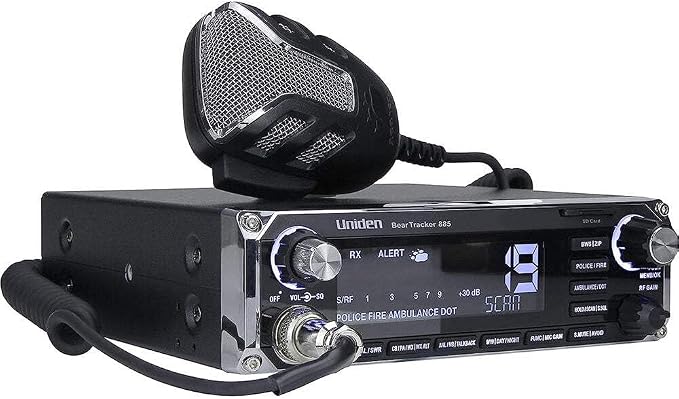
Covering both CB radio and police scanner features, the Uniden BearTracker 885 Hybrid keeps you updated on public safety traffic across the US and Canada. It suits anyone needing real-time alerts from police, fire, ambulance, and DOT channels, paired with reliable CB communication, all packed in one device.
Setup involves connecting the 12-volt power source and tuning the antenna using the built-in SWR meter for clarity. The included GPS automatically selects nearby channels from a nationwide database, making daily scanning targeted and precise. Adjustments like RF Gain and Mic Gain help tailor audio quality, while the 7-color display keeps channel info visible in various lighting conditions.
Performance meets expectations with solid scanning capabilities for public safety transmissions nearby, enhanced by the BearTracker Warning System alerting you with real-time notices. The construction feels sturdy enough for vehicle use, though it lacks water resistance. Users appreciate the integrated NOAA Weather alerts, but limited talking range of 1 meter for CB mode is a frequent drawback.
The unit is praised for its automatic GPS channel selection which helps receive relevant local updates without manual searching. Nearly every mention of difficulty revolves around the CB radio’s talking range being only 1 meter, limiting communication distance in that mode. Build quality suits vehicle installation but excludes protection from moisture.
Those who want to stay current with emergency services nearby alongside CB radio use will find the hybrid design fitting. People seeking longer CB communication ranges or a water-resistant radio should explore other models better designed for outdoor and extended use.
Pros
- Automatic GPS-based channel selection
- Combined CB radio and scanner functions
- BearTracker Warning System alerts on public safety transmissions
- NOAA Weather alerts included
Cons
- Not water resistant
- Very limited talking range of 1 meter
| Specification | Details |
|---|---|
| Number of Channels | 40 |
| Voltage | 12 volts |
| Talking Range Maximum | 1 meter |
| Tuner Type | UHF |
| Additional Features | Emergency Alarm |
13. Uniden HomePatrol-2 Digital Touchscreen Scanner

People who want to stay connected with local public safety and emergency channels will find this scanner a solid choice. It suits anyone looking to monitor police, fire, ambulance, and weather broadcasts without fuss.
Its biggest strength lies in the easy-to-use digital color touchscreen that simplifies channel selection.
Getting started involves plugging it in via USB and using the touchscreen to browse through available radio services. The Sentinel software keeps the scanner updated, so you don’t have to manually search for new frequencies. Day-to-day listening is straightforward thanks to the clear and colorful interface, allowing you to pick what to hear quickly and adjust on the fly.
The scanner picks up a wide range of non-encrypted communications clearly, which is the main purpose. It feels sturdy enough for regular use, though some users mention the touchscreen can be a bit sensitive or finicky at times.
The overall build matches the practical design, not fancy, but reliable for what it’s made to do.
The scanner is praised for its intuitive touchscreen interface and keeping itself updated automatically. Users often mention that sometimes the touchscreen doesn’t respond as smoothly as expected, which can slow down quick channel changes.
Anyone wanting easy monitoring of local non-encrypted public safety broadcasts will be happy with its performance. Those needing access to encrypted or more advanced scanning features may want to consider other models.
Pros
- Easy-to-use digital color touchscreen
- Automatic updates with Sentinel software
- Covers police, fire, ambulance, aircraft, and more
- Sturdy build for everyday use
Cons
- Touchscreen sensitivity can be finicky
- Only receives non-encrypted channels
| Specification | Details |
|---|---|
| Scanner Type | Radio Frequency scanner |
| Connection Type | USB |
| Media Type | USB |
Best Radio Police Scanner Stations Comparison Table
| Product | Power Source | Connectivity Technology | Channels / Capacity | Additional Features |
|---|---|---|---|---|
| Uniden BC365CRS Scanner Clock | Corded Electric, 3 AA batteries | – | – | Ultrasonic Sensor |
| Uniden SDS200 TrunkTracker X | – | USB | – | – |
| Uniden SDS150 GPS Scanner | Battery Powered | Bluetooth | – | Weather Alert |
| Whistler WS1025 Analog Scanner | – | Bluetooth | – | – |
| Uniden Bearcat BC125AT Handheld | 2 AA batteries | – | 500 channels | Digital Display |
| Uniden Bearcat SR30C Scanner | USB, Battery Powered | USB | 1-Band | Close Call RF Capture |
| Uniden BC355N Mobile Scanner | Corded Electric | USB | 1-Band | Close Call RF Capture |
| Uniden BCD996P2 TrunkTracker V | 12 volts DC | IR | 1-Band | TrunkTracker V, Weather Alert |
| Whistler WS1065 Digital Trunking | – | Wi-Fi | – | – |
| Uniden BearTracker BCT15X Base | AC Adapter | – | – | Includes Antenna, Mounting Kit |
| Uniden BCD260DN Digital Scanner | – | USB | – | – |
| Uniden BearTracker 885 Hybrid Scanner | 12 volts | – | 40 channels | Emergency Alarm |
| Uniden HomePatrol-2 Touchscreen | – | USB | – | Touchscreen |
- Power SourceCorded Electric, 3 AA batteries
- Connectivity Technology–
- Channels / Capacity–
- Additional FeaturesUltrasonic Sensor
- Power Source–
- Connectivity TechnologyUSB
- Channels / Capacity–
- Additional Features–
- Power SourceBattery Powered
- Connectivity TechnologyBluetooth
- Channels / Capacity–
- Additional FeaturesWeather Alert
- Power Source–
- Connectivity TechnologyBluetooth
- Channels / Capacity–
- Additional Features–
- Power Source2 AA batteries
- Connectivity Technology–
- Channels / Capacity500 channels
- Additional FeaturesDigital Display
- Power SourceUSB, Battery Powered
- Connectivity TechnologyUSB
- Channels / Capacity1-Band
- Additional FeaturesClose Call RF Capture
- Power SourceCorded Electric
- Connectivity TechnologyUSB
- Channels / Capacity1-Band
- Additional FeaturesClose Call RF Capture
- Power Source12 volts DC
- Connectivity TechnologyIR
- Channels / Capacity1-Band
- Additional FeaturesTrunkTracker V, Weather Alert
- Power Source–
- Connectivity TechnologyWi-Fi
- Channels / Capacity–
- Additional Features–
- Power SourceAC Adapter
- Connectivity Technology–
- Channels / Capacity–
- Additional FeaturesIncludes Antenna, Mounting Kit
- Power Source–
- Connectivity TechnologyUSB
- Channels / Capacity–
- Additional Features–
- Power Source12 volts
- Connectivity Technology–
- Channels / Capacity40 channels
- Additional FeaturesEmergency Alarm
- Power Source–
- Connectivity TechnologyUSB
- Channels / Capacity–
- Additional FeaturesTouchscreen
How to Choose the Right Police Scanner Station
The most important factors when selecting a police scanner station include range, frequency coverage, and ease of use, as these ensure clear and reliable monitoring. Choosing the right features prevents frustration and saves money by avoiding incompatible or overly complex devices.
Frequency Coverage and Range
Many people miss important transmissions because their scanner lacks coverage of key frequency bands used by emergency services. A good scanner covers a broad spectrum of frequencies including VHF, UHF, and sometimes 800 MHz bands.
It also needs to handle both analog and digital signals since agencies often use either format. Without this, some chatter might never be picked up or sound garbled. In daily use, having widespread frequency coverage means you get clearer reception from local police, fire, and EMS units no matter where you are.
Look for models that specify support for digital protocols and wideband reception. The maximum reception range varies with environment; urban areas with tall buildings require stronger sensitivity while open rural spaces allow signals to travel farther.
Standard scanners that list at least 500 to 1,000 channels and support multiple signal types usually perform well for most listeners.
Scan Speed and Search Functions
Devices that scan too slowly often miss quick radio bursts, making it frustrating to catch entire conversations. A fast scan speed keeps you closer to live transmissions by cycling through frequencies rapidly and efficiently. Some models offer programmable priority channels that stay active longer or alert you whenever activity starts on a preset frequency.
This helps when you want to monitor a specific department without manually scanning all the time. Programming ease significantly affects daily use; complicated menu systems or a lack of memory slots can turn simple setup into a chore.
Save channels in clearly labeled banks or folders for quick access. Typical scanners allow storage of several hundred channels and include functions like manual search, auto scan, and priority channels to balance thorough monitoring with responsiveness.
Portability and Power Options
Carrying a bulky or heavy scanner around gets tiring quickly, especially during extended outdoor use. Lightweight and compact designs fit comfortably in a jacket pocket or clipped to a belt for easy transport.
Battery life is critical since frequent recharging or replacing can interrupt listening sessions. Some units run on standard AA batteries, which are simple to swap out, while others use rechargeable lithium-ion packs that last longer and reduce waste. Support for external power adapters or 12V car adapters adds versatility when away from home.
Good scanners typically weigh under a pound, offer at least 8 to 10 hours of continuous power, and allow multiple power options for convenience during long shifts or outings.
User Interface and Display
Small or dim screens can make reading channel information a hassle, especially at night or in bright sunlight. A display with adjustable backlighting improves visibility in different lighting conditions without draining the battery too fast. Buttons and menus should be straightforward and ergonomically placed so you can change settings quickly, even while on the move.
Complex interfaces slow you down and increase the chance of missing important calls. Quality audio output is just as important; a clear speaker with decent volume range lets you hear transmissions clearly in noisy environments or through headphones.
The best scanners combine a crisp, readable screen with intuitive controls and sound options that adapt to your surroundings.
Compatibility and Advanced Features
Modern emergency services increasingly use digital trunked systems instead of simple analog transmissions, requiring scanners that support formats like P25, NXDN, or DMR. Without compatibility, much of the communication may be indecipherable or unavailable.
Integration with computer software or mobile apps simplifies programming and updating channel lists, saving time and reducing frustration compared to manual entry. Some units also include extra features like NOAA weather alerts, which provide useful local updates beyond public safety channels. Advanced trunking capabilities allow following multiple talk groups without constant rescanning, adding depth to monitoring.
Buyers should look for scanners supporting relevant digital protocols, offering regular firmware updates, and including features that tailor the listening experience to their environment.
Optimizing Your Police Scanner Experience with Advanced Tuning Techniques
Advanced tuning techniques help improve signal clarity and reception on police scanners. Many scanners allow manual adjustment of frequency steps to match local station spacing, which can reduce interference.
Experimenting with different bandwidth settings can also make a difference; narrower bandwidths tend to filter out noise but may cut off important parts of a transmission. Using programmable scanning banks lets you save specific frequencies and switch between them quickly without full rescan cycles. Antenna placement matters as well, placing it near a window or higher up can reduce signal loss.
Some scanners support search and hold functions, which automatically lock on to active frequencies, helping avoid dead air. Keeping the firmware updated when possible ensures compatibility with new signals or changes in band allocation. These practical adjustments work together to improve the usability and effectiveness of police scanners, offering clearer audio and quicker access to local transmissions.
Maintaining and Caring for Your Police Scanner to Ensure Longevity
Proper maintenance keeps a police scanner functioning well over time. Regularly cleaning the external case and control knobs with a dry cloth prevents dust buildup that can hinder operation.
Inspecting and securing antenna connections ensures stable reception. Avoid exposing scanners to moisture or extreme temperatures, as these conditions can damage internal components. Battery-powered models require checking battery contacts for corrosion and replacing batteries promptly to prevent leaks.
It’s advisable to store the scanner in a padded case when not in use to protect it from drops or bumps. When the device uses firmware updates, applying them carefully according to the manufacturer’s instructions can fix bugs and improve performance.
Routine maintenance, combined with careful handling, extends the scanner’s service life and keeps it ready for regular use.
Comparing Online Streaming Services and Traditional Radio Police Scanner Stations
Traditional radio police scanners receive local broadcasts directly via radio waves, providing access to real-time transmissions dependent on physical proximity and antenna quality. This means reception can vary based on terrain and distance from broadcast towers.
Online streaming services for police scanners offer audio feeds sourced from multiple locations worldwide, accessible over the internet through apps or websites. Streaming allows users to listen to distant areas without needing specialized equipment or optimal antenna placement. However, streaming can suffer from latency and requires a stable internet connection.
Some services offer searchable databases and organized channels, which make exploring different stations easier than waiting for a scan cycle on traditional devices. Both methods have practical benefits: physical scanners offer immediate, offline access, while streaming services provide broader geographic coverage and convenience through mobile devices or computers.
People Also Asked
How Do I Properly Set up a Police Scanner Station?
Connect the scanner to a reliable power source and antenna, then program frequencies relevant to your area. Keep the antenna elevated and away from metal objects to improve reception.
What Safety Precautions Should I Take Using a Police Scanner?
Avoid tuning into emergency channels during active situations to not interfere. Use headphones at a moderate volume to protect hearing and respect privacy laws about sharing information.
How Long Does a Typical Police Scanner Station Last?
A police scanner station can last for many years with proper care and occasional updates. Regularly clean contacts and keep it in a dry environment to prevent damage.
Are Police Scanner Stations Compatible with My Existing Equipment?
Many police scanner stations support standard antennas and audio outputs, which can work with common radios or external speakers. Double-check connection types to ensure compatibility before purchasing.
What Common Problems Occur with Police Scanner Stations and Fixes?
Common issues include poor reception and programming errors; try repositioning the antenna and rechecking frequency settings first. Firmware updates from the manufacturer often resolve bugs and improve functionality.
Conclusion
The key factors to consider when choosing a police scanner station include coverage area, signal clarity, and ease of use. Stations that cover a wide range of frequencies and locations will provide the most information.
Clear audio without static ensures you’ll understand the transmissions, and simple controls help you tune in quickly during an emergency or interest moment.
Think about where you’ll place the scanner and how often you’ll listen to it, then pick a model that fits your budget and space. More frequent users might want features like recording or scanning multiple channels at once.
The comparison table above breaks down these points clearly to help you find the right fit for your needs.