Top 13 Best Police Scanner Under 300 Dollars You Need Now
A common frustration with scanners under $300 is getting one that misses important channels or has poor reception. A best police scanner under 300 dollars should reliably pick up local frequencies without constant dropouts or static.
Many models in this price range struggle with delayed scanning or cluttered displays that make it hard to quickly find active channels.
Key factors that distinguish a good police scanner at this price include sensitivity, channel capacity, and user controls. A decent scanner typically handles several thousand frequencies and scans at least 100 channels with a clear, backlit display. Power options also matter; most operate on standard batteries or AC power, making portability and run time considerations important for field use.
Physically, a scanner that is compact with simple, tactile buttons improves handling during tense moments.
Need a Quick Check?
| Image | Product | Price |
|---|---|---|
Our Top Picks 1  | Uniden BC125AT Scanner | Check Price |
Our Top Picks 2 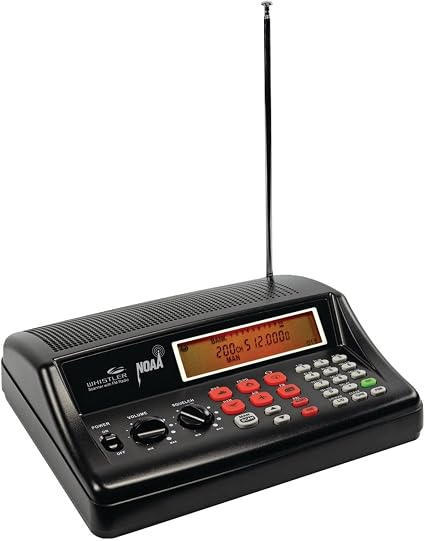 | Whistler WS1025 Desktop | Check Price |
Our Top Picks 3  | Uniden BC365CRS Alarm Scanner | Check Price |
Our Selected Top 13 Police Scanner Under 300 Dollars Worth Considering
This list features a variety of reliable police scanners offering different features and performance levels within an affordable range. Each review highlights how well the scanner works, who it is best suited for, and its main strengths and weaknesses to help you make an informed choice.
1. Uniden Bearcat BC125AT Handheld Scanner
500 alpha-tagged channels make this handheld scanner ideal for anyone wanting wide analog coverage. Its Close Call RF capture technology stands out, providing quick tuning to nearby transmissions, perfect for those needing fast updates on local police or emergency communications.
Compact and easy to carry, it fits well in most daily scenarios under $300.
Setting it up is straightforward with two AA batteries included, offering about 10 hours of continuous scanning. The digital display helps arrange and identify channels with alpha tags, making day-to-day listening organized.
You can control unwanted interruptions using the Do Not Disturb mode, especially while catching ongoing transmissions, and connecting it to a PC adds convenience for managing channels.
The scanner picks up signals clearly within its analog limits but does not handle digital systems used by some modern agencies. It feels solidly built despite not being water resistant, so care is needed outdoors.
Praise focuses on instant signal detection with Close Call, while the biggest drawback is the lack of digital system support, limiting use in certain urban areas.
The quickest tuning to close radio transmissions really stands out as a helpful feature, allowing users to catch relevant signals instantly. However, the inability to monitor digital systems limits its usefulness in areas where police and emergency services have moved to digital trunking.
Those interested primarily in analog broadcasts and local emergency updates will find this scanner suitable. Anyone needing digital coverage or frequent outdoor use should consider an alternative model designed for those features.
Pros
- 500 alpha-tagged channels for easy identification
- Close Call RF capture tunes to nearby transmissions fast
- Digital display simplifies navigation and management
- Long 10-hour battery life on included AA batteries
Cons
- No support for digital trunking systems like P25
- Not water resistant; requires indoor or careful outdoor use
| Specification | Details |
|---|---|
| Number of Channels | 500 |
| Frequency Range | 25-54 MHz, 108-174 MHz, 225-380 MHz, 400-512 MHz (UHF) |
| Battery Average Life | 10 hours |
| Voltage | 3 volts |
| Number of Batteries | 2 AA batteries required (included) |
| Tuner Type | UHF |
2. Whistler WS1025 Analog Desktop Scanner
Perfect for experienced desktop scanner users, this model focuses on detailed frequency monitoring and quick channel scanning. Its biggest strength lies in setting a priority channel to check frequently during scanning, giving you constant updates on crucial frequencies.
It suits those who want control over scanning behavior without complicated interfaces.
Setting up starts straightforwardly, and daily use involves fine-tuning channels and taking advantage of options like a scan delay to catch responses before moving on. The tune feature helps discover new frequencies from any starting point, which keeps things interesting.
Bluetooth connectivity makes it a bit easier to integrate with other devices, though the main focus stays on radio scanning.
Performance is solid for analog scanning, with good sensitivity and reliable channel scanning timing. It’s built with practical materials and feels sturdy on a desk.
The most common praise highlights its ability to prioritize channels efficiently, while the usual complaint points to a learning curve, as it’s not very beginner-friendly.
Many praise the priority channel feature for keeping important channels constantly monitored, letting you catch live updates with ease. The main drawback remains the complicated setup that can feel overwhelming without prior experience, making it less accessible for newcomers.
Anyone who knows their way around desktop scanners and wants precise control over scanning priorities will appreciate the setup and features. Those new to scanners might want a simpler option that offers a more guided setup and fewer technical settings to manage.
Pros
- Priority channel scanning every two seconds
- Scan delay to hear replies clearly
- Bluetooth connection available
- Capability to find unlisted frequencies via tune
Cons
- Suited mainly for experienced users
- Setup and programming can be complex
| Specification | Details |
|---|---|
| Scanner Type | Radio |
| Connection Type | Bluetooth |
| Priority Channel | Checks one channel every two seconds |
| Scan Delay | 2 seconds before moving channels |
| Resolution | 200 dpi |
3. Uniden BC365CRS Scanner with Alarm Clock
An affordable all-in-one device, the Uniden BC365CRS combines a 500 channel analog police scanner with an alarm clock and FM radio. Best suited for anyone wanting straightforward access to emergency and local broadcasts without spending a lot. Its biggest strength lies in preset search options that make tuning into police, fire, weather, and other bands simple right from the start.
Setting up takes just a few minutes thanks to the convenient pre-sets, so daily use feels intuitive. The push-button controls make scrolling through saved channels and FM stations easy. The built-in alarm clock provides added value as a bedside device.
Being corded electric, you rely on power outlet placement, but the option for three AA batteries keeps things running when unplugged.
Performance as a scanner is clear and reliable across all 500 channels, covering a broad spectrum of popular emergency and local radio frequencies. The tabletop mount design holds steady on any surface.
Most appreciate how quickly it locks onto relevant channels, though a few note the push buttons can feel a bit stiff. Audio comes through clearly but is limited to 50 dB in volume.
The scanner gets high marks for ease of use and pre-set channel availability, making quick access to emergency and weather broadcasts straightforward. The most frequent complaint is about the stiff push-button controls, which can slow navigation through channels.
Those wanting a simple, affordable scanner combined with an FM radio and alarm clock will appreciate this device. Anyone needing louder audio or more modern, digital features may prefer exploring other options.
Pros
- 500 channels with preset popular searches
- Built-in FM radio with 30 station presets
- Includes alarm clock feature
- Runs on corded power or batteries
Cons
- Push buttons can feel stiff
- Limited maximum audio volume at 50 dB
| Specification | Details |
|---|---|
| Power Source | Corded Electric |
| Number of Channels | 500 |
| Control Method | Push Button |
| Battery Description | Alkaline |
| Number of Batteries | 3 AA batteries required |
| Audible Noise | 50 dB |
| Mounting Type | Tabletop Mount |
4. Whistler WS1010 Analog Handheld Scanner

Whistler WS1010 Analog Handheld Scanner is built for those wanting reliable access to police, fire, marine, and weather channels without stretching the budget. It stands out with its 400 channel memory and specific features for storm spotting and weather alerts, making it a solid choice for hobbyists or casual monitoring.
Getting started involves loading preprogrammed service banks that cover key emergency and weather frequencies, saving time on manual programming. The Spectrum Sweeper feature quickly scans nearby channels to catch live transmissions, while PC programmability lets you update frequencies or back up your settings easily. It runs on four AA batteries, making replacements straightforward during extended use.
The scanner picks up transmissions clearly and offers instant access to weather alerts important for storm tracking. It feels light and compact in hand at just 7.7 ounces and about 5.7 inches long, which suits portable use. Most users praise its versatility and feature set, though some mention the need for third-party software to program channels as a bit of a hassle.
The overall reception highlights the device’s strong feature set and clear reception, especially praising the preprogrammed service banks and weather functions. Complaints mostly focus on the complexity of programming through required third-party applications and managing batteries during extended use.
People interested in disaster monitoring or casual scanning will appreciate the convenience and breadth of frequencies covered. Those requiring fast, software-free programming or extended battery life might consider other options before deciding.
Pros
- Stores up to 400 frequencies across 10 banks
- Preloaded with service banks for quick setup
- Includes weather alerting for specific counties
- Spectrum Sweeper scans for active signals nearby
Cons
- PC programming requires third-party software
- Battery life depends on AA types and usage
| Specification | Details |
|---|---|
| Channel Memory | 400 |
| Dimensions | 1.56 x 2.37 x 5.68 inches |
| Weight | 7.7 ounces |
| Batteries | 4 AA batteries required (included) |
| Model Number | WS101 |
5. Uniden Bearcat SR30C Handheld Radio Scanner

Compact and straightforward to carry around, this scanner fits well in hand and is ideal for those wanting quick access to emergency channels without fuss. Its biggest strength lies in covering a massive range of over 32,000 preset frequencies, making it versatile across various communication types.
Setup is simple, with preloaded presets that group popular options like Police, Fire, Weather, and more, letting you tune in quickly right from the start. You can use a PC for programming if you want to customize further, and the ability to run on AA batteries or USB power adds convenience for use anywhere. The Close Call RF Capture and Turbo Search help find signals fast during daily scanning sessions.
Reception quality holds up well across different frequencies, delivering clear audio through earphones or headphones. The build feels durable yet lightweight for handheld use, while some mention that the mono audio output isn’t as rich as stereo.
The most common praise focuses on its ease of use and wide frequency coverage, while complaints mainly revolve around the sound being basic and occasional difficulty distinguishing digital signals.
The wide preset range and user-friendly design make monitoring multiple bands straightforward and effective. Most find the audio clear enough for casual listening, but the mono output can feel limited, especially in noisy environments. Programming via PC adds flexibility, yet the digital reception can sometimes fall short.
Great for someone wanting quick access to emergency and scanner channels without complicated setup. Those needing richer audio or better digital signal detection should consider alternatives with stereo sound and more advanced digital capability.
Pros
- Over 32,000 preset frequencies included
- Easy PC programming option
- Close Call RF Capture feature for quick finds
- Runs on AA batteries or USB power
Cons
- Mono audio limits sound quality
- Some struggle with digital signals
| Specification | Details |
|---|---|
| Frequency Coverage | 32000 MHz |
| Channels | 500 |
| Power Source | USB, Battery-Powered (AA batteries) |
| Audio Output Mode | Mono |
| Connectivity | USB |
6. Uniden BC355N Base/Mobile Scanner

Ideal for those on a budget who want a reliable police scanner without digital features, this model focuses on analog scanning and delivers solid reception for nearby signals. Its biggest strength lies in the Close Call RF Capture Technology that catches transmissions quickly without fuss.
Setup is straightforward with its corded electric power source. Plug it in, turn it on, and the LCD screen guides you through channels. The scanner’s single 800 MHz band covers a range of local police and emergency frequencies, making daily use simple for listening to analog signals.
USB connectivity feels handy for updates or configurations when needed.
Scanning performance is sharp on analog frequencies, particularly local broadcasts. The build is functional and a bit plain but sturdy enough for base or mobile use. Most praise centers on how quickly it locks onto nearby broadcasts, while a common complaint points out it cannot catch any digital radio systems, which limits coverage in many city areas.
Close Call RF Capture Technology stands out for swiftly picking up nearby broadcasts, making tuning easy and fast. The scanner’s major drawback is the lack of digital support, meaning it will miss many transmissions in areas using modern trunked radio systems.
Anyone focused on analog scanning and living in an area with primarily analog transmissions will find this a practical choice. Those needing to monitor digital emergency channels or broader frequency ranges should consider digital-capable models instead.
Pros
- Quick tuning to local signals with Close Call technology
- Simple, easy-to-read LCD display
- Supports wide frequency and service banks
- Powered by standard electrical outlet
Cons
- Cannot monitor digital radio systems
- Limited to one 800 MHz band only
| Specification | Details |
|---|---|
| Radio Bands Supported | 1-Band |
| Frequency | 800 MHz |
| Power Source | Corded Electric |
| Display Type | LCD |
| Connectivity Technology | USB |
| Additional Features | Close Call RF Capture Technology, Wide Frequency and Service Bank Support |
7. Whistler WS1065 Digital Trunking Desktop Scanner

Constructed primarily with a sturdy desktop design, the Whistler WS1065 Digital Trunking Scanner suits anyone looking to monitor digital and trunking systems at home or in a fixed location. Its most notable strength is the adaptive digital tracking that handles shifting P25 signals smoothly without requiring manual tuning.
Setting up involves connecting it via Wi-Fi, which makes it easy to get on the air quickly. Day-to-day use revolves around the multi-color LED alert system paired with audible notifications, which can be customized with eight colors to signal different priority transmissions.
The digital AGC automatically adjusts audio for clarity, so you won’t constantly tweak volume levels. The scanner also filters transmissions with Network Access Code (NAC) support to limit unwanted chatter.
Performance-wise, it excels in decoding P25 signals accurately thanks to real-time adaptive tracking, adjusting 50+ times each second to handle signal disruptions. The build feels solid enough for desktop use but isn’t designed for portability. The clearest praise points to its automatic adjustments making listening smoother.
A frequent drawback appears to be the fixed-resolution display of 200, which some find a bit limited for detailed viewing.
Most praise highlights the scanner’s automatic adaptive tracking that keeps digital signals clear without manual tweaks. The common complaint centers on the display’s limited resolution, which can feel basic compared to other models. The alert LEDs stand out as helpful for knowing what’s happening at a glance.
People focused on home-based monitoring of digital trunking systems with stable Wi-Fi will appreciate this scanner’s features and ease of use. Those looking for something portable or requiring a higher-resolution display may want to explore other options better suited for mobile or detailed viewing needs.
Pros
- Adjusts digital audio levels automatically
- Supports real-time P25 decoding and tracking
- Customizable LED alerts with eight colors
- Wi-Fi connection for easy setup
Cons
- Display resolution limited to 200
- Not designed for portable use
| Specification | Details |
|---|---|
| Scanner Type | Radio |
| Connection Type | Wi-Fi |
| Resolution | 200 |
| Media Type | paper |
| Multi-Color Alert LED | Up to 8 user-defined colors |
8. Uniden Bearcat BCD160DN Handheld Digital Scanner
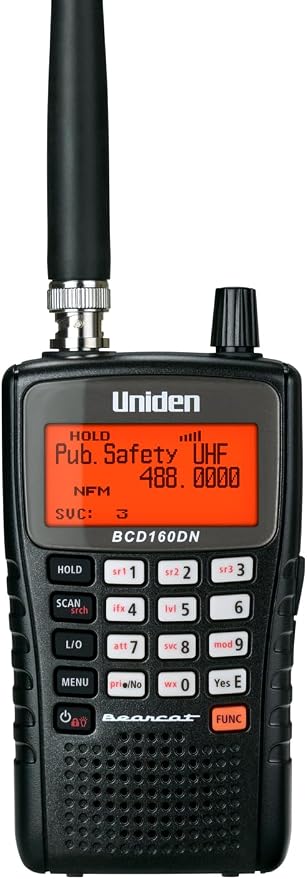
Lightweight and packed with digital decoding features, this scanner suits hobbyists who want a solid receiver under $300 focusing on conventional digital signals. Its standout feature is quick detection of CTCSS tones and DCS codes, making scanning more intuitive and less about guesswork.
Setup involves connecting via USB for power and programming, which is straightforward. Real-time displays of system channels and Band Scope Rapid tagging help sift through frequencies quicker.
The absence of trunking support means its use sticks to simpler radio systems, but for day-to-day scanning of DMR and NXDN signals, it operates smoothly. Firmware updates also extend codec support, keeping it relevant longer.
Performance is reliable for catching clear audio on conventional digital and analog transmissions. Build quality is solid, designed for handheld ease and continuous use without feeling cheap or fragile.
The most frequent praise mentions the fast tone decoding and wide feature set. A common complaint is the lack of trunking support, which limits access to some complex systems.
Fast tone and code detection is appreciated for letting users lock onto signals quickly without fiddling through settings. The main limitation is the absence of trunking support, which restricts access to some police and emergency channels operating on those systems.
Those focused on conventional digital and analog scanning will find this tool reliable and full-featured. People needing trunking capabilities or encrypted system decoding might want to consider a different scanner that handles those complex modes.
Pros
- Quick detection of CTCSS tones and DCS codes
- Supports multiple digital formats out of the box
- Compact and easy to carry handheld design
- Regular firmware updates for added features
Cons
- No trunking system support included
- Encrypted signals cannot be decoded
| Specification | Details |
|---|---|
| Scanner Type | Radio Scanner |
| Connection Type | USB |
| Digital Decoding Support | DMR and NXDN (APCO P25 supported via firmware update) |
| Band Scope Rapid Tagging | Yes |
| CTCSS/DCS Rapid Decode | Instant detection and display |
9. Uniden BearTracker BCT15X Base/Mobile Scanner

Ideal for those wanting to track multiple police and public service frequencies in their car or at home, this scanner offers a huge memory and advanced tracking technology. Its biggest strength lies in having 9,000 channels and automatic location-based scanning to keep up with changing areas easily.
Setup is straightforward using the included accessories like the mounting bracket, antenna, and power cords. Programming is simpler because it comes with state-by-state preprogrammed channels and a dynamic memory system that adapts to your scanning habits.
Close Call RF Capture technology picks up nearby signals, making day-to-day scanning more responsive and relevant.
TrunkTracker III technology handles Motorola, EDACS, and LTR trunked systems smoothly, so you won’t miss busy conversations. The build feels solid with everything needed in the box including a serial cable for programming.
Most praise centers on its extensive channel capacity and accurate scanning while some mention the interface can be a bit complex at first.
Users appreciate the expansive channel capacity and the ability to automatically select channels based on location, which keeps the scanning experience relevant during travel. Some find the user interface challenging and suggest spending time learning the controls before relying on it fully. The close call feature adds a helpful edge in busy signal environments.
Those wanting comprehensive coverage of trunked and conventional systems in one device will find it well suited to their needs. People new to scanners or unwilling to spend time setting it up might prefer a simpler, more beginner-friendly model to start with.
Pros
- 9,000 channels cover almost all public safety bands
- Automatic location-based scanning with compatible GPS
- Close Call RF Capture for nearby transmissions
- Included accessories cover both base and mobile setups
Cons
- Interface can be tricky for beginners
- Programming requires some learning and patience
| Specification | Details |
|---|---|
| Channels | 9,000 |
| Technology | TrunkTracker III |
| Compatibility | BC-RH96 Remote Head |
| Included Accessories | AC Adapter, Vehicle Power Cord, Antenna, Mounting Bracket, Serial Cable |
| Preprogrammed Channels | State-by-state for police, DOT, Highway Patrol |
| Warranty | 1 year manufacturer |
10. Uniden Bearcat BCD260DN Base/Mobile Digital Scanner

Trying to keep track of emergency signals and public safety frequencies without missing a beat can be tough. Perfect for enthusiasts and professionals relying on police, fire, and other emergency communications, this scanner’s biggest strength is its ability to quickly detect a broad range of signals, including digital and non-digital transmissions.
Setting it up is straightforward with lots of pre-programmed service bands like S.A.M.E. weather alerts, aviation, and NASCAR. Day-to-day use involves scanning up to 10,000 frequencies directly, and the Band Scope feature helps you spot active channels fast.
USB connection makes managing data easier, while narrowband reception sharpens your focus on specific signals you want to hear without distraction.
Performance stays steady with precise signal detection and rapid system/channel tagging that helps avoid missed calls. Built solid for use in either base or mobile settings, it handles frequent scanning without glitching. High praise centers on signal clarity and channel coverage, though some users find the interface a bit complex to use at first.
Clear signal reception and extensive frequency coverage get strong praise for reliable monitoring of emergency and public communications. The most common complaint revolves around the user interface, which some find overwhelming at first, requiring an adjustment period.
People who want thorough, up-to-date tracking of a wide variety of emergency bands will appreciate this scanner’s depth and flexibility. Those looking for a simpler, more user-friendly setup might want to explore alternatives with fewer features or streamlined controls.
Pros
- Pre-loaded with key emergency and public service bands
- Band Scope for quick active channel detection
- Supports both digital and analog signal scanning
- USB connection simplifies data management
Cons
- Interface can be confusing for beginners
- Requires some patience to learn all features
| Specification | Details |
|---|---|
| Scanner Type | Radio Frequency scanner |
| Connection Type | USB |
| Resolution | 300 dpi |
| Pre-programmed Service Bands | Yes, includes emergency, aviation, marine, and more |
| Frequency Access | 10,000 frequencies |
11. A330 Portable SSB Shortwave Radio Receiver

Covering an impressive frequency range from 20 to 999 MHz, the A330 Portable SSB Shortwave Radio Receiver is great for anyone wanting access to a wide variety of bands including FM, shortwave, air, CB, VHF, and UHF. Its standout feature is the ability to receive single sideband (SSB) signals clearly, making it suitable for serious radio listeners and hobbyists looking for versatility under $300.
Setting up the radio is straightforward; it comes with one nonstandard battery included, and the large, blue-backlit STN LCD screen makes tuning and station selection easy even outside. Storing up to 1,400 stations means you won’t have to constantly search for your favorites, and Bluetooth 5.2 allows you to listen wirelessly or stream music from a TF card. Control via the app adds convenience on the go.
Performance-wise, the radio excels at delivering clear AM, LSB, and USB signals in shortwave mode thanks to BFO fine-tuning. It handles a broad spectrum well and responsiveness is solid.
Build quality feels good on daily use but it lacks water resistance, so care is needed in damp environments. The top compliment is about its large station memory and clarity, whereas the common complaint centers on its battery type being less common and potentially inconvenient.
The radio’s ability to store a large number of stations and its clear single sideband reception are often praised. However, many find the need for a nonstandard battery inconvenient because replacements are not easy to find. The screen’s visibility even under outdoor lighting earns positive remarks as well.
People who want a radio with vast frequency coverage and detailed tuning options will find this device well suited for their needs. Those frequently operating in wet or highly mobile conditions may prefer a different model due to the lack of water resistance. Battery availability should also be considered before choosing this receiver.
Pros
- Wide frequency coverage including VHF and UHF bands
- Supports AM, LSB, and USB single sideband reception
- Stores up to 1,400 radio stations
- Bluetooth 5.2 and TF card music playback
Cons
- Nonstandard battery may cause replacement issues
- Not water resistant for outdoor use in wet conditions
| Specification | Details |
|---|---|
| Frequency Coverage | FM (64-108MHz), MW (520-1710kHz), SW (2.3-30MHz), AIR (118-138MHz), CB (25-28MHz), VHF (20-250MHz), UHF (250-999MHz), WB (162.4-162.55MHz) |
| Single Sideband Support | AM, LSB, USB demodulation with BFO fine-tuning |
| Station Memory | 1,400 channels |
| Display | STN LCD blue-backlit screen |
| Connectivity | Bluetooth 5.2 |
| Batteries | 1 Nonstandard battery required (included) |
12. ZHIWHIS A330 SSB Shortwave Radio Receiver

Anyone interested in scanning a wide range of frequencies will appreciate how this radio receiver handles everything from FM to shortwave and even air and CB bands. Perfect for hobbyists or those wanting a solid all-in-one option under $300, its SSB capability stands out for precise shortwave listening.
Setting it up is straightforward, with options to search manually, automatically, or through a full auto mode. The large memory storing up to 200 stations per band means you won’t have to keep tuning every time. An external antenna port lets you boost reception when needed.
Lightweight and portable, it’s easy to carry and plug into devices via Bluetooth or earphones for private listening.
Performance is solid across a wide frequency range covering 2.3-30MHz and beyond. It demodulates AM, LSB, and USB effectively thanks to the BFO adjustment. The build feels light but functional, not overly rugged.
Most praise centers on its wide coverage and SSB feature, while common drawbacks mention the nonstandard battery and occasional tuning sensitivity issues.
Trusted for its ability to handle multiple band types and precise shortwave reception with BFO, this radio is praised for broad frequency access. The main complaint revolves around the nonstandard battery and occasional tuning challenges that can affect quick station changes.
Great for hobbyists who want thorough band coverage and station memory capacity. Less suited for those who prefer standard batteries or want a device with ultra-smooth tuning without manual sensitivity adjustments.
Pros
- Wide frequency coverage including shortwave SSB
- Stores a large number of stations per band
- External antenna port for improved sensitivity
- Lightweight and portable design
Cons
- Requires a nonstandard battery
- Tuning sensitivity can sometimes be tricky
| Specification | Details |
|---|---|
| Number of Channels | 1400 |
| Frequency Coverage | FM, MW, SW (2.3-30MHz), AIR (118-138MHz), CB, VHF, UHF, WB bands |
| Battery Type | 1 Nonstandard Battery (included) |
| Memory | Stores up to 200 stations per band |
| Connectivity | Bluetooth, Earphone, PC, Smartphone |
13. Uniden BC350C Mobile Scanner

Offering solid scanning capabilities at an affordable price, the Uniden BC350C Mobile Scanner suits anyone interested in monitoring police, fire, and other emergency bands without breaking the bank. Its standout feature is the ability to store 100 user-programmable memories, keeping important frequencies always within quick reach.
Setting it up is straightforward, especially with the included car installation accessories. Day-to-day use gets easier thanks to the backlit display, which helps you read messages in dim lighting. Searching is quicker because you can lock out constant or unwanted frequencies.
The scanner also targets action bands specifically, providing relevant transmissions right away.
The BC350C performs well when it comes to picking up a variety of communication signals including police, weather, and amateur radio. The build is sturdy enough for vehicle use, with a clear and simple interface. Praise often highlights how fast it recalls saved frequencies, while the most frequent complaint points to some searches catching uninteresting chatter that requires blocking.
The scanner earns praise for the rapid recall of programmed frequencies, making routine listening convenient and less frustrating. Users often mention the need to manually lock out persistent, uninteresting transmissions during searches to maintain relevant results.
Those looking for a dependable, affordable mobile scanner with easy access to emergency bands will find this model suitable. People wanting a more advanced display or less manual filtering might want to explore other options.
Pros
- 100 memories for quick frequency access
- Includes car installation accessories
- Backlit display for low-light reading
- Search lockouts speed up scanning
Cons
- Some unwanted chatter requires frequency lockout
- Display resolution might feel basic to some
| Specification | Details |
|---|---|
| Scanner Type | Radio |
| Connection Type | USB |
| Resolution | 600 |
| Standard Sheet Capacity | 100 |
| Optical Sensor Technology | CCD |
| Light Source Type | LED |
Best Police Scanners Under 300 Dollars Compared
| Product | Channels | Power Source | Frequency Range | Additional Features |
|---|---|---|---|---|
| Uniden BC125AT Scanner | 500 | 2 AA batteries | 25-54,108-174,225-380,400-512 MHz | Digital Display |
| Whistler WS1025 Desktop | – | Bluetooth | – | Radio Scanner |
| Uniden BC365CRS Alarm Scanner | – | Corded, 3 AA batteries | – | Push Button Control |
| Whistler WS1010 Handheld | – | 4 AA batteries | – | Handheld, Lightweight |
| Uniden SR30C Radio Scanner | – | USB, Battery-Powered | 32000 MHz | Close Call RF Capture |
| Uniden BC355N Base Scanner | – | Corded Electric | 800 MHz | Close Call RF Capture |
| Whistler WS1065 Digital Desktop | – | Wi-Fi | – | Radio Scanner |
| Uniden BCD160DN Digital Handheld | – | USB | – | Radio Scanner |
| Uniden BCT15X Base Scanner | – | AC Adapter, Vehicle Power | – | Full Accessories Included |
| Uniden BCD260DN Mobile Scanner | – | USB | – | Radio Frequency Scanner |
| A330 Portable Shortwave | 1400 | 1 Nonstandard Battery | – | Auto Power Off |
| ZHIWHIS A330 Receiver | 1400 | 1 Nonstandard Battery | – | Adjustable Receiver Sensitivity |
| Uniden BC350C Mobile | – | USB | – | Highest Resolution 600 dpi |
- Channels500
- Power Source2 AA batteries
- Frequency Range25-54,108-174,225-380,400-512 MHz
- Additional FeaturesDigital Display
- Channels–
- Power SourceBluetooth
- Frequency Range–
- Additional FeaturesRadio Scanner
- Channels–
- Power SourceCorded, 3 AA batteries
- Frequency Range–
- Additional FeaturesPush Button Control
- Channels–
- Power Source4 AA batteries
- Frequency Range–
- Additional FeaturesHandheld, Lightweight
- Channels–
- Power SourceUSB, Battery-Powered
- Frequency Range32000 MHz
- Additional FeaturesClose Call RF Capture
- Channels–
- Power SourceCorded Electric
- Frequency Range800 MHz
- Additional FeaturesClose Call RF Capture
- Channels–
- Power SourceWi-Fi
- Frequency Range–
- Additional FeaturesRadio Scanner
- Channels–
- Power SourceUSB
- Frequency Range–
- Additional FeaturesRadio Scanner
- Channels–
- Power SourceAC Adapter, Vehicle Power
- Frequency Range–
- Additional FeaturesFull Accessories Included
- Channels–
- Power SourceUSB
- Frequency Range–
- Additional FeaturesRadio Frequency Scanner
- Channels1400
- Power Source1 Nonstandard Battery
- Frequency Range–
- Additional FeaturesAuto Power Off
- Channels1400
- Power Source1 Nonstandard Battery
- Frequency Range–
- Additional FeaturesAdjustable Receiver Sensitivity
- Channels–
- Power SourceUSB
- Frequency Range–
- Additional FeaturesHighest Resolution 600 dpi
How to Choose the Best Police Scanner
Choosing the right police scanner involves considering range, frequency coverage, and ease of use to ensure reliable and clear reception. Prioritizing these features helps avoid frustration, saves money by preventing unnecessary upgrades, and ensures the scanner meets your listening needs effectively.
Frequency Coverage
Many scanners fail to pick up important transmissions simply because their frequency range is too narrow. Devices covering only limited bands might miss fire or emergency channels operating on different frequencies.
A unit supporting both VHF (Very High Frequency) and UHF (Ultra High Frequency) bands ensures access to a broad spectrum of services. This makes a real difference when trying to follow multiple agencies or different types of communication.
Newer emergency communication systems often use digital formats alongside traditional analog signals. A scanner restricted to analog only will miss crucial digital chatter. Most models under this price point support both signal types, allowing users to listen to a wider range of transmissions without gaps.
Practical coverage typically spans from 25 MHz to 512 MHz or more, covering most urban and suburban communications.
Scan Speed and Performance
Waiting multiple seconds on each channel during scanning gets frustrating fast, especially when emergencies require real-time monitoring. Scanners with quick scan speeds reduce this wait, helping you catch transmissions right as they happen. Also, the ability to lock out unwanted or inactive channels prevents the scanner from wasting time on irrelevant signals.
Handling multiple frequencies simultaneously is often overlooked but useful, especially in busy areas where several emergency agencies operate. Reliable reception in both city environments with tall buildings and rural areas with weaker signals depends on good antenna design and receiver sensitivity, which some units struggle with. Look for scan speeds around 300 channels per minute and features like dual-watch or multichannel monitoring.
User Interface and Ease of Use
Spending too much time fiddling with complicated menus or fiddly buttons quickly ruins the experience. Units with intuitive controls and straightforward programming options help users set up channels quickly and avoid missed communications. Clear displays showing readable text and signal strength bars come in handy during long monitoring sessions, reducing eye strain.
Many products now offer preset channels or scanning modes that simplify operation, ensuring users don’t have to program every frequency from scratch or toggle settings manually. Key features to look for include backlit LCD screens with at least a few lines of text, logical button layouts, and one-touch channel programming.
Portability and Power Options
Cameras and bulky scanners often discourage taking the device along on outings or stakeouts. Models designed to be compact and lightweight make a noticeable difference in everyday convenience. Having a scanner that slips easily into a pocket or small bag encourages constant use rather than leaving it at home.
Battery life matters a lot in practice. Frequent recharging or battery swaps become annoying, especially when monitoring for extended events.
Options like rechargeable lithium-ion batteries combined with the ability to use external power sources provide flexibility. Typical battery life ranges from 6 to 12 hours depending on usage, and a design weight under 2 pounds is comfortable for prolonged handling.
Advanced Features and Connectivity
Extra features can significantly improve the listening experience. Priority channels let users hear critical transmissions immediately, while alert tones and audio recording provide added convenience in tracking important calls. Not all scanners in this price range include such options, but having one or two makes the device more practical.
Software compatibility for programming and later firmware updates extends the life and features of the equipment. The inclusion of either a headphone jack or Bluetooth connectivity supports private listening, which is essential in shared or noisy environments. These choices improve comfort and usability without needing additional accessories.
Maximizing Scanner Range and Signal Quality in Urban and Rural Areas
Range and signal quality depend largely on the scanner’s antenna and local terrain. Urban environments often have interference from buildings and electronic devices, which can weaken signals. A scanner with an extended antenna or the option to connect an external antenna usually performs better in cities.
Rural areas offer clearer signals but can stretch the scanner’s range to its limits, especially if the nearest transmitters are far away.
Improving reception includes:
- Positioning the scanner near a window or higher elevation
- Using a gain antenna designed for VHF/UHF frequencies
- Keeping the scanner away from other electronic devices to reduce noise
Since most scanners under $300 won’t have power output to boost signals, physical placement and antenna choices make the biggest difference. Testing a few locations around the home or car can help identify the spot with the clearest reception.
Common Mistakes to Avoid When Using Police Scanners for the First Time
First-time users often overlook the importance of properly programming channels. Scanners do not automatically pick up all local emergency frequencies, so manually entering codes or downloading frequency lists is necessary to hear the right communications.
Another mistake is assuming the scanner will work on all police bands everywhere. Radios differ between regions and agencies, so checking compatibility before buying avoids disappointment.
Additional errors include:
- Using the scanner indoors without considering signal blockage from walls or metal structures
- Ignoring the user manual, which explains features like priority scanning and talkgroup monitoring
- Failing to update memory or firmware, which can limit access to new digital systems
Patience and a bit of setup time pay off. Avoid rushing through initial steps to get the most from the scanner’s capabilities.
Comparing Police Scanners with Smartphone Apps: Pros and Cons
Police scanners and smartphone apps both offer ways to listen to emergency communications but in different formats. Physical scanners receive signals directly through an antenna, while apps stream audio over the internet.
Scanners work without needing cell service or Wi-Fi, providing access in remote locations or during network outages. Apps depend on data connections and can introduce delay in receiving transmissions.
However, apps have advantages as well:
- They require no hardware investment beyond a smartphone
- Often include features like tagging favorite channels and alerts
- Can provide access to multiple locations worldwide
Choosing between a dedicated scanner and an app depends on use case, coverage area, and personal preference for hardware versus convenience.
People Also Asked
How Do I Set up a Police Scanner Under 300 Dollars?
Most police scanners under 300 dollars come with a manual or quick start guide to help set up basic features. You typically start by entering your location or programming specific frequencies. It helps to keep the device near a window for better signal reception during initial setup.
Is a Police Scanner Under 300 Dollars Easy to Carry Around?
Many police scanners in this price range are compact and lightweight, making them easy to carry around. Models with a belt clip or a small carrying case add convenience during outings. Consider the battery size too, as it affects how long you can carry it before recharging.
What Safety Precautions Should I Take Using a Police Scanner?
Use police scanners responsibly, avoiding listening to sensitive or encrypted channels that are illegal to monitor. Keep the volume at a reasonable level to protect your hearing. Be aware of local laws, since usage restrictions vary by area and some scanners require permits.
How Long Does the Battery Last on Police Scanners Under 300 Dollars?
Battery life on scanners under 300 dollars typically ranges from 6 to 10 hours depending on the model and usage. Turning off backlight and limiting scanning intervals conserves power. Carrying extra batteries or a portable charger is useful for extended use away from outlets.
Can a Police Scanner Under 300 Dollars Pick up All Local Frequencies?
Most scanners in this price range cover a wide range of local frequencies including police, fire, and EMS channels but might miss some specialized or encrypted signals. Checking online databases can help you program correct frequencies. Regularly updating frequencies in the scanner ensures access to current channels.
Conclusion
Choosing a police scanner under 300 dollars boils down to reception quality, ease of use, and compatibility with local frequencies. A scanner that can clearly pick up multiple channels and is straightforward to operate will give a better experience.
Also, check if it supports digital signals if those are common in your area.
Consider how much space you have for the scanner and how often you plan to use it before making a final decision. Matching the scanner to your practical needs will keep you from spending on unnecessary features.
Review the comparison table and the detailed picks above to find the best match for your specific situation.