Top 13 Best on Line Police Scanners You Can’t Miss Today
Using a typical online police scanner that lags or loses signal at critical moments can be frustrating. The best on line police scanners avoid these issues by offering consistent reception and clear audio, which makes a real difference during emergencies or breaking situations.
Cheap models often cut out or have delayed feeds, which undermines their whole purpose.
Reliable online police scanners stand out because of stable server connections delivering low latency streams. The interface should be straightforward to quickly switch channels or adjust volume. Another important factor is compatibility with various devices, ensuring it works smoothly on phones, tablets, or computers without complicated setups.
Good scanners usually support popular communication bands and have regular software updates for reliable performance.
Need a Quick Check?
| Image | Product | Price |
|---|---|---|
Our Top Picks 1 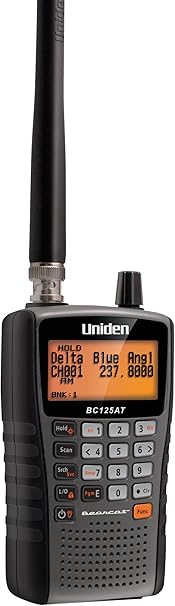 | Uniden Bearcat BC125AT | Check Price |
Our Top Picks 2  | Uniden BC365CRS Scanner | Check Price |
Our Top Picks 3  | Uniden SDS200 TrunkTracker X | Check Price |
Our Selected Top 13 on Line Police Scanners Worth Buying
This selection features a variety of online police scanners, each evaluated for performance, usability, and features. Readers will find clear insights into which devices suit different needs, along with their advantages and limitations to help make informed choices.
1. Uniden Bearcat BC125AT Analog Handheld Scanner
Compact and made with a sturdy plastic body, the Uniden Bearcat BC125AT fits right in your hand and suits anyone looking to tune into analog frequencies easily. Its main strength lies in the ability to handle 500 alpha-tagged channels with Close Call RF capture, which quickly finds nearby transmissions.
Setting it up involves loading the 2 included AA batteries, which provide around 10 hours of use, and programming frequencies through its digital display or a connected PC. Using the scanner day-to-day is straightforward, with Close Call automatically tuning in to nearby transmitters and a Do Not Disturb Mode to avoid interruptions during active transmissions.
The scanner performs well within its analog limits, picking up local transmissions clearly across VHF and UHF bands. It’s built solidly but not water resistant, so care is needed outdoors.
Reviews appreciate the quick Close Call tuning, while some users point out that it cannot monitor digital trunking systems used by many agencies today.
The strongest praise highlights the scanner’s Close Call technology, which quickly tunes into nearby analog transmissions, making it an effective tool for staying informed on activity in the area. The most common complaint revolves around the lack of digital trunking system support, which limits its use in cities where agencies have switched to digital radio.
Anyone wanting a reliable analog scanner for basic VHF or UHF frequencies will appreciate its ease of use and channel capacity. Those needing to monitor newer digital systems or seeking water resistance should consider other options.
Pros
- 500 channels with alpha tagging for easy identification
- Close Call RF capture instantly finds nearby signals
- Do Not Disturb Mode prevents interference during scans
- Digital display for clear frequency viewing
Cons
- Cannot monitor digital trunking systems
- Not water resistant, limiting outdoor use
| Specification | Details |
|---|---|
| Number of Channels | 500 |
| Frequency Range | 25-54 MHz, 108-174 MHz, 225-380 MHz, 400-512 MHz (UHF) |
| Battery Life | 10 hours |
| Voltage | 3 volts |
| Tuner Type | UHF |
2. Uniden BC365CRS 500 Channel Scanner
Simple to use with a clear layout, the Uniden BC365CRS suits anyone wanting a straightforward police scanner combined with an alarm clock and FM radio. Its biggest strength is covering a wide range of channels, including police, fire, marine, and weather, making it easy to stay informed without complicated setup.
Getting it ready takes just plugging it in and inserting 3 AA batteries for backup. You can quickly access 500 channels, including presets for popular emergency and public service bands. Day-to-day use involves tuning with push buttons, and you can switch to the built-in FM radio or set the alarm clock for daily use, all clearly displayed on the desktop unit.
It does a solid job of scanning through a vast mix of analog frequencies, delivering clear sound at around 50 dB. The build is sturdy with a tabletop design that stays put easily. Many appreciate how many channels it covers out of the box, but some mention the push buttons can feel a bit stiff or old-fashioned, which slows down quick channel changes.
Many users appreciate how easy it is to find and listen to a wide variety of channels without complex programming. Most complaints mention that the push buttons can be less responsive, making quick adjustments somewhat frustrating. The combination of scanner, radio, and alarm clock in one desktop unit stands out as practical.
Anyone looking for a simple, all-in-one emergency scanner with added FM radio and alarm features will find this useful. Those needing digital or trunked system scanning may want to explore other models better suited to modern public safety communications.
Pros
- 500 channels with popular presets
- Built-in FM radio with 30 presets
- Includes alarm clock function
- Sturdy tabletop design
Cons
- Push buttons feel stiff and outdated
- Only analog scanning, no digital support
| Specification | Details |
|---|---|
| Channels | 500 |
| Power Source | Corded Electric |
| Number of Batteries | 3 AA batteries required |
| Control Method | Push Button |
| Audible Noise | 50 dB |
| Mounting Type | Tabletop Mount |
3. Uniden SDS200 TrunkTracker X Digital Scanner
Radio enthusiasts looking for a powerful scanner that handles digital signals with ease will appreciate the advanced technology in the Uniden SDS200 TrunkTracker X. Its biggest strength lies in combining easy-to-use features with sophisticated digital performance, making it perfect for monitoring complex police and emergency communications.
Setting up the scanner is straightforward thanks to the HomePatrol database, which covers all radio systems across the US and Canada and is updated weekly. The large 3.5 color display can be customized to show just what you want, making everyday use more comfortable.
Connecting via USB suits most setups, and the LED backlighting helps when monitoring in various lighting conditions.
Performance excels when receiving digital simulcast systems, maintaining clarity where other scanners might struggle. The build feels solid and reliable, with a focus on ease of use rather than flashy extras.
The most praised feature is its ability to decode challenging digital signals well, while some people find the learning curve and initial database updates a bit tricky to manage.
The scanner receives digital simulcast systems exceptionally well, providing clear audio where many others fail. Regular weekly updates to the HomePatrol database keep it current, although some users find managing those updates a bit confusing at first.
Anyone interested in monitoring complex, modern digital police communications will find this scanner well suited for the task. Those new to scanning or looking for a simpler, budget-friendly option might want to consider other models.
Pros
- Customizable 3.5″ color display
- Includes comprehensive HomePatrol database
- Strong performance on digital simulcast signals
- USB connection for easy updates
Cons
- Learning curve with database updates
- Display settings can be overwhelming initially
| Specification | Details |
|---|---|
| Scanner Type | Radio Scanner |
| Connection Type | USB |
| Resolution | scanner |
| Standard Sheet Capacity | 10 |
| Light Source Type | LED |
| Media Type | USB |
4. Uniden SDS150 Digital Radio Scanner

Trying to catch clear signals from police and emergency channels can be tricky in busy areas. The Uniden SDS150 Digital Radio Scanner fits well for anyone needing reliable, portable digital scanning with strong signal reception. Its biggest strength lies in its enhanced sensitivity which cuts down interference for clearer listening.
Setting up the scanner is straightforward with its simplified control layout and digital display. It pairs easily with a smartphone using Bluetooth and supports the U/AWARE app, making it convenient on the go. The built-in GPS and a charge cradle add useful practical value, especially during extended outdoor use or travel.
The unit handles multiple radio bands like AM, FM, and WFM efficiently, supporting popular trunking systems including APCO P25 Phase I & II. Construction balances light weight with rugged durability suitable for daily use in the field.
Most praise focuses on the improved signal clarity and battery life, while some find the single nonstandard battery a drawback.
Strong signal clarity and extended battery life are frequently noted as the best features, making long listening sessions practical. Common frustrations include the reliance on a single nonstandard battery, which may make replacements harder to find and add cost.
People who need portable, reliable scanning with advanced digital features and GPS will appreciate this model. Those wanting simpler operation or standard batteries might prefer different scanners with less complex tuners. It excels in professional and serious hobbyist settings alike.
Pros
- Improved signal reception reduces interference greatly
- Built-in GPS receiver for location tracking
- Lightweight yet rugged enough for field use
- Supports wide range of trunked radio systems
Cons
- Uses a single nonstandard battery
- Somewhat complex tuner options can overwhelm beginners
| Specification | Details |
|---|---|
| Radio Bands Supported | AM, NFM, FM, WFM, or FMB |
| Connectivity Technology | Bluetooth |
| Tuner Type | TrunkTracker X, APCO P25 Phase I & II, Motorola, EDACS, LTR DMR Tier III*, Hytera XPT*, Single-Channel DMR*, NXDN 4800/9600*, EDACS ProVoice* |
| Power Source | Battery Powered |
| Display Type | digital |
| Water Resistance Level | Water Resistant |
5. Uniden Bearcat SR30C Analog Handheld Scanner

Access to over 32,000 frequencies is the standout feature here, making the Uniden Bearcat SR30C perfect for anyone wanting a broad range of police, weather, and emergency channels on a budget. Its compact size keeps it handy for quick scans wherever you go.
Getting started is straightforward thanks to preset service banks covering popular areas like police, fire, NOAA weather, and even ham radio. Daily use involves toggling through these banks or using the turbo search to find new activity fast. Programming through a PC via USB adds flexibility when you want to customize the channels beyond the default settings.
It runs on AA batteries or USB power, keeping options open.
The scanner does a solid job at picking up clear analog signals across its wide frequency range. Build quality feels good for the price, offering a sturdy grip and responsive controls. Praise often points to its easy setup and effective close call RF capture feature, though some mention the mono audio output and single-band limitation as downsides.
Setup and usability stand out positively, with many appreciating the preset banks and PC programming capability. The mono audio and single supported band remain common drawbacks that affect overall listening experience for some users.
Those wanting broad coverage and a simple, compact scanner will find it worth considering. Anyone needing stereo sound or multi-band scanning may want to explore other models that better fit those needs.
Pros
- Access to 32,000+ frequencies with presets
- Compact and easy to carry
- Close Call RF Capture feature
- Flexible power options: USB or AA batteries
Cons
- Mono audio output only
- Supports only one radio band
| Specification | Details |
|---|---|
| Frequency | 32000 MHz |
| Supported Bands | 1-Band |
| Channels | 500 |
| Programming | PC Programming via USB |
| Power Source | USB, Battery-Powered (AA batteries required) |
| Audio Output | Mono |
6. Uniden BCD996P2 TrunkTracker V Digital Scanner

For anyone serious about following police, fire, and weather channels, the Uniden BCD996P2 suits well. Its biggest strength lies in detailed scanning abilities with access to NOAA weather updates and sophisticated Close Call RF technology.
Setup involves connecting to a 12-volt DC power source, and day-to-day use includes sorting through 25,000 channels without hassle. TrunkTracker V technology simplifies tracking busy trunked systems, while S.A.M.E. weather alerts keep you informed about severe conditions nearby. You can pair it with a smartphone through IR for extra convenience.
Performance stands out with reliable reception on one radio band and clear stereo audio output. The build is sturdy, though not water resistant, which calls for careful indoor or vehicle use.
The top praise highlights detailed and instant access to nearby transmissions; a common complaint mentions the lack of water resistance.
Users find it very effective in picking up nearby radio transmissions quickly and appreciate the detailed weather alerts. The scanner’s main drawback is the lack of water resistance, which means it needs careful handling and is best suited for indoor or vehicle setups.
Anyone wanting a serious, feature-rich scanner with broad channel selection will be satisfied. Those needing a rugged, outdoor-proof scanner should consider alternatives that offer water resistance and multi-band support.
Pros
- Extensive channel capacity of 25,000
- TrunkTracker V technology for trunked systems
- Includes S.A.M.E. weather alerts for severe conditions
- Close Call RF Capture helps find nearby transmissions
Cons
- Not water resistant, limiting outdoor use
- Supports only one radio band
| Specification | Details |
|---|---|
| Power Source | 12 volts Direct Current (DC) |
| Channels | 25,000 |
| Radio Bands Supported | 1-Band |
| Connectivity Technology | IR |
| Audio Output Mode | Stereo |
| Weather Alerts | S.A.M.E. weather alert |
7. Uniden BC355N Base/Mobile Scanner

Ideal for anyone wanting an analog police scanner without digital complexity, it delivers reliable signal capture in nearby areas with its Close Call RF Capture Technology. Best suited for those in regions still using analog radio systems, it stands out with easy tuning to local transmissions.
Setup involves plugging in the corded power source, and daily use is straightforward thanks to the LCD display and radio frequency interface. The single-band scanner covers 800 MHz, suitable for common analog emergency broadcasts. USB connectivity makes it convenient for updates or software integration.
It runs on one specific type of battery, ensuring portability despite being mainly a base unit.
Performance centers around its wide frequency and service bank support, allowing quick access to local police and emergency channels. The build feels solid, intended for base or mobile use, and the main praise highlights how Quickly it locks onto nearby signals with the Close Call feature.
On the downside, it cannot monitor digital or trunked communications, which limits use in many modern urban areas.
The strongest praise is the scanner’s ability to instantly tune into nearby analog signals using Close Call RF Capture Technology, making local monitoring reliable and easy. The most common complaint involves its inability to pick up any digital radio transmissions, limiting usefulness where agencies use modern digital trunking systems.
People living in areas where emergency services still use analog 800 MHz frequencies will find this model sufficient and convenient. Anyone needing to monitor digital or trunked systems should look at Uniden’s Digital models designed specifically for those signals.
Pros
- Close Call RF Capture Technology for quick tuning
- Wide frequency and service bank support
- USB connectivity for updates and interaction
- Simple interface with clear LCD display
Cons
- Not capable of digital system monitoring
- Only supports single 800 MHz band
| Specification | Details |
|---|---|
| Connectivity Technology | USB |
| Power Source | Corded Electric |
| Radio Bands Supported | 1-Band |
| Frequency | 800 MHz |
| Number of Batteries | 1 Product Specific batteries required |
| Display Type | LCD |
8. Uniden SDS100 True I/Q Digital Handheld Scanner

Uniden SDS100 True I/Q Digital Handheld Scanner excels at picking up digital and analog signals, making it a solid choice for enthusiasts wanting reliable and clear reception. Ideal for anyone needing a palm-sized scanner with strong performance in difficult radio environments.
Setup involves entering your zip code, which quickly programs all local radio systems thanks to the HomePatrol Database covering the US and Canada. Day-to-day use benefits from its customizable color display, letting you view the information most relevant to you.
The USB connection allows for easy updates and data management through the included Sentinel software.
Reception quality stands out, especially in weak-signal areas or conditions with heavy simulcast transmissions. Construction feels sturdy, ready for handheld use without fragility concerns. Frequent praise highlights its digital performance and ease of programming, while some users mention the complexity of navigating the advanced menu options as a downside.
High marks go to its strong digital reception and simple zip code setup through the HomePatrol database. The main challenge users mention is the scanner’s menu system, which can be tricky to master quickly, especially for those new to handheld scanners.
People seeking reliable identification of local radio traffic in both urban and weak-signal areas will find it beneficial. Those who want a simpler, more straightforward device might consider alternative models better suited for beginner-friendly scanning.
Pros
- Accurate digital and analog signal reception
- HomePatrol database includes US and Canada radios
- Customizable color display
- Regular weekly updates available
Cons
- Advanced menus can feel complicated
- Learning curve for beginners in scanning
| Specification | Details |
|---|---|
| Scanner Type | Digital Handheld Scanner |
| Connection Type | USB |
| Resolution | 24 Bits |
| Color Depth | 24 |
| Media Type | MicroSD Card |
9. Uniden Bearcat BCD160DN Digital Handheld Scanner
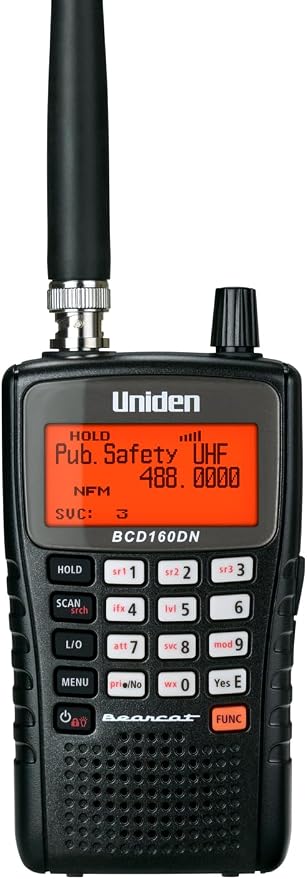
Using the Uniden Bearcat BCD160DN feels straightforward and reliable, especially for anyone serious about picking up digital signals. It suits hobbyists or professionals who want quick access to a variety of conventional digital broadcasts without the complications of trunking systems. Its standout feature is how fast it decodes digital tone signals, making it easier to tune in accurately.
Setting up involves connecting through USB for programming, which keeps things simple. The scanner’s Band Scope Rapid System lets you spot hidden signals quickly by tagging frequencies and channels.
You’ll notice the DCS/CTCSS Rapid Decode feature instantly shows tone information, so you don’t waste time guessing settings. Since it supports decoding for DMR and NXDN signals right away and lets you upgrade for APCO P25, it stays flexible for different digital standards.
The scanner performs solidly in picking up and decoding digital and analog signals, handling what it’s built for with ease. Its sturdy handheld design feels durable, ready to handle regular use. A major plus is how clearly it identifies system tones, speeding up scanning.
The most common downside is the lack of trunking system support, limiting use if you need to follow those networks. Some wish for decryption ability, but that’s not included.
Users appreciate how quickly it decodes CTCSS tones and DCS codes, which speeds up scanning and tuning to the right signal. The scanner is noted to have good build quality but limiting its capabilities by not supporting trunking systems is often mentioned.
People needing a straightforward digital and analog scanner without trunking will find this suitable. Those requiring trunk tracking or encrypted signal decoding should look elsewhere for more advanced options.
Pros
- Detects and displays tones instantly
- Supports several digital formats out of the box
- Simple USB connection for programming
- Durable handheld design
Cons
- No support for trunking systems
- Cannot decode encrypted signals
| Specification | Details |
|---|---|
| Scanner Type | Radio Scanner |
| Connection Type | USB |
| Digital Decoding Support | DMR, NXDN, APCO P25 Phase 1 & 2 (via firmware) |
| Trunking Support | Not supported |
| Rapid Decode Feature | DCS/CTCSS tones and codes |
10. Whistler WS1065 Digital Trunking Desktop Scanner

Perfect for anyone serious about monitoring digital and trunked radio signals, this desktop scanner stands out for its adaptive digital tracking that handles signal fading without constant manual tweaks.
Setting up happens over Wi-Fi, making it easier than plugging into wires, while programmable audible alarms and LED alerts keep you aware of important transmissions. The customizable multi-color LED lets you assign different colors to specific alerts, which helps if you’re monitoring multiple channels simultaneously. Adjusting to varying radio conditions happens automatically, so day-to-day use feels straightforward with reliable signal clarity.
The scanner handles its main job well by decoding P25 signals in real-time with no need to fiddle with settings as signal quality shifts. Build quality is solid enough for desktop use, with a clear display and responsive controls.
The most frequently mentioned positive is the scanner’s ability to automatically adapt to signal changes, while the main downside is that it exclusively uses paper media, which may feel outdated.
The strongest praise highlights how well the scanner automatically adjusts to changes in digital signals, making it reliable for continuous monitoring without operator hassle. The most common complaint centers on the use of paper media, which some consider less convenient compared to digital storage options.
Those who want dependable, hands-off operation when listening to P25 and trunked systems will appreciate this scanner. People seeking a more modern interface or portable use might want to look elsewhere.
Pros
- Automatic adaptive digital tracking for stable reception
- Customizable alert LED with up to 8 user-defined colors
- Programmable audible alarms to stay informed
- Network Access Code filtering to reduce unwanted transmissions
Cons
- Uses paper media, which might seem outdated
- No mention of battery; relies on desktop power
| Specification | Details |
|---|---|
| Scanner Type | Radio |
| Connection Type | Wi-Fi |
| Resolution | 200 |
| Media Type | paper |
11. Uniden BearTracker 885 CB Radio and Digital Scanner
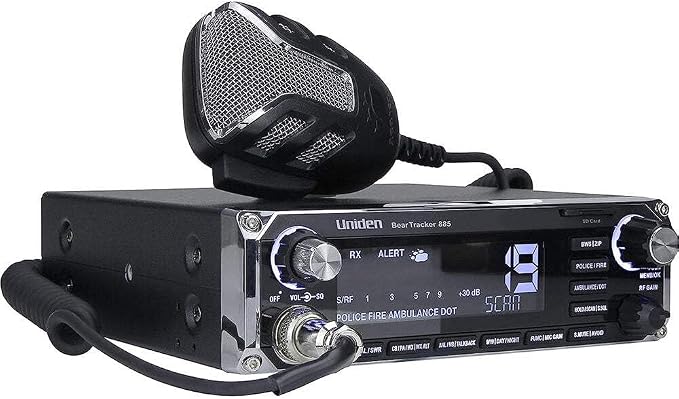
With a sturdy design focused on functionality, the Uniden BearTracker 885 combines a 40-channel CB radio with a digital scanner tailored for tracking public safety channels across the US and Canada. Ideal for those interested in both CB communication and staying informed about nearby police, fire, and emergency activities, its biggest strength is the integrated GPS that automatically tunes to local channels.
Getting it set up involves connecting to a 12-volt power source and fine-tuning the antenna using the built-in SWR meter for clear reception. The BearTracker Warning System alerts you to nearby public safety transmissions without manual scanning. Day-to-day operation revolves around switching between CB use and scanning modes with ease, while the 7-color display clearly shows channel information and NOAA weather alerts keep you updated on conditions.
Performance-wise, the radio reliably picks up a wide range of emergency and public safety broadcasts alongside standard CB communication with its 4-Watt RF power. The build feels solid though it’s not water resistant, making it best suited for protected environments. Users praise the accurate GPS channel selection and alert system but often mention the short talking range of just one meter on the CB side as a drawback.
The BearTracker 885 gets high marks for its automatic GPS feature that quickly finds local public safety channels and alerts you, making scanning easy. The main drawback consistently mentioned is the very limited talking range on CB, which turns it more into a scanner device than a long-distance communicator.
People wanting a reliable scanner coupled with CB radio features in one unit will appreciate this, especially those who need quick access to local emergency channels. Anyone looking for extended CB communication range or outdoor durability should seek alternatives better suited for those purposes.
Pros
- Automatic GPS channel selection for local scanning
- Integrated BearTracker Warning System alerts nearby transmissions
- Includes NOAA Weather alerts for timely updates
- Built-in SWR meter aids antenna tuning
Cons
- Limited CB talk range of 1 meter
- Not water resistant, needs protected installation
| Specification | Details |
|---|---|
| Number of Channels | 40 |
| Tuner Type | UHF |
| Talking Range Maximum | 1 meter |
| Voltage | 12 volts |
| 4-Watt RF Power | Yes |
12. Uniden BCD325P2 TrunkTracker V Handheld Scanner

Highly responsive scanning with the ability to tune into 25,000 channels makes it ideal for anyone needing broad radio coverage. Its standout feature is Close Call RF Capture Technology, catching nearby signals automatically, making it great for staying updated on local public safety communications.
Setup involves programming the Quick-Key System Access, letting you save and quickly toggle up to 100 favorite frequencies. The built-in GPS compatibility helps organize channels by location, while scanning through APCO Project 25 Phase II systems provides access to the latest digital police communications with minimal hassle during daily use.
Performance on signal detection is very strong, picking up the nearest transmissions swiftly. The build feels sturdy and fits well in hand for extended use.
The closest complaint mentioned is the complexity in initial channel programming, which can require patience. The overall reliability and range of features earn praise.
Close Call RF Capture Technology is praised for quickly tuning into nearby transmissions, while the main complaint relates to the setup difficulty in programming channels and keys. The scanner excels at picking up local public safety signals with extensive frequency support.
Anyone looking for detailed and frequent coverage of local police and emergency broadcasts will appreciate its features. People wanting a more straightforward, plug-and-play approach might consider simpler models instead.
Pros
- Close Call RF capture finds local signals fast
- GPS compatibility for location-based scanning
- Supports 25,000 channels, covering wide range
- Quick-Key access for up to 100 saved systems
Cons
- Initial channel setup can be time-consuming
- Complexity may overwhelm beginners
| Specification | Details |
|---|---|
| Scanner Type | Radio |
| Connection Type | gps |
| Resolution | 2400 dpi |
| Wattage | 20 watts |
| Media Type | USB |
13. Uniden BearTracker BCT15X Base/Mobile Scanner

Uniden’s BearTracker BCT15X suits anyone serious about tracking police and emergency frequencies while on the move. It stands out with its huge 9,000 channel capacity and advanced location-based scanning, making it ideal for users who need reliable, extensive coverage across multiple areas or while traveling.
Setting up the scanner involves hooking it up in a vehicle or at a base with included mounting hardware and power cords. The dynamic memory system handles programming and stores signals efficiently.
Using the TrunkTracker III technology, it tracks Motorola, EDACS, and LTR systems automatically. GPS connectivity helps the scanner switch frequencies based on where you are, ensuring you tune into local departments without manual changes.
Performance-wise, it picks up a wide range of frequencies smoothly, with the close call RF capture technology alerting you to nearby transmissions. Built to last, the package includes durable mounting equipment and an antenna suited for mobile or base use. Common praise highlights its reliable scanning depth, while some users mention a steep learning curve because of the many advanced features on board.
Many appreciate the scanner’s depth of coverage and how it automatically adjusts channels by location, which makes traveling easier. The most frequent complaint is the steep learning curve due to the scanner’s complex feature set and programming options.
Those who want a thorough and versatile scanner for mobile or base use will find it fitting well. Casual users looking for a simpler setup and interface might want to explore more basic models instead.
Pros
- Extensive 9,000 channel capacity
- Location-Based scanning with GPS support
- Includes full set of installation accessories
- Works on multiple trunking systems
Cons
- Complex to program for beginners
- Only a 1-year manufacturer warranty
| Specification | Details |
|---|---|
| Channels | 9,000 |
| Technology | TrunkTracker III |
| Memory System | Advanced dynamic memory |
| Included Accessories | AC adapter, power cords, harness, mounting hardware, antenna |
| Compatible Remote Head | BC-RH96 |
Best Online Police Scanners Comparison Table
| Product | Channels | Power Source | Connectivity | Additional Features |
|---|---|---|---|---|
| Uniden Bearcat BC125AT | 500 | 2 AA batteries | – | Digital Display |
| Uniden BC365CRS Scanner | – | Corded Electric | – | Push Button Controls |
| Uniden SDS200 TrunkTracker X | – | – | USB | TrunkTracker X |
| Uniden SDS150 Digital Scanner | – | Battery Powered | Bluetooth | Weather Alert |
| Uniden Bearcat SR30C | – | USB, Battery-Powered | USB | Close Call RF Capture |
| Uniden BCD996P2 TrunkTracker V | – | 12V DC | IR | TrunkTracker V Tech |
| Uniden BC355N Mobile Scanner | – | Corded Electric | USB | Close Call RF Capture |
| Uniden SDS100 True I/Q | – | – | USB | Digital Handheld Scanner |
| Uniden Bearcat BCD160DN | – | – | USB | – |
| Whistler WS1065 Desktop Scanner | – | – | Wi-Fi | – |
| Uniden BearTracker 885 | 40 | 12 volts | – | Emergency Alarm |
| Uniden BCD325P2 TrunkTracker V | – | – | GPS | – |
| Uniden BearTracker BCT15X | – | AC Adapter | – | Includes Accessories |
- Channels500
- Power Source2 AA batteries
- Connectivity–
- Additional FeaturesDigital Display
- Channels–
- Power SourceCorded Electric
- Connectivity–
- Additional FeaturesPush Button Controls
- Channels–
- Power Source–
- ConnectivityUSB
- Additional FeaturesTrunkTracker X
- Channels–
- Power SourceBattery Powered
- ConnectivityBluetooth
- Additional FeaturesWeather Alert
- Channels–
- Power SourceUSB, Battery-Powered
- ConnectivityUSB
- Additional FeaturesClose Call RF Capture
- Channels–
- Power Source12V DC
- ConnectivityIR
- Additional FeaturesTrunkTracker V Tech
- Channels–
- Power SourceCorded Electric
- ConnectivityUSB
- Additional FeaturesClose Call RF Capture
- Channels–
- Power Source–
- ConnectivityUSB
- Additional FeaturesDigital Handheld Scanner
- Channels–
- Power Source–
- ConnectivityUSB
- Additional Features–
- Channels–
- Power Source–
- ConnectivityWi-Fi
- Additional Features–
- Channels40
- Power Source12 volts
- Connectivity–
- Additional FeaturesEmergency Alarm
- Channels–
- Power Source–
- ConnectivityGPS
- Additional Features–
- Channels–
- Power SourceAC Adapter
- Connectivity–
- Additional FeaturesIncludes Accessories
How to Choose the Right Online Police Scanner
Choosing an online police scanner requires considering factors like signal coverage, update frequency, and ease of use to ensure reliable access to information. Selecting the right features prevents frustration and additional costs by providing consistent, accurate monitoring suited to your needs.
Frequency Coverage
Some online scanners struggle to pick up important frequencies simply because they cover only a narrow band of channels. An effective scanner picks up a broad range, spanning local police, fire departments, emergency medical services, and even national agencies that use encrypted or digital signals. Ignoring frequency range means missing out on alerts that matter in real time.
Look for products that support both analog and digital formats, which is essential for catching signals across different modern systems. Coverage should include VHF and UHF bands commonly used in public safety communications.
A unit covering 25 MHz to 1.3 GHz usually handles most standard channels, ensuring comprehensive monitoring. Without this, signal gaps become a constant frustration during use.
Ease of Use and Interface
Dealing with a scanner full of cramped menus or a cluttered screen wastes valuable time when it matters most. The practical impact of an intuitive interface is clear: fast access to desired channels and easy adjustments without fiddly steps. Displays featuring large, backlit text make it easier to read frequencies in low light or at a glance.
Customizable presets and efficient search functions save effort by storing frequently used channels and quickly finding active signals. Scanners that allow assigning channels to simple buttons and include alphabetical or numerical sorting help manage a growing list of monitored frequencies.
Avoid models with complicated button layouts that slow down operation.
Connectivity and Compatibility
Streaming feeds online depends on strong integration with smartphones, tablets, or computers. Devices limited to standalone use miss out on convenient remote listening or sharing capabilities. Good compatibility means supporting major operating systems like iOS, Android, and Windows along with accessible apps that simplify control over networked channels.
Firmware updates that add new channels or fix bugs are vital. Scanners lacking straightforward update options quickly become obsolete as emergency services upgrade their systems.
Models that connect via Wi-Fi or USB for easy refreshing of software keep the device current and flexible for changing local and national frequencies.
Reception Quality and Range
Reception struggles arise in urban areas full of interference and in rural zones far from transmitters. A scanner’s ability to pick up weak or distant signals shapes real world performance. Devices with built-in noise reduction provide clearer audio and reduce static, which is indispensable for understanding chatter in difficult conditions.
Antenna versatility matters greatly. Models offering detachable or extendable antennas improve signal strength, especially in poor coverage areas.
Some scanners accommodate external antennas suited for specific environments, boosting range considerably. Without this, users face frequent dropouts or patchy reception, which is frustrating during important monitoring sessions.
Battery Life and Portability
Portability makes a big difference when carrying a scanner on foot or during extended field use. Heavy or bulky devices are tiresome over time and discourage frequent monitoring. Options weighing less than a pound with compact profiles fit better in backpacks and pockets for all-day use.
Battery life is critical; units running out after just a couple of hours force interruptions. Models with built-in rechargeable batteries lasting 6 to 8 hours suit most users, while support for external power sources like USB charging or replaceable batteries extends flexibility for longer sessions. Carrying spare batteries or a power bank minimizes downtime and frustration.
Tips for Optimizing Your Online Police Scanner Experience
Signal quality varies widely among online police scanner services. Selecting a platform with servers close to your area can reduce delay and improve audio clarity.
Pay attention to the scanner’s interface; platforms that let you filter channels quickly save time when switching between feeds. Many scanners offer recording options, which help capture and review important broadcasts later.
Consider the device you’re using to listen. Desktop computers often offer better performance than mobile devices due to stronger processing power and more stable internet connections. Make sure your internet speed is sufficient; dropping below 5 Mbps can cause buffering or audio cuts.
When multiple users share your network, prioritizing the scanner app’s traffic helps prevent interruptions.
Additional tips:
- Use headphones for clearer audio in noisy environments.
- Regularly update your browser or app to avoid compatibility issues.
- Bookmark commonly used channels for quick access.
Common Mistakes to Avoid When Using Online Police Scanners
A frequent error is assuming all online police scanners provide live, unedited audio. Some delay transmissions by several seconds or more to prevent sensitive information from being broadcast in real-time.
It is important to check whether the service notes any lag so you can set expectations accordingly.
Avoid relying solely on automated filters. Scanners often have categories like police, fire, or ems, but some feeds may be mislabeled or outdated.
Manually verifying channel lists helps ensure you are listening to relevant frequencies. Another mistake is neglecting to close the scanner app when finished, which can consume unnecessary bandwidth and data.
Other common pitfalls include:
- Ignoring privacy policies, some services collect data or require registration.
- Using weak or public Wi-Fi networks that interrupt signal stability.
- Failing to test volume settings before critical listening moments.
Comparing Online Police Scanners to Traditional Handheld Scanners
Online police scanners provide access to multiple locations without needing physical equipment. Unlike traditional handheld scanners, there is no requirement to be near the radio frequency source.
This is useful for monitoring areas far from home or during travel. However, reliance on internet connectivity means streaming can pause or drop out if the signal weakens.
Handheld scanners allow for more customization and sometimes better audio quality because they receive transmissions directly. They do not require ongoing subscriptions or data plans, which can add to long-term costs for online alternatives. On the downside, handheld models are limited by antenna range and can be bulkier to carry.
Key differences:
- Portability: handheld devices function offline, online scanners require internet.
- Coverage: online scanners provide access to multiple cities; handhelds are local only.
- Cost: handheld scanners are a one-time purchase, while online may have fees.
People Also Asked
How Do I Properly Care for an Online Police Scanner?
Keep the online police scanner updated with the latest software and clear the cache regularly to maintain performance. Storing your device in a cool, dry place protects it from overheating and moisture damage, which can corrupt data or affect signal reception.
What Sizes Are Available for Portable Police Scanners?
Portable police scanners commonly come in pocket-sized models to slightly larger handheld units about the size of a small smartphone. The smaller ones fit easily in a jacket pocket, while larger units may offer better controls and screen visibility.
Are Online Police Scanners Safe to Use Around Other Electronics?
Online police scanners are generally safe around other electronics as they mainly operate using internet connections rather than radio frequencies. Still, avoid placing the scanner close to high-powered devices like microwaves to reduce any potential interference.
How Long Do Online Police Scanners Typically Last with Regular Use?
With regular use, an online police scanner can last several years if properly maintained and updated. Battery life varies by model, so consider scanning sessions length and carry a charger or spare batteries for extended periods.
What Common Problems Should I Expect with Online Police Scanners?
Common issues include audio dropouts, limited channel range depending on network coverage, and occasional software bugs. Restarting the device or app usually resolves temporary glitches, and checking for updates can fix persistent problems.
Conclusion
Choosing an online police scanner comes down to sound quality, available channels, and ease of use. Clear audio helps catch details without rewinding constantly. A wide selection of channels lets you keep track of different areas or departments.
Easy controls and navigation save time, especially during urgent situations.
Consider how much you plan to listen and where you’ll use the scanner to decide which fits your needs and budget. Review the comparison table above to see how options stack up on those key points, then pick the one that matches your priorities best.