Top 13 Best Mobile Quad Band Antenna You Can’t Miss!
Signal dropouts and constant interference can ruin a day’s drive or a crucial work call, often traced back to a cheap or poorly chosen antenna. The best mobile quad band antenna helps avoid those issues by covering all four major frequency bands reliably.
It keeps communication clear, even in areas where single-band antennas would fail or weaken the signal.
A quality mobile quad band antenna usually has solid construction with corrosion-resistant materials like stainless steel and durable plastics. Size matters too, with antennas around 18 to 24 inches striking a good balance between performance and convenience. Power output and proper mounting fitting can affect signal strength; antennas rated around 50 watts and with standard mounts fitting most vehicles tend to perform consistently well.
Need a Quick Check?
| Image | Product | Price |
|---|---|---|
Our Top Picks 1  | YAESU FT-7800R Antenna | Check Price |
Our Top Picks 2  | ANT-7900D Mobile Antenna | Check Price |
Our Top Picks 3  | CR-8900 Quad Band Antenna | Check Price |
Our Selected Top 13 Mobile Quad Band Antenna for Every Budget
This list features a carefully chosen selection of versatile mobile quad band antennas suited for various needs and budgets. Each review highlights performance, ideal user scenarios, and key strengths and weaknesses to help you find the best fit for your mobile communication requirements.
1. YAESU FT-7800R Quad Band Mobile Radio Antenna
Using the YAESU FT-7800R Quad Band Mobile Radio Antenna feels solid and reliable, especially for those needing multi-band support in one device. It suits people who want to cover a wide frequency range from 10m to 70cm without swapping antennas. Its main strength lies in its ability to handle four bands, which extends communication options significantly.
Setting up this antenna is straightforward since it comes in three detachable sections that make storage and transport easy. The stainless steel construction means rust isn’t a worry, even with daily exposure outdoors. The vertical polarization and omni-directional radiation pattern help keep your signal steady no matter which way you’re facing.
Performance-wise, it handles transmission and reception well across all frequencies, boosting talk distance thanks to gains of 2.5 and 5.5 dBi on 144 and 435 MHz bands. The 50Ω impedance and VSWR below 1.5 help maintain signal quality.
One common downside is its length, which takes some space when fully assembled, but durability is highly praised due to quality materials.
Users appreciate the sturdy stainless steel construction that resists rust and the antenna’s solid gain, improving both transmission and reception. The main drawback noted is its length, which can make mounting or storing it a bit cumbersome in tighter spaces.
Ideal for anyone who needs versatile frequency coverage and durability on the road. Those who require a more compact antenna for limited space might want to consider alternatives with shorter lengths or specialized bands.
Pros
- Covers four important frequency bands
- Rust-resistant stainless steel build
- Easy to dismantle into three parts
- Good gain for improved signal distance
Cons
- Relatively long assembled length
- Only three-month warranty included
| Specification | Details |
|---|---|
| Frequency | 29/50/144/430MHz (10m/6m/2m/70cm) |
| Gain | 2.5/5.5dBi (144/435 MHz) |
| Max Power Input | 100W |
| Impedance | 50Ω |
| Material | Stainless steel |
| Length | 4.1ft / 1.26m (three sections) |
2. ANT-7900D Quad Band Mobile Radio Antenna
Ideal for anyone needing good mobile radio coverage across four frequency bands, this quad band antenna stands out with its hardy stainless steel design. It suits users looking for a straightforward antenna that’s easy to install and solid when it comes to building signal strength.
Setup involves attaching the antenna’s two removable parts, which is very convenient for storage or transport. The RB400 bracket clip makes fixing it securely on a car easy, and the antenna cable runs a full 16.4 feet, providing good flexibility in where you mount it.
Its PL259 connector fits many popular radios, simplifying compatibility with devices like the QYT 7900D.
The antenna effectively improves transmit and receive distances with its varying gains from 3.0 to 5.5 dBi across four bands. Stainless steel construction resists rust well, holding up on rainy days.
High praise often goes to its durable build and effective range, though some mention that it might not be the most compact option when fully assembled.
Durability and signal improvement receive the strongest praise, with many noticing how well the stainless steel holds up in bad weather and how much it boosts radio communication. On the downside, some find it less compact than expected, especially when put together for use.
Users prioritizing solid construction and multi-band capability will be pleased, especially those mounting it on vehicles. Anyone needing a smaller or longer-lasting warranty option might want to explore other antennas.
Pros
- Durable stainless steel resists rust
- Good gain for extended communication range
- Two-piece design for easy storage
- Compatible with popular two-way radios
Cons
- May be bulky when fully assembled
- Only comes with 6-month warranty
| Specification | Details |
|---|---|
| Frequency | 144/220/350/440MHz |
| Gain | 3.0/3.5/4.5/5.5dBi |
| Material | Stainless Steel |
| Cable Length | 16.4FT |
| Connector Type | PL259 |
| Bracket Clip | RB400 |
3. CR-8900 Quad Band Mobile Radio Antenna
Stainless steel and a cleverly detachable design make this antenna great for mobile ham radio operators who want a strong, multi-band setup. Its main strength lies in the ability to cover four bands, 10m, 6m, 2m, and 70cm, without needing multiple separate antennas.
Setting it up involves attaching a stainless steel whip with detachable sections and center coils, so you can make it compact for travel or extend it when on site. The included 16.4ft RG58 coaxial cable and heavy-duty bracket clip mean you have everything to mount it right the first time. Keep an eye on height limits on roads to avoid brushing construction or installations.
Signal clarity is solid thanks to its 2.15dBi gain at 144MHz and 5.5dBi at 430MHz, giving both VHF and UHF bands a noticeable boost in reception. The sturdy stainless steel build holds up well outdoors, but some users find the total length of 4.1ft somewhat bulky in tight spaces. Reviews commonly praise the signal improvement, while a few mention it can be a bit too tall for certain mobile setups.
Signal strength and clarity across multiple bands receive positive remarks, making it a reliable choice for ham radio communication. Some find the height challenging in certain mobile setups, requiring careful placement to avoid contact with road obstacles.
Users needing a flexible, strong multi-band option in a mobile environment will appreciate this antenna’s features. Those with very limited space or strict clearance limits may want a shorter alternative.
Pros
- Quad-band coverage for multiple frequency needs
- Detachable sections for easy transport and installation
- Stainless steel whip offers durable outdoor use
- Complete kit includes cable and mounting hardware
Cons
- Total length (4.1 ft) can be cumbersome on small vehicles
- Height requires caution on roads with low overheads
| Specification | Details |
|---|---|
| Frequency Bands | 29/50/144/430 MHz (10m/6m/2m/70cm) |
| Gain | 2.15 dBi at 144 MHz, 5.5 dBi at 430 MHz |
| Length | 4.1 ft (1.26 m) |
| Cable Included | 16.4 ft RG58 coaxial cable (PL-259 to SO-239) |
| Installation Kit | Heavy-duty bracket clip and basic tools included |
4. Quad Band Mobile Radio Antenna

Durability and versatility stand out immediately with this quad band mobile antenna, making it a solid pick for users needing multiband coverage. It fits well for those who use radios across 29MHZ to 430MHZ frequencies, especially useful in mobile setups requiring easy adjustment and solid reception.
Setup involves attaching the PL259 connector and mounting the antenna, which is straightforward thanks to its detachable stainless steel whip. The bendable bottom design lets you lower it when needed, such as entering low clearance areas.
Rotating the collapsible part 90 degrees helps prevent the antenna from bending back during driving, adding practicality for daily movement. Its weight at 510g feels balanced and stable when mounted.
Signal gain performs well at 3.0dBi/5.5dBi for 144/435MHZ bands, supporting clear communication with up to 100W max power. Sturdiness ranks high given the stainless steel construction and the ability to withstand everyday wear.
Durable design is a plus, but some users note a challenge in securing the antenna firmly while driving without additional tape or support measures. VSWR remains under 1.5, meaning good efficiency is maintained.
Strong feedback highlights the antenna’s sturdy and adaptable design, especially appreciated for mobile use. Common issues involve the antenna folding back under wind force unless users apply additional fixing methods like heat shrink tape or PVC sections. Daily handling shows it can hold up well with some attention to installation details.
People looking for a reliable antenna covering a broad range of frequencies with easy mounting will be satisfied. Those seeking longer warranty coverage or more rigid protection against wind forces might want to explore other options.
Pros
- Wide frequency coverage across multiple bands
- Detachable and bendable stainless steel whip
- Relatively low VSWR under 1.5
- Rotatable collapsible section to prevent wind damage
Cons
- Requires extra securing against folding during driving
- Limited warranty to only 3 months
| Specification | Details |
|---|---|
| Frequency | 29MHZ/50MHZ/144MHZ/430MHZ/118-124MHZ |
| Gain | 3.0dBi/5.5dBi (144/435MHZ) |
| Connector | PL259 |
| Max power | 100W |
| Length | about 1.3 meter / 53 inches |
| Weight | 510g |
5. CR8900A Diamond Quad Band Mobile Antenna

Made for reliable communication across FM, VHF, UHF, and amateur radio bands, this antenna fits well for anyone needing consistent signal strength on the go. Its biggest strength lies in supporting multiple frequency bands without sacrificing clarity or range, making it worth choosing over simpler models.
Installation requires just the standard mounting hardware it comes with, so setting it up on cars, trucks, or SUVs is straightforward and tool-free. The flexible whip design helps when maneuvering around tight mount spots, and switching between bands is smooth during regular use. It holds up well on the road and doesn’t get in the way while driving.
Performance shines with clear, reliable mobile communication across all supported frequencies, and the durable materials resist rust and corrosion, making sure it holds up through various weather conditions. Reviews highlight durability as a major plus, while some users note a minor inconvenience with the antenna’s length in tight parking situations.
Strong points include long-lasting materials that protect against rust and environmental damage, keeping communication clear through various weather conditions. Some find the antenna’s length a bit awkward when parking or in confined areas, which requires some extra attention.
Those who need a reliable, multi-band antenna for everyday mobile radio use will appreciate this option. Drivers frequently navigating open roads or varied terrains benefit most. People who often park in tight urban spots or require multiple antennas might want to look elsewhere.
Pros
- Supports FM, VHF, UHF, amateur radio bands
- Resists rust and corrosion
- Quick, tool-free installation
- Flexible whip design
Cons
- Length can be cumbersome in tight spaces
- Single antenna per pack only
| Specification | Details |
|---|---|
| Model Number | CR8900A |
| Brand | Diamond Antenna |
| Number of Packs | 1 |
| Unit Count | 1 Count |
| Warranty Description | 1 year |
| Antenna Description | CR8900A Quad-Band FM Mobile Antennas |
6. Comet UHV-4 Multi-Band Mobile Antenna

Finding an antenna that works well on multiple bands without constant swapping is a real win for mobile radio operators. Suited for hobbyists needing a versatile solution on HF, VHF, and UHF frequencies, it shines most when switching between different bands without losing signal quality.
Setting up takes just a little adjustment with the telescopic elements and loading coils to fine-tune the SWR. The fold-over hinge is practical for daily use, avoiding damage during garage entry or tight parking spots. It feels solid and surprisingly easy to store when the radio or vehicle isn’t in use.
Performance stays consistent across the many bands it covers, providing clear communication where it counts. The build quality stands out with strong materials that hold up against weather and stress.
The one drawback often mentioned is that fine-tuning can take patience, especially when switching bands frequently.
Clear and strong signals are a highlight across HF, VHF, and UHF bands, though dialing in the optimal setting demands attention and time. The sturdy design and fold-over hinge support everyday reliability, though tuning is still the most common challenge.
Those needing flexible band coverage in a single mobile antenna will find this useful. Users preferring quick, no-fuss operation on one or two bands might look for simpler alternatives instead.
Pros
- Covers multiple bands from 80 to 70 centimeters
- Adjustable loading coils for precise tuning
- Fold-over hinge for easy storage
- Durable materials suited for outdoor use
Cons
- Requires careful tuning on each band
- Single unit; no extra accessories included
| Specification | Details |
|---|---|
| Brand | COMET INDUSTRIES |
| Model Number | UHV-4 |
| Number of Items | 1 |
| Warranty Description | 1 YEAR |
| Antenna Description | Multi-Band Mobile Antenna |
7. Dualband VHF/UHF Mobile Ham Radio Antenna

Strong Rare Earth Magnet Base holds the antenna in place even at high speeds, making it ideal for mobile ham radio users who value quick installation and reliable connection. It suits those needing dual-band coverage on both VHF and UHF frequencies with solid performance outdoors.
Setting up takes moments since the 2.95 magnetic base sticks firmly on the car roof and doesn’t budge at speeds up to 100 kph. The 10 ft RG58 cable with PL-259 connector offers enough length to route easily to your radio setup. Adjusting the antenna position improves signal pickup due to its omni-directional design covering 137-149 and 437-480 MHz.
Performance-wise, hitting local repeaters from 40 miles away is practical with gain levels of 2dBi at VHF and 3dBi at UHF. Durable stainless steel keeps it corrosion-resistant, while the waterproof and antifreeze features promise long service life. Most praise goes to its secure mount, while complaints occasionally mention limited cable length for some installations.
Reviews highlight the magnetic base’s grip as a standout feature, ensuring the antenna stays put during fast drives. A frequent drawback noted involves the cable length, which isn’t always enough for all vehicle interiors, limiting flexibility.
This antenna is a solid pick for ham radio enthusiasts needing quick installation and reliable signal reach around 40 miles. Users requiring longer cable runs or adjustable antenna length might want to consider alternatives better suited to more complex setups.
Pros
- Strong magnet base prevents falling at 100 kph
- Dual-band coverage on VHF and UHF frequencies
- Waterproof and rust-resistant materials
- Includes 10 ft heavy-duty RG58 cable
Cons
- Cable length may be short for some vehicle setups
- Antenna is fixed-length, no adjustment for height
| Specification | Details |
|---|---|
| Frequency Range | 137-149, 437-480 MHz |
| Gain | 2dBi/3dBi |
| Weight | 0.3 kg |
| Magnet Base Size | 2.95″ Strong Rare Earth |
| Cable | 10 Ft RG58 with PL-259 Connector |
| Model Number | TR-D4211-PL259M |
8. ANT-7900D Quad Band Mobile Radio Antenna

People using mobile radios across multiple bands will find this antenna fitting well with their needs. It suits those who want a single solution covering 144, 220, 350, and 440MHz frequencies. Its standout feature is the quad-band capability paired with decent gain levels across all bands, making it versatile for car mobile setups.
Installation involves connecting the PL259 antenna connector to radios with an SO239 port, like the QYT 7900D and KT8900R. Daily use benefits from the 80W max power handling, ensuring stable transmission and reception without frequent adjustments.
The antenna’s cable and connection method work well for in-vehicle setups, providing consistent signal quality during travels.
Performance-wise, the antenna improves talk distance and radio clarity with gain figures ranging from 3.0 to 5.5dBi depending on frequency. The build holds up well for mobile use, showing solid construction suitable for frequent movement. Positive feedback highlights the multi-frequency coverage, while some point out limited power compared to higher wattage antennas.
This antenna delivers solid multi-band performance improving radio communication distances across four common mobile bands. Most users appreciate the convenience of switching frequencies without changing antennas. Some find the 80W power limit somewhat restrictive compared to higher power setups.
A great choice for those who want a versatile mobile antenna for QYT radios and similar rigs. Anyone needing higher power handling or broader radio compatibility should look for alternatives better suited to those demands.
Pros
- Covers four frequency bands in one antenna
- Gain varies appropriately for each frequency
- Handles up to 80W power without issues
- Easy connection with standard PL259 to SO239
Cons
- Power max at 80W may limit stronger transmissions
- Mostly suited for specific QYT radio models
| Specification | Details |
|---|---|
| Frequency Bands | 144/220/350/440MHz |
| Max Power | 80W |
| Gain | 3.0/3.5/4.5/5.5dBi |
| Connector Type | PL259 |
| Compatible Radios | QYT 7900D, QYT KT8900R |
9. TH-9800 Quad Band Mobile Radio Antenna
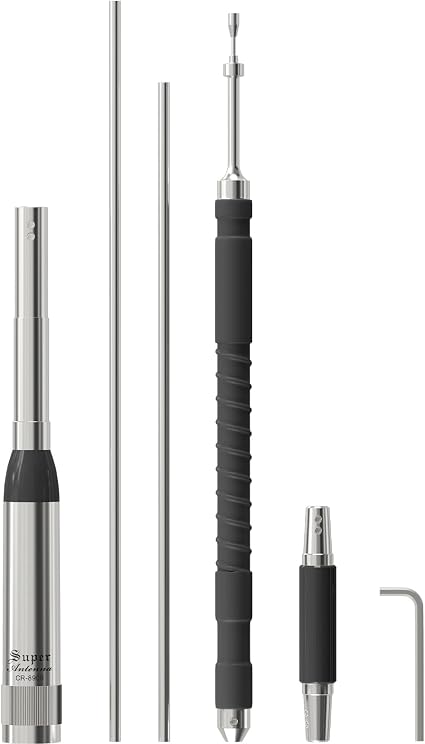
Quad band capability on four key frequencies makes the TH-9800 stand out for mobile radio fans who want reliable long-distance communication. It fits those needing a durable antenna that works well across multiple bands without constantly swapping gear. Its biggest strength is handling 29/50/144/430MHz frequencies with solid gain for clearer signals.
Setting it up takes just a few straightforward steps since it’s designed for mobile use and fits most vehicles easily. Daily use feels reliable thanks to the antenna’s 4.1 ft length and stainless steel build that stands up to weather.
You get decent signal strength both sending and receiving, which is what really counts when you’re on the road or camping out.
The antenna delivers stable, strong performance on all four bands with gain values of 2.5 and 5.5dBi that actually improve communication quality. Its rust-resistant stainless steel handle means it won’t degrade from outdoor conditions quickly.
Highest praise goes to how well it handles rough environments. A regular complaint is the 3-month warranty being relatively short.
Signal strength benefits from the dual gain values on multiple frequencies, making it reliable for varied outdoor conditions. The stainless steel build holds up well but the limited warranty leaves some concern over long-term durability.
Anyone needing a rugged, multipurpose antenna for mobile radio will find it useful. Those who want longer warranty support or require a very specific mount compatibility might prefer a different option.
Pros
- Covers four popular radio frequencies
- High gain improves transmission and reception
- Rust-resistant stainless steel construction
- Good length for mobile radio use
Cons
- Only 3 months warranty provided
- May not fit all mobile radio mounts
| Specification | Details |
|---|---|
| Frequency Range | 29/50/144/430MHz |
| Gain | 2.5/5.5dBi |
| Length | 4.1ft / 1.26m |
| Material | Stainless steel |
| Manufacturer | Shiqun Electronics Co., Ltd |
| Warranty | 3 months |
10. KG-UV920R(III) TH-9800 Quad Band Mobile Antenna

TKOWTB KG-UV920R(III) TH-9800 Quad Band Mobile Antenna suits those needing stable communication across multiple frequency bands. It shines in compatibility, handling four bands with ease in a mobile setup.
Its biggest strength lies in offering smooth communication while remaining straightforward to install and operate.
Setup involves a simple mounting process, made easier thanks to its practical design. Using it daily means switching between 29MHz, 50MHz, 144MHz, and 430MHz bands without fuss.
The antenna’s weight at 580 grams strikes a good balance, making it manageable without feeling flimsy or heavy on the vehicle.
Performance is consistent with delivering stable signals across all supported frequencies. Made from high-quality materials, it holds up well over time and resists the wear mobile antennas often face. The clearest praise highlights its smooth communication capabilities.
A common complaint points to its somewhat basic design, which some might find less refined than more complex models.
The antenna is praised for its reliable, stable communication across all specified bands, making switching frequencies easy and clear. A noticeable downside is the basic and somewhat utilitarian design, which might not appeal to users wanting something more stylish or lightweight.
People needing dependable multi-band mobile communication with straightforward setup will appreciate this antenna. Those looking for a lighter or more refined design might want to consider other models suited for aesthetic or weight preferences.
Pros
- High compatibility across four frequency bands
- Simple installation and operation
- Durable construction with quality materials
- Provides stable and smooth communication
Cons
- Design is basic compared to premium options
- Relatively heavy at 580 grams
| Specification | Details |
|---|---|
| Brand | TKOWTB |
| Item Weight | 580 g |
| Frequency Bands | 29MHz, 50MHz, 144MHz, 430MHz |
| Type | Short Wave Antenna |
| Number of Items | 1 |
11. Quad Band Mobile Antenna with Magnetic Mount

Mounting this quad band antenna on a car or any metal surface feels sturdy thanks to its strong magnetic base, making it great for those who need reliable radio communication on the go. Its big magnet grip is the standout feature, keeping the antenna firmly in place even when driving at high speeds.
Setting up is straightforward with the magnetic mount and a 5-meter RG58 coaxial cable included. The stainless steel construction adds to its durability during daily use.
The 1.3-meter length gives good reach without feeling bulky on the vehicle. Connecting via the PL259 connector makes attaching it to most radios quick and simple.
Signal quality ticks along well across its frequency ranges, with 3.0dBi to 5.5dBi gain delivering clear transmissions. The build feels solid with stainless steel, and the magnetic base offers impressive 30KG suction for stability. Few complaints focus on the cable length; some wish for a longer option, but the antenna’s overall reliability in signal strength is well appreciated.
Magnetic mount suction stands out with a strong 30KG hold, keeping the antenna stable during travel. Most feedback points to the good signal gain as a benefit, though the 5-meter coax cable could feel limiting in certain vehicle setups.
Anyone needing a reliable mobile antenna for multiple frequency bands and solid mounting will find this a good fit. People requiring longer cable runs or specific connector types might prefer exploring other options.
Pros
- Strong magnetic mount holds firmly on metal surfaces
- Wide frequency coverage for versatile radio use
- Durable stainless steel material resists wear
- Includes a 5-meter coaxial cable for flexible placement
Cons
- RG58 cable length may be short for some setups
- Connector type requires compatible radio equipment
| Specification | Details |
|---|---|
| Frequency | 29MHZ/50MHZ/144MHZ/430MHZ/118-124MHZ |
| Gain | 3.0dBi/5.5dBi (144/435MHZ) |
| Max power | 100W |
| Connector | PL259 |
| Length | about 1.3 meter / 53 inches |
| Magnetic base suction | 30KG (About 66lb) |
12. KT-8900D TH-9800 Quad Band Mobile Antenna

Great for anyone needing reliable long-distance communication across multiple frequencies, the KT-8900D TH-9800 Quad Band Mobile Antenna suits mobile radio and two-way radio enthusiasts. Its standout feature is the wide frequency range covering 29/50/144/430MHz, allowing versatile use in various scenarios.
Setting up the antenna is straightforward, and its 4.1ft length helps maintain a solid connection without being overly cumbersome. The high gain of 2.5/5.5dBi ensures strong signal reception and transmission, which clearly matters during daily use, especially when driving or camping. Its rust-resistant stainless steel build means handling outdoor conditions is less of a concern, making it a solid choice for rugged environments.
Signal strength is noticeably improved thanks to the antenna’s gain, providing clearer and more consistent communication. The sturdy stainless steel construction stands up well to weather and rough usage. A common complaint involves the antenna’s length, which might be too tall for some setups.
It delivers solid performance but requires enough mounting space.
Clear and uninterrupted communication stands out as the main positive from everyday use, with the build quality handling outdoor environments well. Some find the antenna length inconvenient depending on the vehicle or mounting space available.
People using it on larger vehicles or outdoor setups will appreciate its performance and durability. Those with limited mounting height or space might consider a shorter antenna model for easier installation.
Pros
- Covers four popular radio frequencies
- High gain ensures clearer signal
- Rust-resistant stainless steel material
- Good length for strong transmission
Cons
- Length may be too tall for some vehicles
- Only one antenna included per pack
| Specification | Details |
|---|---|
| Frequency Range | 29/50/144/430MHz |
| Gain | 2.5/5.5dBi |
| Material | Stainless Steel |
| Length | 4.1ft / 1.26m |
| Model Number | TH-9800 |
| Warranty | 1-year |
13. Harvest 8900A Quad Band Mobile Antenna

Constructed with durable materials and stretching 126 cm in length, this quad band antenna is ideal for users needing solid performance across 50 MHz, 145 MHz, 220 MHz, and 435 MHz frequencies. Its standout feature is the flexibility to cover multiple bands efficiently, fitting well for mobile radio enthusiasts who want one antenna for various needs.
Setting it up involves a straightforward connection via the UHF connector. At just over a pound, it strikes a good balance between sturdy and manageable weight, making mounting on a vehicle manageable without fuss.
Daily use benefits from a stable VSWR under 1.5, keeping signal quality consistent while handling up to 60 watts of power comfortably.
Signal gain varies depending on frequency, offering the strongest gain at 5.5 dBi for 435 MHz and decent gains on other bands, supporting reliable transmission and reception. The antenna is solidly built to withstand regular mobile use, though its zero gain on the 50 MHz band might disappoint those wanting better performance there. Most praise highlights solid build quality, while some mention the limited power handling for higher demand.
People appreciate the solid build and reliable gain on the higher frequency bands, making it suitable for general mobile use. The most common drawback is the lack of gain on the 50 MHz band, limiting performance for those relying heavily on that frequency.
Hands-on users who need a practical antenna covering multiple bands with moderate power will be satisfied. Those requiring more power or better performance on the lowest frequency should look elsewhere for specialized options.
Pros
- Works across four key radio bands
- Low VSWR keeps signals clear
- Fairly lightweight at 1.1 lbs
- Simple UHF connector for easy installation
Cons
- No gain on the 50 MHz band
- Power rating limited to 60 Watts
| Specification | Details |
|---|---|
| Frequency | 50mhz/145mhz/220mhz/435mhz (6m/2m/1.25m/70cm) |
| Gain | 2.15 dBi (145mhz), 5.5 dBi (435mhz), 3.5 dBi (220mhz), 0 dBi (50mhz) |
| Max Power | 60 Watts |
| V.S.W.R. | Less than 1.5 |
| Impedance | 50 OHM |
| Length | 126 cm / 50 inch |
Best Mobile Quad Band Antennas Comparison Table
| Product | Compatible Radios | Length | Weight | Warranty |
|---|---|---|---|---|
| YAESU FT-7800R Antenna | FT-8900R, TYT TH-9800 series | – | – | 3 months |
| ANT-7900D Mobile Antenna | QYT KT-7900D | 16.4ft cable | 180 g | 6 months |
| CR-8900 Quad Band Antenna | TYT TH-9800 Plus, TH-9800D | 4.1ft | – | – |
| Generic Quad Band Antenna | YAESU FT-8900R, TYT TH-9800, QYT KT models | – | – | – |
| Diamond CR8900A Antenna | – | – | – | 1 year |
| Comet UHV-4 Antenna | Multi-Band | – | – | 1 year |
| Dualband VHF/UHF Antenna | Dualband VHF/UHF | – | 0.3 kg | – |
| ANT-7900D Ham Radio Antenna | – | – | – | 1 |
| TH-9800 Quad Band Antenna | – | – | – | 3 months |
| KG-UV920R III TH-9800 Antenna | – | – | 580 g | – |
| Magnetic Mount Quad Antenna | – | – | – | – |
| KT-8900D TH-9800 Antenna | KT-8900, KT-980Plus | 4.1ft | – | – |
| Harvest 8900A Antenna | – | – | 2 pounds | – |
- Compatible RadiosFT-8900R, TYT TH-9800 series
- Length–
- Weight–
- Warranty3 months
- Compatible RadiosQYT KT-7900D
- Length16.4ft cable
- Weight180 g
- Warranty6 months
- Compatible RadiosTYT TH-9800 Plus, TH-9800D
- Length4.1ft
- Weight–
- Warranty–
- Compatible RadiosYAESU FT-8900R, TYT TH-9800, QYT KT models
- Length–
- Weight–
- Warranty–
- Compatible Radios–
- Length–
- Weight–
- Warranty1 year
- Compatible RadiosMulti-Band
- Length–
- Weight–
- Warranty1 year
- Compatible RadiosDualband VHF/UHF
- Length–
- Weight0.3 kg
- Warranty–
- Compatible Radios–
- Length–
- Weight–
- Warranty1
- Compatible Radios–
- Length–
- Weight–
- Warranty3 months
- Compatible Radios–
- Length–
- Weight580 g
- Warranty–
- Compatible Radios–
- Length–
- Weight–
- Warranty–
- Compatible RadiosKT-8900, KT-980Plus
- Length4.1ft
- Weight–
- Warranty–
- Compatible Radios–
- Length–
- Weight2 pounds
- Warranty–
How to Choose the Best Mobile Quad Band Antenna
Key factors to consider include frequency compatibility, signal strength, durability, and ease of installation, as these affect performance and longevity. Choosing the right antenna ensures reliable connectivity, reducing the need for frequent replacements or repairs, ultimately saving money and avoiding frustration.
Frequency Compatibility
Traveling across regions often exposes mobile devices to varying GSM frequencies. An antenna supporting all four main frequency bands (850, 900, 1800, 1900 MHz) ensures uninterrupted connection whether in urban areas or abroad. Missing support for one band can result in frequent dropped calls or weak data signals, especially when moving between countries with different cellular standards.
A good antenna switches smoothly between these bands without noticeable signal loss, maintaining stable reception. Look for models that explicitly list full coverage of these bands and mention automatic band switching, so roaming or local network changes don’t disrupt service.
This compatibility saves the hassle of switching equipment or using multiple antennas for different locations.
Signal Gain and Range
Signal gain is key for reliable reception. Antennas rated around 3 to 7 dBi offer a solid balance of range and signal clarity, especially in mixed environments.
Low gain often means frequent call drops or slow internet speeds in rural or obstructed areas, while excessively high gain can actually create distortions.
Effective coverage varies: urban areas require less gain due to dense cell towers, but rural zones demand higher gain for long-distance reach. A quality antenna provides consistent gain across all supported frequency bands to avoid weak spots or interference as you move or switch networks.
Mounting and Form Factor
Installing antennas on vehicles like trucks, SUVs, or RVs involves different challenges. A mount that stays firmly attached despite vibrations or bumps is crucial; poor mounts cause shifting or disconnections over time. Those that include strong magnets or screw-in bases tend to hold better during travel.
Size and design also matter for visual integration. A bulky antenna can interfere with device placement and look out of place. Slim, compact models are easier to work with in tight spaces and don’t attract unwanted attention.
Check mounts work with your vehicle type and consider the antenna length for installation flexibility.
Build Quality and Materials
Constant exposure to rain, dust, and temperature changes wears out gear quickly unless built tough. Antennas made from corrosion-resistant metals such as stainless steel or coated alloys fare better against rust and degradation.
Plastic components should be UV-stabilized to avoid brittleness.
Durable designs handle shocks and vibrations from vehicle movement without cracking or losing connection. Reliable antennas also keep their internal elements sealed to prevent moisture intrusion, which can cause signal issues or complete failure over time.
Connectivity and Compatibility
Compatibility extends beyond just device support. The antenna should easily connect with a variety of mobile units, routers, or modems that use standard connectors like SMA or N-Type. Using common interface types prevents needing adapters that sometimes degrade signal quality.
Cable length and quality impact where you can place the antenna relative to your device. Longer, well-shielded cables with low loss offer flexible mounting options without sacrificing performance, especially in larger vehicles. Look for cables rated for outdoor use to avoid quick wear and interference.
Optimizing Signal Reception with Mobile Quad Band Antennas
Mobile quad band antennas cover the 850, 900, 1800, and 1900 MHz frequency bands, making them compatible with nearly all global cellular networks. This broad coverage helps maintain a consistent signal even in areas with mixed network standards. Mounting position plays a crucial role; placing the antenna on a vehicle’s roof or high points reduces obstructions and improves line of sight to cell towers.
Using quality coaxial cables and ensuring tight, corrosion-free connections will also minimize signal loss. Adjusting the antenna’s polarization to match the network’s signal polarization can further boost reception.
Key points for optimizing mobile quad band antennas:
- Select antenna placement away from metal obstructions.
- Choose the shortest coaxial cable run to reduce attenuation.
- Regularly check and tighten connectors to prevent signal degradation.
- Utilize antennas designed for broad frequency coverage when traveling internationally.
Proper Maintenance Techniques to Prolong Antenna Lifespan
Waterproofing and corrosion resistance are essential considerations for maintaining mobile quad band antennas, since they are exposed to outdoor conditions continuously. Cleaning the antenna with a soft cloth and mild soap helps remove dirt that could interfere with signal quality. Avoid using harsh chemicals or abrasive materials that might damage the antenna surface or protective coatings.
It’s important to inspect cable connections regularly for signs of rust or wear, and replace any damaged cables immediately. Ensuring the antenna base remains secure on its mount reduces stress on cables during vehicle movement.
Maintenance recommendations include:
- Wipe the antenna surface gently to keep it free from grime.
- Inspect and tighten cable connections every few months.
- Replace any frayed or cracked cables promptly.
- Store antennas indoors if the vehicle won’t be used for extended periods.
Comparing Quad Band Antennas with Dual and Tri Band Alternatives
Quad band antennas support four frequency bands, delivering wide compatibility with many cellular networks, unlike dual or tri band variants that cover fewer frequencies. Dual band antennas typically cover two bands, often targeting 2G or 3G networks, which limits their use in current environments dominated by 4G and LTE. Tri band options expand coverage but still miss one key band compared to quad band models.
This difference can affect signal reception, especially when roaming internationally or in regions with mixed network standards. Quad band antennas provide more consistent connectivity by accommodating a wider range of carrier frequencies, making them better suited for mobile users who require reliable performance across multiple regions.
Comparative overview:
- Dual band antennas: Limited frequency support, primarily for basic coverage.
- Tri band antennas: Moderate frequency support; better but not comprehensive.
- Quad band antennas: Broad frequency coverage, suitable for global use.
People Also Asked
How Do I Install a Mobile Quad Band Antenna Properly?
Install a mobile quad band antenna by securely mounting it on a metal surface with a good ground plane, usually the roof or trunk of your vehicle. Use the correct mounting hardware and run the coax cable carefully to avoid pinching or sharp bends. Tighten connections firmly to prevent signal loss or antenna damage.
What Size Mobile Quad Band Antenna Fits My Vehicle?
Choose a mobile quad band antenna size based on your vehicle’s size and the space available for mounting, typically between 18 and 24 inches. Longer antennas often improve signal but can be bulky. Measure your mounting area before buying to ensure it fits without obstructing doors or windows.
Are Quad Band Antennas Safe to Use While Driving?
Quad band antennas are safe to use while driving as long as they are properly mounted and the cable is secured to avoid tangling or damage. Make sure the antenna does not interfere with visibility or vehicle controls. Avoid touching the antenna during transmission, as this can impact signal quality and cause minor discomfort.
How Long Does a Mobile Quad Band Antenna Usually Last?
A mobile quad band antenna usually lasts several years if maintained well and not exposed to extreme weather or mechanical damage. Cleaning and checking mounts and cable connections periodically help prevent corrosion and signal issues. Replacing the antenna may be needed if physical damage occurs or signal quality deteriorates.
What Common Problems Occur with Mobile Quad Band Antennas?
Common problems include poor signal due to loose cable connections, corrosion on connectors, or damage from impacts. Antennas can also become misaligned or detached from the mount, reducing efficiency. Regular inspection and tightening of hardware can help avoid these issues and keep the antenna functioning properly.
Conclusion
Choosing a mobile quad band antenna mostly comes down to compatibility with your device, signal range, and build quality. The antenna must support all four frequency bands to work well across different networks. Signal range affects how far you can maintain a connection, especially in areas with weak coverage.
Durable construction helps the antenna last through regular use and varying weather conditions.
Think about where you will use the antenna and how much you are willing to spend before making a decision. Smaller spaces might need a more compact model, while frequent use can justify investing in better materials. For detailed comparisons and to revisit the options discussed, refer back to the comparison table and the recommendations above.