Top 13 Best Minimalist Boots You Can’t Miss Today
Slipping into a pair of boots that claim to be minimalist but end up squeezing your toes or causing sore arches is a frustrating experience. The best minimalist boots avoid these common pitfalls by striking a balance between simplicity and support, allowing your feet to move naturally without unnecessary restriction or discomfort. They offer just enough protection and flexibility to perform well in different conditions without the bulk of traditional boots.
The quality of the materials matters a lot since durable leather or breathable synthetics can extend the life of the boots and keep feet comfortable. Proper fit is crucial; minimalist boots should fit snugly without pressing against the foot, often requiring sizing slightly different from regular shoes.
Thin, flexible soles that provide ground feedback while still protecting from sharp objects separate better models from weaker ones. A good pair also needs to be easy to clean, as these boots are typically worn in rough environments where dirt and mud accumulate quickly.
Need a Quick Check?
| Image | Product | Price |
|---|---|---|
Our Top Picks 1  | HOBIBEAR Barefoot Boots | Check Price |
Our Top Picks 2 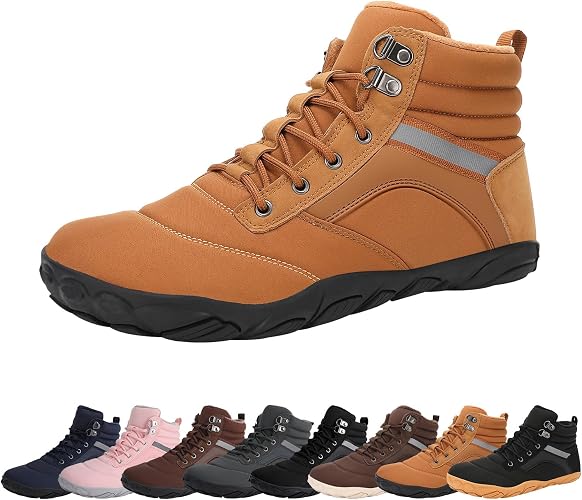 | Unisex Barefoot Winter Boots | Check Price |
Our Top Picks 3  | Xero Shoes Breckenridge Boots | Check Price |
Our Selected Top 13 Minimalist Boots Worth Buying
This list features carefully chosen minimalist boots designed for comfort and natural movement. Each review explains how the boots perform, identifies who they are best suited for, and highlights their main advantages and drawbacks to help you make an informed decision.
1. HOBIBEAR Barefoot Boots
Minimalist hiking boots that offer true barefoot walking feel while providing practical protection. Perfect for those who want to experience the ground beneath their feet with a simple design and a low heel. The biggest strength lies in how well it balances flexibility and warmth for fall adventures.
Putting them on is straightforward with their bootie form, and the dark brown shade keeps them versatile for outdoor wear. The round toe gives enough room for toe movement, and the low-heel design keeps your posture natural. These boots handle daily walking with ease, keeping your feet protected without feeling bulky or heavy.
Durability meets comfort in a solidly patterned, hiking-style boot built for fall conditions. The construction supports natural foot mechanics while offering enough grip for uneven terrain.
Some praise the boot’s flexibility and natural foot feel, while others mention minor issues with early stiffness as the boots break in.
Flexibility and natural movement stand out as the strongest features, contributing to a barefoot feel during hikes. Initial stiffness when first worn is the most common drawback, requiring some time before the boots soften up fully.
Those seeking a minimalist boot focused on barefoot experience and autumn conditions will find these boots fitting well. Anyone needing boots for wet or winter seasons might want to explore options better suited for harsher weather.
Pros
- Flexible design supports natural foot movement
- Comfortable for extended walking sessions
- Low-heel aids posture without restricting
- Suitable for cool fall weather
Cons
- Early stiffness before full break-in
- Limited season use, mainly fall
| Specification | Details |
|---|---|
| Color | Dark Brown |
| Toe Style | Round Toe |
| Boot Form Type | Bootie |
| Heel Type | low-heel |
| Seasons | Fall |
| Style Name | Hiking |
2. Unisex Barefoot Winter Hiking Boots
Unisex Barefoot Winter Hiking Boots deliver a straightforward, minimalist design perfect for anyone who wants a cozy and lightweight boot for winter hikes. Its biggest strength lies in combining warmth with a simple round toe, making it suitable for cold outdoor adventures where freedom of movement matters.
Getting ready with these boots is easy thanks to their low heel and solid yellow color that makes them stand out without being flashy. Wearing them day to day feels natural, with a shape that doesn’t squeeze your toes and a minimalist build that keeps the boot light against your foot.
They’re built to handle the winter season well, staying dependable during snowy treks.
These hiking boots perform solidly for winter outings, maintaining warmth while allowing the foot to move naturally. The build focuses on simplicity and comfort rather than extra padding or complex features. Most praise highlights how well they keep feet comfortable and nimble, while the main complaint centers on their minimal protection against rough terrains.
The boots keep feet comfortably warm while allowing natural foot movement, but they do not offer much protection on rough or rocky surfaces. People appreciate the simplicity and the freedom these boots provide during winter hikes.
Ideal for those who want a lightweight, minimalist boot for gentle winter walks, especially on snowy but manageable terrain. Those seeking extra foot support or heavy-duty trail protection might want to consider other options with more substantial padding.
Pros
- Lightweight and easy to wear all day
- Comfortable round toe fit
- Effective for winter weather use
- Simple design that suits many tastes
Cons
- Lacks strong protection on rugged trails
- Minimal padding may not suit everyone
| Specification | Details |
|---|---|
| Color | Yellow |
| Toe Style | Round Toe |
| Boot Form Type | Hiking Boot |
| Heel Type | low-heel |
| Seasons | Winter |
| Style Name | Minimalist |
3. Xero Shoes Breckenridge Barefoot Boots
Feels incredibly light and free on your feet, making it perfect for those who like their boots with minimal bulk. It suits anyone looking to keep a natural barefoot feel while still having some protection and warmth. The standout feature is how well it mirrors barefoot walking without any added heel.
Slip them on easily thanks to the bootie design that hugs your feet like a second skin. The round toe allows ample room, so toes can spread naturally. Rawhide color gives it a rustic look that works all year round.
These boots stay comfortable for long walks and adapt well to different environments thanks to no extra heel getting in the way.
Designed with a barefoot philosophy, they perform well for walking over varied terrain while keeping your foot close to the ground. The build avoids unnecessary padding or structure, which keeps the weight down but also means less insulation in very cold weather. Most praise the natural feel and lightness, but some find the lack of heel support challenging for rougher trails.
People appreciate how these boots stay light and true to barefoot mechanics, giving a natural feel during daily use. The usual complaint is the absence of support and warmth for challenging or cold outdoor conditions, which limits their versatility in extreme weather.
Those who want simple, low-profile boots that encourage natural foot movement will find these very satisfying. Others needing more cushioning, support, or warmth might look for alternatives better suited to rugged or colder environments.
Pros
- Very lightweight and flexible like barefoot walking
- Round toe allows natural toe movement
- No heel keeps foot stable and grounded
- Suited for use in all seasons
Cons
- Lacks heel support on rougher terrain
- Minimal insulation for cold weather
| Specification | Details |
|---|---|
| Color | Rawhide |
| Toe Style | Round Toe |
| Boot Form Type | Bootie |
| Heel Type | No Heel |
| Seasons | All |
| Style Name | Breckenridge |
4. SAGUARO Barefoot Winter Hiking Boots

SAGUARO Barefoot Winter Hiking Boots offer a great minimalistic option for hikers who want warmth and flexibility in cold weather. Its standout feature is the flat heel and closed toe design that works well for fall and winter use, blending comfort with practicality for outdoor activities.
Putting these boots on is simple thanks to their hiking boot form, and they feel surprisingly light and flexible compared to traditional winter boots. Wearing them day-to-day means you get solid protection without feeling bulky, especially helpful during New Year outings or chilly hikes when agility matters. Dark gray color keeps them versatile for different outfits.
They perform well on fall and winter trails, providing good grip and protection without heavy insulation. The build centers on a minimalist approach with closed toes for extra safety and a flat heel assisting stability on uneven terrain.
Reviews often mention how comfortable they are after breaking in, while some note they could be warmer for harsher winter conditions.
Comfort during colder seasons is a highlight with enough protection for everyday winter hiking, but the boot falls short in severe cold or deep snow scenarios where more insulation is necessary. The flat heel and closed toe are often praised for safety and support.
Those looking for a lightweight, flexible winter hiking boot that fits minimalist preferences will appreciate this model. Anyone needing heavy insulation or use in extreme winter environments might want to consider a sturdier alternative.
Pros
- Flat heel encourages natural foot movement
- Closed toe offers effective toe protection
- Good for fall and winter outdoor use
- Dark gray color matches various styles
Cons
- May not provide enough warmth in extreme cold
- Lack of heavy insulation for deep snow
| Specification | Details |
|---|---|
| Color | Dark Gray |
| Toe Style | Closed Toe |
| Boot Form Type | Hiking Boot |
| Heel Type | Flat |
| Seasons | Fall, Winter |
| Occasion | New Year |
5. DREAM PAIRS Chelsea Ankle Boots

Constructed from black PU with a round toe design, these Chelsea ankle boots suit anyone looking for a minimalist yet slightly elevated style. Their heeled form fits well for parties or autumn-winter wear, making them a solid choice for casual dress-ups that need a low-profile but polished touch.
The slip-on style makes putting them on in the morning straightforward while maintaining a snug fit around the ankle without much fuss. Wearing them daily involves light walking or standing during cooler months, with the solid black color staying versatile alongside different outfits. Cleaning involves wiping off dust or moisture from the PU surface, easy enough to keep them looking fresh.
Boots perform reliably in keeping feet comfortable on cooler days thanks to the close fit and smooth PU material. Build quality aligns well with party occasions, where the flat style and round toe meet basic comfort needs.
Greatest praise revolves around their stylish simplicity, though some find the heel a little too stiff for extended wear.
Positive feedback highlights the boots’ minimalist look and ease of putting on. Common complaints mention the heel feeling stiff during prolonged wear, which limits comfort for long outings. The PU surface cleans easily but requires care to avoid visible wear over time.
Those seeking a stylish, low-profile boot for autumn and winter social occasions will appreciate these. They may not suit anyone who needs extensive cushioning or more flexible heel movement for all-day walking.
Pros
- Simple slip-on Chelsea design
- Comfortable round toe shape
- Versatile black PU color
- Flat style suitable for parties
Cons
- Heeled sole can feel stiff
- Material may show wear easily
| Specification | Details |
|---|---|
| Color | Black/Pu |
| Toe Style | Round Toe |
| Boot Form Type | Chelsea |
| Heel Type | heeled |
| Seasons | Autumn-Winter |
| Occasion | Parties |
6. Unisex Barefoot Winter Snow Boots

Sitting low with a closed toe and flat heel, these black snow boots fit unisex wear well, especially for casual outdoor winter use. Their biggest strength lies in their minimalist design that keeps feet protected without bulk, which is perfect for those who want simple winter boots that won’t feel heavy or clunky.
Slipping them on is straightforward, and the flat heel offers sure footing on slippery surfaces. They’re solid black with no distracting patterns, blending easily with winter outfits.
The closed toe keeps the cold out, while the overall compact design means they don’t take up extra room in your gear or feel like heavy, stiff boots.
These boots perform their main job of keeping feet warm and dry during winter quite well. They’re built with a clear focus on function over style, solid and dependable for cold conditions.
The most praised feature is their lightweight feel, but some find them less cushioned or roomy than traditional bulkier snow boots, limiting comfort for wider feet.
The standout feature is how lightweight these boots feel, making winter walking less tiring. At the same time, many find them less cushioned and not roomy enough, which can matter if you need extra padding or width.
People who want simple, no-fuss winter boots for casual use with a snug fit will appreciate these. Those needing wider, more padded boots for longer or rougher outdoor treks should look for something with more comfort and support.
Pros
- Lightweight feel for everyday winter wear
- Simple black design suits casual outdoor use
- Flat heel offers stable footing
- Closed toe keeps feet warmer
Cons
- May feel narrow for wider feet
- Less cushioning compared to bulkier snow boots
| Specification | Details |
|---|---|
| Color | Black |
| Toe Style | Closed Toe |
| Boot Form Type | Snow Boot |
| Heel Type | Flat |
| Seasons | Winter |
| Pattern | Solid |
7. Barefoot Winter Snow Boots
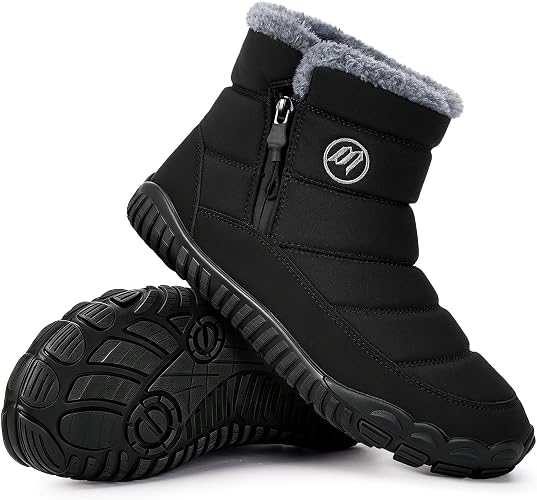
Ideal for winter conditions, these boots suit those who want something truly minimalist without sacrificing warmth or protection. Their standout feature is a closed toe design that keeps feet snug and shielded from snow.
Perfect for anyone needing reliable winter boots that feel light and unrestrictive.
Putting them on is straightforward with a flat heel that allows for easy step-in. The solid black color fits into various wardrobes while the snow boot form keeps your feet guarded against cold and moisture.
These boots stay comfortable day after day thanks to their simple, no-fuss construction that avoids bulk.
Handling snowy environments, these boots perform solidly by keeping feet warm and dry while giving a natural barefoot feel. The build is straightforward with a focus on minimal layers and a closed toe for protection. Strong points include warmth and flexibility, while some find the minimalist design offers less insulation compared to thicker boots.
The boots receive praise for their lightweight comfort and warmth while maintaining a barefoot feel. Most often, users mention that the insulation could be warmer, especially in extreme cold. This is a common trade-off with minimalist winter boots designed for flexibility and protection rather than bulk.
People looking for a breathable, flexible winter boot that handles snow well will appreciate this option. Those needing maximum warmth and thick padding might prefer a more insulated, traditional winter boot instead.
Pros
- Lightweight and flexible for natural foot movement
- Closed toe offers good protection from snow
- Flat heel aids in stable footing on slippery surfaces
- Simple, solid black design matches any winter outfit
Cons
- Lacks heavy insulation for very cold conditions
- Minimalist build may feel less padded than traditional boots
| Specification | Details |
|---|---|
| Color | 01-black |
| Toe Style | Closed Toe |
| Boot Form Type | Snow Boot |
| Heel Type | Flat |
| Seasons | Winter |
| Pattern | Solid |
| Style Name | Snow Boot |
8. WHITIN Mens Minimalist Barefoot Shoes

Finding minimalist boots that combine casual style with true barefoot feel can be tricky. These green gum WHITIN Mens Minimalist Barefoot Shoes are perfect for daily wear and anyone looking for a shoe that feels light and flexible without sacrificing comfort.
Their standout feature is how natural they feel on the foot.
Slip them on easily thanks to the round toe and no heel design, keeping your step natural all day. Their casual style fits well with everyday fashion while supporting a sport-inspired lifestyle. Lightweight and breathable for all seasons, they don’t weigh you down or feel bulky during long wear.
These shoes perform well for anyone wanting a minimalist approach to footwear, emphasizing freedom of movement and a barefoot sensation. The solid pattern and casual style make them versatile for many occasions.
Most praise centers on their comfort and flexibility, while some mention that a lack of heel support might not suit everyone’s needs.
Comfort and flexibility stand out as the strongest praise, delivering a barefoot feel that users really appreciate. The most common complaint is about the lack of heel support, which might be an issue for those looking for more stability.
Anyone seeking everyday minimalist shoes with a sporty, casual look will enjoy these a lot. Those needing extra foot support or planning more rugged outdoor use might want to consider other options.
Pros
- Feels close to barefoot walking
- Lightweight and flexible all day wear
- Versatile casual sport style
- Suitable for all seasons
Cons
- No heel support for those needing more structure
- May feel too minimal for rugged use
| Specification | Details |
|---|---|
| Color | Green Gum |
| Heel Type | No Heel |
| Toe Style | Round Toe |
| Occasion Type | Daily |
| Seasons | All |
| Formality Level | Casual |
9. Xero Shoes Tari II Chelsea Boot

Capable of being worn all year round, the Xero Shoes Tari II Chelsea Boot is a minimalist boot designed for comfort and style. It suits anyone looking for a light, no-heel boot that feels natural on the feet while keeping a casual, easy-going look.
Getting them on is straightforward thanks to the classic Chelsea boot form, and the round toe fits most foot shapes comfortably. The cappuccino/brown color makes it easy to pair with different outfits.
It’s a simple, practical choice with no extra bells and whistles, focusing on straightforward wearability every day without the weight of traditional boots.
Performance centers on feeling close to the ground with no heel interfering, promoting natural foot movement. The build is clean and straightforward, with a focus on minimalism. Positive feedback highlights the boot’s comfort and easy fit, while the main drawback mentioned points to limited support or protection in more rugged conditions.
Many appreciate the boot’s comfort and natural feel, especially with the no-heel design that encourages barefoot-style walking. Common complaints focus on the lack of foot support and padding for tougher conditions or prolonged wear on uneven ground.
Those who want a simple, everyday minimalist boot with a stylish look will find it satisfying. For those needing extra support or protection in demanding environments, another option might suit better.
Pros
- Comfortable round toe fits well
- Suitable for all seasons
- Lightweight with no heel
- Classic Chelsea style
Cons
- Lacks strong foot support for rough terrain
- Minimal protection against harsh weather
| Specification | Details |
|---|---|
| Color | Cappuccino/Brown |
| Toe Style | Round Toe |
| Boot Form Type | Chelsea |
| Heel Type | No Heel |
| Seasons | All |
| Style Name | Tari II |
10. HOBIBEAR Barefoot Hiking Shoes

Hiking enthusiasts who appreciate minimalist footwear and prefer a barefoot experience will find these shoes ideal. The standout feature is their flat heel that encourages a natural walking style on all kinds of terrain, perfect for casual outdoor use year-round.
The shoes slip on easily with a round toe design that offers enough wiggle room for comfort throughout a day on the trails. Their solid dark brown color hides dirt well, making maintenance straightforward. Lightweight construction means less fatigue during extended hikes, and the casual style fits well into everyday outdoor wear without looking out of place.
They perform well as hiking shoes focused on a barefoot feel, providing good ground contact for better balance. The build is simple but durable, fitting snugly without unnecessary bulk. The most applauded aspect is comfort during long walks, while the frequent criticism revolves around limited water resistance in wet conditions.
The most praised feature is the comfort these shoes provide during long walks thanks to their minimalist, barefoot-friendly construction. The most common complaint concerns their limited protection from water, which can affect usability in damp environments.
Those looking for lightweight, casual hiking shoes that encourage natural foot movement will appreciate these. People needing strong waterproofing or a more formal look might want to explore other options.
Pros
- Supports natural foot movement with flat heel
- Durable and simple design
- Lightweight and easy to clean
- Comfortable for daily hiking use
Cons
- Limited water resistance on wet trails
- Casual style may not suit formal settings
| Specification | Details |
|---|---|
| Color | Dark Brown |
| Heel Type | Flat |
| Toe Style | Round Toe |
| Occasion Lifestyle | Hiking |
| Seasons | All |
11. HOBIBEAR Womens Barefoot Snow Boots

Minimalist design combined with winter functionality makes these boots stand out. Perfect for those seeking lightweight warmth without the bulk of traditional snow boots, they fit comfortably while keeping your feet protected on cold, snowy days.
Putting them on is straightforward thanks to the flat heel and closed toe, ideal for daily winter wear. Their simplicity means they don’t require much maintenance, and wearing them around town or for casual outdoor walks feels natural.
The black color matches easily with most winter outfits, and the boot form caters well to snow conditions without feeling heavy or restrictive.
Performance in snowy weather is solid due to the snow boot build, offering enough warmth and protection for everyday winter use. Construction is straightforward, focusing on practical fit and flat support. Positive remarks highlight how light and easy the boots feel, while some mention limited ankle support as a drawback during demanding activities.
Many praise the boots for their lightweight and comfortable feel in winter conditions, while a frequent drawback is the limited ankle support which can affect stability during extensive walking or rough terrain.
People needing a straightforward, warm option for casual winter outings will appreciate these boots. Those looking for heavy-duty protection or extensive ankle support may want to explore alternative choices better suited for extreme winter challenges.
Pros
- Lightweight design suitable for cold weather
- Closed toe keeps feet protected from snow
- Flat heel provides stability during daily wear
- Simple style in versatile black color
Cons
- Lack of strong ankle support for heavy snow use
- May not be warm enough for extremely cold conditions
| Specification | Details |
|---|---|
| Color | Black |
| Toe Style | Closed Toe |
| Boot Form Type | Snow Boot |
| Heel Type | Flat |
| Seasons | Winter |
| Style Name | Snow Boots |
12. Barefoot Womens Casual Sneakers

Barefoot Womens Casual Sneakers in Leopard offer a minimalist boot option that fits best for casual, fashion-conscious wearers. Their single biggest strength lies in combining style with comfortable flat soles suitable for spring, summer, and fall seasons.
Daily wear feels easy thanks to the flat heel and cap toe design, which keeps feet comfortable over long hours. Wearing them around town suits multiple occasions, from casual hangouts to more laid-back social events.
The patchwork pattern also adds a little personality without clashing with most outfits, making these sneakers simple to pair with casual looks.
Performance centers on their casual lifestyle focus, keeping feet supported but not stiff. The build uses a patchwork pattern, which feels light but durable enough for regular use in mild weather. Reviews often praise the stylish leopard color and overall comfort, while some note that protection from rough terrains could be better since these are not rugged boots.
Most people appreciate the comfortable fit and eye-catching leopard pattern, which pairs well with casual outfits. The primary complaint involves a lack of support and protection on more demanding terrain, so these aren’t built for rugged use.
Those who want fashionable, light, and flat shoes for everyday casual wear will like these sneakers. People needing durable, all-weather boots or more structured support should consider other options.
Pros
- Flat heel for comfortable everyday walking
- Patchwork pattern adds stylish detail
- Lightweight design suitable for warm seasons
- Cap toe offers a classic casual look
Cons
- Not designed for rough outdoor conditions
- Limited to casual and multi-occasion use
| Specification | Details |
|---|---|
| Color | Leopard |
| Heel Type | Flat |
| Toe Style | Cap Toe |
| Seasons | Spring, Summer, Fall |
| Pattern | Patchwork |
| Occasion Type | Casual, Multi Occasion |
13. Unisex Barefoot Winter Hiking Boots

Slipping into these boots feels like walking barefoot but with serious winter protection. They suit anyone wanting that grounded feeling and need a boot that handles cold weather without extra heel height.
The single biggest strength is how well they combine minimalism with winter readiness.
Getting them on is straightforward thanks to the closed toe design and solid build. Day-to-day use means you don’t feel weighed down, which is key for hiking or casual winter strolls. Their no heel style keeps your foot stable, while the brown color and solid pattern keep things low-key for outdoor activities.
Performing in winter conditions, they deliver solid grip and warmth, though they don’t provide added heel support. Built specifically for hiking, the boots stay reliably warm and durable in snowy or cold environments. Most praise focuses on their barefoot feel combined with winter function, while complaints mention the lack of heel cushioning for longer hikes.
The boots receive strong praise for offering winter warmth while maintaining a barefoot walking experience. The most common downside is the absence of heel cushioning, which some find less comfortable during long hiking sessions.
People wanting winter-ready, minimalist hiking boots that keep feet warm and agile will like these. Those needing extra foot support or expecting wet trail protection should look for different options.
Pros
- Provides a barefoot feel with winter protection
- No heel allows natural foot movement
- Closed toe keeps feet safe and warm
- Low-key brown color fits many styles
Cons
- Lacks heel cushioning for extended hikes
- Not ideal for wet or muddy conditions
| Specification | Details |
|---|---|
| Color | Brown |
| Toe Style | Closed Toe |
| Boot Form Type | Hiking Boot |
| Heel Type | No Heel |
| Seasons | Winter |
| Pattern | Solid |
| Style Name | Sports |
Comparison of Best Minimalist Boots Reviewed
| Product | Color | Toe Style | Heel Type | Seasons |
|---|---|---|---|---|
| HOBIBEAR Barefoot Boots | Dark Brown | Round Toe | low-heel | Fall |
| Unisex Barefoot Winter Boots | Yellow | Round Toe | low-heel | Winter |
| Xero Shoes Breckenridge Boots | Rawhide | Round Toe | No Heel | All |
| SAGUARO Winter Hiking Boots | Dark Gray | Closed Toe | Flat | Fall, Winter |
| DREAM PAIRS Chelsea Boots | Black/Pu | Round Toe | heeled | Autumn-Winter |
| Unisex Barefoot Snow Boots | Black | Closed Toe | Flat | Winter |
| Barefoot Winter Snow Boots | 01-black | Closed Toe | Flat | Winter |
| WHITIN Mens Minimalist Shoes | Green Gum | Round Toe | No Heel | All |
| Xero Tari II Chelsea Boot | Cappuccino/Brown | Round Toe | No Heel | All |
| HOBIBEAR Hiking Shoes | Dark Brown | Round Toe | Flat | All |
| HOBIBEAR Womens Snow Boots | Black | Closed Toe | Flat | Winter |
| Womens Barefoot Sneakers | Leopard | Cap Toe | Flat | Spring, Summer, Fall |
| Unisex Barefoot Hiking Boots | Brown | Closed Toe | No Heel | Winter |
- ColorDark Brown
- Toe StyleRound Toe
- Heel Typelow-heel
- SeasonsFall
- ColorYellow
- Toe StyleRound Toe
- Heel Typelow-heel
- SeasonsWinter
- ColorRawhide
- Toe StyleRound Toe
- Heel TypeNo Heel
- SeasonsAll
- ColorDark Gray
- Toe StyleClosed Toe
- Heel TypeFlat
- SeasonsFall, Winter
- ColorBlack/Pu
- Toe StyleRound Toe
- Heel Typeheeled
- SeasonsAutumn-Winter
- ColorBlack
- Toe StyleClosed Toe
- Heel TypeFlat
- SeasonsWinter
- Color01-black
- Toe StyleClosed Toe
- Heel TypeFlat
- SeasonsWinter
- ColorGreen Gum
- Toe StyleRound Toe
- Heel TypeNo Heel
- SeasonsAll
- ColorCappuccino/Brown
- Toe StyleRound Toe
- Heel TypeNo Heel
- SeasonsAll
- ColorDark Brown
- Toe StyleRound Toe
- Heel TypeFlat
- SeasonsAll
- ColorBlack
- Toe StyleClosed Toe
- Heel TypeFlat
- SeasonsWinter
- ColorLeopard
- Toe StyleCap Toe
- Heel TypeFlat
- SeasonsSpring, Summer, Fall
- ColorBrown
- Toe StyleClosed Toe
- Heel TypeNo Heel
- SeasonsWinter
How to Choose the Right Minimalist Boots
Choosing minimalist boots requires focusing on fit, sole flexibility, and durability to ensure comfort and natural movement. Prioritizing these factors helps avoid discomfort and premature wear, ultimately saving money and reducing the need for frequent replacements.
Fit and Sizing
Many minimalist boots run smaller or wider than standard shoe sizes, making fit a tricky issue for beginners. Boots without half sizes or limited closure options can either feel too tight or lose snugness over time.
Laces tend to offer the best adjustability, allowing a more tailored fit, while zippers or elastic systems may save time but risk insufficient hold, especially for wide feet.
Toe splay is crucial in these boots. A cramped toe box causes discomfort and can lead to numbness during long wears.
Look for models with at least a thumb’s breadth of space around the toes to allow natural spread. Comfort during extended use relies greatly on choosing the right size paired with a good closure system that keeps a snug fit without limiting movement.
Material Quality and Breathability
The upper material defines durability and breathability in these boots. Genuine leather often holds up well but can trap heat and moisture unless treated.
Synthetic fabrics, such as mesh blends, usually improve airflow, reducing sweat buildup significantly. Insufficient ventilation makes feet feel clammy and can lead to blisters or odor after long days.
Waterproofing varies widely; many boots use sprays or bonded membranes to repel water. These treatments work well in light rain but might fail under prolonged exposure or submersion.
Water resistance offers a balance, preventing quick saturation but allowing some breathability, prefer this if you expect mixed conditions rather than heavy downpours.
Weight and Flexibility
Weight is a major factor when wearing boots for hours on end. Heavy boots sap energy and cause fatigue faster than light alternatives, so look for pairs weighing under 1.5 pounds per foot for real minimalist experience. The sole should flex easily along multiple axes, allowing your foot to move naturally rather than forcing a rigid gait.
Thin soles improve ground feel, a feature many look for in minimalist styles, but they need to provide enough protection from sharp objects or rough terrain. The balance lies in finding soles that bend without creasing permanently and provide minimal shock absorption, preserving foot agility and reducing tiredness over extended wear.
Sole Design and Traction
Tread patterns vary widely; boots with deeper, multidirectional lugs perform well on loose or muddy surfaces by improving grip. Shallower or smoother soles suit urban settings but can compromise traction outdoors. Consider the environment you’ll walk in most to avoid slips or extra effort on tricky ground.
Sole thickness affects both comfort and foot protection. Too thin soles transmit every rock and root, causing discomfort, while thick soles add weight and reduce sensitivity.
Moderate cushioning cushions impacts without negating the connection to terrain. Durable rubber outsoles with slip-resistant compounds keep boots reliable through varied seasons and surfaces.
Support and Protection
Minimalist boots prioritize natural foot motion, so arch support is usually minimal or flexible. However, some level of subtle arch shaping can prevent fatigue during all-day wear without feeling restrictive. Ankle support is often minimal but reinforced collars provide enough stability against twists without restricting movement.
Toe guards and side panels protect against bumps and scratches but should be slim enough to avoid adding bulk. Shock absorption typically comes from foam midsoles that dampen impact discreetly. It’s a thin line between protection and preserving a barefoot feel, so choose boots that incorporate protective elements without making them feel bulky or heavy.
How to Break in Your Minimalist Boots for Maximum Comfort
Breaking in minimalist boots usually takes less time than traditional boots, but doing it right makes a big difference in comfort. Wear them indoors for short periods on carpet or rugs. This helps the leather or synthetic upper soften and shape to your foot without causing blisters.
Gradually increase the time you wear the boots each day, allowing your feet and the soles to adjust to the thin cushioning and flexible design.
Here are a few tips to ease the break-in process:
- Wear moisture-wicking socks to reduce friction and prevent hotspots.
- Start with light walking rather than hiking or strenuous activity.
- Check for any pressure points and adjust lacing if necessary.
- Consider using leather conditioner if the material feels stiff.
Following these steps helps avoid soreness and speeds up the time until the boots feel like a natural extension of your feet.
Essential Maintenance Tips to Prolong the Life of Minimalist Boots
Regular care is key to keeping minimalist boots functional over time. Because they typically use lighter materials and thinner soles, wear and environmental damage can show sooner than with heavier boots.
Maintain your boots by:
- Cleaning dirt and mud off with a soft brush after each use.
- Wiping down with a damp cloth for routine maintenance.
- Applying a protective treatment designed for the boot’s material, such as waterproofing spray for synthetic fabrics or leather conditioner for leather uppers.
- Allowing the boots to dry naturally at room temperature; avoid direct heat sources that can warp or crack materials.
- Rotating between pairs of shoes to let each pair fully dry and recover.
These steps prevent premature degradation and keep the boots comfortable and supportive much longer.
Comparing Minimalist Boots with Traditional Hiking and Work Boots
Minimalist boots differ significantly from traditional hiking and work boots in weight and sole stiffness. Minimalist designs focus on lightweight materials and flexible soles to allow natural foot movement and ground feedback.
Traditional boots use thicker midsoles and rigid construction to protect the foot against rough terrain and heavy use.
Some distinctions include:
- Weight: Minimalist boots are much lighter, reducing fatigue over long distances.
- Protection: Traditional boots offer more impact and puncture resistance through heavier materials and reinforced toe caps.
- Support: Hiking and work boots generally provide stronger ankle support and cushioning.
- Ground Feel: Minimalist boots allow more direct sensory feedback, which can improve balance but provide less shock absorption.
Choosing between them depends mostly on the intended activity and personal preference for mobility versus protection.
People Also Asked
How Do I Properly Size Minimalist Boots for a Comfortable Fit?
Choose minimalist boots with room to wiggle your toes and try them on later in the day when your feet are naturally swollen. This helps avoid tightness, which can cause blisters and numbness.
What Is the Best Way to Clean and Care for Minimalist Boots?
Use a soft brush to remove dirt after each use and apply a mild cleaner suitable for the boot’s material. Avoid soaking them as excessive water can damage the structure.
Are Minimalist Boots Safe for Hiking on Rocky Terrain?
Minimalist boots can be used on rocky terrain but offer less protection and support than traditional hiking boots. Use caution to avoid sharp rocks, and consider boots with a slightly thicker sole.
How Long Do Minimalist Boots Typically Last with Regular Use?
They usually last one to two years with frequent use, depending on the quality and your activity level. Check soles and seams regularly to catch wear early.
What Are Common Issues People Face with Minimalist Boots?
People often struggle with insufficient arch support and sole cushioning, which can cause foot fatigue or discomfort. Breaking them in slowly helps reduce these issues.
Conclusion
Choosing minimalist boots comes down to fit, weight, and sole flexibility. A good fit prevents discomfort or blisters during long wear. Lightweight boots reduce fatigue, especially if you plan to move a lot.
Flexible soles allow your feet to move naturally, which is key in minimalist footwear.
Consider how often you’ll wear the boots and where you’ll use them to pick the right pair for your needs and budget. Check the comparison table above to see which options align best with your daily activities and preferences.
Reviewing those details will help narrow down your choice efficiently.