Top 13 Best Magnification for Birding That Will Wow You!
Trying to identify a bird through a cheap or unsuitable magnification tool often leads to blurry images and eye strain, spoiling the experience. The best magnification for birding balances clarity and comfort so the fine details of feathers and colors stand out instead of the frustration of shaking hands or foggy lenses.
A good birding magnification usually ranges from 8x to 12x power. Anything beyond that often sacrifices image steadiness or field of view.
Quality lenses with multi-coating reduce glare and improve sharpness, while sturdy but lightweight construction makes it easier to carry on long walks. A reliable fit with adjustable eyecups also matters, especially for those who wear glasses or want to avoid eye fatigue during extended use.
Need a Quick Check?
| Image | Product | Price |
|---|---|---|
Our Top Picks 1  | UHD 18×56 Binoculars | Check Price |
Our Top Picks 2  | Occer 12×25 Binoculars | Check Price |
Our Top Picks 3  | Falcon 20-60×85 Scope | Check Price |
Our Selected Top 13 Magnification for Birding You Can Trust
This list features carefully chosen magnification tools ideal for birding, highlighting their performance and suitability for different users. Each review outlines key strengths and potential limitations to help readers find the option that best matches their birdwatching needs and preferences.
1. Unbranded 18×56 UHD Binoculars
18x magnification stands out for anyone wanting to observe birds far beyond the reach of standard binoculars. Ideal for bird watchers who demand detailed, distant views, these binoculars bring scenes closer with sharp clarity.
Their power makes them especially good for spotting elusive birds in large open spaces or forests.
Setting up these binoculars usually means fitting them on a tripod for steady viewing due to their high magnification. Lightweight and portable, they come with comfortable eyecups that make longer use easier. Extra-wide field of view and low light clarity help spot birds during dawn or dusk, while the waterproof and fogproof design protects during hikes or rainy weather.
Performance is strong, as these binoculars deliver clear, detailed images far away thanks to the UHD optics and high-quality dielectric-coated roof prisms. The build feels solid and practical, with an anti-slip grip adding security.
The most frequent praise is about image sharpness, while the most common complaint is the short 5 millimeter eye relief, which might be uncomfortable for users with glasses.
Clear and detailed images even at long distances impress, but the short eye relief may cause discomfort for those wearing glasses. The binoculars perform well in low light and challenging weather, making them reliable companions outdoors.
Perfect fit for bird watchers prioritizing distant clarity and willing to use a tripod. Those seeking more comfortable viewing with glasses or very portable binoculars might want to consider different options.
Pros
- High 18x magnification with clear detail
- Lightweight and easy to carry
- Waterproof and fogproof for outdoor use
- Tripod adaptable for steady viewing
Cons
- Short 5 millimeters eye relief limits comfort
- Handheld use requires steady hands or tripod
| Specification | Details |
|---|---|
| Magnification Maximum | 18 x |
| Objective Lens Diameter | 5.6 centimeters |
| Eye Relief | 5 millimeters |
| Prism Type | High-quality dielectric-coated Roof Prism |
| Relative Brightness | 25 |
| Features | Extra-Wide Field of View, Clear Low Light Vision, Tripod Adaptable |
2. Occer 12×25 Compact Binoculars
Bird watchers who want high magnification in a compact size will find the Occer 12×25 Compact Binoculars a solid choice. Its well-balanced 12x power lets you see distant birds clearly without carrying bulky optics, making it ideal for hiking and travel.
The biggest strength is the wide field of view combined with strong image clarity.
Easy to carry and quick to adjust, these binoculars come with pull-down rubber eyecups that work well with or without glasses. The center focus keeps things sharp as you track birds, and the waterproof design stands up to outdoor conditions.
The lightweight build and long eye relief add comfort during long birding sessions in varied light.
Image quality is sharp thanks to the fully multi-coated lenses and BAK-4 prisms, which reduce glare and deliver more natural colors. Most people praise the clear view and wide field, though some find the 25mm objective lens a bit small for very low light. The rugged waterproof body suits outdoor use, but the exit-pupil size limits brightness in dim settings.
Clear, detailed viewing thanks to coated lenses and BAK-4 prisms is a key advantage of these binoculars. The most frequent complaint involves difficulty seeing well in lower light because of the small lens size and exit-pupil diameter.
People who bird in bright daylight and want something portable will appreciate this model. Those needing better low-light performance or larger lenses should look at binoculars with bigger objective diameters and wider exit pupils.
Pros
- High 12x magnification with wide field of view
- Adjustable eyecups fit glasses wearers comfortably
- Fully multi-coated lenses for clear and bright images
- Waterproof construction suitable for outdoors
Cons
- Small 25mm objective limits low light performance
- Exit-pupil diameter of 2.5mm can cause eye strain
| Specification | Details |
|---|---|
| Magnification Maximum | 12 |
| Objective Lens Diameter | 25 millimeters |
| Field of View | 7.5 degrees (273ft/1000yds) |
| Eye Relief | 20 millimeters |
| Prism Type | BAK-4 |
| Water Resistance Level | Waterproof |
3. Falcon 20-60×85 Spotting Scope with Tripod
Falcon 20-60×85 Spotting Scope with Tripod stands out for its powerful 20-60x magnification paired with an 85mm objective lens, making it ideal for bird watchers looking for sharp detail and a broad field of view. It suits anyone wanting to get close to birds or wildlife without missing the surroundings.
Setting up the scope is straightforward with its adjustable tripod that extends from 13.3in to 63in, fitting different viewing angles and heights. Manual focus helps fine-tune the image, while the included reflex finderscope simplifies targeting birds quickly. It’s compatible with smartphones for easy photo capturing, making daily use flexible and convenient.
The crystal-clear images benefit from BAK4 prism and FMC coatings, delivering bright, vivid colors in various lighting conditions, which is crucial during dawn or dusk birding. Build quality is solid and weatherproof, although the manual focus requires some getting used to.
The biggest praise goes to its image clarity, while some users note focusing can be a bit slow.
Bright and clear views thanks to the large 85mm lens and special coatings receive strong praise. Manual focus precision draws some complaints about slower adjustment during quick spotting sessions. The included adjustable tripod adds versatility for different birding scenarios.
Bird watchers needing detailed, close-up views in various light will appreciate this scope. Avid users wanting fast focusing or lighter gear may want to consider other options with quicker or autofocus features and more portability.
Pros
- Bright images with vivid colors even in low light
- Wide field of view for expansive landscapes
- Adjustable full-size tripod fits many situations
- Compatible with smartphones for easy photo capture
Cons
- Manual focus can be slow and tricky
- Heavier than smaller spotting scopes
| Specification | Details |
|---|---|
| Eye Piece Lens Description | Zoom |
| Mount | Tripod Mount |
| Focus Type | manual Focus |
| Field Of View | 101 feet |
| Zoom Ratio | 20-60x |
4. MLight 10-30×50 Zoom Binoculars

MLight 10-30×50 Zoom Binoculars offer high magnification power suited for bird watchers who want to see details from a great distance. Its biggest strength lies in the ability to zoom from 10x up to 30x, making it excellent for spotting birds even a thousand yards away while maintaining a wide field of view.
Setting these binoculars up is straightforward thanks to the center focus and manual zoom, which work smoothly to lock on targets quickly. The tripod mount option helps stabilize views at higher magnifications, important for clearer sightings during longer observation sessions. Waterproof and multicoated lenses ensure durability and good image quality outdoors, while the 50mm large objective lens and 12mm eye relief offer comfortable viewing in various lighting conditions.
Performance-wise, these binoculars deliver crisp, clear images at both low and high zoom levels. The build feels solid with Porro prisms enhancing depth perception.
Reviewers often praise the clarity and field of view for birding, though some mention the manual focus and zoom can take practice to use steadily. The most frequent downside highlighted is stability at 30x zoom, making the tripod mount a useful feature.
Many users appreciate the clear and detailed view up to 30x magnification with a wide field of view, but note that holding steady at maximum zoom is difficult without a tripod. The manual focus requires some getting used to for quick adjustments in the field.
Bird watchers who want powerful zoom and don’t mind using a tripod will find this binocular very effective. Those seeking lightweight, quick-focusing optics for fast-moving birds might prefer a different model with lower zoom and more ergonomic handling.
Pros
- High 10-30x magnification power
- Wide field of view at 235 feet
- Tripod mountable for stability
- Waterproof with multicoated lenses
Cons
- Manual focus can be tricky to handle
- High zoom levels prone to image shake
| Specification | Details |
|---|---|
| Magnification Maximum | 30 x |
| Objective Lens Diameter | 50 millimeters |
| Focus Type | Center Focus |
| Water Resistance Level | Waterproof |
| Mount Type | Tripod Mount |
| Field of View | 235 feet |
5. Celestron Nature DX 8×42 Waterproof Binoculars

Lightweight and comfortable to hold, these binoculars suit anyone keen on birdwatching or hiking. Their best feature is the sharp, detailed view offered by the 8x magnification, which balances clarity and stability perfectly for spotting fine bird details without shaky images.
Setting them up is simple, thanks to individual focus adjustment. The compact 42mm lenses keep the binoculars light and easy to carry during long outdoor trips.
Rubber armor provides a good grip and protection against bumps. With waterproof construction, they handle morning dew or light rain without any issue, making them reliable in various conditions.
The image stays bright and clear, even in lower light, supported by phase coating and a 5.25mm exit pupil diameter that helps with visibility. Built solidly with roof prisms and a sturdy tripod mount option, these binoculars are durably designed.
Some note that the eye relief could be longer for glasses wearers, but most appreciate how well they hold up in natural settings.
Clear and sharp images receive the strongest praise, showing they perform well during birdwatching. The most common complaint focuses on the shorter eye relief, which can be uncomfortable for some who wear glasses.
Those looking for a portable, durable pair for daytime and light rain conditions will appreciate these binoculars. People needing longer eye relief or better performance in very low light might look at options designed specifically for those needs.
Pros
- Sharp and detailed 8x magnification
- Waterproof and rubber armored
- Compact and lightweight design
- Bright image with phase coating
Cons
- Eye relief may be short for glasses wearers
- Not ideal for very low light conditions
| Specification | Details |
|---|---|
| Magnification Maximum | 8 x |
| Objective Lens Diameter | 42 millimeters |
| Eye Relief | 17.5 millimeters |
| Water Resistance Level | Waterproof |
| Field of View | 388 feet |
6. SVBONY SV28 25-75×70 Angled Spotting Scope

Great for bird watchers looking for impressive zoom without complexity, this angled spotting scope offers a wide 25-75x magnification range. It suits beginners and novices who want detailed views at varying distances and value easy adjustment and solid light gathering.
Setup involves mounting on a tripod and fine-tuning focus manually, which feels natural thanks to the large 70mm objective lens and zoom eyepiece. The extendable sunshade helps reduce glare on sunny days, and the non-slip finish makes handling steady, even if conditions are damp or slippery.
Switching magnification levels is smooth, making it easy to track birds as they move.
It performs well in bringing distant birds into clearer view, especially with light conditions enhanced by fully multi-coated optics. Waterproof sealing protects it from sudden weather changes, making it reliable for outdoor use. The main complaint stands out around manual focusing that some find slower or less precise, but the build quality remains solid and dependable.
Many users appreciate clear views and strong light gathering, praising the waterproof design for outdoor reliability. The frequent complaint concerns the manual focus, which some find less smooth when locking onto smaller or fast-moving subjects.
Bird watchers who want easy zoom control and solid optics will find it quite satisfying. Those looking for faster or autofocus capabilities might want to consider other options better suited to quick target acquisition.
Pros
- Wide magnification range from 25x to 75x
- Large 70mm lens gathers plenty of light
- Waterproof design for variable weather
- Non-slip finish improves grip
Cons
- Manual focus can feel slow or tricky
- Setup requires tripod for best stability
| Specification | Details |
|---|---|
| Zoom Range | 25-75x |
| Objective Lens Diameter | 70mm |
| Focus Type | manual |
| Field Of View | 64 feet |
| Mount Compatibility | Equatorial Mount |
| Additional Features | 45 degree, waterproof, FMC coating |
7. Unbranded 20×50 Waterproof Binoculars

Constructed with a compact, shock-resistant design and waterproof features, these binoculars suit anyone looking for strong magnification in a portable package. They offer a powerful 20x zoom that brings distant details within clear view, making them ideal for bird watching and other outdoor activities where precision matters most.
Setting up involves simple manual center focus that allows quick adjustments without fuss. The lightweight frame and eco-friendly build make carrying comfortable during long outings. Anti-reflective coatings help reduce glare in bright conditions, while compatibility with smartphones adds convenience when capturing images or videos during your adventures.
Magnification delivers a sharp 20x view with a wide 168-yard field of vision at 1000 yards, letting you see fine details from far away. The sturdy Porro prism system and waterproof rating ensure durability in various weather. Most users find the optics clear and focused, though some note the exit pupil size of 2.5 millimeters can be a challenge in low light situations.
Users appreciate the clear, broad long-distance vision enabled by the 20x magnification and waterproof build. A frequent drawback is the relatively small exit pupil diameter, which can make viewing in dimmer conditions less comfortable. The manual focus design fits well with steady viewing but requires practice for quick adjustments.
Bird watchers and outdoor enthusiasts who need high power and durability will find this binocular valuable. Those who often watch in low light or prefer automatic focusing might look for alternatives tailored to those needs. Its portability makes it suitable for travel and various events beyond birding.
Pros
- High 20x magnification for detailed distant viewing
- Waterproof and shock resistant for outdoor durability
- Compact, lightweight, and easy to carry
- Anti-reflective coating improves image clarity
Cons
- Small exit pupil diameter limits low light performance
- Manual focus requires steady hands for sharp images
| Specification | Details |
|---|---|
| Magnification Maximum | 20 x |
| Objective Lens Diameter | 50 millimeters |
| Water Resistance Level | Waterproof |
| Focus Type | Center Focus |
| Field of View | 1000 yard |
| Exit-Pupil Diameter | 2.5 millimeters |
8. Unbranded 12×42 Binoculars with Phone Adapter

Powerful 12x magnification stands out for bringing distant birds into clear, sharp focus while maintaining a wide field of view. Ideal for birdwatchers and nature lovers who want to see details without carrying bulky gear.
Its biggest strength lies in balancing strong zoom with bright, natural images.
Day-to-day use feels straightforward thanks to a lightweight build and waterproof design, making it handy for travel and outdoor hikes. Manual focus lets you quickly adjust sharpness on nearby wings or distant trees. The included phone adapter makes it easy to snap pictures of great sightings without complicated setups.
Optics deliver bright, sharp views thanks to BAK4 prisms and fully multi-coated lenses, handling low-light conditions well during early mornings or overcast days. Construction includes a waterproof body which adds durability outdoors. Most praise notes the clear images, while some mention manual focus requires a bit of tweaking to get the perfect clarity.
Binoculars receive consistent praise for delivering sharp and bright images with natural color, making birding in various light conditions enjoyable. A frequent complaint revolves around the manual focus requiring careful adjustment to achieve the best image clarity, which can slow quick target acquisition.
Birders seeking strong magnification combined with portability will appreciate this pair’s balance of features and performance. Those needing immediate autofocus or extremely bright views in very low light might want to explore other options.
Pros
- Bright views with premium BAK4 prisms
- Wide 367 ft/1000 yds field of view
- Lightweight and waterproof for outdoor use
- Phone adapter for easy photography
Cons
- Manual focus takes patience to perfect clarity
- Exit-pupil diameter of 3.5 millimeters may limit low-light brightness
| Specification | Details |
|---|---|
| Magnification Maximum | 12 x |
| Objective Lens Diameter | 42 millimeters |
| Prism Type | Roof Prism |
| Coating | Fully Multi-Coated |
| Water Resistance Level | Waterproof |
| Eye Relief | 10 millimeters |
9. Unbranded 10-30×50 Zoom Binoculars

Zoom binoculars with a powerful 10-30x magnification and a wide 50mm eyepiece provide excellent detail when birding or watching wildlife from far away. Ideal for observers who need flexible zoom levels without compromising clarity, they accommodate various outdoor activities requiring detailed views at distances up to 1000 yards.
Setting up involves mounting on a tripod for steady viewing, taking advantage of the center focus and manual diopter adjustment for sharp images. The binoculars feel portable despite their size, handling well both in daylight and low light thanks to the high light transmittance and anti-reflective coatings. Switching zoom levels is smooth, offering a good deal of versatility during extended use.
The binoculars perform strongly in delivering bright, sharp images with vivid color accuracy ensured by high-quality BAK-4 prisms and FMC broadband coatings. Build quality leans toward durability with waterproof features for outdoor conditions.
Users praise the sharp focusing but some mention that the manual focus demands patience, especially at higher zoom levels.
Sharp and colorful images are the main strength, thanks to high-quality optics and coatings. The most common drawback is the manual focus, which can be tricky at 30x magnification, demanding steady hands or tripod support for best results.
Birders wanting detailed zoom from far distances will appreciate the flexible magnification and brightness. Those needing quick focus changes or compact binoculars might prefer models with autofocus and lighter weight.
Pros
- Wide zoom range from 10x to 30x
- Bright images with accurate color reproduction
- Waterproof design for outdoor use
- Center focus with diopter adjustment
Cons
- Manual focus requires patience at high zoom
- Larger size needs tripod for comfortable viewing
| Specification | Details |
|---|---|
| Magnification Maximum | 30 x |
| Objective Lens Diameter | 50 millimeters |
| Eye Relief | 22 millimeters |
| Prism Type | Porro Prism |
| Water Resistance Level | Waterproof |
| Focus Type | Manual Focus |
10. Celestron Ultima 22-66×100 Spotting Scope

Birdwatching at long distances can be tricky without the right gear. Designed for outdoor enthusiasts, this spotting scope offers powerful 22-66x zoom and a large 100mm lens for sharp, bright views.
Its angled 45° viewing helps spot birds in trees or on the ground with ease, making it great for serious birders.
Setup includes attaching the scope to a tripod using the extended mounting plate, which keeps it steady during use. Manual focus lets you dial in sharp detail, while the included soft carrying case and eyepiece pouch make transport simple. Built-in digiscoping with the integrated T-adapter allows easy connection to cameras, adding value to everyday outings.
The multi-coated optics produce clear, vibrant images with good color and contrast even in varied lighting. The waterproof and fogproof body helps performance in changing weather conditions, though manual focusing can feel slow at times.
Most users praise the image quality, while some find the weight less convenient for extended walks.
High praise revolves around the scope’s bright, crisp images thanks to multi-coated optics and its ability to work well in different weather due to fogproof and waterproof construction. Some users find focusing manually a bit slow, which might slow down quick spotting moments.
Anyone wanting a rugged scope with strong zoom for detailed bird observation will appreciate this model. Those needing quick focus changes or a lighter device for long hikes might want to consider lighter or motorized focus scopes instead.
Pros
- Multi-coated lenses for improved color and brightness
- Large 100mm objective lens gathering plenty of light
- Includes digiscoping adapter for camera connection
- Fogproof and waterproof for outdoor use
Cons
- Manual focus can be slow to adjust
- Heavier than some competing spotting scopes
| Specification | Details |
|---|---|
| Eye Piece Lens Description | 22-66x zoom |
| Mount | Equatorial Mount |
| Focus Type | Manual Focus |
| Field Of View | 45 degrees |
| Focal Length Description | 540 millimeters |
11. Unbranded 12×50 Monocular Telescope

12x magnification paired with a 50mm objective lens makes birding clear and detailed for outdoor enthusiasts. Ideal for those wanting a sturdy handheld monocular that also works with smartphones.
Its waterproof, dustproof, and fog-proof design stands out for rough conditions without losing image quality.
Setting it up is straightforward since it’s designed for handheld use with manual focus, making it simple to adjust on the fly. The smartphone mount is stable, letting you capture what you see easily. Its IP67 rating means light rain or dusty trails don’t interfere with daily use, and the fully multi-coated lenses offer sharp views without constant cleaning worries.
Performance-wise, the image clarity holds up well even in less-than-perfect weather thanks to 85% light transmission. The BAK4 prism provides sharp optics, while the 283 feet field of view at 12x zoom covers enough area for spotting birds without much panning.
The main complaint is manual focus can be a little fiddly when tracking fast-moving subjects.
Users praise the crystal-clear images even in tough weather thanks to high light transmission and quality prism optics. The main drawback is manual focusing, which demands some patience while following birds.
Outdoors lovers who want detailed views and smartphone compatibility will appreciate this monocular. Those needing quick autofocus or image stabilization might prefer a different model.
Pros
- 12x magnification with wide 50mm lens
- Waterproof, dustproof, and fog-proof design
- Stable smartphone mount included
- Fully multi-coated lenses for clear views
Cons
- Manual focus feels tricky for fast-moving targets
- Handheld use can cause slight shake at high zoom
| Specification | Details |
|---|---|
| Eye Piece Lens Description | Prism |
| Mount | Handheld Mount |
| Focus Type | Manual Focus |
| Coating | Fully Multi-Coated Coated (13 layers) |
| Field Of View | 283 feet |
| Additional Features | IP67 Waterproof & Dustproof, BAK4 Prism |
12. Unbranded 20-60×80 HD Spotting Scope
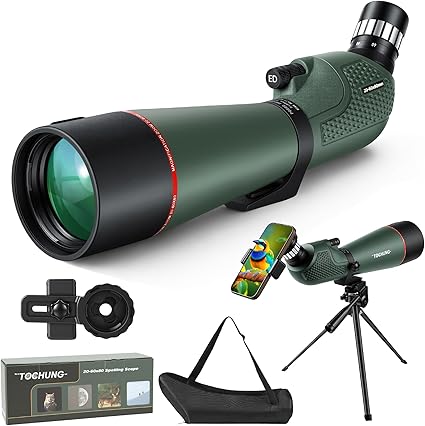
Birdwatchers who want a versatile spotting scope with a wide zoom range will find this model suitable. It excels at providing detailed views across varying distances thanks to its 20x to 60x continuous zoom and an 80mm objective lens that keeps images bright and clear.
Setting up involves attaching the scope to a tripod mount, which keeps it steady for long observation sessions. Focusing is manual, allowing precise adjustment. Day-to-day use benefits from the waterproof and fogproof design, ensuring durability in different weather conditions.
A universal smartphone adapter makes capturing photos straightforward, adding convenience during outings.
Performance centers on sharp and high-contrast imagery across a broad zoom range, holding fine detail well at 60x. The build is solid, and the fully multi-coated optics improve light transmission. Strong praise highlights clarity and brightness.
Some users note the challenge of quick focus when zooming rapidly between distances.
Users praise the brightness and clarity of the image even at high magnification, but adjusting manual focus quickly when changing zoom levels often proves difficult. The scope’s optical coatings and large objective lens keep views crisp in various lighting.
Ideal for birdwatchers who appreciate detailed, long-distance observation and don’t mind using a tripod and adjusting focus manually. Those needing faster focusing or more compact options might want to consider alternatives.
Pros
- Bright, sharp images with large 80mm objective
- Continuous zoom from 20x to 60x magnification
- Compatible with smartphones for easy photo capture
- Waterproof and fogproof for outdoor reliability
Cons
- Manual focus can be tricky with rapid zoom changes
- Requires tripod for steady long-distance viewing
| Specification | Details |
|---|---|
| Objective Lens Diameter | 80mm |
| Zoom Ratio | 20x-60x |
| Focus Type | Manual Focus |
| Field Of View | 1000 yard |
| Mount | Tripod Mount |
| Additional Features | Fully Multi-Coated Optics, Waterproof & Fogproof, Universal Smartphone Adapter |
13. Unbranded 30-90×92 UHD Spotting Scope

Offering an impressive 30-90x zoom range, this spotting scope is ideal for birders who want a wide variety of magnification options in one device. Its standout feature is the ability to switch from scanning large areas to zooming in closely without changing equipment, making it perfect for serious birdwatching in different environments.
Setting up involves attaching the included tripod and adjusting the zoom eyepiece to your desired level with smooth precision. The waterproof and shock-resistant design allows you to carry it comfortably during outdoor explorations without worrying about damage.
The phone adapter lets you capture distant bird images easily, while the carrying bag makes transporting it straightforward.
Images remain sharp and bright thanks to the premium BAK4 prisms, even when light is low. Color fidelity and resolution support long hours of spotting without straining your eyes. The strongest praise relates to its clarity and zoom range, while the most common complaint points to its relatively large and heavy build that can be cumbersome over extended use.
Image quality stands out for sharpness and color, even in dim light, which makes spotting distant birds enjoyable and detailed. The main drawback noticed is the size and weight, which some find cumbersome during long observation sessions or hikes.
Birders who value flexible zoom and rugged design will appreciate what it offers. Those who prefer something lightweight or compact for quick trips might want to consider lighter alternatives.
Pros
- Wide 30-90x zoom range
- Clear images with BAK4 prisms
- Built to handle harsh weather
- Includes tripod and phone adapter
Cons
- Relatively heavy and bulky to carry
- Zoom can be tricky to stabilize at max power
| Specification | Details |
|---|---|
| Zoom Ratio | 30-90x |
| Eye Piece Lens Description | Zoom Eyepiece |
| Additional Features | Waterproof, Shock-resistant, BAK4 Prism |
| Compatible Devices | Smartphone |
| Includes | Phone Adapter, Tripod, Carrying Bag |
Best Magnifications for Birding Comparison Table
| Product | Magnification Maximum | Objective Lens Diameter | Eye Relief | Specific Uses |
|---|---|---|---|---|
| UHD 18×56 Binoculars | 18x | 56 mm | – | – |
| Occer 12×25 Binoculars | 12x | 25 mm | 20 mm | Bird Watching, Hiking, Outdoors |
| Falcon 20-60×85 Scope | 20-60x | 85 mm | – | – |
| MLight 10-30×50 Binoculars | 30x | 50 mm | 12 mm | Bird Watching, Hiking, Hunting |
| Celestron Nature DX 8×42 | 8x | 42 mm | 17.5 mm | Hiking, Bird Watching, Concerts |
| SVBONY SV28 25-75×70 Scope | 25-75x | 70 mm | – | – |
| Waterproof 20×50 Binoculars | 20x | 50 mm | 26 mm | Bird Watching, Camping, Concert |
| Phone Adapter 12×42 Binoculars | 12x | 42 mm | – | Travel, Hiking, Outdoors |
| Zoom 10-30×50 Binoculars | 30x | 50 mm | 22 mm | Bird Watching, Sport Watching |
| Celestron Ultima 22-66×100 Scope | 22-66x | 100 mm | – | – |
| Monocular 12×50 Telescope | 12x | 50 mm | – | – |
| HD 20-60×80 Spotting Scope | 20-60x | 80 mm | – | – |
| UHD 30-90×92 Spotting Scope | 30-90x | 92 mm | – | – |
- Magnification Maximum18x
- Objective Lens Diameter56 mm
- Eye Relief–
- Specific Uses–
- Magnification Maximum12x
- Objective Lens Diameter25 mm
- Eye Relief20 mm
- Specific UsesBird Watching, Hiking, Outdoors
- Magnification Maximum20-60x
- Objective Lens Diameter85 mm
- Eye Relief–
- Specific Uses–
- Magnification Maximum30x
- Objective Lens Diameter50 mm
- Eye Relief12 mm
- Specific UsesBird Watching, Hiking, Hunting
- Magnification Maximum8x
- Objective Lens Diameter42 mm
- Eye Relief17.5 mm
- Specific UsesHiking, Bird Watching, Concerts
- Magnification Maximum25-75x
- Objective Lens Diameter70 mm
- Eye Relief–
- Specific Uses–
- Magnification Maximum20x
- Objective Lens Diameter50 mm
- Eye Relief26 mm
- Specific UsesBird Watching, Camping, Concert
- Magnification Maximum12x
- Objective Lens Diameter42 mm
- Eye Relief–
- Specific UsesTravel, Hiking, Outdoors
- Magnification Maximum30x
- Objective Lens Diameter50 mm
- Eye Relief22 mm
- Specific UsesBird Watching, Sport Watching
- Magnification Maximum22-66x
- Objective Lens Diameter100 mm
- Eye Relief–
- Specific Uses–
- Magnification Maximum12x
- Objective Lens Diameter50 mm
- Eye Relief–
- Specific Uses–
- Magnification Maximum20-60x
- Objective Lens Diameter80 mm
- Eye Relief–
- Specific Uses–
- Magnification Maximum30-90x
- Objective Lens Diameter92 mm
- Eye Relief–
- Specific Uses–
How to Choose the Best Birding Magnification
Choosing the right magnification for birding depends on balancing clarity, field of view, and ease of use. Higher magnification can offer detail but may lead to shakiness and narrow views, while lower magnification provides stability and wider scenes. Picking the right combo prevents frustration and unnecessary costs.
Magnification Power
Using a high zoom level often makes the image harder to hold steady without a tripod. At 10x magnification or more, shaky hands blur the view, which can be frustrating when watching active birds.
Lower magnifications around 7x to 8x give wider fields of view, making it easier to track moving targets and spot birds at common distances of 30 to 100 meters.
A balance between zoom and stability matters most for practical birding. Staying within 7x to 10x magnification typically works best. Higher than 12x can narrow the field of view, making it tough to locate and follow birds without a mount.
Scopes and binoculars in the 8x to 10x range also give bright, steady images under typical daylight conditions.
Optical Quality
Getting a crisp and clear image depends largely on the lens and prism quality. Cheaper optics often produce dull or slightly blurry views, especially at the edges. Well-made lenses with multi-layer coatings reduce glare and improve image brightness under various light levels, such as early morning or shaded woods.
Color accuracy also makes a difference in identifying species. A good set avoids color shifts or unnatural tints. Look for products specifying fully multi-coated lenses and high-grade phase-corrected prisms to minimize distortion and provide natural-looking colors throughout the viewing area.
Size and Weight
Long birding sessions demand gear that won’t weigh you down or tire your hands. Compact and lightweight models fitted with comfortable grips make a difference during hikes or long observation periods.
Bulky optics can tire your arms quickly and add unnecessary bulk to your backpack.
Carrying ease also depends on size relative to your usual gear. Those fitting easily into standard birding packs or hanging comfortably with neck straps reduce hassle. Around 500 to 800 grams is a practical weight range for binoculars intended for extended outdoor use.
Durability and Weather Resistance
Outdoor conditions mean your gear needs to handle dirt, water, and occasional drops. Sturdy materials like rubber armoring protect against impacts and provide better grip in wet conditions.
Models rated as waterproof and fogproof help maintain clear vision even in fog or light rain.
Scratch-resistant lens coatings preserve image clarity after use in rough environments. Tough construction materials like magnesium alloy bodies combine light weight with durability, so the optics survive accidental knocks without compromising performance.
Eye Relief and Comfort
Extended use grows uncomfortable if the eye relief is too short, especially for those who wear glasses. Longer eye relief (around 15mm or more) allows comfortable viewing without pressing glasses against lenses, preventing strain or loss of sight field.
Adjustable eye cups that twist or fold let users customize the fit. Wider eye cups also help block stray light and improve the viewing experience. Comfort through the lenses makes a noticeable difference during hours of observation, reducing eye fatigue.
Choosing the Right Magnification for Different Birding Environments
Magnification affects how clearly and closely you see birds, but higher numbers do not always mean better viewing. For dense woodlands or thick brush, 6x to 8x magnification works well because it keeps the image steady while showing enough detail.
Open fields and shorelines often allow longer sightlines, where 10x magnification provides a closer look without too much image shake.
Consider these points:
- Higher magnification narrows the field of view, making it harder to follow moving birds.
- Lower magnification binoculars weigh less and reduce hand fatigue during long walks.
- Opt for image stabilization features if using magnifications over 10x to manage shake.
Matching magnification to where and how you birdwatch prevents frustration and helps identify birds more easily. Knowing your typical environment guides you to the right choice.
Common Mistakes to Avoid When Using High Magnification Binoculars
Choosing high magnification binoculars may seem like a way to see birds in more detail, but several pitfalls can reduce effectiveness. A common mistake is ignoring the increased image shake that comes with magnifications above 10x, making it harder to get a clear, steady view without support.
Other issues with high magnification include:
- Reduced brightness and field of view, which make locating and tracking fast-moving birds difficult.
- Heavier units cause fatigue quickly if held for extended periods without a tripod.
- Failing to consider exit pupil size, leading to dimmer images especially during dawn or dusk.
High magnification demands more from the user and equipment setup. Balancing magnification with portability and stability ensures better birdwatching experiences.
Comparing Spotting Scopes and Binoculars for Enhanced Birdwatching
Spotting scopes and binoculars serve different functions in birdwatching, each with advantages depending on needs. Binoculars typically offer a magnification range between 6x and 10x and are handheld, making them versatile for moving around and scanning wide areas quickly.
Spotting scopes have higher magnifications, often 20x or more, providing detailed views of distant birds but require a tripod.
- Binoculars cover broad scenes and make tracking easier with a wider field of view.
- Spotting scopes are better for stationary observation when the bird is far away or when watching details like plumage.
- Portability favors binoculars since they are lighter and faster to deploy.
Choosing between these depends largely on birdwatching style and typical distances. Many birders carry binoculars for general use and a spotting scope for focused sessions.
People Also Asked
What Magnification Is Best for Birding Beginners?
A magnification of 8x is usually best for birding beginners. It provides a good balance between seeing details and keeping the image stable without a tripod. Pairing 8x magnification with a wide field of view makes it easier to spot and track birds.
How Do I Care for Birding Binocular Lenses Properly?
Clean birding lenses only when necessary using a soft microfiber cloth and gentle strokes. Rubbing lenses aggressively or using household cleaners can scratch or damage coatings. Store binoculars in a case to keep lenses free from dust and smudges.
Is Higher Magnification Harder to Hold Steady for Birdwatching?
Higher magnification does make it harder to hold binoculars steady because the image shakes more with hand movement. Using a harness or resting elbows on a stable surface can help reduce shake during extended viewing sessions. Many birders find 8x magnification to be easier to keep steady.
Can Birding Magnification Damage My Eyes with Prolonged Use?
Birding magnification does not harm your eyes even with prolonged use. The binoculars simply magnify distant objects, and your eyes focus normally on the viewed scene. Taking breaks can prevent eye fatigue that comes from prolonged staring, but no damage occurs.
How Long Do Typical Birding Binoculars Last with Regular Use?
Typical birding binoculars last several years with regular use if cared for properly. Keeping them clean and dry, avoiding dropping them, and storing them safely extend their life. Lens coatings and mechanics can begin to degrade slightly after many years, but quality models remain functional for a decade or more.
Conclusion
Choosing the right magnification for birding comes down to balance. Too much zoom can make the image shaky or narrow your view, while too little won’t bring distant birds close enough.
Also, consider the size and weight since heavier gear can be tiring during long walks. Clarity and ease of focusing matter as much as the magnification number.
Think about where and how often you plan to birdwatch before making a choice. A compact, mid-range magnification often suits casual use and small backpacks. For detailed comparisons and options that fit different needs and budgets, check the table and recommendations above to find what matches your specific situation.