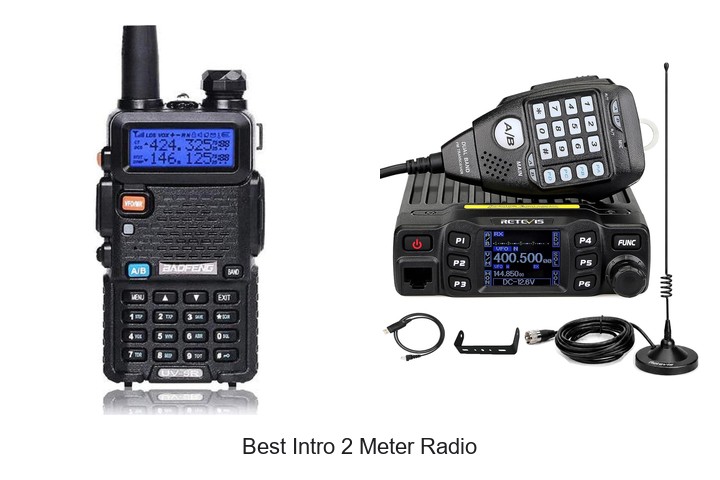
Top 12 Best Intro 2 Meter Radio Hacks You Need Now!
Many people who use radios quickly learn that a cheap or poorly chosen device can fail at the worst moments, losing signal, running out of battery too fast, or feeling clunky to handle. Finding the best intro 2 meter radio matters particularly for newcomers who want reliable communication without unnecessary complications. Early frustration often comes from radios that don’t hold up to frequent use or struggle with common interference.
Good 2 meter radios typically have an output power between 5 to 10 watts, enough to maintain clear contact within local ranges without draining batteries too quickly. A durable, well-sealed body resists accidental drops and moisture, making it practical for outdoor or emergency use.
Ease of tuning and a simple, readable display also make a noticeable difference, especially for beginners who need straightforward operation at the start.
Need a Quick Check?
| Image | Product | Price |
|---|---|---|
Our Top Picks 1 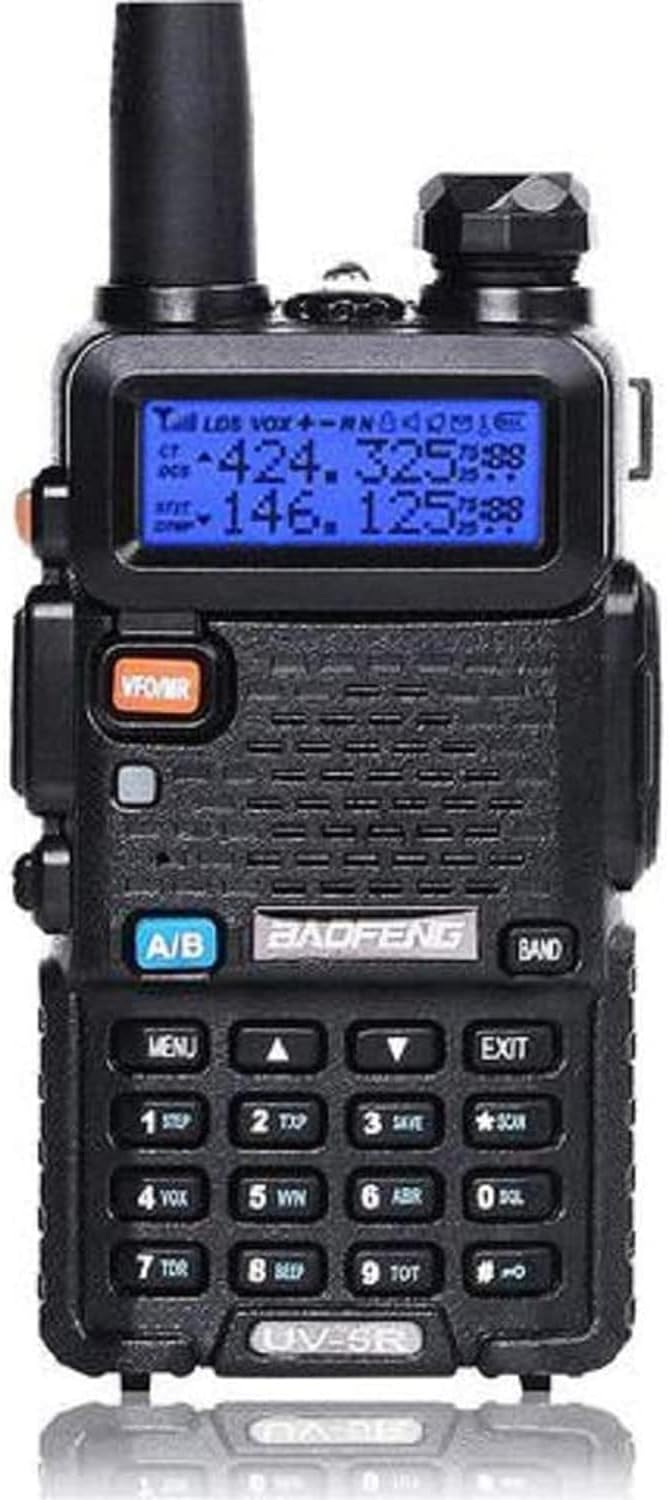 | Baofeng UV-5R Radio | Check Price |
Our Top Picks 2  | Retevis RT95 Mobile | Check Price |
Our Top Picks 3  | C. Crane CCRadio 3 | Check Price |
Our Selected Top 12 Intro 2 Meter Radio You Can Trust
This list features reliable and user-friendly 2 meter radios ideal for beginners. Each review covers performance details, target users, and highlights the strengths and weaknesses to help you find the right radio for your needs and experience level.
1. Baofeng UV-5R Dual Band Handheld Radio
Getting reliable communication over 2 meters can be tricky in busy or remote settings, but this dual-band handheld radio handles it well. It’s suited for anyone needing solid VHF/UHF coverage, and its standout feature is the dual-standby display that manages two frequencies independently. Perfect for outdoor activities or amateur radio use where quick frequency access matters.
Setting up the radio involves selecting channels from the 128 available options and choosing between high or low transmitting power. Day-to-day use benefits from the dual frequency display that shows two bands at once, making it easy to switch back and forth.
The keypad lock keeps settings secure, while the tri-color backlight adjusts visibility in different lighting conditions, rounding out a practical experience for constant use.
Performance is solid with a maximum talking range of 5 kilometers, which covers most local needs. The device feels sturdy but lacks any water resistance, so extra care is needed outdoors.
On the plus side, it has a long battery life of up to 72 hours, but the non-water-resistant design is a frequent drawback mentioned. The dual-band design works well for quick switching between frequencies, adding a layer of convenience.
The radio gets praised for its dual frequency display and long battery life, which make managing communication straightforward for extended periods. Common complaints focus on the lack of water resistance, limiting reliability in wet or harsh conditions, which could impact outdoor use.
This radio fits well for amateurs or casual users requiring solid dual-band communication without extreme weather exposure. Those needing rugged, waterproof radios should consider alternatives suited to challenging environments. The frequency range is fixed, so users must ensure it matches their communication needs.
Pros
- Dual band display with independent operation
- Long battery life of 72 hours
- Selectable high/low TX power
- Keypad lock for security
Cons
- No water resistance for outdoor use
- Limited transmission to specific frequency ranges only
| Specification | Details |
|---|---|
| Frequency Range | 144-148 MHz / 420-450 MHz |
| Number of Channels | 128 |
| Battery Average Life | 72 hours |
| Talking Range Maximum | 5 kilometer |
| Voltage | 4 volts |
| Water Resistance Level | Not Water Resistant |
2. Retevis RT95 Dual Band Mobile Radio
Offering a maximum talking range of 5 kilometers, the Retevis RT95 Dual Band Mobile Radio suits those needing reliable long-distance communication in vehicles like trucks, jeeps, or RVs. Its single biggest strength is the dual band capability combined with a high gain antenna, allowing clear communication even from remote locations.
Setting up the radio is straightforward, especially in vehicles, thanks to its compact size and compatibility with vehicle power supplies. Adjusting microphone gain helps keep calls clear and free of interference.
Daily use benefits from the dual speakers for better sound clarity and RCA output ports, which connect easily to car audio systems for a more immersive listening experience on the road.
Performance-wise, it handles both VHF and UHF frequencies efficiently, providing solid sound quality and reliable transmission. The device feels lightweight and well-built, though it isn’t water resistant, so some care is needed during bad weather.
Reviews highlight the full, penetrating audio as a major plus, while some users note the lack of water resistance as a drawback.
Clear and powerful sound with dual speakers is a major advantage, while the lack of water resistance requires extra care in wet conditions. The radio excels in providing consistent communication over long distances within its 5 kilometre range.
Ideal for people who need dependable dual band communication in their vehicles. Those planning extensive outdoor use without shelter or in harsher environments might want to consider a more weatherproof option.
Pros
- Compact size fits easily in most vehicles
- Dual speakers deliver crisp, clear audio
- Adjustable microphone gain reduces interference
- RCA output for car audio integration
Cons
- Not water resistant, vulnerable in rain
- Limited temperature range from -20 to 60 °C
| Specification | Details |
|---|---|
| Number of Channels | 200 |
| Frequency Range | 144-148Mhz/420-450Mhz |
| Talking Range Maximum | 5 kilometer |
| Voltage | 13.8 volts |
| Connectivity Protocol | VHF, UHF |
3. C. Crane CCRadio 3 Portable Digital Radio
Anyone seeking reliable long-range AM and FM radio reception with modern features will appreciate this digital radio. It’s ideal for those who want clear audio and added connectivity options like Bluetooth. The single biggest strength lies in its patented Twin-Coil Ferrite AM Antenna, designed specifically to pull in distant stations with impressive clarity.
Setting up is straightforward with both battery power and an electric cord included, giving flexibility for indoor or portable use. The lighted LCD display and memory presets make tuning and saving favorite stations simple. Weather alerts and a dedicated weather band help you stay informed, while Bluetooth lets you stream radio shows from your phone or smart speaker, expanding what you can listen to beyond AM/FM.
The radio performs its main job very well, delivering clear AM reception and solid FM sound. It feels sturdy enough for regular use, but some find carrying four D batteries a bit bulky for long trips. Voice reproduction is crisp, making it easy to focus on a host or podcast content.
The most frequent downside noted is its weight and size when used portably, but the mix of features is often praised.
Clear audio and excellent long-range reception stand out as the radio’s biggest strengths, making listening to weak stations much easier. The common issue revolves around its size and weight, which can feel bulky, especially when running on batteries alone.
Those wanting reliable indoor or short-term portable radio with rich features will be pleased. People needing a lightweight, ultra-portable radio for long outdoor adventures might prefer a more compact alternative.
Pros
- Strong AM reception with patented Twin-Coil Ferrite antenna
- Bluetooth connectivity for streaming radio shows
- Includes weather band and alert feature
- Clear and accurate voice reproduction
Cons
- Relatively large and heavy with four D batteries
- Not the most portable for outdoor use
| Specification | Details |
|---|---|
| Connectivity Technology | Bluetooth |
| Tuner Type | AM/FM, Weather, Ham (VHF) |
| Power Source | Battery Powered and Electric power cord included |
| Radio Bands Supported | 4-Band |
| Number of Batteries | 4 D batteries required. |
| Display Type | LCD |
4. Baofeng BF-F8HP Pro Tri-Band Ham Radio
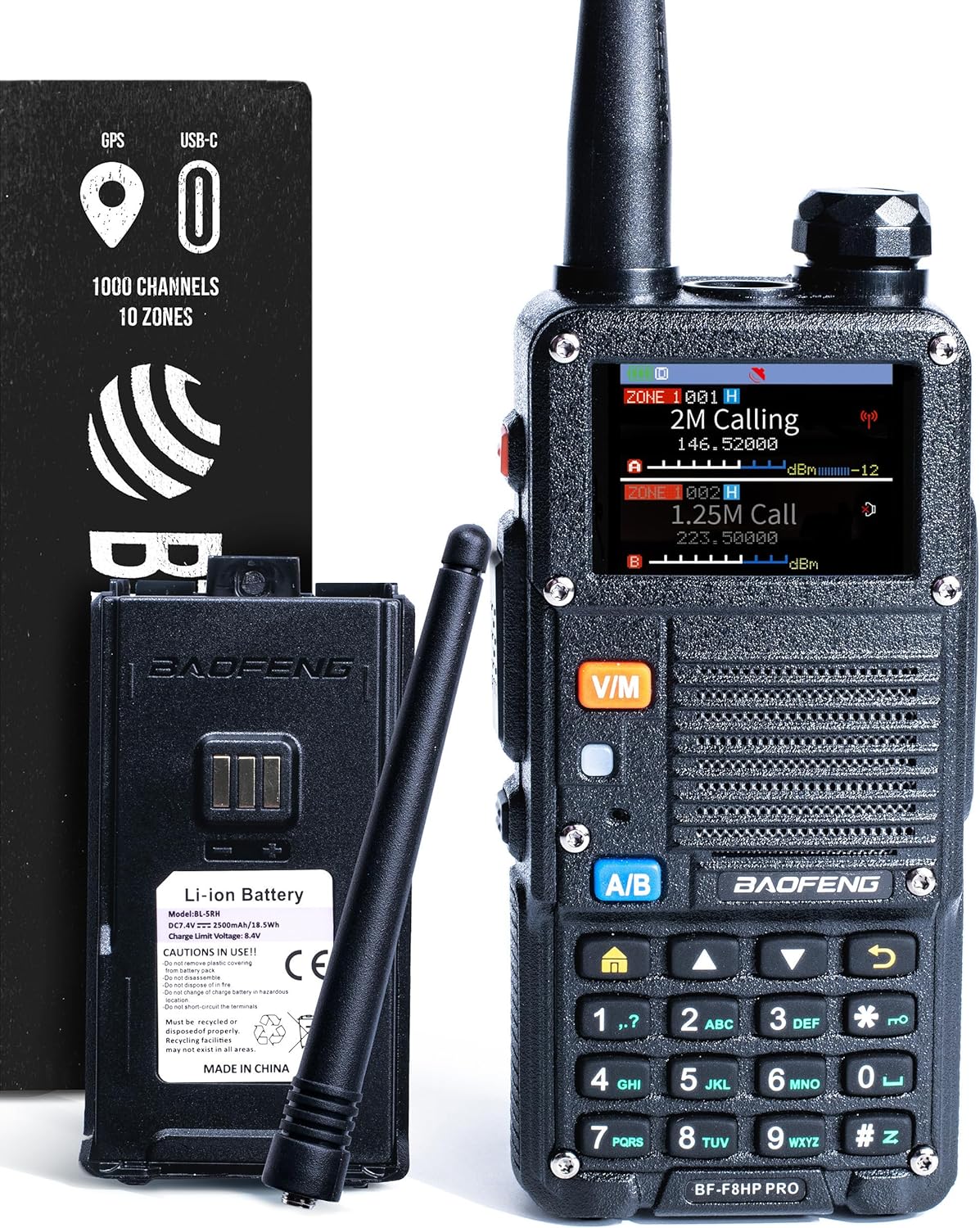
Designed for amateur radio operators who want easy analog control, the Baofeng BF-F8HP Pro Tri-Band Ham Radio stands out with its clear English menus and capacity for 1,000 memories across 10 named zones. It’s ideal for those who need to organize channels by home, travel, club, or event without much fuss.
Setup feels straightforward because the menus are intuitive and the full keypad lets you make quick changes. Scanning only picks zones you choose, so you don’t get bogged down by irrelevant channels.
The dual watch feature lets you keep an eye on two channels, showing their names and frequencies side by side. Battery life lasts a solid 10 hours, which covers a typical day of use comfortably.
Performance is reliable, with a maximum talking range around 5 miles and adjustable receiver sensitivity helping to catch weaker signals. Build quality is water resistant, making it suited for outdoor use, though some find the scan feature limited since it doesn’t handle digital systems.
Common praise highlights its organized channel system, while the main complaint points to the analog-only scanning as a restriction.
The strongest praise centers on its easy-to-understand menu system and flexible channel grouping. The most frequent complaint is that the scanning feature only works for conventional analog channels and can’t decode digital or trunked systems, limiting some users.
Those focused on analog communication and clear organization will appreciate this radio’s features. Users needing digital signal support or advanced scanning may find better options elsewhere.
Pros
- Clear English menus simplify channel management
- 1,000 memories with 10 named zones for organization
- Water resistant for reliable outdoor use
- Dual watch shows name and frequency on two channels
Cons
- Scanning doesn’t support digital or trunked systems
- Analog-only scanning can feel restrictive for some
| Specification | Details |
|---|---|
| Number of Channels | 1000 |
| Frequency Range | 1.25 m Coverage, AM Aviation RX (108-137 MHz), FM Broadcast RX (65-108 MHz), UHF Coverage, VHF Coverage |
| Talking Range Maximum | 5 mile |
| Battery Average Life | 10 hours |
| Water Resistance Level | Water Resistant |
| Voltage | 7.4 volts |
5. Yaesu FT-3185R 2 Meter Mobile Transceiver

Yaesu FT-3185R 2 Meter Mobile Transceiver is built for serious VHF communication, focusing on real-time monitoring and flexibility. Ideal for those needing a compact radio with easy channel management and reliable range, it shines in delivering clear signals within a 5-mile radius.
Setting up the transceiver is straightforward, with a primary memory group (PMG) that lets you assign up to five channels or VFO frequencies for quick access. The switchable AUTO and MANUAL modes tweak how you transmit and receive, either following the incoming signal or sticking to your selected channel.
A bar graph display shows activity across channels, helping track communications during daily use without constant adjustments.
Performance stays strong within its designed range, providing reliable hearing and transmission up to 5 miles. The single-channel setup keeps things simple, but some users find the lack of water resistance a limitation for harsh environments. Solidly constructed with a focus on VHF headsets and external antenna compatibility, it meets expectations for a mobile transceiver built for steady use.
The bar graph display and PMG function get frequent praise for helping users stay aware of multiple frequencies without manual tuning. A common drawback mentioned involves its lack of water resistance, which may limit use in wet or rough outdoor conditions.
People needing reliable VHF range and straightforward operation will appreciate this radio’s features. For those requiring multiple simultaneous channels or water resistance, selecting a different model would better fit their needs.
Pros
- Real-time channel activity monitoring with bar graph
- Easy switching between AUTO and MANUAL transmit modes
- Clear communication within 5-mile range
- Compatible with a range of accessories
Cons
- Not water resistant for outdoor use
- Only one channel available at a time
| Specification | Details |
|---|---|
| Number of Channels | 1 |
| Talking Range Maximum | 5 miles |
| Voltage | 13.6 volts |
| Tuner Type | FM |
| Compatible Devices | 2-meter radios, Yaesu radios, VHF headsets, earpieces, external antennas |
6. C. Crane CCRadio-2E Portable AM FM Weather Radio

Light and solid in hand, this portable radio fits well for anyone wanting reliable AM, FM, and ham band reception on the go. Its best feature is the exceptional AM reception powered by the twin-coil ferrite antenna, making it ideal for clear sound across expected radio bands and emergency alerts.
Setting up involves popping in 4 D batteries or using the AC power cord for stationary use. The 250-hour battery life means long stretches without worry.
Daily use is straightforward with a bright LCD, one-touch memory presets, and a headphone jack for private listening. NOAA weather alerts and the 2-meter ham band add layers of safety and convenience especially when natural disasters strike.
Reception on AM, FM, NOAA, and the 2-meter ham band delivers solid and clear audio most of the time. The portable build feels sturdy and durable for frequent handling and emergencies.
The strongest praise is for the outstanding AM reception and battery life. The most often mentioned downside is the radio’s weight at about 4 lbs, which can feel a bit heavy for some users.
Strong AM reception and extended battery life stand out clearly. The radio’s weight can be noticeable when carrying it for long periods. It feels solid and easy to use, but its bulk and battery size might be inconvenient for some.
People needing reliable reception across multiple bands and long runtime will appreciate this radio. Those wanting an ultra-light, compact radio may want to look elsewhere for a lighter option. It is well suited for emergency preparedness and outdoor use when weight is not the main concern.
Pros
- Excellent AM reception with twin-coil ferrite antenna
- Runs up to 250 hours on 4 D batteries
- Includes NOAA weather alerts and 2-meter ham band
- Multiple useful features: clock, alarm, sleep timer
Cons
- Heavier than many portable radios at 4 lbs
- Requires large D batteries that add bulk
| Specification | Details |
|---|---|
| Power Source | Battery Powered (4 D batteries required) |
| Radio Bands Supported | 4-Band (AM, FM, NOAA Weather, 2-Meter Ham) |
| Audio Output Mode | Stereo |
| Display Type | LCD |
| Connectivity Technology | 3.5 mm audio jack |
| Weight | 4 lbs |
7. AnyTone AT-778UVII Dual Band Mobile Radio

Great for anyone needing reliable dual-band mobile communication, this radio stands out for its clear voice quality and solid power options. It fits well in vehicles or mobile setups, offering a straightforward way to communicate on 2-meter and 70-centimeter bands with good channel capacity.
Setting up is pretty straightforward thanks to well-distributed buttons and the option to adjust mic gain for clarity or volume. The VOX function allows hands-free use, which is handy on the move. Daily use benefits from a choice of output power levels (25W, 15W, and 5W), letting you balance range and battery or power consumption.
Performance-wise, it handles transmissions within a 20-kilometer range reliably, with clear audio thanks to adjustable mic gain. The build is compact and functional but lacks water resistance, which means careful placement in vehicles or under cover for outdoor use.
Many praise the sound quality while common complaints focus on noise at higher mic gain settings.
Clear audio quality with adaptable mic gain are standout features, making transmissions understandable at a distance. Higher mic gain brings louder sound but also noticeable background noise, so finding the right balance is necessary. The unit fits well in mobile environments but should be protected from moisture.
Those needing flexible power output and dual-band use will find this radio useful. It suits vehicle setups or base stations with controlled environments. People operating in wet or rugged outdoor conditions might look for something with water resistance and quieter mic performance at higher volume levels.
Pros
- Adjustable output power for flexible range
- Dual-band coverage for 2m and 70cm
- 200 channel memory for easy organization
- VOX function enables hands-free operation
Cons
- No water resistance; careful placement needed
- Higher mic gain increases noise with loud volume
| Specification | Details |
|---|---|
| Frequency Range | 144-148MHz/420-450MHz |
| Output Power | 25W/15W/5W |
| Number of Channels | 200 |
| Talking Range Maximum | 20 kilometer |
| Connectivity Protocol | CTCSS/DCS, DTMF |
| Dimensions (W x D x H) | 124 x 163 x 39 mm |
8. Retevis RT95 Dual Band Mobile Ham Radio

Compact and well-built, the Retevis RT95 offers a dual band setup perfect for mobile ham radio users needing quick access to both 2 meter and 70cm bands. Its ability to switch frequency bands right from the microphone suits operators who want efficient control without hassle.
The standout feature is the dual band capability in a mini mobile design that fits easily in tight spaces.
Setting up the radio is straightforward, and it comes with all necessary cables for installation. The VOX function lets you talk hands-free, which is ideal while driving or when you need your hands free for other tasks.
The mic gain upgrade can make quiet transmissions much clearer, though you have to balance this carefully to avoid background noise. The 180-degree screen rotation adds useful flexibility for viewing.
Performance-wise, it handles calls clearly within its 5-mile range, and it supports 200 channels, which keeps you connected across busy frequencies. The radio is small and fits in vehicles without taking up much room. The build quality feels solid but not waterproof, so it requires some protection from weather.
A frequent complaint is the trade-off in mic gain between volume and noise, so finding the right setting takes practice.
Many appreciate the clear call quality and easy band switching, which keeps communication smooth on the move. At the same time, users often need to find a balance with mic gain settings since pushing volume too high brings noticeable background noise. Handling these adjustments is part of everyday use.
People wanting a flexible dual band radio that fits in small spaces while driving will find it useful. Those needing heavy-duty or water-resistant radios might want to consider alternatives better suited for harsh environments or outdoor setups.
Pros
- Dual band access with quick switch on microphone
- Compact size fits easily in vehicle installations
- VOX hands-free function for safety while driving
- Supports up to 200 channels
Cons
- Mic gain increases background noise at higher levels
- Not water resistant, requires weather protection
| Specification | Details |
|---|---|
| Frequency Range | 144-148Mhz/420-450Mhz |
| Number of Channels | 200 |
| Talking Range Maximum | 5 mile |
| Battery Average Life | 12 hours |
| Dimensions | 6.42 x 4.88 x 1.54 inches |
| Voltage | 13.8 volts |
9. ABBREE AR-8118 GMRS Mobile Radio

Compact size and strong power delivery make the ABBREE AR-8118 GMRS Mobile Radio a practical choice for anyone needing reliable communication over long distances. It’s particularly useful for off-roading, camping, and ranch tasks, thanks to its 25W output and 200 available channels offering versatile and stable contact options.
Installation is straightforward due to the compact, space-saving design, which fits comfortably in vehicles or on workstations. Navigation through 200 channels is simple and helps avoid static and interruptions. A built-in dual speaker with voice noise reduction keeps conversations clear, while VOX functionality allows hands-free operation.
Weather alerts keep you informed, which is handy when outdoors.
Communication remains clear and stable within 10 to 30 kilometers, depending on the terrain and antenna setup. The radio is solidly built for mobile use but is not water resistant, so care is needed in wet conditions. Positive notes highlight the clear HD voice quality, while some users point to its lack of water resistance as a drawback.
The clearest praise comes from how well the radio maintains HD voice quality over long distances, which makes day-to-day communication easier and dependable. The most frequent complaint is the lack of water resistance, which limits its use in wet environments or during bad weather.
People requiring reliable long-range communication in mostly dry conditions and vehicle use will appreciate this radio. Those needing a weatherproof feature for rough outdoor conditions might want to explore more rugged alternatives.
Pros
- Compact, easy to install design
- Clear HD voice with noise reduction
- Wide channel selection for flexible use
- Long communication range up to 30 km
Cons
- Not water resistant, needs protection in rain
- Range depends heavily on terrain and antenna
| Specification | Details |
|---|---|
| Number of Channels | 200 |
| Power Output | 25W |
| Frequency Range | 462MHZ-467MHZ |
| Talking Range Maximum | 30 kilometer |
| Connectivity Protocol | GMRS |
10. Baofeng K5PLUS Tri-Band Handheld Radio

Offering tri-band coverage and an added high-gain antenna, this radio excels for anyone needing flexible frequency access and improved signal reach. Ideal for hobbyists and professionals who want a single handheld device covering VHF and UHF bands while benefiting from a stronger communication range than typical models.
Setting up involves quick pairing and simple frequency copying via a one-button BAND press, which means no complex programming is needed. Charging is versatile with both a US wall charger and USB-C cable included, so powering up at home or on the go is straightforward. Its 999 channel capacity helps manage a wide array of frequencies for daily and travel use.
Performance hits the mark with a maximum talking range close to 1 mile using the analog FM protocol, supported by a durable 15.35-inch antenna that enhances signal strength. The build feels solid enough for frequent use, though it lacks water resistance and users should keep it dry.
A common positive note is its convenient frequency copying; the main downside is the absence of weatherproofing, limiting outdoor durability.
Many appreciate the ability to quickly copy frequencies with one button, saving time on setup. The most common issue raised is the lack of water resistance, which restricts outdoor usage in wet environments.
Those needing flexible tri-band operation and quick frequency setup will find this radio a solid fit. Users requiring rugged, all-weather radios or longer range communications may want to consider other models more suited for harsh conditions or extended distance.
Pros
- Tri-band coverage for versatile frequency use
- High-gain 15.35-inch antenna boosts signal range
- Quick charge options including USB-C cable
- Easy one-click frequency copying without programming
Cons
- Not water resistant, needs dry conditions
- Maximum talking range limited to about 1 mile
| Specification | Details |
|---|---|
| Number of Channels | 999 |
| Talking Range Maximum | 1 mile |
| Frequency Bands | 136-174 MHz (VHF), 400-480 MHz (UHF) |
| Connectivity Protocol | Analog FM |
| Charging Methods | US Charger + USB-C Cable |
11. Icom IC-V3500 FM Mobile Transceiver

Finding a reliable radio for clear communication over several miles plays a big role in many outdoor and mobile activities. Ideal for those needing a sturdy 2 meter radio with straightforward use and good sound quality, it really shines in delivering clear audio thanks to its powerful 4.5W output. It’s a solid pick for anyone wanting reliable, safe communication without complicated controls.
Setup is simple, especially with its contemporary white display that’s easy to read. Adjusting volume or muting is quick and easy, making everyday use smooth. The radio supports emergency call and alert systems, adding a layer of security whether on the road or at a remote site.
It connects well to compatible Icom accessories, including headsets and external antennas, which helps tailor the setup to your needs.
Performance-wise, it covers a frequency range of 144-148 MHz with up to 207 channels. The maximum talking range near 5 miles suits many communication needs, while its water resistant build holds up well in less-than-ideal conditions.
Clear audio is the highlight, praised often, though some mention its range limitations compared to more powerful radios. The solid design feels durable and practical, with most comments appreciating its reliability.
Strong audio output and simple operation come together as the radio’s biggest strengths. Many appreciate the clear volume control and emergency alert features. The most frequent drawback is the limited range, which may not suit users needing longer-distance communication.
People needing dependable, safe communication within a 5-mile radius will find this radio fitting their requirements well. Those who require extended reach or full waterproof protection might want to explore other options that better meet those specific needs.
Pros
- Powerful 4.5W audio output for clear sound
- User-friendly white display with easy controls
- Emergency call and alert system for safety
- Compatible with various Icom accessories
Cons
- Maximum 5 mile range may feel limited
- Water resistant, not fully waterproof
| Specification | Details |
|---|---|
| Number of Channels | 207 |
| Frequency Range | 144-148 MHz |
| Talking Range Maximum | 5 mile |
| Power Output | 4.5W |
| Water Resistance Level | Water Resistant |
12. Baofeng K5PLUS Tri-Band Ham Radio

Tri-band coverage sets this radio apart, supporting UHF, VHF, and 1.25M bands. It suits anyone needing versatile communication across multiple frequencies. Its standout feature is adjustable power output, offering up to 10W for clear contact in challenging areas, making it a solid choice for both short and longer distance conversations.
Setting it up involves using the one-key frequency copy, which makes programming straightforward by cloning settings from another radio. The digital display helps quickly check frequencies and power levels during use.
Day-to-day operation benefits from voice-operated transmission, allowing hands-free communication. Charging via USB-C is convenient, keeping the unit ready without replacing batteries constantly.
Performance shines through clear signals reaching up to six miles with high power, which handles various terrains well. The build is practical but not water-resistant, requiring some care in wet conditions. Common praise highlights flexible power and versatile bands, while a frequent complaint involves lack of water resistance and reliance on a 9V battery despite USB-C charging.
Clear communication over long distances and flexible frequency bands stand out as strong benefits. Users often note the practical power options along with the disappointment of no water resistance, which limits outdoor use. The USB-C port is handy, though the battery setup feels somewhat outdated.
Those needing flexible band options and varied power settings will find this radio useful. People frequently working in wet or harsh weather may want a more rugged model. Ideal for hobbyists or emergency preparedness where clear voice transmission across several bands is important.
Pros
- Tri-band transmission for versatile communication
- Adjustable power output up to 10 watts
- One-key frequency copy simplifies setup
- USB-C rechargeable for convenient charging
Cons
- Not water resistant, vulnerable in wet conditions
- Uses 9V battery despite having USB-C charging
| Specification | Details |
|---|---|
| Frequency Range | UHF VHF 1.25M |
| Power Output | 10W, 7W, 4W adjustable |
| Number of Channels | 999 |
| Talking Range Maximum | 6 mile |
| Battery | 1 9V battery included |
| Connectivity Protocol | VOX |
Best Intro 2 Meter Radios Compared Side by Side
| Product | Channels | Frequency Range | Max Talking Range | Water Resistance |
|---|---|---|---|---|
| Baofeng UV-5R Radio | 128 | 144-148/VHF-UHF | 5 km | Not water resistant |
| Retevis RT95 Mobile | 200 | 144-148/420-450 MHz | 5 km | Not water resistant |
| C. Crane CCRadio 3 | – | 98 MHz (AM/FM) | – | – |
| Baofeng BF-F8HP Pro | 1000 | VHF/UHF/1.25 m | – | Weather resistant |
| Yaesu FT-3185R Mobile | 1 | VHF FM | 5 miles | Not water resistant |
| C. Crane CCRadio-2E | – | 108 MHz (AM/FM) | – | – |
| AnyTone AT-778UVII | 200 | 144-148/420-450 MHz | 20 km | Not water resistant |
| Retevis RT95 Ham | 200 | 144-148/420-450 MHz | 5 miles | Not water resistant |
| ABBREE AR-8118 GMRS | 200 | 462-467 MHz (GMRS) | 30 km | Not water resistant |
| Baofeng K5PLUS Handheld | 999 | 136-174/400-480 MHz | 1 mile | Not water resistant |
| Icom IC-V3500 Mobile | 207 | 144-148 MHz | 5 miles | Water resistant |
| Baofeng K5PLUS Ham | 999 | UHF VHF 1.25 m | 6 miles | Not water resistant |
- Channels128
- Frequency Range144-148/VHF-UHF
- Max Talking Range5 km
- Water ResistanceNot water resistant
- Channels200
- Frequency Range144-148/420-450 MHz
- Max Talking Range5 km
- Water ResistanceNot water resistant
- Channels–
- Frequency Range98 MHz (AM/FM)
- Max Talking Range–
- Water Resistance–
- Channels1000
- Frequency RangeVHF/UHF/1.25 m
- Max Talking Range–
- Water ResistanceWeather resistant
- Channels1
- Frequency RangeVHF FM
- Max Talking Range5 miles
- Water ResistanceNot water resistant
- Channels–
- Frequency Range108 MHz (AM/FM)
- Max Talking Range–
- Water Resistance–
- Channels200
- Frequency Range144-148/420-450 MHz
- Max Talking Range20 km
- Water ResistanceNot water resistant
- Channels200
- Frequency Range144-148/420-450 MHz
- Max Talking Range5 miles
- Water ResistanceNot water resistant
- Channels200
- Frequency Range462-467 MHz (GMRS)
- Max Talking Range30 km
- Water ResistanceNot water resistant
- Channels999
- Frequency Range136-174/400-480 MHz
- Max Talking Range1 mile
- Water ResistanceNot water resistant
- Channels207
- Frequency Range144-148 MHz
- Max Talking Range5 miles
- Water ResistanceWater resistant
- Channels999
- Frequency RangeUHF VHF 1.25 m
- Max Talking Range6 miles
- Water ResistanceNot water resistant
How to Choose the Best Intro 2 Meter Radio
Choosing the right 2 meter radio depends on key factors like range, durability, ease of use, and battery life. Prioritizing these ensures reliable performance and reduces the need for frequent replacements or repairs, ultimately saving time and money while avoiding frustration.
Frequency Range and Bandwidth
One of the first challenges encountered with radios occurs when they don’t cover the entire 2 meter band, leaving gaps in communication options. Radios that cover the full amateur band from 144 to 148 MHz provide the flexibility needed for diverse contacts.
A good radio naturally includes support for the typical modes such as FM for local communication and sometimes SSB for longer-distance or more technical uses. Missing these modes limits what types of communication you can join and misses popular channels.
Some models also extend reception to neighboring bands like the 70 cm band or weather frequencies, offering added versatility for monitoring different signals without extra equipment. Standard amateur radio coverage must be precise to ensure legal and effective operation. Radios with clear documentation and labels on frequency ranges help avoid confusion during setup.
Output Power and Range
Many radios offer adjustable output power, an important feature noticed quickly in daily use. Low power settings around 1 to 5 watts conserve battery life for casual local chats, while high settings up to 50 watts can push signals further but use more energy. The actual range achieved depends heavily on terrain: open areas allow several miles of clear communication, while dense urban or hilly locations reduce that significantly.
Some users find they rarely need maximum power once familiar with optimal antenna placement and local repeaters. Radios that allow fine-tuning power in steps give better control to balance range and battery life. Simple radios stuck at fixed high output often frustrate with quick drainage and overheating.
User Interface and Ease of Use
For anyone starting with radios, the layout and ease of use make a big difference from day one. Physical controls that are distinct and not cramped reduce mistakes and speed up channel changes.
Displays with clear characters and backlighting allow operation in all lighting conditions. Some radios include audible beeps or voice prompts that confirm button presses, which helps prevent accidental frequency changes.
Menus should be straightforward, avoiding complex submenus that require repeated referencing of the manual. Memory presets for common frequencies prevent tedious manual tuning and make switching channels instant.
Radios with simple channel scanning also help monitor multiple conversations without constant button presses.
Battery Life and Power Options
Battery life is often a sore point after extended use without recharge options nearby. Radios equipped with batteries rated around 2000 to 3000 mAh generally offer 6 to 8 hours of active operation at moderate power.
Rechargeable lithium-ion packs are common and convenient, with USB charging adding flexibility for power banks or car adapters.
Some models let you swap rechargeable batteries for standard AA cells in emergencies, making them more reliable in remote situations. External power inputs also enable connection to larger battery packs. Radios lacking these options can leave users stranded if internal packs fail or deplete too fast during outings.
Durability and Build Quality
Radios built with sturdy plastic housings and reinforced corners better survive the bumps and drops common during field use. Lightweight models can be easier to carry but often sacrifice toughness.
Good radios balance size and weight with materials that resist cracking and wear. Some include rubberized grips for secure handling in wet conditions.
Water resistance rated at least IP54 protects against splashes and dust, crucial when operating outdoors. Radios without any weather protection risk malfunction after even light rain.
Compact radios with a firm feel in the hand often outlast similarly priced devices that feel cheap or fragile. Carrying cases and belt clips also contribute to durability in real life.
Optimizing Signal Range and Clarity for 2 Meter Radios
Signal range and clarity depend heavily on antenna placement and type. A 2 meter radio performs best when the antenna is mounted as high as possible and away from large metallic objects that can cause interference.
Opt for a well-tuned, resonant antenna designed specifically for the 2 meter band to reduce signal loss.
Using low-loss coaxial cable between the radio and antenna also contributes to better performance. Keep cable runs short and choose high-quality connectors to avoid degradation. External noise sources like fluorescent lights or poorly shielded electronics can affect reception, so identifying and minimizing these sources help maintain clear communication.
Quick tips for better range and clarity:
- Install the antenna outdoors or near a window if possible.
- Use a quality, resonant antenna designed for 146 MHz (2 meter band).
- Minimize cable length or use low-loss coaxial cable.
- Check and secure all connections to prevent signal leaks.
- Reduce local electronic interference around the radio.
Essential Maintenance Tips to Prolong Your 2 Meter Radio’s Lifespan
Regular maintenance keeps a 2 meter radio working reliably over time. Start by cleaning the microphone and speaker grills to prevent dust buildup, which can block sound or cause muffled audio.
Pay attention to connectors and power cables; loose or corroded connections may lead to poor transmission or intermittent reception.
Check the antenna connection periodically for signs of wear or rust. Replace any cracked or damaged coaxial cables as these can weaken signal strength.
Keep the radio unit free from moisture and avoid exposure to extreme temperatures that could harm internal components.
Maintenance checklist:
- Wipe down external surfaces with a dry, soft cloth.
- Inspect and clean connectors regularly.
- Test and replace worn cables and antennas.
- Keep the device dry and store in a temperature-controlled environment.
- Update firmware or software if applicable.
Routine care prevents minor issues from becoming major malfunctions.
Common Mistakes to Avoid When Operating 2 Meter Radios
Placing the radio in a cramped or metal-encased environment limits antenna performance and signal quality. Avoid storing the radio in a drawer or metal cabinet while transmitting.
Holding the microphone too far from the mouth reduces audio clarity for others listening on the frequency. Speaking directly and steadily into the mic ensures clear communication.
Failing to tune the radio to the correct frequency or ignoring local protocols may cause interference with other users. It’s important to confirm the frequency and adhere to licensing rules when operating a 2 meter radio.
Excessive power output in restricted areas might result in unwanted interference or damage to the equipment.
Common mistakes include:
- Poor antenna placement or using incompatible antennas.
- Loose or corroded connections that cause signal loss.
- Speaking too softly or too far from the microphone.
- Operating outside designated frequency or power limits.
- Ignoring routine equipment checks and maintenance.
Taking care with these details improves your overall experience and helps preserve equipment functionality.
People Also Asked
How Do I Properly Care for My 2 Meter Radio?
Keep your 2 meter radio dry and avoid dropping it to prevent damage. Regularly clean the antenna connection and avoid storing it in extreme temperatures to maintain good performance.
What Size Antenna Works Best with a 2 Meter Radio?
A quarter-wave antenna around 18 inches long usually works well for 2 meter radios. Using the stock antenna is fine initially, but upgrading can improve signal range and clarity.
Are 2 Meter Radios Safe to Use Indoors?
Using a 2 meter radio indoors is generally safe as they operate at low power levels. Signal quality may be affected by walls or metal objects, so placing the radio near a window often helps.
How Long Do 2 Meter Radios Typically Last with Regular Use?
A 2 meter radio used regularly can last several years if handled properly. Battery life depends on usage, so charging it fully and avoiding deep discharges will extend battery health.
What Are Common Problems with 2 Meter Radios and Solutions?
Common issues include poor reception or transmission due to antenna problems or battery wear. Checking connections, replacing batteries, and avoiding interference from electronics usually fixes these problems.
Conclusion
Durability and clear reception are key when choosing a 2 meter radio for beginners. Look for models that are easy to operate and have enough battery life for your typical use. A good antenna and straightforward controls make a big difference in daily convenience.
Consider how much you plan to use the radio and where you’ll be using it most. Matching the radio to your environment and budget ensures you won’t overspend or end up with features you don’t need.
Check the comparison table and details above to find the right balance for your situation.