Top 12 Best Image Stabilizing Binoculars You Need Now
Watching distant wildlife or landscapes through binoculars can quickly become frustrating when the image jitters with every small hand movement. Those who rely on the best image stabilizing binoculars know the difference: steady views replace blur and shake, even when holding the device without support. Cheaper models without effective stabilization make long observation sessions tiring and reduce the ability to track moving subjects smoothly.
Image stabilizing binoculars stand apart because of their built-in systems that counteract hand tremors, often using gyroscopes or electronic sensors. Key factors include the strength of stabilization, which can handle shakes up to 1 to 2 degrees, and the optical power, usually between 7x and 10x for clear detail without sacrificing field of view.
Weight and size also matter; heavier models can be harder to steady by hand, so a balanced design around 600 to 900 grams works best. Lens coatings should resist smudges and be easy to clean to maintain clarity in varying outdoor conditions.
Need a Quick Check?
| Image | Product | Price |
|---|---|---|
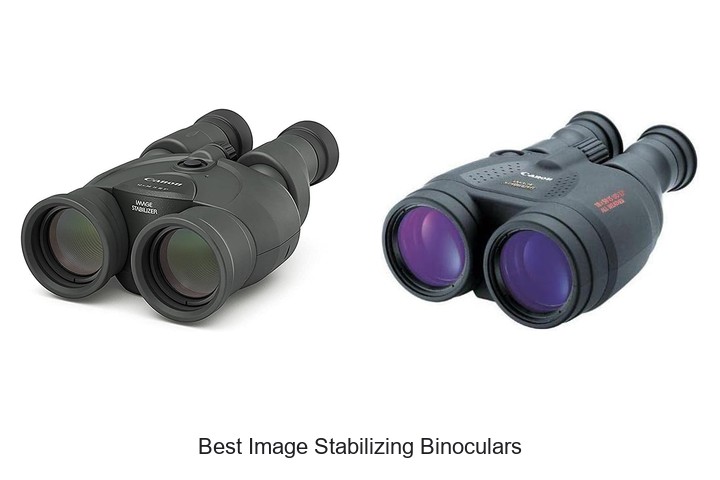
Our Top Picks 1  | Canon 12×36 IS | Check Price |
Our Top Picks 2  | Canon 18×50 IS | Check Price |
Our Top Picks 3 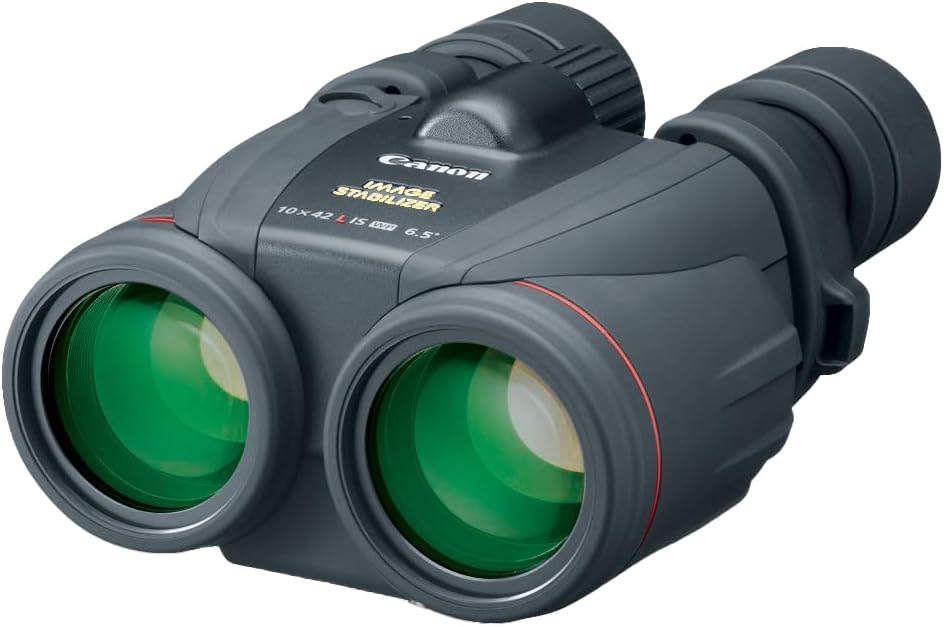 | Canon 10×42 L IS WP | Check Price |
Our Selected Top 12 Image Stabilizing Binoculars You Can Trust
This list features carefully chosen image stabilizing binoculars designed to provide steady and clear viewing experiences. Each review covers performance details, ideal user scenarios, and highlights strengths alongside any limitations, helping readers make informed decisions based on their specific needs.
1. Canon 12×36 Image Stabilization Binoculars
Feel steady and stable even when hand-holding high magnification. Great for birdwatching and hunting, these compact binoculars shine with excellent image stabilization that helps keep the scene sharp without jitters.
Their 12x power punches up distant details without feeling shaky.
Setting up is straightforward with center focus and a tripod mount for more stationary use. The 36mm lenses let in plenty of light, keeping images bright in various conditions.
Long eye relief adds comfort, especially for glasses wearers, while multi-coated optics reduce glare. Battery life is efficient, so you won’t be swapping cells too often during outings.
Optical performance impresses with sharp, distortion-free views thanks to Porro II prisms and a doublet field-flattener. The build feels solid and water resistant enough for outdoor use. Most users praise the stabilization effect, but some find the weight noticeable on long hikes.
The focus mechanism is smooth, but a few mention the size can be bulky compared to ultra-compact models.
Image stabilization is notably effective, producing clear, steady views that reduce hand shake at high magnification. The most common downside is the binoculars’ weight, which can feel heavy on longer walks or when carrying gear for hours.
Ideal for outdoors enthusiasts who need powerful, stable views in birdwatching or hunting settings. Those seeking ultra-light or pocket-sized binoculars might look for smaller options without image stabilization.
Pros
- Stable images even at 12x magnification
- Long eye relief suits glasses wearers
- Water resistant for outdoor use
- Efficient battery consumption
Cons
- Noticeable weight for extended carrying
- Size bulkier than compact binoculars
| Specification | Details |
|---|---|
| Magnification Maximum | 12 |
| Objective Lens Diameter | 36 millimeters |
| Eye Relief | 14 millimeters |
| Prism Type | Porro Prism |
| Field of View | 55.3 degrees |
| Coating | Multi-Coated |
2. Canon 18×50 Image Stabilization Binoculars
Great for bird watchers and outdoor enthusiasts, these binoculars offer 18x magnification and built-in image stabilization that truly reduces hand shake. Their biggest strength lies in the clear, bright images enabled by multi-coated lenses combined with a wide field of view, making distant scenes easier to enjoy without fatigue.
Routine use involves loading two AA batteries to power the optical image stabilization, which noticeably steadies the view. Setup is straightforward with manual focus and individual diopter adjustments that let you fine-tune sharpness.
Thanks to shock and water resistance, these binoculars handle rough weather well. The included monopod mount adds comfort for long observation sessions.
Performance in image stabilization stands out, producing sharp visuals even at 18 times magnification, which is impressive at this size. The build feels solid and practical, designed for all-weather use.
Many appreciate the clarity and color fidelity, though some mention the eye relief of 15 millimeters can be a bit tight, especially for eyeglass wearers.
Clear image quality combined with strong stabilization defines its performance, but the relatively short 15 millimeter eye relief may cause discomfort during extended use, especially for people wearing glasses.
Bird watchers and outdoor users who prioritize steady, bright views in diverse conditions will appreciate this model. People needing longer eye relief or faster focusing may want to consider different options.
Pros
- Effective image stabilization with 2 AA batteries
- Wide, bright field of view
- Shock and water-resistant construction
- Multi-coated lenses for clear, accurate colors
Cons
- Limited eye relief can be uncomfortable with glasses
- Manual focus requires careful adjustment
| Specification | Details |
|---|---|
| Magnification Maximum | 18 x |
| Objective Lens Diameter | 50 millimeters |
| Water Resistance Level | Water Resistant |
| Eye Relief | 15 millimeters |
| Field of View | 7.5 degrees |
| Focus Type | Manual Focus |
3. Canon 10×42 L IS WP Binoculars
Crafted with waterproof design and ultralow-dispersion lead-free glass, these binoculars fit perfectly for bird watchers needing steady, clear views. Their standout image stabilization technology ensures you get sharp images without the usual hand-shake blur, making them ideal for scenes that require a steady gaze at 10x magnification.
Setting up involves popping in the two AA batteries and adjusting the large center focusing knob. The neoprene strap and padded case add comfort when carrying around, while the eyepiece rainguard and objective caps protect against weather and dust during use.
Fog proofing means you’re not stuck with a foggy sight when conditions change quickly, and long eye relief keeps you comfortable during long viewing sessions.
Performance nails steady views with crisp clarity thanks to fully super spectra coatings, helping reduce glare and increase light transmission. The built-in image stabilization smooths out the natural jitters that come from holding binoculars by hand. The strongest praise highlights just how well the stabilizer works in real-world use.
Some mention the overall weight and bulk as a downside since it’s not the lightest option to carry all day.
The image stabilization is praised for smoothing out hand movements, making it easy to get steady views even without a tripod. Common complaints focus on the binoculars’ weight, which can feel noticeable after extended use.
Bird watchers and nature observers who need sharp, stable images at 10x magnification will like this. Those wanting a lightweight option for very long, handheld sessions might look for something lighter without the stabilization feature.
Pros
- Clear and steady image stabilization
- Fog proof and waterproof design
- Comfortable long eye relief
- Large center focusing knob
Cons
- Heavier than typical binoculars for all-day wear
- Requires AA batteries to operate
| Specification | Details |
|---|---|
| Magnification Maximum | 10x |
| Objective Lens Diameter | 42 millimeters |
| Eye Relief | 16 millimeters |
| Water Resistance Level | Waterproof |
| Focus Type | Center Focus |
| Prism Type | Porro Prism |
4. Nikon 12×25 Stabilized Binoculars
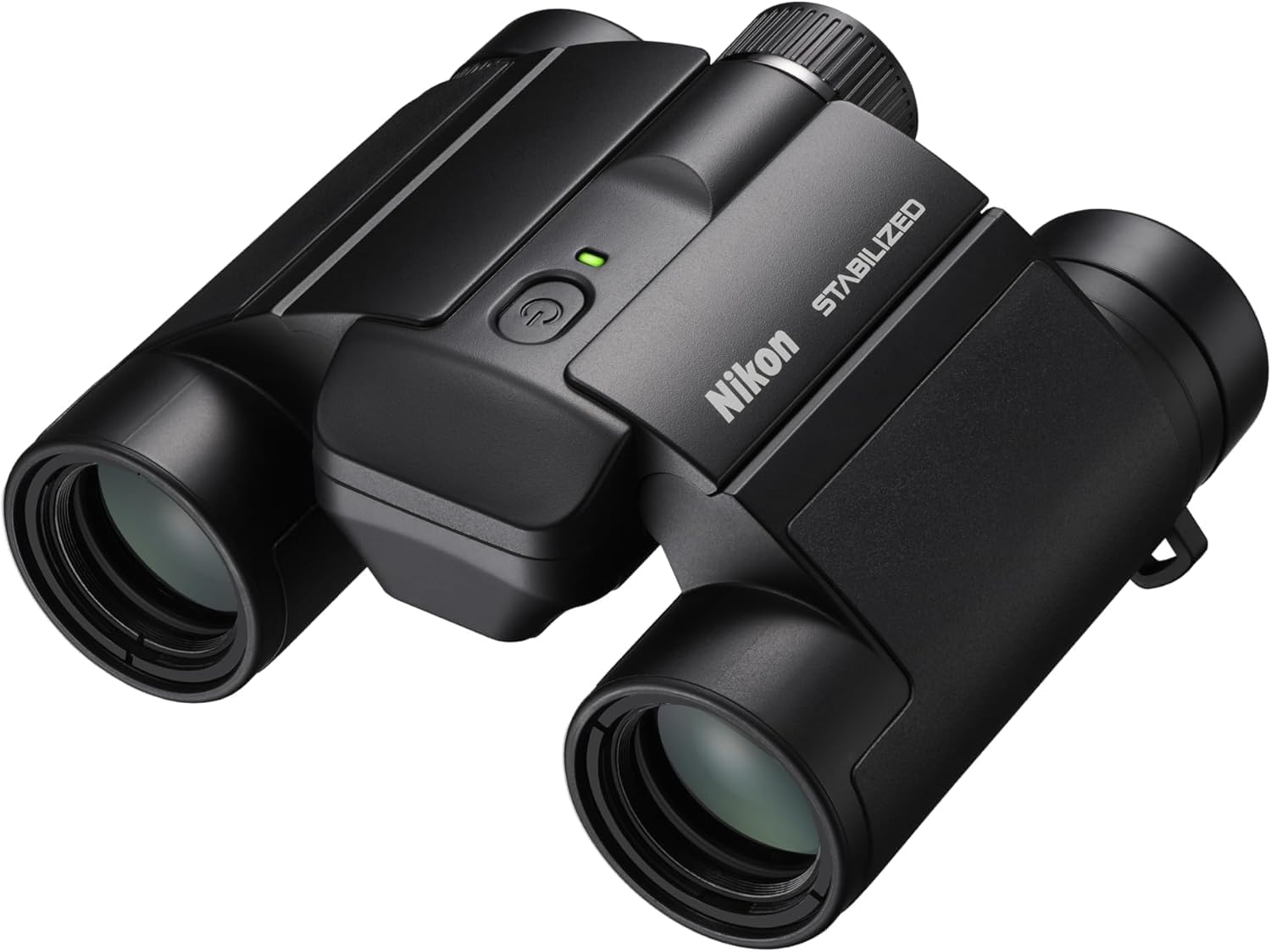
Image stabilization stands out as the feature that makes these binoculars fit well for anyone wanting steady, clear views during active use. Ideal for birdwatching, sports, or concerts, they handle movement smoothly so your focus stays locked on the subject without annoying shake.
Setting them up is straightforward, and the center focus lets you quickly adjust clarity when switching targets. The 12x magnification and 25mm objective lenses provide bright, detailed images, while waterproofing handles outdoor conditions. Stability technology works continually to cancel hand movements, which means prolonged use feels less tiring.
You can mount them on a tripod for extended viewing sessions.
Optical clarity is impressive thanks to multicoated lenses and silver alloy prism coatings, delivering vivid color and sharp contrast even in fading light. The compact roof prism design feels solid and durable, though some notice the limited eye relief might be uncomfortable for those wearing glasses.
Most users appreciate the reliable image stabilization; the main drawback is the relatively short 2.1mm eye relief.
Steady views thanks to the image stabilization feature receive high marks for reducing fatigue during handheld use. At the same time, the short 2.1 millimeter eye relief is often mentioned as a challenge, especially for those who wear glasses or seek comfort over longer periods.
Anyone focused on active outdoor activities or events where movement is constant will find these binoculars very effective. People needing extended eye comfort or better low-light performance might want to explore alternatives with longer eye relief and larger exit pupils.
Pros
- Effective electronic image stabilization
- Bright, true-to-life colors from lenses
- Waterproof for varied outdoor use
- Compact roof prism design
Cons
- Short eye relief may cause discomfort
- Small exit pupil limits low-light usability
| Specification | Details |
|---|---|
| Magnification Maximum | 12 x |
| Objective Lens Diameter | 25 millimeters |
| Image Stabilization | Electronic |
| Water Resistance Level | Waterproof |
| Eye Relief | 2.1 millimeters |
| Field of View | 236 feet |
5. SIG SAUER ZULU6 HDX PRO 18×50 Binoculars
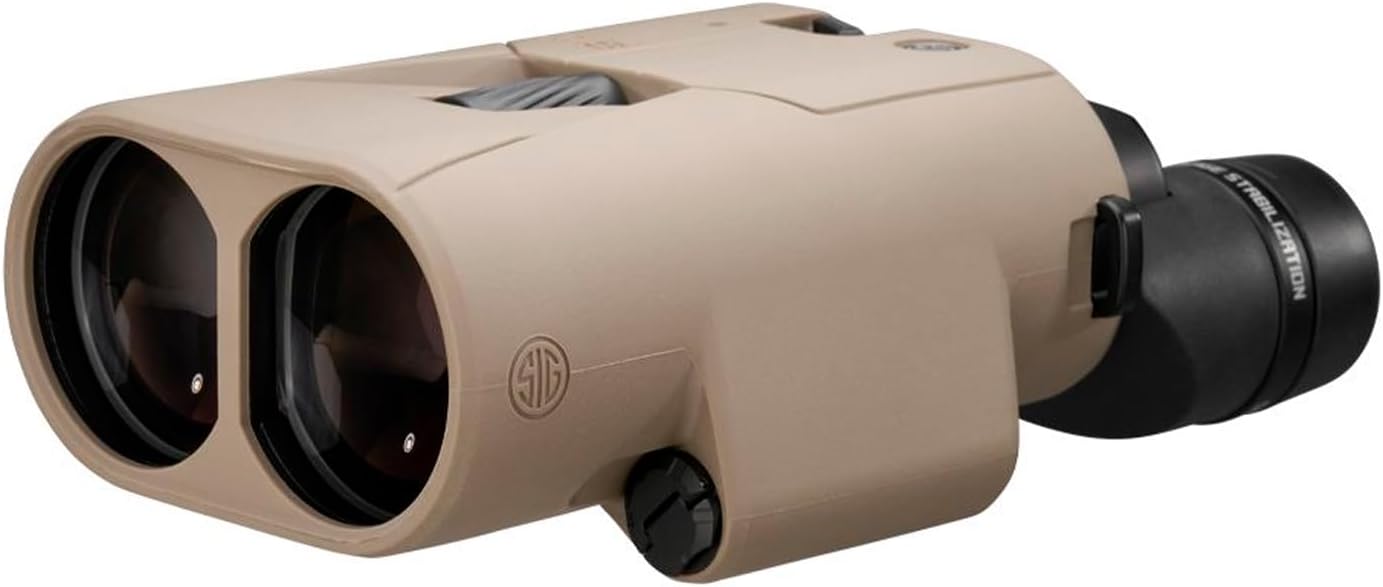
For anyone looking for powerful image-stabilizing binoculars with high clarity, these 18×50 optics from SIG SAUER stand out because of their sharp 18x magnification combined with effective stabilization. Ideal for hunters, sports fans, or anyone wanting detailed views from a distance without the usual shaking.
Setting up involves mounting on a tripod due to the considerable magnification and weight, which helps keep the image steady. The fixed focus means no fiddling with adjustments while watching fast-moving subjects. The multi-coated 50mm lenses work well in low light, making them practical during dawn or dusk outings.
A neck strap and carrying case add to the convenience for transport and quick deployment.
These binoculars deliver crisp, clear images thanks to their reengineered lens coatings, and the waterproof, fog-proof design keeps optics clear in wet conditions. The 15.3mm eye relief is comfortable for long viewing, but the heavier body relative to smaller bins requires support. Most praise centers on the image stabilization and brightness, while some note the weight and tripod requirement can be a drawback for casual use.
The image stabilization and optical clarity receive solid praise, highlighting sharp views even at full 18x magnification. The most frequent downside mentioned involves the weight and the necessity of using a tripod, which makes it less portable for quick or casual spotting sessions.
Those who need precise, steady vision for long-distance viewing and don’t mind a bit of bulk will find this a reliable choice. Anyone wanting lightweight, handheld binoculars for casual use might want to explore smaller, less powerful options.
Pros
- Strong 18x magnification with clear image stabilization
- Multi-coated lenses improve low light visibility
- Waterproof and fog proof for all weather use
- Comes with tripod mount for steady viewing
Cons
- Fixed focus limits fine-tuning for some users
- Heavier and requires tripod for steady use
| Specification | Details |
|---|---|
| Magnification Maximum | 18 x |
| Objective Lens Diameter | 50 millimeters |
| Field of View | 6 degrees |
| Focus Type | Fixed Focus |
| Water Resistance Level | Waterproof |
| Eye Relief | 15.3 millimeters |
6. SIG SAUER Zulu6 HDX OIS 16×42 Binoculars

Trying to keep a steady view in rough terrain or on the move makes hand-held binoculars frustrating to use. SIG SAUER Zulu6 HDX OIS 16×42 brings a built-in image stabilization system that suits hunters and sports watchers who need clear views without lugging a tripod. Its standout feature is the optical image stabilization that cuts down on shakiness significantly.
Setting it up is straightforward since it’s lightweight and portable, which matters when you’re out in the field. The automatic focus and manual adjustment make it simple to lock in on targets. Two OIS modes adapt depending on whether you’re scanning a broad area or following a fixed point, adding real convenience during long observation sessions.
The 16x magnification combined with a 42mm objective lens creates sharp, stable images even in low light thanks to Night Vision tech. The waterproof body handles weather well, keeping the optics safe.
Reviews highlight how well the stabilization works, though some note that the weight is on the higher side compared to simpler binoculars.
The optical image stabilization is praised for delivering steady views without a tripod, a major advantage when tracking moving targets or scanning terrains. Some users find the weight heavier than expected for handheld use, which can affect comfort during extended wear. Manual focus adds precision but can take extra time to adjust.
Those wanting high magnification combined with stable viewing and weather resistance will appreciate these binoculars. Casual users or those seeking the lightest possible option might prefer a simpler, lighter pair for quick spotting rather than detailed target observation.
Pros
- Strong image stabilization with two OIS modes
- Lightweight and portable design
- Waterproof for use in most conditions
- Night vision technology for low light
Cons
- Heavier than some traditional binoculars
- Manual focus might slow quick adjustments
| Specification | Details |
|---|---|
| Objective Lens Diameter | 42 millimeters |
| Magnification Maximum | 16x |
| Eye Relief | 16 millimeters |
| Focus Type | Manual |
| Water Resistance Level | Waterproof |
| Field of View | 164.06 degrees |
7. Kite Optics APC Stabilized 16×42 Binoculars

Offering 16x magnification combined with military-grade image stabilization, these binoculars suit anyone needing steady views in challenging conditions like windy days or moving platforms. Their key strength lies in maintaining crystal clear images without vibrations, ideal for outdoor enthusiasts or professionals in dynamic environments.
Setup involves simply mounting on a tripod or holding steady for handheld use, with autofocus handling clarity automatically. The 42mm lens gathers plenty of light, while weather resistance means rain or fog won’t interrupt your viewing. Eye relief of 14 millimeters allows comfortable long sessions and the focus is quick, letting you spot details immediately.
Performance stays sharp even with the strong 16x zoom, supported by stabilization that corrects up to 3°. The build feels solid and protected against water with IPX7 rating, making it suitable for rugged use. The clearest praise concerns vibration-free viewing outdoors, while some find the exit pupil diameter of 2.62 limits brightness in very low light.
Steady and vibration-free images even in strong wind or on moving boats stand out as the top benefit. Some find the brightness drops in low-light areas due to the small exit pupil diameter, making night or dawn viewing less ideal.
Ideal for outdoor professionals and recreational users needing stabilized views in rough environments. Those looking for wider fields of view or better low-light performance might prefer other options.
Pros
- Military-grade image stabilization up to 3 degrees
- Waterproof and fog-proof for tough conditions
- Autofocus provides quick and accurate clarity
- Comfortable 14mm eye relief for extended use
Cons
- Exit pupil diameter of 2.62 limits low-light brightness
- Relatively narrow field of view at 56 degrees
| Specification | Details |
|---|---|
| Magnification Maximum | 16 |
| Objective Lens Diameter | 42 millimeters |
| Water Resistance Level | Waterproof (IPX7) |
| Focus Type | Autofocus |
| Eye Relief | 14 millimeters |
| Diopter Adjustment Range | Typical for high-quality binoculars |
8. Canon 15×50 IS All-Weather Binoculars

Bird watchers, marine observers, and astronomy fans looking for powerful views in tough outdoor conditions will appreciate these binoculars. Their strongest feature is the image stabilization, which keeps distant scenes steady and clear even at 15x magnification.
Setting up the binoculars involves installing AA batteries and wearing the included harness strap for comfort during long sessions. The center focus and diopter adjustment allow easy manual tweaking to get a crisp image.
Water resistance and multi-coated lenses ensure reliable daily use outdoors, and the wide 67-degree apparent viewing angle helps cover a broad area with ease.
Performance is strong with a bright and sharp image, thanks to the 50mm objective lenses and anti-reflective coatings. The build feels solid, suitable for rough conditions, and the binoculars work well on a tripod for steady viewing. Most praise emphasizes the image stabilization function, while some find the weight a bit on the heavier side for handheld use.
The image stabilization provides steady views at high magnification, making distant targets clear in various conditions. Users commonly note the binoculars are a bit heavy for extended handheld use, which can lead to fatigue without support.
Anyone needing stable, powerful optics for birding or marine viewing will be pleased, especially when paired with the tripod mount. Those prioritizing a lightweight or more compact option might want to consider alternatives.
Pros
- Strong 15x magnification with image stabilization
- Wide 67-degree field of view
- Water-resistant for outdoor use
- Includes harness strap and accessories
Cons
- Heavier weight can tire the hands over time
- Manual focus requires steady hands at high magnification
| Specification | Details |
|---|---|
| Magnification Maximum | 15 x |
| Objective Lens Diameter | 50 mm |
| Field of View | 236 feet |
| Apparent Angle of View | 67 degrees |
| Water Resistance Level | Water Resistant |
| Focus Type | Center Focus |
9. Canon 15×50 IS Binoculars

Image stabilizing technology in these binoculars sets them apart, especially for anyone needing clear, steady views at high magnification. Ideal for bird watching or other activities requiring sharp detail from a distance, the key strength lies in reducing handshake with an optical image stabilizer that activates on demand.
Setup involves just a quick adjustment of the large center focusing knob and folding down the rubber eyecups for comfort, especially with 15mm long-eye relief. Carrying them feels secure thanks to weatherproof slip-resistant armor. The 15x zoom allows detailed viewing while the 50mm lenses keep the image bright and wide.
The tripod mount adds stability options for prolonged use.
Performance meets expectations by offering a bright, clear image with good contrast and color thanks to fully super spectra coatings and ultralow-dispersion glass. The build feels solid and protected against light water exposure.
The image stabilizer does an effective job cutting down vibrations, though some mention it adds a bit of extra weight. Crisp optics remain the biggest plus for detailed spotting, with the only frequent downside being that the binoculars can feel bulky for handheld use.
Sharp, bright optics combined with the image stabilizer create a clear viewing experience praised for reducing hand shake. Some find the overall weight and bulk make prolonged handheld use tiring, limiting portability.
Anyone focusing on stationary observation or using a tripod will appreciate these binoculars most. Those needing lighter, more compact options for hiking or quick spotting might prefer something less heavy.
Pros
- Effective optical image stabilizer for steady viewing
- Bright, clear images with vivid colors
- Comfortable long-eye relief eyecups
- Weatherproof, slip-resistant design
Cons
- Can feel bulky for handheld use
- Stabilizer adds some extra weight
| Specification | Details |
|---|---|
| Magnification Maximum | 15 x |
| Objective Lens Diameter | 50 millimeters |
| Eye Relief | 15 millimeters |
| Water Resistance Level | Water Resistant |
| Focus Type | Center Focus |
| Field of View | 236.2 feet |
10. Canon 10×20 IS Binoculars

Canon 10×20 IS Binoculars offer powerful image stabilization in a compact, lightweight design. Ideal for bird watching or outdoor activities where holding steady matters most, their standout feature is the high efficiency shift-system image stabilizer that brings stable viewing even at 10x magnification.
Setting up involves manual focusing and diopter adjustment, which gives control over clarity but requires tuning. The binoculars feel light and easy to carry on long walks. Powered IS mode keeps vibrations in check, helping maintain a steady image without extra effort.
The 20mm objective lenses and super spectra coating aid in clear, sharp views throughout your day out.
Performance impresses with clear, steady images up to 10x zoom thanks to the image stabilization. The Porro prism design holds up well in build quality, though they are not water resistant, limiting all-weather use. Users appreciate smooth focus control but some wish for better water protection.
Sturdy but sensitive to moisture, they demand gentle handling especially in damp environments.
The image stabilization delivers noticeably steady views at high magnification, which is frequently mentioned as its best feature. On the downside, the lack of water resistance appears as a common concern when used outdoors in unpredictable weather.
Those who value portability and sharp, stabilized images in dry conditions will find these binoculars a good match. Anyone needing rugged, all-weather gear should consider alternatives with water resistance.
Pros
- Lightweight and compact for easy carrying
- Effective image stabilization reduces shake
- High 10x magnification clarity
- Super spectra coating improves image quality
Cons
- Not water resistant, sensitive to moisture
- Requires manual focus adjustments
| Specification | Details |
|---|---|
| Magnification Maximum | 20 |
| Objective Lens Diameter | 20 |
| Focus Type | Manual |
| Image Stabilization | High efficiency shift-system |
| Water Resistance Level | Not Water Resistant |
| Field of View | 5.3 degrees |
11. Canon 10×32 IS Binoculars

Image stabilization makes a major difference in keeping views steady, especially when using a 10x zoom on the Canon 10×32 IS binoculars. Perfect for bird watchers or hikers who want clear and stable images without needing a tripod. The biggest strength lies in its lens-shift image stabilization, which really helps reduce shaking.
Getting started involves just a couple of buttons to switch between normal and powered IS modes, which is pretty straightforward. The large center focusing wheel makes sharpening images quick and precise. The comfortable grip and fold-down rubber eyecups mean long periods of use don’t cause discomfort, even close to the minimum 6.6 ft.
focusing distance where detail matters. Easy to mount on a tripod when needed.
Performance-wise, the lens-shift image stabilization does a solid job of delivering steady views in most outdoor situations, especially in dynamic activities like hiking. The optical design includes a field-flattener lens system for clearer edges. Multi-coated lenses help with brightness and clarity.
Build quality feels durable and water resistant, but some might find the binoculars a bit bulkier than simpler models. The most common grip-related concern is a preference for a lighter weight for longer outings.
Lens-shift image stabilization is praised for keeping views steady during movement, a feature that stands out for users needing clear images on the go. However, the binoculars’ weight and grip comfort receive criticism, especially during longer use periods.
Anyone wanting steady, clear views at 10x magnification without constant tripod use will appreciate these binoculars. Those prioritizing lighter weight for all-day carry might want to explore other, less bulky options.
Pros
- Effective lens-shift image stabilization reduces hand shake
- Simple 2-button interface for mode switching
- Comfortable grip with fold-down rubber eyecups
- Multi-coated lenses improve brightness and clarity
Cons
- Heavier and bulkier than some other models
- Grip could be uncomfortable during extended use
| Specification | Details |
|---|---|
| Magnification Maximum | 10 |
| Objective Lens Diameter | 32 |
| Minimum Focusing Distance | 6.6 ft. (2m) |
| Features | Lens-Shift Image Stabilization; Field-Flattener Lens System |
| Focus Type | Center Focus |
| Water Resistance Level | Water Resistant |
12. Fujinon Techno Stabi TS1440 14×40 Binoculars

High magnification and reliable image stabilization make these binoculars a solid pick for outdoor enthusiasts. Ideal for hiking, they excel in steadying views even at 14x zoom, letting you spot details without the usual shake that comes with powerful optics.
Setup involves inserting 4 AA alkaline batteries, which power the 5 degrees of image stabilization, so your hands don’t need to be perfectly steady. The rubber armored body offers a firm grip, making them comfortable to hold during longer hikes. Center focus and diopter adjustment allow quick manual tuning to match your eyesight instantly.
Performance benefits from multi-layer coated lenses and Porro prisms, which deliver clear, bright images with fogproof and waterproof construction supporting use in various weather. The lightweight fiberglass-reinforced plastic keeps weight manageable, though some mention the binoculars feel bulky over extended periods.
Most appreciate the steady image; some find the 13mm eye relief slightly tight for glasses wearers.
Many praise the binoculars for their steady, clear image thanks to the stabilization and coating, making outdoor observation easy even in challenging conditions. The frequent remark concerns the bulkiness, which can tire the user after long hikes or extended viewing sessions.
Those planning to use binoculars for hiking or outdoor spotting will find the stabilized view and rugged build beneficial. Users needing very long eye relief or a lighter package might want to explore other options better suited for glasses or shorter carry times.
Pros
- Effective 5-degree image stabilization
- Waterproof and fogproof for all weather
- Firm rubber armored grip
- Multi-layer phase coated optics
Cons
- Bulky feel after extended use
- Eye relief may be short for eyeglass users
| Specification | Details |
|---|---|
| Magnification Maximum | 14x |
| Objective Lens Diameter | 40 millimeters |
| Focus Type | Center Focus |
| Water Resistance Level | Waterproof |
| Battery Type | 4 × AA type alkaline batteries |
| Field of View | 5 degrees |
Best Image Stabilizing Binoculars Comparison Table
| Product | Magnification | Objective Lens Diameter | Eye Relief | Specific Uses |
|---|---|---|---|---|
| Canon 12×36 IS | 12x | 36 mm | 14 mm | Hunting |
| Canon 18×50 IS | 18x | 50 mm | 15 mm | Bird Watching |
| Canon 10×42 L IS WP | 10x | 42 mm | 16 mm | Bird Watching |
| Nikon 12×25 Stabilized | 12x | 25 mm | 2.1 mm | Outdoor Activities |
| SIG SAUER ZULU6 HDX 18×50 | 18x | 50 mm | 15.3 mm | Hunting and Sports |
| SIG SAUER Zulu6 HDX OIS | 1x | 42 mm | 16 mm | Hunting and Sports |
| Kite Optics APC 16×42 | 16x | 42 mm | 14 mm | – |
| Canon 15×50 IS All-Weather | 15x | 50 mm | – | Bird Watching, Marine |
| Canon 15×50 IS | 15x | 50 mm | – | Bird Watching |
| Canon 10×20 IS | 20x | 20 mm | – | Bird Watching |
| Canon 10×32 IS | 10x | 32 mm | – | Bird Watching, Camping |
| Fujinon Techno Stabi 14×40 | 14x | 40 mm | 13 mm | Hiking & Outdoors |
- Magnification12x
- Objective Lens Diameter36 mm
- Eye Relief14 mm
- Specific UsesHunting
- Magnification18x
- Objective Lens Diameter50 mm
- Eye Relief15 mm
- Specific UsesBird Watching
- Magnification10x
- Objective Lens Diameter42 mm
- Eye Relief16 mm
- Specific UsesBird Watching
- Magnification12x
- Objective Lens Diameter25 mm
- Eye Relief2.1 mm
- Specific UsesOutdoor Activities
- Magnification18x
- Objective Lens Diameter50 mm
- Eye Relief15.3 mm
- Specific UsesHunting and Sports
- Magnification1x
- Objective Lens Diameter42 mm
- Eye Relief16 mm
- Specific UsesHunting and Sports
- Magnification16x
- Objective Lens Diameter42 mm
- Eye Relief14 mm
- Specific Uses–
- Magnification15x
- Objective Lens Diameter50 mm
- Eye Relief–
- Specific UsesBird Watching, Marine
- Magnification15x
- Objective Lens Diameter50 mm
- Eye Relief–
- Specific UsesBird Watching
- Magnification20x
- Objective Lens Diameter20 mm
- Eye Relief–
- Specific UsesBird Watching
- Magnification10x
- Objective Lens Diameter32 mm
- Eye Relief–
- Specific UsesBird Watching, Camping
- Magnification14x
- Objective Lens Diameter40 mm
- Eye Relief13 mm
- Specific UsesHiking & Outdoors
How to Choose the Right Image Stabilizing Binoculars
Focus on factors like magnification, lens quality, and battery life, as they directly affect clarity and convenience. Choosing the right balance ensures clear, steady images without strain, saving money by avoiding unnecessary features and trouble from poor performance during use.
Image Stabilization Performance
Holding binoculars steady during long observation sessions is tough without technology that actively counters hand shake. Earlier models often made it almost impossible to keep a clear view in windy or unstable conditions, causing constant eye strain. Modern devices use either gyroscopic sensors or accelerometers to detect unwanted movement and adjust the optics automatically.
A faster response time means the image remains stable even during quick hand jerks or when tracking moving objects.
Devices with sensor-based stabilization tend to react quickly and smoothly, maintaining a steady image that reduces fatigue. Look for options with stabilization response times below 100 milliseconds for a natural feel.
Gyroscopic systems provide solid performance but can be bulkier and slower to correct sudden spikes in motion. The difference is most noticeable during extended outdoor activities or rough terrain hikes where constant adjustments are needed.
Ergonomics and Handling
Extended use quickly becomes uncomfortable if binoculars are too heavy or awkward to hold. The ideal weight usually stays under 900 grams, allowing hours of observation without arm strain.
Compact dimensions also make a difference for portability, especially if hiking or traveling. Beyond size, having a rubberized, textured grip prevents slipping during wet or sweaty conditions.
Focus and zoom controls placed within easy reach allow quick adjustments without interrupting the view. Rotating focus wheels work well when precise tuning is required. Tripod compatibility adds another layer of flexibility, letting users stabilize binoculars for steady long-distance viewing and saving energy when handholding isn’t practical.
Folding or hard cases that fit the binoculars snugly ease storage and protect the device during transport.
Power and Battery Life
Many models run on standard AA or AAA batteries, which are widely available and convenient to replace in the field. Some newer devices incorporate rechargeable lithium-ion packs, offering longer use between charges but requiring access to power sources for recharging.
The typical battery life ranges from 8 to 12 hours under continuous use, though this varies with stabilization intensity and ambient temperature.
Quick battery swaps are critical during day-long excursions without downtime. Devices with clear battery level indicators allow users to monitor charge levels and avoid unexpected shutdowns.
Some units include USB charging ports for easy recharging with common cables. Consider how often and easily batteries can be replaced or recharged before committing to a particular model.
Durability and Weather Resistance
Binoculars used outdoors face impacts, moisture, and dust, all of which can degrade performance quickly without proper protection. Sturdy metal or high-grade polymer bodies resist dents and drops better than cheaper plastic shells. Effective sealing around lenses and moving parts keeps out water and fog, a crucial feature for use in rain, mist, or dusty trails.
Waterproof ratings like IPX7 or better provide confidence that rain or accidental submersion won’t harm internal electronics. Shock resistance varies, but models with reinforced edges or rubber armor coatings absorb impacts more effectively.
These protective elements extend device lifespan and maintain clear optics under rough handling, avoiding frustrating repairs or replacements during critical outdoor adventures.
Maximizing Performance: Tips for Using Image Stabilizing Binoculars Effectively
Image stabilizing binoculars rely on technology that reduces the shaking effect from hand movements, making it easier to get a steady view. To get the best results, hold the binoculars firmly with both hands and keep your elbows close to your body to minimize additional movement. Using a neck strap or harness helps relieve the weight and keeps the binoculars steady when scanning for long periods.
Adjust the focus slowly and in small increments. Rapid changes can disturb the stabilization mechanism and reduce image clarity. Avoid excessive movement by choosing a comfortable stance; sitting or leaning against a solid surface provides more stability compared to standing unsupported.
Quick tips:
- Use the binoculars with batteries fully charged for consistent stabilization.
- Turn off stabilization when using a tripod to save battery life.
- Practice using the controls before heading out to avoid fumbling in the field.
Proper Maintenance and Care to Extend the Lifespan of Your Image Stabilizing Binoculars
Caring for image stabilizing binoculars involves more than just wiping the lenses. Regular cleaning with a soft microfiber cloth prevents scratches and maintains image quality. Avoid touching the lenses directly with your fingers, which can leave oils and dirt behind.
Storing binoculars in a protective case shields the electronic parts and lenses from dust and moisture. Make sure to remove batteries if the binoculars won’t be used for long periods to prevent corrosion.
Check battery compartments regularly and replace batteries as needed, since low power affects image stabilization performance.
Keep the adjustable parts lubricated only if the manufacturer recommends it, as improper maintenance can damage the stabilization system. After use in humid or rainy conditions, let the binoculars dry completely before putting them away. This prevents mold buildup and protects the internal electronics.
Comparing Image Stabilizing Binoculars with Alternative Optical Devices for Enhanced Viewing
Image stabilizing binoculars offer a significant advantage over traditional binoculars by compensating for hand movements, which reduces blur during handheld use. Compared with spotting scopes, they are usually more compact and quicker to bring into action but typically have smaller objective lenses, affecting light gathering in low-light conditions.
Compared to camera systems with image stabilization, binoculars provide a wider field of view optimized for live observation rather than capturing images or videos. Unlike monoculars, binoculars deliver a three-dimensional perspective that helps with depth perception, which is valuable in bird watching or wildlife observation.
Each device serves a specific purpose, but for handheld viewing in circumstances where movement is unavoidable, image stabilizing binoculars offer clearer and more comfortable viewing than their non-stabilized counterparts or stationary optical tools.
People Also Asked
How Do I Properly Care for Image Stabilizing Binoculars?
Clean the lenses with a microfiber cloth and store the binoculars in a protective case when not in use. Avoid exposure to extreme temperatures as it can affect the internal stabilization mechanism. Regularly check the battery or power source and replace it to keep the image stabilization functioning well.
What Size Image Stabilizing Binoculars Are Ideal for Hiking?
Compact image stabilizing binoculars, typically in the 8x or 10x magnification range, are best for hiking. They provide a good balance between size, weight, and viewing comfort. This keeps them easy to carry over long distances without adding unnecessary bulk.
Are Image Stabilizing Binoculars Safe to Use for Children?
Image stabilizing binoculars can be safe for children but supervision is recommended due to the fragile electronics and battery components inside. Look for models designed with durable housing. Explain the care needed to avoid damage or misuse.
How Long Do Image Stabilizing Binoculars Typically Last with Regular Use?
These binoculars often last several years with normal use if maintained properly. Battery life depends on usage but replacing batteries or recharging on time maintains stability performance. Repairs may be needed over time for moving parts or electronics.
What Are Common Problems with Image Stabilizing Binoculars and Fixes?
Common issues include jittery images if batteries run low or dust in the lens housing causing image quality problems. Clean lenses gently and replace batteries regularly. When the image stabilization stops working, resetting or power cycling the device often fixes the problem.
Conclusion
Choosing the right image stabilizing binoculars comes down to stabilization quality, weight, and battery life. Strong stabilization keeps the view steady during prolonged use. Lighter models reduce arm fatigue, especially on long outings.
Battery life matters when you are away from power sources for hours at a time.
Consider how often you will use the binoculars and where. Heavier, more powerful models suit stationary observation, while compact options fit active use or travel better.
A clear look at the comparison table above can help match features to your specific needs and budget.