Top 12 Best Hunting Boot for Ultimate Comfort & Durability
Hunting trips can turn uncomfortable fast when your boots fail to hold up. The best hunting boot stops water and mud from seeping in, keeps your feet dry, and prevents blisters during long walks. A cheap or ill-fitting boot often leads to cold, wet feet by mid-morning, which ruins focus and cuts the day short.
Good hunting boots use durable leather or waterproof synthetic materials paired with a breathable membrane like Gore-Tex to keep moisture out but allow sweat to escape. Fit is crucial; boots should offer snug support without tight spots, often sized up half from normal street shoes. Deep lug tread on the sole improves traction on slippery and uneven terrain, and quality insoles reduce fatigue.
Need a Quick Check?
| Image | Product | Price |
|---|---|---|
Our Top Picks 1  | MUCK Woody Max Boot | Check Price |
Our Top Picks 2 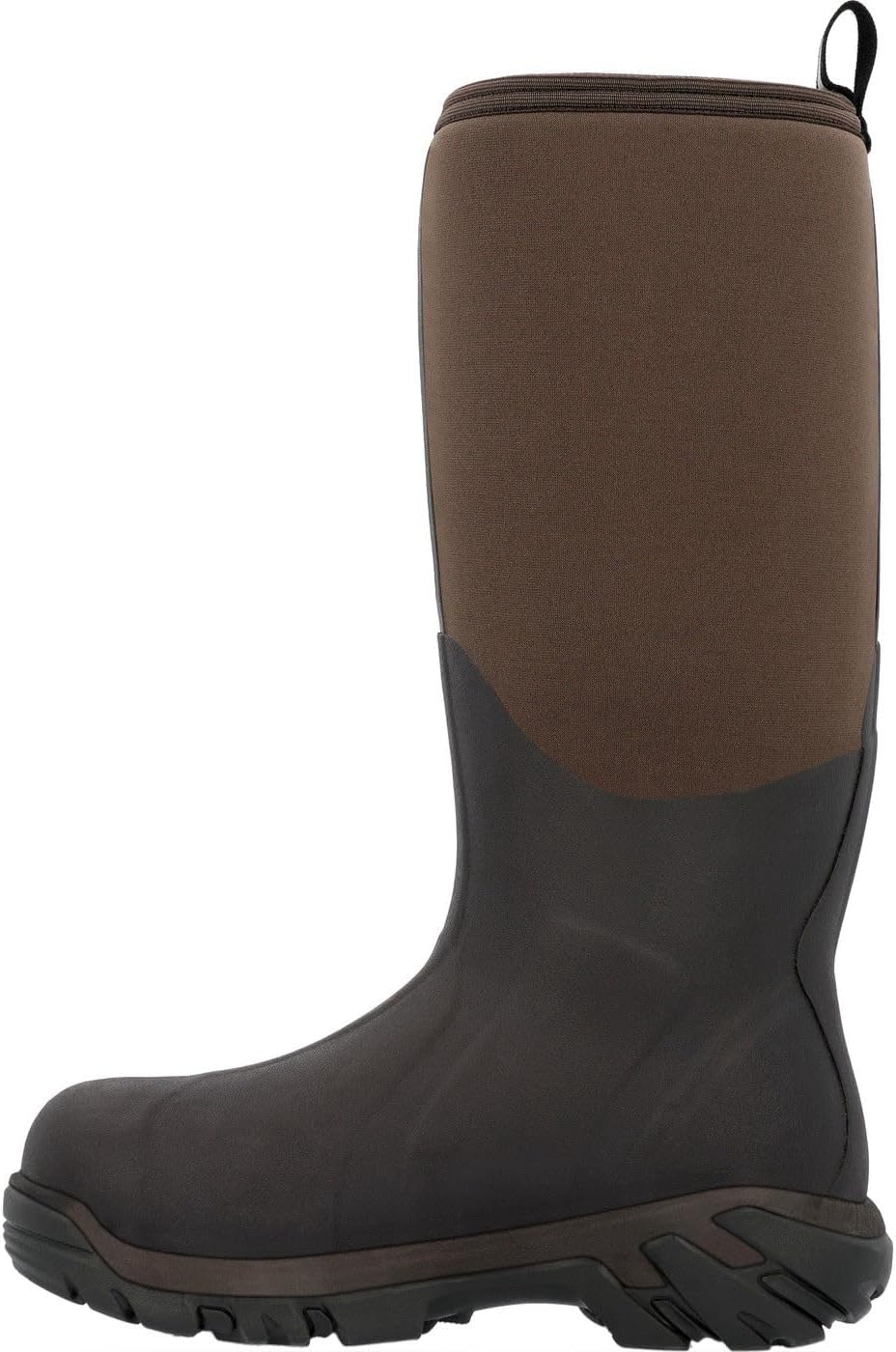 | MUCK Arctic Pro Boot | Check Price |
Our Top Picks 3  | TIDEWE Rubber Hunting | Check Price |
Our Selected Top 12 Hunting Boot Worth Considering
These hunting boots have been carefully chosen for their durability, comfort, and performance in various outdoor conditions. Each review highlights how the boots perform, who they are best suited for, and their key strengths and weaknesses to help you make an informed decision.
1. MUCK Mossy Oak Break up Country Woody Max Boot
Built for fall outings, the MUCK Mossy Oak Break Up Country Woody Max Boot is great for anyone needing dependable, comfortable hunting boots. Its camouflage pattern blends well into natural surroundings, keeping you concealed, while the round toe work boot design offers ample comfort for long hours in the field.
Wearing these boots day to day means you get easy moving around thanks to the no-heel design, which feels balanced and stable on uneven ground. The Mossy Oak color helps with camouflage, and the brown pattern won’t show dirt quickly. Suitable for casual occasions too, they can handle a variety of outdoor situations without feeling clunky or restrictive.
Performance is solid for fall weather conditions with enough toughness to handle brush and rough terrain. People mention they’re durable and comfortable but sometimes feel a bit heavy after a long day. The build holds up well, especially around the toe and sole, though they may not be the lightest option for those covering lots of ground quickly.
Many appreciate how well the boots blend into natural settings without sacrificing comfort. The common complaint is they become somewhat heavy after wearing them for long periods, which can slow movement.
Those looking for reliable fall hunting boots with strong camouflage will be satisfied. Those needing lightweight boots for faster or longer tracking might want to consider other options.
Pros
- Good camouflage with Mossy Oak pattern
- Comfortable round toe shape
- Stable no-heel design
- Suitable for casual wear
Cons
- Can feel heavy after extended wear
- Limited to fall season use
| Specification | Details |
|---|---|
| Color | Mossy Oak |
| Toe Style | Round Toe |
| Boot Form Type | Work Boot |
| Heel Type | No Heel |
| Seasons | Fall |
| Pattern | BROWN |
| Style Name | Woody Max |
| Occasion | Casual |
2. MUCK Arctic Pro Insulated Boot
Hunters tackling cold, wet conditions will find these boots a solid choice. Suited to those needing durable insulation and reliable warmth, the MUCK Arctic Pro Insulated Boot stands out for keeping feet dry and cozy even in harsh environments.
Putting the boots on and adjusting for the day is straightforward thanks to the round toe that offers enough room without feeling bulky. The absence of a heel makes walking in rough terrain comfortable over extended periods. Its brown pattern in tan/bark color hides dirt well, which means less worry about appearances during casual or field use.
Designed like a tough work boot, it focuses heavily on insulation and waterproof protection. The build holds up well under daily hunting rigors, delivering dependable warmth. The most praised feature centers on how well it handles moisture and cold, while some users mention its bulkiness as a drawback when moving quickly.
The strongest praise focuses on the boot’s insulation and waterproofing, keeping feet comfortable under wet, cold conditions. The most frequent complaint highlights its bulk, which can slow down faster movements or hiking.
Those prioritizing warmth and moisture protection in challenging weather will be satisfied with these boots. Anyone seeking lighter, more agile footwear for speedy hunts might want to consider other options.
Pros
- Keeps feet warm and dry in cold, wet weather
- Spacious round toe for comfort
- No heel allows steady footing on rough terrain
- Color and pattern conceal dirt well
Cons
- Feels bulky when moving quickly
- Heavier than some other hunting boots
| Specification | Details |
|---|---|
| Color | Tan/Bark |
| Toe Style | Round Toe |
| Boot Form Type | Work Boot |
| Heel Type | No Heel |
| Seasons | All |
| Pattern | BROWN |
3. TIDEWE Rubber Hunting Boots
Designed specifically for winter hunting, these boots stand out thanks to their heavy-duty 800g insulation and fully waterproof rubber build. Ideal for hunters needing reliable warmth and protection in cold, wet environments, the camouflage pattern also helps keep you concealed in the field.
Putting them on is straightforward thanks to the rain boot form, and the flat heel offers stable footing on various terrains. The round toe shape provides ample space for toes to move comfortably, making day-long treks less tiring. The waterproof material resists mud and water, so cleanup involves just wiping off dirt, perfect for regular outdoor use.
Constructed as sturdy rubber boots, they perform well in keeping feet dry and warm during winter hunts. The strongest praise highlights their effective insulation and waterproofing, ensuring feet stay comfortable in cold, wet conditions. The most common complaint is about the boot’s weight, which some find a bit heavy for extended walking or running.
Many appreciate the boots for their reliable warmth and waterproof quality in cold, wet hunting conditions. The common downside noted is the weight, which can be tiring after hours of walking.
Ideal for anyone hunting in winter or wet environments prioritizing warmth and dryness. Those looking for lighter footwear or use across multiple seasons may want different options.
Pros
- Effective waterproof rubber construction
- Good insulation with 800g thickness
- Camouflage pattern suited for hunting
- Flat heel for solid terrain grip
Cons
- Relatively heavy for long distances
- Limited to winter use only
| Specification | Details |
|---|---|
| Color | 800g Next Camo G2 |
| Toe Style | Round Toe |
| Boot Form Type | Rain Boot |
| Heel Type | Flat |
| Seasons | Winter |
| Pattern | Camouflage |
4. ROCKY Waterproof 800G Insulated Outdoor Boot

Rocky Waterproof 800G Insulated Outdoor Boot is made for hunters who need reliable warmth and waterproof protection in tough outdoor conditions. Its standout feature is the 800 grams of insulation that keeps feet warm during cold weather while the Realtree Xtra camouflage suits woodland environments perfectly.
Putting these boots on feels comfortable due to the round toe and work boot style, which gives plenty of room for toes. The waterproof design means wet conditions don’t soak through, and the western heel offers good stability on rough terrain. Daily use involves minimal clean-up thanks to the durable outer material and the Realtree pattern helps you stay concealed.
These boots perform well on chilly mornings with reliable insulation and solid waterproofing that keeps moisture out even during wet hikes. The build is sturdy, matching a work boot style that’s made to last. Most praise the warmth from the 800G insulation, while the occasional complaint mentions the fit might feel bulky to those with narrow feet.
The warmth from the 800G insulation is consistently praised, making it ideal for cold hunts. Waterproofing works well to keep feet dry, though some find the boot bulky and less suited to those needing a slimmer fit. It excels in rough terrain with reliable protection.
Hunters seeking warmth and waterproof reliability in a camo boot will find this a solid choice. Those with narrower feet or who prefer lightweight boots might want to explore other options for more slender fit and reduced weight.
Pros
- 800G insulation keeps feet warm in cold conditions
- Waterproof design protects against wet weather
- Realistic camo pattern blends into wooded areas
- Round toe offers comfortable toe space
Cons
- May feel bulky for narrow feet
- Work boot style means a heavier overall weight
| Specification | Details |
|---|---|
| Color | Realtree Xtra |
| Toe Style | Round Toe |
| Boot Form Type | Work Boot |
| Heel Type | Western Heel |
| Seasons | All |
| Pattern | REALTREE XTRA |
5. XPETI Thermator Mid-Rise Insulated Hiking Boot

Camouflage hiking boots designed for cold weather offer solid insulation and a tough feel without weighing you down. Great for those who spend long hours outdoors in chilly conditions, they stand out for keeping feet warm while staying low-profile in the wild.
Breaking them in is straightforward thanks to a comfortable mid-rise fit that provides ankle support without feeling tight. The closed toe and block heel give stability across rough terrain, and the camouflage pattern helps blend into natural surroundings.
These boots work well for day-long hikes or hunting trips where insulation matters.
Durability and warmth are the highlights. The boots handle cold conditions without much bulk, letting you move freely.
Some mention the weight can feel a bit heavy after extended wear, but it comes with the insulation package. The build is solid with a low block heel and sturdy materials to protect against rough terrain and keep feet dry and insulated.
Warmth and stability receive the highest praise, while weight is the most common complaint for longer outings. The boots excel in keeping feet insulated with good ankle support but may tire you if worn for many hours continuously.
Those hunting or hiking in cold, dry environments will appreciate these boots. People needing lighter options or boots better suited to wet terrain might want to look elsewhere.
Pros
- Warmth holds up well in cold weather
- Camo pattern blends into outdoor settings
- Low block heel offers stable footing
- Comfortable mid-rise fit supports ankles
Cons
- Can feel heavy after long wear
- Not ideal for wet or muddy conditions
| Specification | Details |
|---|---|
| Color | Camouflage |
| Toe Style | Closed Toe |
| Boot Form Type | Hiking Boot |
| Heel Type | Block Heel, low-heel |
| Pattern | Camouflage |
| Style Name | Hiking Boots |
| Occasion | Hiking |
6. Kenetrek Mountain Extreme 400 Insulated Hiking Boots

Kenetrek Mountain Extreme 400 Insulated Hiking Boots suit hunters tackling cold, rough terrain and need reliable insulation and protection. Their strongest feature is warmth and durability, making long winter hikes comfortable without sacrificing support.
Putting them on feels sturdy from the start, with a round toe and block heel that fits naturally for hiking and hunting. The brown solid pattern is subtle, blending well outdoors. Use them in fall and winter; they handle chilly mornings well and keep feet dry and cushioned over rough ground.
Built ruggedly for lasting use, these boots do a solid job protecting your feet in tough conditions. Reviews say they keep warmth in effectively, but some find them a bit heavy and stiff at first. The construction offers good ankle support and a firm grip but requires a break-in period to soften up.
Strong warmth and durability are the main advantages, making the boots reliable in cold weather. The most common downside is the heaviness and stiffness when first worn, meaning it takes time to get comfortable with these boots on longer treks.
Hunters spending time in cold and rugged environments will appreciate the protection and insulation. Those looking for lighter or more flexible footwear for less extreme conditions might consider other options better suited for agility.
Pros
- Keeps feet warm in cold conditions
- Durable and rugged build
- Good ankle support for uneven terrain
- Neutral brown color blends with outdoors
Cons
- Some find boots heavy for all-day wear
- Stiffness requires break-in time
| Specification | Details |
|---|---|
| Color | Brown |
| Toe Style | Round Toe |
| Boot Form Type | Hiking Boot |
| Heel Type | Block Heel |
| Seasons | Fall, Winter |
| Style Name | Mountain Extreme 400 |
7. Irish Setter Elk Tracker 12 Hunting Boot
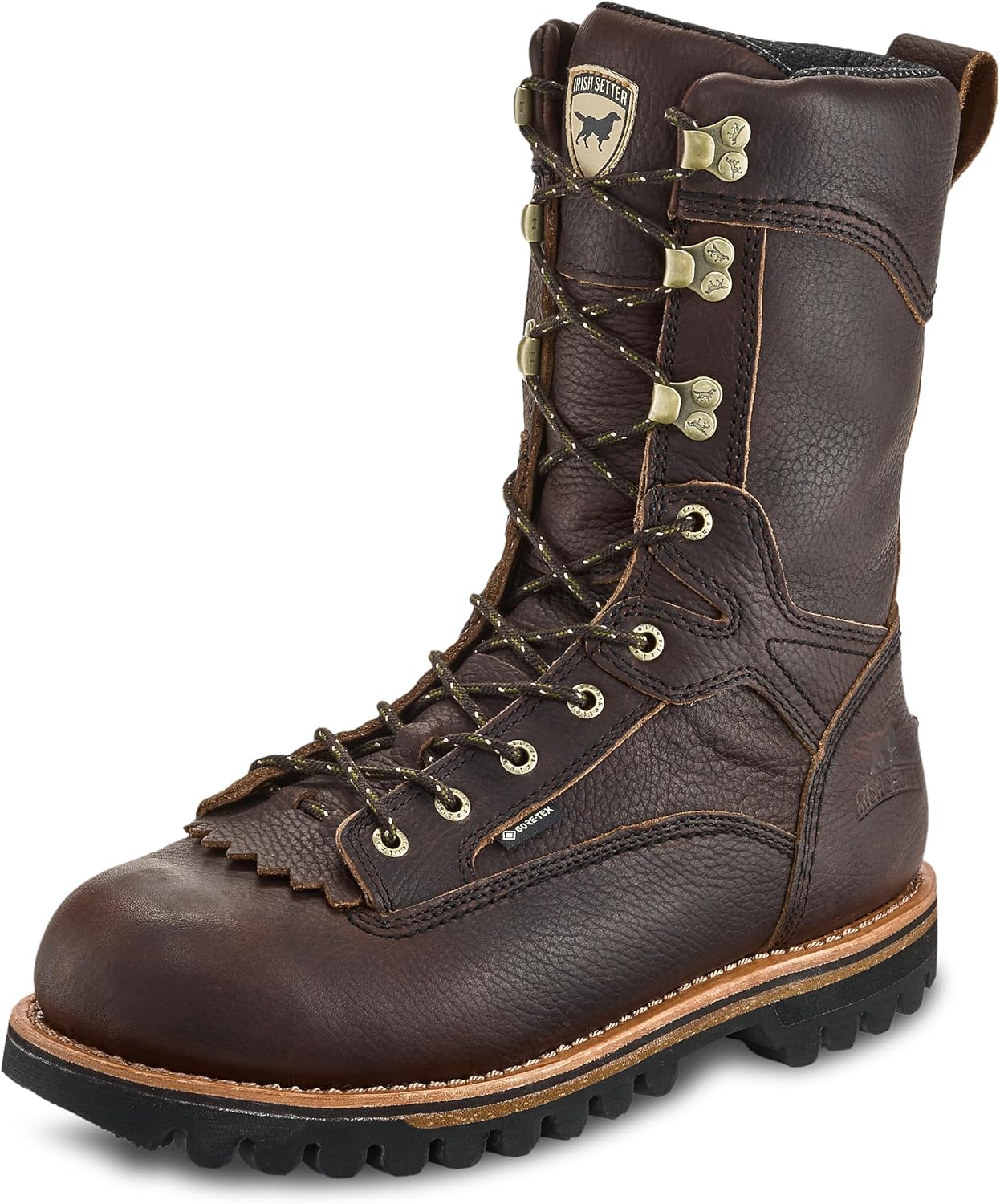
Built for rugged outdoor use, brown Irish Setter Elk Tracker 12 Hunting Boots suit serious hunters who need durability and comfort in fall and winter conditions. Its combat-style, round toe design stands out for tough terrain and dependable support without heels slowing you down.
Putting them on is straightforward with their combat boot form, making fit reliable for those who prefer a snug yet comfortable feel. The round toe provides extra room without compromising protection. These boots hold up well day to day, delivering warmth and resilience on chilly, rough ground during long outdoor excursions.
Irish Setter’s Elk Trackers perform strongly in wet and cold environments. The rugged outdoor styling means solid construction with durable materials meant to last through harsh seasons. Most praise focuses on the tough build and comfort, while the main complaint revolves around challenges in cleaning mud and dirt from the boots after heavy use.
Highly praised for its strong build and comfortable fit, the boot keeps feet protected in rough, cold conditions. Users often find that mud clings to the surface, requiring more effort to clean after trekking through wet environments. The combat design supports long days but picks up grime more than some other styles.
Hunters spending time outdoors in fall and winter will appreciate the warmth and durability here. Those seeking a lightweight, easy-to-clean boot might want to consider alternatives better suited for dry or warm weather outings or for quick maintenance.
Pros
- Durable combat boot construction for tough terrain
- Comfortable round toe offering ample foot space
- Ideal for cold and wet fall and winter conditions
- The no heel design improves agility and stability
Cons
- Difficult to clean after muddy outdoor use
- Heavier feel compared to lightweight hunting boots
| Specification | Details |
|---|---|
| Color | Brown |
| Toe Style | Round Toe |
| Boot Form Type | Combat |
| Heel Type | No Heel |
| Seasons | Fall, Winter |
| Style Name | Rugged Outdoor |
8. Danner Vital 8 Waterproof Hunting Boots

Durability stands out immediately with the Danner Vital 8 Waterproof Hunting Boots. They work well for hunters who need tough boots tackling rough terrain while staying dry. Long-lasting materials and waterproofing are their biggest strengths in keeping feet comfortable during all-day use.
Putting them on is straightforward thanks to the Lock & Load lacing system, which tightens quickly and quietly. The boots feel secure around the foot with reengineered ghillies across the forefoot.
Breathability gets handled by the Danner Dry barrier and mesh-lined tongue, helping manage temperature on hikes or in varied weather conditions.
These boots excel at keeping water out while allowing moisture to escape, making them reliable in wet conditions. Split leather combined with 900 Denier polyester offers rugged abrasion resistance.
Lightweight cushioning from the Plyolite midsole and open cell footbed provide reasonable shock absorption. Common praise centers on durability, while some note the lacing can need occasional adjustment during extended wear.
Danner Vital 8 Waterproof Hunting Boots have a solid reputation for durability and excellent waterproofing. The combination of split leather and 900 Denier polyester handles rough terrain well, while the Danner Dry barrier keeps feet dry in wet conditions. Some find the boot a bit stiff at first and suggest a short break-in period before long walks.
These boots suit hunters who need sturdy, protective footwear for varied environments where moisture and abrasion are concerns. People who prefer very lightweight or ultra-flexible boots for fast-moving hunts may want to consider other options. Those prioritizing quiet, reliable boots for colder, wetter climates will appreciate this choice.
Pros
- Highly durable split leather and polyester upper
- Waterproof with breathable Danner Dry barrier
- Quick and quiet Lock & Load lacing system
- Lightweight cushioning for comfort
Cons
- Lacing may require resetting during long wear
- Flat heel may lack extra traction on uneven ground
| Specification | Details |
|---|---|
| Color | Dark Brown |
| Boot Form Type | Hiking Boot |
| Heel Type | Flat |
| Seasons | All |
| Style Name | Vital |
9. Hunthor 1600G Insulated Waterproof Rubber Hunting Boots

Durable and built for winter, these boots suit hunters needing solid insulation and waterproofing in cold, wet conditions. Their biggest strength lies in keeping feet dry and warm during long hours outside, especially in snowy terrain, thanks to their insulated snow boot design and waterproof construction.
Putting on these boots is straightforward, with their flat heel and round toe making them comfortable for daily use. The camo pattern blends well in the wilderness, and they handle snow and moisture reliably.
They don’t feel overly heavy, which helps on long treks, and maintenance is easy since the rubber exterior wipes clean quickly after muddy hunts.
Performance-wise, the boots do a solid job of weatherproofing and warmth, ideal for winter hunts. They come in the Next Camo G2 color, great for staying hidden.
The flat heel offers good stability, but some mention the fit can be a bit stiff out of the box, requiring some break-in. The build quality is sturdy, with the snow boot form providing excellent protection against elements.
Many appreciate how well the boots keep feet warm and dry during winter hunts, though some find them a bit stiff initially before breaking in. The solid waterproof rubber and insulation make them reliable for snowy and wet conditions.
Hunters regularly trekking in cold, wet, snowy environments will find these boots a great fit. Those looking for immediate comfort without break-in or needing lighter boots for warmer seasons might want to consider alternatives.
Pros
- Waterproof rubber keeps feet completely dry
- Effective insulation for cold winter use
- Next Camo G2 pattern blends into snowy environments
- Flat heel adds stability on uneven snowy ground
Cons
- Break-in period needed for optimal comfort
- May feel stiff in extended wear at first
| Specification | Details |
|---|---|
| Color | Next Camo G2 |
| Toe Style | Round Toe |
| Boot Form Type | Snow Boot |
| Heel Type | Flat |
| Seasons | Winter |
| Style Name | Camo Hunting Boots |
10. Hunthor 1000G Insulated Hunting Boots
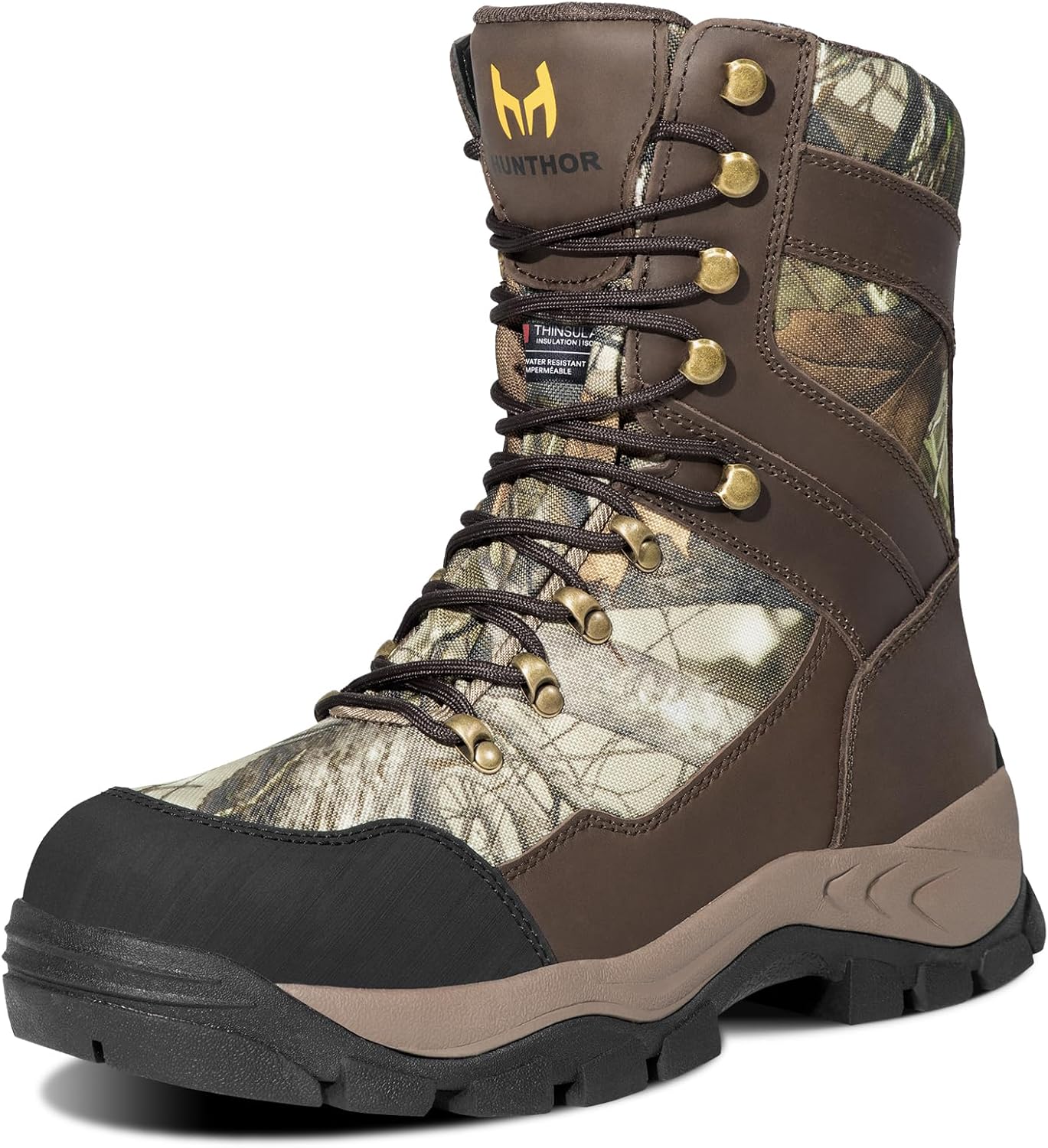
Kicking around cold, wet hunting grounds demands boots that can keep your feet warm and camouflaged. Designed for winter wear and a hiking boot form, these camo-patterned boots fit well for anyone needing reliable, insulated footwear during outdoor work or hunting sessions.
Their biggest strength lies in insulation, helping keep your feet warm when temperatures drop.
Putting these boots on and heading out is straightforward thanks to the round toe and platform heel design, which makes walking across uneven terrain easier. The camouflage pattern blends with natural environments, which is helpful while hunting. They work well on farms, outdoor chores, and hiking treks, especially during winter when cold protection matters most.
The performance of these boots is solid in keeping feet insulated and steady on rough ground. Their build suits cold-weather use, with a platform heel for stability and a round toe for comfortable movement. Praise focuses on their effective insulation, while some note they can feel bulky during extended hikes or in warmer conditions.
Hunthor 1000G Insulated Hunting Boots are well-regarded for keeping feet warm in cold conditions due to thick insulation. Many appreciate the sturdy sole that offers good traction on uneven terrain. Some find the boots a bit bulky and heavier than expected, which can cause fatigue during long treks.
Hunters venturing out in cold weather and rough environments will likely find these boots suitable for their needs. Those prioritizing lightweight footwear or needing boots for wet conditions might prefer a pair designed specifically for water resistance or lighter weight. These boots are better for warmth and durability than for all-day comfort or moisture protection.
Pros
- Effective insulation for cold weather
- Camouflage pattern blends into natural surroundings
- Platform heel adds stability on rough terrain
- Round toe offers comfort during long wear
Cons
- Feels bulky for extended hikes
- Not suited for warm weather use
| Specification | Details |
|---|---|
| Color | Next Camo G2 |
| Toe Style | Round Toe |
| Boot Form Type | Hiking Boot |
| Heel Type | Platform Heel |
| Seasons | Winter |
| Pattern | Camouflage |
11. Hunthor 1600G Insulated Hunting Boots
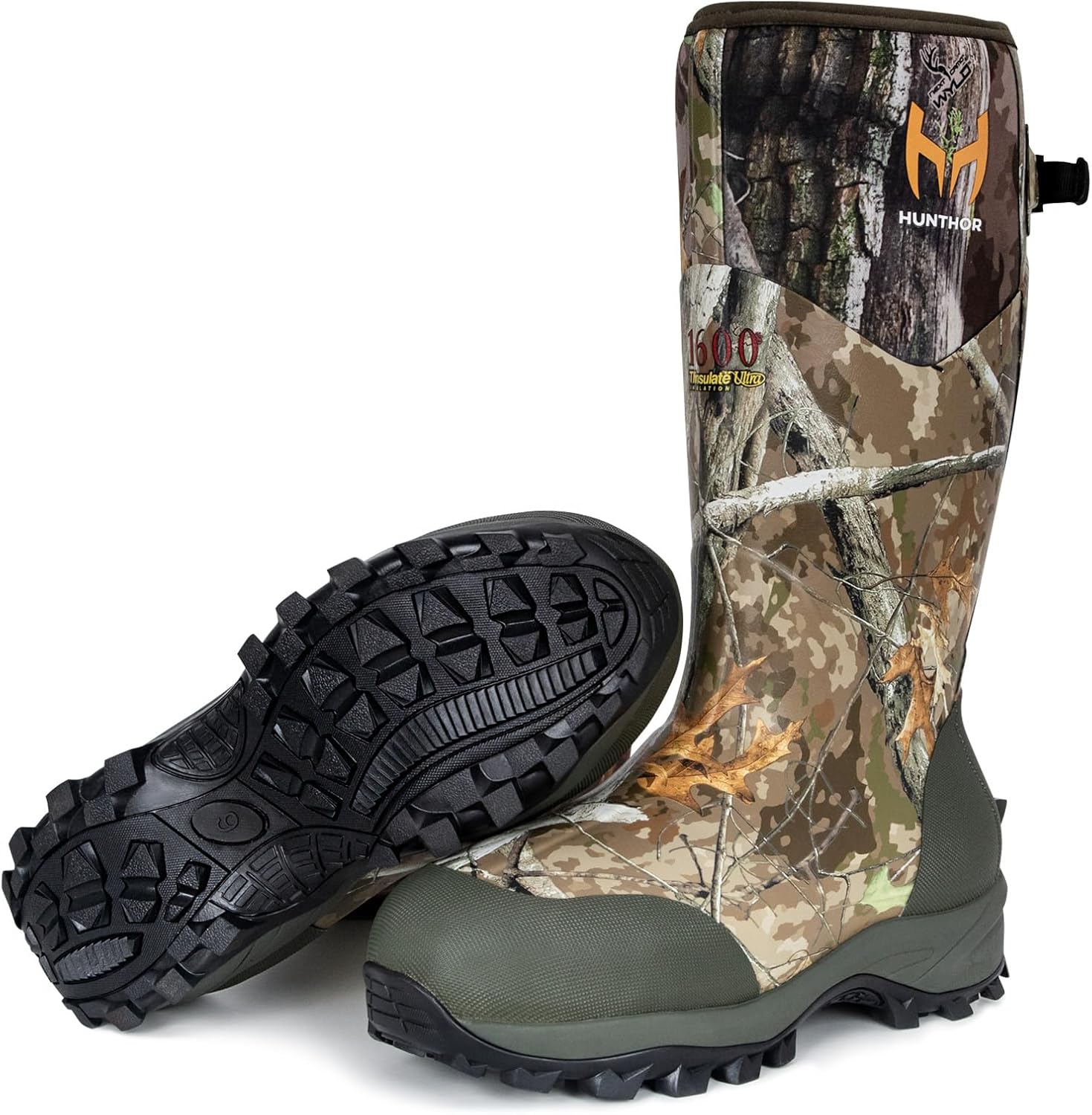
1600 grams of insulation make these boots ideal for all-seasons hunting in cold and wet environments. Designed with a camouflage pattern and round toe, they fit well for those who want a rain boot style that stays practical and comfortable throughout long outings.
Slipping them on is straightforward due to the rain boot design, which also makes cleaning quick after treks through mud or water. The platform heel provides some lift, preventing direct contact with wet ground, and the camo finish helps blend in with natural surroundings during hunts.
Protection from moisture and cold is reliable thanks to solid insulation and a waterproof build expected in rain boots. The rest of the structure feels sturdy enough to handle uneven terrain but reviews note some stiffness early on. The biggest compliment is their warmth and camouflage effectiveness in the field; the most common downside is the slightly bulky feel around the ankle area.
Warmth and camouflage effectiveness receive strong praise, making these boots suitable for cold, wet hunting conditions. Stiffness near the ankle is commonly mentioned as a challenge during initial wear. Comfort improves slightly over time but the bulkiness remains a consideration.
Hunters prioritizing warmth and waterproofing will appreciate these boots, especially in wet environments. Those looking for a lighter, more flexible option for extended foot travel might want to explore other styles.
Pros
- 1600G Insulation keeps feet warm in cold weather
- Platform heel reduces direct ground contact
- Camouflage pattern blends well in natural settings
- Easy to clean due to rain boot design
Cons
- Boots feel stiff around the ankle
- Somewhat bulky for prolonged hiking
| Specification | Details |
|---|---|
| Color | Next Camo |
| Toe Style | Round Toe |
| Boot Form Type | Rain Boot |
| Heel Type | Platform Heel |
| Seasons | All |
| Style Name | Camouflage |
12. ROCKY Sport Utility 1000G Insulated Waterproof Boot
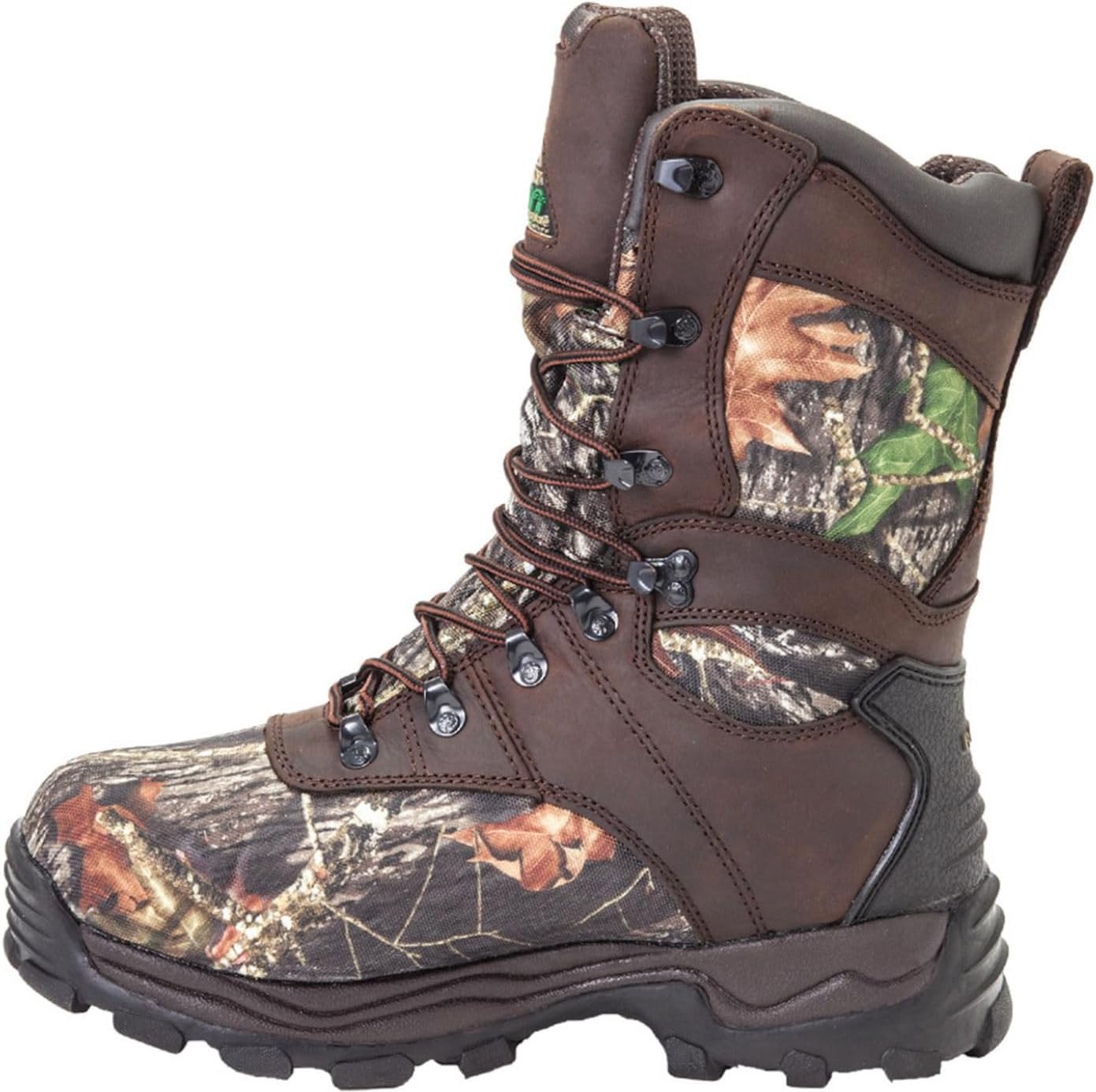
Hunters who spend long hours outdoors in wet and cold conditions will find these boots a reliable choice thanks to their insulation and waterproofing. Best suited for all-season use, they stand out for keeping feet warm and dry while blending into natural environments with the Mossy Oak Break Up pattern.
Breaking them in might take a short while, but their round toe and western heel design make walking in rugged terrain comfortable over time. Designed as work boots, they handle daily wear without much fuss, and the waterproof feature keeps moisture out during mornings in the dew or unexpected rain showers.
Performance-wise, they hold up well to wet and cold hunting days, providing solid insulation with 1000G warmth. Built tough with material fit for rough handling, the boots’ main strength is their ability to keep feet dry. On the downside, some find them a bit bulky when moving fast or covering long distances in heavy brush.
These boots are praised for their waterproof nature and insulation, making them excellent for cold and damp hunting trips. However, their bulkiness is frequently noted, which can slow down quicker movements or extended walks through dense terrain.
Hunters prioritizing warmth and dryness in all seasons will appreciate these boots’ performance and camouflage. Those who prioritize lightweight footwear for speed and agility may want to explore other options better suited for those needs.
Pros
- Waterproof construction for wet conditions
- 1000G insulation keeps feet warm
- Mossy Oak pattern blends with natural surroundings
- Round toe offers roomy fit
Cons
- Feel bulky during fast or long hiking
- Not as lightweight as some hunting boots
| Specification | Details |
|---|---|
| Color | Mossy Oak Break Up |
| Toe Style | Round Toe |
| Boot Form Type | Work Boot |
| Heel Type | Western Heel |
| Seasons | All |
| Pattern | MOSSY OAK BREAK UP |
Best Hunting Boots Comparison Table
| Product | Boot Form Type | Heel Type | Seasons | Pattern |
|---|---|---|---|---|
| MUCK Woody Max Boot | Work Boot | No Heel | Fall | BROWN |
| MUCK Arctic Pro Boot | Work Boot | No Heel | All | BROWN |
| TIDEWE Rubber Hunting | Rain Boot | Flat | Winter | Camouflage |
| ROCKY 800G Insulated Boot | Work Boot | Western Heel | All | REALTREE XTRA |
| XPETI Thermator Mid Boot | Hiking Boot | Block Heel | – | Camouflage |
| Kenetrek Mountain Extreme | Hiking Boot | Block Heel | Fall, Winter | Solid |
| Irish Setter Elk Tracker | Combat | No Heel | Fall, Winter | – |
| Danner Vital 8 Boot | Hiking Boot | Flat | All | – |
| Hunthor 1600G Rubber Boot | Snow Boot | Flat | Winter | – |
| Hunthor 1000G Insulated Boot | Hiking Boot | Platform Heel | Winter | Camouflage |
| Hunthor 1600G Insulated Boot | Rain Boot | Platform Heel | All | – |
| ROCKY Sport Utility 1000G | Work Boot | Western Heel | All | MOSSY OAK BREAK UP |
- Boot Form TypeWork Boot
- Heel TypeNo Heel
- SeasonsFall
- PatternBROWN
- Boot Form TypeWork Boot
- Heel TypeNo Heel
- SeasonsAll
- PatternBROWN
- Boot Form TypeRain Boot
- Heel TypeFlat
- SeasonsWinter
- PatternCamouflage
- Boot Form TypeWork Boot
- Heel TypeWestern Heel
- SeasonsAll
- PatternREALTREE XTRA
- Boot Form TypeHiking Boot
- Heel TypeBlock Heel
- Seasons–
- PatternCamouflage
- Boot Form TypeHiking Boot
- Heel TypeBlock Heel
- SeasonsFall, Winter
- PatternSolid
- Boot Form TypeCombat
- Heel TypeNo Heel
- SeasonsFall, Winter
- Pattern–
- Boot Form TypeHiking Boot
- Heel TypeFlat
- SeasonsAll
- Pattern–
- Boot Form TypeSnow Boot
- Heel TypeFlat
- SeasonsWinter
- Pattern–
- Boot Form TypeHiking Boot
- Heel TypePlatform Heel
- SeasonsWinter
- PatternCamouflage
- Boot Form TypeRain Boot
- Heel TypePlatform Heel
- SeasonsAll
- Pattern–
- Boot Form TypeWork Boot
- Heel TypeWestern Heel
- SeasonsAll
- PatternMOSSY OAK BREAK UP
How to Choose the Right Hunting Boot
Comfort, waterproofing, insulation, and durability are key factors when selecting hunting boots. Choosing the right fit and features helps prevent injuries and keeps feet dry and warm, ultimately saving money on replacements and avoiding discomfort during long hunts.
Fit and Comfort
Wearing boots that don’t fit right often leads to sore feet, blisters, and trouble moving quietly over rough ground. On long days, even a half-size off can cause discomfort that drags down your endurance and focus. Boots with proper arch support and enough cushioning make a noticeable difference, especially on uneven or rocky terrain.
Shoes that feel stiff or too tight can cause hot spots and blistering, which wear down your hunting stamina.
Breathability and moisture control are crucial for keeping feet dry and blister-free during hikes or extended wear. Look for boots that use mesh panels or moisture-wicking linings combined with waterproof membranes to balance airflow and water protection. Sizes should cover a range wide enough to accommodate thick socks, typically from US 7 to 14 for men and slightly smaller for women.
Material Durability
Quality materials determine how long boots will last through abrasive brush, wet conditions, and cold weather. Full-grain leather often holds up better than synthetic fabrics but requires more break-in time. Rubber lower parts resist scrapes and protect feet in waterlogged areas.
Boots with double or triple stitching along stress points tend to last through heavy use, while glued soles may separate sooner.
The sole construction matters here too; a firmly cemented or welted sole is less likely to wear prematurely. Some durable hiking boots combine leather uppers with synthetic stretch fabrics for flexibility without sacrificing ruggedness. Proper maintenance also extends life, but the initial build quality sets the baseline for longterm use.
Traction and Stability
Outsole patterns greatly impact traction over mud, rocks, and loose soil. Deep lugs spaced apart prevent mud build-up and improve grip on slippery surfaces.
Flat soles or shallow treads struggle to provide consistent traction, increasing the risk of slips or twisted ankles. Boots with aggressive, multi-directional lugs offer better control on uneven ground.
Ankle support reduces strain during climbs or descents. High-cut boots with firm collars and padding around the ankle improve stability but should not restrict movement.
Too soft or low cuts expose the ankle to twists, while extremely rigid boots may cause fatigue. Balance of support and flexibility is key for reducing injury without sacrificing mobility.
Waterproofing and Insulation
Waterproofing makes or breaks comfort in wet conditions. Boots treated with breathable waterproof membranes like Gore-Tex keep feet dry without trapping sweat inside, which would otherwise cause discomfort and blisters. Some waterproof treatments wear off with time, so evaluating product reviews on durability helps.
Proper insulation matches climate demands; lightweight insulation works for cool fall hunts, while thick insulated boots are necessary for harsh winter conditions. Overheating can lead to sweat buildup and cold feet once stopped, so breathable insulation materials strike the best balance between warmth and moisture management.
Noise Reduction
Quiet movement is essential for not spooking game, and this starts with how the boots are built. Soft materials, such as supple leather and flexible rubber soles, reduce noise compared to stiff, plastic components.
Construction that avoids hard rattling elements or loose parts helps keep steps silent.
Flexible soles that bend with the foot minimize footstep noise on dry leaves or twigs. Some boots feature noise-reducing tread patterns designed to absorb sound. Staying unnoticed requires boots designed to be as silent as possible during every step through the woods.
Proper Maintenance and Care to Extend the Life of Hunting Boots
Cleaning hunting boots after each outing helps prevent dirt and moisture buildup that can degrade materials. Use a soft brush to remove mud and debris, then wipe them down with a damp cloth.
Avoid soaking the boots in water, as excessive moisture can damage leather or cause insulation to lose effectiveness.
Conditioning leather boots is important to keep the material supple and prevent cracking. Apply a quality leather conditioner periodically, especially after exposure to wet or cold conditions.
Let the boots dry naturally, away from direct heat sources such as radiators or campfires, which can dry out and warp the material.
Storing hunting boots properly extends their lifespan. Keep them in a cool, dry place with good ventilation. Using boot trees or stuffing boots with newspaper helps maintain their shape and absorb lingering moisture.
Regular maintenance extends usability and comfort, saving costs on frequent replacements.
Safety Tips for Using Hunting Boots in Rugged Terrain
Wear boots with good ankle support to reduce the risk of sprains on uneven ground. The added stability helps when traversing rocky slopes or dense brush.
Choose boots with deep, multi-directional tread to improve grip on wet, slippery, or loose surfaces.
Break in new boots thoroughly before heading into challenging terrain. Stiff boots can cause blisters or impair your gait, increasing accident risk.
Pair your boots with moisture-wicking socks to reduce friction and keep feet dry.
Keep an eye on trail conditions and adjust your pace accordingly. Take extra caution on wet rocks, loose dirt, or steep inclines.
Carry a first-aid kit and let someone know your planned whereabouts for an added safety layer. Proper footwear and attentive movement are key to avoiding injuries outdoors.
Comparing Hunting Boots and Hiking Boots: What Works Best for Your Hunting Needs
Hunting boots and hiking boots differ primarily in their design priorities. Hunting boots often prioritize insulation and waterproofing because hunters spend long periods stationary or in cold, wet environments.
Hiking boots tend to focus on breathability and flexibility to support long treks on varied terrain.
Weight is another factor; hunting boots can be heavier due to added insulation and materials meant to withstand rugged conditions. This bulk can become tiring over long hikes but offers better protection against elements and underbrush.
Consider your hunting style when choosing between the two. When you need to cover a lot of ground quickly, lightweight hiking boots might work better.
For extended stays or rugged, wet environments, insulated hunting boots provide more comfort and durability. Balancing these features with your specific needs will help you select the appropriate footwear.
People Also Asked
How Do I Properly Size Hunting Boots for a Comfortable Fit?
Select boots slightly larger than your regular shoe size to accommodate thicker hunting socks. Try them on at the end of the day when feet are a bit swollen. Walk around to check for pinching or slipping.
What Is the Best Way to Clean and Care for Hunting Boots?
Use a soft brush to remove dirt after each use, then wipe with a damp cloth. Apply a leather conditioner for leather boots to keep them from drying out. Avoid using harsh chemicals that can damage materials.
Are Hunting Boots Safe to Wear in Wet and Rocky Terrain?
Most hunting boots designed for rugged use perform well in wet, rocky terrain if they have waterproof membranes and sturdy soles. Make sure the boots have good traction to prevent slipping on wet rocks.
How Long Do Hunting Boots Typically Last with Regular Use?
Hunting boots usually last around two to five years with regular seasonal use depending on build quality and care. Replacing worn insoles and resoling can extend their life.
What Common Problems Should I Watch for with Hunting Boots?
Common issues include sole separation, waterproofing failure, and worn-out insoles. Watch for loose seams early and break boots in gradually to avoid blisters.
Conclusion
Durability, comfort, and waterproofing are the three key factors to focus on when choosing a hunting boot. A boot should hold up against rough terrain and wet conditions without causing discomfort over long hours.
Proper fit and solid traction on various surfaces also make a noticeable difference during a hunt.
Consider the environment you’ll be hunting in and how often you plan to use the boots before buying. This helps balance cost and features for your specific needs. For a side-by-side look at the options and more details, check out the comparison table and the picks listed above.