Top 12 Best High Magnification Rangefinding Monoculars Revealed!
Using a cheap or poorly designed monocular with high magnification often results in shaky images and difficulty in pinpointing distances accurately. The best high magnification rangefinding monocular offers stable, clear views even at long distances, which is essential for activities like hunting, hiking, or surveying. Without steady focus and reliable distance measurement, spotting targets or landmarks becomes frustrating and inefficient.
The quality of the optics and the precision of the rangefinding technology are what make a significant difference. Look for models with magnification between 8x and 12x, paired with objective lenses around 40 to 50 millimeters for good light gathering.
Accuracy within one to two yards on distances up to 1,000 yards is standard for reliable rangefinding monoculars. Durability through water resistance and fog-proof construction also ensures the device holds up in varied weather conditions.
Need a Quick Check?
| Image | Product | Price |
|---|---|---|
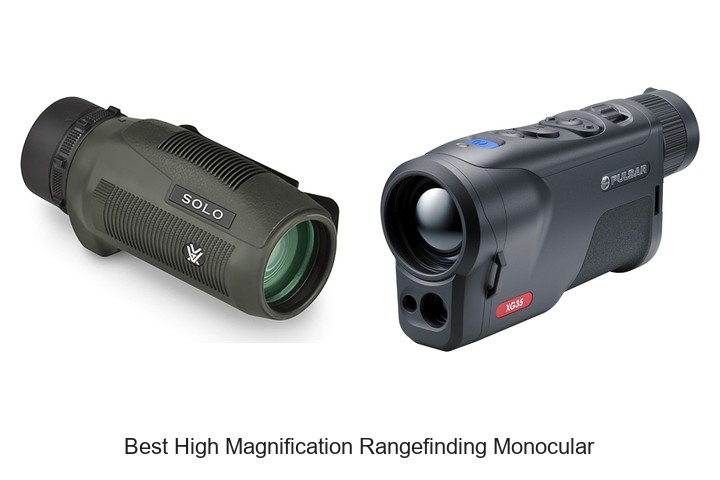
Our Top Picks 1  | Vortex Solo 10×36 | Check Price |
Our Top Picks 2  | Pulsar Oryx XG35 | Check Price |
Our Top Picks 3  | DNT Hound Thermal | Check Price |
Our Selected Top 12 High Magnification Rangefinding Monocular Worth Buying
This list features high magnification rangefinding monoculars designed for accurate distance measurement and detailed viewing. Each review covers performance, ideal users, strengths, and potential drawbacks, helping readers choose the most suitable option to meet their specific outdoor or sporting needs.
1. Vortex Solo Monocular 10×36
Spotting distant objects during outdoor trips calls for clear vision and reliable magnification. Designed for those who need a lightweight, durable monocular, this 10×36 optic stands out by offering excellent clarity through its 10x magnification and fully multi-coated lenses.
Using it daily is straightforward thanks to the manual focus that adapts smoothly in various situations. The non-slip rubber armor ensures a firm grip, while the adjustable eyecup makes viewing comfortable whether you wear glasses or not.
Attaching it quickly to your gear with the utility clip adds convenience when you’re on the move.
It delivers crisp, clear images with a decent 6.2-degree field of view, suited for long-distance viewing. Nitrogen purging and an o-ring seal keep moisture out, so it performs well in wet or foggy conditions.
The body is tough, though some mention the zoom feels limited to a fixed 10:1 ratio, which means no variable zoom options.
The clarity from the 10x magnification and quality coatings receives strong praise, making distant details easier to identify. At the same time, the fixed zoom ratio limits flexibility when quickly adjusting magnification levels is needed.
Anyone who values a tough, dependable monocular for long-range viewing without switching magnifications will be satisfied. Those needing adjustable zoom for more versatile use might prefer other models.
Pros
- 10x magnification with clear image quality
- Fully multi-coated lenses improve light transmission
- Rubber armor ensures secure grip and durability
- Waterproof and fogproof for all weather conditions
Cons
- Limited zoom ratio of 10:1 without variable zoom
- Some may find the fixed magnification restrictive
| Specification | Details |
|---|---|
| Eye Piece Lens Description | Monocentric |
| Focus Type | manual focus |
| Power Source | Battery Powered |
| Field Of View | 6.2 |
| Zoom Ratio | 10:1 |
| Focal Length Description | 36mm |
2. Pulsar Oryx LRF XG35 Thermal Monocular
With a 2.5-20x zoom and a 35mm lens, this thermal monocular is built to deliver detailed images regardless of lighting or weather conditions. It suits hunters, security personnel, and outdoors enthusiasts who need clear visuals through fog or foliage. Its AMOLED 1024×768 display stands out as a key advantage for clear viewing.
Setup is straightforward since it includes the required battery and feels portable enough to carry around all day. Adjusting the zoom between 2.5x and 20x helps in focusing on nearby or distant targets.
The 12.5° field of view balances wide area scanning with enough detail. Compact size and durability make it convenient for daily use in demanding environments.
Performance holds up well in dark or adverse weather, showing distinct thermal images through obstacles. The build is solid and suited for handheld use, while some mention that the magnification can take time to get used to for precise rangefinding.
The monocular integrates well with rifles but some users find the digital eyepiece requires moderate learning.
Clear visuals in fog and darkness earn praise, while some note the digital eyepiece needs familiarity to operate confidently. The blend of portability and detailed thermal imaging fits various outdoor tasks well. The zoom range works but demands practice for accuracy at higher settings.
Anyone doing hunting, security, or search in diverse conditions will appreciate the dependable imaging and compact design. Those preferring simpler optics or less electronic complexity might want to explore alternatives without a digital eyepiece.
Pros
- Clear thermal imaging for day and night use
- Good zoom range from 2.5x to 20x
- Portable size for long outdoor sessions
- Works well through fog and dense foliage
Cons
- Digital eyepiece requires adjustment time
- Magnification can feel tricky for precise use
| Specification | Details |
|---|---|
| Focal Length Description | 35mm |
| Field Of View | 12.5 degrees |
| Zoom Ratio | 2.5-20x |
| Eye Piece Lens Description | Digital/Electronic |
| Number of Batteries | 1 Product Specific batteries required. (included) |
| Compatible Devices | Rifles |
3. DNT Optics Hound Thermal Imaging Monocular
Hunters and outdoor enthusiasts needing precise long-range measurements will appreciate the DNT Optics Hound Thermal Imaging Monocular. Its standout feature is the built-in laser rangefinder capable of measuring distances up to 1200 yards, paired with ballistic intelligence that adapts calculations for different rifles or crossbows.
Setting it up involves linking the device with your firearm or crossbow and inputting your custom ballistic profile for tailored aiming solutions. The 25 millimeters of eye relief make viewing comfortable during prolonged use.
Daily use benefits from a clear 30.7-yard field of view, which aids in spotting targets accurately whether in thick bush or across open fields.
Performance excels in delivering quick, reliable distance readings that help refine aim on the spot. Building the calculations from live laser data allows for precise targeting in various environments. Build quality is solid and it’s designed for outdoor use, though the most noted drawback is the device’s weight during extended carry.
Some reviews mention it feels a bit bulky after long periods.
The device’s instant ballistic calculator combined with precise laser rangefinding earns praise for turning raw data into real-time aiming solutions. A common complaint involves its bulkiness, making it less comfortable for long periods on the move.
Hunting with rifles or crossbows at longer distances suits this monocular well, especially when accuracy matters most. Those prioritizing a lightweight, compact design for consistent handheld use might consider lighter alternatives.
Pros
- Fast and accurate laser distance readings
- Custom ballistic calculator for precise aiming
- Works well in varied hunting environments
- Comfortable 25mm eye relief for viewing
Cons
- Feels bulky after extended use
- Limited field of view compared to some monoculars
| Specification | Details |
|---|---|
| Laser Rangefinder Distance | 5 to 1200 yards |
| Compatible Devices | Rifle, Crossbow |
| Eye Relief | 25 millimeters |
| Field Of View | 30.7 yard |
4. ATN BlazeHunter 335 LRF Thermal Monocular

Powerful thermal imaging and high magnification make the ATN BlazeHunter 335 ideal for spotting details at long distances. It suits those needing clear thermal vision combined with advanced features like video recording. The standout feature is its 4-32x zoom paired with precise temperature detection.
Setup feels straightforward since it powers on quickly with a rechargeable lithium-ion battery. Automatic focusing ensures you get sharp images without constant adjustments. Built-in Wi-Fi lets you connect to a smartphone or laptop easily, making it simple to share or review footage right from the device.
Its water-resistant design adds reliability for outdoor use.
It performs well across dark and tough conditions, delivering crisp images thanks to the vanadium oxide sensor with NETD <18mK. The 1000-yard field of view balances magnification and situational awareness effectively.
Most praise centers on image clarity and strong battery life. A common drawback relates to the bulkiness for extended handheld use.
Sharp thermal images and a long-lasting battery receive strong praise, while complaints mostly address the monocular’s bulk, making it somewhat tiring to hold over long periods. Connective features like Wi-Fi add convenience but do not reduce its size or weight.
Users valuing detailed thermal viewing with flexible magnification will appreciate this model. Those who prioritize ultra-light gear or longer range might prefer alternatives better suited to those needs.
Pros
- High magnification from 4-32x zoom
- Accurate thermal imaging sensor with NETD <18mK
- Built-in Wi-Fi for easy connectivity
- Long-lasting rechargeable lithium-ion battery
Cons
- Device feels bulky for extended handheld use
- Range limited to 1800 yards
| Specification | Details |
|---|---|
| Zoom Ratio | 4-32x |
| Range | 1800 Yd |
| Field Of View | 1000 yard |
| Power Source | rechargeable-battery (Lithium Ion included) |
| Focus Type | Auto Focus |
| Additional Features | water-resistant |
5. High Powered Monocular Telescope 80×100

High Powered Monocular Telescope 80×100 shines with its adjustable zoom, offering some of the most detailed views for bird watchers and hunters. Its standout feature is the powerful 80x magnification that captures distant subjects clearly, making it a solid pick for anyone needing high-range observation.
Setting up involves attaching your smartphone using the quick positioning bracket and a tripod, which makes it pretty straightforward to use in the field. The manual focus gives you control to sharpen images precisely, while the compatibility with multiple phone models means you can easily share what you see. Day-to-day, it feels solid and stable thanks to the tripod, but you’ll want to ensure you have a steady surface when using the highest zoom levels.
Built with BAK4 Prism and FMC Lens, the monocular delivers sharp and bright visuals. The Brandon eyepiece helps focus, although some users mention that adjusting focus at max zoom can take a bit of patience.
The straight-through finderscope keeps viewing direct and natural. Most users appreciate the image quality but sometimes find the manual focus less convenient when tracking moving objects.
The monocular is praised for delivering clear, high magnification views, especially useful in bird watching and hunting. Common complaints revolve around the manual focus, which some find tricky when viewing moving subjects or adjusting at max zoom. The tripod is essential for keeping the view steady under these conditions.
Those seeking detailed, long-range observation and who don’t mind manual focusing will find this device well suited to their needs. Anyone looking for quick adjustment or compact portability might consider other options better tailored for rapid, hands-free focusing or lighter carry.
Pros
- Powerful 80x zoom reveals fine details at long distance
- Easy smartphone mounting with included bracket and tripod
- BAK4 Prism and FMC Lens improve image clarity
- Manual focus allows precise image adjustments
Cons
- Manual focus can be challenging at highest magnifications
- Requires a steady tripod setup for best results
| Specification | Details |
|---|---|
| Zoom Ratio | 80 |
| Focus Type | Manual Focus |
| Eye Piece Lens Description | Brandon |
| Finderscope | Straight-Through |
| Additional Features | BAK4 Prism & FMC Lens |
| Compatible Devices | Smartphone |
6. 16×52 High Powered Monocular Telescope

Looking through the 16×52 High Powered Monocular Telescope feels like bringing distant scenes right into your hands. Perfect for anyone who loves outdoor adventures like hiking, bird watching, or sports events, its biggest strength lies in delivering clear, bright images with strong 16x magnification.
Setting it up is straightforward since it’s a handheld device with manual focus. Adjusting the focus lens is smooth, and the fully multi-coated optics cut down glare nicely, making details pop. Its compact size and no need for batteries add to how easy it is to carry and use on the go.
Plus, the waterproof, fogproof, and shockproof design ensures it handles a variety of outdoor conditions without trouble.
Performance-wise, the monocular really shines by providing clear images at long distances thanks to the 16x zoom and 52mm lens diameter. The BAK4 prism contributes to sharp and bright visuals.
One standout is its durable build that holds up well outdoors. On the downside, manual focusing can take a moment to get exactly right when observing moving subjects or distant wildlife.
The monocular delivers excellent clarity and brightness thanks to its 52mm lens and BAK4 prism. Users appreciate its rugged design but often find manual focusing challenging during quick scene changes or wildlife watching.
Great for outdoor enthusiasts who value image clarity and durability. Those needing rapid focus changes or wider views might look for alternatives with easier focusing or broader fields of view.
Pros
- Bright, clear images with strong 16x magnification
- Compact and easy to carry on outdoor trips
- Waterproof, fogproof, and shockproof construction
- No batteries needed, making it always ready
Cons
- Manual focus can be tricky on moving subjects
- Field of view narrower than some competitors
| Specification | Details |
|---|---|
| Magnification | 16X |
| Objective Lens Diameter | 52mm |
| Field Of View | 5.8 degrees |
| Coating | Fully Multi-Coated |
| Prism Type | BAK4, 2026 Power Prism |
| Waterproof/Fogproof/Shockproof | Yes |
7. TOPDON TS004 Thermal Imaging Monocular
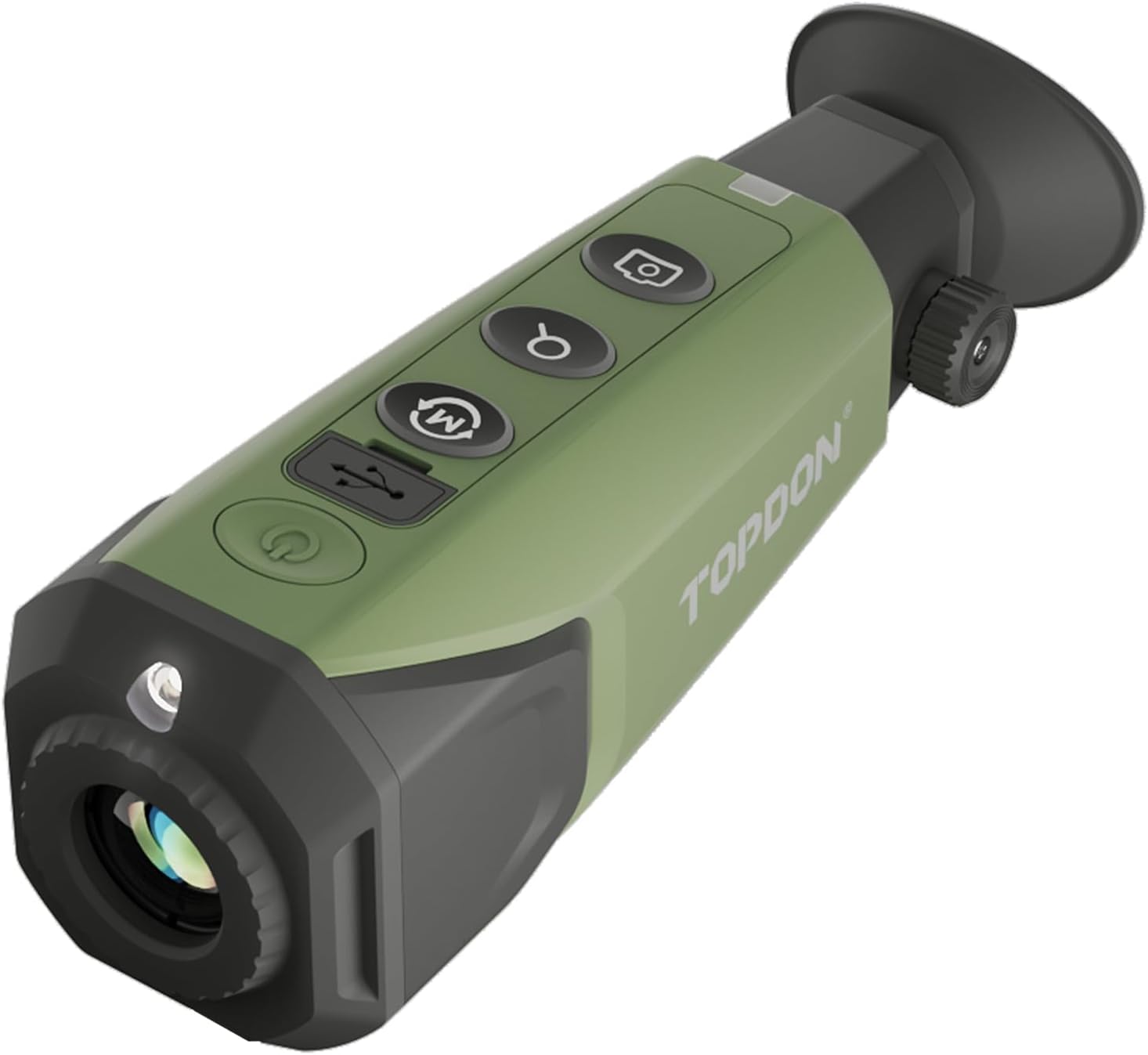
Sharp thermal imaging and long battery life make it a solid pick for outdoor enthusiasts needing high magnification rangefinding. It suits hunters, hikers, or anyone wanting clear views in challenging visibility. Its biggest strength lies in delivering vivid, precise thermal images that reveal details others might miss.
Getting started involves a simple manual focus and pairing through the TopInfrared app on your smartphone for real-time monitoring. Daily use is comfortable thanks to an 8x zoom and a 13.5-degree field of view, letting you scan wide areas or zoom in on specific targets. The 5000mAh battery provides confidence for long outings, minimizing worries about running out of power mid-exploration.
The main job of identifying heat signatures is handled well by its 256×192 IR resolution and smooth 50Hz refresh rate, offering detailed and steady images. The monocentric eyepiece lens combines with the manual focus to give decent control but may require a bit of patience under quick-changing conditions.
The strongest praise highlights its clear, reliable thermal imaging, while some users find the manual focus less convenient during fast-paced use.
Its clarity and reliable thermal imaging stand out, making it easier to track heat signatures in various outdoor environments. At the same time, needing to manually adjust focus can slow you down if quick shifts are necessary.
People wanting high-detail thermal views and long battery life will appreciate this monocular. Those needing faster autofocus or wider views might look for alternatives better suited to rapid movement or scanning large landscapes.
Pros
- Clear thermal images with high IR resolution
- Long battery life supports extended use
- Real-time wireless phone monitoring
- Manual focus for precise adjustments
Cons
- Manual focus can be slow in quick scenarios
- Limited field of view for very wide scans
| Specification | Details |
|---|---|
| IR Resolution | 256×192 |
| Refresh Rate | 50Hz |
| Battery Life | Up to 11 hours |
| Zoom Ratio | 8x |
| Field Of View | 13.5 degrees |
8. High Power Monocular Telescope 80×100

Rubber-coated and designed for a firm handheld grip, the High Power Monocular Telescope 80×100 suits anyone needing serious long-distance viewing. Its strongest point is the impressive 80x magnification paired with an auto-focus system, bringing detailed faraway scenes right into clear view.
Setting it up is straightforward, thanks to the included tripod and smartphone adapter, which makes capturing images easy. The smooth focus adjustment dial lets you quickly sharpen distant views without fuss. The non-slip rubber exterior keeps it steady in hand, while the straight-through finderscope helps line up targets efficiently across varying outdoor conditions.
Optically, it performs well against distant wildlife and landscapes with bright, sharp images owed to the BAK-4 prism and fully multi-coated lenses which cut down glare and distortion. The main praise lies in the strong, clear picture quality, though some users mention it can be bulky to carry around for long periods, narrowing its convenience for all-day hikes.
The optical clarity is a real highlight thanks to the BAK-4 prism and lens coatings, making distant views bright and sharp. Most common drawback noted is the monocular’s size and weight, making it less comfortable to carry during long outdoor trips.
Those valuing detailed long-range viewing and photo capturing will appreciate this monocular’s features. It suits users who prioritize image quality over lightweight design. Those needing something compact and ultra-light may want to consider other models.
Pros
- High 80x magnification for distant detail
- Auto-focus for quick, precise adjustments
- Non-slip rubber grip for steady handling
- Includes tripod and smartphone adapter
Cons
- Can be bulky and heavy for extended use
- Somewhat limited portability outdoors
| Specification | Details |
|---|---|
| Focus Type | Auto Focus |
| Finderscope | Straight-Through |
| Compatible Devices | Smartphone |
| Additional Features | BAK4 Prism, Fully Multi-Coated Lenses, Smartphone Adapter, Tripod Included |
9. High Powered Monocular Telescope 80×100

Powerful zoom is the first thing you notice, offering 80 times magnification with a broad 100mm lens for bright, clear views. It suits travelers and outdoor enthusiasts wanting detailed observation during activities like birdwatching or hiking.
Its main strength lies in delivering sharp images with significant zoom capacity.
Setting it up is straightforward with manual focus that lets you quickly adjust on the go. The straight-through finderscope helps line up distant objects easily. Daily use benefits from the large lens collecting plenty of light, making images clear even in varied light conditions.
Handling feels stable, though it requires some steady hands to avoid shake at full zoom.
Image quality is excellent thanks to the fully multi-coated lens and BAK-4 prism, reducing light loss for a brighter view. Build quality feels solid and durable, suitable for outdoor use.
A highlight is its performance at high magnification, yet the manual focus can feel slow and tricky at times for fine adjustments, which some find frustrating.
Performance at 80x magnification is impressive, with bright and clear images thanks to quality lens coatings and BAK-4 prism. The main complaint revolves around manual focusing, which some find less responsive when trying to achieve sharp focus quickly.
This monocular fits anyone wanting strong zoom and wide field views in outdoor settings like hiking or birdwatching. Those needing quick autofocus or less sensitivity to hand movement should consider other options better suited for easier focus control or image stabilization.
Pros
- Excellent brightness and clarity even at high zoom
- Large 100mm lens collects plenty of light
- Straight-through finderscope simplifies target acquisition
- Durable build suitable for outdoor conditions
Cons
- Manual focus can be slow for precise adjustments
- High magnification demands stable handling to avoid shake
| Specification | Details |
|---|---|
| Magnification | 80x |
| Objective Lens Diameter | 100mm |
| Focus Type | manual focus |
| Finderscope | straight-through |
| Lens Coating | Fully Multi-coated |
| Prism Type | BAK-4 |
10. High Powered Zoom Monocular 10-300×40

High Powered Zoom Monocular 10-300×40 is ideal for anyone wanting serious zoom power in a compact monocular. It fits great for spotting distant objects during birdwatching, hiking, or even concerts.
Its biggest strength lies in the massive 10-300x zoom, making faraway scenes visible in impressive detail.
Setting it up is simple, just hold it like a classic spyglass and gently pull both ends until fully extended. Manual focus lets you fine-tune the image clearly, and the straight-through finderscope helps with aiming. Its lightweight design makes it easy to carry for long periods, and you can even attach a smartphone for photos or videos.
Performance shines with crisp visuals thanks to the BAK4 prism and fully coated FMC lenses. The manual focus gives you control, but adjusting can be tricky without practice.
Build quality feels solid and reasonably durable, though some users mention the focus ring can be a bit stiff. The smartphone compatibility adds extra value for sharing views instantly.
This monocular offers very sharp images at high zoom thanks to its BAK4 prism and fully coated lenses. Many users appreciate the zoom range but mention focusing requires a steady hand and some patience because the manual focus isn’t very smooth.
People wanting extreme zoom for detailed distant viewing will find it rewarding here, especially for outdoor activities. Those needing quicker focus or wider views might want to explore alternatives with smoother focusing systems or larger fields of view.
Pros
- Massive 10-300x zoom for detailed distant views
- Lightweight and easy to carry on trips
- Manual focus allows precise image adjustment
- Compatible with smartphones for capturing images
Cons
- Focus ring can feel stiff and tricky to adjust
- Narrow field of view limits quick scanning
| Specification | Details |
|---|---|
| Zoom Ratio | 10-300x |
| Eye Piece Lens Description | Super Plossl |
| Focus Type | Manual Focus |
| Finderscope | Straight-Through |
| Coating | Fully Coated |
| Compatible Devices | Smartphone |
11. High Power Monocular Telescope 80×100
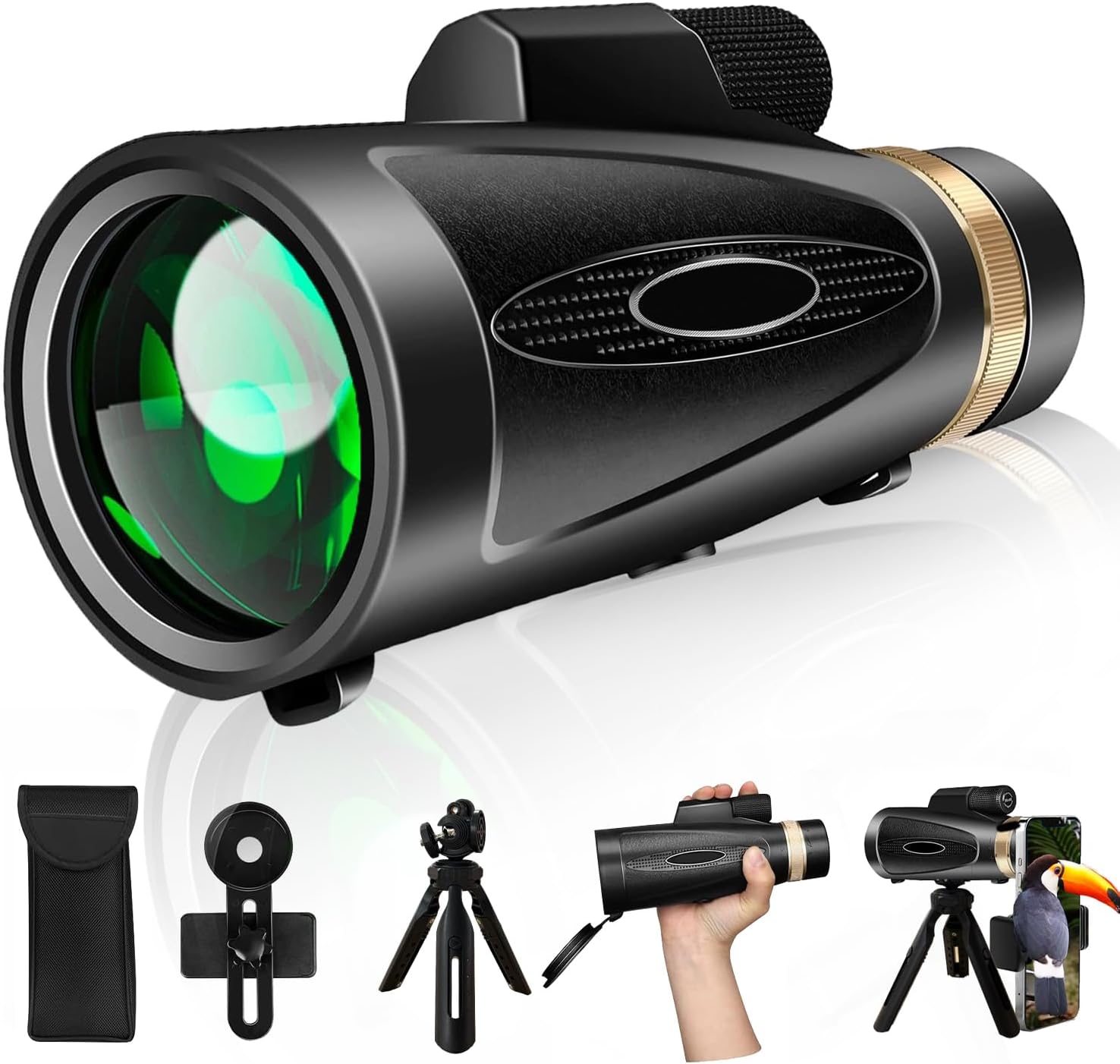
Spotting details high up on a distant ridge or catching clear views of wildlife far away takes more than just a regular monocular. Great for hikers, bird watchers, and anyone wanting high-powered viewing, this monocular stands out for its massive 80X magnification paired with a large 100mm lens, giving bright, wide views you can count on.
Setting it up takes just adjusting the manual focus wheel until the image sharpens, and the straight-through finderscope helps line up distant objects quickly. Its design fits comfortably in one hand, making it easy to hold steady while focusing. A smartphone adapter lets you snap photos or share what you see without buying extra gadgets.
Images come through bright and sharp thanks to the FMC multi-coated lens and BAK4 prism, which cut glare and boost contrast. The build feels solid yet manageable for outdoor use. Reviews admire the clarity at such a high zoom but note that the manual focus takes practice and can be fiddly when tracking moving subjects.
The monocular consistently impresses users with sharp, bright images and true color rendering thanks to its quality lens and prism setup. Manual focus is highlighted as a drawback, since it demands careful adjustment during use, especially when tracking moving targets.
Anyone needing extreme magnification with an ability to capture images on their phone will find this tool fitting well. Those who want quicker autofocus or easier stabilization during long viewing sessions might prefer alternative models.
Pros
- Very high 80X magnification for distant viewing
- Large 100mm lens offers bright, wide views
- Ergonomic design supports comfortable one-hand use
- Smartphone adapter allows easy photo capture
Cons
- Manual focus requires steady hands and attention
- High zoom can make image stabilization difficult
| Specification | Details |
|---|---|
| Focus Type | Manual Focus |
| Finderscope | Straight-Through |
| Compatible Devices | Smartphone |
| Zoom Ratio | 80 |
12. RIX Titan-T3 Thermal Monocular LRF

With a detection range of up to 1421 yards, the RIX Titan-T3 Thermal Monocular LRF suits anyone needing precise long-distance spotting combined with detailed rangefinding. Its standout feature is the integrated ballistic calculator, which helps take accurate readings and improves shooting confidence under varied conditions.
Setting up involves just inserting one included lithium-ion battery, and the manual focus is straightforward to adjust on the fly. The 25mm lens and 10-degree field of view allow for comfortable scanning, while the AI-driven digital zoom and smart image stabilization make handheld use easier, letting you operate it well with one hand during daily fieldwork.
The 1920×1080 OLED display delivers clear, high-resolution images that are critical for identifying targets at long distances. Built with a strong 0.49-inch screen and a NETD below 20mK, the image quality stays sharp even in challenging thermal environments. Reviews highlight its impressive rangefinding and ballistic calculation accuracy, but note that manual mounting requires some patience to get perfect alignment.
The best feature consistently praised is the integrated ballistic calculator combined with the long detection range, which makes it highly useful for serious spotting or hunting. The main complaint revolves around the manual mounting system, which some find less convenient compared to automatic stabilization options.
Hunters and outdoor enthusiasts looking for precise rangefinding and detailed thermal imaging will appreciate its accuracy and clarity. People preferring quick adjustments or lighter, fully automatic mounts might want to explore other options better suited for faster or more casual use.
Pros
- Accurate integrated ballistic calculator
- High-resolution 1920×1080 OLED display
- Detection range up to 1421 yards
- One-hand operation with smart image stabilization
Cons
- Manual mount setup can be tricky
- Manual focus requires constant adjustment
| Specification | Details |
|---|---|
| Objective Lens | 25mm |
| Resolution | 384×288 |
| Display | 1920×1080 0.49-inch OLED |
| Detection Range | Up to 1421 yards |
| Rangefinder Distance | Up to 1312 yards |
| Pixel Pitch Detector | 12μm |
Best High Magnification Rangefinding Monoculars Comparison Table
| Product | Zoom Ratio | Focus Type | Power Source | Compatible Devices |
|---|---|---|---|---|
| Vortex Solo 10×36 | – | Manual Focus | Battery Powered | Clothing, Equipment |
| Pulsar Oryx XG35 | 2.5-20x | – | 1 Battery Included | Rifles |
| DNT Hound Thermal | – | – | – | Rifle, Crossbow |
| ATN BlazeHunter 335 | 4-32x | Auto Focus | Rechargeable Battery | Smartphone, Tablet, Laptop |
| High Power 80×100 | 80 | Manual Focus | – | Smartphone |
| High Power 16×52 | 16 | Manual Focus | No Need | – |
| TOPDON TS004 | – | Manual Focus | Battery Powered | Smartphone |
| Monocular Telescope 80×100 | – | Auto Focus | – | Smartphone |
| Power Monocular 80×100 | – | Manual Focus | – | – |
| Zoom Monocular 10-300×40 | 10 | Manual Focus | – | Smartphone |
| Powerful 80×100 Monocular | 80 | Manual Focus | – | Smartphone |
| RIX Titan-T3 LRF | – | Manual Focus | 1 Battery Included | – |
- Zoom Ratio–
- Focus TypeManual Focus
- Power SourceBattery Powered
- Compatible DevicesClothing, Equipment
- Zoom Ratio2.5-20x
- Focus Type–
- Power Source1 Battery Included
- Compatible DevicesRifles
- Zoom Ratio–
- Focus Type–
- Power Source–
- Compatible DevicesRifle, Crossbow
- Zoom Ratio4-32x
- Focus TypeAuto Focus
- Power SourceRechargeable Battery
- Compatible DevicesSmartphone, Tablet, Laptop
- Zoom Ratio80
- Focus TypeManual Focus
- Power Source–
- Compatible DevicesSmartphone
- Zoom Ratio16
- Focus TypeManual Focus
- Power SourceNo Need
- Compatible Devices–
- Zoom Ratio–
- Focus TypeManual Focus
- Power SourceBattery Powered
- Compatible DevicesSmartphone
- Zoom Ratio–
- Focus TypeAuto Focus
- Power Source–
- Compatible DevicesSmartphone
- Zoom Ratio–
- Focus TypeManual Focus
- Power Source–
- Compatible Devices–
- Zoom Ratio10
- Focus TypeManual Focus
- Power Source–
- Compatible DevicesSmartphone
- Zoom Ratio80
- Focus TypeManual Focus
- Power Source–
- Compatible DevicesSmartphone
- Zoom Ratio–
- Focus TypeManual Focus
- Power Source1 Battery Included
- Compatible Devices–
How to Choose the Right High Magnification Monocular
Key factors like magnification power, lens quality, and rangefinding accuracy determine performance and ease of use in high magnification monoculars. Prioritizing these ensures clear views and reliable distance measurements, helping avoid costly upgrades and frustration during outdoor activities.
Magnification and Optical Quality
A monocular with high magnification makes a big difference when trying to measure distances accurately, especially at longer ranges. Lower magnification models can leave you squinting and guessing, while stronger zoom levels bring faraway targets into clear focus, making the measurement more precise.
The quality of the lens itself plays a crucial role in daily use. Cheaper glass often results in a blurry or dim image, which makes reading the rangefinder difficult, particularly in low light.
Coatings on the lenses matter more than many realize. Anti-reflective coatings reduce glare that can wash out the image, while other layers can boost light transmission, helping maintain brightness and clarity even as you crank up the magnification. Look for devices with multi-coated or fully multi-coated optics for the best balance of sharpness and brightness.
Rangefinding Accuracy and Range
Some devices are rated for distance measurement up to a mile or more, but that effective range can change based on the target and lighting. Reflective surfaces like metal or painted signs can be read at longer distances, while natural targets like trees require shorter ranges.
Accuracy varies too; a good model provides readings within one yard or meter, which matters when hunting or surveying.
Speed becomes important when tracking moving objects. Fast measurement rates and the ability to update readings several times per second help follow a target’s movement without lag. A device that can take frequent readings means fewer misses and smoother targeting in dynamic situations.
Ergonomics and Portability
Long sessions using a monocular can quickly become tiring if the device is heavy or awkward to hold. Compact models around 6-8 ounces are easier to carry and keep steady, but too small can mean reduced features or weaker battery life.
Ergonomic design with rubberized grips or textured surfaces keeps the device stable in one hand, even if your hands get sweaty or cold.
Some designs include angled eyepieces or adjustable focus rings that help aim comfortably without straining your wrist or eyes. Portability matters for outdoor use where you may need to carry the monocular all day.
Many come with cases or clips to attach to belts or bags, offering quick access without adding bulk.
Battery Life and Power Management
The length of operation you get on a battery or set varies widely. Some devices can run several hundred measurements or hours on a single CR2 or AA battery, while others drain power faster with more features turned on.
Knowing how long your gear lasts means fewer surprises out in the field, especially if you can’t carry spare batteries easily.
Most rangefinders use common battery types, but rechargeable options are becoming more popular for saving money and waste. Power-saving schemas that turn off the device automatically after a short idle time help stretch battery life.
Look for clear battery level indicators so you can plan replacements before the device cuts out.
Durability and Weather Resistance
Daily use outdoors exposes electronics to bumps, drops, and weather that would damage lesser units fast. Metal or thick polymer bodies absorb impact better than thin plastic shells.
Some models specifically say they meet military or industrial standards for shock resistance, which can make a real difference through rough handling.
Waterproof and fogproof ratings like IPX7 or nitrogen purging mean you won’t lose visibility when humidity or rain kicks in. Sealed construction also blocks dust and dirt from entering sensitive parts, which keeps the internal optics clean and the rangefinder working reliably.
Devices designed to handle extreme cold or heat continue performing when others might fail.
Maximizing Accuracy: Tips for Using High Magnification Rangefinding Monoculars in Various Environments
Getting accurate distance readings from a high magnification rangefinding monocular depends heavily on steady handling. Even slight hand movement can blur the image and throw off measurement precision.
Using a tripod or resting the monocular on a stable surface helps maintain clarity. Higher magnification models narrow the field of view, making it harder to locate a target quickly. To counter this, start with a lower zoom to find the object, then switch to maximum magnification for distance measurement.
Environmental conditions such as sunlight, fog, or rain affect laser performance. Bright sunlight may cause reflections that interfere with the laser’s return signal. Aim at contrasting surfaces or move slightly to get clear readings.
In low light or shadowed areas, these monoculars often have a built-in illuminated reticle to assist targeting. Practice using these features under varied conditions to become proficient in adjusting settings on the fly.
Maintenance and Care Practices to Prolong the Lifespan of Your Rangefinding Monocular
Keep lenses clean by using a soft microfiber cloth and avoid wiping with rough materials that can cause scratches. For stubborn dirt or smudges, apply a small amount of lens cleaner designed for optics. Store the monocular in its protective case when not in use to prevent dust accumulation and damage.
Moisture can cause internal fogging or corrosion, so avoid exposing the device to rain or high humidity without proper sealing.
Regularly check the battery compartment for corrosion and replace batteries promptly. Ensure battery contacts are clean to maintain consistent power supply. When the monocular includes adjustable parts like focus or diopter rings, handle them carefully to avoid wear.
Periodic inspection of seals and hinges helps keep the device airtight, especially if it is marketed as waterproof or fogproof.
Comparing High Magnification Rangefinding Monoculars with Binoculars and Spotting Scopes for Different Applications
High magnification rangefinding monoculars offer compactness and distance measurement capabilities, making them suitable for solo use or when weight is a concern. Binoculars provide a wider field of view and two-eyed viewing comfort but generally lack integrated ranging features.
This makes binoculars better for scanning large areas quickly but less effective for precise distance data.
Spotting scopes deliver higher magnification power and larger objective lenses than monoculars, improving image brightness and detail. They are ideal for stationary observation situations such as birdwatching or target shooting but tend to be bulkier. Rangefinding monoculars strike a balance between portability and laser distance functionality, fitting applications like hunting or golfing where both are needed but mobility is important.
People Also Asked
How Do I Properly Care for a High Magnification Rangefinding Monocular?
Clean the lenses with a microfiber cloth and keep the device dry and in a protective case. Avoid touching the lenses with fingers, and store the monocular in a cool, dry place to prevent fogging and damage.
What Size Monocular Is Ideal for Long-Distance Viewing?
A monocular with 10x to 12x magnification works well for long-distance viewing, balancing image clarity and stability. Higher magnifications tend to be harder to hold steady without a tripod or support.
Are High Magnification Rangefinding Monoculars Safe to Use Continuously?
Using a high magnification rangefinding monocular continuously is generally safe but may cause eye strain or fatigue after long periods. Taking breaks helps reduce discomfort and maintains clear vision.
How Long Does a Typical Rangefinding Monocular Last with Regular Use?
Typical rangefinding monoculars last several years with regular use, depending on build quality and maintenance. Keeping lenses clean and avoiding drops or moisture extends their lifespan.
What Common Problems Should I Expect with a Rangefinding Monocular?
Common problems include blurry images from dirty lenses, difficulty maintaining a steady view at high magnification, and occasional rangefinder calibration issues. Regular cleaning and careful handling minimize these issues.
Conclusion
Choosing a high magnification rangefinding monocular comes down to a few key points: clear optics for accurate measurement, sturdy build quality for durability, and user-friendly controls for quick operation. These factors directly affect how well the device performs in real situations, not just on paper.
Consider how often you’ll use the monocular and the type of terrain or environment where it will be used. Spending more on something that fits your typical needs pays off. Return to the comparison table and the detailed picks above to find the right balance of features and price for your setup.