Top 12 Best Handheld Digital Radio Scanner You Need Now
Using a handheld digital radio scanner that cuts out at critical moments or has poor reception can be frustrating, especially during urgent situations. The best handheld digital radio scanner offers consistent clarity and reliable scanning across the right frequency bands, ensuring important communications don’t get missed. A cheaply made scanner often fails to pick up digital signals clearly or lacks the memory channels needed for effective monitoring.
Key features that set a good digital radio scanner apart include durable construction and a comfortable, compact design for extended use. Battery life is crucial, with a reliable model offering around 8 to 12 hours on a single charge or replaceable batteries for quick swaps.
A clear, backlit display and intuitive controls make tuning and managing frequencies straightforward, even in low light or stressful conditions.
Need a Quick Check?
| Image | Product | Price |
|---|---|---|
Our Top Picks 1  | Whistler TRX-1 Scanner | Check Price |
Our Top Picks 2  | Uniden SDS100 Scanner | Check Price |
Our Top Picks 3  | Uniden BCD436HP HomePatrol | Check Price |
Our Selected Top 12 Handheld Digital Radio Scanner for Every Budget
This list features carefully chosen handheld digital radio scanners suitable for various needs and budgets. Each review covers how well the device performs, who it is best suited for, and highlights its main advantages and disadvantages to help you make an informed decision.
1. Whistler TRX-1 Handheld Digital Police Scanner
Flexible Scanlist Management makes it easy to organize up to 200 customizable Scanlists, perfect for anyone who wants precise control over what they monitor. Ideal for police scanner enthusiasts and emergency signal watchers, it helps keep track of multiple channels without confusion.
Setting it up involves grouping stored objects into Scanlists and assigning them as needed, which makes switching between signals straightforward day-to-day. Smart Alerts with audible alarms and a tri-color LED offer immediate updates visually and audibly, which means you don’t miss important communications even when multitasking. The ability to record and play back up to 50 hours of radio traffic directly from the included 2GB MicroSD card adds great convenience for reviewing important transmissions later.
It picks up and scans channels quickly, making it reliable for real-time monitoring. The device feels solid and well-built in hand, though a few mention the digital interface could be more intuitive. Most appreciate the alert system that mimics emergency vehicle strobes, while some find managing large Scanlists a bit complex at first.
Whistler TRX-1 offers useful features like flexible scanlist management and clear visual alerts through a tri-color LED. It records up to 50 hours of radio traffic on a 2GB card, making it simple to capture and review important communications. Some notes mention the device can be complicated to set up at first, with a learning curve for managing multiple scanlists.
People tracking emergency channels or radio traffic with multiple sources at once will find the TRX-1 helpful. It suits those who want in-depth control over their scanning lists and audio playback options. For someone needing a very basic scanner or quick plug-and-play use, simpler models might be a better fit.
Pros
- Up to 200 customizable Scanlists for detailed organization
- Smart Alerts with programmable alarms and LED notifications
- Records up to 50 hours of audio on included 2GB MicroSD card
- Playback possible directly on the device or via PC transfer
Cons
- Learning curve when managing large Scanlists
- Interface can feel less intuitive for new users
| Specification | Details |
|---|---|
| Scanner Type | other |
| Connection Type | USB |
| Resolution | 300 |
| Optical Sensor Technology | CIS |
| Media Type | USB |
2. Uniden SDS100 True I/Q Digital Handheld Scanner
Anyone serious about scanning digital and trunked radio communications will appreciate this handheld scanner. It suits those who want detailed, real-time info during live monitoring sessions and handles tricky signal environments with ease thanks to its True I/Q receiver, its biggest strength.
Setting up is straightforward, just enter your zip code and the preloaded HomePatrol database fills in known radio systems across the US and Canada. Daily use is smooth, with a vibrant customizable color display that shows exactly what you want. USB connection makes updating the scanner’s database with Sentinel software simple, keeping you current with weekly updates.
Reception quality shines, especially when picking up weak signals or during simulcast broadcasts, showing clear digital performance that outperforms many competitors. The device feels solid in hand and works reliably.
Most praise highlights its sensitivity and digital clarity. The main gripe is that some users find the interface complex when exploring advanced settings beyond the basics.
Exceptional digital performance stands out for picking up weak and simulcast signals clearly. The most frequent complaint relates to its complexity beyond simple operation, which can slow down learning for some users.
Anyone wanting a highly capable handheld scanner tuned to modern digital and trunked systems will find this a strong choice. Those who prefer simpler controls or want detailed battery and weight info might want to consider alternative options.
Pros
- Accurate digital reception in challenging environments
- HomePatrol database covers US and Canada
- Customizable color display for easy info access
- Weekly updates via USB and Sentinel software
Cons
- Interface complexity for advanced features
- No mention of battery life or weight details
| Specification | Details |
|---|---|
| Scanner Type | Digital Handheld Scanner |
| Connection Type | USB |
| Resolution | 24 Bits |
| Color Depth | 24 |
| Media Type | MicroSD Card |
3. Uniden BCD436HP HomePatrol Digital Handheld Scanner
Uniden’s BCD436HP stands out by bringing the HomePatrol-1 ease of use to a handheld digital scanner. Perfect for anyone wanting quick access to local emergency and public safety channels without complex programming.
Its biggest strength is how simple it is to get started, just enter your zip code and the scanner does the rest.
Setting it up only takes a moment, with no need for manual channel programming due to TrunkTracker V technology. Daily use involves an extra-large display that’s easy to read, so scanning through police, fire, EMS, and weather alerts becomes straightforward. The Close Call RF Capture feature picks up unknown signals nearby, helping you discover new transmissions.
GPS connectivity supports location-based channel updates, making it highly adaptive wherever you go.
Sound reception is clear, and the scanner quickly scans up to 85 channels per second, ensuring you won’t miss critical transmissions. Built solidly for handheld use, it runs on 3 AAA batteries lasting about 8 hours, good for a day out but not waterproof, so care is needed in wet conditions. Most praise focuses on its user-friendly interface, while a common gripe involves the lack of water resistance.
The scanner gains high marks for its simple setup and a user interface that eliminates complicated programming steps. Many users mention its ability to quickly find local emergency communications, though some note it lacks water resistance which can be a downside for outdoor users.
This unit suits anyone looking for an accessible, effective handheld scanner without requiring technical expertise. Those needing a scanner for rugged or wet environments might prefer a model with water resistance features.
Pros
- Easy to use with no programming needed
- Large, clear display for simple navigation
- Effective Close Call RF Capture feature
- Quick scan speed of 85 channels/second
Cons
- Not water resistant for outdoor use
- Batteries last around 8 hours of continuous use
| Specification | Details |
|---|---|
| Number of Channels | 85 |
| Frequency Range | 25-512 MHz, 758-824 MHz, 849-869 MHz, 894-960 MHz, 1240-1300 MHz |
| Scan Speed | 85 channels per second |
| Battery Average Life | 8 hours |
| Number of Batteries | 3 AAA batteries required |
| Connectivity Protocol | GPS |
4. Uniden BCD325P2 Handheld TrunkTracker V Scanner

Uniden BCD325P2 Handheld TrunkTracker V Scanner targets radio enthusiasts wanting to monitor a large number of channels with ease. It stands out for its Close Call RF Capture Technology, which automatically tunes to nearby signals, making local scanning straightforward and effective for most hobbyists or professionals on the go.
Setting up involves programming up to 25,000 channels, which can seem daunting but is made manageable with the Quick-Key System Access providing fast selection of your frequently used systems. The GPS compatibility adds a helpful layer for location-based scanning, and the USB media type offers straightforward connection for data transfer or updates.
Performance matches its promise with solid reception and clear signal capture, especially with Project 25 Phase II support giving access to current public safety protocols. The scanner’s build feels durable yet portable. Praises note the easy proximity detection, while common frustrations revolve around tricky initial programming and high power consumption at 20 watts.
Strong praise highlights the effective Close Call RF Capture that locks onto local broadcasts instantly. Common complaints focus on the complexity of initial setup and programming, which can slow down first-time use.
Ideal for those who need wide channel access and easy local signal tracking through GPS. Users looking for simpler programming or lower power usage might prefer a different model.
Pros
- Automatic tuning to nearby signals
- Supports 25,000 channels
- Quick-Key system speeds up access
- Compatibility with latest P25 Phase II
Cons
- High power consumption at 20 watts
- Programming can be complicated initially
| Specification | Details |
|---|---|
| Scanner Type | Radio |
| Connection Type | gps |
| Resolution | 2400 dpi |
| Wattage | 20 watts |
| Media Type | USB |
5. Uniden Bearcat BC125AT Analog Handheld Scanner
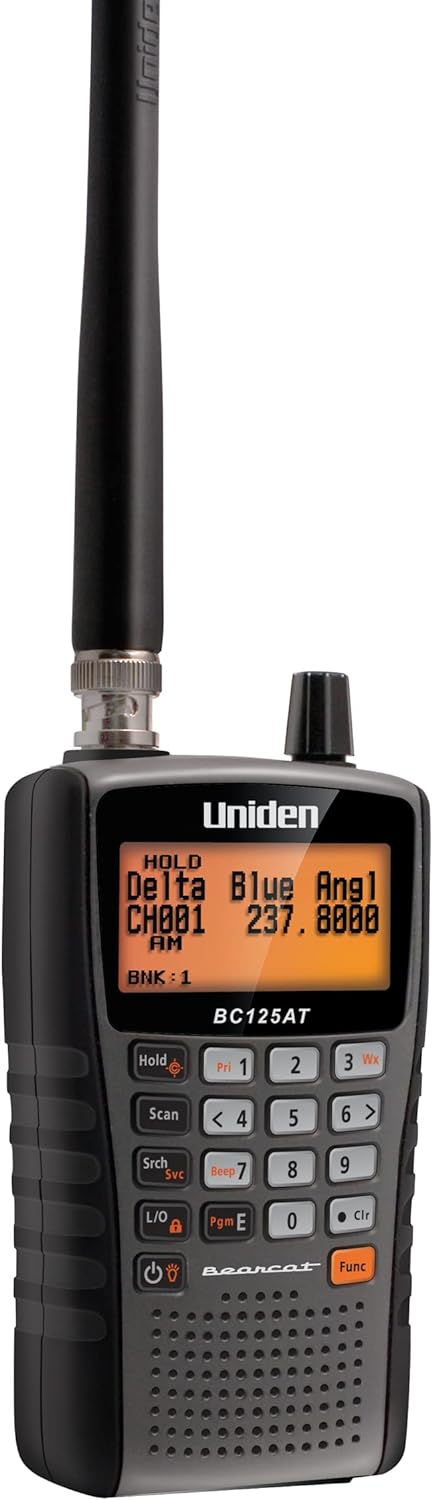
Compact and straightforward, this analog handheld scanner suits anyone who wants to monitor nearby radio signals without fuss. Its biggest strength lies in the Close Call RF capture technology, which quickly locks onto transmissions from nearby sources, making listening in simple and direct.
Setting up involves loading the 2 included AA batteries, and with its digital display, navigating through 500 channels is easy once you get the hang of it. The Do Not Disturb Mode helps when a transmission is active, stopping Close Call scans so you don’t miss anything important.
Pairing it with a personal computer adds flexibility for programming channels, suited for daily monitoring of specific frequencies.
Performance is solid for analog signals across a wide frequency range, capturing police, fire, marine, and aviation channels well within its limits. The build is compact but not water resistant, so indoor or dry conditions work best.
Praise often highlights how quickly Close Call mode finds transmissions, while the lack of digital trunk monitoring remains the most noted drawback for those needing those modes.
Close Call RF capture technology effectively tunes into nearby analog signals with speed and precision, making monitoring straightforward. The key complaint is the scanner’s inability to handle digital trunking systems, a limit for users in cities with digital police or emergency communications.
People focused on analog frequency monitoring and wanting a portable, easy-to-use unit will appreciate this scanner. Those needing digital or trunking capability should look for a scanner designed to support those functions instead.
Pros
- Close Call RF capture quickly locates transmissions
- Compact and easy to carry around
- Digital display simplifies channel selection
- Includes 2 AA batteries for immediate use
Cons
- Not capable of monitoring digital trunking systems
- Not water resistant, avoid using in wet conditions
| Specification | Details |
|---|---|
| Number of Channels | 500 |
| Frequency Range | 25-54 MHz, 108-174 MHz, 225-380 MHz, 400-512 MHz (UHF) |
| Battery Average Life | 10 hours |
| Voltage | 3 volts |
| Number of Batteries | 2 AA batteries required (included) |
6. Uniden Bearcat BCD160DN Digital Handheld Scanner
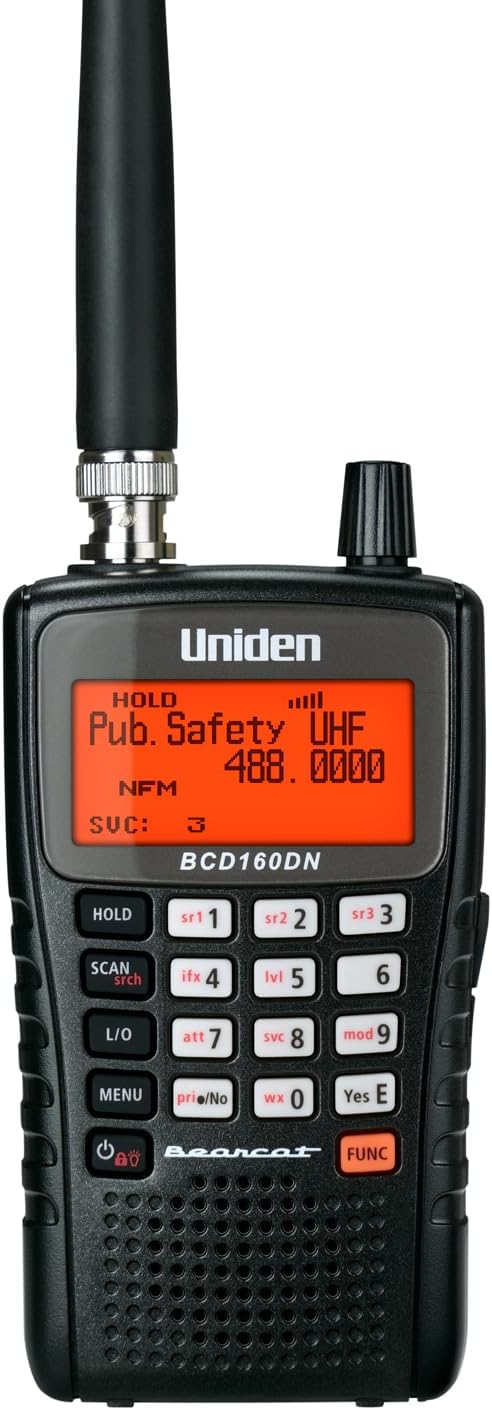
Great for radio enthusiasts wanting reliable digital decoding, the Uniden Bearcat BCD160DN stands out with its quick CTCSS and DCS code detection. It suits anyone focused on catching elusive signals thanks to its advanced scanning features and user-friendly interface.
Setup is straightforward, connecting easily via USB for programming and updates. Day-to-day use benefits from rapid system and channel tagging, helping find signals faster.
The scanner supports DMR, NXDN, and with a firmware update, APCO P25 Phase 1 and 2 decoding, making it versatile for different digital modes without needing complex adjustments.
Performance excels at digital decoding except trunking and encrypted signals, which this model does not support. Build quality feels solid for handheld use. The most praised feature is the instant CTCSS/DCS tone display that speeds up system settings identification.
The common complaint revolves around the lack of trunking support, limiting tracking of some communication systems.
Rapid detection of CTCSS and DCS codes is highly rated and helps quickly figure out system settings during use. The main limit is the absence of trunking support, which restricts monitoring some networks. This means it handles conventional digital signals very well but lacks in trunked system coverage.
The scanner fits users focused on straightforward digital scanning without needing trunking or encrypted signal decoding. Radio hobbyists dealing mostly with DMR, NXDN, or APCO P25 Phase 1 systems will appreciate it. Those requiring trunking or encrypted signal capabilities should consider other options.
Pros
- Instantly decodes CTCSS tones and DCS codes
- Supports multiple digital protocols out of the box
- Easy USB connection for updates and programming
- Effective search features for faster signal detection
Cons
- No trunking support for complex radio systems
- Cannot decode encrypted signals
| Specification | Details |
|---|---|
| Scanner Type | Radio Scanner |
| Connection Type | USB |
| Supports Digital Decoding | DMR, NXDN, APCO P25 Phase 1 & 2 (via firmware update) |
| Special Features | Band Scope Rapid System/Channel Tagging, Narrow-band Reception |
7. Uniden Bearcat SR30C Compact Analog Handheld Scanner

Made from lightweight plastic with a compact design, the Uniden Bearcat SR30C is perfect for anyone wanting easy access to multiple analog frequencies. Its biggest strength lies in offering 500 channel capacity packed into a small handheld size, making it easy to carry and use on the go without feeling bulky.
Setting up involves quickly getting started with 10 preset service banks covering popular frequencies like police, fire, weather, and marine. Day-to-day use feels straightforward thanks to features such as Close Call RF Capture and Turbo Search, while PC programming adds flexibility for those who want to customize channels via USB connection.
Powered by AA batteries or USB, it can adapt depending on your power source availability.
The scanner performs well receiving over 32,000 frequencies, especially strong in filtering analog signals across key public service bands. It’s built solidly enough for casual outdoor use, though some find the mono audio output limiting for clearer listening.
The most frequent favorable remark mentions how easy it is to find important channels. On the downside, some mention the lack of support for digital frequencies.
Many appreciate the scanner’s simple channel access and ability to locate active frequencies quickly through its Close Call feature. However, there is a clear limitation in audio quality and the absence of digital signal reception, which can be a dealbreaker for those tracking newer digital communications.
People looking to monitor a variety of analog public safety and weather channels will find it adequate and convenient. Users requiring digital trunking or higher audio fidelity should consider other models better suited for advanced scanning needs.
Pros
- Compact and lightweight for easy portability
- Pre-set service banks for quick access
- Supports PC programming via USB
- Wide frequency support, including NOAA weather
Cons
- Mono audio limits sound clarity
- No support for digital frequencies
| Specification | Details |
|---|---|
| Frequency | 32000 MHz |
| Channel Capacity | 500 channels |
| Power Source | USB, Battery-Powered (AA batteries required) |
| Connectivity Technology | USB |
| Additional Features | Close Call RF Capture, Turbo Search, PC Programming |
8. Uniden SDS150 Digital Software Defined Radio Scanner

Compact and lightweight, the Uniden SDS150 fits well for anyone needing a reliable handheld digital radio scanner. Its most notable strength is how well it balances advanced scanning features with easy portability, making it ideal for professional use or serious hobbyists on the move.
Setting up the scanner is straightforward thanks to the simplified interface and clear digital display. Battery life extends well for long sessions, and the built-in GPS receiver adds a useful layer of location data without extra gear. Bluetooth connectivity lets you link it to your smartphone for enhanced control through the U/AWARE app.
Weather Alert functionality keeps you informed without extra devices.
Signal reception impresses with enhanced sensitivity and effective filtering that limits interference, which is crucial for catching clear transmissions. The rugged yet lightweight body holds up well daily, blending portability with dependable durability. The standout complaint is that the scanner requires a nonstandard battery, which might be inconvenient for quick replacements.
Enhanced sensitivity and filtering deliver clearer reception during scanning, highly valued for professional use. The nonstandard battery requirement is often mentioned as a drawback, making battery swaps less convenient in the field.
The scanner suits those who need a durable, feature-rich handheld for serious scanning and location tracking. Casual users or those preferring standard batteries might find other models easier to manage.
Pros
- Lightweight and rugged for field use
- Built-in GPS receiver included
- Extended battery life with optimized power management
- Easy-to-use digital display with Bluetooth connectivity
Cons
- Requires nonstandard battery, less common replacements
- Advanced features may overwhelm casual scanners
| Specification | Details |
|---|---|
| Connectivity Technology | Bluetooth |
| Power Source | Battery Powered (1 Nonstandard Battery included) |
| Tuner Type | TrunkTracker X, APCO P25 Phase I & II, Motorola, EDACS, LTR DMR Tier III*, Hytera XPT*, Single-Channel DMR* NXDN 4800/9600*, EDACS ProVoice* |
| Radio Bands Supported | AM, NFM, FM, WFM, or FMB |
| Water Resistance Level | Water Resistant |
9. Uniden BCD436HP Digital Handheld Scanner Bundle

Great for serious hobbyists and professionals, the Uniden BCD436HP stands out for covering a wide range of frequencies across the USA and Canada without any programming hassle. Its biggest strength is the ability to scan public safety channels and more right from the start, making it ideal for those who want extensive coverage with minimal setup.
Setting up the scanner is straightforward since it requires no programming. Daily use benefits from the large display and GPS connectivity, which help in quickly identifying signals. Features like Close Call RF Capture grab nearby signals automatically, and the Radio System Analysis and Discover Modes keep you informed about what’s happening around you.
The included Energizer Recharge Pro Charger handles your batteries efficiently with smart alerts for charging progress and battery health.
Performance-wise, the scanner works reliably at picking up emergency services and weather updates with ease. It comes with useful tools such as TrunkTracker V and APCO 25 decoding to handle complex signals effectively. The build is solid but not water-resistant, which means it requires some care in tough conditions.
The most praised aspect is its rich feature set for scanning, while some users mention that the screen could be easier to read under bright sunlight.
The scanner impresses with its rich set of features and ease of use, particularly the ability to pick up a variety of critical public safety channels without programming. A common complaint is the screen’s limited visibility in direct sunlight, which can make tracking channels outdoors a bit tricky.
People needing broad, ready-to-go scanning with detailed system support will find it very useful. Those looking for a water-resistant unit or clear outdoor screen visibility might want to consider other options.
Pros
- Wide frequency coverage without programming
- Large, clear display for easy reading
- Close Call feature detects nearby signals instantly
- Energizer charger tracks battery status automatically
Cons
- Not water resistant, needs cautious handling outdoors
- Screen visibility reduced in bright sunlight
| Specification | Details |
|---|---|
| Number of Channels | 1000 |
| Additional Features | Close Call RF Capture, GPS Connectivity, Radio System Analysis and Discover Modes |
| Water Resistance Level | Not Water Resistant |
| Connectivity Protocol | GPS |
10. Radioddity GM-30 Plus GMRS Handheld Radio

Trying to keep communication clear over long distances can be tricky, especially when you need access to a wide range of channels. The Radioddity GM-30 Plus GMRS Handheld Radio fits well for outdoor enthusiasts or anyone needing extensive channel options with a good talking range.
Its biggest strength is handling up to 1,000 channels, making it highly flexible for various communication needs.
Setting it up involves programming channels across 10 zones, which comes in handy when managing different groups or frequencies. The one-click frequency copy feature simplifies syncing devices, so your team stays on the same page without manual input.
Daily use covers GMRS, FM, NOAA, and even air bands, letting you switch quickly depending on your activity. It feels practical to carry with included accessories like a belt clip and wrist strap.
Performance meets expectations with a 15-mile talking range that supports broad communication needs. The build feels solid enough for outdoor use and offers water resistance, which reduces worry during wet conditions. High praise centers on its extensive channel capacity and the GPS feature that adds value.
A common complaint is the complexity of the channel setup for less tech-savvy users.
The radio is praised for its vast channel capacity and GPS feature, making it versatile for different communication scenarios. The biggest practical issue noted is the difficulty some users face when programming the many channels offered, which can slow setup.
Those needing wide channel access in outdoor or emergency situations will find it very capable. People looking for a straightforward, simple-to-use device might want to consider other options that offer easier programming and clearer battery usage details.
Pros
- Supports 1000 customizable channels
- One-click frequency copy simplifies syncing
- Includes GPS for added location tracking
- Water resistant for outdoor use
Cons
- Channel setup can be complex for beginners
- Battery life details not specified
| Specification | Details |
|---|---|
| Number of Channels | 1000 |
| Channels per Zone | 10 Zones with 1000 Channels |
| Maximum Talking Range | 15 miles |
| Water Resistance Level | Water Resistant |
| Voltage | 7.4 volts |
| Battery Type | 1 Lithium Ion battery (included) |
11. Baofeng UV-5R Mini Handheld Ham Radio (2 Pack)

5W output power and support for up to 999 channels make this handheld radio ideal for those needing solid range and flexibility in urban settings. It’s tailored for hobbyists and anyone wanting reliable dual-band communication without bulky gear.
The standout feature is the easy wireless programming through a smartphone app.
Day-to-day use means setting frequencies quickly with the OLA Radio app, avoiding cables and complicated software. The frequency clone feature speeds up syncing with other radios, which comes in handy.
AM/FM broadcast options add variety, while dual PTT and VOX provide practical ways to communicate hands-free or with both transmit buttons.
Signal reaches through wood, steel, and concrete well enough for busy city environments, keeping communication steady indoors. The radios feel solid but are not water resistant, which can be limiting outdoors. Reviews mention reliable performance and easy programming as positives, while some note the lack of water resistance as a downside.
The strongest praise goes to the easy programming through the smartphone app, which makes setup quick and user-friendly. The most common complaint involves the radios not being water resistant, which means extra care is needed when using them outside or in wet conditions.
People looking for a compact, easy-to-program handheld radio with reliable urban range will be pleased. Those needing weatherproof or rugged options for outdoor adventures might want to consider alternatives with water resistance and durable materials.
Pros
- Strong signal penetration in urban environments
- Wireless app programming via smartphone
- Supports up to 999 channels
- Includes AM/FM radio for added use
Cons
- Lack of water resistance limits outdoor use
- Requires nonstandard batteries for power
| Specification | Details |
|---|---|
| Output Power | 5W |
| Channels | Up to 999 |
| Radio Bands Supported | 2-Band |
| Connectivity Technology | Wireless |
| Tuner Type | AM/FM |
| Battery | 2 Nonstandard Battery batteries included |
12. TIDRADIO TD-H9 10Watt GMRS Handheld Radio

People who need a reliable handheld radio scanner with advanced features and strong communication capabilities will appreciate this unit. Designed for both amateur radio users and outdoor enthusiasts, it stands out for combining GPS tracking with a good transmission range and rugged design that holds up in tough conditions.
Setting the radio up involves USB-C or Bluetooth programming, which makes customizing channels and functions straightforward. Daily use benefits from dual PTT buttons that can be customized for quick access, and the 1.8-inch color display offers clear visibility in different lighting.
Sharing locations and tracking via APRS through the accompanying app keeps communication connected over longer distances.
The radio delivers solid performance with a maximum talking range of 10 kilometers and noise reduction features to keep transmissions clear. Its IP54 rating means it can handle some water and dust exposure, making it durable for outdoor use.
The most frequent praise notes its reliable GPS location sharing, while occasional comments mention the complexity of its many features for beginners.
The GPS location sharing feature receives strong praise for keeping track of communication partners and enhancing safety in the field. Many users find the variety of functions and menus more complicated than expected at first glance, which can take time to fully understand and program.
Anyone needing advanced tracking and extended range will find this radio suitable. Those looking for a simpler interface or longer battery convenience might prefer a different model with fewer features or a rechargeable battery system.
Pros
- Built-in GPS and APRS tracking
- Dual customizable PTT buttons
- Long battery life of 72 hours
- 240MHz CPU and 120MB storage for smooth operation
Cons
- Complex features can overwhelm new users
- Single 9V battery may require frequent replacements
| Specification | Details |
|---|---|
| Number of Channels | 199 |
| Talking Range Maximum | 10 kilometer |
| Battery Average Life | 72 hours |
| Voltage | 7.4 volts_of_direct_current |
| Water Resistance Level | Water Resistant (IP54) |
Best Handheld Digital Radio Scanners Comparison Table
| Product | Number of Channels | Additional Features | Power Source | Water Resistance Level |
|---|---|---|---|---|
| Whistler TRX-1 Scanner | – | – | – | – |
| Uniden SDS100 Scanner | – | Weather Alert | – | – |
| Uniden BCD436HP HomePatrol | 85 | Weather Alert | 3 AAA batteries | Not Water Resistant |
| Uniden BCD325P2 TrunkTracker | – | – | – | – |
| Uniden Bearcat BC125AT | 500 | Digital Display | 2 AA batteries | Not Water Resistant |
| Uniden Bearcat BCD160DN | – | – | – | – |
| Uniden Bearcat SR30C | – | Close Call RF Capture | USB, Battery-Powered | – |
| Uniden SDS150 SDR Scanner | – | Weather Alert | Battery Powered | – |
| Uniden BCD436HP Bundle | 1000 | GPS, Close Call RF | – | Not Water Resistant |
| Radioddity GM-30 Plus | 1000 | GPS feature | 1 Lithium Ion battery | Water Resistant |
| Baofeng UV-5R 2 Pack | – | NOAA Weather Receiver | Battery Powered | – |
| TIDRADIO TD-H9 Radio | 199 | Built-in GPS, NOAA | – | IP54 rated |
- Number of Channels–
- Additional Features–
- Power Source–
- Water Resistance Level–
- Number of Channels–
- Additional FeaturesWeather Alert
- Power Source–
- Water Resistance Level–
- Number of Channels85
- Additional FeaturesWeather Alert
- Power Source3 AAA batteries
- Water Resistance LevelNot Water Resistant
- Number of Channels–
- Additional Features–
- Power Source–
- Water Resistance Level–
- Number of Channels500
- Additional FeaturesDigital Display
- Power Source2 AA batteries
- Water Resistance LevelNot Water Resistant
- Number of Channels–
- Additional Features–
- Power Source–
- Water Resistance Level–
- Number of Channels–
- Additional FeaturesClose Call RF Capture
- Power SourceUSB, Battery-Powered
- Water Resistance Level–
- Number of Channels–
- Additional FeaturesWeather Alert
- Power SourceBattery Powered
- Water Resistance Level–
- Number of Channels1000
- Additional FeaturesGPS, Close Call RF
- Power Source–
- Water Resistance LevelNot Water Resistant
- Number of Channels1000
- Additional FeaturesGPS feature
- Power Source1 Lithium Ion battery
- Water Resistance LevelWater Resistant
- Number of Channels–
- Additional FeaturesNOAA Weather Receiver
- Power SourceBattery Powered
- Water Resistance Level–
- Number of Channels199
- Additional FeaturesBuilt-in GPS, NOAA
- Power Source–
- Water Resistance LevelIP54 rated
How to Choose the Right Handheld Digital Scanner
Key factors to consider include scanning range, frequency compatibility, ease of use, and durability. Choosing the right features ensures reliable performance and long-term satisfaction, helping you avoid unnecessary expenses and frustration from buying a scanner that doesn’t meet your specific needs.
Frequency Range and Compatibility
Many handheld scanners fall short because they cannot cover the full range of frequencies needed in diverse environments. Devices that handle both analog and digital signals mean less chance of missing important transmissions.
Models that support protocols like P25, DMR, and NXDN allow tracking across police, fire, and commercial systems without switching devices.
Wide frequency range coverage is essential, typically from around 25 MHz up to 1.3 GHz, but make sure the scanner supports the specific bands used in your area. Compliance with local spectrum rules avoids interference and legal issues. A good scanner will list compatible bands and protocols clearly, letting you confirm it fits your needs without guesswork.
Portability and Ergonomics
Holding a scanner for hours during outdoor activities exposes flaws in grip and size immediately. A bulky or poorly balanced unit causes fatigue fast.
Scanners designed with ergonomic grips that fit naturally in hand and weigh less than 1.5 pounds tend to perform better for long sessions.
Button layout matters too; frequently used controls should be easy to locate and press without changing grip. Displays need to be clear and readable in both bright daylight and dim conditions. Look for units with adjustable backlighting and large enough fonts to avoid squinting or mis-pressing keys.
Battery Life and Power Options
Battery life often becomes a limitation in field use. Basic models running on standard AA batteries can run out quickly, especially when scanning continuously. Rechargeable lithium-ion batteries provide longer runtime, typically around 12 to 15 hours under active use.
Having multiple power options adds flexibility. Replaceable batteries are helpful for quick swaps, while USB charging or external power support lets users recharge anywhere without bulky chargers. Check the battery specifications to ensure they meet your daily usage without constant interruptions.
User Interface and Programming
Programming frequencies directly on the scanner can be frustrating with cramped menus and slow response times. Smooth, intuitive navigation makes setting up channels far less tedious.
Many modern scanners offer PC software, which speeds batch programming and reduces errors.
Firmware update support matters for keeping scan functions current and adding new features. Customization options like grouping channels and scan lists save time when monitoring multiple frequencies. Devices with responsive buttons and clear menus prevent the annoyance of getting stuck or lost in complex settings.
Audio Quality and Signal Sensitivity
Audio clarity varies greatly depending on the unit and signal strength. Poor speakers or weak sensitivity create static and dropouts, making it hard to understand transmissions.
High-quality audio circuits and adjustable volume levels improve comprehension, even with distant or noisy signals.
Strong signal sensitivity lets the scanner pick up faint broadcasts without manual retuning. Features such as squelch control help filter out background noise when no transmission is present, reducing distractions. Look for scanners rated with sensitivity values under 0.3 µV for consistent reception in challenging environments.
Optimizing Signal Reception for Handheld Digital Radio Scanners
Positioning has a significant impact on the performance of handheld digital radio scanners. Elevating the scanner or moving to a location with fewer obstructions usually improves signal clarity. The antenna type matters as well; using the supplied antenna often works fine, but upgrading to a heavier-duty external antenna can make a difference in areas with weak signals.
Additional tips to improve reception:
- Keep the antenna vertical to align with broadcasting signals.
- Avoid holding the scanner too tightly, which might dampen the antenna’s effectiveness.
- Minimize interference by staying away from electronic devices like routers or microwaves.
- Scan frequencies during off-peak hours for less congestion and clearer audio.
Understanding the signal environment and antenna positioning helps you get the most reliable output from a handheld digital radio scanner without extra equipment.
Proper Maintenance and Care to Extend Scanner Lifespan
Battery care plays a major role in extending the lifespan of handheld digital radio scanners. Using the recommended rechargeable batteries and avoiding overcharging keeps battery health stable. Storing the scanner with a partially charged battery, rather than completely drained or fully charged, also reduces stress on the cells.
Maintenance routines include:
- Regularly cleaning the exterior with a soft, dry cloth to prevent dust build-up.
- Inspecting antenna connectors and cables for damage or corrosion.
- Updating scanner firmware if the manufacturer provides updates to fix bugs or improve performance.
- Keeping the device in a cool, dry place away from direct sunlight or moisture.
Following these steps minimizes wear and helps the scanner maintain consistent operation over the years.
Common Mistakes to Avoid When Using Digital Radio Scanners
One common mistake is neglecting to update frequency databases. The radio spectrum changes often, so outdated information can lead to missing important transmissions or static-filled channels. Regularly verifying and programming new frequencies ensures effective scanning.
Another frequent error is misconfiguring scan settings. For example, setting the scan delay too short causes the device to cycle through channels too quickly, making conversations hard to follow.
Adjusting delay time to a couple of seconds gives better listening quality.
Additional pitfalls to watch for:
- Using the scanner indoors near metal structures can weaken signals.
- Not securing the antenna tightly, which causes signal dropouts.
- Ignoring battery levels, which may lead to unexpected shutdowns.
Avoiding these mistakes ensures smoother operation and prevents unnecessary frustration with digital radio scanning.
People Also Asked
How Do I Properly Care for My Handheld Digital Radio Scanner?
Keep your handheld digital radio scanner clean and dry to ensure good performance. Avoid dropping it or exposing it to extreme temperatures. Using a protective case helps prevent scratches and damage during daily use.
What Size Handheld Scanner Is Easiest to Carry Daily?
A handheld scanner about 6 to 7 inches long fits comfortably in most pockets or small bags. Make sure it still has an easy-to-read screen and buttons that suit your hand size for quick adjustments.
Are Handheld Digital Radio Scanners Safe to Use Around Electronics?
Handheld digital radio scanners generally do not interfere with most electronics when used properly. Keep the scanner a reasonable distance from sensitive devices to reduce any chance of signal interference.
How Long Does a Typical Handheld Digital Radio Scanner Battery Last?
Battery life often ranges from 6 to 12 hours depending on model and usage. Turning off features like backlight or scanning continuously can extend battery life during longer periods of use.
What Are Common Problems with Handheld Digital Radio Scanners?
Common issues include difficulty receiving certain frequencies, button wear, and battery drain over time. Regularly updating the firmware and replacing batteries helps maintain reliable operation.
Conclusion
Look for a handheld digital radio scanner that covers the frequencies you need and has good audio clarity. Battery life is important if you plan to use it on the go.
Also, consider how easy the controls and programming are since some models can be complicated to set up.
Think about how often you will use the scanner and where you will use it. A more affordable option might be fine for occasional use, while a higher-end model could be better if you need advanced features or longer battery life.
Check the comparison table and the picks above to find one that fits your needs and budget.