Top 12 Best Ham Radio for Home That Will Blow Your Mind
Many who rely on a ham radio for home use have faced issues like poor signal clarity and unreliable connections, especially when using low-quality or ill-suited equipment. The best ham radio for home offers stronger, more consistent communication that doesn’t drop out or distort. This improves not only everyday conversations but also emergency communications when it counts most.
Key elements that distinguish a good home ham radio include power output, build quality, and user interface. Most reliable models provide between 50 to 100 watts of transmitting power, enough for clear long-distance contact without overwhelming neighbors on nearby frequencies. Durable materials resist wear over time, while simple controls and clear displays help with quick tuning and operation, even for those new to ham radios.
Antenna compatibility and safety features like built-in overload protection also matter for trouble-free use.
Need a Quick Check?
| Image | Product | Price |
|---|---|---|
Our Top Picks 1  | Baofeng AR-5RM Handheld | Check Price |
Our Top Picks 2 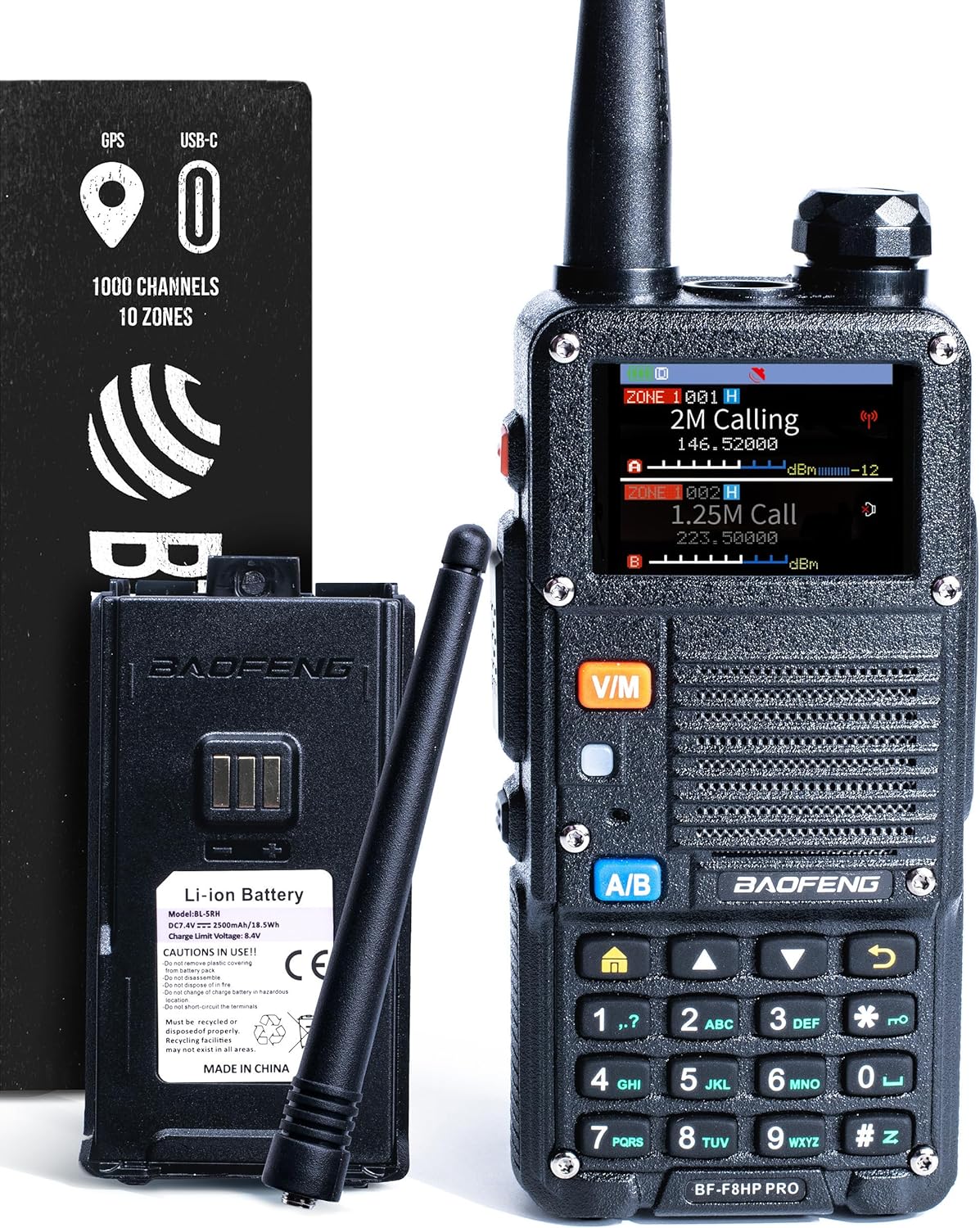 | Baofeng BF-F8HP Tri-Band | Check Price |
Our Top Picks 3  | Retevis RT95 Mobile Radio | Check Price |
Our Selected Top 12 Ham Radio for Home for Every Budget
This list features a carefully chosen selection of ham radios suitable for home use across different budgets. Each review explains the performance, ideal users, and key advantages and disadvantages, helping readers find the right device to meet their communication needs.
1. Baofeng AR-5RM Handheld Ham Radio 2 Pack
A large color screen and a broad frequency range stand out the most for this ham radio set, making it suitable for amateur operators who want clear visuals and extensive channel options. Its biggest strength lies in user-friendly operation combined with multiple ways to charge the radios, ideal for home use and field communication.
Setting up involves charging the radios via USB-C or the included base charger, which works well with most USB power sources. Day-to-day use feels comfortable thanks to the ergonomic design. Managing up to 999 channels feels practical since channels can be stored and accessed easily on the 1.77-inch color screen, which simplifies channel switching and memory management.
The radios deliver solid transmission and reception within their specified frequency ranges, with a maximum talking range claimed at 5 miles. Build quality reflects the ergonomic design focus, though it lacks water resistance.
The strongest praise centers on the intuitive interface and good battery life, while the absence of water resistance is commonly noted as a drawback.
The clear, large screen and easy memory management are highly appreciated for simplifying operation, while the lack of water resistance draws regular concerns in more exposed or outdoor use. Battery life covers typical sessions but doesn’t extend for continuous long stretches without recharging.
Those who mainly use their ham radios in dry, home, or controlled environments will find the features and charging flexibility beneficial. Anyone needing ruggedness or extended battery life might want to consider alternatives better suited for harsh or prolonged use.
Pros
- Large 1.77 inch color screen for easy channel viewing
- Ergonomic design improves comfort during use
- Multiple charging options including USB-C and base charger
- Supports up to 999 storage channels
Cons
- Not water resistant, making it vulnerable in wet conditions
- Battery life lasts about 6 hours, limiting long continuous use
| Specification | Details |
|---|---|
| Receiving Frequency Range | 108MHZ-136MHZ,136MHZ-174MHZ,220MHZ-260MHZ,350MHZ-390MHZ,400MHZ-520MHZ |
| Transmitting Frequency Range | 144MHZ-148MHZ,420MHZ-450MHZ |
| Number of Channels | 999 |
| Battery Average Life | 6 hours |
| Voltage | 7.4 volts |
2. Baofeng BF-F8HP Pro Tri-Band Ham Radio
Baofeng BF-F8HP Pro Tri-Band Ham Radio suits anyone wanting detailed control over many channels without complicated menus. Its biggest strength is the clear, English menu system paired with 1,000 memory channels, making it ideal for home use and growing setups needing organized analog operation.
Setting it up at home requires just a few button presses thanks to the sensible menus and full keypad. Daily use involves scanning relevant zones easily, skipping busy channels temporarily without losing your saved list. The dual watch mode lets you keep an eye on two channels simultaneously, perfect for staying connected across different groups or events.
Performance hits a sweet spot with adjustable receiver sensitivity and noise reduction helping keep transmissions clear within its 5-mile range. The build is solid and water resistant, ready for indoor and light outdoor use.
Most praise centers on its straightforward menus, while some note it doesn’t support digital systems like DMR, limiting it to analog channels.
The radio’s straightforward and well-organized menu system receives consistent praise for making complex channel management simple and accessible. The common limitation is the inability to handle digital voice modes like DMR, restricting it to analog communications and traditional scanning.
Anyone who relies mainly on analog channels and wants a reliable, easy-to-use home radio with extensive memory will find it fitting. Those needing compatibility with digital or trunked systems should look for radios designed to support those protocols instead.
Pros
- Clear English menus for ease of use
- 1,000 memory channels with 10 named zones
- Adjustable receiver sensitivity and noise reduction
- Water resistant for versatile use
Cons
- Does not decode digital or trunked systems
- Scanning works only with conventional analog channels
| Specification | Details |
|---|---|
| Number of Channels | 1000 |
| Frequency Range | 1.25 m Coverage, AM Aviation RX (108-137 MHz), FM Broadcast RX (65-108 MHz), UHF Coverage, VHF Coverage |
| Talking Range Maximum | 5 mile |
| Battery Average Life | 10 hours |
| Water Resistance Level | Water Resistant |
| Voltage | 7.4 volts |
3. Retevis RT95 Dual Band Mobile Ham Radio
Long distance communication from home or on the road can be tricky without the right setup. The Retevis RT95 Dual Band Mobile Ham Radio fits well for those wanting clear two-way contact from vehicles or a base station at home, excelling at offering extended reach thanks to its high gain antenna.
Setting it up is straightforward, especially if you plan to use it in a truck or RV. Lightweight construction makes handling easy, and the dual band tuner covers VHF and UHF frequencies between 144-148Mhz and 420-450Mhz.
Adjusting the microphone gain lets you manage call clarity, while dual speakers deliver clear, penetrating sound. An RCA output port enables connection to car audio systems for richer listening during communication sessions.
Performance focuses on a maximum talking range of 5 kilometers under good conditions, which is solid for both mobile and home uses. The build suits outdoor vehicle environments without adding much bulk but lacks water resistance, so careful placement is needed. The clearest praise relates to sound clarity and range, while complaints often mention the lack of water resistance and some interference in noisy environments.
Sound quality stands out with full and penetrating audio through dual speakers, helping maintain clear communication over several kilometers. The most common downside is the lack of water resistance, which requires caution when using in harsh weather or outdoor conditions.
Useful for those needing mobile or home base ham radio with easy setup and good distance. People requiring a waterproof unit or operating in very noisy RF areas might want to consider other radios designed specifically for tougher environments.
Pros
- High gain antenna for long distance communication
- Dual speakers with adjustable microphone gain
- Compact and lightweight for easy installation
- RCA output ports for car audio connection
Cons
- Not water resistant
- May experience interference in noisy environments
| Specification | Details |
|---|---|
| Number of Channels | 200 |
| Frequency Range | 144-148Mhz/420-450Mhz |
| Talking Range Maximum | 5 kilometer |
| Voltage | 13.8 volts |
| Connectivity Protocol | VHF, UHF |
4. AnyTone AT-588Max VHF Mobile Ham Radio

With up to 70 watts output on the 2-meter VHF band, the AT-588Max suits amateur radio operators who need reliable home or mobile communication with clear voice quality. Its power levels and noise reduction make it especially strong for users relying on repeaters or long-distance signals.
Setup involves connecting a proper VHF antenna and powered at 13.8 volts. Day-to-day use benefits from adjustable transmit and receive noise reduction, which helps cut down steady background noise, ideal in urban or vehicle environments.
The digital display and multiple channels provide easy access to a wide range of frequencies, making it straightforward to operate whether as a fixed station or on the move.
Performance delivers solid coverage up to 60 miles depending on terrain and repeater presence, with clean transmission thanks to five noise reduction levels. The radio feels well-built and fits wired setups neatly, but note it is not water resistant, which limits outdoor use in wet conditions. Its strongest point is voice clarity even in noisy environments, while a common complaint centers on lack of weather resistance.
Users appreciate the clear voice communication enabled by noise reduction, which improves transmission quality in noisy settings. The most frequent drawback is its lack of water resistance, restricting use in rainy or damp environments.
Operators needing strong, clear VHF communication from a stationary or vehicle setup will find this radio well suited to their needs. Those regularly operating outdoors in wet conditions might want to consider other options with better weather protections.
Pros
- High 70W output with selectable power levels
- Five levels of transmit and receive noise reduction
- Digital display with 510 channels for easy tuning
- Compatible with repeaters for extended range
Cons
- Not water resistant, limits outdoor use
- Range depends heavily on terrain and antenna setup
| Specification | Details |
|---|---|
| Number of Channels | 510 |
| Frequency Range | 144–148 MHz |
| Power Output | Up to 70W |
| Voltage | 13.8 volts |
| Temperature Range | -4°F to 140°F |
| Water Resistance Level | Not Water Resistant |
5. Baofeng UV-5R Dual Band Handheld Ham Radio
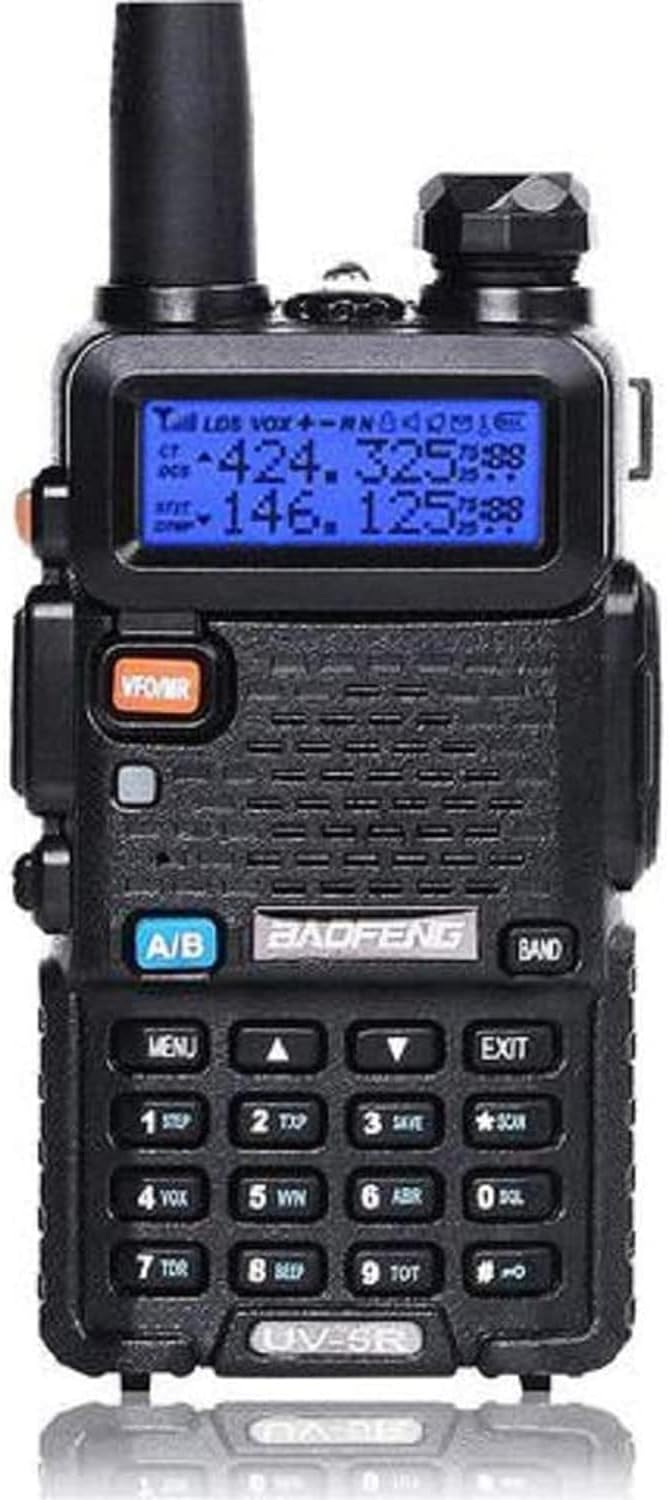
People who want a straightforward dual-band handheld ham radio for home use will appreciate the Baofeng UV-5R. It works well for those needing VHF and UHF coverage in one compact device with plenty of channels. Its biggest strength lies in offering a solid feature set without complicating the basics.
Setup involves charging the included lithium metal battery and programming up to 128 channels through its keypad or software. The dual-band display shows A and B frequencies independently, letting you monitor two frequencies at once while talking on one. The keypad lock prevents accidental changes, and the selectable tri-color backlight helps in low light conditions.
High and low TX power modes give flexibility depending on your communication range needs.
Transmission quality is consistent within its maximum 5-kilometer range, making it reliable around the neighborhood or local repeater. It feels reasonably sturdy but lacks water resistance, so it needs to stay dry.
Common praise highlights its easy frequency setup and versatile dual-display, while the frequent complaint concerns its limited weatherproofing and occasional audio clarity issues under noisy conditions.
The radio is praised for its flexible dual-display and channel setup, but many note the lack of water resistance as a real limitation for outdoor use. Audio performance can occasionally falter when there is background noise, affecting clarity.
Those using it mainly indoors or in dry conditions seeking easy switching between bands will be satisfied. Those needing a more rugged, weatherproof radio or crystal-clear audio in all conditions might want to explore other options.
Pros
- Dual-band with 128 programmable channels
- Dual frequency display and dual-standby
- Long battery life of up to 72 hours
- Selectable high/low TX power modes
Cons
- No water resistance, needs to stay dry
- Audio clarity can be inconsistent in noisy environments
| Specification | Details |
|---|---|
| Frequency Range | 144-148MHz, 420-450MHz |
| Number of Channels | 128 |
| Battery Average Life | 72 hours |
| Talking Range Maximum | 5 kilometer |
| Voltage | 4 volts |
| Water Resistance Level | Not Water Resistant |
6. Baofeng UV-5RM Handheld Ham Radio

A solid dual-band handheld ham radio designed for serious hobbyists and emergency communicators. Its biggest strength is the wide receiving frequency coverage, allowing you to pick up a broad range of signals beyond just the ham bands. A great choice for anyone needing versatility in local communication and weather updates.
Programming the radio with CHIRP software helps manage its 999 memory channels, making day-to-day operation smoother. The 1.77-inch color display makes channel browsing clear, and the ergonomic design means it’s comfortable during longer use. Type C charging keeps powering it up convenient, while features like the built-in flashlight and NOAA weather receiver add practical value in daily or emergency situations.
Performance is solid with a talking range up to 8 kilometers on licensed frequencies. The build feels sturdy but it’s not water resistant, so caution with moisture is necessary. The best feature is the wide frequency reception, while the most frequent gripe centers on the lack of water resistance.
The battery saver mode also helps extend usage when on the go.
The wide frequency range and 999 memory channels are praised for versatility and ease of use during different activities. Most often mentioned drawbacks involve the lack of water resistance, which can be a concern in harsh weather or outdoor conditions.
Those needing a flexible radio for home or casual outdoor use will find this model suits their needs well. Anyone requiring rugged, waterproof gear for heavy outdoor or professional use should consider a more specialized option.
Pros
- Wide receiving frequency coverage
- 999 programmable memory channels
- Integrated flashlight and NOAA weather receiver
- Type C rechargeable battery
Cons
- Not water resistant
- Maximum talking range limited to 8 kilometers
| Specification | Details |
|---|---|
| Receiving Frequency Range | 108MHz-136MHz, 136MHz-174MHz, 220MHz-260MHz, 350MHz-390MHz, 400MHz-520MHz |
| Transmitting Frequency Range | 144MHz-148MHz, 420MHz-450MHz |
| Number of Channels | 999 |
| Voltage | 7.4 volts |
| Charging | Type C |
| Water Resistance | Not Water Resistant |
7. Baofeng BF-F8HP (UV-5R 3rd Gen) Dual Band Radio

Baofeng BF-F8HP (UV-5R 3rd Gen) is a dual-band ham radio known for its increased power output, making it ideal for home use where stronger signals matter. It stands out with an 8-watt transmission power and a durable design suited to users who want reliable communication over long distances and varying conditions.
Setting up the radio involves programming channels with a recommended PC03 FTDI cable for ease. The day-to-day use benefits from adjustable power settings (8W, 4W, 1W) to balance battery life and range.
The larger battery and high gain antenna provide longer talk time and better reception, which are important for regular check-ins or emergency communication at home.
Performance-wise, the radio delivers up to a 50-mile talking range thanks to its upgraded 8-watt output and wide frequency coverage (VHF and UHF). Its hardened shell adds durability, while the waterproof feature protects it from splashes and light rain. Positive feedback highlights its power and battery life, but some mention that programming the channels can require patience without the cable.
The radio’s strongest feature is its upgraded 8-watt power coupled with a large battery, which allows for long-range communication with fewer recharges. Common difficulty involves the complexity of programming without the recommended cable, making set-up slower for those new to ham radios.
This model suits home users needing reliable, durable communication over wide distances and harsh conditions. Individuals who prefer simple, out-of-the-box use might want to consider radios with easier programming interfaces and smaller sizes.
Pros
- Twice the output power of earlier models
- Durable, waterproof housing
- Longer battery life with larger battery
- Compatible with many accessories
Cons
- Programming channels can be tricky without PC cable
- Radio feels slightly bulky for pocket carry
| Specification | Details |
|---|---|
| Output Power | 8 watts (High), 4 watts (Medium), 1 watt (Low) |
| Frequency Range | VHF 136-174 MHz, UHF 400-520 MHz |
| Number of Channels | 128 |
| Battery | 7.4 volts Lithium Polymer, 30% larger battery included |
| Antenna | V-85 High Gain Antenna |
| Water Resistance | Waterproof |
8. BTECH UV-50X2 Dual Band Mobile Ham Radio

Comfortable to have around home or office, this dual-band mobile ham radio works well for anyone needing flexible communication on VHF and UHF. Its standout feature is the wide accessory compatibility thanks to the RJ45 microphone port, letting you easily plug in quality audio devices that fit your style of use.
Setting it up is straightforward, especially with included mounting hardware for vehicle use, but it also switches smoothly to base station mode when paired with an external power supply. Day-to-day operations depend on clear audio, and the support for popular aftermarket accessories means improving sound quality is simple. Having 200 channels available gives plenty of room for different contacts and uses around the home.
It handles long-range communication well, reaching up to 100 miles under good conditions. The build feels solid, though it is not water resistant, which requires some care with outdoor use.
Most praise focuses on audio clarity and flexibility of accessories, while the main downside mentioned is the need for an additional power supply to use as a base station.
Audio clarity stands out as the best feature, supported by compatibility with many audio accessories. The necessity of purchasing a separate power supply for home use is a common drawback mentioned.
Those wanting a mobile setup with good sound options will find this radio fits well. People looking for a fully ready-to-go home base radio with built-in power supply might prefer alternatives.
Pros
- Supports wide range of audio accessories
- 200 channels for versatile communication
- Includes mounting hardware for vehicles
- Works on both VHF and UHF frequencies
Cons
- Needs extra power supply for base station use
- Not water resistant, watch outdoor exposure
| Specification | Details |
|---|---|
| Number of Channels | 200 |
| Frequency Range | FM, VHF, UHF |
| Talking Range Maximum | 100 mile |
| Voltage | 13.8 volts_of_direct_current |
| Connectivity Protocol | VHF, UHF |
9. Radioddity DB50 Dual Band Mobile Ham Radio
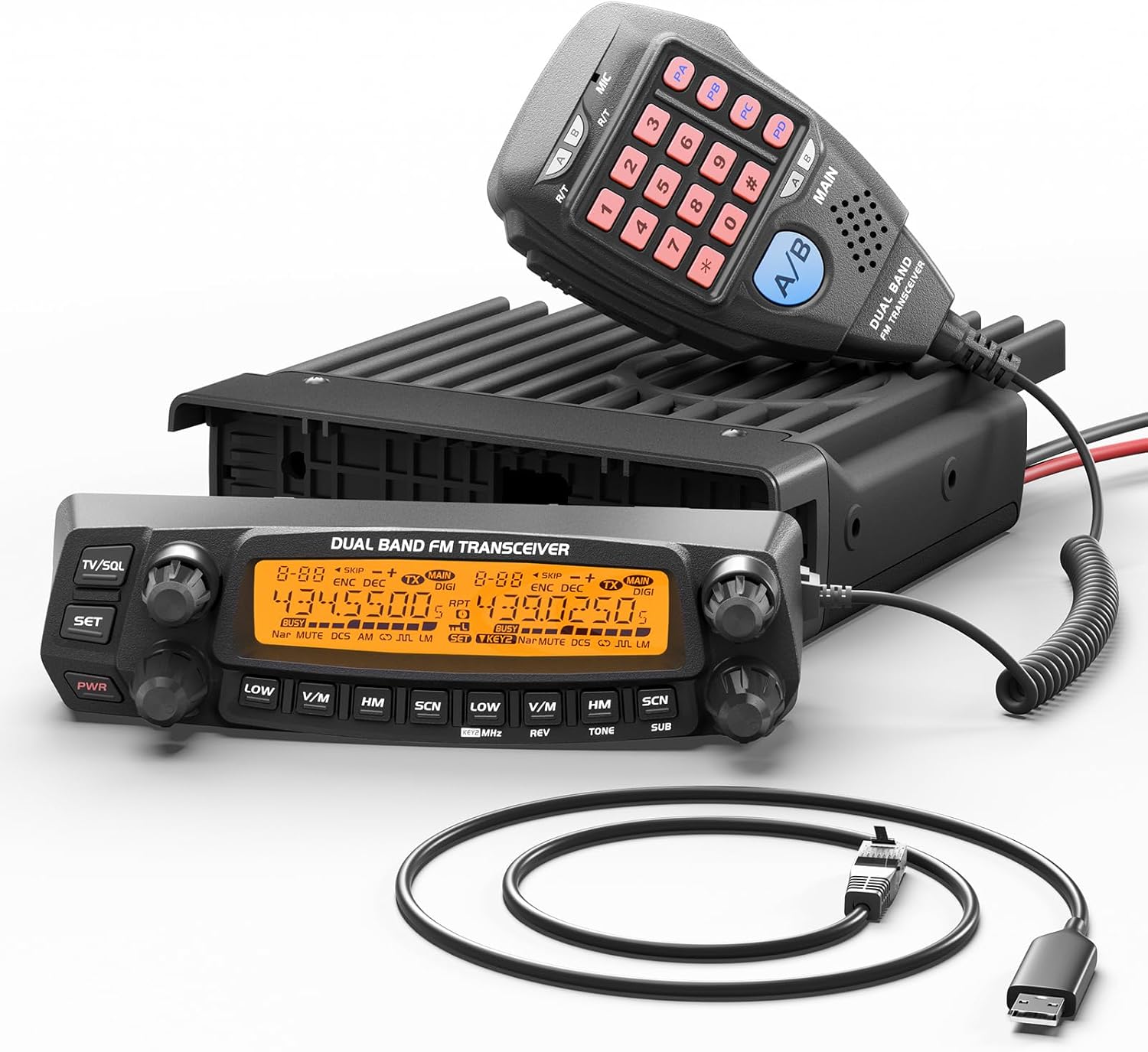
Powerful and flexible, the Radioddity DB50 Dual Band Mobile Ham Radio is great for anyone needing strong, long-range communication at home or on the road. Its standout feature is the 50W output that supports clear signals over extensive distances, making it suitable for emergency responders and outdoor activities.
Setting it up is straightforward, especially with the detachable front panel that allows placing the controls where it’s most convenient. Using it daily involves toggling through 758 channels on a digital display, comfortably switching between VHF and UHF frequencies. Compatibility with Chirp software and external accessories such as microphones and antennas ensures customization for various communication needs.
Radio performance shines with reliable transmissions reaching up to 50 miles. Build quality feels solid, designed for vehicle mounting though it’s not water-resistant. Reviews highlight its powerful 50W output and flexible installation.
The common gripe centers on the lack of water resistance, which limits outdoor use in wet conditions.
A key advantage is its powerful transmission that covers a large area clearly. Users appreciate the flexible mounting options, but many note the absence of water resistance as a drawback for outdoor applications. It’s a reliable setup for vehicle or home use in dry conditions.
Ideal for those needing strong signals and channel variety, especially emergency and logistics users. People planning frequent outdoor use where the radio might get wet should consider other models better suited to rough weather.
Pros
- High 50W output for long-distance communication
- Detachable front panel for flexible vehicle placement
- Supports a wide frequency range including air band
- Compatible with Chirp software and external accessories
Cons
- Not water resistant, limiting use in rain or outdoors
- Audible noise level at 40 dB may be noticeable
| Specification | Details |
|---|---|
| Output Power | 50W |
| Number of Channels | 758 |
| Frequency Range | UHF, VHF, Air band, 1.25m, 350MHz |
| Maximum Talking Range | 50 mile |
| Voltage | 13.8 volts |
10. BTECH UV-50PRO Dual Band Mobile Ham Radio

Made from sturdy components and designed for both mobile and base station use, the BTECH UV-50PRO suits licensed amateur radio operators wanting solid power options. Its standout feature is the selectable output power of 5W, 25W, or 50W, allowing for flexible communication ranges up to 35 miles.
Setting up the radio involves using the BTECH UV Programmer app on a smartphone, connected via Bluetooth, which makes editing channels, tones, offsets, and zones straightforward from anywhere. Adjusting settings on the fly becomes practical, especially with options to import and export CSV files for quick programming during club events or convoy communications.
The radio delivers reliable VHF and UHF dual-band operation with noise reduction to keep conversations clear. It’s built tough for road use but also serves well at home as a base unit.
Reviews appreciate its strong transmission power but mention the lithium-ion battery requirement as a downside for some, adding another component to manage.
The device is praised for its strong and clear signal output combined with versatile power settings. The Bluetooth app simplifies programming, which many value for ease during group or event use. Battery needs are the leading issue, requiring users to provide and maintain separate lithium-ion packs.
Operators who want a powerful mobile or home base radio with smartphone control will find this setup ideal. Those preferring a built-in power source or simpler power requirements might want to look at alternatives that avoid extra battery handling.
Pros
- Flexible power levels suit various communication needs
- Easy programming via phone app over Bluetooth
- Noise reduction improves audio clarity
- Support for CSV import/export simplifies large setups
Cons
- Requires lithium-ion batteries, not included
- Some find the battery management inconvenient
| Specification | Details |
|---|---|
| Output Power | 5W/25W/50W selectable |
| Maximum Talking Range | 35 mile |
| Connectivity Protocol | Bluetooth |
| Additional Features | Noise Reduction |
| Audible Noise | 30 db |
11. Baofeng 5RH Pro Handheld Ham Radio

Powerful handheld ham radio with a clear color display, an ideal fit for serious ham enthusiasts and outdoor users wanting multi-band coverage. Its strongest advantage lies in combining 10W output with GPS and NOAA weather alerts to keep communication clear and safe.
Setup involves charging the included lithium-ion battery, then programming channels within 10 zones across the tri-band frequencies. Daily use benefits from features like frequency copy, battery saver mode, and one-key emergency alarms. The IP54 water-resistant build means it handles rougher environments without worry.
Communication comes through consistently up to 10 km, matching its 10W power capacity. The rugged design holds up well outdoors, though lack of Bluetooth or CHIRP compatibility limits ease of advanced programming. Reviews praise reliability and safety features, but some note the screen size can feel small for detailed use.
Reliability in harsh environments stands out, with users valuing the combined GPS and weather alert system. The main annoyance comes from the lack of Bluetooth and CHIRP software support, which can make programming tougher for some. The small screen size may also feel limiting in certain situations.
The radio suits outdoor adventurers and emergency prepsters needing rugged, multi-band comms. People wanting easy, computerized programming or larger displays may want to look elsewhere for a better fit.
Pros
- Strong 10W signal for clear long-range contact
- Built-in GPS and NOAA weather alerts
- Durable, water-resistant IP54 housing
- One-key emergency and location sharing feature
Cons
- Not compatible with CHIRP or Bluetooth
- Small 1.77-inch screen can hinder navigation
| Specification | Details |
|---|---|
| Power Output | 10W |
| Channels | 999 (640 in 10 zones) |
| Display | 1.77-inch TFT Color Screen |
| Water Resistance | IP54 |
| Battery Life | 72 hours (Lithium Ion) |
| Frequency Bands | Tri-band (VHF/1.25M/UHF/AM/FM) |
12. Radioddity GD-88 Dual Band Ham Radio

Perfect for anyone wanting a powerful home ham radio with both analog and digital capabilities, this model stands out by offering dual band, dual mode, and dual standby functions. Its ability to handle two channels simultaneously and switch between analog and DMR radios makes it ideal for serious hobbyists looking to cover VHF and UHF frequencies.
Setting up is straightforward, and daily use highlights the convenience of dual VFOs for managing two frequencies at once. Switching between analog and digital modes feels smooth, helping when communicating with different types of radios. Built-in GPS and APRS support add value for those interested in location tracking, and the water-resistant design means it can handle occasional splashes around the house.
Performance hits a solid 10-mile range, reliable enough for most home and nearby contacts. The radio is well-built to withstand regular handling, with positive feedback on its flexible cross-band repeater function that extends communication reach. Some users have noted complexity in initial programming or menu navigation as a minor drawback, but most appreciate the broad compatibility with other VHF/UHF devices.
The radio’s cross-band repeater and smooth analog-to-digital transition receive strong praise for versatility and communication range. Complexities in programming and navigating menus remain a common difficulty for some, especially those new to digital modes. Everyday use requires some adjustment but rewards with diverse functionality and reliable dual-channel monitoring.
People who need wide frequency options, long-range capabilities, and both analog and digital support will find this radio a strong fit. Those seeking simpler, less technical devices or fully waterproof units might want to explore other options better suited to straightforward use or harsher environments.
Pros
- Dual band, dual mode, and dual standby
- Cross-band repeater extends communication range
- Includes lithium-ion battery for extended use
- Water resistant to handle light moisture
Cons
- Initial programming and menu navigation can be complex
- Water resistant, not fully waterproof
| Specification | Details |
|---|---|
| Number of Channels | 4000 |
| Frequency Range | UHF VHF |
| Talking Range Maximum | 10 mile |
| Connectivity Protocol | DMR |
| Number of Batteries | 1 Lithium Ion battery required (included) |
| Additional Features | Cross-band Repeater, GPS / APRS, Water Resistant |
Best Ham Radios for Home Comparison Table
| Product | Channels | Range | Water Resistance | Additional Features |
|---|---|---|---|---|
| Baofeng AR-5RM Handheld | 999 | Long Range | – | Battery Saver, Emergency Alarm |
| Baofeng BF-F8HP Tri-Band | 1000 | Long Range | Weather Resistant | Adjustable Sensitivity, Noise Reduction |
| Retevis RT95 Mobile Radio | 200 | 5 km | Not Water Resistant | Digital Display, Dual Band |
| AnyTone AT-588Max VHF | 510 | 60 mile | Not Water Resistant | Digital Display, Noise Reduction |
| Baofeng UV-5R Dual Band | 128 | 5 km | Not Water Resistant | Keypad Lock |
| Baofeng UV-5RM Handheld | 999 | Long Range | – | Battery Saver, NOAA Receiver |
| Baofeng BF-F8HP UV-5R Gen3 | 128 | 50 mile | Waterproof | Authorized Reseller, Software Available |
| BTECH UV-50X2 Mobile | 200 | 100 mile | – | Software, YouTube Tutorials |
| Radioddity DB50 Mobile | 758 | 50 mile | Not Water Resistant | Digital Display, Air Band |
| BTECH UV-50PRO Mobile | – | 35 mile | – | Noise Reduction, Bluetooth |
| Baofeng 5RH Pro Handheld | 999 | 10 km | Water Resistant | GPS/APRS, Tri-band |
| Radioddity GD-88 Dual Band | 4000 | 10 mile | Water Resistant | Cross-band Repeater, GPS/APRS |
- Channels999
- RangeLong Range
- Water Resistance–
- Additional FeaturesBattery Saver, Emergency Alarm
- Channels1000
- RangeLong Range
- Water ResistanceWeather Resistant
- Additional FeaturesAdjustable Sensitivity, Noise Reduction
- Channels200
- Range5 km
- Water ResistanceNot Water Resistant
- Additional FeaturesDigital Display, Dual Band
- Channels510
- Range60 mile
- Water ResistanceNot Water Resistant
- Additional FeaturesDigital Display, Noise Reduction
- Channels128
- Range5 km
- Water ResistanceNot Water Resistant
- Additional FeaturesKeypad Lock
- Channels999
- RangeLong Range
- Water Resistance–
- Additional FeaturesBattery Saver, NOAA Receiver
- Channels128
- Range50 mile
- Water ResistanceWaterproof
- Additional FeaturesAuthorized Reseller, Software Available
- Channels200
- Range100 mile
- Water Resistance–
- Additional FeaturesSoftware, YouTube Tutorials
- Channels758
- Range50 mile
- Water ResistanceNot Water Resistant
- Additional FeaturesDigital Display, Air Band
- Channels–
- Range35 mile
- Water Resistance–
- Additional FeaturesNoise Reduction, Bluetooth
- Channels999
- Range10 km
- Water ResistanceWater Resistant
- Additional FeaturesGPS/APRS, Tri-band
- Channels4000
- Range10 mile
- Water ResistanceWater Resistant
- Additional FeaturesCross-band Repeater, GPS/APRS
How to Choose the Best Ham Radio for Home
Choosing the right ham radio for home depends on factors like ease of use, signal range, and durability to ensure reliable communication. Prioritizing these features helps avoid frequent replacements and technical issues, ultimately saving money and reducing frustration over time.
Frequency Range and Bands
Many users find that a radio limited to a single band quickly becomes frustrating as communication needs change. Radios with multiband capability let you connect across various frequencies, from local VHF conversations to distant UHF signals, providing both flexibility and broader coverage.
This versatility matters if you want to reach different groups or listen to a variety of transmissions without switching devices.
Compatibility with local and international frequency regulations is essential; radios that cover standard amateur bands ensure you stay within legal limits while chatting near or far. Look for models that clearly list supported frequency ranges, often spanning 144-148 MHz for VHF and 430-450 MHz for UHF.
Choosing one that handles both bands means less hassle and more communication options in everyday use.
Power Output and Range
Transmission power directly influences how far your signals travel and how clear they arrive. Radios offering adjustable power levels, typically ranging from 1 to 50 watts, help balance battery consumption and distance. Lower power conserves energy during short-range chats, while higher settings boost signal strength for challenging conditions.
Higher output also improves signal clarity by overcoming interference, though it can drain batteries faster and may cause more background noise if not managed well. Most users benefit from having at least two power settings to switch between local and extended range communication as needed.
User Interface and Controls
Switching channels and tuning frequencies frequently can be a hassle without intuitive controls. Radios with clear digital displays help users confirm settings quickly, avoiding wasted time and wrong frequencies. Programmable buttons make accessing favorite channels or functions faster, especially during busy conversations or emergency use.
Ergonomic design plays a big role for those who spend hours operating the radio. Well-placed knobs and buttons prevent finger fatigue, while logical menu structures reduce learning curves. Radios that feel comfortable in hand and respond smoothly improve the overall experience.
Build Quality and Durability
Devices built with sturdy plastics or metal alloys usually survive everyday indoor conditions better. Kitchens or basements often have dust and humidity that can degrade cheap electronics over time. Radios with sealed buttons and reinforced casings resist moisture and accidental bumps.
Dropping the radio during use or storage happens more than you’d think. Models tested to resist minor shocks and with quality internal components tend to last several years without issues.
Checking for dust and moisture ratings like IP54 ensures the device maintains reliable operation day after day.
Power Source and Battery Life
Rechargeable batteries are common and convenient, enabling cordless use for several hours. Battery capacity influences how long the radio can run, typical packs support 8 to 12 hours on moderate power settings.
Mains power options come in handy for stationary setups, preventing interruptions during extended sessions.
Using external power supplies or backup batteries extends operational time significantly, which suits users needing long shifts or emergency readiness. Radios with easy battery replacement or USB charging provide practical flexibility to keep communications going without frequent downtime.
Optimizing Your Ham Radio Setup for Enhanced Home Communication
Positioning the antenna is crucial for improving signal clarity and range. The antenna should ideally be installed outdoors, away from metal obstructions and electrical wiring, to reduce interference.
Using a quality coaxial cable with proper connectors ensures minimal signal loss between the radio and antenna.
Keeping the radio unit in an open area with good ventilation helps prevent overheating during extended use. It’s helpful to have a dedicated power supply with stable voltage output to avoid fluctuations that can affect transmission performance.
Incorporating a grounding system reduces electrical noise and protects the equipment during storms.
- Install the antenna as high and clear as possible
- Use low-loss coaxial cables and secure connections
- Ensure proper ventilation for the radio base unit
- Provide a stable power source with surge protection
- Ground the system to minimize interference and improve safety
Essential Maintenance Practices for Longevity of Your Ham Radio
Routine cleaning helps prevent dust buildup, which can cause overheating or degrade performance. Use a soft, dry cloth for the radio’s exterior and check ventilation openings regularly.
Inspect cables periodically for signs of wear or corrosion to maintain strong connections.
Battery-powered units require monitoring of battery health and replacement when charge capacity diminishes. Avoid exposing the radio to extreme temperatures or moisture, as both can damage internal components over time.
Calibration of certain radio models may be necessary to keep frequency accuracy and sensitivity optimal. Consulting the user manual for specific maintenance intervals keeps the equipment running reliably.
- Clean dust and debris from the radio and antenna connectors
- Inspect cables for damage and replace if necessary
- Monitor and replace batteries as needed
- Store equipment in dry, temperature-controlled areas
- Follow recommended calibration schedules
Comparing Base Station and Mobile Ham Radios for Home Use
Base station ham radios offer higher power output and typically provide better sound quality and extended range. They often come with larger displays and more advanced controls, making them suitable for fixed use at home.
Their size usually requires a dedicated space and external antenna setup.
Mobile ham radios are more compact and designed for vehicle installation but can be adapted for home use if space is limited. They have lower power compared to base stations and smaller antenna connections, which may limit transmission distance slightly.
The choice depends on available space, intended range, and frequency bands. Base stations generally offer more versatility for home setups, while mobile radios can be convenient for those who want portability or minimal footprint.
- Base station radios: higher output, better audio, bulkier
- Mobile radios: compact, lower power, easier to relocate
- External antennas improve performance for both types
- Consider power and space constraints when choosing
People Also Asked
How Do I Properly Set up a Ham Radio at Home?
Setting up a ham radio at home involves connecting the transceiver, power supply, and antenna correctly. A practical tip is to place the antenna as high and clear of obstructions as possible to improve signal quality and reduce interference. Also, using a SWR meter helps ensure your antenna is properly tuned.
What Safety Precautions Should I Follow When Using Ham Radios?
Safety precautions include grounding your equipment and avoiding operating during lightning storms. Always use the recommended power levels to prevent overheating or damaging your radio. Keep cables organized to avoid tripping hazards and electromagnetic interference.
How Long Does a Typical Ham Radio Transceiver Last?
A typical ham radio transceiver can last 10 to 20 years with proper care. Regularly cleaning connectors and keeping the radio in a dust-free environment prolongs its life. Also, avoid exposure to extreme temperatures which can degrade internal components.
Are There Compatibility Issues with Different Ham Radio Accessories?
Some accessories may not be fully compatible, especially if they’re from different brands or older models. Checking the connector types and voltage requirements first can prevent damage. Using accessories designed for your specific radio model generally ensures better performance.
What Common Problems Occur with Ham Radios and How to Fix?
Common problems include poor transmission quality and power issues. Many times, checking antenna connections and ensuring the battery or power supply is functioning solves these issues. Firmware updates and resetting the radio to factory settings can also fix software glitches.
Conclusion
Choosing the right ham radio for home mainly depends on how much range you need, ease of use, and the features that fit your experience level. Good sound clarity and reliable build quality also matter because they affect daily use and long-term satisfaction.
Consider your available space and how often you plan to operate before deciding. Sticking to your budget helps avoid buying extras you might not need.
Take another look at the comparison table and the detailed reviews above to find the model that matches your setup and goals best.