Top 12 Best Emergency Radio Sweet Home Survival Picks
When the power goes out, a cheap or poorly made emergency radio often fails just when it’s needed most. Many people searching for the best emergency radio sweet home have experienced radios with weak reception or batteries that run out too quickly, leaving them in the dark and out of touch. Reliable communication and consistent power supply are critical during an emergency, and settling for less can create unnecessary stress and risk.
A good emergency radio balances durability, power options, and ease of use. Look for radios with weather-resistant materials that can handle rough conditions around the house. Compact size matters for easy storage, but the radio must still provide clear AM/FM and NOAA weather channels.
Power sources usually include a hand crank, rechargeable batteries, and standard AA batteries, with runtimes that can stretch beyond 10 hours on continuous use. Simple controls and a bright, readable display also improve usability when time is crucial.
Need a Quick Check?
| Image | Product | Price |
|---|---|---|
Our Top Picks 1  | FosPower Emergency Radio | Check Price |
Our Top Picks 2  | Peakeep NOAA Radio | Check Price |
Our Top Picks 3 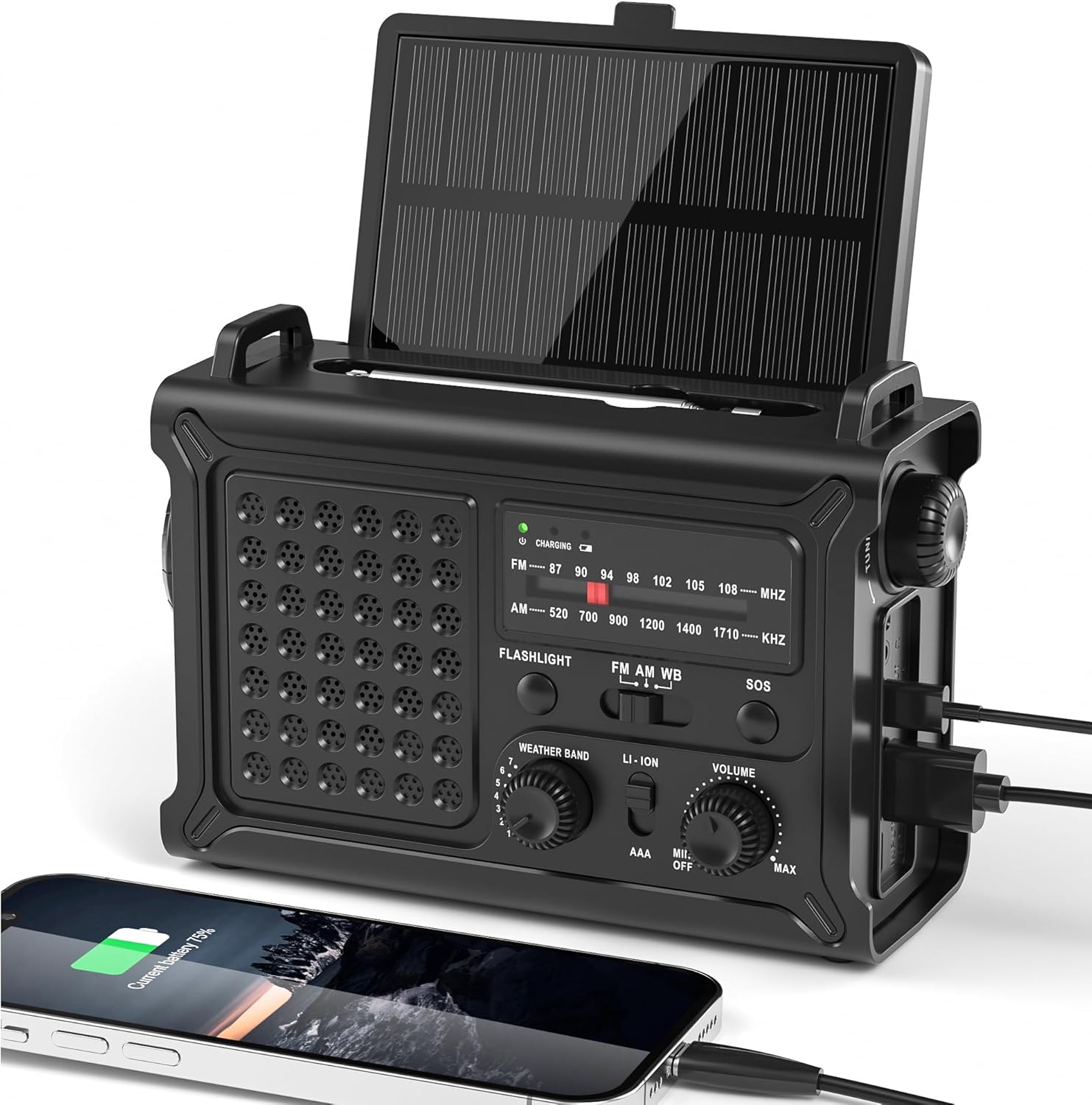 | Mesqool NOAA Weather Radio | Check Price |
Our Selected Top 12 Emergency Radio Sweet Home You Can Trust
This list features reliable emergency radios designed for home use, highlighting their performance, features, and suitability for different needs. Each review covers strengths and weaknesses to help you choose the best option for staying prepared during power outages or emergencies.
1. FosPower NOAA Emergency Weather Radio A1
Durable plastic casing and simple controls define a radio designed for emergency home use, with a strong focus on reliable power backup. Anyone wanting a weather radio that doubles as a power bank and flashlight will find this unit especially useful.
Its standout feature is the combination of three power sources to keep it running when needed most.
Setup involves inserting four AAA batteries or relying on the hand crank and solar panel to keep the radio charged. Daily use is straightforward with an AM/FM/WB tuner and a USB-C port for charging small devices like phones and tablets. The built-in LED light and SOS alarm add extra safety features that make it handy during power outages or storms.
It performs well in picking up multiple radio bands and consistently provides light and power when hand-cranked or exposed to sunlight. The plastic build feels solid, though some find the crank a bit stiff at times. The ability to charge devices via the 2000mAh power bank receives a lot of praise.
A noted downside is needing AAA batteries as a fallback, which might be inconvenient during extended emergencies.
The radio reliably holds power through manual cranking and solar, and its ability to charge external devices earns positive remarks for emergency situations. A common issue is the crank being hard to turn, which may slow down recharging when quick energy is needed.
Those who want a versatile radio that acts as an emergency power bank and light will appreciate its features. Anyone seeking a lightweight radio with fewer manual charging steps might prefer a model that relies less on AAA batteries and crank power.
Pros
- Multiple power sources including hand crank and solar
- Can charge smartphones and tablets via USB-C
- Includes LED light and SOS alarm functions
- Water-resistant design suitable for outdoor use
Cons
- Crank mechanism can be somewhat stiff
- Needs AAA batteries as backup power source
| Specification | Details |
|---|---|
| Power Source | Solar, Battery, Handcrank |
| Power Bank Capacity | 7400mWh (2000mAh) |
| Radio Bands Supported | AM, FM, WB |
| Connectivity Technology | USB C |
| Number of Batteries | 4 AAA batteries required |
| Water Resistance Level | Water Resistant |
2. Peakeep Emergency NOAA Weather Radio
Bright and straightforward to use, this emergency weather radio suits anyone wanting reliable alerts and multiple power options. Its longest crank handle and solar panel keep the device running longer through outages, making it great for serious prep or casual safety in rural or urban homes.
Setup is simple with clear digital tuning covering NOAA and seven emergency weather channels. Daily use involves keeping it charged via solar, crank, or USB-C, with the AM/FM/SW/WB radio features adding extra entertainment or info. The built-in flashlight and loud SOS siren add useful convenience during blackouts or emergencies.
It reliably picks up emergency alerts with a loud 120dB siren that can really attract attention, backing up its role as a safety tool. The build feels sturdy but not bulky, with the 4-inch crank offering easier hand power. Some mention the nonstandard batteries as a small hassle, but most praise how long the recharge lasts without power.
The radio delivers solid emergency alerts with an impressively loud siren and efficient power options that keep it operational during long blackouts. Most common complaint concerns the nonstandard batteries that might not be as easy to replace on the go.
Anyone serious about emergency preparedness will appreciate the reliable power sources and weather alerts. Those looking for a more compact or simple battery solution might want to look at other models.
Pros
- Long 4-inch crank handle for better manual power
- Upgraded solar panel for longer charging
- Super loud 120dB SOS siren for emergencies
- Supports multiple radio bands including NOAA alerts
Cons
- Uses 2 nonstandard batteries, which can be inconvenient
- Some users find it slightly bulky for portability
| Specification | Details |
|---|---|
| Power Source | Corded Electric, Rechargeable Battery, Solar, Hand Crank |
| Radio Bands Supported | AM/FM/SW/WB |
| Battery | 18500mWh Rechargeable Battery |
| Crank Handle Length | 4-in |
| Siren Loudness | 120dB SOS Siren |
3. Mesqool Emergency Weather Radio NOAA Alert
Reliable reception across NOAA, AM, and FM bands stands out on this radio, making it a smart choice for anyone wanting a dependable emergency weather radio. It suits people who prioritize staying informed during storms or off-grid adventures without worrying about power issues.
The setup feels straightforward thanks to its multiple power options including an 8500mm² solar panel, hand crank, and USB Type-C input. Daily use involves tuning into clear broadcasts on the faster, stronger, and clearer tuner. The LED flashlight and reading lamp add to its practicality, while the SOS alarm gives extra security.
Charging smartphones is handy with the emergency power bank function, helping stay connected when needed most.
Reception remains consistently clear due to the high-sensitivity signal chip and noise-reduction system, making its main purpose reliable. Its build is compact yet portable, designed to stand up to frequent use.
Reviewers praise the large solar panel for fast charging even in low light. Some have mentioned the speaker volume could be louder in noisy environments, but it generally performs well in emergencies.
The radio offers reliable reception and fast solar charging praised for its oversized panel, while some find the speaker volume not quite loud enough for noisy environments. Setup and daily use benefit from multiple power sources and handy extras like an SOS alarm and flashlight.
People looking for a dependable emergency radio with strong signal and versatile charging will appreciate this model. Those needing louder audio or lighter backup power options might want to explore alternatives.
Pros
- Strong NOAA/AM/FM reception with clear sound
- Large solar panel for faster charging
- Multiple power options including hand crank and USB-C
- Includes LED flashlight and SOS alarm
Cons
- Speaker volume could be louder in busy areas
- Relies on 3 AAA batteries as backup which may add weight
| Specification | Details |
|---|---|
| Radio Bands Supported | NOAA | FM | AM |
| Power Source | Solar Panel | Hand Crank | 12000mAh Lithium Battery | Type-C Input 5V/2A | 3 AAA Batteries |
| Speaker Maximum Output Power | 5 watts |
| High-Efficiency Solar Panel Size | 8500mm² |
| Additional Features | Emergency Cellphone Charger, LED Flashlight & Reading Lamp, SOS Alarm |
4. Emergency Weather Radio Solar Hand Crank

Power outages and emergencies call for a reliable radio that can keep you informed and prepared. Ideal for anyone wanting dependable access to news and alerts without relying on electricity, this Emergency Weather Radio Solar Hand Crank stands out for its versatile power options and long-lasting battery capacity.
Setting it up is straightforward since it comes with a built-in AM antenna and supports AM, FM, and WB NOAA bands for a wide range of broadcasts. Recharging is possible via a hand crank, solar panel, or internal lithium-ion battery, which means you can keep it running through different conditions.
Its portable and lightweight design makes carrying it around easy, while an integrated flashlight and SOS alarm add useful emergency features.
It delivers clear sound at 2 watts and provides steady radio reception thanks to the tuner and antenna setup. The construction feels solid yet light enough for outdoor use, aligning with its role as survival gear.
Most users appreciate how it maintains power during extended use, but some mention the hand crank mechanism requires effort and can be slow to charge fully.
The high-capacity 37000mWh battery and multiple charging options make it reliable in long outages. Many find the hand crank charging slow and somewhat physically demanding. It offers solid radio reception and practical emergency features, but the speaker volume is modest for noisy environments.
People who need a lightweight, versatile emergency radio with built-in light and alarm will find it useful for home or outdoor use. Those who prefer louder audio or quicker manual charging might prefer a different model with stronger output or faster crank performance.
Pros
- Three charging methods for various power situations
- Compact and lightweight for easy portability
- Clear reception on multiple radio bands
- Includes flash and SOS alarm for emergencies
Cons
- Hand crank can be tiring to generate power
- Speaker output power is limited to 2 watts
| Specification | Details |
|---|---|
| Power Source | Rechargeable Battery Powered, Hand Crank, Solar Powered |
| Battery Capacity | 37000mWh |
| Tuner Type | AM FM WB NOAA |
| Speaker Maximum Output Power | 2 watts |
| Voltage | 3.7 volts |
| Additional Features | Built-In Flashlight, SOS Alarm, Portable, Lightweight |
5. PRUNUS J03 Portable AM FM Radio
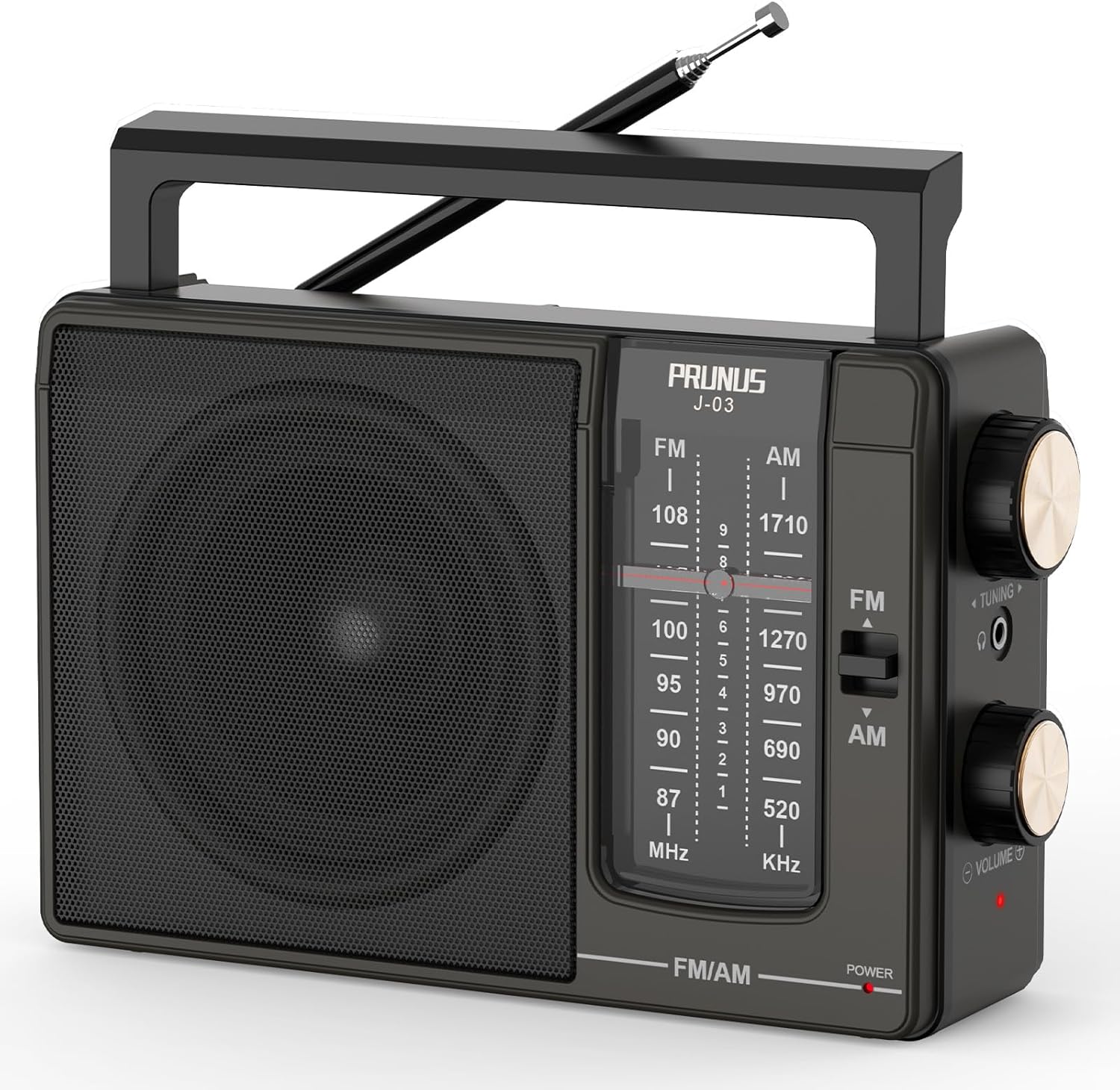
Runs on either a 110-volt AC plug or 4 AA batteries, making it a flexible choice for both indoor and outdoor use. Perfect for anyone wanting a simple, portable AM/FM radio that can easily switch between plug-in power and battery operation without fuss.
Setup involves plugging in the AC cable or inserting four AA batteries (not included), which makes switching between home and outdoor use straightforward. Its compact size and foldable handle make carrying it on road trips or to the park very convenient.
Listening through a headphone jack is easy, and the USB connectivity adds some versatility for modern devices.
The radio delivers clear AM/FM reception within its single 108 MHz frequency range and a 5-watt speaker output that works well for casual listening. The plastic build keeps the weight down to 20.8 oz, making it lightweight but not water resistant. The strongest praise is for its ease of portability, while the most common complaint centers on the lack of battery inclusion and absence of water resistance.
Portability stands out as the most valued feature, making it suitable for carrying on outdoor trips or moving between rooms easily. Commonly noted drawbacks include the lack of included batteries and absence of water resistance, which limits use in damp environments.
Anyone needing a simple, lightweight emergency radio for indoor and dry outdoor use will appreciate this model. Those looking for waterproof options or built-in batteries may want to look elsewhere.
Pros
- Operates on AC plug or 4 AA batteries
- Lightweight and easy to carry with foldable handle
- Supports headphone connection
- Compact size fits well in small spaces
Cons
- Batteries not included
- Not water resistant
| Specification | Details |
|---|---|
| Power Source | Battery Powered or 110 volts AC |
| Batteries Required | 4 AA |
| Speaker Output | 5 watts |
| Dimensions | 8.2 x 5.2 x 2.4 inches |
| Weight | 20.8 oz |
| Radio Bands Supported | 2-Band |
6. PRUNUS J161 NOAA Weather AM FM Radio

Great for anyone who wants reliable weather updates during emergencies, especially hikers and emergency kit preppers. Its biggest strength is packing essential NOAA weather alerts into a compact device that fits easily in a pocket or backpack.
Setting it up is straightforward, just pop in two AA batteries and tune into the weather bands or AM/FM stations with a simple dial. The radio’s small size and included lanyard make it easy to carry and use with one hand, perfect for quick access on the go or during power outages.
It covers seven NOAA weather bands accurately, so you’ll get timely updates on severe weather without relying on power or internet. The build feels solid and lightweight at 0.24lb.
Most praise highlights its portability and clear alerts, while the main complaint is that it only supports mono and stereo audio output modes, which may affect sound quality.
The radio receives weather alerts clearly and is very portable, making it easy to stay informed during emergencies. Complaints mostly mention that sound output modes are basic, which might affect how well you hear broadcasts in noisy environments.
Those needing a compact, battery-powered radio for emergency weather updates will appreciate this model. People who want richer audio quality or rechargeable options might want to explore other radios designed for more advanced sound features.
Pros
- Compact and lightweight design
- Includes 7 NOAA weather bands
- Easy one-hand operation with lanyard
- Battery powered for use during outages
Cons
- Audio limited to mono and stereo modes
- Requires two AA batteries (not included)
| Specification | Details |
|---|---|
| Dimensions | 4.7 x 2.8 x 1.2 in |
| Weight | 0.24 lb (exclude battery) |
| Power Source | Battery Powered (2 AA batteries required) |
| Radio Bands Supported | 1-Band (NOAA Weather, AM, FM) |
| Audio Output Mode | Mono, Stereo |
| Connectivity Technology | IR |
7. Emergency Weather Radio Solar Hand Crank
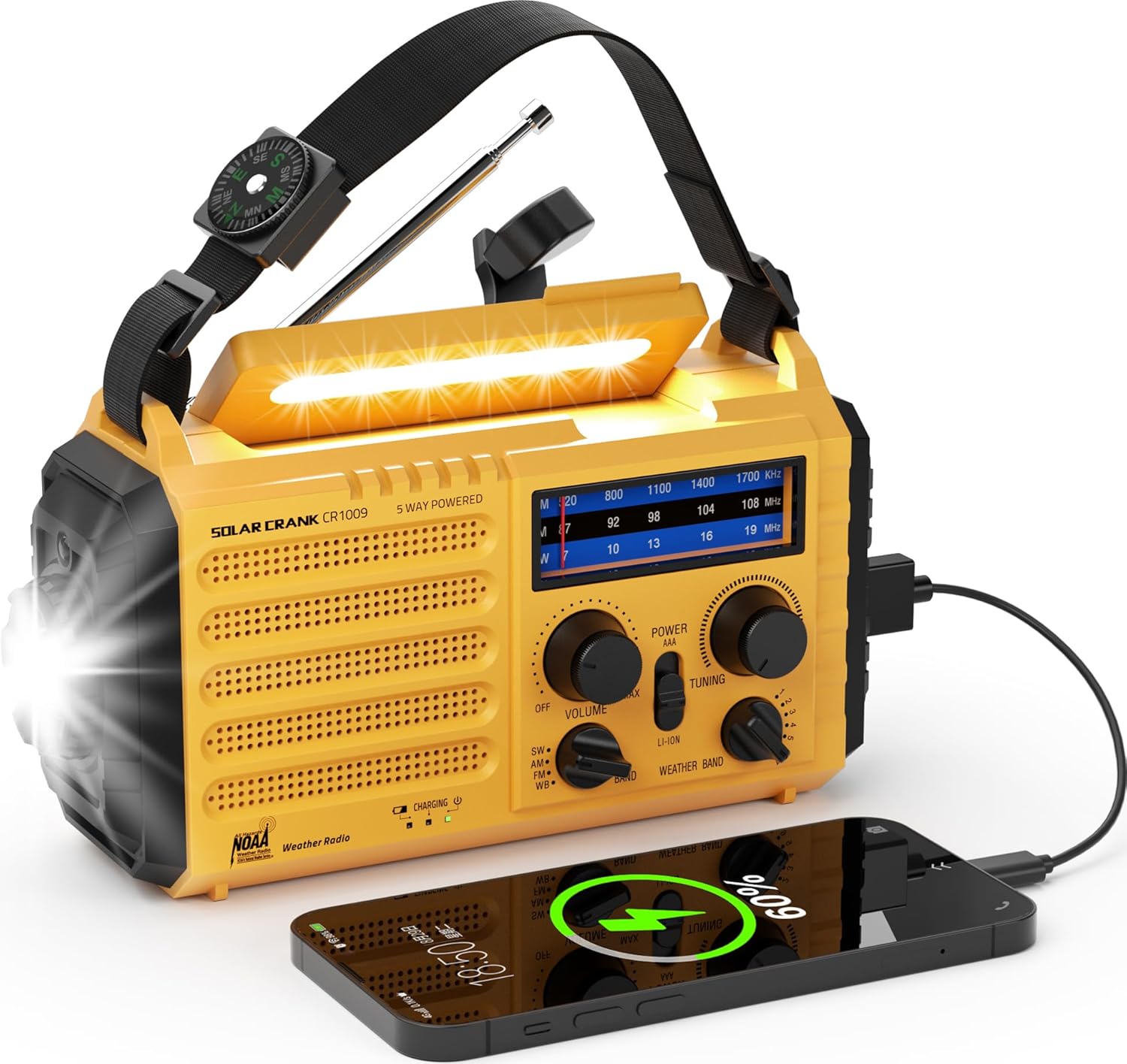
Solar and hand crank power options make this emergency weather radio stand out for anyone wanting reliable access to NOAA alerts without worrying about batteries. Perfect for people preparing their home for storms or any natural disaster, it keeps you informed and connected however the power situation shifts.
Its biggest strength is being ready no matter the circumstance.
Setup is pretty straightforward with a USB charging option alongside solar and manual hand crank power sources. Day to day, switching between AM/FM/SW and NOAA weather bands is easy to do with the band selector.
The flashlight and reading lamp add practical convenience during power outages. Charging your phone using the emergency power bank feature helps extend your device’s battery when needed.
The radio’s performance in picking up weather alerts is reliable, providing timely warnings from the National Weather Service. It feels solidly built with a rechargeable 5000 mAh battery ensuring it stays powered longer.
The loud SOS alarm and flashing red light are valuable safety features. A common complaint is that the hand crank requires a lot of effort to generate significant charge.
Reliable NOAA weather alert reception and timely warnings provide essential safety information during disasters. The hand crank charging option works but often demands a lot of physical effort to generate usable power quickly.
Anyone wanting dependable, multi-band emergency radio capabilities with several power sources will find this very useful. Those needing faster or easier manual charging might want to explore alternatives.
Pros
- Multiple power options including solar and hand crank
- NOAA weather and seven bands for local alerts
- Emergency power bank for charging phones
- Loud SOS alarm with flashing red light
Cons
- Hand crank requires significant effort
- Reading lamp could be brighter
| Specification | Details |
|---|---|
| Power Source | Solar Panel, Hand Crank, 5000 Rechargeable Battery, 3*AAA Battery, Micro USB input |
| Radio Bands Supported | AM/FM/SW/NOAA Weather Radio |
| Additional Features | Emergency Power Bank Phone Charger, Flashlight, Reading Lamp, SOS Alarm |
| Connectivity Technology | USB |
| Frequency | 108 MHz |
| Compatible Devices | Android and iPhone, Headphone, Laptop, Smartphone, Tablet |
8. Midland ER310 Emergency Crank Weather Radio

Midland ER310 Emergency Crank Weather Radio focuses on reliable power options, making it ideal for anyone preparing for power outages or outdoor emergencies. The strongest feature is its solar-powered battery alongside traditional crank and USB charging, ensuring you won’t be left without a source of information when you need it most.
Setup involves charging up the 6 included AA batteries or using available solar power. Daily use is straightforward with AM/FM tuning and a bright built-in LED flashlight that also acts as an emergency light source.
The USB interface allows connection to smartphones and tablets, providing extra versatility when staying informed during uncertain situations.
Performance on the radio reception front is solid across its 2 bands, and the LED display is clear and easy to read. Construction feels practical though it lacks water resistance, which means you need to keep it dry. Many find the multiple power sources the biggest advantage, though a few mention it could be sturdier and less bulky for travel.
Many appreciate the variety of power sources, ensuring radio functionality even without electricity. Common complaints include its lack of water resistance and somewhat bulky design, which can make it less convenient to carry in wet or rough conditions.
People who need a dependable emergency radio with flexible charging will find this a solid pick. Those looking for a compact or waterproof option may want to consider alternatives better suited for rugged outdoor exposure.
Pros
- Multiple power options including solar and crank
- Includes 6 AA batteries for immediate use
- USB connection for device charging
- Bright built-in LED flashlight
Cons
- Not water resistant, needs to be kept dry
- Some find the casing bulky and not very rugged
| Specification | Details |
|---|---|
| Power Source | Solar Powered |
| Number of Batteries | 6 AA batteries required (included) |
| Connectivity Technology | USB |
| Tuner Type | AM/FM |
| Additional Features | Built-In Flashlight |
| Display Type | LED |
9. Portable NOAA Weather AM FM Radio

Easy to use and dependable, this portable NOAA Weather AM FM Radio suits anyone who wants reliable emergency updates without fuss. The standout feature is the DSP anti-interference chip, which makes tuning in clear and steady, even in areas with weak signals.
Setup is straightforward with a large rotary knob for tuning and volume, keeping things simple for those not comfortable with digital controls. The telescopic antenna extends easily to boost reception. It’s powered by 4 C batteries, so you can place it wherever you need without worrying about plugs.
Plugging in headphones or auxiliary devices is a bonus for private listening.
It does a great job catching AM, FM, and NOAA stations clearly thanks to the wide reception range. The analog display and solid build feel durable enough to handle regular use.
Users praise the reliable signal reception and easy tuning, though the speaker’s output is only 3 watts, which can sound a bit quiet in noisy environments.
This radio stands out for its strong signal pickup and easy-to-use analog controls designed for simplicity. The most frequent downside mentioned is the low speaker volume, which might not fill larger or noisier spaces well. The solid reception helps keep you informed during emergencies without a lot of setup hassle.
Those who prefer straightforward, battery-powered radios with analog dials will appreciate this model. It fits well in homes needing dependable weather alerts and basic radio functions. Anyone needing louder sound or rechargeable power might want to explore other options.
Pros
- Clear reception with DSP anti-interference chip
- Simple analog tuning and volume control
- Portable and battery operated
- Auxiliary input for headphones or devices
Cons
- Speaker volume output is relatively low
- Requires 4 C batteries, can add bulk
| Specification | Details |
|---|---|
| Power Source | Battery Powered |
| Radio Bands Supported | 3-Band |
| Speaker Maximum Output Power | 3 watts |
| Number of Batteries | 4 C batteries required |
| Connectivity Technology | Auxiliary |
| Display Type | Analogue/Analog |
10. Emergency Weather Radio Solar Hand Crank 12000mAh

Reliable at keeping you updated on weather emergencies, ideal for those wanting detailed, location-specific alerts. Its standout feature is the ability to save up to 25 county codes for local weather warnings, making it great for anyone living in areas prone to variable weather conditions.
Setting it up involves picking your county codes, which is straightforward on the 2.4 color screen. Day to day, the NOAA channel tuning is digital and clear, while the solar panel and hand crank offer multiple ways to stay powered without worry. Volume and backlight controls let you adjust sound and screen visibility as needed, and the dual alarm clock is a handy bonus for daily alerts or waking up to weather updates.
Performance-wise, the weather radio delivers strong local alerts with clarity on advisory levels, watch, and warning details through 86 different event codes. The build feels solid, designed for emergency use with a rechargeable 12,000mAh battery and battery backup options.
The main praise lies in its accurate, localized alerting system. The occasional downside is that setting up numerous county codes can be a bit fiddly for some.
Local alerts come through clearly, showing detailed advisory and warning levels, helping you know exactly what’s happening in your area. Complexity in entering many county codes shows up often as a usability complaint, requiring patience during initial setup.
Those needing precise, location-based weather warnings will find this radio very useful. Anyone wanting a simple, minimal setup might want to explore radios with fewer programming options.
Pros
- Filters alerts by multiple saved county codes
- Multiple power sources including solar and hand crank
- Clear display showing alert types and severity
- Dual alarm clock with snooze function
Cons
- Setup with many county codes can be complicated
- Screen size may be small for some users
| Specification | Details |
|---|---|
| Power Source | Solar Panel, Hand Crank Generator, 12,000mAh Rechargeable Lithium Battery, USB-C Input (5V/2A), 3 × AAA Battery Backup |
| Tuner Type | Digital FM / NOAA Weather Band Receiver |
| Display | 2.4″ Color Screen with Adjustable Backlight |
| NOAA Weather Channels | Supports Local Alerts with S.A.M.E. Technology; Save up to 25 County Codes |
| Alert Codes | 86 Weather & Emergency Event Codes |
| Antenna | Telescopic Antenna |
11. DreamSky Emergency NOAA Weather Radio

Durable plastic casing and multiple power options make the DreamSky Emergency NOAA Weather Radio a reliable companion for anyone preparing for unexpected weather or power outages. It offers a solid balance of emergency alerts and practical features, perfect for households wanting dependable safety tools.
Setup is straightforward: charge it via wall adapter, crank the hand generator, or leave it in the sunlight to top up using the solar panel. Daily use is easy with the AM/FM/SW/WB radio bands for entertainment or news. Volume control is adjustable, and the USB slot lets you charge your phone in a pinch.
The built-in flashlight and reading lamp come in handy on dark nights.
Performance on weather alerts is dependable with real-time NOAA warnings that activate an SOS siren and flashlight instantly. The radio works well across multiple frequencies and offers clear sound.
The plastic build feels solid but not heavy, fitting comfortably in hand. Most praise centers on its reliable alerts and multi-power options. Some users mention the hand crank requires effort and is slow to generate full charge.
The unit consistently provides prompt and loud emergency weather alerts, which is its biggest strength. The slow hand crank sometimes frustrates users needing quick power without other charging options. Charging via solar or adapter reduces reliance on cranking.
Anyone wanting a solid emergency radio with multiple power modes and effective alerts will find this useful. People preferring lighter effort with hand crank or standard batteries might consider alternatives focused on simpler charging or battery replacement.
Pros
- Multiple power options for reliable use
- Clear NOAA weather alerts with loud siren
- USB slot charges phone in emergencies
- Flashlight and reading lamp included
Cons
- Hand crank is slow and requires effort
- Single nonstandard battery may limit easy replacements
| Specification | Details |
|---|---|
| Power Source | Battery Powered/Corded Electric/Solar Panel/Hand Crank |
| Radio Bands Supported | 4-Band (AM/FM/SW/NOAA Alert) |
| Additional Features | NOAA Emergency Weather Alert, SOS Siren, Flashlight, Reading Lamp |
| Connectivity Technology | weather radio |
| Hardware Interface | 3.5mm Audio |
12. Emergency Weather Radio Bluetooth AM FM NOAA

Retraction antenna quickly grabs strong signals, making it ideal for anyone wanting dependable weather updates and emergency readiness. Best suited for outdoor enthusiasts or those prepping for severe weather, its standout feature is the combined weather radio and Bluetooth music player, ensuring you stay informed and entertained during power outages or shelter stays.
Setup is straightforward with intuitive buttons and a clear interface that lets you scan AM, FM, WB, and NOAA bands automatically. The hand crank and solar power options keep the device charged without relying solely on batteries or outlets.
When needed, SOS mode activates an alarm and flashing red light, useful in emergencies. Bluetooth 5.0 pairs easily with phones or tablets, letting you stream music to pass time comfortably while monitoring weather alerts.
Signal reception is strong thanks to the retractable antenna, and the device handles all frequency bands well. The construction feels solid and IPX5 waterproof rating offers decent water resistance for outdoor use.
Reviewers praise the extended battery life and charging options but mention the manual volume control can be a bit sensitive and some find the plastic casing less durable for rough use.
Most users appreciate the reliable signal reception and flexible power sources like hand crank and solar, which keep it running in various emergency situations. Some find the volume adjustment tricky and wish the build was sturdier for outdoor ruggedness. These points highlight the device’s suitability for daily emergency preparedness while exposing minor practical limits.
People who want a multitasking emergency radio with music and multiple charging methods will find this a good fit. Those seeking a more rugged design or very fine volume control might prefer a specialized weather radio without extra features.
Pros
- Retractable antenna for strong signal reception
- Multiple power options including solar and crank
- SOS alarm with flashing red light
- Bluetooth 5.0 for music streaming
Cons
- Manual volume control can be too sensitive
- Plastic casing may not withstand rough handling
| Specification | Details |
|---|---|
| Power Source | Hand Crank, Solar Power, USB Type-C Charge, Lithium Polymer Battery |
| Connectivity Technology | USB |
| Radio Bands Supported | AM/FM/Weather/WB |
| Additional Features | Auto Scan, Hand crank solar power radio and light and charger, IPX5 Waterproof, Rechargeable, SOS Alarm |
| Bluetooth Version | 5.0 |
Best Emergency Radio Sweet Home Comparison Table
| Product | Power Source | Radio Bands Supported | Additional Features | Connectivity Technology |
|---|---|---|---|---|
| FosPower Emergency Radio | Solar, Battery, Handcrank | AM, FM, WB | Portable | USB C |
| Peakeep NOAA Radio | Rechargeable Battery, Solar, Crank | AM, FM, SW, WB, NOAA | Flashlight, SOS, Time Display | NOAA/AM/FM/SW/WB, USB-C |
| Mesqool NOAA Weather Radio | Solar, Hand Crank, Battery, USB | – | Flashlight, Reading Lamp, SOS | USB |
| Solar Hand Crank Radio | Rechargeable Battery, Hand Crank, Solar | AM, FM, WB, NOAA | Flashlight, SOS Alarm | USB |
| PRUNUS J03 AM FM Radio | Battery Powered | 2-Band | Lightweight, Portable | USB |
| PRUNUS J161 NOAA Radio | Battery Powered (2 AA) | 1-Band | Portable | IR |
| Solar Hand Crank Radio 2 | Rechargeable Battery, Crank, Solar | AM, FM, SW, NOAA | Power Bank, Flashlight, SOS | USB |
| Midland ER310 Weather Radio | Solar Powered, Battery (6 AA) | 2-Band | Flashlight, LED Display | USB |
| Portable NOAA AM FM Radio | Battery Powered | 3-Band | AUX In, Weather Alert | Auxiliary |
| Solar Crank Radio 12000mAh | – | – | Weather Alert, Alarm Clock | Telescopic Antenna |
| DreamSky NOAA Radio | Battery, Hand Crank, Solar | FM, AM, SW, NOAA | SOS Siren, Flashlight | Weather Radio |
| Bluetooth NOAA Weather Radio | Hand Crank, Solar, USB, Battery | AM, FM, Weather, WB | Waterproof, SOS Alarm | USB |
- Power SourceSolar, Battery, Handcrank
- Radio Bands SupportedAM, FM, WB
- Additional FeaturesPortable
- Connectivity TechnologyUSB C
- Power SourceRechargeable Battery, Solar, Crank
- Radio Bands SupportedAM, FM, SW, WB, NOAA
- Additional FeaturesFlashlight, SOS, Time Display
- Connectivity TechnologyNOAA/AM/FM/SW/WB, USB-C
- Power SourceSolar, Hand Crank, Battery, USB
- Radio Bands Supported–
- Additional FeaturesFlashlight, Reading Lamp, SOS
- Connectivity TechnologyUSB
- Power SourceRechargeable Battery, Hand Crank, Solar
- Radio Bands SupportedAM, FM, WB, NOAA
- Additional FeaturesFlashlight, SOS Alarm
- Connectivity TechnologyUSB
- Power SourceBattery Powered
- Radio Bands Supported2-Band
- Additional FeaturesLightweight, Portable
- Connectivity TechnologyUSB
- Power SourceBattery Powered (2 AA)
- Radio Bands Supported1-Band
- Additional FeaturesPortable
- Connectivity TechnologyIR
- Power SourceRechargeable Battery, Crank, Solar
- Radio Bands SupportedAM, FM, SW, NOAA
- Additional FeaturesPower Bank, Flashlight, SOS
- Connectivity TechnologyUSB
- Power SourceSolar Powered, Battery (6 AA)
- Radio Bands Supported2-Band
- Additional FeaturesFlashlight, LED Display
- Connectivity TechnologyUSB
- Power SourceBattery Powered
- Radio Bands Supported3-Band
- Additional FeaturesAUX In, Weather Alert
- Connectivity TechnologyAuxiliary
- Power Source–
- Radio Bands Supported–
- Additional FeaturesWeather Alert, Alarm Clock
- Connectivity TechnologyTelescopic Antenna
- Power SourceBattery, Hand Crank, Solar
- Radio Bands SupportedFM, AM, SW, NOAA
- Additional FeaturesSOS Siren, Flashlight
- Connectivity TechnologyWeather Radio
- Power SourceHand Crank, Solar, USB, Battery
- Radio Bands SupportedAM, FM, Weather, WB
- Additional FeaturesWaterproof, SOS Alarm
- Connectivity TechnologyUSB
How to Choose the Right Emergency Radio
Choosing an emergency radio involves considering battery life, signal range, and durability because these features ensure reliable performance during power outages or disasters. Prioritizing these factors helps avoid frequent replacements and ensures you stay informed when it matters most.
Power Sources and Reliability
During extended power outages, relying on just one power source for emergency equipment often leads to frustration when that source fails or runs out. Devices equipped with multiple power options including a hand crank, solar panel, and standard batteries offer real flexibility. This variety means the unit can keep working without needing replacement batteries immediately.
Batteries should ideally be common sizes like AA or AAA for easy replacement. A well-designed device balances these sources and lasts for hours on battery alone, with solar and crank options as backups.
Having a hand crank that provides quick bursts of power and a solar panel that charges steadily makes a big difference during long outages. The dependability of these options ensures the radio remains functional through different situations.
Reception and Signal Quality
Good reception depends on supporting a wide range of frequencies. Units that cover AM, FM, and NOAA weather bands keep you informed of local news and weather alerts effectively. A tuner with high sensitivity and clarity is noticeable when static is minimal and signals come through clearly, even in areas with weak broadcasts.
Antenna design plays a key role here; telescopic or flexible whip antennas usually perform better outdoors, pulling in distant stations. Radios with built-in antenna boosters or external antenna ports often provide an edge in challenging signal environments.
I’ve noticed devices lacking these features require more manual adjustment and sometimes fail to catch critical alerts reliably.
Durability and Build Quality
Emergency radios often face rough handling, so build quality matters in daily use. Those made from hard plastic or metal cases tend to resist shocks and accidental drops better than cheaper materials.
Water resistance or even weatherproof ratings (like IPX4 or higher) allow use in rain or dusty conditions without damage, which comes in handy outdoors or during storms. Compact models are easier to carry and store, but that can come at the cost of sturdiness. The best balance I’ve found is a solid, well-sealed case that fits comfortably in one hand but feels heavy enough to withstand rough use.
Radios that crack or buttons fail quickly cause major headaches when reliability counts.
User Interface and Ease of Use
Controls need to be straightforward so the device can be operated fast, especially under stress. Large, clearly labeled buttons and simple tuning dials reduce fumbling.
Additional features like built-in flashlights, SOS alarms, or USB ports add real value beyond just receiving broadcasts. The display should be easy to read in the dark or low light without extra light sources. Backlit or high-contrast screens with bold text help avoid mistakes in emergencies.
I’ve used radios where tiny buttons or confusing menus slowed me down at critical moments. Keeping everything intuitive and visible makes a big difference when time is limited.
Charging and Power Output Features
The ability to charge other devices like phones is often a lifesaver. Radios with USB output ports serve as makeshift power banks during outages. Charging speed of the radio’s own internal battery is important too; solar and hand crank methods work well for topping off power, but USB or AC charging delivers faster turnaround.
Energy-efficient modes that dim lights or reduce radio power extend runtime when conserving battery is crucial. I’ve found models without such features often run out of juice too quickly, leaving me without communication or light when I needed it most.
Practical charging options are a must for extended emergencies.
How to Maximize the Battery Life of Your Emergency Radio at Home
The battery life of an emergency radio determines how long it can provide information during power outages or natural disasters. To extend this life, keep the radio on standby rather than running continuous broadcasts. Use external power sources like solar panels or hand-crank mechanisms when available, but do so regularly to keep backup batteries charged.
Storing the radio in a cool, dry place helps maintain battery health by preventing overheating and moisture damage. Replace rechargeable batteries on a prescribed schedule, typically every 1-2 years, since their capacity decreases over time.
When the radio has multiple power options, switch among them to avoid draining any single source completely.
Additional tips include:
- Lowering the volume conserves battery power while ensuring you still catch alerts.
- Turn off unnecessary features like Bluetooth or LED lights during emergencies.
- Keep spare batteries on hand and test them periodically.
Essential Safety Precautions When Using an Emergency Radio
Emergency radios are essential during crises but must be used with care to avoid hazards. Always plug the radio’s charging cable into a surge protector to shield against voltage spikes. Avoid charging near water sources to reduce the risk of electric shock.
Handle crank or solar panels gently to prevent mechanical damage, which could disable critical functions when power is lost. Do not dismantle internal components; this could void warranties and impair performance.
Additional safety precautions include:
- Ensuring the radio is stored where children cannot reach it unsupervised.
- Checking antenna and speaker connections regularly to avoid interruptions during alerts.
- Keeping the emergency radio away from flammable materials, particularly when using batteries that can heat during charging.
Comparing Emergency Radios to Alternative Home Communication Devices
Emergency radios serve a unique purpose by directly receiving broadcast alerts from sources like NOAA weather channels, which many other home communication devices cannot access. Traditional smartphones depend on cellular networks that may fail during emergencies, making dedicated radios more reliable when power or service is disrupted.
Two-way radios offer communication within a local area but lack access to wide-reaching emergency broadcasts unless paired with specialized systems.
Key points to consider when comparing devices:
- Emergency radios provide constant power options, such as solar or hand crank, unlike most phones that require electrical charging.
- The simplicity of emergency radios reduces the risk of software failures that can affect smartphones or tablets during critical times.
- Alternative devices often lack weather alert features integrated into many emergency radios.
People Also Asked
How Long Does an Emergency Radio Battery Typically Last?
Emergency radio batteries usually last several hours to a few days depending on the model and usage. Hand crank or solar-powered radios can extend battery life since they rely less on stored power. It’s good to test your radio occasionally to keep the battery fresh.
Is an Emergency Radio Safe to Use During a Storm?
Using an emergency radio during a storm is safe because these devices do not transmit signals; they only receive broadcasts. Keeping it portable and close by helps you stay informed about weather updates without risking electrical hazards.
Can This Emergency Radio Charge Other Devices Like Phones?
Many emergency radios include USB ports or adapters that let them charge phones or small gadgets. Charging capacity varies, so it might only provide a partial charge rather than a full one. Bringing a power bank along can add versatility for longer outages.
What Is the Ideal Size for a Home Emergency Radio?
The ideal home emergency radio size is compact enough to store easily but large enough to handle frequent use and have readable controls. Models around 6 to 8 inches fit well on shelves or in a disaster kit without taking up much space.
How Do I Properly Care for and Store an Emergency Radio?
Storing your emergency radio in a dry, cool place keeps it ready for use. Avoid leaving it exposed to extreme temperatures or moisture. Periodically check batteries and operation so it works well when you need it most.
Conclusion
Having reliable reception, a power source that works without electricity, and clear, easy-to-use controls are the key things to focus on when choosing an emergency radio for your home. These features ensure you’ll get important information when you need it and won’t struggle to operate the device during a stressful situation.
Consider how much space you have and how often you expect to use the radio to find the right fit for your home and budget. A compact model may suit small areas, while a larger radio could offer more features. Check the comparison table and detailed reviews above to find the best option for your needs.