Top 12 Best Emergency Ham Radio Frequencies You Need Now
When you rely on ham radios for emergency communication, picking the right frequencies can be a struggle. Many users encounter static, poor signal, or interference that makes crucial messages unclear.
The best emergency ham radio frequencies are those that cut through local noise and maintain reliable contact during power outages or disasters.
What sets effective emergency ham radio frequencies apart is their compatibility with widely accepted emergency channels, such as those in the 2-meter and 70-centimeter bands. Frequencies around 146 MHz and 446 MHz often provide a good balance between range and clarity. Besides signal quality, ease of monitoring and the ability to switch quickly between channels are important.
Choosing standard frequencies recognized by local amateur radio clubs and emergency services ensures smoother coordination when it matters most.
Need a Quick Check?
| Image | Product | Price |
|---|---|---|
Our Top Picks 1  | Ham Radio Frequency Chart | Check Price |
Our Top Picks 2  | Ham Radio Mini Reference | Check Price |
Our Top Picks 3  | Baofeng UV-5R Frequency Card | Check Price |
Our Selected Top 12 Emergency Ham Radio Frequencies You Can Trust
This list features carefully chosen emergency ham radio frequencies that provide reliable communication options during critical situations. Each review covers how well the frequency performs, who it is best suited for, and highlights its advantages and potential drawbacks for clearer decision-making.
1. Ham Radio Frequency Chart Quick Reference Cards
Having quick access to essential ham radio frequencies right in your pocket makes a real difference during emergency comms or casual use. Small enough to carry anywhere, these waterproof reference cards suit those who value handy, reliable info without fumbling for a phone or bulky manuals.
Their biggest strength lies in how organized and concise the information is.
Setup only requires flipping the steel wire ring to the card you need, whether it’s Q codes, band plans, or antenna formulas. Day-to-day use feels practical since the cards are grouped logically by topic, so finding calling frequencies or signal reports is fast. The waterproof and dust-proof design means they hold up well, even when carried in a bag that’s exposed to moisture or dirt.
Performance-wise, the charts deliver quick reference without redundant info cluttering the pages. The build is solid thanks to PVC cards that resist water and dust, ensuring durability in real conditions.
Common praise highlights how useful having everything on four sturdy, small cards is. A frequent drawback is occasional difficulty reading small print under low light.
Many find the compact size and waterproof build perfect for carrying in emergency kits or on the go, while the main complaint is that some information is printed quite small, making it tricky in dim environments. Those in need of quick access to essential frequency info appreciate the straightforward layout.
People wanting a simple, durable reference for ham radio frequencies will find these cards useful. Those needing digital updates or larger print might prefer alternative solutions better suited for extended learning or low-vision needs.
Pros
- Waterproof and dust-proof for outdoor use
- Organized by topic for quick frequency reference
- Compact and easy to carry anywhere
- Includes many essential ham radio codes and formulas
Cons
- Small print can be hard to read without good light
- Limited to printed data, no updates or digital features
| Specification | Details |
|---|---|
| Water Resistance Level | Water Resistant |
| Additional Features | Dust Proof |
| Material | PVC cards |
| Pages | 8 |
| Connectivity | Steel wire ring |
2. Ham Radio Mini Reference Card
Compact and rugged, a pocket-sized reference card made for anyone needing quick access to emergency ham radio frequencies. Perfect for people who want to stay informed without relying on digital devices, its biggest strength is ready information during urgent situations.
The card fits easily alongside your everyday gear, making it handy for hiking, driving, or emergency kits. No setup is needed beyond having it on hand. It holds key details for GMRS, Ham Radio, Amateur Radio, FRS, MURS, and NOAA Weather Radio, so all vital frequencies and channels are instantly available without network or battery concerns.
Built from waterproof synthetic material, it endures rain, sweat, and dirt with zero fuss. It performs precisely as expected by delivering clear info when you need it most. Praised widely for its durability, the common drawback is the small print size, which can be tough to read in dim light or for people with vision challenges.
Many users appreciate the card’s durable waterproof design that holds up through tough conditions. At the same time, several mention the text is quite small, which can hinder quick reading when lighting isn’t ideal. Keeping it clean and accessible is easy thanks to its sturdy construction.
Great for anyone needing reliable frequency info on the go, especially hikers, emergency preppers, or casual radio operators. Those wanting more detailed explanations or larger text might prefer a different reference format or digital app instead.
Pros
- Compact credit card size fits any wallet
- Waterproof and dust resistant for field use
- Instant reference without internet or power
- Covers multiple radio services and frequencies
Cons
- Print size can be difficult to read in low light
- Limited space means less detailed info
| Specification | Details |
|---|---|
| Material | Waterproof synthetic |
| Water Resistance Level | Waterproof |
| Features | Dust Resistant, Waterproof |
| Coverage | GMRS, Ham, Amateur, FRS, MURS, NOAA frequencies |
3. Baofeng UV-5R Frequency Reference Card
Laminated and waterproof, this frequency reference card suits anyone using the Baofeng UV-5R radio for quick access to emergency channels. Its biggest strength is its ruggedness, ensuring it survives tough conditions like rain and mud without falling apart, making it a reliable companion in survival kits and bug-out bags.
Carrying the card around is simple thanks to its compact, credit card size that fits easily into wallets, glove compartments, or radio kits. The instructions are straightforward and cover a wide range of frequencies including GMRS, MURS, HAM, NOAA weather, marine, and repeater channels. This makes daily use quick and efficient when you need fast access to essential emergency frequencies.
The card does its job very well by providing clear frequency references that hold up in the field thanks to its waterproof and tear-resistant laminate. Users appreciate how durable it is during outdoor use.
The most frequent issue noted is that it only works with Baofeng UV-5R or BF-F8HP radios, limiting its usefulness for those with different devices.
Durability stands out as the strongest feature, with the card staying intact through rain, mud, and field use. Users also frequently point out that the card only works with Baofeng UV-5R or BF-F8HP radios, which narrows its audience. The clear printed frequencies are another positive that helps in emergencies.
Those who own or plan to use a Baofeng UV-5R or BF-F8HP radio will benefit the most from this reference card. People using other radio models or wanting a customizable frequency list should consider other options that better match their devices and needs.
Pros
- Waterproof and tear-resistant laminate
- Compact size fits wallets and glove boxes
- Clear, easy-to-follow frequency instructions
- Covers multiple frequency types for emergencies
Cons
- Only compatible with specific Baofeng models
- Limited to pre-listed frequencies, no customization
| Specification | Details |
|---|---|
| Water Resistance Level | Waterproof |
| Compatible Devices | Baofeng UV-5R, BF-F8HP |
| Connectivity Protocol | HAM, GMRS, MURS |
| Card Size | Credit card-sized |
| Frequency Types Covered | Repeaters, NOAA, Marine, Call Channels |
4. Emergency Comms Cards for Baofeng UV-5R

Compact and practical, these emergency comms cards are designed for anyone carrying a Baofeng UV-5R radio in their go bag. They stand out by organizing essential frequencies and instructions on easy-to-carry PVC cards, making communication during emergencies straightforward and accessible.
Setup involves simply clipping the five waterproof cards to your survival kit or bug-out bag for quick access. Each card provides clear references such as GMRS, FRS, MURS frequencies, NOAA weather channels, and handy details like the NATO alphabet and a PACE comms plan.
A labeled diagram of the UV-5R’s buttons helps jog your memory when you need to operate the radio fast.
The cards do exactly what they’re meant to, keeping all critical info at your fingertips in a durable, compact format. They are built from waterproof PVC, so they hold up well outdoors.
Positive feedback highlights the clarity and organization, while some mention wanting more detailed technical instructions beyond basic references.
These cards are praised for clear frequency tables and waterproof durability, offering dependable reference during emergencies. The most common complaint involves the basic level of instructions, as some seek more advanced radio operation guidance. The compact cards fit well in survival kits and handle outdoor conditions effectively.
People who frequently use the Baofeng UV-5R or rely on preset emergency frequencies will find these cards very useful. They are less ideal for those wanting a comprehensive radio manual or using radios other than the UV-5R, who should look for more detailed or compatible references elsewhere.
Pros
- Waterproof PVC cards resist weather damage
- Includes full GMRS FRS and MURS frequency tables
- Labeled radio diagram simplifies UV-5R operation
- Clip-on design keeps cards handy in a go bag
Cons
- Some users desire more detailed radio instructions
- Limited to Baofeng UV-5R specific references
| Specification | Details |
|---|---|
| Brand Name | Aulraz |
| Included Components | Lanyard |
| Number of Pieces | 5 |
| Unit Count | 5 Count |
| Warranty Description | 2 Year Manufacturer |
5. Baofeng UV-5R AR-5RM Handheld Two Way Radio 2 Pack

Great for anyone serious about emergency communication, the Baofeng UV-5R AR-5RM Handheld Two Way Radio stands out for its wide frequency range and dual radio pack. It suits ham radio enthusiasts who want versatile channels and easy recharging options during critical times.
Setup is straightforward with a large 1.77 inch color screen that makes navigating menus and channels simpler than older models. The radios charge via USB-C and come with multiple charging options like wall adapters, car chargers, or power banks, making it easy to keep them powered on long trips or emergencies.
Having up to 999 storage channels means you can program all your preferred frequencies and access them quickly on the go.
Performance-wise, these radios hold up well with a talking range of up to 5 miles in clear conditions, covering both VHF and UHF bands for flexible communication. The build is ergonomic and feels larger than standard handhelds, which many find comfortable but a few may consider bulky.
Reviews praise the long battery life and reliable reception but often note the lack of water resistance as a downside, especially for outdoor or rough use.
The radios deliver solid performance and long battery life that users appreciate for emergency and ham radio needs. The most frequent complaint concerns the lack of water resistance, which limits use in wet or harsh outdoor environments.
Those who value wide frequency coverage and multiple charging options will find these radios very useful. People needing a more compact or water-resistant model might want to consider alternatives better suited for rugged conditions.
Pros
- Wide receiving and transmitting frequency range
- Up to 999 programmable channels
- Multiple charging options with USB-C
- Integrated flashlight and emergency alarm
Cons
- Not water resistant
- Bulkier size may not suit all users
| Specification | Details |
|---|---|
| Receiving Frequency Range | 108MHZ-136MHZ, 136MHZ-174MHZ, 220MHZ-260MHZ, 350MHZ-390MHZ, 400MHZ-520MHZ |
| Transmitting Frequency Range | 144MHZ-148MHZ, 420MHZ-450MHZ |
| Number of Channels | 999 |
| Battery Average Life | 6 hours |
| Charging Methods | USB-C Cable, US Base Charger, multiple device compatibility |
| Talking Range Maximum | 5 mile |
6. Baofeng BF-F8HP Pro Tri-Band Ham Radio
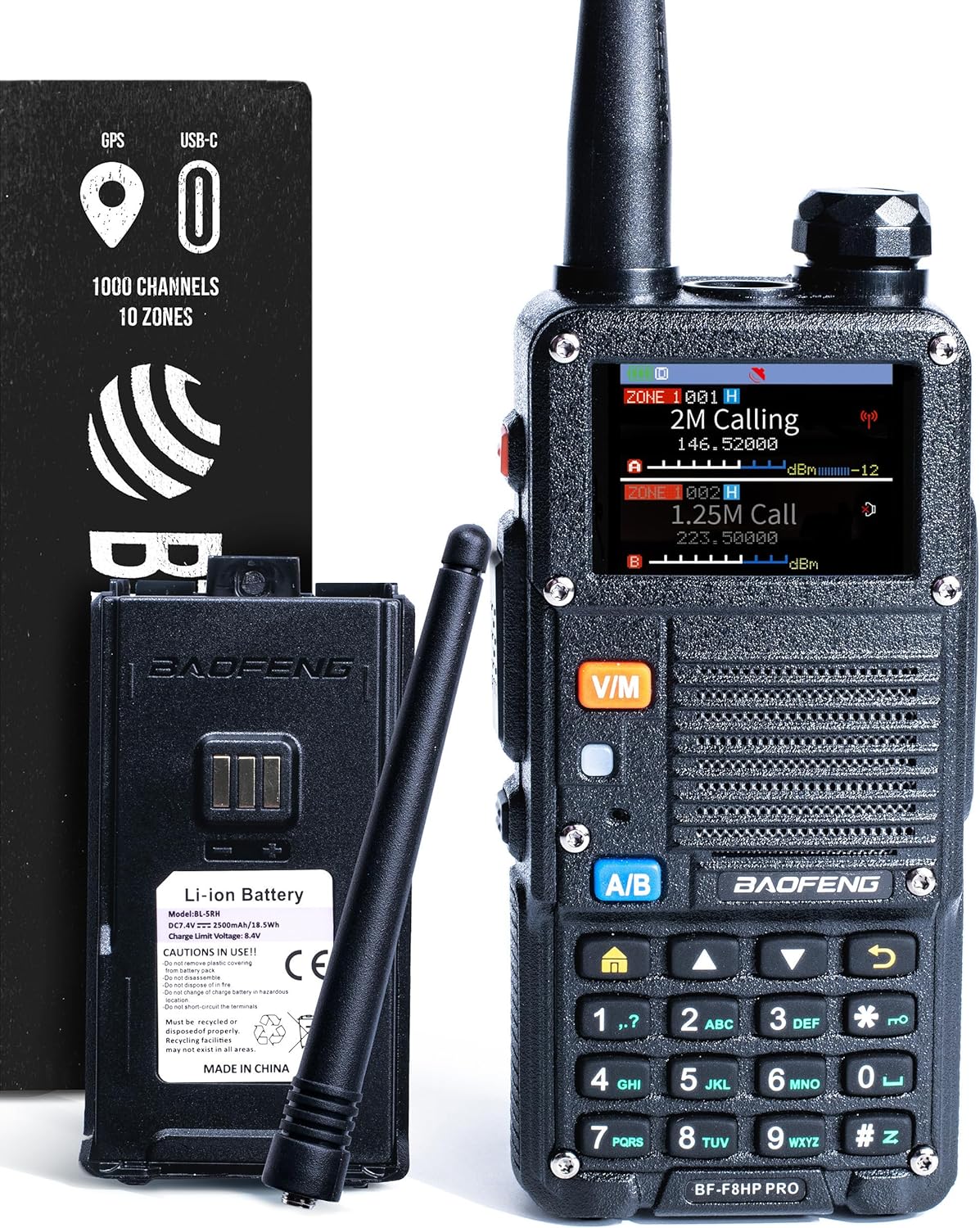
Emergency communication often means sifting through confusing controls when seconds count. Baofeng BF-F8HP Pro Tri-Band Ham Radio suits those wanting straightforward menus and reliable analog operation in a compact package. Its biggest strength lies in organizing vast frequencies into manageable, named zones that adapt as your communication needs grow.
Getting started with this radio involves setting up your preferred channels using a clear English menu system and a full keypad, making frequent adjustments easier on the fly. Storing 1,000 memories across 10 named zones helps keep home, travel, and event frequencies sorted.
Switching between two channels with the Dual Watch feature lets you stay alert to important conversations without constant manual scanning.
Covering VHF, UHF, and 1.25m bands, this model reliably reaches up to 5 miles under good conditions. It feels solid and is weather resistant, handy for outdoor emergencies.
The most praised feature is its organized channel management and battery life, approximately 10 hours. A common downside is the inability to decode digital modes like DMR or trunked systems, which limits use to analog signals only.
The most praised feature is the well-organized memory and zone system that makes channel management easy, even during busy situations. The common complaint references the lack of digital decoding, restricting the radio’s use to analog channels and thus limiting versatility for some users.
Anyone focused on analog emergency communication who values simple, reliable controls will find this radio well suited to their needs. People requiring access to digital modes or trunked systems will need to look for a different device that handles those protocols.
Pros
- Clear English menus with full keypad control
- 1,000 memory channels with 10 named zones
- Dual Watch function for monitoring two channels
- Weather resistant for outdoor use
Cons
- Does not support digital DMR or trunked systems
- Scanning limited to conventional analog channels only
| Specification | Details |
|---|---|
| Number of Channels | 1000 |
| Frequency Range | 1.25 m, UHF, VHF, AM Aviation RX 108-137 MHz, FM Broadcast RX 65-108 MHz |
| Talking Range Maximum | 5 mile |
| Battery Average Life | 10 hours |
| Water Resistance Level | Water Resistant |
| Voltage | 7.4 volts |
7. Baofeng UV-5RM Handheld Ham Radio

Covering a wide range with 999 memory channels, the Baofeng UV-5RM is aimed at anyone needing a reliable emergency ham radio transmitter and receiver. It works best for those who want to operate across several radio bands and value simple navigation through many stored channels.
Setting it up is straightforward, particularly when using CHIRP software to program frequencies. The 1.77-inch color display helps keep track of channels and settings. Battery saver mode adds to the day-to-day usability, and an integrated flashlight can be handy during low-light situations.
Performance excels at transmitting on the licensed 144-148MHz and 420-450MHz ham bands with a talking range up to 8 kilometers. The unit’s ergonomic design suits extended use well. Many highlight the long range and versatility, while the main limitation is its lack of water resistance, meaning caution is needed during wet conditions.
Many appreciate the long range and how well it covers various frequencies, making multitasking communication simpler. A recurring drawback is the lack of water resistance, limiting outdoor reliability in wet weather conditions.
People who want a flexible ham radio with many preset channels and weather bands will find it useful. Those needing a waterproof or more rugged device should look elsewhere for options better suited to harsh environments.
Pros
- Wide receiving frequency coverage
- Large channel capacity (999 channels)
- Integrated flashlight for emergencies
- Battery saver mode extends usage time
Cons
- Not water resistant
- Display size could be larger for easier reading
| Specification | Details |
|---|---|
| Receiving Frequency Range | 108MHz-136MHz, 136MHz-174MHz, 220MHz-260MHz, 350MHz-390MHz, 400MHz-520MHz |
| Transmitting Frequency Range | 144MHz-148MHz, 420MHz-450MHz |
| Number of Channels | 999 |
| Talking Range Maximum | 8 kilometer |
| Voltage | 7.4 volts |
| Charging | Type C Charging |
8. Baofeng UV-5R Dual Band Two Way Radio
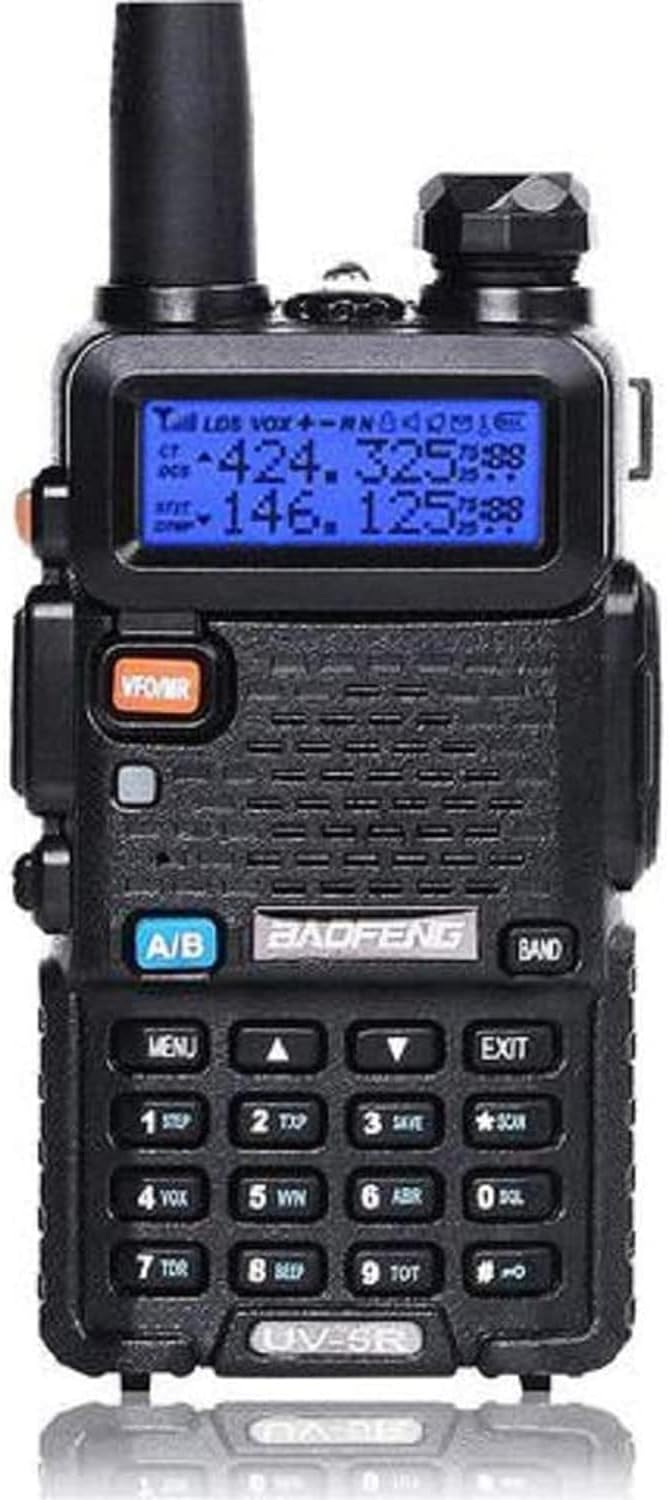
Anyone needing a reliable handheld radio for emergency communication will appreciate this one. It suits outdoor enthusiasts, preppers, and ham radio hobbyists who want a simple, dual-band radio with decent range and many channels.
Its biggest strength lies in covering both VHF and UHF bands with multiple channel options.
Setting it up involves programming frequencies within the 144-148 MHz and 420-450 MHz range. The dual-band display and dual-standby let you monitor two channels at once, helpful during emergencies. Switching between high and low transmit power saves battery or extends signal reach, and key features like keypad lock prevent accidental changes.
The tri-color backlight and VOX voice activation add convenience for hands-free use.
The radio performs well within a talking range of about 5 kilometers on clear channels. It feels lightweight but less durable since it isn’t water-resistant. People often praise its long battery life of up to 72 hours and channel versatility.
Common complaints include its sensitivity to weather and a somewhat cheap plastic build. It gets the job done but requires care in harsh conditions.
The radio is appreciated for lasting a long time on a single charge, which is crucial during extended emergencies. Many find the plastic casing less durable, especially in wet or rough environments. It delivers dependable dual-band performance but needs careful handling.
Individuals needing a reliable handheld with good channel options and battery life will be satisfied. Anyone requiring a rugged, weatherproof model should look elsewhere. It works best in fair conditions where convenience and flexibility matter more than ruggedness.
Pros
- Dual-band display with 128 channels
- Long battery life of 72 hours
- Selectable high/low transmit power
- Keypad lock prevents accidental changes
Cons
- Not water resistant
- Build feels somewhat cheap and plastic
| Specification | Details |
|---|---|
| Frequency Range | 144-148 MHz / 420-450 MHz |
| Number of Channels | 128 |
| Battery Average Life | 72 hours |
| Talking Range Maximum | 5 kilometer |
| Voltage | 4 volts |
| Water Resistance Level | Not Water Resistant |
9. ARRL Ham Radio License Manual 6th Edition

ARRL Ham Radio License Manual 6th Edition stands out by focusing thoroughly on the essential knowledge needed to pass ham radio licensing exams. Ideal for beginners aiming for their first ham radio license, its biggest strength lies in clear explanations and comprehensive coverage of emergency radio operations and frequencies.
Studying with this manual feels straightforward since it breaks down complex regulations, operating procedures, and technical concepts into bite-sized sections. It guides users through commonly tested frequencies and practical scenarios like emergency communications. Helpful diagrams and practice questions keep daily learning focused and relevant, supporting a steady progress without overwhelming you.
The book fulfills its goal of preparing candidates well for the licensing exam, making emergency ham radio frequency topics easy to understand. It is printed on quality paper with a durable cover, making it hold up through repeated use.
Many appreciate its clear layout, though some find the amount of detail dense for casual or quick study.
Many users find the manual’s detailed explanations very helpful for fully grasping emergency radio concepts, although some feel the technical depth makes it a slower read. Repeated use is easy due to its sturdy build and organized layout.
Beginners looking for comprehensive exam study focused on emergency radio work will find this manual fitting. Those wanting a lighter overview or advanced operating guide might look elsewhere for a more concise or specialized resource.
Pros
- Clear step-by-step exam preparation approach
- Covers emergency frequencies in understandable terms
- Durable physical format for frequent use
- Includes practical practice questions
Cons
- Contains dense technical details that slow reading
- Not suitable for advanced or casual quick reference
| Specification | Details |
|---|---|
| Edition | 6th |
| Purpose | Ham Radio License Preparation |
| Focus Area | Emergency Ham Radio Frequencies |
| Format | Printed Manual |
10. Baofeng UV-5R Mini Handheld Two Way Radio

Baofeng UV-5R Mini Handheld Two Way Radio offers reliable long-range communication, perfect for outdoor enthusiasts and emergency preparedness. Its standout feature is the ability to access up to 999 channels with signal waves that penetrate buildings and various materials, providing strong coverage in urban and rural settings alike.
Setup is fairly straightforward, especially when pairing the radio with a smartphone via Type-c connection. Programming frequencies and adjusting settings feels quicker thanks to the mobile interface, cutting down on the usual hassle of cable connections.
Daily use means easy switching between AM, FM, and weather alerts, with built-in VOX handy for hands-free talking in busy environments.
Performance-wise, the 5W output delivers decent range up to about 5 miles, with VHF and UHF bands handling different terrains well. The compact design fits comfortably in hand or clipped to gear, though lack of water resistance means careful use in wet conditions is necessary.
Reviews often praise its Signal penetration, but many point out it’s not suited for heavy rain or immersion situations.
Signal waves penetrate walls, steel, and concrete effectively, enhancing urban communication range. Common complaint involves vulnerability to water since it lacks water resistance.
Great for hikers, emergency responders, or anyone needing reliable urban communication. Avoid if regular exposure to wet conditions or longer ranges beyond 5 miles is essential.
Pros
- Long 999 channel support
- Strong signal penetration through materials
- Easy smartphone pairing for programming
- Multiple radio modes (AM, FM, VOX)
Cons
- Not water resistant
- Range limited to about 5 miles
| Specification | Details |
|---|---|
| Number of Channels | 999 |
| Output Power | 5W |
| Frequency Range | VHF UHF |
| Talking Range Maximum | 5 mile |
| Battery Type | 1 12V battery (included) |
| Connectivity Protocol | Type-c |
11. Baofeng DM-32 Frequency Reference Cards
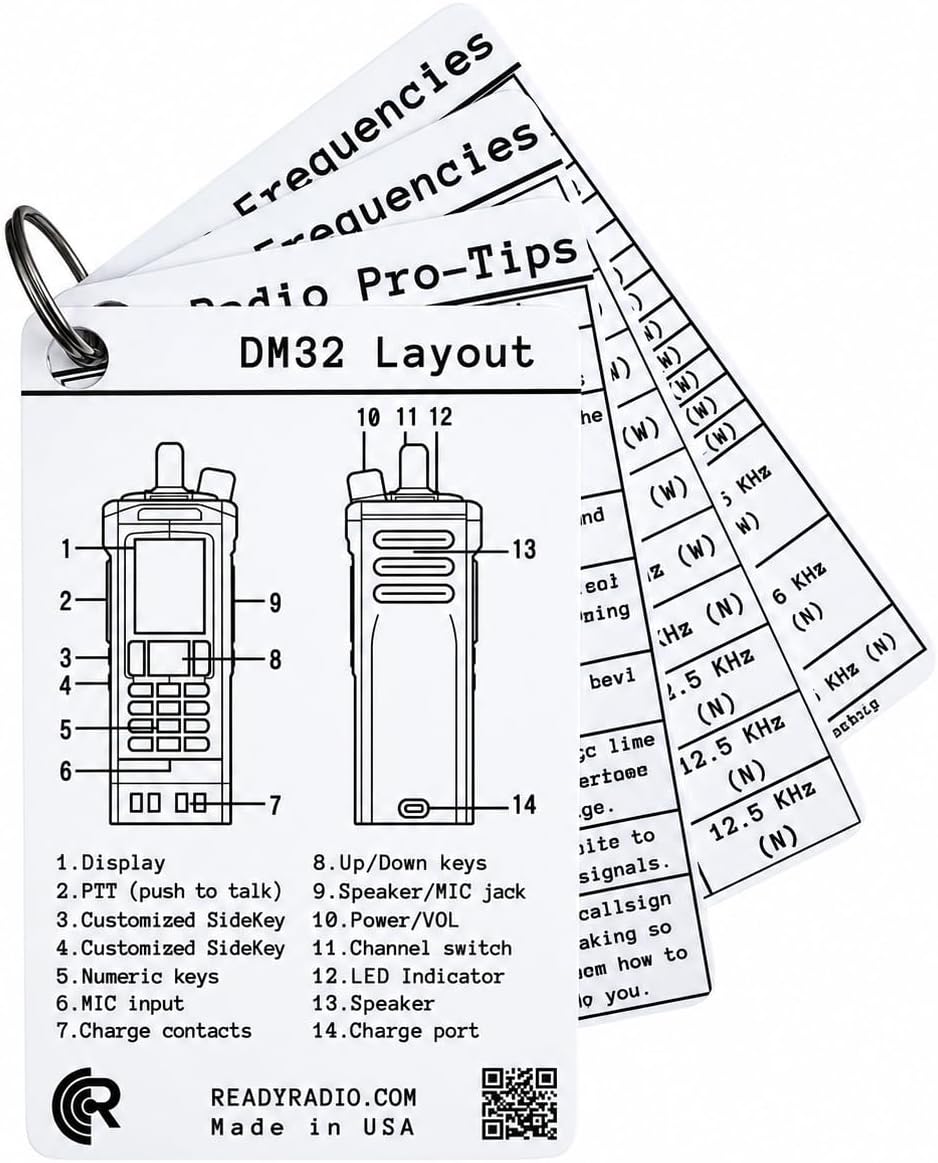
Having quick access to key emergency ham radio frequencies without fumbling through devices feels like a relief. Perfect for anyone carrying Baofeng radios or needing a simple, durable reference in tough outdoor situations.
Its biggest strength lies in being always ready with waterproof, tear-resistant frequency cards that fit in any emergency kit.
Cards come ready to use straight out of the package, with clear instructions covering DMR and HAM radios, repeaters, NOAA, marine, and call channels. No need to charge batteries or open apps to check frequencies, which keeps things reliable when you’re off-grid.
The credit-card size easily slips into wallets or glove boxes, so finding the right frequency is quick under pressure.
Designed to handle field conditions, the cards survive rain, mud, and rough handling without damage. They cover 37 essential channels with a frequency range from 151.8200 to 154.6000 MHz and others supporting various radio types.
Reviews note how well it serves as a ready reference in emergencies; however, some find its limited channel count a drawback.
Waterproof and tear-resistant finish keeps the cards intact through rough conditions, making them dependable during emergencies. The limitation to 37 channels is often mentioned, which means some users need additional references for wider coverage.
Those regularly using Baofeng or similar radios in emergency kits will find the compact, always-accessible cards very helpful. Users requiring a broader range of channels or compatibility with other radio types might need to consider alternatives.
Pros
- Durable waterproof and tear-resistant card material
- Compact credit-card size fits in wallets and kits
- Covers repeaters, NOAA, marine, and call channels
- No batteries or internet required for use
Cons
- Only 37 channels listed, which may limit coverage
- Not suitable for radios other than supported Baofeng and HAM devices
| Specification | Details |
|---|---|
| Number of Channels | 37 |
| Frequency Range | 151.8200 – 154.6000, 156.8, 462.5625 – 462.7250 |
| Water Resistance Level | Waterproof |
| Compatibility | Baofeng radios, HAM, GMRS, FRS, MURS, NOAA devices |
| Connectivity Protocols | DMR, HAM |
12. Baofeng BF-F8HP Pro Frequency Reference Cards

Compact, durable, and ready for emergencies. Perfect for anyone using a Baofeng BF-F8HP Pro who wants quick access to essential radio frequencies without relying on apps or batteries. It’s especially valuable for those storing gear in bug-out bags or survival kits.
Setup is straightforward since the cards come with clear instructions covering GMRS, MURS, HAM repeaters, NOAA, marine, and call channels. Their credit-card size means they fit easily into wallets, glove boxes, or radio kits. You always have important frequency info right at hand, avoiding the need for electronic devices or internet access during critical moments.
The laminated construction holds up well when exposed to rain and mud, making it reliable in rough outdoor environments. The cards last through field use without tearing or smudging. Most praise highlights its waterproof and tear-resistant build, while the most common downside is that it only works with devices compatible with Baofeng BF-F8HP Pro.
The laminated cards stand up to muddy, wet conditions without damage and make accessing critical frequencies simple and immediate. Most find the rugged build and portability ideal for outdoor and emergency use, though some note it’s only designed to pair with Baofeng BF-F8HP Pro radios, limiting broader use.
Anyone carrying a Baofeng BF-F8HP Pro or similar radios will appreciate having these cards on hand, especially preppers and off-grid communicators. For users with other radio brands or seeking more technical detail, alternate or more comprehensive frequency references may be a better choice.
Pros
- Waterproof and tear-resistant cards
- Includes a wide range of emergency frequencies
- Fits easily in wallets and go-bags
- No app, battery, or internet needed
Cons
- Limited to Baofeng BF-F8HP Pro compatibility
- Instructions may be basic for advanced users
| Specification | Details |
|---|---|
| Additional Features | Dust Proof, Water Proof |
| Water Resistance Level | Waterproof |
| Compatible Devices | Baofeng BF-F8HP Pro |
| Size | Credit-card sized (compact and portable) |
Best Emergency Ham Radio Frequencies Comparison Table
| Product | Water Resistance | Number of Channels | Frequency Range | Additional Features |
|---|---|---|---|---|
| Ham Radio Frequency Chart | Water Resistant | – | – | Dust Proof |
| Ham Radio Mini Reference | Waterproof | – | – | Dust Resistant |
| Baofeng UV-5R Frequency Card | Waterproof | – | HAM, GMRS, MURS | Compatible with Baofeng UV-5R |
| Baofeng UV-5R Emergency Cards | – | 5 Count | – | Lanyard, 2 Year Warranty |
| Baofeng UV-5R AR-5RM 2-Pack | – | 999 | 108-520 MHz | Battery Saver, Emergency Alarm |
| Baofeng BF-F8HP Tri-Band Radio | Weather Resistant | 1000 | 65-450 MHz | Noise Reduction, Long Range |
| Baofeng UV-5RM Handheld Radio | – | 999 | VHF/UHF | NOAA Weather Receiver |
| Baofeng UV-5R Dual Band Radio | Not Water Resistant | 128 | 144-450 MHz | Keypad Lock |
| ARRL Ham License Manual 6E | – | – | – | – |
| Baofeng UV-5R Mini Radio | Not Water Resistant | 999 | VHF/UHF | Weather Alert |
| Baofeng DM-32 Frequency Cards | Waterproof | 37 | 151-462 MHz | Dust Proof, 1000 mile range |
| Baofeng BF-F8HP Pro Cards | Waterproof | – | – | Dust Proof |
- Water ResistanceWater Resistant
- Number of Channels–
- Frequency Range–
- Additional FeaturesDust Proof
- Water ResistanceWaterproof
- Number of Channels–
- Frequency Range–
- Additional FeaturesDust Resistant
- Water ResistanceWaterproof
- Number of Channels–
- Frequency RangeHAM, GMRS, MURS
- Additional FeaturesCompatible with Baofeng UV-5R
- Water Resistance–
- Number of Channels5 Count
- Frequency Range–
- Additional FeaturesLanyard, 2 Year Warranty
- Water Resistance–
- Number of Channels999
- Frequency Range108-520 MHz
- Additional FeaturesBattery Saver, Emergency Alarm
- Water ResistanceWeather Resistant
- Number of Channels1000
- Frequency Range65-450 MHz
- Additional FeaturesNoise Reduction, Long Range
- Water Resistance–
- Number of Channels999
- Frequency RangeVHF/UHF
- Additional FeaturesNOAA Weather Receiver
- Water ResistanceNot Water Resistant
- Number of Channels128
- Frequency Range144-450 MHz
- Additional FeaturesKeypad Lock
- Water Resistance–
- Number of Channels–
- Frequency Range–
- Additional Features–
- Water ResistanceNot Water Resistant
- Number of Channels999
- Frequency RangeVHF/UHF
- Additional FeaturesWeather Alert
- Water ResistanceWaterproof
- Number of Channels37
- Frequency Range151-462 MHz
- Additional FeaturesDust Proof, 1000 mile range
- Water ResistanceWaterproof
- Number of Channels–
- Frequency Range–
- Additional FeaturesDust Proof
How to Choose the Right Emergency Ham Radio Frequency
Selecting the right emergency ham radio frequency depends on factors like range, interference levels, and local regulations. Choosing frequencies that offer clear communication and comply with legal rules prevents wasted effort and ensures reliable contact during emergencies, ultimately saving time and resources.
Frequency Range and Compatibility
Many radios fail to cover the full range of bands necessary for effective emergency communication. A unit limited to either HF, VHF, or UHF only restricts access to vital channels, reducing chances of reaching help or other operators. Radios covering all three bands allow connection to local repeaters, international nets, and both long and short-range emergency frequencies.
Standard emergency channels, often found on VHF and UHF, require compatible hardware and software to tune in reliably.
Compatibility with common emergency nets matters most. Look for radios that explicitly mention support for bands around 3-30 MHz (HF), 30-300 MHz (VHF), and 300-1000 MHz (UHF). This guarantees access to local state or national networks and the flexibility to communicate across regions.
Multi-band functionality reduces the risk of missing out in critical moments.
Power Output and Battery Life
Radios with low transmit power often struggle to get a signal through buildings or terrain obstructions, leading to missed contacts in emergencies. Models typically offer between 5 to 50 watts of output; higher wattage helps extend reach but increases battery drain.
Battery life varies, with many portable units lasting 8 to 12 hours during active use; longer standby times help if the device is only occasionally transmitting.
Having options for external power sources like solar panels or rechargeable external batteries can keep communications alive during extended outages. Checking for USB charging or standard power connectors simplifies topping off batteries in the field.
A combination of adequate transmit power and solid battery capacity makes a meaningful difference in actual emergency scenarios.
Durability and Portability
Radios dropped on concrete or exposed to rain and dust often break or lose functionality, which makes durability a key concern. Polycarbonate or reinforced plastic cases and rubberized edges protect the unit from shocks.
Compact models weighing under a pound with dimensions around 5 to 7 inches in height fit easily in packs or belts during evacuations.
Weather resistance ratings like IP54 or above ensure protection against dust ingress and splashes of water, vital in harsh environments. Dust-proof and water-resistant bodies safeguard internal components so the radio works right after bad weather or rough handling.
Portability paired with rugged construction eases carrying and maintains reliability.
User Interface and Ease of Use
In emergency situations, fumbling with complicated controls wastes precious time. Radios featuring clear, tactile buttons and well-labeled knobs help maintain focus on communicating.
Programmable channels or dedicated emergency frequency buttons let users switch instantly to critical nets without scrolling through menus.
Display readability varies greatly; backlit LCD screens with adjustable brightness perform best in both bright sunlight and at night. Large fonts reduce eye strain under stress or low light.
Intuitive interfaces prevent confusion and speed up actions during tense moments.
Reception Sensitivity and Audio Quality
Strong reception sensitivity allows capturing faint signals that might otherwise be lost to background noise. Radios with receiver sensitivity ratings around 0.2 to 0.3 microvolts reliably pick up weak transmissions in crowded frequency spaces. Good audio quality, clear, undistorted sound, helps understand messages when there is interference.
Built-in noise reduction or filtering is commonly found on recent models and helps clean up static or overlapping signals during emergency chatter. These features improve both transmitting clarity and received audio, essential for succinct and accurate communication under pressure.
Optimizing Emergency Communication: Best Practices for Using Ham Radio Frequencies
Emergency communication depends on selecting the right ham radio frequencies to reach others effectively. Use frequencies designated for emergency and public service communication because they allow for quicker connections during crises.
Avoid congested channels, which can delay message delivery or cause interference. Monitoring local repeater frequencies can be helpful since they often cover larger areas and are regularly checked by emergency groups. Always keep in mind that proper frequency use requires knowledge of your license privileges and any local restrictions.
Here are some best practices to keep in mind:
- Always listen before transmitting to avoid interrupting ongoing conversations.
- Keep transmissions concise and use clear language.
- Regularly scan frequencies used by local emergency services to stay updated on active channels.
- Have a prearranged plan with emergency contacts regarding which frequencies to use during a crisis.
Sticking to these points ensures communication can happen smoothly and effectively when every second counts.
Maintaining Your Ham Radio Equipment for Reliable Emergency Use
Keeping your ham radio equipment in good working order is crucial for dependable emergency communication. Start by checking batteries regularly; they must be fully charged or fresh since power loss during an emergency can make any radio useless.
Inspect antenna connections for corrosion or damage to maintain signal strength. Clean contacts with appropriate tools to reduce static and signal interference. Test your radio periodically by making short transmissions to confirm it sends and receives clearly.
Routine maintenance steps include:
- Storing your radio in a dry, dust-free environment to prevent internal damage.
- Using a protective case to guard against physical impact.
- Upgrading firmware or software if your model requires it for optimal performance.
- Replacing worn cables or connectors to avoid transmission issues.
Following these practices will keep your gear ready to operate when emergencies happen.
Common Mistakes to Avoid When Operating Emergency Ham Radio Frequencies
One common mistake ham radio operators make during emergencies is not confirming the channel before transmitting. Transmitting on a busy or incorrect frequency can cause confusion and block critical messages. Another error is neglecting power management; running your radio at full power unnecessarily drains batteries quickly.
Using simple, clear language helps avoid miscommunication, so avoid slang, codes, or complicated jargon.
Other pitfalls include:
- Failing to announce your call sign regularly; this is often required and helps identify who is transmitting.
- Ignoring local frequency regulations, which can lead to interference with official emergency services.
- Transmitting too frequently or for too long, potentially jamming the channel for others.
- Not practicing emergency communication routines beforehand, which can cause delays or errors when it counts.
Careful operation avoids these mistakes and keeps communication clear and effective during emergencies.
People Also Asked
What Are the Most Reliable Emergency Ham Radio Frequencies to Use?
The most reliable emergency ham radio frequencies are typically the designated emergency channels like 146.52 MHz (2 meters band) and 14.325 MHz (20 meters band). Using these standard frequencies means you are more likely to make contact with responders or others in an emergency network.
How Do I Maintain and Care for My Emergency Ham Radio?
Keep your emergency ham radio clean and dry, and check battery levels regularly. Store it with spare batteries and test it monthly to ensure it powers on and maintains a clear signal. This practice avoids surprises when you need it most.
Are Emergency Ham Radios Compatible with All Frequency Bands?
Not all emergency ham radios cover every frequency band; some only handle VHF or UHF. Verify yours covers the bands relevant to your area or rescue services before relying on it. Matching your radio to local emergency protocols increases communication chances.
How Long Does an Emergency Ham Radio Battery Usually Last?
Battery life varies by model and usage, but common emergency ham radios on rechargeable batteries typically last 8 to 24 hours per charge. Carrying spare batteries or a backup power source extends operation time if you’re off the grid for days.
What Common Problems Affect Emergency Ham Radios During Use?
Interference, poor antenna connection, and battery drain are frequent issues during use. Regularly checking antenna tightness and carrying spare parts helps avoid signal loss. Keeping fresh batteries or an alternate power source reduces downtime.
Conclusion
Reliable signal clarity and coverage stand out as the most important factors when choosing emergency ham radio frequencies. Compatibility with your radio setup and local regulations also play a key role. Having frequencies that are commonly monitored by emergency services and other ham operators improves communication chances during a crisis.
Select frequencies that fit your equipment and how often you plan to use them to avoid unnecessary complexity or costs. Carefully review the comparison table and the selections detailed above to find the best match for your needs and conditions.