Top 13 Best Dual Band Handheld Marine Radio You Need Now
Being out on the water without reliable communication can quickly turn a simple trip into a stressful situation. A cheap or poorly designed marine radio might lose signal easily, have frustratingly short battery life, or be too bulky to carry comfortably.
The best dual band handheld marine radio addresses these problems by combining clarity and durability in a compact package that fits naturally in your hand or pocket.
A good dual band handheld marine radio typically operates on VHF channels 16 and 68, which are crucial for both emergency and routine communications. Look for radios offering at least 5 watts of power for adequate range, with a waterproof rating of IPX7 or higher to withstand splashes and brief submersion. Battery life matters too, often around 8 to 12 hours on a full charge, so it will last through a day on the water.
Simple controls and clear displays make the radio easier to use when conditions aren’t perfect, and a solid build ensures it keeps working despite knocks or salt exposure.
Need a Quick Check?
| Image | Product | Price |
|---|---|---|
Our Top Picks 1  | Icom M85 Handheld Radio | Check Price |
Our Top Picks 2 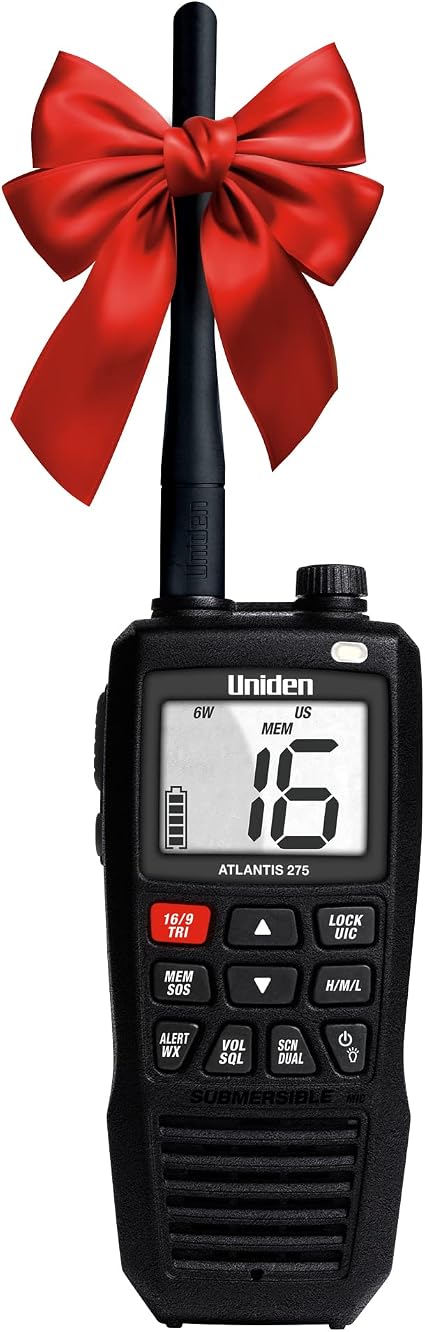 | Uniden Atlantis 275 VHF | Check Price |
Our Top Picks 3  | Uniden Atlantis 155 VHF | Check Price |
Our Selected Top 13 Dual Band Handheld Marine Radio for Different Needs
This list features a variety of dual band handheld marine radios designed for different users and situations. Each review covers performance, suitability, strengths, and limitations, helping readers find the ideal radio for their specific marine communication needs.
1. Icom M85 Dual Band Handheld Radio
Compact and lightweight, built from durable materials designed for maritime use, this radio fits comfortably in one hand and suits anyone needing reliable communication on water and land. Its single biggest strength lies in combining both VHF marine and land mobile frequencies in one easy-to-carry device.
Setting up is straightforward with up to 100 programmable channels to customize for different communication needs. It operates on dual band frequencies, covering marine and land ranges, and supports secure tones for privacy. Daily use involves simple one-hand operation and clear audio output, even in noisy environments, allowing you to keep contact without fumbling or adjusting constantly.
Communication quality holds up well with a loud 700 mW speaker that cuts through ambient sounds. Its waterproof design ensures it withstands marine conditions, adding to reliability.
Many praise its compact size and ease of use, while a frequent complaint points to its limited maximum range of 5 miles, which might not suit longer-distance needs.
The loud 700 mW audio output is frequently praised for its clarity in noisy environments, making communication reliable in rough conditions. At the same time, some find the 5-mile maximum range restrictive for extended marine journeys requiring longer reach.
This radio suits anyone who needs a compact, waterproof device with dual band frequency options and clear sound. People seeking extended range or compatibility with non-Icom devices might want to look at alternatives better fit for those needs.
Pros
- Smallest commercial-grade marine radio available
- Dual band coverage for marine and land frequencies
- Clear and loud 700 mW audio output
- Waterproof and suitable for wet environments
Cons
- Maximum talking range limited to 5 miles
- Uses proprietary digital connectivity protocol only
| Specification | Details |
|---|---|
| Number of Channels | 100 |
| Water Resistance Level | Waterproof |
| Talking Range Maximum | 5 mile |
| Audio Output | 700 mW |
| Number of Batteries | 1 Lithium Ion batteries required. (included) |
2. Uniden Atlantis 275 Handheld VHF Marine Radio
Known for its powerful 6 Watts output and compact size, the Atlantis 275 is well-suited for mariners needing reliable communication in a tough, portable package. Its standout feature is the large LCD screen with dual backlighting, making readability easy in all lighting conditions.
Setting up the radio is straightforward since it runs on a single included AA battery. Day-to-day use benefits from the flashlight and emergency strobe light built into the device, handy when conditions get rough or visibility is low.
The floating design means it won’t sink if dropped overboard, so it’s always within easy reach. It fits comfortably in a pocket or secured on deck.
Performance shines with a maximum talking range of 36 miles, making keeping in touch over long distances reliable. The radio meets IPX8 waterproof standards and even clears water out of the speaker after submersion. The most praised aspect is its durability and ease of use, while common complaints involve its limited number of channels, with only 25 available for marine VHF communication.
The strongest praise is for its durability and excellent screen visibility in all light, plus the emergency light features that add safety. Most common criticism centers on the limited channel count, which could restrict communication options in busy marine environments.
Anyone needing a rugged, easy-to-read radio with strong waterproofing will find this a solid choice. Those requiring more channel variety or longer battery life might want to explore other models.
Pros
- Large readable LCD screen with day/night backlight
- Floats and waterproof to IPX8 standard
- Emergency strobe light and flashlight included
- Compact and pocket-friendly design
Cons
- Only 25 channels available
- Uses a single AA battery which may need frequent replacement
| Specification | Details |
|---|---|
| Power Output | 6 Watts |
| Number of Channels | 25 |
| Water Resistance Level | Waterproof (IPX8 / JIS8) |
| Talking Range Maximum | 36 mile |
| Batteries Required | 1 AA battery (included) |
3. Uniden Atlantis 155 Handheld VHF Marine Radio
Uniden Atlantis 155 is ideal for boaters needing a compact and durable marine radio with strong waterproof features. Its standout quality is a submersible, floating design that focuses on reliability and safety in harsh marine environments.
Setting up involves inserting the included 4 AAA batteries and powering up to access 16 marine channels easily. The large 25mm by 40mm LCD screen with dual backlighting modes simplifies reading in daylight and nighttime conditions, which proves handy for everyday on-water communication. Water resistance means rinsing off salt or dirt is straightforward without worry.
Transmission clarity and reception cover a solid talking range of up to 15 kilometers on VHF frequencies, helping maintain contact far out on the water. Built to meet IPX8 waterproof standards, it floats and automatically clears water from the speaker after submersion. Reviews commonly praise its tough build and bright display.
A frequent complaint relates to battery life, around 10 hours, requiring attention on longer trips.
The radio is highly praised for holding up well under water and having an easy-to-read display that adapts to different lighting conditions. Common concerns focus on the battery life, which can limit extended use without replacements.
Those who spend short to medium trips on the water and need a durable, easy-to-use radio will appreciate it. People requiring longer battery endurance or more channel options may want to explore alternative models.
Pros
- Floats and meets IPX8 waterproof rating
- Large and clear LCD screen with dual backlight
- Compact size without losing essential features
- Included batteries for immediate use
Cons
- Battery life only lasts about 10 hours
- Limited to 16 channels on VHF
| Specification | Details |
|---|---|
| Number of Channels | 16 |
| Water Resistance Level | Waterproof (IPX8 / JIS8) |
| Battery Type | 4 AAA batteries (included) |
| Battery Average Life | 10 hours |
| Talking Range Maximum | 15 kilometer |
| Display Size | 25mm x 40mm LCD |
4. Icom M94D VHF Marine Transceiver with DSC & AIS

Marine communication is crucial for safety and keeping in touch with nearby vessels, especially in busy or remote waters. The Icom M94D VHF marine radio suits anyone who values clear audio and reliable safety features while out on the water.
Its built-in AIS and DSC system make identifying and contacting other boats faster and smarter than ever.
Setting it up is simple, and the integrated GPS makes finding your way and saving waypoints a breeze. Day-to-day use benefits from the noise reduction feature, making conversations crisp even near engines or in loud harbors. The screen shows nearby traffic thanks to the AIS receiver, so situational awareness stays front and center.
Battery life holds up well, giving you about 10 hours without needing a recharge.
The 6W transmit power means calls can travel up to around 5 miles, enough for most coastal or marina environments. The 1500 mW speaker delivers sound that cuts through engine noise and windy conditions, which users appreciate the most. The radio is waterproof, built solidly to withstand harsh marine conditions.
A common downside is having only four channels, which limits flexibility compared to some radios offering more options.
Many find the loud audio output and clear AIS display invaluable for steering clear of busy waterways. The most frequent complaint centers on the low number of channels, which restricts communication options during crowded situations. Setup and daily use remain friendly thanks to navigation aids and noise reduction.
Ideal for boaters who need reliable safety features and clear reception within a limited channel setup. Those seeking more channels or broader compatibility may want to consider other radios. This radio works best in environments where clear audio and situational awareness are key priorities.
Pros
- Integrated AIS receiver shows nearby vessel traffic
- Strong 1500 mW speaker for clear audio
- Long 10-hour battery life with Li-ion battery
- Built-in GPS navigation with waypoints
Cons
- Limited to only 4 communication channels
- Compatible only with Icom VHF radios on 156.025–157.425 MHz
| Specification | Details |
|---|---|
| Number of Channels | 4 |
| Power | 6 W RF transmit power |
| Battery Life | Up to 10 hours |
| Audio Output | 1500 mW |
| Water Resistance | Waterproof |
5. Cobra BlueBound 350 VHF Handheld Marine Radio

6 Watt VHF power delivers solid communication range up to 25 miles, ideal for boaters needing reliable contact far offshore. Compact size and bright orange floating core suit any vessel, offering high visibility and easy recovery if dropped in water. Best choice for active marine users concerned with safety and lasting battery life.
Setup takes no time; the radio switches power levels between 1, 3, and 6 watts to balance range needs and conserve battery. The Day/Night selectable LCD display lets you easily read channel info and signal status in any lighting condition.
Waterproof design lets you use it in all weather without worry, while the emergency alarm adds a critical layer of safety.
It performs well at long distances, maintaining clear audio and strong signal even near the range limit. Built to float with its bright core, it’s easy to spot and retrieve in open water. Battery saver mode helps stretch the 12-hour usage time, a key benefit on longer trips.
Some find the plastic casing less sturdy than expected, which can feel fragile during rough use.
The device’s buoyant, bright orange core stands out as a vital safety feature, ensuring easy retrieval after accidental drops in the water. Most feedback centers around the casing feeling a bit delicate, which could trouble those needing a sturdier tool on rough seas.
Those who value clear communication and visibility on day trips or short offshore runs will appreciate its features. Mariners facing heavy use or longer travel with harsh conditions might prefer something with a tougher build and longer battery life.
Pros
- High visibility floating core prevents loss overboard
- Selectable power levels save battery and extend range
- Day/Night display ensures readability anytime
- Emergency alarm adds safety during distress
Cons
- Plastic casing can feel fragile under rough handling
- Battery life may fall short for extended voyages
| Specification | Details |
|---|---|
| Number of Channels | 98 |
| Talking Range Maximum | 25 mile |
| Power | 1/3/6 Watts switchable |
| Water Resistance Level | Waterproof |
| Battery Average Life | 12 hours |
| Voltage | 7.4 volts |
6. Standard Horizon HX210 Floating Handheld VHF Radio

Boaters and anglers looking for a reliable marine radio benefit most from this handheld device. It’s designed to float, making it practical for safety-conscious users. Its biggest strength lies in combining durability with user-friendly features on a compact, waterproof body.
Setting up involves just attaching the included antenna and charging it in the rapid AC/DC cradle. Daily operation is straightforward thanks to the E20 Easy to Operate Menu System and oversized dot matrix display.
Switching between USA, International, and Canadian channels is smooth, and you can tune into weather updates or FM radio without hassle. The programmable keys and speaker mic jack add convenience for long days on the water.
Performance in communication covers a maximum talking range of 5 miles, adjustable power output from 1W to 6W, and access to 200 channels. The build feels solid with an IPX7 waterproof rating, allowing it to survive being submerged up to a meter for 30 minutes. Most people appreciate the clear display and reliable float feature, while a common gripe involves the battery life stretching only to about 3 hours on rapid charge.
The radio’s standout feature is its waterproof float design combined with a large, clear display that simplifies channel selection and emergency signals. Some users note the battery life can be limiting on longer outings, requiring regular recharging.
People who spend moderate time on the water and want a radio that handles rough conditions will find this a solid match. Those needing longer battery endurance or advanced microphone options might look at other choices better suited for extended or professional use.
Pros
- Floats and is submersible up to 1 meter
- Easy-to-read full dot matrix display
- Includes weather and FM radio bands
- Rapid 3-hour desktop charger included
Cons
- Battery lasts around 3 hours per charge
- Speaker mic jack not always compatible with all mics
| Specification | Details |
|---|---|
| Number of Channels | 200 |
| Talking Range Maximum | 5 mile |
| Output Power | 6W / 2.5W / 1W selectable |
| Water Resistance Level | Waterproof IPX7 |
| Battery Type | 1850 mAh Li-Ion |
| Frequency Range | 76 MHz to 108 MHz (FM) |
7. BAOFENG BF-F8HP Dual Band Two-Way Radio

Known for doubling the output power compared to previous models, this dual band handheld marine radio suits anyone needing reliable communication on the water. Its standout feature is the increased 8-watt power that offers a longer range, making it perfect for boating or marine activities where strong signal strength is a priority.
Setup is straightforward with the included user guide and recommended programming cable, making custom channel programming easier. Daily use benefits from three power settings, high, medium, and low, tailoring transmission power based on distance or battery saving needs.
The upgraded battery life and more efficient antenna improve overall reception and transmission reliability during long marine excursions.
This radio operates across both VHF and UHF bands, covering vital marine and general communication channels with up to 128 programmable channels. The housing is hardened and waterproof, built to withstand marine conditions.
Reviews appreciate its range and durability, though some find the programming software a bit tricky without the recommended cable.
The 8-watt output power allows strong, clear communications even over longer marine distances, while the toughest complaint is about the programming software needing the PC03 FTDI cable for convenience. Without that cable, setting up custom channels isn’t very user-friendly.
Those frequently on the water needing reliable, long-range communication will find this radio valuable. People wanting a straightforward out-of-the-box experience without extra programming gear might consider a simpler radio model instead.
Pros
- Twice the power of previous models
- Durable, waterproof radio shell
- Large 30% bigger battery capacity
- Includes high-gain V-85 antenna
Cons
- Programming software can be complex
- Required cable sold separately for easiest PC use
| Specification | Details |
|---|---|
| Output Power | 8 watts (high), 4 watts (medium), 1 watt (low) |
| Frequency Range | VHF: 136-174 MHz, UHF: 400-520 MHz |
| Number of Channels | 128 |
| Battery | 7.4 volts Lithium Polymer, included |
| Water Resistance | Waterproof |
8. Retevis RM15 6W Marine VHF Radio

Retevis RM15 6W Marine VHF Radio excels in providing clear communication with reliable waterproofing for those spending time on or near the water. Ideal for fishing, boating, or kayaking, its standout feature is the floating design combined with a water-activated emergency strobe light, ensuring it stays visible and functional even if dropped overboard.
Setting it up involves charging through corrosion-resistant contacts, with no hassle even in wet conditions. Day-to-day use benefits from the 88 available channels and noise reduction for clearer calls.
It’s compact and floats, so you can handle it comfortably while fishing or paddling, and the NOAA Weather Alert keeps you updated on changing conditions.
Signal clarity reaches up to 16 km, which works well for coastal or offshore communication. The waterproof rating supports immersion to 1.5 meters for 30 minutes, making it resistant to unexpected splashes or drops. The emergency strobe is a useful safety addition.
Common feedback praises its durability and floating feature, though some find the battery nonstandard and lasting about 10 hours typical but not exceptional.
The long-lasting durability and floating design stand out as the most appreciated features, especially for those working near water. The emergency strobe light adds an extra layer of safety. However, the battery not using a standard type is a frequent inconvenience, and some find its 10-hour battery life limiting for extended outings.
Those who regularly fish, boat, or kayak and value waterproof reliability with clear range will find this radio meets their needs well. People requiring longer battery life or easy replacement batteries might want to consider other models better suited for all-day use.
Pros
- Floats on water surface if dropped
- Water-activated emergency strobe light
- Corrosion-resistant charging contacts
- NOAA Weather Alert included
Cons
- Nonstandard battery type
- Battery life average at 10 hours
| Specification | Details |
|---|---|
| Number of Channels | 88 |
| Talking Range Maximum | 16 km |
| Water Resistance Level | Waterproof (IP68) |
| Battery Average Life | 10 hours |
| Voltage | 5 volts |
9. Icom M25EVO Marine VHF Radio

Handling radio calls on the water feels straightforward and reliable with the Icom M25EVO Marine VHF Radio. It’s a great fit for boaters who want a lightweight device that won’t sink if dropped. The standout feature is its floating and waterproof design combined with strong battery life that won’t quit mid-trip.
Getting started is quick, especially with the USB-C charging, which is handy when power sources vary. The slim, ergonomic build makes it easy to carry around during boating or kayaking without bulk.
The 11-hour battery life covers long days on the water, keeping communication open without constant recharging.
Communication quality holds up well within its 5-mile range, offering clear transmissions during use. It follows IPX7 standards, so taking a splash won’t damage it. The most common praise is about the floating feature and lightweight feel, while the limited number of channels at 15 gets noted as a drawback by some.
The radio’s floating feature paired with water resistance stands out as its strongest benefit, offering assurance against loss in water. Many appreciate its light weight and long battery life during extended use. A common drawback lies in the channel limitation, which may restrict communication options.
People who own boats or kayaks and care about portability and reliability will find this radio great for everyday use. Those needing a broader range of channels or longer communication distance might want to consider alternatives.
Pros
- Floats and flashes if dropped in water
- Lightweight and compact design
- Long 11-hour battery life
- Fast USB-C charging
Cons
- Limited to 15 channels
- Maximum range capped at 5 miles
| Specification | Details |
|---|---|
| Water Resistance Level | Water Resistant (IPX7) |
| Battery Life | 11 hours |
| Charging | USB-C Fast Charging |
| Number of Channels | 15 |
| Weight | 7.8 oz |
| Talking Range Maximum | 5 mile |
10. Cobra BlueBound 150 VHF Handheld Marine Radio

Compact and easy to handle, this marine radio fits well on any vessel and stands out with its bright orange floating core that makes it hard to lose overboard. Ideal for boaters who want reliable communication with solid waterproofing and adjustable power settings for different range needs.
Setting up takes minutes, just pop in the 5 included AAA batteries and you’re ready. Day-to-day, switching between its .5, 1, or 3 watts is simple, helping conserve battery life while still covering short or longer distances.
The digital display is easy to read, and the battery saver mode extends use when you’re out on the water for hours. Emergency alarm and flotation features offer added security without increasing bulk.
Sound quality and range hold up well for typical marine use, with clear transmission on the 98 channels available. Build-wise, it feels sturdy without being too heavy, and the IPX7 waterproofing means it can handle splashes or full drops without trouble.
Most often praised for its easy retrieval if dropped in water, common complaints mention the 11-hour battery life may fall short for long outings.
Its high visibility floating core is frequently praised for making it easy to find if dropped overboard, while the most common complaint centers on the battery life being limited to about 11 hours on average. The clear digital display and adjustable power help maintain communication without wasting energy.
This radio appeals most to boaters needing a waterproof, flotation-equipped radio with flexible power settings. Those undertaking very long trips or preferring lighter, rechargeable units might want to look elsewhere for longer battery endurance or lower weight.
Pros
- Bright orange floating core for visibility
- Selectable power saves battery life
- Waterproof to full immersion
- Clear digital display with battery saver mode
Cons
- Batteries last around 11 hours only
- May feel bulky to some users
| Specification | Details |
|---|---|
| Number of Channels | 98 |
| Power Levels | .5 / 1 / 3 Watts |
| Water Resistance Level | Waterproof (IPX7) |
| Battery Type | 5 AAA batteries (included) |
| Battery Average Life | 11 hours |
| Voltage | 6 volts |
11. Uniden MHS75 Waterproof Handheld VHF Marine Radio

Tough and built to handle wet conditions, the handheld radio is perfect for anyone who spends serious time on the water. Its standout feature is the JIS8 waterproof rating paired with a floating design that ensures it won’t give up, even when splashed or briefly submerged.
Getting it ready takes just a minute thanks to included AA batteries, and it’s lightweight enough to carry or clip on easily while boating. Switching between 1, 2.5, and 5 watts lets you manage battery life or boost range depending on how far you need to talk. The 16 channels cover all standard marine VHF frequencies, making it simple to stay connected.
It holds a clear signal up to around 15 kilometers, handling communication reliably under various conditions. The plastic casing feels sturdy and can handle the rough marine environment. Many praise how well it handles water, but a few mention the battery life could last longer beyond the average 12 hours.
It feels like a solid radio made to keep working when the weather gets tough.
The radio’s durability underwater and ability to float get consistent praise. Common complaints mention the 12-hour battery life as somewhat limiting for extended trips. Many appreciate the rugged design for daily marine activity but would prefer longer runtime.
Those who need a waterproof, easy-to-use radio that handles typical boating communication will be satisfied. People needing a longer battery or more channels might want to explore other options. It works well for regular day trips or short marine outings.
Pros
- Fully waterproof with JIS8 rating
- Floats if dropped in water
- Multiple power levels for range and battery life
- Includes battery and ready to use
Cons
- Battery life average, could be longer
- Only 16 channels available
| Specification | Details |
|---|---|
| Water Resistance Level | Waterproof |
| Power Output | 1 / 2.5 / 5 Watt Switchable |
| Talking Range Maximum | 15 kilometer |
| Number of Channels | 16 |
| Battery Type | 1 AA battery (included) |
| Battery Average Life | 12 hours |
12. Standard Horizon HX890BK Handheld VHF Radio

Easy waterproofing and reliable noise reduction stand out immediately, making it a solid choice for anyone needing a dependable marine radio. Suited for boaters who want a handheld VHF radio that holds up well in wet environments, its waterproof and submersible design is its biggest strength.
Setup is straightforward thanks to its battery-powered operation with one lithium-ion battery. Features like noise reduction keep conversations clear even in windy conditions. USB connectivity adds convenience for charging or firmware updates.
Being compatible with various marine devices like microphones, antennas, and clips makes it adaptable for daily marine communication needs.
Performance-wise, the 1-watt speaker output delivers clear audio, and the radio operates on a 156 MHz frequency, ensuring good reception on marine VHF channels. Water resistance is impressive, with the radio being fully waterproof and submersible, allowing use in heavy rain or even accidental drops in water. The most common drawback noted involves limitations in hardware interface details, which can cause some uncertainty about compatibility beyond listed devices.
Many appreciate the radio’s solid waterproof and noise reduction features that support clear and reliable marine communication even in tough weather. Some find the lack of detailed hardware interface information confusing when trying to pair with other equipment.
Those needing a sturdy, clear, and versatile handheld marine VHF radio will find this one a good fit. Users requiring more powerful speakers or detailed interface options might prefer to explore other models.
Pros
- Waterproof and submersible design for marine use
- Noise reduction feature improves call clarity
- Compatible with many marine communication accessories
- USB connectivity for charging and updates
Cons
- Limited information on hardware interface compatibility
- Speaker output power is modest at 1 watt
| Specification | Details |
|---|---|
| Radio Frequency | 156 MHz |
| Battery Type | 1 Lithium Ion battery required |
| Water Resistance Level | Waterproof, Submersible |
| Speaker Maximum Output Power | 1 watts |
| Connectivity Technology | USB |
| Radio Bands Supported | FM |
13. Retevis RT55 6W Marine VHF Radio

Built to survive tough marine environments, the Retevis RT55 6W Marine VHF Radio suits anyone needing reliable communication on the water. Its standout feature is the IP67 waterproof rating combined with a floating design, ideal for boating, fishing, or kayaking.
You won’t have to worry about it getting lost or ruined by water.
Setting it up is straightforward with the desktop charger keeping the 1200mAh battery ready for use. Day-to-day, the radio stays powered long enough to cover full outings, with a clear channel setup thanks to 88 available options. The vibration water draining function helps maintain audio clarity after exposure to moisture, and its frequency range fits standard marine needs.
Communication quality holds strong within its 15-kilometer talking range, even in challenging conditions. The build feels sturdy and well-sealed, fitting comfortably in hand without excess weight.
Vibration to clear water from the speaker is handy after brief water exposure. A notable drawback is that audio volume caps at 40 dB, which may be low in noisy environments.
Praise centers on the radio’s ability to float and stay waterproof, delivering reliable communication without fear of damage or loss in water. The most frequent complaint highlights the relatively low volume output, which might make it hard to hear in very noisy outdoor settings.
Those who spend time on boats, kayaks, or fishing trips will appreciate the ruggedness and easy handling. People requiring louder audio or extended voltage options may want to consider alternative models better suited to louder environments or more powerful needs.
Pros
- Floats automatically if dropped in water
- Long battery life with reliable desktop charger
- 88 channels offer versatile communication
- Vibration water-draining feature clears moisture
Cons
- Maximum audible noise level is only 40 dB
- Battery voltage limited to 7.4 volts
| Specification | Details |
|---|---|
| Number of Channels | 88 |
| Frequency Range | 156.025-157.425 MHz |
| Talking Range Maximum | 15 kilometer |
| Water Resistance Level | Waterproof (IP67) |
| Battery Average Life | 10 hours |
Best Dual Band Handheld Marine Radios Comparison Table
| Product | Channels | Max Range | Water Resistance | Battery Type |
|---|---|---|---|---|
| Icom M85 Handheld Radio | 100 | 5 mile | Waterproof | 1 Lithium Ion |
| Uniden Atlantis 275 VHF | 25 | 36 mile | Waterproof | 1 AA |
| Uniden Atlantis 155 VHF | 16 | 15 km | Waterproof | 4 AAA |
| Icom M94D VHF Marine | 4 | 5 mile | Waterproof | 1 AAA |
| Cobra BlueBound 350 VHF | 98 | 25 mile | Waterproof | – |
| Standard Horizon HX210 | 200 | 5 mile | Waterproof | 1 Lithium Ion |
| BAOFENG BF-F8HP Radio | 128 | 50 mile | Waterproof | – |
| Retevis RM15 Marine VHF | 88 | 16 km | IP68 Waterproof | – |
| Icom M25EVO Marine VHF | 15 | 5 mile | Water Resistant | – |
| Cobra BlueBound 150 VHF | 98 | – | Waterproof | 5 AAA |
| Uniden MHS75 Waterproof | 16 | 15 km | Waterproof | 1 AA |
| Standard Horizon HX890BK | – | – | Waterproof | – |
| Retevis RT55 Marine VHF | 88 | 15 km | Waterproof | – |
- Channels100
- Max Range5 mile
- Water ResistanceWaterproof
- Battery Type1 Lithium Ion
- Channels25
- Max Range36 mile
- Water ResistanceWaterproof
- Battery Type1 AA
- Channels16
- Max Range15 km
- Water ResistanceWaterproof
- Battery Type4 AAA
- Channels4
- Max Range5 mile
- Water ResistanceWaterproof
- Battery Type1 AAA
- Channels98
- Max Range25 mile
- Water ResistanceWaterproof
- Battery Type–
- Channels200
- Max Range5 mile
- Water ResistanceWaterproof
- Battery Type1 Lithium Ion
- Channels128
- Max Range50 mile
- Water ResistanceWaterproof
- Battery Type–
- Channels88
- Max Range16 km
- Water ResistanceIP68 Waterproof
- Battery Type–
- Channels15
- Max Range5 mile
- Water ResistanceWater Resistant
- Battery Type–
- Channels98
- Max Range–
- Water ResistanceWaterproof
- Battery Type5 AAA
- Channels16
- Max Range15 km
- Water ResistanceWaterproof
- Battery Type1 AA
- Channels–
- Max Range–
- Water ResistanceWaterproof
- Battery Type–
- Channels88
- Max Range15 km
- Water ResistanceWaterproof
- Battery Type–
How to Choose the Best Dual Band Marine Radio
Choosing a good dual band marine radio means focusing on signal range, battery life, durability, and ease of use to ensure reliable communication on the water. Prioritizing these factors helps avoid technical issues, reduces replacement costs, and ensures safety while boating.
Frequency Coverage and Channels
Many marine radios claim to cover all channels, but missing key weather or safety frequencies can lead to serious communication gaps while on the water. A good device includes full coverage of marine VHF channels, especially channel 16 which is “channel zero” for distress and calling. True dualband radios cover both standard marine VHF and additional bands like UHF or specific maritime bands if required by your boating area.
Look for radios that meet international marine communication standards such as the IEC 62238. This ensures compatibility with coast guards and other vessels worldwide.
Without this compliance, transmissions might not be legally recognized or could fail to reach the right recipients. Reliable sets will include at least 50 programmed channels and smooth switching between the two frequency bands.
Power Output and Battery Life
Transmission power directly affects how far your signal can reach over water, with 16 watts being the common standard for marine handheld radios. Lower-wattage units might struggle to connect beyond a couple of miles, which limits emergency communication options. The battery life plays an equally vital role during lengthy trips or search operations.
Batteries vary, but rechargeable lithium-ion packs offer the best balance of capacity and weight. A good radio lasts 10 hours or more on a charge when transmitting intermittently.
Charging methods such as micro USB or docking stations make recharging practical on boats without sophisticated power setups. Also, consider radios with quick swap battery features.
Durability and Water Resistance
Devices used at sea face constant exposure to water, salt, and sun, so a waterproof rating of IPX7 or better protects the radio against being submerged for short periods. Many cheaper models only offer splash resistance, which quickly fails under rough conditions or accidents.
Corrosion resistance is critical; radios with stainless steel screws and rubberized, impact-proof casing hold up better over time. The salt air can erode plastic and metal parts quickly, so build quality matters.
A radio that feels rugged and solid rather than flimsy tends to survive unexpected drops and harsh handling during daily use.
User Interface and Ease of Use
For quick communication on deck, the screen must be clear and easy to read even under direct sunlight. High-contrast monochrome displays or backlit color screens make a real difference, especially during night or foggy conditions.
Small digits or complicated menus slow down crucial operations.
Ergonomics influence both comfort and safety. Radios with rubber grips and well-spaced buttons prevent slips and accidental channel changes. Designs allowing operation with gloves on reduce fumbling when weather turns cold.
Intuitive button layout for direct channel access and scanning speeds up emergency response times.
Additional Safety Features
Built-in NOAA weather alerts automatically warn about sudden storms, reducing the need for constant manual checks. Many radios also include Digital Selective Calling (DSC), which sends automated distress signals with your position to nearby vessels and coast guard.
Extras like integrated GPS enable accurate location sharing, which can save valuable time during rescues. Some units feature SOS alarms or man-overboard functions that trigger loud sounds or specific signals. These safety extras provide multiple layers of protection beyond standard voice communication.
Proper Maintenance and Care for Prolonged Marine Radio Performance
Saltwater exposure and constant moisture pose significant challenges to marine radios. Keeping your dual band handheld marine radio in good condition means regular cleaning with fresh water after each use.
This prevents salt buildup that can corrode external components. Check and tighten the antenna connector occasionally, since a loose connection can reduce signal strength.
Battery care is crucial. Avoid leaving the device fully discharged for long periods, as this can shorten battery life.
Store the radio in a cool, dry place when not in use. Inspect O-rings and seals for any signs of wear to maintain waterproof integrity. Follow the manufacturer’s instructions for charging cycles to avoid overcharging.
Proper maintenance also includes testing the radio’s transmit and receive functions frequently, ensuring clear communication during emergencies.
Common Mistakes to Avoid When Using Dual Band Handheld Marine Radios
One common error is neglecting to monitor battery levels before heading out on the water. Running out of power during critical moments limits communication options. Another frequent mistake involves improper channel selection.
Users sometimes stay on the wrong frequency, missing important weather alerts or distress signals.
Failing to perform routine checks on the antenna connection causes reduced signal range. Holding the radio incorrectly, such as covering the antenna with your hand, can block transmissions. Some users overlook programming specific channels for their region, which restricts optimal use.
Lastly, storing the radio in direct sunlight or damp environments accelerates wear and damages internal components.
Comparing Dual Band Handheld Marine Radios with Fixed Marine Radio Alternatives
Dual band handheld marine radios offer portability and allow users to switch between VHF and UHF frequencies, which is beneficial for versatility on different waterways. Fixed marine radios provide greater transmission power and often better audio quality, making them preferable for larger vessels or permanent installations.
- Handheld radios are lightweight and easy to carry, ideal for small boats or as backup devices.
- Fixed radios can integrate with onboard systems like GPS and external antennas.
- Battery life tends to be longer in fixed units since they connect directly to the vessel’s power supply.
- Handheld units depend on rechargeable batteries and may have limited range compared to fixed radios.
Choosing between the two depends on how and where the radio will be used, balancing mobility against power and features.
People Also Asked
How Do I Properly Care for a Dual Band Marine Radio?
Keep a dual band marine radio clean and dry, especially after exposure to saltwater. Wipe it down with fresh water and a soft cloth. Storing it in a cool, dry place and using a protective case helps prevent damage from drops or moisture.
What Size Handheld Marine Radio Fits Comfortably in My Hand?
A handheld marine radio around 6 to 7 inches long typically fits comfortably in most adult hands. Radios with textured grips provide better hold, especially in wet conditions. Trying the radio before buying can ensure it feels right during actual use.
Are Dual Band Marine Radios Safe to Use on All Boats?
Dual band marine radios are generally safe for use on all types of boats but verify it meets marine communication regulations in your area. Make sure the radio is waterproof and has enough power output for the size of your vessel and local range requirements.
How Long Does the Battery Typically Last on Handheld Marine Radios?
Battery life on handheld marine radios varies but usually lasts between 8 to 12 hours under continuous use. Carrying spare batteries or a compact charger is a good idea for longer trips or emergencies to avoid losing communication at critical times.
What Common Problems Should I Watch for with Marine Radios?
Common issues include poor reception caused by antenna damage or interference, battery failure, and water ingress. Regularly inspect and clean the antenna, keep batteries charged, and check seals to maintain reliable communication on the water.
Conclusion
Focus on radio range, battery life, and durability when choosing a dual band handheld marine radio. These features affect how well you can communicate over water and how long the device will last before needing a recharge or replacement.
Waterproofing and ease of use also matter a lot since conditions on the water can be rough.
Consider how often you’ll use the radio and the size of your boat to decide what fits best within your budget and space. Check the comparison table and the detailed picks above to see which models offer the right balance for your specific needs.