Top 12 Best Cross Band Ham Radio That Will Blow Your Mind!
Interference and weak signals are common frustrations for ham radio operators who rely on poorly designed cross band radios. A cheap model might struggle with clear transmission or drop connections unexpectedly, making communication unreliable.
The best cross band ham radio avoids these issues by maintaining stable frequency switching and strong signal clarity, which means fewer dropped calls and less static during important conversations.
Durability and power output stand out when comparing cross band radios. Most good models operate at around 5 to 25 watts, providing enough range without excessive battery drain. The build quality matters too; radios with solid casings and weather resistance handle outdoor use better.
Another key factor is ease of frequency coordination, smooth switching between bands and simple controls reduce the chance of errors during complex transmissions.
Need a Quick Check?
| Image | Product | Price |
|---|---|---|
Our Top Picks 1 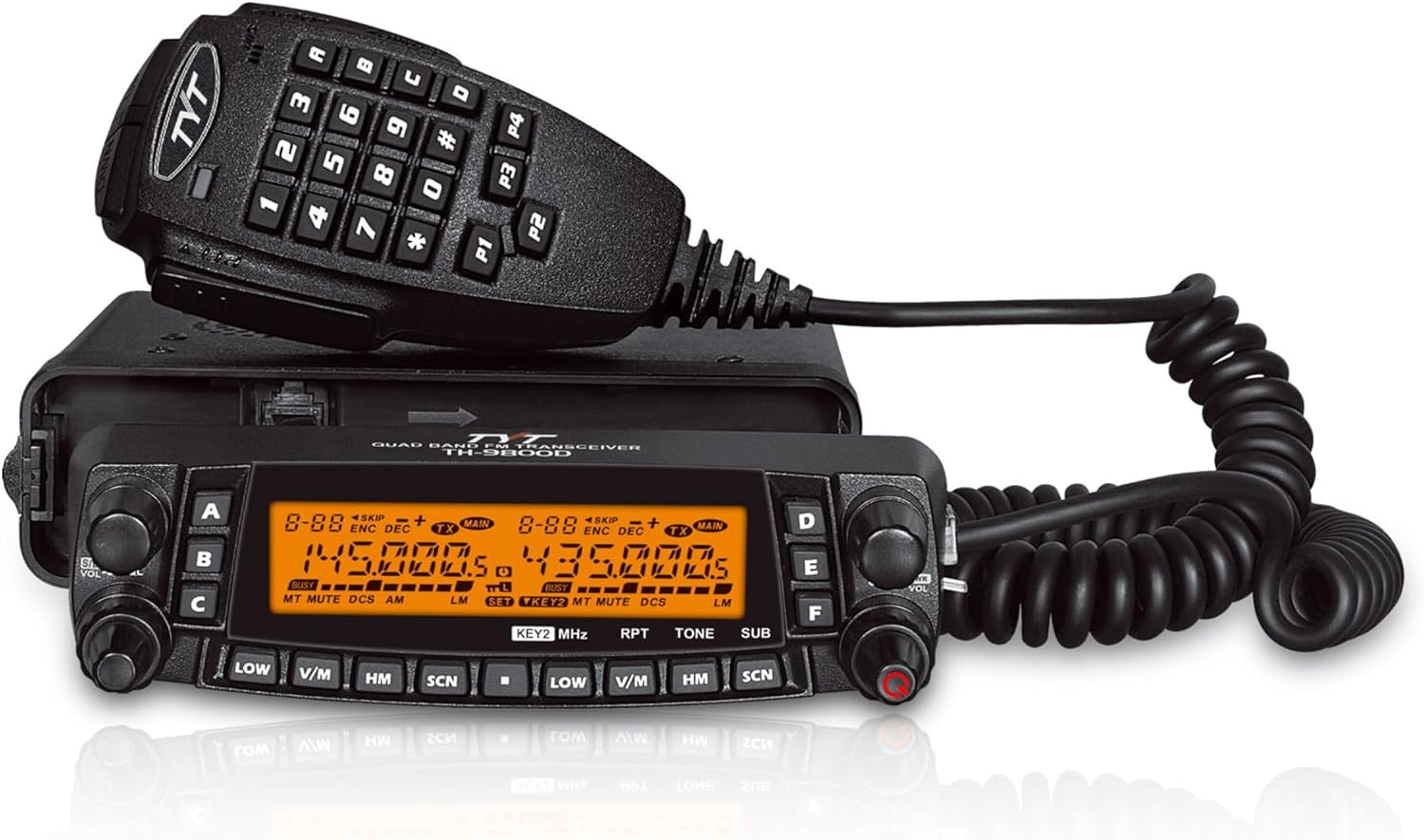 | TYT TH-9800D Radio | Check Price |
Our Top Picks 2  | TYT TH-9800 Plus Radio | Check Price |
Our Top Picks 3 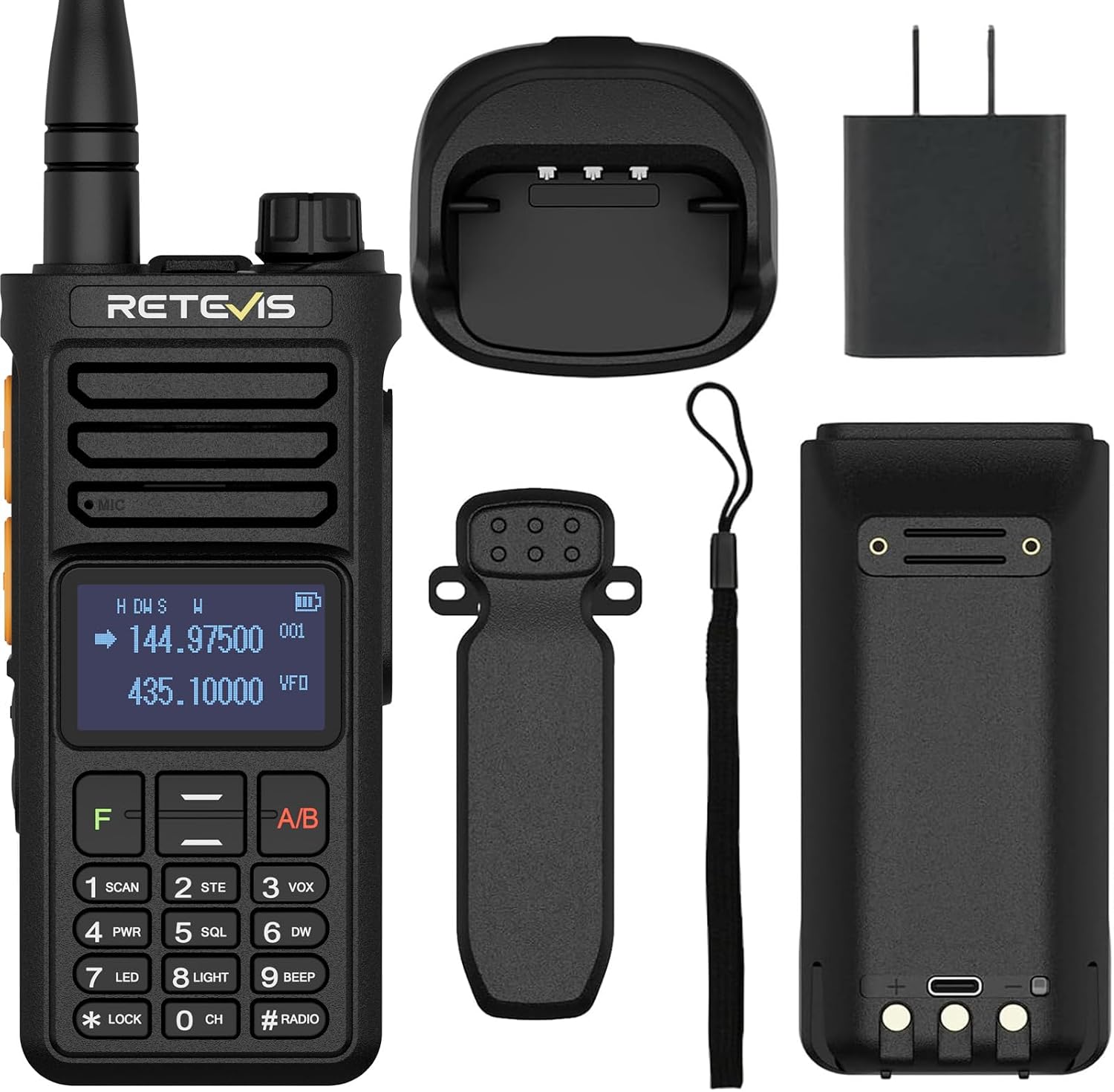 | Retevis RA89R Repeater | Check Price |
Our Selected Top 12 Cross Band Ham Radio for Different Needs
This list features a variety of cross band ham radios designed for different uses and experience levels. Each review explains how each radio performs, identifies the ideal user, and highlights its main advantages and potential drawbacks, helping you make an informed choice.
1. TYT TH-9800D Quad Band Mobile Ham Radio
Quad-band operation across 10M, 6M, 2M, and 70CM frequencies makes this radio a flexible choice for mobile ham radio enthusiasts. Its standout feature is the dual display with cross-band repeat, enabling communication on two frequencies at once and extending range without extra gear.
Ideal for those wanting versatile power and extended coverage in one device.
Setup involves programming channels via CHIRP software or compatible HESENATE devices, which streamlines the process despite some users needing help occasionally. Daily use is straightforward thanks to adjustable power output settings, high, mid, and low, letting you adapt transmission strength based on your situation. The dual display keeps tabs on two frequencies simultaneously, making it easier to monitor traffic or relay messages without switching views.
Performance-wise, the radio delivers up to 50W of power, supporting long-range communication up to 50 kilometers. Build quality focuses more on function than durability, as it is not water resistant and requires a nonstandard battery type.
Positive comments highlight its high output and cross-band capabilities, while a frequent downside is the lack of water resistance, which limits outdoor use in wet conditions.
The radio’s strong points include its high output power and ability to handle cross-band repeat with ease, which expands communication flexibility significantly. The most common drawback is it lacks water resistance, making it vulnerable in wet environments or harsh weather. Users often seek assistance with programming but find support responsive.
Enthusiasts seeking powerful cross-band features and multi-band operation in a mobile radio will find it a solid option. Those needing a rugged, weatherproof device or standard battery compatibility might want to explore alternatives better suited for rough outdoor use.
Pros
- Supports four frequency bands for wide coverage
- Dual display shows two frequencies at once
- Adjustable power output up to 50W
- Compatible with CHIRP and HESENATE devices
Cons
- Not water resistant, limits rough outdoor use
- Requires nonstandard battery, hard to replace
| Specification | Details |
|---|---|
| Number of Channels | 800 |
| Frequency Range | 10M, 6M, 2M, 70CM |
| Maximum Talking Range | 50 kilometer |
| Voltage | 13.8 volts |
| Output Power | Up to 50W (High/Mid/Low adjustable) |
2. TYT TH-9800 Plus Quad Band Mobile Ham Radio
TYT TH-9800 Plus Quad Band Mobile Ham Radio works best for operators needing solid power across four bands. It suits those who want a cross-band repeater function and strong transmission range in a single mobile unit.
Its ability to handle multiple frequencies simultaneously stands out as the biggest strength.
Setting up the radio involves connecting it to a 13.8-volt power source and programming channels via a personal computer. Daily use benefits from its dual display that shows two separate frequencies at once.
The adjustable power levels help tailor output from local communication to longer distance FM DX. Cross-band repeat extends handheld radio range, useful on the move or in groups.
Performance delivers up to 50W output on HF and VHF, with 35W on UHF bands, ensuring strong signal reach. The radio covers 10M, 6M, 2M, and 70CM bands with 800 channels available.
Build quality matches typical mobile radio standards but lacks water resistance. Users highlight reliable transmission and versatile band operation, while some mention the non-waterproof design as a downside.
Strong transmission power and cross-band repeat functionality make it valuable for mobile and emergency scenarios. Most common complaints focus on the lack of water resistance and the learning curve in programming channels via computer.
Expect reliable multi-band mobile operation and extended handheld reach if used mainly in vehicles or dry environments. Those needing a fully weatherproof radio or simpler setup might prefer other models.
Pros
- Quad-band operation with four amateur bands
- Cross-band repeat extends handheld range
- Dual independent frequency display
- Multiple power levels for each channel
Cons
- Lacks water resistance for outdoor use
- Programming can be complicated without PC
| Specification | Details |
|---|---|
| Number of Channels | 800 |
| Frequency Range | 10M, 6M, 2M, 70CM |
| Talking Range Maximum | 50 kilometer |
| Voltage | 13.8 volts |
| Power Output | Up to 50W HF/VHF, 35W UHF |
| Water Resistance Level | Not Water Resistant |
3. Retevis RA89R Ham Radio with Cross-Band Repeater
Carrying a solid, moisture-resistant ham radio that doubles as a cross-band repeater makes it easy to stay connected without dragging extra gear. Ideal for those needing quick communication setups during events or emergencies, it turns a handheld radio into a flexible repeater station, which is its biggest advantage in real-world use.
Setting it up is straightforward thanks to the Bluetooth app that lets you manage channels and adjust settings wirelessly. The app works well on both Android and iOS, so handling 200 channels and switching bands happens quickly in the field. No cables clutter the process, and the moderate moisture resistance means it holds up well in less-than-ideal weather.
Performance on cross-band repeating is solid, bridging different frequencies to keep conversations clear over long distances. The build feels sturdy and practical for outdoor use, with a battery life of about 15 hours supporting extended periods away from power sources. The most praised feature is the easy app control, while some users note the audible noise at 40 db as a minor distraction.
The wireless mobile app control receives strong praise for simplifying radio setup and channel management, helping users build instant communication networks. On the downside, the 40 dB audible noise can be noticeable, distracting some operators in quiet environments. Battery type also means sourcing replacements may not be straightforward.
Anyone needing flexible, portable cross-band repeating with extended battery life and easy control will find this radio fits well. Those prioritizing ultra-quiet operation or standard batteries might prefer looking at other options to meet those specific needs.
Pros
- Wireless app control for quick field setup
- Cross-band repeating bridges multiple frequency bands
- Long 15-hour battery life supports all-day use
- Moisture resistant for outdoor reliability
Cons
- Audible noise measured at 40 dB during operation
- Requires nonstandard battery, limiting replacements
| Specification | Details |
|---|---|
| Number of Channels | 200 |
| Frequency Range | RX:136-174Mhz, 400-520Mhz; 108-134Mhz; 64-108Mhz, TX:144-148Mhz, 420-450Mhz |
| Battery Average Life | 15 hours |
| Wireless Connectivity | Bluetooth |
| Water Resistance Level | Moisture Resistant |
4. Radioddity GD-88 Dual Band DMR Ham Radio

Great for ham radio enthusiasts wanting both analog and digital modes, the Radioddity GD-88 stands out with its cross-band repeater function. It suits those needing solid dual-band operation on VHF and UHF with easy switching between modes, making communication flexible and extensive.
Setup involves programming up to 4000 channels, which covers a wide range of frequencies for various uses. Day-to-day use benefits from dual standby, letting you monitor two channels simultaneously without missing important signals.
The GPS/APRS feature adds tracking capabilities, useful for mobile or outdoor activities. Water resistance means the radio can handle wet conditions without worry.
Performance-wise, it effectively extends communication range through its cross-band repeater, capable of switching transmit and receive bands. The build feels durable and practical, with one lithium-ion battery that lasts well on long outings.
Frequent comments highlight reliable signal clarity in both analog and digital modes, while some mention the interface can be complex for beginners.
Consistent praise focuses on the cross-band repeater’s ability to extend range and smooth mode switching between analog and digital. The most common downside is the complexity of navigating menus and settings for those less familiar with advanced radios. This reflects a balance between versatility and ease of use.
Ideal for experienced operators who want flexible communication options and location tracking in one device. Casual or new users might find a simpler setup more comfortable before upgrading to a multi-feature radio like this one.
Pros
- Handles analog and digital modes smoothly
- Monitors two channels at once
- Built-in GPS and APRS tracking
- Water resistant for outdoor use
Cons
- Interface can be confusing for beginners
- Battery life varies with heavy use
| Specification | Details |
|---|---|
| Number of Channels | 4000 |
| Frequency Range | UHF VHF |
| Talking Range Maximum | 10 mile |
| Number of Batteries | 1 Lithium Ion battery required (included) |
| Additional Features | Cross-band Repeater, GPS / APRS, Dual Standby |
5. BAOFENG BF-F8HP PRO Tri-Band Ham Radio
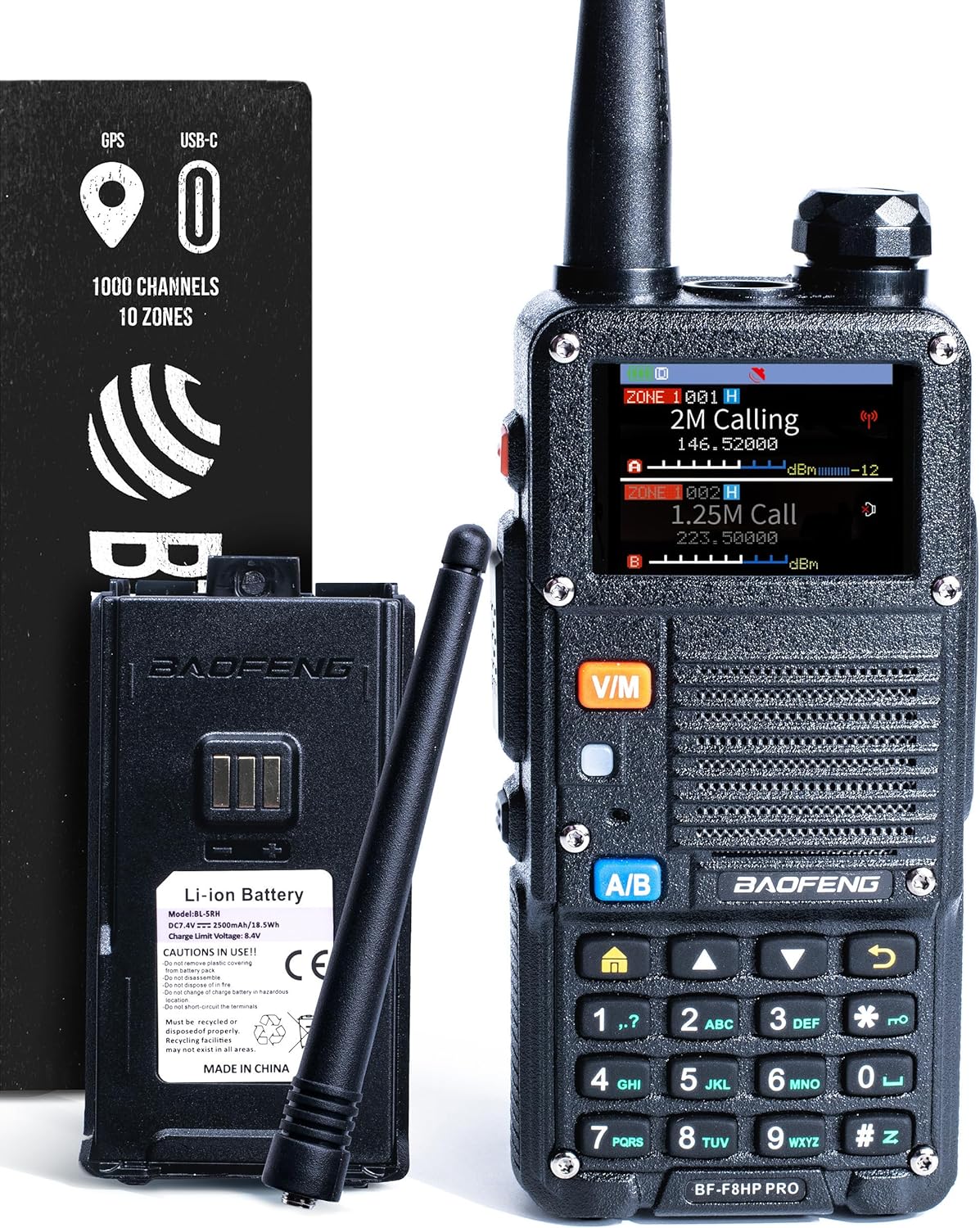
Constructed with a water-resistant body and powered by a 7.4-volt lithium-ion battery, the BAOFENG BF-F8HP PRO Tri-Band Ham Radio suits amateur operators needing a durable device with organized analog controls. Its clearest advantage lies in user-friendly menus that organize up to 1,000 memories across 10 named zones.
Setting it up is simple with clear English menus and an easy-to-use keypad, making quick channel changes simple at home, on the go, or at events. Named zones make scanning efficient by grouping relevant frequencies together, and temporarily skipping busy channels keeps communication flowing smoothly without messing up stored lists.
Its long-range capability extends up to five miles and coverage spans 1.25 m, UHF, and VHF frequencies, along with AM aviation and FM broadcast reception. The build feels solid and the water resistance adds confidence outdoors.
The clearest praise is its practical menu system; most users note scanning only works on analog channels, not digital ones, as a drawback.
Many value the easy-to-understand menus and organized channel zones that make day-to-day adjustments simpler. The main limitation is that scanning capabilities only work with analog channels, leaving no option for digital or trunked system scanning.
Anyone wanting a straightforward, durable ham radio with broad frequency and channel options will appreciate this model. Those requiring digital mode compatibility or greater transmission range might consider alternatives better suited for those needs.
Pros
- User-friendly menus with clear English descriptions
- Ability to store and organize 1,000 channels in 10 zones
- Long battery life lasting about 10 hours per charge
- Water-resistant design suitable for outdoor use
Cons
- Scanning limited to analog channels, no DMR/digital support
- Maximum talk range capped at around 5 miles
| Specification | Details |
|---|---|
| Number of Channels | 1000 |
| Battery Average Life | 10 hours |
| Water Resistance Level | Water Resistant |
| Frequency Range | 1.25 m Coverage, AM Aviation RX (108-137 MHz), FM Broadcast RX (65-108 MHz), UHF Coverage, VHF Coverage |
| Voltage | 7.4 volts |
6. TYT TH-9800 Quad Band Mobile Ham Radio

Powerful quad-band coverage stands out, perfect for amateur radio enthusiasts who need broad frequency access. The main strength lies in its ability to handle four distinct bands with strong output and a versatile display, suiting mobile and base station setups alike.
Setting it up involves connecting the compatible 4 bands antenna and programming channels via the alphanumeric display and full direct entry keypad mic. Features like CTCSS and DCS make daily communication clear, while cross-band capability allows flexible use across 10M, 6M, 2M, and 70cm bands. The remote mountable faceplate adds convenience for mobile installations.
It delivers solid transmission power, reaching 50W or 40W across its bands, handling FM and AM modes on VHF for air band reception well. The waterproof design and backup fuse add reliability. The loud output at 20 dB helps hearing transmissions clearly, though some noise issues require careful CTCSS setting.
The inclusion of 800 channels is generous, but antenna compatibility is critical to avoid performance issues.
The radio receives praise for strong, clear transmission across multiple bands and ease in accessing 800 channels. Common complaints involve noise during transmitting caused by incorrect CTCSS settings and the need to use a specific antenna for proper functionality.
People needing multi-band capabilities in mobile or base setups will appreciate this radio. Those without the right antenna or looking for noise-free experience right out of the box might consider other options better suited to their needs.
Pros
- Four band coverage in one mobile unit
- Alphanumeric display with keypad for easy control
- Remote mountable faceplate for flexible installation
- Includes backup fuse for added protection
Cons
- Requires compatible 4 bands antenna only
- Noise can occur if CTCSS not set correctly
| Specification | Details |
|---|---|
| Frequency Range | 136-174 MHz |
| Power Output | 50W/40W FM |
| Channels | 800 |
| Cross-Band | Yes |
| Battery Life | 72 hours |
7. Radtel RT-880G GPS APRS Ham Radio Walkie Talkie

Cross-band communication combined with GPS and APRS tracking makes this radio ideal for outdoor enthusiasts and teams needing reliable, flexible contact. Its standout feature is a GPS-assisted APRS system that simplifies location sharing and direction-finding on the go, a step beyond typical models that only handle voice communication.
Setting it up involves a one-touch GPS coordinate function and intuitive track recording, perfect for navigating campsites or remote areas. Switching between UHF and VHF frequencies or activating the cross-band repeater is straightforward, allowing for communication over extended distances and different frequency bands. It runs on a single included 9V battery, keeping power management simple.
Performance delivers reliable coverage up to 10 kilometers and clear AM, FM, SSB reception on 1024 channels. The radio’s build does not include water resistance, which limits its use in wet conditions, but it’s well suited for dry outdoor environments. The main praise centers on its thorough APRS communication and GPS accuracy, while the lack of water protection is the chief drawback noted.
GPS and APRS functions provide accurate location tracking and easy communication, praised for outdoor coordination. Lack of water resistance is the main complaint, restricting use in adverse weather. Power relies on a single 9V battery included with the unit.
Suitable for users who spend time outdoors in dry environments and need advanced GPS tracking with broad channel options. Those requiring weatherproof radios or longer battery life should consider alternatives better designed for rugged use.
Pros
- Accurate GPS positioning with one-touch operation
- Supports real-time APRS encoding and decoding
- Cross-band repeater for UHF and VHF frequencies
- 1024 channels for diverse communication needs
Cons
- Not water resistant, limiting outdoor use in wet conditions
- Single 9V battery may require frequent replacement
| Specification | Details |
|---|---|
| Number of Channels | 1024 |
| Frequency Range | 144-148Mhz/420-450Mhz |
| Talking Range Maximum | 10 kilometer |
| Battery | 1 9V batteries required (included) |
| Cross Band Repeater | Yes |
8. Retevis RA89R Handheld Ham Radio (2 Pack)

Cross-band communication during large events or emergencies can be tricky, but this dual-band handheld connects the 2m and 70cm bands with ease. It suits anyone needing reliable bridging on these frequencies, with its biggest strength being automatic cross-band repeating for smooth interaction between devices.
Setting it up doesn’t require fiddling with cables thanks to wireless app control available on Android and iOS. Day-to-day use means switching channels among 200 stored options and enjoying the convenience of Type-C charging. Moisture resistance helps it handle outdoor conditions without worry.
The two units in the pack support long-range communication, valuable for those in sprawling or complex locations.
Performance is strong with a talking range that tops out at 350,000 feet, covering a broad frequency range suitable for amateur radio use. The build feels solid enough for regular handling yet slightly vulnerable to heavy water exposure.
Positive feedback highlights the ease of cross-band repeater use, but many note the inclusion of nonstandard batteries as a downside.
Automatic cross-band repeating stands out as the best feature, making communication within mixed frequency groups much simpler. The most frequent complaint centers on the use of nonstandard batteries, which can be inconvenient despite two batteries being included.
This radio pack works well for people needing to bridge 2m and 70cm bands quickly and reliably, especially in event setups or outdoor activities. Those seeking fully waterproof units or standard battery types might want to consider other options.
Pros
- Automatic cross-band repeater for dual-band communication
- Wireless app configuration on Android and iOS
- Type-C charging for fast power and connection
- Long talking range of up to 350,000 feet
Cons
- Uses nonstandard batteries despite including two
- Only moisture resistant, not fully waterproof
| Specification | Details |
|---|---|
| Number of Channels | 200 |
| Frequency Range RX | 136-174Mhz, 400-520Mhz; 108-134Mhz; 64-108Mhz |
| Frequency Range TX | 144-148Mhz, 420-450Mhz |
| Talking Range Maximum | 350000 feet |
| Water Resistance Level | Moisture Resistant |
9. Retevis RT95 Dual Band Mobile Ham Radio

Long range communication up to 5 kilometers makes the Retevis RT95 Dual Band Mobile Ham Radio a solid choice for anyone needing reliable contact from trucks, jeeps, or RVs. Its dual band capability fits users wanting clear communication on both VHF and UHF frequencies with plenty of channels to choose from.
Setting up is straightforward, especially on vehicles since it’s designed for easy installation. The microphone gain adjustment helps keep calls clear without annoying interference.
Two built-in speakers make it easy to hear transmissions well. Connecting it to a car’s audio system via RCA ports also gives a richer sound experience on the road or at home using it as a base station.
Performance in real use lives up to the long-range promise with solid signal reception, aided by the high gain antenna that comes with it. The radio feels lightweight but well made, though it’s not water resistant, so care is needed outdoors. Reviews show the sound quality is clear and penetrating, but some mention a lack of weatherproofing as a drawback.
Clear sound quality and solid signal reach stand out as key positive points. Most commonly mentioned drawback is the absence of water resistance, which limits use in wet conditions.
Anyone needing reliable dual band mobile communication with good audio quality aboard vehicles will appreciate this radio. Those requiring waterproofing or extreme durability may want to look elsewhere.
Pros
- Long communication range for mobile use
- Adjustable microphone gain for clearer calls
- Dual speakers deliver strong sound quality
- Can connect to vehicle audio systems
Cons
- Lacks water resistance for outdoor use
- Limited temperature operating range (-20-60 °C)
| Specification | Details |
|---|---|
| Number of Channels | 200 |
| Frequency Range | 144-148Mhz / 420-450Mhz |
| Talking Range Maximum | 5 kilometer |
| Voltage | 13.8 volts |
| Water Resistance Level | Not Water Resistant |
10. Radioddity DB50 Dual Band Mobile Ham Radio
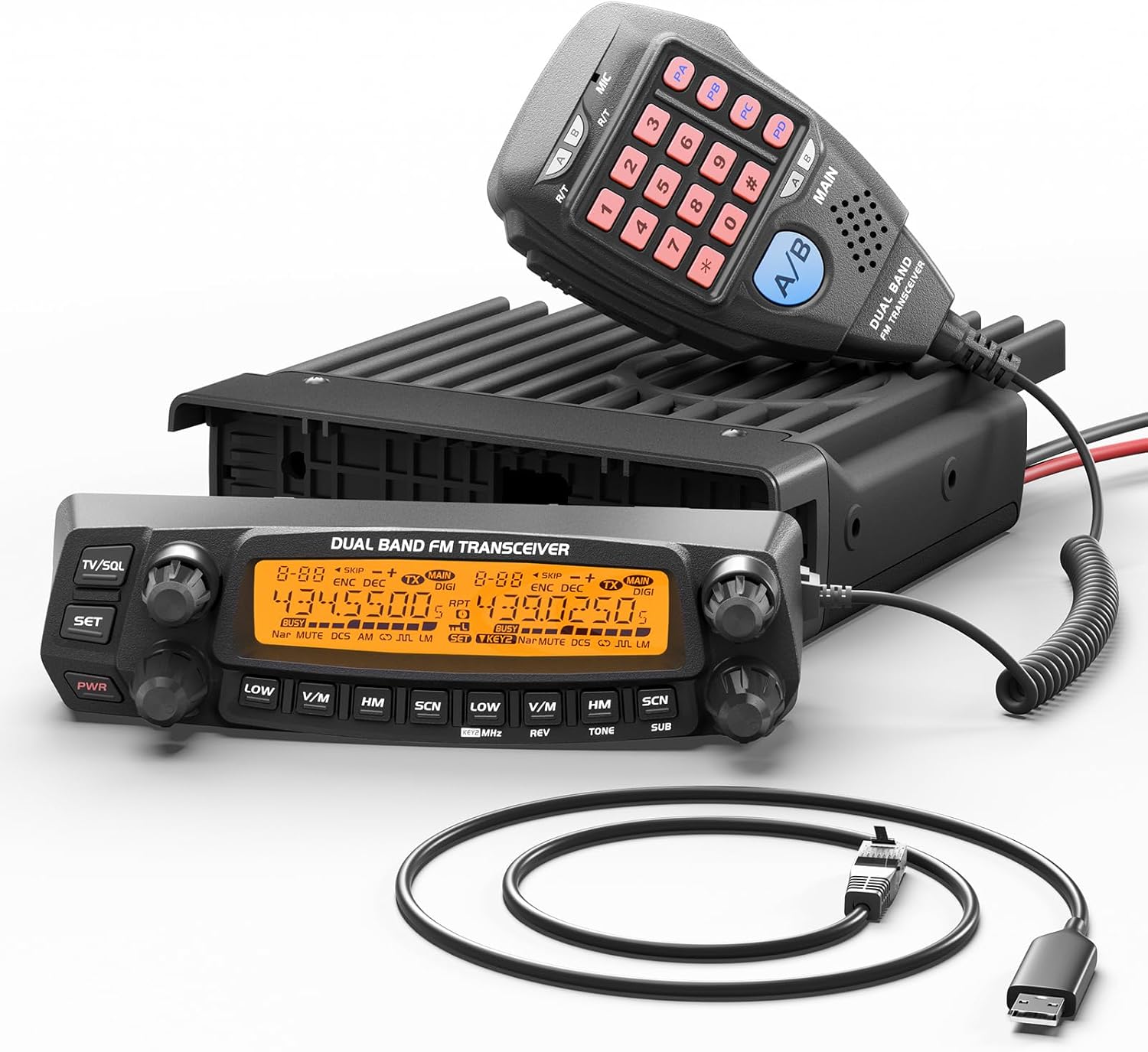
People who rely on long-distance radio communication in vehicles will find the Radioddity DB50 Dual Band Mobile Ham Radio especially useful. It suits emergency responders, logistics teams, and outdoor enthusiasts who need strong, clear signals over wide areas. Its standout feature is the 50W output power, which supports reliable communication across long distances.
Setting up the radio is straightforward, particularly because of its detachable front panel that makes positioning it in a vehicle easy and flexible. Day-to-day use benefits from a digital display that clearly shows channel and frequency information.
Compatibility with various mounts, antennas, and accessories like microphones and external speakers adds to convenience on the go.
The radio holds up well in its role of delivering clear communications within a 50-mile range on UHF and VHF bands. It’s sturdy enough for constant vehicle use, but it is not water resistant, so some care is needed in harsh weather. The most praised feature is the high power output, while the common complaint is about it not being water resistant for outdoor conditions.
The radio’s strongest point is its 50W power output that provides clear transmissions over a wide area. Common feedback points to its lack of water resistance, limiting its use in wet or harsh outdoor conditions. Setup flexibility with the detachable front panel and compatibility with numerous mounts supports easy vehicle integration.
People who need high-power, vehicle-based communication will appreciate this radio’s features. Those requiring a water-resistant or more rugged design for regular outdoor use should consider other options designed specifically for those conditions.
Pros
- High 50W output for solid long-distance communication
- Detachable front panel for flexible vehicle mounting
- Supports extensive 758 channel memory
- Compatible with Chirp software and various accessories
Cons
- Lacks water resistance for outdoor exposure
- Audible noise level of 40 db can be noticeable
| Specification | Details |
|---|---|
| Output Power | 50W |
| Number of Channels | 758 |
| Frequency Range | UHF, VHF, Air band, 1.25m, 350MHz |
| Talking Range Maximum | 50 mile |
| Voltage | 13.8 volts |
| Water Resistance Level | Not Water Resistant |
11. TYT TH-UV8000D Handheld Ham Radio

Ideal for those needing a dual-band handheld ham radio, the TYT TH-UV8000D stands out by offering a powerful 10-watt output and cross-band repeater functionality. Its ability to handle VHF and UHF frequencies suits hobbyists looking for extended communication range in various settings.
Setting up involves using one of the two included antennas, with a simple menu option allowing the cross-band repeater to be enabled or disabled. Daily use benefits from the large 3800mAh battery, which keeps it running for longer sessions.
Options like VOX, DTMF, and numerous tone settings add convenience and adaptability during communication.
Performance shines through with a solid 10-kilometer talking range thanks to its 10-watt power. The radio’s build is practical, though it lacks water resistance.
Reviews mention reliable signal strength and good channel storage as positives, while some note the absence of water protection as a drawback in field conditions.
The strongest praise highlights its solid 10-watt output that achieves long-distance communication effectively, combined with flexible dual-band operation. The most common complaint points to the lack of water resistance, which can limit its dependability outdoors in wet conditions.
People needing a reliable, powerful radio for cross-band communication will find this well suited. Those who require a fully rugged or water-resistant device for harsh environments might consider other options better equipped for such use.
Pros
- Dual-band with cross-band repeater feature
- Includes high gain and standard antennas
- Large 3800mAh battery for extended use
- 128 channels with various tone options
Cons
- Not water resistant, limited for outdoor wet use
- Single nonstandard battery required
| Specification | Details |
|---|---|
| Power Output | 10 Watts |
| Frequency Range (TX) | 144-148 MHz/420-450 MHz |
| Number of Channels | 128 |
| Battery Capacity | 3800 mAh |
| Talking Range Maximum | 10 kilometer |
12. Retevis MA1 Dual Band Mobile Ham Radio

Retevis MA1 Dual Band Mobile Ham Radio is designed for anyone needing reliable cross-band communication with extended range. Its strongest feature is the cross-band relay that helps maintain smooth contact over long distances, making it ideal for mobile use and emergency situations.
Setting up the radio involves connecting it to a 13.8-volt power source and adjusting channels using one of its 999 available options. The detachable front panel adds convenience, allowing separate operation and flexibility in daily use.
The superheterodyne receiver improves signal stability and cuts down on interference, which is crucial when you’re on the move or facing tough conditions.
Performance-wise, it consistently delivers a stable signal thanks to its high power output, ensuring you stay connected even in remote areas. The build feels solid but is not water resistant, which some found limiting.
Most praise comes from its effective long-range communication, while the most frequent issue noted is the lack of water resistance for outdoor use in harsh weather.
The strongest praise centers on the radio’s ability to maintain clear, long-distance communication with stable signals. The most common complaint relates to its lack of water resistance, which can restrict use during adverse weather or rough outdoor conditions.
People needing dependable dual-band mobile operation and cross-band relay will appreciate this radio. Those requiring waterproof features or digital connectivity may want to explore other options better suited to those needs.
Pros
- Extends communication range via cross-band relay
- Detachable front panel allows flexible operation
- 999 channels cover varied communication needs
- Stable signals supported by superheterodyne receiver
Cons
- Not water resistant, limits outdoor weather use
- Analog connectivity only, no digital options available
| Specification | Details |
|---|---|
| Number of Channels | 999 |
| Voltage | 13.8 volts |
| Frequency Range | Dual band |
| Connectivity Protocol | Analog |
| Additional Features | Cross-band relay, Detachable front panel, Superheterodyne receiver |
Best Cross Band Ham Radios Side by Side Comparison
| Product | Channels | Frequency Range | Cross-Band | Water Resistance |
|---|---|---|---|---|
| TYT TH-9800D Radio | 800 | 10M,6M,2M,70CM | – | Not Water Resistant |
| TYT TH-9800 Plus Radio | 800 | 10M,6M,2M,70CM | – | Not Water Resistant |
| Retevis RA89R Repeater | 200 | 64-174Mhz,400-520Mhz | Yes | Moisture Resistant |
| Radioddity GD-88 DMR | 4000 | UHF,VHF | Yes | Water Resistant |
| Baofeng BF-F8HP PRO | 1000 | 65-137 MHz,UHF,VHF | – | Weather Resistant |
| TYT TH-9800 Radio | 800 | 136-174 MHz | Yes | Waterproof |
| Radtel RT-880G APRS | 1024 | 144-148/420-450 Mhz | Yes | Not Water Resistant |
| Retevis RA89R 2-Pack | 200 | 64-174Mhz,400-520Mhz | Yes | Moisture Resistant |
| Retevis RT95 Mobile | 200 | 144-148/420-450 Mhz | – | Not Water Resistant |
| Radioddity DB50 Mobile | 758 | UHF,VHF,Air band | – | Not Water Resistant |
| TYT TH-UV8000D Handheld | 128 | 144-148/420-450 Mhz | – | Not Water Resistant |
| Retevis MA1 Mobile | 999 | Dual Band | Yes | Not Water Resistant |
- Channels800
- Frequency Range10M,6M,2M,70CM
- Cross-Band–
- Water ResistanceNot Water Resistant
- Channels800
- Frequency Range10M,6M,2M,70CM
- Cross-Band–
- Water ResistanceNot Water Resistant
- Channels200
- Frequency Range64-174Mhz,400-520Mhz
- Cross-BandYes
- Water ResistanceMoisture Resistant
- Channels4000
- Frequency RangeUHF,VHF
- Cross-BandYes
- Water ResistanceWater Resistant
- Channels1000
- Frequency Range65-137 MHz,UHF,VHF
- Cross-Band–
- Water ResistanceWeather Resistant
- Channels800
- Frequency Range136-174 MHz
- Cross-BandYes
- Water ResistanceWaterproof
- Channels1024
- Frequency Range144-148/420-450 Mhz
- Cross-BandYes
- Water ResistanceNot Water Resistant
- Channels200
- Frequency Range64-174Mhz,400-520Mhz
- Cross-BandYes
- Water ResistanceMoisture Resistant
- Channels200
- Frequency Range144-148/420-450 Mhz
- Cross-Band–
- Water ResistanceNot Water Resistant
- Channels758
- Frequency RangeUHF,VHF,Air band
- Cross-Band–
- Water ResistanceNot Water Resistant
- Channels128
- Frequency Range144-148/420-450 Mhz
- Cross-Band–
- Water ResistanceNot Water Resistant
- Channels999
- Frequency RangeDual Band
- Cross-BandYes
- Water ResistanceNot Water Resistant
How to Choose the Best Cross Band Ham Radio
Choosing the right cross band ham radio depends on factors like frequency range, power output, and ease of use, as these impact communication quality and reliability. Prioritizing these features helps avoid compatibility issues and reduces the need for costly replacements or upgrades later.
Frequency Coverage and Band Support
Handling different frequency ranges significantly impacts what radios can pick up or transmit. Radios with limited coverage often miss important channels, leading to frustration during communication attempts.
A device supporting key VHF/UHF bands, typically around 136-174 MHz and 400-480 MHz, covers most amateur uses in the US and many international regions. Crossband repeat functions also vary; some radios can relay signals between bands, which proves handy in complex setups or extending reach.
Compliance with local band plans and licensing matters because transmitting on unauthorized frequencies causes interference and legal issues. Radios designed for your region usually follow these rules automatically or allow locking out restricted bands.
Checking detailed specifications for supported bands and crossband modes avoids surprises and keeps use consistent with regulations.
Power Output and Transmission Range
Transmission power influences both how far signals travel and how fast batteries drain. Radios offering adjustable power levels, commonly between 1 to 50 watts, let users balance range and energy use. Excessive power in tight spaces can overheat the device, shortening its lifespan just as much as frequent high-power transmissions drain the battery quickly.
The effective range varies a lot depending on environment; open fields can allow up to several miles, while urban or forested terrain might reduce this drastically. Having power settings to switch between low, medium, and high outputs improves adaptability to changing conditions without sacrificing communication
.
Portability and Build Quality
Carrying a bulky radio during outdoor activities quickly becomes tiring, especially if it weighs over a pound and takes up half a backpack. Compact, lightweight units around 6 to 8 ounces fit easily into handheld operation and mobile use without strain. Some models come with durable plastic or rubberized casing to withstand drops and keep working in rain or dust.
Comfort during extended use depends on button placement and grip texture. Radios with well-spaced controls and a slightly contoured body reduce hand fatigue and accidental presses.
Users often find that poor ergonomics limit how long they can comfortably operate in the field.
Battery Life and Power Options
Battery life can range from a few hours to a full day of moderate use. Radios with at least 1500 to 2000 mAh batteries typically last a workday, but this depends heavily on transmission power and screen brightness. Replaceable batteries help extend operating time by allowing spares on hand, while rechargeables keep things simple but require access to power sources.
External power input or compatibility with vehicle charging adapters adds to the product’s versatility. This is essential during long outings or emergencies when recharging options are limited. Radios supporting common USB-type charging or 12V vehicle inputs are especially practical for users who spend time on the move.
User Interface and Features
Programming frequencies can be a hassle if the interface is cluttered or the manual is unclear. Radios with straightforward menus, clear labels on buttons, and support for computer programming save hours over time. Large, well-lit LCD screens that show frequency and mode information clearly help avoid mistakes during quick checks.
Advanced features like scanning multiple channels, dual receive, and privacy codes provide useful functionality in crowded or busy airwaves. These features improve monitoring and security but require intuitive menus to make them accessible without constant reference to instructions.
Brightness adjustments or backlight ensure usability outside in strong sunlight or low light conditions.
Cross Band Operation: Tips for Maximizing Range and Clarity
Cross band operation involves transmitting on one frequency band and receiving on another, which can help extend communication range by relaying signals through a repeater function on your radio. To maximize range and clarity, choose frequency bands with minimal interference; for instance, pairing VHF and UHF bands can improve signal reach in urban and rural environments.
Adjust antenna positioning to maintain strong line-of-sight paths, since obstructions heavily disrupt radio waves.
Practical tips include:
- Using high-quality coaxial cables and connectors to prevent power loss between the radio and antenna
- Keeping transmit power settings appropriate for the conditions; higher power improves range but may cause more interference and battery drain
- Listening carefully for signals and avoiding crowded frequencies to reduce noise
- Regularly updating frequencies based on local band usage and meteorological conditions that affect propagation
Setting up your radio with these details in mind will optimize both signal clarity and overall communication range during cross band operation.
Essential Maintenance Practices to Prolong Your Cross Band Ham Radio’s Life
Routine maintenance is key to keeping a cross band ham radio in reliable working order. Start by cleaning the radio’s exterior with a soft, dry cloth to prevent dust buildup, which can interfere with buttons and connectors.
Inspect antenna connectors for corrosion or looseness, as poor connections degrade signal quality.
Other important steps include:
- Checking and tightening screws and mounts to prevent mechanical damage during use
- Replacing worn or damaged antennas to maintain effective transmission and reception
- Storing the radio in a dry, cool place to avoid moisture-related issues
- Testing the battery regularly; rechargeable batteries lose capacity over time and need replacement for consistent performance
Scheduling these practices every few months helps extend the radio’s lifespan and prevents unexpected failures while in the field or during emergency use.
Comparing Cross Band Repeaters and Simplex Modes for Effective Communication
Cross band repeaters and simplex mode serve different roles in ham radio communication. Repeaters retransmit signals from one frequency to another, extending communication range beyond direct line-of-sight by using fixed relay stations.
This is helpful in areas with physical obstacles or large coverage zones.
Simplex mode, by contrast, uses a single frequency for both transmitting and receiving. It requires direct line-of-sight or close proximity but avoids the delay and complexity of repeaters.
Practical distinctions include:
- Repeaters require access and knowledge of their frequencies, but allow longer-distance contacts
- Simplex is simpler to set up and can work where repeaters are unavailable or busy
- Audio quality in simplex often feels more immediate, with lower latency
- Repeaters can handle multiple users and wider geographic areas, but involve additional equipment maintenance
Choosing between cross band repeaters and simplex depends on your communication needs, local infrastructure, and environment.
People Also Asked
How Do I Properly Care for a Cross Band Ham Radio?
Keep the radio clean and dry, avoid dropping it, and store it away from extreme heat or cold. Changing batteries regularly and using a protective case helps extend its life and maintain performance in daily use.
What Size Antenna Is Compatible with Cross Band Ham Radios?
Most cross band ham radios work well with antennas sized for the specific frequency bands they use, typically around 1/4 wavelength for VHF and UHF. Check the radio’s manual to match the antenna length for optimal signal strength.
Are Cross Band Ham Radios Safe to Use Indoors?
Using a cross band ham radio indoors is generally safe, though signal range might be limited by walls and other obstructions. Placing the radio near a window or using an external antenna improves communication quality inside buildings.
How Long Does a Typical Cross Band Ham Radio Last?
A typical cross band ham radio can last several years with proper care and maintenance. Battery life and environmental conditions affect longevity, so replacing worn parts promptly will keep the radio reliable over time.
What Are Common Problems with Cross Band Ham Radios?
Common issues include poor audio quality, weak signal transmission, and battery problems. Regularly cleaning connectors and ensuring antennas are securely attached can prevent these problems in everyday operation.
Conclusion
Prioritize radios that offer clear audio and reliable transmission since these are crucial for effective communication. Battery life should also be considered, especially if you plan on using the radio for extended periods.
Portability and ease of use come next, as complicated controls or bulky designs can limit practical use in the field.
Consider how often you will use the radio and the space where it will be kept. A compact model might be better for occasional use or small areas, while a more durable unit makes sense for regular, outdoor operation. Refer back to the comparison table and detailed picks above to find the radio that fits your specific needs and budget best.