Top 12 Best Concrete Boots That Will Blow Your Mind!
There is nothing quite as frustrating as dealing with boots that fall apart or cause discomfort during long hours on concrete surfaces, which is why choosing the best concrete boots matters. Poor quality boots often lack sufficient support and cushioning, leading to sore feet and even injuries. People working on hard floors know that flimsy soles wear down quickly, and water-resistant features can make a big difference throughout the day.
The most important qualities in the best concrete boots include a thick, durable sole with proper arch support to absorb shock, typically around 12 to 18 millimeters of cushioning. Materials like full-grain leather or heavy-duty synthetic uppers hold up better and resist abrasion.
A good fit prevents blisters and fatigue, so boots should offer a snug but comfortable hold around the heel and toe. Non-slip soles that meet standard safety ratings also ensure stable footing on slippery or dusty concrete surfaces.
Need a Quick Check?
| Image | Product | Price |
|---|---|---|
Our Top Picks 1  | Rubber Concrete Overboot L/XL | Check Price |
Our Top Picks 2  | Tingley Plain Toe Rain Boot | Check Price |
Our Top Picks 3  | Mens Steel Toe Rubber Boot | Check Price |
Our Selected Top 12 Concrete Boots Worth Considering
This list features durable, reliable boots designed specifically for working on concrete surfaces. Each review covers how well the boots perform, their suitability for different users, and highlights both strengths and potential drawbacks to help you make an informed choice.
1. Rubber Concrete Overboot Size L/XL
Super tough pull-on rubber boots designed specifically for concrete work offer excellent durability and slip resistance. Perfect for those working on slippery, rough surfaces, these boots stand out for their reinforced heel and block-tread sole that gives great footing where it’s needed most.
Putting these boots on is straightforward thanks to the stretchy, one-piece molded design that doesn’t differentiate between left or right foot. You can pull them on and off quickly without hassle. The tough rubber material resists punctures and tears, which means they hold up well daily on job sites involving concrete and rough terrain.
Traction is solid due to the block-tread pattern, improving safety during slippery work. The reinforced heel adds extra support where wear occurs fastest. While the boots are extremely durable and almost impossible to damage, some find the plain toe style a bit basic.
Their weight and stretchiness make them comfortable for long shifts, but the size L/XL might feel roomy for smaller feet.
Many appreciate how tough and safe these boots are, especially the slip-resistant soles and reinforced heel that last on concrete jobs. Some users mention the plain toe design as less protective and the larger size option might not suit smaller feet well.
Anyone working regularly on wet or slippery concrete surfaces will find these boots reliable and comfortable. Those needing a more fitted option or toe protection might want to look at boots with different sizing or reinforced toes.
Pros
- Stretchy pull-on design fits both feet
- Reinforced heel for added durability
- Block-tread sole improves traction on slippery surfaces
- Almost impossible to puncture or tear
Cons
- Plain toe feels basic to some
- Size L/XL could be roomy for smaller feet
| Specification | Details |
|---|---|
| Color | Black |
| Toe Style | Plain Toe |
| Boot Form Type | Work Boot |
| Heel Type | Block Heel |
| Seasons | All |
| Style Name | 17855 |
2. TINGLEY Plain Toe Rain Boot
Stepping into wet or muddy work sites gets simpler with these all-season black boots designed for both leisure and labor. They suit anyone needing reliable waterproof footwear that keeps feet dry without any heel elevation, focusing on straightforward protection and comfort.
Putting them on is easy due to their plain toe design that avoids bulkiness, and the solid black pattern means they stay looking clean longer. Wearing them daily, you notice the absence of a heel makes walking on uneven surfaces more natural.
The boot’s construction lets breaths escape moderately, helping during long hours on feet.
These boots deliver solid waterproof coverage with a plain toe, fitting snugly enough for consistent use in damp conditions. Built as work boots with no extra heel, they emphasize stability.
The strongest praise mentions their dependable water resistance, while the most frequent complaint revolves around limited arch support and breathability.
The boots hold up well against water and muddy conditions, providing reliable dryness, but their basic construction doesn’t offer much arch support or breathability, which some people find limiting after long use. They stay solid on various surfaces thanks to no heel design, aiding balance.
People who need a straightforward, durable waterproof boot for all seasons and value stability will appreciate these. Anyone requiring advanced foot support or enhanced ventilation might want to explore other options better tailored to those needs.
Pros
- Waterproof all-season protection
- No heel for better stability
- Simple, easy to clean black design
- Suitable for both work and leisure
Cons
- Minimal arch support
- Breathability could be improved
| Specification | Details |
|---|---|
| Color | Black |
| Toe Style | Plain Toe |
| Boot Form Type | Work Boot |
| Heel Type | No Heel |
| Seasons | All |
| Pattern | Solid |
3. Mens Steel Toe Rubber Rain Boot
Steel toe protection stands out as the biggest strength, making these boots ideal for anyone working in wet, tough conditions needing reliable foot safety. Black rubber keeps feet dry, while the no-heel design supports steady footing on uneven surfaces.
Putting them on is straightforward given the flexible rubber material that also keeps water out during long rainy workdays. Wearing them all seasons is possible since they are designed to handle various weather without sacrificing grip or comfort. The solid black pattern keeps the look simple for practical use.
Performance tracks well with the rubber’s waterproof nature and the steel toe’s protection. The build holds up even after repeated exposure to rough outdoor environments.
Most users appreciate how sturdy and protective the boots are, while some mention they are a bit bulky, which can slow down quick movements.
Strong waterproofing and protective steel toe earn praise for durability and safety. Bulky design often mentioned, making quick movement a bit harder.
Ideal for anyone needing sturdy, waterproof safety boots in wet conditions. Those looking for lighter, more breathable footwear may want to explore other options.
Pros
- Waterproof rubber keeps feet dry
- Steel toe provides strong protection
- Suitable for all seasons
- No heel improves balance on rough terrain
Cons
- Bulky feel may reduce agility
- Lack of ventilation can cause warmth
| Specification | Details |
|---|---|
| Color | Black |
| Toe Style | Steel Toe |
| Boot Form Type | Work Boot |
| Heel Type | No Heel |
| Seasons | All |
| Pattern | Solid |
4. Dunlop Chesapeake Plain Toe Waterproof Boot
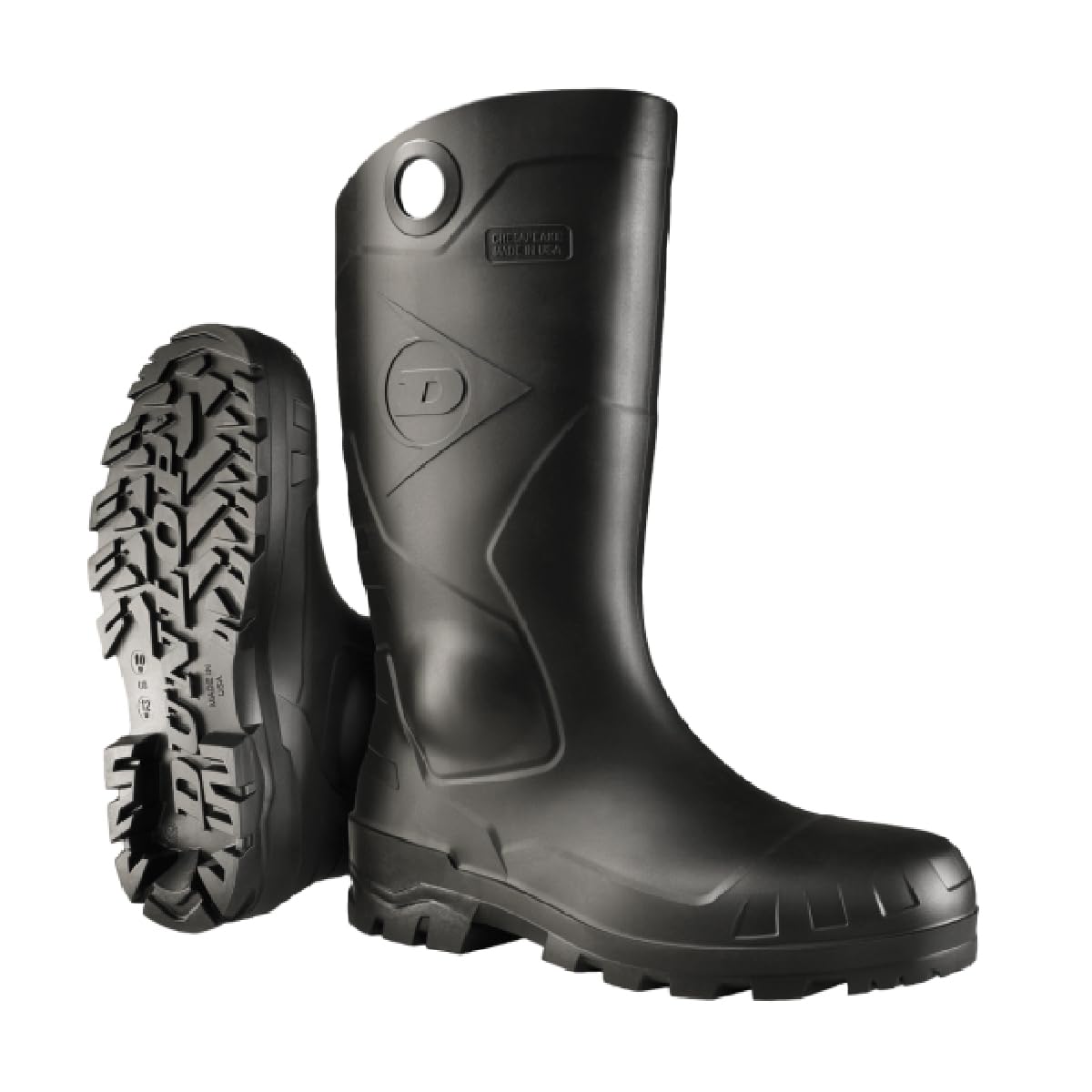
People working in agriculture or outdoor wet environments will find these boots well suited for their daily grind. Their biggest strength is being lightweight while still offering 100% waterproof protection, making them easier to wear for long hours without feeling weighed down.
Putting them on is straightforward with a plain toe design that doesn’t get in the way. The replaceable cushion insoles add comfort, especially during long shifts.
Being up to 25% lighter than traditional PVC boots makes moving around in fields or groves less tiring. The outsole’s channel design keeps water from pooling, which helps when working in soggy conditions.
These boots handle water perfectly, keeping feet dry through wet tasks. Built with a durable PVC outsole and BAY-LOC energy absorbing outsole, they hold up well against rough surfaces.
Reviews note their comfort for everyday use, while the most frequent gripe relates to the fit needing careful attention to sizing charts. They stand strong on durability and footing.
Those who appreciate the lightweight feel and solid waterproofing will praise its all-day wearability in wet environments. The consistent feedback about size fitting shows buyers need to review charts to avoid sizing issues.
Ideal for people needing dependable protection in orchards, fields, or citrus groves who prefer lighter boots. Those requiring heavy-duty toe protection or exact sizing might want to explore other options.
Pros
- Up to 25% lighter than traditional PVC boots
- 100% waterproof with water-repelling outsole channels
- Comfortable with replaceable cushion insoles
- Durable energy absorbing BAY-LOC outsole
Cons
- Size can be tricky; check sizing chart carefully
- Plain toe offers less protection against heavy impacts
| Specification | Details |
|---|---|
| Toe Style | Plain Toe |
| Boot Form Type | Rain Boot |
| Heel Type | Platform Heel |
| Seasons | All |
| Color | Black |
5. Rubber Concrete Overboot Size M/L

A tough, stretchy overboot designed specifically for concrete work, great for those who need durable foot protection on slippery surfaces. Its biggest strength lies in the one-piece molded design that fits easily on either foot, saving time and hassle during long jobs.
Putting these on is straightforward thanks to the stretchy rubber material that pulls on without struggle. The reinforced heel and block-tread sole make standing and walking on wet or uneven concrete safer by adding grip and stability.
Cleaning up involves just rinsing off the solid black rubber, which doesn’t absorb dirt or water.
Built nearly indestructible, the rubber resists punctures and tears won’t spread, making them last through tough conditions. The simple plain toe and block heel focus on function rather than style.
The most common issue is the lack of a left or right foot design, which some find less comfortable over extended wear.
The toughest praise revolves around how nearly impossible it is to puncture or tear the rubber, and how easy these boots are to slip on because of the stretchy mold design. The most noted downside is that users sometimes find them less comfortable since there’s no specific fit for each foot.
People working on concrete who prioritize durability and quick wear will appreciate these boots. Those needing a more tailored foot fit for extended wear might consider boots designed with distinct left and right shapes instead.
Pros
- Stretchy one-piece design for easy on and off
- Reinforced heel for extra durability
- Block-tread sole provides solid traction
- Rubber material resists punctures and tears
Cons
- Not shaped for left or right foot specifically
- Could feel less comfortable for long wear
| Specification | Details |
|---|---|
| Color | Black |
| Toe Style | Plain Toe |
| Boot Form Type | Work Boot |
| Heel Type | Block Heel |
| Seasons | All |
6. Rubber Concrete Overboot Size LG Yellow

Rubber Concrete Overboot Size LG Yellow suits anyone working with concrete who needs boots that can handle tough conditions. Its single biggest strength is the stretchiness combined with durability, making them easy to pull on and nearly indestructible.
Pulling these boots on is simple thanks to the stretchy rubber material and one-piece molded design that fits any foot. They feel secure without a complicated fit, so wearing them for a full shift feels comfortable. The block-tread sole provides solid grip on slippery surfaces, which makes moving around job sites a little less risky.
Durability stands out because the rubber rarely tears, and if it does, the tears don’t run, adding to their lifespan. The reinforced heel gives additional protection, while the yellow color keeps them visible. The common complaint lies in the lack of a right/left foot distinction, which sometimes makes them feel less tailored in fit during long wear.
Many find the boots extremely durable with a tear-resistant rubber that stands up well to rough concrete work. Pulling them on is straightforward because of the stretchy single-piece design. The most common complaint is the lack of foot-specific fit, causing some discomfort over longer use.
Those needing a reliable and straightforward boot for concrete jobs especially in fall will appreciate these. People looking for a more tailored fit or boots suitable for other seasons might want to look elsewhere.
Pros
- Super stretchy for easy pull on and off
- Reinforced heel for extra durability
- Block-tread sole provides good traction
- Tears don’t run, rubber is tough
Cons
- No left or right foot distinction
- Limited seasonal use, best for fall
| Specification | Details |
|---|---|
| Color | Yellow |
| Toe Style | Round Toe |
| Boot Form Type | Rain Boot |
| Seasons | Fall |
| Style Name | Industrial/Knee-high Rubber Boot |
7. Dunlop Chesapeake Plain Toe Waterproof Boot
Wearing these boots feels surprisingly light, even though they are built tough for outdoor jobs. They fit wide calves well and keep feet dry no matter how soggy the conditions get. Great for anyone spending long hours gardening, farming, or working outside in muddy or wet environments.
Putting them on is simple thanks to a flexible soft toe design that doesn’t pinch or feel stiff. The boots grab the lower leg comfortably without squeezing. The thick PVC material means you can walk through puddles and mud without any water coming in.
The slip-resistant tread helps you stay stable on wet surfaces around the yard or a job site.
These boots handle water and mud like a champion and stay comfortable in long shifts. The all-PVC build means durability, and the wider fit accommodates different calf sizes without trouble. Praises often mention how dry feet stay throughout the day.
Some find the platform heel a bit clunky and wish for a more streamlined design.
Feet stay dry all day thanks to the waterproof PVC, while the platform heel design can feel bulky and heavy for certain wearers. The slip-resistant sole is often mentioned as a safety plus.
Those needing a durable, flexible, waterproof boot with wide calf room will appreciate this pair. Anyone wanting a more streamlined or narrow fit might consider other options.
Pros
- Lightweight comfort suitable for long wear
- Wide calf fit accommodates various leg sizes
- 100% waterproof PVC keeps feet completely dry
- Slip-resistant outsole provides reliable traction
Cons
- Platform heel feels a bit bulky for some
- May run wide for people with narrow calves
| Specification | Details |
|---|---|
| Color | Black |
| Toe Style | Plain Toe |
| Boot Form Type | Work Boot |
| Heel Type | Platform Heel |
| Seasons | Spring/Summer |
8. Mens Steel Toe Rubber Work Boots

Steel Toe-black work boots built tough for outdoor jobs, especially fitting anyone needing strong foot protection. Its biggest strength shows up in the solid steel toe that guards well against heavy impacts on any worksite.
Setup is straightforward with a classic lace-up design keeping the fit adjustable and secure. Daily use suits all seasons thanks to a no-heel build that makes movements stable and flat on concrete or uneven ground.
The rubber material cuts down slippery situations, making every step confident when on tough terrain.
Performance centers on delivering reliable protection and comfort for the duration of demanding workdays. The boot’s rugged construction holds up well over time without much fuss.
Most praise highlights how durable and sturdy it feels. Common complaints revolve around break-in time and the boot’s weight being a little on the heavier side for prolonged wear.
Durability and solid safety features earn frequent praise, particularly the reliable steel toe protection. Most users note the need for a break-in period and mention the boots carrying extra weight during long shifts.
Those working outdoors who prioritize safety and toughness like these boots well. People wanting lighter footwear or immediate softness after purchase might look for something else better suited to those needs.
Pros
- Strong steel toe offers excellent impact protection
- Fits securely with adjustable lace-up design
- Rubber outsole improves traction on slippery surfaces
- Suitable for all-season use without heel discomfort
Cons
- Take time to break in comfortably
- Heavier than some alternatives for prolonged wear
| Specification | Details |
|---|---|
| Color | Steel Toe-black |
| Toe Style | Steel Toe |
| Boot Form Type | Work Boot |
| Heel Type | No Heel |
| Seasons | All |
| Style Name | Outdoor |
9. Dunlop White PVC Steel Toe Work Boots

White PVC material with a steel toe design offers solid protection for work environments where safety and durability are key. Suited for anyone needing reliable head-to-toe protection on job sites, especially in concrete work.
Its biggest strength is the safety steel toe combined with a clean, modern look.
Slip them on easily and wear throughout the day with the flat heel providing stable footing. The white PVC keeps the boots easy to wipe down after a messy shift. They feel lightweight but sturdy underfoot, helping maintain comfort on hard surfaces.
With a simple, solid color pattern, they fit well with various workwear styles.
Built to shield toes against heavy impact, the steel toe is the core safety feature that works consistently. The PVC exterior resists stains and moisture, keeping the boots looking fresh longer than leather alternatives.
Strong praise highlights how tough and easy to clean they are. Some note they may run a bit stiff before breaking in fully.
The shoes are praised most for their toughness and cleanability in tough jobs. Many note the initial stiffness that requires some break-in time before comfort improves. The steel toe reliably protects toes during demanding work, and the PVC keeps them looking good despite daily mess.
Those needing secure toe protection and easy maintenance will appreciate these boots, especially in wet or dirty conditions. Anyone looking for softer, more flexible footwear or more colorful options might want to consider other choices better suited to those preferences.
Pros
- Steel toe protection for safety
- Durable white PVC easy to clean
- Flat heel offers stable footing
- Suitable for all seasons
Cons
- May feel stiff before breaking in
- Limited style options beyond solid white
| Specification | Details |
|---|---|
| Color | White |
| Toe Style | Steel Toe |
| Boot Form Type | Work Boot |
| Heel Type | Flat |
| Seasons | All |
| Pattern | Solid |
10. CAT Mens Wheelbase Steel Toe Boots

Clay color and steel toe protection stand out right away, making these boots ideal for anyone needing solid safety and durability on tough job sites. Their biggest strength lies in combining protective features with a classic work boot style that suits all seasons.
Getting started with these boots is straightforward; they fit like a typical work boot and feature a block heel that offers stability throughout the day. The steel toe gives confidence on uneven surfaces and around heavy materials. Cleaning is simple due to the solid pattern and durable materials, maintaining a work-ready look with minimal effort.
Built for heavy-duty tasks, these boots handle rough environments well, keeping feet shielded with reliable steel toe coverage. Constructed with solid materials, they provide strong support and durability.
Most users point to comfortable fit and dependable protection as highlights. A common downside is the boots feeling a bit heavy during long wear.
These boots consistently receive praise for their reliable steel toe protection and fit that supports tough work environments. On the other hand, many note that the weight can be tiring over long periods.
Anyone needing solid all-season work boots with dependable safety features will appreciate these. Those looking for a lighter, more flexible option may prefer to explore other footwear choices.
Pros
- Steel toe offers strong protection
- Suitable for all seasons
- Stable block heel support
- Durable solid pattern and materials
Cons
- Feels heavy during extended wear
- May require break-in time for comfort
| Specification | Details |
|---|---|
| Color | Clay |
| Toe Style | Steel Toe |
| Boot Form Type | Work Boot |
| Heel Type | Block Heel |
| Seasons | All |
| Pattern | Solid |
| Style Name | Wheelbase Steel Toe |
| Occasion | Work |
11. Mens Waterproof Neoprene Insulated Rubber Boots

Waterproof neoprene insulated rubber boots designed for tough work environments offer solid comfort and reliable protection. Ideal for anyone needing durable footwear that keeps feet dry and warm during all seasons, their standout feature is dependable weather resistance with added insulation. They handle wet, muddy, and cold conditions better than many basic rain boots.
Putting on these boots is straightforward thanks to the round toe and heeled design, which also provides good traction on slippery surfaces. They slip on easily and fit snugly around the calf without feeling restrictive. The black solid color is practical and doesn’t show dirt quickly, keeping a professional look during workdays.
They require only simple cleaning, usually just a rinse or wipe down.
Performance-wise, these boots stay waterproof throughout long shifts and maintain warmth thanks to the neoprene insulation inside. Their construction is clearly focused on durability for harsh conditions, mostly praised for keeping feet dry and warm. Some note that the heel can take a little getting used to, especially for those working long hours on foot.
The boots are highly effective at keeping feet dry and insulated in wet and cold environments, though some wearers find the heel style takes some adjustment. Their build offers dependable protection in tough outdoor work settings.
Those working in damp or chilly places looking for reliable warmth and waterproofing will appreciate these boots. People prioritizing lightweight footwear or needing a flat sole for extended walking might want to consider other options.
Pros
- Waterproof neoprene insulation keeps feet warm
- Easy to slip on with a comfortable fit
- Durable construction withstands harsh work conditions
- Solid black color conceals dirt well
Cons
- Heeled design can feel unusual during long walks
- May require a break-in period for comfort
| Specification | Details |
|---|---|
| Color | Black |
| Toe Style | Round Toe |
| Boot Form Type | Rain Boot |
| Heel Type | heeled |
| Seasons | All |
| Style Name | Work Boots |
12. Hunthor Steel Toe Waterproof Work Boots
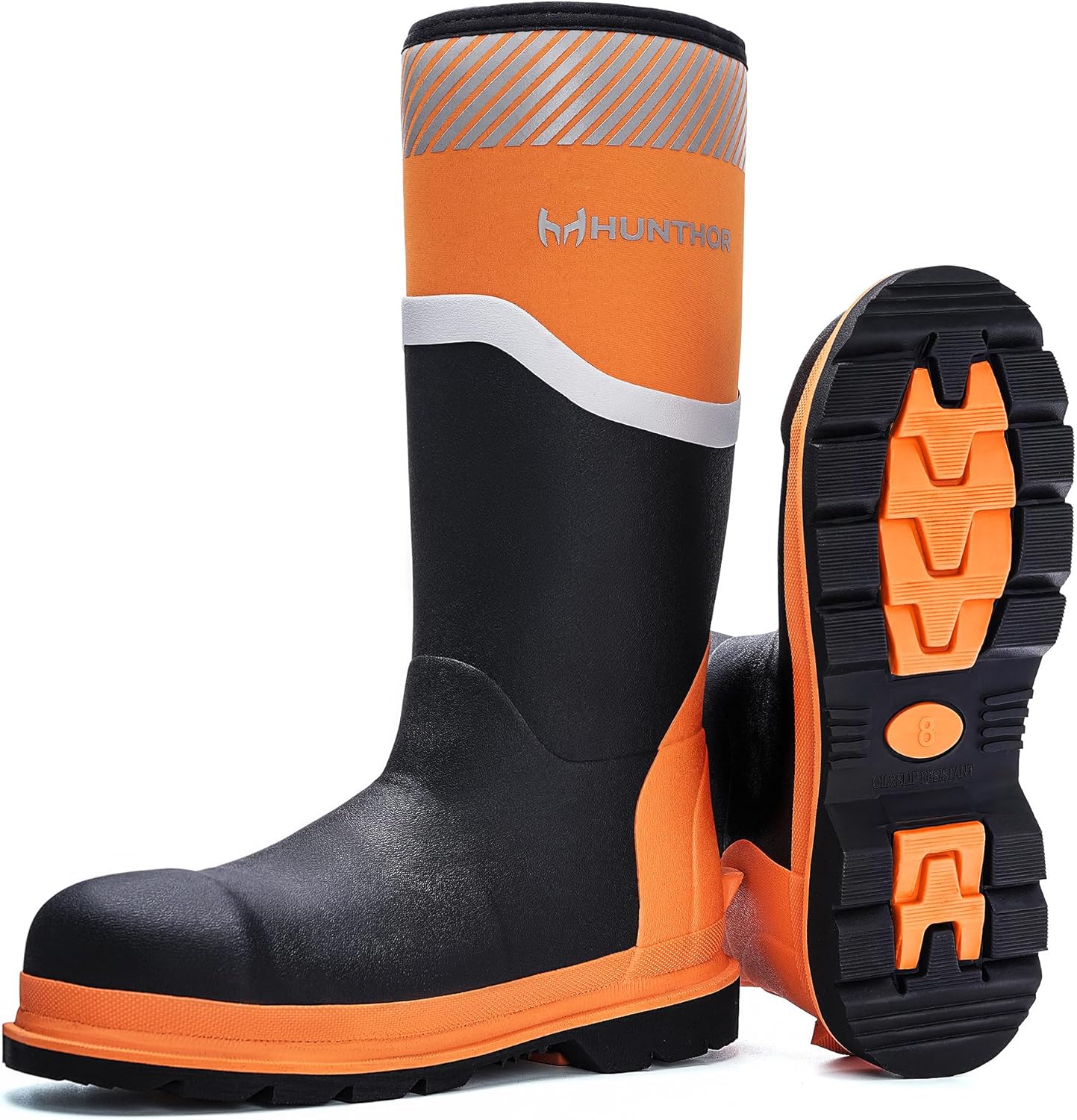
Working outdoors in wet conditions calls for reliable footwear that keeps your feet dry without sacrificing protection. Hunthor Steel Toe Waterproof Work Boots fit the bill for anyone needing sturdy, waterproof boots with strong toe protection. Its biggest strength lies in combining waterproof rubber with a steel toe, ideal for wet and rough job sites.
Slipping into these boots is simple, much like putting on regular rain boots but with added safety features. The flat heel and rubber material make them comfortable for standing or walking on slippery surfaces. Since they’re designed for all seasons, you won’t need to swap them out depending on the weather.
The black and orange color combo makes them easy to spot but still practical for muddy environments.
The boots handle waterproofing and safety well, with the steel toe providing crucial protection for heavy-duty tasks. The rubber construction keeps water out effectively.
Strong points include durable materials and functional design. Some users note the need for a break-in period before the fit feels just right, which can be a downside depending on how soon you need comfort.
These boots are praised for their waterproof qualities combined with steel toe safety, making them reliable for wet and hazardous work environments. The most noted downside is that they can feel stiff initially, requiring time to break in and become comfortable.
People who work in wet, outdoor conditions and require protective toe gear will appreciate these boots. Those seeking lighter, more flexible rain boots without steel toe protection might want to consider other options.
Pros
- Waterproof rubber keeps feet dry in wet conditions
- Steel toe offers solid impact protection
- Flat heel provides stability on slick surfaces
- Suitable for use throughout the year
Cons
- A break-in period needed for comfortable fit
- Bulkier than typical rain boots
| Specification | Details |
|---|---|
| Color | Black/Orange |
| Toe Style | Steel Toe |
| Boot Form Type | Rain Boot |
| Heel Type | Flat |
| Seasons | All |
| Style Name | Rubber Work Boots |
Best Concrete Boots Comparison Table
| Product | Toe Style | Boot Form Type | Heel Type | Seasons |
|---|---|---|---|---|
| Rubber Concrete Overboot L/XL | Plain Toe | Work Boot | Block Heel | All |
| Tingley Plain Toe Rain Boot | Plain Toe | Work Boot | No Heel | All |
| Mens Steel Toe Rubber Boot | Steel Toe | Work Boot | No Heel | All |
| Dunlop Chesapeake Waterproof Boot | Plain Toe | Rain Boot | Platform Heel | All |
| Rubber Concrete Overboot M/L | Plain Toe | Work Boot | Block Heel | All |
| Rubber Concrete Overboot LG Yellow | Round Toe | Rain Boot | No Heel | Fall |
| Dunlop Chesapeake Waterproof Boot 2 | Plain Toe | Work Boot | Platform Heel | Spring/Summer |
| Mens Steel Toe Rubber Work | Steel Toe | Work Boot | No Heel | All |
| Dunlop White PVC Steel Toe | Steel Toe | Work Boot | Flat | All |
| CAT Mens Wheelbase Steel Toe | Steel Toe | Work Boot | Block Heel | All |
| Mens Neoprene Insulated Rubber Boots | Round Toe | Rain Boot | Heeled | All |
| Hunthor Steel Toe Waterproof Boots | Steel Toe | Rain Boot | Flat | All |
- Toe StylePlain Toe
- Boot Form TypeWork Boot
- Heel TypeBlock Heel
- SeasonsAll
- Toe StylePlain Toe
- Boot Form TypeWork Boot
- Heel TypeNo Heel
- SeasonsAll
- Toe StyleSteel Toe
- Boot Form TypeWork Boot
- Heel TypeNo Heel
- SeasonsAll
- Toe StylePlain Toe
- Boot Form TypeRain Boot
- Heel TypePlatform Heel
- SeasonsAll
- Toe StylePlain Toe
- Boot Form TypeWork Boot
- Heel TypeBlock Heel
- SeasonsAll
- Toe StyleRound Toe
- Boot Form TypeRain Boot
- Heel TypeNo Heel
- SeasonsFall
- Toe StylePlain Toe
- Boot Form TypeWork Boot
- Heel TypePlatform Heel
- SeasonsSpring/Summer
- Toe StyleSteel Toe
- Boot Form TypeWork Boot
- Heel TypeNo Heel
- SeasonsAll
- Toe StyleSteel Toe
- Boot Form TypeWork Boot
- Heel TypeFlat
- SeasonsAll
- Toe StyleSteel Toe
- Boot Form TypeWork Boot
- Heel TypeBlock Heel
- SeasonsAll
- Toe StyleRound Toe
- Boot Form TypeRain Boot
- Heel TypeHeeled
- SeasonsAll
- Toe StyleSteel Toe
- Boot Form TypeRain Boot
- Heel TypeFlat
- SeasonsAll
How to Choose the Right Concrete Boots
Selecting concrete boots involves considering durability, slip resistance, and comfort to ensure protection and ease of movement on tough surfaces. Prioritizing these factors helps prevent injuries and extends boot lifespan, ultimately saving money and avoiding downtime from equipment failure or accidents.
Material Durability
Walking around a job site with boots that start cracking or hardening after a few months is more common than you’d think. The quality of the rubber or neoprene makes a big difference in how long the footwear lasts.
Cheaper materials tend to stiffen and lose waterproofing, which means wet feet and less protection against chemicals you might encounter.
Good boots use thicker, more durable rubber or dense neoprene that stays flexible for years. Strong resistance to common construction chemicals like oils and solvents prevents breakdown.
Look for materials rated for durability and tested for waterproofing in product descriptions. This ensures you avoid frequent replacements and keep your feet dry and protected.
Fit and Comfort
Wearing paired sizes that don’t match your feet leads to blisters and sore spots fast. Accurate sizing in this type of footwear matters more than casual shoes because of the tough conditions you’re in all day.
Boots with better interior linings or padded areas cut down on friction and protect against chafing.
Flexible soles and ergonomic shapes allow smoother movement and reduce foot fatigue. Look for boots offering a range of sizes including half sizes, plus mention of moisture-wicking or cushioned linings. They feel noticeably better during long shifts and prevent pain caused by tight or poorly shaped interiors.
Traction and Sole Design
Slipping on wet concrete or uneven terrain can happen in a split second, especially if the tread is worn or shallow. The pattern on the sole significantly influences grip. Boots designed with deep, multi-directional lugs provide better traction and prevent dangerous slips.
Thicker soles deliver stability underfoot, while a firm yet not overly stiff material keeps you balanced. Antislip compounds in the sole also add to safety on smooth or rough surfaces typical on construction sites. Prioritize boots that highlight slip-resistant ratings and concrete-ready soles to avoid accidents.
Weight and Bulk
Heavy boots cause leg and foot fatigue, especially when worn for hours straight. Some models are bulky and restrict natural movement, making walking tiring and awkward. Balancing protection with lightweight design is critical for all-day wear.
Look for boots where weight is kept moderate without sacrificing toughness. Features like streamlined shapes and modern material choices reduce unnecessary bulk. This creates less strain on ankles and knees and helps you stay nimble around the site.
Ease of Cleaning and Maintenance
Concrete dust and residue tend to cling to porous materials or deep seams, turning the boots into a dirt trap after a day’s work. Frequent cleaning can become a chore if the boot absorbs stains or makes rinsing difficult.
Good models use smooth, non-porous surfaces that resist staining and make it easy to hose off grime. Designs that minimize crevices prevent buildup and cut down cleaning time.
Check descriptions for features like water-repellent coatings and simple, open sole patterns that keep maintenance straightforward.
Proper Care and Maintenance Tips for Concrete Boots
Concrete boots require regular cleaning to maintain their durability and comfort. After each workday, remove dirt and cement residue using a soft brush and mild soap. Avoid harsh chemicals that can degrade the boot’s materials.
Keeping the boots dry helps prevent the growth of mold and extends the lifespan of the inner lining.
Check the soles periodically for wear or damage, as worn-out soles can reduce traction and increase the risk of slips. Replace insoles if they become compressed or smelly to maintain support and hygiene.
Store boots in a well-ventilated area to avoid moisture buildup. Rotating work boots with another pair allows each to dry out fully between uses.
Maintenance tips at a glance:
- Clean after every use with soft brush and mild soap
- Avoid harsh chemicals and soaking the boots
- Inspect soles regularly and replace insoles as needed
- Dry completely before storing in a ventilated space
- Rotate boots if possible to allow thorough drying
Safety Precautions When Using Concrete Boots on the Job
Concrete boots are designed for rugged job sites but can present safety risks when not used properly. Confirm boots fit correctly to prevent blisters or trips caused by slipping inside the shoe.
Laces should be tied securely to avoid catching on equipment or materials. Choose boots with slip-resistant soles for better grip on wet or uneven concrete surfaces.
Always inspect for damage before wearing; cracked soles or torn uppers compromise protection. Use boots rated for your specific workplace hazards, such as steel toes or puncture-resistant midsoles.
Avoid walking through chemicals or corrosive materials that might degrade the boots’ protective qualities. Pair boots with appropriate socks to reduce friction and moisture buildup, which can cause discomfort during long shifts.
Safety pointers include:
- Proper sizing to prevent slippage and discomfort
- Securely tied laces to reduce tripping hazards
- Slip-resistant soles matched to job conditions
- Regular inspection for damage before use
- Matching boot features to workplace hazards
Comparing Concrete Boots to Alternative Footwear Options
Concrete boots offer solid protection where heavy materials and sharp debris are common, but they are heavier and less flexible compared to some alternative footwear. Work sneakers provide better breathability and lighter weight but often lack the reinforced toe caps and puncture protection necessary on concrete sites.
Rubber boots excel in wet conditions, keeping feet dry, but may not have the needed abrasion resistance or toe protection. Composite toe shoes weigh less than steel toe boots and are non-metallic, useful when passing through metal detectors, but can be pricier with similar durability.
Many construction workers choose concrete boots for their toughness, even if they sacrifice some comfort. Alternatives might work better on lighter-duty tasks or when mobility is a priority.
Selecting the right footwear depends on balancing protection needs with comfort and job demands.
People Also Asked
How Do I Properly Size Concrete Boots for a Secure Fit?
Select concrete boots that match your regular boot size and ensure they feel snug without causing discomfort. Trying them on while wearing your typical work socks helps achieve a better fit by accounting for added thickness.
What Safety Precautions Should I Take When Using Concrete Boots?
Always wear concrete boots on dry, stable surfaces to prevent slipping and avoid stepping on unstable structures that could cause falls. Regularly check for cracks or damage before use to maintain safety.
How Long Do Concrete Boots Typically Last with Regular Use?
Concrete boots usually last several months under consistent use, but the actual lifespan depends on the intensity of work and maintenance. Cleaning them after each use helps prevent premature wear and cracking.
Can Concrete Boots Be Used with All Types of Work Boots?
Concrete boots can generally fit over most standard work boots if they are not too bulky and have a low profile. It’s best to try the combination before use to ensure comfort and mobility.
What Are Common Problems People Experience with Concrete Boots?
Common issues include poor fit leading to discomfort, difficulty walking due to bulkiness, and wear or cracking after rough use. Frequent inspection and proper sizing can minimize these problems.
Conclusion
Comfort and durability are the top priorities for concrete boots. The boots should provide solid support to handle long hours on hard surfaces, and the materials need to hold up against rough conditions without breaking down quickly. Slip resistance is also important to reduce the risk of falls on smooth or wet concrete.
Choose a pair that fits well with your daily work environment and budget. For occasional use, cost-effective options might suffice, while frequent use calls for more investment in quality.
Review the comparison table and details in the picks above to find the boots that suit your needs best.