Top 12 Best Coax for Amature Radio You Can’t Miss!
Using a poor-quality cable for your amateur radio setup often means losing signal strength and dealing with interference right where you least want it. The best coax for amature radio prevents this by maintaining a clean, strong connection between your transceiver and antenna. A cheap or mismatched coax can add unnecessary loss, sometimes cutting your effective range by a noticeable margin.
The key differences lie in the cable’s construction and specifications. Low-loss coax typically has a foam or solid polyethylene dielectric and braided copper shield to reduce signal leakage. Common sizes like RG-8 or LMR-400 perform better than smaller RG-58, especially over longer runs.
Power handling is important too, with good coax rated to safely carry your transmitter’s output without heating or degradation. Proper connectors ensure a tight fit to avoid moisture and maintain continuity.
Need a Quick Check?
| Image | Product | Price |
|---|---|---|
Our Top Picks 1  | Ham Radio RG58 Cable 49ft | Check Price |
Our Top Picks 2  | RG8x Coax Cable 50ft | Check Price |
Our Top Picks 3  | KMR400 Low Loss 50ft | Check Price |
Our Selected Top 12 Coax for Amature Radio for Different Needs
This list features a variety of coaxial cables designed for amateur radio use, each tested for performance and reliability. Readers will find insights on suitability for different setups, including strengths, limitations, and overall quality to help choose the best option for their specific needs.
1. Ham Radio RG58 50 Ohm Coaxial Cable PL259 49ft
Running a solid, reliable connection for your amateur radio setup needs coaxial cable that handles both power and wear. Ham Radio RG58 50 Ohm Coaxial Cable, at 49ft length, suits those looking for dependable signal transmission with sturdy connectors that can keep up with outdoor use.
Its strongest feature is the combination of upgraded connectors and a durable build designed to last through tough conditions.
Setting up this cable is straightforward thanks to its 4PCS upgraded connectors that cover various connections like SO239 to SMA and BNC types. The extra-long 6 cm heat shrink tubes ensure connections stay firm, even when the cable bends or gets pulled. Each end feels tightly crimped and secure, making it easier to manage without worrying about the connectors loosening over time during daily handling or repositioning.
Performance-wise, it handles up to 300 watts gracefully, making it capable for typical amateur radio power levels. The RG58 cable’s braided design aids in durability and signal protection, while the salt spray test for corrosion resistance means the connectors endure outdoor environments well.
The most common issue revolves around the cable’s relative thickness and stiffness, which might limit flexibility in tight spaces, but it holds up firmly once installed.
Connectors on this RG58 coax cable are praised for lasting through corrosion tests and appearing sturdier than many other options. Heat shrink tubes are longer and help keep connectors secure, preventing loosening due to frequent bending or pulling. Some mention the cable length feels short for certain setups, but the quality of the connectors and cable construction mostly stand out.
People setting up ham radios with moderate cable runs will find this coax cable a reliable choice that resists wear and tear. Those needing longer cables or looking for lower-loss cables for high-frequency use might want to look at alternatives. It suits hobbyists who want durable connectors without spending too much but isn’t specialized for professional-grade installations.
Pros
- Upgraded connectors with corrosion resistance
- Extra-long heat shrink tubes for solid connections
- Compatible with multiple connector types
- Supports 300 watts power handling
Cons
- Less flexible due to thickness
- Connectors might feel stiff initially
| Specification | Details |
|---|---|
| Cable Type | RG58 Coaxial Cable |
| Wattage | 300 watts |
| Connector Type | Coaxial |
| Connector Gender | Male-to-Male, Female-to-Female |
| Number of Pins | 4 |
2. RG8x 50 Ohm Coaxial Cable PL259 Male to Male 50ft
Low loss RG8X coaxial cable with pure copper inner conductor stands out for strong signal retention, perfect for amateur radio setups. Its low signal loss and reliable shielding suit anyone needing a dependable connection up to 300 MHz frequency ranges.
Connecting two male PL259 UHF connectors is straightforward thanks to the fully molded nickel-plated brass fittings with gold-plated center pins. The PVC jacket keeps the cable flexible enough to route indoors or outdoors without worries about cracking or bending. It fits well with common radio and antenna gear, ensuring compatibility across a variety of devices.
Signal strength stays solid during daily use, supported by double shielding that prevents interference and leakage. The cable’s build is tougher than typical CB antenna cables, which means it handles rougher conditions without failure.
Most praise focuses on consistent low loss and durability. The only drawback often mentioned is its slight stiffness compared to thinner cables.
Durability and low signal loss earn praise, with users noting it holds up well in outdoor environments. The most common gripe involves the cable’s stiffness, making tight bends less comfortable during installation.
Anyone setting up a 50 Ohm radio system up to 300 MHz benefits from this cable’s reliability and shielding. Those needing more flexible cable or higher frequency capability will want to look for alternatives.
Pros
- Low loss cable reduces signal degradation
- Double shielding cuts interference and leakage
- Waterproof PVC jacket allows outdoor use
- Gold-plated pins support better conductivity
Cons
- Cable is somewhat stiff to maneuver
- Frequency limited to 300 MHz max
| Specification | Details |
|---|---|
| Connector Type | Uhf |
| Cable Type | Coaxial |
| Frequency | 0.3 GHz |
| Gauge | 17 |
| Connector Gender | Male-to-Male |
3. KMR400 Low Loss Coaxial Cable PL259 Male to Male 50ft
Ham radio enthusiasts looking for a reliable cable that maintains signal strength during long transmissions will find the KMR400 Low Loss Coaxial Cable 50ft ideal. Its biggest strength lies in minimizing signal loss over distance, making it practical for setups requiring consistent, clear communication.
Hooking up the cable is straightforward thanks to its male-to-male PL259 connectors, which fit standard ham radios and scanners without fuss. The cable is flexible enough to route around tight corners and is waterproof, helping it handle both indoor and outdoor environments well without concern over damage or interference from moisture.
Signal loss at 450MHz is under 2.8dB, keeping transmissions strong across 50 feet. Its copper-clad aluminum inner conductor and aluminum foil shield with tinned copper braid help prevent oxidation and protect signal integrity. Praises point to its low loss and durability, while a common issue mentioned is the slightly heavier feel compared to thinner coax cables.
Low loss performance under 2.8dB and good build quality protect signals over distance, making it reliable for frequent use. Some find the cable a little heavier than others, which may influence installation ease in tight spaces or portable setups. Its waterproof design makes it great for outdoor use, though it does make the cable stiffer.
Those needing a durable, low-loss cable for fixed or semi-permanent radio setups will appreciate its design and signal retention. Users prioritizing ultra-lightweight or pure copper conductors may want to explore other options.
Pros
- Low signal loss under 2.8dB at 450MHz
- Waterproof design for outdoor use
- Durable aluminum foil and tinned copper braid shield
- Standard PL259 male-to-male connectors
Cons
- Somewhat heavier than thinner coax cables
- Copper clad aluminum conductor less conductive than pure copper
| Specification | Details |
|---|---|
| Connector Type | UHF |
| Cable Type | Coaxial |
| Frequency | 1000 MHz |
| Connector Gender | Male-to-Male |
| Data Transfer Rate | 1.25 gigabits_per_second |
| Compatible Devices | Scanner |
4. KMR400 Low Loss Coaxial Cable PL259 Male to Male 100ft
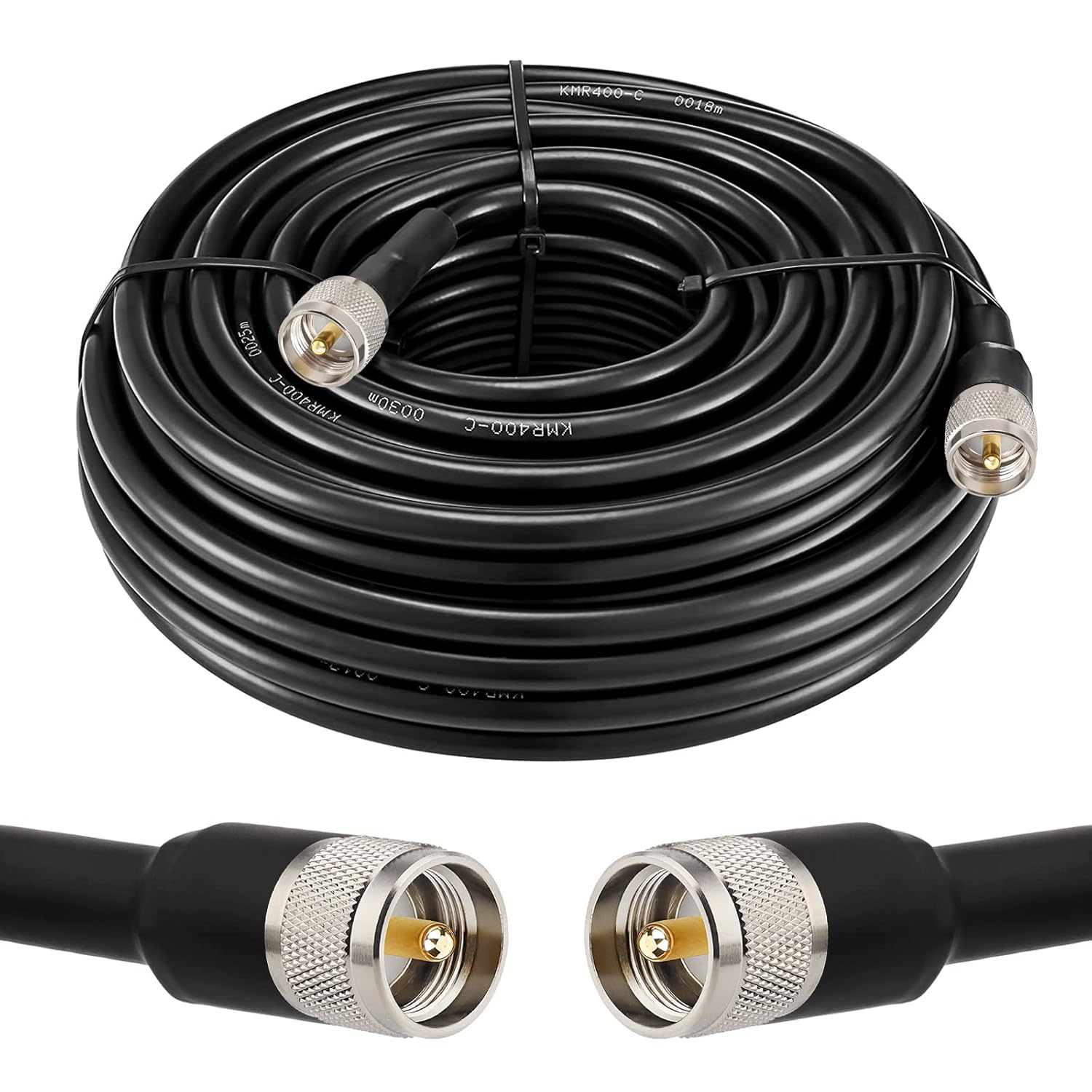
Low loss and durability set apart this 100ft coaxial cable for amateur radio enthusiasts aiming for stable signal transmission. Ideal for outdoor or scanner use, it shines through its thick 0.41-inch copper clad aluminum core that retains signals better than standard RG58 cables.
Setting up is straightforward thanks to male-to-male PL-259 connectors that clamp on securely rather than relying on crimping. The cable jacket is UV resistant and flexible, designed to handle rough weather outdoors without cracking or deteriorating for years, making it reliable for daily use without constant worry about damage.
Signal retention is excellent thanks to the large central conductor. Quality materials like the copper clad aluminum and nickel-plated connectors ensure long life and strong connections.
The most frequent downside mentioned is the cable’s stiffness, which can make bending in tight spaces a bit challenging.
Signal retention and durability receive high marks, supported by the thick copper clad aluminum core and UV-proof jacket. Common complaints revolve around the cable’s rigidity, which may require careful handling when routing in confined spaces.
People needing a lasting outdoor cable that maintains signal integrity will find it well suited. Those looking for ultra-flexibility or smartphone-specific adapters might need to look elsewhere.
Pros
- Strong signal retention from large conductor
- Durable jacket built for outdoor exposure
- Connector type prevents accidental disconnection
- Flexible enough for various setups
Cons
- Cable stiffness can limit tight bends
- No specific smartphone compatibility info
| Specification | Details |
|---|---|
| Cable Type | Coaxial |
| Connector Gender | Male-to-Male |
| Gauge | 0.41 |
| Frequency | 1000 MHz |
| Connector Type | PL-259 Mount Clamp |
5. CNARIO SMA to UHF PL259 Antenna Adapter

CNARIO SMA to UHF PL259 Antenna Adapter works well converting between SMA and UHF coax connectors, perfect for amateur radio users needing a reliable link. Its biggest strength lies in its low-loss signal transmission and durable build, which suits handheld and mobile radios alike.
Setting it up involves simply connecting your two-way radio or handheld ham radio antenna via the SMA male/female ends to equipment with UHF PL259 connectors. The adapter is small, lightweight, and easy to carry around, which makes swapping antennas or radios quick and straightforward without added bulk or complexity.
Signal loss stays minimal thanks to gold and nickel plating on the brass body, which keeps connections stable and corrosion-resistant even after long use. Build quality is solid, with strict standards on connectors.
The strongest praise highlights its durability, while the most common complaint notes occasional fit issues with some older or non-standard radios.
Durability and resistance to corrosion stand out thanks to pure brass construction and protective plating. Some reports mention fit issues with certain older or non-standard radio connectors, which can affect connection stability. The adapter performs well for most standard amateur radio setups, delivering consistent low-loss transmission.
Those using modern two-way or handheld ham radios will find it well suited for daily use and quick antenna swaps. Users with uncommon or vintage radios might want to check connector compatibility carefully before choosing this adapter. Simple setups benefit the most from its lightweight and dependable design.
Pros
- Low signal loss ensures clear transmissions
- Gold and nickel plating improves corrosion resistance
- Small and lightweight for easy portability
- Compatible with several amateur radio antenna types
Cons
- May not fit all radio models perfectly
- No power plug included
| Specification | Details |
|---|---|
| Connector Type | SMA male/female to UHF male/female coaxial adapter |
| Impedance | 50 ohm |
| Compatible Devices | Two way radios, CB Radio, Handheld Ham Radio Antenna, Amateur Radio Antenna |
| Housing Material | Pure brass with gold and nickel plating |
| Power Plug Type | No Plug |
6. RG213 Coaxial Cable PL259 Male to Male 30ft
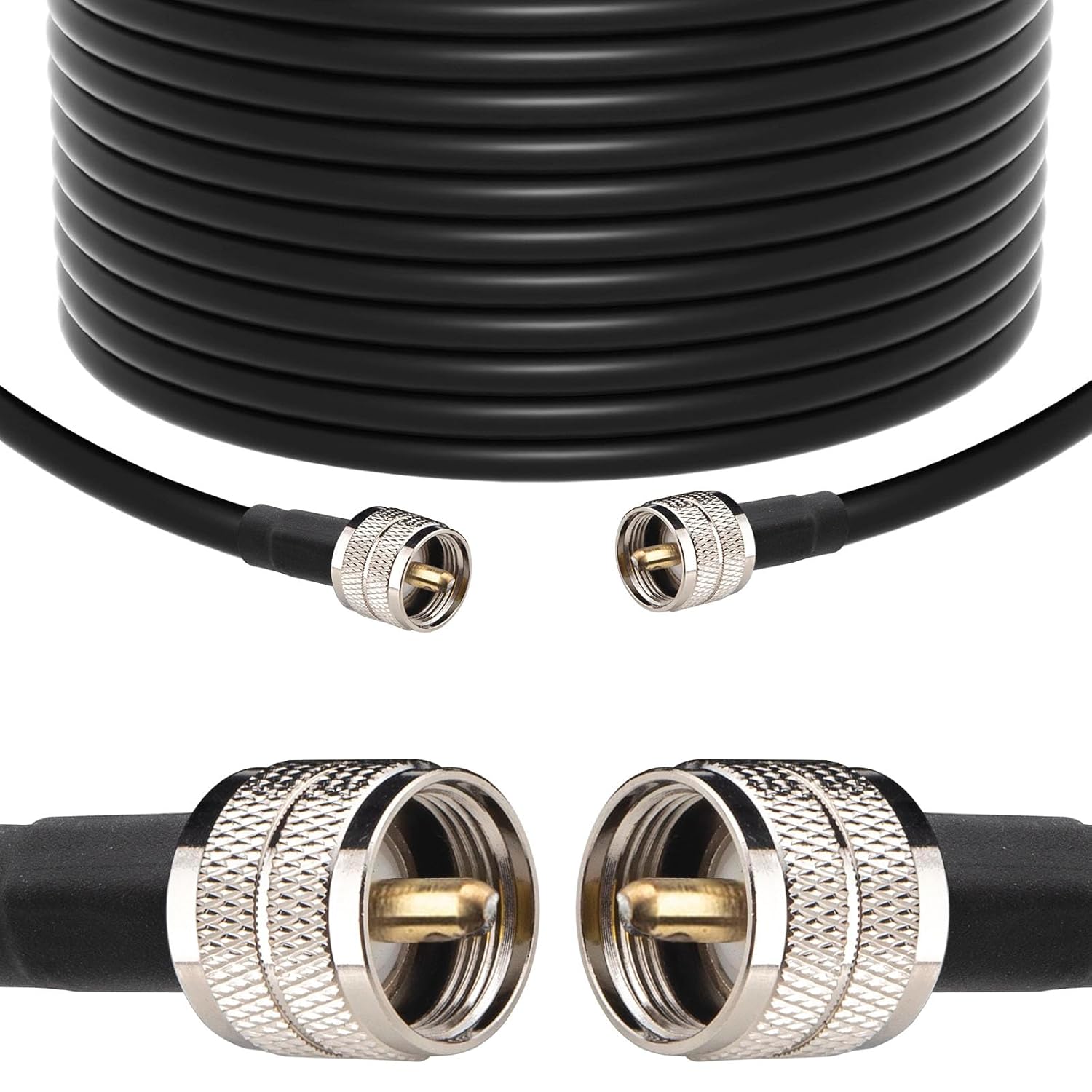
Running a solid amateur radio setup needs a dependable cable, and this RG213 coaxial cable fits the bill well. Coming with male-to-male PL-259 connectors and measuring 30 feet, it suits hobbyists who want low signal loss over a decent distance.
Its strongest point lies in keeping signal quality intact thanks to low signal loss.
Setting it up is straightforward since both ends have heat-shrink tubing protecting against dirt and moisture, which you notice when handling it outdoors. The cable’s thickness means it stays in place without kinking.
It’s compatible with various radio gear like mobile transceivers and CB radios, making it handy for typical daily use, especially when you need steady connection quality without fuss.
Performance-wise, it does its job well by minimizing signal loss better than thinner cables, maintaining signal integrity at a consistent 50-ohm impedance. The cable feels rugged due to its braided construction and weatherproof design, adding to its durability in all conditions. Praises often highlight the quality of connectors, while some mention the cable’s heavier weight as a slight drawback.
The cable maintains signal quality with excellent low loss and solid connectors, which users appreciate during extended use. The main downside mentioned is the weight and bulkiness, making it less convenient in compact or portable rigs. Handling it outdoors is easier thanks to weatherproof features, but it’s not the lightest choice.
Those with fixed or vehicle-mounted stations looking for reliable long runs will find it practical and durable. Users needing lightweight or highly flexible cables for portable setups might prefer a thinner option instead. The balance between signal integrity and durability makes it a solid pick for many ham radio enthusiasts.
Pros
- Low loss of 4.42dB per 100 feet at 400MHz
- Weatherproof with UV and heat resistance
- Stable 50-ohm impedance for signal consistency
- Strong, protective heat-shrink tubing on connectors
Cons
- Cable weight can be cumbersome for some setups
- Slightly thicker diameter limits flexibility in tight spaces
| Specification | Details |
|---|---|
| Cable Length | 30-feet (9.2m) |
| Impedance | 50-ohm |
| Connector Type | PL259 Connector, Male-to-Male |
| Frequency | 2000 MHz |
| Protection | Heat-shrink tubing on both ends |
7. RG58 Coaxial Cable PL259 Male to Male 10ft

Ideal for amateur radio setups, this 10ft RG58 coaxial cable with PL259 male connectors stands out for its low-loss, 50-ohm impedance construction. Perfect for CB, HF radio, and antenna connections, it delivers reliable signal quality for those needing a durable and corrosion-resistant jumper cable.
Connecting radios to SWR meters, antennas, and tuners is straightforward with this cable. The tinned copper inner conductor and brass connectors make installation easy and resist corrosion, important for consistent daily use.
Its 10ft length suits many setups, including vehicles like Jeep Wranglers and camper vans, without excess bulk or signal degradation.
Signal integrity remains strong with over 95% braid coverage shielding against interference and static. The cable resists oxidation thanks to quality materials, helping maintain performance over time.
Review comments highlight solid build quality as a clear strength; some users note limited flexibility can make tight bends more challenging.
Strong points include excellent shielding with over 95% braid coverage and reliable signal transmission without static or interference in typical radio connections. Common drawbacks center on the cable’s stiffness, making it harder to bend in tight spaces, which could be a challenge in some setups.
Those needing a durable, corrosion-resistant coax cable for general amateur radio and vehicle use will appreciate this choice. Users requiring shorter or more flexible cables might look elsewhere to better fit compact or intricate installations.
Pros
- Low-loss 50 ohm impedance
- Tinned copper conductor resists corrosion
- 96-strand braid shields against interference
- Compatible with various amateur radio devices
Cons
- Limited flexibility for tight routing spaces
- Length fixed at 10 feet without custom options
| Specification | Details |
|---|---|
| Connector Type | Coaxial |
| Cable Type | Coaxial |
| Connector Gender | Male-to-Male |
| Maximum Voltage | 14 volts of direct current |
| Braid Shield Coverage | Over 95% |
8. RG58 Coaxial Cable PL259 Male to Male 15ft

High-density tinned copper braid shield and copper nickel plated connectors define this RG58 Coaxial Cable. Perfect for amateur radio enthusiasts needing a reliable 15ft coaxial jumper that limits signal loss during transmission.
Its biggest strength is a low loss rating, retaining signal integrity over medium distances.
Installation is straightforward due to the cable’s flexibility, easing routing through tight spaces without kinking. The connectors use a heat shrink tube with adhesive, ensuring a waterproof seal and durable connection to radio devices like CB or ham radios.
Daily handling feels solid but pliable, allowing secure setup and lasting use.
Signal loss on 450MHz stands at only 1.35db, and SWR remains low at 1.15, supporting good radio performance with minimal interference. The copper nickel plating resists corrosion effectively, and the waterproof connection adds reliability. Most users appreciate its durability and signal quality, though some note that the 15ft length might limit longer setups.
The cable performs well with minimal signal loss and strong resistance to oxidation and corrosion thanks to its materials. Waterproof connections stand out as a positive, though the fixed 15ft length can restrict flexibility for larger installations.
Those needing a sturdy, low-loss cable for shorter runs will find it reliable and practical. For users requiring longer cables or more rugged connectors under heavy strain, exploring other options may be beneficial.
Pros
- Low signal loss of only 1.35db at 450MHz
- Waterproof connection with heat shrink tube
- Flexible cable easy to route and install
- Corrosion-resistant copper nickel plated connectors
Cons
- Length of 15ft may be too short for some setups
- Connector durability depends on careful handling
| Specification | Details |
|---|---|
| Connector Type | Pl259 Male to Pl259 Male Connector |
| Cable Type | Coaxial |
| Frequency | 1000 MHz |
| Compatible Devices | Antenna Analyzer, Cb radio, Ham radio, SWR Meter |
| Connector Gender | PL259 Male to PL259 Male |
9. Superbat RG58 Coax Cable PL259 15ft with Adapters
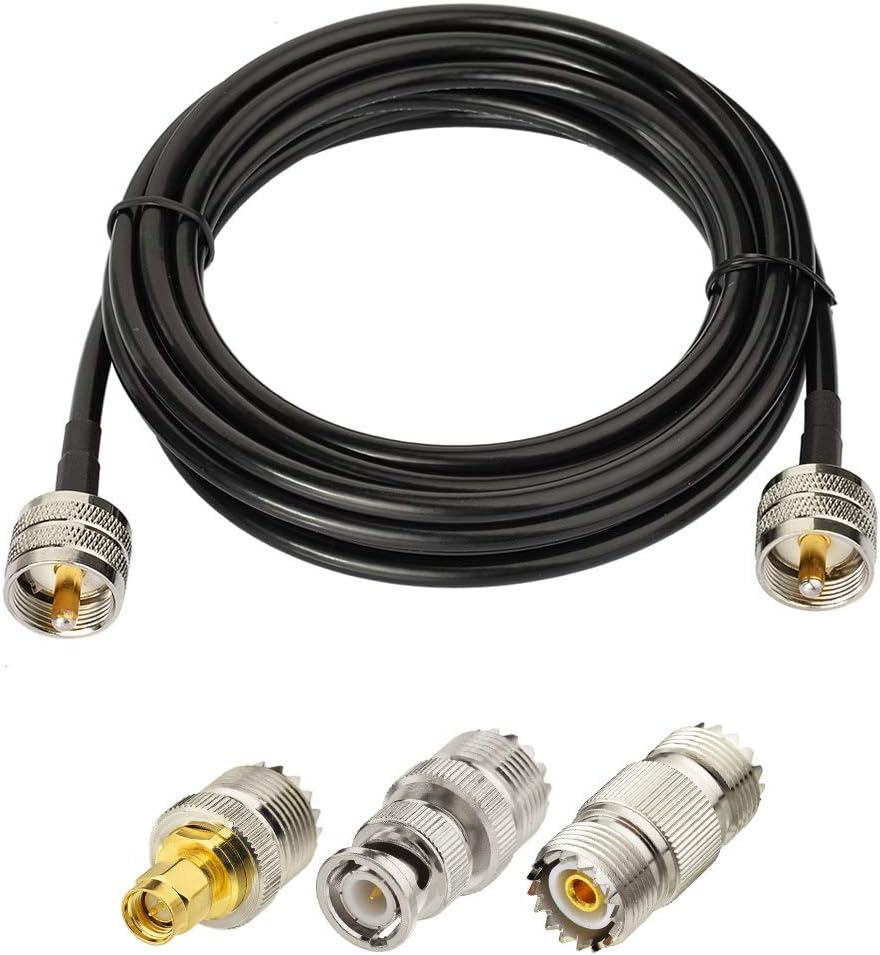
Superbat RG58 Coax Cable PL259 15ft with Adapters is a solid choice for amateur radio enthusiasts looking for flexible connector options in a single kit. The biggest plus is its combination of various adapters that allow easy connections across CB, amateur, and two-way radios, making it a versatile cable setup.
Setting up involves simply attaching the UHF Male connectors to your radio and antenna or other devices. The included adapters, SMA Male to UHF Female, BNC Male to UHF Female, and UHF Female to Female, provide options for different radio gear.
Using it day-to-day, the 5-meter length offers enough reach in a typical station, and swapping connectors happens quickly thanks to the standard PL259 terminations.
The cable handles its task with reliability. The RG58 coax type ensures 50 Ohm impedance, suitable for HF applications.
Gold-plated connectors help reduce signal loss while guaranteeing a mating life over 1000 cycles. Build quality feels sturdy, though some mention the thickness of the cable could make tight routing tricky. It’s praised for solid connection quality but occasionally noted for not being the most flexible around corners.
The cable gets praised for its strong connection quality combined with adapter variety, but some find the cable’s thickness and connector size hard to manage in confined spaces. It handles many connection scenarios without signal loss, thanks to gold plating and solid build.
Those needing quick changes between CB, amateur, or two-way radios will appreciate this kit’s versatility. Anyone requiring a thinner cable for tight installations might look for a slimmer coax option instead.
Pros
- Includes multiple adapters for versatile connections
- Gold-plated connectors reduce signal degradation
- Durable cable suited to frequent connector changes
- Standard 50 Ohm impedance fits common radio setups
Cons
- Cable thickness makes tight routing difficult
- Connectors bulkier than other coax cables
| Specification | Details |
|---|---|
| Cable Length | 5m (16.4ft) |
| Impedance | 50 Ohm |
| Cable Type | RG58 coax cable |
| Connector Type | Coaxial (UHF Male PL259) |
| Mating Life | >1000 times |
| Gold-Plated Connectors | Yes |
10. Steren RG8X Coaxial Cable PL259 Male to Male 50ft

Upgrading to RG8X coax provides a noticeable boost in signal quality and durability over cheaper RG58 cables. Ideal for amateur radio operators running higher power or using base station antennas, this 50ft cable ensures steady, reliable connections without the frequent interruptions cheaper cables might experience.
Setting it up is straightforward thanks to the PL259 male-to-male connectors, which fit standard radio equipment nicely without any need for adapters. The cable’s moderate 50ft length is perfect for most base station setups and outdoor antennas.
Its 50 Ohm impedance matches well with HAM radio gear, making daily tuning and adjustments smooth with minimal signal loss.
Performance-wise, the cable handles frequencies up to 750 MHz and powers up to 300 watts, serving high-powered radios without trouble. It feels durable and well-made, with a sturdy jacket shielding it from physical wear.
Most people appreciate its solid build and better signal stability, though some wish it came in longer lengths for larger setups.
Signal quality improves noticeably with this cable compared to cheaper alternatives, thanks to its solid build and correct impedance. Common complaints focus on the fixed 50ft length, which may be too short for some larger antenna setups. The cable’s rugged design makes it reliable for steady radio communications.
People running base station or HF antennas with moderate cable runs will appreciate its performance and durability. Those needing longer or differently terminated cables should consider other options better suited to custom setups or larger distances.
Pros
- High-quality 50 Ohm RG8X cable
- Supports up to 300 watts power
- PL259 male-to-male connectors included
- Good durability for outdoor use
Cons
- Limited to 50ft length
- No options for connector gender variations
| Specification | Details |
|---|---|
| Cable Type | Coaxial |
| Connector Type | RG8X Male to Male |
| Frequency | 750 MHz |
| Wattage | 300 watts |
| Data Transfer Rate | 50 megabits_per_second |
11. RG213 Coaxial Cable PL259 Male to Male 75ft
Running a radio setup demands durable coax that handles frequent connection and power delivery without letting you down. Ideal for amateur radio enthusiasts using transmitters and receivers, this 75ft RG213 coaxial cable’s biggest strength is its heat resistance, ensuring consistent performance in demanding conditions.
Setting up involves screwing the PL259 male connectors securely to your radio and amplifier or antenna. The cable’s coaxial design keeps your signal stable, while its length grants flexibility in positioning equipment.
Daily handling proves the heat-resistant material manages warm running conditions without degrading or signal loss, making it a reliable choice in various environments.
Performance-wise, it transmits radio signals clearly without significant interference. The build feels solid, with sturdy coax and connectors that stay tight over time. High praise highlights its durability and reliable signal quality.
Occasional feedback notes the cable can be a bit stiff to bend and manage in tight spaces but overall well-made for its purpose.
Reliable signal transmission and heat resistance are its standout features, allowing it to handle warm running conditions without failure. The most common drawback is the cable’s stiffness, which can make installation in tight spots less convenient.
Radio hobbyists needing a tough, stable coax for transmitters and amplifiers will find this cable very useful. Those looking for more flexible or lighter cable options might want to consider alternatives better suited to tight spaces or lighter handling.
Pros
- Heat resistant for stable operation
- Long 75ft length allows flexible setup
- Compatible with various radio equipment
- Male-to-male connectors with 2 pins
Cons
- Cable can be stiff and hard to bend
- Not suitable for phone connections
| Specification | Details |
|---|---|
| Connector Type | Coaxial |
| Cable Type | Coaxial |
| Connector Gender | Male-to-Male |
| Compatible Devices | Amplifier, Radio Receiver, Radio Transmitter, Satellite Antenna |
| Number of Pins | 2 |
| Special Features | Heat Resistant |
12. Superbat RG8x Coaxial Cable PL259 Male to Male 10ft

Low signal loss stands out as the biggest strength, making it perfect for amateur radio enthusiasts who want reliable transmission without interference. Superbat RG8x Coaxial Cable works great for anyone needing a durable, waterproof connection between their radio and antenna.
Setting it up is straightforward thanks to the male-to-male PL259 connectors, designed for secure solder joints and corrosion resistance. The built-in glue-injected heat shrink tube adds durability, ensuring a solid connection that can handle outdoor conditions. Daily use involves little fuss since the cable’s double shielding helps keep interference and signal loss to a minimum.
The cable performs well at frequencies up to 300 MHz, maintaining clear signal quality during radio operation. Its copper inner conductor and braided shielding make it sturdy and waterproof.
Most praise points to how the cable reduces signal loss noticeably, while the main complaint is often about the 10ft length, which might not be enough for all setups.
Signal clarity stands out as a clear advantage, helped by the high-quality coaxial cable and well-made connectors. Most users find the 10ft length limiting, especially for installations requiring more distance between the radio and antenna.
Those with compact setups and standard frequency needs will be satisfied by this cable’s performance and build. Anyone needing longer cable runs or higher frequency support should consider alternatives better suited to those requirements.
Pros
- Low loss RG8X cable for better signal quality
- Waterproof with double shielding
- Durable heat shrink tube with glue injection
- Nickel-plated brass connectors resist corrosion
Cons
- Length may be too short for some antenna setups
- Limited to frequencies up to 300 MHz
| Specification | Details |
|---|---|
| Cable Type | rg8x coaxial cable |
| Connector Type | RF Connector |
| Connector Gender | Male-to-Male |
| Frequency | 300 MHz |
| Gauge | 17 |
| Length | 10ft |
Best Coax Cables for Amateur Radio Comparison
| Product | Compatible Devices | Cable Length | Special Features | Connector Type |
|---|---|---|---|---|
| Ham Radio RG58 Cable 49ft | Scanner | 49ft | Braided | Male-to-Male, Female-to-Female |
| RG8x Coax Cable 50ft | Radio | 50ft | Low Loss | Male-to-Male |
| KMR400 Low Loss 50ft | Scanner | 50ft | Waterproof | Male-to-Male |
| KMR400 Low Loss 100ft | Scanner | 100ft | Braided | Male-to-Male |
| CNARIO SMA to UHF Adapter | Two way radios | – | – | Coaxial |
| RG213 Coax Cable 30ft | Handheld Radio | 30ft | Braided, Weatherproof | PL259 Connector |
| RG58 Coax Cable 10ft | Monitor | 10ft | Braided | Male-to-Male |
| RG58 Coax Cable 15ft | Ham radio | 15ft | Waterproof | PL259 Male to Male |
| Superbat RG58 15ft Kit | Router | 15ft | Low-Loss, Gold-Plated | Male-to-Male |
| Steren RG8X Cable 50ft | Radio | 50ft | – | Male-to-Male |
| RG213 Coax Cable 75ft | Radio Receiver | 75ft | Heat Resistant | Male-to-Male |
| Superbat RG8x Cable 10ft | CB radio | 10ft | Waterproof, Low Loss | Male-to-Male |
- Compatible DevicesScanner
- Cable Length49ft
- Special FeaturesBraided
- Connector TypeMale-to-Male, Female-to-Female
- Compatible DevicesRadio
- Cable Length50ft
- Special FeaturesLow Loss
- Connector TypeMale-to-Male
- Compatible DevicesScanner
- Cable Length50ft
- Special FeaturesWaterproof
- Connector TypeMale-to-Male
- Compatible DevicesScanner
- Cable Length100ft
- Special FeaturesBraided
- Connector TypeMale-to-Male
- Compatible DevicesTwo way radios
- Cable Length–
- Special Features–
- Connector TypeCoaxial
- Compatible DevicesHandheld Radio
- Cable Length30ft
- Special FeaturesBraided, Weatherproof
- Connector TypePL259 Connector
- Compatible DevicesMonitor
- Cable Length10ft
- Special FeaturesBraided
- Connector TypeMale-to-Male
- Compatible DevicesHam radio
- Cable Length15ft
- Special FeaturesWaterproof
- Connector TypePL259 Male to Male
- Compatible DevicesRouter
- Cable Length15ft
- Special FeaturesLow-Loss, Gold-Plated
- Connector TypeMale-to-Male
- Compatible DevicesRadio
- Cable Length50ft
- Special Features–
- Connector TypeMale-to-Male
- Compatible DevicesRadio Receiver
- Cable Length75ft
- Special FeaturesHeat Resistant
- Connector TypeMale-to-Male
- Compatible DevicesCB radio
- Cable Length10ft
- Special FeaturesWaterproof, Low Loss
- Connector TypeMale-to-Male
How to Choose the Best Coax for Amateur Radio
Selecting the right coax involves considering factors like signal loss, durability, and flexibility to ensure reliable performance. Choosing quality materials and appropriate thickness helps minimize interference and maintenance issues, ultimately saving time and money in the long run.
Signal Loss and Attenuation
Running long cable runs often leads to weaker signals, which can seriously affect both sending and receiving clarity. Higher frequencies suffer more from attenuation, so a coax that works fine at lower bands might cripple performance on VHF or UHF.
Low signal loss helps keep transmissions clean and reduces the chance of missing weak signals during reception. Cables with better shielding and larger conductor sizes lower attenuation and maintain signal strength over longer distances.
Choosing the right type means balancing length, frequency, and cable quality. RG-8X, RG-213, and LMR-400 are common options, with attenuation figures varying considerably.
For example, an LMR-400 typically shows less loss than RG-8X at the same frequency and length. The key is knowing that every foot and every megahertz adds up. Strongly consider cables with low attenuation ratings if your setup requires runs over 50 feet or working above HF bands.
Impedance and Compatibility
Matching your cable impedance to your radio gear usually means sticking to 50 ohms. A mismatch can cause reflected signals and increase the standing wave ratio, hurting performance and potentially damaging the transmitter. Proper impedance matching ensures that energy flows efficiently from radio to antenna without unnecessary losses or signal distortion.
Another thing easily overlooked is connector and antenna compatibility. Using the correct connectors (like SO-239 or N-type) matched to your cable and antenna avoids additional losses and mechanical issues.
Cables with consistent 50-ohm impedance along the entire length are easier to match and tune, improving overall efficiency of the antenna system.
Durability and Weather Resistance
Outdoor conditions rapidly degrade cables that lack proper protection. UV exposure can make cable jackets brittle and prone to cracking within months, allowing moisture inside that increases signal loss and causes corrosion. Rain, snow, and temperature swings add stress on cables, so materials must hold up to such extremes for reliable operation.
Look for coax with polyethylene or similar tough jackets designed for outdoor use, offering abrasion and moisture resistance. Some cables add layers for extra UV protection or stronger armor. Over time, rugged construction means fewer replacements and less downtime.
Avoid indoor-only coax outside since it seldom lasts more than a season or two under real weather conditions.
Power Handling Capacity
Every cable has a maximum power level it can handle safely. Sending more power than it’s rated for leads to heat buildup, which can melt dielectrics, increase signal loss, or even cause fires. Knowing your transmitter’s output power and choosing a coax with a suitable rating avoids these risks.
Thicker cables usually handle more power because they dissipate heat better and have bigger center conductors. For typical amateur radio setups running 100 watts or less, RG-8X or RG-213 often suffice. More powerful stations or repeaters require heavier cables like LMR-400.
Ignoring power ratings might work short-term, but long-term reliability and safety are at stake.
Flexibility and Ease of Installation
Bending coax too sharply damages the cable’s internal structure, increasing loss or causing intermittent problems. Flexibility varies widely, thin cables like RG-58 bend easily in tight spots but may suffer from higher losses and lower power handling. Thicker cables are stiffer but generally more durable for outdoor antenna runs.
Weight also matters on towers or portable setups; heavy cables can strain mounts or make installation tricky. Connectors that are easy to attach and maintain speed up assembly and reduce headaches. Considering bend radius, ease of connector installation, and cable weight upfront keeps your setup functional and straightforward to manage over time.
Proper Installation Techniques for Optimal Amateur Radio Coax Performance
Coaxial cable performance in amateur radio depends heavily on its installation. Avoid tight bends or sharp kinks, which can increase signal loss and damage the cable’s internal structure. Use gentle curves with a radius at least 10 times the cable’s diameter to maintain signal integrity.
Proper grounding reduces interference, so ensure you connect the shield to a solid grounding point. Keep the cable away from sources of electrical noise such as power lines or transformers to minimize static and hum.
Weatherproof connectors with proper sealing prevent moisture from entering and causing corrosion, which can degrade the connection over time. Fasten cables securely but don’t overtighten zip ties or clamps, which can crush the cable and alter its impedance.
Maintaining and Troubleshooting Coax Cables for Long-Term Reliability
Regular inspection of coaxial cables can prevent many common issues that degrade transmission quality. Look for cracks or abrasions in the outer jacket, which expose the inner conductor and shield to the elements. Voltage standing wave ratio (VSWR) measurements help detect faults along the cable length, pointing to breaks or corrosion.
Moisture intrusion is a frequent cause of failure; inspect connectors for rust and reseal them if needed. Using dielectric grease inside connectors slows corrosion buildup.
When signal loss increases suddenly, first check the connectors, then inspect the cable length for physical damage. Cleaning connector contacts with isopropyl alcohol can restore good conductivity.
Replace severely damaged coax cables rather than trying to patch them, as repairs rarely restore the original performance.
Comparing Coaxial Cable Alternatives for Different Amateur Radio Setups
Choosing coaxial cable involves balancing signal loss, flexibility, and cost according to the setup size and frequency. RG-58 is commonly used because it’s affordable and easy to handle, but it suffers from higher loss over long runs and frequencies above 100 MHz.
RG-8 and RG-213 cables provide lower loss and better shielding, making them more suitable for longer runs or higher power operations. LMR-400 is popular in portable setups due to its durability and low signal attenuation, albeit at a higher price and somewhat stiffer construction. For HF frequencies, thicker cables with foam dielectrics reduce signal loss effectively.
Consider the antenna location and cable length carefully to select the cable that maintains signal strength without unnecessary expense or bulk.
People Also Asked
How Do I Measure the Right Length of Coax Cable?
Measure the distance from your radio to the antenna plus extra length for routing and slack. Adding about 10-20% extra cable length helps accommodate bends and repositioning without straining the cable.
What Is the Safest Way to Install Coax for Amateur Radio?
Secure coax with UV-resistant clips and avoid tight bends to prevent damage. Keep the cable elevated or run it through conduit to reduce moisture exposure and wear from the elements.
How Long Does Coaxial Cable Typically Last Without Replacements?
Quality coaxial cable can last 10 to 20 years outdoors depending on conditions and installation. Regular inspection for cracks or stiffness can help catch aging issues before signal loss occurs.
Can Different Coax Types Affect Amateur Radio Signal Quality?
Different coax types have varying loss levels; lower loss cables maintain stronger signals over longer runs. Choosing cables with better shielding can also reduce interference and improve reception.
What Common Issues Should I Check with Coax Cables?
Check connectors for corrosion and ensure they are tightly fitted. Look for kinks, cracks, or fraying that can increase signal loss or cause intermittent connections.
Conclusion
Choose coaxial cable based on signal loss, durability, and connector quality. Signal loss affects how much of your transmission reaches the antenna, so lower loss is better, especially for longer runs. A cable that stands up to weather and wear will last longer outdoors.
Connectors should fit securely to avoid signal leaks and interference during operation.
Pick coax that fits your installation space and budget without overpaying for features you don’t need. For occasional use, a less expensive cable might work fine; for permanent setups, investing in sturdier options pays off. Check the comparison table above to see which cables balance these factors for different situations.
The right choice depends on your specific setup and priorities.