Top 13 Best 800 MHz Encrypted Trunking Scanner You Need!
Using a cheap or poorly designed 800 MHz encrypted trunking scanner often leads to missed transmissions and garbled audio, which can be frustrating when timely information matters most. The best 800 MHz encrypted trunking scanner reliably decodes complex signals without delay, reducing the chance of missing critical updates.
Users familiar with these devices know that subpar models tend to struggle with signal clarity and offer limited scanning options, which can hinder effective communication monitoring.
The main factors that distinguish a good 800 MHz encrypted trunking scanner include its ability to handle multiple frequency bands accurately, solid build quality to withstand heavy use, and intuitive programming options. Most reliable scanners support trunking system protocols such as P25 Phase 1 and 2, and cover frequencies from around 806 to 824 MHz with a sensitivity better than -120 dBm.
Battery life also plays a role since prolonged scanning sessions require at least 8 to 10 hours of operation on a single charge to be practical in the field.
Need a Quick Check?
| Image | Product | Price |
|---|---|---|
Our Top Picks 1  | Uniden TrunkTracker V | Check Price |
Our Top Picks 2  | Uniden Bearcat BCD260DN | Check Price |
Our Top Picks 3  | Whistler WS1040 Scanner | Check Price |
Our Selected Top 13 800 Mhz Encrypted Trunking Scanner for Every Budget
This list features a variety of 800 MHz encrypted trunking scanners designed for different needs and budgets. Each review covers performance, suitability for various users, and highlights key strengths and limitations to help you find the best option for your specific requirements.
1. Uniden BCD325P2 Handheld TrunkTracker V Scanner
Ideal for anyone tracking encrypted 800 MHz trunking systems, this handheld scanner stands out thanks to its Close Call RF Capture technology. It quickly finds nearby signals, making it exceptional for local monitoring.
It works well for hobbyists needing access to many channels with minimal setup hassles.
Setting up the scanner is straightforward with the Quick-Key System Access, letting you program up to 100 favorites for fast switching. Daily use involves scanning through up to 25,000 channels, which feels manageable thanks to the Advanced Dynamic Memory System keeping everything organized. GPS compatibility adds help in location-specific monitoring, so you don’t miss regional signals while moving around.
Performance hits the mark with support for APCO Project 25 Phase II, allowing it to keep pace with modern encrypted systems. The build feels solid enough for handheld use but is not overly lightweight. Strong points in feedback highlight the scanning capability and quick access features.
Some users note the complexity of fully mastering all functions during early use as a drawback.
Close Call RF Capture technology earns strong praise for automatically tuning to nearby signals and making local monitoring easier. Mastering the more complex advanced features is a common challenge mentioned in reviews, requiring some patience during setup. The unit balances power with usability fairly well.
Those needing reliable local trunking scans with quick access to many channels will find this scanner suited to their needs. Users seeking a very lightweight option or simpler operation might want to consider alternative models that focus on ease over high channel capacity and encryption support.
Pros
- Scans up to 25,000 channels
- Close Call RF Capture technology for local signals
- Quick-Key system enables 100 favorite keys
- Supports APCO Project 25 Phase II encryption
Cons
- Learning curve for advanced features
- Not very lightweight for handheld use
| Specification | Details |
|---|---|
| Connection Type | gps |
| Wattage | 20 watts |
| Resolution | 2400 dpi |
| Scanner Type | Radio |
| Media Type | USB |
2. Uniden Bearcat BCD260DN Digital Base/Mobile Scanner
Solidly built with reliable components, the Uniden Bearcat BCD260DN Digital Base/Mobile Scanner fits well for serious hobbyists or professionals tracking encrypted trunking signals. Its standout feature is the Band Scope Rapid System and Channel Number Tagging, which streamline finding signals that are tough to catch.
Setting it up involves plugging in via USB and using the pre-programmed service bands, including emergency, aviation, and marine frequencies. The narrowband reception and search features make scanning specific channels straightforward, saving time when scanning through thousands of frequencies. Routine use feels straightforward thanks to access to about 10,000 frequencies already set up for you.
Signal detection works solidly across encrypted 800 MHz trunking systems, often catching transmissions quickly thanks to tagging and searching functions. The build quality holds up during mobile or base operation, with clear reception. Frequent users mention the scanner’s responsiveness as a strong point, though some find the interface less intuitive at first glance.
Many praise how fast and accurate it detects encrypted trunking signals, thanks to features like Channel Number Tagging. At the same time, some find the learning curve steep due to a less user-friendly interface. It performs strongly but demands some patience to master its controls.
The scanner fits enthusiasts or professionals who monitor emergency, aviation, or marine bands regularly. Those looking for a more intuitive touchscreen scanner or simpler interface may want to consider alternative models better suited for casual scanning.
Pros
- Quick signal detection with Band Scope feature
- Wide coverage of emergency and service bands
- Pre-programmed with 10,000 frequencies
- USB connection for easy setup
Cons
- Interface can be confusing for new users
- Lacks touchscreen for easier navigation
| Specification | Details |
|---|---|
| Scanner Type | Radio Frequency scanner |
| Connection Type | USB |
| Resolution | 300 dpi |
| Frequency Access | 10,000 frequencies |
| Includes | Pre-programmed service bands |
3. Whistler WS1040 Handheld Digital Scanner
Easy menu-driven programming stands out in this scanner, making it great for those who want clear help while setting up and using it. It suits hobbyists or pros who need solid encrypted trunking on 800 MHz bands without fuss.
Its biggest strength is the helpful on-screen guidance that keeps things straightforward.
Setting up involves working through menus that show context-sensitive help, so you rarely feel lost. Organizing frequencies through Scan List lets you group channels just how you want. Memory management is flexible, allocating space exactly where needed, so you avoid wasting storage and keep your scanned data tidy.
Instant access to storm spotter frequencies is helpful if weather monitoring matters to you.
The scanner performs well at catching a broad range of encrypted trunking communications on its target frequencies. It’s built with attention to user-friendliness, though some users mention it feels a bit bulky compared to smaller handhelds. Quick navigation and scanning are praised, with the only drawback being the learning curve for less tech-savvy users who may want something simpler.
Clear menu-driven help and flexible memory allocation make daily use organized and manageable. The primary complaint remains the scanner’s size, which might feel cumbersome during extended handheld use. Quick scanning and grouping features receive consistent praise for convenience.
Those comfortable with technical menus and needing detailed frequency control will be satisfied. People preferring lightweight or simpler devices might want to consider other options for ease of use on the go.
Pros
- Context sensitive menu help aids programming
- Flexible memory allocation improves storage use
- Scan List function customizes frequency groups
- Quick access to Skywarn storm spotter channels
Cons
- Some find it a bit bulky for handheld use
- Can be complex for users new to scanners
| Specification | Details |
|---|---|
| Scanner Type | Radio Scanner |
| Connection Type | USB |
| Resolution | 10000 |
| Standard Sheet Capacity | 300 |
| Light Source Type | LED |
| Media Type | USB |
4. Uniden SDS200 TrunkTracker X Base/Mobile Scanner

Choosing the Uniden SDS200 trunk tracker is a smart move for anyone looking for an advanced 800 MHz encrypted scanner that handles digital signals well. Its biggest strength lies in combining software-defined radio technology with a user-friendly interface, making it suitable for both beginners and experienced radio enthusiasts.
Setup involves connecting the scanner via USB, then updating the preloaded HomePatrol database that covers all known radio systems in the US and Canada. Day-to-day use benefits from the large 3.5 customizable color display, which lets you adjust colors and how much information shows up. This flexibility makes it easier to monitor multiple channels without feeling overwhelmed.
Performance is impressive, especially with digital simulcast systems where many scanners struggle. The build feels solid with LED lighting for clear visibility.
Common praise focuses on the scanner’s reliable reception and display customization, while a frequent complaint surrounds the complexity of software updates for some users.
Users appreciate the scanner’s ability to clearly handle challenging digital signals and enjoy personalizing the display’s look and information levels. At the same time, some find the weekly software updates and usage of the Sentinel software a bit confusing, which can complicate keeping the scanner current.
Those wanting a powerful, modern scanner with a rich database and excellent signal handling will find this model well suited. People looking for something simpler or less reliant on frequent software maintenance might prefer a more basic option.
Pros
- Large 3.5″ customizable color display
- Includes updatable HomePatrol database
- Effective with digital simulcast systems
- USB connection for easy updates
Cons
- Database updates can be complex
- Learning curve for software-defined features
| Specification | Details |
|---|---|
| Scanner Type | Radio Scanner |
| Connection Type | USB |
| Light Source Type | LED |
| Media Type | USB |
| Standard Sheet Capacity | 10 |
5. Uniden Bearcat BC125AT Analog Handheld Scanner
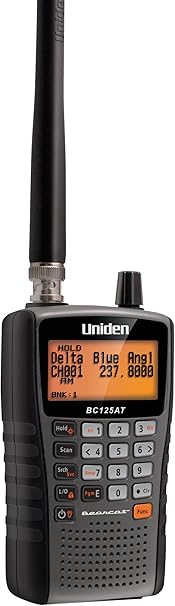
Trying to catch important signals in busy radio environments calls for a reliable scanner that handles analog frequencies well. Designed for hobbyists or emergency listeners focused on analog channels, this model stands out with a compact size and instant signal tuning from nearby transmitters.
Setting it up involves loading up to 500 channels, each with clear alpha tags which help identify the transmissions quickly. Daily use gets easier with the Close Call RF capture technology that zeroes in on nearby signals automatically. A Do Not Disturb mode keeps the scanner from checking for new signals during a transmission, reducing interruptions.
The digital display makes monitoring frequencies straightforward, and it fits comfortably in hand thanks to its portable shape.
Scanning through analog channels from 25 to 512 MHz happens smoothly and reliably, making it strong on its main purpose. It is made for analog only and does not support newer digital systems, a limitation in places with digital trunking.
Built without water resistance, the device requires care in rough conditions. Most praise comes for its ease of use and instant signal detection, while complaints often mention the lack of digital channel support as a drawback.
Hands-on use reveals it excels at picking up analog signals quickly, thanks to Close Call RF capture technology, but it does not handle digital frequencies. Users often mention how straightforward it is to program and operate but express disappointment if digital monitoring is needed.
Those focusing on analog channels or just starting into scanning will find it a solid choice for its price and features. Anyone needing digital system scanning or rugged, weatherproof gear should look for alternatives better suited to those conditions.
Pros
- Instantly tunes to nearby signals
- Supports 500 alpha-tagged channels
- Compact, handheld design
- Clear digital display
Cons
- Not compatible with digital trunking systems
- Not water resistant
| Specification | Details |
|---|---|
| Number of Channels | 500 |
| Frequency Range | 25-54 MHz, 108-174 MHz, 225-380 MHz, 400-512 MHz (UHF) |
| Battery Average Life | 10 hours |
| Voltage | 3 volts |
| Number of Batteries | 2 AA batteries required (included) |
6. Uniden BCD996P2 Digital Mobile TrunkTracker V Scanner

Access to 25,000 channels makes this scanner ideal for someone serious about tracking encrypted trunking signals. It suits users who need precise communication monitoring and weather alerts.
Its biggest draw is the range of channels combined with Close Call RF Capture technology, which quickly picks up nearby radio transmissions without interrupting active channels.
Setting it up requires connecting to a 12 volts DC source, typically in a vehicle, and programming through its LCD display. Day-to-day use benefits from TrunkTracker V technology that follows trunked systems automatically. S.A.M.E. weather alerts notify about severe weather, and the Close Call Do-Not-Disturb feature keeps scanning stable by avoiding channel interruptions during reception.
This scanner performs well in handling encrypted trunking frequencies within its 25 MHz band. Its build stands up in a mobile environment, though it lacks water resistance.
The strongest praise highlights its ability to capture and track multiple channels effortlessly. A noted drawback involves the lack of water resistance, which can be a worry in outdoor conditions.
The scanner’s standout feature is its ability to pick up and track multiple encrypted channels without interruption, greatly aiding monitoring effectiveness. Most users point out that the lack of water resistance limits its durability in wet conditions, which could be a concern for outdoor or mobile setups.
Anyone needing detailed, broad-range tracking of trunked radio systems combined with weather alerts will find this a solid choice. Those who require waterproof gear or multi-band scanning capabilities might want to consider other models better suited to those needs.
Pros
- Tracks encrypted trunking systems automatically
- Alerts for severe weather through S.A.M.E.
- Close Call detects nearby radio signals discreetly
- Supports up to 25,000 programmable channels
Cons
- Not water resistant, limits outdoor use
- Single-band frequency may restrict variety
| Specification | Details |
|---|---|
| Number of Channels | 25,000 |
| Power Source | 12 volts Direct Current (DC) |
| Close Call Technology | Close Call RF Capture with Do-Not-Disturb |
| Radio Bands Supported | 1-Band |
| Frequency | 25 MHz |
| Weather Alerts | S.A.M.E. weather alert with NOAA access |
7. Uniden Bearcat BCD160DN Handheld Digital Scanner
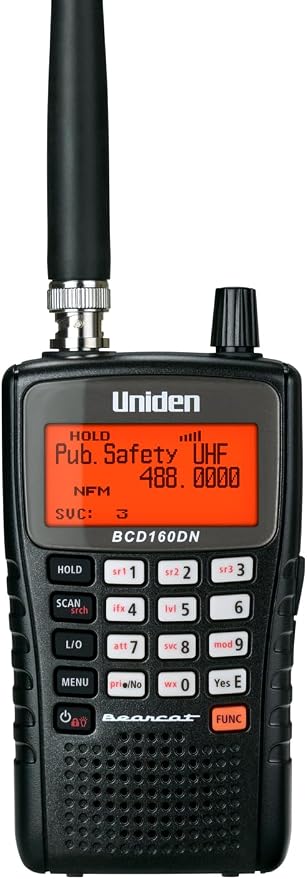
People interested in monitoring digital communications on the go will appreciate the Uniden Bearcat BCD160DN. Designed for handheld use, it stands out by quickly decoding and displaying CTCSS tones and DCS codes, helping you identify signal settings instantly.
It suits users who want a solid scanner for conventional digital signals without trunking capability.
Setting it up involves connecting via USB, which is straightforward enough. Day-to-day scanning is made easier by features like the Band Scope Rapid System/Channel Number Tagging and narrow-band reception, helping spot signals faster. Decoding of DMR and NXDN works right away, and occasional firmware updates add more capabilities, such as APCO P25 Phase 1 & 2 support, although it won’t handle encrypted or trunked signals.
Performance delivers clear conventional digital decoding and fast tone identification, which are highly valuable for monitoring channels efficiently. The build is handheld and portable, comfortable to carry around for scanning trips.
Strong points mentioned include the scanner’s ability to quickly reveal tone and code info, while common criticisms relate to its lack of trunking and encrypted signal decoding.
The fastest way to find and verify tone and digital codes is a key benefit, letting users tune into signals clearly without guesswork. Most complaints focus on its inability to handle trunking or encrypted signals, which limits use in certain advanced communication environments.
People focused on standard digital radio monitoring will find this scanner meets their needs well. Those needing trunking or encrypted decoding should consider models with those specific features instead to avoid frustration.
Pros
- Quick detection of CTCSS tones and DCS codes
- Out-of-the-box conventional digital decoding support
- Easy USB connection for setup and updates
- Band Scope and Channel Number Tagging aid signal search
Cons
- No trunking signal support
- Cannot decode encrypted transmissions
| Specification | Details |
|---|---|
| Scanner Type | Radio Scanner |
| Connection Type | USB |
| Supports | DMR, NXDN, APCO P25 Phase 1 & 2 (via update) |
| Decoding Features | DCS/CTCSS Rapid Decode |
8. Uniden SDS100 True I/Q Digital Handheld Scanner

Setting a high bar for 800 MHz encrypted trunking scanners, the Uniden SDS100 True I/Q handheld stands out through its advanced True I/Q receiver that handles digital signals better than others, especially in tough signal spots. Suited for anyone needing reliable scanning in challenging RF environments, it makes programming easy and offers a clear customizable color display.
Programming starts simply by entering your zip code, which makes setup straightforward without complex manual tuning. Day-to-day use benefits from access to an extensive HomePatrol database covering all known US and Canadian radio systems, updated weekly. The scanner supports a MicroSD card for additional storage and connects via USB for easy data transfer with its Sentinel software.
Performance-wise, the digital receiver shines in simulcast and weak signals, often picking up transmissions others miss. It’s a solid handheld with a sturdy feel and a vibrant 24-bit color display. Some feedback points to occasional complexity in software or menu navigation, but the enhanced digital performance compensates for this minor hassle.
Its standout performance in weak and simulcast signals is praised, delivering clear digital reception where many other scanners struggle. At the same time, some users find the menus confusing, which leads to a steeper learning curve during setup and adjustments.
Anyone needing reliable performance in encrypted trunking scanning will appreciate this unit. Those seeking a simpler interface without frequent software updates might want to explore other options with less complexity in everyday operation.
Pros
- True I/Q receiver improves digital signal clarity
- Customizable color display shows needed info clearly
- Weekly database updates cover extensive US and Canada systems
- Easy programming via zip code entry
Cons
- Menu navigation can be confusing at times
- Regular software updates required for database accuracy
| Specification | Details |
|---|---|
| Scanner Type | Digital Handheld Scanner |
| Connection Type | USB |
| Resolution | 24 Bits |
| Color Depth | 24 |
| Media Type | MicroSD Card |
9. Uniden SDS150 Digital Radio Scanner

Uniden SDS150 Digital Radio Scanner excels at scanning encrypted 800 MHz trunked systems, designed for professionals who need reliable, clear reception. Its most notable strength is enhanced sensitivity that cuts through interference, making it perfect for anyone serious about digital radio monitoring in challenging environments.
Getting started involves a straightforward setup with its simplified control layout and clear digital display, so navigating frequencies and channels is intuitive. Bluetooth connectivity allows pairing with a smartphone app for easy management on the go.
The built-in GPS and included charge cradle add convenience, especially when using it outdoors for extended periods without constant recharging worries.
The scanner performs well in picking up various trunked radio types like APCO P25 Phase I & II and Motorola, with excellent filtering to keep signals clear. It’s rugged but lightweight, making it sturdy enough while staying portable.
The top praise from users highlights its sensitivity, though some find the nonstandard battery a bit inconvenient to replace or source.
The scanner’s strong point is its enhanced sensitivity that improves reception even in crowded radio environments, making it particularly useful for encrypted communication tracking. Users commonly note the battery type as a downside since it’s not a standard size, which limits quick replacement options in the field.
Professionals or enthusiasts who need accurate and reliable digital scanning with mobile convenience will find it suits their needs well. Those who prefer easily swappable standard batteries or require broader frequency support might look for alternatives.
Pros
- Excellent signal reception with advanced filtering
- Lightweight and durable for daily professional use
- Intuitive digital display and simplified controls
- Built-in GPS and Bluetooth smartphone connectivity
Cons
- Requires a nonstandard battery that may be hard to replace
- Supports a wide range of digital modes but not all
| Specification | Details |
|---|---|
| Tuner Type | TrunkTracker X, APCO P25 Phase I & II, Motorola, EDACS, LTR DMR Tier III* |
| Frequency | 1300 MHz |
| Power Source | Battery Powered |
| Connectivity Technology | Bluetooth |
| Additional Features | Weather Alert, Built-in GPS receiver |
10. Whistler WS1025 Analog Desktop Scanner
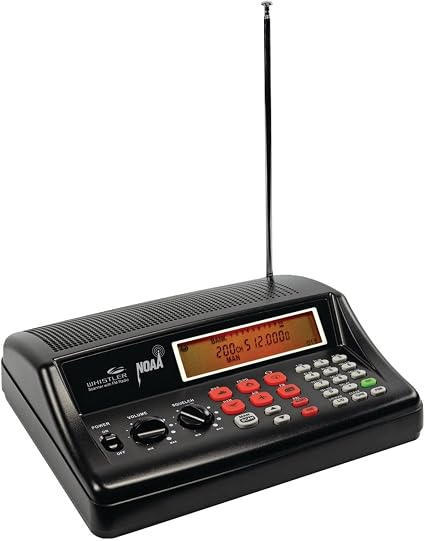
Handling encrypted trunking frequencies on the 800 MHz band is a breeze with this desktop scanner, suited mainly for those with some experience in radio scanning. Its standout strength lies in efficiently managing priority channels to catch important transmissions quickly.
Setting up involves programming channels and making use of features like priority scanning, which checks a selected channel every two seconds, helping you catch any critical chatter. The scan delay feature holds on a channel for two seconds before moving on, so you don’t miss any responses.
Tuning to new or unlisted frequencies is straightforward, starting from any frequency you want, making discovery easier during daily use.
Performance matches expectations for serious scanning tasks, with clear audio and reliable scanning of analog signals. The build feels solid and suited for desktop use, though some users mention the setup can be a bit technical.
Bluetooth connectivity adds convenience. A common downside noted involves the learning curve that comes with mastering all the scanning options.
Most praise focuses on the scanner’s ability to catch important transmissions quickly using priority channels and scan delay. The most frequent complaint involves the challenging setup and steep learning curve for less experienced users. Everyday operation is smooth once familiar with the features.
This unit suits users comfortable with desktop scanners who want detailed control over trunked and analog frequencies. Those new to scanning or seeking plug-and-play simplicity might want to look for a more beginner-friendly model.
Pros
- Priority channel checks every two seconds
- Scan delay captures replies clearly
- Tune function finds unlisted frequencies
- Bluetooth connection for easy control
Cons
- Steep learning curve for beginners
- Setup can feel technical and complex
| Specification | Details |
|---|---|
| Scanner Type | Radio |
| Connection Type | Bluetooth |
| Resolution | 200 dpi |
| Light Source Type | LED |
| Optical Sensor Technology | CCD, CMOS |
| Standard Sheet Capacity | 300 |
11. Uniden BCD436HP HomePatrol Digital Handheld Scanner

Perfect for anyone needing easy access to 800 MHz encrypted trunking signals, this scanner stands out for its straightforward setup and strong reception capabilities. Its ability to automatically program itself after entering a zip code is a huge time saver and makes it especially approachable for those even new to scanners.
Setup takes just a moment; powering it on and entering your zip code gets you up and running without diving into complex programming. The HomePatrol-1 interface guides you through the process, while TrunkTracker V tracks all local trunked systems.
Close Call RF Capture helps you discover nearby active frequencies on the fly, so your scanning keeps updating with relevant channels throughout the day.
Performance shines with scanning up to 85 channels per second, covering frequencies from 25 to 1300 MHz including the important 758-824 MHz and 849-869 MHz bands for trunked systems. The large display makes viewing channel info easy, though the scanner isn’t water resistant, so it’s best used indoors or in dry conditions. The most frequent praise revolves around its ease of use and feature richness, while some find the battery life of about 8 hours limiting for extended outdoor use.
Ease of use combined with automatic trunk tracking is praised for letting you jump straight into scanning with minimal effort. The 8-hour battery life can become an issue for long sessions without access to replacements or charging. The lack of water resistance requires some care in field use.
Those wanting quick, broad coverage of public safety and military channels with minimal setup will appreciate this scanner deeply. For heavy outdoor use or extended operation time, a model with longer battery life or water resistance might serve better.
Pros
- Simple setup using just your zip code
- Fast scanning at 85 channels per second
- Close Call RF Capture always finds active signals
- Extra-large display makes info easy to read
Cons
- Not water resistant for outdoor use
- Batteries last around 8 hours before replacement
| Specification | Details |
|---|---|
| Scan Speed | 85 channels per second |
| Frequency Range | 25-512 MHz, 758-824 MHz, 849-869 MHz, 894-960 MHz, 1240-1300 MHz |
| Number of Channels | 85 |
| Battery Life | 8 hours |
| Connectivity Protocol | GPS |
| Number of Batteries | 3 AAA batteries required |
12. Uniden BC355N Base/Mobile Scanner

Crafted primarily for analog signals, the Uniden BC355N is a base/mobile scanner aimed at individuals needing straightforward 800 MHz monitoring. Its biggest asset lies in the Close Call RF Capture Technology, making it quick at locking onto nearby transmissions, ideal for use in areas without digital trunking.
Getting set up involves plugging into a corded electric power source, and from there, the LCD screen and simple interface make tuning around easy. The single band support focuses on 800 MHz frequencies, and the USB connectivity adds a basic way to interface or update settings.
It operates on 1 product-specific battery, which means paying attention to power maintenance is necessary for uninterrupted use.
Functionality in analog-only systems is solid, providing quick response thanks to its RF tuner and Close Call tech. The build feels typical for this category, dependable but not luxurious.
Among users, the scanner is praised for its signal capture speed, though it visibly lacks digital capabilities, limiting coverage as many systems now shift to digital trunking formats.
Close Call RF Capture Technology stands out by swiftly locking onto strong nearby analog signals, enhancing listening convenience. However, the scanner’s analog-only design is a limitation as many public safety systems now use digital. Users find a trade-off between quick analog access and missing digital channels.
This model suits those living in areas relying solely on analog 800 MHz communications or needing a budget-friendly option for basic monitoring. Persons requiring digital trunking or modern public safety scanning should opt for a digital-capable model instead to avoid limited coverage.
Pros
- Quick tuning with Close Call RF technology
- Clear LCD display for easy navigation
- Supports wide frequency and service banks
- Simple USB connectivity for updates
Cons
- Not compatible with digital radio systems
- Requires specific batteries for operation
| Specification | Details |
|---|---|
| Frequency | 800 MHz |
| Radio Bands Supported | 1-Band |
| Connectivity Technology | USB |
| Power Source | Corded Electric |
| Number of Batteries | 1 Product Specific batteries required |
| Additional Features | Close Call RF Capture Technology, Wide Frequency and Service Bank Support |
13. Uniden BearTracker BCT15X Base/Mobile Scanner

Plugging into nearly any vehicle, this scanner suits anyone tracking encrypted trunking signals around 800 MHz frequencies. Its biggest strength is handling Motorola, EDACS, and LTR systems using TrunkTracker III technology, making it easy to stay in tune with multiple complex systems.
Setup takes some time as programming the 9,000 channels requires patience, but the state-by-state preprogrammed frequencies cut down efforts when traveling. Location-Based scanning linked to a GPS unit auto-selects relevant systems around you. Volume offset per channel and Alpha Tagging make daily tuning personal and clear, especially when switching between channels on the move.
Performance handles encrypted trunking without missing key transmissions on Motorola, EDACS, and LTR setups. Build quality feels solid with included mounting hardware and an external antenna, designed mainly for vehicle base or mobile use.
Positive points focus on its wide channel limit and reliable scanning, but the complexity of programming and learning the interface gets noted most often as a downside.
The scanner consistently performs well capturing encrypted trunking signals on all supported systems, which makes it reliable in active environments. Challenges arise in programming its extensive channel capacity and mastering its interface, which takes some getting used to for new users.
Those needing a scanner for mobile or base vehicle use will find great value here due to its comprehensive channel support and location-based features. Users requiring something simpler or with handheld portability may want to consider other options.
Pros
- Supports 9,000 programmable channels
- Auto system selection via GPS location
- Works with three major trunked systems
- Includes full mounting and power hardware
Cons
- Setup and programming can be complicated
- Primarily designed for vehicle use only
| Specification | Details |
|---|---|
| Channels | 9,000 |
| Technology | TrunkTracker III |
| Compatible Systems | Motorola, EDACS, LTR |
| Included Accessories | AC Adapter, Vehicle Accessory Power Cord, Mounting Bracket, Antenna |
| Model Number | BCT15X |
| Warranty | 1 year manufacturer |
Best 800 MHz Encrypted Trunking Scanners Comparison Table
| Product | Frequency Range | Encryption Support | Connection Type | Power Source |
|---|---|---|---|---|
| Uniden TrunkTracker V | – | – | gps | 20 watts |
| Uniden Bearcat BCD260DN | – | – | USB | – |
| Whistler WS1040 Scanner | – | – | USB | – |
| Uniden SDS200 Scanner | – | – | USB | – |
| Uniden Bearcat BC125AT | 25-512 MHz | – | – | 2 AA batteries |
| Uniden BCD996P2 Mobile | 25 MHz | – | IR | 12 volts DC |
| Uniden Bearcat BCD160DN | – | – | USB | – |
| Uniden SDS100 Handheld | – | – | USB | Battery Powered |
| Uniden SDS150 Scanner | – | Yes (various trunking) | Bluetooth | Battery Powered |
| Whistler WS1025 Desktop | – | – | Bluetooth | – |
| Uniden BCD436HP HomePatrol | 25-512,758-960,1240-1300 MHz | – | – | 3 AAA batteries |
| Uniden BC355N Scanner | 800 MHz | – | USB | Corded Electric |
| Uniden BearTracker BCT15X | – | – | – | AC Adapter included |
- Frequency Range–
- Encryption Support–
- Connection Typegps
- Power Source20 watts
- Frequency Range–
- Encryption Support–
- Connection TypeUSB
- Power Source–
- Frequency Range–
- Encryption Support–
- Connection TypeUSB
- Power Source–
- Frequency Range–
- Encryption Support–
- Connection TypeUSB
- Power Source–
- Frequency Range25-512 MHz
- Encryption Support–
- Connection Type–
- Power Source2 AA batteries
- Frequency Range25 MHz
- Encryption Support–
- Connection TypeIR
- Power Source12 volts DC
- Frequency Range–
- Encryption Support–
- Connection TypeUSB
- Power Source–
- Frequency Range–
- Encryption Support–
- Connection TypeUSB
- Power SourceBattery Powered
- Frequency Range–
- Encryption SupportYes (various trunking)
- Connection TypeBluetooth
- Power SourceBattery Powered
- Frequency Range–
- Encryption Support–
- Connection TypeBluetooth
- Power Source–
- Frequency Range25-512,758-960,1240-1300 MHz
- Encryption Support–
- Connection Type–
- Power Source3 AAA batteries
- Frequency Range800 MHz
- Encryption Support–
- Connection TypeUSB
- Power SourceCorded Electric
- Frequency Range–
- Encryption Support–
- Connection Type–
- Power SourceAC Adapter included
How to Choose the Right 800 MHz Trunking Scanner
Key factors include frequency coverage, encryption support, and user-friendly programming to ensure compatibility with intended signals and ease of use. Choosing the right features prevents wasted time and expense on incompatible or overly complex devices, making communication monitoring more efficient and reliable.
Frequency and Encryption Compatibility
Running scanners bought without checking their frequency bands can be frustrating because many fail to catch all signals on the 800 MHz band, which vary by region. Subbands within this range often matter, especially in urban versus rural settings. Missing these can leave gaps in listening, leading to incomplete information and annoyance.
Having a device that fully supports the entire 800 MHz spectrum relevant to your area means fewer missed transmissions. It is equally crucial to confirm that encryption protocols match those of your trunking systems, like DES or AES types.
Some units allow firmware updates, a big plus since encryption methods evolve and staying current avoids scrambling or dropping crucial channels.
Trunking System Support and Decoding
Trunking protocols differ quite a bit; Motorola, EDACS, and APCO25 are common, but not every scanner handles all well. Using one that supports multiple trunking types ensures access to a wider range of radio traffic. Decoding speed matters, too: slow responses cause delays or missed chatter, especially with encrypted streams that need extra processing.
Features like dynamic regrouping let scanners adjust to shifts in channel assignments, and system roaming tracks mobile units using multiple repeaters. These reduce dead spots in coverage, benefiting users who follow active communications across various zones.
Aim for models known to decode both encrypted and clear channels efficiently without lag.
User Interface and Ease of Programming
Scanning on the move requires quick, error-free operation. Devices with cluttered displays or confusing button layouts can slow you down.
A clear, backlit screen showing relevant information at a glance helps keep track of frequencies and encryption status without fumbling. Buttons should feel responsive and not require multiple presses to change settings.
Programming ease is often overlooked. Units allowing simple onboard edits or PC software syncing eliminate hours of tedious manual input. Menus that are logically organized and customizable scan lists mean you can prioritize channels important to you, switching quickly rather than digging through hundreds.
These small factors save time daily.
Battery Life and Portability
Portable scanners often fail if their batteries run out during active use. Expect at least 8-10 hours of runtime under standard scanning conditions, which suits most daily sessions. Recharge options like USB or replaceable batteries provide flexibility, important if you spend extended periods away from power sources.
Weight and grip affect how comfortable you feel holding or carrying the device for long periods. Lighter models under 1.5 pounds tend to tire the hand less and fit easily in pockets or belt clips.
Battery-saving features such as auto-sleep or adjustable scan speed also prolong usability. Compatibility with car power adapters or external packs adds convenience for mobile setups.
Updateability and Support
Software updates keep scanners useful as new encryption methods or frequencies emerge. Frequent manufacturer updates indicate ongoing support and help avoid obsolescence.
Some models let users update firmware through USB or Wi-Fi without technical hassle. Access to a current frequency database simplifies setup by providing presets for many areas.
Support may come from official channels or community forums where experienced users share tips on decoding or troubleshooting. Reliable customer service is valuable if you run into trunking issues or encryption challenges that require technical advice.
Look for scanners tied to active user communities, as these often have practical solutions and updates sooner.
Optimizing Your 800 MHz Encrypted Trunking Scanner for Enhanced Signal Reception
Signal reception plays a crucial role when using an 800 MHz encrypted trunking scanner. Placement of the antenna can significantly impact the quality of the reception. Avoid metal objects and large structures that can block or reflect signals.
Instead, position the scanner and its antenna near a window or higher vantage point to improve clarity.
Choosing the right antenna matters as well. Many scanners support external antennas designed specifically for the 800 MHz band, which often outperform stock antennas. Using an antenna with a higher gain will help pick up weak transmissions more easily.
Other tips include:
- Ensure the scanner firmware is updated to handle signal decoding effectively.
- Keep cables short and use quality connectors to minimize signal loss.
- Regularly check for sources of electronic interference nearby, such as wireless routers or power supplies.
These practical adjustments can improve signal strength without expensive upgrades.
Preventing Common Errors When Programming and Using Encrypted Trunking Scanners
Programming an encrypted trunking scanner requires accuracy to avoid missing important transmissions or recording errors. One common mistake is entering frequencies or system parameters incorrectly.
Verifying all codes and data against reliable sources before inputting helps prevent this.
Encryption keys need to be correct and current. Older keys or incorrect formats will result in decoding failures or scrambled audio. Always ensure the scanner’s software supports the specific encryption method used by the network you want to monitor.
Additional pitfalls include:
- Skipping essential settings like talkgroup IDs, which filter out irrelevant signals.
- Ignoring the scanner’s memory limits and assigning too many channels, causing performance issues.
- Not regularly updating scanner firmware, which can affect compatibility with new encryption standards.
Taking the time to double-check settings and updates reduces common errors and improves scanning success.
Comparing 800 MHz Encrypted Trunking Scanners to Alternative Frequency Scanners
Scanners designed for the 800 MHz frequency range offer advantages in trunking system coverage, but comparing them to alternatives is important before making a choice. Lower frequency scanners might pick up signals with greater range, since lower frequencies tend to travel farther and penetrate buildings better.
On the other hand, 800 MHz encrypted trunking scanners are tailored for modern digital systems often used by public safety and commercial networks. They support encryption decoding and advanced protocols that many older frequency scanners cannot handle.
Other considerations include:
- Price difference, lower frequency scanners tend to be less expensive but may miss out on current encrypted systems.
- User interface and programming complexity vary significantly across models and frequencies.
- The availability of compatible accessories like antennas or software updates can differ.
Choosing between 800 MHz and alternative frequency scanners depends on the specific signals you want to monitor and the technology those networks use.
People Also Asked
How Do I Program an 800 MHz Encrypted Trunking Scanner?
Programming an 800 MHz encrypted trunking scanner usually involves entering specific frequencies and trunk system codes manually or through software. Using software can make the process faster and more accurate, especially for complex systems.
Is This Scanner Compatible with All 800 MHz Trunked Systems?
Most scanners cover a wide range of 800 MHz trunked systems, but not all due to differences in encryption and protocol types. Confirm the scanner supports your local trunking system’s encryption method before purchasing.
What Safety Precautions Should I Take When Using This Scanner?
Avoid scanning in areas where it is illegal or against local regulations, such as private communications. Keep volume at a safe level, especially in busy environments, to prevent missing important sounds or causing distraction.
How Long Does the Battery Typically Last During Active Scanning?
Battery life varies, but typically lasts around 8 to 10 hours during active scanning on a full charge. Carry a spare battery or have access to charging options if you plan to use it for extended periods.
What Are Common Problems with 800 MHz Encrypted Trunking Scanners?
Common issues include difficulty programming encrypted channels, signal interference, and limited compatibility with newer trunking protocols. Firmware updates from the manufacturer can sometimes resolve these problems, so keep your device updated.
Conclusion
Choosing the right 800 MHz encrypted trunking scanner depends mainly on signal compatibility, the range you need to cover, and how clearly the device processes encrypted transmissions. Battery life also matters, especially for longer listening sessions or field use.
Pay attention to how easy the controls and display are, since you’ll be adjusting settings often.
Think about where and how often you’ll use the scanner before making a purchase. Those used regularly will benefit from models with longer battery life and better range, while occasional users might prefer something simpler and more affordable.
Check the comparison table and product details above to find the best fit for your needs and budget.