Top 13 Best 800 MHz Encrypted Trunking Scanner Revealed!
Many people relying on communications monitoring find that a cheap or poorly made scanner struggles to keep up with the fast-switching channels on the 800 MHz band. The best 800 MHz encripted trunking scanner handles encryption clearly and quickly without dropping signals, which often happens with lower-quality models. Interference and limited frequency ranges can make scanners nearly useless in critical moments, leaving users frustrated and out of the loop.
A solid scanner in this category typically has a reliable processor capable of decoding encrypted communications with low latency. Look for devices supporting multiple trunking systems, including Motorola and APCO 25, with at least 1,000 channels and a scanning range from about 800 to 900 MHz. Battery life also matters; 8 hours or more of continuous use is common, keeping the device useful for extended outings or shifts without needing a recharge.
Need a Quick Check?
| Image | Product | Price |
|---|---|---|
Our Top Picks 1  | Uniden BCD325P2 Handheld | Check Price |
Our Top Picks 2  | Uniden Bearcat BCD260DN Base/Mobile | Check Price |
Our Top Picks 3  | Whistler WS1040 Handheld | Check Price |
Our Selected Top 13 800 Mhz Encripted Trunking Scanner Worth Buying
This list features top-rated 800 MHz encrypted trunking scanners designed to provide reliable and secure communication monitoring. Each review covers performance, ideal users, and key strengths and weaknesses to help readers make an informed choice based on their specific needs.
1. Uniden BCD325P2 Handheld TrunkTracker V Scanner
Ideal for scanning encrypted trunked systems at 800 MHz, the Uniden BCD325P2 is built for those who need reliable access to local police and emergency frequencies. Its biggest strength lies in automatically locking onto nearby signals, making it easier to track active communications without manual searching.
Setting up takes some patience, but features like the Quick-Key System Access simplify everyday use by letting you jump straight to your most important channels. The GPS compatibility supports location-based scanning while the Advanced Dynamic Memory System organizes up to 25,000 channels, so it feels tailored to your area’s radio traffic.
Performance-wise, it does a solid job picking up encrypted trunked signals, including APCO Project 25 Phase II, allowing clear coverage of complex digital systems. Constructed for handheld use, the build holds up well on the go. Praise often goes to the Close Call RF Capture Tech for ease of use, though some find the initial programming interface less intuitive than expected.
The scanner consistently receives praise for its Close Call RF Capture Technology that automatically tunes into the strongest local signals, making it very practical for real-time tracking. However, the most common complaint is the steep learning curve involved in programming and setting up its extensive features.
Anyone needing detailed, encrypted trunking coverage with GPS features will appreciate what this scanner offers. Those wanting a simpler, more compact option or a less technical setup process might want to explore other devices better aimed at casual scanning.
Pros
- Close Call RF automatically finds nearby signals
- Supports up to 25,000 channels for broad use
- Quick-Key System Access for fast toggling
- Compatible with latest APCO Project 25 Phase II
Cons
- Programming interface can be complex for beginners
- Bulkier than some other handheld scanners
| Specification | Details |
|---|---|
| Scanner Type | Radio |
| Connection Type | gps |
| Wattage | 20 watts |
| Resolution | 2400 dpi |
| Media Type | USB |
2. Uniden Bearcat BCD260DN Base/Mobile Digital Scanner
Listening to encrypted trunking systems around 800 MHz can be tricky without the right gear. Ideal for emergency service enthusiasts and scanner hobbyists, this model stands out by quickly finding hard-to-catch signals thanks to unique search features built for convenience and speed.
Setup is straightforward with pre-programmed service bands covering essential areas like S.A.M.E weather alerts, aviation, marine, and more. Daily scanning becomes easy, and sorting through channels is less of a chore thanks to tagging and band scope functions.
Connecting via USB makes data management smoother than older models requiring clunky interfaces.
Performance is sharp when locking onto digital frequencies. The scanner handles a wide frequency range including non-digital services, giving it a versatile edge.
Its build feels solid and reliable, made for base or mobile setups. Strongest praise notes its quick detection and comprehensive bands. Most users mention occasional complexity in menu navigation as a downside.
Many users praise how quickly the scanner identifies signals across a wide spread of frequencies, helping them stay tuned to important channels with ease. Some find the menu system challenging, which slows down navigation and setup during active listening.
The scanner works well for those focused on emergency communications and enthusiasts looking to cover multiple bands in one device. Users who want a simpler interface or higher-resolution display might need to consider alternatives that prioritize ease of use over comprehensive features.
Pros
- Pre-programmed service bands ready to use
- Includes broad coverage of emergency frequencies
- USB connection simplifies data updates
- Band Scope for faster signal detection
Cons
- Menus can be confusing to find your way through.
- Limited screen resolution at 300 dpi
| Specification | Details |
|---|---|
| Scanner Type | Radio Frequency scanner |
| Connection Type | USB |
| Resolution | 300 dpi |
3. Whistler WS1040 Handheld Digital Scanner
With a free-form memory organization that dynamically allocates memory as needed, the Whistler WS1040 is ideal for anyone wanting flexible and efficient trunking scanning on the 800 MHz band. Its menu-driven programming with context-sensitive help makes setup approachable even for those new to digital scanners.
Programming the device is straightforward thanks to the clear help texts accompanying each menu option. Organizing channels and groups feels intuitive through the Scan List functionality that lets you prioritize scanning targets according to your preference.
Quick USB connection allows easy updates or data transfers, making day-to-day management less of a chore.
The scanner handles encrypted trunking signals with reliable performance, capturing frequencies relevant to storm spotters without delay. It has a comfortable handheld size with a bright LED display aiding visibility. Most praise its ease of use and efficient memory use, while some users have noted occasional complexity around advanced setup steps.
Users value its efficient memory system and clear menu guidance, making everyday scanning manageable. Some struggle with the more intricate programming options, which can slow down setup for those less tech-savvy. It performs well in encrypted environments with suitable band coverage.
Anyone wanting straightforward scanning of 800 MHz trunking channels and storm spotter alerts will find this a sensible choice. Those needing simpler interfaces or built-in power sources might consider alternative models better tailored to ease of use or portability.
Pros
- Dynamic memory allocation adapts to your scanning needs
- Menu-driven interface with helpful programming tips
- Scan List lets you arrange channels flexibly
- Instant access to storm spotter frequencies
Cons
- Some advanced programming steps can be complex
- No built-in battery, relies on external power
| Specification | Details |
|---|---|
| Scanner Type | Radio Scanner |
| Connection Type | USB |
| Resolution | 10000 |
| Standard Sheet Capacity | 300 |
| Light Source Type | LED |
| Media Type | USB |
4. Uniden SDS200 True I/Q TrunkTracker X Scanner

People looking to monitor 800 MHz encrypted trunking systems will appreciate this scanner’s easy handling and advanced technology. Perfect for hobbyists who want detailed information on a clear, customizable display.
It stands out with its unique combination of True I/Q and Software Defined Radio tech for reliable reception.
Setup involves connecting via USB and using the HomePatrol database, which comes preloaded with all known radio systems in the US and Canada and updates weekly through Sentinel software. The user interface is straightforward, letting you control what data appears on the bright 3.5” color display. Adjusting colors for each display field helps quickly identify activity without clutter.
The scanner’s main strength lies in handling digital simulcast systems effectively, even in difficult signal conditions. The build feels solid, focused on functionality more than portability.
The most frequent praise highlights the detailed, reliable reception; the common complaint centers on the relatively small screen size for some users.
The scanner is praised for its reliable performance on difficult digital simulcast signals and clear presentation through its customizable display. The most common drawback is the display’s size, which may limit the amount of visible information at once for some users.
Those needing detailed and accurate digital trunk monitoring will find this device satisfies their needs well. People wanting larger displays or simpler update methods might consider other options better suited to those preferences.
Pros
- 3.5″ fully customizable color display
- Preloaded HomePatrol database with weekly updates
- Handles challenging digital simulcast systems well
- USB connection for easy updates
Cons
- Screen size might feel small for detailed monitoring
- Database updates require connection to Sentinel software
| Specification | Details |
|---|---|
| Scanner Type | Radio Scanner |
| Connection Type | USB |
| Standard Sheet Capacity | 10 |
| Light Source Type | LED |
| Media Type | USB |
5. Uniden Bearcat BC125AT Analog Handheld Scanner
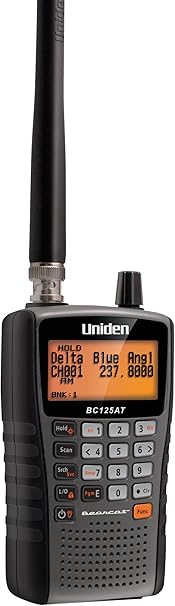
Designed for analog signals, the Uniden Bearcat BC125AT stands out with its 500 alpha-tagged channels and handy compact size. Perfect for anyone needing a straightforward scanner without digital trunking, its Close Call RF capture technology is especially useful for quickly tuning into nearby transmissions.
Getting started involves simple setup given its analog-only nature and clear digital display. Daily use is convenient thanks to the Close Call feature, which spots signals automatically without constant manual scanning. The Do Not Disturb mode is great for avoiding interruptions during active transmissions, while power comes from two included AA batteries providing about 10 hours of use.
Performance here respects its analog limits, delivering clear reception across multiple frequency bands up to UHF. Build quality feels solid though it is not water resistant, so careful handling is wise.
Many users appreciate the scanner’s intuitive interface and responsiveness, but some find the absence of digital monitoring limiting as more agencies switch to digital systems.
The scanner’s strongest feature is its Close Call RF capture, which saves time by automatically tuning to nearby signals. The most frequent drawback is its inability to monitor digital trunking, leaving some users limited as many services transition to digital radio.
Those focused on analog communications or in areas with mostly analog transmissions will find satisfaction here. Anyone needing digital features or strong outdoor durability will find better options elsewhere.
Pros
- 500 alpha-tagged channels for easy identification
- Close Call RF capture quickly finds nearby transmissions
- 10-hour battery life with included AA batteries
- Compact and lightweight for handheld use
Cons
- Not compatible with digital trunking systems
- No water resistance for outdoor use
| Specification | Details |
|---|---|
| Number of Channels | 500 |
| Frequency Range | 25-54 MHz, 108-174 MHz, 225-380 MHz, 400-512 MHz (UHF) |
| Battery Life | 10 hours |
| Batteries Required | 2 AA (included) |
| Voltage | 3 volts |
| Display Type | Digital |
6. Uniden BCD996P2 Digital Mobile TrunkTracker V Scanner

Uniden BCD996P2 Digital Mobile TrunkTracker V Scanner specializes in encrypted 800 MHz trunking. It suits anyone needing detailed radio monitoring with access to severe weather alerts.
Its single biggest strength lies in advanced scanning technology combined with reliable weather updates to keep you informed and safe.
Setup involves plugging into a 12-volt DC power source, then programming up to 25,000 channels through the easy-to-read LCD display. Day-to-day use benefits from TrunkTracker V technology for tracking trunked systems, plus Close Call RF Capture which quickly finds nearby transmissions without interrupting active listening. Location Based Scanning helps focus on relevant channels near you, making routine scanning more efficient.
Performance delivers strong radio frequency tuning and stereo audio output that clearly picks up a wide range of channels. The scanner’s build is mobile and designed for in-vehicle use, although it lacks water resistance. Praised for its extensive channel capacity and rapid signal detection, some users note the IR connectivity limits direct smartphone interaction, which can be inconvenient.
Users appreciate the fast and accurate signal detection paired with detailed NOAA weather alerts that help in emergencies. Some report difficulty with limited smartphone compatibility due to the IR interface, which restricts remote control and updates.
Ideal for those who want broad access to encrypted trunking and reliable weather notifications in a vehicle setting. Those needing a scanner for rugged outdoor conditions or enhanced smartphone control might want to look elsewhere.
Pros
- Supports 25,000 programmable channels
- Includes NOAA weather and S.A.M.E. alerts
- Close Call RF technology finds nearby transmissions
- Location Based Scanning targets relevant signals
Cons
- Not water resistant for outdoor use
- IR connectivity limits smartphone integration options
| Specification | Details |
|---|---|
| Power Source | 12 volts Direct Current (DC) |
| Channels | 25,000 |
| Close Call RF Capture Technology | Included |
| Weather Alerts | NOAA with S.A.M.E. |
| Audio Output Mode | Stereo |
| Display Type | LCD or LED |
7. Uniden Bearcat BCD160DN Handheld Digital Scanner
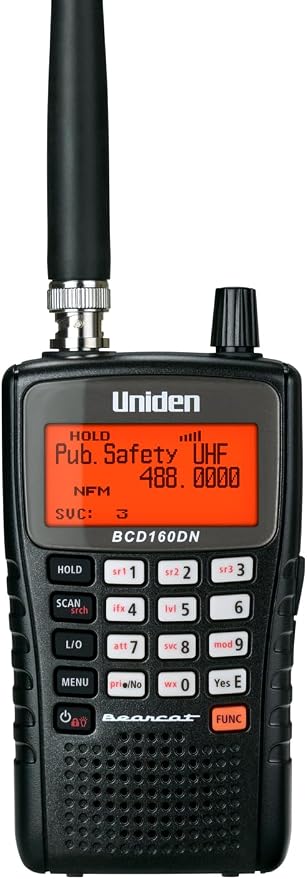
Picking up signals with clarity, the Uniden Bearcat BCD160DN fits well for anyone who wants a strong handheld digital scanner without fuss. It’s known for quickly finding hidden signals and has features that speed up tracking down various transmissions, making it a reliable companion for scanning needs on the go.
Setup is straightforward, connecting easily via USB for updates or data transfer. Day-to-day operation benefits from rapid code detection, showing CTCSS and DCS tones on the spot. Searching for specific channels becomes faster thanks to Band Scope and system tagging.
It handles digital formats like DMR and NXDN without extra setup, while the included firmware update adds P25 support.
Performance in decoding digital signals is solid and clear, meeting expectations for everyday scanning. Build quality is durable for handheld use, though some note its lack of trunking capability and that encrypted signals remain out of reach. Most praise focuses on the fast decoding, while the usual complaint is about missing trunking support.
The clear advantage lies in how quickly it detects and displays system tones and digital codes during scanning. Most users note the scanner’s inability to handle trunking channels, which limits use for those needing that feature. The device is built tough enough for regular handheld operation and manages digital decoding as expected.
People scanning conventional analog and digital systems looking for speed and ease of use will find it reliable. Those requiring trunking support or encrypted signal decoding need to consider other options designed for those capabilities. It suits casual to moderate scanner users comfortable without trunking.
Pros
- Instant CTCSS and DCS tone display
- Supports popular digital voice modes out of the box
- Easy USB connection for upgrades
- Effective Band Scope for fast signal detection
Cons
- No support for trunking systems
- Cannot decode encrypted transmissions
| Specification | Details |
|---|---|
| Scanner Type | Radio Scanner |
| Connection Type | USB |
| Supported Decoding | DMR, NXDN, APCO P25 Phase 1 & 2 |
| Features | Band Scope, Rapid System/Channel Tagging |
| Code Detection | DCS/CTCSS Rapid Decode |
8. Uniden SDS100 True I/Q Digital Handheld Scanner

Uniden’s SDS100 True I/Q Digital Handheld Scanner fits anyone needing reliable 800 MHz encrypted trunking reception, especially in challenging signal areas. Its strongest point is the True I/Q receiver, which handles weak signals and digital simulcast environments better than usual scanners.
Setup is straightforward; entering your zip code pulls in local systems using the HomePatrol database that covers the US and Canada. Daily use benefits from a customizable color display showing just the info you want. Updating radio systems happens through Sentinel software and weekly database updates from Uniden, keeping programming current without fuss.
Performance delivers consistently clear reception in difficult RF conditions, validating the True I/Q technology’s value. The handheld unit feels solid and well-built, suitable for portable scanning. Reviews mention excellent digital performance as a highlight, though some find the USB-only connection limiting when transferring data, especially without included cables.
Strong digital performance in weak-signal and simulcast environments stands out as its main advantage, delivering reliable reception where other scanners struggle. The common complaint focuses on its single USB connection and the absence of included cables, causing some inconvenience during programming and updates.
Those who rely heavily on up-to-date encrypted trunking and digital signals on 800 MHz will appreciate this scanner. Users looking for multiple connectivity options or simpler data transfers might prefer a different model with broader interfaces and included accessories.
Pros
- True I/Q receiver for superior digital performance
- HomePatrol database includes US and Canada systems
- Customizable color display for preferred info
- Weekly database updates via Sentinel software
Cons
- Only USB connection for data transfer
- No included USB cables for setup
| Specification | Details |
|---|---|
| Scanner Type | Digital Handheld Scanner |
| Connection Type | USB |
| Resolution | 24 Bits |
| Color Depth | 24 |
| Media Type | MicroSD Card |
9. Uniden SDS150 Digital Radio Scanner

Constructed with a lightweight but durable design, this radio scanner suits professionals and enthusiasts needing reliable and clear access to encrypted trunking communications. Its greatest strength lies in enhanced sensitivity, which significantly improves signal reception and filters out interference for clean audio capture.
Setup requires syncing with the smartphone app via Bluetooth, making programming and updates straightforward. Day-to-day use benefits from a simplified interface with a clear digital display, showing channels and alerts without clutter. The built-in GPS helps keep track of scanning locations, while the extended battery life supports full-day field use without frequent recharges.
Performance excels in decoding trunked systems like APCO P25 Phase I & II and Motorola, providing precise and steady reception across a wide frequency range. The rugged build handles daily wear, though some users mention the nonstandard battery can be tricky to replace.
Weather alerts add safety by warning about severe conditions during scanning sessions.
Signal quality and interference rejection stand out as the most praised aspects, delivering clear reception even in challenging environments. Most common complaint involves the battery design, which can complicate quick swaps when out in the field.
People needing dependable trunking scanning with good portability and feature-rich functionality will find this scanner fits well. Those who prefer simpler battery maintenance or a more straightforward menu setup might look toward alternative models.
Pros
- Enhanced sensitivity reduces interference effectively
- Lightweight and rugged for daily use
- Built-in GPS receiver for location tracking
- Bluetooth connectivity supports smartphone app
Cons
- Nonstandard battery can be hard to replace
- Menu layout may take time to fully learn
| Specification | Details |
|---|---|
| Tuner Type | TrunkTracker X, APCO P25 Phase I & II, Motorola, EDACS, LTR DMR Tier III*, Hytera XPT*, Single-Channel DMR* NXDN 4800/9600*, EDACS ProVoice* |
| Connectivity Technology | Bluetooth |
| Power Source | Battery Powered |
| Display Type | digital |
| Radio Bands Supported | AM, NFM, FM, WFM, or FMB |
| Frequency | 1300 MHz |
10. Whistler WS1025 Analog Desktop Scanner
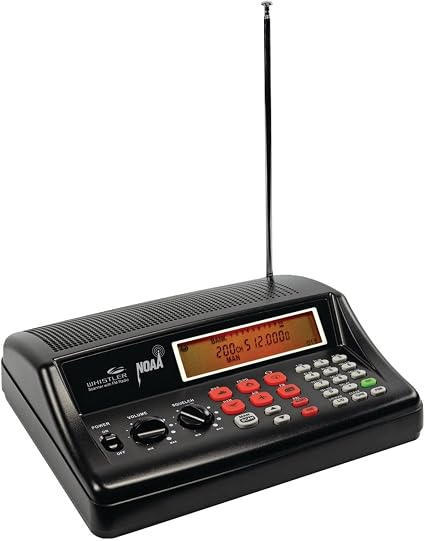
Highly recommended for experienced scanner users, the WS1025 stands out by offering precise control over priority channels, which keeps important signals front and center. Its strength lies in the ability to find new or unlisted frequencies, making it ideal for those who want thorough scanning of 800 MHz encrypted trunking systems.
Setting up involves programming priority channels to check frequently while scanning, ensuring no crucial communication is missed. The scan delay feature holds a channel open just long enough to catch replies, making conversations easier to follow.
Tuning starts from any frequency you choose, helping you discover signals outside preset lists. Bluetooth connectivity lets you integrate the device smoothly with other equipment.
It delivers consistent reception across analog signals, handling priority scans without hiccups. The build feels sturdy despite being a desktop unit, and the LED light source improves visibility. Users often praise its channel tuning and delay functions for accuracy.
A common critique involves its complexity, which can intimidate novices but suits those familiar with advanced scanning.
The priority channel and scan delay are praised for catching conversations without missing critical parts, making daily monitoring reliable. Complexity sparks the most complaints, reflecting a steep learning curve for new users who might struggle with advanced settings.
Those comfortable with desktop scanners and familiar with analog systems will find this model highly effective. Newcomers or those needing digital decoding should consider alternatives better suited to simplified operation or broader frequency types.
Pros
- Effective priority channel check every two seconds
- Scan delay captures replies clearly
- Bluetooth connection for flexible setups
- Tune feature finds unlisted frequencies
Cons
- Complex for beginners to operate
- Only supports analog scanning
| Specification | Details |
|---|---|
| Scanner Type | Radio |
| Connection Type | Bluetooth |
| Resolution | 200 dpi |
| Standard Sheet Capacity | 300 |
| Optical Sensor Technology | CCD, CMOS |
| Light Source Type | LED |
11. Uniden BCD436HP HomePatrol Digital Handheld Scanner

Choosing a scanner that simplifies encrypted trunking scanning experience makes a big difference, and the Uniden BCD436HP fits that bill perfectly. Ideal for anyone wanting easy, no-programming setup, it stands out with its automatic TrunkTracker V feature that kicks in once the zip code is entered.
Daily use revolves around turning it on and entering your zip code, then letting the scanner do the scanning work. The large display helps keep track of what’s happening clearly.
Features like Close Call RF Capture help find nearby transmissions quickly, while built-in GPS connectivity lets you follow signals with location awareness. It listens to an extensive range of communications from public safety to military without any hassle.
Performance-wise, it keeps up with rapid scanning at 85 channels per second, handling a wide frequency range. The build is solid but not water resistant, so it’s best kept dry.
A standout feature is the radio system analysis capability. Common critique points to its battery life being limited to about 8 hours using AAA batteries, which could require carrying spares during long outings.
The scanner’s biggest plus is its straightforward setup and automatic trunk tracking, making it accessible without deep tech knowledge. The most frequent downside involves the battery life requiring frequent changes or spares for extended use. The large display and GPS features add to usability during active listening sessions.
Those who want a user-friendly scanner that works out of the box and covers a broad range of channels will appreciate this model. People needing water resistance or longer battery endurance might want to consider alternatives better suited for rugged or all-day use environments.
Pros
- No programming needed, just input zip code
- High scan speed of 85 channels per second
- Wide frequency coverage including trunking bands
- Extra-large, easy to read display
Cons
- Not water resistant, careful in wet environments
- Battery life limited to 8 hours per set of AAA batteries
| Specification | Details |
|---|---|
| Scan Speed | 85 channels per second |
| Frequency Range | 25-512 MHz, 758-824 MHz, 849-869 MHz, 894-960 MHz, 1240-1300 MHz |
| Number of Channels | 85 |
| Battery Life | 8 hours (3 AAA batteries) |
| Connectivity Protocol | GPS |
12. Uniden BC355N Base/Mobile Scanner

Trying to catch local 800 MHz analog transmissions without digital complications suits someone needing a straightforward trunking scanner. The biggest strength lies in its Close Call RF Capture Technology, which quickly catches nearby signals for instant listening, making it great for those aiming to monitor analog public safety frequencies.
Setting it up involves plugging into a power source and tuning through an LCD display, which is easy to read. Day-to-day use benefits from the wide frequency support allowing you to save service banks for different channels.
It’s a one-band radio frequency tuner, so the focus stays clear on 800 MHz transmissions, avoiding overload from other bands. USB connectivity offers an option for extended control or updates.
Performance focuses on reliable analog signal reception, working well within its technical limits. Build quality feels solid, with a corded electric power source ensuring continuous operation.
The most praised feature is the Close Call RF Capture, making monitoring nearby signals quick and responsive. Common complaints note it cannot handle digital systems, which limits coverage as more agencies move to digital trunking.
Most praise comes from its ability to instantly capture nearby analog signals thanks to Close Call RF Capture Technology. The main downside is its lack of digital scanning capabilities, which restricts usefulness in areas where agencies use digital trunking systems.
People wanting a dedicated analog 800 MHz trunking scanner for local monitoring will appreciate this model. Anyone needing digital trunking coverage should look toward a digital scanner model instead, as this unit will miss those communications entirely.
Pros
- Quickly tunes to nearby signals with Close Call technology
- Wide frequency and service bank support
- Stable power from corded electric supply
- Clear LCD display for easy scanning
Cons
- Cannot monitor any digital radio systems
- Limited to 800 MHz analog transmissions only
| Specification | Details |
|---|---|
| Frequency | 800 MHz |
| Tuner Type | Radio Frequency |
| Radio Bands Supported | 1-Band |
| Connectivity Technology | USB |
| Power Source | Corded Electric |
| Display Type | LCD |
13. Uniden BearTracker BCT15X Base/Mobile Scanner

With 9,000 channels and advanced scanning technology, this scanner suits anyone focused on monitoring encrypted trunking systems. Its standout feature is the TrunkTracker III technology, enabling tracking across Motorola, EDACS, and LTR networks. Ideal for those needing wide coverage and dynamic memory management all in one device.
Setting up involves connecting the unit in your vehicle or at a base with included accessories like the mounting bracket and power cords. Location-Based scanning adjusts frequencies on the fly when paired with a compatible GPS receiver, saving you from constant manual updates. Alpha Tagging helps keep channels organized, and individual volume control lets you hear each channel clearly without fiddling with overall settings.
Scanning performance is solid, capturing signals efficiently with close call RF capture technology. The build feels durable with all necessary components included for mobile or base use.
The clearest praise is how well it tracks trunked systems with minimal lag. Some users mention it can be overwhelming to program without the CD ROM manual, especially for beginners.
The scanner is praised for reliably tracking various trunked systems with fast lock-on, enhancing real-time listening experiences. Most find programming the unit challenging at first, as it requires time to understand the advanced options and software included on the CD ROM.
Anyone needing a powerful scanner for multiple trunking frequencies will appreciate its capabilities, especially frequent travelers appreciating state-by-state preprogrammed channels. Users wanting a simple out-of-the-box operation without tech setup might seek a more user-friendly alternative.
Pros
- Supports 9,000 channels for extensive scanning
- TrunkTracker III technology for multiple system types
- Location-Based scanning adjusts to your travel automatically
- Alpha Tagging keeps channel names organized
Cons
- Setup can be complex without the manual
- Learning curve for advanced features is steep
| Specification | Details |
|---|---|
| Channels | 9,000 |
| Trunking Technology | TrunkTracker III |
| Built-In Media | Scanner, AC Adapter, Vehicle Power Cord, Mounting Hardware, Antenna, Serial Cable |
| Location-Based Scanning | Yes, with compatible GPS |
| Manufacturer | Uniden |
| Warranty | 1 year manufacturer |
Best 800 MHz Encrypted Trunking Scanners Comparison Table
| Product | Scanner Type | Connection | Frequency Range | Additional Features |
|---|---|---|---|---|
| Uniden BCD325P2 Handheld | Radio | gps | – | – |
| Uniden Bearcat BCD260DN Base/Mobile | Radio Frequency scanner | USB | – | – |
| Whistler WS1040 Handheld | Radio Scanner | USB | – | – |
| Uniden SDS200 TrunkTracker X | Radio Scanner | USB | – | – |
| Uniden Bearcat BC125AT Analog | – | – | 25-54,108-174,225-512 MHz | Digital Display |
| Uniden BCD996P2 Mobile Scanner | – | IR | 25 MHz | Close Call, TrunkTracker V |
| Uniden Bearcat BCD160DN Handheld | Radio Scanner | USB | – | – |
| Uniden SDS100 Digital Handheld | Digital Handheld Scanner | USB | – | – |
| Uniden SDS150 Digital Scanner | – | Bluetooth | – | Weather Alert, TrunkTracker X |
| Whistler WS1025 Desktop Analog | Radio | Bluetooth | – | – |
| Uniden BCD436HP HomePatrol Handheld | – | – | 25-512, 758-1300 MHz | Weather Alert |
| Uniden BC355N Base/Mobile | – | USB | 800 MHz | Close Call, Wide Support |
| Uniden BearTracker BCT15X Mobile | – | – | – | – |
- Scanner TypeRadio
- Connectiongps
- Frequency Range–
- Additional Features–
- Scanner TypeRadio Frequency scanner
- ConnectionUSB
- Frequency Range–
- Additional Features–
- Scanner TypeRadio Scanner
- ConnectionUSB
- Frequency Range–
- Additional Features–
- Scanner TypeRadio Scanner
- ConnectionUSB
- Frequency Range–
- Additional Features–
- Scanner Type–
- Connection–
- Frequency Range25-54,108-174,225-512 MHz
- Additional FeaturesDigital Display
- Scanner Type–
- ConnectionIR
- Frequency Range25 MHz
- Additional FeaturesClose Call, TrunkTracker V
- Scanner TypeRadio Scanner
- ConnectionUSB
- Frequency Range–
- Additional Features–
- Scanner TypeDigital Handheld Scanner
- ConnectionUSB
- Frequency Range–
- Additional Features–
- Scanner Type–
- ConnectionBluetooth
- Frequency Range–
- Additional FeaturesWeather Alert, TrunkTracker X
- Scanner TypeRadio
- ConnectionBluetooth
- Frequency Range–
- Additional Features–
- Scanner Type–
- Connection–
- Frequency Range25-512, 758-1300 MHz
- Additional FeaturesWeather Alert
- Scanner Type–
- ConnectionUSB
- Frequency Range800 MHz
- Additional FeaturesClose Call, Wide Support
- Scanner Type–
- Connection–
- Frequency Range–
- Additional Features–
How to Choose the Right 800 MHz Encrypted Trunking Scanner
Key factors to consider include frequency compatibility, scanning capabilities, and ease of programming, ensuring the scanner fully covers your target signals. Choosing the right features prevents wasted time on unsupported channels and avoids costly upgrades, providing reliable performance without unnecessary complexity.
Frequency Coverage and Encryption Compatibility
Many scanners struggle to keep up with the 800 MHz band, leading to missed transmissions or distorted audio. A device with solid frequency coverage in this band ensures clear reception of signals, especially in urban areas where frequency crowding is common. Without proper support for the trunking protocols you actually encounter, the scanner might fail to follow a conversation or drop encrypted channels entirely.
Look for a model that supports prevalent trunking protocols like APCO P25 and can handle encryption types commonly used by public safety and private organizations. This means the scanner’s firmware or hardware is designed to decode or at least recognize encrypted transmissions without losing track of them.
Poor compatibility limits the scanner’s practical use and can be frustrating during critical monitoring situations.
Scanning Speed and Processing Power
Switching between multiple talkgroups happens fast and often. A scanner with slow signal acquisition drags behind, causing choppy audio and missed info. Fast processing power allows the device to scan and decode quickly, maintaining real-time monitoring without lag.
This becomes especially important when handling large frequency databases that some scanners simply can’t juggle efficiently.
Look for processors designed to handle thousands of channels and multiple talkgroups simultaneously. Models that lag or delay switching reduce the usefulness in dynamic environments. Rapid scanning improves user experience by keeping conversations whole and up-to-date.
User Interface and Ease of Use
Complex settings often mean hours spent digging through menus. An interface that’s simple to use and features a clear display makes managing channels and trunking systems straightforward. Programmable features should be accessible, letting you customize scanning without fumbling through dense menus.
Devices with remote control options or companion apps add convenience, allowing you to adjust settings or monitor from a distance. Scanners without a user-friendly interface usually frustrate users, causing mistakes in setups or missed communications.
Portability and Power Options
A scanner that runs out of power during an outing quickly becomes useless. Extended battery life is essential for those who spend hours in the field.
Portability matters too, compact and lightweight designs reduce hand fatigue and improve overall comfort during long monitoring sessions.
Flexible power options, such as rechargeable batteries that can also be swapped out or charged externally, offer real convenience. Scanners limited to just wall adapters or bulky power sources are less practical for mobile use and limit where they can be taken.
Software Support and Update Availability
Encryption standards evolve, and firmware updates ensure your scanner keeps working with the latest protocols. Regular manufacturer updates prevent the device from becoming obsolete or incompatible.
Without updates, you might miss out on key features or struggle with bugs that degrade performance.
Computer software for programming makes managing large frequency lists manageable and reduces errors during setup. Access to a helpful user community or customer support can save hours troubleshooting. Scanners without ongoing software support quickly lose their value in a fast-changing technical environment.
Optimizing Scanner Performance for 800 MHz Encrypted Trunking Systems
Scanner performance on 800 MHz encrypted trunking systems depends heavily on antenna quality and placement. Using an external antenna designed for the specific frequency range can improve signal reception significantly.
Keeping the scanner’s firmware updated ensures compatibility with the latest encryption and trunking protocols. Many models provide software tools to check for updates easily.
Programming the scanner with correct system information is crucial. This includes entering the right talk groups, frequencies, and encryption types.
Most scanners can import system data from online databases, saving time and improving accuracy.
Key factors to keep in mind:
- Use a good-quality external antenna and position it for best reception.
- Regularly update the scanner’s software to maintain support.
- Input accurate system data to avoid missing channels.
- Adjust scan delay and priority settings to manage traffic efficiently.
Common Troubleshooting Tips for Encrypted Trunking Scanners
Body noise and frequent signal drops often indicate antenna problems. Check connections and replace or reorient the antenna if needed.
Some scanners provide signal strength indicators that help with this process.
Frequent lockouts or inability to scan certain talk groups can mean incorrect system programming. Double-check frequency and encryption settings for errors.
Re-importing system data from trusted sources can fix many programming issues.
Strange or no sound may be due to volume settings or speaker issues. Testing headphones or external speakers can isolate the problem.
Common fixes include:
- Verifying and reseating antenna connections.
- Updating or correcting system programming data.
- Adjusting volume and checking audio output devices.
- Resetting the scanner to factory defaults if problems persist.
Comparing 800 MHz Encrypted Trunking Scanners with Alternative Communication Monitoring Devices
800 MHz encrypted trunking scanners specialize in monitoring encrypted communications within public safety and private networks, which sets them apart from general communication devices.
Unlike wideband scanners that cover various frequencies, encrypted trunking scanners focus on specific protocols to decode and display communications accurately. This focus often results in better performance on encrypted channels but limits coverage outside those systems.
Some alternative devices, like software-defined radios (SDRs), offer broader frequency coverage and flexibility but require more technical knowledge and external software to handle trunked systems effectively.
Comparison highlights:
- Trunking scanners provide out-of-the-box support for specific encrypted systems with simplified operation.
- SDRs offer more flexibility but need additional setup and software expertise.
- General wideband scanners may lack support for newer encryption standards.
People Also Asked
How Do I Properly Care for an 800 MHz Encrypted Trunking Scanner?
Clean the scanner regularly and avoid exposing it to moisture or extreme temperatures. Using a soft cloth for the screen and storing it in a padded case helps keep the device in good condition over time.
Is an 800 MHz Encrypted Trunking Scanner Compatible with My Local Systems?
Compatibility depends on local trunking systems and encryption types used in your area. Check the trunking protocol and encryption method to see if your scanner model supports those frequencies and standards.
How Long Does the Battery Typically Last on These Scanners?
Battery life usually ranges from 8 to 12 hours with typical usage. Keeping the scanner on power-saving mode and reducing screen brightness can extend run time during long monitoring sessions.
What Common Problems Should I Expect with Encrypted Trunking Scanners?
Common issues include signal dropouts and difficulty decoding encrypted transmissions. Keeping software updated and using the correct encryption keys when possible can reduce these problems.
How Do I Size the Antenna for Optimal 800 MHz Scanner Reception?
Choose an antenna length near one-quarter of the wavelength for 800 MHz, roughly 9.4 inches. Properly positioning the antenna vertically and away from metal objects can significantly improve reception quality.
Conclusion
Choosing the right 800 MHz encrypted trunking scanner depends mainly on decoding capability, ease of programming, and frequency coverage. Prioritize scanners that handle the specific encryption your area uses and can be updated regularly.
Consider how quickly and clearly the scanner captures active channels, since that affects real-time monitoring.
Think about where you will use the scanner and how often. A compact model might suit occasional use on the go, while a more durable one fits fixed setups. Match the features to your budget and expected usage for practical value.
Review the comparison table and product details above to pick the scanner that fits your needs best.