Top 12 Best Emergency Radio PC Magazine Picks You Need Now
Many people who rely on the best emergency radio pc magazine know the frustration of a device that fails at a critical moment. Cheap models often suffer from poor durability and weak signal reception, leaving users without vital information during outages or natural disasters.
Battery life is another frequent issue, as low-capacity batteries can run out quickly, rendering the radio useless when it’s needed most.
A good emergency radio combines sturdy construction with reliable power options such as hand crank, solar panel, and replaceable batteries, ensuring operation even without access to electricity. Signal reception matters too; radios with multiple bands and strong antennas pick up broadcasts from farther away.
Size and portability matter for easy storage and transport, yet the radio needs to be tough enough to withstand rough conditions without damage.
Need a Quick Check?
| Image | Product | Price |
|---|---|---|
Our Top Picks 1  | FosPower Emergency Radio | Check Price |
Our Top Picks 2  | Midland ER310 Weather Radio | Check Price |
Our Top Picks 3 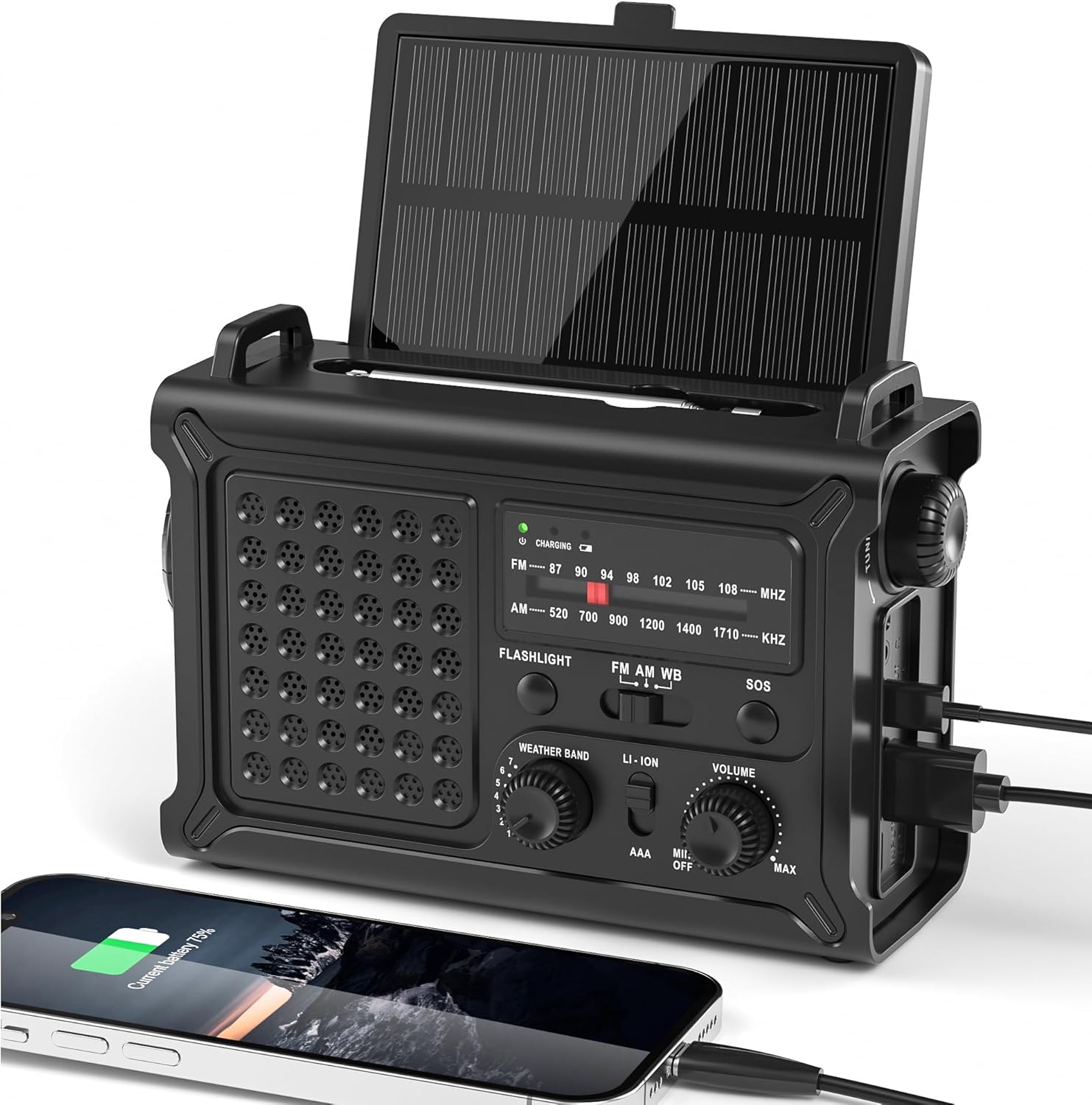 | Mesqool NOAA Radio | Check Price |
Our Selected Top 12 Emergency Radio Pc Magazine Worth Considering
This list features emergency radios that are reliable and practical for various situations. Each review covers how well the radios perform, who they are best suited for, and highlights their main advantages and drawbacks to help readers make informed decisions.
1. FosPower NOAA Emergency Weather Radio A1
Losing power during a sudden storm can leave you disconnected and in the dark. Perfect for outdoor adventurers and emergency preppers, the FosPower NOAA Emergency Weather Radio A1 stands out by doubling as a reliable power bank, ensuring essential devices stay charged when you need them most.
Setting up the radio is straightforward, and it’s easy to keep charged using any of the three power options: crank, solar, or AAA batteries. The LED display shows AM, FM, and weather band channels clearly. It’s light enough to carry in a backpack and includes lights and an SOS alarm, which add valuable safety features on camping trips or during blackouts.
The hand-crank and solar charging work well enough to keep the radio and lights running without hassle. It feels solidly built and water resistant, though some users mention that recharging devices with the 2000mAh battery can be slow compared to standalone power banks.
The sound quality at its 2-watt output is decent for radios in this class.
Charging the radio with the crank and solar panel keeps it operational even without batteries, though the internal battery won’t charge devices as quickly as dedicated power banks. Most find the lights useful, but some want louder audio volume for clearer alerts.
Anyone needing a weather radio and emergency charger in one will appreciate this device’s versatility and portability. Those prioritizing fast device charging or more powerful audio might prefer a separate power bank or radio with stronger speaker output.
Pros
- Multiple charging options: hand crank, solar, batteries
- Portable size for easy carrying
- Includes LED lights and SOS alarm
- USB-C port for device charging
Cons
- Power bank capacity modest for extended charging
- Speaker volume may be low in noisy environments
| Specification | Details |
|---|---|
| Power Bank Capacity | 7400mWh (2000mAh) |
| Power Sources | Solar, Battery, Handcrank |
| Tuner Type | AM/FM/WB |
| Connectivity | USB C |
| Speaker Output | 2 watts |
| Batteries Required | 4 AAA batteries |
2. Midland ER310 Emergency Crank Weather Radio
Solar powered weather radios make emergencies easier to handle, and this one runs on 6 AA batteries or sunlight for power. Perfect for outdoor lovers or anyone wanting reliable radio access when the power goes out, its standout feature is the solar power that keeps it running without constant battery swaps.
Getting it set up is straightforward, with a simple LED display showing AM/FM channels. The built-in flashlight is handy at night, and it charges small devices via USB in a pinch.
You won’t spend much time fiddling with it, just crank or solar charge and tune in. Keeping it ready involves making sure the batteries are fresh or left in as a backup.
It catches AM and FM signals clearly enough for weather updates, though it’s not water resistant, so outdoor use in rain requires care. The build feels solid but a bit bulky to carry all day. Praise often goes to the multiple power options, while some note the lack of water resistance as a downside.
The most praised feature is the reliable solar charging combined with multiple power options to keep it working during blackouts. The main complaint concerns its lack of water resistance, which can limit use in wet conditions.
Those wanting dependable solar power and a flashlight in one device will find it useful. Anyone needing a lightweight, waterproof radio might want to look elsewhere for better weather protection and portability.
Pros
- Solar powered with battery backup
- Built-in flashlight for added safety
- USB charging for smartphone or tablet
- Easy to tune AM/FM radio bands
Cons
- Not water resistant, careful outdoors
- Bulkier than some compact emergency radios
| Specification | Details |
|---|---|
| Power Source | Solar Powered |
| Number of Batteries | 6 AA batteries required. (included) |
| Connectivity Technology | USB |
| Tuner Type | AM/FM |
| Display Type | LED |
3. Mesqool NOAA Emergency Weather Radio
Anyone who spends time outdoors or wants reliable access to weather updates during emergencies will find this radio suitable. Its biggest strength lies in clear reception across NOAA, AM, and FM bands, making it great for storm preparedness or camping trips where staying informed is critical.
Setup is straightforward; the radio supports multiple power options including solar, hand crank, type-C input, and batteries, making it easy to keep charged in various situations. It includes an LED flashlight, reading lamp, and an SOS alarm that add practical value in emergencies. The large solar panel helps maintain power without constant charging, and the USB port lets you charge a smartphone as well.
The radio delivers strong, fast, and clear reception thanks to a high-sensitivity signal chip and noise-reduction circuitry. Its 5-watt speaker outputs sound that remains loud and understandable in noisy environments.
The build feels durable and portable for outdoor use. Praise often highlights the solar panel’s efficiency, while some note occasional limitations with the hand crank charging speed.
Consistent praise centers on the highly efficient solar panel and clear sound quality across NOAA and other bands. The most frequent complaint is that hand crank charging is slower and less reliable compared to solar or USB power sources. People appreciate the dependable reception during storms and emergencies.
Those who need dependable, multi-powered emergency radio with extra lighting features will appreciate this model. People wanting a lighter, more compact device might consider other options, since its size reflects its many functions and strong battery capacity.
Pros
- High-sensitivity chip for clear radio reception
- Extra-large solar panel charges quickly even in low light
- Multiple power options including hand crank and USB
- Includes LED flashlight, reading lamp, and SOS alarm
Cons
- Hand crank charging can be slow at times
- Bulky design may not suit minimalists
| Specification | Details |
|---|---|
| Power Source | Solar Panel | Hand Crank | 12000mAh Lithium Battery | Type-C Input 5V/2A | 3 AAA Batteries |
| Radio Bands Supported | NOAA | FM | AM |
| Speaker Maximum Output Power | 5 watts |
| Connectivity Technology | USB |
| Frequency | 162.4 MHz |
4. Portable Solar Hand Crank Emergency Weather Radio
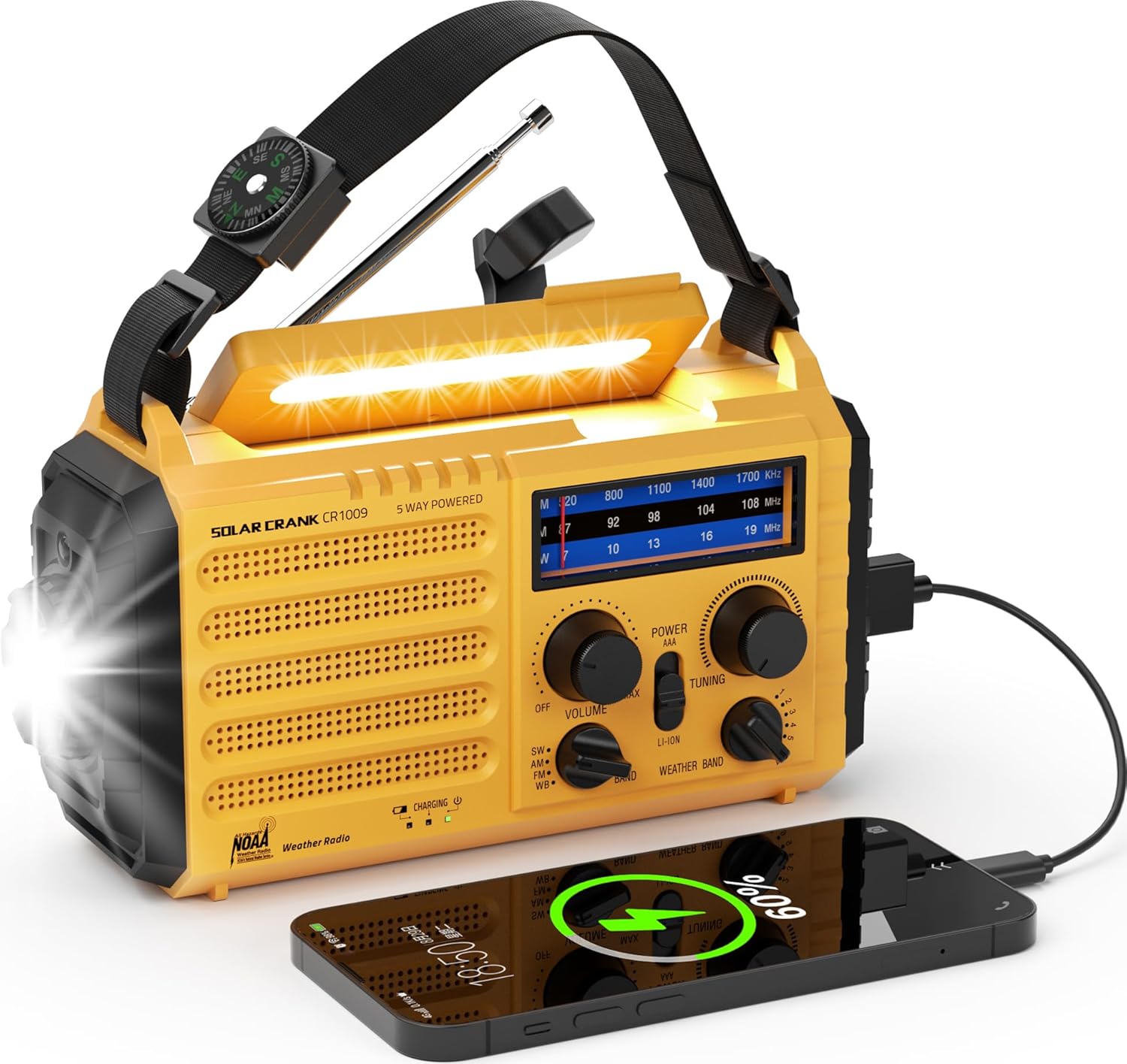
Designed for anyone wanting to stay connected and safe during emergencies, this radio stands out with its multiple power options including solar, hand crank, and batteries. It suits outdoors lovers and preparedness enthusiasts by combining weather alerts with a built-in charger to keep your devices going when power is out.
Setting up requires simply selecting your band, AM, FM, SW, or NOAA, to catch local weather updates quickly. Daily use takes advantage of the flashlight and reading lamp, which are handy when the sun goes down or power fails.
Charging a phone with USB connection through its power bank function adds serious convenience in long outages.
Performance-wise, the solar panel and crank system deliver reliable power without needing a plug, making it truly portable. The build feels solid enough to handle rugged use.
Praise often highlights the dependable SOS alarm and bright flashing light. Some note that manual cranking can be tiring over extended use.
The radio delivers dependable alerts and several useful features in one compact device, appreciated for its ability to charge phones and provide clear weather warnings. Most find the hand crank power helpful but sometimes physically demanding when used extensively.
Anyone looking for a versatile survival radio with multiple charging options will find this a solid choice. Those who prefer ultra-lightweight gear or a device mainly focused on premium build quality might look for alternatives.
Pros
- Multiple power sources including solar and hand crank
- NOAA weather alerts keep you informed
- Built-in emergency flashlight and reading lamp
- Emergency power bank charges various devices
Cons
- Cranking can become tiring during long use
- Plastic body may feel less durable under heavy impact
| Specification | Details |
|---|---|
| Power Source | Solar Panel, Hand Crank, 5000 Rechargeable Battery, 3*AAA Battery, Micro USB input |
| Radio Bands Supported | AM/FM/SW/NOAA Weather Radio |
| Additional Features | Emergency Power Bank Phone Charger, Flashlight, Reading Lamp, SOS Alarm Alert |
| Connectivity Technology | USB |
| Compatible Devices | Android and iPhone, Headphone, Laptop, Smartphone, Tablet |
5. OH8STN Radio Antenna Handbook

OH8STN Radio Antenna Handbook serves as a comprehensive guide for anyone interested in setting up and optimizing radio antennas. It suits enthusiasts who want clear, detailed instructions and practical knowledge for building reliable antennas. Its single biggest strength lies in providing clear explanations for various types of antennas and installation tips.
Day-to-day use involves following step-by-step guidance to assemble and adjust antennas according to your environment. The handbook covers essential details such as antenna lengths, materials, and configurations, making it easier to tailor setups for different needs.
Instructions emphasize practical fixes, so you spend more time enjoying clear reception than troubleshooting.
Performance hinges on how well you implement the handbook’s advice rather than on the product itself, as it is a resource book. Build quality is about the book’s clarity and thoroughness, both praised for being straightforward yet thorough.
Some note that it can get technical, which might slow down beginners looking for quick fixes.
Readers praise the handbook for clear, specific guidance on antenna design, making complex setups understandable. The most common drawback is its technical depth, which can overwhelm those new to radio antennas or looking for quick solutions.
Enthusiasts comfortable with technical details and eager to dive into antenna building will find this handbook very useful. Casual users or those wanting a plug-and-play antenna might prefer simpler, hardware-focused options instead.
Pros
- Clear focus on practical antenna designs
- Detailed instructions for different antenna types
- Helpful setup and adjustment tips
- Good for hobbyists and technical users
Cons
- Can be overly technical for beginners
- No hands-on components or hardware included
| Specification | Details |
|---|---|
| Type | Radio Antenna Handbook |
| Content focus | Antenna design and setup |
| Coverage | Various antenna types and configurations |
| Usability | Practical step-by-step guidance |
6. Ham Radio Mini Reference Card

Carrying essential radio information in a compact card makes preparedness easy and accessible. Perfect for anyone who often finds themselves outdoors or in situations lacking internet connectivity, this reference card stands out for providing quick access to key radio frequencies and info. Its biggest strength lies in its portability combined with durable, waterproof construction.
Daily use involves simply pulling the card out of your emergency kit or pocket when you need a quick radio frequency or channel reference. It requires no setup or power source, making it genuinely practical when other devices run out of battery or lack signal.
The card covers GMRS, Ham, Amateur, FRS, MURS, and NOAA Weather Radio, so it’s handy across a variety of communication scenarios without needing a digital device.
The card reliably provides instant information on commonly used radio services, fulfilling its purpose of quick access without complication. Made from rugged synthetic material, it stands up well to rain, dirt, and sweat.
Strong praise centers around its waterproof and dust-resistant build, while the main complaint is that the tiny print can be hard to read in low light or for those with poor eyesight.
Users appreciate the card’s rugged, waterproof build that stands up outdoors, making it reliable in tough conditions. Some find the fine print challenging to read, especially in dim light or for those needing larger text.
Anyone needing quick, offline radio reference data in the field will find this card convenient and practical. It’s less suitable for users who want a guide with adjustable text size or interactive functions.
Pros
- Compact, pocket-sized design
- Durable and waterproof
- Includes info on multiple radio services
- Does not require batteries or internet
Cons
- Print can be small and hard to read
- Limited to reference, no interactive features
| Specification | Details |
|---|---|
| Material | Durable waterproof synthetic |
| Water Resistance Level | Waterproof |
| Additional Features | Dust Resistant, Waterproof |
7. WVL Portable Solar Hand Crank Emergency Weather Radio

Offers reliable emergency communication and charging in a compact design, perfect for outdoor enthusiasts or those wanting a backup in power outages. Its standout feature is a 2000mAh charger that keeps phones and tablets running when power is scarce.
Setup involves just charging the internal battery via solar power, hand crank, or included AAA battery, all of which give you options when access to power is limited. The radio tunes in on three bands and features an easy-to-read LCD.
A built-in LED reading lamp with motion sensor and a bright 1.5W flashlight cover lighting needs during dark situations.
Handles AM radio reception well and offers stereo audio output that’s clear for emergency broadcasts. The lightweight body at 231g makes it easy to carry around.
The most appreciated part is how versatile the charging options are, though some point out the AAA battery runs out faster than expected compared to solar and crank methods.
The 2000mAh charging capability combined with three ways to power the device stands out as its best feature, making it dependable during outages or outdoor activities. Some users note that the included AAA battery tends to drain faster than other power modes, requiring careful management.
People who value a lightweight, multi-power emergency radio for their phone and tablet charging will find this a solid choice. Those needing extended battery life from AAA batteries or louder audio should explore alternatives focused on those specific features.
Pros
- Multiple power options: solar, hand crank, AAA battery
- Compact size and lightweight at 231g
- 2000mAh charger for phones and tablets
- Bright 1.5W LED flashlight plus reading lamp
Cons
- AAA battery life can be shorter than expected
- Small size limits speaker volume slightly
| Specification | Details |
|---|---|
| Power Source | Solar Powered |
| Radio Bands Supported | 3-Band |
| Built-In Flashlight | Yes, 1.5W strong LED flashlight and motion sensor reading lamp |
| Connectivity Technology | USB |
| Number of Batteries | 1 AAA battery required (included) |
| Audio Output Mode | Stereo |
8. Baofeng Radio Bible Guide
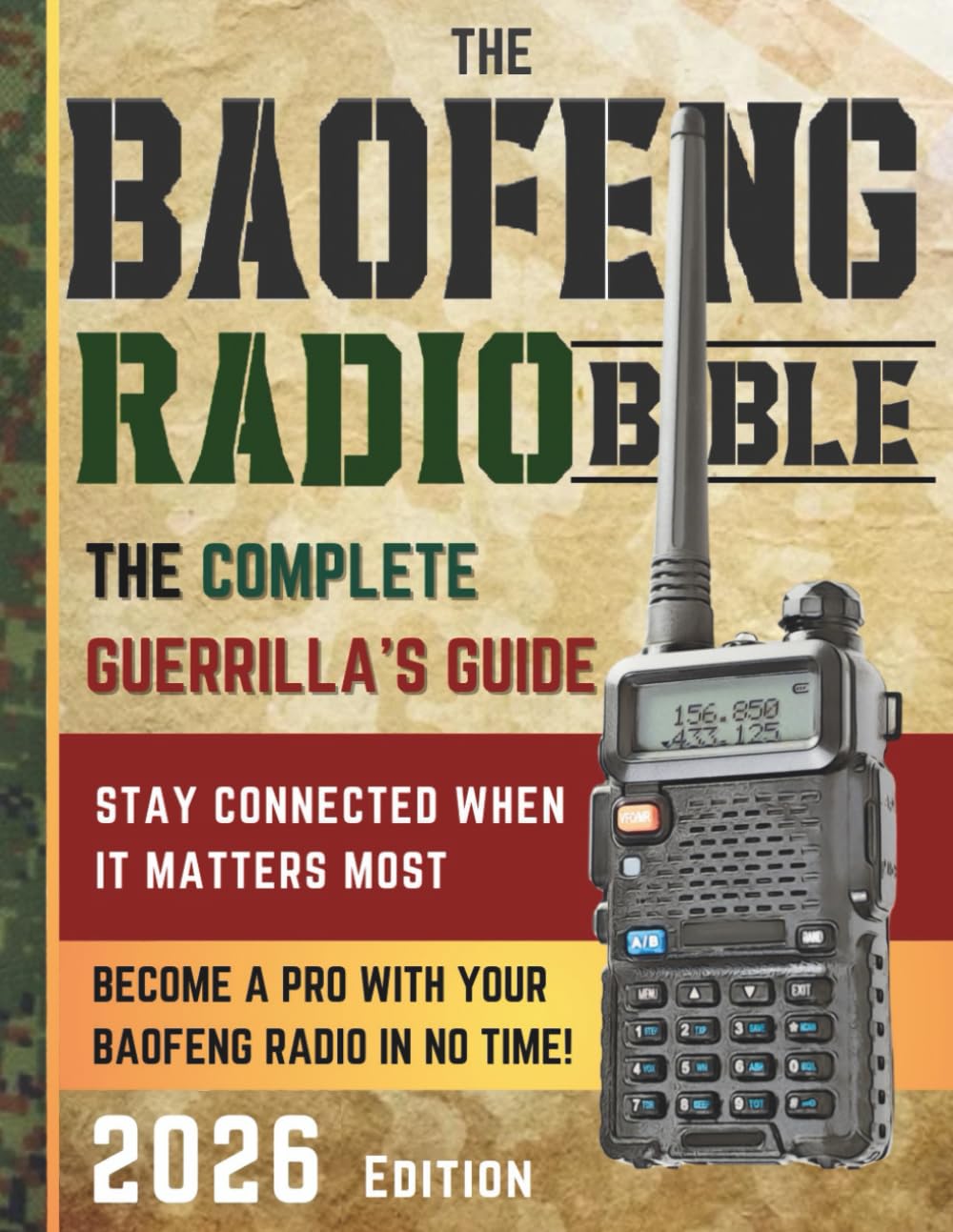
Plastic casing and straightforward controls make the Baofeng Radio Bible Guide a practical choice for anyone wanting an easy-to-use emergency radio. Its simplicity stands out as the biggest strength, suited for those who want reliable access to information during power outages or outdoor activities without complicated tech.
Setting it up involves basic steps that don’t require technical knowledge. Daily use focuses on tuning into AM/FM bands and listening to the preloaded Bible audio guide. It runs on standard batteries, making power management straightforward.
The compact size fits comfortably in hand or pack, ready for quick access when needed.
It delivers clear radio reception and dependable Bible audio playback, holding up well in various environments. The build feels solid for a radio in this price range, though some users mention the volume control can be a bit sensitive.
Positive notes highlight its ease of use, while critiques often point to the limited speaker volume.
Most reviews note the ease of use and convenience of having both radio and Bible audio in one device. A frequent downside reported is that the speaker volume doesn’t get very loud, which can be an issue in noisy environments.
This device suits someone looking for straightforward emergency radio use combined with spiritual content. People needing higher volume or more advanced features might prefer a different model.
Pros
- Simple, user-friendly design
- Portable and lightweight
- Preloaded Bible audio guide included
- Runs on common AA batteries
Cons
- Volume control can be overly sensitive
- Speaker volume is relatively low
| Specification | Details |
|---|---|
| Power Output | 3.0 W |
| Battery Type | Standard AA batteries |
| Frequency Bands | AM/FM |
| Audio Guide | Preloaded Bible content |
| Size | Compact and portable |
9. PRUNUS J-924 Hand Crank Emergency NOAA Radio

Bright flashing SOS alarm stands out immediately on this emergency radio, perfect for anyone who wants a clear way to signal for help. It suits outdoor enthusiasts, emergency preppers, or anyone living in regions prone to severe weather. Its biggest strength is combining weather alerts with emergency power and alarm functions in one device.
Setting up involves charging the built-in 10000mAh lithium polymer battery via USB Type C or cranking it manually. Daily use centers around listening to all 7 NOAA weather stations for up-to-date forecasts and warnings.
It doubles as a flashlight and can charge phones through its USB port, making it practical beyond just broadcasting news.
The radio works reliably on multiple bands, including FM and NOAA weather channels, providing safety during emergencies. The hand crank ensures power without electricity, but recharging through USB is much easier day to day. Build quality feels sturdy, with a clear LED display and tactile buttons.
One downside noted is that the crank can feel stiff at first, making it a bit challenging to operate immediately.
The device is highly praised for its bright SOS alarm and large battery which provide reliable safety features in emergencies. A common complaint involves the hand crank being stiff at first use, which could be tough for some users during urgent situations.
Those who value multiple NOAA weather channels and a strong emergency light will appreciate this radio. People focused purely on ease of use might prefer other options with smoother cranks or simpler power alternatives.
Pros
- Large 10000mAh battery holds power well
- SOS alarm with flashing light for emergencies
- Accesses all 7 NOAA weather stations
- USB Type C rechargeable and hand crank powered
Cons
- Hand crank can be stiff and hard to turn initially
- Single lithium polymer battery may limit replacement options
| Specification | Details |
|---|---|
| Battery Capacity | 10000mAh Lithium Polymer |
| Radio Bands Supported | 6-Band including 7 NOAA stations |
| Frequency | 87 MHz |
| Connectivity Technology | USB |
| Hardware Interface | USB Type C |
| Power Source | Battery Powered |
10. Solar Hand Crank NOAA Emergency Weather Radio

Power and versatility stand out with this emergency radio, making it ideal for anyone wanting reliable communication during outages and outdoor adventures. Its rechargeable 10000mAh battery and multiple charging options give an edge over simpler models, ensuring devices stay powered when needed most.
Setup is straightforward, charging via USB Type-C or solar panel, hand crank, and AAA batteries as backups. Day-to-day use benefits from the long battery life, letting you listen to AM, FM, or WB radio for many hours. The built-in reading lamp and flashlight add extra functionality, useful around the house or camping without frequent recharging worries.
Performing as a strong emergency tool, the radio delivers clear reception across AM, FM, and WB bands with a modest 3-watt speaker. The build feels solid but not heavy, making it portable. Common praise cites the long battery life and multiple power sources, while a frequent complaint involves the lack of included AAA batteries for alternate charging.
The most praised feature is the impressive battery life paired with flexible charging methods, allowing extended use without frequent recharging. The common downside is the absence of included AAA batteries, which means some users must purchase them separately to fully utilize all charging options.
Anyone needing a reliable emergency radio with device charging will appreciate this. It fits well for outdoor enthusiasts or households preparing for power outages. Those wanting louder audio or prefer a radio with all batteries included might want to look at other options.
Pros
- Long 10000mAh rechargeable battery capacity
- Four charging methods including USB and solar
- Supports AM, FM, and WB radio bands
- Includes reading lamp and flashlight functions
Cons
- AAA batteries for charging not included
- Speaker output limited to 3 watts
| Specification | Details |
|---|---|
| Battery Capacity | 10000mAh Rechargeable |
| Charging Modes | USB Type-C, Hand Crank, Solar Panel, AAA Batteries |
| Radio Bands Supported | AM FM WB |
| Speaker Output Power | 3 watts |
| Display Type | LCD with LED technology |
| Power Source | Battery Powered (1 C battery included) |
11. Baofeng Radio Bible Survival Guide

When the power goes out or you’re off the grid, having a reliable emergency radio can make a big difference. Aimed at survival enthusiasts and anyone who needs dependable communication in tough spots, it stands out with solid signal strength.
The Baofeng Radio Bible Survival Guide offers a simple way to stay connected when it matters most.
Setting it up involves plugging it in or using rechargeable batteries to keep it running. It has straightforward controls and clear channels, making tuning in easier, even under stress. Daily use relies on a durable, compact design that fits well in a bug-out bag or car glove compartment.
The included survival guide adds practical tips, helping you maximize its features during an emergency.
Signal clarity and transmission reach come through well, with 15W power giving it a decent range for various situations. The build feels solid but a bit bulky compared to more pocket-sized models.
Many appreciate how easy it is to switch bands. Some report that the weight makes it less convenient to carry all day long, yet it stands up well to rough handling.
The radio delivers transmission power that many find reliable in emergency contexts, and the included survival guide is a helpful extra. However, its bulkier weight can be a drawback for those looking to carry it comfortably for extended periods.
People needing a sturdy radio with extra survival information will likely appreciate this model. Those prioritizing lightweight or pocket-sized options might prefer to consider other radios more suited to easy portability.
Pros
- Strong 15W power output for clear transmission
- Includes a survival guide with practical tips
- Durable design fit for emergencies
- Easy-to-use controls for quick operation
Cons
- Some users find it a bit heavy to carry
- Details on frequency range and battery not given
| Specification | Details |
|---|---|
| Power Output | 15W |
| Audio Output | 3.0 |
| Frequency Range | Not specified |
| Battery Type | Rechargeable (details not specified) |
12. Baofeng Radio Bible Beginners Guide

Boasting a simple, clear guide aimed at beginners, the Baofeng Radio Bible Beginners Guide suits those new to emergency radios who need straightforward instructions. Its biggest strength lies in walking you through the Baofeng radio’s features in an easy-to-understand way;
Setup involves following the printed guide step-by-step, making tuning and basic operation approachable for someone unfamiliar with radios. Daily use focuses on essential functions like adjusting channels and understanding signal reception without needing extra technical knowledge or tools.
The guide ensures you get the radio working quickly and keeps the experience straightforward.
The book explains the day-to-day functions well, helping you get the most out of the Baofeng radio. It covers core topics clearly but doesn’t dive deep into advanced features.
Most praise highlights how accessible and helpful it is for beginners, while the common complaint mentions that it’s limited to basic instructions and not a full technical manual.
Most feedback praises how the guide breaks down the basics for anyone new to Baofeng radios, making operation less intimidating. Common criticism points out that it doesn’t provide detailed troubleshooting or cover more complex features, so its usefulness ends after initial setup and fundamental use.
Anyone just starting with emergency radios and looking for a simple, clear manual will find it very helpful. People seeking a more comprehensive or technical reference might want to look for a different resource that covers advanced functions and troubleshooting steps.
Pros
- Clear, simple instructions for new users
- Step-by-step setup guidance
- Focus on essential radio functions
- Easy to understand language
Cons
- Lacks advanced or detailed technical info
- Limited to basics, no troubleshooting included
| Specification | Details |
|---|---|
| Target audience | Beginners |
| Focus | Basic operation and setup |
| Content level | Introductory, non-technical |
| Format | Step-by-step guide |
Best Emergency Radios Reviewed Side by Side
| Product | Power Source | Connectivity | Radio Bands Supported | Additional Features |
|---|---|---|---|---|
| FosPower Emergency Radio | Solar, Battery, Handcrank | USB C | AM, FM, WB | Portable |
| Midland ER310 Weather Radio | Solar Powered, 6 AA batteries | USB | 2-Band | Built-In Flashlight |
| Mesqool NOAA Radio | Solar Panel, Hand Crank, Battery | USB | – | SOS Alarm, Flashlight |
| Portable Solar Crank Radio | Crank, Solar Power, Rechargeable | USB | AM, FM, SW, NOAA | SOS Alarm, Flashlight |
| OH8STN Antenna Handbook | – | – | – | – |
| Ham Radio Reference Card | – | – | – | Dust Resistant, Waterproof |
| WVL Solar Crank Radio | Solar Powered, 1 AAA battery | USB | 3-Band | Built-In Flashlight |
| Baofeng Radio Bible | – | – | – | – |
| PRUNUS J-924 NOAA Radio | Battery Powered, Rechargeable | USB | 6-Band | LED Display |
| Solar Crank NOAA Radio | Battery Powered, Rechargeable | USB | AM, FM, WB | Portable, 3W Speaker |
| Baofeng Survival Guide | – | – | – | – |
| Baofeng Beginners Guide | – | – | – | – |
- Power SourceSolar, Battery, Handcrank
- ConnectivityUSB C
- Radio Bands SupportedAM, FM, WB
- Additional FeaturesPortable
- Power SourceSolar Powered, 6 AA batteries
- ConnectivityUSB
- Radio Bands Supported2-Band
- Additional FeaturesBuilt-In Flashlight
- Power SourceSolar Panel, Hand Crank, Battery
- ConnectivityUSB
- Radio Bands Supported–
- Additional FeaturesSOS Alarm, Flashlight
- Power SourceCrank, Solar Power, Rechargeable
- ConnectivityUSB
- Radio Bands SupportedAM, FM, SW, NOAA
- Additional FeaturesSOS Alarm, Flashlight
- Power Source–
- Connectivity–
- Radio Bands Supported–
- Additional Features–
- Power Source–
- Connectivity–
- Radio Bands Supported–
- Additional FeaturesDust Resistant, Waterproof
- Power SourceSolar Powered, 1 AAA battery
- ConnectivityUSB
- Radio Bands Supported3-Band
- Additional FeaturesBuilt-In Flashlight
- Power Source–
- Connectivity–
- Radio Bands Supported–
- Additional Features–
- Power SourceBattery Powered, Rechargeable
- ConnectivityUSB
- Radio Bands Supported6-Band
- Additional FeaturesLED Display
- Power SourceBattery Powered, Rechargeable
- ConnectivityUSB
- Radio Bands SupportedAM, FM, WB
- Additional FeaturesPortable, 3W Speaker
- Power Source–
- Connectivity–
- Radio Bands Supported–
- Additional Features–
- Power Source–
- Connectivity–
- Radio Bands Supported–
- Additional Features–
How to Choose the Right Emergency Radio
Choosing an emergency radio involves prioritizing key features like reliable power sources, clear reception, and durability to ensure consistent use during outages. Selecting the right combination helps avoid needless replacements and ensures dependable communication when it matters most.
Power Options
A power outage during a storm can stretch on for days, so having a radio that runs on multiple sources keeps you connected. Radios offering solar panels, hand cranks, standard batteries, and USB charging cover almost every scenario.
A device relying on just one power source often becomes useless when that option is unavailable, especially if batteries run out fast or sunlight is scarce. A good model will support AA or AAA batteries as a backup, have a solar panel with efficient charging, and a crank that recharges quickly, typically turning the crank for one minute should provide at least 10 to 15 minutes of operation.
Ease of use matters too; some cranks require a lot of effort or time, which becomes a burden in emergencies. Radios with USB charging let you top off from power banks or car chargers, which adds convenience.
Prioritize devices with detailed charging instructions and indicators showing how much power each method provides to avoid surprises.
Reception and Signal Quality
One emergency I experienced involved poor reception on basic radios, missing critical weather alerts. The ability to pick up AM, FM, and NOAA weather band frequencies is essential, with some models also covering shortwave or specific emergency channels. The quality of the antenna plays a huge role here; radios with extendable telescopic antennas tend to pull in clearer signals, especially indoors or in remote areas.
Signal sensitivity and precise tuning knobs (instead of buttons) allow you to lock onto weaker signals without constant readjustment. A radio that can’t catch faint broadcasts will leave you blind to changing conditions. Radios with fine-tuning capability and antennas that can be positioned or replaced usually perform better in varied environments.
Durability and Build Quality
After accidentally dropping a few emergency radios during hikes, the difference in durability became obvious. Water resistance, dustproof seals, and shock-absorbing casings make a significant difference for actual outdoor use.
Models rated at least IPX4 for water resistance survive rain or splashes, and impact-resistant plastic or rubberized bodies reduce damage from falls.
Material thickness and build quality often correlate with durability but add weight. A compact, lightweight design is easier to carry but shouldn’t compromise sturdiness.
Finding a balance means looking for radios advertised as “rugged” or “outdoor-ready,” typically weighing between 10 to 15 ounces, with durable materials that withstand rough handling without cracking or losing functionality.
User Interface and Features
In emergencies, fumbling with complicated controls wastes precious minutes. Radios with clearly labeled dials or buttons and simple layouts speed up access to critical features.
A large, backlit display or bright LED screen helps in low-light conditions commonly found during power outages or nighttime outdoor use.
Extra functions like a built-in flashlight, an SOS alarm tone, or USB ports for charging phones add value without cluttering the interface. Prefer models with dedicated buttons for these features so you won’t struggle under stress. A clear, logical design makes a real difference in keeping things straightforward when every second counts.
Battery and Charging Efficiency
Rechargeable lithium-ion batteries in many radios last longer per charge but can degrade after many cycles, while NiMH batteries are more forgiving with extensive use. Knowing the battery type helps anticipate lifespan and replacement needs. Good radios optimize solar panels and crank mechanisms to provide substantial charge without wasting power, translating to longer standby times.
Battery indicators are critical so you’re not caught off-guard by sudden power loss. Look for models with clear LED or digital status displays that show remaining charge and what power source is active.
This feedback allows for better power management, especially during extended outages when conserving every bit of energy counts.
How to Maximize Battery Life During Extended Emergencies
Maintaining power in an emergency radio during long outages is crucial. Conserving battery life means more reliable access to vital information when other communication means fail.
Start by using the radio’s power-saving mode if it has one; many models reduce energy consumption by dimming the screen or shutting down non-essential functions.
Other practical steps include:
- Lowering the volume: Loud sound uses more energy, so listen at the lowest comfortable level.
- Turning off unnecessary features: LED lights, Bluetooth, or charging ports can drain batteries quickly.
- Using rechargeable batteries wisely: Keep spare rechargeable batteries fully charged at all times, and swap them out as needed.
- Charging with solar or hand crank if available: Use alternative power methods sparingly and only to supplement battery power.
Store your radio in a cool, dry place to prevent battery degradation over time, especially if you keep it unused for months.
Comparing Emergency Radios with Alternative Communication Devices
Emergency radios provide key features like NOAA weather alerts, multiple power options, and durable design specifically tailored for crisis situations. Other communication devices, such as smartphones or walkie-talkies, serve different functions but might not offer equivalent reliability during emergencies.
Smartphones depend heavily on cellular coverage and battery life, which are often compromised during disasters. Walkie-talkies are useful for short-range communication but cannot receive weather alerts or broadcast public emergency messages.
Consider these differences when selecting tools:
- Power independence: Emergency radios often use batteries, solar panels, or cranks, unlike most personal communication devices.
- Broadcast reception: Radios can pick up government alerts that are not pushed to mobile devices.
- Ease of use: Radios have simple controls and fewer points of failure during power outages.
Relying solely on a smartphone or similar device may leave gaps in preparedness that an emergency radio can fill effectively.
Common Mistakes to Avoid When Setting up Your Emergency Radio
Setting up an emergency radio incorrectly can severely limit its usefulness when needed most. A common error is neglecting to test all power options before storing the radio. Many assume batteries remain charged indefinitely, but they lose capacity over time or corrode if not replaced periodically.
Another mistake is not programming local station frequencies in advance. Some radios allow manual tuning or saving presets, skipping this step can slow down alert reception.
Other pitfalls to watch out for:
- Ignoring the instruction manual: It contains crucial setup information and troubleshooting tips specific to your model.
- Failing to exercise the crank or solar charger: These alternative power sources must be used occasionally to keep mechanisms functional.
- Placing the radio in low-signal areas: Keep it near windows or open spaces for better reception.
Regularly maintaining and practicing with your emergency radio ensures readiness and prevents surprises during actual emergencies.
People Also Asked
How Do I Care for an Emergency Radio Properly?
Store the emergency radio in a dry, cool place and keep it charged or with fresh batteries. Regularly test it to make sure it works, especially before storm seasons or trips.
What Size Emergency Radio Is Best for Outdoor Use?
A compact, lightweight emergency radio about the size of a small paperback book works best for outdoor use. It’s easier to carry and pack but still offers clear reception.
Are Emergency Radios Safe to Use During Storms?
Emergency radios that operate on batteries or hand-crank power are safe to use during storms. Avoid plugging them into mains electricity to prevent electrical hazards.
How Long Does an Emergency Radio Battery Usually Last?
Battery life varies depending on the type, but rechargeable batteries typically last a few hours on a single charge, while standard alkaline batteries can last several days if used sparingly. Keep spares handy.
What Common Problems Should I Expect with Emergency Radios?
Common issues include weak signal reception, dead or leaking batteries, and mechanical problems with hand cranks. Regular maintenance and checking batteries help reduce these problems.
Conclusion
Choosing an emergency radio means focusing on reliable reception, power options, and durability. A radio that can pick up multiple frequencies ensures you’ll get important alerts.
It’s also important to consider how it is powered, whether by batteries, hand crank, or solar, so you won’t be left without during an outage. Build quality matters too since you may need to use it in rough conditions.
Think about where you’ll keep the radio and how often you’ll need it. Smaller radios might fit easily in a backpack or kitchen drawer, while larger models could provide more features but take up space. Your budget will also guide your choice between basic models and ones with extra functions.
Check the comparison table and the options above to find the best fit for your emergency needs.