Top 10 Best Rubber Boots for Deer Hunting You Need Now
Stepping into waterlogged terrain or thick underbrush with the wrong pair of boots can turn a day of deer hunting into a slog of cold feet and blisters. The best rubber boots for deer hunting handle wet, muddy conditions without letting moisture seep in or feet overheat, which is a common issue with cheaper boots not designed for hours in the backcountry. Good boots maintain grip and comfort even after miles on uneven ground, so slipping or sore feet don’t cut a hunt short.
Durability starts with thick, high-quality rubber that resists cracking and punctures, usually around 4mm thickness for decent protection. Inside, a liner made from neoprene or insulated foam keeps feet warm without bulk, typically measured in millimeters to gauge insulation level. Fit matters too: boots should offer enough room for thick socks but still hold the foot firmly to avoid blisters and fatigue.
Soles with aggressive tread patterns help maintain traction on slippery surfaces. Easy cleaning is a bonus since mud and debris accumulate quickly.
Need a Quick Check?
| Image | Product | Price |
|---|---|---|
Our Top Picks 1  | Hunthor Hunting Boots | Check Price |
Our Top Picks 2  | Hunthor Waterproof Boots | Check Price |
Our Top Picks 3  | Hunthor 800g Insulated Boots | Check Price |
Our Selected Top 10 Rubber Boots for Deer Hunting for Different Needs
This list features durable rubber boots suited for deer hunting in various conditions, highlighting their performance, comfort, and durability. Each review explains which type of hunter the boots are best for, along with their strengths and potential drawbacks to help you make an informed choice.
1. Hunthor Hunting Boots
Next Camo G2 pattern and a platform heel make these boots stand out for deer hunting across all seasons. Designed for anyone who needs reliable waterproof boots with a comfortable fit, these boots combine protection with practicality in muddy and wet conditions.
Slipping into these boots is straightforward thanks to their round toe design, which adds comfort during long hours outdoors. They work well not only on hunting trips but also around farm and ranch tasks or fishing outings. The platform heel gives extra stability when walking through rough terrain, keeping your footing steady on slippery surfaces.
The boots hold up well against rain and wet conditions with their rain boot form, effectively keeping feet dry throughout the day. Reviews highlight their durability and excellent camouflage for blending into natural settings.
One common complaint is that they might feel a bit bulky for some users, which can affect mobility during quick movement in brushy areas.
These boots provide solid dryness and grip thanks to their rain boot form and platform heel, which users often praise for durability during muddy hunting. Bulky feel is a frequent downside, making rapid movement a bit challenging.
Hunters who prioritize waterproofing and camouflage in multiple outdoor settings will appreciate these boots. Those who want lighter or more agile footwear might prefer alternatives designed for quicker mobility.
Pros
- Strong waterproof protection for wet environments
- Comfortable round toe shape
- Helpful platform heel for stability
- Effective Next Camo G2 pattern for concealment
Cons
- Can feel bulky and affect quick movement
- Limited style options beyond camouflage
| Specification | Details |
|---|---|
| Color | Next Camo G2 |
| Toe Style | Round Toe |
| Boot Form Type | Rain Boot |
| Heel Type | Platform Heel |
| Seasons | All |
| Pattern | Next Camo G2 |
2. Hunthor Waterproof Hunting Boots
Hunthor Waterproof Hunting Boots are aimed at hunters who spend long hours in damp and rugged conditions. Best for deer hunters needing reliable waterproofing, these boots stand out for their durable snow boot design and camo pattern that blends well with natural surroundings.
Putting them on is straightforward with a roomy round toe and flat heel for steady footing. Designed for all seasons, the boots hold up well during daily hikes through wet fields or muddy terrain. You can count on them to stay waterproof while being comfortable enough to wear all day without excessive weight or bulk.
Performance-wise, they handle wet and cold environments effectively. Construction built to keep moisture out makes them a solid choice for consistent use in hunting scenarios. The main praise centers on their dependable waterproof feature and camouflage look, though some find the fit slightly rigid initially.
Waterproofing is the most appreciated feature, ensuring feet stay dry during wet hunting conditions. A common drawback mentioned is the stiffness in the fit when first worn, which may require some break-in time. The boots’ snow boot form type and flat heel make them practical for rugged terrain.
Hunters who need reliable waterproof boots in all weather will find these a solid choice. Anyone looking for a softer, more breathable option might want to explore other models better suited for long, warm days on the trail.
Pros
- Waterproof construction for wet conditions
- Next Camo G2 helps blend in well outside
- Flat heel offers stable footing
- Suitable across all seasons
Cons
- Initial fit can feel stiff
- Not as breathable for extended wear
| Specification | Details |
|---|---|
| Color | Next Camo G2 |
| Toe Style | Round Toe |
| Boot Form Type | Snow Boot |
| Heel Type | Flat |
| Seasons | All |
| Style Name | Hunting Waterproof Boots |
3. Hunthor 800g Insulated Hunting Boots
Hunthor 800g Insulated Hunting Boots stand out for their heavy insulation and camouflage styling, making them ideal for winter deer hunting. Perfect for those who need warmth and concealment, their thick insulation is the biggest strength, keeping feet warm in cold conditions without sacrificing the camo look.
Putting these on is straightforward thanks to the rain boot form, which provides a roomy fit to layer socks or insoles. Wearing them daily in wet, chilly environments feels secure because of their platform heel and closed toe design.
The camo pattern really helps blend into forest surroundings, and their rain boot style keeps water out easily during muddy hunts.
The boots perform well for winter hunting with good insulation and waterproof features, suitable for cold and damp terrains. The build focuses on durability with a platform heel that offers some elevation on rough ground. The most common praise is for how warm they keep feet, though some mention they can feel a bit heavy after long hours.
The boots keep feet very warm even during extended exposure to cold. Many appreciate the effective insulation and waterproofing. A frequent complaint is that their weight can become noticeable during all-day tracking or walking in the field.
Those hunting in harsh, wet winter conditions will be happy with these boots. Anyone needing lighter footwear or gear for warmer seasons may want to explore other options that offer more breathability and less weight.
Pros
- Good insulation for cold weather
- Camouflage pattern blends well in woods
- Waterproof rain boot design
- Platform heel adds elevation
Cons
- Some find them heavy after long use
- Not suited for warm seasons
| Specification | Details |
|---|---|
| Color | Next Camo G2 |
| Toe Style | Closed Toe |
| Boot Form Type | Rain Boot |
| Heel Type | Platform Heel |
| Seasons | Winter |
| Pattern | Camouflage |
4. MUCK Mossy Oak Break up Country Woody Max Boot

MUCK Mossy Oak Break Up Country Woody Max Boot suits anyone hunting in wet, muddy fall conditions. It stands out for its waterproof material and solid durability, making it a reliable choice for deer hunting in rough terrain.
These boots slip on easily with their work boot form and round toe design, offering enough room to move comfortably throughout a day spent in the woods. The casual style combined with the Mossy Oak pattern helps you blend into natural surroundings.
They feel sturdy yet flexible enough for long hours of wear.
The build focuses on lasting wear during tough outdoor use, with no heel to snag or dig into soft ground. Waterproofing keeps feet dry even in heavy dew or light rain.
Strong points include good protection and camouflage, while the biggest setback mentioned is a heavier weight compared to lighter hunting footwear.
The boots are praised for keeping feet dry and camouflaged in outdoor settings, but some find the weight a drawback during extended hunts. Their waterproof build and durable work boot style stand up well to rough, wet conditions.
Those focused on sturdy, dependable protection in fall hunting will appreciate these boots. Anyone prioritizing lightweight gear or all-season versatility may prefer other options.
Pros
- Waterproof construction for wet environments
- Mossy Oak pattern blends well outdoors
- Comfortable round toe design
- Durable work boot form
Cons
- Relatively heavy for prolonged use
- Limited to fall season wear
| Specification | Details |
|---|---|
| Color | Mossy Oak |
| Toe Style | Round Toe |
| Boot Form Type | Work Boot |
| Heel Type | No Heel |
| Seasons | Fall |
| Pattern | BROWN |
5. Waterproof Hunting Boots with Steel Shank

Comfort and protection come together in a camo rubber boot built for hunting in any weather. These boots suit anyone who needs solid waterproofing and reliable support during long hours in marshy or wet terrain.
Their biggest strength is the steel shank that keeps the foot stable even on uneven ground.
Putting them on feels straightforward thanks to the round toe and rain boot style. They easily slip on during rainy mornings and handle all-day use without discomfort.
The block heel adds just enough lift without making walking awkward, and the camo color keeps you blending into natural surroundings. Cleanup after a muddy day is simple since the material wipes down quickly.
These boots perform well when keeping water out and supporting the foot during tough hikes. The steel shank makes a noticeable difference in preventing foot fatigue and adds durability to the structure.
Most praise notes the firm, stable feel and the ability to withstand wet conditions. Some mention that the boots can feel a bit heavy after several hours and suggest sizing up for a better fit.
Most praise highlights the steel shank’s support and waterproof capability, crucial for hunting in wet terrain. The most common complaint centers on the boots feeling somewhat heavy after many hours, which might affect long treks.
Hunters needing durable, stable footwear for all weather will find these a good match. Those looking for a lighter boot or a snug fit might explore alternative options better suited to extended mobility or narrower feet.
Pros
- Waterproof camo design for all seasons
- Steel shank provides excellent foot stability
- Easy to clean rubber material
- Comfortable round toe and block heel
Cons
- Can feel heavy after extended wear
- May require sizing up for proper fit
| Specification | Details |
|---|---|
| Color | Camo |
| Toe Style | Round Toe |
| Boot Form Type | Rain Boot |
| Heel Type | Block Heel |
| Seasons | All |
| Style Name | Hunting |
6. TIDEWE Waterproof Rubber Hunting Boots

Great for deer hunters facing wet, cold conditions, these boots deliver reliable waterproofing and camouflage in one package. The Next Camo G2 pattern helps you blend into wooded environments, while the flat heel and round toe offer practical comfort for winter work and hunting outings.
Putting them on feels straightforward since the rain boot form is flexible enough to slip on and off without fuss. The waterproof rubber keeps moisture out on soggy terrain, preventing cold feet on long days tracking game or working around campsites. The flat heel keeps walking on uneven ground stable, while the camouflage pattern fits the outdoor hunting setting well.
These boots perform solidly in wet and cold winter conditions. The waterproof build doesn’t let water seep in, holding up well during rainy hunts. The main praise focuses on their dependable dryness, but some users find the flat heel lacking traction in slippery environments.
The rubber material is sturdy, though cleaning off mud can take some effort.
The boots are praised for their effective waterproofing, ensuring dry feet during long periods outdoors, but the flat heel design sometimes causes slipping on slick surfaces. Their durability and camouflage make them a solid choice for winter hunting environments.
Those needing solid waterproof protection in cold and wet conditions will find these boots suitable. Anyone wanting enhanced grip on slippery terrain might want to look for boots with a more aggressive sole design.
Pros
- Waterproof rubber keeps feet dry in wet terrain
- Camouflage pattern blends well in hunting settings
- Flat heel ensures stable footing on uneven ground
- Round toe allows enough room for comfort
Cons
- Flat heel may reduce traction on slippery surfaces
- Rubber exterior can be difficult to clean after muddy use
| Specification | Details |
|---|---|
| Color | Next Camo G2 |
| Toe Style | Round Toe |
| Boot Form Type | Rain Boot |
| Heel Type | Flat |
| Seasons | Winter |
| Pattern | Camouflage |
7. Fiblink Waterproof Insulated Hunting Boots

Crafted primarily for wet conditions, these insulated rubber boots combine a camo design with waterproof materials ideal for deer hunting. Perfect for hunters who need dry, warm feet during long outdoor sessions, the boots really shine in keeping feet comfortable and safe.
Wearing them is straightforward with a round toe and flat heel making it easy to walk on uneven terrain. The rain boot form type means no extra laces or complicated fastenings, just slip them on and go. The camo coloring blends well with natural surroundings, which helps keep a low profile during hunts.
They suit all seasons thanks to their insulated waterproof build.
These boots do a solid job of keeping feet dry and warm throughout the day, perfect for wet or muddy hunting spots. The flat heel and round toe provide steadiness while walking through forests and fields. Strong points include dependable waterproofing and comfortable insulation.
Some users mention the fit can feel a bit stiff at first but break-in helps. Excellent quality with minor comfort adjustments needed initially.
The boots are praised most for effective waterproofing and insulation, keeping feet dry and warm throughout hunting trips. The most noted drawback is initial stiffness, which may cause discomfort before the boots soften with use.
Hunters who prioritize staying dry and warm during all-season hunts will find these boots reliable. Those looking for more flexible fit options or different colors may want to explore other models better suited for their preferences.
Pros
- Waterproof material for wet conditions
- Insulated to keep feet warm
- Flat heel offers good stability
- Camo design blends into hunting environments
Cons
- Initial stiffness may require breaking in
- Limited style options beyond camo color
| Specification | Details |
|---|---|
| Color | Camo |
| Toe Style | Round Toe |
| Boot Form Type | Rain Boot |
| Heel Type | Flat |
| Seasons | All |
| Style Name | Rain Boots |
8. LaCrosse Grange 18 Waterproof Hunting Boot
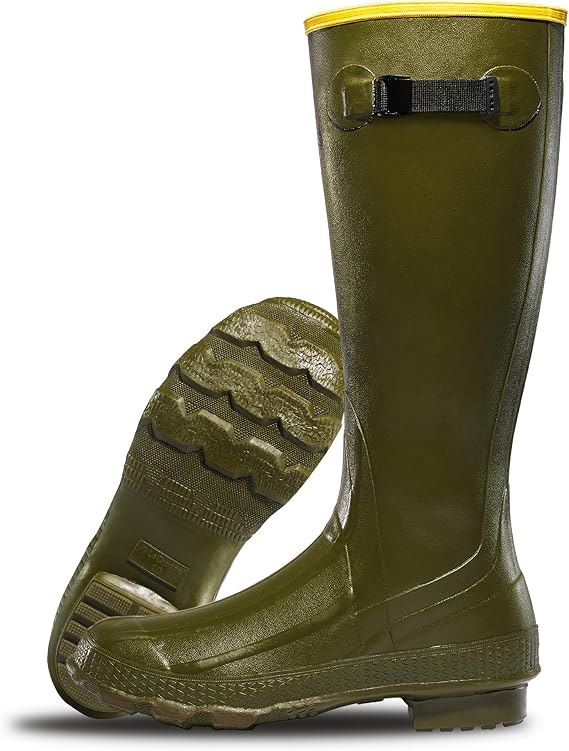
Striking for its Mossy Oak Original Bottomland pattern, these boots are built for hunters needing reliable waterproof protection and durability. Best suited for spring and summer in wet terrain, the LaCrosse Grange 18 offers solid coverage and a secure fit thanks to an adjustable top strap and ankle fit system.
Putting them on feels easy, with an adjustable strap that lets you tighten the top for a locked-in fit around the calf. The flat heel and round toe allow comfortable walking on uneven ground, while the rubber material keeps feet dry throughout the day. The hand-laid ZXT Rubber is scent-free, which helps in keeping your presence less noticeable to deer during long hours outdoors.
Made with premium ZXT Rubber that stands up to ozone, abrasion, and tears, these boots handle moisture and rough use well. The multilayer rubber on the toe and heel adds extra durability in high-wear areas. Most reviews mention how waterproof and sturdy they are, though a few users note limited breathability as a downside during warmer weather.
Waterproof performance is a strong point, thanks to the ozone and abrasion-resistant ZXT Rubber. Durability around the toe and heel receives consistent praise, while the lack of breathability stands out as the most common complaint.
Hunters active in cool to warm wet conditions will appreciate the secure fit and scent-free protection. Those needing boots for hot weather or extended wear in dry conditions may want to look for a more breathable option.
Pros
- Durable hand-laid ZXT Rubber construction
- Adjustable top strap for secure fit
- Waterproof and scent-free material
- Multilayer rubber on toe and heel
Cons
- Limited breathability in warm weather
- Only suitable for spring and summer seasons
| Specification | Details |
|---|---|
| Color | Mossy Oak Original Bottomland |
| Toe Style | Round Toe |
| Boot Form Type | Rain Boot |
| Heel Type | Flat |
| Seasons | Spring/Summer |
9. Mens Waterproof Insulated Hunting Boots

Waterproof and insulated with a camo pattern, these boots suit hunters spending long hours outdoors in cold, wet conditions. Their biggest strength lies in keeping feet dry and warm, which is critical for deer hunting in fall and winter. Ideal for anyone needing reliable protection against wet ground and chilly weather.
Putting them on is straightforward since they come in a calf-high rain boot style with no heel to worry about. The rounded toe offers enough room for thick socks, making them comfortable for extended wear.
The camouflage pattern helps maintain a low profile on the hunt, blending well with natural surroundings. They don’t feel overly heavy, so walking through wet or muddy terrain isn’t too tiring.
These boots excel at waterproofing and insulation, keeping feet comfortable and dry through harsh weather. The build is simple but practical, focusing on function over flash.
Many find the material durable and well-sealed, though some mention that break-in time can be a bit uncomfortable and the fit slightly stiff at first.
Waterproofing and insulation receive high marks for maintaining warmth and dryness in challenging weather. Common feedback notes a break-in period where the boots feel stiff, which may affect comfort initially. The round toe design and camo pattern add practical value for hunting.
Hunters frequently outdoors in fall and winter will appreciate the protection and warmth provided. Those seeking an immediately soft, flexible fit might want to consider softer boots or alternative models designed for quicker comfort out of the box.
Pros
- Keeps feet dry in wet conditions
- Insulated for cold weather hunting
- Camouflage design suits outdoor environments
- Calf-high height provides extra coverage
Cons
- Break-in period can be uncomfortable
- Fit may feel stiff for some users
| Specification | Details |
|---|---|
| Color | Camo |
| Toe Style | Round Toe |
| Boot Form Type | Rain Boot |
| Heel Type | No Heel |
| Seasons | Fall, Winter |
| Pattern | Camouflage |
10. Hunthor 1600g Insulated Hunting Boots

Keeping your feet warm and dry in cold, wet conditions becomes a lot easier with the Hunthor 1600g Insulated Hunting Boots. Ideal for hunting in winter, these boots stand out for their heavy insulation and camo pattern designed to blend in. They suit anyone looking for solid protection against snow and cold.
Lacing up these boots is straightforward, thanks to their round toe design which offers enough room to move comfortably without feeling cramped. The flat heel keeps things steady on uneven ground, and the snow boot form means they fit snugly around your calves to keep out snow and moisture. The camo style helps maintain your stealth while out in the field.
Built for winter, these boots perform well in keeping cold out with 1600g insulation, making long hours outside more bearable. The material feels durable and designed for rough terrain, though some users note the boots can feel on the heavier side during extended wear. The biggest plus is warmth; the main drawback noted is the weight which some find a bit taxing over time.
These boots keep feet warm even in harsh winter conditions, though their weight is the main downside when worn for extended periods. The insulation and camo really make a difference for cold weather hunting.
Hunters who spend long hours in very cold, snowy environments will appreciate these boots. Those looking for lighter or more versatile footwear for different seasons might want to explore other options.
Pros
- Well insulated for cold winter conditions
- Flat heel offers good stability on rough terrain
- Camo pattern blends well in wooded areas
- Round toe allows comfortable movement
Cons
- Relatively heavy for long-term wear
- Less flexible in warm or dry conditions
| Specification | Details |
|---|---|
| Color | Next Camo G2 |
| Toe Style | Round Toe |
| Boot Form Type | Snow Boot |
| Heel Type | Flat |
| Seasons | Winter |
| Style Name | Camo Hunting Boots |
Best Rubber Boots for Deer Hunting Comparison Table
| Product | Color | Boot Form Type | Heel Type | Seasons |
|---|---|---|---|---|
| Hunthor Hunting Boots | Next Camo G2 | Rain Boot | Platform Heel | All |
| Hunthor Waterproof Boots | Next Camo G2 | Snow Boot | Flat | All |
| Hunthor 800g Insulated Boots | Next Camo G2 | Rain Boot | Platform Heel | Winter |
| MUCK Woody Max Boots | Mossy Oak | Work Boot | No Heel | Fall |
| Steel Shank Hunting Boots | Camo | Rain Boot | Block Heel | All |
| TIDEWE Waterproof Boots | Next Camo G2 | Rain Boot | Flat | Winter |
| Fiblink Insulated Boots | Camo | Rain Boot | Flat | All |
| LaCrosse Grange 18 Boots | Mossy Oak Original Bottomland | Rain Boot | Flat | Spring/Summer |
| Mens Insulated Hunting Boots | Camo | Rain Boot | No Heel | Fall, Winter |
| Hunthor 1600g Insulated Boots | Next Camo G2 | Snow Boot | Flat | Winter |
- ColorNext Camo G2
- Boot Form TypeRain Boot
- Heel TypePlatform Heel
- SeasonsAll
- ColorNext Camo G2
- Boot Form TypeSnow Boot
- Heel TypeFlat
- SeasonsAll
- ColorNext Camo G2
- Boot Form TypeRain Boot
- Heel TypePlatform Heel
- SeasonsWinter
- ColorMossy Oak
- Boot Form TypeWork Boot
- Heel TypeNo Heel
- SeasonsFall
- ColorCamo
- Boot Form TypeRain Boot
- Heel TypeBlock Heel
- SeasonsAll
- ColorNext Camo G2
- Boot Form TypeRain Boot
- Heel TypeFlat
- SeasonsWinter
- ColorCamo
- Boot Form TypeRain Boot
- Heel TypeFlat
- SeasonsAll
- ColorMossy Oak Original Bottomland
- Boot Form TypeRain Boot
- Heel TypeFlat
- SeasonsSpring/Summer
- ColorCamo
- Boot Form TypeRain Boot
- Heel TypeNo Heel
- SeasonsFall, Winter
- ColorNext Camo G2
- Boot Form TypeSnow Boot
- Heel TypeFlat
- SeasonsWinter
How to Choose the Best Rubber Boots for Hunting
The most important factors for rubber boots used in deer hunting are waterproofing, comfort, and durability, as they protect your feet from wet conditions and rough terrain. Choosing the right fit and insulation reduces fatigue and prevents costly replacements, ensuring better performance and comfort during long hunts.
Fit and Comfort
Spending hours on your feet in the field quickly reveals how crucial proper sizing is. Boots that feel tight or loose cause blisters and sore spots fast, turning long hunts into painful chores.
A good fit means snugness without pressure, especially around the heel and midfoot. Arch support and cushioning are equally important. Without them, your feet tire more quickly as muscles strain to stabilize every step.
Choosing boots with a balance of flexibility and lightness makes moving through uneven terrain easier. Heavy, rigid boots slow you down and make climbing challenging. Look for boots weighing under 4 pounds and soles that bend enough to feel natural while still providing some stiffness to support your arches.
This combination greatly improves comfort on long outings.
Waterproofing and Breathability
Keeping feet dry is a basic necessity, but the effectiveness of waterproofing varies widely. Rubber boots can trap moisture inside if they lack sealed seams or proper waterproof membranes.
Boots made entirely of solid rubber tend to be most waterproof, but without breathability, your feet sweat, creating a humid environment that leads to discomfort and sometimes odor.
Breathable linings help regulate temperature and wick sweat away, reducing moisture buildup inside. Although breathability often compromises some waterproofing, well-made boots balance both. Check for features like gusseted tongues, sealed seams, and quality waterproof materials.
Durable waterproof boots also resist cracking and require less upkeep over time.
Traction and Sole Design
Walking over slick rocks, mud, and fallen logs demands soles that work for a variety of terrains. Deep lug patterns that channel mud and provide multidirectional grip help avoid slips.
However, aggressive lugs that are too stiff can cause foot fatigue by reducing sole flexibility and natural foot movement.
A sole that is moderately stiff yet flexible offers stability during climbs and tough footing, while also bending enough to keep your stride comfortable. Rubber soles with reinforced tread compounds last longer under rough conditions.
Pay attention to tread depth, around 5 to 6 mm, and soles made from abrasion-resistant rubber for best results on wet, uneven ground.
Noise Reduction
Quiet footsteps greatly improve success during wildlife tracking. Boots made with soft rubber or polyurethane soles produce less noise on dry leaves and twigs compared to harder materials.
Double-layered or cushioned soles also dampen sounds by absorbing impact.
Beyond sole material, a well-fitted boot reduces internal foot movement and slipping noises. Boots that are too large cause clunks; excessively tight boots may amplify foot impacts. Streamlined designs without hard overlays can minimize creaks.
Maintaining these factors helps you stay undetected while moving.
Durability and Protection
Sharp sticks, rocks, and brush can quickly damage boots not built for tough outdoor use. Boots reinforced at the toes and heels resist impacts and prevent injury. Thick, layered rubber and synthetic uppers guard against punctures and abrasions better than thin designs.
Long-term durability also depends on materials that resist cracking and deformation. Some boots lose shape after months of use in rugged conditions, leading to discomfort and leaks.
Check for models with reinforced stitching and high-quality rubber compounds designed to maintain form and function over seasons of use.
Maximizing Comfort and Mobility During Long Hunts
Comfort and mobility are crucial for extended periods in the field. Rubber boots designed for deer hunting should have flexible soles to support natural foot movement, especially on uneven terrain.
A padded insole helps reduce impact, which matters after hours of walking or standing. Look for boots with a high shaft height to protect against brush and water but still allow for easy bending at the ankle.
Weight plays a significant role as well. Lighter boots reduce leg fatigue, allowing for quicker and quieter steps when stalking deer. Some models also come with breathable liners that manage moisture and prevent overheating without sacrificing waterproof qualities.
Proper traction on the outsole is essential to move safely through muddy or slippery areas.
- Flexible soles for natural movement
- Padded insoles to absorb shock
- High shaft for protection
- Lightweight materials to reduce fatigue
- Good traction for slippery surfaces
Proper Cleaning and Storage to Prolong Boot Lifespan
Cleaning rubber boots after use is important to avoid deterioration and unpleasant odors. Mud and debris left to dry on boots can crack the rubber over time.
Use a soft brush or cloth with mild soap and water to remove dirt, focusing on creases and seams. Avoid harsh chemicals that could degrade the material.
Once cleaned, dry the boots in a well-ventilated area away from direct heat sources. Excessive heat can cause the rubber to warp or become brittle.
Moisture inside the boots should be addressed by stuffing them with newspaper or using boot dryers if available. This helps prevent mold and extends the lifespan.
Store rubber boots upright in a cool, dry place. Keeping them out of direct sunlight protects the rubber from UV damage. Regularly applying rubber conditioner or protectant can maintain flexibility and prevent cracking, especially if the boots are used frequently.
Comparing Rubber Boots to Alternative Footwear for Deer Hunting
Rubber boots excel at waterproofing, which is essential in wet or marshy hunting environments. Compared to leather boots, rubber models offer reliable protection against water, mud, and snow without requiring extensive maintenance.
However, they may lack breathability, causing feet to sweat in warmer conditions.
Versus insulated winter boots, standard rubber boots may provide less warmth. Hunters in cold climates often layer socks or choose insulated versions to counter this. Rubber boots generally weigh less than heavy-duty hiking boots, improving mobility but sometimes sacrificing ankle support.
Canvas or fabric boots tend to be more breathable but fall short on waterproofing. Rubber boots create a complete barrier between feet and wet ground, which is often more important during long hunting trips.
Assessing specific hunting conditions helps determine whether rubber boots or alternatives fit the need best.
People Also Asked
How Do I Properly Size Rubber Boots for Deer Hunting?
Choose boots by measuring your foot size while wearing the socks you plan to hunt in for the best fit. Make sure there’s enough room to wiggle your toes but not so much that your foot slides inside the boot. Trying them on in-store with thick hunting socks is helpful to avoid buying boots that are too tight or loose.
What Safety Features Should Rubber Boots Have for Hunting?
Good rubber hunting boots should have a slip-resistant sole and be waterproof to protect against wet and slippery conditions. A reinforced toe cap can prevent injuries from sharp rocks or sticks. Some boots also include reflective patches, which can improve visibility during low light hours.
How Long Do Rubber Boots Typically Last in Rough Terrain?
The lifespan of rubber boots in rough terrain varies widely but usually falls between 2 to 4 hunting seasons if they’re properly cared for. Regular cleaning and drying after use can prevent cracks and material breakdown. Repair kits for small punctures or tears can extend their usability without the need for immediate replacement.
Can Rubber Boots Be Worn with Insulated Socks Comfortably?
Rubber boots generally can be worn with insulated socks, but fit is important to avoid restricting circulation. You might need to go a half size up to accommodate thicker socks comfortably. Choose socks designed for hunting with moisture-wicking material to keep your feet dry and warm inside the boots.
What Are Common Problems with Rubber Hunting Boots and Solutions?
Common issues include leaking, loss of traction, and discomfort from poor fit. Sealing minor leaks with boot-specific rubber cement can be a quick fix. Replacing insoles or adding thicker socks can help with comfort. For traction problems, boots with replaceable lug soles or adding slip-on traction cleats work well on slippery ground.
Conclusion
Comfort, waterproofing, and durability are key factors for choosing rubber boots for deer hunting. Boots need to keep feet dry while walking through wet terrain and provide enough support for long hours outdoors.
Good traction and ease of cleaning also matter depending on the hunting environment.
Consider how often you’ll use the boots and the typical conditions you encounter when picking your pair. Budget and fit should align with your needs to avoid unnecessary expenses.
Check the comparison table and detailed reviews above to find the boots that best fit your hunting setup and priorities.