Top 10 Best Roller for Sealer That Will Blow Your Mind
Applying sealer with the wrong roller is a familiar source of frustration. A cheap roller can leave behind streaks, bubbles, or uneven coverage that ruins hours of preparation. The best roller for sealer helps avoid these issues by providing consistent absorption and release of the liquid, smoothing out the surface evenly without spattering or soaking through to the underlying material.
The key factors that distinguish a good sealer roller include the nap length, the material of the fibers, and the roller core’s fit on the handle. For most sealers, a short nap between 1/4 and 3/8 inch prevents over-application and dripping.
Synthetic fibers resist damage from solvents common in sealers and maintain shape better than natural ones. A snug core fit ensures the roller spins smoothly without wobbling, making application more accurate and less tiring over larger projects.
Need a Quick Check?
| Image | Product | Price |
|---|---|---|
Our Top Picks 1  | Rubber Brayer Roller | Check Price |
Our Top Picks 2  | Rubber Seam Roller | Check Price |
Our Top Picks 3  | POWERTEC J Roller | Check Price |
Our Selected Top 10 Roller for Sealer You Can Trust
This list features a variety of rollers designed specifically for applying sealers smoothly and efficiently. Each review covers how well the roller performs, the types of projects and users it best suits, and highlights its main advantages and potential drawbacks to help you make an informed choice.
1. Rubber Brayer Roller
Rubber forms the core of this roller’s design, making it both durable and elastic. Ideal for anyone needing a reliable tool for ink, paint, or applying smooth layers on surfaces.
Its balanced size and grip stand out as the biggest strength for daily sealing or stamping tasks.
Setup is straightforward with a simple metal bracket holding the rubber drum in place. The 5.9 x 3.9 inch size fits comfortably in hand, allowing straightforward pressure application. Non-slip features help maintain control, and it’s easy to use across rubber, plastic, wood, paper, canvas, and metal surfaces without much effort.
It delivers a consistent roll with enough elasticity to cover prints or stamps evenly. The mix of rubber, plastic, and metal offers durability while keeping the roller light enough for extended use. Praise highlights how comfortable it feels during use.
Some note it is not water resistant, so cleaning requires care to avoid damage.
Users appreciate the comfortable grip and consistent pressure this roller delivers for sealing or stamping tasks. The main drawback mentioned is the lack of water resistance, which means cleaning with water can harm it over time. Handling with care during cleanup is important for lasting use.
Anyone working mainly on smooth to slightly textured surfaces who wants a reliable, comfortable roller will find this product suits their needs well. Those requiring a water-resistant roller or using it on very rough or uneven surfaces might want to consider alternative options.
Pros
- Durable and elastic rubber drum
- Comfortable size for everyday use
- Non-slip handle offers better control
- Works on various surface materials
Cons
- Not water resistant, careful cleaning needed
- Limited use on very rough surfaces
| Specification | Details |
|---|---|
| Material | Rubber + Plastics + Metal |
| Size | 5.9 x 3.9 inch |
| Form | Solid |
| Compatible Material | Rubber, Plastic, Wood, Paper, Canvas, Metal |
| Non-slip | Yes |
| Water Resistance | Not Water Resistant |
2. Rubber Seam Roller
Compact size and sturdy feel stand out right away with this roller, making it a solid choice for anyone wanting smooth seams on vinyl, wallpaper, or car mats. It suits those needing a reliable tool that offers comfort during repetitive work, especially in vehicle or home decoration projects.
Working with it feels straightforward thanks to the comfortable, natural solid wood handle and the smooth rubber roller. The size, 5 x 3.5 cm for the roller and a 13 cm handle length, hits a good balance between control and reach.
It’s light at just 4.6 ounces, so it doesn’t tire your hand after use, and the metal connector keeps it all stable without getting in the way.
Rolling out air bubbles and ensuring strong adhesion happens with ease because the roller applies pressure evenly. The solid wooden handle never feels flimsy, and the rubber surface is flexible enough to contour well over different textures. The most frequent compliment is how comfortable the handle is, while some users mention the roller could be bigger for wider coverage in some cases.
Many appreciate how comfortable the wooden handle feels during extended use, and how the rubber roller effectively minimizes air bubbles for better adhesion. On the downside, some find the roller’s size limiting when working on bigger areas, requiring more time to cover the space.
A good fit for anyone working on detailed or smaller sections, especially in cars or home projects. Those regularly tackling large wallpaper or wide surfaces might want a bigger roller to save on effort and time.
Pros
- Comfortable natural wood handle
- Lightweight at 4.6 ounces
- Flexible rubber roll for smooth results
- Metal connector adds durability
Cons
- Roller size may feel small for large surfaces
- Handle length not adjustable
| Specification | Details |
|---|---|
| Roller Size | 5 x 3.5 cm / 2″ x 1.4″ |
| Handle Size | 13 x 3 cm / 5.1″ x 1.2″ |
| Total Length | 18 cm / 7.1″ |
| Item Weight | 4.6 ounces |
| Manufacturer | XTOZON INC |
| Brand | Xtozon |
3. POWERTEC J Roller
Need a roller that applies consistent pressure without damaging delicate surfaces? The J-Roller is built to handle wood and plastic laminates with a rubber roller designed specifically to avoid scuffing.
It suits any project where smooth laminate application and air bubble removal are key, offering reliable results over cheaper models that might leave marks.
Setup is simple since it comes as a single unit with a fixed long handle. The 12-inch length gives you good coverage without excessive weight. Its rubber roller stays gentle on floors and countertops while applying even pressure.
Day-to-day use feels balanced, making it easier to get laminate or veneer laid down without fuss or uneven spots.
Performance stands out thanks to its ability to spread pressure uniformly and push out air bubbles for good glue adhesion. The heavy-duty rubber roller resists scuffing and maintains its shape well through repeated use. Most people appreciate how sturdy and well-sized it is for bigger surfaces.
Some mention it could feel a bit bulky for very small or highly detailed areas.
Users value the consistent pressure and smooth laminate application without damaging floors or counters. A common drawback noted is the handle being fixed, making it less flexible for tricky angles or tighter spots. The roller’s rubber is tough yet gentle, doing its job well in everyday use.
People working on larger surfaces and standard laminate projects will appreciate its size and durability. Those needing more maneuverability or dealing with fine, intricate laminating might want to consider a smaller or adjustable option instead.
Pros
- Even pressure application avoids glue gaps
- Non-scuffing rubber roller protects surfaces
- Long handle gives good reach on large areas
- Lightweight and easy to control
Cons
- Can be bulky for small detailed work
- Fixed handle limits angle adjustments
| Specification | Details |
|---|---|
| Manufacturer | POWERTEC |
| Item Weight | 1.25 pounds |
| Product Dimensions | 12 x 4.5 x 1.5 inches |
| Size | 12″ Straight Handle |
| Material | Rubber |
4. Armor Paint and Roller Kit

Applying paint or sealers evenly without making a mess can be a real challenge for any DIYer or pro. The Armor Paint and Roller Kit fits anyone looking for a straightforward roller setup that works on a variety of coatings.
Its biggest strength lies in offering a complete kit that gets you started without pulling together separate tools.
Setting up the roller is quick since it comes with everything needed, including the tray and lint-free roller covers that help avoid stray fibers on the surface. The 9” kit includes an extension pole, which makes it easier to reach walls or ceilings without awkward stretching. Switching roller covers for new coats keeps it feeling fresh and smooth with each use.
Performance on sealers and paints is solid thanks to the 1/2 nap polyester covers designed to hold and spread coatings evenly. The adjustable 12-18” frame option adds flexibility for larger surfaces. Most users appreciate how the lint-free covers cut down on fuzz getting stuck in the finish, though some note the frame’s adjustment could feel a bit loose during heavy use.
People like how the lint-free roller covers keep paint jobs clean without stray fibers messing up the finish. The main drawback mentioned is that the adjustable roller frame may not stay firmly in place when used heavily, which might bother some who need a super steady roller.
Anyone needing a basic roller kit for smooth to medium textured surfaces will find this useful, especially with paint or sealer projects. Those requiring a very sturdy frame or thicker nap covers for rough textures might want to look at other options.
Pros
- Complete kit with tray and covers included
- Lint free polyester covers reduce fuzz
- Extension pole included with larger kits
- Multiple roller size options available
Cons
- Adjustable frame can feel loose during hard use
- Limited to 1/2″ nap covers, may not suit rough surfaces
| Specification | Details |
|---|---|
| Brand Name | Foundation Armor |
| Model Number | Foundation Armor Roller Kits |
| Roller Cover Size Options | 3″, 9″, and 18″ |
| Roller Cover Material | Lint free 1/2″ nap polyester |
| Includes | Roller frame, roller tray, roller covers, extension pole (in some kits) |
5. LUMITECO PU Seam Roller

Equipped with two steel bearings, this seam roller glides much smoother than most on the market, making it ideal for anyone working with auto deadening mats or heat abatement mats. Its polyurethane roller balances firmness and softness for a comfortable, effective roll every time.
Setting it up means just holding the wooden handle with its riveted steel bracket for secure grip. Daily use feels solid and controlled, as the polyurethane roller adapts well to curves and edges. It also works for wallpaper projects, making it versatile for different adhesion jobs around vehicles and home.
The roller does a great job minimizing air bubbles and ensuring strong adhesion of deadening mats. Its build is sturdy, with durable materials that handle frequent pressure without wear. Most praise centers around how smoothly it rolls over surfaces.
The common complaint is that it’s slightly bulkier than simpler seam rollers, which might affect some tight spots.
The roller stands out for its smooth rolling action because of the steel bearings, making adhesion easier and more consistent. Users notice it’s well-built and effective, though some find it a bit large when working in very tight areas.
Those working mostly on vehicle sound deadening or heat mats will appreciate the build and material choice. For very detailed wallpaper or craft work needing smaller tools, a lighter or smaller roller might be preferable.
Pros
- Smooth rolling thanks to dual steel bearings
- Durable polyurethane roller balances hard and soft
- Wooden handle with riveted steel bracket for grip
- Effective on car deadening and heat abatement mats
Cons
- Bulkier than some other seam rollers
- Not specialized for extremely tight or detailed work
| Specification | Details |
|---|---|
| Brand Name | LUMITECO |
| Unit Count | 1 Count |
| Number of Items | 1 |
| Manufacturer | LUMITECO |
| Model Number | 1 |
| Manufacturer Part Number | LTSDR03A |
6. PU Seam Roller

Anyone working with sound deadening mats, wallpaper seams, or vinyl wraps will find this roller a solid choice for pressing adhesives. Its smooth dual-bearing rotation offers steady movement, making it easy to keep pressure even and controlled. The biggest advantage is how well it balances firm pressure with sensitivity to delicate surfaces.
Setting up takes no time since the roller is ready to use out of the box and weighs just 5 ounces, which keeps hand fatigue low during longer jobs. The dual bearings help it glide smoothly with minimal wobbling, so it feels sturdy and precise when sealing edges or smoothing materials. The firm yet flexible PU wheel makes working on delicate surfaces like vinyl film or car interiors much less stressful.
Its main job is pressing down adhesive surfaces without causing damage, and it does this very well thanks to a strong, durable PU wheel that applies firm pressure without scratching or denting. The metal construction holds up well to repeated use without loosening. The top compliment from reviews mentions the solid, wobble-free roll, while the most common complaint is that it might feel a bit light for some heavier-duty applications.
The roller’s smooth, wobble-free motion is its strongest point, giving good control during use. Users appreciate the balance of firmness on delicate surfaces, but some find it too light for heavy pressing tasks. It performs well for most common sealing and smoothing jobs without scratching or denting.
Anyone working on light to medium sealing tasks involving wallpaper, vinyl, or sound deadening will be happy with this tool. For those needing heavy pressure or tackling very tough adhesives, a heavier-duty roller might be a better option.
Pros
- Smooth dual-bearing rotation reduces wobble
- Firm yet flexible PU wheel protects surfaces
- Lightweight at only 5 ounces for easy use
- Durable metal construction stays secure
Cons
- May feel too light for heavy-duty jobs
- Not ideal for applying extremely high pressure
| Specification | Details |
|---|---|
| Weight | 5 ounces |
| Model Number | LTSR141 |
| Package Dimensions | 7.56 x 4.65 x 1.34 inches |
| Manufacturer | LUMITECO |
| Wheel Material | PU (Polyurethane) |
7. Ultra-Life Garage Door Roller

Quiet operation stands out with the Ultra-Life Garage Door Roller, ideal for anyone looking to reduce garage door noise significantly. Designed for durability and long-lasting use, it suits heavy garage doors and those valuing smooth, low-noise cycling.
Its main strength lies in cutting noise while enduring wear better than standard rollers.
Installing these rollers is straightforward, fitting most garage doors with bearing number 6200ZZ. Daily operation is smoother thanks to the nylon wheel that cuts down sound by at least 75%. The sealed caps keep dust and grime out, helping maintain smooth function without frequent maintenance.
A special lubrication groove spreads lubrication evenly over time, so you won’t need to oil them constantly.
Durability is a strong point with a 6200ZZ ball bearing rated for 200,000 open-close cycles at 190 lb load. The build quality is solid, featuring sealed caps to protect internals. Reviews often praise the quietness and longevity, while complaints usually revolve around the occasional fit issue or needing the right size for the door type.
Quiet operation is widely praised, cutting down noise significantly thanks to the nylon wheel. Sealed caps and a lubrication groove make it low maintenance. Some find fitment problems if their garage door specs don’t match the bearing size or design exactly.
Those with standard 190 lb garage doors who want quiet, durable rollers will appreciate this model. People with unusual door sizes or vintage doors may need to verify compatibility or look for alternatives.
Pros
- Reduces garage door noise by 75%
- Rated for 200,000 door cycles
- Sealed caps prevent dirt buildup
- Lubrication groove extends lubrication life
Cons
- May not fit all garage door types
- Occasional fitment issues reported
| Specification | Details |
|---|---|
| Bearing Number | 6200ZZ |
| Bearing Type | Ball Bearing |
| Number of Items | 10 |
| Part Number | DLMR6200ZZ |
| Model | DLMR6200ZZ |
| Brand Name | DURA-LIFT |
8. Quality Park Envelope Moistener

Quality Park Envelope Moistener works quickly to seal envelopes and assist in paper crafts, especially suited for those handling large mailings. Its biggest strength lies in the patented spill-proof top and no-mess spring-valve applicator that keeps your workspace tidy even during heavy use.
Setup is straightforward with a well-designed bottle that’s easy to hold and control. The applicator distributes the liquid evenly across envelope flaps, eliminating the need to lick or struggle with glue sticks. The quick-drying formula means you can seal up to 1,500 envelopes per 50 mL bottle, making it practical for school projects, office mails, or wedding invitations.
It performs well on paper, gluing envelopes securely without leaving any sticky residue behind. The liquid is medium viscosity, so it spreads smoothly without dripping.
Users appreciate the durability of the bottle and that the sealing agent cleans up easily with water, a non-toxic and non-flammable option. Some find it less water-resistant, which limits use in damp environments.
Many praise the no-mess applicator that avoids spills and clogs, making heavy mailing tasks manageable. A common issue is the lack of water resistance, which means sealed envelopes may not hold up well in wet conditions.
Those mailing large volumes or doing paper crafts will find it reliable and efficient. Anyone needing a water-resistant adhesive or one for materials beyond paper should consider alternatives better suited for those needs.
Pros
- Patented spill proof spring-valve applicator
- Fast-drying adhesive seals envelopes quickly
- Non-toxic, cleans up with plain water
- Bulk 4-pack seals up to 6,000 envelopes
Cons
- Not water resistant, limited use in damp areas
- Adhesive only compatible with paper materials
| Specification | Details |
|---|---|
| Specific Uses For Product | gluing envelopes or for any paper craft project |
| Item Form | Liquid |
| Container Type | Bottle |
| Viscosity Level | Medium |
| Water Resistance Level | Not Water Resistant |
| Compatible Material | Paper |
9. MARSHALLTOWN Grout Sealer
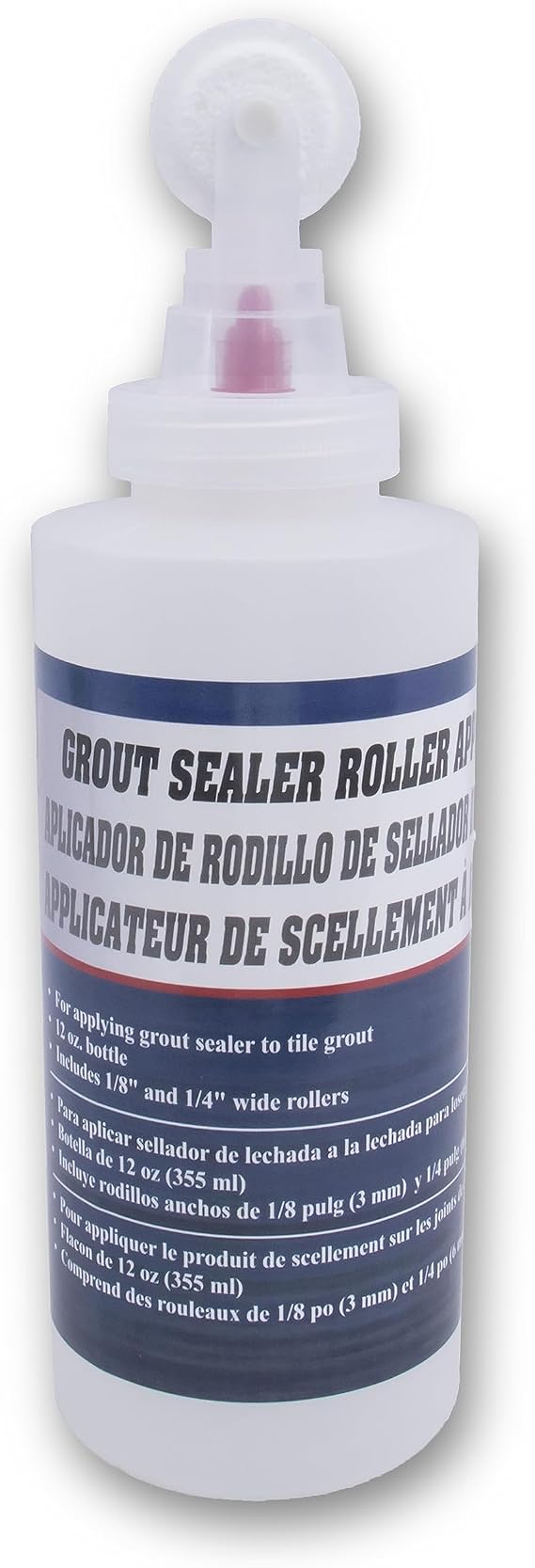
Using the MARSHALLTOWN Grout Sealer bottle feels straightforward, designed for those who want control applying sealers to tile, stone, or backsplash areas. Its main strength lies in precise application without mess, suited for small to mid-sized projects where accuracy matters more than volume.
Filling the 12 oz bottle with your favorite grout sealer is simple, and the roller helps spread the product evenly along grout lines. Handling stays comfortable thanks to the bottle’s size and shape, making it easy to manage during application. The rectangular shape and 1-inch cutting diameter of the roller allow you to cover narrow grout lines without overspill or waste.
It performs the core task of applying sealer evenly on grout with reliability, as it’s built from a blend of materials and uses a hand-powered mechanism. The design keeps clean-up simpler than many brushes or pads.
The most praised feature in reviews is its precise application ability, while the lack of sealer included and the need to buy and load your own can be inconvenient.
The product excels at applying sealer evenly and cleanly along grout lines, praised for how precise and controlled it feels. However, users must supply their own sealer, which some found inconvenient. Handling remains efficient through well-balanced size and shape, but it’s not suited for very large jobs due to capacity.
Anyone working on smaller tile areas needing exact application will find it helpful and easy to use. Those tackling large or complex spaces may want a larger capacity or powered solution to reduce refill frequency and speed up the job.
Pros
- Precise grout sealer application with minimal mess
- Comfortable 12 oz size for easy handling
- Rectangular shape fits grout lines well
- Simple hand-powered operation
Cons
- Does not include grout sealer, bottle only
- Limited to small and mid-sized tile projects
| Specification | Details |
|---|---|
| Capacity | 12 oz |
| Size | One Size |
| Cutting Diameter | 1 inch |
| Material | Blend |
| Finish | Brushed |
10. QWORK Dual Seam Roller

Great for anyone tackling roof seams or automotive mats, the QWORK Dual Seam Roller stands out with its two different rollers, perfect for large surfaces and tight corners alike. Its main strength is versatility, letting you handle both broad and narrow areas with one tool.
Using it is straightforward, you grab the solid wood handle that feels secure and comfortable, then pick between the 2-inch flat roller or the V-shaped edge roller depending on the job. The heat-resistant silicone roller glides smoothly without slipping, which makes smoothing out tapes or membranes less of a chore, especially across varied surfaces like metal or fiberglass.
It performs well across multiple materials like RV roof tapes and sound dampening mats, applying consistent pressure to get rid of air bubbles and wrinkles. The construction feels durable thanks to a metal frame and solid wood handle. People commonly say it holds up to heavy use, though some mention the handle could be a bit longer for bigger hands.
The most praised feature is how effectively the dual rollers smooth out air bubbles and wrinkles across different materials without slipping. The common issue mentioned is the handle length, which some find a little short, impacting comfort during longer use.
People who work often with roofing tapes or automotive mats will appreciate this tool’s versatility and solid construction. Those needing a handle better suited for a strong, prolonged grip might want to look into alternatives with longer handles.
Pros
- Two roller options for large and tight spaces
- Heat-resistant silicone roller prevents slipping
- Solid wood handle offers a secure grip
- Compatible with various surfaces and materials
Cons
- Handle length might be short for larger hands
- No extended warranty beyond one month
| Specification | Details |
|---|---|
| Brand Name | QWORK |
| Number of Items | 1 |
| Model Number | WD52242 |
| Included Components | Dual Seam Roller with Flat Roller and V-Shaped Edge Roller |
| Manufacturer Warranty Description | No reason to return and refund within 1 month |
Best Rollers for Sealer Comparison Table
| Product | Compatible Material | Size | Weight | Special Features |
|---|---|---|---|---|
| Rubber Brayer Roller | Rubber, Plastic, Wood, Paper | – | – | Non slip |
| Rubber Seam Roller | – | 7.1 x 2 x 1.4 in | 4.6 ounces | – |
| POWERTEC J Roller | Rubber | 12 inches | 1.25 pounds | Fixed Long Handle |
| Armor Paint Kit | – | – | – | Recommended for sealers |
| LUMITECO PU Roller | – | – | – | – |
| PU Seam Roller | – | 7.56 x 4.65 x 1.34 in | 5 ounces | – |
| Ultra-Life Door Roller | – | – | – | Ball Bearing |
| Quality Park Moistener | Paper | – | – | Not Water Resistant |
| MARSHALLTOWN Grout Sealer | Blend | 1 inch diameter | 1.23 ounces | Hand powered |
| QWORK Dual Roller | – | – | – | Dual Roller Components |
- Compatible MaterialRubber, Plastic, Wood, Paper
- Size–
- Weight–
- Special FeaturesNon slip
- Compatible Material–
- Size7.1 x 2 x 1.4 in
- Weight4.6 ounces
- Special Features–
- Compatible MaterialRubber
- Size12 inches
- Weight1.25 pounds
- Special FeaturesFixed Long Handle
- Compatible Material–
- Size–
- Weight–
- Special FeaturesRecommended for sealers
- Compatible Material–
- Size–
- Weight–
- Special Features–
- Compatible Material–
- Size7.56 x 4.65 x 1.34 in
- Weight5 ounces
- Special Features–
- Compatible Material–
- Size–
- Weight–
- Special FeaturesBall Bearing
- Compatible MaterialPaper
- Size–
- Weight–
- Special FeaturesNot Water Resistant
- Compatible MaterialBlend
- Size1 inch diameter
- Weight1.23 ounces
- Special FeaturesHand powered
- Compatible Material–
- Size–
- Weight–
- Special FeaturesDual Roller Components
How to Choose the Best Roller for Sealer
Choosing the right roller for sealer depends on factors like material compatibility, nap thickness, and durability to ensure even application and prevent damage. Selecting the proper roller helps avoid wasted product and costly repairs, making the sealing process smoother and more efficient.
Roller Material
Some rollers wear out quickly, especially after just a few uses with thick sealers, leaving streaks or bubbles on the surface. The type of fabric or foam matters a lot.
For example, synthetic fibers like polyester or nylon handle waterbased sealers better, while natural fibers tend to hold up well with oilbased varieties. Foam rollers are great for ultra-smooth finishes but can break down faster if the sealer contains harsh solvents.
Durability affects how often you need to replace your roller. A good choice stays firm without shedding fibers or losing shape after repeated use. Look for medium nap length for most sealers, a roller around ⅜ to ½ inch nap balances smooth application and soaking up enough finish.
Too short leaves uneven coverage; too long traps bubbles and drips.
Roller Size and Coverage
The width and diameter of the roller significantly impact how quickly you can cover an area and how easy it is to control the application. Narrow rollers, around 4 to 6 inches wide, are better for tight spots or trim, while wider options up to 9 inches work well for floors or large flat surfaces. Diameter affects how much sealer the roller holds; larger ones absorb more but may be harder to maneuver in small areas.
Choosing the right size depends on the surface. Larger rollers speed up work on big, flat floors but feel clumsy on irregular or small areas.
Handling precision drops with width over 9 inches. A 7 to 9-inch roller usually handles most residential and commercial spaces efficiently, balancing coverage speed with control.
Handle Comfort and Design
Handling a roller all day can be tiring if the grip is hard or the handle poorly designed. Rollers with ergonomic, rubberized grips reduce hand cramps and keep your hold steady when applying pressure. The right handle length lets you reach corners and edges without awkward stretching or leaning.
Adjustable or longer handles help with large floors or ceilings, but sometimes a shorter handle offers better stability for detail work. The roller’s frame should feel sturdy and balanced to keep an even coating.
A loose or wobbly handle wastes product and leaves uneven marks on the surface.
Compatibility with Sealers
Different sealers react differently with roller materials. Waterbased finishes can degrade natural fibers over time, while oilbased or polyurethane sealers might soften some foams or cause swelling.
Using a roller not suited for your sealer type can lead to break down, clogging, or unwanted texture in the finish.
Choosing a roller compatible with your specific sealer means fewer problems like roller disintegration or sticky results. Most synthetic fibers work with waterbased and solvent finishes, but always check manufacturer recommendations.
This helps preserve the integrity of both the roller and the sealer during application.
Ease of Cleaning and Maintenance
Cleaning rollers quickly after use prevents sealers from hardening inside the fabric or foam, which ruins the roller and makes future projects messy. Good rollers have materials that rinse clean easily without trapping product.
Foam rollers, for example, are usually easier to clean than dense fabric ones.
A removable sleeve design makes thorough washing easier. Rolling the sleeve under running water until no residue remains avoids clumped fibers or sticky buildup.
Proper maintenance extends the roller’s lifespan significantly, saving money over time by avoiding frequent replacements due to dried sealer damage.
Tips for Achieving a Smooth Finish When Using a Roller for Sealer
Choosing the right roller nap is crucial to getting a smooth finish with sealer. For most sealers, a 3/8-inch to ½-inch synthetic roller works well, as it holds enough product without causing drips. Avoid rollers with too thick a nap since they can leave texture lines or bubbles.
Before starting, thoroughly stir the sealer to maintain consistency and apply thin, even coats.
Apply the sealer with steady, overlapping strokes in one direction to minimize streaks. Resist going over the same area repeatedly once the sealer starts to dry because it can lead to uneven patches. Working in manageable sections helps maintain a wet edge, preventing lap marks.
After rolling, lightly back-roll the surface without adding more sealer to smooth out any roller patterns.
- Use a lint-free roller to prevent fibers from embedding in the sealer.
- Maintain consistent pressure to avoid roller marks.
- Keep the roller well-loaded but not overloaded with sealer in order to achieve even coverage.
Proper Cleaning and Maintenance of Rollers After Applying Sealer
Cleaning rollers promptly after applying sealer is essential to preserve their usability and prevent clogs. Most sealers are either water-based or oil-based, and the cleaning method depends on the type used.
For water-based sealers, rinse the roller under warm water, gently squeezing out excess product and repeating the process until the water runs clear.
Oil-based sealers require cleaning with a solvent such as mineral spirits. Pour some solvent into a container and soak the roller, then roll it against the container’s side to loosen the sealer. After thoroughly cleaning off all residue, rinse with soapy water if appropriate, then allow the roller to dry completely before storing.
- Avoid letting sealer dry on the roller, which makes cleaning difficult.
- Use a wire comb or roller cleaner for stubborn bits trapped in the nap.
- Store rollers in a sealed plastic bag or cling wrap to keep them from drying out if you pause work for a short period.
Comparing Rollers with Other Sealer Application Methods for Different Surfaces
Rollers offer a good balance between speed and finish quality when applying sealer, especially on flat surfaces like floors and decks. Compared to brushes, rollers cover larger areas faster and tend to provide a more uniform coat without brush strokes. However, in tight corners or intricate trim, brushes still perform better due to their precise control.
Sprayers allow for very fast application and thinner, more even coats but require more equipment, preparation, and can produce overspray. This makes sprayers less practical for small jobs or indoor spaces without proper ventilation. Rollers are easier to handle and typically waste less sealer.
- Use rollers for broad, flat surfaces for consistent layering with moderate effort.
- Choose brushes for edges, corners, or textured areas requiring detailed work.
- Consider sprayers for large-scale projects where speed is critical and overspray can be controlled.
People Also Asked
How Do I Clean a Roller After Using Sealer?
Use mineral spirits or the recommended solvent right after applying sealer to clean a roller. Avoid letting the sealer dry on the roller because it will harden and ruin the roller’s surface, making clean-up nearly impossible.
What Size Roller Works Best for Applying Sealer Evenly?
A 4-inch to 9-inch roller is best for sealer application depending on the surface size. Smaller rollers are easier for tight spots, while a 9-inch roller covers larger areas more evenly without leaving streaks.
Is It Safe to Use a Foam Roller with Concrete Sealer?
Foam rollers are generally safe for water-based sealers but can break down with solvent-based products. Always check the sealer’s label to choose a compatible roller material to avoid the roller falling apart and contaminating the seal.
How Long Does a Typical Sealer Roller Last with Regular Use?
With regular use and proper cleaning, a sealer roller can last for several projects. However, the roller nap tends to compress or get clogged over time, so replace it once coverage becomes uneven or you see signs of wear.
Why Does My Roller Leave Bubbles When Applying Sealer?
Bubbles often happen because the roller is saturated or the sealer is applied too thickly. Rolling at a steady pace and avoiding overloading helps prevent bubbles, and lightly rolling over the wet sealer can smooth out any that do form.
Conclusion
Choosing the right roller for sealer boils down to the roller material, width, and the nap length. These factors affect how evenly the sealer applies and how comfortable the roller is to handle during the job.
It’s important to pick a roller that works well with the type of sealer you’re using and the surface you’re covering.
Consider how much space you need to cover and how often you plan to use the roller when making your choice. A larger roller might work better for big projects but can be less practical for small areas. Check the comparison table and detailed picks above to find the roller that best fits your project requirements and budget.