Top 10 Best Puffer Jacket for Hiking You Can’t Miss!
Stepping onto a chilly trail with a jacket that traps too little warmth or lets moisture in is a common frustration. The best puffer jacket for hiking solves this by combining insulation with weather resistance, keeping body heat in without overheating or becoming damp from sweat or rain.
A poorly chosen jacket can leave you shivering or soaked, cutting any chance of enjoying the hike.
The right hiking puffer jacket usually features down or synthetic insulation rated between 600 to 800 fill power for balanced warmth and packability. Fit matters too: it needs to be snug enough to keep warmth close but not restrict movement when climbing or scrambling.
Durable, water-resistant outer fabric also helps keep you dry during unexpected weather changes while allowing some breathability to avoid overheating.
Need a Quick Check?
| Image | Product | Price |
|---|---|---|
Our Top Picks 1  | Outdoor Ventures Womens Puffer | Check Price |
Our Top Picks 2  | Outdoor Ventures Mens Hooded Puffer | Check Price |
Our Top Picks 3  | Pioneer Camp Womens Puffer | Check Price |
Our Selected Top 10 Puffer Jacket for Hiking You Can Trust
These jackets offer reliable warmth and comfort for hiking in various conditions. Each review highlights performance features, ideal users, and key advantages and disadvantages to help you find the best fit for your outdoor needs.
1. Outdoor Ventures Womens Puffer Jacket
Black color and a hooded design make this Outdoor Ventures Womens Puffer Jacket stand out for winter hiking. It suits those who need straight fit warmth during cold weather and appreciate a jacket that folds neatly into its pocket.
Its biggest strength is the ability to balance insulation with portability.
Setup involves unfolding the jacket from its pocket, making it easy to pack and carry. Long sleeves and a hood offer good coverage, keeping you warm and protected while out on the trail. The quilted silhouette adds structure without being bulky, fitting comfortably for various body types.
Its solid pattern in black also pairs well with different hiking gear.
The jacket performs well at keeping you warm in cold conditions, thanks to its winter collection design and insulated fabric. Constructed with a quilted pattern that traps heat, it provides reliable comfort. Many appreciate how it folds into its pocket, while some mention the straight fit may not be ideal for those who want a more tailored cut.
The jacket’s ability to fold neatly into its own pocket earns high marks for convenience during hiking trips. On the other hand, some find the straight fit lacking in shape, which could affect comfort depending on personal preference. The focus stays on warmth and portability rather than a slim silhouette.
Anyone needing lightweight warmth and easy storage will find this jacket suitable for winter outdoor activities. Those wanting a more tailored fit or specific features like water resistance might look for alternatives better suited to those needs.
Pros
- Compact fold-in pocket for easy storage
- Warmth suitable for winter hikes
- Hooded style protects against wind
- Black color matches various outfits
Cons
- Straight fit may feel loose on some wearers
- No mention of water resistance
| Specification | Details |
|---|---|
| Color | Black New(fold in Pocket) |
| Style | Puffer Jacket |
| Sleeve Type | Long Sleeve |
| Coat Silhouette Type | Quilted |
| Climate Suitability | Cold Weather |
| Collar Style | Hooded |
2. Outdoor Ventures Mens Hooded Puffer Jacket
Perfect for cold weather hiking, the Outdoor Ventures Mens Hooded Puffer Jacket stands out for its solid warmth and simple, functional design. Its quilted, hooded style in army green offers a reliable layer without extra bulk, ideal for anyone needing dependable insulation while staying active outdoors.
Getting ready for a hike involves tossing this jacket into your pack since it folds neatly into its own pocket, saving space. The regular fit and long sleeves make layering easy without feeling tight, and the hood keeps your head protected from cold winds. The solid pattern and durable fabric mean it holds up well through outdoor activities and seasonal use.
It provides solid warmth in winter’s chill thanks to its quilted insulation. The build is straightforward but practical, focusing on cold weather protection rather than flashy features.
Reviews praise the jacket’s comfort and fit, while some note it could be a bit heavier than other puffers. It keeps you warm and functional on the trail.
Consistent warmth and comfort stand out in feedback, with the jacket’s quilted insulation praised for maintaining heat. A frequent remark points to its weight, which can feel noticeable during extended physical activity compared to lighter alternatives.
Those who need solid, straightforward cold weather protection will appreciate this jacket’s reliability. People seeking ultra-light gear or a wider range of colors might want to look elsewhere for options better suited to those preferences.
Pros
- Folds into its own pocket for easy storage
- Regular fit suitable for layering
- Hooded for added head protection
- Warm quilted design for cold weather
Cons
- Slightly heavier than some puffers
- Limited color options
| Specification | Details |
|---|---|
| Color | Army Green (fold in Pocket) |
| Style | Puffer Jacket |
| Sleeve Type | Long Sleeve |
| Coat Silhouette Type | Quilted |
| Seasons | Winter |
| Fit Type | Regular |
3. Pioneer Camp Womens Puffer Jacket
Cold winter hikes call for a jacket that keeps warmth in without feeling tight or restrictive. The Pioneer Camp Womens Puffer Jacket suits those wanting a loose fit and a hooded design for extra protection.
Its biggest strength is staying reliably warm on chilly days while maintaining modern style.
Putting on this jacket is simple thanks to the loose fit, which allows layering underneath with ease. The hood adds extra coverage when wind or snow picks up, and the long sleeves provide full arm warmth.
The black color and quilted pattern keep things classic enough for both outdoor use and casual wear during holiday outings.
The jacket performs well in cold weather, trapping heat efficiently while feeling light enough for active movement. It’s made with a solid material that feels durable but soft. Most praise highlights how warm it keeps you without bulk, while some find the loose fit slightly less flattering for certain body shapes.
Praise often centers on how well the jacket retains heat while maintaining a comfortable looseness. Common complaints mention the fit not flattering every silhouette equally, especially for those who prefer a more tailored look.
Those needing warmth with room for layers and a hood will find this jacket a reliable choice. Anyone looking for a more form-fitting or colorful option might want to consider other styles better matching those preferences.
Pros
- Keeps warmth well in cold conditions
- Loose fit allows easy layering
- Quilted design adds simple style
- Hood provides extra protection from elements
Cons
- Loose fit might not suit all body shapes
- Limited to solid black color option
| Specification | Details |
|---|---|
| Color | Black |
| Fit Type | Loose |
| Coat Silhouette Type | Quilted |
| Collar Style | Hood |
| Climate Suitability | Cold Weather |
| Sleeve Type | Long Sleeve |
4. TBMPOY Womens Insulated Puffer Jacket

A standout feature of the TBMPOY Womens Insulated Puffer Jacket is its insulation, designed specifically to keep you warm without weighing you down. Ideal for those who want reliable warmth on cold hiking trips, it strikes a solid balance between comfort and protection from the elements.
Putting on the jacket feels cozy from the start, thanks to its thoughtful design. The fit is tailored for women, so it doesn’t feel bulky and allows for layering underneath. Zippers are smooth and secure, making it simple to adjust ventilation as temperatures change during a hike.
It cleans up easily, making it a practical choice for regular outdoor use.
Performance-wise, the jacket keeps warmth locked in well during cooler environments, backing up its insulation claim. The build quality gives a sturdy feel, with stitching that holds up on the trail. Most reviews highlight the dependable warmth as a plus, while some mention the fit could be tighter in the arms for a more athletic look.
Warmth retention receives strong praise, making this jacket a reliable choice for chilly hikes. The most common critique points to the arm fit not being snug enough, which may affect those who prefer a more athletic cut.
Those seeking cozy insulation and a tailored feel will find this jacket suits their needs well. Hikers wanting a closer arm fit or exact weight details might want to look at alternative options better matching those specifications.
Pros
- Effective 15W insulation for warmth
- Lightweight at 3.0 weight units
- Women’s tailored fit improves comfort
- Simple machine wash care
Cons
- Arm fit can feel loose for some
- Weight units unspecified in type
| Specification | Details |
|---|---|
| Insulation | 15W |
| Weight | 3.0 |
| Fit | Women’s tailored fit |
| Cleaning | Machine washable |
| Zipper | Smooth, secure |
5. Canada Weather Gear Mens Puffer Jacket

Ideal for outdoor lovers facing cold weather, the Canada Weather Gear Mens Puffer Jacket balances warmth with functionality. It suits those who want dependable insulation without extra bulk.
Its biggest asset lies in how well it keeps cold out while staying comfortable during hikes.
Putting the jacket on each day is straightforward; the fit provides enough room without feeling loose. The puffer design traps heat efficiently, making it comfortable during brisk walks. Features like the adjustable cuffs and a zippered front make it practical on different trails, allowing easy layering under or over other gear.
Built with durable materials, the jacket excels at keeping warmth close without becoming heavy. It performs best in cold, dry conditions but may fall short in wet weather due to limited water resistance. Reviewers often praise how cozy it feels during winter outings, though some mention the insulation could be thicker for extreme cold.
The jacket consistently receives praise for its warmth and comfort during winter hikes, making it a reliable choice for chilly but dry environments. However, many highlight that it doesn’t perform as well when exposed to rain or heavy moisture, limiting its use in wet weather.
Those who prioritize lightweight, easy-care warmth will find it a good fit. Hikers expecting harsh wet elements or extreme low temperatures might want to consider jackets with stronger water resistance and heavier insulation for better protection.
Pros
- Good insulation with lightweight feel
- Adjustable cuffs for a snug fit
- Machine washable for easy cleaning
- Durable polyester outer shell
Cons
- Limited water resistance in wet conditions
- Insulation may not suit extreme cold
| Specification | Details |
|---|---|
| Material | Polyester shell and lining |
| Insulation | Synthetic fill |
| Weight | Lightweight |
| Closure | Zipper front with storm flap |
| Cuffs | Adjustable hook-and-loop |
| Care | Machine washable |
6. Spyder Mens Quilted Hooded Puffer Jacket

Spyder Mens Quilted Hooded Puffer Jacket stands out with its fitted design and warm, windbreaker style that works well in cold winter weather. It suits someone looking for a jacket that combines style and functional warmth during outdoor activities, especially hiking in chilly conditions.
Putting it on feels comfortable thanks to the hood and fitted silhouette that keeps the warmth close to your body. The long sleeves cover well against the cold, and its solid black color matches easily with other gear. It’s simple to layer under or over other pieces without bulky adjustments, making it practical day to day for cold weather adventures.
Performance-wise, the quilted pattern holds insulation evenly, blocking wind effectively while keeping you warm on the trail. It’s built for cold weather, so expect good protection during winter hikes. The most common complaint is related to its fit, as some might find it a bit too fitted depending on layering choices, but many praise the warmth and hood for shielding against wind.
Warmth and wind protection from the quilted hooded design get high praise. Fit can be restrictive for those wanting extra room underneath.
Anyone searching for a stylish, warm jacket to wear on winter hikes will appreciate this. Those needing looser fits or more color choices might want to explore other options.
Pros
- Fitted design retains warmth effectively
- Quilted pattern distributes insulation evenly
- Hood protects head and neck from cold wind
- Solid black color versatile for outdoor use
Cons
- Fit may be too tight for layering thick sweaters
- Limited color options available
| Specification | Details |
|---|---|
| Color | Black |
| Style | Windbreaker-jackets |
| Sleeve Type | Long Sleeve |
| Coat Silhouette Type | Quilted |
| Seasons | Winter |
| Collar Style | Hooded |
7. Tacvasen Mens Hooded Insulated Jacket

Tacvasen Mens Hooded Insulated Jacket suits those looking for lightweight warmth during colder hikes. Its biggest strength lies in balancing insulation and wearability, making it a practical choice for chilly fall, spring, and winter days outdoors.
Putting it on is straightforward with a regular fit that doesn’t restrict movement. The hood adds extra coverage against wind or light rain.
The quilted design keeps the insulation evenly spread, so you stay comfortable without bulk getting in the way. Wearing it around town or on the trail is easy thanks to its solid black color and long sleeves that offer consistent coverage.
Performance-wise, it delivers solid warmth for cold weather use without feeling heavy. The fabric holds up well against typical outdoor wear. The band collar adds protection for the neck, and the jacket layers easily under a shell if needed.
Most praise highlights how well it traps heat while the most frequent complaint centers on the fit being somewhat loose for those who prefer a tighter cut.
Many appreciate how the jacket effectively holds in warmth without being heavy, making it practical for cold weather activities. Some find the regular fit a bit roomy, which may feel less tailored for those preferring a snugger jacket on hikes.
People who prioritize warmth with comfortable layering will enjoy this jacket. Those who like a more fitted appearance or need extra storage might want to consider other options better suited to those needs.
Pros
- Lightweight but warm insulated material
- Hood provides extra weather protection
- Quilted pattern keeps fill in place
- Regular fit comfortable for layering
Cons
- Fit feels loose for those wanting slim style
- Lack of additional pockets for storage
| Specification | Details |
|---|---|
| Color | Black |
| Style | Lightweight Hooded Puffer Jacket Men |
| Sleeve Type | Long Sleeve |
| Seasons | Fall, Spring, Winter |
| Fit Type | Regular |
| Collar Style | Band |
| Climate Suitability | Cold Weather |
8. Pioneer Camp Mens Puffer Jacket

Military Green in color with a loose fit, this puffer jacket works well for cold weather hikes where warmth is key. It’s designed to keep you comfortable on winter trails while staying roomy enough for layering.
Its biggest strength is how cozy and simple it feels without weighing you down.
Putting the jacket on feels straightforward, thanks to a band collar that sits nicely against the neck. The quilted silhouette helps with even insulation, making it easy to wear during chilly mornings or stops on the trail.
The cuff sleeves prevent cold air from sneaking in during windier patches, which is a real plus when out outdoors.
Performance-wise, it does well keeping out the cold in winter conditions, living up to its cold weather suitability. The military green color resists dirt well on rough hikes.
Most praise centers on its warm, loose fit suitable for layering. On the downside, some find the jacket’s loose style doesn’t offer much shape, and the solid pattern might feel a bit plain for those wanting more style flair.
Warmth and the loose fit are what stand out most, making it a practical pick for winter hikes. The main drawback is that some find the style a bit too simple and shapeless for casual wear beyond outdoor activities.
This jacket suits hikers who prioritize comfort and warmth over slim silhouettes or fashion statements. It may not satisfy those looking for a more fitted or eye-catching design for everyday urban use.
Pros
- Keeps warm in cold weather
- Loose fit allows layering
- Cuff sleeves block wind
- Band collar feels comfortable
Cons
- Loose fit lacks tailored shape
- Solid pattern may feel plain
| Specification | Details |
|---|---|
| Color | Military Green |
| Fit Type | Loose |
| Climate Suitability | Cold Weather |
| Season | Winter |
| Coat Silhouette Type | Quilted |
| Sleeve Type | Cuff Sleeve |
9. The North Face Womens Junction Insulated Jacket

Perfect for cold-weather hikes, this jacket suits someone looking for reliable warmth and versatility without bulk. Its biggest strength is striking a balance between staying cozy and feeling light during active outdoor days.
Putting it on is simple thanks to a regular fit that layers well over base and mid layers. The water-repellent finish keeps off light rain or snow during fall outings. It feels comfortable enough for daily wear and easy to pack when not needed.
The recycled polyester fabric adds an eco-friendly touch without sacrificing performance.
Filled with 100g of synthetic HEATSEEKER insulation that uses 70% recycled material, warmth holds up nicely from fall through spring. The quilted pattern keeps insulation in place and helps regulate heat.
One plus seen often in reviews is the jacket maintaining warmth without adding weight. A frequent downside mentioned is it may not be enough on very cold winter days without extra layering.
The jacket’s warmth rating and lightweight feel gain strong praise from those needing comfort without bulk. Many note the insulation keeps them warm in cool weather but requires additional layers during freezing days. The durable water-repellent coating helps fend off moisture, yet it is better suited for light rain or drizzle rather than downpours.
Anyone who hikes in milder cold or transitional seasons will find this jacket fits well and performs reliably. Those facing extreme winter temperatures should look for heavier insulated options designed specifically for deep cold conditions and longer exposure.
Pros
- Lightweight warmth suitable for layering
- Eco-conscious recycled materials
- Water-repellent finish for light wet conditions
- Comfortable, regular fit for ease of movement
Cons
- Insulation may fall short in harsh winter cold
- Limited color options available
| Specification | Details |
|---|---|
| Material | 100% recycled polyester plain weave |
| Insulation | 70% recycled, 100g HEATSEEKER synthetic hollow-core |
| Finish | Non-PFC durable water-repellent (non-PFC DWR) |
| Fit Type | Regular |
| Season | Fall |
| Color | New Taupe Green |
10. 33,000ft Mens Puffer Jacket
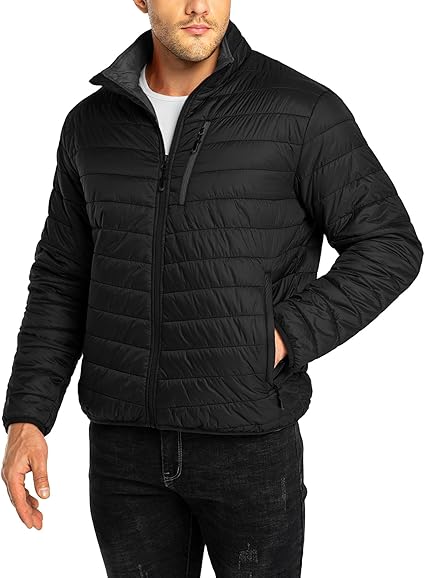
Quilted with a classic straight fit and band collar, this puffer jacket is designed for cold weather outings. Its solid black color and all-seasons suitability make it a straightforward choice for those needing reliable warmth during hiking trips.
The biggest appeal lies in its simple, practical design that keeps you comfortably insulated.
Putting on the jacket feels easy thanks to its straightforward styling and long sleeves that offer good coverage. The solid pattern and quilted silhouette mean it pairs well with any hiking gear without standing out or feeling bulky.
Wearing it day-to-day is comfortable due to the straight fit, letting you layer with ease underneath.
Keeping warm in chilly conditions is handled well by the insulation, responding as expected on cold trails. The build focuses on practicality rather than flashy details, which works well for serious outdoor use. Most praise highlights warmth and comfort, while some note that it might lack extra features like pockets or ventilation options.
Many users appreciate the warmth and comfort it delivers in cold weather hiking conditions. On the downside, the jacket doesn’t offer extra storage or ventilation features that some hikers look for during longer excursions.
Those who prioritize straightforward insulation and style will find this jacket suits their needs perfectly. People wanting multifunctional gear with more pockets or breathability should consider other options.
Pros
- Keeps you warm in cold weather
- Simple, non-bulky straight fit
- Timeless black color matches well
- Comfortable long sleeves for coverage
Cons
- Lacks additional pockets for storage
- No ventilation options for warmer hikes
| Specification | Details |
|---|---|
| Color | Black |
| Style | Puffer Jacket |
| Sleeve Type | Long Sleeve |
| Coat Silhouette Type | Quilted |
| Climate Suitability | Cold Weather |
| Fit Type | Straight |
Best Puffer Jackets for Hiking Comparison Table
| Product | Season Suitability | Fit Type | Collar Style | Occasion |
|---|---|---|---|---|
| Outdoor Ventures Womens Puffer | Winter | Straight | Hooded | Christmas |
| Outdoor Ventures Mens Hooded Puffer | Winter | Regular | Hooded | Birthday, Christmas |
| Pioneer Camp Womens Puffer | Winter | Loose | Hood | Christmas |
| TBMPOY Womens Insulated Puffer | – | – | – | – |
| Canada Weather Gear Mens Puffer | – | – | – | – |
| Spyder Mens Quilted Hooded Jacket | Winter | Fitted | Hooded | Outdoor activities |
| Tacvasen Mens Hooded Insulated | Fall, Spring, Winter | Regular | Band | Birthday, Christmas |
| Pioneer Camp Mens Puffer | Winter | Loose | Band | Christmas |
| The North Face Womens Junction | Fall | Regular | – | Casual |
| 33,000ft Mens Puffer | All | Straight | Band | Christmas |
- Season SuitabilityWinter
- Fit TypeStraight
- Collar StyleHooded
- OccasionChristmas
- Season SuitabilityWinter
- Fit TypeRegular
- Collar StyleHooded
- OccasionBirthday, Christmas
- Season SuitabilityWinter
- Fit TypeLoose
- Collar StyleHood
- OccasionChristmas
- Season Suitability–
- Fit Type–
- Collar Style–
- Occasion–
- Season Suitability–
- Fit Type–
- Collar Style–
- Occasion–
- Season SuitabilityWinter
- Fit TypeFitted
- Collar StyleHooded
- OccasionOutdoor activities
- Season SuitabilityFall, Spring, Winter
- Fit TypeRegular
- Collar StyleBand
- OccasionBirthday, Christmas
- Season SuitabilityWinter
- Fit TypeLoose
- Collar StyleBand
- OccasionChristmas
- Season SuitabilityFall
- Fit TypeRegular
- Collar Style–
- OccasionCasual
- Season SuitabilityAll
- Fit TypeStraight
- Collar StyleBand
- OccasionChristmas
How to Choose the Best Puffer Jacket for Hiking
Choosing a good puffer jacket for hiking means focusing on warmth, weight, and water resistance to stay comfortable and protected in changing weather. Getting these factors right helps avoid unnecessary replacements and keeps you safe on the trail, saving both money and hassle.
Insulation Type and Warmth
On wet trails, a down jacket soaked through loses most of its warmth quickly. Synthetic insulation holds heat better when damp, making it more reliable in unpredictable weather. Down’s fill power indicates how much air it traps; higher numbers like 700 or 800 mean better warmth-to-weight ratio.
Around 600 fill power provides decent insulation for mild cold, but serious winter hikes call for 750 or more. Synthetic jackets tend to weigh a bit more but keep you warmer if you get rained or sweated on.
Choosing the right insulation depends on expected weather and activity level. For dry, cold conditions, down offers excellent warmth without bulk.
In wet or mixed conditions, synthetics prevent chills from moisture. Aim for an insulation weight matching the temperature range: 100-150 grams for cool weather, up to 250 grams for sub-freezing hikes.
Weight and Packability
Carrying a heavy jacket on long hikes can slow you down and tire your shoulders. Lightweight options typically range from 8 to 16 ounces, allowing easy stashing without feeling like dead weight.
Jackets that compress into a small stuff sack save valuable backpack space, fitting easily alongside other gear.
Compression ability varies by fill and fabric. Down jackets usually pack smaller but require dry storage.
Striking a balance between warmth and weight means choosing the insulation amount that keeps you warm without bulk. For high-exertion hikes, lighter jackets with mid-level insulation avoid overheating while still keeping chill at bay.
Fit and Mobility
A jacket cutting movement short frustrates on uphill climbs or scrambling over rocks. Jackets with an ergonomic, slightly tapered fit let shoulders and arms move freely, essential during vigorous hiking.
Room for layering underneath without tight spots keeps you adaptable when temps change.
Adjustable cuffs stop wind and help retain heat, while adjustable hems prevent cold drafts from creeping in. A hood with drawcords provides coverage without obstructing vision or head movement. These features let you tailor the fit, reducing distractions and keeping focus on the trail.
Durability and Weather Resistance
Scraping against rocks and brush is common when heading off the beaten path. Jackets made with abrasion-resistant fabrics like nylon ripstop stand up better to wear and tear over time. A durable outer layer protects the insulation inside from damage.
Water-repellent treatments slow moisture absorption, preserving insulation loft. Breathable water-resistant fabrics combined with a DWR treatment strike a good balance. Windproof properties stop drafts from stealing warmth, crucial on exposed ridges or blustery days.
Ventilation and Breathability
During intense climbs, warmth builds quickly, causing sweat to soak layers. Jackets with ventilation features like pit zips allow quick airflow to release heat without removing layers.
Breathable fabrics help move moisture away from the skin, reducing dampness and chill later.
Good breathability balances insulation and moisture control, so comfort stays consistent across various intensities and terrain. Without it, hikers risk overheating or becoming damp, impacting stamina and focus on long routes.
How to Layer Effectively with a Puffer Jacket for Hiking
Start with a lightweight base layer that wicks moisture away from your skin to stay dry during hikes. Avoid cotton since it traps sweat and can cause chills. Over this, add a mid-layer such as a fleece or thin insulated jacket for extra warmth.
The puffer jacket goes on top as the outer insulating layer, trapping heat without adding much bulk.
Choose a jacket that compresses easily, letting you stuff it into your pack when climbing or during warmer parts of your hike. Adjustable cuffs and hems help seal in warmth and prevent drafts.
Layering also allows you to regulate temperature by adding or removing pieces based on activity intensity or weather changes.
- Moisture-wicking base layer
- Insulating mid-layer (fleece or synthetic)
- Compressible, warm puffer jacket outer layer
This three-layer system balances warmth and moisture management, keeping you comfortable throughout the hike.
Maintaining and Cleaning Your Puffer Jacket to Extend Its Lifespan
Keep a puffer jacket clean without stripping its insulation by using a gentle wash cycle and a mild detergent designed for technical outerwear. Avoid fabric softeners as they can damage the jacket’s water-repellent finish.
Using a front-loading washing machine is preferable because agitators in top-loading machines can be rough on the delicate fill.
After washing, tumble dry the jacket on low heat with clean tennis balls or dryer balls. This helps restore loft by breaking up clumps in the insulation.
Drying it thoroughly prevents mildew and maintains puffiness. Store the jacket uncompressed on a hanger or loose in a cool, dry place to preserve fill volume. Regular gentle cleaning and proper storage safeguard the jacket’s performance over multiple hiking seasons.
Comparing Puffer Jackets to Alternative Insulation Options for Outdoor Adventures
Down insulation often offers the best warmth-to-weight ratio but loses effectiveness when wet unless treated with water-resistant coatings. Synthetic insulation keeps warmth when damp and typically dries faster, but it can be heavier and bulkier compared to down. Puffer jackets with synthetic fill suit wet environments or highly active hikes where moisture buildup is likely.
Fleece jackets provide breathability but less protection against wind and moisture. Hard shells are windproof and waterproof but rely on layering underneath for insulation. Softshells balance weather resistance and breathability but lack the warmth of puffers.
Choosing a puffer over alternatives depends on conditions and personal needs. For cold, dry conditions and ultralight pack setups, down puffers excel. Synthetic options withstand wet weather better, making them more versatile in varied climates.
People Also Asked
How Do I Choose the Right Puffer Jacket Size for Hiking?
Choose a size that allows room for layering underneath without feeling bulky or restrictive. Try on jackets over your typical hiking base and mid layers to check comfort and mobility before buying.
What Is the Safest Way to Clean My Hiking Puffer Jacket?
Use a gentle, cold water cycle with a mild detergent designed for technical gear and avoid fabric softeners. Tumble dry on low with clean tennis balls to help restore loft after washing.
How Long Does a Quality Puffer Jacket Typically Last Hiking?
Most good-quality puffer jackets last several hiking seasons, sometimes five years or more with proper care. Store it loosely packed rather than compressed to maintain the insulation’s effectiveness.
Can I Wear a Puffer Jacket with Other Hiking Layers Comfortably?
Wearing a puffer jacket over a moisture-wicking base layer and a light fleece or softshell usually works well without bulk. Adjust your layers based on the hike’s intensity and temperature to avoid overheating.
What Common Problems Should I Watch for in Hiking Puffer Jackets?
Common issues include losing insulation loft over time and zipper or seam failures. Check for compressing or clumping insulation, and repair small tears promptly to prevent further damage on the trail.
Conclusion
Look for a puffer jacket that offers good insulation without too much weight, so it won’t slow you down on the trail. Make sure it fits comfortably over your base layers and allows for movement. Water resistance is another key factor to keep you dry during unexpected weather changes while hiking.
Choose a jacket based on how much space you have for packing, your budget, and how often you’ll wear it. These points will help you avoid overspending or ending up with a jacket that doesn’t fit your needs. Refer back to the comparison table and detailed reviews to find the option that works best for your hikes.