Top 13 Best Monoscope Picks You Can’t Miss Today!
Getting a clear, focused image through a monoscope can be frustrating when the device fogs up, feels bulky, or simply fails to deliver sharp visuals. Many people investing in a best monoscope experience these exact issues, often due to poor lens quality or improper magnification levels, which ruin the entire point of using one.
Finding a monoscope that matches your specific needs without sacrificing clarity or comfort is important for anyone relying on this optical instrument regularly.
The key factors that distinguish a good monoscope include optical lens material, magnification power, and comfort of use. High-quality monoscopes typically use fully coated glass lenses that reduce glare and improve image sharpness, usually offering magnification between 8x to 12x for a balanced field of view. Size and weight directly affect how easy it is to hold the device steady, so a well-designed monoscope will be compact and ergonomically shaped.
Ease of cleaning the lens and the durability of the housing also matter, as these make a real difference over extended periods of use.
Need a Quick Check?
| Image | Product | Price |
|---|---|---|
Our Top Picks 1  | Nocs Zoom Tube 8×32 | Check Price |
Our Top Picks 2  | 12×60 Monocular Telescope | Check Price |
Our Top Picks 3  | 80×100 Monocular w/ Adapter | Check Price |
Our Selected Top 13 Monoscope for Every Budget
This list includes a variety of monoscopes suited for different needs and budgets. Each review covers performance, ideal users, and key advantages and disadvantages to help you find the best option that matches your specific requirements.
1. Nocs Provisions Zoom Tube 8×32 Monocular
Weighing only 9.5 oz., this 8×32 monocular stands out for its lightweight and bright optics, making it ideal for anyone who needs a portable option for birdwatching, hiking, or travel. Its central focusing system combined with Swiss-designed Bak4p prism ensures sharp and clear views on the go.
Setup is straightforward thanks to the central focus wheel that quickly adjusts to get your subject in clear view. The monocular’s compact size fits comfortably in hand, and it includes a tripod mount for steady shots.
Being water-resistant and scratch-proof means it holds up well in different weather and outdoor conditions without much fuss.
Optical quality stands out with fully multi-coated lenses providing sharp detail and a wide 384-foot view at 1000 yards. The build feels solid and rugged, perfect for rough handling outdoors. On the downside, some users find the zoom a bit limited at just 8x magnification, which might not satisfy those seeking higher power.
Users appreciate the bright, crisp image quality and rugged durability provided by the fully multi-coated lenses and premium prism. However, several note that the fixed 8x zoom might feel underwhelming for spotting distant details or use in more demanding observation.
Those wanting a lightweight and reliable monocular for casual wildlife viewing or travel will find it well suited. Those expecting higher magnification or a larger body for easier handling will likely want to look elsewhere.
Pros
- Super lightweight and compact design
- Bright, sharp views with multi-coated optics
- Water-resistant and scratch-proof construction
- Tripod mount included for steady viewing
Cons
- Zoom limited to 8x magnification
- May be too small for users needing larger grip
| Specification | Details |
|---|---|
| Weight | 9.5 oz. |
| Field Of View | 384 feet @ 1000 yards |
| Coating | Fully Multi-Coated |
| Focus Type | Center Focus |
| Mount | Tripod mount |
| Prism Type | Swiss-designed Bak4p |
2. 12×60 Monocular Telescope
People who enjoy hiking, bird watching, or attending outdoor events will find the 12×60 Monocular Telescope a solid choice. Its biggest strength lies in providing a clear, wide field of view with 12× magnification, making it easy to spot details from a distance during outdoor activities.
Setting it up involves manual focus, which takes only a moment to get sharp images. The reflex finderscope helps with quick target alignment, and its compatibility with smartphones lets you capture what you see. Battery power means fewer worries about light conditions, while the fully multi-coated lens keeps the views bright and clear throughout the day.
Viewing through it shows sharp and vivid images thanks to the large 21mm BAK-4 prism, which reduces light loss and color distortion. Its build feels sturdy yet comfortable enough for carrying along on hikes.
The main complaint comes from needing manual focus, which can be tricky during fast-moving scenes, but the overall clarity and field size rarely disappoint.
The largest praise centers on how clear and bright the views remain, even at 12× magnification, thanks to the BAK-4 prism and fully multi-coated lenses. The most frequent downside is that manual focusing takes some getting used to, especially when tracking fast action or distant objects.
Anyone wanting a straightforward, high-magnification monocular for steady scenes, nature viewing, or static events will be pleased. Those needing quick focus on moving targets or built-in stabilization might want to explore other options better suited to dynamic conditions.
Pros
- Wide 6.5-degree field of view
- Bright and clear images with BAK-4 prism
- Smartphone compatible for easy photo capture
- Reflex finderscope aids quick target spotting
Cons
- Manual focus can be difficult on moving subjects
- No built-in image stabilization
| Specification | Details |
|---|---|
| Magnification | 12× |
| Objective Lens Diameter | 60mm |
| Field of View | 6.5 degrees |
| Focal Length | 50 millimeters |
| Focus Type | Manual Focus |
| Lens Type | Prism |
3. 80×100 Monocular Telescope with Smartphone Adapter
Combining 80x magnification with a 100mm objective lens, this monocular is ideal for outdoor enthusiasts who want detailed views of distant subjects. Its large lens gathers plenty of light, making it stand out for brighter and clearer images compared to typical monoculars with smaller lenses.
Setup involves attaching the included smartphone adapter, which fits a variety of phones so you can capture what you see easily. Manual focus is straightforward, letting you fine-tune the image quickly.
The straight-through finderscope helps with quick targeting, making daily use smooth whether you are scouting wildlife or taking scenic photos during hikes.
Image quality is clear and bright thanks to the BAK4 prism and high-quality optics that improve light transmission. The build feels solid, balancing size and weight well for hand-held use. The main compliment from users is the sharp, detailed view.
A common drawback is the manual focus requiring a bit of patience when locking onto subjects at extreme distances.
Users frequently praise the sharp and bright image quality delivered by the large objective lens and BAK4 prism, which gathers ample light. At the same time, the manual focus system requires care, especially when tracking moving targets, which some find tricky to master quickly.
Bird watchers and wildlife lovers who value high magnification and image brightness will find this monocular well-suited to their needs. Those preferring quicker autofocus and lighter gear might consider other options better optimized for fast handheld use.
Pros
- Bright, clear images with large 100mm lens
- Strong 80x magnification for distant views
- Includes smartphone adapter for easy photography
- Straight-through finderscope for quick target acquisition
Cons
- Manual focus can be challenging on fast-moving subjects
- Larger lens adds noticeable weight for handheld use
| Specification | Details |
|---|---|
| Magnification | 80x |
| Objective Lens Diameter | 100mm |
| Focus Type | Manual Focus |
| Finderscope | Straight-Through |
| Compatible Devices | Smartphone |
| Additional Features | Smartphone Adapter Included |
4. 8×32 Mini Pocket Monocular

8×32 Mini Pocket Monocular delivers clear and bright images with an 8x magnification, perfect for anyone looking for a compact and sharp handheld telescope. It suits those who want a balance between zoom and ease of use without spending too much.
Setup is simple, with manual focus that adjusts smoothly to get the view just right. The monocentric eyepiece and wide field of view (396ft at 1000 yards) make scanning landscapes or watching wildlife comfortable. It comes with a pouch and hand strap for easy carrying, matching well with its compact size.
Performance is impressive thanks to the fully multi-coated extra-low dispersion lenses and BAK-4 prisms that offer bright and low-distortion images. The build feels sturdy yet light, ideal for handheld use.
Most praise focuses on the clear optics and value for money, while the need for batteries may surprise some users.
Bright images with excellent color accuracy stand out as the monocular’s best feature while some find using batteries unexpected in a manual focus scope. The wide field helps with viewing comfort, but quick adjustments can feel a bit slow.
Anyone wanting a reliable, compact monocular for casual outdoor use will like this model. Those needing faster focus or no battery dependency should consider alternatives with different focus types or power sources.
Pros
- Bright and clear optics with low distortion
- Compact and lightweight design
- Wide field of view for better scanning
- Includes pouch and hand strap for convenience
Cons
- Requires batteries despite being manual focus
- Manual focus might slow quick target acquisition
| Specification | Details |
|---|---|
| Magnification | 8x |
| Field of View | 397 feet |
| Focus Type | manual focus |
| Coating | Fully Multi-Coated XLT Coated |
| Focal Length | 4.0 millimeters |
| Power Source | Battery Powered |
5. 8×42 Monocular Telescope
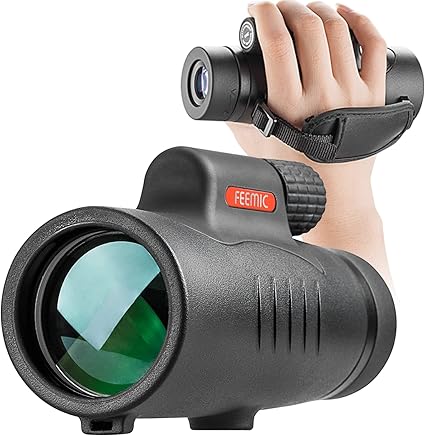
Using an 8×42 Monocular Telescope feels natural for anyone wanting a clear, wide view during outdoor activities like bird watching or hiking. Its biggest strength is the wide 360ft/1000yards field of view combined with 8X magnification, which makes spotting details easier without feeling far away.
Setup is straightforward with manual focus and an altazimuth mount, making adjustments quick without extra tools or power sources. The lens dust cover and waterproof design mean you can use it in rain or dusty trails without worrying about cleaning constantly. It also works well with devices like smartphones and cameras for capturing views on the go.
Performance delivers sharp, HD images thanks to fully multi-coated all glass optics and the FMC superior BAK-4 green film prism. The rubber finish provides solid shock resistance and helps it withstand rough weather.
The best feature noted is the clear detail even at distance, while some users mention the manual focus can take practice to get perfect on moving subjects.
The wide-angle HD optics deliver clear images over long distances, often praised for crisp detail. Frequent notes mention the manual focus needing a steady hand for sharp results, especially on moving subjects or in low light.
Great for outdoor enthusiasts who value durability and compatibility with devices for photography. Those wanting quick autofocus or motorized zoom may prefer a different model.
Pros
- Wide 42mm objective lens for bright views
- Waterproof, fogproof, dust-proof, shockproof
- Compatible with smartphones and cameras
- Manual focus allows precise adjustments
Cons
- Manual focus requires patience to master
- Not powered; no automatic zoom
| Specification | Details |
|---|---|
| Power Source | Manual Power |
| Magnification | 8 multiplier x |
| Field Of View | 360 degrees |
| Coating | Fully Multi-Coated |
| Mount | Altazimuth Mount |
6. 40×60 Monocular Telescope with Phone Adapter

Excellent for outdoor enthusiasts, this 40×60 monocular provides a sharp, bright image suitable for both adults and kids. Its biggest strength lies in delivering clear, high-contrast views across various activities like hiking, bird watching, and sightseeing.
Setup is straightforward with a fixed mount and manual focus, making it easy to adjust the clarity to your liking. The included smartphone adapter and tripod add convenience, letting you capture photos directly through the lens.
A hand strap helps keep it secure during active use, making it practical for carrying around on adventures.
Images come through bright and detailed thanks to the BAK4 prism and fully multi-coated lens, with minimal distortion and no black bars. The body feels sturdy and compact, holding up well against heavy weather due to its waterproof and fog-proof design.
A common complaint centers on the manual focus feeling a bit tricky for some users at first, but the overall build quality and image clarity often receive praise.
The monocular delivers clear, sharp images without black bars even in challenging light thanks to the high-quality lenses and coatings. Most users find the manual focus requires some practice before achieving perfect clarity. Its waterproof, fog proof body stands up well to the elements without adding bulk.
Anyone needing a strong zoom for outdoor activities will appreciate this tool, especially with the smartphone adapter for photos. People wanting quick autofocus or powered optics might prefer a different model better suited to those features.
Pros
- Bright, clear images with BAK4 prism
- Waterproof and fog proof design
- Includes smartphone adapter and tripod
- Compact and sturdy build
Cons
- Manual focus may feel tricky initially
- No built-in power source
| Specification | Details |
|---|---|
| Zoom Ratio | 40x-60x |
| Field Of View | 2400 yard |
| Eye Piece Lens Description | Convex |
| Mount | Fixed Mount |
| Focus Type | manual |
| Additional Features | Includes Smartphone Adapter, Tripod, and Hand Strap |
7. 12×50 Monocular Telescope with Phone Adapter
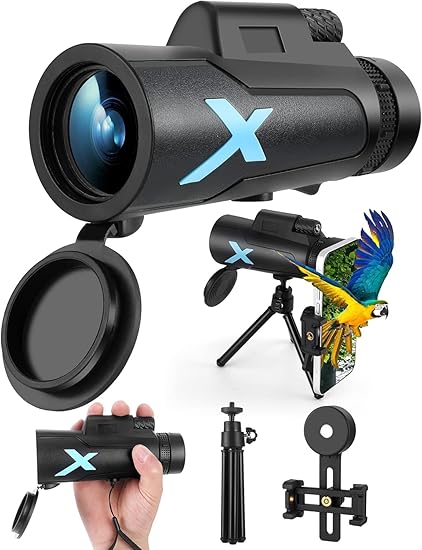
Constructed with a 53mm large objective lens and a 20mm eyepiece, this monoscope is ideal for outdoor enthusiasts needing bright, clear images. It suits bird watchers, hikers, and concert-goers looking for 12X magnification combined with a wide 6.5° field of view.
Its standout feature is how well it maintains image clarity and color accuracy.
Setting it up simply involves adjusting the manual focus to sharpen the view. The large eyepiece offers adjustable eye relief, making it comfortable even for glasses wearers. No batteries are required, which keeps it light and easy to use.
The phone adapter adds convenience, letting you snap clear zoomed photos on your smartphone during your activities.
Performance comes from the Fully Multi-Coated lenses and large BAK4 prism, delivering bright and color-accurate images without dizziness after long use. The monocular is handheld but can be mounted on a tripod with its standard 1/4-inch thread.
Praise highlights sharp, colorful views, while the most frequent complaint is the need for steady hands when using 12X magnification manually.
The most common praise centers on the vivid colors and clarity enabled by the Fully Multi-Coated lenses and large BAK4 prism. The main complaint is the challenge of maintaining a steady image at full 12X magnification without a tripod or mount.
People who want a bright, sharp monocular for daytime outdoor activities and smartphone photography will appreciate this model. Those needing something compact and fully stable under all conditions might want to consider alternatives with built-in stabilization or lower magnification.
Pros
- Bright and clear images with large 53mm objective lens
- Comfortable for glasses wearers with adjustable eye relief
- Phone adapter for easy smartphone photography
- No batteries required, simple manual focus
Cons
- Manual focus requires steady hands at 12X zoom
- Not fully suited for low-light or night use
| Specification | Details |
|---|---|
| Power Source | No Battery Required |
| Magnification | 12x |
| Field of View | 6.5 degrees |
| Mount | Handheld, Tripod-adaptable with Standard 1/4-inch Thread |
| Eye Piece Lens | Multi-coated Eyepiece Lens With Adjustable Eye Relief |
| Coating | Fully Multi-coated (fmc) Green Film Optical Lens |
8. 12×56 Monocular Telescope with Smartphone Adapter

Sharp images from a 12X magnification stand out right away, making it ideal for anyone who enjoys outdoor activities like bird watching or hiking. The wide angle and bright lenses offer a viewing experience that feels expansive and detailed.
Setup is straightforward, with manual focus that lets you quickly zero in on what you want to see. Larger eyepieces make it comfortable for the eye during longer viewing sessions. The smartphone adapter is a nice addition that makes capturing what you see easy, and the included tripod helps keep the view steady.
Visual clarity impresses with bright, clear images thanks to the large 56mm objective lens and fully multi-coated optics. The body feels solid and well-made, though some mention the manual focus can require a bit of patience on moving subjects. The travel bag and hand strap add convenience for carrying on outdoor trips.
Bright images and wide field of view make watching distant scenes enjoyable, while manual focus demands steady hands and patience, especially on wildlife or sports. The overall build supports outdoor use but lacks power assistance or automatic focus features.
People wanting lightweight, easy-to-handle gear with smartphone sharing will appreciate this monocular. Those who prefer quick autofocus or need a variety of mounting options might look for alternatives better suited to their needs.
Pros
- Clear wide-angle view with 12x magnification
- Large, bright 56mm objective lens
- Includes smartphone adapter and adjustable tripod
- Comes with travel bag and hand strap for convenience
Cons
- Manual focus can be tricky on moving objects
- Fixed mount limits some mounting options
| Specification | Details |
|---|---|
| Magnification | 12X |
| Objective Lens Diameter | 56mm |
| Field Of View | 391.7 yard |
| Focus Type | manual |
| Compatible Devices | Smartphone |
| Coating | Fully Multi-Coated |
9. 10×36 Monocular Telescope

Delivering a powerful 10x magnification with a 36mm objective lens, the 10×36 Monocular Telescope suits anyone after sharp, bright views without bulky gear. Its strength lies in crystal-clear high-definition images, making it a solid choice for wildlife watchers and outdoor enthusiasts wanting more detail at a distance.
Handling it daily is straightforward thanks to its non-slip design and a large focus knob that makes fine adjustments easy. Setup is simple, just hold it steady and turn the focus dial to sharpen your view.
Its compact size keeps it comfortable to carry on hikes or trips, and the waterproof and fogproof build means it’s ready for varied weather conditions without fuss.
Visual clarity really shines through with ED lenses and a BAK-4 prism improving contrast and color accuracy. The fully multi-coated optics maintain brightness and reduce distortions well. A common praise is how much detail you get at 10x zoom, but some find the manual focus a bit slow in fast-changing scenes.
Its build feels solid for handheld use without added mounts.
The 10×36 Monocular Telescope delivers detailed and bright views that impress with color accuracy and minimal distortion, praised widely by users. Its manual focus mechanism, while large and easy to use, often feels too slow when quickly tracking moving objects in the field.
Ideal for those seeking a reliable handheld scope for steady, detailed viewing in nature or events. Anyone needing rapid refocusing or stabilization might want to consider alternatives made for fast action or shaky conditions.
Pros
- Clear HD images with low distortion
- Large focus knob for easy adjustments
- Waterproof and fogproof for outdoor use
- Compact, ergonomic, non-slip design
Cons
- Manual focus can be slow for fast-moving subjects
- No image stabilization for shaky hands
| Specification | Details |
|---|---|
| Zoom Ratio | 10x |
| Objective Lens Diameter | 36 millimeters |
| Focus Type | Manual Focus |
| Coating | Fully Multi-Coated XLT Coated |
| Prism Type | BAK-4 Prism |
| Field Of View | 342 feet |
10. 12×56 Monoculars with Phone Adapter

Watching birds or wildlife at a distance can be frustrating without a reliable tool. Ideal for outdoor enthusiasts who want sharp, high-powered magnification, this 12×56 monocular tackles long-range viewing with ease. Its standout feature is the crystal-clear image it delivers once properly focused.
Setup is straightforward, rotating the center focus wheel gradually until the image sharpens. The 21mm large eyepiece combined with the 56mm lens ensures a comfortable viewing experience, avoiding eye strain during longer observation sessions. Its compact size makes it easy to carry, and the included phone adapter lets you take clear photos through the lens without hassle.
Performance is strong thanks to the BAK4 prism and multi-coated lenses, offering bright and detailed views in various lighting conditions. Built for durability and comfort, the manual focus gives precise control, though some users find it takes a moment to get used to achieving perfect sharpness. The main complaint involves occasional difficulty in fine-tuning the focus quickly.
This monocular stands out for delivering clear, detailed images when carefully focused, making it reliable for distant observation. Many find the focusing wheel requires patience, which can slow down capturing quick movements or scanning broad areas.
Perfect for users wanting strong magnification in a portable size with photo capabilities. Those needing faster focusing or wider views may want to explore other options better suited for rapid tracking or expansive scenery.
Pros
- Bright, sharp long-distance viewing
- Comfortable 21mm large eyepiece
- Compact and portable design
- Includes phone adapter for easy photography
Cons
- Manual focus can be slow to adjust
- Not ideal for wide field of view needs
| Specification | Details |
|---|---|
| Zoom Ratio | 12 |
| Eyepiece Lens Description | BAK4 Prism & Ultra-Broadband Multi-Waterproof-Coating |
| Focal Length Description | 21 millimeters |
| Field Of View | 325 feet |
| Objective Lens Diameter | 56mm |
| Focus Type | Manual Focus |
11. 15×54 Monoculars

15×54 Monoculars deliver true 15x magnification paired with a large 54mm objective lens, perfect for outdoor explorers who need both reach and bright views. Its wide 354ft field of view at 1000 yards helps see more details across vast landscapes, making it well suited for hiking, birdwatching, or sports.
Setup is straightforward with a manual focus wheel that quickly sharpens the image. Twisting the eyecup adjusts eye relief, letting people who wear glasses use it comfortably.
Its compatibility with smartphones and tripod mounting options add flexibility for extended use or capturing distant scenes. The design feels solid yet manageable for handheld outings.
Optical performance benefits from BAK4 prisms and fully multi-coated FMC lenses, boosting light transmission and detail clarity even in low light. The body is waterproof, built to handle outdoor conditions without trouble. Strong praise comes from the bright and crisp views, while a common complaint involves manual focusing requiring patience for precise adjustments on the move.
The monocular receives strong recognition for its bright and clear view, especially useful in varied lighting conditions, thanks to high-quality optics. Many notice the manual focus requires a steady hand and patience to lock onto the subject sharply.
People needing sharp distant views with moderate field coverage and eye comfort will appreciate this monocular. Those desiring faster autofocus or image stabilization might look for different models better suited to shaky environments or quick target changes.
Pros
- Bright, vivid images with true 15x magnification
- Comfortable eye relief suited for glasses wearers
- Fully multi-coated optics boost color and contrast
- Waterproof construction for outdoor durability
Cons
- Manual focus requires careful adjustment to sharpen
- Lacks built-in image stabilization for shaky hands
| Specification | Details |
|---|---|
| Magnification | 15x |
| Objective Lens Diameter | 54mm |
| Field Of View | 350 feet |
| Focus Type | Manual Focus |
| Coating | Fully Multi-Coated |
| Mount | Tripod mount |
12. 10×25 Monocular Telescope

Perfect for hikers, bird watchers, and outdoor explorers who value portability and clear views, this 10×25 monocular delivers sharp optics in a compact design. Its strongest feature is the exceptional lens quality, providing bright images despite its small size.
Carrying it around is simple due to the lightweight aluminum body and non-slip grip, which feels secure in hand. Setting it up requires just manual focusing, making it easy to adjust on the fly. The included pouch adds convenience when traveling or camping.
Close-up viewing works well thanks to its 0.98 feet macro capability, which helps spot nearby details without strain.
Optics impress with the 10x magnification, ED glass, and BAK-4 prism producing bright, clear images across a broad field of view. The aluminum body holds up well against bumps, while the IPX7 waterproof rating means exposure to rain or fog won’t blur the view.
The most frequent praise notes its clarity and durability, while some mention the manual focus needs careful adjustment to avoid slight blurring.
The monocular provides very clear and bright images thanks to premium optics and lens coatings. Its waterproof aluminum body holds up well outdoors. The most common drawback is that the manual focus system demands careful adjustment to maintain crisp details.
Anyone needing a pocket-sized monocular for close and distant viewing in varied weather will find this model fits the bill well. Users who prefer automated focus or wider fields of view may want to consider alternatives better suited to those preferences.
Pros
- Bright and clear optics with ED glass
- Close-up macro viewing at 0.98 feet
- Compact and lightweight for easy carrying
- Reliable waterproof and fog-proof design
Cons
- Manual focus requires steady hands to keep sharp view
- Limited field of view compared to larger scopes
| Specification | Details |
|---|---|
| Magnification | 10×25 |
| Close Focus Distance | 0.98 feet (0.3m) |
| Focus Type | Manual Focus |
| Coating | Fully Multi-Coated |
| Waterproof Rating | IPX7 Waterproof |
| Body Material | Aluminum with Non-slip Grip |
13. Vortex Solo 8×36 Monocular

Compact and durable, the Vortex Solo 8×36 Monocular offers clear, crisp images with its fully multi-coated lenses. Perfect for those looking for a lightweight, waterproof optic with reliable 8x magnification, it stands out by combining portability with solid performance in various outdoor conditions.
Setup is straightforward since it’s entirely manual focus and handheld, making it quick to adjust on the go. The rubber armor feels secure in the hand without slipping, even when wet.
An adjustable eyecup lets you use it comfortably with or without glasses, and the multi-position clip makes carrying easy and accessible.
With a 131-foot field of view, the clarity through the 36mm objective lens is impressive at 8x zoom, producing sharp images in most lighting. The nitrogen-purged, o-ring sealed build ensures it stays fogproof and waterproof, suited for rough outdoor use.
Users often praise its durability and optics, though some mention manual focusing can take extra effort in certain situations.
Most praise highlights the durable construction combined with clear optics that perform well outdoors. The common complaint focuses on manual focusing being less convenient in rapidly changing conditions.
Those wanting a lightweight, rugged monocular for hiking or casual spotting will appreciate this model. Those needing quicker focus adjustments or better low-light viewing might consider alternate options.
Pros
- Clear and crisp images with multi-coated lenses
- Durable rubber armor provides a strong grip
- Waterproof and fogproof for all-weather use
- Adjustable eyecup works well with glasses
Cons
- Manual focus requires frequent adjustment
- Smaller objective might limit low-light use
| Specification | Details |
|---|---|
| Magnification | 8x |
| Objective Lens Diameter | 36mm |
| Field Of View | 131 feet |
| Focus Type | manual focus |
| Armor | rubber armored |
| Waterproof/Fogproof | nitrogen purged and o-ring sealed |
Best Monoscopes Compared Side by Side
| Product | Zoom Ratio | Field Of View | Focus Type | Compatible Devices |
|---|---|---|---|---|
| Nocs Zoom Tube 8×32 | 8 | 384 feet | Center Focus | Smartphone, Camera |
| 12×60 Monocular Telescope | 12 | 6.5 degrees | Manual Focus | Smartphone |
| 80×100 Monocular w/ Adapter | – | – | Manual Focus | Smartphone |
| Mini Pocket 8×32 Monocular | 8 | 397 feet | Manual Focus | Hand Strap, Pouch |
| 8×42 Monocular Telescope | – | 360 degrees | Manual Focus | Camera, Headphone, Smartphone |
| 40×60 Monocular w/ Adapter | 40x-60x | 2400 yard | manual | Smartphone |
| 12×50 Monocular w/ Adapter | – | – | Manual Focus | – |
| 12×56 Monocular Smartphone | 12 | 391.7 yard | manual | Smartphone |
| 10×36 Monocular Telescope | 10x | 342 feet | Manual Focus | – |
| 12×56 Monocular w/ Adapter | – | 325 feet | Manual Focus | Smartphone |
| 15×54 Monoculars | 15 | 350 feet | Manual Focus | Smartphone |
| 10×25 Monocular Telescope | 10:1 | 303 feet | Manual Focus | – |
| Vortex Solo 8×36 | 8x | 131 feet | Manual Focus | – |
- Zoom Ratio8
- Field Of View384 feet
- Focus TypeCenter Focus
- Compatible DevicesSmartphone, Camera
- Zoom Ratio12
- Field Of View6.5 degrees
- Focus TypeManual Focus
- Compatible DevicesSmartphone
- Zoom Ratio–
- Field Of View–
- Focus TypeManual Focus
- Compatible DevicesSmartphone
- Zoom Ratio8
- Field Of View397 feet
- Focus TypeManual Focus
- Compatible DevicesHand Strap, Pouch
- Zoom Ratio–
- Field Of View360 degrees
- Focus TypeManual Focus
- Compatible DevicesCamera, Headphone, Smartphone
- Zoom Ratio40x-60x
- Field Of View2400 yard
- Focus Typemanual
- Compatible DevicesSmartphone
- Zoom Ratio–
- Field Of View–
- Focus TypeManual Focus
- Compatible Devices–
- Zoom Ratio12
- Field Of View391.7 yard
- Focus Typemanual
- Compatible DevicesSmartphone
- Zoom Ratio10x
- Field Of View342 feet
- Focus TypeManual Focus
- Compatible Devices–
- Zoom Ratio–
- Field Of View325 feet
- Focus TypeManual Focus
- Compatible DevicesSmartphone
- Zoom Ratio15
- Field Of View350 feet
- Focus TypeManual Focus
- Compatible DevicesSmartphone
- Zoom Ratio10:1
- Field Of View303 feet
- Focus TypeManual Focus
- Compatible Devices–
- Zoom Ratio8x
- Field Of View131 feet
- Focus TypeManual Focus
- Compatible Devices–
How to Choose the Right Monoscope for You
Choosing the right monoscope depends on factors like magnification, lens quality, and durability, as these affect image clarity and ease of use. Getting these right helps avoid frustration and costly replacements, ensuring a reliable and enjoyable viewing experience.
Magnification and Optics Quality
Watching fine details through a poorly made lens becomes frustrating fast. Blurry lines and muted colors can ruin the experience whether spotting birds or following a game.
Clarity and sharpness depend heavily on glass quality and lens coatings. Quality optics typically have multi-layer anti-reflective coatings that reduce glare and improve light transmission, making images brighter and clearer even in low light.
Magnification varies depending on use. A 10x to 20x range works well for birdwatching and sports, balancing detail with a stable image.
Higher magnifications can amplify shakiness and reduce field of view, so sticking to a range that matches your activity helps avoid headaches. Look for lenses with at least 70mm objective diameter for brighter images and strong resolution.
Build and Ergonomics
Heavy optics tire the arm quickly during long observation sessions, while overly small sizes may sacrifice optical quality. A balance around 2 to 3 pounds feels manageable for handheld use or mounting on a lightweight tripod.
The grip design makes a noticeable difference; rubberized, contoured surfaces keep the device secure without slipping, especially when sweating or in wet conditions.
Durability is crucial outdoors. Aluminum or magnesium alloy bodies resist dents and corrosion better than plastic. Some durable models feature rubber armor protecting against bumps and improve grip.
Expect sturdy hinges and waterproof seals to withstand regular use on uneven terrain or in rough weather without falling apart.
Field of View and Focus Range
A wide field of view means less head movement to track subjects, which is invaluable during fast-moving activities. Standard models show around 300 to 400 feet at 1,000 yards, but this shrinks as magnification increases.
Check the specs carefully as a narrow field can make spot tracking frustrating.
The focusing mechanism should allow quick and smooth adjustments. Slow or stiff focus knobs that require multiple turns can cause missed moments.
Minimum focusing distance matters for close subjects like flowers or insects; around 10 to 15 feet minimum focusing distance allows for useful near-field viewing without switching equipment.
Weather Resistance
Finding moisture inside optics ruins observation quality rapidly. Reliable sealing prevents rain or water from entering internal components.
Quality optics are often rated as waterproof to certain depths or standards, indicating performance under steady rain or accidental drops in shallow water.
Fogging inside the lens is a frequent issue when temperatures change quickly. Nitrogen or argon purging helps maintain internal dryness, keeping vision clear during cool mornings or quick weather shifts.
Resistance to dust and dirt through tight seals means less cleaning and fewer scratches, essential in dusty or sandy outdoor environments.
Compatibility and Accessories
Tripod compatibility transforms stability for extended use or high magnifications. Standard 1/4-inch mounts work with most tripods, so check for a threaded socket to avoid having to rig awkward solutions. Some models include quick-release plates for faster setup and teardown.
Taking photos requires adapters that securely attach smartphones without shaking. Not all optics support this, so compatibility with popular adapters ensures capturing what you see without extra gear hassles.
Protective cases and lens covers prevent damage on the go and are worth seeking out if you travel often or use the optics in active outdoor settings.
Tips for Maximizing Accuracy When Using a Monoscope
Monoscopes require stable positioning to ensure precise measurements. Small movements or vibrations can cause discrepancies in reading scales or reticles. Use a tripod or a stable mount to hold the device steady during observations.
Proper focus adjustment can make a significant difference; the image should be sharp without straining your eyes, allowing finer details to be seen clearly.
Consider these factors for better accuracy:
- Use the monoscope in environments with minimal atmospheric disturbances like heat waves or dust.
- Regularly calibrate the instrument using a known reference scale to detect any drift or misalignment.
- Avoid parallax errors by ensuring your eye is directly aligned with the viewing lens instead of looking at an angle.
- Adjust ambient lighting to reduce glare and reflections that could hinder clear vision of measurement marks.
Essential Maintenance Practices to Extend the Life of Your Monoscope
Keeping a monoscope clean extends its service life and maintains image quality. Dust and fingerprints on lenses reduce clarity and can degrade optical coatings.
Use a soft microfiber cloth for cleaning, avoiding harsh chemicals that might damage the glass or metallic parts.
Routine checks to keep the monoscope in good shape:
- Store in a protective case in a dry environment to prevent moisture buildup and mold growth.
- Inspect mechanical parts such as focusing knobs and mounts for smooth operation and lubricate if necessary with suitable products.
- Check for loose screws or fittings periodically to maintain alignment and stability.
- Cover or cap the optics when not in use to block dust and accidental scratches.
Comparing Monoscopes with Other Optical Measurement Tools
Monoscopes are simple optical devices offering a single eyepiece for magnified viewing with scale measurement. Unlike binoculars, which provide depth perception and a wider field of view, monoscopes focus on precise, one-eyed observation suitable for detailed measurements.
Compared to other optical measurement tools:
- Telescopes usually have longer focal lengths and are optimized for astronomical viewing, less practical for close-range structural measurements.
- Microscopes allow examination of very small objects at high magnifications, serving a different purpose than monoscopes.
- Laser rangefinders provide distance measurements quickly but do not offer visual scale analysis directly through optics like a monoscope.
Choosing between these depends on the measurement context, required magnification, and whether visual scaling or distance estimation is needed.
People Also Asked
How Do I Properly Clean and Care for My Monoscope?
Clean a monoscope with a soft cloth and lens cleaner, avoiding harsh chemicals that can damage the lenses. Regularly check for dust and fingerprints to maintain clear vision. Store it in a protective case to prevent scratches and dust buildup when not in use.
What Size Monoscope Is Suitable for Different Eye Conditions?
The size depends on the specific eye condition and area needing examination; smaller sizes fit better for detailed anterior eye work while larger ones cover more area for general checks. Consult your eye care professional to match the monoscope size with your specific needs.
Are Monoscopes Safe for Daily Use Without Causing Eye Strain?
Daily use of a monoscope is generally safe and should not cause eye strain if used properly. Taking regular breaks and proper adjustment of the lens focus helps reduce discomfort during extended use.
How Long Does a Typical Monoscope Last with Regular Use?
With careful handling and regular maintenance, a monoscope can last several years. Avoid dropping or exposing it to moisture, which can shorten its lifespan. Replacing worn parts like rubber grips can keep it functional longer.
What Common Problems Should I Watch Out for with Monoscopes?
Common issues include lens fogging, scratches on the lens, or loose fittings. Regular cleaning and careful storage help prevent these problems. When the vision remains blurry after cleaning, the lens might require professional adjustment or replacement.
Conclusion
Size, weight, and image quality are the key factors to consider when choosing a monoscope. It should fit comfortably in your setup and deliver clear visuals without distortion.
The ease of use and durability also matter, especially for regular use.
Think about where you’ll place the monoscope and how often you’ll use it before making a choice. Balancing these practical needs with your budget will help narrow down the options.
Refer back to the comparison table and earlier reviews to find the best fit for your specific requirements.