Top 13 Best Iron Sights for Aging Eyes That Improve Aim Fast
Those blurry moments at the range are all too familiar for anyone looking for the best iron sights for aging eyes. A sight that’s too small or poorly lit can turn aiming into frustrating guesswork. The wrong choice leads to missed shots and eye strain, especially when contrast between the sight and background is low.
This challenge isn’t just about eyesight fading but about using the right tools to compensate.
Good iron sights for aging eyes prioritize visibility and comfort. Larger front sights around 0.19 to 0.22 inches in diameter help focus better, paired with rear sights that offer clear notches or apertures.
High-contrast colors or tritium inserts become essential for low-light conditions. Durable materials that resist wear, like steel or aluminum, keep the sight steady, while ease of adjustment and cleaning matters to maintain accuracy and longevity without adding hassle.
Need a Quick Check?
| Image | Product | Price |
|---|---|---|
Our Top Picks 1  | Fiber Optic Flip Sights | Check Price |
Our Top Picks 2  | 45 Degree Offset Fiber Optic | Check Price |
Our Top Picks 3  | TSA Big Dot Suppressor Sights | Check Price |
Our Selected Top 13 Iron Sights for Aging Eyes Worth Your Money
This list includes carefully selected iron sights that improve visibility for aging eyes. Each review explains how the sight performs, who it is best suited for, and highlights its main advantages and drawbacks to help you make an informed decision.
1. Fiber Optic Flip up Iron Sights
Bright red and green fiber optic dots make aiming easier for anyone struggling with aging eyes. Designed for rifles, shotguns, and airsoft guns, these flip-up sights keep your view clear and quick to align.
Their single biggest strength lies in how they bring clarity to your sight picture without getting in the way.
Setup involves mounting the sights on any Picatinny rail, taking up minimal space only 2 inches above it. Flipping the sights up or down feels smooth, avoiding clutter on your optics. Daily use benefits from the dual aperture design, letting you switch quickly between close combat and precision shooting.
Adjustments for windage and elevation don’t require tools, making fine-tuning simple and fast.
Accuracy improves noticeably during fast-paced shooting due to the high definition fiber optic highlights, providing clear visibility in all lighting. Designed to be low profile and durable, these sights maintain their adjustments securely. Praise often centers on the easy visibility of the red and green dots, while some users note occasional difficulty operating the flip mechanism with gloves on.
Fiber optic flip up iron sights offer clear sight pictures with minimal obstruction. Their low-profile design extends just 2 inches above the rail, fitting well alongside optics without interference. Red and green fiber optic dots provide good visibility in various lighting conditions. Some people mention the sights can be fiddly to adjust for windage and elevation without tools.
People who need well-lit, easily visible sights for quick target acquisition will appreciate these iron sights. They benefit shooters who want reliable backup sights that don’t take up much rail space. Those requiring extremely rugged or completely tool-free adjustments might want to explore other options. These sights suit varied shooting needs, especially where lighting clarity is important.
Pros
- Bright fiber optic dots visible in any lighting
- Tool-free windage and elevation adjustments
- Low profile design minimizes obstruction
- Quick switching between CQB and precision modes
Cons
- Flip mechanism can be tricky with gloves
- Only fits Picatinny rails
| Specification | Details |
|---|---|
| Compatible Devices | Rifle, Shotgun, Airsoft Gun |
| Mounting Type | Picatinny Mount |
| Thread Type | Picatinny |
| Reticle Type | Red/Green Dot |
| Height Above Rail | 2 inches |
2. 45 Degree Offset Flip up Fiber Optic Sights
Compact and practical, these 45 Degree Offset Flip Up Fiber Optic Sights are great for anyone wanting clear sight alignment without swapping out existing optics. Their standout feature is the 45-degree offset design, letting you easily glance at the sights by slightly rotating your hand, which works well for aging eyes needing quick, crisp focus.
Setting up on Weaver Mount rifles or shotguns is straightforward, thanks to the Weaver Mount compatibility and 7/16-20 thread type. Using these sights daily means dealing with minimal bulk as they only extend 2 inches above the rail.
The red and green fiber optic dots are visible in different light conditions, and switching between close-quarters and precision shooting is handy with the dual aperture design. Adjusting windage and elevation requires no tools, speeding up fine-tuning.
Performance-wise, the fiber optic highlights make sighting easier across lighting setups. The flip-up nature keeps them out of the way until needed, which suits users transitioning between optics and irons. They feel sturdy on the rail and don’t interfere with mounted optics.
Some users mention that the eye relief takes a bit of getting used to due to the offset positioning, which might not fit everyone’s shooting style.
High visibility fiber optic dots in red and green help users see sights clearly in varying light. Most common drawback is the need to get accustomed to the slightly rotated hand position needed to use the 45-degree offset effectively. The low profile means it doesn’t get in the way of primary optics, but that offset can feel unusual initially.
Anyone looking for supplemental sights with bright fiber optic markers and good adjustability will appreciate this setup. Folks not using Weaver Mount rails or who prefer straightforward front-and-center irons might want to look at different models. Those who want a more traditional sight picture might find the offset awkward over time.
Pros
- 45-degree offset for quick sight picture
- Red and green fiber optic dots for visibility
- Tool-free windage and elevation adjustment
- Compact flip-up design minimizes rail space
Cons
- Offset design may require adjustment period
- Limited to Weaver Mount compatibility only
| Specification | Details |
|---|---|
| Compatible Devices | Weaver Mount rifles and shotguns |
| Mounting Type | Weaver Mount |
| Thread Type | 7/16″-20 |
| Reticle Type | Red/Green Dot |
| Height Above Rail | 2 inches |
3. TSA Big Dot Suppressor Height Sight Set
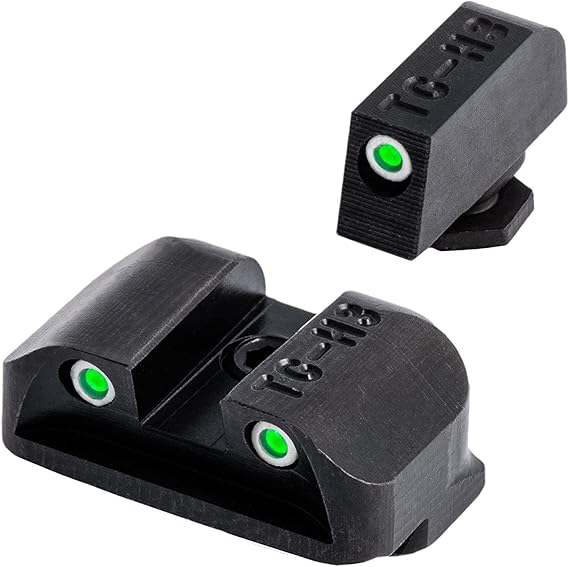
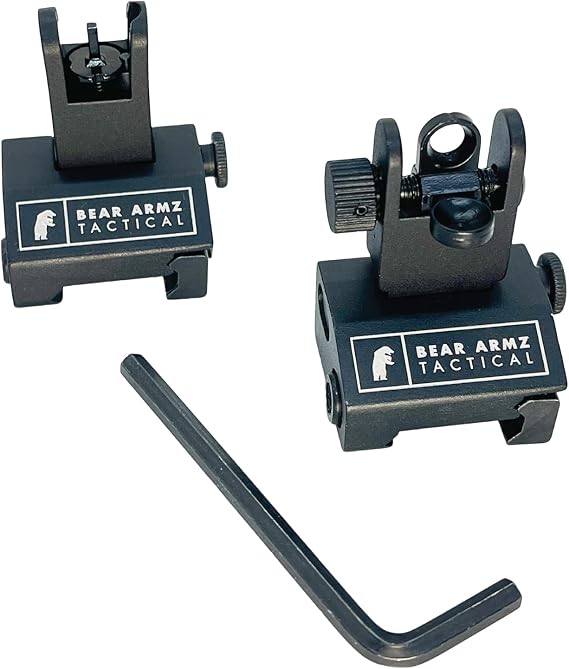
The build suits Glock Slimline compacts perfectly. The most praised feature is the highly visible glow dots; the only real downside mentioned involves the height profile which may not suit every user’s optic setup perfectly. The biggest praise comes from the oversized glow dots, offering quick charging and bright visibility in low light. The most common complaint is how the suppressor height profile might clash with some red dot optics depending on individual setups. Those using Glock Slimline pistols or compatible PSA Daggers who need better low-light sight visibility will find this ideal. Shooters outside these platforms or with non-standard optic preferences might want to consider other sight options. High definition fiber optic technology makes aiming simpler for aging eyes, especially in low light. Designed with 45-degree flip-up iron sights, it’s ideal for anyone wanting quick target acquisition and easy switching between close quarters and precision shots. Compatibility with most Picatinny and Weaver rails adds to its versatility. Setup involves attaching the sights on Weaver rails, which is straightforward thanks to the flip-up design that saves space. Day-to-day use benefits from dual aperture at the rear, letting you switch rapidly between red and green dots or different sight sizes based on your shooting needs. Windage adjustments are clear with easy-to-read markings, making sight alignment quick and reliable. Performance excels at offering clear, bright aiming points in various lighting conditions. The fiber optic design delivers consistent visibility with minimal effort, a definite plus for those with declining eyesight. The build holds up well, solid and compact, without interfering with other accessories. Some users note the flip-up mechanism requires a firm push to lock securely, which can be a slight frustration during rapid deployment. The flip-up sights provide bright and clear fiber optic reticles, making it easier to aim for aging eyes in varying light. A commonly mentioned drawback is the need for a firm push to lock the sights in place, which might slow quick transitions. The dual aperture rear sight is especially handy for switching between close and longer-range targets. People wanting reliable, visible sights on Weaver or Picatinny rails with good windage control will find this a solid choice. Those needing compatibility with different mounting systems or quicker flip-up locking might look elsewhere for alternatives better suited to their needs. Great for shooters struggling with fading eyesight, these TRUGLO Tritium Handgun Night Sights make aiming easier in low light without any batteries. Their one standout feature is the glowing green tritium dots that offer consistent visibility in darkness, perfect for anyone who needs clear sight references after dusk. Installing the sights is straightforward thanks to the dovetail mount compatibility with most handguns. The low set height fits standard slide cuts well, avoiding odd fits that can frustrate sight alignment. During the daytime, the plain steel frame doesn’t distract, while at night, the green tritium dots on both front and rear provide clear aiming points without requiring any charging or power source. Firing accuracy improves noticeably under low light since the three glowing dots give solid reference points. Made from CNC machined steel, the sights hold up well against wear over time. Many note the brightness of the tritium as a big plus. A common downside mentioned is that the steel finish can reflect some glare in certain lighting conditions, which may distract some shooters. The glowing green tritium dots provide excellent night visibility without needing batteries, which is highly praised. Some users mention that the steel’s shiny finish can reflect light and cause minor distraction during daytime use. Installation is generally easy thanks to the dovetail mount and standard height design. Those wanting reliable night aiming and who have handguns with standard slide cuts will find these sights very helpful. Shooters needing raised sights or who dislike any light reflection from steel may want to consider other options. Fiber Optic Low Profile 45 Degree Backup Sights are designed for shooters who need clear, bright aiming points without straining their eyes. Their main advantage is the fiber optic dots that glow vividly, especially helpful for aging eyes struggling in low light. The 45-degree offset keeps your primary sights free while still offering quick access. Installation is straightforward since it comes with an Allen wrench and fits most Picatinny and Weaver rails. Day-to-day, the flip-up mechanism lets you switch between sights smoothly, while the green and red fiber optic dots stay visible in varying light conditions. The non-reflective steel build avoids glare, making aiming less tiring over longer sessions. Durability stands out thanks to high-quality steel that resists corrosion, rust, and fading. The sights hold up well even with rough handling. Most praise focuses on the bright fiber optic dots improving target acquisition, while some mention the 45-degree angle takes a bit of getting used to compared to standard sights. Bright fiber optic dots consistently make aiming easier, especially in dim conditions, while some users find the 45-degree offset sight takes a bit of time to adapt to. Its steel build ensures it stays reliable and resistant to wear throughout regular use. Ideal for shooters who want quick backup sight options that are easy on aging eyes, especially in low light. Those preferring straight-up sights or needing other mounting standards may want to explore other models. Classic 45 Degree Offset Flip Up Fiber Optic Sights provide clear iron sights designed for quick alignment, especially helpful for aging eyes struggling with focus. Their biggest strength lies in bright red and green fiber optic dots that stand out in varying light conditions, making sight acquisition much easier. Setup involves mounting these sights onto a Picatinny rail, where they stay low profile, extending only 2 inches above the rail without blocking other optics. Day-to-day use benefits from the flip-up design, allowing you to rotate your hand slightly for a better view and shoot faster. Adjustments for windage and elevation require no tools, making them simple to tune on the move. Their main job to provide accurate backup sighting works well because the dual aperture design lets you switch between close-quarters and more precise shots quickly. The sights are built tough with fiber optic technology that stays visible in various lighting. One common complaint is the limited height which might be too low for some setups. The strongest praise is about the bright, easy-to-see fiber optic dots that aid focus. Bright fiber optic dots make sighting easier for aging eyes, with quick switching between apertures praised as useful. Some find the sights sit a bit low, which could affect visibility depending on other gear. People wanting a simple, low-height backup sight that’s easy on the eyes will appreciate these. Those needing higher elevation or magnification might want to look elsewhere. Using these flip-up iron sights feels solid and straightforward, especially for those with aging eyes who need clear, adjustable aiming. They suit someone looking for reliable backup sights to pair with an optic or use solo for simpler shooting. Their main strength is durability without sacrificing precision. Setup is quick with a Picatinny mount that fits most handguns and shotguns. You can flip the sights up when needed or fold them down to keep them out of the way if using an optic. Adjusting windage and elevation is simple thanks to sturdy dials, making daily shooting more comfortable and accurate. These sights do a great job holding a precise zero and staying put in tough conditions. Made from aircraft-grade aluminum, they feel much sturdier than typical plastic options. The strongest compliment is their longevity, while a few users mention the size might be a bit bulky for very compact setups. These sights are praised for their rugged aluminum construction that withstands heavy use while maintaining reliable accuracy. Their most common downside is a size and stiffness that might not suit smaller weapons or those preferring lighter accessories. The flip-up function balances protection and quick access during use. Someone wanting a long-lasting, precise backup sight that pairs well with optics will find these fit the bill nicely. Those needing very lightweight or minimal-profile sights might want to consider slimmer alternatives better suited for small-scale setups. Great for shooters with aging eyes, the 45 Degree Offset Flip Up Fiber Optic Iron Sights make target acquisition quicker and clearer. Its main strength lies in the adjustable 45-degree offset design, allowing you to maintain a natural sight picture without strain. Setup is straightforward with compatibility for Picatinny and Weaver mounts. The flip-up feature works smoothly thanks to a button that lets you adjust the angle quickly. Day-to-day use benefits from the bright illuminated dot reticle that helps with faster target alignment, especially in varying light conditions. Accuracy improves noticeably, thanks to the rapid acquisition enabled by the fiber optic illumination and offset design. Constructed from durable aluminum alloy, these sights resist corrosion and scratching well. Reviews often mention the ease of use and solid build as key positives. Occasionally, some users find the flip-up mechanism slightly stiff initially. Most reviews highlight how the offset design combined with bright fiber optic illumination speeds up target acquisition without eye strain. A common complaint is that some find the flip-up button a bit stiff when new, requiring some breaking in. Those wanting reliable, clear iron sights for aging eyes will appreciate the ease of use and sturdy design here. Shooters needing compatibility beyond Picatinny or Weaver mounts should look elsewhere for options better matched to their setups. Crafted from milled aircraft grade aluminum, these iron sights suit handgun users looking for durability and clear sighting. Their biggest advantage is the quick-deployment flip-up design that stays out of the way until needed, perfect for anyone who wants easy access without bulk. Installation on any picatinny rail is straightforward and tool-friendly since an allen wrench is included. You can adjust windage and elevation easily, which helps with targeting precision. Daily handling feels solid due to the aluminum construction, and flipping sights up or down feels smooth and responsive thanks to the spring-loaded mechanism. Performance shines in clear target acquisition through post and aperture sights that offer 1x magnification, making aiming straightforward even for aging eyes. The build quality is impressive, providing a reliable feel without unnecessary weight. Most praise centers on the quick deployment, while the common complaint involves minor fiddling during initial adjustments. The most common praise highlights the quick deployment of the flip-up sights, allowing for fast target reacquisition. The frequent complaint relates to the challenge in fine-tuning windage and elevation adjustments during the first setup. Once set, they hold steady and perform reliably. Those who appreciate metal construction and a universal fit will find these sights highly suitable. People needing an ultra-light setup or simpler, non-adjustable sights might prefer a different model. This choice balances sturdiness with functional ease for everyday use. Ultra-Low Baseline Front and Rear Sights ZR-L1 stand out for their slim, low-profile design that suits anyone with aging eyes looking for clear, easy target acquisition. Their biggest strength is the ability to mount quickly without disassembly, making them highly practical for backup iron sights on rifles or handguns. Setup is straightforward thanks to the included Allen wrench and compatibility with both Picatinny and Weaver 20mm rails. No adjustments are needed after installation, so you can focus on using the sights right away. The lightweight, ultra-low body design keeps the sight line uncluttered and helps maintain situational awareness during regular use. These sights perform solidly for aiming assistance, providing a stable and reliable fit once installed. The hardware feels durable, and the low profile helps reduce snagging. A common praise highlights the ease of installation and use, while some users find the sights lack brightness in low light conditions, which can be a drawback outdoors at dusk. Most users appreciate the quick, tool-based installation and the ultra-low baseline design that doesn’t interfere with their shooting stance. However, visibility struggles when lighting fades, which can affect precision during low-light shooting scenarios. Those seeking straightforward, no-fuss backup sights on standard 20mm rail platforms will find these suitable. Shooters needing enhanced sight illumination or brightness in dim environments might want to explore options with built-in lighting features instead. Ideal for anyone struggling with aging eyes, these iron sights offer clear, adjustable aiming that makes target acquisition easier. Their biggest strength lies in the fully adjustable A2 front sight and dual aperture rear sight, allowing precise elevation and windage tweaks for sharper focus without straining vision. Setting up involves mounting on any standard 21.4mm Picatinny Weaver rail, which fits most rifles and handguns. The low profile flip-up design folds neatly out of the way but can be quickly popped up by hand, no buttons needed. The dual aperture rear sight caters to different lighting and target distances, making shooting comfortable and less taxing on vision day to day. Constructed from aircraft-grade aluminum with a matte black anodized finish, these sights handle wear well and stay reliable. The precision adjustments mean shots line up consistently, but the smallest aperture can be a bit too tight for some older eyes. Most praise their durable build, while some find the flip-up function slightly stiff at first. The most common praise highlights the solid build quality and precise adjustments that improve aiming. The flip-up feature is convenient but can be stiff to operate at first, which may take some getting used to. The durable aircraft-grade aluminum and matte finish stand up well to regular use. Shooters needing precise elevation and windage control will appreciate the adjustable iron sights. Those who prefer a very quick flip mechanism or larger rear apertures for easier sighting might want to consider other models. These work best when mounting on standard Weaver rails and for those comfortable with a slightly firmer flip-up action. The setup is straightforward, mounting easily on a Picatinny rail. The 45° offset angle means you can keep your scope on target yet glance quickly at the glowing front sight without losing your natural alignment. The dot-the-i design simplifies aiming by directing your eye automatically to the illuminated front sight, helping overcome blurred vision. Transitioning between long-range scopes and these iron sights feels intuitive, just by rotating the handgun slightly. Built to endure daily use, these sights have a photoluminescent front and non-tritium rear sight, avoiding tritium’s complexity while still offering visibility in low light. Reviews highlight how effective the dot alignment is in enhancing speed and precision. However, some users mention the glow isn’t as bright as tritium options, so it may not suit very dim conditions perfectly. The glow and dot-the-i design help many users acquire their target quickly without needing to fight their eyesight. The most frequent complaint is that the photoluminescent glow does not match the brightness level some expect compared to tritium sights. Everyday use focuses on balancing quick close-range shooting with maintaining accuracy around scopes. Handgun shooters looking for a simple, no-battery, low-light sight with an offset angle will appreciate these. Users requiring brighter illumination in full darkness should consider tritium-equipped alternatives for improved visibility at night. Clear visibility, simple adjustments, and high contrast are key factors when selecting iron sights for aging eyes. Choosing the right features ensures easier target acquisition and reduces eye strain, ultimately saving money and avoiding frustration from frequent replacements or upgrades. Eyesight changes gradually, but one day the small details on a sight become hard to make out. A sight with high-contrast colors or illuminated elements can make a big difference for seeing the target quickly. Plain black-and-white sights often blend with backgrounds or get lost in shadows, so sights that use bold reds, greens, or tritium inserts stand out better. Reticles cluttered with extra lines or complicated patterns make your eyes work harder than necessary, causing strain and slower target acquisition. The best sights keep the sight picture simple and sharp. Look for aperture sizes around 0.1 to 0.15 inches for clear sight alignment without crowding your vision. Illumination settings that adjust in brightness help adapt to various lighting conditions. Avoid anything with multiple layers of crosshairs or tiny dots that confuse rather than clarify. Adjusting sights isn’t easy when finger dexterity diminishes. Large, clearly marked knobs that turn smoothly offer better control without the need for small, precise movements. Some sights come with click adjustments that are easier to feel than twist rings. Multiple aperture sizes or brightness settings make it easier to tailor the sight for both daylight and low-light situations. Sights that allow switching modes or inserts let you adapt quickly from bright outdoor light to dim indoor ranges. Instead of fiddling with tiny dials, look for features like easily changeable fiber optic inserts or simple push-button illumination controls. This flexibility reduces frustration and helps maintain accuracy under different conditions. Complex sight adjustments and tiny controls can cause fatigue and errors after a few shots. Sights designed with larger knobs and tactile clicks make quick changes more manageable. Clear, bold markings next to adjustment points are easier to read or feel, cutting down on guesswork. This is important during shooting when speed and confidence matter most. Ergonomics also mean fewer steps to adjust or change settings. A simple design focused on straightforward operation helps avoid the frustration that comes with complicated reticles or fiddly parts. Picking sights with intuitive controls reduces strain on aging hands and keeps shooting enjoyable. Compatibility is key because many older shooters use several firearms. Sights that fit standard 1913 Picatinny rails or dovetail mounts save the hassle of searching for special adapters. An easy-to-install mounting system that doesn’t need heavy tools or lots of strength is preferable, especially if adjusting or moving sights is frequent. Some shooters also wear glasses or use magnifiers, so a sight that pairs well with these accessories avoids interference or awkward positioning. Look for low-profile designs or models confirmed to work alongside vision aids to prevent the need for constant adjustments or removal. Long-term use exposes sights to dirt, moisture, and bumps. Choosing sights made from corrosion-resistant metals like anodized aluminum or tough polymers helps maintain their appearance and function. Lenses with coatings that resist fogging or glare keep the sight picture clear throughout shooting sessions. Weather resistance also reduces time spent cleaning. Models designed to shed water and dust easily minimize the need for special cleaning solutions. Basic maintenance should be possible with a soft cloth and standard household cleaners. This practical approach keeps sights reliable without extra hassle. Proper adjustment of iron sights is crucial for users dealing with aging eyes, where clarity and focus can often be problematic. Start by ensuring the rear sight is aligned with the front sight, creating a clear sight picture without any blur. Fine-tuning the elevation and windage screws allows you to match the point of impact with your line of sight. Using a high-contrast front sight, such as a white dot or colored insert, can make it easier to distinguish against the target. Bright or matte finishes on the sights help reduce glare and sharpen the image. Adjustments should occur in good lighting to verify sight alignment clearly. Taking time to practice proper cheek weld and consistent eye relief distances also improves your ability to focus on the sights. Regularly checking and maintaining sight settings can compensate for changes in vision and maintain shooting accuracy. Iron sights remain a straightforward and reliable choice, but optical sights often provide benefits for those with declining vision. Magnified scopes and red dot sights offer a larger, clearer aiming point, which reduces eye strain compared to traditional iron sights. However, iron sights do not require batteries or electronics, making them low maintenance and consistently available. They also keep the shooter aware of the surroundings since both eyes stay open. Optical sights tend to be heavier and need proper alignment with the eye to prevent distortion. On the other hand, iron sights work well across various conditions without fogging or needing adjustments for lighting. Choosing between these depends on personal comfort, shooting distance, and how much corrective lens use affects targeting ability. Many shooters with vision challenges overlook proper focus when using iron sights, leading to missed shots and frustration. One frequent error is not aligning both eyes properly, as dominant eye focus can blur the sight picture. Another common mistake involves ignoring the condition of the sights; worn or poorly visible sights make accurate aiming nearly impossible. Avoid using outdated, damaged inserts that reduce contrast. Over-tightening adjustments can also cause damage or shift zero, so make small, deliberate changes. Failing to account for good lighting can obscure sight visibility; always check sights in the lighting expected during actual use. Lastly, rushing trigger pull before a clear sight picture forms prevents consistent results. Taking time to practice and maintain equipment helps reduce these errors on the range. Iron sights provide a clear, mechanical way to align shots that isn’t affected by battery life or brightness settings, benefiting aging eyes. Choosing sights with good contrast helps make aiming easier as vision changes. Larger front sights or those with wider posts usually work better because they are easier to see and align. Aiming with bigger sights reduces eye strain and can improve accuracy in dim light. Iron sights are safe to use as they don’t emit light or cause glare, which can be troublesome for sensitive or aging eyes. Regular cleaning to avoid dirt buildup helps maintain clear sight pictures. Iron sights last many years under normal use since they don’t have electronic components that wear out. However, frequent rough handling or rust can affect their condition over time. Older shooters may find small or low-contrast sights hard to see, which leads to poor aim and frustration. Adjusting lighting or swapping to more visible sights solves most of these issues effectively. Choosing iron sights that work well for aging eyes mainly comes down to clarity and contrast. Look for sights with larger, brighter front posts and easy-to-see rear apertures that reduce eye strain. Adjustable brightness or tritium inserts can also help maintain visibility in different lighting without needing extra effort from your eyes. Consider where and how often you’ll be using the sights before buying. Better visibility features can cost more, so matching your choice to your shooting habits and budget makes sense. Take another look at the comparison table and the details provided above to pick the sights that fit your needs best.Pros
Cons
Specification Details Compatible Devices Glock 42, Glock 43, Glock 43X, Glock 48, Glock 43X MOS, Glock 48 MOS Mounting Type Dovetail Mount Hand Orientation Ambidextrous Suppressor Height Sights Yes, lower 1/3 co-witness 4. UUQ 45 Degree Offset Flip up Fiber Optic Sights

Pros
Cons
Specification Details Compatible Devices Handgun, Rifle Mounting Type Weaver Mount Reticle Type Fiber Optic 5. TRUGLO Tritium Handgun Night Sights
Pros
Cons
Specification Details Magnification Maximum 1 x Magnification Minimum 1 x Compatible Devices Handgun Mounting Type Side Mount Hand Orientation Ambidextrous Thread Type Dovetail 6. Fiber Optic Low Profile 45 Degree Backup Sights

Pros
Cons
Specification Details Compatible Devices Rifle Mounting Type Picatinny Mount, Weaver Mount Reticle Type Dot 7. Classic 45 Degree Offset Flip up Fiber Optic Sights

Pros
Cons
Specification Details Magnification Maximum 1 x Magnification Minimum 1 x Compatible Devices Rifle, Shotgun Mounting Type Picatinny Mount Reticle Type Dual Color Dot 8. Flip up BUIS Iron Sights Set

Pros
Cons
Specification Details Mounting Type Picatinny Mount Compatible Devices Handgun, Shotgun Magnification Minimum 1 x Reticle Type BATTLE SIGHTS 9. 45 Degree Offset Flip up Fiber Optic Iron Sights

Pros
Cons
Specification Details Magnification Minimum 1 x Compatible Devices Picatinny Mount Mounting Type Picatinny Mount, Weaver Mount Reticle Type Illuminated Dot 10. Flip up Co-Witness BUIS Iron Sights
Pros
Cons
Specification Details Magnification Minimum 1 x Compatible Devices Handgun Mounting Type Picatinny/Weaver Reticle Type Post and Aperture Material Milled aircraft grade aluminum 11. Ultra-Low Baseline Front and Rear Sights ZR-L1

Pros
Cons
Specification Details Compatible Devices Rifle, Handgun Mounting Type Picatinny Mount or Weaver Mount Rail Compatibility Picatinny or Weaver 20mm rail Installation No adjustment required, uses included Allen wrench 12. Marmot Flip up Full Metal Iron Sights

Pros
Cons
Specification Details Magnification 1 x Objective Lens Diameter 21.4 millimeters Mounting Type Weaver Mount Reticle Type aperture Aiming Scope Sight Pin Size 0.07 inches 13. XS SIGHTS XTI2 45° Offset Glow Iron Sights

Pros
Cons
Specification Details Compatible Devices Handgun Mounting Type Picatinny Mount Reticle Type Dot Angle 45° Offset Best Iron Sights for Aging Eyes Comparison Table
Product Compatible Devices Mounting Type Reticle Type Hand Orientation Fiber Optic Flip Sights Rifle, Shotgun, Airsoft Gun Picatinny Mount Red/Green Dot – 45 Degree Offset Fiber Optic Weaver Mount rifles, shotguns Weaver Mount Red/Green Dot – TSA Big Dot Suppressor Sights Glock 42, 43, 43X, 48 Dovetail Mount – Ambidextrous UUQ 45 Degree Fiber Optic Handgun, Rifle Weaver Mount Fiber Optic – TRUGLO Tritium Night Sights Handgun Side Mount Glowing dots Ambidextrous Fiber Optic Low Profile Backups Rifle Picatinny, Weaver Mount Dot – Classic 45 Degree Offset Sights Rifle, Shotgun Picatinny Mount Dual Color Dot – Flip Up BUIS Iron Set Handgun, Shotgun Picatinny Mount BATTLE SIGHTS – 45 Degree Offset Flip Up Picatinny Mount Picatinny, Weaver Mount Illuminated Dot – Flip Up Co-Witness BUIS Handgun Picatinny/Weaver Post and Aperture – ZR-L1 Ultra-Low Baseline Sights Rifle, Handgun Picatinny, Weaver Mount – – Marmot Flip Up Metal Sights Handgun, Rifle Weaver Mount Aperture – XS SIGHTS XTI2 Offset Glow Handgun Picatinny Mount Dot – How to Choose the Right Iron Sights for Aging Eyes
Sight Clarity and Contrast
Adjustability and Customization
Ease of Use and Ergonomics
Compatibility and Mounting
Durability and Maintenance
How to Adjust Iron Sights for Improved Clarity with Aging Eyes
Comparing Iron Sights to Optical Alternatives for Senior Shooters
Common Mistakes to Avoid When Using Iron Sights with Vision Challenges
People Also Asked
How Do Iron Sights Help with Aging Eyes?
What Size Iron Sights Work Best for Older Vision?
Are Iron Sights Safe for Aging Eyes to Use?
How Long Do Iron Sights Typically Last with Regular Use?
What Are Common Problems with Iron Sights for Older Shooters?
Conclusion