What Are the Three Parts of the Criminal Justice System? A Clear Guide
The three parts of the criminal justice system are law enforcement, the courts, and corrections. Each plays a distinct yet interconnected role: law enforcement investigates and apprehends suspects, courts determine guilt or innocence and impose sentences, and corrections administers those sentences. These components together form the backbone of the U.S. justice process.
Understanding the structure of the criminal justice system matters because it shapes how crimes are investigated, prosecuted, and punished. Each part operates under specific rules and aims, yet they must cooperate to uphold public safety, protect individual rights, and ensure fairness in applying the law.
In this article, we’ll break down each of the three principal parts in detail, examine how they interact, discuss the key functions and challenges of each, and offer a comparison of their responsibilities. We’ll also answer common questions and highlight takeaways for anyone looking to understand the complete picture of the U.S. criminal justice system.
Law Enforcement: The First Line of Response
Investigating and Preventing Crime

Law enforcement agencies, including city police, county sheriffs, and federal bodies like the FBI, are responsible for deterring and investigating criminal activity. They gather evidence, interview witnesses, and establish probable cause to make arrests. Initiating investigations promptly can prevent crimes from escalating and ensure swift justice.
Every community relies on the effective presence of law enforcement for day-to-day safety. Their proactive patrols and strong ties with residents play a central role in uncovering potential threats before they lead to major offenses.
Common law enforcement responsibilities:
Responding to emergency calls
Issuing citations and making arrests
Patrolling neighborhoods
- Responding to emergency calls
- Issuing citations and making arrests
- Patrolling neighborhoods
The Arrest and Booking Process
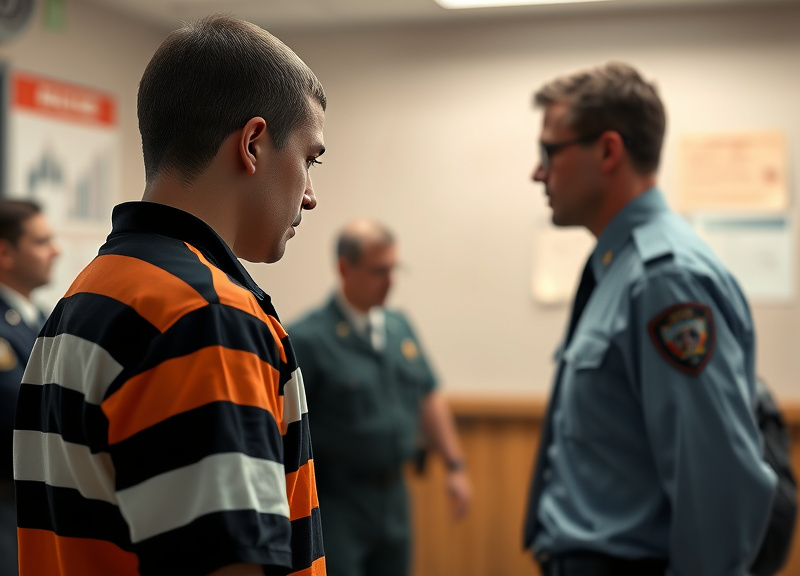
When officers have sufficient evidence, they make an arrest and take the suspect to a local station for booking. This formal process involves recording the suspect’s details, charges, fingerprints, and photographs. Proper documentation is critical for swift transition into the next phase.
Respecting constitutional rights during arrest and booking—such as reading the Miranda warning—is essential. Mistakes in these early stages can impact court proceedings and affect outcomes, underscoring the importance of both thoroughness and fairness.
Courts: The Arena of Justice
Criminal Trials and Legal Proceedings
Once an individual is charged, the case moves to court. The court system, one of the three parts of the criminal justice system, ensures fair trials and interprets laws. Prosecutors present evidence, defense attorneys advocate for the accused, and a judge oversees the process to guarantee due process.
Cases may be resolved through plea bargains or full trials by jury or judge. Safeguards, such as the presumption of innocence and the standard of proof ‘beyond a reasonable doubt,’ exist to protect all parties and promote a just verdict.
Judges, Juries, and Sentencing
Judges preside over hearings, safeguard rights, and determine sentences when there’s a conviction. If a case goes to trial, a jury of peers may be tasked with deciding the facts. Sentencing takes into account legal guidelines, aggravating and mitigating circumstances, and statutory minimums.
This stage is pivotal—whether the accused receives probation, community service, imprisonment, or another penalty, the court’s decision shapes both individual futures and broader societal standards.
Corrections: Managing Sentences and Rehabilitation
Prisons, Jails, and Alternative Sanctions
Corrections agencies carry out the court’s orders by overseeing incarceration, probation, parole, and other sanctions. Jails typically hold individuals awaiting trial or serving short sentences, while prisons confine those with longer terms. Community corrections offer alternatives like electronic monitoring or supervised release.
Effective corrections systems differentiate punishment from rehabilitation. Increasingly, agencies also invest in alternatives aimed at reducing reoffending and supporting safe societal reintegration.
Key correctional settings:
State and federal prisons
County jails
Community corrections offices
- State and federal prisons
- County jails
- Community corrections offices
Goals of Punishment and Rehabilitation
Corrections serve multiple aims: punishing criminal behavior, protecting the public, deterring future crime, and offering offenders opportunities for reform. Many facilities provide counseling, job training, and addiction services to support rehabilitation.
Balancing these goals is challenging. Some critics argue the focus leans too heavily on punishment, while others push for more restorative approaches that address root causes of crime and help reduce recidivism.
Interaction of the Three Parts of the Criminal Justice System
Cooperation and Communication
Seamless handoffs among the system’s components are essential. Law enforcement relies on courts to process cases; courts depend on corrections to implement sentences. Regular communication ensures legal rights are upheld at every stage.
Weaknesses in cooperation can result in lost evidence, violated rights, or delayed justice, highlighting the importance of ethical conduct and clear processes throughout the system.
Checks, Balances, and Oversight
Each part of the criminal justice system checks and balances the others. Courts scrutinize police conduct; corrections monitor sentencing fairness. This mutual oversight limits abuses and helps align individual actions with broader societal values.
Independent review boards, appeals, and internal affairs departments further reinforce system integrity and public trust.
Components of the Criminal Justice System: Major Challenges
Overcrowding, Underfunding, and Reform
Crowded prisons, overburdened court dockets, and resource-strained police departments stretch the criminal justice system thin. These challenges create delays, limit rehabilitation options, and can undermine public confidence.
Recent years have seen growing calls for reforms—addressing bail, sentencing disparity, and investing in community-based alternatives to incarceration.
Technology, Privacy, and Evolving Crime
As technology advances, police use new tools for investigation and evidence—raising privacy concerns. Courts adapt to digital evidence and cybercrime, while corrections deploy tracking and virtual counseling.
Balancing technological innovation with civil liberties is an ongoing debate. System flexibility is crucial for adapting to 21st-century criminal threats.
How the Three Parts of the Criminal Justice System Shape Outcomes
Individual Rights and Due Process
The criminal justice system must protect constitutional rights at every step—from arrest through incarceration. Miranda warnings, right to counsel, and fair trial guarantees are just a few essential protections in place.
Vigilance in upholding these rights is what distinguishes the U.S. system from authoritarian models. Ongoing oversight ensures justice serves people rather than simply processes.
For more historical and global context, see this comprehensive criminal justice system overview. criminal justice system overview.
Community Safety and Recidivism
Successful outcomes depend on all three parts of the criminal justice system working together to reduce crime and limit repeat offenses. Programs that combine law enforcement innovation, fair courts, and effective rehabilitation hold the greatest promise.
Collaborative efforts with nonprofits, reentry specialists, and victim advocates further strengthen results for all stakeholders.
Criminal Justice System Component Comparison
The table below outlines the primary responsibilities, settings, and main actors within each part of the criminal justice system. This helps clarify their distinct yet complementary roles.
| Component | Key Responsibility | Primary Setting | Main Actors |
|---|---|---|---|
| Law Enforcement | Prevent and investigate crime | Community, police station | Police officers, detectives |
| Courts | Determine guilt, assign sentences | Courtroom, chambers | Judges, attorneys, jury |
| Corrections | Administer sentences, rehabilitate | Prison, jail, community | Correctional officers, case workers |
| Prosecution | Represent government, pursue charges | Courthouse, office | Prosecutors, district attorneys |
| Defense | Represent accused, protect rights | Courthouse, office | Defense attorneys, public defenders |
Frequently Asked Questions
What are the main goals of the criminal justice system?
The main goals are to maintain public safety, enforce the law, uphold justice, protect individuals’ rights, punish those who commit crimes, and promote offender rehabilitation and community reintegration.
How do the three parts of the criminal justice system work together?
They collaborate through a sequence: police investigate and make arrests, courts conduct trials and decide sentences, and corrections carry out those sentences with incarceration or supervision.
What is the difference between jail and prison?
Jails are for short-term holds and pretrial detainees, usually run by counties. Prisons hold individuals convicted of serious crimes serving longer sentences and are operated by states or the federal government.
Why is due process important in the criminal justice system?
Due process protects individuals against unfair treatment by ensuring fair procedures at every stage—arrest, trial, and sentencing—so that justice is based on law, not arbitrary decision-making.
Can someone be part of more than one component at the same time?
Yes. For example, a defendant may interact with law enforcement during arrest, appear in court for trial, and eventually be monitored by corrections through probation or parole, experiencing all components consecutively.
Key Takeaways
- The three parts of the criminal justice system are law enforcement, courts, and corrections.
- Each component serves a unique function but relies on the cooperation of others.
- Reform and innovation are crucial to improving justice and public safety.
- Understanding each component helps citizens navigate legal processes with confidence.
Conclusion
To make informed choices or even simply to understand how justice operates in the U.S., recognizing the structure and function of the three parts of the criminal justice system is foundational. With law enforcement as the entry point, courts as the arbiter, and corrections handling punishment or rehabilitation, this trio forms a system of checks and balances that reflects both constitutional safeguards and evolving societal standards. Their interconnected roles enable quick responses to crime, deliberative processes for justice, and enforcement of sentences designed to protect communities while also offering paths toward reform.
If you are most focused on safety and policing, law enforcement in your community is the most visible daily presence. For those navigating legal disputes or criminal accusations, the court system’s role in protecting rights and deciding outcomes is paramount. When thinking about long-term impacts on individuals and society, corrections—ranging from prisons to parole services—illustrate the system’s potential for both punishment and positive change. Understanding where to seek help or information for each component is vital when facing or observing the justice process in action.
Always remember that these three parts of the criminal justice system rely on your awareness, engagement, and, when necessary, advocacy for fairness and reform. Whether you are a student, a concerned citizen, or directly involved at any stage, staying informed about how each part functions—and their strengths and weaknesses—will empower you to contribute positively to the ongoing evolution and integrity of the criminal justice system.