Top 13 Best Newest Uniden Police Scanner You Need Now!
Trying to follow emergency alerts with a cheaply made scanner often leads to missed transmissions or poor audio quality, a frustration many know too well. The best newest uniden police scanner offers clearer reception and quicker updates, helping avoid those gaps in information that can cost valuable time during urgent moments.
What sets a capable uniden police scanner apart tends to be its frequency range, audio clarity, and durability. A good model covers the full VHF and UHF bands, typically ranging from around 25 MHz to 1300 MHz. Strong audio output with minimal distortion makes it easier to catch vital details.
Solid construction with weather-resistant casing also matters since these devices often get used outdoors and in varying conditions.
Need a Quick Check?
| Image | Product | Price |
|---|---|---|
Our Top Picks 1  | Uniden SDS150 Scanner | Check Price |
Our Top Picks 2  | Uniden SDS100 Handheld | Check Price |
Our Top Picks 3  | Uniden SDS200 TrunkTracker | Check Price |
Our Selected Top 13 Newest Uniden Police Scanner Worth Buying
This list features the latest police scanners, highlighting their performance, ideal users, and key advantages and disadvantages. Each review offers clear insights to help readers understand how well each scanner works and who it is best suited for.
1. Uniden SDS150 Digital Radio Scanner
Feeling solid and reliable in hand, the Uniden SDS150 suits anyone needing a portable police scanner that handles digital channels without fuss. Its biggest strength lies in the clear, enhanced signal reception thanks to upgraded sensitivity and smart filtering, making it particularly useful for professionals out in the field or serious hobbyists.
Getting it set up involves a straightforward interface and a digital display that makes tuning into frequencies simple right out of the box. Connections through Bluetooth to smartphones add convenience, while the built-in GPS keeps location data handy. Extended battery life plus the included charge cradle means it lasts through long sessions without constant recharging interruptions.
Signal clarity and consistent scanning performance deliver exactly what’s needed for monitoring diverse communication standards, including TrunkTracker X and APCO P25 Phase I & II. The lightweight yet rugged body handles daily wear well, feeling durable without extra bulk. Common praise highlights the signal quality and battery life; some note the single nonstandard battery can be tricky to replace.
Signal reception and battery endurance receive consistent praise from those familiar with the scanner. At the same time, some find the single nonstandard battery replacement less convenient than expected. The interface simplifies control compared to older models but might feel unfamiliar initially.
People needing reliable scanning of multiple digital formats and long battery life will appreciate this scanner. Those preferring a more common battery type or needing a steeper learning curve might look at alternative units.
Pros
- Improved signal reception with interference filtering
- Long battery life optimized for field use
- Lightweight and durable construction
- Bluetooth connectivity for smartphone pairing
Cons
- Uses a single nonstandard battery
- Interface may take getting used to
| Specification | Details |
|---|---|
| Connectivity Technology | Bluetooth |
| Tuner Type | TrunkTracker X, APCO P25 Phase I & II, Motorola, EDACS, LTR DMR Tier III*, Hytera XPT*, Single-Channel DMR* NXDN 4800/9600*, EDACS ProVoice* |
| Power Source | Battery Powered |
| Radio Bands Supported | AM, NFM, FM, WFM, or FMB |
| Display Type | digital |
| Additional Features | Weather Alert, Built-in GPS receiver, Support for U/AWARE app |
2. Uniden SDS100 True I/Q Handheld Scanner
Ideal for serious radio hobbyists and professionals, the Uniden SDS100 True I/Q Handheld Scanner brings exceptional digital reception and easy programming. Its standout feature is the True I/Q receiver, designed to capture tricky signals that other scanners often miss, making it a strong choice for challenging communication environments.
Programming starts simply by entering a zip code, tapping into the HomePatrol Database covering all US and Canadian radio systems. Day-to-day use benefits from the customizable color display, allowing quick access to important info.
The scanner supports updates through Sentinel software and uses a MicroSD card for media, which helps keep settings and data portable.
Performance excels when tracking digital and weak signals, particularly in environments with difficult radio frequency conditions. A sturdy build supports handheld use, though some might find the shape less ergonomic for long scanning sessions.
Most praise focuses on its digital clarity and comprehensive frequency coverage, while common critiques mention a learning curve with software updates and menu navigation.
The scanner delivers clear digital audio in weak-signal areas, praised consistently in user feedback. Programming via zip code simplifies initial setup, but navigating software updates and menus requires patience. This balance of advanced performance and occasional complexity shapes the everyday use experience.
Dedicated scanner enthusiasts and professionals using digital systems will appreciate its strengths. Casual or new users might prefer simpler models with more straightforward controls and fewer setup demands.
Pros
- True I/Q receiver improves digital performance
- HomePatrol Database updated weekly
- Customizable color display
- Easy zip-code based programming
Cons
- Software updates can be complex to manage
- Some find menu navigation unintuitive
| Specification | Details |
|---|---|
| Scanner Type | Digital Handheld Scanner |
| Connection Type | USB |
| Resolution | 24 Bits |
| Color Depth | 24 |
| Media Type | MicroSD Card |
| Standard Sheet Capacity | 1 |
3. Uniden SDS200 True I/Q TrunkTracker X Scanner
Built with a durable design and featuring a large 3.5 fully customizable color display, this scanner is ideal for anyone wanting a clear, detailed view of radio communications. It stands out by combining ease of use with advanced True I/Q technology, making it well suited for hobbyists and professionals alike.
Setting up the scanner is straightforward thanks to the built-in HomePatrol database, which already contains all known radio systems in the US and Canada. Day-to-day use is simplified by the custom color display where you can adjust what information appears and how it looks.
USB connectivity allows for easy updates to the database via Sentinel software, which keeps things current without fuss.
The true strength lies in its ability to handle challenging digital simulcast systems, delivering clear reception where others might struggle. Its build quality feels solid and dependable.
One common complaint is that the scanner’s interface has a bit of a learning curve despite its simplicity. Still, the scanner performs reliably and supports detailed scanning without lag.
The scanner is praised for clear, reliable reception even in tough digital simulcast situations, though some users find the menu and controls hard to use at first. Its solid construction matches its technical capabilities, making it a dependable companion for serious scanning.
Individuals who want detailed, current radio system information with customizable viewing will appreciate this scanner. Those seeking a simpler, plug-and-play experience might want to explore options with fewer adjustable settings or easier navigation.
Pros
- Customizable 3.5″ color display
- Includes HomePatrol database preloaded
- Weekly database updates via USB
- Strong performance on digital simulcast systems
Cons
- Interface can be confusing at first
- Limited sheet capacity to 10 standard sheets
| Specification | Details |
|---|---|
| Scanner Type | Radio Scanner |
| Connection Type | USB |
| Resolution | scanner |
| Standard Sheet Capacity | 10 |
| Light Source Type | LED |
| Media Type | USB |
4. Uniden Bearcat BC125AT Analog Handheld Scanner
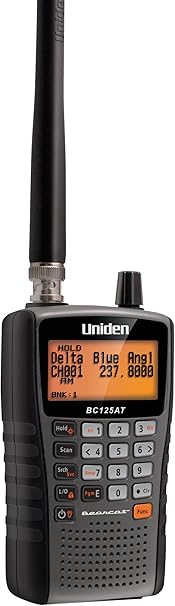
Compact and straightforward, the Uniden Bearcat BC125AT Analog Handheld Scanner fits well for anyone needing to monitor analog radio signals without fuss. Its top feature is the Close Call RF capture technology, which quickly picks up nearby transmissions without manual tuning, making it handy for casual scanning on the go.
Setting it up is simple with 500 alpha-tagged channels to organize your scanning interests clearly. The digital display makes changing frequencies easy and quick, while the Do Not Disturb mode keeps the scanner from jumping channels during ongoing transmissions. It runs on two AA batteries, lasting up to 10 hours, giving plenty of time for daily use without frequent recharging.
Reception is solid across analog frequencies, covering a wide range from 25 MHz up to 512 MHz. The device’s lightweight handheld design makes it easy to carry around, but it’s not water-resistant, so it requires some care outdoors.
The strongest point noted is the effective Close Call feature, while the lack of digital scanning limits some users in areas where digital systems prevail.
The Close Call RF capture technology stands out as a practical feature that makes finding active analog signals quick and straightforward. However, many users note that the inability to monitor digital radio systems limits its usefulness in cities switching to newer digital networks.
This scanner suits someone who primarily needs analog signal reception and values portability and simplicity. For those requiring digital or trunked system scanning, a different model would be a better fit to cover those advanced communication formats.
Pros
- Close Call RF capture tunes to nearby signals
- Digital display for easy channel management
- Long 10-hour battery life on AA batteries
- Compact and lightweight handheld design
Cons
- Not capable of digital radio system monitoring
- No water resistance for outdoor use
| Specification | Details |
|---|---|
| Number of Channels | 500 |
| Frequency Range | 25-54 MHz, 108-174 MHz, 225-380 MHz, 400-512 MHz (UHF) |
| Battery Average Life | 10 hours |
| Voltage | 3 volts |
| Number of Batteries | 2 AA (included) |
5. Uniden BC365CRS 500 Channel Scanner

Offering an affordable way to scan through 500 channels, this scanner suits anyone wanting easy access to analog police, fire, and emergency communications without much setup fuss. Its biggest strength lies in the ready-made presets that save time hunting for relevant channels, making it straightforward for beginners and hobbyists alike.
Setting up involves just plugging in and using the push button controls to switch between saved channels or search new ones. Day-to-day use is simple thanks to the built-in FM radio and alarm clock, with space to store up to 30 favorite stations for quick listening.
You can keep it on your tabletop and switch between scanner and radio modes comfortably.
It performs solidly when scanning typical analog bands and emergency frequencies, diving into marine, aircraft, and railroad channels with ease. The build feels durable but is designed for home use rather than rugged outdoor conditions. People like how comprehensive the presets are, though some mention the 50 db noise as a bit loud in quiet rooms.
Strongest praise centers on the wide range of accessible channels and the helpful presets that make scanning straightforward without extra programming. The most often mentioned complaint involves the audible noise, which some find a bit too loud when the room is silent, affecting comfortable listening.
Those wanting a dependable analog scanner with built-in radio and alarm features for home use will appreciate this model. Users seeking a quieter device or portable battery-only operation might want to explore other options offering lower noise levels or more mobility.
Pros
- Pre-set channels for popular searches included
- Stores up to 30 FM stations
- Convenient tabletop design
- Simple push-button controls
Cons
- 50 db noise can be intrusive in quiet environments
- Requires continuous corded electric power
| Specification | Details |
|---|---|
| Power Source | Corded Electric |
| Number of Channels | 500 |
| Control Method | Push Button |
| Battery Description | 3 AA Alkaline |
| Mounting Type | Tabletop Mount |
| Built-in Features | FM Radio & Alarm Clock |
6. Uniden BCD436HP HomePatrol Digital Handheld Scanner

Trying to stay connected with local emergency and public safety channels without fuss often gets complicated, but here the BCD436HP really shines. Perfect for those who want a powerful handheld police scanner that doesn’t require technical programming skills. It makes monitoring critical communications straightforward and fast, especially useful for public safety enthusiasts and professionals alike.
Setup couldn’t be simpler – just power it on, punch in your zip code, and the scanner’s TrunkTracker V feature sorts out the rest automatically. Daily use relies heavily on the extra-large display and GPS connectivity, making it easy to find and follow active channels.
The Close Call RF Capture feature picks up nearby signals on its own, keeping you aware even without manual input.
It quickly scans through 85 channels per second, catching signals across varied frequency ranges like police, fire, EMS, aircraft, and weather. The scanner feels solid yet lightweight in hand, though it lacks water resistance.
Most users praise how responsive and simple it is to operate; the one common gripe is the reliance on AAA batteries, which run for about eight hours but can require frequent replacement.
The scanner’s biggest strength lies in how easy it is to start using right away without any programming, supported by its fast scan speed and automatic channel discovery. The most frequent complaint relates to battery life since it depends on AAA batteries that last around eight hours and need regular replacement for extended use.
Anyone wanting a ready-to-go, handheld scanner for monitoring multiple public safety channels will find this model a great fit. Those needing longer battery life or something suitable for wet outdoor conditions might want to consider alternative options better suited to those needs.
Pros
- Easy setup with no programming needed
- Extra-large, clear display for channel info
- Covers a wide range of emergency frequencies
- Close Call RF Capture finds nearby signals
Cons
- Requires frequent AAA battery changes
- Not water resistant, limits outdoor use
| Specification | Details |
|---|---|
| Number of Channels | 85 |
| Scan Speed | 85 channels per second |
| Frequency Range | 25-512 MHz, 758-824 MHz, 849-869 MHz, 894-960 MHz, 1240-1300 MHz |
| Battery Average Life | 8 hours |
| Connectivity Protocol | GPS |
7. Uniden BCD996P2 Digital Mobile TrunkTracker V Scanner

25,000 channels make the Uniden BCD996P2 a powerhouse for anyone serious about monitoring police and emergency communications. Designed for mobile setup, it suits those who want precise, location-based scanning and early severe weather alerts. Its biggest strength lies in combining extensive channel capacity with advanced weather warning features.
Setting it up involves plugging into a 12-volt DC power source, making it ideal for vehicle use. The TrunkTracker V technology handles complex trunked systems smoothly, while Close Call RF Capture quickly picks up nearby transmissions without interrupting active channels.
Alerts from S.A.M.E. technology keep you informed about severe weather in your area. The LCD display offers clear info, and the included lithium-ion battery supports portable convenience when needed.
Performance holds up well with sharp reception of both conventional and trunked radio signals, handling 25 MHz frequencies easily. The solid build feels durable despite the lack of water resistance, suitable mostly for in-car environments. A common praise is its accurate location-based scanning, but some find the interface slightly dated.
Audio output is stereo, adding clarity for critical audio cues, while its IR connectivity provides basic device integration options.
Accurate location-based scanning and extensive channel capacity receive strong praise, offering focused, reliable monitoring. The most common complaint revolves around the interface, which some find less intuitive and a bit behind modern design standards. Portable functionality with the lithium-ion battery is a welcomed bonus.
Those needing a mobile scanner with wide frequency coverage and weather alert features will appreciate this device. Users wanting a simpler or more weatherproof option might consider alternatives better suited to harsh conditions or easier operation.
Pros
- Captures up to 25,000 channels
- Includes severe weather S.A.M.E. alerts
- Close Call RF technology detects nearby transmissions
- Location-based scanning adjusts automatically
Cons
- Not water resistant for outdoor use
- Interface can feel outdated and complex
| Specification | Details |
|---|---|
| Channels | 25,000 |
| Power Source | 12 volts Direct Current (DC) |
| Close Call RF Capture Technology | Yes |
| Tuner Type | Radio Frequency |
| Display Type | LCD or LED |
| Battery | 1 Lithium Ion (included) |
8. Uniden BCD325P2 Handheld TrunkTracker V Scanner

People who want real-time local police and emergency service updates will appreciate this handheld scanner. It suits those who need a portable device with quick, reliable access to nearby signals. Its biggest strength lies in the Close Call RF Capture Technology that automatically tunes to the closest radio signals in your area.
Setting up the scanner involves programming up to 100 Quick-Key System Access points, letting you jump to your favorite stations fast. GPS compatibility helps you track relevant transmissions by location. Scanning through 25,000 channels feels manageable with the Advanced Dynamic Memory System organizing your selections.
The USB connection allows easy updates and data management.
Performance is strong in picking up both simple and APCO Project 25 Phase II signals, making communication clear across many systems. The build is compact and feels sturdy in hand, suitable for daily use on the move. Reports show the device quickly finds nearby signals, though some mention that mastering the key setup requires patience.
Close Call RF Capture Technology is highly praised for quickly locking onto the closest radio transmissions, making monitoring local activity straightforward. The most frequent complaint involves the complexity of programming the Quick-Key System, which can take some time to get right.
People looking for a powerful handheld scanner that works well with many emergency services will find this a solid choice. Those wanting a simpler, more intuitive setup may prefer a different model with fewer programming demands.
Pros
- Automatically tunes to nearest signals
- Quick-Key System for easy access
- Supports latest APCO Project 25 Phase II
- Large channel capacity of 25,000
Cons
- Can be tricky to program quick keys
- No color display depth details
| Specification | Details |
|---|---|
| Scanner Type | Radio |
| Connection Type | GPS |
| Resolution | 2400 dpi |
| Wattage | 20 watts |
| Media Type | USB |
9. Uniden BC355N 300-Channel Base/Mobile Scanner

Uniden BC355N stands out as a basic analog police scanner, perfect for those who monitor traditional radio channels rather than digital. Its key advantage is the Close Call RF Capture Technology, which quickly picks up nearby signals, making it suitable for hobbyists or those in areas without digital radio systems.
Setting up the scanner involves plugging it into a power source and tuning to the desired frequency. Daily use benefits from the wide frequency and service bank support, allowing access to up to 300 channels.
The LCD display provides clear readouts, while USB connectivity facilitates routine updates or programming adjustments. Using it mainly involves scanning on the 800 MHz band and responding to signals picked up through its radio frequency tuner.
The scanner performs reliably within its analog-only capabilities, catching signals efficiently thanks to Close Call RF Capture. Its build is straightforward, with a corded electric power source ensuring constant operation.
Most praise highlights its ability to tune nearby transmitters rapidly, while common complaints focus on its inability to handle digital trunking systems used increasingly by emergency services.
Close Call RF Capture Technology stands out for instantly tuning to nearby transmitters, improving signal hunting. Users often mention its limitation in missing digital broadcasts, a growing issue in areas switching to digital radio systems.
Anyone relying on analog channels and basic scanning will find this model satisfactory. Those needing digital or trunking radio monitoring should look at Uniden’s digital models, as this one lacks that capability.
Pros
- Quickly captures nearby signals with Close Call technology
- Supports wide frequency and service bank range
- Simple LCD display makes reading frequencies easy
- USB connection for easy programming and updates
Cons
- Not compatible with digital radio systems
- Single band limits scanning diversity
| Specification | Details |
|---|---|
| Channels | 300 |
| Frequency | 800 MHz |
| Radio Bands Supported | 1-Band |
| Power Source | Corded Electric |
| Connectivity Technology | USB |
| Display Type | LCD |
10. Uniden Bearcat BCD160DN Handheld Digital Scanner
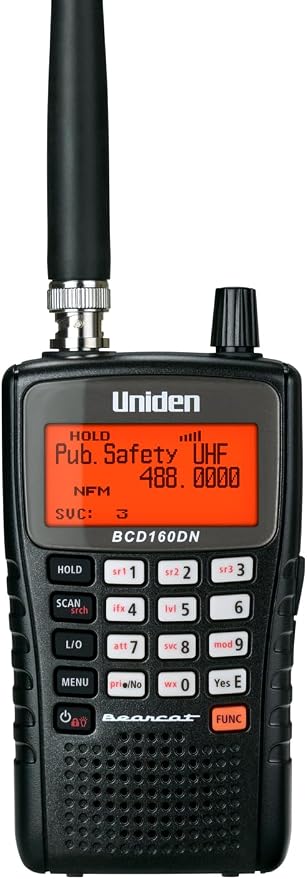
Uniden Bearcat BCD160DN is a handheld digital scanner designed for those who want to catch clear and quick digital signals. It suits hobbyists or professionals looking for a reliable way to monitor digital radio frequencies with strong decoding abilities.
Its standout feature is its instant detection of CTCSS tones and DCS codes for fast system setting checks.
Setup is straightforward with USB connectivity, and day-to-day scanning feels sharp thanks to useful features like Band Scope Rapid System and Channel Number Tagging. These let you spot signals easily without wasting time. The scanner supports popular digital protocols like DMR and NXDN right away, with a firmware update enabling P25 Phase 1 & 2 decoding, which keeps it current without extra investment.
Signal clarity on digital and conventional channels is impressive, making it easier to hear important broadcasts. The device feels solid and functional in hand, built for consistent use. Users praise the swift code detection, but some note that lack of trunking support limits tracking some systems.
Encrypted signals remain off-limits, which is expected for this category.
The quick detection of tones and codes stands out as the scanner’s best feature, helping users identify signal details on the fly. However, many find the absence of trunking support a limiting factor when trying to follow more complex systems. The lack of encryption decoding matches most scanners in this price range.
People wanting to monitor digital channels without dealing with complicated trunking systems will find this device meets their needs well. Those requiring full trunking tracking or decryption capabilities should look for alternatives with those specific functions built in to avoid frustration later.
Pros
- Instant CTCSS and DCS tone detection
- Out-of-the-box DMR and NXDN support
- Firmware update expands protocol coverage
- Handheld design with USB connection
Cons
- No trunking support included
- Cannot decode encrypted signals
| Specification | Details |
|---|---|
| Scanner Type | Radio Scanner |
| Connection Type | USB |
| Digital Decoding | DMR, NXDN, APCO P25 Phase 1 & 2 (firmware update) |
| Exclusive Features | Band Scope Rapid System/Channel Number Tagging |
| Rapid Decode | CTCSS/TCS instant detection |
11. Uniden HomePatrol-2 Touchscreen Digital Scanner

Listening in on community happenings feels straightforward and clear with the Uniden HomePatrol-2 Touchscreen Digital Scanner. Designed for those who want easy access to local police, fire, and weather radios, its standout feature is the intuitive digital color touchscreen that simplifies choosing what to tune into.
Getting it set up involves connecting via USB and installing the Sentinel software, which keeps the device current without needing much fuss. Daily use centers around scrolling through clearly labeled radio services on the touchscreen, allowing quick selection and easy changes to what you hear throughout the day.
Its portability and on-screen navigation make following multiple channels convenient.
The scanner captures public safety signals clearly, especially the non-encrypted types police, fire, and ambulance services use. Build quality feels solid and made to last, with a user-friendly interface that makes tuning in less technical.
Strong points include the touch interface and constant updates, while some users find it occasionally slow in switching channels.
Users appreciate the simple touchscreen that makes scanning quick and intuitive, while the most frequent complaint points to slight delays when moving between channels, which can interrupt continuous listening. Updates through Sentinel keep the scanner current, reducing manual maintenance.
People wanting straightforward access to local emergency frequencies will likely enjoy this scanner’s ease of use and reliable reception. Those needing access to encrypted transmissions or faster channel switching may want to look for alternative models better suited to those specific needs.
Pros
- Easy-to-use color touchscreen interface
- Includes Sentinel software for automatic updates
- Supports multiple public safety communication systems
- Compact and portable design
Cons
- Occasional delay when switching channels
- Does not receive encrypted communications
| Specification | Details |
|---|---|
| Scanner Type | Radio Frequency scanner |
| Connection Type | USB |
| Media Type | USB |
12. Uniden BearTracker BCT15X Base/Mobile Scanner

Uniden BearTracker BCT15X is a powerful base and mobile police scanner fit for serious hobbyists and professionals. Its biggest strength lies in handling up to 9,000 channels with advanced dynamic memory system and TrunkTracker III technology, making it ideal for tracking multiple systems, including Motorola and EDACS.
Setup involves connecting included accessories like the AC adapter, vehicle power cord, and antenna. Programming is simplified thanks to location-based scanning, which automatically updates systems using compatible GPS.
Traveling becomes easier thanks to preprogrammed state-by-state police and highway patrol channels. Adjusting channel volume individually lets you tune in clearly without interference, enhancing daily use.
Performance centers around solid reception and the ability to keep pace with trunked radio systems efficiently. Built tough with a quality mounting bracket and hardware, it feels durable for vehicle or base use.
Most praise highlights the range of channels and trunk system tracking. Common complaints point to occasional complexity in navigating its many features.
Strong points include its massive channel capacity and ability to handle complex trunked radio systems reliably. Most users find the feature set demanding to learn, which can slow down initial operation. Setup is helped by included cables and mounting hardware.
The scanner suits those needing extensive channel coverage and mobile or base use with multiple system support. Users wanting a simple plug-and-play scanner may find it too complex and would do better with a more straightforward model.
Pros
- Handles 9,000 channels with ease
- Supports multiple trunking systems
- Location-based scanning with GPS
- Individual channel volume control
Cons
- Interface can be complicated for beginners
- Some features require compatible accessories
| Specification | Details |
|---|---|
| Model Number | BCT15X |
| Channels | 9,000 |
| Technology | TrunkTracker III, Dynamic Memory System |
| Compatibility | BC-RH96 Remote Head, GPS receiver |
| Included Items | AC Adapter, Vehicle Power Cord, Antenna, Mounting Bracket |
| Warranty | 1 year manufacturer |
13. Uniden Bearcat BCD260DN Base/Mobile Digital Scanner

Built with a solid digital design, the Uniden Bearcat BCD260DN suits anyone serious about tracking a wide range of emergency and public safety communications. Its standout strength is the ability to access and tag thousands of frequencies quickly, making signal detection faster and more efficient.
Setting it up involves plugging in via USB and taking advantage of pre-programmed service bands that cover police, fire, weather alerts, aviation, and more. Day-to-day use focuses on scanning rapidly through channels with features like Band Scope and Rapid System/Channel Number Tagging, which help identify transmissions without wasting time on irrelevant frequencies.
Performance-wise, the scanner picks up narrowband signals clearly, handling a vast spectrum without lag or dropouts. The build feels durable and suited for both base and mobile use.
Reviews highlight how reliable and comprehensive it is for emergency communications, though some mention the interface could be more intuitive for beginners getting used to the many features.
The scanner earns praise for reliable reception across many emergency frequencies and rapid detection abilities, making communications quick to catch. Most criticisms focus on its interface, which may take time to get comfortable with due to its complexity and detailed features.
Anyone needing detailed, versatile access to multiple public safety bands will find it rewarding. Those new to scanners or wanting a simpler layout might prefer a model with more straightforward controls and a higher resolution screen.
Pros
- Access to 10,000 direct frequencies
- Includes pre-programmed emergency service bands
- Band Scope for faster signal detection
- Durable for both base and mobile use
Cons
- Interface can be confusing for first-time users
- Limited display resolution at 300 dpi
| Specification | Details |
|---|---|
| Scanner Type | Radio Frequency scanner |
| Connection Type | USB |
| Resolution | 300 dpi |
| Frequency Access | 10,000 frequencies |
| Pre-programmed Bands | Emergency, weather, aviation, marine, railroad, NASCAR |
Comparison of Top Uniden Police Scanners Reviewed
| Product | Scanner Type | Power Source | Connectivity | Additional Features |
|---|---|---|---|---|
| Uniden SDS150 Scanner | Battery Powered | Battery Powered | Bluetooth | Weather Alert, TrunkTracker X |
| Uniden SDS100 Handheld | Digital Handheld | – | USB | – |
| Uniden SDS200 TrunkTracker | Radio Scanner | – | USB | – |
| Uniden BC125AT Analog | Analog | 2 AA Batteries | – | Digital Display |
| Uniden BC365CRS Scanner | – | Corded Electric | – | Ultrasonic Sensor |
| Uniden BCD436HP HomePatrol | – | 3 AAA Batteries | – | Weather Alert |
| Uniden BCD996P2 Mobile | – | 12V DC | IR | Close Call RF Capture |
| Uniden BCD325P2 Handheld | Radio | – | GPS | – |
| Uniden BC355N Base/Mobile | – | Corded Electric | USB | Close Call RF Capture |
| Uniden BCD160DN Bearcat | Radio Scanner | – | USB | – |
| Uniden HomePatrol-2 Touchscreen | Radio Frequency Scanner | – | USB | – |
| Uniden BCT15X BearTracker | – | – | – | Includes Accessories |
| Uniden BCD260DN Base Scanner | Radio Frequency Scanner | – | USB | – |
- Scanner TypeBattery Powered
- Power SourceBattery Powered
- ConnectivityBluetooth
- Additional FeaturesWeather Alert, TrunkTracker X
- Scanner TypeDigital Handheld
- Power Source–
- ConnectivityUSB
- Additional Features–
- Scanner TypeRadio Scanner
- Power Source–
- ConnectivityUSB
- Additional Features–
- Scanner TypeAnalog
- Power Source2 AA Batteries
- Connectivity–
- Additional FeaturesDigital Display
- Scanner Type–
- Power SourceCorded Electric
- Connectivity–
- Additional FeaturesUltrasonic Sensor
- Scanner Type–
- Power Source3 AAA Batteries
- Connectivity–
- Additional FeaturesWeather Alert
- Scanner Type–
- Power Source12V DC
- ConnectivityIR
- Additional FeaturesClose Call RF Capture
- Scanner TypeRadio
- Power Source–
- ConnectivityGPS
- Additional Features–
- Scanner Type–
- Power SourceCorded Electric
- ConnectivityUSB
- Additional FeaturesClose Call RF Capture
- Scanner TypeRadio Scanner
- Power Source–
- ConnectivityUSB
- Additional Features–
- Scanner TypeRadio Frequency Scanner
- Power Source–
- ConnectivityUSB
- Additional Features–
- Scanner Type–
- Power Source–
- Connectivity–
- Additional FeaturesIncludes Accessories
- Scanner TypeRadio Frequency Scanner
- Power Source–
- ConnectivityUSB
- Additional Features–
How to Choose the Right Uniden Police Scanner
Key factors for selecting a reliable police scanner include frequency coverage, ease of use, and scanning speed. Choosing the right features ensures clear reception and efficient monitoring, preventing frustration and unnecessary expenses from incompatible or low-quality devices. Prioritizing these aspects leads to better long-term satisfaction.
Frequency Coverage
Many scanners fall short when they can’t pick up the digital trunking signals used by modern police and emergency services, which makes it difficult to get a complete picture of what’s happening in the area. Older models that rely solely on analog frequencies miss a large portion of current communication traffic.
A good scanner supports both analog and digital signals, including APCO 25 and other common digital systems used in public safety communications.
Coverage is another practical matter: the device needs to cover local VHF and UHF bands, as well as regional frequencies. This means the scanner should cover roughly 25 to 512 MHz or more, allowing monitoring of police, fire, EMS, and other public services without gaps.
Some units include broader ranges to catch amateur bands or weather channels, but for everyday monitoring, full support of digital trunking and common regional bands is what matters most.
Scanning and Search Features
Waiting for the scanner to cycle through channels is frustrating if you want to catch active transmissions quickly. A fast scanning speed, around 30 to 60 channels per second, makes a noticeable difference.
Programmable search functions help you target specific frequency ranges rather than scanning blind.
Priority channels and close call alert features also come in handy. They automatically flag or jump to transmissions on designated important channels, so you don’t miss critical live communications during busy times.
Without these features, it’s easy to miss fast or brief police or emergency messages when manually searching.
User Interface and Display
Using a scanner outside during daylight or at night requires a screen that’s easy to read in different lighting; glare or tiny fonts can make it unusable. A backlit LCD or OLED screen with adjustable brightness keeps things clear. Larger, clear characters prevent eye strain over hours of use.
The menu system should be straightforward with logical grouping of settings. Fumbling through poorly organized menus wastes time and can lead to missed events.
Customizable presets and memory channels are crucial for daily users who want quick access to the most important frequencies without lengthy reprogramming.
Portability and Power Options
Holding a scanner for extended periods highlights the importance of size and weight. Too bulky or heavy can cause hand fatigue.
Models around 7 to 10 inches tall and under a pound feel balanced and comfortable for handheld operation during long monitoring sessions.
Battery life varies widely; practical units should last at least 6 to 8 hours on a charge or set of replaceable batteries. Rechargeable Li-ion batteries offer convenience, but having the option for AA batteries can be a lifesaver if you run out of power. External power options like car adapters extend use during travel or stakeouts.
Audio Quality and Connectivity
Poor audio quality can obscure important details in transmissions, so the built-in speaker must provide clear sound at a decent volume without distortion. Some scanners sound tinny or crackly, which makes it hard to understand conversations, especially in noisy environments.
Headphone jacks allow private listening or connection to better external speakers, which can be essential in crowded or noisy settings. Some models also offer USB or Bluetooth connectivity for data access or remote control through an app. This expands functionality, allowing firmware updates and monitoring from a phone or computer.
Optimizing Your Uniden Police Scanner for Maximum Signal Reception
Placement plays a critical role in maximizing the signal reception of a Uniden police scanner. Avoid locating the device near thick walls or large metal objects, which can block or weaken signals. Elevating the scanner or placing it close to a window often improves performance.
The antenna type affects reception as well. Using a longer, external antenna can help pick up distant or weak frequencies more clearly than the built-in standard antenna.
Adjusting the scanner settings properly also makes a difference. Tuning the squelch control allows the device to filter out background noise without missing transmissions.
Keeping the firmware updated ensures the scanner can handle the latest communication protocols and frequencies. For frequent users, programming known police and emergency channels reduces scanning time and improves signal acquisition.
- Place near windows or higher locations
- Use external antennas when possible
- Adjust squelch for clearer audio
- Keep firmware current
- Program active frequencies
Essential Maintenance Practices to Extend the Lifespan of Your Police Scanner
Regular cleaning of your police scanner’s exterior and connectors prevents dust and debris buildup that can interfere with controls and signal input. Use a soft cloth and avoid harsh cleaners that may damage sensitive components. Inspect cables and antenna connections for signs of wear or corrosion; replacing damaged parts maintains signal quality.
Battery care matters for portable units. Remove batteries if the scanner won’t be used for extended periods to prevent leakage. Rechargeable models benefit from occasional full discharge and charge cycles to preserve battery health.
Store the device in a cool, dry place away from extreme temperatures, which can affect internal electronics and battery life.
- Clean exterior and connectors regularly
- Check and replace worn cables or antennas
- Manage batteries properly
- Avoid exposure to heat and moisture
Comparing Uniden Models with Other Leading Police Scanners on the Market
Uniden models often stand out for ease of use and extensive frequency coverage, making them popular among hobbyists and professionals alike. Compared with some competitors, Uniden scanners usually provide a straightforward programming process with comprehensive scanning options. Their models frequently include support for digital and analog signals, which is important given the variety of communication systems in use.
Other brands may offer features like touchscreens or smartphone integration, but Uniden’s strengths lay in solid build quality and reliability over time. Price points vary depending on features such as bandwidth, memory capacity, and advanced decoding capabilities.
Considering specific needs, like coverage of local public safety bands or aircraft frequencies, helps determine the best choice between Uniden and other leading scanners.
- Uniden offers broad frequency and protocol support
- Programming is generally user-friendly
- Some competitors have more modern interfaces
- Decide based on required features and budget
People Also Asked
How Do I Properly Set up a New Police Scanner?
Setting up a new police scanner involves charging the battery fully, programming frequencies manually or via software, and placing the antenna correctly for best reception. Keeping the scanner in an open area helps avoid signal loss during initial testing.
What Safety Precautions Should I Take When Using a Police Scanner?
Avoid scanning sensitive or restricted frequencies to stay within legal limits. Use the scanner in a way that does not distract you while driving or interfere with emergency responses.
How Long Does a Typical Police Scanner Battery Last?
Police scanner batteries typically last around 8 to 12 hours depending on the model and usage, especially if the backlight or audio volume is high. Carrying a spare battery or car charger improves convenience for longer use.
Is This Police Scanner Compatible with My Car’s Power Outlet?
Most Uniden police scanners come with a 12V DC car adapter compatible with standard vehicle power outlets. Checking the voltage rating on both the scanner and the outlet ensures proper power supply without damaging the device.
What Are Common Problems with Newly Bought Police Scanners?
Common issues include poor signal reception due to antenna placement, battery not holding charge initially, and sometimes confusing programming steps. Reading the manual carefully or using companion apps can reduce setup errors.
Conclusion
Choosing a police scanner depends on clear reception, easy-to-use controls, and support for the types of frequencies you want to monitor. Portability and battery life also matter if you plan to use it outside or for long periods.
These features influence how useful the scanner will be for your specific needs rather than just going for the newest model available.
Consider your typical listening environment and how often you plan to use the scanner before making a final choice. This helps avoid paying for features you won’t use or getting something too basic.
Check back to the comparison table and product details above to find the scanner that fits your budget and setup best.