Top 13 Best Acid for Removing Rust That Works Like Magic
Rust removal is a common challenge when dealing with old tools, outdoor furniture, or car parts. Choosing the best acid for removing rust matters because many acids either work too slowly or can cause damage to the metal underneath.
Some acids leave residue that’s hard to clean off, making the surface unsafe for further use or painting.
The effectiveness of a rust-removing acid depends largely on its concentration and chemical composition. Phosphoric acid around 10% strength is a practical option, as it dissolves rust without severely harming the base metal. Safety is key: acids with proper buffering agents reduce burn risks during use.
Also, the container’s design that allows for controlled application and easy rinsing makes the process less messy and more efficient. Proper handling and post-treatment cleaning are essential to keep the metal intact.
Need a Quick Check?
| Image | Product | Price |
|---|---|---|
Our Top Picks 1  | CRC Evapo-Rust | Check Price |
Our Top Picks 2  | Rust-Oleum Dissolver Spray | Check Price |
Our Top Picks 3  | Pure Oxalic Acid Remover | Check Price |
Our Selected Top 13 Acid for Removing Rust Worth Considering
This list includes a range of acids designed to effectively remove rust from various surfaces. Each review explains how well the product works, highlights its ideal users, and outlines its main advantages and disadvantages to help you make an informed choice.
1. CRC Evapo-Rust Rust Remover
Rust buildup on tools or automotive parts can be a real headache, especially when scrubbing makes little difference. Perfect for anyone looking to remove rust without harsh chemicals or heavy scrubbing, it stands out for cleaning effectively while staying safe on different metals.
Using the product involves submerging the rusty item in the liquid and letting it sit, as the water-based formula works without the need for scrubbing or sanding. The orange scent makes handling more pleasant compared to chemical odors.
Suitable for everything from cast iron cookware to automotive parts, it simplifies routine maintenance or restoration projects around the house or garage.
Performance-wise, the remover effectively dissolves rust across different metal surfaces without causing damage, thanks to its acid-free and non-corrosive design. It removes corrosion while giving metal a clean finish, praised by many for how simple it makes rust removal.
Some users note it can take longer on heavy rust, which might test patience during tougher jobs.
Many praise how easily it removes rust without requiring scrubbing, making the cleanup process much more straightforward. The most frequent downside is that it can need extended soaking times on deeply rusted pieces, which some may find inconvenient.
Those looking for a gentle yet effective rust remover will be pleased, especially when working with a variety of metal objects. Users needing a quick fix for extreme rust might want to look for a stronger alternative.
Pros
- Safe on all metal surfaces
- No scrubbing or sanding needed
- Non-corrosive and water-based
- Orange scent improves user experience
Cons
- Slower on heavily rusted items
- Not suitable for non-metal surfaces
| Specification | Details |
|---|---|
| Item Form | Liquid |
| Scent | Orange |
| Specific Uses For Product | Automotive |
| Surface Recommendation | Metal |
| Special Features | Acid Free |
2. Rust-Oleum Rust Dissolver Spray Gel
Rust-Oleum Rust Dissolver Spray Gel removes rust quickly thanks to its powerful formula that works in as little as 10 to 30 minutes. It suits anyone needing a rust remover that stays put on metal surfaces without dripping, making it especially useful for vertical or curved parts.
Its thick gel consistency is the main strength here.
Application is simple since the gel clings well to iron, steel, aluminum, and other metals without running off. No scrubbing is required; just spray, wait, and then rinse and wipe to prepare the surface for painting. The product is unscented, which makes it more pleasant to use indoors or in tight spaces.
Handling it daily means minimal mess and less time spent reapplying.
Performance-wise, the gel dissolves medium to light rust fast and transforms surfaces to look nearly new. The formula sits on the metal longer to keep working effectively, and it won’t harm shine or polish.
Some users may find heavier rust requires a second application to clear fully. The package is straightforward with no added fillers, keeping the experience simple and focused on softening rust.
Rust dissolves visibly within half an hour or less on medium or light rust, and the gel formula keeps working longer due to its thickness. The most noted downside is needing a second coat for heavier rust patches, which adds time to the job.
Those looking to clean up moderate rust on vertical or complex metal pieces will appreciate its thickness and ease of use. People dealing with thick, heavy rust might want to consider a stronger or multi-step product for faster results.
Pros
- Clings to metal surfaces without dripping
- Dissolves rust in 10 to 30 minutes
- Unscented and easy to apply
- No scrubbing required for rust removal
Cons
- Requires additional application for heavy rust
- Gel consistency may slow application on very large areas
| Specification | Details |
|---|---|
| Item Form | Gel |
| Scent | Unscented |
| Specific Uses For Product | Metal |
| Surface Recommendation | Metal, aluminum |
| Special Features | Shine and Polish Safe Protective |
| Recommended Uses For Product | Rust dissolver |
3. Pure Oxalic Acid Industrial Grade Rust Remover
People who need a strong and versatile rust remover, especially for metal, wood, and stone, will find this an excellent choice. Its main strength lies in its power to remove rust and brighten weathered wood without added scents or unnecessary ingredients.
Using the powder form requires mixing it with water, which allows you to control the strength depending on the job. The resealable metalized packaging helps keep the powder dry and prevents spills.
It works well on decks, fences, concrete, and tools, and the fact that it’s unscented makes it less irritating during application.
Rust and stains come off efficiently, reflecting its extra cleaning power. The powder form takes a little effort to prepare but spreads evenly once mixed.
Its main drawback is the need for careful handling due to its industrial strength. Reviews note strong rust removal and wood brightening but caution about needing protective gear when using it.
The product removes rust and brightens wood very effectively, which makes it great for restoring outdoor surfaces. Its most common complaint concerns safety since it demands wearing gloves and eye protection due to its industrial strength.
This rust remover is perfect for those comfortable handling strong chemicals and wanting a multipurpose cleaner. People preferring ready-to-use liquids or milder formulas might look for alternatives.
Pros
- Strong rust and stain removal power
- Unscented for less irritation
- Versatile on wood, metal, and stone
- Resealable metalized packaging preserves quality
Cons
- Requires careful handling with protective gear
- Powder form needs mixing before use
| Specification | Details |
|---|---|
| Item Form | Powder |
| Scent | Unscented |
| Specific Uses For Product | Rust Remover |
| Surface Recommendation | Stone |
| Special Features | Stain Remover |
| Product Benefits | Extra Cleaning Power, Rust Remover, Stain Remover, Wood Bleach |
4. Oxalic Acid 99.6% Industrial Grade Rust Remover

Oxalic Acid 99.6% Industrial Grade Rust Remover stands out for its high purity level, making it especially effective at cleaning rust, stains, and tarnish. People looking to restore wood, metal, or automotive parts will find its concentrated powder form powerful for tough jobs.
Using the powder requires mixing it properly before application, which allows you to control its strength based on the task. It works well on wood surfaces, tiles and grout, metal objects, and vehicle parts like wheels or chrome trims. Its industrial grade means it’s not diluted, so safety precautions and careful handling are key during daily use.
It performs very well at removing rust and restoring shine on various surfaces. Users praise its thorough cleaning power, especially on stubborn discolorations and tarnish.
Some mention that because it’s a powder, it requires careful measuring and handling, which can be less convenient compared to ready-made liquids.
The product’s main strength lies in its purity and rust removal capability across different materials. Common concerns focus on the need for proper handling since it comes as a concentrated powder and requires mixing before use.
People needing strong rust removal for heavy-duty or restoration projects will appreciate this acid. Those wanting a ready-to-use, gentler cleaner might want to explore other options instead.
Pros
- Highly concentrated at 99.6% purity
- Effective on wood, metal, and automotive rust
- Comes in powder form for adjustable use
- Suitable for tough stains on tiles and grout
Cons
- Powder form requires careful handling and measuring
- Industrial strength needs safety precautions
| Specification | Details |
|---|---|
| Purity Percentage | 99.6 |
| Molecular Weight | 126.07 |
| Molecular Formula | H2c2o4 |
| Boiling Point | 365 °C |
| Melting Temperature | 189 °C |
| Container Type | Bottle |
5. Rust-Oleum Rust Dissolver Jelly

Rust-Oleum Rust Dissolver Jelly works best for those tackling medium to heavily rusted metal surfaces. Its thick gel formula clings well and removes rust quickly without any scrubbing, making it ideal for people who want a straightforward rust removal solution that preps metal for painting.
Applying the gel is straightforward since it’s thick enough to stay put on vertical or irregular surfaces. There’s no need to scrub afterward; just rinse and wipe clean which saves time and effort. The unscented formula is easy to work with indoors or outdoors, and the jelly texture helps it remain active longer on tougher rust spots.
It’s effective at dissolving rust within 10 to 30 minutes for lighter rust, and tougher spots may need a second application. The jelly consistency is a smart choice, allowing the product to cling tightly so rust breaking down doesn’t dry out too quickly.
The most common downside is the need to reapply on heavier rust, but the time saved on scrubbing balances that out.
Many have praised how easily the gel clings to rust and cleans without scrubbing, speeding up prep work for painting. The most common issue is that it sometimes needs a second coat on heavier rust, which adds to the application time.
People with medium to light rust on metal will appreciate this product’s ease of use and quick action. Those dealing with extremely heavy rust or needing faster drying might want to consider alternative options designed for intense rust removal.
Pros
- Gel texture clings well to surfaces
- Works quickly on light to medium rust
- No scrubbing needed after use
- Unscented for comfortable handling
Cons
- Heavier rust may require multiple applications
- May not dry quickly on very thick layers
| Specification | Details |
|---|---|
| Item Form | Gel |
| Scent | Unscented |
| Specific Uses For Product | Rust Removal |
| Surface Recommendation | Metal |
| Special Features | Rust Resistant |
| Special Ingredients | Proprietary Blend |
6. CLR Calcium Lime & Rust Remover

Handling rust spots on various surfaces is simpler with CLR Calcium Lime & Rust Remover, made for anyone dealing with stubborn calcium, lime, or rust buildup around the home. Its main strength lies in tackling tough stains quickly, making it a solid choice for bathroom and kitchen cleaning tasks.
Using the 22 oz spray bottle is straightforward thanks to the trigger design, which delivers the right amount of liquid right where you need it. Its unscented formula means no overpowering smell during use.
Versatility stands out since it works on multiple surfaces like stainless steel, glass, and ceramic tile, fitting naturally into regular cleaning routines.
Rust and mineral deposits come off effectively when sprayed and wiped, showing strong cleaning power in heavy-duty situations such as on shower doors or car wheels. The liquid form spreads easily and clings where sprayed.
Praise centers around its ability to cut through tough stains, while some find the spray bottle needs careful handling to avoid overspray or drips.
It efficiently removes tough rust and mineral deposits, making it a reliable cleaner for many household surfaces. The most frequent drawback relates to the spray bottle’s delivery, which can sometimes be uneven and prone to drips without steady handling.
Great for anyone needing a multi-surface rust remover with a manageable scent and straightforward application. Those dealing with exceptionally heavy rust might need additional treatments or stronger options beyond this product.
Pros
- Works on multiple surfaces including stainless steel
- Comes in easy-use 22 oz spray bottle
- Strong on calcium, lime, and rust stains
- Unscented for comfortable use indoors
Cons
- Spray bottle can cause overspray if not careful
- May require repeating on very heavy stains
| Specification | Details |
|---|---|
| Item Form | Liquid |
| Scent | Unscented |
| Specific Uses For Product | Bathtub |
| Surface Recommendation | Glass |
| Special Features | Multi Purpose |
7. CLR 2X Calcium Lime and Rust Remover

CLR 2X Calcium Lime and Rust Remover works well for anyone dealing with tough rust and calcium buildup. It suits people looking for an all-purpose liquid cleaner that can tackle a variety of surfaces, especially glass. Its strongest point is the trigger form, making it easy to apply precisely where needed.
Using it is straightforward thanks to the spray trigger bottle, which lets you target rust spots without wasting product. The liquid form means you can adjust how much you use for smaller or larger jobs. Because it’s unscented, it doesn’t leave an overpowering smell, which makes it more comfortable for regular household cleaning tasks.
It performs as expected on rust and lime deposits, clearing these away effectively on recommended surfaces like glass. The liquid is easy to handle and apply, and the multi-purpose aspect means it’s useful around the house for various cleaning needs.
Some users find it may take a few applications on tougher rust, but the lack of scent is appreciated by those sensitive to smells.
Effective rust removal and versatile multi-surface use are common highlights. The need for multiple applications on tough rust is mentioned often. Many appreciate the unscented formula for comfortable use around the home.
People who want a straightforward cleaning spray that handles rust and lime will find it useful. Those needing a stronger chemical or for materials beyond glass might want to explore other products more suited to their tasks.
Pros
- Easy-to-use trigger spray bottle
- Effective on rust and calcium buildup
- Suitable for multiple surfaces
- Unscented for low odor
Cons
- May require repeated application on heavy rust
- Primarily recommended for glass surfaces only
| Specification | Details |
|---|---|
| Item Form | Liquid |
| Scent | Unscented |
| Specific Uses For Product | All Purpose |
| Surface Recommendation | Glass |
| Special Features | Multi Purpose |
8. CRC Evapo-Rust Rust Remover
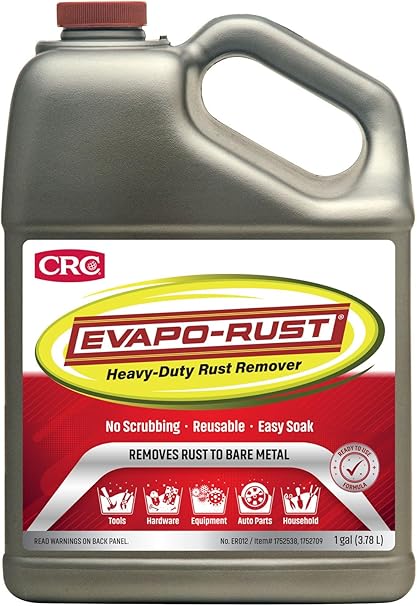
Water-based and non-flammable design makes this rust remover a convenient choice for restoring metal parts safely. Perfect for anyone needing a simple soak-and-rinse solution, it stands out by removing rust without any scrubbing or sanding, saving time and effort on metal restoration projects.
Use involves fully submerging the rusty metal into the liquid without any mixing or preparation since it comes ready to use right from the container. After soaking, just rinse the item with water and apply corrosion protection to keep it from rusting again. Its residue-free formula means no extra cleaning beyond the rinse, making the process straightforward and clean.
Rust comes off effectively down to the bare metal, which is exactly what you want from a rust remover. Reviews praise how easy it is to use and how safe it feels due to the non-corrosive, water-based formula. A common drawback is the need to soak parts for a while, so it’s not the fastest solution if time is a critical factor.
Its safe, non-flammable formula and ease of use make it a favorite for gently restoring metal without damage. Patience is needed due to the soaking process, which some users find slow for urgent jobs.
Good fit for hobbyists and professionals dealing with small to medium rusted parts requiring careful treatment. Those needing immediate rust removal might want to explore faster alternatives.
Pros
- Ready to use straight from the container
- Non-corrosive and water-based formula
- Removes rust without scrubbing or sanding
- Leaves no residue after rinsing
Cons
- Requires soaking time to fully remove rust
- Not suitable for quick rust removal needs
| Specification | Details |
|---|---|
| Item Form | Liquid |
| Scent | Unscented |
| Specific Uses For Product | Industrial Machinery |
| Surface Recommendation | Metal |
| Special Features | Residue Free |
9. Metal Blast Rust Remover

Metal Blast Rust Remover stands out for how easily it cleans rust and other grime from metal surfaces, perfect for anyone prepping metal for painting or refinishing. Its greatest strength is tackling tough rust without harsh odors, making it suitable for indoor and garage use.
Using the spray bottle is straightforward; just apply directly onto the metal, let it work, then rinse or wipe off. The low odor formula means it’s comfortable to use in enclosed spaces without strong chemical smells.
It also conditions the metal to improve paint adhesion, so the next step after cleaning is ready to go without extra prep work.
It performs well at clearing away rust, grease, and dirt, leaving metal surfaces clean and slightly etched for better paint bonding. The liquid in a spray bottle makes application quick and tidy. Many appreciate how it lowers the chance of flash rust forming right after cleaning, though some have noticed the need for repeat applications on very heavy rust spots.
Many users highlight how well it cleans rust and leaves metal ready for painting, with minimal smell and easy spray application. At the same time, some find it necessary to apply more than once on stubborn rust areas to get a completely clean surface.
People working on metal restoration or refinishing who want a low-odor option will appreciate this product. Those dealing with very deep rust might consider stronger or specialized rust removers for heavy corrosion.
Pros
- Removes rust and grease effectively
- Promotes strong paint adhesion
- Low odor and comfortable for indoor use
- Helps prevent flash rust after cleaning
Cons
- May require multiple applications for heavy rust
- Needs rinsing or wiping after use
| Specification | Details |
|---|---|
| Item Form | Liquid |
| Scent | Unscented |
| Surface Recommendation | Metal |
| Special Features | Low Odor |
| Container Type | Spray Bottle |
10. Duda Energy Phosphoric Acid Rust Remover

Strong acid concentration makes it ideal for tackling tough rust on metal parts quickly and effectively. Perfect for those who need a reliable rust remover with a simple soak process.
Its food-grade quality also adds confidence in purity and safety when handled carefully.
Setup is straightforward: dilute the liquid down to about 25-50% with water depending on how badly rusted the metal is. Soaking rusted pieces allows the phosphoric acid to break down corrosion while leaving a protective phosphate layer on the surface.
Handling the liquid requires caution due to its sour scent and acidity, so gloves are a must during routine use.
Rust removal works reliably thanks to its 85% phosphoric acid purity, which dissolves rust thoroughly without damaging the metal underneath. The bottle design is typical for liquids and ensures careful pouring. Praise focuses on how well it cleans and inhibits future rust.
Common complaints mention the strong sour odor and the need to dilute it properly to avoid damage or waste.
The strongest praise is for its ability to dissolve rust efficiently while leaving a protective phosphate layer that prevents further corrosion. The most common complaint revolves around the sour odor and the care needed to dilute the acid properly to avoid over-concentration. Handling requires caution due to its acidity.
Those looking for a powerful rust remover with food-grade purity will appreciate how well it cleans and protects metal surfaces. People who prefer odorless products or want a ready-to-use solution might want to look at other options that do not require dilution and have less scent.
Pros
- High purity ensures effective rust removal
- Phosphate coating prevents future rusting
- Meets Food Chemical Codex standards
- Multi-purpose use beyond rust removal
Cons
- Strong sour smell during application
- Needs careful dilution before use
| Specification | Details |
|---|---|
| Item Form | Liquid |
| Scent | Sour |
| Concentration | 85% Food Grade Phosphoric Acid |
| Surface Recommendation | Metal |
| Special Features | Rust Resistant |
11. Phosphoric Acid 85% Industrial Grade

Rust on metal surfaces can be a tough problem to solve, especially when you’re looking for something powerful and reliable. Phosphoric Acid 85% Industrial Grade is designed for heavy-duty rust removal and other industrial tasks, making it a solid choice for anyone needing serious cleaning and etching power.
Using this acid means handling a concentrated liquid cleanly and carefully. It stays effective thanks to the high 85% purity, so a little goes a long way with rust removal or pH adjustments.
Keep it stored safely away from children, and use protective gear when applying since it’s formulated for industrial use and requires cautious handling even in simple cleaning routines.
It removes rust efficiently and works well on a variety of surfaces because of its strong chemical makeup. The bottle packaging keeps the liquid secure, though dealing with such a concentrated acid means safety is always a top concern. Most praise it for its consistent quality, while some find the strong chemical nature demanding to work with without proper preparation.
The acid’s main advantage is its high purity, ensuring reliable performance in rust removal and other tasks. At the same time, its strong concentration means it demands attention to safety and protection. Handling it calls for preparation and caution to avoid accidents.
People needing a powerful, industrial-grade rust remover will appreciate this product’s strength and versatility. Those looking for something milder or easier to use without special precautions should consider different options better suited for light or casual cleaning.
Pros
- High purity for effective rust removal
- Suitable for various industrial applications
- Consistent quality under strict control
- Stored safely in a secure bottle
Cons
- Requires careful handling due to concentration
- Not ideal for casual or unprotected use
| Specification | Details |
|---|---|
| CAS Number | 7664-38-2 |
| Chemical Formula | H3PO4 |
| Molecular Weight | 98.00 g/mol |
| Purity | 85% |
| Item Form | Liquid |
12. Oxalic Acid 99.6% Rust Remover

Concentration stands out with 99.6% pure oxalic acid, ideal for serious rust removal tasks on metal and wood. Perfect for users needing dependable rust elimination and wood stain removal without unnecessary additives.
Using the liquid form makes application straightforward, whether cleaning decks, metal surfaces, or stained wood. Instructions are easy to find below the product picture, and you can request detailed guidance by messaging. Its concentrated form requires careful handling during setup but delivers strong results for various cleaning needs.
Effectiveness in rust removal is notable, handling tough stains and discoloration well. The chemical purity at 99.6% ensures a strong reaction on rust and wood stains. Some users appreciate its power, while a common limitation is needing careful usage due to its high concentration and potential hazards.
Strong rust removal ability is the most praised, while the need for caution handling the high concentration is the top complaint. Its power is effective but demands respect and protective measures during use.
Those needing a potent rust and wood stain remover will be satisfied, especially for outdoor or heavy-duty tasks. Casual or inexperienced users might prefer a less concentrated product to avoid handling challenges.
Pros
- High purity ensures strong rust removal
- Versatile for wood and metal surfaces
- Clear usage instructions available
Cons
- Requires careful handling due to concentration
- Liquid form can be tricky to apply precisely
| Specification | Details |
|---|---|
| OXALIC ACID Purity | 99.6% |
| Molecular Weight | 208.98 |
| Item Form | Liquid |
| Usage Areas | Deck, Crystals and Metal Cleaning |
| Additional Uses | Wood Stain Remover |
13. MAXTITE Oxalic Acid 99.6% Rust Remover

Anyone working with rust on metal, stone, or wood surfaces will find this powder rust remover useful. Its biggest strength lies in its high purity level of 99.6%, making it a powerful choice for heavy-duty rust cleaning. Ideal for countertop or laboratory uses, it suits those needing a reliable and strong rust treatment.
Setting it up involves mixing the powder with water to activate the cleaning process, which is straightforward. The resealable packaging keeps the powder fresh and prevents spills, making day-to-day use convenient and safe.
Its natural scent means no harsh chemical smell lingers during or after application, an advantage when working in enclosed spaces.
The powder easily dissolves rust from various surfaces, showing strong performance on metals and even stone or wood. The resealable packaging ensures durability for repeated uses. Most praise highlights how effective and potent the acid is.
On the downside, some have noted it requires careful handling due to its concentration and powder form, which can be less user-friendly compared to liquid options.
Most users find the product very effective at removing rust and appreciate its high purity. However, handling the powder safely is important, as it demands careful measurement and use. The natural scent and resealable packaging are welcomed features during repeated applications.
This suits those comfortable working with powdered acids who want a strong, multi-surface rust remover. People seeking a gentler or liquid-based rust solution might want to explore other options better suited for easier application.
Pros
- High purity at 99.6%
- Resealable pack for easy storage
- Natural scent reduces chemical odors
- Suitable for multiple surface types
Cons
- Powder form needs cautious handling
- Strong acid requires precise dosing
| Specification | Details |
|---|---|
| Item Form | Powder |
| Scent | Natural |
| Specific Uses For Product | Countertop, Laboratory |
| Surface Recommendation | Metal, Stone, Wood |
| Special Features | Resealable |
Best Acids for Removing Rust Comparison Table
| Product | Specific Uses For Product | Surface Recommendation | Item Form | Special Features |
|---|---|---|---|---|
| CRC Evapo-Rust | Automotive | Metal | Liquid | Acid Free |
| Rust-Oleum Dissolver Spray | Metal | Metal, aluminum | Gel | Shine and Polish Safe |
| Pure Oxalic Acid Remover | Rust Remover | Stone | Powder | Stain Remover |
| Oxalic Acid 99.6% Remover | – | – | Powder | 99.6% Purity |
| Rust-Oleum Dissolver Jelly | Rust Removal | Metal | Gel | Rust Resistant |
| CLR Calcium Lime Rust | Bathtub | Glass | Liquid | Multi Purpose |
| CLR 2X Calcium Lime Rust | All Purpose | Glass | Liquid | Multi Purpose |
| CRC Evapo-Rust Plus | Industrial Machinery | Metal | Liquid | Residue Free |
| Metal Blast Rust Remover | Metal | Metal | Liquid | Low Odor |
| Duda Energy Phosphoric Rust | Drain | Metal | Liquid | Rust Resistant |
| Phosphoric Acid 85% | – | – | Liquid | – |
| Oxalic Acid 99.6% Pure | – | – | Liquid | 99.6% Purity |
| MAXTITE Oxalic Acid Remover | Countertop, Laboratory | Metal, Stone, Wood | Powder | Resealable |
- Specific Uses For ProductAutomotive
- Surface RecommendationMetal
- Item FormLiquid
- Special FeaturesAcid Free
- Specific Uses For ProductMetal
- Surface RecommendationMetal, aluminum
- Item FormGel
- Special FeaturesShine and Polish Safe
- Specific Uses For ProductRust Remover
- Surface RecommendationStone
- Item FormPowder
- Special FeaturesStain Remover
- Specific Uses For Product–
- Surface Recommendation–
- Item FormPowder
- Special Features99.6% Purity
- Specific Uses For ProductRust Removal
- Surface RecommendationMetal
- Item FormGel
- Special FeaturesRust Resistant
- Specific Uses For ProductBathtub
- Surface RecommendationGlass
- Item FormLiquid
- Special FeaturesMulti Purpose
- Specific Uses For ProductAll Purpose
- Surface RecommendationGlass
- Item FormLiquid
- Special FeaturesMulti Purpose
- Specific Uses For ProductIndustrial Machinery
- Surface RecommendationMetal
- Item FormLiquid
- Special FeaturesResidue Free
- Specific Uses For ProductMetal
- Surface RecommendationMetal
- Item FormLiquid
- Special FeaturesLow Odor
- Specific Uses For ProductDrain
- Surface RecommendationMetal
- Item FormLiquid
- Special FeaturesRust Resistant
- Specific Uses For Product–
- Surface Recommendation–
- Item FormLiquid
- Special Features–
- Specific Uses For Product–
- Surface Recommendation–
- Item FormLiquid
- Special Features99.6% Purity
- Specific Uses For ProductCountertop, Laboratory
- Surface RecommendationMetal, Stone, Wood
- Item FormPowder
- Special FeaturesResealable
How to Choose the Best Acid for Rust Removal
The most important factors to consider are the acid’s strength, safety, and compatibility with the material being cleaned. Choosing the right acid prevents damage, reduces the need for repeated treatments, and ensures effective rust removal, ultimately saving time, money, and frustration.
Acid Concentration and Strength
Rust removal products vary greatly in how strong their active ingredient is. A higher concentration typically removes rust faster, but it can also eat away at metal if left too long.
Using a solution that’s too strong on thin or delicate surfaces can cause pitting or discoloration, creating more problems than it fixes. On the other hand, weaker mixes might require multiple treatments and more scrubbing.
For regular household items or tools, solutions with about 10-15% acid concentration usually offer a good balance, effective yet less likely to damage. More aggressive jobs involving heavy rust may call for higher concentrations, but in those cases, close monitoring and shorter exposure times are essential to avoid harming the base material.
Material Compatibility
Choosing a product without considering compatibility with the metal can lead to unintended corrosion of the base material. Some acids are too harsh for softer metals like aluminum or brass and may eat into them as much as the rust.
Steel and iron tend to handle stronger acids better, but even then, some formulations can attack protective coatings or painted surfaces.
Reviewing product labels for listed compatible metals can save significant headaches. Avoid products that do not explicitly mention the type of metal they’re safe on, especially if the item has any painted or coated layers. Testing a small hidden area first helps prevent surprises.
Safety and Handling
Many rust removers contain harsh chemicals that can irritate skin or respiratory systems. Using products with less toxic formulations eases the safety precautions necessary, but protective gloves, goggles, and good ventilation remain important.
Neglecting these can lead to irritation or respiratory discomfort.
Instructions about dilution ratios and application steps are critical to follow closely. Incorrect mixing or leaving acid on surfaces for too long can cause damage or unnecessary exposure risks. Clear label directions make a product easier to use safely and reduce accidents.
Application Method
This type of product works differently depending on how it’s applied. Some are designed for dipping small objects, allowing full immersion, while others are better suited for brushing or spraying onto larger surfaces. Control over application is important to prevent acids from pooling or staying on surfaces too long.
Many formulations require thorough rinsing or neutralizing after treatment to stop further chemical action. Choosing a product that matches the planned method avoids waste and extra cleanup steps, especially when time or water access is limited.
Packaging and Volume
Using a small bottle on a big project results in frequent repurchases; a large container unused for months might go bad or become a safety risk. It helps to select packaging size appropriate to the scale of rust removal needed.
Concentrated solutions offer flexibility to mix exactly what’s needed but require careful handling.
Secure lids and sturdy containers reduce the chance of spills during storage. Products packed in resealable bottles, sometimes with pour spouts for precise dosing, make everyday use less messy.
Safe Handling and Storage of Acids for Rust Removal
Acids used for rust removal require careful handling to avoid injury or damage. Always wear protective gloves and eyewear when working with these chemicals.
Acid fumes can irritate the respiratory system, so ensure adequate ventilation or use a mask suited for chemical vapors.
Storage plays a crucial role in maintaining the acid’s effectiveness and safety. Keep acids in their original containers, tightly sealed, and store them in a cool, dry place away from direct sunlight.
Avoid mixing acids with other cleaning agents, especially bases, as this can cause dangerous reactions.
Key points for safe handling and storage:
- Use personal protective equipment (PPE) like gloves and goggles.
- Ventilate the area or wear a respiratory mask.
- Store acids in closed, labeled containers.
- Keep acids away from incompatible substances and heat sources.
Following these precautions reduces risks and preserves product quality, making rust removal more effective and safe.
Comparing Organic and Inorganic Acids: Effectiveness and Environmental Impact
Organic and inorganic acids both perform well for rust removal but differ in strength and environmental impact. Organic acids like citric or oxalic acid are milder and derived from natural sources, making them safer to handle and less harmful if disposed of improperly.
They work well on light to moderate rust and have less impact on surrounding materials.
Inorganic acids, such as hydrochloric or phosphoric acid, offer stronger rust removal capabilities and act faster. However, they are more corrosive to metals and the environment, requiring careful neutralization before disposal.
Comparison summary:
- Organic acids: gentler, eco-friendlier, best for light rust.
- Inorganic acids: powerful, faster results, require cautious handling.
Choosing between them depends on the rust severity, safety considerations, and environmental responsibility.
Common Mistakes to Avoid When Using Acids to Remove Rust
Using acids for rust removal demands attention to avoid common mistakes that can damage the item or reduce effectiveness. One frequent error is using too strong or concentrated acid without dilution, which can pit the metal and create uneven surfaces.
Another mistake involves leaving the acid on the surface too long. Overexposure can erode the base metal beneath the rust, especially with aggressive acids.
Rinsing thoroughly after treatment is crucial to remove residual chemicals and prevent further corrosion.
Applying acid with abrasive tools like steel brushes during treatment can scratch the metal, complicating restoration efforts.
Common mistakes to avoid:
- Using undiluted acid beyond recommended strength.
- Allowing acid to sit longer than necessary.
- Not rinsing surfaces completely after treatment.
- Scrubbing with harsh abrasives during or after acid application.
Sticking to instructions and monitoring the process ensures rust is removed without damaging the object.
People Also Asked
How Long Does Acid Take to Remove Rust Effectively?
Acid usually takes anywhere from a few minutes to a couple of hours to remove rust effectively, depending on the type and concentration of the acid. Monitoring the progress frequently helps prevent overexposure or damage to the metal beneath the rust.
Is This Acid Safe to Use on Painted Metal Surfaces?
Most rust removal acids are not safe on painted metal surfaces since they can strip or dull the paint. Testing on a small, hidden area first can prevent ruining the finish.
What Precautions Should I Take When Handling Rust Removal Acid?
Use gloves, eye protection, and work in a well-ventilated area when handling rust removal acid. Avoid splashes and keep the acid away from skin or clothing to prevent burns.
Can Acid Damage the Metal If Left on Too Long?
Acid can damage metal if left on too long because it may start to eat away the base metal, not just the rust. Watching the timing closely during treatment helps protect the metal underneath.
How Should I Neutralize Acid After Rust Removal Is Complete?
After rust removal, neutralize the acid by rinsing the metal thoroughly with a baking soda solution or plenty of water to stop further chemical action. Make sure no residue remains to prevent corrosion.
Conclusion
Effectiveness, safety, and ease of use are the key points to consider when choosing an acid for rust removal. Make sure the acid works well on the metal you’re treating, is not too harsh for your intended setting, and comes with clear instructions.
Strong acids can eat away at metal if not handled properly, so balancing power with control is important.
Pick an acid that fits your workspace and how often you’ll need it. Bigger projects may require more concentrated solutions, while small touch-ups can use milder options.
Check the comparison table above to match features with your needs and budget. Review each product’s details to find a solution that suits your specific rust removal task.