Top 12 Best Backpacking Rain Jackets You Can’t Miss!
Few things are more frustrating than getting caught in a downpour while backpacking and having your jacket fail to keep you dry. The best backpacking rain jackets manage to stay waterproof without turning into a sauna inside or weighing down your pack. Cheap options often sacrifice breathability or durability, leaving you cold, wet, or bogged down by soggy gear.
It’s a common scenario for anyone hitting the trail without the right outer layer.
Good backpacking rain jackets rely heavily on materials that balance waterproofing and breathability, like fabrics with a rating of at least 10,000 mm for water resistance and 10,000 g/m² for breathability over 24 hours. Fit plays a critical role too, especially since the jacket needs to comfortably cover a backpack and allow free movement.
Features like adjustable hoods, sealed seams, and durable zippers also make a noticeable difference in how well these jackets hold up to trail conditions and keep you comfortable for hours on end.
Need a Quick Check?
| Image | Product | Price |
|---|---|---|
Our Top Picks 1 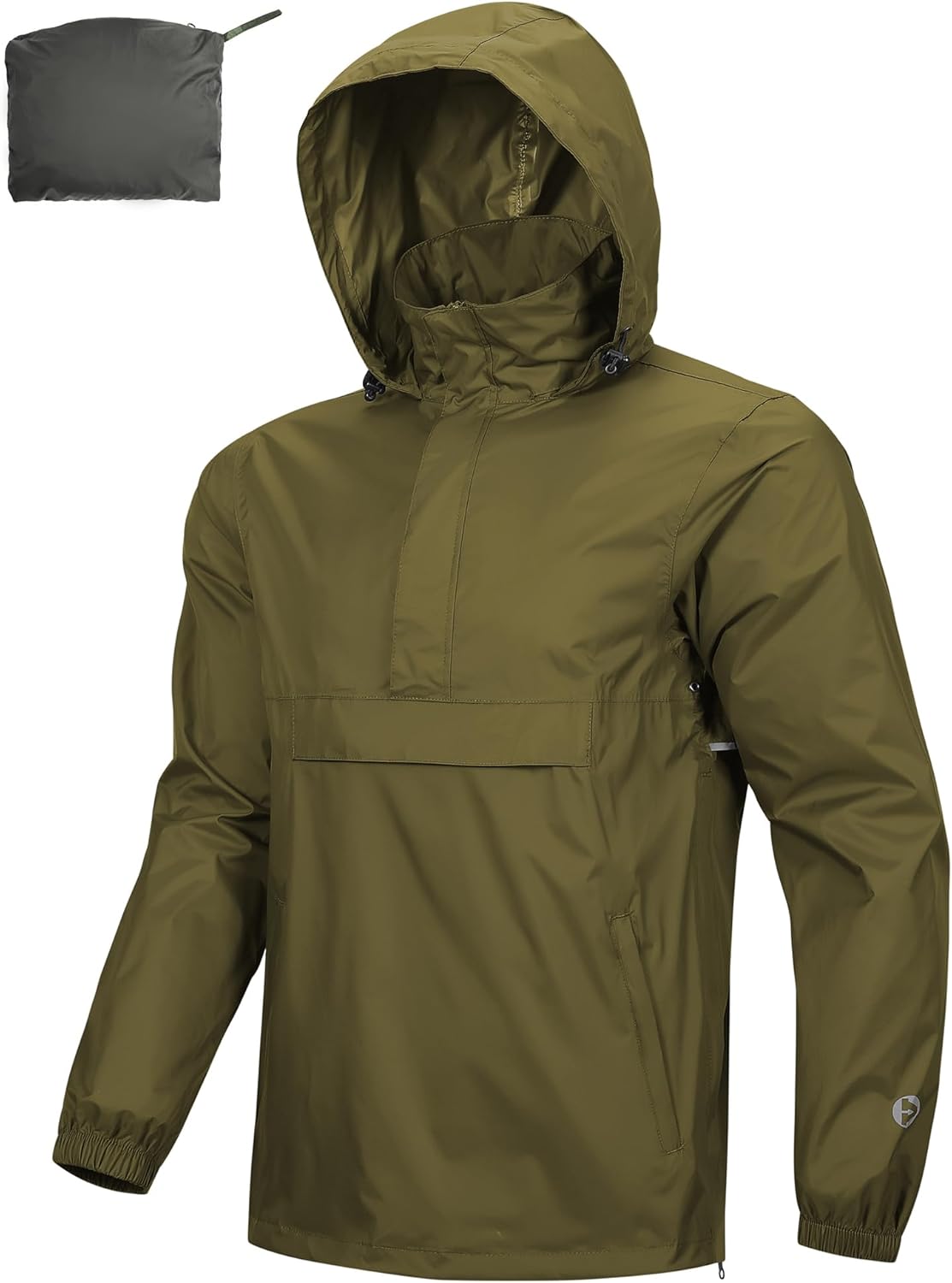 | Outdoor Ventures Rain Jacket | Check Price |
Our Top Picks 2  | North Face Antora Jacket | Check Price |
Our Top Picks 3  | Helly Hansen Raincoat | Check Price |
Our Selected Top 12 Backpacking Rain Jackets You Can Trust
These carefully chosen rain jackets offer reliable protection for backpackers in various weather conditions. Each review explains how the jacket performs, its ideal user, and highlights key strengths and potential drawbacks to help you find the right fit for your outdoor adventures.
1. Outdoor Ventures Mens Rain Jacket
Wearing an olive rain jacket that feels neither too heavy nor too tight makes rainy hikes more comfortable. Designed for mild weather, it suits anyone seeking dependable protection without fuss, especially during light showers. Its biggest strength lies in balancing a regular fit with a hood, keeping rain at bay while avoiding overheating.
Putting it on is straightforward with the cuff sleeves preventing water from dripping inside. The hood fits well around the collar, offering coverage against sudden rain without blocking your sight.
Everyday use means easy movement without a constricted feel and a solid barrier against wind and moisture on cool days.
Water resistance holds up well in consistent light rain, making stays outdoors manageable and dry. The build is solid but keeps to a classic raincoat silhouette without extra ventilation features. Positive remarks highlight how the jacket does its job snugly; the main downside mentioned is that the jacket is best suited for mild conditions and less effective in heavy downpours.
The jacket keeps wearers dry and comfortable in light rain, featuring a dependable hood and sleeves that stop water from getting in. Users often point out that it struggles a bit under heavier rain, which can leave you feeling damp.
Adventurers frequently facing gentle wet weather will find this jacket suitable, while those needing stronger protection in heavy storms should look for a more technical alternative.
Pros
- Regular fit offers comfortable movement
- Hooded collar provides good rain coverage
- Cuff sleeves help keep rain out
- Suitable for all seasons in mild climates
Cons
- Not ideal for heavy rain or severe weather
- Lacks ventilation for warmer days
| Specification | Details |
|---|---|
| Color | Olive |
| Style | Men’s Rain Jacket |
| Fit Type | Regular |
| Climate Suitability | Mild Weather |
| Collar Style | Hooded |
2. The North Face Mens Antora Jacket
Great for mild weather hiking, it suits anyone needing a waterproof jacket that balances protection with comfort. Its standout feature is the adjustable 3-piece hood that shields well without feeling bulky.
Putting it on is straightforward, and the regular fit offers plenty of room for layering. The jacket’s windproof fabric helps cut down on chill. Its long sleeves and flat collar keep rain from seeping in.
The black color makes it versatile and easy to keep looking clean despite outdoor use.
Rain stays off reliably thanks to the waterproof material, making it a solid choice on drizzly days. Built to a solid standard, the main praise focuses on how well the hood adjusts and holds in a breeze.
Some worry about breathability during more intense activities, though, which can lead to feeling a bit damp inside.
The adjustable hood earns high marks for keeping rain and wind out, while the jacket’s breathability draws criticism when worn during intense activity. It stays reliable for casual hikes but feels restrictive if you sweat heavily.
Anyone facing light to moderate rainy conditions will appreciate the balance of protection and comfort here. Those looking for a rain jacket for colder or more demanding climates might want to consider something more specialized.
Pros
- Adjustable 3-piece hood for tailored coverage
- Windproof fabric reduces chilly gusts
- Regular fit allows layering underneath
- Black color hides dirt during outings
Cons
- Less breathable during high-exertion activities
- Best suited for mild weather, not extreme conditions
| Specification | Details |
|---|---|
| Color | Tnf Black-npf |
| Style | Antora Waterproof Jacket (Standard & Big Size) |
| Sleeve Type | Long Sleeve |
| Coat Silhouette Type | Rain Coat |
| Climate Suitability | Mild Weather |
| Life Event | Rainy Weather |
3. Helly Hansen Mens Raincoat
Constructed with a straight fit and band collar, this raincoat suits men looking for reliable protection in mild weather. The standout feature is its simple, solid design in army green that balances style and function for everyday use outdoors.
Preparation is straightforward, slipping into the long-sleeve rain jacket with ease thanks to its straight silhouette. It fits comfortably without being tight or loose, making it good for layering over other gear during hikes. The solid pattern keeps the look clean, and the jacket performs well on drizzly days or light showers.
Built to handle mild weather conditions, this raincoat excels at keeping moisture out without feeling too heavy or bulky. Strong points include its durability and the color, which blends well in outdoor environments.
Some users note the fit may not suit those wanting a more tapered or athletic cut.
The jacket provides solid protection against light rain and has a durable feel, though some find the straight fit less flattering or restrictive when active. Its long sleeves and band collar contribute to an unobtrusive design suited to casual outdoor walks or city use.
Those needing a raincoat for gentle weather and layering will appreciate this option. Anyone looking for something more fitted or designed for heavy rain and colder climates might want to look elsewhere.
Pros
- Good coverage with long sleeves
- Simple and versatile army green color
- Straight fit works for layering
- Band collar adds neat detail
Cons
- Fit may feel boxy for some
- Limited to mild weather use
| Specification | Details |
|---|---|
| Color | 480 Army Green |
| Style | Rain Jacket |
| Sleeve Type | Long Sleeve |
| Fit Type | Straight |
| Climate Suitability | Mild Weather |
4. ANYOO Hooded Rain Poncho
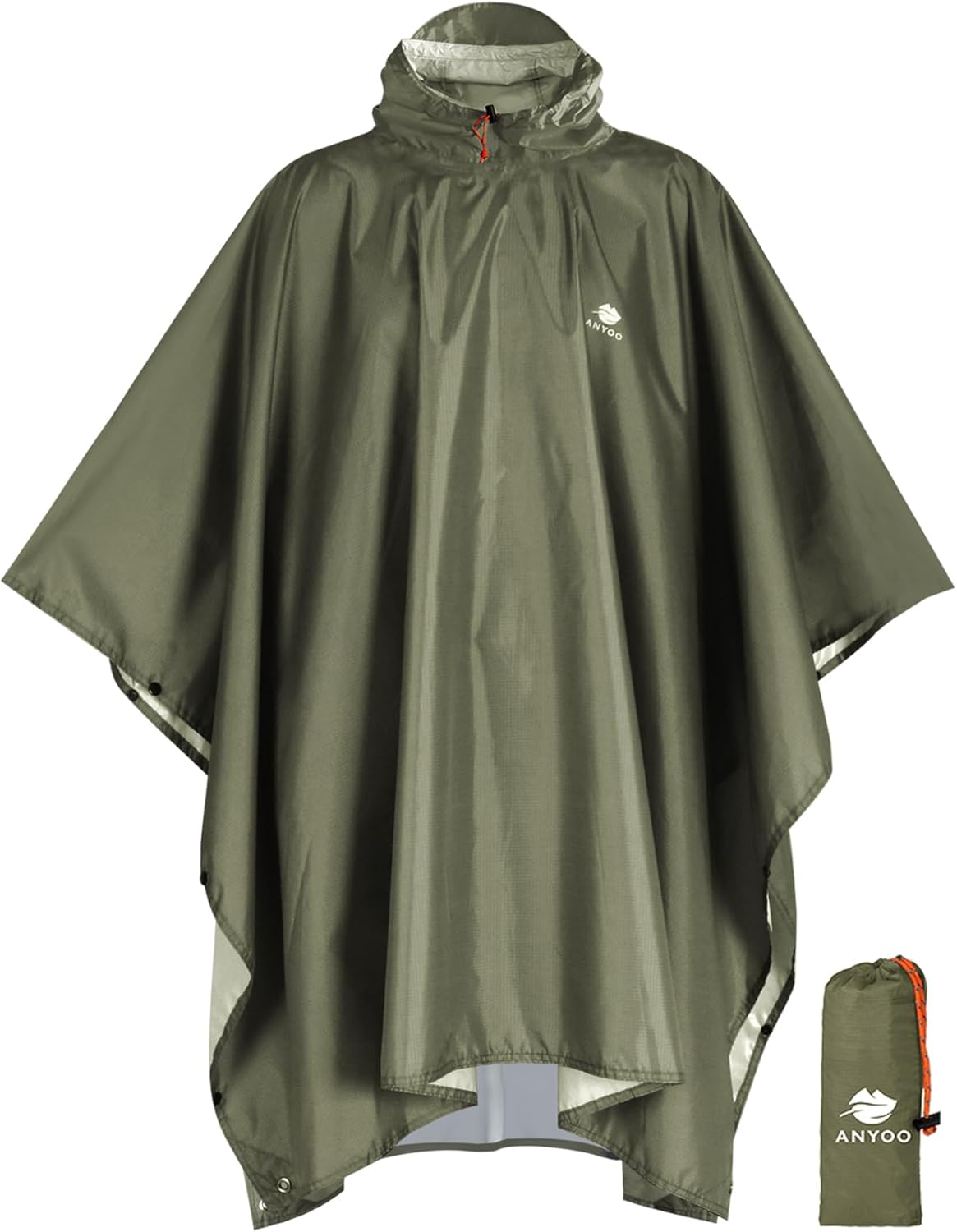
Lightweight and roomy, the ANYOO Hooded Rain Poncho fits over backpacks easily and keeps both you and your gear dry. It suits hikers, travelers, and anyone needing practical rain protection without tight sleeves or fuss. Its main strength lies in combining solid waterproofing with breathable comfort.
Putting it on is straightforward thanks to the loose armholes and a drawstring hood that adjusts snugly around your head. The side hook-and-loop fasteners help secure the poncho while allowing air to flow, preventing overheating.
Its roomy cut means you don’t feel restricted, and snaps along the sides let you tweak the fit depending on your body or load size.
Waterproofing performs well with PU 8000MM protection backed by seam sealing, keeping heavy rain out during hiking or errand runs. Built from 210T ripstop polyester with TPU coating, it holds up against regular use and wind. Most praise highlights the effective water barrier and space for a backpack, while common complaints point to its loose, poncho-style fit which some find bulky or less tailored than a standard jacket.
The waterproof PU 8000MM coating and sealed seams reliably block heavy rain while the roomy design easily fits over a backpack. Many appreciate how breathable the poncho remains during active use, but the loose style is noted as bulky and not for everyone’s taste.
Anyone prioritizing simple, all-seasons rain protection over a backpack will be happy with this poncho. People wanting a close-fitting jacket or more wind resistance should look elsewhere for a slimmer option.
Pros
- High waterproof rating with sealed seams
- Adjustable drawstring hood for secure fit
- Roomy size covers backpack fully
- Breathable with loose armholes and snaps
Cons
- Poncho-style fit may feel bulky for some
- Less tailored design limits wind resistance
| Specification | Details |
|---|---|
| Material | 210T ripstop polyester with TPU coating |
| Waterproof rating | PU 8000MM |
| Fit Type | Loose |
| Color | Army Green |
| Season Suitability | All |
| Style | Outdoor Poncho |
5. Columbia Mens Glennaker Lake II Jacket

Designed to handle mild weather conditions, this rain jacket suits backpackers looking for reliable protection without heavy insulation. Its biggest strength lies in balancing lightweight comfort with effective rain resistance, making it a solid choice for fall treks in regions where temperatures stay moderate.
Putting it on is simple with a regular fit and a hood that protects well against the drizzle. The long sleeves cover the arms fully and the jacket’s stone green color blends naturally in outdoor settings.
Daily use involves quick drying and easy layering over other gear, fitting comfortably in a daypack without adding bulk.
Performance-wise, the jacket keeps rain off efficiently and feels breathable during mild weather. It’s built as a solid rain coat with a focus on durability over fancy features. Many appreciate how it holds up after repeated use, though some wish it offered more warmth or wind resistance for colder or harsher conditions.
Many users praise the jacket for reliable rain protection and durability during fall hikes, while the most common drawback is its limited warmth, which restricts use to mild conditions. It stands up well to regular outdoor wear but may leave users wishing for more wind protection or insulation in cooler, breezier environments.
Backpackers who plan to trek in temperate, rainy weather without facing extreme cold will find this jacket well-suited. Those expecting colder or windier adventures would benefit from looking at options with better insulation and wind resistance capabilities.
Pros
- Effective rain protection in mild conditions
- Regular fit comfortable for layering
- Durable material resists wear and tear
- Hood provides solid coverage from rain
Cons
- Lacks insulation for colder weather
- Not ideal for strong wind resistance
| Specification | Details |
|---|---|
| Color | Stone Green |
| Style | Glennaker Lake II Rain Jacket |
| Sleeve Type | Long Sleeve |
| Seasons | Fall |
| Fit Type | Regular |
| Climate Suitability | Mild Weather |
6. 33,000ft Mens Hooded Rain Shell Jacket

Dealing with sudden cold weather during outdoor activities calls for reliable outerwear that won’t weigh you down. Perfect for fall and spring backpacking trips, the 33,000ft Mens Hooded Rain Shell Jacket offers a classic fit and warmth without feeling bulky, making it a solid choice for chilly, windy days.
Putting it on each morning is easy thanks to the hooded design and long sleeves that keep out cold winds. The anorak silhouette allows for layering underneath while retaining mobility.
Its darkgrey melange color works well in nature and urban settings, plus the windbreaker style means it stands up well against blustery weather without overheating during moderate activity.
Built for cold weather use, this rain shell delivers consistent wind protection that helps keep your core temperatures steady. The classic fit means it doesn’t hug too tightly but stays comfortable even on longer hikes or occasional use outings.
Some users mention that breathability can be limited during high-intensity exercise, making it feel a bit clammy.
Strong wind resistance is the key advantage, helping to keep warmth locked in during cold days. Many note the jacket can become less comfortable when active because breathability is limited, leading to some dampness inside.
This jacket suits hikers or backpackers who want dependable wind protection in cool conditions without a tight fit. Those needing highly breathable gear for intense exercise might want to look elsewhere.
Pros
- Classic fit provides comfortable layering space
- Windbreaker style effectively blocks cold wind
- Hooded collar adds extra protection in poor weather
- Darkgrey melange offers versatile and low-profile look
Cons
- Not ideal for high-intensity activities due to breathability
- Designed more for occasional use than daily heavy-duty wear
| Specification | Details |
|---|---|
| Color | Darkgrey Melange |
| Style | Windbreaker |
| Sleeve Type | Long Sleeve |
| Coat Silhouette Type | Anorak |
| Seasons | All, Fall, Spring |
| Climate Suitability | Cold Weather |
7. Mens Lightweight Hooded Rain Jacket

Waterproof protection paired with a lightweight design makes this jacket ideal for mild weather outdoor activities. Suited mostly for men looking for a dependable raincoat without sacrificing mobility, it stands out for being easy to wear during exercise or casual outings when light rain is expected.
Putting it on is straightforward thanks to the regular fit and band collar that sits comfortably without feeling snug. The long sleeves provide full arm coverage while maintaining freedom of movement.
Its simple design in charcoal ensures it doesn’t draw unnecessary attention and can be paired easily with most outdoor gear without extra bulk.
The jacket manages wet conditions well, keeping water out in typical drizzles and light showers thanks to its waterproof material. It’s built with durability in mind but focuses on moderate climates, so heavy rain or cold wind might be a stretch. Praise often highlights how comfortable and light it feels, while complaints tend to mention that it’s not suitable for harsher weather or intense outdoor conditions.
People appreciate how light and comfortable the jacket is, allowing it to be worn over long periods without feeling bulky. However, a typical downside is that it isn’t made to handle more intense weather situations, limiting its use to milder days.
Anyone needing a handy jacket for casual outdoor activities in cool, damp weather will find it suitable. Those planning trips to wet, cold climates or who need something for extreme weather might want to consider different options better designed for harsher conditions.
Pros
- Lightweight and easy to carry around
- Simple charcoal color pairs with most gear
- Comfortable band collar avoids neck irritation
- Effective waterproofing for light rain
Cons
- Not ideal for heavy rain or cold conditions
- Regular fit might feel loose for some wearers
| Specification | Details |
|---|---|
| Color | Charcoal |
| Style | Mens Waterproof Rain Jacket |
| Sleeve Type | Long Sleeve |
| Fit Type | Regular |
| Climate Suitability | Mild Weather |
| Occasion | Exercise, outdoor activities |
8. COOFANDY Mens Packable Rain Jacket

People who enjoy hiking or casual outdoor activities in mild weather will appreciate a raincoat that doesn’t weigh them down. The COOFANDY Mens Packable Rain Jacket stands out for its relaxed fit and easy packability, making it a convenient choice for unpredictable weather without feeling bulky.
Putting on the jacket is straightforward thanks to its hooded design and long sleeves. It packs down small enough to fit into your day bag or backpack, so it’s ready for sudden showers.
The relaxed fit helps keep movement easy, and the solid blue color pairs well with any outdoor gear. It’s made for mild conditions but works well for summer outings too.
It keeps rain off reasonably well in typical wet weather, though it’s best for lighter drizzles rather than heavy storms. The material feels durable enough for regular use, with stitching and seams holding up without trouble. The main praise highlights its packability and comfort, while the main drawback is its limited protection in heavier rainfall.
Packability and comfort score highest, making it easy to carry around and wear all day. Most complaints focus on its performance under heavy rain, which it doesn’t handle as well as heavier-duty jackets.
People who prioritize lightweight and versatile protection in mild environments will find this rain jacket very useful. Those seeking a tough, all-weather barrier should consider options designed for harsher conditions.
Pros
- Packs down small for easy storage
- Relaxed fit allows comfortable movement
- Hood adds extra rain protection
- Suitable for casual outdoor activities
Cons
- Not ideal for heavy rain conditions
- Limited to mild weather use
| Specification | Details |
|---|---|
| Color | Blue |
| Style | Raincoat |
| Sleeve Type | Long Sleeve |
| Seasons | All, Summer |
| Fit Type | Relaxed |
| Climate Suitability | Mild Weather |
9. MARMOT Mens Precip Eco Rain Jacket
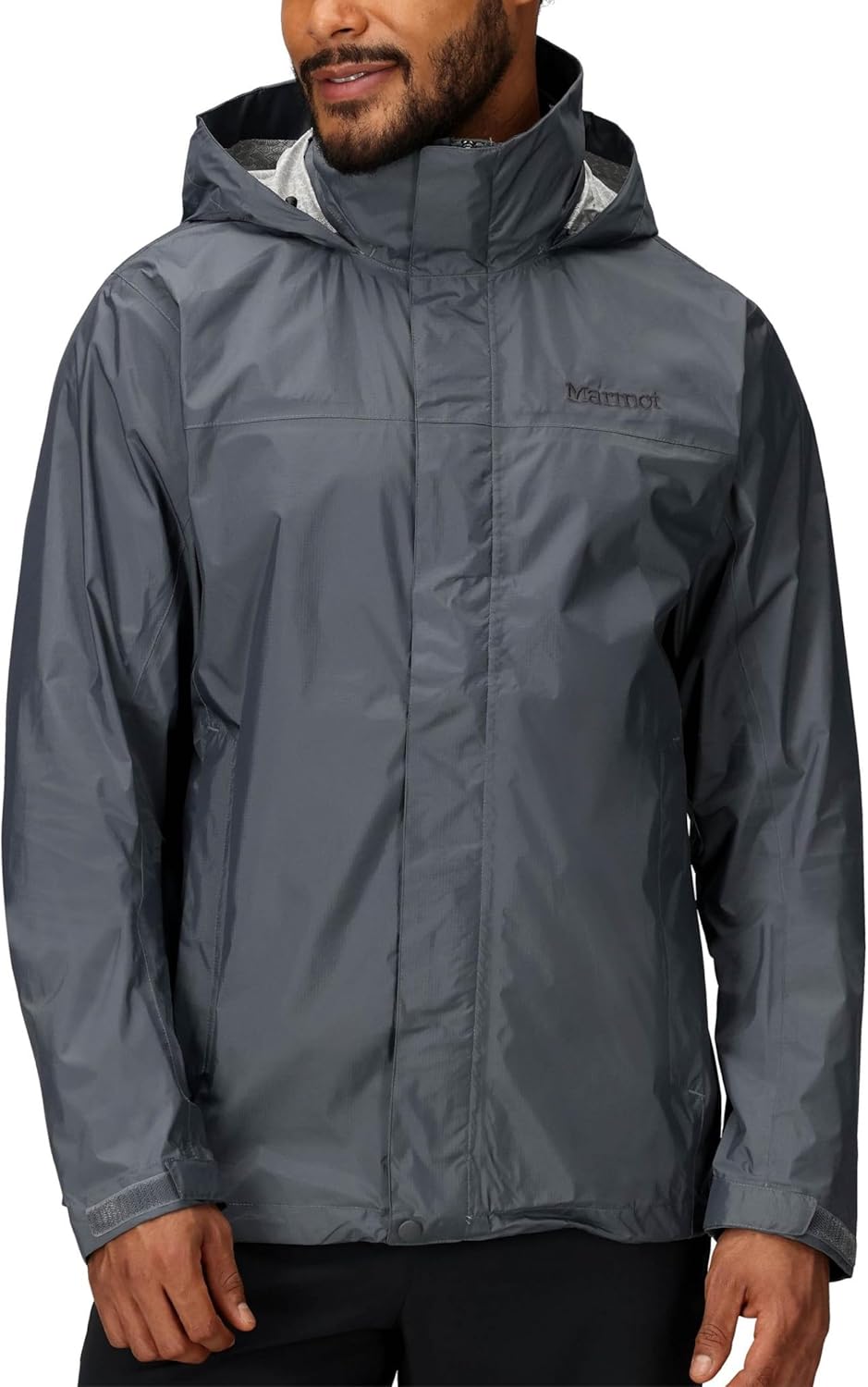
Lightweight and made from recycled materials, this rain jacket suits backpackers looking for dependable waterproof protection without the bulk. Its biggest strength lies in the NanoPro membrane and fully taped seams that genuinely keep water out while remaining breathable for mild weather adventures.
Setting it up is simple, with adjustable cuffs and a drawcord hem that lets you control airflow and warmth during shifting weather. The jacket stows neatly into its own pocket, making it easy to carry or pack away. Pit zips provide quick ventilation, while zippered hand pockets hold small essentials securely, which matter greatly when on the move.
Constructed from 100% pre-consumer recycled nylon ripstop, this coat balances weather defense with sustainable materials. The waterproof and breathable Marmot NanoPro fabric combined with PFC-free DWR treatment blocks rain effectively. Reviews praise its leak-proof seam taping and comfort around the neck from the DriClime lined chin guard.
Some find the regular fit a bit roomy for layering underneath.
The jacket has outstanding waterproof reliability thanks to the Marmot NanoPro fabric and complete seam taping, keeping users dry through soggy conditions. Comfort is improved by the DriClime lining at the chin, though several note the regular fit can be less snug than expected for layering purposes.
Anyone seeking a moderately warm, lightweight rain jacket with sustainable materials will appreciate this option. Those needing heavy insulation or a closer fit for colder climates might want to explore alternatives better suited to tougher conditions or layering demands.
Pros
- Highly waterproof with fully taped seams
- PFC-Free environmentally friendly DWR treatment
- Adjustable cuffs and hem for customized fit
- Packable into its own pocket for convenience
Cons
- Regular fit might feel roomy for some
- Designed mainly for mild weather, not extreme cold
| Specification | Details |
|---|---|
| Fabric | 100% Pre-Consumer Recycled Nylon Ripstop Shell |
| Lining | 100% Post-Consumer Recycled Polyester Mesh |
| Waterproof Technology | Marmot NanoPro membrane |
| Water Repellency | Environmentally conscious PFC-Free DWR |
| Features | 100% seam-taped, pit zips, zippered hand pockets |
| Fit Type | Regular |
10. Columbia Mens Watertight II Jacket

Columbia Mens Watertight II Jacket offers reliable waterproof protection with a lightweight and comfortable fit. Its top feature is its ability to keep you dry during heavy rain without feeling bulky, making it ideal for backpackers and outdoor enthusiasts looking for dependable rain gear in mild weather conditions.
Putting it on is simple, thanks to the straightforward notch collar and hood design. The jacket’s lightly relaxed fit gives enough room for layering or moving freely.
It packs down compactly in your bag, making it easy to carry on the trail. The choice of nylon for the shell and polyester lining adds to its lightweight feel, which keeps you from overheating on spring days.
Rain protection is solid because of the two-layer build with a waterproof membrane that holds up well in downpours. The jacket is durable for its weight but might feel a bit thin for very cold or rough conditions.
A common highlight is how well it sheds water, but a frequent downside mentioned is that the fit can run a bit large for some, making it less ideal for smaller frames.
The jacket consistently excels at keeping water out during downpours thanks to its two-layer waterproof membrane, while some find the sizing a bit roomy, which can affect comfort and layering choices. Its lightweight construction, although good for milder weather, is not suited for colder conditions or rugged use.
People who want a simple, effective rain jacket for spring backpacking will appreciate its protection and fit. Those needing insulation or a closer fit for high-intensity activities might want to consider alternatives.
Pros
- Lightweight yet waterproof nylon shell
- Comfortable slightly relaxed fit
- Effective water resistance in heavy rain
- Compact and easy to pack
Cons
- Fit may feel too large for some wearers
- Not designed for very cold weather
| Specification | Details |
|---|---|
| Shell | 100% Nylon |
| Lining | 100% Polyester |
| Sleeve Type | Long Sleeve |
| Fit Type | Straight |
| Length | 31” |
| Color | Black |
11. Mens Waterproof Cycling Jacket

Feels surprisingly lightweight and comfortable for a waterproof jacket made for cycling and mild weather. Best suited for someone looking for protection during fall or spring rides without overheating. Its single biggest strength is keeping you dry while not feeling bulky or restrictive on the move.
Putting it on is straightforward with a regular fit that doesn’t squeeze or billow too much. Long sleeves help cover the arms fully from light rain, and the black color keeps it low-profile and easy to clean. Works well layered over a thin base layer on cooler days and doesn’t trap heat badly in mild climates.
Main task of protecting against rain works reliably for light showers given the rain coat silhouette. The fabric’s solid pattern means no gimmicks, just steady coverage. The strongest praise highlights its effective water resistance and comfort during rides.
The most common complaint points to limited breathability in warmer conditions.
Strong water resistance and comfortable fit stand out as key strengths, while many find the breathability less effective once temperatures rise. It handles mild rain well but isn’t suited for heavy downpours or hot days.
Those looking for a reliable rain jacket for cycling in fall and spring will appreciate this design. Anyone needing heavier waterproofing or better ventilation during hot weather should consider alternatives.
Pros
- Lightweight and comfortable on mild weather rides
- Effective water resistance keeps you dry in light rain
- Regular fit feels neither tight nor loose
- Long sleeves offer good arm coverage
Cons
- Not very breathable in warmer temperatures
- Limited use to mild weather seasons only
| Specification | Details |
|---|---|
| Color | Black |
| Style | Cycling Jackets |
| Sleeve Type | Long Sleeve |
| Coat Silhouette Type | Rain Coat |
| Seasons | fall, spring |
| Climate Suitability | Mild Weather |
12. Baleaf Mens Rain Jacket

Lightweight and designed for mild weather, the baleaf Mens Rain Jacket is a good pick for folks who want waterproof protection without extra bulk. It suits mild weather days and casual outdoor activities, with waterproof and windproof features that stand out most.
Putting on the jacket is simple thanks to its hood and regular fit, which feels comfortable without being tight or loose. The zippered front and long sleeves keep you covered, while the striped pattern and reflective accents add visibility.
Packed away, it doesn’t feel heavy, making it good for carrying along on unpredictable days.
Water stays off reliably, and wind blockage is solid thanks to the windbreaker style. The overall build is lightweight, intended for all-season casual use rather than extreme conditions. The most frequent praise is about its effective waterproof and windproof performance.
Some mention that it could feel a bit light for harsher weather.
Waterproof and windproof are working well for mild weather, which matches the jacket’s lightweight design. It’s praised for blocking rain and wind but some find it too light when the weather turns rougher than expected. The reflective accents add an appreciated touch for safety in low light.
Ideal for anyone needing sensible rain protection during mild conditions or casual outdoor activities. Shoulders and chest get good coverage without overheating. Those who expect heavy rain or strong winds on backpacking trips would be better off with a sturdier, heavier rain jacket instead.
Pros
- Lightweight design feels easy to wear all day
- Waterproof and windproof protect against rain and breeze
- Reflective details improve low-light visibility
- Comfortable hood adds extra coverage when needed
Cons
- Not ideal for heavy rain or harsh weather
- Regular fit may feel loose for some users
| Specification | Details |
|---|---|
| Color | A-steel Gray |
| Style | Windbreaker |
| Coat Silhouette Type | Rain Coat |
| Seasons | All |
| Fit Type | Regular |
| Climate Suitability | Mild Weather |
Comparison of Top Backpacking Rain Jackets
| Product | Season Suitability | Fit Type | Collar Style | Climate Suitability |
|---|---|---|---|---|
| Outdoor Ventures Rain Jacket | All | Regular | Hooded | Mild Weather |
| North Face Antora Jacket | Fall | Regular | Flat | Mild Weather |
| Helly Hansen Raincoat | All | Straight | Band | Mild Weather |
| ANYOO Hooded Poncho | All | Loose | Hooded | Mild Weather |
| Columbia Glennaker Lake Jacket | Fall | Regular | Hooded | Mild Weather |
| 33,000ft Hooded Rain Shell | All, Fall, Spring | Classic | Hooded | Cold Weather |
| Lightweight Hooded Rain Jacket | All | Regular | Band | Mild Weather |
| COOFANDY Packable Rain Jacket | All, Summer | Relaxed | Hooded | Mild Weather |
| Marmot Precip Eco Jacket | Fall/Winter | Regular | Round | Mild Weather |
| Columbia Watertight II Jacket | Spring | Straight | Notch | Mild Weather |
| Waterproof Cycling Jacket | Fall, Spring | Regular | – | Mild Weather |
| Baleaf Rain Jacket | All | Regular | Hooded | Mild Weather |
- Season SuitabilityAll
- Fit TypeRegular
- Collar StyleHooded
- Climate SuitabilityMild Weather
- Season SuitabilityFall
- Fit TypeRegular
- Collar StyleFlat
- Climate SuitabilityMild Weather
- Season SuitabilityAll
- Fit TypeStraight
- Collar StyleBand
- Climate SuitabilityMild Weather
- Season SuitabilityAll
- Fit TypeLoose
- Collar StyleHooded
- Climate SuitabilityMild Weather
- Season SuitabilityFall
- Fit TypeRegular
- Collar StyleHooded
- Climate SuitabilityMild Weather
- Season SuitabilityAll, Fall, Spring
- Fit TypeClassic
- Collar StyleHooded
- Climate SuitabilityCold Weather
- Season SuitabilityAll
- Fit TypeRegular
- Collar StyleBand
- Climate SuitabilityMild Weather
- Season SuitabilityAll, Summer
- Fit TypeRelaxed
- Collar StyleHooded
- Climate SuitabilityMild Weather
- Season SuitabilityFall/Winter
- Fit TypeRegular
- Collar StyleRound
- Climate SuitabilityMild Weather
- Season SuitabilitySpring
- Fit TypeStraight
- Collar StyleNotch
- Climate SuitabilityMild Weather
- Season SuitabilityFall, Spring
- Fit TypeRegular
- Collar Style–
- Climate SuitabilityMild Weather
- Season SuitabilityAll
- Fit TypeRegular
- Collar StyleHooded
- Climate SuitabilityMild Weather
How to Choose the Right Backpacking Rain Jacket
Look for rain jackets that balance waterproofing, breathability, and weight to stay dry and comfortable during hikes. Choosing the right combination helps avoid unnecessary wear or bulk, saving money and preventing discomfort on the trail. Durable materials and good fit also contribute to long-lasting performance.
Waterproofing and Breathability
On a rainy hike, water can quickly soak through poor-quality rain shells or leave you drenched in sweat inside the jacket. Understanding hydrostatic head ratings helps here, these numbers indicate how much water pressure the fabric can resist before leaking.
A rating above 10,000 mm is a practical baseline for sustained rain. Membrane technology, like Gore-Tex or eVent, controls waterproofing while allowing moisture vapor to escape, reducing clamminess when exerting effort.
Breathability is measured by moisture vapor transmission rates (MVTR). Higher MVTR fabrics prevent sweat buildup during physical activity.
Jackets lacking good breathability make hikes uncomfortable and can even lead to chills as wet sweat cools. A suitable balance between waterproofing and breathability is key to staying dry both outside and inside the jacket walls.
Weight and Packability
Every ounce counts on long backpacking treks. A jacket’s weight affects how much other gear you can carry without strain.
Ultralight fabrics and minimally structured designs make it easier to keep the jacket stuffed into a pack pocket or an outside loop without bulking up the load.
These lightweight options tend to trade off some durability and weather protection. Fabric thickness and reinforced areas usually add weight but extend the jacket’s life and resistance to tears. Choosing a jacket involves balancing a lighter pack weight with fabrics strong enough for rough trails.
Fit and Mobility
Comfort while wearing the jacket largely depends on fit. Trying to fit thick fleece or layers underneath needs extra room without sacrificing weather sealing.
Sleeves must be cut to allow full arm movement during hiking or climbing without binding.
Adjustable cuffs, hems, and hoods help lock out wind and rain, tailoring the fit to different body shapes or clothing layers. Hoods designed to stay in place and accommodate helmets provide critical coverage when the weather worsens.
Durability and Material Quality
Jackets that shred or wear thin after a few outings cause frustration and extra expense. Textile toughness plays a big role on route sections with brush, rocks, or rough pack straps pressing against fabric daily.
Look for reinforced shoulders and cuffs where abrasion usually happens first. Durable water repellent (DWR) coatings need to last through multiple cleanings, and taped seams should stay intact to keep water from seeping through stitching over time.
Ventilation and Temperature Regulation
Overheating under a protective layer is common during range-of-motion activities or warm stretches of trail. Pit zips and other vents allow air to flow through the jacket without opening the front fully, maintaining protection while releasing excess heat.
Design elements that balance insulation and airflow keep the wearer comfortable as outdoor temperatures and activity levels change. A jacket too insulated traps sweat, whereas too little coverage fails in cold, wet conditions.
Proper ventilation combined with moisture-wicking layers reduces clamminess.
How to Maximize Waterproof Performance During Heavy Rain
Seam sealing plays a critical role in keeping water out during heavy downpours. Many rain jackets come with factory-applied tape or sealant on seams, but over time, these can wear off or get damaged.
Reapplying seam sealant on vulnerable areas, especially around the shoulders and zipper, significantly improves waterproofing. Storing the jacket with all zippers closed and using the hood properly reduces exposure to water entry points.
Layering also matters. Wearing a waterproof jacket with a breathable membrane, like Gore-Tex or similar fabrics, allows sweat to escape while blocking rain.
Adjusting ventilation features, such as pit zips or front vents, helps reduce internal moisture without compromising waterproofing.
Key tips:
- Check seam seals regularly and reapply sealant as needed.
- Keep all zippers fully closed during rain.
- Use adjustable hoods to keep rain off your face and neck.
- Utilize ventilation options to balance moisture and dryness inside.
Essential Care and Maintenance Tips to Prolong Your Rain Jacket’s Lifespan
Regular washing removes dirt and oils that can degrade the water-repellent treatment on a rain jacket. Use a gentle detergent designed for waterproof garments and avoid fabric softeners. Machine wash on a gentle cycle with cold water, then rinse thoroughly to prevent detergent buildup.
After washing, drying the jacket in a warm dryer or using a low heat setting with a clean tennis ball helps reactivate the durable water repellent (DWR) coating. Avoid ironing, bleach, or dry cleaning, as these can damage the fabric and treatments.
Store the jacket in a dry, ventilated spot away from direct sunlight. Avoid cramming it into tight spaces for long periods since that may compress the membrane or crease waterproof layers irreversibly.
Maintenance checklist:
- Wash regularly with specialized detergents.
- Tumble dry or warm air dry to restore water repellency.
- Store loosely to retain the jacket’s shape and breathability.
- Reapply DWR treatment when water starts to soak instead of bead.
Comparing Rain Jackets to Ponchos: Which Is Better for Backpacking?
Rain jackets offer better fit and protection compared to ponchos, especially on windy trails where rain can come from the side or below. Jackets usually have adjustable cuffs, hems, and hoods to keep water out and maintain body heat.
The close fit also helps with moisture management during active hiking.
Ponchos provide excellent coverage over backpacks and gear and can be easier to put on or remove quickly. However, they often allow more air and water to enter through the sides and do not provide as much protection against wind chill.
Their loose design can also get caught on branches or rocks.
Choosing between the two:
- Pick jackets for more reliable waterproofing, especially in rough weather.
- Choose ponchos for quick stops or when maximum coverage over packs is needed.
- Consider the terrain and expected weather; jackets are usually preferred for backpacking.
People Also Asked
How Do I Properly Size a Backpacking Rain Jacket?
Choose a size that allows enough room for layering but isn’t overly loose. Try the jacket on with your typical layers underneath to check mobility and fit. Remember that too much extra space can let water in or flap around in the wind.
What Are Common Problems with Lightweight Rain Jackets?
Lightweight rain jackets often struggle with breathability and durability. Thin materials can wear out quickly around high-friction areas like under the arms and at the cuffs. Reinforcing these spots or carrying a small repair kit helps manage this issue.
How Long Do Waterproof Backpacking Jackets Usually Last?
Waterproof backpacking jackets typically last around three to five years with regular use. Durability depends on fabric quality and how well you maintain it, especially avoiding excessive abrasion and keeping it clean. Treating the jacket with water-repellent sprays can extend its life.
Can I Wear a Rain Jacket over a Heavy Backpack Comfortably?
Most rain jackets aren’t designed to fit comfortably over heavy backpacks. Some have adjustable hems or pack flaps to accommodate bulk, but bulkier packs usually require taking the jacket off or choosing a jacket with a specific cut for backpacking.
How Do I Clean and Care for a Rain Jacket After Hiking?
Rinse off mud and dirt soon after hiking with lukewarm water and mild soap. Avoid machine washing or harsh detergents, which can damage waterproof coatings. Let the jacket air dry fully before storing to prevent mold and preserve its water resistance.
Conclusion
Choosing a rain jacket for backpacking comes down to fit, weight, and waterproofing. It needs to fit comfortably over your layers without restricting movement.
Lightweight materials make a big difference when carrying it all day. Reliable waterproofing keeps you dry in heavy rain without trapping sweat inside. Consider these factors first to find a jacket that works in the conditions you expect.
Think about how much space you have in your pack and how often you’ll use the jacket. A heavier, more durable option might pay off on frequent trips, while a compact, light jacket suits occasional use.
Review the comparison table and the detailed picks above to match a jacket to your needs and budget before making a choice.