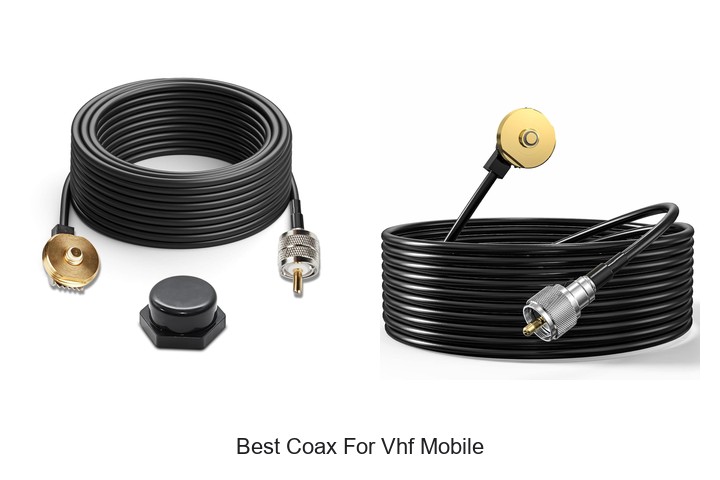
Top 12 Best Coax for VHF Mobile That Boosts Signal Fast!
Using the best coax for vhf mobile can make a noticeable difference in signal clarity and overall communication reliability. Many people end up with poor connections or signal loss because the coax cable they chose lacks proper shielding or has too much signal attenuation over distance. This can interfere with routine communication, especially in areas where a strong VHF signal is crucial for safety or coordination.
The key factors that separate a good VHF coax from a poor one are primarily the cable’s impedance, shielding quality, and thickness. Most VHF setups require 50-ohm impedance cables to ensure compatibility with radios and antennas. Good shielding, often in multiple layers, helps reduce interference and maintain signal strength over longer runs.
Cable diameter affects flexibility and loss; RG-58 is common for shorter runs but RG-8X or thicker coax can provide lower loss for longer distances, making it critical to match cable type to your installation needs.
Need a Quick Check?
| Image | Product | Price |
|---|---|---|
Our Top Picks 1  | Anina Copper Coax Cable | Check Price |
Our Top Picks 2  | Ancable NMO RG58 Cable | Check Price |
Our Top Picks 3  | HYS VHF Marine Antenna | Check Price |
Our Selected Top 12 Coax for Vhf Mobile Worth Buying
This list features carefully chosen coaxial cables designed for VHF mobile use, highlighting how well each performs in various conditions. You will find insights into their strengths, weaknesses, and ideal applications to help you select the most suitable option for your needs.
1. Anina Pure Copper Coax Cable NMO to PL259
Pure copper construction makes this coax cable a solid choice for anyone running VHF mobile setups. It suits those who need a durable, flexible cable with reliable waterproof protection on the antenna base. Its biggest strength lies in protecting the antenna from water damage during car washes without sacrificing signal quality.
Installation is straightforward thanks to the NMO to PL259 male connectors with a 16-foot length that works well for most vehicle setups. The waterproof antenna base cap includes an O-ring seal, which is great for preventing rust when the antenna is removed.
The RG58 coax cable stays flexible enough to route easily without kinking or signal loss, which matters daily if you move or adjust your rig often.
Signal transfer stays strong thanks to the low loss RG58 cable, and the pure copper ensures stable performance over time. The antenna base cap offers solid protection from water damage, a feature many appreciate. Some reviews mention the connector size as a slight challenge when fitting in tight spots, and others wish for a longer cable option.
Build quality is good, focusing on durability and protection rather than just look.
The waterproof cover effectively prevents water damage and rust on the antenna base, which many find reassuring. The cable length and connector size can limit installation flexibility in compact setups.
People needing a reliable, weather-protected cable for standard vehicle VHF use will get good value here. Those requiring longer runs or more compact connectors might want to look elsewhere.
Pros
- Waterproof antenna base with O-ring seal
- Flexible RG58 pure copper coax cable
- Compatible with many popular radio brands
- Detachable design
Cons
- Connector diameter can be tight in small spaces
- No longer cable options available
| Specification | Details |
|---|---|
| Cable Type | Coaxial |
| Connector Type | Coaxial |
| Connector Gender | Male-to-Female |
| Data Transfer Rate | 16 gigabits_per_second |
| Cable Length | About 16 feet (4.9 m) |
2. Ancable NMO Antenna Cable with RG58 Coax
Low-profile design stands out when looking for a coax cable for VHF mobile radios, especially in tight spaces. It’s perfect for people needing a solid connection in spots like vehicle luggage racks or engine compartments without fuss.
Its single biggest strength lies in the 90-degree right angle making installation easier where straight cables won’t fit.
Installation involves drilling only a small hole about 3/8 to 3/4 inches, which reduces damage to vehicle surfaces. The detachable NMO connector end suits narrow spots nicely. Daily use feels reliable as the cable connects Midland, Yaesu, Kenwood, and Icom radios with stable signal delivery.
The low mounting thickness of just under an inch keeps it out of the way, avoiding interference or snagging.
The cable performs well at a frequency of 136 MHz, handling typical VHF mobile radio needs without noticeable signal loss. Construction uses a solid copper inner conductor and pure copper shielding for durability and better signal protection.
The most praised feature is the compact, right-angle design helping in tight mounts. The main complaint revolves around limited length options, which might restrict some installation choices.
Durability and space-saving layout earn frequent praise, especially for fitting where other cables struggle without bending or damage. Some users note the need for drilling a mounting hole as the main downside, which can’t be avoided for secure installation.
Those working in cramped areas like vehicle engine compartments or luggage racks will appreciate the design flexibility. Users looking for longer cables or non-invasive mounting should consider alternatives better suited for those needs.
Pros
- Right angle design for tight installations
- Solid copper inner conductor improves signal strength
- Low-profile mounting thickness of 0.9 inches
- Detachable NMO connector adds installation flexibility
Cons
- Limited cable length options
- Requires drilling a hole for mounting
| Specification | Details |
|---|---|
| Connector Type | NMO/PL259 |
| Cable Type | Coaxial |
| Frequency | 136 MHz |
| Connector Gender | Male-to-Female |
| Mounting Thickness | 0.9 in |
3. HYS VHF Marine Antenna with RG58 Coax Cable
Ideal for marine VHF radios operating between 156-163MHz, this antenna comes with a solid 16.4ft RG58 coax cable that delivers low signal loss for clear communication on the water. Its greatest strength lies in the combination of good signal gain and durable mounting hardware, making it a practical choice for boaters needing reliable mobile VHF reception.
Setup involves mounting the antenna using the included stainless steel L-bracket and two U-bolts, which fit well on standard poles, though the mast pole itself needs to be sourced separately. The 16.4ft RG58 cable ensures flexibility in positioning the antenna away from the radio unit, helping to reduce interference.
Daily use benefits from the antenna’s compatibility with popular brands like Standard Horizon and Icom.
Performance is solid for VHF frequencies between 156-163MHz, offering a 2.5 dBi signal gain and supporting up to 50W power for good communication range. The stainless steel mounting hardware adds durability against marine elements. A common complaint centers on the absence of a mast pole, which adds an extra step to installation.
The sturdy build and compatible coax cable receive frequent praise.
The antenna performs reliably with good signal boost for VHF marine radios and includes sturdy mounting options. However, the lack of a mast pole requires purchasing or sourcing separately, which can complicate installation. The coaxial cable length and quality receive positive remarks for maintaining signal integrity.
Boaters who have existing mast poles or mounting setups will appreciate this antenna’s straightforward installation and solid build. Those looking for a higher gain antenna or a complete mounting package might prefer a different model that includes a mast pole and offers greater signal gain.
Pros
- Includes 16.4ft quality RG58 coax cable
- Durable stainless steel mounting hardware
- Compatible with various marine VHF radios
- Supports up to 50W power output
Cons
- Does not include mast pole for mounting
- Gain of 2.5 dBi is on the modest side
| Specification | Details |
|---|---|
| Frequency Range | 156-163MHz |
| Signal Gain | 2.5 dBi |
| Power Handling | Up to 50W |
| Cable Length | 16.4ft (5m) RG58 Low Loss |
| Mounting Hardware | Stainless Steel L-bracket & TWO U-bolts |
4. KMR400 PL259 Male to Male Coaxial Cable 50ft

Connecting your VHF mobile radio through a long coaxial cable without worrying about signal loss can be tricky. Suited for anyone needing reliable link quality over 50 feet, the low loss at 450MHz frequency stands as its biggest strength, keeping transmissions clear without much drop-off.
Setting it up involves standard connections with PL259 male connectors on both ends, fitting most scanners and radios equipped with UHF ports. Its waterproof design helps keep moisture out, making it good for vehicle use where exposure to weather elements is common.
The cable is flexible enough to route without sharp bends and the copper clad aluminium inner conductor keeps the weight moderate while protecting the signal.
Performance stays strong with less than 2.8dB loss at 450MHz and SWR under 1.25, meaning your signal stays crisp even at that length. Built with a mix of aluminium foil and tinned copper braid around the conductor, it resists oxidation well.
Positive notes point to consistent signal quality and solid build, while some mention the copper clad aluminium conductor may not feel as premium as full copper.
Its strongest point lies in maintaining signal strength over long distance, with less than 2.8dB loss ensuring clear transmissions. The most common drawback is the inner conductor being copper clad aluminium, which might not offer the premium feel or durability of full copper.
People needing dependable, waterproof cable for their VHF mobile or scanner setups will appreciate the consistent performance. Those seeking the highest quality conductor material might consider other options with full copper cores instead.
Pros
- Low signal loss at 450MHz frequency
- Waterproof design suitable for outdoor use
- Moderate weight with flexible routing
- Good oxidation resistance on the outer braid
Cons
- Inner conductor made of copper clad aluminium
- No compatibility with phone models
| Specification | Details |
|---|---|
| Connector Type | Uhf |
| Cable Type | Coaxial |
| Frequency | 1000 MHz |
| Data Transfer Rate | 1.25 gigabits_per_second |
| Connector Gender | Male-to-Male |
| Length | 50ft |
5. Bingfu Mobile Dual Band VHF UHF Ham Radio Antenna

Strong magnetic base mounting and a 5m RG58/U cable make this antenna an excellent fit for amateur mobile radio users needing reliable connection on both VHF and UHF bands. It suits those who want a balanced length antenna for solid reception in car or marine settings.
Setup is straightforward thanks to its magnetic base that sits securely on metal surfaces without extra hardware. The cable length of 5 meters allows for flexible installation inside most vehicles. A UHF PL259 male connector makes hooking up to popular radios easy, covering 136-174MHz for VHF and 400-470MHz for UHF frequencies without swapping antennas.
Performance is consistent across its designated frequency ranges with a decent radiation pattern for mobile use. The 42cm antenna length balances between portability and signal reach. Built with durable materials, the magnetic base holds firmly in place.
The main praise from users concerns its reliable mounting, while the most common complaint mentions its antenna length feeling somewhat limited outdoors.
The antenna holds firmly in place thanks to its strong magnetic base, delivering reliable VHF and UHF performance. Some note the antenna length restricts range compared to longer models, especially in open outdoor environments.
Those using mobile radios in vehicles or boats on the go will appreciate the easy setup and wide compatibility. Users needing extended range outdoors might want to look for a longer whip antenna instead.
Pros
- Strong magnetic base for secure mounting
- Dual band coverage for VHF and UHF
- 5m cable offers flexible installation
- Compatible with many popular radio brands
Cons
- Antenna length can feel limited outdoors
- Magnetic base requires metal mounting surface
| Specification | Details |
|---|---|
| Frequency Range | 136-174MHz (VHF), 400-470MHz (UHF) |
| Antenna Length | 42cm / 16.53inches |
| Antenna Cable | 5m / 16.4ft RG58/U Cable |
| Cable Connector | UHF PL259 Male Connector |
| Mounting Type | Strong Magnetic Base |
6. Dualband VHF/UHF Mobile Ham Radio Antenna with Mag Mount

People who need a reliable VHF/UHF antenna for mobile ham radio use will find this one fits the bill well. It suits those wanting quick installation and solid signal reach, especially for driving around with consistent connection.
Its biggest strength lies in its strong magnetic base that holds firm even at high speeds.
Setup is straightforward with the included magnetic base and 10-foot RG58 cable. You just fix it on the car roof, and the strong rare earth magnet keeps it secure even when driving at 100 kph. Day-to-day use means you can reposition it to improve signal reception without hassle.
The waterproof and rust-resistant materials ensure it withstands outdoor conditions with ease.
Signal performance is solid on both VHF and UHF bands, reaching local repeaters from up to 40 miles away. The antenna’s stainless steel body and durable cable contribute to a long service life. Reviews often praise how well the magnet holds under windy conditions, while more cautious users mention the need to occasionally check the mount for dirt or debris buildup.
Most users highlight the magnet’s impressive grip that withstands driving conditions, even at 100 kph. Some note the need for occasional cleaning on the magnetic base to maintain that strong hold and avoid any looseness over time.
This antenna is ideal for those wanting quick, reliable mobile use on VHF/UHF without complex mounting. It suits users with typical car roofs but may not fit vehicles needing longer cable runs or non-metal mounting surfaces.
Pros
- Strong rare earth magnet holds at high speeds
- Waterproof and rust-resistant design
- Good signal range up to 40 miles
- Easy to reposition for better reception
Cons
- Base can collect dirt and reduce holding power
- Cable length may be short for some vehicle setups
| Specification | Details |
|---|---|
| Antenna Type | Dual-Band VHF & UHF (137-149, 437-480 Mhz) |
| Cable Length | 10 Ft RG58 with PL-259 Connector |
| Magnet Base Diameter | 2.95 inches |
| Gain | 2dBi / 3dBi |
| VSWR | Less 1.4 (145 Mhz) / Less 1.2 (455 Mhz) |
| Weight | 0.3 kg |
7. NMO Antenna Kit with 21-Inch Whip and Coax Cable

An all-in-one setup for mobile VHF and UHF radio communication that stands out by including everything needed for quick installation. Best suited for drivers looking for a reliable antenna with stable mounting and solid signal quality on the go. Its biggest strength is the combination of a sturdy L-bracket mount and a long coaxial cable ready to use right out of the box.
Installation is straightforward thanks to the included mounting hardware and the stainless steel L-bracket, which fits well on a hood, trunk lip, or fender. The 21-inch dual-band whip antenna covers both VHF and UHF, letting you keep clear radio contact during everyday driving. The 13.1ft coaxial cable provides enough length to connect your transceiver inside the vehicle comfortably.
Performance delivers dependable signal strength with a 2.15dBi gain and supports up to 100W input power. The low VSWR rating under 1.5 helps maintain signal clarity.
Built with durable materials, especially the stainless steel bracket, it stays secure at highway speeds without shaking loose. The most common issue found is the limited three-month warranty, which might concern long-term users.
The antenna setup’s strongest point lies in its secure mounting and reliable signal support across VHF and UHF bands, while the brief warranty coverage is the main drawback noted. Installation and use involve minimal fuss, making it practical despite that limitation.
Ideal for drivers needing a ready-to-install solution with dependable performance at typical power levels. Those wanting a longer warranty or higher gain might want to look at different options.
Pros
- Complete set with mounting hardware included
- Supports both VHF and UHF bands
- Sturdy stainless steel L-bracket mount
- Long 13.1ft coaxial cable for flexible installation
Cons
- Short 3-month warranty period
- Limited gain of 2.15dBi may restrict some demands
| Specification | Details |
|---|---|
| Antenna Description | Radio |
| Number of Packs | 1 |
| Unit Count | 1 Count |
| Item Highlight | VHF/UHF, For Mobile Radio/Transceiver, PL259 Cable Connector |
| Warranty Description | 3months |
8. HYS Dual-Band VHF/UHF NMO Antenna Kit

HYS Dual-Band VHF/UHF NMO Antenna Kit suits those needing reliable communication on both VHF and UHF frequencies. Its main strength is handling long-range signals on 136-174MHz and urban penetration on 400-470MHz without extra gear.
Setup is straightforward with everything included in one kit: a 20-inch whip, NMO base mount, L-bracket, and a 13-foot RG58 coax cable with a PL-259 connector. Just mount it on your vehicle and plug into the radio’s SO-239 port.
The equipment fits well on standard mobile radios like Motorola and Midland, making daily use practical and simple.
Performance is solid with 3.0dBi gain on VHF and 5.0dBi gain on UHF, supporting power input of up to 100W. The stainless steel whip is flexible for durability, while the VSWR stays under 1.5 for good signal quality.
It excels at clear radio communication but some users might find the 13-foot cable length limiting in certain setups.
Strong communication performance thanks to dual-band coverage and decent gain values, paired with a straightforward plug-and-play setup. Some users note that the 13-foot cable length restricts installation options in larger vehicles, which can limit flexibility.
Ideal for anyone needing versatile VHF/UHF mobile radio communication on the go, especially with popular radio brands. Those who require longer coaxial cables or higher power handling might look for alternative solutions.
Pros
- Works on both VHF and UHF bands
- Complete kit with all mounting hardware
- Solid flexible stainless steel whip
- Good gain with low VSWR under 1.5
Cons
- Cable length may be too short for some vehicles
- Limited to 100W power input maximum
| Specification | Details |
|---|---|
| Frequency Range | VHF 136-174MHz, UHF 400-470MHz |
| Gain | 3.0dBi on VHF, 5.0dBi on UHF |
| Whip Length | 20 inches, pretuned |
| Power Input | 100W max |
| Cable | 13-foot RG58 coax with PL-259 connector |
| Mount Type | NMO base mount with L-bracket |
9. Dual Band NMO Antenna with Mount and Coax Cable

Easy to mount and reliable in daily VHF and UHF use, this antenna suits mobile radio users looking for solid signal reception without fuss. Its standout feature is the durable stainless steel build combined with a no-tune design, making it simple for anyone needing consistent communication on the go.
Setting it up involves drilling a small 3/8 hole for the mount, which then securely holds the antenna in place. The included low-loss RG58 coax cable and PL259 plug fit many Motorola, Midland, and Yaesu radios, simplifying connection. The lightweight 20-inch antenna doesn’t weigh down the vehicle and avoids the tuning hassle often required by other models.
Performance impresses with decent gain values of 3.0dBi at 144MHz and 5.0dBi at 430MHz, providing clear transmissions within its frequency range. Constructed from stainless steel, the antenna feels sturdy and resists rust or damage from weather.
On the downside, the drilling requirement may be inconvenient for some, and the power input maxes out at 100W, which might not suit higher powered setups.
The antenna delivers solid performance with good gain and sturdy construction praised for reliability. Some find the need to drill into the mounting surface a drawback, especially where permanent modifications are unwelcome.
Users wanting strong dual band reception and a durable build will appreciate this setup. Those needing higher power handling or a mount without drilling should look at alternatives better suited to their preferences.
Pros
- Durable stainless steel construction
- No tuning required for immediate use
- Includes mount and coax cable with PL259 plug
- Lightweight at 160g for mobile installation
Cons
- Requires drilling a 3/8″ hole to mount
- Max power input limited to 100W
| Specification | Details |
|---|---|
| Frequency Range | 136-174MHz and 400-470MHz |
| Gain | 3.0dBi at 144MHz, 5.0dBi at 430MHz |
| Power Input | 100W max |
| Impedance | 50Ω |
| Material | Stainless steel |
| Length | 20 inches (51cm) |
10. HYS VHF NMO Mobile Vehicle Antenna 136-174MHz

Great for anyone needing solid VHF mobile communication, this antenna covers 136-174 MHz and works well with many popular radios. Its main strength lies in delivering reliable signal quality with easy integration into vehicles using the NMO mount style. Perfect for Midland, Motorola, Kenwood, Icom, and similar systems.
Installation involves drilling a small hole around 3/8 to 3/4 for the trunk lid L-bracket, which ensures a durable mounting point. The 13-foot RG-58 coax cable gives enough length to route inside the vehicle cleanly. Once set up, the quarter-wave antenna maintains steady frequency performance on the 155 MHz center band, useful for various VHF mobile radios.
Signal gain is rated at 2.5dBi with a VSWR below 1.5, giving good transmission efficiency and clear reception. The antenna handles up to 150 watts of power, fitting typical mobile radio usage.
Reviews highlight the mount’s ruggedness, but some users find drilling tricky or worry about potential rust over time. The build quality is solid yet simple.
The antenna offers solid gain and reliable frequency coverage, praised for its durable mounting bracket that holds well in tough conditions. Some find drilling necessary for installation inconvenient, and concerns about rust can arise if sealing is not carefully done.
Those needing stable VHF signal for mobile use with compatible radios will appreciate the performance and build quality. Users avoiding drilling or wanting a completely non-invasive setup might prefer alternate options without a trunk lid mount.
Pros
- Wide 136-174 MHz frequency coverage
- Pre-tuned for 155 MHz center frequency
- Includes 13-foot coax cable for easy routing
- Rugged trunk lid L-bracket mount
Cons
- Requires drilling a hole for mounting
- Potential risk of corrosion around mount area
| Specification | Details |
|---|---|
| Frequency Range | 136-174 MHz |
| Gain | 2.5 dBi |
| VSWR | < 1.5 |
| Maximum Power Input | 150 W |
| Cable Length | 13 ft RG-58U |
| Model Number | TCJ-N1+ANV |
11. HYS NMO Antenna Mount with RG58 Coax Cable

Built with a standard NMO mount and RG58 low-loss coax cable, this antenna mount suits anyone needing a reliable connection for mobile radios. Its biggest strength lies in compatibility, fitting a wide range of VHF/UHF/CB/HF/GMRS antennas and various radio brands, giving flexibility without confusion.
Installation involves drilling a 3/8 to 3/4 inch hole in the vehicle, making it a permanent setup that feels professional rather than temporary. The PL259 UHF male plug easily connects to SO239 radio inputs on mobile transceivers.
Day-to-day use remains simple, with a solid connection that supports various antenna types as long as the mount size fits your vehicle.
Performance centers on effectively linking your radio to the antenna with a low-loss RG58 cable featuring a stranded copper center conductor. The build is sturdy and straightforward, designed to last outdoors on vehicles. Some praise the universal fit for many radios and antennas, while the most frequent complaint is the need for precise drilling for mounting, which might challenge beginners.
Many appreciate the universal fit across radio brands and antenna types, while the main drawback lies in the need for an accurately sized hole during installation. This ensures a secure, professional setup but requires some skill and planning.
Those looking for a reliable, versatile coax and mount combination that can handle a variety of antennas will value this product. It’s less suitable for users who want a quick, non-invasive setup without drilling into their vehicle.
Pros
- Fits wide range of mobile radio brands
- Low-loss RG58 coax cable maintains signal quality
- Durable mount for long-term vehicle installation
- Standard connectors ensure easy hookup
Cons
- Requires drilling precise hole size for mounting
- Antenna not included, must purchase separately
| Specification | Details |
|---|---|
| Connector Type | NMO to PL259 (UHF-MALE) |
| Mount Hole Size | 3/8 to 3/4 inch (9.5-19mm) |
| Cable Type | RG58 low-loss with stranded copper conductor |
| Compatibility | Fits all NMO VHF/UHF/CB/HF/GMRS antennas |
| Return Policy | 30 days for refund or replacement |
12. Anina NMO L Bracket with RG58 Coax Cable and Waterproof Cap
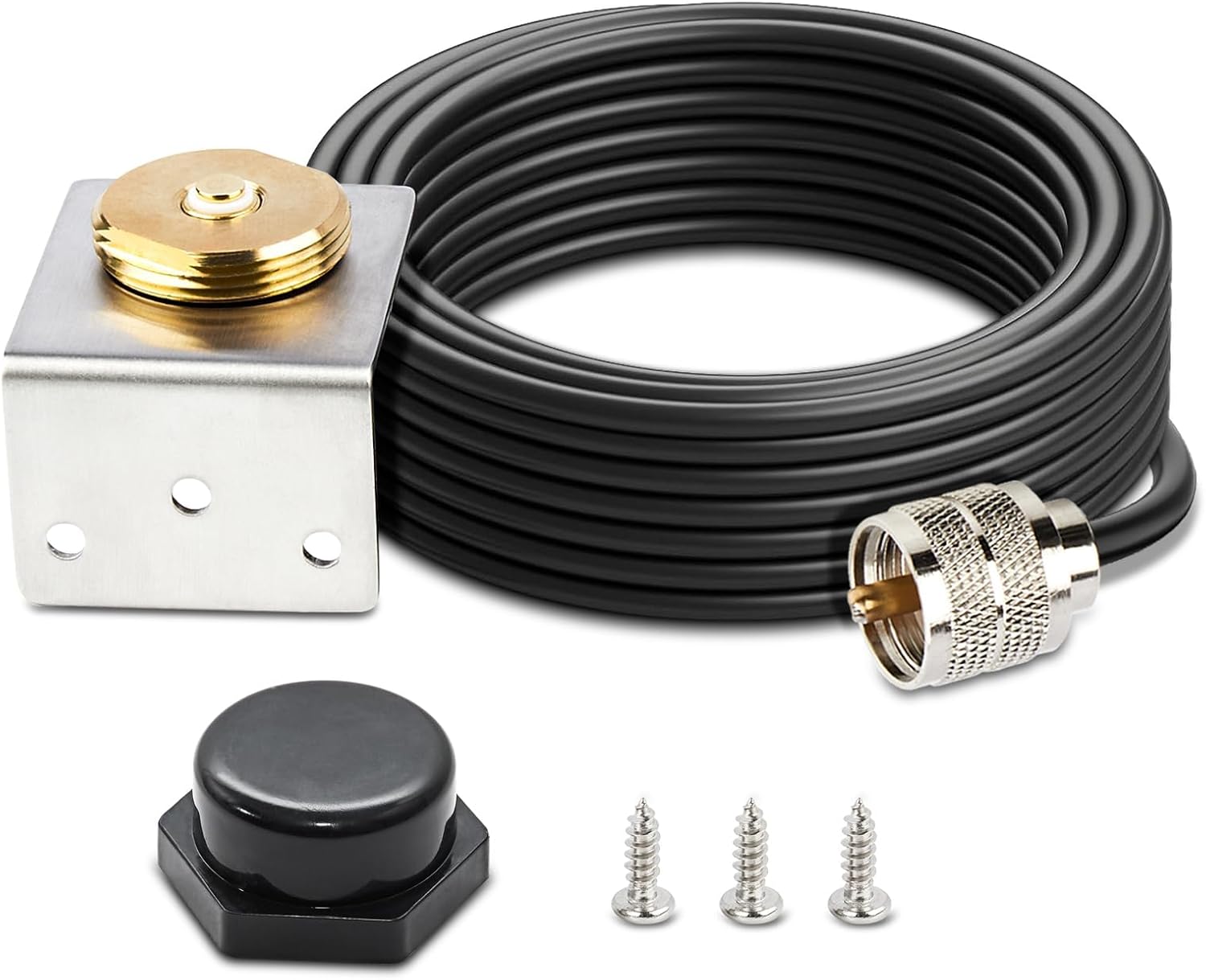
Corrosion resistance stands out immediately with this antenna bracket and RG58 coax cable setup, tailored for ham radio enthusiasts needing a reliable VHF mobile connection. Its sturdy stainless steel bracket suits those prioritizing durability under various weather conditions.
Installation involves mounting the NMO bracket through a 3/4 inch hole and running the 16 ft RG58 coax cable with its PL259 plug to the SO239 radio connector. The included waterproof cap helps protect your antenna base from water and rust, especially useful when the antenna is removed for car washing.
Everyday handling benefits from these protective features, maintaining connection integrity over time.
Signal transmission performs as expected for UHF connections, with the RG58 coaxial cable adequately supporting mobile radio setups. The stainless steel bracket effectively resists rust and scratches, so you don’t have to worry about weather-related wear. While praised for its build and water protection, some note the cable length may limit installation options depending on vehicle size.
Strong points include the durable stainless steel bracket and effective waterproof cap that keeps rust away, especially when removing the antenna for washing. Common complaints revolve around the fixed cable length which may not suit every vehicle or installation scenario.
Those seeking a tough mounting solution with good water protection will appreciate this product. Anyone needing a longer coax cable or different mounting hole size should consider alternatives better suited to their specific vehicle setup.
Pros
- Stainless steel bracket resists corrosion and rust
- Waterproof cap protects antenna base from moisture
- 16 ft RG58 coax cable fits most mobile radio setups
- PL259 plug compatible with SO239 connectors
Cons
- Cable length may be too short for some vehicle layouts
- Bracket only fits 3/4 inch mounting holes
| Specification | Details |
|---|---|
| Antenna Description | Radio |
| Brand | Anina |
| Number of Items | 1 |
| Model Number | NTK-D131 |
| Coax Cable Length | 16 ft |
| Mounting Hole Size | 3/4 inch |
Comparison of Best VHF Mobile Coax Cables
| Product | Connector Type | Cable Type | Compatible Devices | Special Features |
|---|---|---|---|---|
| Anina Copper Coax Cable | Coaxial | Coaxial | CB, Yaesu/Vertex/Kenwood/Icom | Detachable |
| Ancable NMO RG58 Cable | NMO/PL259 | Coaxial | Midland, Yaesu/Vertex/Kenwood/Icom | Low Profile |
| HYS VHF Marine Antenna | – | RG-58 Coax | Standard Horizon, Icom, Cobra | Two U-bolts, Stainless Steel |
| KMR400 PL259 Coax Cable | UHF | Coaxial | Scanner | Waterproof |
| Bingfu Dual Band Ham Antenna | PL259 | Coaxial | Vehicle, Car, Marine, Amateur | Magnetic Base Soft Whip |
| Dualband Mag Mount Antenna | PL259 | – | Radio | – |
| NMO Antenna Kit 21-Inch | PL259 | – | Mobile Radio/Transceiver | 3 months warranty |
| HYS Dual-Band NMO Kit | UHF-Male/PL259 | RG58 Coax | Motorola, Kenwood, Midla | 100W max power input |
| Dual Band NMO Antenna Kit | PL259 | Low Loss RG58 | Motorola, Midland, Yaesu | Low loss cable |
| HYS VHF NMO Vehicle Antenna | NMO to PL259 | RG58 Coax | Motorola, Kenwood, Icom | Pre-tuned antenna |
| HYS NMO Mount RG58 Cable | NMO to PL259 | Low-loss Cable | VHF/UHF/CB/HF/GMRS | Stranded copper conductor |
| Anina NMO L Bracket Kit | – | – | – | – |
- Connector TypeCoaxial
- Cable TypeCoaxial
- Compatible DevicesCB, Yaesu/Vertex/Kenwood/Icom
- Special FeaturesDetachable
- Connector TypeNMO/PL259
- Cable TypeCoaxial
- Compatible DevicesMidland, Yaesu/Vertex/Kenwood/Icom
- Special FeaturesLow Profile
- Connector Type–
- Cable TypeRG-58 Coax
- Compatible DevicesStandard Horizon, Icom, Cobra
- Special FeaturesTwo U-bolts, Stainless Steel
- Connector TypeUHF
- Cable TypeCoaxial
- Compatible DevicesScanner
- Special FeaturesWaterproof
- Connector TypePL259
- Cable TypeCoaxial
- Compatible DevicesVehicle, Car, Marine, Amateur
- Special FeaturesMagnetic Base Soft Whip
- Connector TypePL259
- Cable Type–
- Compatible DevicesRadio
- Special Features–
- Connector TypePL259
- Cable Type–
- Compatible DevicesMobile Radio/Transceiver
- Special Features3 months warranty
- Connector TypeUHF-Male/PL259
- Cable TypeRG58 Coax
- Compatible DevicesMotorola, Kenwood, Midla
- Special Features100W max power input
- Connector TypePL259
- Cable TypeLow Loss RG58
- Compatible DevicesMotorola, Midland, Yaesu
- Special FeaturesLow loss cable
- Connector TypeNMO to PL259
- Cable TypeRG58 Coax
- Compatible DevicesMotorola, Kenwood, Icom
- Special FeaturesPre-tuned antenna
- Connector TypeNMO to PL259
- Cable TypeLow-loss Cable
- Compatible DevicesVHF/UHF/CB/HF/GMRS
- Special FeaturesStranded copper conductor
- Connector Type–
- Cable Type–
- Compatible Devices–
- Special Features–
How to Choose the Right VHF Mobile Coax
Choosing the right VHF mobile coax depends on factors like signal loss, durability, and flexibility to ensure clear communication and easy installation. Selecting the correct type reduces interference and maintenance, ultimately saving money and preventing connectivity issues on the road.
Signal Loss and Frequency Range
Long cable runs often cause frustration by weakening the radio signal, especially at VHF frequencies. Signal attenuation can seriously degrade communication quality, leaving you with unclear reception or reduced transmission range. A cable with high attenuation disrupts reliable contact, making radios less effective in daily use.
Choosing a cable with low loss characteristics designed specifically for VHF frequency ranges, typically around 30 to 300 MHz, ensures consistent signal strength. The smaller the attenuation value in dB per 100 feet, the better.
Keeping the cable length reasonable or selecting cables rated for minimal loss over your intended run length keeps transmissions clear.
Durability and Weather Resistance
Coax cables exposed to the elements on a vehicle roof or undercarriage face UV damage, rain, and temperature swings. Ordinary jackets crack or stiffen over time, leading to exposed shielding and signal problems.
A cable’s outer layer made from UV-resistant polyethylene or similar rugged material holds up against these harsh conditions.
Flexibility also matters for mobile setups. Cables with durable jackets can resist vibration without internal damage, preventing intermittent signal failure caused by broken strands inside. A quality coating maintains integrity during everyday driving movements and weather exposure.
Connector Type and Compatibility
Different mobile radios often use specific connectors like PL-259 (UHF) or BNC for reliable attachment. Using the right connector ensures tight coupling, minimizing signal loss and preventing accidental disconnections during travel. Poor fits result in noise, static, or dropped signals.
Connectors should be sturdy, with solid crimps or solder joints holding cable strands firmly. Ease of installation also matters, connectors designed for quick tightening or snap-in mounts save time and reduce installation errors.
Compatibility with your radio’s antenna port avoids frustrating modifications.
Power Handling Capacity
Mobile transmitters typically output modest power, often under 50 watts, but cables must still support that safely without overheating. A cable with insufficient power rating risks insulation damage, which can lead to signal degradation or failure over time.
Look for cables with published maximum power ratings matching or exceeding your transmitter’s output. Proper heat resistance in the dielectric and jacket helps maintain cable performance and prevents performance drops during prolonged use.
Flexibility and Installation Ease
Routing cables inside a vehicle often requires bends around corners or tight spaces. Very stiff coax is difficult to manipulate without damage or kinking, which impairs signal quality.
Cables with moderate flexibility are easier to install neatly behind panels or under trim.
Thickness matters for concealment and mounting. Thinner cables are more discreet and fit in narrow spaces but may have higher attenuation.
Finding a balance between diameter and flexibility makes day-to-day handling and repositioning less of a hassle.
Optimizing Signal Quality with Proper Coax Installation Techniques
Using the right installation techniques can significantly affect signal quality in a VHF mobile setup. The coax cable should be routed with gentle bends, avoiding sharp kinks that can increase signal loss. Keeping the cable away from sources of interference like power lines or vehicle electronics reduces noise in the feed line.
Proper connectors matter as well; a good crimp or soldered joint ensures minimal signal reflection and prevents water ingress. Weatherproofing external connections with appropriate sealant or heat-shrink tubing prevents corrosion, which degrades performance over time.
Length also plays a role, shorter runs reduce attenuation but often have to be balanced with vehicle layout. Regularly inspecting and replacing damaged cable sections keeps the transmission path clean.
Firmly securing the cable prevents vibrations or abrasion, which can damage the coax exterior or its shielding. These practical steps maintain signal strength and clarity for VHF mobile communications.
Common Mistakes to Avoid When Using VHF Mobile Coaxial Cables
One frequent error is using coaxial cables designed for frequencies far below or above the VHF range, which can cause excessive signal loss. Using low-quality connectors or forcing incompatible connectors onto the cable leads to poor connections and intermittent signals. Running the cable alongside vehicle wiring can induce electrical noise that interferes with reception.
Installing coax with tight bends or crushing it under heavy objects ruins the cable’s shielding, increasing noise and signal degradation. Ignoring moisture protection at connection points causes corrosion that weakens signal paths over time.
Overextending cable length beyond recommended limits raises attenuation, cutting down transmit and receive capability. Neglecting regular inspection allows minor damage to worsen unnoticed. Properly matching cable type, using suitable connectors, and careful routing avoid most common problems that compromise VHF mobile coax performance.
Comparing Coaxial Cables with Alternative RF Transmission Options for VHF Mobile Use
Coaxial cables remain the primary choice for VHF mobile installations due to their balance of flexibility, shielding, and manageable loss at VHF frequencies. Twisted pair cables generally experience higher loss and more susceptibility to interference, making them less suitable for longer mobile runs.
Waveguides are unworkable in mobile environments because they are rigid and large. Fiber optic cables require expensive conversion equipment and are not practical for onboard VHF radio connections. Some users opt for antenna-mounted preamps to compensate for coax loss but this adds complexity and power considerations.
The shielding in quality coax cables helps reject electromagnetic interference common in vehicles, maintaining signal quality. Selecting RG-58 or RG-8X type coaxials is common for VHF because they offer low loss while remaining flexible enough to install in tight vehicle spaces. For mobile setups, coax cables provide the right balance without requiring additional hardware or compromising durability.
People Also Asked
What Is the Ideal Coax Size for VHF Mobile Antennas?
RG-58 or RG-8X coax cables, around 50 to 75 ohms, work well for VHF mobile antennas. They balance flexibility for routing inside vehicles and low signal loss for the frequencies used.
How Do I Properly Care for Coax Cables Used in VHF Mobile Setups?
Keep coax cables dry and avoid sharp bends to maintain performance over time. Using zip ties loosely can secure cables without pinching them.
Are There Safety Risks When Installing VHF Mobile Coax Cables?
Improper grounding or damaged insulation on coax cables can pose electrical risks during installation. Check connectors for corrosion and make sure coax does not chafe against metal parts.
How Long Does Typical VHF Mobile Coax Cable Last Under Normal Use?
VHF mobile coax cables typically last 5 to 10 years in normal conditions. Inspect regularly for cracks or stiff spots caused by heat or UV exposure.
What Common Issues Should I Watch for with VHF Mobile Coax Cables?
Signal loss from crushed or cracked cables and connector corrosion are common problems. Regularly check connectors and replace sections that look damaged or feel unusually stiff.
Conclusion
Choosing the right coax for VHF mobile depends mostly on low signal loss, durability for outdoor use, and ease of installation. These factors affect your radio’s performance and how long the cable will last in tough conditions.
Thicker cables usually have less loss but can be harder to handle, while thinner ones might be easier to work with but may reduce signal strength over longer runs.
Think about where you’ll install the cable and how much you want to spend. A shorter run and occasional use might not require the highest-grade cable, but a permanent setup or longer distances call for better quality. Check the comparison table and the detailed picks above to find a balance that fits your needs and space.